
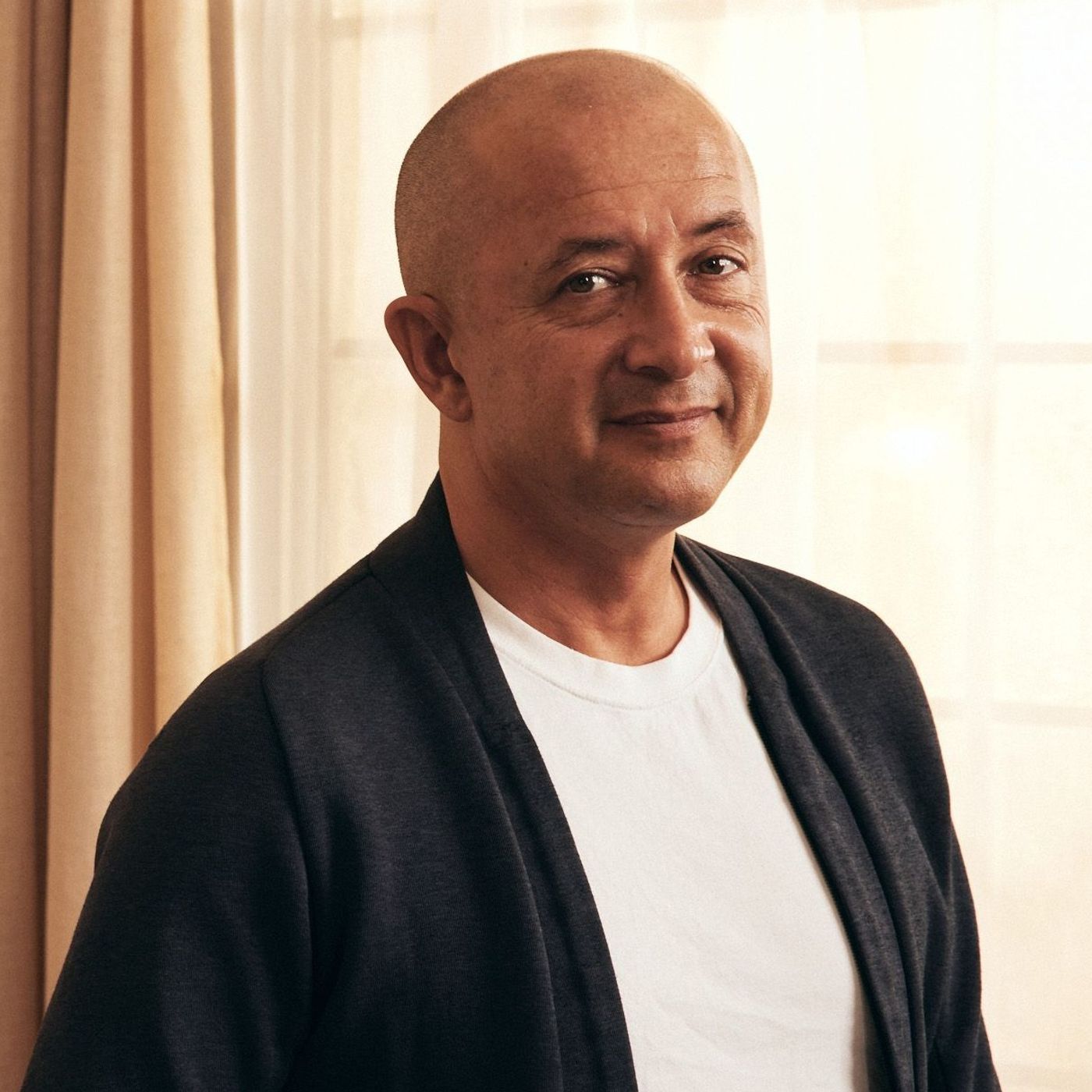

About this episode
And while we attempt to deal with our own body dysmorphia, we also address… John Cleese, Shock Treatment, Dori Hartley, The Royal Court Theatre, Saint George and the dragon, Tim Curry, being opinionated, Charlie Kaufman, people telling their Rocky stories, puppeteer, a weird premise, the human condition, Bill Wyman, disheveled suits, Cameron Diaz, movies that have fantastical elements, Digital Dreams, one of the best things about being human, John Cusack, leading the ticketgoers to their seats, Robin of Sherwood, firing on all cylinders, Catherine Keener, a creepy and foreboding vibe, how naturalistic it felt, Charlie Sheen, and don’t dream it… live it.
Transcript
Automatically generated, so expect the odd misheard name.
Hi, I'm Patricia Quinn, and you're luckily listening to Movie Meltdown. What's up, and welcome to Movie Meltdown's Unsung Cinema. I'm Brian, and I was a weird kid. I know you're shocked to hear that, but no, no, it's true. I was unusual, I didn't necessarily fit in, and I was interested in things that maybe the other kids weren't so into.
And while now I see the way regular society operates and I embrace not following the norm, but back when I was younger, I didn't really go into it willingly. It's just how it was. But at one point, I was introduced to the Rocky Horror Picture Show. my virgin mind was not prepared for what it was being thrown into. In the middle of people hurling obscenities among other things and breaking out into somewhat choreographed dancing, it was there, in the dark, surrounded by weirdos, that I felt at home. I was already a movie geek at that point, but this was something else.
A new level of theatrical experience, and as I walked out into the parking lot that night, which is where all the cool kids congregated, I really didn't know how to process everything I had just seen. But I'll tell you what I did know. I wanted more of it. And the very next week Rocky played there, I was back. And the time after that, and the time after that.
And as my fandom grew, I quickly learned that this cult masterpiece all started with one man, Richard O'Brien. Not only was he our beloved riffraff in the movie, but he wrote the original play it was based on, he wrote the songs that made the whole world sing, well, the weirdos anyway, and I thought he was the coolest. I mean, I had his head mounted on my wall. Okay, that's an odd statement. Let me explain.
So in my geeky collecting, very early on, I found that they made a cardboard mask of Richard O'Brien's head as a promotional item for shock treatment. Which is an even more obscure reference if you're not a Rocky fan. But it was also created by Richard, and the original poster art was just a shot of Richard O'Brien's head. And I obviously needed that. So of course I had to special order it because they didn't have movie geek merchandise in stores back then.
What are you crazy? So I ordered this cardboard cutout of Richard's head from New York or London or wherever it came from. But when it came, I had this big corkboard area in my room and I immediately hung it there with its two little cutout eye holes staring at you. And that's where it stayed for years. So yes, Richard was part of my life.
Okay, not quite as much as our guest this episode, who is Linus O'Brien. Yes, Richard's son. Maybe I won't immediately tell him about having his dad's head mounted on my wall. But regardless, Linus has somewhat recently made a documentary called Strange Journey, The Story of Rocky Horror, where he tells the tale of how his father came up with an idea that led to a movie that changed people's lives. So we're going to talk to Linus about his documentary.
And then in the usual unsung cinema way, we will round out the episode talking about a movie that he feels doesn't get the attention that it deserves, which this time around is Spike Jonze being John Malkovich. So after all that, I say we go ahead and get right into it as we talk with Linus O'Brien. Well, I usually start at the beginning and sort of get a handle on how people got involved in the arts growing up. You were exposed to it, I assume, from birth, really. So with yours, it's a little different.
So I guess more than anything else, were you aware fully, or I guess at what point were you aware fully of how much your dad was involved in stuff that maybe everybody else's family wasn't doing? Yeah, I mean, I just had nothing to compare it to, right? I mean... especially at such a young age, you're not really aware of what other people's parents do. So you only have your own parents to go by. And so as a result, it seemed perfectly normal that my dad was, you know, playing the guitar and singing songs around the house all the time.
And that we'd be watching movies together and talking about them. And yeah, it was just that that was my life, you know, much the same as if he'd been a an engineer or anything, you know, you just, you, that, that's the life, you know. So yeah, I was very lucky because I feel like I'm very creative person myself and always trying to do creative things, um, that, you know, express, you know, how I feel. Um, so, um, so that was, uh, yeah, it was, that was my life. Very, very lucky and blessed to have it be that way.
What were you kind of drawn to that early on? Like, if he wasn't necessarily involved, what kind of movies were you watching that young? I mean, you know, from around the age of around six or seven, you know, my dad and I would watch old Tarzan movies, you know, Johnny Weissmuller Tarzan movies. And then, but everything as well. We'd watch...
We go to the movies quite a lot. And the thing that was nice about it is that my dad is very opinionated. Might be one of the most opinionated people I've ever met. And I include myself in that. And as a result, you know, he was always telling me why he liked this actor, why he didn't like this actor or why this was a good movie or what, you know.
He always was very able to pick up and see things that other people didn't. So I felt very lucky that I kind of was open to that experience. Because I think when you're trying to do creative stuff, and especially with something like directing, it's all about opinions at the end of the day. About what you like and why you don't like something. And so that's very useful because, you know, even if you go down a wrong path, it's nice to, I don't know, feel like you're drawn inherently to something.
I think it makes for better creative work overall. Yeah, yeah. Were you, again, it's relatively young when he's already working on what, I guess... would lead to the movie but when he was doing the play were you already aware that that was going on were you old enough to at least acknowledge that like it was a play and he was going to go do this and or whatever. Yeah it's just so ingrained right because i was about one when the original stage play at the royal court theater had its debut and then i would have been about two and a half when the movie was getting made so it was just oh it was just always there in various incarnations. Yeah, that's a little early for memories, really.
Yeah, exactly. So my first memory of actually seeing the stage show was when I was around four or five at the Kings Road Theater, which was the Osvaldo Theater. You know, Rocky transferred twice down the Kings Road. And the third place was the place it stayed for, I think about seven, eight, nine years down there. So I saw it down there and they let me control the lights around the proscenium from the balcony, which I was very excited about.
That's more exciting than any of the stars out there. Exactly. I was like, I've got a switch and it controls things from like 100 feet away. This is like magic. So yeah, that was very exciting.
And also old enough to be aware that the original... stage play production of Rocky was very scary in terms of the vibe it set before the stage show began. The actors used to dress up in these disheveled suits with these kind of clear frosted masks and they would lead the ticket goers to their seats silently and it just gave the whole thing a very creepy and kind of foreboding vibe which I really enjoyed actually. And it's still stuck in my head till today. I feel like that's when you get kids that are going to be into horror. When they see, even like you're watching those early Universal movies or something, and it's the fact that it scares them, but they still are drawn to it.
It's like, that's how you know it's deep-seated in someone. Yeah, you're not just trying to give them nightmares. There's something more intriguing going on. Well, then I guess on the journey... Film-wise, at least looking at the resume, you end up in a movie.
So is Shock Treatment sort of the first time you get exposed to that part of the world? Probably. I mean, I was in my school in one of my first schools, Ibstock in Roehampton. We had a school play, and we were doing St. George and the Dragon.
And I was Saint George and the evil Turk was um John Cleese from uh Monty Python um and so that was my first kind of acting role I think I was about six and a half at the time and I was very small as well so the disparity between in height between myself and john cleese it's like what six three six four and you know very lanky and thin i think that was very funny for the audience and and that the annoying thing about that was that i'd learned all my lines and he started to improvise on stage and inside i'm going god what are you doing you're just you're going off script you're ruining it what an amateur god i know but obviously he had the the audience in stitches so That was my first acting role and then probably Shock Treatment.
And then I was in this movie called Digital Dreams. It was made by Bill Wyman of the Rolling Stones. He decided to make a film, so I was in that for a bit. And then an extra in Robin of Sherwood. It was a TV show in England about Robin Hood.
It starred, uh, Connery's son, Jason. Yeah. Jason Connery. Yeah. Uh, my, my dad was, uh, was, uh, like a evil character in that.
And, and, uh, I got to be an extra for two or three episodes. Uh, that that's pretty much the extent of my formal acting career. I did some more stage plays in, uh, in high school, uh, but never really had the, like the huge desire to, uh, to make it a career. I think you, you have to be very vulnerable if you're an actor. And I, and I was never prepared to do that.
So it makes it very tricky. Uh, it's not to say I wouldn't, I'd like to play, I would like to play like a South London gangster in something, but I do feel like drawn to doing something like that. Um, but, but as for like, you know, taking any role, which comes my way, which you kind of need to do if you're going to make it a career, uh, I don't have the, um, stomach for that. Were you drawn to more of the behind the scenes since you at least you know you're an extra so you're kind of seeing the filming of it was it was any of that interesting. I mean a little bit i i was always drawn to music uh first and i that's why i started a record label and became a dj and an electronic music producer that was always the the thing i loved the most because it was so immediate you know uh that's the thing i liked about it and then you know Over the years, and especially directing the documentary, it's given me an avenue to now...
I've just finished writing a screenplay, which was a really nice process. It was such a grind the first two or three months. I was dragging my feet. I'd write maybe one paragraph, and then another day I'd write a sentence. I was just dragging myself through it.
And then once it started to coalesce, then I started to get excited about it and it became really fun. So I've got to do a few more drafts of it, but, um, that was a very, it was a really nice process. And, uh, and, uh, yeah, I'm looking forward to, to keep doing that. Cause I'd, I'd like to direct the screenplay I've written. That's what I was going to say with, with the documentary.
What was it? Cause I think you had said you'd seen just like comments on, on people online that were talking about Rocky. Yeah. Right. Yeah, it was my dad had asked my brother and I to put together a clip package for him for, I think, an anniversary, like a birthday show, like a live birthday show he was doing.
So in between songs, he wanted to show a clip package of some of the films he'd been in. So we started going through YouTube and looking at everything. And yeah, when I came across the comments underneath, I'm going home. That's when I really, I was like, oh, this is so much more than than what we realized. I mean, we always knew it touched people and how important it was, but you don't understand the depth of things until much later in some cases.
And because the comments underneath the clip of I'm Going Home were just, it wasn't like, oh, this is great, I love this. It was like, oh, this changed my life, I listened to this, I played this at my father's funeral, I played this when I was on tour in Iraq. Like it was those levels of comments underneath, which really made it clear that the fans should be celebrated. And then I got to celebrate my dad's work in the process. So yeah, it just, it came together really nicely.
I had the idea. I took it to my friend who's an editor. He took it to his producers. Within, you know, half an hour of meeting them, they wanted me to direct it. And so creatively, it came together very quickly.
But financially, it took a little while to bring it all together. Yeah. Did you have any doubt that you weren't the person to do it? Or were you just set on like, well, I've got the inside track here. Why would it be anyone else?
I mean, at first, I think for like five minutes, I was like, oh, really? And then I realized that I'm probably the best person suited to direct it just because of my proximity to Rocky over the years. and hearing all the stories from all the cast members and my dad and just being around it, I was like, okay, there's no, who, who else was going to do this, you know? Um, and, uh, so yeah, it just became, it just made sense, you know? So I, I, I relished the opportunity and was very, very happy to do it. And, and I have a, I had a great creative partner to work with, Avner Shaloa, who was the editor on The Dissident.
It was quite a famous documentary and he did Yacht Rock and Woodstock 99. We've been friends for over 20 years. And so there was a real shorthand there. So that made everything really easy when we came to editing it. It was like he thought they might be difficult because maybe we'd, you know, dig in our feet when it came to certain decisions.
But no, I think it was a tremendous amount of respect for both of us. So if someone was adamant that something needed to be included, the other one listened. So and vice versa. So I think directing requires a bit of ego, right? That you're going to be the voice of all of this stuff.
And so I think that's always why I never really considered it as a career because I never figured that I could or should put myself out there to that degree where I'm the one making all the decisions. But I think I'm actually kind of suited towards it. So I'm lucky to have been given this opportunity and hopefully turn it into to a to a real career. Yeah that's what i was gonna ask about the editing because i know sometimes directors are more involved than others sometimes they just hand it to the editor and be like all right you do your job now but this one i i do have to say i really did like the the pacing of it and that the way it sort of comes together it really does like evenly sort of lay out the groundwork as you get into it and then once you get into like the the full on experience with the fan base.
It, it, it balances all of that out nicely. So it's, yeah, it's really, thank you. I think that the trick of it is, is that we wanted, I wanted to hold, get people's attention right from the beginning and hold it throughout. Uh, you might have some like, you know, slightly slower and quieter moments within it, but it doesn't last for long. And, and they're, they're just as engaging.
So, Uh, you know, that's the trick of it. I just, it had for me, I wanted to have it this kind of quick tempo to it. And some people say it's too short and I somewhat agree with them, but it's, uh, at the end of the day, I'm very happy with the movie. Right. So, you know, we didn't want to repeat ourselves.
If someone was saying the same thing, like a talking heads, we're both saying the same thing. We picked the one that was best and just went with it. You don't have to repeat yourself. That's what I was going to say. You'd have to cap it off at some point because you can talk to people.
Like I just, after watching this, I went through this whole flashback of like everything that I went through as, as a kid watching it. And like all the people that I've come in contact with over the years and how much they've been a fan, like literally on this show years ago, there was a, an artist that I met and we did an episode of talking about his art. And then we did another one and we were like, okay, we can talk about a movie. And he, immediately was like, Oh, Rocky, obviously. And like, so he started talking about it and it was like, the title was how Rocky horror changed my life.
And it like, it, it went through how it just everything from that point on everything changed for him. And I was like, it's, it's that times a million different people out there. I know it is really, it's bizarre. And you know, I, and like I said, so I was shocked when I, saw the comments under the YouTube thing. So I have a full understanding at that point of how deep it is for everyone.
And then as you go through making the documentary, like you, that becomes clearer and more people come up to me and say, listen, if my wife and I met at Rocky like 32 years ago and she wanted me to tell you and your dad that if it wasn't for Rocky, she wouldn't be alive today. And you're like, okay, all right. That's a lot. That's serious. Like, amazing that it did that.
And then, and then it just keeps on happening. And so with, you know, tim curry passing away this week you know that has even come to the forefront even more than ever so it is it is startling i you know and i've said this in other places you know rocky has saved the lives of hundreds of thousands of people And I don't know if you can say that about another work of art. You know, song, TV, show, album, movie, painting, whatever it is, book. You know, I just don't, I really don't know if something else exists. And that's not to try and say Rocky is better than any other piece of work of art.
It's just very unique. It hits differently, like on so many levels, in so many different ways, for so many different people. Yeah, you can just have... For some people, it can just be a nice Friday night out. You enjoy the songs.
You love laughing along with it. And then that could be it. But for other people, it becomes this 10, 15, 20-year, 30-year commitment where they meet all their friends. They meet their family. They meet their husband.
They meet their wives. They have children because of Rocky. It becomes like a lifelong thing. And so... What a wonderful gift to be able to give to the world where you can have a place where people don't have to be shamed about their bodies, right?
We all carry around shame about our bodies, right? This kind of body dysmorphia thing that we all carry around in various ways. And so Rocky was able to provide a place where it didn't matter how you looked or how you look. You could just be there and you could be a sexual person And get to enjoy one of the best things about being human. And what a lovely gift that is to the world.
And so unexpected. My dad never intended for a second for any of this to happen. Like, it didn't even cross his mind. He wasn't trying to make a statement about gender identity or politics or anything like that. It was just meant to be fun.
And as a result, you know, all of this other stuff happened. It is, it is amazing how many different points it hits. Cause that's, I mean, right. Kind of at the beginning there, you get into Trixie and like, you get into like, finally I could go somewhere and I was accepted, you know, I'm, I was gay and I, you know, nobody else, you know, anywhere else in my life, could I be open about that? And then he went there and like that changed everything.
So it was like that there's that. And I've heard that a lot over the years. The thing that I was thinking as I was watching this is like, I think maybe the most impressive thing that it did at that time, and I would assume as part of the legacy now, was it also brought in equally as many straight people just for the spectacle of it or whatever they'd heard about it. It was sort of like... But.
Straight people want to feel free as well. Straight people have hang-ups about their sexuality. It's not really about who you're attracted to or who you love. It's about feeling free to... kind of explores sex and sexuality, but in a very kind of gentle and titillating way. That's not like male dominated, you know?
And I think that that's, that's really important. Um, you know, it's like when you go to a gay bar, the vibe in that gay bars is, is awesome. Like I went to one like a couple of weeks ago and it was just, you know, it felt super relaxed and, Like, it's so down to earth, and then, you know, it's not like this, you know, the thing that comes with, you know, heterosexual males, is that it just becomes kind of this, it can become, like a very kind of obnoxious and kind of, I don't know, just overly masculine and testosterone-based kind of thing, which is just, you know, I'm not into you. And so Rocky provided a place where, you know, heterosexual males and, you know, gay people and bisexual people could all be together and just kind of enjoy the outskirts of sexuality, right?
Which is such a nice thing to do. It's such a, like, an easy entry point. Yeah, that's what I was going to say. That was the part that I found, even back then, even as a kid. Like, I was like, this is amazing because where I was at, like, you don't have to go very far outside the city to get pretty rural.
So like you would get, and again, because of the appeal and the legacy that it had built up around it, people would still come just out of curiosity. So you would get these like rednecks that would show up and they would be there. And like, sometimes it eventually, like you'd realize the people that were okay with it were okay with it. And they were just there. Yeah.
So after a while you had people that were so drastically different in every other aspect of their life. But at midnight on a Saturday night, like everybody came together. Everybody was accepting of each other. Everybody had fun. And like, it was just such a, it just sort of leveled the playing field where like everyone got along in a situation where normally that never happened, you know?
It's weird, isn't it? I did, you know, and you could spend all day talking about trying to figure it out. You know, I think the mute music is at least 50% of it. Tim Curry's performance is part of it. Just how wild and fun it is as part of it.
Um, But I know, you know, that Trixie says that line in the documentary goes, it was very gay, but I was very much allowed to like it. Somehow Rocky gets a pass when it deals with all these things which, you know, are supposed to be taboo in our culture. And somehow it gets away with it. And I think that it's really down to how could you criticize something that is so much fun? You know, you seem stupid if you do.
And I think that's his defense. If Rocky took itself more seriously, I think people would be more up in arms about it. But it doesn't. And so they're not. Yeah.
And it just sort of welcomes everyone in. And that's why it's led to this like family vibe that comes with the audience. Every show, no matter when it is, where it is, it's always kind of had that. Yeah. So I do like that you've also added that in, that as much as you do this good job of setting up how it came to be, but then you get into even doing the interviews, you get Jack Black, who was just a kid in the audience.
So now he's Jack Black, but he is sort of like this audience perspective type of interview that gets thrown in there too, that he was just a kid being blown away by the whole experience like everybody else in the audience. Yeah. So yeah, I do like that it sort of like balances out all of that and finds a way to work in the audience experience, which again has become maybe bigger than anything else involved in this. Yeah, it's wild, isn't it? And everyone has very similar stories about Rocky, about when they first saw it and they can't wait to share it.
Sometimes people will recognize me and they'll start to come towards me And part of me will think, oh, they're coming to say hello. But no, they're actually coming to tell me their Rocky story about the first time they saw it. And they want to share that more than anything else. And because that memory is burned onto their brain, much like the first time they had their first kiss or they lost their actual virginity. It's that kind of power that memory has on them.
And it's amazing how universal it is because again, I have been at like go to like just regular conventions for like your horror movies or whatever, but you'll find people. And as soon as they realize they're both Rocky people, like it just, there's this connection and it just locks in and like, they've got stories and like it's, but their stories are so shared. It doesn't matter that they're entirely different States, you know, in totally different theaters, totally different cast. Everybody still has the same experience. And that's, That's kind of what, again, by the time you get to the movie, you realize that because it's this mixture of live theater and cinema and participation, it just kind of melds into this totally different art form that hits a weird peak of just entertainment that we hadn't had before.
Right. I know. That's my favorite part of the documentary is my dad talks about that. He talks about seeing it at a convention in Long Island for the first time with an audience. and seeing Dory Hartley, the Frankenfurter impersonator at the 8th Street Playhouse, be at the front of the stage during the I'm Going Home moment, and the spotlight was on her, and her silhouette was the same size as Frankenfurter on the screen, and the audience was singing the refrains. It was really important for me to have that moment in the documentary, because I wanted people who aren't aware of the Rocky experience and what it is, especially with the shadow cast, to know that It's much more than just some people goofing off at the front of the stage.
It's creating something that's entirely unique. Yeah, I just love that moment. Well, it is something that I've always wondered, and this may be more of a dad question, but you've been around him so much, maybe you know the answer. Where did the line, don't dream it, be it, come from? I think it's from a, there was a lingerie company Frederick's of Holland.
Yeah, yeah. I think that's what it was. I think that line was a promotion from Fredericks of Hollywood. Because in the structured movie itself, it almost is sort of out of the blue. Like it almost doesn't fit in the moment.
But in the legacy it became, it's the most important thing ever. Like it becomes such a big part of the experience that it's weird to think about it disconnected from what it is now. That like in the original movie, when Frank's just saying that, it's like, well, wait, how does this tie? But then you get, it's like it almost had a legacy before it even knew. Like it was built in before it even got there.
Yeah, so, but I think the thing is my dad has always been able to see things in our culture and pick up on our things in our culture that not everyone misses necessarily, but he's able to highlight what he likes about it. So whether it was fifties B movies or rock and roll songs, or even something like don't dream it, be it. He was able to see that in the, in the, in the, the, the, you know, Frederick's of Hollywood ad and be like, Oh, that, that means a whole lot, you know? Yeah. And then, But then at the time, just to stick it into a song and not even really think about it.
And then have it culturally land in a way that he wouldn't expect again. So yeah, I mean, it's just his ability to kind of see things in the culture that we're not necessarily focusing on. Yeah, I mean, I guess you can sort of pick up on that just... Again, he was. So engaged in pop culture.
Yeah, so there's a Fredericks of Hollywood ad. And actually... Funny enough, it says here, don't dream it, live it. So maybe he did actually create it. Don't dream it, be it.
Maybe he took that and then made it into something for himself. Interesting. It's very interesting. Just in general, I was wondering, does he still, as the writer of it all, does he still have like, any control over what happens to the whole thing? Like, the fact that we just got, like, a whole new Broadway run out of it.
Like, does he sign off at the beginning? No, the stage play he's very much involved with in terms of the Rocky Horror Company. And then, but the movie, not so much. Yeah. Have you seen that new production?
The one that just sort of. Yeah, yeah. I went to the opening night on Broadway. And, yeah, I had a really nice time. And Sam Pinkleton's a lovely man.
And he's, you know, he's brought his own vibe to it. So, yeah, and it's doing really well. I think it's been extended now to the end of February, which is very good news for them. Yeah, I've just seen bits and pieces of all the following most of the cast online. And, like, they all keep posting stuff.
And I'm like, it looks amazing and well done. And it's still, like, connecting with people even in just the play. So it's amazing. Yeah, it's bizarre. We'll all be dead, and Rocky will still be playing somewhere, to a theater or something.
I mean, it's never going away. No, definitely not. And most impressive, the fact that you work in the statue in the movie. So the fact that your dad has a statue is amazing, by the way. Yeah, again, how these things happen is bizarre.
Someone wanted to make Hamilton do something to make it more metropolitan and celebrate what they are, and this seemed like a natural thing for them. And so I'm so glad it all worked out. Actually, the statue is so cool because it was designed by... Weta Workshop, who did all the Lord of the Rings and Avatar movies. So it was very cool that they made it.
And again, that's why I think in actuality, it was you that needed to make this because those are the key moments. And I don't think you would have the same. response from your dad if it were somebody else if it were just some guy with a camera that showed up to go shoot footage or even sitting around the house like there's the moments when you sort of cross over into the movie and like you're there talking to him and I don't think he would have those same conversations if it weren't you so I do really like those those connections between you and him in in the. Movie nice yeah people really respond to that I think that probably could have been a it might've been better as a result, but you know, uh, I'll give it like an eight and a half out of 10, the documentary.
And I could have probably made it a nine and a half if, you know, if I leaned into that a bit more. So I try to be objective in my, uh, in my critique of it. I think it balances out pretty nicely. I do kind of like, it's nice. It's a lovely movie.
And it was, and, and, you know, when we've seen in theaters, uh, you know, when it was released here in the States and throughout the festival circuit, the response has been amazing. You know, people laughing, cheering, crying in it. So I couldn't ask for a better reception to the documentary. And I think only out of all the reviews on Letterboxd, Rotten Tomatoes, and all the press that we've had in the newspapers, I think there's just been one negative review out of all of them. So if someone had said to me, before I started making it, would you be okay with your movie only having one negative review?
I would have said absolutely. So yeah, very happy about it. Well, I could, yeah, I could talk about Rocky forever, but I will, I know we, we also in, in the, the format of this, we also have another movie that you've chosen. So I do want to get into that. And I usually will read the breakdown here.
So Our unsung cinema feature is Being John Malkovich. The year is 1999, the director is Spike Jonze, and the plot, according to IMDb, a puppeteer discovers a portal that leads literally into the head of movie star John Malkovich. And that's where it comes to an end. So, spoiler alert, I would assume if you're listening to this you've already seen it, but if not, we'll dig into it. Here, so.
With that, I guess my first question for you is, what is your history with this movie? And when did you first see it? What was your first impression of it? Well, I saw it when it was released in theaters in 99. I can't remember where I was when I saw it.
I was probably in London. I don't have any memory other than that. All I know is that what I loved about it, and what I still love about it, is the way that it's shot. So the cinematography... And the lighting and how naturalistic it felt was and still is amazing because what it does then, it grounds, if you feel like it's reality, when the fantastical stuff starts to happen, you are brought in to that world.
And I love making, I love seeing movies that have fantastical elements that feel real then I get transported into that world. And then it's just tremendously funny as well. On top of that, it's absolutely hilarious. Like the, the, the boss, like, so John Cusack's character is a puppeteer and he tries to get a job at this company and he, and at the company, the guy is called, I think it's called Lester. And I think it's, It's not Mary Tyler Moore, but it's someone who's his secretary.
Mary Kay Place, I think, is her name? Yeah, and she's got like a. She was in a ton of stuff at that time. I did recognize her. Exactly.
Yeah, and she's got this... And she has this hearing disability. So she keeps misinterpreting everything that John Cusack's saying. And then Lester's got this strange, weird, sexual stories that he wants to share with John Cusack. The whole thing is so trippy and out there.
And yet, because it's shot... and feels realistic in its lighting and its production design, you're just taken along for the ride. And so, like, it's a real inspiration for me. I wish there were more movies like it that would do that. I wish that more out-there movies would feel more realistic. I think maybe that's coming.
There is some of that. You do see some of it in these smaller horror movies sometimes. Yeah. But yeah, it's just, I'm a big, Spike Jonze is probably by far my favorite director. All the movies he's made from, you know, adaptation, Where the Wild Things Are, and Her.
You know, he's, yeah, he's a real, like, inspiration as a filmmaker. I was so impressed with the fact that it got as much exposure as it did. Because that's the thing, watching it, I was just like, this is such a weird movie. And I mean that in the best possible way. That's why I was so drawn to it.
Now it's why I like it as much as I did. But I mean, almost from the get go, when we get to the seventh and a half floor and we get to like watching the, I mean, everybody looks kind of, I mean, it's not the normal version of John Cusack. It's definitely not the version that we're used to of Cameron Diaz. So like everybody's already sort of this weird disheveled version of themselves and, And then you get to this like almost surreal building that like he goes to and then everyone's talking. weird and like so even from the first like 15-20 minutes before you get to the door and all the craziness that's going to come into it it's already such a weird feel to it that I'm like I'm kind of shocked that it got as wide exposure as it did and it got the response that it did when it came out because a lot of And on the show a lot, I mentioned the regular people, I'm using quotes there, that like, you know, your normal like hardcore movie fans are open to that kind of idea.
And they want a movie that challenges them. And, you know, they want to see different things. But a lot of your average moviegoers, like once something starts to get a little too weird, like they're out, like they want nothing to do with it anymore. Well, the thing is, is I think all departments of this movie were firing on all cylinders. And I think that's, If one of them had been slightly below, like the art direction, the writing, the directing, if any of them had been less than top tier, then I think it goes into this weird indie category.
There are a lot of those, but again, usually nobody's ever heard of those, where. This got a lot of response. Everyone firing on all cylinders, like Charlie Kaufman at his best. And, you know, Catherine Keener, she plays like this manipulative narcissist, like you just so intense, and so full of herself. I was like, wow, do people like this exist?
Like, she's just so... Just so crazy. It's weird. She always has that vibe. Like I like her as an actress, but she always seems like she comes off that way.
Well, that's a, that's a, that's a credit to her. Like she really, cause like she's not like that at all. So I don't know. Cause she even said she didn't like this character. Like she didn't, she didn't want to play this because she's so unlikable.
I mean, she's a cunt. She's so good at it. She's terrible. But yeah, but again, just so interesting to watch. And it has, by far, the best cameo of any movie, any time, by Charlie Sheen.
Like, Charlie Sheen is so amazing in that movie. And what he's doing, so he's, for people who don't know, John Malkovich has had this experience with Cameron Diaz, no, with Catherine Keener's character, like a sex fantasy, well, actual... you know, a sexual intimacy with her. And then as she's, yeah, as she's doing that, she's being actually, uh, Cameron Diaz characters inside John Malkovich at the time and controlling his, um, I know, I think it's John Cusack is inside controlling, uh, Malkovich and freaking him out. So he calls Charlie Sheen over to have a conversation with him because he's so freaked out. And Charlie Sheen is sitting like all slumped in an armchair, like trying to eat a burrito in tinfoil.
So he's not, he's listening to him, but he's not really listening to him. And he's, and then John Malkovich says, yeah, he, she, she, I like, she made like this voice came out of it and she made me call her Lottie. And he's like, she made you call her Lottie. That is hot, Johnny boy. You know, let me know.
Let me know when you're done with her. I mean, it's just it's so good. The fact that it's already funny that Charlie Sheen and John Malkovich are friends. Right. And then and then to have him play it the way he does is just I don't know, it's genius.
That was the part I wanted to check into. Like, again, because I was just like, as it happened, I was like, this is amazing. But I was like, what a weird pairing. I was like, those two are friends? But that's the humor of Spike Jonze and Charlie Kaufman.
They're just kind of like, you know, they think outside the box. But the even weirder part is, they weren't. Like, in the script, it was originally supposed to be Kevin Bacon. And again, I think just randomly, I think Charlie just wrote it that way. And like he, Kevin Bacon, like didn't want to do it or had scheduling issues or whatever.
And so then it came down to like, well, who can we get? And John Malkovich was the one that suggested Charlie. But he'd never met him before. He just knew he's like, he's just, I watched him describe it. He's like, well, I mean, I knew if, if anybody's going to, and I feel like that's it because Charlie up to that point had already lived the craziest life ever.
So if anybody's going to listen to you talk about a coven of witches that are taking over your body and having sex with you and just shrug it off like it's no big deal, it's Charlie Sheen. I don't know. It's just sometimes where the pairings in life just get so perfect. And that is one of them for sure. So, yeah, that was John Malkovich's doing.
And yeah, genius on all fronts there. I was not prepared for how much fun that was. And even funnier knowing they aren't actually friends. And then just and then and then, you know, for all the madness and then it just nails the ending as well. For those that, you know, again, spoiler alert and you know.
John Cusack ends up trapped in the daughter's mind, unable to control her, unable to do anything, but look out through her eyes as the daughter of Cameron Diaz and Catherine Keener. So it becomes kind of weird. The puppeteer has now become an observer of life and not controlling it at all. It's so... It works on so many levels.
He's just the genius of Charlie Kaufman. Those two screenplays, being John Malkovich in Adaptation, are some of the two of the best screenplays ever written. The way that they all weave together all of these points and they all come out in a resolution that's kind of satisfying and unexpected. It's genius. Absolute genius.
The relationship part is the thing I think I really didn't see coming. Like, again, I knew sort of the basic premise of like, you know, the going into his head part. But it takes that weird turn where it's like, not only is this person seeing what's going on in John Malkovich's head, but then starts to experience it for themselves. And then when it's Lottie. she realizes like she has this sort of sexual awakening that like, she's like, not only am I into this person, but like this person through John Malkovich is how I'm experiencing this. And then like gender aside, like she didn't care.
Like this is the person I want to be with, even though she's married and has a whole life, like she didn't care. It like, it awakened this whole thing in her. So then the whole rest of the movie becomes this, how do we deal with this? Because Catherine Keener is also just kind of a jerk and won't experience it in the real world. She will only experience it through John Malkovich.
So every time they do something, she has to go hook up with John Malkovich. Yeah, it's bizarre. I think it's what's interesting about that. And I think this is... I'm kind of just thinking off the top of my head here, but I think one of the greatest things and one of the most powerful things in love is... being seen right and so sometimes you know obviously there's a physical attraction to people and obviously there's like things that you both have connect well when you're when you're in love with someone you have connection connecting points where you're into the same things you see the world the same way there's that that kind of thing that goes on but when you're truly seen by someone else uh you know warts and all that can be like the most powerful thing in the world.
And I think that that's what was happening in being John Malkovich. These characters were being seen, that separation between the person and the mind and being seen in that way. I think it really says a lot of things without saying it as well. And I think if you're watching a movie and you're getting things... emotional things are coming through to you but you can't pinpoint them that's when you have a winner yeah uh you know it it's you know if it's like oh this main character dies at the end that's why i'm feeling sad okay great but feeling conflicted about why you're feeling a certain way or questioning why you're feeling a certain way when you leave the movie theater and then have the movie stick with you over the next few days and have it not be black and white that's, you're really onto something then.
And I think he really does that with being Joe Malkovich. That one, yeah. It definitely has an interesting balance with the, because you don't really like John Cusack's character from the get-go. Like, especially when he immediately just wants to start cheating on his wife. Like, that's the first thing we see out of him.
They're all weak. All of the characters are weak, you know? And I think that that's something about, again, about the human condition. Like, sometimes we don't, realize how weak we all are you know and and so to show characters that are weak that are manipulative that are narcissistic yes we judge them to a certain degree but also they're living their lives in this crazy situation it's really interesting you know flawed characters are are very interesting and and because that's because we all are flawed in our own ways so Seeing them on screen like that was really like a revelation for me, seeing these very flawed characters. They're all kind of a mess at the beginning there.
And you realize that is what they're trying to do. This is the other half of it that's really interesting, especially when it's taking place. Because it's not about celebrity exactly. It's about the perception of celebrity. And what we...
It's not, you know, is this really what John Malkovich is like? It's what do we think John Malkovich is like? And the life that he has is obviously better than mine because I'm a mess. Like, we've already established everybody else is a big flawed mess. So, like, obviously I want to take over John Malkovich's life because it's got to be better than mine.
He's a fabulous celebrity. Right, right, right. So the fact that, like, this is taking place in 1999. So this is all before... anything really kicked into the mess that it is now as far as being a celebrity, really. Like other than your standard, like tabloid type of stuff and some paparazzi, but it's not like everyone was carrying a camera around at any given moment, like they are now that they're being hit up with a thousand photos a day.
Oh, can we take a picture? Like, you know, you didn't have that unless they're toting around a 35 millimeter camera with them back in the day versus now everybody has one. And then like the social media of it all that like didn't exist. I was like, I was like, this was pre Facebook. This was definitely, I mean, Twitter, I feel like took it up to a different level of that constant updating thing that became, it just took over the internet at that point.
And celebrities were on that. It's quite interesting because, you know, that's, you know, 99 is like, like I, what was I doing with the internet? I think I was in like doing some instant messaging, maybe some email and, And that was about it, really. Message boards. You had some fun message boards.
That was about as interactive as you got. So that was about it. So it's an interesting time that, you know, that you point out that it was way, way before all of this stuff. And they were able to comment on all this stuff, you know, prior to the internet. It's very, very interesting.
Because does this movie even work trying to make it now? Probably not. Yeah, probably not. And the celebrity isn't what it used to be. Like, you know, this had to be like an actual talented, famous actor versus now just anybody with an online account can be a celebrity, kind of.
Not in my book. Right, right, right. But they are treated like it by certain people. Absolutely. Yeah, I agree.
And that's what was kind of weird with this too, is you get to those, like the customers that were coming to this company that they set up, they didn't even seem like they cared about John Malkovich. Like it wasn't about him specifically. They weren't fans of him as much as it was just out of curiosity. It was just like. They wanted to escape.
Yeah. They wanted to escape their own lives. Experience someone else's life, whoever it is. Oh, John Malkovich. Sure.
Why not? Like. Yeah. Everyone wants to be someone else. Yeah.
Someone they're not. I think that was really interesting too, that they didn't, they didn't seem like they cared who it was. It was just get out of my head and into someone else's for 15 minutes. Yeah. It does seem flawed that you get dumped on the Jersey turnpike though.
I don't, I don't know how they dealt with that in the professional end of this deal. Yeah, I know. It's a lot of driving. Cause did they go pick them up every time? Or is it like fair warning?
Don't get into it. It's good. So that was, yeah, that's kind of what I'm wondering by the end of this is like, what do we take from this? Like, what do you think is like the actual, because it definitely is a deep movie in its own way, whether or not he pins things down for you. But like overall, I guess, what are we supposed to take from all of this?
I don't know if I could ever sum it up. And I think we probably have touched on some of the angles. And I think that, you know, Isn't that wonderful to have it not all be... I mean, it is wrapped up. The thing is, what's fascinating about it, it is wrapped up in a tight bow.
We're left under no apprehension about what's happened, we're told. And yet still, there's so many questions around it. And you feel... And it's this... Every time the movie finishes, because you've been taken on such a ride, and you're kind of rooting for this, kind of rooting for that, and then it kind of just leaves you with this very melancholic, sad kind of, um, and maybe even painful, really painful.
Cause you, you know, he's trapped. John Cusack is trapped forever for him. Yeah. It's like a hell of his own making essentially. Yeah.
It's like a nightmare. Right. So I think it's, it's, it's almost like a, it's almost like a fairy tale. That's almost like a, you know, be careful what you wish for scenario or, you know? Um, and so, yeah, it's, it's a, There's movies that I say, when you finish watching them, you feel like you've just eaten a full meal.
And that's one of them. Another one like that is Miller's Crossing by the Coen brothers. Where you're just like, oh my god, I've just eaten a big roast dinner. I feel so satisfied now. And being Joe Malkovich is definitely like that for me.
Definitely. I think in looking at the... the behind the scenes stuff. I think the closest we got to an answer was from John Malkovich and his takeaway was just be who you are. Right. Which is, you know, when you are John Malkovich, I guess you can say that.
Right. Yeah. Well, I guess, you know, it's a, it's a, you know, it's a, what do they call those? It's a, it's like a, you know. A lesson learned, you know.
Yeah, because, you know, if you're going to keep trying to be someone else, someone you're not, or control someone else, it's not the right path to go down. But it is, yeah, it is almost like a fairy tale version of, like, because John Cusack's character becomes full-on evil. Like, he takes his wife at gunpoint and keeps her hostage. He then, like, hijacks this man's life for, like, eight years or whatever. Like, he takes over his entire life and career.
Yeah. And, like, so he's not even questionably a good person anymore. So by the end, who gets punished? Like, it's just him. Like, the old people kind of get to go live and go to their next level.
We actually, the only good thing is our couple ends up together. And, like, Catherine Keener kind of is not a jerk anymore and decides to be a good parent with Cameron. So that's the happy end of it. And then the one person that was truly bad gets punished. And, like, that's, it is very fairytale-like to some extent.
It is absolutely a wonderful movie, and I just love how the world feels so realistic. Yeah. While also being crazy and surreal. Yeah. But in the middle of, yeah, in the middle of the Jersey Turnpike sometimes, you know?
It's like it's still immersed in the reality while surreal, crazy things are also happening. It's my dream combination when I watch things. Well, that gives you something to shoot for. Yeah, for sure. But yeah, as far as the moving forward, you said you've got stuff that you're working on.
So if nothing else, if nothing's, you know, set that you can discuss yet, is there a good way for people to find out? Is there, you know, online? Do you want people to follow you and kind of keep up with what's coming out? I mean, yeah, you can just follow my Instagram, Linus.O'Brien, if you want to send people that way. Because we've learned nothing from John Malkovich that, yes, we have to go with social media.
Otherwise, people will climb inside your head. Yeah, exactly. So, yeah, I mean, unfortunately, you know, I was never really into social media that much. But out of necessity to help promote the documentary, I've become engaged with it. It's useful.
And it's been overall a pleasant experience. It is a time suck. And that's on me. I could make it not a time suck. I could put my phone down.
But like everyone else, I'm always on my phone. So it's not great that I have another big reason to be on it. But it's been nice engaging with the fans. And listen, they couldn't have been nicer. Every day I get 10, 20 messages telling me how much they love my father's work and how it changed their lives.
So I cannot complain about that. They're not wrong. I mean, he did an impressive thing. And overall, he's been, yeah, several other. I could go into all his other.
He's got some amazing performances, too. Yeah. I always felt like whenever I watched him in things, he would always elevate the work, which was really nice to see. Definitely, definitely. Well, as far as this one, where do you tell people when they want to see Strange Journey?
What's the best option, or is there a best option, or just go search for it? I mean, in the U.S., it's on most platforms now. I think it's on Apple, Amazon, Fandango, YouTube. Yeah, so it's everywhere in the U.S., and it's also on Blu-ray through Amazon, and in the U.K., I think it's on Sky Arts, the channel, but also available to stream and purchase on on Amazon and Apple as well. So the other countries which are still trying to figure out some of that isn't on us on SBS in Australia.
But, you know, it's a little haphazard. So we're still still promoting it and getting it out into the world. Definitely seek it out. I would assume if you are a Rocky Horror fan, you would want to see it. But I feel like, again, I think it does a nice job encapsulating the whole journey that even if you weren't, like I'm trying to imagine somebody who sees this first and is then like, oh, I guess I need to watch this movie.
But I think it works on its own. It's just telling this story very well. That was the idea. I wanted people who'd never seen Rocky before to have a better understanding of what it was like and for people who'd love Rocky and wanted them to feel like they'd been seen and they were up on the screen, especially with the shadow cars. Yeah, definitely.
Well, I think it does a good job on all of that. So yeah, Strange Journey, the story of Rocky Horror. Go seek it out and definitely check it out. It's very well done. Thanks, Brian.
All right. Well, otherwise, thanks for talking with us. Yeah, lovely to chat to you, Brian. Otherwise, that's how it does it. We will return next time.
Thanks for listening. This episode is a production of Movie Meltdown, produced and edited by the Oddity Studios, with music written and performed by Andrea Davidson. For more on how to sponsor or support the show, email producer at moviemeltdown.com.
More from Movie Meltdown
Similar episodes across the network
Matched by shared keywords.
-
Special Report: Stephen Murphy on The Gentlemen
1 shared keyword: horror
-
Special Report: I See the Demon (2025)
1 shared keyword: horror
-
Episode 823: The End of Man (1971)
1 shared keyword: horror