About this episode
And as we address the fine art of being "a strange guy", we also discuss... being a horseman, royal family ties, messing with the history, a ghost would appear, Homicide, a series of events... in a church basement, Ossie Davis, I don't have an agent, Kananga, Martin Breast, I read that I'm doing a television show, Panamanian, Harry Dean Stanton, he went to the rabbi, impersonating Marlon Brando, copying these older guys, the belly of the beast, James Earl Jones, having chemistry, Barry Levinson comes driving up, the strength of women, I'm gonna call the cops, Ridley Scott, there are big people who have their eyes on you, NAACP, getting jobs without having to audition, around New York I started getting this name, The Stage Deli, having me removed from the building, James Dean, I didn't know you knew Paul Newman, white royalty, A Raisin in the Sun, Montgomery Clift, I was mysterious for sure, The Liberation of L.B. Jones, Anthony Quinn, beam me up Scotty, even when his back was turned, James Bond, Marilyn Monroe, technological innovations, On the Waterfront, Christopher Plummer, The Actors Studio, being a rebel, the first time a white man is killed on-screen, The Dick Cavett Show, Lee Strasberg, Rebel without a Cause and the artist... is going to say something about it.
"And no one knew... in my neighborhood or anywhere... that during the night, I was with superstars from Hollywood!"
Transcript
Automatically generated, so expect the odd misheard name.
Hi, this is Lance Henderson, and you're listening to Movie Meltdown. Listen if you dare. It's showtime. The following feature has been rated R by the Motion Picture Association of America. It is intended for mature audiences, and parental discretion is advised.
Our nuclear reactor pumping out one million kilowatts of power. Well, it's an interesting combination of elements, making him a tough little son of a bitch. What's up and welcome to Movie Meltdown. I am Brian. I am Lucy.
And we are coming to you live via digital recording from Indianapolis at one of those convention things. So, Lucy, how have you been? I've been very well, Brian. How have you been? Okay.
It's been a little while since I've seen you. Are we, are we, I can't even, I can't even do the small talk. I really can't. You're so excited. I'm so excited.
I tried. I really tried. You're so excited to get to our special guest. Yes. Because he's so awesome.
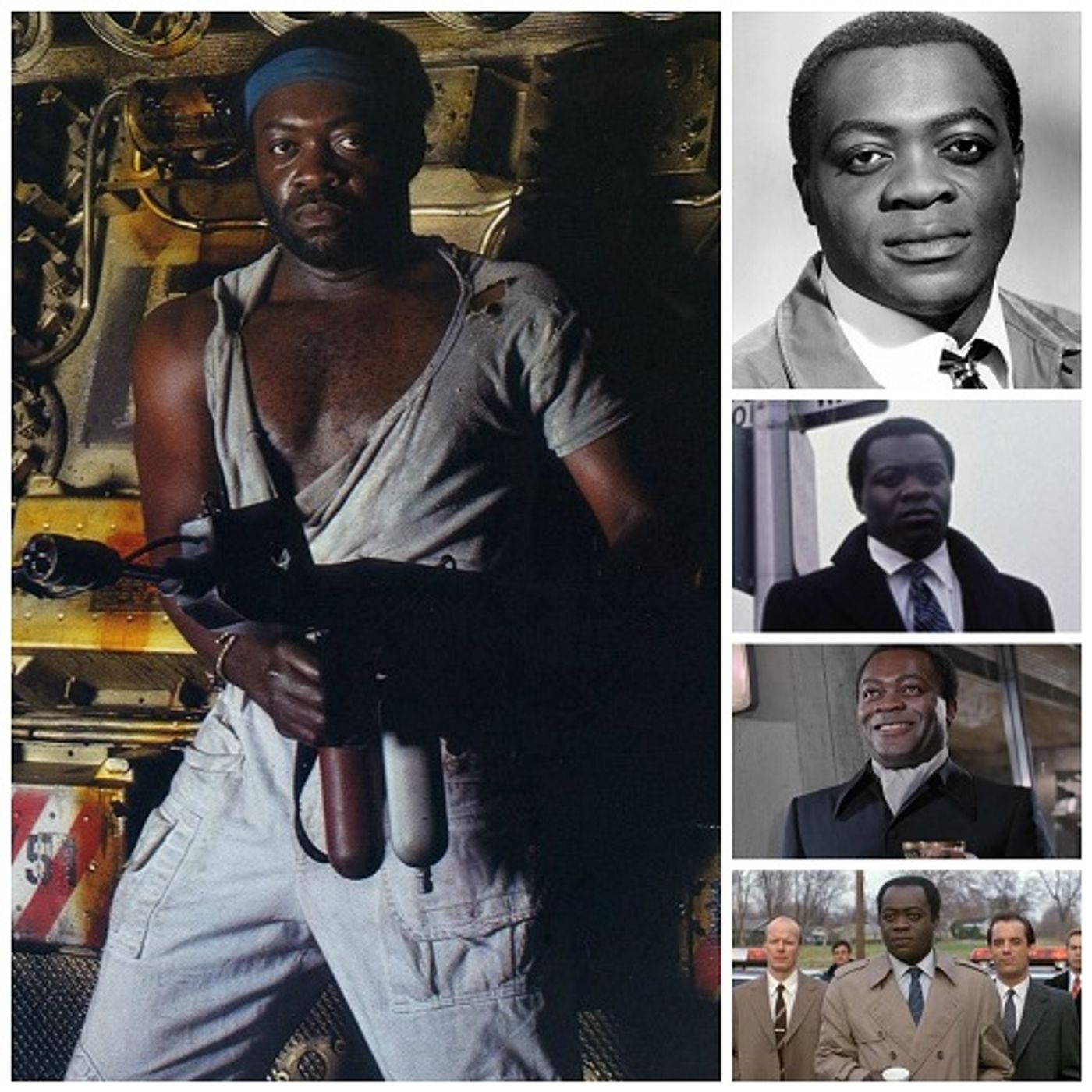
Incredible. We did just sit down with, you might know who, assuming you looked at the name on this when you pushed play, but yeah, this week's special guest is Yafit Koto and he's amazing. And Lucy came along to join in on the conversation. Yes, which was incredible. So thank you for allowing me to join.
I thought, you know, if anybody would be a good other party to have involved and had an extra little inside track there to be like, okay, guess what? I also do this thing that you might be into. But I didn't like do, I was an appropriate amount, right? I mean, I threw it out there for you. I was like, now's a good time.
Let's go ahead and do it. Because we know we're going to do it, you know. We know we're going to at least do the intro here. Hey, guess what? So I thought it was a nicely worked in thing and he got an invite.
So. Yes. And he can come play with your horses. He can. He's a horseman, which I love.
Yeah, we didn't really get into that too much in there, but afterwards he was talking about having horses. Yeah. He's an interesting character. I've just, I've never, and I asked you this when we were standing in the elevator afterward, but I was just sort of sitting there jumping out of my skin the entire time because I was mesmerized and was so, I mean, it was just like the history, his history is just. Yeah.
So compelling. And he's such a fascinating person. And there was so much insight. And that was the thing. Like, there's all these other big names that they bring to these things.
But I'm always like the one zeroing in on stuff like Yafet Kota. I'm just like, whoa, whoa, whoa, whoa, whoa. Yafet's coming. I need to talk to him. And the things that he said that, you know, I guess to him are just sort of throwaways were to me just the most fascinating things I'd ever heard.
I mean, to start out in the actor's studio alongside Marlon Brando and Marilyn Monroe, it's just mind boggling. And how clueless he was going into all of this, like to his own benefit, really, as you'll hear, it becomes his thing. thing that propels him into the industry. And I'm pretty sure he told you he gave you a scoop or two. I think there's some exclusives in the interview. I mean, he said that, you know, for decades he didn't really do any press.
So now the stories are. Starting to come out. We are, you know, the most awesome of all presses. So this is where you come to when you have cool stories. So yeah, I was amazed.
I just felt like I was, yeah, on the Dick Cavett show or something. Really? We're that level of awesome. Yeah. So we should just get to it?
That's what you're saying? Yeah, pretty much. I think so too. Let's just go talk to Yafat right now. All right.
I was going to start at the beginning with you, and I guess born in New York, were you? Right. First off, I guess, because I've heard so much about your family history, what did you know about your family history when you were a kid? Did you know a lot of what you learned later? I knew what my father and my mother were saying, and I'll doubt that the Bell family from Africa are related to the royal family of England.
Yeah. And.... My great-great-grandfather was Alexander Bell, who was subsequently hung by the Germans in 1912 and stuff like that. Just a number of things that I've gone over in my book, The Royalties. I don't know whether Buckingham Palace wants to get down with that, but the whole family couldn't be.
And not only that, if you look at the Magnabel family, You'll see the royal family there on the internet. So you knew that much when you were younger? Yes. I guess your parents neither were really interested in entertainment or certainly weren't working in the arts. There was like a nurse.
First of all, my father was a Jew. He went to the rabbi. We went to a rabbinic school in Hong. And my mother was a Panamanian woman who went on to the army to become an army officer, United States Army. And those kinds of people being West Indians and conservative Jews, entertainment.
It wasn't on the radar. Wouldn't even talk about it. I mean, look at you, you're crazy. You said, I want to go become an actor. So did they, like when you first, were getting interested in that and posed that question?
Were they just like, what are you thinking? Like, was it really something they wanted to fight against? Those members of my family are very much like what is called white royalty in this country. You don't see them getting married. You see the women in newspapers announcing they're going to marry the son of corporate big deal company Joe, okay?
That's the kind of family that I grew up with. So when you mention those kind of things, no one reacts. You know, just pretend like you didn't say anything. Even when it starts really happening, still, to this day, my mother never said to me that, oh, that was a good movie you were in, or, oh, wow, you're an actor. Just like you don't know what, it's like you didn't do anything.
So what, what turned it for you that you really wanted to get into that? When it wasn't something you were raised around, you know, being in the industry or anything, what made you want to pursue at least acting in general? A series of events that started with someone who was born here, James Dean. I went to see a picture when I was 15 years old entitled The Rebels Out of Course and left the movie set of Blown into another country. And then later on as I was older, looking for a job in Manhattan, during my time looking for a job, on Times Square they used to have these daters that you could do anything, go see anything.
And when I asked them, looking for a job, I couldn't find one. I went to see a movie called On the Waterfront. And then when I saw that, that sealed it for me. I said, I'm going to become an actor. I want to be able to do what these guys did.
Little did I know, both of them are from Indiana. Marlon Brando and James Dean, which is second. Blessing to the state to have such geniuses come from this one state. They always reference that era of when acting changed. At the time, I guess, did you feel like this was something new and different?
It's that Marlon Brando, James Dean, that whole new wave of a different style of acting that came about. I wasn't aware of the style. I only was aware of the word, the active studio. And then I became a member of the active studio. Didn't even realize I'd become a member of the active studio.
I became aware of the style now that the system that created the style is gone. The system is no longer here anymore. But I became aware of the active studio and it became something that The quest of every young actor then was to say, I am a member of the actor's studio. Yeah, that's just fascinating to me. I love that they were influenced.
I mean, they must have still been looming large. James, you must have been looming large at the actor's studio when you were there. What years were you at the actor's studio? I went to the actor's studio around 53 or 54. Oh, wow.
Yeah, and 55. So very shortly after you was there. Molly Kazan was there. Molly Kazan was still there. And Gatch and Lee Strasberg and Molly.
It was quite by accident, me getting in. How did it happen? I was trying to find an acting school to go to in the Bronx, calling one after another, and couldn't find one. And finally I called one. He said, the actor's studio.
I said, oh, wow. I didn't know about the actor's studio. I had never even been to except a couple of movies. So I called him up and I said, how much did it cost to go here? They said nothing.
I said, wow. Does it cost anything to go? No, you just come. So I and auditioned with the girls that were on the phone. So I told my mother, I found the active studio, I go down there, and I audition, and with Diana Sands, who was in The Raisin in the Sun, and written by a piece called, by Adrienne Kennedy, she wrote a thing called The Funny House of a Negro.
And we did it at the active studio. And I used that for my audition. Well, later on, I got a call about two weeks later. We're going to take you in as an observer first, and then we'll gradually bring you into a class. And I was in it.
I didn't think it was in the church basement in Manhattan. I didn't think much of it. I came to find out a lot about it later on from Marilyn Monroe. who I became friendly with. And I didn't even know she was Meryl. One day we were walking up from Manhattan, she was on her way to the studio because she was studying there.
And she said she's a big star. So I looked at her, she was crazy. Every actor thinks they're a big star. I didn't even know she was an actor. I thought she was this fat, knock-kneed lady that was absolutely insane. wasn't attracted to me, and I never saw her in any movie.
I just saw her in the class. And we were walking up the street, she's wearing these black sunglasses, and a fellow classmate, she says to me, you know, if I take off these glasses, you won't be able to walk with me anymore. So, again, thinking that she's nuts, I said, well, take them off, let's see what happens. Well, she whips off these glasses, and we didn't get 10 feet before people start screaming from the street, cars going by. Marilyn!
They start charging. Three to four or five hundred people collected in a few minutes. And she said, she gave me some cab money. She said, because we're still walking, take this cab and you'll get there. But I'm going to be, they're going to take me away from you.
You won't be able to walk with me. So when she was gone, I took the cab money and I Caleb, I was blown away. So I'm sitting in the back of the room, and I'm sitting next to this really short guy, about as big as this chair, who's really powerful, and he's got this bulldog on his feet. And we're listening to the class, and I lean over, and I say, you see that woman up there? And he says, yeah.
He says, that's a movie star. Really? In here? So I said, yeah. What's a movie star doing here?
So I says, I don't know. He says, you know, we And I told him the incident. He said, oh, wow. He said, after class, you and I will wait. Brother, come out, and we'll go up to you and get autographs.
I said, OK. Class is over now, so we leave the basement. We go out on the sidewalk. And as we got in the sidewalk, these people are going, Marlon, Marlon Brando. They're running over to him, and they get his autograph.
So I said, what's going on here? He says, all right. When we start seating, I realized that every single person in that school or Montgomery Clift, who was there, and others. All of them were movie stars. And that's when I was absolutely, totally blown away.
I didn't realize that. I'm the kid from the home. I only saw a couple of movies, but I didn't know these people, these giant stars. And then I found out that Marlon was studying at my aunt's dance studio in Manhattan. And then I saw him again there, and I saw James Dean there, and Ozzie Davis, God rest his soul, there, and others, Eartha Kitt.
I started seeing, I had an atmosphere of the studio on the east side, and Sevilla's dance studio on the right, Sevilla Port dance studio. Strange. That was my introduction to, I'm going to shoot picture industry. Seeing all that, I mean, you're still kind of a kid coming up, hadn't been exposed to any of it. Was that more daunting, or did you see that and go, I want that level of celebrity?
No. Yeah. No, I, there was a bar in Manhattan that they all went to. Yeah. And all the movie actors in New York, I went to, I forget the name of the bar, it's on 8th Avenue.
I started going there a lot just to be around them. Met Christopher Plummer there, Paul Newman. So every night I went there, they would be in there eating and standing at the bar. They were all over the place. And I wondered how people in New York didn't know that in this particular bar, Downey's Restaurant, I didn't know.
Why don't they know that all of these movie actors were in Downey's? So I was going there every night. And they were all eating dinner at the bar, and I befriended a number of them. And so when I went home, my mother would say, where were you? I said, I was down in the bar with Paul Newman.
She said, you're crazy. So every night I could report back to what these big, giant stars were doing. And no one knew in my neighborhood anywhere that during the night I was with superstars from Hollywood. And they thought I was just going crazy and making up this stuff. You know, Montgomery Clift told me this.
It was, what? What are you talking about? That's amazing. That's incredible. I mean, it must have made it seem so much more attainable.
I mean, that seems like it would be really demystifying that. It's just people. That's right, because I would question them about California and state. And they all knew that I was trying to get in the business. And all of them were helpful to me.
Every single actor that I talked to were helpful. These were big-name people. Oh, you do this, you do that. And very talkative. Chris McCormick was very talkative.
You know, very, you know, he'd have a couple of shots and he'd tell you his life story. So that was a benefit. But it became my secret. I never told any other actor in New York or any person where I would go or who I was meeting and what I knew about the industry. Wow.
They'd come try to steal all your secrets. Well, it was hanging out there. You know, I would not. Cutting in on your time. I took a couple of girls there to impress them.
Well, sure. We're old friends. And we had become friends because they were all going there every night. Well, at that point, I guess you're doing more stage acting. Were you specific?
Was it just like assumed that film was the next step? Or did you specifically take an interest in film acting? I didn't take an interest in anything. I was not trying to become an actor. And it's You start becoming like the people you're hanging out with.
You start becoming like Brando. You start becoming like Dean. And all those guys were rebels at the time. In fact, I heard this story that Marlon refused to audition for parts. I started doing that.
I started getting parts. I would come with the script and give it back to them and say, I don't want to audition for this. Why? It started by saying, I don't feel I'm not in the movement. That was my motivation.
And for some reason, they became enamored with this style. That was a style that people who didn't care looked upon, oh, well, he must really know. What do you feel about the script? And so I started getting work that I pretended I didn't want. It's not that I had this plan to get work.
I was just copying the older guys who seemed to have gotten someplace by being these rebel, didn't audition. You create a mystique at that point. You're just like, what is this guy? He's got something going on. I was mysterious for sure, just like they were.
I'd go to auditions, sit in the back. I refused to get pictures or resume. No one knew who I was. Suddenly, around New York, I was getting this name. It was Yafit Koto.
And I didn't even know I was getting a name or reputation. So did that lead to more stage work or did you immediately, because I know you started kind of working your way into TV at that point. Did you, again, did you end up doing stage work just because it's what, you know, was the next step? The next step was trying to get work. Yeah.
And I got a job at the stage at Delicatessen. Again, I always wanted to put myself where actors were hanging out. And the stage, they were all going there with sandwiches. So I got a job there. And it was the 8th Avenue Grill, I think it was the stage.
And later on, One afternoon, there was an actress who was in The Devils. She would come there for lunch, and she was there with her girlfriend. So I kept, I wish I could find her and see her again, because her life is so strange. Her name is Anna Shayla. Maybe she'll read this and come forth where it is.
And I said to her, are you an actress? She's beautiful. She's black hair, darker, Italian-looking lady. Are you an actress? She said, oh, yeah.
I said, well, are you? What play is it? She said, I'm on Broadway. I said, oh, really? I said to her, what are you doing?
She told me the part she was playing, and she was in The Devils. And she told me, but she said to me, there's an audition going on. You'd be right for it. I look up and live. A lamp unto my feet.
One of the two. James Earl Jones is going to be in it. And I said, what's it about? She said, it's about an African rebellion, and it would be great to play James Earl Jones's brother. Oh, I got excited for that information.
That's the kind of stuff you have to get from people. And I found out where the casting agent was Joyce Selznick. So I called over there, and they said, come over. And I went in there, and we met by the receptionist. Leave a picture.
So I looked at the picture, but there was nothing I could put on the back of it. I couldn't make up. I hadn't done anything. So I called back several calls, never got any return calls. And finally they told me, don't come back to the office, because I did that like several times, asking to speak to myself.
And they wouldn't let me see her. I said, what do you want? I said, I want to audition. He said, you're not an actor. Who's your agent?
Agent? I don't have an agent. So I'm really frustrated. So what do I do? One afternoon, I said, I'm going to call the salesman's office, not as Yaka Koto, but as Marlon Brent on the phone.
So I call him up, and I say, I don't want to speak to the salesman. So the woman says, Who is this? Told him Marlon's on the phone. So she comes on the phone, says, this is Marlon. Oh, Marlon, how are you?
I said, I got a kid I want you to see. This is Marlon. You know how McCullough's name is. I'm going to take a look at him. This guy's a really good boy.
So she said, oh, Marlon McCullough. So I go up to him two days later, and the secretary who had originally called the police to have me removed from the building said, sees me coming again. And she says, I'm going to call the cops if you don't stay out of it. I said, you got the wrong idea. That cop almost threw me in jail.
I said, I'm asked to come up here. She says, who asked you? I said, Ms. Selznick. What's your name?
I said, Yavacoto. So she calls, Ms. Selznick, Yavacoto's out here. Oh, send them in. So I go in.
She says, there are big people who have their eyes on you. And she says to me, She handed me the script. She says, take this and read this script, she says, and get back to me. She says, I'm going to ask you to do a petition. Who is, where are you?
I said, the actor. Oh, the actor's studio. That's very strange. No wonder. She said, okay, go ahead.
So I take it home. I read it. I come back. And I get the job. All because of Marlon.
Again, you created a mystique. Marlon likes this guy. I have to get the damn job. I got it. And I did the thing with James Earl Jones.
And I got my after card. And by that time, the after card led to the equity card. That was my first gig. So I rolled up to that. So I guess as you move into film like what do you feel like was the first big movie that you end up on is it like Thomas Crown Affair or one of those like early ones that was a huge production.
No it was I think it was Nothing But A Man you know they they won Venice Film Festival I got that I don't know how I got it I was so long without an agent I just, the agents text me, Michael Romer. About this time, I was becoming known as a black brand out in New York. And Michael says, they told me I have to see who they are. And that you want to read the script. So I asked him about the script.
And he says, I told him I don't want to read the script. I just want to talk to you. Again, copying what the rebels are, you know, moody and not really, open, suspicious. And I said, I got to go. He said, no, don't leave.
He said, I'll walk down with you. And he walked down with the rebel, James E. The rebel doesn't want to do the scrap, and I don't even know why I'm here. That whole game, I was running to the hills. And I got to the place where I was playing it so deeply that I didn't even know I was playing it.
I didn't even know it was something I took on. So I take the script and, you know, I did it. And it led to the Thomas Grant affair. That was Norman Jewison. That's pretty huge as far as he was kind of right in the middle of his run and kept getting bigger at that point.
What was he like as a director? Great. I mean, he's a funny guy, but absolutely great. And one thing I didn't realize, what was happening, I was getting jobs without having to audition. And people were just picking me.
They said, we want you to do this, you know that. I was starting to work and I was getting a reputation as a strange African-American actor, strange guy. Did that come into play as far as trying to work in race as they were casting? Did you feel like that was something you were fighting against in the beginning? Because there's only so many rows, I guess, for things they were casting for black actors at that time.
No, I was never looked upon as a black actor. Yeah. I was looked upon as this strange guy that we wanted in the movie. I didn't even realize this was happening, man. I swear to God, I didn't know it.
I've done now 72 movies and something like 110 television appearances. It was always in these strange roles. I've never really been cast as a black actor. Oh, here's this black thing going on. Let's get him.
Here's this strange things going on. Like the Liberation of the Lord by Brian Jones, they wanted someone to kill a white man. It was the first time a white man had been killed on the screen. He'd never been seen slapped or hit up to that point. And the Liberation of the Lord by Brian Jones was a turnaround.
Because I don't know if you saw that movie, but that movie was strange in the sense that you never had a black man kill a white man on the screen. And the way we killed him, If they had conceived of it as a black man, then they would have the guy cry or pray or do something really typically Negro at the time or do something typically Afro. We did something that no one would do. This guy killed without any remorse, without saying, Mr. Dahl, I'm going to kill your boss.
And we didn't want to sound that typical African sound that comes out of Africa. Well, you know that's a black man when you hear him talk. Sonny Boy was dangerous. They didn't know what he was. They didn't know who you are.
So when we went to kill him, I didn't go to kill him. You don't know what he was doing there. You saw him standing there behind a tree, a log, of course. And he comes up from behind a log and walks down to the tractor. And he's not threatening at all.
He just tells the guy to get down off the tractor. And when he gets down off the tractor, you see this hand that's been standing loosely by the side. There's a gun in it. And he's forgetting that the threshing machine is right back when he pushed him into the threshing machine. And that killed him.
And then when they looked at his face, there was nothing on his face at all. Just absolute pure death. And he walked away. And the next time you see him, he's on a train. So you never know what the hell this guy's...
What is it? It was completely unusual for an African American to play a part like that. You know, he wasn't being nice, he wasn't being good, he wasn't being soft. He'd just come to kill you, because his friends can kill you. It was a powerful performance.
And that thing started a whole genre of black exploitation film. A whole. Genre. It became an industry in itself. It became an industry in itself.
Black guys killing white guys. You know, football players killing them. Jim Brown, Brad Williams. It started a whole thing. Good evening.
It's intermission time. And during the next 10 minutes, we invite you to visit our refreshment stand, located in the center of the drive-in. This episode is brought to you by Crosley Turntables. Starting back in 1920, the Crosley company produced the first low-price radio for the general public. And ever since, they've been working to provide innovative and affordable electronics.
And that tradition continues today as Crosley works to expand their product line, creating vintage-inspired electronics featuring the latest technologies, such as iPod DeX, Bluetooth, and MP3 capabilities. So to find out more about their turntables, just go to crossleyradio.com. There you'll find everything from the players themselves to replacement needles and even records. Again, that's crossleyradio.com, so head over there now and pick out which turntable you need. Isaac Hayes is Truck Turner.
He's got six deadly pieces in his arsenal and six sexy ones in his stable. There ain't no Mac here's man enough to ice Truck Turner. If he gets you, you're cold meat. If you get him, you get them. And that ain't cold at all.
Isaac Hayes is Truck Turner. Rated R. Under 17, not admitted without parent. Want some music for your ears? Doo-Wop Shop makes it easy to rent for any event, business meeting, or special occasion.
From PA systems to karaoke machines to just about anything that makes noise, you can rent it from the Doo-Wop Shop. In Louisville, find them either at their Highland Store at 1587 Bardstown Road or in the East End at 2915 South Hurstburn Parkway. And look for them online at DooWopShop.com. Doo-Wop Shop. We're serious about music.
Hey everyone, this is Jeanette Goldstein and you are listening to Movie Meltdown. Look man, I only need to know one thing. Where they are. I hope that's good. Anytime, anywhere.
It's part of your. Problem, you know, you haven't seen enough movies. All of life's riddles are answered in the movies. Now, on with the. Show.
I've wondered in years, because I've become interested in all these different versions of exploitation films, and it's like, now we look at it through this window of decades of things changing and, in theory, Hollywood changing, but, like, what it was like at the time to be working on things that were, now would be considered exploitation. Did they feel like that at the time or was it just another job? They felt it was, it became exploitation. Yeah. Because of the people who got associated with it were all, like, football players, models and so forth.
You know, Jim Brown, Fred Williamson. Yeah. So it became exploitation. Because that, and nothing but a man, was unusual. And the fact that I wouldn't do any publicity was, again, this is the person I'm talking about.
Those things. There's no record of me having any publicity. That was, again, back in my rebel days. I'm not going over the road. Creating that mistake.
Well, around that time, one of them I just recently re-watched was Bone, which is another one of, like, just a strange character, and you don't know, like, he just sort of appears, and you don't know what his motives are, and by the end, it really takes a weird turn. But, I don't know, that's a strange, and Larry Cohen being the director, I don't know, what was that? Well, he knew what I, he knew, he knew where I was coming from. He said, you're the strangest person. You've been branded as strange.
Strange, yeah, but So he had cast all these black actors prior to casting me, and it wasn't working. He didn't know what it was. He says, I don't know why my old script is not working. I've got all these people. And I met him, and he said, you're crazy.
The reason why I'm laughing, because I'm laughing at me then, because I was like being so serious about it. I had mistakenly met these people at the studio And it's taking on the wrong attitude about life. Yeah, most of it doesn't seem motivated as you tell these stories. You were just doing what came naturally, being in that crowd. So when we started playing that role, he was happy because this is what I wanted.
Finally, strange. This weird guy who comes and rapes this white chick. And, you know, people forgot it was a black man raping, you know, going after this white woman. And it became bizarre, more and more bizarre of his behavior was just, even the way he moved. He moved like some kind of a cat, you know.
And it worked. You couldn't put your finger on it. Again, it just worked. It's really interesting, and that's kind of why I like watching those exploitation movies that fall into that kind of stuff, because sometimes they pinpoint things that were going on in society that you can't get now. It's a very specific window into.
What was going on. And the cameraman who filmed Marlon Brando and James Dean in Montgomery Clift, they were able to see that strangeness with these people. and catch these strange moods that they were able to get in that they didn't even need to say anything. Even when Marlon Bradley's back was turned, and you just looked at him, you knew that some weird shit was going to come from him that you didn't expect. And so you're constantly looking. That's what came out of the studio.
That's what came out of the studio. That's what you see when you see people like Montgomery Clips on the screen. You don't know where they're coming from. That was the system they acted in. and, you know, romantic. Well, and then you, again, I guess through the strange persona, go into these different types of roles.
I guess one of the most high profile at the time would be like becoming a Bond villain, which then you ended up doing. So that's, again, I think was the first black actor to be a big main villain in one of those movies. And then it definitely, that's a different style in most of the Bond movies. So I don't know, what was it like being thrown into that huge. For the same very reasons.
I'll do it across the 110th Street with the great Anthony Quinn, the Lord of All Flies, or God on Earth, as he told me he was. And Arthur Picker from United Artists, the executive, walked up on the street and said, they want you to do Bond. I didn't even know who he was. So he says, we want you to do this James Bond movie. So I said, who?
I didn't have an agent. at the time, again with the Rebels. This is years into your career, still no agent. Still no agent. And he says, would you play James Bond? I said, okay.
So I was going from one movie to another one, cast on the street, even before I got through with the other movie. So I said, okay, I'll do it. And he said, send you a script. I said, I don't need to see the script. I'm going to do a James Bond movie, whatever I read for.
He laughed. And I meant it. I'm going to read it. I'm going to read it. I read all the play in English.
And the character worked. Ken Anger and Mr. Big, it worked. It absolutely worked. It worked.
By that time I had become so established that the work was coming. Work that I didn't really say, I'm going to work. It was coming because of my attitude, I think. Have you ever had an agent? Did you ever get to a place where.
I had an agent for a very short period and it ended But most of the work that I've gotten just came. That's amazing. No, I didn't need it. As a result, I didn't do any publicity with what I did. Mostly because some of the actresses there, Barbara Stanwyck and Judy Holliday, they told me don't do any publicity.
You know, stay away. So most of these things I'm talking about, I've done some interviews during the pictures, but I haven't gone out. on a full campaign, here's who I am, and blah, blah, blah, blah, blah. You know, what the hell for? I'm working, what do I need to, you know? You almost created your own type, where they'd be like, we need a Yafit Kodo type.
That's what happened? Yeah, it became you. After homicide, I looked at him, and I said, what the hell is going on here? Wearing my clothes, you know, like, something like me, and, I swear, I see it every time. I see it today.
Not only that, reading Yaka Kono movies. Yeah. Across the hundred and tenth street. Just remaking them. Saying old things.
These guys are absolutely weird, man. It's weird. It's got to be. It's real. But, notice, the NAACP doesn't recognize Mike, correct?
They don't give me awards. They don't say, oh, you got to cover. No one. They don't. No one.
No Academy Awards, no Emmys, no anything. Yes, they say, oh, I was a great actor, but I don't get any acknowledgments from the black establishment. Because you did it so seamlessly. Yeah, it seemed like, like you said, it wasn't being... put out there as like it's a black role. You just created these characters.
As you went along. No, no acknowledgement. Do you have a personal theory as to why that. Is? I think a director told me he went to a producer in Hollywood with this black picture and the producer said, yeah, it's not black.
And the black actor got upset. The director got upset and told me that's what it was told him. Fox or Paramount or something like that. Uh, I don't know why they said that. Um, I just don't, don't get, I will never get, nor do I want any, um, uh, uh, acknowledgments from the NAACP and the image award.
I don't care. This career has opened the door for practically every actor that's working. Yeah. And, The fact that they'll pull this racist shit on me shows they got a problem. And two or three of them, representatives years ago, wanted me to come.
And I said, I'm not coming because it's a Jewish holiday and I won't fly. I think it's because I'm Jewish. I've been so. And I think it's because I'm conservative. Republicans have always been.
A little bit further with the Democratic Party, but my ideas have always been conservative. And so people like me, I've always been out. Even though I walked the streets with Dr. King, even though I was a leader that helped in the Congress of Racial Equality, my political ideas and their beliefs are contrary. And so if you're a Republican and you're a compassionate Republican, it's not enough.
It's just not enough. They want you to do the thing with the marching and so forth, carrying on. I've never believed in that. Never believed in that. Until we change, nothing's going to change.
That atmosphere, man. And there's a lot of black conservatives out there who are basketball players, football players, stars, and they're all right. But are afraid to say they are because they're going to be condemned by certain people on the other side of things. Interesting oh at some point I knew we were going to have to definitely talk about Alien that's that's such a huge point in your career and then just a movie that sort of changed that genre what I thought was always so. Interesting three movies changed the genre at that time the Liberation of Lloyd Byron Jones made people understand that black men weren't weak and scared of singing for nuns running down the street yeah okay um the second movie that changed everything was live and let die.
Yeah. They suddenly said, black guys could be these villains to come after us. Okay. And then the third movie that put blacks in space and in adventures was, uh, alien. Yeah.
So then the whole industry opened up. You think you say, Oh my God, you know, fantastic job. He did exactly what, what we've been trying to do, you know, uh, through picketing and carrying on. And so we're all working now. Well, fuck it, we're not going to give them the fucking NWCP.
We're not going to give them the goddamn NWCP Image Award, even though he started the, I put all these black women behind cameras. I spent money to send black women to school to learn and become script supervisors. Do I get any thanks for that? Absolutely not. Screw them.
I helped them. I helped all the stunts that were done in Living Let Die. I brought the Black Stuntsman Union to do that movie. It was me behind the scenes. The movie I did for, what was it called?
Drum? I brought black actors into that. I constantly helped open the Watts Writers Workshop where black writers were at, Bud Schoenberg and I, Dozens of writers got published. We brought in Jackie Kennedy, who published a lot of these people. Done all these things, man.
Black you better get a market. Always have to do things differently. That throws them off. But, yeah, I mean, that's kind of what I thought was interesting. If I became a Democrat, oh, yeah, oh.
Oh, yeah, that. Oh, the greatest. that conservative thing over my head which is proven to be a. Rope well i mean that's i didn't uh with the fridley scott like i feel like that's one of the things that changed because like lucas did that like everything's kind of grimy in space and very lived in but but in alien we also have this like working class that like you never really saw like in star wars everybody's like a superhero you know they're still dressed flashy and they're bounty hunters but like When you guys get in Alien, it's like these are like an oil rig in space. You guys are just working class. Everybody on there is just like, this is their job, and they're kind of sick of it.
There's no flash to the space. Worried about the bonus situation? Yeah, where's my bonus at? I don't know. I thought that was always a really interesting take on it.
Plus, it's the most working class you and Harry Dean Stan. Do you want to work in the Harry Dean angle here? Sure. He's pointing to me with Harry Dean Stanton because I started a festival. Harry Dean's from Kentucky, so.
Indiana has James Dean and Mario Brando, and Kentucky has Harry Dean Stanton and Mario Notes. So I started a festival for him about five years ago. Oh, wow. Yeah, and we do it annually. We show his films.
We bring in guests to speak. So you're invited any time you want to come. We would love to have you. Thank you. But I love. you and him together.
He has more on-screen chemistry with you than I think anybody I've ever seen him in a film with. There's something just so loose and free and joyful at times. Which is unusual for Harry. Uncharacteristic. Just in your presence.
I'm just wondering about that relationship. Harry's what they call method actor. He's close friend of Marlon and James Dean. He was coming from the same place we both have the same philosophy of our life, you know, so it was like we weren't acting, we were actually saying, yeah, this is the truth of what's happening, you know, and so our relationship worked because it's, our philosophy has been the same since we started acting. We don't care.
You know. It's definitely his thing. That's the whole point of the whole thing, you know. That's why it worked, you know. We weren't looking for it to work.
We were just looking to, yeah, this is what's going on. We're eyeing this thing. We've got to make the best of it. Yeah, you can feel that. It's palpable on the screen.
These are two buddies. Yep. It's like when I met him, I knew we were both coming from the same place. And so we communicated in a way that we would communicate. He walked into this room.
It was not a different scene at all. Well, that had such a different visual style. Was all that sort of in place when you got involved in it as far as the design of the creature, design of the craft and the spaceship? I really didn't get into it. I really didn't care about the goddamn spaceship.
What was happening with them. You know, they were doing their thing, running around the set. I was just laughing at them. All the busy, they were busy. Got a lot of work to do.
These guys are nuts, man. This job you're doing is not any different than what other people are doing. You know, the cab drivers and truck drivers and engineers, they're all doing the same thing. But somehow Hollywood people start feeling special about what we do. You know, it's just a movie, man.
You know what I'm saying? This is sort of go into the theater, pay the popcorn, sit down, go home. What we're doing is not important. There are things that, you know, people being operated on, heart surgery. Life and death.
Life and death. That's important. So finally I met someone who understood that this is bullshit. Everybody's here for the dough, let's face it, you know. He really is tapped into Harry Dean's mentality.
That's what they're there for, man. That's what everyone's working for, to get that money, you know. Except maybe women, not the master race, the women. Yeah. Stronger than we are.
So therefore, Veronica and Ripley Sigourney were they were the real strength of the movement. As is, as my philosophy, women are 10,000 times stronger than we are mentally and physically and spiritually. It can take a whole lot. So the position that Ripley had was perfect. Yeah.
Well, that, again, why that movie's so game-changing, because they never established that Ripley was a female character. It was just written as Ripley. And then finally, like, they were signing the deal, and, like, the production company called him back and was like, one question, is Ripley a man or a woman? And they just, uh, woman? Like, it wasn't written as a female role.
No, it wasn't in the first script. Yeah. But as they changed it, they wanted it to be a female. And they wanted someone else. I won't mention who that person is.
But the second group, from the first script, it was written for anyone. But then as they changed it, they said, we want a woman in this. And it had to be a female. Like, Parker had to be this dominating spirit. Uh, it had to be.
It was time for, it was time that change. If you're going to have a monster and a monster has to be slain, you have to go away from Adolf Tuxley's beliefs and all other beliefs and, and have it slain by a woman. You know, so this author, King Arthur becomes, uh, Queen Anne to slay the dragon. That's what makes that thing so powerful. That the role of the hero has changed.
The hero throughout all of our classical history has always been the reluctant man who doesn't want to go into, doesn't want the adventure, doesn't want to call to the adventure, doesn't want to descend into the belly of the beast as Joseph Campbell puts it, to become, it's never been the female. When you look back at heroes, In history, it has always been the female. It wasn't Jesus that was the history. It was the hero. It was Mary who was the hero.
It was his mother who was the hero. But they mess with her history in such a way. They don't put into the screen that she was a hairdresser. They don't put into history that she had two children on the desert. They don't put into history that she was a friend of Augustus.
They don't put into history that she saved their life by moving her out in Jerusalem and letting them put this history, letting Rome protect her two sons. They don't put anything about her in there. They remove it all and say she just had a kid and he grew up to be the hero. She was a gift. It was a gift.
It's storytelling and how it's changed a little. Bit over the years. They desperately want to do it. And they don't do it because of storytelling. They do it on every single level of our society.
They do it in college. They do it in grade school. They do it in the streets. They do it in cinemas. They do it in books.
Bring the woman down to the place where she's just a vessel and prop ourselves up as the guardians of the earth. And it's never been that way. If you go back and look at history and what happened, a woman always came in and changed the entire, what, France? John the Rock? The black movement?
Nothing happened until Rosa Parks decided not to get up and go to the back of it. And then it all happened. You trace history, there's always a woman there who comes, who is the strength. You know, you have that going on now, in my opinion. Oh, she says, I'm not going to give them America.
And the Americans were there because they were saying, well, the Constitution says you have to do it. Well, let's examine it. What did we do after the Second World War when we brought the Nazis to trial? They said we were only following the Constitution that Hitler had put down. He says, why didn't you have the moral authority to say, no, I'm not going to put those Jews in.
I was only following the law. We didn't want to hear that. You should have followed your conscience. It was all right to say that then, but it's not all right to say that now. So the conscientious objector who says, I won't give these people a license to get married, is he now the criminal?
Then you shouldn't have created the two words conscientious objector. You should have left that out of the open. lexicon because now our education system is contradicting itself. I was trying to get some of the other roles. The one that to me I think almost branded you in that new wave of career when you had the new Yafet Koto type was Midnight Run. I feel like he's such an identifiable, the guy in the trench coat, the guy that's in charge of everybody but still like I don't know.
It became such a great role in that movie. We were just talking about it recently on the show. And again, you can't identify Mosley with any race. His frustration with people messing with him just reached a place where as soon as you see him, you know he's not laughing. He's not laughing, but you're laughing because you know there is something about him that is completely insane.
And yet he's still trying to come down with some sort of order to this. And you've got your other characters creating chaos at all times. We can see his insecurity. Each time he shows up, there are more guys. First time you see him, it's two guys.
The next ten. Twenty. Then whole armies and helicopters. People say, there's something going on here that's not right. He's the one calling for all this backup and help.
You know, so he becomes something bizarre. We were talking about how, what a weird, like, track record Martin Brest had as well. What was he like shooting that film as a director? Marty's a really strange man. He's got a strange bunch of movies.
I mean, I'm kind of, like, used to working with strange people who have these strange projects that get made. So, like, a whole lifetime. He comes to me, he says, Yeah, I want you to know something. When I'm doing a movie, I really get into it. I said, okay, Marty, I understand that.
He said, I stopped eating. And I stopped sleeping. And I'm going to change. He said, don't let it frighten you. So all the period of time that we shot that movie, Marty had stopped eating.
He stopped sleeping. He stopped everything. And so... a ghost would appear who looked like he had just stepped out of Dachau or Mauthausen behind the camera. He was behind the camera looking really gaunt, skinny, dark shadows. So it was hard to concentrate.
I couldn't look at Marty's direction. It just went off. The whole drama was going on behind the camera with him. But we knew it was good because For me, it was good because I need those kind of odd things that bring out the oddity in Mosley, who was weird. It's just so funny to watch him with the other, yeah, him trying to maintain some sense in order to it.
No one knows why they laugh when they see him. But people start laughing immediately when they see him. Because he got it. These guys were messing with him, you know what I'm saying? But I feel like it creates that archetype that then becomes like a lot of your roles later start to echo that.
And you see in like Two by Sea of all movies, it feels like he's coming back. And then definitely Homicide, it feels like you get a little piece of him in those characters. Yeah, you get a little bit of the oddness there and the fact that he speaks Italian. Homicide was a great, yeah, was that something that came to you? I had just moved into this house in Conifer, and I had no agent.
In my house, I have horses and everything. I'm sitting on the porch, and I hear this car coming up the hill, and it's rising smoke behind it. It's Barry Leveson. He says, we want you to do this. fucking come out and ask me to do this shit. He's also got a mystique then.
He does things a little differently. So I said, what it's about? So he tells me. Let me just figure it out, okay? I get invited to New York City by NBC.
I mean, the hot shots. What an want with me? I go there, and as I'm going there, I stop and get a newspaper, and I read that I'm doing a television show. I swear to God, I didn't say I was going to do a television show. That's what happened.
I left, did the big party. All the outfit. It just... Oh, we're so glad you're doing a fucking homicide. Wow.
I'm going to say no. Warren Littlefield, he's standing there. He's the president of fucking NBC. Standing next to him is the head of GE. So both of them are standing there.
I reckon that's where they are. These are high-catching directors. These are like those. Industry giants. Jesus Christ.
So I call up a guy I know. He works for a metropolitan agency. You know him. He said, why can't I help you, man? What am I going to tell those guys that go, you're not going to do it?
So I said, okay, I'll do it. I had no choice, you know, in the matter. I think I called Jesse Jackson to get his advice. I said, fuck it, I'll do it. And then finally, I went to him and said, you know what?
I'll do it if you let me write. And he said, okay. Then I got excited. I said, at least I can write. I got something out of it.
I didn't even know how much I was being paid, you know? I didn't tell you. How do you say no to NBC? People call you. You're in it.
You're in the opposite. Hey, I'm going to come right in. I said, oh, yeah. Are you going to do this? Oh, yeah.
I'm doing Homicide. Luckily, it turned out to be good because I feel like that's that turning point. And it's funny that it was network television, but it was one of the first things that felt like it was bringing– filmmaking into a television format, you know, which you get later with Sopranos and stuff. It was going to get weird. I knew it was going to get weird.
It was going to get weird. When Barry came and told me how it all, I knew it was going to get weird, but the cameras would not stop moving. You know, the camera kept circling and doing, people got weird and sick, you know, so again, my weirdness sort of was catching on to Barry. You shot it completely different. It's stuff you see in TV now, but at the time you really didn't see stuff like that.
No, not at all. They're all copying us now. The way they edit and the way they cut. But they asked us to back up on the editing because it was making viewers dizzy. So watching it, people were feeling weird watching the show.
It took some time to get used to the camera constantly moving. Never stopping. Stopping what you were doing and then coming back and getting it. Me, I didn't care because, you know, I was just being, just go through my existence, man. You know, whatever I'm doing, you know, you get it.
It's cool. But a lot of the actors were thrown off and had to go back and make up their mind and concentrate real hard. Oh, okay. You know, they were getting into it, you know. I was in my space, man, so I didn't care what he did with their camera.
You'd done so much film work. Yeah, probably was it. But anybody used to TV. Like, they're so locked down in those shows before then. Yeah.
Yeah. Yeah, that's exactly right. Film work and my attitude helped me get through that one. I'm glad it's over, man. Nine years.
I left the country after that. It had such a great cast, though. I moved out of. The United States after that. I went to the Philippines.
I lived in Canada. I still haven't come back, really. I don't live in the United States anymore. Was it just the schedule? What made you want to get away from it?
It's too much, man. I mean, It's just, all of it's too much. The news, boo, boop, boop, boop, boop. I want it somewhere else, man. You know, a country where people are really looking at you and talking to each other.
And the Philippines provided that for me. And, no, first I went to Canada. I was up there in Canada. I got a piece of property way out at the end of Canada, probably Marmar. You know, across the street from me, people were seeing, like, the Virgin Mary.
Thousands of people were coming. You know, and then I went to the Philippines. I still haven't come back. to the United States, man. I want to see, I want to know that the dialogue in this country is changing, people are changing, people are looking and listening, you know, but they're not saying all kinds of war talk. Fuck these guys out.
A lot of shit going on, man. It's too heavy. I can't... The artist. Is going to say something one day.
I mean, an artist is going to say something about it. It's not like we don't know what's happening. I'm going to do it, say something about it through a book or script. I've written a book called Tomorrow's the Same Day, reviving Dr. Kananga, Return of Dr.
Kananga. It was from the company with Nelson Thor of the Toronto Star, Nelson Thor Enterprises, and a company that I've helped form. Both of them are going to produce a number of films. Tomorrow's the same day. We'll deal with Canango when he rescues himself from James Bond.
Because of James Bond's parody. So that's my first I think through Dr. Kananga, we will see ourselves. That's the only way that we can talk about what's going on in our society. It's to do it through movies, do it through book writing.
You can't do it through demonstrations anymore. Dr. King told his story. He laid the platform. But we have to do it through... storytelling, to get our heroes and heroines back in place again.
That's going to happen. And it needs to decide it's only the artist that does it. That's what I've always found with this. It's like we get together and discuss film and art in general, and I think we get so much more out of that than most things out there in the world. I think just examining art is way more interesting than most things out there.
And we shouldn't panic by what we see going on around us, From the point of view, if we looked at 16, 24, and 17, 24, 18, as a change to the age, institutions that were supposed to those age that changed and new institutions grew. And this thing is changing so graphically that in another week these microphones will be useless and throw them away. I mean, we're going through this change. Why do we think we go through changes without revolution? Social revolution is beyond me.
Internet and other innovations, time annihilators, have changed everybody's heads, man. And some people don't want to see that change. It's faster than we can process. These last 20 years, I don't know if the human brain is prepared for the stuff that's been thrown at it. That's right.
And the stuff that's been thrown at us They're holding back on what they have. You know? They're holding back stuff, innovations that have been created already. They're just giving you a little taste of what's coming. You ain't another 25, 30 years.
Blow your mind. Blow your mind. Just the way the people who are depending on the horse and wagon and the buggy and the post office rider and all those things then, the sheriff and town, managing them with their boardwalk streets and you know, the way they did things. Imagine how they felt when the train rolled in, the car rolled in, the car and the airplane. I mean, it just wiped them out.
I talked to old people who remember the first car. They freaked out and ran inside the house. You know, it was typical of the devil. Guys were reading the Bible when they saw a car coming down the road. Oh, Jesus is coming.
They freaked out completely. We did not accept it. You know, airplane has nothing. You know, Oh, I missed that flight. It's not the way.
It's crowded. It's crowded. I'll catch the next flight. Yeah, so run of the mill. So run of the mill.
Oh, Jesus Christ. What's happening to flying these days? What's happening to flying these days? Are you real for real? Listen to what you're saying there.
We can't fly the way we used to. Check yourself out, man. We're flying from one country to another. Right. That should be amazing.
Tripping, man. Get yourself some marijuana and sit down and listen to what you just said. We shouldn't even be flying. Really, you know? We should be walking.
We should say, God, just walk. Not entirely flying. Faster. You know, faster. And we got the stuff to go faster.
Did you know that? We're Always pushing, again, maybe more than we can handle. Do you know that this thing called Beaming Up and Down, Scotty, that was premiered on Star Trek, we have it developed. They can take you and send you to New York and we have it. I don't think we're ready for that either.
They got it. I'm sure it will be out. Before long. They got it. They can send you.
You can be beamed up and down now. That's crazy. Did you have anything else overall you wanted to throw in there? I don't think so. This has been fascinating.
Good, good. Did you have anything else you wanted to tell people as far as projects coming up other than the one you just mentioned? The one I'm producing? Yeah. No, other than the fact that I'm excited about going into business with Nelson Thorpe.
His family owns and created the Toronto Star. He's from this entertainment company. And I brought my company with his. And Tomorrow's the Same Day is the first project, which is one of seven books. that we're going to publish and bringing Dr. Kananga back is one of the exciting things to do.
So I'm very excited about that. Setting up a deal with a Canadian man who's a stupid businessman and son of Canada. I love Canada, man. I really love it. So that's what I'm looking for.
That's what I'm excited about. Why am I not making any movies? I do these conventions to promote my book. And I'm not making movies because I get a lot of offers. But there's nothing.
It's the same thing I did before. I get offers to play detectives. I get offers to play doctors. I get offers to do all kinds of things. But I'm not.
There's nothing there, man. There's no new Yafet Kodotai. There's nothing there. It's all just stuff you've already done. I've done all of it.
And a lot of it comes from... There's nothing there. I would love to see a script that was different, but there's nothing there. There's absolutely nothing there. There's more jumping out of planes, running man.
I don't know what happened to writing. Nobody's writing anymore. Now you have to write the stuff and create the project. I'll have to create the project. That's awesome.
Well, thank you very much for talking with us today. Thank you so much. It's been such a pleasure. My pleasure, man. Thank you.
Okay, so you listening, you were also mesmerized by that crazy stories, the amount of information thrown at you by Yafet Kodo. Is that not just the most amazing conversation? I'm thrilled to have been sitting in the room with him, but I'm just more so that it was recording this conversation. How about you, Lucy? Yeah, again, I have never experienced anything like that.
And such a sweet person. Yeah, really nice. And kind of, again, for the amount, I mean, you heard him throw out the numbers there, the amount of work that he's done, the amount of time he's logged in in the industry, and the stuff that, as he said, he kind of broke ground on a lot of different areas there, could have a huge ego about it. He kind of doesn't in the real world. Other than us making him talk about it, I feel like he would probably never bring that kind of stuff up.
But we sort of opened the door there for him. But yeah, it's interesting how... grounded and normal he seemed to be as we came in the room and like he's he's kind of a normal guy and yet has the most amazing stories so thank you once again to mr yafit koto for sitting down and talking with us and um spread the word i think it was an awesome discussion and tell people to go listen to it anything else to pass along lucy thank you for joining me this week otherwise that about does it we will return next time same geek feed thanks for listening Thank you. We'll be right. Back. Tom Landry's team was on the brink of elimination, even though they had outfought and outfought the Vikings for 58 minutes.
That was incredible. Yeah, great stories. You know, the truth always comes out right. This episode is a production of Movie Meltdown, produced and edited by the Auditude Studios, with opening music performed by the Empires. For more on how to sponsor or support the show, Email producer at moviemeltdown.com.
Talk hard!