
Season 4 · Episode 21
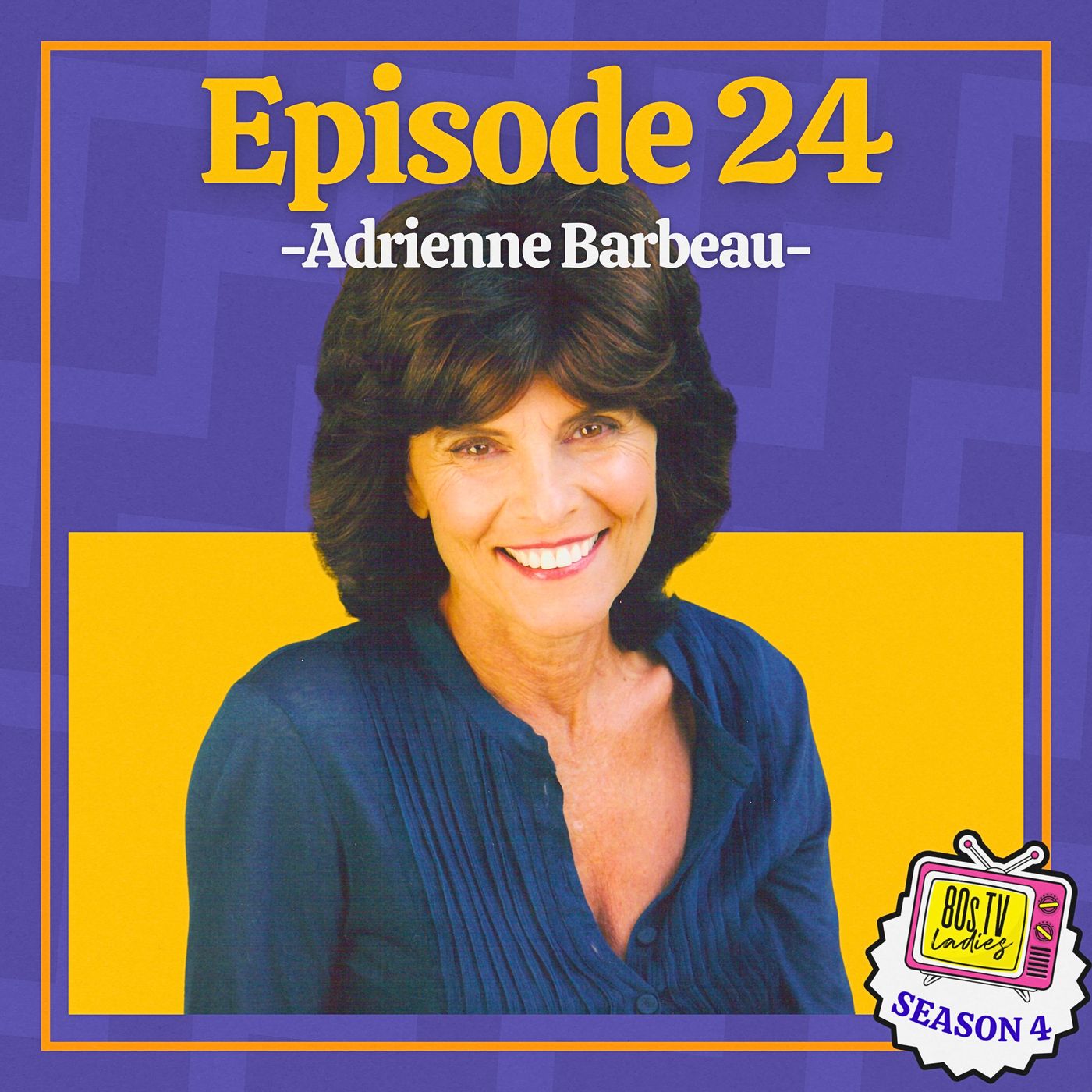
Adrienne Barbeau on Maude, Creating Rizzo in Grease, Cult Horror and Return to Fantasy Island
About this episode
Welcome to 80s TV Ladies, where we look back in order to leap forward, and where we say everyone has the right to body autonomy and boundless joy! In this episode, hosts Sharon Johnson and Susan Lambert Hatem are joined by six-decade stage and screen icon Ms. Adrienne Barbeau.
From her early performing days touring East Asia with the USO to her Broadway roots, Adrienne shares how she went from Fiddler on the Roof alongside Bette Midler to originating the role of Rizzo in Grease. She opens up about being selected by Norman Lear to play Carol, Bea Arthur’s independent daughter on Maude, and reflects on the cultural impact of the landmark 1972 "Maude's Dilemma" abortion episodes.
Plus, Adrienne takes us behind the scenes of her legendary genre career, her love for voice and audio description work, and her second career as an author!
In this episode, we discuss:
- Broadway Roots to Sitcom Stardom: How playing Rizzo in Grease earned her a Tony nomination and caught the attention of Norman Lear.
- Working on Maude: What it was like working alongside Bea Arthur and Rue McClanahan, the family culture on set, and learning comedic timing on the job.
- "Maude’s Dilemma": The groundbreaking two-part episode about abortion, working in a healthcare clinic during hiatus, and writing her 2022 Guardian op-ed.
- Cult Horror & Sci-Fi Royalty: Stories from filming The Fog, Swamp Thing, Creepshow, and the secret garage shoot behind her death scene in Escape From New York.
- Classic 70s & 80s TV Guest Spots: Her memories from Fantasy Island (including full-face prosthetics), Murder, She Wrote, The Love Boat, Quincy, and playing a Romulan on Star Trek: Deep Space Nine.
- Life as an Author & Voice Artist: Writing her vampire mystery novels, her memoir, and describing films for blind audiences.
Next Episode Teaser:
Don't miss our next episode, where we begin our deep dive into the classic 1975–1984 Norman Lear sitcom One Day at a Time, starring Bonnie Franklin, Mackenzie Phillips, and Valerie Bertinelli, featuring 25 surprising facts about the show!
📦 AUDIOGRAPHY & RECOMMENDED WATCHING
Learn more about Adrienne Barbeau at abarbeau.com or on Instagram @adrienne_barbeau.
Watch The Fog on Pluto,
Escape From New York or Maude on Tubi
Check out the documentary Hollywood Does Abortion at hollywooddoesabortion.com.
Read Adrienne’s 2022 op-ed on Maude's Dilemma in The Guardian.
Pick up Adrienne's books—There Are Worse Things I Could Do on Amazon.
Listen to it on Spotify or Audible
Grease: Tell Me More, Tell Me More at Bookshop.org
And her Vampire Trilogy (The Vampyres of Hollywood, Love Bites, Make Me Dead)—at Amazon
Watch the short film Oddities on YouTube. Oddities Short Horror Film | Screamfest
Watch Alice Jacobs is Dead on YouTube. Horror Short Film "Alice Jacobs Is Dead" | ALTER
Be ready for our next multi-episode primer on the classic sitcom, One Day at a Time, streaming on Tubi.
⭐️ Support the Pod: Loved this episode? Leave us a 5-star review on Apple Podcasts, subscribe on Spotify, and join our Patreon community at patreon.com/80sTVLadies for bonus content!
PROTECT THE VOTE
- Vote.org: Check your voter registration. Make sure you and the young adults in your life are ready to vote. Stay engaged. Let your voice be heard.
- DemocracyDocket.com is protecting our vote. Learn more.
- Los Angeles Live Music Event: See indie rocker Michelle Malone live at the Love Song Bar in DTLA on Friday, September 4th! Get tickets at Love Song Bar eventbrite.
COZY EARTH - Best Deal - 21% OFF! At Cozy Earth.com
Get the best discount on awesome sheets and pajamas.Use promo code: 80STVLADIES
TORRAIN BAGS - 15% OFFGood cause - Great bag. Perfect for travel and adventure and back to school!Get your 80s TV Ladies deal: Code: 80sTVLadies
🔗 See ALL our special deals at: https://MyDeals.Page/19wy
🎁 Promo Code: 80STVLADIES
Visit 80sTVLadies.com for more info.
Listen to 80s TV Ladies at YouTube. Subscribe and help us grow.
Don’t miss out. Sign up for the 80s TV Ladies mailing list!
Help us make more episodes and get ad-free episodes, video interviews, and exclusive content on PATREON.
Transcript
Automatically generated, so expect the odd misheard name.
Weirding Way Media. Hello, 80s TV ladies listeners. As you know, I sometimes make theater as well as podcasts. A dear friend of mine and a friend of the pod, indie rocker Michelle Malone is coming to town. Now, she rarely plays in Los Angeles, but she will be here on Friday, September 4th for one night only at the Love Song Bar in downtown Los Angeles.
And here's the fun thing about that. As a favor to me, she's going to be playing some of her songs from the new musical I wrote, The Flirt Bar. So it will be a very special, fun night of music. She will be here with famed guitarist Doug Keys, and they will be playing all her catalog as well as some special Flirt Bar songs. So come on down to the Love Song Bar to hear some Flirt Bar music.
It'll be too fun. Rich and I will be there and you should too. Go to artsalacarte.org to get tickets. You can also buy tickets at the door. Come join us to see Michelle Malone Friday, September 4th at the Love Song Bar in downtown LA.
See you there. Welcome to 80s TV Ladies, where we look back in order to leap forward, and where we say everyone has the right to body autonomy and boundless joy. We are your hosts, Sharon Johnson. And Susan Lambert Haddam. We're so thrilled for today's episode and today's very special guest, Miss Adrienne Barbeau.
Adrienne Barbeau started working professionally in 1963 with the San Jose Civic Light Opera, and six decades later is still working in movies, television, and video games. With almost 200 TV and film credits, Miss Barbeau is known worldwide as a horror screen icon and television star. She is also an author of both nonfiction and fiction books. She famously became a mother of twins at 51. 30 years later, she still works regularly in movies and TV, especially doing voiceover work in video games and cartoons like Spider-Man, Cowboy Bebop, and as the voice of the iconic Catwoman in the new Batman Adventures.
Ms. Barbeau has been a regular star or guest star in television since the 70s, most recently in Sons of Anarchy, Criminal Minds, Grey's Anatomy. And she's got a powerful list of 80s TV credits, including Murder, She Wrote, Hotel, Love Boat, and Fantasy Island. Of course, like many great stars, she started on Broadway in critically acclaimed productions of Fiddler on the Roof and Creating the Role of Rizzo in Greece on Broadway, which won her a Tony nomination and a Theatre World Award. And it garnered the attention of Norman Lear, who then cast her as Bea Arthur's daughter in Maud.
We are so thrilled to welcome her to talk about her incredible six-decade career. Welcome to 80s TV Ladies, Miss Adrienne Barbeau. Thank you. We're so grateful to talk with you today. I'm looking forward to this.
I think this will be a little different, I hope. I hope so, too. It's a real thrill for us to have you here at the very beginning when we first started, and it was now four years ago, Sharon? Four years, yeah. And you were on the original list of women we wanted to talk to.
So I am so thrilled to have you here today with us to talk about your incredible career and your life. I just want a little bit of background, and then I want to get into Maude. Okay. So you grew up in Sacramento? Sacramento.
I was born in Sacramento. My father worked for Mobile Oil, so he was transferred a lot. Spent all of my summers on my grandparents' grape farm outside of Fresno, California. So this weather that you and I are experiencing is nothing, right? Parents divorced when I was 12 and mother settled in San Jose.
And that's sort of where I grew up, I guess, between Fresno and San Jose. What made you want to be a performer? Where did that come from? Maybe my mother. I don't know.
She started me taking dance lessons when I was three years old. I hated it. By the time I was 12, I never wanted to be in a ballet class again. And when I was in fifth grade, I think someone told her that they thought I could sing. So she started me taking voice lessons.
I mean, I wasn't averse to it, but I did dance. high school productions. And then when I was 15, I was working in a beauty salon, just sweeping hair and answering phones and everything. And one of the clientele was on the board of directors for the San Jose City Light Opera, which even at that time was a multi-million dollar. It wasn't just a little community theater. And we were just making small talk.
What are you doing next? And she said, oh, the King and I. And We're having auditions. And my boss said, well, Adrienne sings, you know, you should go and audition. So I did.
And I was cast as Tuck Tim in The King and I. And from then on, it was just musical theater. No, San Jose Civic Light Opera. We had a musical comedy review and we applied to the state department. And a week after I graduated high school, I took my first airplane ride to Japan and spent the next three months entertaining the armed forces in Korea and Japan and Taiwan and Okinawa and an atomic testing center called Johnston Island.
And my first paying job, $ 7 a day. Wow. That must have been insane. No, it never crossed my mind that people did this for a living. I didn't grow up. going to the movies like most people we talked to.
In my teenage years, it was all theater, and I didn't watch much television. And it wasn't until I was in college and I was doing another production with someone who had been in New York and had been in an off-Broadway show, and she said, you ought to go to New York and see if you can do this, and the good teachers are there and everything. Oh, okay. Okay. Well, I'll go.
And if nothing happens by the time I'm 25, I'll go back and get my degree and I'll teach, which is what I thought I was supposed to be doing. And so how old were you when you moved to New York? 19. 19. Didn't know a soul.
Had one friend who was going to be there in New Rochelle, upstate New York, but I didn't know anybody. I just I didn't know any better, I guess. You know, if somebody asked me to move someplace now, I don't know. Oh, my God. You didn't know what could go wrong.
No, that was I mean, if that's what you were supposed to do, that's what you did. And so what was it like navigating the city, you know, kind of for the first time on your own? I do remember the very first. Well, I checked into the Barbizon Plaza, which was sort of like the hotel for young women. in 1965, September of 65, I think it was, or 64, I'm not sure. And very quickly discovered that it was very expensive.
So I went to the YWCA, which was only $ 8. 25 a night, if I remember correctly. And then that first weekend, I guess I had the New York Times. I don't know where I got it, but I just walked the entire island looking at places where people were looking for roommates or had apartments or whatever. Two full days.
And I finally ended up with two roommates, one of whom turned out to be an alcoholic and the other one had men in the house all the time, you know, and it was only a one bedroom apartment. Oh my gosh. I lasted about three months and then I ended up down in the village on my own. And, um, You know, that was the beginning. There was even more to it than that now that I think of it.
I had saved $ 1, 000 and I had my bank send it to some bank in New York and it never got there. I mean, I kept going in and they kept saying, no, nothing, no, nothing. And I'm calling my mother saying, can you send me some money and blah, blah, blah. And it turned out that they had deposited in somebody else's account and thank heavens, I hadn't thought about this for four years. When she was going through her statements, she saw this and called him up and said, I don't know what this is.
And I finally got it. But those first couple of weeks. Terrifying. I had people I sort of knew who lived in New Jersey, and I called them and said, can I come and stay with you? Because I couldn't get in with the roommates until the beginning of the next month or something.
And so you were in the village in the 60s. I was in the village in the 60s, 65 to 72, the West Village. The East Village was still Needle Park. And, you know, it was, although we ended up, we did Greece in the East Village, but the West Village in the 60s was wonderful. And it was just changing as I left, you know, the cheap shoe stores were coming in and it wasn't quite as artsy.
And in fact, they had brought a ship or a boat out to the pier down the block and were using it for a methadone clinic. But one of the addicts came into our building and killed one of my neighbors. Oh, my goodness. In the hallway of the building. So, but the 60s, the late 60s, early 70s, the village was fantastic.
Oh, my gosh. Was your mom terrified? Or was it just like, oh, she's off doing her thing? I mean, I didn't tell her everything. Yeah.
But, you know, my mother was, she was very much in favor of my career. When I left Fiddler and was offered a role in a new musical that had nudity in it, where I was going to be singing and dancing upside down with no clothes on, all she said was, Off-Broadway, Adrienne, won't you be taking a cut in salary? I mean, I'm sure she thought other things, but she didn't say anything. And she did come to visit me once. I remember she wore all white.
And you don't wear all white in New York when you're walking around Manhattan. But no, she was just happy I was doing what I like to do. That is amazing. And so did you have an issue being nude on stage? Was it something you had to get over?
I really didn't. You know, Old Calcutta had already been on the awards. And I had a friend who was in it or was doing wardrobe or something for him. And he talked about how they did all of these sensory rehearsals, getting comfortable and blah, blah, blah. I was raised in a house with just three of my sister, my mother and myself.
You know, there wasn't a lot of Modesty. And I mean, I was going to star in this show and sing and dance 13 numbers. And I had only done Fiddler at that time in New York on Broadway. And I went in as a replacement. So, you know, nobody from the industry was coming to see it.
I didn't have an agent. I needed to be seen. And this was an opportunity. Was Fiddler your very first role on Broadway? Fiddler was my first Broadway show, yes.
Oh, that's great. I did a lot of Summer Stock and New Jersey, Paramus Playhouse, if I remember the name of it, and the Poconos, done a lot of summer tours. And you famously were playing a sister with Bette Midler during that time. Bette was already in the show when I went in, yes. So she was already in.
Yes, I got to watch her perform for two weeks straight and just... She was brilliant. She was brilliant. Well, and then clearly so were you. Like, you know, you were playing two sisters, and you both went on to incredible fame and further career.
At one point, I was there for two years. It was a, you know, I was earning a living doing what I wanted to do. I had no desire to leave for at least the first two years. But John Savage was playing Fietka at one point. from Deer Hunter and who else? The three of us sort of went on to do other things.
And so then how did you come to be involved with the first Broadway production of Grease? It was an audition. In fact, it was an audition that I almost didn't do because I don't know how I got there because I didn't have an agent. But I remember the first interview with the director. It was just an interview.
And he just wanted to know who were our favorite singers from the 60s. Well, that was my, you know, Johnny and Joe, the Drifters, the Platters. I just... And he told me years later that he didn't know anything about music from the 60s. He was just looking to see if people were being honest.
So they called me in and I auditioned. I sang, and I've been told, I don't remember this, but I guess I wore the same thing every time I went back. But I sang Love Potion No. 9 and, oh, Over the Mountain, Johnny and Joe. And it was, you know, right before Christmas.
So did the audition and left town to come to LA to be with my boyfriend and his family for the holidays. And I was here a couple of days and they called from New York and said, we're thinking about you for a different role. We'd really love to have you come back in. Well, it's 1971. You know, nobody has money to fly on a plane.
You didn't do those things, you know. And I said, I'm sorry, I can't. I mean, I'm here. It's Christmas. Blah, blah, blah.
I can't. Okay. They called a couple days later and said, listen, if we can see you on New Year's Eve, could you come back? And I thought, Adrienne, if you don't want to be unemployed the rest of your life, you can't do this. So...
Flew back December 31st. I auditioned for them at about 11, and they called me at 4 that afternoon, and we started rehearsals on January 4th. Oh, my gosh. Wow. It started me on the trajectory for the rest of my life.
And so you were cast as Rizzo. Yes, yeah. And from what I have read about the show is that it started as an indie production project. in a different state. In Chicago. In Chicago, yeah.
It was a very raunchy, hardcore show in Chicago. It was done in a train station, I think. And then. And it was being revamped. So it was sort of being recreated.
Yes, very much so. And so how much did you participate in the creation of that role? Well, not... I mean, the role had been written... that was, I don't know if I was even aware of it at the time, but we started previews and the song that I sing in the second act, There Are Worse Things I Could Do, the big dramatic song, just was dying. Nothing was happening.
It just wasn't working. And fortunately for me, the woman who wrote, who worked for Edwin H. Morris, I think was the name. They published all of the music, came to see the show and she took the producer and the director and the writers aside and she said, there's nothing wrong with the song and she's doing it beautifully. It's the scene before the song.
There is no sympathy for her. There's no empathy for her. It doesn't set her up in any way. And so the guys spent the night rewriting the scene and And I did it the next night. I got a standing ovation.
It all had to do with what went before. And the production that we did, I haven't ever seen, I've only seen one production. I've never seen the movie. And I only saw the national company right when we were still doing it. But from what I understand, doesn't bear a lot of resemblance to the productions that are done now, which are much, I think they're much more, they're lighter.
They're not as, we were, I mean, we were, the touring companies that were down in the South, they got told, you can't say these lines. You can't say these lines. Get rid of this. You know, it was, it was, it was a good show. Yeah.
Edgier than sort of the movie. Yes. Revised version. And then the sort of bubble gum after that. But when we opened, we didn't get good reviews.
And we were all. Expecting closing notices to go up. I was going to say, did you think it was over? Yeah. Well, I know one of my dear friends, one of the actors, was backstage crying, saying, I can't have another failure.
I can't have another show that closes. But because of the previews, there was a word of mouth that was building. The reviews were terrible. New York Times didn't get it at all. New York Post, they didn't get it.
Some of the TV people got it. But because of the word of mouth, the producers thought, if we can keep it open a little longer, this might turn around. And they went out and raised more money and got it going. Wow. And then history ensued.
Yeah, yeah. How did you find out you were nominated for a Tony? You haven't been recently. my book, have you? Or the Grease book, have you read? I was washing my hair and the phone ringing.
And I think I still had soap in my hair. I have a vision of myself. And I didn't understand it. In the first place, because we had been told that we weren't eligible for the Tonys. Alexander Cohen was the head of the, you know, Tony Awards.
And we were on a Broadway contract because we were in a theater that sat more than 500 people. But we were not in the Broadway environs, you know. We were down in the East Village. He said, you're not eligible. Well, the producers once again got behind it and got it. but I didn't know that.
And so it didn't register at all when I first heard it. It just didn't register because what do you mean? We're not, what do you, no, I don't, you know, it was, yeah. That clearly must have brought a lot of attention to you. How did Norman Lear come?
I don't know if Norman came to see the show, but his casting director had read about it and came to see the show. And I got a call that Norman wanted to meet me. They had been auditioning actresses in L.A., I guess, to replace Marsha Rod, who did the role in the pilot. And Marsha was wonderful. But whether or not she wanted to move to L.A. or whether they felt her comedy was too much like Bea, whatever, they needed to put somebody else in the role.
So I met with Norman. But The role had been established as having a seven-year-old son. Carol had a seven-year-old son when Marcia played the role. And after the meeting, I heard back that he just thought I looked too young to have a seven-year-old child. Okay, fine.
I've got a Broadway show. I'm going to keep doing this, you know. And then I think it was about a month later, I had an agent by that time after the Tony interview. my agent showed up on a Saturday and what are you doing here? And he said, they want you in LA to audition on Tuesday. And, uh, I was, I was very blessed because the producers and my understudy Joy Rinaldi all said, yes, you can go.
She said, I'll, I'll take over. Don't worry. And, um, flew to LA. It was it, I think it was my birthday. It was either that or the day before my birthday.
My mother met me down here and auditioned for them on Tuesday. Not very well. I was a nervous wreck. I was just... And I was acting, you know, because I'd been acting on stage.
And they showed me the pilot, and then they had me do the audition again. And they said, well, we'll let you know by Thursday. Uh.... Because I had to give two weeks notice if they were going to hire me. And Thursday came and went.
Friday night at one in the morning, they called and made the offer. Oh, my God. So were you still in L.A. or were you going back to New York? Oh, no, I went right back to New York. You went right back.
I had a show to do. Yeah. And you're like, okay, it didn't happen. And then it did. Thursday it didn't happen.
And then Friday it didn't happen. And Friday night, late, late, late. So what were your thoughts at that point? What was going through your head about doing this television show? Well, it's interesting, Sharon, because I didn't know television.
And, you know, again, I'm working at night. I used to watch Dick Cavett in the morning, I think, but I never really watched TV. One of my friends from Fiddler, I remember all of us having dinner together, and she said, you know, this guy has another show on TV and it's really funny. It's very interesting called All in the Family. It's a big hit and it's, you know, it's dealing with all kinds of social issues.
Oh, okay, fine. I don't know. I don't know. And came out and, you know, took a month to month lease on an apartment because who knew if we were going to be any longer than, you know, A couple of months or even that, I don't know. You know, had it been today, the way my understanding of what the industry is now, I probably would have been fired after the first table read.
Because again, I was so nervous. And even the first couple of episodes, I was just, and Norman kept saying, if you don't trust yourself to know that you're good, trust me because I know you're good. I hired you. This is what you belong in. This is what you meant to be doing.
And I finally settled down and we did our first telethon where I was singing and dancing. And suddenly it was like, oh, okay. Okay. Now I know what I'm supposed to do. That was really amazing of him to do that.
I mean, like you said, it could have been easy. If it were today, you know, She. Didn't get the laugh. Well, let's find somebody else. You know, she's saying the line that way.
You know, it's like. But you had never done the sitcom. I'd never done any musical comedy. I did one drama in college, but I'd never done anything but musical comedy. And when I first started doing musical comedy, my director just kept saying, pick up the cues, pick up the cues.
And so the first time I did a dramatic scene in an acting class, My scene partner said her line, and I picked up my cue. And when it was over, the teacher, Bill Hickey, said, there was this long silence. And he said, you know, sometimes in life, we think before we speak. Oh, my God. But I learned.
I learned. I just sort of learned on the job. Yes. And what a job. So what was the culture of a Norman Lear show?
It was going to hang out with your family for eight hours a day and just have a great time. It was wonderful. It spoiled me because I didn't know any better. I didn't know that other sets might not be like that, that other stars... might not be as giving and as loving and as concerned with the quality of the work as opposed to their, you know, position in the show. Bea was, she was just wonderful.
And I took it for granted. I mean, we all came from theater, Conrad, Rue, Esther, Bill had been in Ocalcutta. So we all came from theater. So we brought that kind of professionalism and appreciation for everybody in the crew and what they were doing behind the scenes. But it wasn't until I went on to guest star on other shows that I realized not everybody was as just good as be. as giving a person as she was.
She was the first person to get up from the table and go greet our guest actors, even if they just had an under five. And all she cared about was the quality of the scripts. If she thought a line would be funnier if I said it or Conrad said it or Bill said it, she was the first one to say, you know, let's rewrite this. Let's do this differently. I'm so curious.
I know you've talked a lot about working with Bea Arthur and what a gift it was to start that way. When you first started, were you feeling like, maybe I'm not getting it? And then Bea Arthur's right there? Like, did you, were you intimidated? You understand, everybody was more talented than I was, was more experienced than I was.
You know, it was, yeah, it was, and I just was, oh my God, the first week of rehearsals, Fortunately for me, we had a director who had, Conrad knew him. And when he walked on the set, Conrad said to himself, he said, oh my God, we're going to be here a long time. I think we had 90 hours of rehearsal the first week. The guy had never, I don't think he'd ever directed a comedy, but we were doing a scene and I had a teacup or bread and butter or something on a plate. And we're in the middle of the scene and the The sound man says, wait a minute, wait a minute.
What's that noise? What's that noise? I was so nervous that the spoon was hitting the thing and my hands were just shaking. And she never, never made me or anybody else but me feel like, you know, what are you doing? Get it together or anything like that.
But she never, ever did. I mean, I never thought about that. She never said, do it like this. I mean, she never got involved either. I learned from just being in her presence, you know.
Was there a moment in that first season or that first few weeks where you were like, oh, I'm in. I got it now. I'm locked in. In my mind, it was when we did the telethon. I don't know which telethon it was, but I think I was probably belly dancing or, you know, I was doing some kind of disco dancing, which is how I had supported myself.
And suddenly I was like, oh, okay, okay, now I understand. That seems to me, and I think it was about six weeks in, I could be wrong, but. We just talked about Golden Girls this season, and I really have to ask you what it was like working with Rue McConaughey. I loved Rue. I mean, we all had a great time.
Rue, I sort of remember, A lot of talk about her husband's husband, but they were just so good and so funny and so dear. We did have an incident where she walked through a glass door and really cut herself. I don't know why I'm thinking about that, but she and Connie, I mean, all of us, you know, Bill was just naturally funny, but he didn't know. why he was funny. And so sometimes we would be at the table read and he'd try and break it down, break down why the joke worked or something. And we'd, Bill, just say the lines, just say the lines.
You don't have to intellectualize them. You're just perfect the way you are. Yeah, it was really a great group of people to work with. Do you think looking back that Your first experience in working in television, your theater background translated best working on a sitcom as opposed to working on a drama, say? Very much so for several reasons, because we shot Maude like a play.
It was four cameras. We rehearsed for four and a half days. And then at 530 on a Friday, we did the show with an audience straight through. No stops, no pickups, nothing. Then the guys went in the room and rewrote.
If it was too long, they had to cut. If it wasn't funny, they changed this. And we had to memorize that. And, you know, thank God Bea had an eidetic memory. I mean, she just, but we had to memorize all the changes.
And then we did it again at eight o'clock. The first time, the first time I did a film, a movie with Paul Michael Glazier called Houdini. We did the master and I went off to my dressing room to change clothes for the next scene. And the AD is running after me saying, Adrian, we're ready for the over the shoulder. We're ready for the close up.
I didn't know they did coverage. I've never done film and I never watched it. I mean, I was so caught. Thank God I didn't go change. and be found out you know it's like oh okay okay what do you want me to do so yeah thank god it was half hour sitcom like. A stage play and what was some of the most valuable lessons you took from working on mod for the six seven years you were on.
It well i'd like to think if i didn't know before i learned how to deliver a line because i had a great teacher you know Timing, I guess you'd say. I learned a lot about myself and I learned a lot about society because up until that time, I was an actress intent on getting a job or having a career. And I wasn't paying a lot of attention to what was going on around me. Vietnam War sort of went past me. You know, I was staunchly committed to a woman's right to choose. but I didn't know it was a big deal.
You know, it was still backroom abortions in those days. I actually arranged for a girlfriend to have one, which was a very traumatic experience. But I wasn't an activist in any way, and I wasn't political in any way. I mean, my parents never talked about politics or how they voted or anything like that. I don't remember having a newspaper in the house when I was growing up.
And so doing Maud, And it was mostly Bea and myself, I think. I don't know what Connie and Bill and Esther and Rue went through as much, but the media, which was much smaller than it is now, you know, was looking to us for our thoughts about what we were doing, if it was gay rights or manic depression or, you know, abortion, because God loved Norman, you know? I mean, we were... We weren't doing pratfalls. We were dealing with social issues that became very important to me.
Up until that time, I just hadn't been thinking about them. Yeah. I mean, I think until you face a controversy about your thoughts or opinions, it's hard to formulate that you have staunch opinions, you know? Yes. And I had always been, my mother was very independent, and I was always sort of independent, and I just sort of took it for granted.
I didn't realize what was going on around us, you know? I mean, this was the time of the Equal Rights Amendment, and for that, women couldn't even have their own credit cards. Yeah. Yeah. And so let's go into Maud's Dilemma for a second.
Two-part. And this is for our listeners. Maud's Dilemma is a two-part episode in season one of Maud, which aired November 14th and November 21st, 1972 on CBS. It's considered groundbreaking television due to being the first primetime show to talk honestly about abortion. We covered Maud's Dilemma in an earlier episode of 80s TV Ladies back in January with Jeannie Wetter, director of Repros Fight Back.
And she gave it a very good score, just so you know. You guys came off good with your portrayal of abortion and what you talked about. And she's coming from a modern perspective. In Maude's Dilemma, Maude discovers she's pregnant at the age of 47 and struggles to decide whether to have the baby or have an abortion. Did you recognize it as a groundbreaking episode at the time?
Well, yes, for one reason. We started filming... in July. We didn't air until September. We filmed the first episode in that period between July and September. And it was my understanding, I'm sure this is right, we were told that CBS was not going to give the go-ahead for the second episode until we had premiered.
And if our numbers were good, if we were in the top 10, then we could do the second episode. And then they would show them both in November. As you both know, I'm sure there were a lot of stations that did not show it. There's a really well done documentary, Hollywood Does Abortion. It just premiered at Tribeca a month or two ago.
Starts off with Maude because we were, I think we were the very first. And then it traverses all the years up and how Hollywood dealt with abortion. And I was... upset, to say the least, but I was shocked to see it wasn't all mod. You know, it was like, it's an interesting documentary. But yes, I guess I'm sure we all were aware that it was groundbreaking.
And just for also more context, it's very fascinating that it aired two months before the Roe v. Wade Supreme Court decision. Yes. But it aired in a time when abortion was legal in New York State. Yes.
One of the few states where women could travel to to have an abortion from other states? It probably led to our first hiatus. I ended up working in a women's healthcare clinic for a doctor. He was not really an MD, but he had developed the Carmen cannula, which was the tubing that was used in first trimester termination, menstrual extraction, they called it in those days. And I ended up working in that clinic advising women who came in and I really got involved with it.
Yeah. Your character, Carol, you are the one that's sort of having the argument with Maude that abortion is realistic and safe. I think one of the quotes is as simple as going to the dentist. How much of that was you and how much of that was Carol? And obviously the writers wrote the words, but.
I think. What I eventually learned was that they had hired me because they saw something in me that was Carol. It was me. That was me. It wasn't like poor Carol O'Connor, who was playing a character with Archie, who was just, you know, I don't know if I could do that.
I've had to do it just once. And it wasn't terribly comfortable to play someone whose morality is so Totally different than yours philosophy, I guess. But yeah, I don't remember ever saying, I don't think she would say this or. maybe I might say she might say it like this instead but um it was me yeah Carol and I were we were we were together on that. Well and I'm curious when the episodes were rerun because by that point in 1973 when they reran them in the summer Roe v Wade decision had been announced. And so that is when the controversy even picked up.
Did you feel pressure that you were in sort of the eye of a cultural storm at that point? Or were you just like, I got to do a sitcom. I'm good. I don't remember. I do know that Bea got a lot of really unpleasant mail.
There were a lot of negative things said to her or I don't remember anybody ever approaching me directly and saying anything a long time ago. That episode was written by Susan Harris. Yes. Did you work with her? She went on to do Soap and Golden Girls.
Did you recognize her as a woman that would become as powerful a force in Hollywood possibly as Norman Allaire? Not at the time because, I mean, I'm sure she was at the table read, but a lot of the shows were written by different people or outside people. And I wasn't as aware that it was special, you know, that a woman had written it. I wasn't paying attention. I'm sorry.
No, but that's the interesting thing. And I think one of the things we look back, when we look back at 80s TV and 70s TV, you didn't know how to engage with these conversations. You know, there's no internet, there's no shared conversations across a wide variety of people. It was very monoculture. And so we didn't know what we didn't know, right?
So it's such a groundbreaking episode looking back at it. I don't know if you've watched it recently, but it does hold up very well in terms of being literally the first time that abortion is talked about and there's a person that has an abortion. I think there was a soap opera abortion, but it's treated very... soap opera-y and it's a, you know, sort of a forced decision kind of thing. But this was the first time that there was a true discussion about the pros and cons of abortion and that abortion was legal for women to make that choice. It's groundbreaking.
Yes. And Norman didn't pave, you know, he didn't, oh, she lost the baby or, oh, you know, he didn't back off from it. I'm also curious what some of your favorite Carol-centered episodes might be Like Mother Like Daughter, Carol's Problem, Carol's Promotion, there's a lot of Carols, whatever. If you remember. I don't remember.
Okay. Let me think. I don't remember. Well, I do remember the ones that did have an effect on my life was the two-parter that we did on Manic Depression. Bea wants to run Henry Fonda for president.
It was based on Norman's wife, Frances Lear, who was his wife at the time, was bipolar. Nobody knew what bipolar was. Maybe a little bit about manic depression, but nobody really knew what that was. And because of doing the show, and we had a technical advisor who had been Frances's doctor and had written one of the first books on manic depression. I started dating a fellow and he lived in another city.
And so we didn't see each other that often. But after a month or two, I became aware that he was expressing a lot of the symptoms that Bea had in the show. And maybe he was dealing with manic depression. And I called the doctor who had been our technical advisor and talked to him. And he said, I'll be happy to see him.
We flew to New York, and he saw him. And in those days, there wasn't really any testing for bipolar. But he said, I think you are a candidate. And he put him on a medication, and it changed this man's life. He wept the next day because he hadn't ever slept more than four hours without sleeping pills.
And suddenly, he was feeling better, and it went on to the next. So, you know, a lot of our shows, we dealt with medical malpractice, which I'm sure we dealt with homosexuality. I don't remember what the episodes would have been. I haven't seen the show since 1978. But I was just really fortunate to be attached.
Well, I think one of the reasons it resonates so much is because it's about these issues. And this is very normal here, but it's about the family. It's about the relationships. And it's about making the audience laugh as well. We're delivering both sides of the story, but with a slant maybe, and we're making them laugh.
I did an autograph signing once years ago. And a young fellow came up to me, maybe early 20s, and he said, you know, Maude was the first time I'd ever seen a family that yelled at each other and could be angry at each other but still loved each other. He said, we never had that in my family. I learned that from watching your show, that that might be a possibility. And, you know, so.
That's the power of television sometimes. Yes. That is people are watching it and, and enjoying themselves that there's all this, there are these underlying other things that come through and really can make a difference intentionally or unintentionally. Yeah. I'm really proud of being able to have been with that show and with Norman and all his other shows.
I mean, yeah. Just saw a clip from All in the Family the other day. It was, they were wonderful. They were so funny. So funny, but so important.
Yeah. You know? It was the perfect way, using humor in that way, that warm humor. Yes. In order to breach these topics that were taboo, to even talk about some of them.
And so Norman Lear shows hold up because of that. They're really about something. And they're super funny. So even if you don't like what they're saying or you don't agree, you're then laughing five seconds later. And so you don't have time to build up defenses, you know.
It's pretty fun to rewatch them and to recognize sort of that incredible balance of comedy and warmth and really being about something. Yes. Now, you wrote about the legacy of that Maude episode, Maude's Dilemma, in a November 2022 Guardian article. An op-ed sort of thing. Yes, yes, in response to the Supreme.
Court jobs ruling. Oh, yes, after the Supreme Court, yes, yes. Oh, my God. That struck me. I remember seeing that article when you wrote it, and it's basically, why is my country going back to the Dark Ages?
So, you know, what made you write that article, I guess, is what I'm sort of thinking of, and what was the response? by people. I just, I can't imagine what young women and women are going through these days. I just, I, I, I just, I can't. Sometimes when I hear some, a friend is moving to a certain state or trying to choose a college, my first thought is don't go to that state. Do you, do you have any idea what's going to happen to you?
I mean, it's, we have, we've gone back to the dark age. We've just, it's just in so many ways, you know, the 10 commandments in schools. I mean, it's. Yeah. It's hard to deal with the fact that there are so many things that we thought like the woman's right to choose that has been settled and we can just move on from that and take on other things.
And now suddenly finding ourselves having to, to fight a lot of these battles all over again. To fight whether or not we're going to be able to vote. If we've taken our husband's name, what is that? I mean, don't get me started. Don't get me started.
It feels very, very many steps backwards. And it's horrifying because we feel like we had gained ground in so many things. And I don't mean to bring you down. So we'll bring you back up to your writing. You've written five books, right?
It's mostly by accident. Yeah. Okay, well, how did that come to be? I assume Grease was the first one? Or your autobiography?
My autobiography was the first one, and then the three vampire novels, and then Grease. And I mean, it was truly, in my mind, by accident. On the first day of preschool for my older boy, I met a woman who became my closest friend. She was a film editor. Her son and my son were best of friends.
And I just, I loved her dearly. And she passed away in 1998 of breast cancer. On the first day of preschool for my younger boys, five years later, a woman walked onto the campus who looked just like my deceased friend. And I remember reaching out because I thought I'm going to go. I'm going to pass it out.
She said, you okay? I said, yeah, yeah, I'm sorry. I'm fine. You just look like someone I know. Oh, who is it?
I said, oh, you wouldn't know her. She was my best friend and she was a film editor, but she passed away from cancer. And this woman who looked just like my best friend said, oh, well, I'm a film editor and I have cancer. We could be best friends. Okay, what are you doing for lunch tomorrow?
And so we got together and in the course of our having coffee together, she talked about a recital that she had been to. It was a workshop presentation of an actress who had been on Broadway at the same time I was, a musical comedy actress, who was teaching writing to primarily actors and actresses. And she had the flyer for this recital, this presentation that they had all done of their writing. And I looked at it and I thought, this is Suzanne, my dead friend, telling me I'm supposed to take this class. I'd never...
I mean, I kept a journal, but I'd never written. I'd never written anything. I'd never thought, you know. So I started taking the class. And if you're going to write, you've got to bring in homework assignments.
So I started writing about things in my career that I thought would be funny, you know, whatever. People I'd dated or, you know. And after about six months, the teacher said, you need to get an agent because you've got a book here. And that was the memoir. And then someone read the memoir and said, you need to write a horror novel for your fan base.
And I said, I can't write stories. I mean, I knew the story of the memoir and he said, I'll write it with you. So we wrote vampires of Hollywood, which is about a scream queen who has her own small Roger Corman like film studio, and also happens to be a 450 year old Armenian vampire. the leader of a clan of vampires, all of whom are A-list Hollywood actors. Orson Welles and Mary Pickford and Douglas Fairbanks, and they're all dead, but they're all vampires. And somebody is trying to kill off her other vampire clan.
So she hooks up with a hunky detective, because I only read detective novels, and they try to find out who's trying to kill her clan. And then I wrote the sequel to that by myself. And then I had to write a third one to wrap it all up. And then in 2022, the director of Grease and one of the producers and I got together and we solicited stories from all the actors who had been on Broadway, been in the national company, been in the road companies of the first productions of Grease about their auditions, getting hired, getting fired, falling in love, backstage, what happened, this and that and that and that. And we put it together and we brought it out for the 50th anniversary of Grease.
And it's fun. It's a fun book. A lot of fun stories. I love that. And I'm so excited about the vampire mystery novels.
I cannot tell you. It's such a brilliant idea that vampires are actresses. And, you know, we created a whole, you know, universe for them. If you're going to read any, read the second one. I like the second one the most.
It's called Love Bites. And it's a standalone. You don't have to read the first one. But I'm very excited. It ties right into your horror queen icon that you are.
So many films, The Fog, Escape from New York, Swamp Thing, so many films. Which were your favorite films to work on? Oh, well, my favorite job of all time was Carnival for HBO. That was just two season series, but we got to play a snake dancer at age 51, who's having an affair, falling in love with a 26 year old boy and who sees dead people. I mean, it's a wonderful series.
My favorite movies, I love the character in Creepshow. Just call me, bail me, everyone does. And I loved Making the Fog. We were a wonderful, again, a family in a beautiful part of the country, Point Reyes, National Seashore, north of San Francisco. And there have been a couple that, you know, I don't talk about.
But I always love going to work. And I have one coming out. Right? Oddities. It looks amazing.
Can you tell us about it? I'm really excited about it. I think the director thinks of it as Thelma and Louise meet the quiet place. Two young women on the lam having committed several crimes take refuge in a big 5,000 square foot antique store that is run by this very nice lady who brings them in. And then turns out to be not very nice at all.
And I really love doing it. And it's won all kinds of awards already. We were in Belgium at the Belgian Fantasy Film Festival. We're going to be at Fright Fest in London and Grim Fest in Manchester. And then Sitges, which is a big horror genre festival in Spain.
And then Montreal. And then... Nightmare in the Ozarks, Eureka Springs, and then it'll probably hit the big screen. I cannot wait to see it. It sounds amazing.
Right up my alley. And you're also winning Best Actress Awards for your role in this at these festivals. So congratulations for that. It's my kind of horror. It's not too horror.
And it's all character and stuff. Yeah, it's more maybe paranormal. It's not slasher. I mean, maybe there's one scene. We get to know these people, and then we care about them, and then we see what happens with them.
Well, admittedly, it's not my genre. I am very much a scaredy cat when it comes to these kinds of films. So I'm sure I have not seen any of them for better or worse. But you do make me think that maybe I should give the oddities a try when I have a chance to see it. I'll tell you what, you can start with a short by the same name.
I think it's on Tubi. Same director, same writer. I'm playing a similar character. It's called Oddities. These two young people come into my store, and it's only 20 minutes long.
Okay. It's not scary. It's just interesting. We can start with that. I will definitely give it a look.
Okay, great. You've done so many different kinds of roles, including voiceover work. But I have to admit that the one that delighted me the most, because it is where a lot of my heart lives in terms of things that I like to watch, is your episode of Deep Space Nine that you did. Oh! I....
Love that. You played a Romulan officer, but you replaced an actress who had done the role a couple of times before. And I guess this was definitely the last time we saw this character because of what happens in the episode. I was just wondering if, you know, obviously there was a lot of prosthetics that you had to undergo to play this role, etc. And had you done much of that before in any of the roles or to that extent?
Yeah. The first time I did prosthetics, I played a 200-pound woman in a fantasy island. And I had never done it before. They sent me to some fellow out to his home or his condominium out in the Marina del Rey. And he never told me that he was going to put plaster all over my face.
I had contact lenses in. He put it all over my face. And then he left. He said, I've just got to run an errand. I'll be back in 20 minutes and you'll be ready to go.
And I'm like, oh my God. Okay, I can hear people out on the street. Let me just concentrate on them talking because I was getting claustrophobic. Then he took it off and you know what? It didn't work.
By the time I finished filming that one, my cheeks looked like somebody had taken an Emory board because they had to take them off and put them back on. But for Deep Space Nine, my favorite story I used to work out at Gold's Gym in North Hollywood, and this very handsome man, very attractive man, very well-built man started coming in. And I never said a word to him, just watch him work and enjoy him. And 4.30 in the morning on the set for Star Trek, Deep Space Nine, this man walks in. I said, oh, you go to Gold's Gym in North Hollywood?
He said, yes, I'm Michael Dorn. You couldn't tell. You couldn't see. time I did that show they had the prosthetics down I don't think we were in the chair for a half an hour it was all airbrushing and and they did do some but they had it down and I didn't know that another actress had played the part Until years later, I didn't know, but they never told me. Years later, somebody brought me a playing card, you know, a trading card. My name, the character name. picture of somebody else i think but what then i i finally realized so you know the whole story you don't know why they.
I never was able to find got ill no to find it maybe she wasn't available maybe that's all i can figure yeah she had enough of the prosthetics and who knows a number of things could have been the reason why and it's such a great episode of the show. And obviously you were, you were terrific. Thank you. Thank you for indulging me. You did so many fun seventies, eighties and nineties television guest stuff.
Is it fun to be a guest star? Is it hard work? What's the hardest part of being a guest star? I guess coming in. You know, it depends on the set.
It depends on the people. I have walked into one very, very, very top 10 popular show with a lot of people in it. Not one person said hello. You know, I came in, I sat down, one person said hello. One very nice male actor said hello and came over and introduced himself and everything.
And then I've been on others where they just embrace, you know, Sons of Anarchy was one, but Criminal Minds, they were all lovely. They were all lovely. AJ and the Queen, which is not too many people have seen it, but it's a great series with RuPaul. Loved getting to know Ru. So it just, it depends on the set.
I mean, I do remember my first day on Drew Carey. I played Oswald's mom. I did five or six episodes for them. Those guys were the funniest. I mean, I just spent the whole first day laughing.
I couldn't say a line. So it just depends on the set, you know. That's so great to hear that some sets you want to be fun are fun. Yes. Can I throw out a couple of 80s shows you were on and see if you have a story for them?
Murder, She Wrote. Oh, God. Angela Lansbury. And, you know, I don't know how. I did two.
I did two of them. You did, yeah. I did three or two. And the one everybody remembers is The Women Behind Bars by Nancy. I look at it and I think, oh my God, I was just chewing the scenery.
I had just done a play called Women Behind Bars. But people love that show and they love that episode. Okay, thank you. Love boats. I did a couple of love boats.
I did, unfortunately for me, one of them that was the cruise. I guess they went all the way down to Acapulco, I got off as soon as I was finished and flew home because I didn't like it. You didn't like it. That was literally my question is, did you do a cruise and you did not like it? I didn't like it.
Well, in the first place, I thought I was going to be seasick. I had only been on a ship once before and I was claustrophobic. I mean, I just didn't, I don't like being on the ocean and not knowing how far down the water is. So the first night we were on the cruise, I took a Dramamine and it made me really sick and really dehydrated. And I just felt terrible.
We were having to get up at 4 30 every morning because we needed to get makeup and filming done before all of it, you know, and I just, as soon as we hit Puerto Vallarta and I was finished, They flew me back home. Take me home. Get me off the love boat. Esther Williams. I think Esther Williams was on the ship because her husband was doing one of the roles.
I can't remember. And I got to meet Esther Williams. And I mean, I did see one movie when I was a child and it was Million Dollar Baby where she breaks through the water. Nice. Something else from the 80s.
Fantasy Island. I did the pilot of Fantasy Island. That was in the 70s, I think, with Karen Valentine and George Maharis. I played a Polly Bergen kind of person. And then I did the one with the prosthetics with Tim Thomerson, where I played a 200-pound woman who wants to get back at him because he was rude to her at their high school.
And then I did one where I played Marie Antoinette. Yeah, I remember those a little bit. What else? Quincy. Quincy was my first romantic role.
And interestingly enough, I played a rape crisis counselor who was counseling Kim Cattrall. I think it was her first maybe role here in the States. I don't know. And the guy who raped her was my co-star in the off-Broadway nudie musical, Stag Movie. It all comes full circle back to the Broadway stack musical.
Yeah, yeah. I'm so excited about that. You know, the way you've navigated your sex symbol status in Hollywood is really refreshing, I think, particularly in your autobiography. You have some really great quotes, how women were treated in the 70s and 80s. Yes, yes.
I remember being on the phone the night Maud aired or maybe it was right after it aired and, you know, friends calling and everything. Oh, you look great. You look great. I don't care how I looked. How was my acting?
That was, you know, and I've never thought of myself that way as a sex symbol. Maybe it opened doors. Maybe it helped me get jobs. I don't know. But if you look at my career, none of the roles I did were ever, I don't think I've ever presented myself that way in terms of, looking for work or something.
I don't, I don't, but it was just something that. Got put on you. Yeah. Yeah. The way other people perceive me.
And I mean, it's, it's not bad, but you know, a sex symbol to me was Raquel Welch or, you know, Sophia Loren was so much more, so much more. Who were the sex symbols? I guess Bo Derek was one, right? Yeah. Farrah Fawcett.
Farrah. Oh, yeah, the girl. I used to get Kate Jackson, right? Kate Jackson, Kate Jackson. There's nothing.
You and Kate Jackson are not remotely alike. Oh, we had dark hair. We both had dark hair. When we were first starting Maud, I went to a deli in Encino, and the guy came out from beyond. He said, you know who you look like?
And I thought, oh, my gosh. He's seen the show, though. I said, yes. He said, Anne Bancroft. She comes in here all the time.
Okay, well. Close. Not really. I'll take it. Listen, to be likened to her and her talent, I'll take it.
What has been your personal experience seeing or not seeing the equality of women in front of and behind the scenes over the years? I mean, was there a shift in how women were written in the 80s compared to the 70s, now compared to then? Well, I don't watch a lot of American television. I watch a lot of European series and, you know, French detective series with women as leads and Italian and German and blah, blah, blah. And I think one of the reasons I watch them is because the women that they cast in Europe look like women.
I mean, they look like real women of all ages what i do see i mean certainly women have become much stronger and they're taking the lead and everything is being written for them you know especially in the action field you know people say oh swamp thing you were the first you and and sigourney weaver you know or escape from new york you know you were the first badasses and uh and now women are badasses You know, and the shows are about them. And that's great. That's great. And we see them behind the camera so much more. Yeah, yeah.
Yeah, it's hard to push back. I mean, I think the pushback will not. succeed, ultimately, is just pushing us back for a moment. A long moment, longer than we'd like. I really have to say how much our entire family enjoys Escape from New York. And when our oldest, who lives in New York currently, found out that I was interviewing you, was like, oh my god, you have to ask her about her death scene in Escape from New York.
And so I'm asking her. Sharon, this is a movie you could watch, Sharon. It's not a horror film. I actually have seen it, and I love it. It's such a good movie.
When John shot the film, and he put it together, the scene on the bridge ended with me firing at the Duke. I'm firing, and his car is coming at me. John put it together. He showed it to a group of African embassy executives, one of whom was J.J. Abrams' dad.
I don't know if he was with AFCO embassy, but he was at the screening and he brought J.J. with him. When it was over, John asked for opinions and input and, you know, what are your thoughts? And J.J. told me later he was mortally embarrassed because his father made a suggestion, which John took. J.J. didn't know it at the time. But when it was all over, J.J. finally, I guess, raised his hand and he said, well, what happened to Maggie?
So we came back to my house. We pulled the cars out of the garage. I put the costume on. I put my hair back up in a turkey costume. Bone I used.
I laid down on the garage. They put blood around me and shot the scene of Maggie dead. So I always tell JJ, he put paid to my appearing in Escape from L.A. I couldn't do the scene. But that's the story you can tell your son.
That is fantastic. Yeah. Owen will love that. That's great. Yeah, I mean, what a great, you were one of the original badasses, for sure.
Yeah, I guess so, you know. Yeah, you were a hero. I was in Greece. I was in Fiddler, you know, I tend to play those, I was the daughter in Fiddler who goes off to Siberia, you know, leaves everybody behind. Are you a badass in real life?
Are you an adventurer? Are you like a go and try new things? I love to travel. I don't know about Trying things. Yeah.
I mean, I'm not, I don't get scared easily. I mean, I'm bugs and things like nothing like that. Nothing bothers me like that. I don't know if I'm, I'm not out fighting wars, but. You're writing articles.
That's, that's fine. I shouldn't say, I'm not going to say that. No, no. I give my act teeth to be one of those reporters. It's interviewing the guy that's in the white house.
Because every time I hear somebody say something, I say, I want to say something. I want to say. A lot of things. Ask the real question. Come on.
Ask the real question. Or tell him. What he said is not true. Yeah. And give him the facts.
Stand up. Stand up. That would be nice. We'd all like that. Yeah.
So what is inspiring and joyous for you these days? Oh, my kids always. My kids always. I've got a 14-year-old golden retriever who's, you know, I just enjoy every day that I have with him. I love reading.
I'm a big detective novels primarily. Music. Work, really. I mean, I just love work. When I'm not acting, I do video captioning for the blind.
I go into a studio and there's a Blumhouse movie or SWAT or I just finished doing a wonderful series for Amazon, a television series and features. And I describe what's going on on screen in between the dialogue. So that keeps me going. I really enjoy that. I get to see things I'd never see.
I just did all of the Reacher series. We love the Reacher series. Oh, well, you got another one coming up. I know. Documentaries for Nova and things that I probably would never even know about.
And I really enjoy it. So that keeps me going too. Yeah. It's such an incredible career that you have and are having. It's filled with a huge variety of work, which is very impressive.
And I rewatched The Fog, and I have to say, you should be on radio, and I totally understand why everybody wants you to do voice acting, because your voice is so beautiful in that movie. When you walk down to that lighthouse... Oh, yes. Unbelievable, like... It's got some incredible, beautiful shots in there for the time and for what I know the budget was, which wasn't that big.
Yes, I always say that the location was as important a character to the film as we all were. It's a gorgeous part of the country. It really is. Yeah, and you and The Lighthouse... doing the radio was like, I was like, I could watch a whole movie of that. Anyway, looking back on your decades in the business, what advice would you give to women navigating the entertainment industry today?
Just a small little question to leave us with. Well, maybe one, I mean, certainly get to know yourself because that's what you're going to be presented if you're talking about acting, but maybe one that I had it took me a long time to learn, is ask for what you want. I mean, they can only say no, you know, that's one. And then the other one has to do with auditioning. Listen, if you are talented enough that you got into the room and you feel good about what you did, if they don't hire you, it could be a myriad of reasons.
And don't take it personally. Don't let your career be who you are, I guess. You have value whether or not you get the job, whether or not you're working. You have value as a person. And make sure you know that, you know?
That is totally beautiful and very good advice. Absolutely. Yeah, excellent. Excellent. Excellent.
So people are going to be able to see oddities? Hopefully November, December, somewhere in there. Oh, okay. Cool, cool, cool. They can see the short.
On YouTube, I think it is, or just look up audience. YouTube or Tubi. We'll find it and put a link in our description. And then I heard you're working on Hannah Goes to Hell. Oh, yes.
A new indie film for you? Are you a horror film person? No. Okay. Well, a wonderful actress named Chrissy Fox co-wrote and produced and co-directed this horror film.
It's a little more... paranormal that it's certainly not slasher i don't think but we filmed that last december and she's in the process of editing that one hannah goes to hell and i'm hoping to start work on another one in a couple weeks but we haven't finalized anything yet so we'll see you. Are keeping really busy this has been so delightful thank you for sharing so many thank you incredible stories with us. I really appreciate you taking the time to talk with us today. Thanks very much. Thanks.
I'm going to give you one more to look at. Okay. Might be called a horror film, but it's not scary. And it's just, it's another short. It's a film I did in 2012.
I can't remember. It's called Alice Jacobs is dead. It is my treatise, my interpretation of an Alzheimer's patient. It's also the first time I played a zombie. So I'll leave that with you.
Okay. That is super fun. Okay. We're going to look that up. Bye-bye.
Thank you. Between carrying scripts to the theater and hauling podcast gear around the country, I always need a bag that actually lasts. That's why I'm obsessed with Terrain. These bags are made from upcycled materials like rice bags, making them totally water-resistant and lightweight, and best yet, truly sustainable. They each have a bold, one-of-a-kind design that I just love.
You can get the highest discount available, 15% off, by using our code, 80sTVLADIES. Click the 80s TV Ladies My Deals link in our show notes to see all our 80s TV Ladies deals and grab yours today, or go to Terrain.org. and put in the code 80sTVLADIES when you're checking out. You can go to 80sTVLADIES My Deals link in the show notes to get 21% off Cozy Earth's amazing soft bamboo sheets. Use promo code 80sTVLADIES and get 21% off Cozy Earth. And now for today's audiography.
You can find out more about Adrienne Barbeau at abarbeau.com. Or on her Instagram at Adrienne underscore Barbeau. You can find info on the documentary Hollywood Does Abortion at HollywoodDoesAbortion.com. The Oddity short film is available on YouTube. The link will be in our description.
You can read Adrienne's 2022 article about Maude's dilemma in The Guardian. A link will be in our description. You can also get her books at bookshop.org. Her books include her autobiography, There Are Worse Things I Could Do, and Grease, Tell Me More, Tell Me More. Also, the supernatural noir vampire mystery novels, The Vampires of Hollywood, Love Bites, and Make Me Dead.
That was very exciting to find out. So go get those at bookshop.org. Hey, and do not miss our next episode. We're going to begin our look at the 1975 to 1984 Norman Lear sitcom, One Day at a Time, which starred Bonnie Franklin, Mackenzie Phillips, and Valerie Bertinelli. It's a super fun episode, and we will be giving you 25 surprising facts about One Day at a Time.
So join us. As always, we hope 80s TV Ladies brings you joy and laughter and lots of fabulous new and old shows to watch, all of which will bring us closer to being amazing ladies of the 21st century. 80s TV Ladies



Similar episodes across the network
Matched by shared keywords.
-
Episode 517: Escape from New York (1981)
2 shared keywords: adrienne barbeau, escape from new york
-
Bonus Episode: Creepshow (2019) Episode 1
2 shared keywords: adrienne barbeau, creepshow
-
Cheerleader Camp
2 shared keywords: 80s, horror movies