
Season 2 · Episode 33
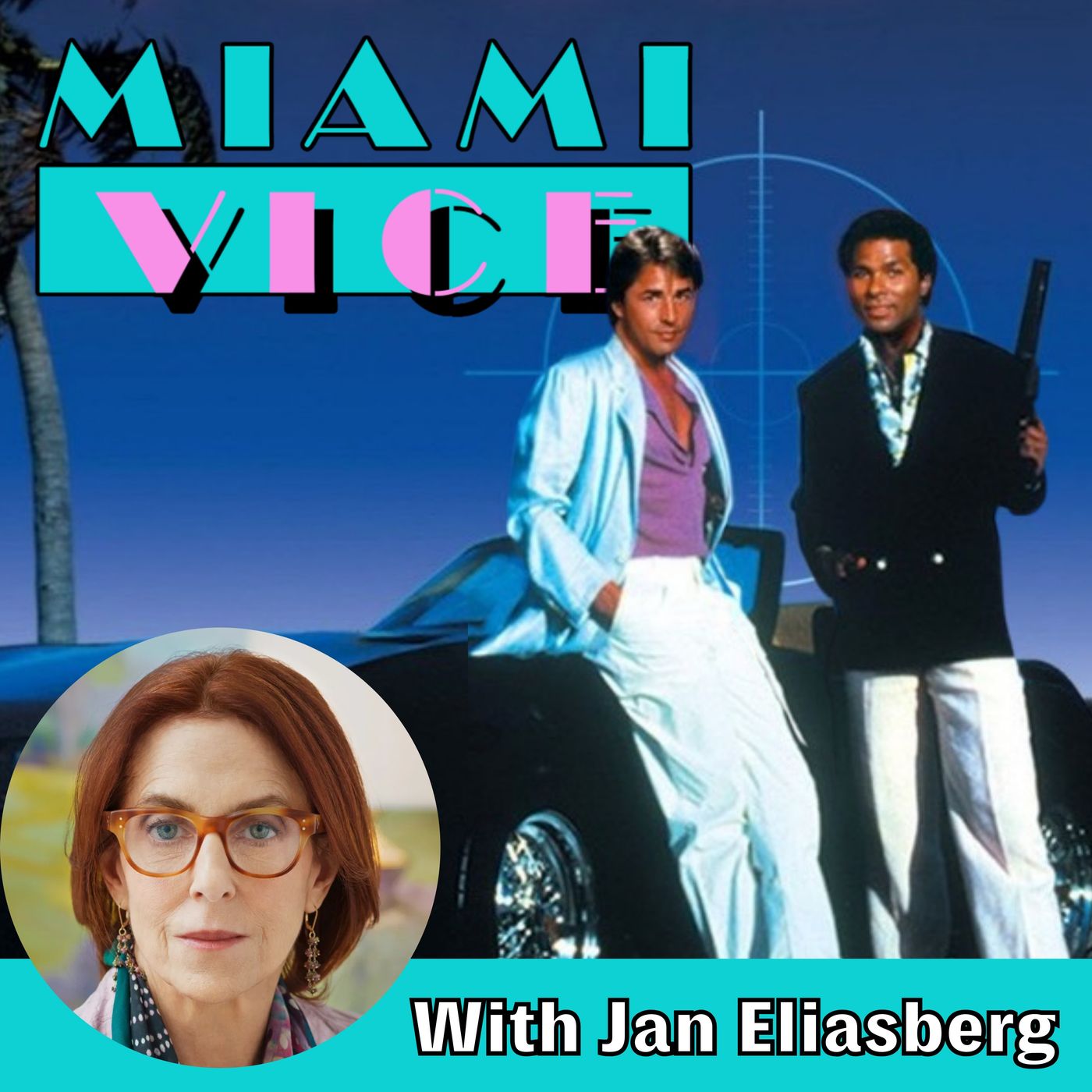
Directing Miami Vice and Cagney & Lacey | Jan Eliasberg
About this episode
80s TV Ladies "Director Ladies" series continues as Susan and Sharon welcome legendary director Jan Eliasberg. Jan began her television director career in the 1980s with an episode of Cagney & Lacey -- and she went on to be the first female director ever on Miami Vice, Crime Story and 21 Jump Street. She has also directed episodes of Dirty Dancing, L.A. Law, Dawson’s Creek, Party of Five, Sisters, Parenthood, Nashville, Supernatural, Bull and NCIS: Los Angeles. Jan recently published her first novel, Hannah’s War.
In this enlightening conversation, Jan discusses how the American Film Institute (AFI) and “The Original Six” opened up opportunities for her and other female directors; how to navigate directing a network television show for the first time -- and how courage, tenacity and little guile can make all the difference …
THE CONVERSATION
- How do you get 10,000 hours of experience when directing requires so much time, money and people: Europe or Yale?
- What can Shakespeare and Ibsen teach you about directing TV? Everything…
- Frances McDormand, Angela Bassett, John Turturo, Tony Shalhoub and Courtney Vance -- how do you quickly figure out what different actors need to create great performances?
- What happens when you direct a play about South African apartheid in St. Louis in the early 1980s?
- On shadowing directors: “I’m already a director -- what am I doing watching these people? I mean, they’re good, but I’m good, too. And that was the kind of confidence -- or maybe you could say arrogance, fearlessness - -that it takes to go into a field that is predominantly male and actually make a dent and get a job.”
- How a twisty game of cat-and-mouse with Barney Rosensweig led to Jan’s first directing gig -- on Cagney & Lacey. (S5, EP13 -- “Act of Conscience”).
- Directing L.A. Law -- and David Kelly’s very first script!
- How asking others for advice is a gift that goes both ways.
- Directing two classic, fan-favorite episodes of Miami Vice.
- Jan gets her first feature film in 1988: How I Got Into College -- but you won’t believe what happened to her on Day Two of filming…
- Past Midnight -- working with the great Rutger Hauer and Natasha Richardson.
- Is the window for women directors opening or closing? Jan gives us her take.
AUDIOGRAPHY
Find out more about Jan at JanEliasberg.com.
Buy Jan’s new novel Hannah’s War at Bookshop.
Read Michael Cieply's 1988 article on Jan and other fired women directors at LA Times.
80s TV LADIES NEWS
Catch 90s TV Baby Serita Fontanesi’s “Not Ugly” podcast at Apple.
CONNECT
- Read transcripts and more at 80sTVLadies.com.
- Get ad-free episodes and exclusive videos on PATREON.
Visit 80sTVLadies.com for more info.
Listen to 80s TV Ladies at YouTube. Subscribe and help us grow.
Don’t miss out. Sign up for the 80s TV Ladies mailing list!
Help us make more episodes and get ad-free episodes, video interviews, and exclusive content on PATREON.
Transcript
Automatically generated, so expect the odd misheard name.
Weirdy weirdio. I was quite set on theater. I was going to go out to Los Angeles for one year and that was it. I was going to go back to New York and devote myself to the ther didn't work out that way, An sol Pretty Eighties to the City und World. Welcome to Eighties TV Ladies with your fabulous hosts Sharon Johnson and Susan Lambert Adam.
Hello, I'm Sharon and I'm Susan. I am always fascinated to learn about female directors, especially female directors who started in the eighties, so our next guest is part of our ongoing Director Ladies series. Today's guest not only started in eighties television, but her first directing job was on Cagney and Lacey, A Lolling I Love It. Jannieliasberg is an award winning and ceiling shattering director, writer, and producer. She was the first female director on Miamivice, Crime Story and twenty one Jump Street, and other eighties TV shows she directed include Dirty Dancing, La Law Dawson's Creek, Party of Five, Sisters, Parenthood Nashville.
Okay those are more than Eighties, I have to say, just but a lot of television, and the list continues, so I got to throw out a few more Bull and Ncis Los Angeles and Supernatural. She is also a writer who has written television and has several projects in development for film and television. And if that wasn't enough, Sharon, she recently made her debut as a novelist with Hannah's War. Please welcome to Eighties TV Ladies, Miss Jan elias Burg. Thank you Jan so much for joining us today.
We're very excited to talk with you. Thank you. I'm delighted to be here and really eager to talk with you as well. We are so grateful to have you come on our show. You know, we look at eighties television and both from sort of a modern feminist perspective, and we also, you know, kind of try to appreciate the stories of everybody who made them.
So I'm we are so grateful to hear about your journey to directing and writing. And just to throw back, you started off in theater. I did. I train at Yale School of Drama. I was in the class of eighty one.
It's a three year program, three year directing program. I was the only woman not in the entire time of the three years that I was there, but the only woman in my class and for several years the only woman in the directing program. It was an extraordinary program for a director because there is no way to get that famous ten thousand hours that Malcolm Gladwell talks about as a director, because you have to be doing it, and to do it you need an awful lot of people doing it with you, and that costs a lot of money, so you can't be in your garage like Bill Gates, you know, programming away for ten thousand hours. And I had known that I wanted to direct. My mother would say from the moment I was born, certainly the moment I started doing plays with my brother and sister and anybody else who would be part of them, and then creating stories and making them into plays and telling everyone you know where to be what to do in being extremely sort of bossy or creative, depending on your point of view.
And I had gone to Wesley University. I had started a theater there called the Second Stage, which was a student run theater where I began to direct. And I went to London and got a sort of amazing apprenticeship at the theater and then had a dilemma because I was actually offered a job in London as the associate director of the Royal Court, and I had to become an English citizen because in England all of the arts are supported by taxpayer money and the government, and they can't justify hiring an American over an English person. And so I debated and debated and realized that I was a little young, then a little homesick. And then when I was accepted at Yale, I thought, okay, that's that's a good trade off.
It was a high quality problem I was facing. And I ended up at Yale for three years, and I think I directed about sixty place between you know, the summer cap Beat which I ran, and the you know, just playwriting workshops and then actual big productions, and then I also started a summer theater with Yale's students in between. So by the time I came out of Yale, I think I probably had my close to my ten thousand hours. Also, just when you're in a rehearsal room with actors like Francis McDormand and John Tatrurou and Angela Bassett and let's see who else. Courtney Vance and Tony Shaloob you learn very quickly what actors need, and how to speak with actors, and how to break down material and how to find beats and character arcs, and how to say hopefully the right word at the right moment.
And so having that much time directing before I went out professionally was really invaluable in the sense that I had a kind of confidence I would not have had without that depth and breadth of experience, and also had a kind of it wasn't going to be knocked off my feet as easily, I would say, just having had that background. What would you say was the key or is the key in working with actors to figuring out or understanding the best way to approach them, because everybody's different, everybody has a different process, everybody has a different way. Well, that is the key. It is there is no one size fits all approach, and that array of actors I've just talked to you about, they are all extremely different in what they need and what they want.
Some actors want to really dive in and discuss things and talk about things. Some want to go away and do the work themselves. But then if they're stuck on the set and they're not quite getting there. They need just the right moment or just the right word in their ear. Sometimes I've experienced it where someone is just very stressed out because they know they know hitting the edge and they're not quite getting where they want to go.
And sometimes it's as simple. I remember one day actually on the set. It was a night shoot, and there was a lot of pressure for time. You know, we've got to get it, we've got to get it, and I just took the actress aside and I said, you know, let's go over. We were by the river.
I said, let's just go over by the river, and we ended up sitting down and just doing like a little bit of yoga. Believe it or not, but she just needed like somebody to sort of take her out of the stressful situation and then allow her to go back in. So I think working with all of those actors allowed me to very quickly size up what an actor needs. Also, I think, and you know this is going to sound a little silly in the context of eighties TV, but working on Shakespeare directing it some you know, directing the Greeks and bract and the classics, there is something that I learned about structure that is not even a conscious learning. It's because it's internalized.
And so you know where the bactbreaks have to be, you know where the climax has to be, you know what the inciting incident is. Because who knows better than Shakespeare, you know, and who knows about about backstory better than Ibsen? So you know, there's a really there's a lot to be said for learning from the masters. And so how did you decide to go from theater into movies and TV? Oh that's a great question, Okay, So I was quite set on theater U particularly, I think because of my time in London.
I have always been interested in the social and political context of work of stories, and in Shakespeare, in the Greeks, in all of the people I just mentioned. That's very important. These are not kitchen seeing plays about two people in a bar. They're about people in a very large world. So those were always the plays that really excited me, which is not to say that they weren't a new place, because somebody like Tony Kushner Angels in America is certainly a play that has massive social and political context in it.
And what ended up happening when I graduated was there was a retrenchment because Reagan was the president and his budget decided that chopping the arts completely was definitely the way to go, and so the National Madominant for the Arts, all of those government grants were about to be decimated, and I was very lucky to get the last grant that the NEA gave to train, what they said, train the next generation of artistic directors. And so I went out to Saint Louis as the associate artistic director, and being from New York and having lived in London, I somewhat naively thought, oh, well, Saint Louis will just be like Chicago, but a little smaller. And I discovered in fact that Saint Louis was really quite a provincial town, and quite a southern town, and quite a segregated town.
So I came in with all of my ideals, and I was running the experimental theater and directing on the main stage, and came in and programmed our Ethol Fooguard's Lesson from Alos, which I thought, what better play to do in a segregated a community than a play about apartheis? And I had Athol Fuoguard come out for workshops and Q and as for the community. And I won't say it fell on death fears, but I was disappointed in how little the theater was interested in doing community outreach and developing an audience in the very large black community in Saint Louis. I would love to do work like this. So I quickly felt like this road was going to end up.
If I continued on it, I would end up being a fundraiser. I would be living in a community where I felt like I would have to do a lot of education in order to do the work I wanted to do, and I wasn't ready to do that. I'd just gotten out of graduate school. I wanted to fly. So when I was in Saint Louis, I heard about a program at the American Film Institute called the AFI Directing Workshop for Women.
It was a very early new program, relatively new, and its specific intent was to develop a pipeline of women who could direct in television and film, because at that point, half of one percent of all television shows and films were directed by women. That's not one percent. The woman who RANFI, a wonderful woman named Jean Pickerfurstenberg, had started this program because she knew at some point the industry was going to need to hire women, and she wanted to find women who essentially had the skills of directing but didn't necessarily have the access or the training to work with film equipment. And so was I applied. And when I got in I thought, Aha, let me see what this is all about.
And I think I said to you before we started recording that, you know, being such a snob as I was from Yale School of Drama, I thought this would be a year long thing. And then I go back to New York and do like independent films and plays. But in the end, I just got addicted to filmmaking because the toolbox is so extraordinary. You know, I've worked in the theater, where you have obviously you're work with the actors, you have design, you have blocking. But if you can imagine going from that too, Oh my god, I can put the camera where I want the audience to be.
I don't have to block the actors so the audience sees them. I can I can put the camera there, and I can put it even closer than the audience would ever get. And as a director, it was just like, I don't know, it was like being offered, you know, a Pandora's box of fabulous and maybe some not fabulous stuff too, but I was absolutely hooked. I made a short film and I had a lovely young actor. When I say young, I mean six years old Lucas Hass who went on to some you know some, but as a six year old he was astonishing.
I had an actor named Richard Masser who he was in Transparent. He's quite a wonderful actor. And the film got some awards, including the Los Angeles Film Festival Best Short Film, Best Short Fiction Film, and so I began to get a name and a reputation. Now it looks like your first directing job was on Cagney and Lazy. That's correct.
Actually, technically that's not correct. My first directing job was a commercial. I did a series of sort of business films for a local TV station, which got my feet wet, you know. It was a kind of nice bridge. But my first real professional job was Cagney and Lacey.
Because we've covered Cagney and Lacy on the show. Yes, and I heard your great interview with Karen and Arthur, who is still one of my heroes. So how did that happen? It's a great story. I was not a Hollywood kid, obviously, I came from New York.
But my father had been the vice president of research at CBS. Now research was statistics and ratings, so nothing to do with the creative side. In fact, the creative people basically hated my father because he was the one who was saying nobody else, Yeah, I know, you think your show was so great, but here's who's watching it, and here's when, and here's when they stop watching it, and you know, that's why it shouldn't be picked up. So but that was my you know, my dad was a mathematician, so that was my big connection to anything hollywood ish. And so when I had my short film, just sending it at that point in the post officer, I would drive around and drop it off for people that I didn't know.
And I had a small connection to a guy named Harvey Shepherd who had just been made the president of Programming for CBS. And the connection was that he had worked for my father, and when I was twelve or thirteen running around my father's office, he was one of the sort of guys in the little cubicles running numbers, and I didn't really know him, but I thought, well, at least there's some connection. He'll recognize the last name for sure, because how many Eliasburgs are there. And so I sent him my film with a note asking him if he would, you know, watch it and consider meeting with me. And most of these things that I sent out had no response, but a couple of weeks later, I got a phone call on the days of Answering Machines and the message was, jam, this is Carla Singer.
I work with Harvey at CBS. Harvey put your film on my desk because you're a woman and I'm a woman, and he thought that we might understand each other or I might be able to help you. I'm sure that Harvey did not watch the film, but she said, but the thing is, I think your film is actually quite good, so I'd like you to come, if you're interested, and meet with me. It was pretty much the greatest thing that had ever happened, and so I did my homework and I looked at the CBS schedule, and at that point, I don't know if you remember, but it was mostly the nighttime soap upers. It was mostly Dynasty and Dallas and the one show that really seemed up.
My alley was Cagney and Lacy. So when I met with Carlo, she said, well, you know the thing that I could do is I could probably call one of our executive producers and have you shadow, which is now something that happens all the time, but then it was pretty infrequent, I think, but it was a way for her to introduce me to a show. And I said, well, I would love to shadow on Cagney and Lacy. So she made the call and I went down and I started shadowing. I did not shadow Karen Arthur.
I shadowed an older director who was very good, but not exactly innovative, particularly you know, he'd been direct for a very long time, but he was you know, he knew his stuff backwards and forwards. And I also shadowed Sharon Miller. And you know, Barney Resen'swick had a good reputation for hiring women. He was one of the few that did. Karen was there, and Sharon Miller was there.
I'm not sure there were that many others because there just weren't that many women directors. I mean, he was hiring the ones that were out there. So I shadowed. And this is where Yale was both a blessing and a curse. Part of me felt like, I'm already a director.
What am I doing? Like watching these people? I mean, they're good, but I'm good too. And that was the kind of confidence, or maybe you could say arrogance or fearlessness, that it takes to go into a field that's predominantly male and actually make a dent, you know, get a job. So I sort of felt like, Okay, I'll do this, but I'm going to show that I'm a director and I'm not going to sit and just watch somebody else direct for too long.
And I was fortunate in that one of the writers on the staff had seen my short film and had really liked it, and so he and I cooked up this scheme that I would go to Barney and I would tell him and this is exactly what I did. If I take a script for next season because they were breaking the next season, and I present you with all the directorial work, cast list locations, I will break down the script, I'll give script notes, I'll do blocking, i'll do shot lists with all my diagrams. You do not have to hire me, but will you hear me out? So I went and I made this proposal, and he sort of said, sure, why not? Yea?
So I spent the next month basically while they were on hiatus, doing all my homework and breaking down the script and pages or notes, and then I called his secretary to set up an appointment. And she was very protective of Barney. So she's a lovely woman and she's actually a friend now, but I used to call her the Gorgan because she was so protective that she would just say, he's not here, you know. So I called and I called, and I called, and he was somehow never there and was getting very frustrated, and finally she said to me, look, dear, got your foot in the door, and now Barney is I think he's probably regretting it. So he because he didn't think you were going to do all of this work, you know, so he may just not call you back, and maybe you just shouldn't call again.
Now. I don't know if she was saying that on Barney's behalf or if she was just being very protective of her boss, which was her job. But I was furious, and so I called Carla Singer member at CBS, and I presented the situation, and I said, what should I do and she said, well, you have two options. I can't do anything except I could go to Harvey Shepherd, who is Barney's boss. And if I do that, you have to know that Barney will not like the fact that you've gone over his head and you could end up having somebody very resentful, or you could do nothing.
And so I thought about it for maybe three minutes, and I thought, if I do nothing, I go nowhere. I have no job. I've done all this work for nothing. If I go over his head, he resents me. But I've got a shot, I said Carl Harvey, And I've told this story on panels because it's really about that moment of I don't know if it's confidence or leaping out of a plane without a parachute, but that moment of fear of doing the thing that the amount of fear you feel, I think is commensurate with the odds of something really good happening.
So the next day I got a call from Parney as if we were the best friends. Never mentioned Harvey, never mentioned Carla, like I owe you a call. I'm just so sorry. Come down to the studio. So I came down to the studio and he was in very good mood.
I remember this so clearly because he went to the little refrigerator and he say he had a crimsicle. He said, do you want a creamsicle? I'm like, I don't think I'm okay, you know. Then he went back to his office and he said, so, you know, I'm a very rich man and I said yeah. He said, but I could be even richer.
Do you want to know how? I said? Yeah? Sure. He said, if Cagny and Lacy gets picked up for another season, it will go into syndication.
And the only way it won't get picked up is if Sharing Glass and Time Daily aren't happy with the directors. He said, I happen to do a little homework in. Richard Masser, who was in your short film, has been on a couple of episodes, and I know him and I like him very much, and he spoke very highly of you. He said, so I'm going to give you an episode in the next season. Wow.
And I was like, but don't you want to hear my work my shot list? No, he says, absolutely not. I'm convinced. And that's how I got my first job. That is absolutely amazing on so many levels.
Wow. And it sounds just like Bartie. It was, so I got my first job because Barney wanted to be even richer than he already was, and he gave you an episode that I consider to be fairly, for lack of better word, important, I mean, it wasn't in a lot of ways a regular and lacy not at all, and it was not the episode I broke down by the way. As you know, Time went on pregnancy leave, and so they pre wrote scenes so that she would be in every episode, but she wasn't the co lead with Sharon. They were Sharon heavy episodes.
And then in my episode, they brought in this new partner, temporary partner for Sharon played by Michael Moriarty, who was spectacled killing really good oh yeah for our listeners at season five, episode thirteen of Conscience. It was a gift to me because he was such a wonderful actor, and the episode itself was really rich with a lot of undertones, and it was a very good episode for Sharon too, who had been a little bit under Time's shadow. She'd won the Emmy and I think which at that point I'm not sure Sharon had. So it was a wonderful episode to do I had a great time. I also remember, I mean Carl Lumley, you know, was such a good actor.
There was so many great actors on the show in general. But it was a very special episode, and Barney was really proud of it and then went ahead and claimed credit for finding me, and I was happy to give it to him. So, looking back on it, were there things that you learned about directing network television that you took for into other shows that you went on to direct. Oh my god. Yes.
First of all, you know, as much as you can say, directing is directing. There is no equivalent in theater to editing and a short film. I learned a lot in the editing room, but I certainly didn't learn what I needed to know. So I was lucky, you know, I prepared thoroughly. I mean, when I got the script, I did go to the editor of my short film and I went to the editor that was going to be cutting my episode, and I talked about coverage and I talked about things that were going to be important, so that I made sure that I knew at least enough to get the material that I needed to get.
I knew what I could do with the performances, and I knew not so much what I could do with the camera in the law large sense of all the shots, but I certainly knew how to cover a scene. That's not what I thought directing was. I thought directing was telling a whole story and having a point of view and all of those things fitting together in a much bigger scheme with themes and with the political and the social, going back to my love of Shakespeare and Ibsen and Breckt and so it was a great episode for that. But I also remember I had a very good first day. D who had been on the show.
We had talked and I said, my first big film except for my little short, and if you see that I'm missing something, please tell me. And he did, and so in a funny way, I think what I learned was that although there were a couple of people on the crew who were testing, you know, there are certain men who'd been in the Union for a really long time and just you know they but there were also people men because they really were mostly men who were really happy to share their own knowledge and their own ideas as long as I asked them. And that became an incredible revelation for me as I went on to do Miami Vice, for example, where I felt I was out of my lead for sure, But I realized that everybody who does those jobs, a DP, a cameraman, they have creative ideas, they are invested, and so there were ways to engage people to get the best ideas and the best work.
That's a gift. Then everybody gets excited and involved, and then everybody starts contributing. And as the director, of course, you get to say yes, you get to say no. But I will take a good idea that comes from anywhere because it makes the show better and that's what counts. So there were so many things that I took away.
What a great first experience for someone to go into directing. That's awesome. Directing a network television show, that's awesome. And so how did Miami Vice happen? So the next thing that happened was there was a show called La Law.
Nobody's heard of it, I'm sure at one of those little old shoes at the time, it had not aired, It was in prep. It was the first season, and I was offered the seventh episode, I believe, of the first season. It was all let's see, was it Raiders of the Lost Bark because it was I think it was okay, so that's very good. I had to look it up and it was a new show and there was a lot of excitement about it, but nobody had any idea what it was going to turn out to be at that point. And again, I was very lucky.
I got a script that was written by somebody named David Kelly, and it was his first script ever for television. What's it really yes? Goodness, wow, yeah, yeah. I have a lot of stories like that, and it was a very good story, but particularly the Raiders of the Lost Bark part, which was kind of the funny part of the script. It was a Jimmy Smith's story, and I loved Jimmy.
Just got along with him my House on Fire, and he hadn't had a lot to do yet because I think at that point he was kind of the token you know, there were a couple of token diversity characters and he was one of them. He got stuck with this case that Harry Hamlin kind of like knowingly just saddled him with. It was a continuance. He said, oh, go do the continuance with the judge, no problem, and Jimmy goes and does it, and the judge is furious because in fact, Harry Hamlin has been continuing this case forever because he just doesn't want to deal with it. And so the judge says, we're going to try it, and we're going to start now, and so Jimmy has to try it, and then he becomes determined to win it, and they make a bet because Harry says it's a complete loser of case, and so Jimmy makes the bet and you can imagine what happens.
But hijinks ensued, and Jimmy was very funny and no one really thought of him as a comedic charactor, but he was late. It involved a dog. You know, I've since learned. I learned about dogs, but no children, No dogs, no children, no dogs, and no horses, which I found out Another show that was a Dennis Weaver show. So that was La Law and there was now this buzz about women.
We have to get women, we have to get women. I did not know it at the time, but the reason this buzz existed was because six women directors we've called them now, the original six. It was Lynn Litman, Victoria Hackberg, Susan Nimoy, Joel dubrou Nell Cox and one other. They had sued with the DGA all the networks and all the studios because of the numbers, and it was a it was a class action suit for discrimination against women directors. And there was a wonderful head of the DGA at the time named Michael Franklin who took the suit and they gathered all the statistics, and this suit was working its way through the courts.
And so even though the suit had not settled, there was a fear striking the heart of the industry that if they didn't do something about hiring women directors that something could come down like fines and penalties and big publicity. And so they were desperately looking for women. And as I said, I didn't know this, but there weren't a lot of us out there. So the ones who were out there got work and got a lot, you know, got a lot of work. So, off of the buzz of the Cagney and Lacy and the LA law, Michael Man had been looking specifically for a woman to direct Miami Vice because there had not been a woman.
It was considered testosterone playdon show very male, although it turned out in my mind. That was not true at all, but that was the perception. So I got a call that Michael wanted to meet with me. Okay, this is probably a good time to take a break. We'll be back, and we're back and better than that.
So I got a call that Michael wanted to meet with me, and I was over the moon. And I to this day don't know exactly what it was that he saw in me that made him decide that I was the one, but he did. And so I mean, Michael actually went looking for a woman, and he said to me later one of the reasons that I think he did hire me was that he felt I had a certain confidence that I wasn't going to get swamped by the atmosphere on the set because he knew that whoever was the first in this particular show was going to be under a lot of scrutiny, and he wanted it to work because he didn't want to hire one woman and have that be the end of it. He wanted to hire women. So I felt a lot of pressure, but still, what about a confidence that he had?
But he chose you. So you ended up directing three but the first one was season three episode eleven Forgive us our debts. Yes, big Dog Johnson episode, Big DoD Johnson episode, and a wonderful criminal and wonderful villain of that. To this day, people still on the fan sites and everything are still like up in arms about this guy. Okay, well, you know, there's a lot of luck.
I mean there is a lot of luck because as the director, you are as good as the script you get. And in the case of somebody like Michael, he was always very open to making the script better because he started as a writer. So I got this phenomenal script. And the setup is that Don Johnson had a partner before he met Rico, who was killed in cold blood, and this guy has been in prison, he's on death row. And I won't tell the whole story because it's like any Vice show.
It's like very involved in their all these interesting characters, and some of them die. And at the end Don has succeeded in getting this guy off of death row and getting a governor's pardon, and so there's obviously no double jeopardy once he's been pardoned for that, and Don and Rico go to the prison where he's going to be released, and Don realizes that he did the crime, and that he got completely played, and the look on his face at the end, and the performance of the guy that I cast to play Hackman. It just became one of those episodes that people couldn't believe, you know, that the good guy did not win. Not only did he not win, he released the guy who killed his partner. He was completely full, completely, completely Wow.
It's an excellent twist, as as I think was the audience. Yeah, I know I was. We were all on the journey with Don and you know, great performance by Guy Boyd who played Hackman, other excellent performances. I had a guy named Bill Raymond I had I can't even tell you. I had the time of my life directed that episode.
Every second was just amazing. I loved it. I loved it. I loved everything about it. So in that confessional scene, the way it was originally written, he didn't really talk about having done other murders.
And it was Michael who called me and said, I think we need to do a reshoot on that scene. And this was when we were in editing, and he invited me to direct it and which he did not have to do. So that was another way in which I felt like I was really getting the you know, the Michael Man goodhouse keeping seal of approval. But I saw the new pages in what Michael had added was the confession that he had killed other people. And what it did to that scene was it really made you believe him because he wasn't saying, oh, I'm a good guy, so innocent.
He was saying, I've done terrible things, but I didn't do this crime. And I mean that's the way Michael would think. He would always always keep asking the question and keep making it better. Such a great episode. I admit I was not a viewer of Miami Vice when it originally aired, and I was totally floored.
I watched it the other day because I didn't know the ending and I didn't see it coming, and I was just gobsmacked. It was awesome. It was absolutely awesome, very very impressive. I think Sharon's going to start watching the whole thing. I was going to raise my seventy eight seasons.
So I want to say the thing about Miami Advice that people don't understand, and I hope this is what you probably got, is it wasn't just flash, It wasn't just the visuals. It wasn't just the MTV cops. It wasn't just the music and Miami and the pink and the green and all and Don Johnson with no socks on, and you know, I mean that was a large part of it. Those guys were gorgeous. They were really good to look at.
The costumes were incredible, the you know we had, we created Miami. I mean, Miami had these little bits of beautiful architecture, like South Beach had three hotels. The rest of it was boarded up. It was it was a crime scene, basically, but by shooting those three hotels, people on TV saw them and thought, oh my god, there's a whole neighborhood filled with hotels like this, And five years later there was so we were creating a world that didn't exist. It existed in pieces.
It wasn't just that the stories were great. They weren't always great. No television stories are always great. It's hard to do a twenty two episode season and have every story be good. But there were stories that like that one that ran against what every other television show was doing, where the good guys always won.
Right. The next one that I did was called God's Work, and it was about AIDS and the Catholic Church. Now this was in nineteen eighty six, maybe AIDS was not being talked about, and certainly the Catholic Church was not talking about anything to do with homosexuality with you know, with AIDS, and I mean I remember NBC had to meet with the diocese many, many, many times, and the script kept getting rewritten because there were things that the diocese would refuse to let them say. But somehow we prevailed and we made a show that discussed the Catholic Church's denial and Catholicism's denial of homosexuality and AIDS and put it in this context where you have like, is Cei Morales playing a gay son of a Latin American crime boss is sigh, Morales.
I mean, that's pretty awesome. I think anyway, absolutely absolutely no one was doing that stuff but Michael at that time. So when I you know, I go back and I sort of say, well, my vision for theater of doing all of these socially and politically interesting stories was realized on Miami Vice. That is not a line I thought I would hear. It's not a line I thought I would say.
And crime story too, which is what Michael went on to do Next, which I also went on and directed. So you know, I give him an enormous amount of credit for groundbreaking television that was not just in the ways people think the issues that were being investigated were really important, and for not just giving lip service to putting women in the director's seat. It's big deal to do one episode, and it's an even bigger deal do three. He gave me an open door to do as many episodes as I wanted. Wow, Wow, that is fantastic, which I didn't care a lot about that.
You still don't, Yeah, no, And I always try to say it because you know, the typical idea about Michael is that you know, he's this like, you know, difficult male posture, you know, write very male scripts and you know, but he was the most supportive. He was a my mentor. I mean he he has and he has continued to be the most supportive person in the industry to me. And I was the first woman to do crime Story, which was you know, Dennis Farina, don't get me started. The man is just I loved him so much.
It was just an amazing period of time and a really great guy. What other actors did and actresses did you love working with Well, you mentioned Guy Boyd, who was the antagonist in the first episode of Miami Vice. You did, and he was also in Past Midnight. The feature that Yes rected as well was he was indeed, And that's not an accident because once, once I worked with him on Vice, I thought, oh, well, I'm not going to cast anybody else. I mean, I know that guy can do this other role, and he again just hit it out of the park.
Speaking of Past Midnight, I had an amazing time working with Rucker Howard. I have a great story to tell you about him. I had a wonderful time working with Natasha Richardson in the late Natasha Richard, and she was just a doll and so good. I loved working with Clancy Brown, and I loved working with Paul Giamatti. Yes, I cast in his first ever film role.
Yes, oh wow, Yeah, I'm like doing the math. Yeah. I didn't go because I saw him. It took me a couple minutes and I went as I was watching it, oh that's that's Paul Giamatti. And I figured it had to be early, but oh my gosh, here's what happened.
So there was one thing that happened in my career that was quite painful. And there's a very good La Times article which I can refer you to, which tells the story off of the Miami Vice. I got my first feature, which is, of course, where I wanted to be. I considered myself to be an O tour. I wanted to create the world, and the producer was Michael Shamberg, and I went in.
The writer was a woman named Terrell Seltzer, and the movie was called How I Got into College. I really liked the story, and I pitched it as a bittersweet, character driven comedy along the lines of Say Anything or Stand By Me, along the lines of those kinds of films that were very successful at that time. So I had Robert Elswitz, who went on to win the Academy Award for There Will Be Blood as cinematographer. I had Ida Random as the production designer, and I just found I had Anthony Edwards was playing the college admissions officer long before e R and we could not find the girl that he was in love with until we got a tape from Chicago of a woman named Laura Flynn Boyle who was like it. So I had you know, and I had done what I do all the time.
You know, I had done all of these color palettes because it was set in this sort of romantic college venue. Well I did not know this, but the studio didn't want a bittersweet comedy. They wanted porkies. And Michael Schamberg had actually hired me to deliver the bittersweet comedy. That's what he wanted.
Anyway, long and the short of is I was fired on the second day of filming. On the second day of filming. Second day of filming, there was a college fair sequence which was sort of the It wasn't the climax of the film, but it was like a big set piece. I had the producers on the set complimenting, like, this is amazing. You know, the way you did this so fantastic.
It's you know, exactly why we hired you. And then after two days I was called in and told that the studio had a few problems with the dailies. And I was shocked because I had been told for two days running that the studio loved the dailies. So we were supposed to sit and screen the dailies and have a meeting so we could all get on the same page. And so I prepared for the meeting, and I got to Fox for the screening of the dailies, and there was a sign on the door that said that the screening had been canceled.
And I looked around and I found the producer's assistant and he was putting a sign. He had just put the sign up on the door. And I said, so, where's Michael, Where where's the president of Fox? Where are all the people that were spot And he said, oh, well, Michael is shooting with the new director. That's how you found out.
Oh my gosh, aren't there some DGA rules they just broke? They had to pay me. Wow. But so the article was written by Michael Sipeley in the La Times, and it talks about the fact that within about a three month period, five women directors had been fired off of studio films. Within prep or the first few days of shooting.
It almost never happened generally, the studio always would try to make it work. So and the story was tied to me because I was the last of the five. So it was Mary Lambert, Martha Coolidge, Joyce, Chopra, Claudia While and me. You gotta send us that article. Wow, I'll send you the article.
So that was a that was a huge that's a huge blow. It was a huge blow, huge blow. And I was clearly not protected by the producer. In fact, I was pretty much sandbagged by the producer. So I had to recover from that.
Yeah, and I of course wanted to do features, but that put an enormous dent in my ability to do so I went back to television. I went on and did a pilot, three pilots, actually three pilots, and I was trying to get back into features, but it was not It was not easy when you got fired off your first feature and it's pretty public, you know, it was. It was devastating. And there was a wonderful guy named Larry Estes who ran Columbia TriStar Home Video and he loved my Miami vice and he wanted to get me a film. I mean, God, bless these wonderful men who love women.
That's all I can say. And Larry kept trying, and he introduced me to SINATEL Films in a project called Past Midnight. And I read the script and I thought, this is a B movie, but it's a good B movie, It's a women in Jeopardy. I wasn't being offered ten thousand films at that point, and I knew I had to do a film if I wanted to move out of television. And in the end, I thought, I think I can do this well enough that it will really have at least a good directorial stamp.
I had two and a half million dollars to make the film. I had to convince Ruker how Are that I would be the right director because he wanted to play the lead. So I went to wherever he was staying and we just adored each other. He was so smart, he was so charismatic. He was not at his slimmest blade runner gorgeousity, but he was still gorgeous and he approved me.
And so we were looking for the girl and an agent named Joan Heyler suggested Natasha Richardson, and I was like, would she do it? Can we get her? And we got her, so I thought, Okay, I'm you know, I'm going to build this up. This is exactly what I was hoping. We shot it in Seattle, but between Rutger and Natasha they took two million, so I had about fling collars.
Okay, So, so I cast Guideboard as a spoiler, the villain, and then there was the character of his brother, and the character was written as somebody on the spectrum. And I really wanted to hire somebody on the spectrum. And I had auditioned and auditioned an audition, so I began to see actors. Well in Walks the Sky, Paul g Motty, I thought he was on the spectrum. I couldn't believe that he was just you know, he blew me away and he blows me away.
Still he has one scene and he just he just nailed it. So that's how Paul Giomonic got his first film role. Wow, so you have an eye for talent. Indeed it is Yale. Oh yeah, okay, right, I mean no, not, I mean nobody knew fred McDormand was going to be Friand McDormand.
When she was at Yale, I just knew she was a good actress. I will see films, I will identify people that are that I think are going to go places or become big stars. Years before I picked out Daniel Craig in the Road to Perdition. Oh gosh, yeah, where he plays of Paul Newman's son, and he has like two scenes. I said, that guy, it's going to be huge.
I just I just have it. I mean, you know, I don't know what that is. I love casting directors. Casting directors have that, the really good ones they have to. Here's another storm, my third Miami vice.
It was called Contempt of Court and it was based on John Gotti. The villain is this guy, Frank Mosca. Right from the beginning, you can see that he's going to try to control everything and driving down crazy. He makes this circus out of the courtroom, which god he did. He's blackmailing witnesses.
He's going sending his goons around or going around himself and kill it familiar to these days. Go ahead, I'm sorry, yeah, exactly, killing killing witnesses before they can testify. So Mosca obviously is a very important character. He's he's the key to the whole thing. And I think we wanted Danny Iello because moon Struck had just happened, but it was clear we were not getting him.
So I talked to Bonnie Timmerman, who was like, you know, the casting director of all and I said, you've got to have a ace up your sleeve, Bonnie right, and she said, yeah, I do. I said, she said, you know, there's this guy who I think Albaco does these readings. In this guy, I was at a couple of readings and I think he's really good. You know. She said, You're just going to have to trust me on this, and I said, I do.
I do. I trust you. Stanley Tucci first film role. Oh gosh, I did. Wow, wow wow.
Yeah. Well in that episode also has Philip Bigger Hall in it. Yep, yes, Meg Foster and Meg Foster, the original Sharon Glass one of the former Cagneys. Yes, and Mark Blum oh okay, from Desperate You're Seeking Susan and then on Succession and he died during the COVID. He was one of the first people to die.
He had asthma and he got COVID. Lovely guy. But yeah, great cast. Oh my gosh, Well you've just worked with everybody and given first film roles to just incredible actors. That's that's amazing.
I thought, you know, if I'm going to get to tell the stories I want to tell, I'm going to have to write them. And uh so I was doing a show called Sisters on Nbcity with cel A Ward and George Clooney and Amazing and Cured and Swissy and Kristen Dunce and well on and on and on. It just a little old show like that that ran for six seventies yep, yep, yep, yep. And so I was directing that because they loved me, and it was more like being a theater director. It was, you know, and it was easy for me to do and go back to and not have to sort of prove myself.
When you go to a new show, there's always a moment of, like, you know, proving yourself, and it takes a lot of energy. I also had a child at that time, so I was getting my MFA, I was directing Sisters, and I had a daughter, and so you weren't very busy, not busy at all. And I thought, well, let me try to come up with an idea for Sisters, because I already know the show. They like me. I think they thought, you know, she's a good person, we know her.
How bad can it be? So they gave me, you know, when they did my directing thing, they gave me one writing freelance assignment. So that was my little ridge to writing. So I wrote the script and then I got on staff and did you direct any of the scripts you wrote? Never directed my own.
To this day, I've only directed one thing that I wrote, and it's a show called Booker. Oh do you remember Booker? Yeah? So I directed twenty one Jump Street First Woman. Yep.
Great guy named Patrick Hausberg hired me and they were doing a spin off, which was Booker with Richard Grico. Everybody thought that was going to be the big show. They were talking about some kind of episode that they wanted to do about Booker's father, and so I came up with an ideva and I pitched it and they said, huh, it's a pretty good idea, and they let me write it. I was rewritten, but I got the credit and I directed it, and that was like, I mean, I've practically forgotten. But that was one hundred years ago.
But to this day that is the only thing I have written and directed myself. I've written tons and directed tons, but never that is still the holy grail for me. And so I wanted to just hit a couple of things. One was about your novel Hannah's War. I thought, you know this thing about women who've been erased from history.
This is really important to me. And I see this paragraph says the key component that allowed the Allies to develop the bomb was brought to the Allies by a female non area physicist. Her name was Lisa Meiitner. She was Austrian Jewish. She was a genius.
She was working at the Coiser Wilhelm Institute in Berlin. Considered herself not even Jewish, considered herself an intellectual physicist. She was working with Auto Hahn. So I thought, I want to write the story of this woman. And I wrote a book called Hannah's War, which is set at Los Alamos, and it is about a woman, Hannah Weiss, who is suspected of being a spy because somebody is leaking secrets back to Germany.
Anyway, Hannah's War is well worth a read. I know there are things we have we have haven't even discussed dirty dancing. We haven't discussed dirty dancing. Was it fun? No?
Okay, yeah, it was a show. It was a show that was grudgingly supported. I think I think it only aired maybe seven don't think it aired all of the thirteen episodes that were made. They had no money to do the dance stuff properly. I directed The Outsiders, which was Francis Ford Koppela's TV version of the film, and I remember every actor because Fred Ruse did the casting, and they were all spectacular.
You know, they were young people. I mean Patricia Arquette was in mindsha Arquette. Yes, everybody in the eighties and nineties wanting to be in your thing because then they were going to go on, just look for my name. I had one more question, and a quick one, okay. A conversation we had with Tony Schlow, and you talked about there being short windows of opportunity for women, like where a window opens and then it closes.
Do you think we're in an open or closed time for women in the windows closing? I couldn't agree more. There are three films this year directed by women for Best Picture. I do not think we will see something like that again for a long time. You know.
I watched the DGA Awards, of course I voted for them. This year. Lessons in Chemistry, which was almost directed exclusively by women, you know, walked away with a lot of the awards. There is an article out from Geena Davis Institute saying that in fact, women directors in film is at an all time low. Money is getting tight.
The strikes and streaming changed the industry as we know it. And unless thing happens where the independent world kind of takes over, which I don't see happening right now, generally it's women and people of color who get taken out of the game first. I've seen cycles of advancement and retrenchment. The cycle I told you about that I rode the wave of was after that lawsuit of the original six. I was involved myself with an incredible woman named Maria GUIs in another lawsuit in twenty twelve.
We went to the ACLU. They've published an open letter. They sent their statistics which we had compiled and given to them to the Equal Employment Opportunity Commission. But after that happened, there was this huge wave of women. That is this wave that we're seeing now at its crest.
I think it was a result of the ACILU and the Equal Employment Opportunity Commission action, and I think it will take something else like that to really I mean, I think these things need to continue until we are at fifty fifty. Nothing less will do it, just won't. The stories that are told shape the culture, shape the global culture, not just America, all over the world, because American television and film is the voice of storytelling around the world. And if women are not telling those stories, are not carrying those stories, are not the lead in those stories in fifty of them, the stories will not really reflect the reality of women's importance and women's voices. And I believe that.
Yep, I agree, sadly, I'm not surprised, but it doesn't make it any easier to watch happening. Yeah, I hope I'm wrong. I hope we're all what we're thinking about it, But I'm glad that we're talking. I think talking about it is important. I think taking action whenever you can is important.
And I really appreciate your voice out there and thank you well. I also think, honestly that knowing our history is a prerequisite to changing it. So the fact that you're doing what you're doing and highlighting things that people maybe don't know about these the women who were working in the eighties and making these strides that allowed all of these other things to become possible. I think it's really it's important work. As I say many many times about Lisa Meidner, you know, she was erased from history.
She was there, she did what she did. Nobody is saying that didn't happen, but nobody knows about it. So the excavation and the replacing of women in history where they belong is hugely important work. So thank you for doing some of that. Awesome, thank you for joining us in that.
This was just a blest. Oh God, I'm so glad you enjoyed our time. This is this is awesome. Thank you, Thank you enough, thank you. In today's audioography.
You can find out more about Jen at Jeneliasburg dot com, A N E. L I A S B E r g dot com. You can find her book online through her website, or we'll have links in our description to Hannah's War. We'll get a link to the La Times article that you mentioned and we can include that as well. All right, let's do it.
Take us out. We hope Eighties TV Ladies brings you joy and laughter and lots of fabulous new and old shows to watch, all of which will lead us forward toward being amazing ladies of the twenty first century. Open those windows, keep them open, doors, and keep them open. Let's go Eighties hands pretty through the city world,



Similar episodes across the network
Matched by shared keywords.
-
Columbo Explains the Seventies
2 shared keywords: classic tv, pop culture
-
Episode 55: Old Love + Altercation + Bones
1 shared keyword: classic tv
-
Special Report: I Am McLovin
1 shared keyword: pop culture