
Season 3 · Episode 20
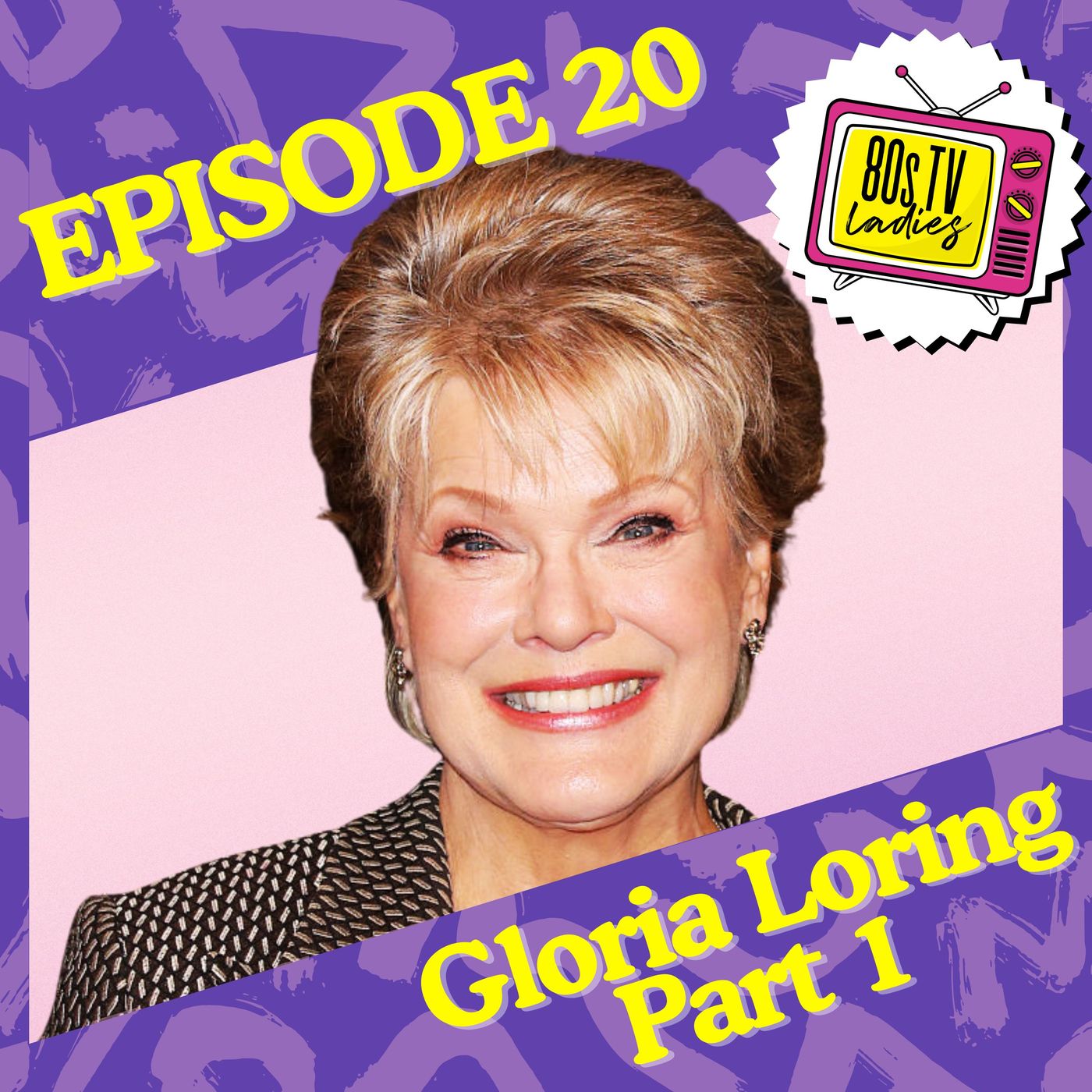
Gloria Loring | Talking Friends & Lovers and Singing The Facts of Life, Part 1
About this episode
Susan and Sharon welcome Gloria Loring -- singer, song-writer, actress, author and diabetes advocate. Known for her Number One hit “Friends & Lovers”, Gloria is also the legendary co-composer and singer of the impossible to forget Facts of Life theme song!
THE CONVERSATION
- WHERE THE MUSIC COMES FROM: Five generations of musicians -- all the way down to her son Robin Thicke, and grandson.
- Slamming doors, thrown dishes and late-night fights -- learning that her father, a brilliant musician, was also an alcoholic.
- ON SINGING: “It was the only thing that made me feel important or valued. When I sang, I was beautiful, I was powerful, people watched me, people listened to me -- every kid wants that."
- THE GLAMOROUS LIFE: Gloria’s early days as a singer -- living in a cheap motel room and surviving on a quart of milk, a box of cereal and a can of peas!
- Arranging a “chance” meeting with Ed Sullivan -- and four years later she’s on his show!
- Future husband Alan Thicke brought something special along on his first date with Gloria: his parents!
- THE DAYS OF “THE DAYS OF OUR LIVES”: Laughs, pranks, songs, love -- and a steady job for six-and-a-half years!
- SETTING INTENTIONS: Gloria says out loud to the universe: “I want to record a hit record” -- and a week later she’s recording “Friends & Lovers”.
- ON COINCIDENCES: “I left ‘Days of our Lives’, my divorce from Alan Thicke became final, my first book was released and “Friends & Lovers” hit number one -- all in the same week.”
- BECOMING A DIABETES BOOKWRITER: When her son Brennan was diagnosed with diabetes, she (and Alan Thicke) became creative fundraisers, spokespersons and she became an author
- COOKING ON DAYS OF OUR LIVES - Recipes traded by cast members led to the Days of Our Lives Celebrity Cookbook to raise money for Diabetes Research Foundation.
AUDIO-OGRAPHY
Watch Season 2 and 3 of The Facts of Life for free on Tubi.
Buy the complete season on DVD at Ebay.
Visit the official website for GloriaLoring.com
VITAL READING
Check out Democracy Docket here.
Learn more about the ACLU here.
Let your voice be heard!
Call your reps. Make 5 Calls makes it easy.
CONNECT
Visit 80sTVLadies.com for transcripts.
Sign up for the 80s TV Ladies mailing list.
Support us and get ad-free episodes on PATREON.
This year is the 45th anniversary of President Carter's Crisis of Confidence speech. Get Susan’s new play about it: Confidence (and the Speech) at Broadway Licensing.
Visit 80sTVLadies.com for more info.
Listen to 80s TV Ladies at YouTube. Subscribe and help us grow.
Don’t miss out. Sign up for the 80s TV Ladies mailing list!
Help us make more episodes and get ad-free episodes, video interviews, and exclusive content on PATREON.
Transcript
Automatically generated, so expect the odd misheard name.
Weirdy way media. Synd so pretty into the city world. When I sang, I knew who I was on the stage. When I got off the stage, I was very shy. I couldn't look people in the eye.
But when I was on stage, I was just filled with my own light. Welcome to eighties TV Ladies, where we. Look back in order to leap forward, and where we are currently learning, loving, and singing the Facts of Life. Here are your fabulous hosts, Susan Lambert HadAM and Sharon Johnson. Hello, I'm Susan and I'm Sharon.
Today we have another wonderful in studio session to bring to you. She is a fan fabulous eighties television lady. She is a fabulous singer, songwriter, actress, diabetes advocate, and author of multiple books. It's the wonderful Gloria Loring joining us today and we are such fans. Gloria Loring is a recording artist known for her number one hit song Friends and Lovers with Carl Anderson, and as a co composer and singer for the Facts of Life theme song.
She was an actress on Days of Our Lives for six years and appeared on many other seventies, eighties and nineties TV shows. Gloria is a spokesperson for the Juvenile Diabetes Research Foundation, the author of seven books, a keynote speaker, and one of the few artists to sing two nominated songs at the Academy Awards. She's the mother of voiceover artist Brennan Thick and singer Sensation and music producer Robin Thick, and she. Has released eleven albums. So excited to have her in studio for today's show, Welcome to Eighties two ladies, Miss Gloria loring Ah, yay.
And thank you for joining us and for your incredible artistry, work and advocacy over the years. Well, thank you, it's my pleasure. You both are so much fun. Already we've been talking before we got on the air. Girls, we can't stop ourselves.
We had to quickly make sure we could get up and running and get recording exactly we weren't going to stop. Well, let's kind of start at the beginning. You grew up in New York. Were you in a musical family. Yes, Actually, my mom was a singer in high school and then sang in her early twenties, and then she there's a story, and I don't know.
I never heard it from her. I heard it secondhand from my younger sister that my mom actually met my dad and then got on a bus and chased him to his he was a trumpet player, and chased him down, and her father somehow figured out where she had gone and also got on a bus and chased her down and brought her home. But they got married, and he had five generations of musicians starting with my father, going back to the nineteen hundreds. And I have a cousin who is quite the genealogist, you know. So my dad had all that musical heritage.
His dad was a trumpet player. His mother was a child prodigy musician. Died at twenty three of an unfortunate ending of pregnancy. Yeah, and died of sepsis, you know. And no one in the family ever told me until her her sister was ninety three and starting to lose some of her capacities, and she mentioned that it affected the family so so hugely.
But all these musicians, and there was a child prodigy violinist, a lot of trumpet players, a band leader from nineteen oh three, and I have a picture of him with his band, So I've given this I created and Robin, if you know me, you know Robin Thicke is my son, and I have another one brand, and I have to give them equal billing. Anyway, Robin as a gift, got a huge frame aim poster from me of all the generations with a picture of each of those musicians with their band or their instrument, and I titled it where the Music Comes From. And it was lost in the fire in twenty eighteen when he lost his house. No, yeah, what an incredible I know. So I still have the pictures.
I haven't reformulated all of that, but I might do it one of these days. I might actually do it for my grandson because he's so musical, Julian, so he's just turned fifteen, so. So amazing to have that legacy of music, and because music comes with so much joy and emotion, and I think it's just a real gift to have in your family. Well, it was to me because when I sang, my household was a little scattered at times. My dad was drinking.
He had an alcoholism problem right to the very end. He was. He joined AA and he was all gung hole. But he always had a little flask in his pocket, and he'd take just a sip just to remind himself of how the alcohol could calm himself down. So he was a much more functioning alcoholic.
But right through to the end he just he loved music. He shared all of that with me and we could talk about it. But my household when I was a kid, was a bit of him. There were slamming doors and thrown dishes and you know, and I always thought that my mother was the problem. But it was my mother reacting that my dad had come home last night drunk.
And it wasn't until one night I woke up and I heard them talking in the living room and I crept down the stairway and about halfway down there was a little place to stop, and I put my ear around the corner and I heard him saying, I'm so sorry. I know I have a problem. I'm going to go to AA and I'm going to do this and I'm going to and he was crying and he said, please forgive me, and I, oh, I shouldn't be here this. But what came to me, I remember it so clearly, was that's what's been going on, that's what the problem is. And I didn't know anything about alcoholism.
Meant that problem I learned a lot later. But he was a brilliant musician. I mean he sat next to Charlie Shavers in the Tommy and Jimmy Dorsey band, and he traveled all over. But the problem was very pervasive for him because I mean I remember him telling me at one point he kind of came too. He was on the bandstand, played all the shows, but he had blackout for two weeks.
He didn't he just got on the bus, went with the guys ate the meal, but remembered nothing because of all the drinking. And he woke up and they were like in Wyoming or something, and he went, oh, I don't know where I've been for the last two weeks. But that even didn't wake him up at that point, you know, But eventually he did. But through the end of his life he went to AA and he was very proud of the fact that he could have a drink and still conduct an AA meeting. That was my father, Yeah, very creative.
At one point he fell down and he was there for three days because he couldn't call anybody, and he had a huge thing on his leg and we had to he couldn't live alone any longer, so we moved him into a care facility and he brought us hot pot and his little transistor radio or a little radio he plugged in. He had Parkinson's which took us years to get that diagnosed. And then one night the director of the care facility called me and he said, miss Lauring, I just want to let you know we had a little incident last night and oh, my god, my father. Okay, what happened? He said, Well, we had to take your father's power tools away.
He was making things at midnight. I said, yep, that's my dad. He was so brilliant at finding accommodation within his environment and creating what he needed. At one point. This is much more a visual, but I'll try to describe it.
He had a Barco lounge, you remember, though, you know, and you lean back and then you've got the big handle that you can slam forward. Well, he took the foot rest off so he could put his feet in between and stand. So now he would, and he showed me this. I almost fell over. He put his feet on the ground and he had in his side pocket.
He had a lazy Susan like you put your herbs on that goes around and around, and he picked that. He's look at this, look at this hun and he took it out and he leaned back and he took the big handle for the Barco laundry and he slammed it forward and it propelled him up. And now he's standing up. He puts the Lazy Susan on the ground. He couldn't turn, so he stepped stepped onto the Lazy Susan and went h and turned to the right.
Oh, Oh my god, I al fell off. That's my dad. Yeah, And through the end he was he was out. They had a little patio off his room. He would go to the store.
He'd come back and he'd make a stew in the hot pot and he'd sit out that there with his harmonica and his radio and he'd play and he'd make the stew for himself. He was just he was like one of the original pioneers or something. I mean, I guess, but you know, the stories in the family are just amazing. My favorite, though, was the Barco lounger in the Lazy Susan thing. That's pretty clever and insane, but clever, fabulous, And when you see it, I could have seen it fifteen more times and still laugh just as hot.
Anyway, whatever works. Yeah, but there was always music in our home. My dad had was in big band Tommy and Jimmy Dorsey, and he had the real to reel tape recorder and he ought all these great, great big band tapes and he would play those all the time. So I was introduced to EL when I was twelve. I knew Ela Fitzgerald, I knew Peggy Lee, and my first albums actually was Ellis Sing's Richard Rodgers and Lorenz Hart.
Learned every single song. So there was music always in the house and we would take when we lived in New York first, and then when I was about twelve, we moved to Minnesota. My dad because of the intense, let's say nagging from my grandmother to get a real job instead of being a musician, he got a job as a Dutch cleanser salesman. Yeah. Then he finally got a job with National cash Register, and he was really good because he was very creative.
He was a very good salesman. And then we moved to Miami when I was fourteen fifteen, and I went to Miami Beach High School and he was down there because he was such a good salesman and nobody could crack open Miami for nah and cr It was with their registers and their county systems all of then. And they brought my dad down and my dad did the job. But he did it with some surprising incidents along the way. At one point he went to it was like a Polynesian kind of place like that.
I've forgotten the name of it. And he went there and he got drunk and threw chairs around and stuff. And the next day came back and sold the guy an entire system. That was my dad. That is so interesting.
I know. He was a creative, absolute creative, you know. And evidently from I met Charlie Shavers years later, who, for people back in the forties was a very famous trumpet player. And Charlie said, your dad was a real good musician. I said, yes, thank you.
Evidently I did see him play live once I was three. We were living in New York and Tommy and Jimmy Dorsey were doing a show at one of the big halls or concert places or something, and they were up on stage and evidently, oh, I got so excited. I stared up. I said, that's my dad. That's the best.
So those little family stories, you know, is that I mean, was it just inevitable that you become a singer or was it? According to my mother? From the time I was too, I sang perfectly in tune. Now you know mother's you know, but I did. I loved singing.
And my grandson, Julian, Robin's son, who just turned fifteen, is like that too. When he was frozen was really big when he was about two and three, I think he was about three three and a half, and he would stand up on the sofa and he'd singing perfect too. And he said, but he couldn't pronounce the words. Yet he say, yet it go, Yet it go. To this day, I remember, yet it go, Yet it go, but perfectly in tune.
And he's already won awards as a singer in the last couple of years with his school choir, and you know all of that, and he's writing songs and now he thinks he wants to be a filmmaker. He's we got another creative in the family. Creator definitely. Yeah, Well that's a blessing and complications complicated, Well, you have to have an enormous amount of internal motivation, because there are so many times it's not going to work out as well as you wanted. People are going to say no, you'll go an audition in all of that, and you just you have to be absolutely sure.
This is the one thing in the world. I remember years ago a young woman asking me. I'd already attained a certain amount of you know, visibility, and she said to me, should I become an actress? And I said, if you have to ask me, no, you should not, because you don't. You have to feel that I must do this or my life will not be I must at least try, or my life will not be worth it or something.
You know, you have to have that all or nothing, do or die kind of thing. Yeah, and so what because you started very early? Well, I started singing well the early early, when I was in Miami Beach. I was singing in church choir and in school choirs, and I usually wound up being the soloist. So that was good, that was encouraging.
I was singing. Oh I know what happened. I was singing somewhere and somebody heard me and said, you know, a friend of mine is forming a little group. And it was kind of Peter, Paul, Mary plus one and I was the plus one. You know.
It was three guys with some guitars, and I was the singer out front. And we called ourselves Those Four, which was kind of a cute name. That's cute. And we sang the Pegasus, which was a very famous coffee house down in Fort Lauderdale, and I don't even know if it still exists, but it was very famous. I remember singing where Fred Neil was who wrote Everybody's Talking at Me, which I recorded a few years later.
So we did those four and I did that for a while, and then that kind of went by the wayside. I don't remember why, but it did. And then I was one of my choir members Richie Labson and I form Richard and Gloria, and we sang and he played guitar and he had a nice voice, and we sang duets and stuff, and we worked here at a little hotel. And oh, I do I've got a good story. I've got some good stories.
Okay. So I'd been working my way up and my mom and my mom and dad were divorced. They finally just couldn't make it work. When I was about fifteen, and a half. I had one beautiful dress and I had five banned arrangements that I had somebody make for me.
I don't know where I got the money, but I did because I was working some jobs and I was staying with a friend and I had my very first big engagement. This place where I was going to be was where Peggy Lee headlined, Tony Bennett headlined, and I actually my friend. I said, I've got to make some money. I've got to get another arrangement. She said, well, you know, I know about a job coming up.
I said, what she said, you can dance as a go go girl. And it was in the lounge at this hotel. Right. So I danced two weekends and I think I made fifty dollars a weekend. And you know, a little white fringe dress with little white boots.
Yeah, you know. Anyway, so that was good. And now I had my first engagement coming up. And I had been staying at my friends and her mother had been my friends for like six weeks. And her mother one day I came in to the kitchen.
She said, Glorium, you really need to go find your own place to live. I'd like you to be out by the end of the world. I had nowhere to go. I had known I was eighteen, had very little money, and. I thought, oh my god, what am I going to do?
And I called my dad and I said, what I thought sounded like a lot of money. I said, could I borrow one hundred dollars because I knew I had this gig coming up that was going to pay something. And he said, okay. Only money I ever took from my dad or my mom was one hundred dollars. And I got myself a little hotel room, little hotel sorry, across from the Pigley Wiggly in Miami Beach.
And I would go over and I'd buy a quarter milk, a box of cereal, a can of peas, and a pound of hamburger and try to make that last for the whole week. And everyone saw somebody take me out for lunch or dinners, like thank you so much, you know. And so I finally got through, and I had to put quarters in the air conditioner, you know, that kind of thing in the middle of the summer. Anyway, finally the date was upon me, and I had my beautiful dress and it was coral colored chiffon, you know, a gown like all the way to the bottom, chiffon with a swirly skirt and beautiful like muffin was that called when they're they're kind of puffy sleep well yeah, but with uff, yeah, with a cuff, you know, like the yeah yeah, yeah, yeah, whatever those are called anyway, and a scoop neck with a little belt right under here, and this beautiful swirly skirt.
And I was all ready to sing, and I had done rehearsal, and now I'm backstage and I'm getting ready, and of course you get a little nervous, especially us girls, and I had to make it peepy, right, So I go, okay, what am I going to do? I was almost time, right, Well, I go in the bathroom and I close the door, and I pick all the cheffon over my left hand up over my left hand. I've got all the chiffon from the back to the front, all over the left hand, and I'm getting picking back. Then we work pantyhose and get the panty hose down. I go, okay, accomplish the mission, pull the pantyhose up.
And just as I'm pulling the pantyhose up, I hear ladies and gentlemen, we have a wonderful show for you tonight, and we've got a wonderful young singer here from Marcom. And I'm thinking, oh my god, and I drop the dress and I whirl around to grab the doorknob and the back of my dress goes right in the toilet. Oh no, oh no oh yes, And now I am black, like blackout with fear. Just the good oneouns me. And I can't go out there.
What are we gonna do? And I've got paper towels and I've got the back of the dress up on my leg and I'm patting it dry. Fortunately it had kind of color swirly thing, so and it was the back of the dress, not the front. So I said, okay, ladies and gentlemen, would you please welcome And I opened the door, went okay, whatever, and I just went out there and I sailed on out, and I made sure to have lots of energy, and my arms were much more active than usual because I wanted to keep all the attention to the upper body. And I did the whole thing.
I did my four songs, and I finished, and I bowed and I backed off the stage, and there was an agent there that night, and he came backstage. She said, let me tell you something, little girl. You fill a room up with energy. He said, I would like to talk about representing you. That obstacle that I had to overcome became an asset because I probably would have been nervous, but I was more nervous about them seeing the dress, and I was nervous about what they thought of me.
They couldn't see the dress, so I was so effusive and so bold and gestures all over the plane. I've never seen anybody so well that girl. Go. Was that the moment when you decided that this is what you wanted to do? This?
Oh? No, I had already decided. I already had my arrangements, I had my dress, I knew what I was going to do. And there's some other I mean, the story's along the way. Oh my god.
Yeah. At one point I was on the road by myself with my music in hand, and I had to I'd taken enough, listened enough in music class in choir that I knew a little bit about the key and the you know, the music, and I could I could look I look at the music and I could tell, okay, this is letter a this is Letter B. So I memorized my show and so I could take the band through it because I couldn't afford a musical director. So I was on the road, right and I was down and I think it was Louisiana, yeah, probably, And I come in and I bring my case with my music and put it down and hand the music out, and we're going through some number and we get a little ways into it and this trumpet player starts to play a solo and I excuse, you know, I'm eighteen and I got vis men there, and I'm going, excuse, I'm sorry, but I don't think that's supposed to be.
You know what, Let's just go back to letter A and start from there and we'll take it through. And it got to the same place and he starts playing a solo. Again. I'm going, I'm sorry that that's not supposed to be. You said, well, it says right here, take it.
It said tacit, which means don't play. So you're out on the road on your own at eighteen, with my music in hand, conducting the band, and these are gigs at your agent set up yep, and from one place to the other, and you're meeting the band each time, like the band's in twin and I have to And I passed my music out and some of them I did. Well, I think I'm going out of mine right. And this one drummer only played swing. No no, no, no, no no, it's a dotted courts boom boom boom.
I had to he's the drummer how to play. So this is where the songwriting came in. Well later, no much, I know, but this is the beginning of it. Yourself taught. It sounds like a lot.
Well, I learned a lot. I had to learn. I had to. I didn't have anybody to protect me when I rehearsed with the band, So I learned by listening to this. No you know, no, no, that's no.
Yeah, you're not supposed to play there, you know, So you learn as you go. It was this amazing education. It was lonely. It was, you know, because you're on the road by your an eighteen year old girl on there. I can't believe I was going to say, were you Were you ever scared?
I mean we ever? Was I ever scared scared? No? I never felt well there were later on? Yeah, when I played did the Playboy.
Yes, actually, yeah, there was one guy and there was a whole bunch of us at the Playboy Club. And we were all sitting at a table after the show, and we're all kip singing and everything. Hey, you know, let's go out. There's this fun dance club. And okay, sure, you know, I think I'm eighteen or nineteen.
And I said, so, I've got to go to my room and get my coat. And he said, yeah, I'll stop by my room and get my coat. Here, come on. Well, and the. Hotel was attached to the Playboy Club, so we went up the backstairs and went and we went to his room to get his coat, and he went and and he closed the door and he starts coming after me.
I didn't now here's the thing. I was brought up with the smell of alcohol in someone's breath. I did not know it. I didn't recognize it. It's just part of the package.
That's just something that is there. And he started to try stuff with me, and I was so horrified I fought him off. I wound up with bruises. He was going to rape me, but fortunately I was so horrified that I kicked him. I crawled out of that room.
I went back to my room and just cried and cried and cried. And the next morning when I checked out, you know, I had bruises on my face and all of that, and I thought, you don't, but who would think. You know, we're all at the table just having fun, and sure, sure, let's all go out and dance for a little bit. So you learn the hard way. You know, you can't, you can't just do anything.
Oh, come, I will stop at my room, you know, stop at my room. And then when he started to come toward me and went, oh my god, he's he's like drunk. I didn't see it. I didn't know it because I had learned not to see it. Yeah, I had learned not to recognize it in order to survive as a child.
So those were all of that had to unfold for years and years. And yeah, yeah, so thankfully, thank goodness, you're able to bend him off. Yeah, that was that was good. We may be skipping ahead a little bit, but I know you had an appearance on the Ed Sullivan Show. Yes, Oh there's a good story about that too.
Okay, So I'm seventeen and we're living in Bell Harbor now, in Miami, and when I took a school bus and when I got off the bus, I was let off right in front of the Jockey Club was called the Jockey I can't believe I remember that Jockey Club. And as I went by, there would be you know, the door man was there, and I was like, oh, I said, yeah, bitch, I have a lot of celebrities that coming. Oh yeah, I said, we do, you do? Said? I said, I'm going to be a singer, and.
Oh, good for you. Good for you. So every while I'd go by and he'd say, Hi, how are you doing. I said, I'm great, I'm great, and he said Then one day he said, by the way at Solivon is coming tonight for dinner at six six thirty. And I said wow.
So I went home and I already had some pictures that I had had taken, and I was assuming and projecting that I was going to be at the American Academy of Dramatic Arts in New York. Yeah with what money, right? But anyway, that was my so I wrote on the back of it, HI, my name is Gloria Jean Golf. It was Gloria Jean Golf. So now I'm out there at six thirty and I've got my picture in hand, and he gets out of the car and I said, hi, mister Sullivan.
I said, my name is Gloria Jean Golf and I'm going to be on your show someday. And I hand the picture and he looked at me and he said, well, that's great, he said, but you know what, Look, I'm staying at the Fountain Blue. Why don't you have your mom or dad take you down. And I don't want to take it because I might lose it or forget it. He was so kind, he said, just leave it at the front desk for me, and so I did.
I went down there. Four years later, I was on the Ed Sullivan Show. Now, hold up, did they remember the picture? Like, was it because of the met something? Did you remind them?
I did. I don't even think I had the nerve because it was backstage and Hi, how are you? Were so happy to have you on the show. Boom, and then he's gone, you know, but just that I had the gumption, as the word goes, you know, just say I'm going to be on your show someday. And four years later, there I was there.
You were okay, let's take a break. We'll be right back with more of our fabulous conversation with the amazing Gloria Loring. And we're back to say I'm going to be on your show someday, And four years later, there I was. But that just shows I think the power of intention, and that was my focus. I'm going to be a good singer.
I'm going to do this, I'm going to do that. When I sang, I felt beautiful and valuable because in my house, because of all the chaos I was, you're overlooked. You know, people aren't listening, you're et cetera. Everybody's dealing with their own stuff going on. But when I sang, I was I knew who I was on the stage.
When I got off the stage, I was very shy. I couldn't look people in the eye. But when I was on stage, I was just filled with my own light. You know, I was what I should have been everywhere, but I that had gotten sequestered based on stuff that happened in my childhood, et cetera. But you know those stories, I think a lot of people who've been successful very early on John Legend, I mean, he named himself legend for God's sake, Come on, you know, talk about projecting.
Yes, that. Sense of focus, yeah is very powerful. Yeah, and the I have to do this and I have to pursue it. It was the only thing I had that made me feel really, really important or valued. It was when I sang, I was beautiful, I was powerful.
People watched me, people listen to me. I mean everybody, every kid wants that, you know, So, yeah, that's amazing, all right. So the singing was leading you through the singing. I started when I was eighteen and I sang. I did like Tons and Tons, I did Everybody's Variety show, John Davidson had Everybody.
I did the Ed Sullivan Show. I did the Carol Burnett Show three times. I did the Lartin talk about the Carol Burnette Show. Well, Carol was just a deer is still a deer. She's just an amazingly wonderful lady.
I did just a little little bit of a what would you say, a little advert sort of thing for her for her box set of all her shows, and they said, Hi is Gloria Luring, And I can't tell you you're gonna love this set the shows I did with her, But that kind of thing she wrote me a handwritten note. I had a handwritten note from Carol Burnette. You know she's that's the kind of person she is, so you you cherish that. But so I did all these shows, all these shows, and then along the way I got married to Alan Thick, who was a Canadian worked for the CBC, and the cute story. I was working in Toronto at the Royal York Room, which was the room in Toronto, and I was the star and their pictures in the elevator and everything else, and I'd done some television by them, because I think we got married when I was twenty three, so I was I'd already done.
I didn't merv Griffin. I did, you know there's stories about that. But we'll be here for three hours, so never mind anyway. But anyway, you. Want my whole life.
No, no, never mind, Glorian, it's I'm not already anyway. So I get this phone call in my room and he said hi. I said, I'm Alan Thick and I'm with the CBC. And I said, oh, oh, that's so nice. I said, listen, if it's about doing something, an interviewer or something, let me give you my agent, my agent, my manager's number and you can call me.
No, no, no, Actually he said, I thought, you know, you're here in Canada and Toronto, and I was wondering if you'd like to have dinner and I'm about to say no, thank you, and he said, with my parents at my parents home, and I went, oh that actually, yeah, on Sunday, my day off, went out there, and you know, that was it was kind of you know, and the interesting thing just between us girls and whoever else was listening when I was there, I felt so at home. His mom was an alcoholic, and I think but she wasn't drunk, but I mean, it was just, oh my god. And I remember being in their kitchen after we got married and there was a glass there and I had poured myself some grapefru jus and I thought it was my glass and I picked it up.
It's gotten vodka. And I'm going, oh, who oh, wait a minute, you know, So it dawned on me that this was going on. So poor Darling Jones she never recovered from that. She was such a dear person, such a very dear and I loved her so much. But anyway, so it was very instantaneous.
I mean, it was just the connection was enormous, and we decided very early on, within a few months, we would get married. I met him in January. We got married in August in Toronto, yep. And I was like four years later we had Brennan, and then twenty seven months after that we had mister Robin. And I had two little boys, and I continued traveling and working.
I took I had a c section with Brennan, and I was back on the road seven weeks after the birth. Oh my, well, I had a job at the Fairmont Hotel, very classy in Dallas, and I didn't know I was going to have a c section, you know. So and I found a dress that was good, and well, here's another one of those stories. So I had a baby and I was nursing, which was great because there were no bottles. I just picked the baby in some diapers and there we go.
Anyway, So I had a babysitter come that the hotel arranged. She was an older woman and she was a smoker, but she didn't smoke in the room, but you could, you know, she had smelled like it. And one night I'm supposed to go on and everything was fine, and I would go down and sing for an hour and come back to the room. Nurse Brennan put him to sleep. She'd wait until it was only an hour show, two hour long shows.
So one night I'm waiting and at seven o'clock and the show starts to day and I'm thinking, she's not here. She's usually here by now, and I'm calling down. Can you call, We're calling. Well there's no answer, and this and that. We don't know what happened.
I said, I gotta go on, and the one of the ladies at the front desk, I'll come up and take care of the baby. So she did. Turn out the lady had died. Thank god, she didn't die. Oh she was holding my yes, you know, I mean, I'm so sorry.
But who you know, as a mom, you just go, oh my god. So, you know, on the road with Gloria. You never know. Wow. And so you were just you're just singing all over.
I was singing every Yeah, Toronto, Dean Martin, Everybody, Red Skeleton Show, Everybody had a variety show back then. Do you remember the eighties one of them? Yeah, late seventies, early eighties, yeah, all of that. So that was great fun. And then I had an agent who said, you know, there's interest in you in for smacting things, he said.
But so I started studying and I had the wrong teacher, I really did. She was much too precise. Everything had to be enunciated just so. And at one point I went to an audition and somebody called my age. I said, please find out who she's studying with and get her away from that person, because it was very stilted.
I was trying to speak perfectly, never and anyway. So I continued studying and days of our lives came up. But the problem was I had an agent who only sent me out if the role was for somebody who sang, they didn't send me out, so I didn't. I didn't get that momentum of going out every week for a week, right. You know, if you don't.
Go every if you don't, it's like if you don't play piano but every six months, you're not going to be as good. So finally this agent got me out three times in one week, and the first time I was Second time I got my back together a little better. Third time, I knew exactly what to do. I was in the momentum. I had momentum and I went in and I just I got it.
I mean, they said, okay, we're going to screen test you with three other actresses. I got the role and then I started on Days of Our and I got a contract for Days of Our Lives and I had my first scene was. A phone call. And with everything I had done in acting class, I had never done a phone call. And where do you look what?
You don't look down because usually if you're on the phone, you're like this, but you've got a camera there. And it was so Bill Hayes, who passed recently just the nicest man in the world cameracy client. Let me tell you. Just look across the studio and pick a spot and pretend you're talking to a friend across the studio, so your gaze is like you're imagining your friend. I went, oh, so I did the phone call and I looked across the studio.
Yeah, and did the phone Okay, first, first one down. For the first several months, I thought, there, any minute now they're going to figure out I don't know what I'm doing. They're going to fire me. But I was there six and a half years. It was really good, and I loved the friendships and I loved.
Remember I had been on the road for a long time. Then I had a musical director eventually, but on the road basically alone. And you know, all this mostly by myself, and now I had this family of people to work with. Oh in the high jinks, Oh please. I was trying to think of the fellow and he just passed recently.
Who the first guy who played Wayne Brady on Days of Our Lives? And Wayne Northrop? Wayne Northrop, Thank you, good one, Sharon, good girl, because the name Wayne came to me and I thought, well, but Wayne Brady. Well, anyway, he was always pulling pranks on Deirdre. One time he got a rope and he tied her dressing room door knob to the door knob across the hall, and they called Deirdre Hall and she tried to open the doors over the door.
You know. I mean, it was it was really a lot of fun, and there was there was silly stuff that went on, you know, but it was it was good. It was It was good to have that family. And the wonderful thing about it is it came right when Brennan was about to turn five and would start sort of preschool, and Robin was three, and I had tried to take both of them on the road. Oh please get off the plane with smash banana, you know.
So I finally I had to leave them at home. And I had a friend who her daughter was good friends and she'd come over, and I had a housekeeper, and you know, et cetera, et cetera. And but but it came when Brennan was five, and now I had a steady job and for six and a half years until they were through that period of time, you know, so that growing up, and I was home every night, usually for dinner, you know, so a lot of stability. It's really good timing, Thank you, Universe. So you're already based in Los Angeles.
Yes, by then I was in LA I moved out to La In. I married Alan in nineteen seventy August, and we moved out to la shortly thereafter because he knew he had to come out and I was doing the Carol Burnett Show and the Dean Martin and I always had to fly from New York. And we met and we got his thunderbird and got a trailer on the back of it, loaded all our stuff in and drove clear cross the country and stopped at the Alamo and continued going and then went to la and got an apartment in La. I just I just went to picture for a minute, the movie of two on the road of you and Allen, think like traversing the country on the way to Los Angeles for you guys too. That's I kind of love that.
I know, I know, I know. There was a song I used to sing on Days of our Lives occasionally, and I sang it in my show Once upon a Time, Once upon a Time. A boy with moonlight in his eyes. You know, And whenever I sang that song, I would think about I remember us standing stopping the car, driving somewhere on some mountaine sort of thing, and looking out over a valley, and I would always picture us standing there, holding hands looking. At this, you know, very very poignant.
Yeah, okay, that's very good. So I'm so curious about because eighties was it was kind of the peak of soap opera, right, like. I think it was, wasn't it. Yea. It was also the peak which was very interesting to me to remember, there was the peak of soap opera music like you sang a lot.
There were a lot of theme songs back then there. Were a lot of theme songs, but it was also soap operas in particular had a lot of singers, yes, and people singing on them yep. And that was very interesting to me because that was a big part of well. Yeah, I mean friends and Lover. So I was singing on the show because they started my character Liz as a sort.
Of not debutante. What was it. I was the daughter of an ambassador and very wealthy and very supposedly very snotty, you know, snoop snippy, so type casting. I know, I'm so like that. You haven't seen my snark yet.
Money anyway, so I but as I was playing it, that wasn't my essence, and I thought, well, wait a minute. He's a daughter of an ambassador. She knows you have to be diplomatic, so she would she might be really nice to people in person and HI, is so nice to meet you, and they go, oh, please give me a break. You know, that kind of duplicity going on. But the way I played it, the writer started to write for who I was exhibiting her to be, and so she wound up to be a more sympathetic, more you know, etcetera, etcetera.
And so it was really fun. And I got the great joy of working with Joe Allison, who was such a wonderful actor and taught me so much. I learned so much from him, and I could always trust his eyes. He would turn and look at me and there was like, you know, I was in the scene, you know with Joe was an amazing actor, and it was it was really a privilege to work with him. But while I was on the show, there were so many there were some unfortunate things that happened, but there was some fun things too.
There was this coinciding of the end of my marriage while I was on the show, the beginning of the end of my marriage in eighty four, and I didn't leave till eighty six, and I told Alan that I wanted a separation. And then we got an invitation. I got an invitation to sing at the White House for Ronald Reagan and the President of Mexico for a state dinner. And so now we have to go. We have not announced anything, so now we have to go and stay in the same room and you know, manifest all the good vibes that were about that, and it was it was really amazing because to be in the White House and all that.
You know, you're, you're, you're so in awe of it. The history just permeates everything, the pictures everywhere, the China. So they had before the show, they had the state dinner in. The what is it the East room? East room?
Thank you so much. Yes. And now we're seated at tables for ten I think it was round tables, and they have beautifully dressed servers them and they bring around these gorgeous silver platters. I keep hitting things, sorry, guys, and I talk. I must be Italian somewhere, talk with my hands.
Anyway, these beautiful platters, and there was beautifully sliced filet mignon and little roasted potatoes and this, and they come and they you're very close to the person next to you, and they've got these big serving spoons. And I lift up the service when I take a little piece of meat, and I think, oh, I better not eat too much. I've got to sing, okay, well, I'll get a potato. Oh that's not enough, I'll get one more. And as I start to lift the potato toward my plate, it rolls off the spoon onto the floor.
Oh, and I just stopped and I looked at what I do and I looked up. I said thank you very much, and I put the spoons back on the platter. And now I sat there to did anybody see me? And I looked around the table and the guy right next to me was looking right at me, and I said, so what would you do? He said, I'd kick it under the table.
I said, no, I'm at that stage where I'm trying to take responsibility for everything that is mine. And I picked the potato up and I put it on my plate under a lettuce. Leave. Now, I have to tell you you looked up when you sent me, you know, the instructions how to get her and everything that something about Beth Millstone. Well, Beth was the associate associate producer or something like that on the show, and we were very good friends.
And there are two stories about Beth. So first of all, there's the potato story. And I called her and I said, you are not The next morning, I called her, you are not going to believe this, and I told her the story of the potato and she said, oh glory, I can't believe. Oh my god, that is so funny. So now I get back to days of our lives.
Two or three days later and I come into my dressing room and there is a framed picture of Ronald Reagan and it says, dear Gloria, don't worry. Next time we will mash the potatoes. Love love Ronnie. That is fantastic. And I've got that.
I've got it still on my wall. I haven't got that picture. That's a good friend. That's a good friend. I'll tell you what else.
So right about that time, let me think it was eight, it was eighty five. I had been i'd been mourning. We always look at what we have, sure, but then we look at what's not happening, what hasn't happened. And I'd been working for quite a while. I was in my late thirties by then, and I had two kids.
And you know, I just see it. I mean, everybody thinks of me as a soap opera actress. Now nobody thinks of me as a singer anymore. And I'm just never going to have a hit record. And I went up to Bell.
I said, you have a minute on a break, and I. Said, I just want to talk to you. And I was up there whining, I'm never going to have a hit record. It's just I was my dream to have a hit hecker And she said, okay, well wait a minute, wait, how could you have it? What could happen that would help you have a hit record?
And I said, well, you know, I'd have to find this an amazing song. And I mean, you know, I'm on the show and I sing all the time, and we have ten million viewers. So I guess if I could find a really great song and I could sing it several times, maybe it would prompt enough interest that, you know, maybe a record company. And the next morning Beth called me and she said, when you get a break, come on up. She said, I went out to dinner with some of the producers last night and they were talking about the song that was sent and somebody else was going to sing it, and I think you should hear it, And she played what would you think if I too you?
And I went at the end of the first chorus, first verse, I said, that's a hit song if I ever heard one. And I said, I'm going to do that next week. So we went in and we got a little act done. I think that was it was it was it was the pianist just played it. We just did it that way and that song within I don't know, four or five months, we got a memo from the marketing Department PR department with days of our lives that that song had prompted me.
Remember how they said it more mail and phone calls than any piece of music in the history of NBC daytime. And now we set out. I said, okay, now I got to find a record company. And at that time, so that was Beth from saying, okay, stop talking about why it won't happen, how could it happen? And what I mean, what an education gift?
And what we know now about setting an intention? And I should have known from Ed Sullivan, I'm going to be on your show, you know. But you know, you start to absorb everyone else's opinions about everything instead of having your own. Anyway, So it just it was an amazing time, and there were a lot of things that went wrong and with that record, and it finally was out and somebody was going to sue me because the guy that reproduced it didn't sign the contract and I had to pay all the money I earned for that record to the lawyer to get us out of that quandary. NBC said not our job.
Oh god, oh oh yeah, oh yeah, it's okay. It's only money. So I went on. But anyway, all these things that happened along the way, you look back go wow, wow, what a ride. That's incredible.
Yeah, that is so incredible, beautiful, beautiful song. Absolutely, I know, isn't it? And so sweet? How did how did it come about? That?
Is it Carl Anderson that sang it with you? Yes? Okay, so that was that wasn't Beth. That was Don Diemont, who had come on the show to play this young love interest of mine, and actually we wound up having a relationship for four years or something. He was he was such a gift to me because I was going through my separation and divorce.
There was no doubt, you know, and he treated me unlike my marriage, with so much respect. If I was sitting at a table with him and I went he said, what what do you need? What? Who doesn't? What?
Man does that? No? I mean, as far as I was concerned, And so that was a gift to me. Okay, he said that he went he went with some friends to at my place in Santa Monica and saw this singer Carl Anderson. He said, I think he's who you should you know, do this song with, because it was meant to be a duet.
The original demo was a duet, and I had thought, well, maybe we could call Algibrau or somebody Carl. The minute I heard I went to see him sing. In the minute, I said, oh my god, yes please, and we made a record. He got some musicians together and this and that, and we made a record and they used the base of that record. And then it was Eve Desca I think was his name, and he was a Frenchman, and he reproduced it and shortened it a little, cut it a little, which prompted the owner and executive producer of the show to said, you've destroyed that song.
Well, it was number one all over the country and all the major markets. It only got to number two on the charts because higher love. Okay, I'll take a backseat to hire mean. But anyway, all these things happened and it was such an exciting time. It was one offul now September.
Second week of September nineteen eighty six. My first book came out because my son had been diagnosed with diabetes, and I had written a book for parents and children with parents of children with diabetes. My first book had come out, Friends and Lovers hit number one all across the country, and something else happened to Oh and my divorce became final, all on the same week. Wow. Wow, talk about a.
Turning of the tide. I mean, I look back and look at these coincidings. I was coincidence, coincidings, and just it's amazing. You know, I had all this I had all this loss. And that's also the week I left days of our lives.
I left days of our lives. My divorce became final, my book was released, and Friends and Lovers became number one. Those that was it was four things. I haven't told that story in a while, so I had to remember that is that is incredible? Like and so so let's talk about your the book and your son and your advocacy for the diabetes research.
It was really hard. He was only four and a half, and you know, at one point he looked at me and he said, Mama, when are my shots going to be over? Because it'd been going on for a couple of months and he hated them. We had to hold him down sometimes and he'd scream, I hate you. I hate you, and it was just, oh God, anyway, I.
Won't go back there. And he said, Mama, when are my shots going to be over? And I said, well, I don't know, but we're working on it. And Alan had been somewhere and met a woman named Lee Ducat who had founded this Juvenile Diabetes Foundation, which became the Juvenile Diabetes Research Foundation and now has a new name. And I thought, I want to be a part of that.
And Alan, God bless him, he was, you know, the spark. If there was something to be done, he would do it. He wrote a bunch two songs about hockey. One was called Please Forgive My Misconduct Last Night, and the other was called Hockey Sock Rock, and he got Phil Esposito and a bunch of the major hockey players to sing, and he created a video and they sold this and he made a whole bunch of money and he donated it to diabetes research. And I like my hands on my hips.
Well I could do that, you know, I wanted days of our lives come on. So anyway, I decided that I would do something. And now here's another one. He's amazing coincidental, coinciding stories. I noticed that we traded recipes in the makeup room at Days of our Lives, and I would get I had just gotten a request for a recipe and a story and a picture for a charity cookbook, and I thought, okay, and then I thought, wait a minute, maybe I could do that for diabetes research.
So I came up with the thought and I thought, well, how in the world am I going to do that? And so I went into Days of Our Lives and I was might as well, since you yeah, it's okay, Yeah, I'll start. Again, thank you, thank you. I'm used to. Pro okay.
So this conversation is going to be a two parter. We will be back with the second part of our interview with the fabulous Gloria Loring next time. So pretty the city Every January it is



Similar episodes across the network
Matched by shared keywords.
-
Columbo Explains the Seventies
1 shared keyword: pop culture
-
Special Report: I Am McLovin
1 shared keyword: pop culture
-
Special Report: A JAWS Companion
1 shared keyword: pop culture