
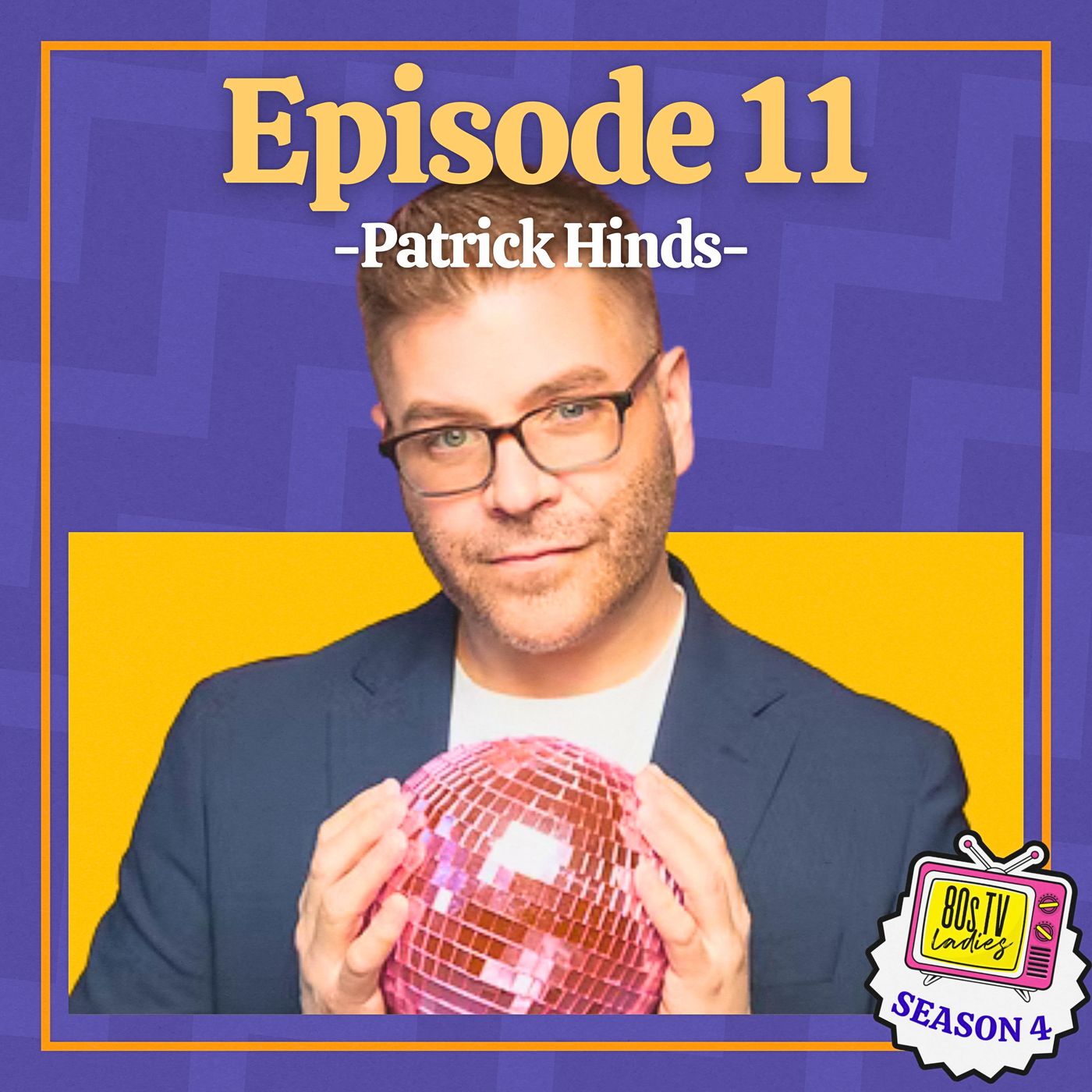
Season 4 · Episode 11
Inside Scoop with Patrick Hinds: Golden Girls, True Crime, and TV Magic

About this episode
Join hosts Sharon Johnson and Susan Lambert Hatem on 80s TV Ladies as they chat with the award-winning podcaster Patrick Hinds. Known for his work on Theatre People, Broadway Backstory, True Crime Obsessed, and The Golden Girls Deep Dive podcast, Patrick Hinds is a familiar name for fans of podcasting. In this episode, Hinds delves into his experiences creating podcasts, his episode walkthrough of The Golden Girls, and his journey from theater to true crime. He discusses working with Jennifer Simard, the impact of Golden Girls on the LGBTQ community, and his book 'Failure is Not, Not an Option.'
Patrick also talks about working with Gillian Pensavalle on creating the True Crime Obsessed podcast. The conversation touches upon behind-the-scenes stories, the enduring appeal of The Golden Girls, getting hated on by Bea Arthur, and the importance of community and storytelling. Perfect for those who delight in 80s TV, podcasting, and theater.
AUDIOOGRAPHY
Explore the world of Patrick Hinds and his shows:
Golden Girls Deep Dive Podcast
True Crime Obsessed Podcast
Get Patrick's book, Failure is Not, Not an Option
Connect with Patrick at PatrickTours.com
Or at Instagram.com/patrickhinds
FIND GOLDEN GIRLS
On Hulu or Philo
Also YouTube and Apple TV
- For those interested in physical copies, DVDs are available through eBay, Walmart, and your local library.
SPECIAL 8TL PROMO DEALS
Get awesome sheets and pajamas at COZY EARTH.
Use the promo code: 80STVLADIES.
Happy Shopping!
FEBRUARY 8TL DEALS BLOCK:
Get your 80s TV Ladies deals and discounts:
Cozy Earth bamboo sheets and pjs (41% Off)
Old Glory iconic music, movies, TV and sports shirts (15% Off)
🔗 Get them at: https://MyDeals.Page/19wy
🎁Code: 80STVLADIES
NEW DEALS - Just added!
Bear Knuckles premium leather work gloves (15% Off)
Afuera Coffee sustainable coffee (15% Off)
🔗 Get them at: https://MyDeals.Page/19wy
🎁Code: 80STVLADIES
00:00 Introduction and Guest Welcome
01:02 Golden Girls Deep Dive with Patrick Hinds
01:41 Working with Jennifer Simard
02:59 From True Crime to Golden Girls
04:04 Theater Podcasting Journey
05:33 Memorable Interviews and Broadway Stories
13:13 The Birth of Broadway Backstory
16:27 Creating a True Crime Podcast with Gillian Pensavalle
20:38 The Appeal of True Crime
25:36 Golden Girls: A Cultural Phenomenon
33:54 Different Standards for Women in Media
34:20 Interviewing Wendy Mallick
35:20 Stan Zimmerman and Theater Connections
37:32 Balancing Podcast Episodes and Interviews
38:09 Challenges of True Crime Podcasting
44:14 Golden Girls: A Timeless Classic
46:54 The Impact of 80s and 90s TV Shows
48:07 Patrick Hinds' Book: Failure is Not, Not an Option
50:10 Bea Arthur's Tough Exterior
52:41 Favorite 80s TV Shows and Final Thoughts
Visit 80sTVLadies.com for more info.
Listen to 80s TV Ladies at YouTube. Subscribe and help us grow.
Don’t miss out. Sign up for the 80s TV Ladies mailing list!
Help us make more episodes and get ad-free episodes, video interviews, and exclusive content on PATREON.
Transcript
Automatically generated, so expect the odd misheard name.
Weirdy Way Media. Eighties, so pretty through the city. Welcome to eighties TV Ladies, where we look back in order to leap forward. I'm your co host Sharon Johnson. And I'm your other co host, Susan Lambert HadAM.
Before we get to our interview, I think we need to take one moment to honor those killed, kidnapped, trafficked or harmed by our government. What is happening now in our country is real, but it is not inevitable. Your voice matters, your actions matter. Your vote matters. Make sure you are registered to vote at vote dot org.
Even if you have been voting regularly, it doesn't hurt to double check. Meanwhile, we're going to take a moment to breathe in peace and breathe out humanity. Excellent onward. We are so thrilled to have our next guest on He is an award winning podcaster for Broadway True Crime and Golden Girl pods. I mean that alone means we got to talk to him.
He does live shows as well and is an all around raconteur. He has also written a fantastic book called Failure Is Not Not an Option. So here we go, because let's get into Golden Girls Deep Dive. Welcome to eighties TV ladies, mister Patrick. High, thank you so much.
I'm delighted to be here. Thank you for having me. Yeah, we've been so much looking forward to talking to you about Golden Girls, and especially after having a chance to listen to some of your podcast episodes. It's it's really great. Well, thanks.
I you know, it's such a pleasure to get to make that podcast. I get to make it with the incredible Jennifer SamArt every week three times Tony nominee and just you know, a comic genius, and I feel very honored to get to do that with her. So it is such a highlight of my week every week. I love that. What is it like working with her?
Does she just walk in with her Tony nominees Like. No, well you would, you know, I would like her too, but she doesn't. Like she's a very humble person, and you know, like all great comedians, she's sort of normal in real life, and you know, she's a little bit on the quieter side. And then we have this also like deep friendship outside of the booth, and so you know, on Fridays, which are our recording days, she'll come in and we'll chit chat for twenty minutes and catch up and then we'll sit and you know, it's I always think of it as a real honor to get to make her laugh if I ever say anything funny, and she laughs really loud or belly laughs, and it's like, oh my goodness, I made this like great comedic actress laugh.
So it's it's. And she's so smart and she just you know, she's an outside the box thinker and she's got such interesting ideas and we both come from very different life you know, experiences, and that's really fun to bring into the show. So it's a I I wake up every day that I get to be a podcaster with these incredible women. I make another show with a woman named with Jillian Penzilali, who's also just a genius. And so I'm, you know, I'm a very lucky guy.
That is so incredible. Like, so we'll stay on Golden Girls for a minute, but then I want to get to your other podcast, including your theater podcast, which yeah, I first heard you, man, But so, what made you decide to do a Golden Girl's deep dive? You know, I think I had always wanted to do a TV recap show. I wasn't always exactly sure what I wanted to do, but I'd been making True Crime Obsessed for about eight years and it's you know, we recap true crime documentaries on that show, and so it's very heavy and we make something like one hundred and seventy episodes a year, and so it's like living in that very dark, you know, true crime space. After a while, I was like, I need something else.
I need something a little lighter, something a little and you know, the idea of starting The Golden Girls from the beginning, the idea for the podcast who was to do more than just a recap show. We wanted to bring in historical stuff. We wanted to bring in the history of the show. We wanted to bring in some historical context to the things they're talking about. And so one day I just woke up and I was like, I think today's today.
I think today's day. I'm going to ask my friend if she wants to do this with me. She was a very fast yess, and we just started doing it. And so what brought you to theater and podcasting? You know, it's funny I started podcasting in I want to say like twenty fourteen, I found podcasts as a listener.
I had a very long subway commute at that time. My commute was like an hour each way, and honestly, my eyes were starting to go, like I'm just old and I've always had bad eyes, and I didn't want to read on the train anymore. So I was just kind of like, what else, what are these podcasts? And I started listening to podcasts, and I naturally graduate gravitated towards theater podcast and there was this one great podcast called Downstage Center where a guy named Howard who was, you know, the president of the American Theater Wing, was interviewing these like big Broadway stars and they were really fascinating conversations. And then one day he just stopped making the podcast, and I was like, I need this podcast to exist.
Somebody else is going to do this, and nobody did, and so I was like, well, I guess I'm going to do this. I felt really called to make this thing that I just wanted to exist in the world. I had no idea how to make a podcast. I had no idea about audio, I had no idea about booking guests. I had really no connection to the Broadway community.
But I just started, and I just started, you know, asking big Broadway stars if they would come talk about their careers with me. I was the first, I mean not to sort of toot my own horn, but I was. I was the first podcaster outside of Howard to do that, and they were just saying yes. And so I just started having these amazing conversations and yeah, and the a podcast called Theater People was born. What was your most memorable interview in that during that stage of podcasting.
That's such a good question. It was quite a while ago, now. I mean I would say, like, you know, I really loved my interview with lin Manuel Miranda. You know, he and I go back to before he was even famous. I was a freelance writer in New York and somebody introduced me to this young kid who was working on this musical that had a gay character.
It was called In the Heights, and the gay character ultimately got lost from the show, but you know, Lynn was substitute teaching at the time, and so I got to spend a day with him. And then all those years later, you know, In the Heights had been a huge success, and we had kept in touch peripherally, and I reached out to him and us if he would come and do my little podcast, and he did and he was so amazing, and so that was one. I remember also interviewing Renee Eleise Goldsberry backstage during Hamilton, like right like when she got her Tony nomination, and it was this whole thing where her team wanted to do the interview, but the Hamilton team wasn't really getting back to me. They had to kind of sneak me into the Richard Rogers Theater, snuck me into her dressing room.
She couldn't have been more amazing, and that was you know. I also I think about my interview with Jen Kalella, who played Beverly Bass in a show called Come From Away, which is honestly a nine to eleven musical, and it's this really beautiful story about people coming together on nine to eleven. And Jen is this like incredible, gorgeous, sexy lesbian on Broadway, and you know, she was just She's one of the warmest people I've ever met, and she tells great stories and but you know, she was so great. I got to see her do Come from Away on Broadway. Yeah, it was phenomenal.
It was immediately. That whole experience is amazing. Because Come from Away, for anybody who doesn't know, it tells the story of an American Airlines flight on nine to eleven that got diverted coming back to the United States, and they were diverted to a town in Canada called Gander. And but because they had there was a big airport there, but they you know, Gander, all of the flights were sort of sent there and this this like little town in Canada they say, like quadrupled in size overnight. And it really is about I could get like emotional talking about it.
It's about the town coming together to take care of these American people who you know, didn't know what was going on in their home country and feeling very out of place. And these people got stuck there for a week. And so this writing team went, you know, ten years later and interviewed all of the town's people about that experience. And the role that Jen played was one of the pilots, a woman named Beverly Basson. So the show is very much an ensemble piece.
There's no solos, you know, until you get to Jen's big song called Me and the Sky, which tells the story of this woman, Beverly Bass being the first American pilot, the first female pilot for American Airlines, and it's just an amazing show stopping moment, and it was a star making moment for Jen Kalella and so yeah, you know, getting to talk to people. One of the really fun things about that podcast was like talking to people who were just on the brink of becoming stars. You know, those were the people who were saying yes to my interview requests and it was like they were doing that show that was about to propel them, to start them. And it was really amazing meeting some of those people at that point in their careers and getting their stories and their you know, Ariana Dvoe's was one of the people I interviewed during that time, and she had just played The Bullet in Hamilton and she was an ensemble member and she was in our interview.
If you go back and listen to it, she talks about how I think I've decided I'm not going to do ensemble anymore. I'm going to really only go for like leading roles. She has an. Academy Award now and we're less than ten years later, you know, I mean, it was amazing. It's just a speaking to theater artists is a great gift because they're very generous with their stories and their perspective are They're so hard working and just like really great people.
I know what you mean though, about getting a chance to talk to people. That's been one of the gifts of our podcast is the number of women in particular that we've talked to who were working on television in the eighties, many of them unsung, many people that most people don't know of or never heard of, and it's just been it's just been a dry I totally get it. I totally understand it. Really interviewing. As much as I love making the Golden Girls podcast and Trigram Obsess, where I get to talk a lot, as you can tell, I like to talk, I really do love an interview podcast where I get to do research on somebody and find, you know, interesting stories and you know, getting people.
We were getting these actors to share their perspective with young people who were listening and you know, trying to come up in the business and what advice do they have and you know, how do you overcome the self doubt and the imposter syndrome so you know, yeah, I mean having conversations with people is just so. Great and feel so important now, like I am to have real conversations with real people and be in community. And you know, it's sort of why I think, at least just ups and downs and all that stuff, theater is still such a vital, important art form because being in a room in community with people to tell stories is unmatched in its ability to make you feel good and part of something. You know.
And I think that one of the reasons for that is because you get the dual experience of shutting out the world for two hours and experiencing a whole new world with a. Bunch of people. So it's at the same time it's an escape but also an opportunity to experience something totally brand new. So I'm curious, like, did you grow up in New York, Like, what's what's your background? How did you end up no theater, podcasting, storytelling?
I grew up in Cape Cod, you know, I went to Emerson College, and you know, I'm a worker, Like my mom was a single mom of four kids. We grew up in low income housing on like food stamps, which I've been screaming from the rafters the last couple of weeks to my mom was a full time working parent, and we still were on food stamps because and that is the story of so many Americans, especially like our service members. And so, you know, I from a young age, I was just I got my first job when I was I think twelve, I was delivering newspapers and I've been a worker ever since. And I went to Emerson College, and I thought I wanted to be a Broadway actor, but then quickly realized it was no good at it. But I wanted to keep the connection to the theater.
And so you know, when I moved to New York right after graduating college, and I was a creative kid, so I you know, I my first job was for CNBC. I did that for like nine months, again a terrible fit, and so I found my way to restaurants, and I, you know, was bartending, and then like trying to be a writer during the day. And then that. Evolved into podcasting, which I never imagined could be an actual job that you make a living doing. And I happened to be right in that wave of like nobody was making a living making podcasts, and then some people were, and I started to sort of pay attention as to how these creators were sort of monetizing and what they were doing to move into it being a career.
And so yeah, I mean I always loved the theater, and you know, that was sort of my way of staying connected to it. Was when I started making the Theater People podcast, I really wanted to, like, all of a sudden, these sort of Broadway adjacent content creators were coming up. A lot of people were doing blogs and vlogs, and you know, social media was just starting to happen, and I just happened to find my way into that world via podcast, and then you know, it kind of evolves from there. I from Theater People. It was funny I realized I had What would happen would be I would want to interview one person from a show that was new that season, but then I'd end up interviewing the director, you know, doing an episode, and then I would interview another actor, and I realized I had all It was really in the Heights, I had interviewed like every single person who was in in the Heights.
I interviewed Tommy Kale, the director, who's another old friend of mine, and one day I was like I have enough interviews here that I could make a sort of documentary about in how when The Heights got made. And so I pitched my friend Natalie, who now works for me, works with me and my company. She sort of runs our company. She was working for a company called Today six at the time, and we conspired to pitch them a podcast about called Broadway Backstory. And the idea was to sort of make documentary episodes about how Broadway shows developed from an idea into a full production.
And so I used a lot of existing interviews that I had, but then I would go out and interview everybody else, Like our first episode was in the Heights, and then I think I did Legally Blonde, and I interviewed the writers and the set designer and the director and the choreographer and the actors. And I did all of this on my own, you know, with Natalie's sort of back end help on production and scheduling and all of that. But I was sort of learning as I went, you know, making these one hour documentaries out of all of these interviews that I had done, and it was a really beautiful thing. So that was my second theater podcast was called Broadway Backstory, and We did that for two seasons. I think we did eight episodes per season, and each season had one show that was two episodes, So the first season that was in the Heights, in the second season that was Hamilton.
So we covered fourteen shows and two seasons. And it's one of my favorite things I've ever heard. That is amazing. Have you read The Season by William No? I haven't read it.
Yeah, I mean it's one of those books that people used to talk to me about all the time. I've not read it, but it's it's certainly very much in line with what I was doing. I mean, it's such a different landscape, but yeah, it is very interesting because he covered Sharon, he covered he just covered an entire season of Broadway. But it was like seventy I can't even remember when it was. Yeah, it was a lot of time.
There was another documentary that came out, I want to say, in like the you know twenty ten or whatever, that all the year that Wicked came out and it covered most of the shows that opened that season as well, from opening through the Tonies, and it's like the the world of theater is just so fat, endlessly fascinating. There are just endless stories to tell in that world. Yeah, and it's so interesting because some shows do amazing and then other shows you think are going to do amazing, yeah don't. And yeah, and. It's wild to see it, like in a documentary like that document I can't think of the name of it now, but you know it was the year that Wicked opened and they're following it through the Tonies and everyone thinks it's gonna win the Tony But then Avenue Q this like little scrappy show on the Tony instand and like, what an amazing way to end the movie, you know, like it's it's incredible.
Oh that well, Okay, we can't just talk about theater, Patchel, I. Know, I know. Sorry. Can we talk about the Endego Girls for another two hours? Yes, we get, but first let's talk about So how did you go from Broadway to true crime?
Yeah? Well, I met this incredible woman. Her name is Jillian Penzavali. And you know, one of the things that I found in my work doing like Broadway adjacent theater creator stuff was that that world, at least when I was in it was not very welcoming. You know.
There's a lot of competition, a lot of competitiveness. And I was just saying this to my therapist today. I don't know how this happened. I don't know how I became this person. I do not have a competitive bone in my body.
I want to do well, I want to be you know, I want to succeed and I want to thrive, but I am not. I never really compare myself to other people. I've always come from this place of like wanting to help others and wanting to be helped by others. You know. And so when I made it sort of my mission as a theater podcaster that even though I was one of the first, whenever a new one would come out, I would never see it as competition.
I would always reach out right away and say, you know, my name is Patrick. I make theater people. I've been doing this for a long time. Welcome to the world. If there's anything I can do to help, please let me know.
Sometimes creators would take me up on it, sometimes they wouldn't. But this woman, Gillian PENNSYLVALI was making this new podcast called The hamil Cast about Hamilton, and I knew it was going to be so popular, probably more popular than my podcast, and I had one moment of like, I'm not going to reach out to her, like, you know, hers is going to be more popular than mine, and then I was like, no, reach out to her. Be who you are. And I sent her a DM on Twitter same thing. I'm Patrick, I make theater people.
If I can ever help you, please me know. She wrote back to me right away, and we just started communicating and a friendship quickly developed, and we started meeting for you know, coffee, and that turned into meeting for happy hour. And it was right at the time when I was really trying to figure out how some creators were transitioning from doing podcasts as a passion project to actually making a living making podcasts. And I was seeing people really having success in a couple of different genres, and one of them was true crime. And I loved the true crime genre and I really wanted to be a part of that genre anyway.
And I was really paying attention to what kind of shows were working, and it was you know, banter and people with big personalities and you know, basically people that you wanted to hang out with. And Jillian and I were just so fun together, you know, I just knew that there was some sort of magic spark between us, and I remember talking to her about it and she's like, oh my god, I want to make a true crime podcast too, and I was like, great, let's do it. We came up with an idea that was kind of this nerdy, like three segmented podcast, like we were going to have a new like a true crime news segment, and an interview segment with somebody from the true crime world at the end, and in the middle we were going to do like a segment where we talked about it thing like a documentary or a podcast.
And we recorded this pilot and the middle section we were sort of talking about this documentary the impost, and it was so different than what I wanted to make. It was humorous, it was we were just so excited about we were sort of talking over each other. I had had in my mind this sort of nerdy, sort of like commentary podcast, and as I was editing the episode together with the three segments, I got to that segment and I was like, this is so interesting. This isn't really what I wanted to make, but this is so different. It's not like anything that's out there.
I kind of think this is the podcast like two friends watching true crime documentaries and sort of talking about it. And this was before Netflix was even streaming. This was like, you know, this was back before the true crime documentaries were just constant. This was like they were the ones that were known, but there wasn't a lot of them being made. Jillian agreed, and that became our podcast, and you know, it just happened so fast.
Within the first nine months, we were making enough money to quit our jobs and focus on it as our full time gig. And then within a year, you know, we were to the point that we needed management to sort of handle all of the back end stuff so we could focus just on making the podcast. And so my husband quit his job and started managing us. And then you know, the big agency UTA reached out to us and wanted to represent us, and and here we are nine years later, just doing the same thing. What do you think it is about true about true crime that is so interesting that people are so fascinated by?
You know, I probably that's the most common question anybody who makes true crime content gets asked. And my answer has evolved over the years. I think I think especially for women, because you know, the women make up the largest audience, or I should say non male audiences make up the most you know, the biggest audience or consumers of true crime content. It's undeniable that women walk around the world, you know, knowing that they are vulnerable to these sorts of things. And I think that there is a curiosity about it.
I think we want to know about it. I think the more we feel like we watch it, know about it, maybe it makes us feel a little bit safer, maybe we learn something from it. So I think that's a really tragically. As much as I hate to say that out loud, I think that that is a real thing about this. I think another thing and this is just you know, to be blunt.
I mean, like true crime stories are interesting, you know. I mean I think they usually have a very strong beginning, middle, and end, or they end in a mystery. And I think that we are naturally drawn to mysteries. And I think that it's honestly, I think it's hard. I think that we are sort of fascinated by the things that scare us, you know, And I think that like these are safe feeling.
Ways to sort of look at the scary thing. Yeah, that sounds like that. It's so funny because I am fascinated by true crime to a degree, but not enough. Yeah, I really am, like, no, that's not good for me. Yeah.
Yeah. Well, and you know, one of the great gifts of working with Jillian has been really understanding the privilege that men walk around with in the world, you know, and I was shamefully unaware of it, you know when we started that, Like, you know, Jillian would talk about walking around the city with her headphones on and but she can't listen to music. She has the headphones on so that people don't talk to her, or so that like she can be aware. Like it's I have an eleven year old daughter now, you know, and I start to see all of these things through what like the world that my daughter is inheriting, and I think it's just as valuable by the way to not watch it as it is to watch it. You know.
I think, if it's gonna make any anxiety worse, absolutely do not watch it. And that was why we sort of took the approach that we did, which was, you know, we used to call ourselves a true crime comedy podcast, but we thought that was disrespectful to the content that we covered because we're never laughing at the crime. We're obviously we're never laughing at the victims. We are sometimes laughing because we find ourselves getting just so worked up about it or you know, the idiot cop that just like dropped the ball, or the prosecutor that you know, it's like some of it is so absurd it's hard not to laugh. But we we really did intentionally try to take a lighter approach to covering these cases without in any way being even ambivalent.
You know, we always wanted to be a very strongly victim focused, you know, conversation. But at the same time, it's just like it is just like somebody used to say, are you afraid that you're gonna run out of documentaries? And I'm like, I. Hope, like put us out of work. I'll go back to barttending, stop kill telling each other.
You know, it's so funny, And I do love the approach of of sort of covering it through documentaries, right, So, you know, obviously, because we love television, you know, it's the it's you know, and companying on how someone pieces a story together is an interesting part of our culture. Like we yeah, we all sit around and talk about, well, I didn't like that way that story was told, and I don't like what that character's doing, and I don't like what that real life character did when they killed so many people. Exactly, No, truly, And it's like, you know, Jillian and I sometimes have to remind ourselves that, like we as the documentary consumer, have all of the information, so like it's easy to be hard on some of the people in the documentaries because like, how did you not And you're like, oh right, no, like at the time, you didn't know all of the things that I know, you know, And so yeah, it's and I got to tell you, like, before true crime documentaries became so prominent, they are really were men many artistically beautifully made documentaries.
There was a lot of care put into them. And now you still find that. There definitely are documentarians I think out there that that are that are doing the good work, but they're they're so mass produced because they're so cheap to make and all the streaming platforms want them that it's you know, it can be not great quality all the time. Yeah yeah, yeah, all right, but enough about true crime. Let's talk about Golden Girls.
Yeah. See, now you understand why I had to make the Golden Girls podcast, because you're like, that's the point where you're like, I can't talk about this anymore, all. Right, So when you were like I want to talk about I want to you know, have some some joy and likeness and and sort of a rewatch, how did you pick Golden Girls? How did gold. Golden Girls is just number one.
It's ubiquitous. I think almost everybody knows it. So it was something that we knew that you know, a lot of people would care about. But also it's just so good. It's been with me my entire life.
When I was a young kid, probably against her better judgment, my mom let me watch it when it was first airing, when I was probably ten years old, you know. So it's all of those reasons that it's really good. It's always been with me. But there were also opportunities I thought to do more than just do a rewatch podcast. We really could.
There's an amazing book out there called by Jim Calucci. Golden Girls Forever, Yes, And we just interviewed Jim. So Jim is just the best. He's been on our podcast several times. I love that man, you know.
And so I knew that book it existed, so I knew there were stories to be told beyond just, you know, doing a rewatch podcast, so that was another thing. I wanted to do something more than just a rewatch, and I knew The Golden Girls would be fertile territory for that, but also as a gay person, it was important to me to sort of talk about why the show was important to the gay community. I think it's no coincidence that the show launched really at the beginning of the AIDS crisis, and I think that, you know, we all think of it as such a comfort show the gay community. I don't want to say more than any other community, but it certainly is very important to the gay community, and I wanted to sort of explain why I thought that was, which I think, you know, there was a time in the mid eighties when when people gay people who survived and people who loved gay people who were dying were going to like ten funerals a week.
That's not hyperbolic, and sometimes more than that. Liza Minelli tells a story about going to like twenty five funerals in one week, and I think that like they would come home on Saturday nights and turn on The Golden Girls and it was totally an escape. And I think that imprinted on them. I think that it became it was a comfort show for them in the moment, and it became a comfort show for them forever. And that was sort of handed down to the younger, you know, members of our community.
And I really wanted to draw that connection. I really wanted to sort of show that parallel wow. That I hadn't really thought of it that way, but you know, uugh, because I am a little bit older than you. And it was a I mean, I was in LA at the time, and so I think it was less concentrated than it was in say New York, but there were still like people I knew that were that are gone and yeah and lost and and and ostracized for it, and it was very horrifying. It's crazy, Like you know, fran Liebowitz, I was just watching a clip of her talking about this, and she was saying, like, just you know, to add a little levity to the conversation.
She was like an entire generation of like A list, B list, C list, and D list gay creators were lost, you know, And she was saying, like, you know, that's why in fran Leebowitz's opinion, like the taste of the eighties isn't great because we lost so many of the people who were the taste makers, you know. And she made this joke about like if any one of my dead like gay A List friends who died of AIDS called me, and I said to them, You're never gonna guess who's famous, you know, because it was like not the cream of the grop or whatever in Frandlebwitz's opinion. And it's a joke, but like, it really is true. We lost so much culture, you know. Gosh, I've never thought about that before, but that's absolutely true.
Yeah, it just it was so devastating on so many levels. Oh my gosh. And like leave it to friendly Boitz to find the meanest way to say it, but like, yeah, it really, it really is true. Okay, eighties TV ladies, let's talk about night sweats. It's not glamorous, but it's real and it's happening to me.
My absolute life saver, cozy earth bamboo sheets. They're cooling and moisture wicking so I can finally sleep soundly without overheating and the wetting up everything. They are worth the hype visit cozyearth dot. Com and use our exclusive Eighties TV Ladies forty one percent off code forty one percent and that code is Eighties TV Ladies. So what else have you discovered about the Golden Girls and doing this this rewatch?
You know so much? I mean, it's been you know. I was so honored to have been asked to be a part of this fortieth anniversary special that ABC is doing, and I was revisiting some of these stories with them, and you know, some of it isn't great. Like, you know, Stan Zimmerman, who was a writer on season one, told us a story about how you know, he's gay and his writing partner was gay. They weren't together, but they were both gay men.
And the Golden Girls set was not super hospitable to people being openly LGBTQ, and you know, the cast obviously was very gay friendly. And he tells a story about Estelle Geddy grabbing him on like his first day and pulling him behind the set and being like, I see you, You're safe with me. But like, you know, so I think that's surprising to a lot of people. I show that to a beloved by the gay community, wasn't super welcoming to people being sort of out in the workplace. So that's kind of wild.
But then there, you know, there's the juicier stuff about the alleged feud between like be Arthur and Betty White, which I think is pretty well established and I think we sort of know is true, and maybe it was less of a feud and more of a one sided sort of annoyance from be Arthur to Betty White. I think, you know, they certainly respected each other professionally, but there's no question that be that Betty was not be Arthur's favorite person. Yeah. Yeah, it seems to be what we've heard too. Yeah, yeah, that seems to be something that's something that really kind of irritates me because if you think about it, you never hear about that kind of conflict is too strong a word, but that kind of tension between male co stars.
And you know it and you but no one's interested in talking about it. Yeah. The only time and recently that I can think of, is there was a television version of the Mel Gibson Cops movie. There was a television clover no lethal weapon, I think, yes, And and it was one of the Wayans brothers and this other guy, and it came out that there was no love lost between them that whichever ways, I'm sorry, I can't remember, was like trying to get the other guy fire and all this, And I'm like, you never hear of men doing this, You only women. It's like, oh, it's a gentleman's disagreement.
They had creative differences, you know what I mean. And but like for some reason we're so interested in and and maybe and certainly not to make any excuses like that's deplorable and awful, Like I'm not saying care less about the ladies feuds, let's just also care more about the men's exactly. Like it could be like it could be that we feel more invested in Betty White and b Arthur, like we think of them as like maternal figures. We genuinely care about them, you know, And so maybe maybe that's part of why we're interested in it. But and it could also just be we're so fascinated by how two people could dislike each other but be so good together on camera, you know.
And this is not me trying to dispel the misogyny inherent in what we're talking about. Obviously that is rampant and disgusting, but you know it's a we just love these ladies. Yeah, I think it's I think it is endlessly fascinating to you know, you know, be like, well, what was happening behind the scenes, clearly, yeah, we're all interested in that. But yeah, it's also it is it is a different judgment when it's women, right, Like, it is such a different judgment, whether it's it's you know, and I think of it through you know, through sitcoms, you know, on theater. It's it's just a it's just a different standard of what is allowed and then what is just poked at, you know, sort of endlessly.
Yeah, it's funny. Like I just did an interview with Wendy Malik for for those. Oh amazing Yeah, and she's like I was just so blown. I mean, my god, she's just like she's so funny and she's so smart, and she's so you know, throughout the interview she was snort laughing, which I was just like, Wendy, that is perfect, Like. I loved that so much.
Former like Ford model, just like just snort laughing with wild abandon. But she was talking about you know, she did a season of Kate Nelly and she was talking about how Jane Curtin and now, of course I can't remember the other actress's name, but apparently they also hated each other, and they, you know, like they would do their scenes and then they wouldn't speak and they would sort of go off to their corners. But you don't really hear about that feud because it was very professional, you know, it was very sort of like they just sort of did They just sort of did their thing. It's Susan Saint James, and we're going to cover Kate and Nelly very soon, and so I'll be talking to you about getting Wendy Mallack.
Yes, yes, have you guys ever had stands In Mooman on your podcast? Because he's my connection to. Everybody he's had We've had him on twice. So he's the guy. That's amazing, Yes, and he just I mean, it's so funny because he I sent one of his plays to my sister who does theater in Charlotte, and so he just flew down from his New York shows for the opening night of of Meet and Greet, which was part of a one night a night of one ax that my sister produced, and and I had a short play, much shorter than Meet and Greet, but in the same time.
So we got to actually see each other sort of outside podcasting, which was really fun. He's really fun to hang out with. The way that we got Wendy Mallock for the podcast was I went to see the reading of his show here in New York and they, you know, the cast, all went out after and I had brought some listeners and we all went to the same bar and Stan I was like, oh my god, I love Wendy Malix so much. He's like, she's right over here, come meet her. I'm like, no, don't you bring me over there.
He brought me right over to Weddy Malleck and she could not have been cooler. She was so nice. Oh wow, that is so great. That is so great. Yes, okay, I'm going to hit up Stan.
They're so good together. It's sort of amazing. Yeah, genius. Yeah. I mean, Kayley is a staple.
Yeah, because I always think of, you know, work in an office. You don't get along with everybody, but you have to work with them exactly make it work. And that's exactly what's happening on set. They're there to do a job. They go do their job, they go their separate ways exactly.
Nothing wrong with that, nothing wrong with that totally anyway. You don't have to love everyone exactly, but we want we want them to love each other. Yeah, because that's the other thing. We want them to love each other, right, that's right. Yeah, we want those those relationships to be true and yield and for over and ever, forever and ever.
So as you know, it's because you guys are doing a you are walking through I know you're bringing on super great guests and all that stuff too, So how do you balance the Okay, here's when we're going to do walk through episodes and here's when we're going to do interview. We do interviews when we need a week off. Like that's really what it comes down to, you know, Like there, I think we do forty six episodes a year, and so you know, we've got six more weeks to fill that we don't have to fill contractually, but we want to. We want the listeners to have something, so we'll usually slot an interview in those spots. Or you know, Jen, my co star, is very fancy and very busy, and so when she was going through Tony season or when her show was opening on Broadway and she needed some time off.
That was when we were sort of slot in some interviews. So you're so, since you're doing a Golden Girls obviously has already aired, and I would imagine that we were to crime podcasts, some of those who were relatively new, and you wanted to kind of stay on top of them. How do you like the difference between dealing with the show that's kind of already out there as opposed to the one that gives you kind of the pressure of, Okay, we need to talk about this today. You know, that's a great question, And I'll say Golden Girls is easier. I mean, it really is.
Like I I you know, I watched the show, I take my notes. It probably takes me about three hours to get through the episode taking my notes and you know, really thinking about it. But then I just get to come and sit down and like chat with my friend, you know. And with with True Crumb Obsessed, it's much more. Though I've been doing it for nine years and I know exactly what I'm doing on recording days.
For True Crime obsess it's a very it's the same thing. I have never gotten board with it. I love it very much. There's a lot to think about, you know, I mean, there's it's certainly it's a more thoughtful podcast in the sense of Number one, we want to make sure we're covering you know. Jilly and my co host, puts together our schedule and she works so so hard on making sure that we are covering not just I don't mean to sound glib, but like not just cases of like murdered white women.
You know. It's it's so important to us to be covering you know, obviously so much more than that. So that's number one. Number two, we never censor ourselves. We never really have to be, but we want to be very mindful about the way we talk about things, like you know, we we try not to talk about politics so everybody knows where we stand.
Sometimes it's really hard to do that, but we want to These true crime themes are pretty universal, and so we want to we want to be big tent in that sense. We you know, obviously, we want to be true to ourselves and what we believe, and there are certain like there are you know, if if we had sensible gun laws in this country, I think we would probably have half the episodes to cover that we have and there's no way around talking about that. But there's you know, there's just more thought put into it because we're dealing with real people who suffered real tragedy. There needs to be a reason for us to be talking about these cases that goes beyond any sort of just pure entertainment value. So you know, it's just a it's a bit more of a thought exercise.
I think, Yeah, that make that makes sense to me, you know, because again, Golden Girls is all made up. Yeah, yeah, it's made up. It's fun, it's light, and certainly there's like there's certain there's plenty of Like we just covered an episode in season three where Blanche's daughter comes to visit and she's gained a lot of weight, and so that was a thing that we were like, we're not gonna obviously, we're not gonna play any of the overweight jokes. We're not gonna talk about that stuff, but I want to talk about the theme. You know, Jen and I both have struggled with our weight all of our lives, and we wanted to talk about why this episode is particularly distasteful, you know, and like and why an episode like that would never get made today.
So it was kind of a heavy episode. It was not your your you know, your normal knee slapping good time that it usually is. Yeah, there's a lot of you know, the fifty things to Love about the Golden Girls and fifty facts and all this stuff. We're also having an episode here are the ten things we don't like about the Golden Girls. Yeah, and one of them is and that's it's very We've seen it a lot in eighties TV, particularly eighty sitcoms.
It's kind of mean, Yeah it is. It is, you know, making fun of people and you know, their abilities, disabilities, and. Yeah, talking about like you know, like this actress got hired because she was a larger bodied woman, and so she's on set all week hearing these jokes at her expense, and it's like, you know, we talked about that with be Arthur all the time. Yeah, Like because she also had to basically hear how ugly she was and how you know. Which is insane.
She was a beautiful woman with an amazing figure. So I do kind of like that suspension of disbelief that like it isn't true, So I guess we can. Laugh at it. But even still, like there are stories like Jim Kluchi will tell stories about b Arthur sort of blowing up in the last season, being like, you guys have been calling me fat and ugly for seven years and I've had it, you know, and it's that Yeah, you're right. I mean it's hard to talk about that stuff.
Yeah, it's it's sort of interesting that, like so many things hold up and then and then other aspects and again we've looked at Mama's family, We've looked at it. Yeah, and that I remember as a kid going this show is too main for me. Yeah, yes, yes, yeah, it's true. These people are awful to each other. I know it's funny in a skit, but it's funny because you know, there's that show Veep that I absolutely love, but it took me probably six times trying to watch it to get into it because it's the same.
It's so mean, you know, it's just like constantly me so like, yeah, it's a you want to say that a show like that would never get made today. I think episodes like the Blanche's Daughter episode wouldn't get made today. I would hope it. But it was sort of interesting because I do think in many ways it was reflective so often of family dynamics, which were often mean, particularly at that time, and I think for Mama's family in particular, it really resonated with sort of the mother daughter dynamic of you're not good enough and we don't have a great relationship, but I love you, but I also, yep, cut you down all the time and then you're mad at me. Yeah, and that's you know, that's like the dynamic of the relationship with Blanche and her daughter as well, you know.
Yeah, and then of course adding on top of that the abusive boyfriend who, like Blanche, isn't allowed to say anything about you know, like the the the what's the word conflicts is there, but it's a little you're being a little bit hit over the head with it, you know. So what do you think it is that is so long lasting about Golden Girls? Like it really does resonate at a It just does resonate, and both for the queer community but for everybody, and sort of I think there's been a resurgence, but I think it's always been there and it's just now being fed right. Yeah, but it's. Forty years old.
Yeah, I mean, there's something about In my opinion, it was brilliant writing So the thing about Golden Girls is that it was the first show to really show for women as the leads of a show. But even more importantly than that, it was for older women. So the characters are older, but the actresses are also older, which means they are incredibly seasoned actors. So it's like you're getting this combination of amazing writing meeting these incredibly seasoned and time tested actors in the three of them. Of course, we know Estelle Getty was pretty new to television when when she did The Golden Girls, but she was a quick study and she got out to speed really fast.
But I think it's it's pretty much that combination. It was groundbreaking. Uh, it was just incredible writing with incredible skill, And I think that maybe it tells us something else about how not great most TV is, you know, and how like the cream really rises to the top, and like you know it it is all of that wrapped in the fact that like it reminds all of us of our mothers and grandmothers. It's a comfort show for all of us. It's a I think, especially now because it is so long ago and it looks like a lot there's a nostalgia factor to it.
It's also a show you want to watch with your friends. So if you have friends in your life who've never seen it, you're like, oh my god, come and watch it. Like you know, The Golden Girls has been streamed over a billion times on Hulu over a billion times, and it's because people are watching and rewatching and bringing new people in and Rewatching with them. It's just it's a communal experience. Yeah.
I love that. It's communal experience. I'm gonna say, having covered the Facts of Life, that it was before the Golden Girls for women, and in fact, it moved. It was moved to Saturday night. And one of the reasons that's been discussed is to help launch the Golden Girls.
It it. Golden Girls launched after Facts of Life. Your first time it showed, and I didn't realize that until we were covering Facts of Life and I was like, oh, our little ladies, our little baby ladies led the way. I mean, that's incredible. So like Facts of Life walks with the Golden Girls can fly, that's incredible.
I love it. I thought that was like incredible because again, it's so rare to have four women lead a show. Now, I mean, there is Sex in the City and just like that. But those, you know, you're hard pressed to name another show that's all well, yeah, I. Mean there was girls, there was some God the show that I didn't like on ABC, Desperate Housewives, maainly I didn't like to I didn't like the title more than anything else.
I actually weirdly liked that show a lot. It was Mark chariot At you know, was firing on all guns. It was such a soapy soap, delicious fun. And you have like this new Ryan Murphy series with Kim Kardashian that's all women that everybody hates. So you know you can't win.
I haven't seen that yet, but I am going to give it a try. Yeah, I'm out of the best. My thing is I want I love Sarah Paulson, I love Jessica Lang, I love Glenn Close. I want Kim Kardashian to be awful. Give me that performance art, Kim Kardashian, give me that performance art.
Yeah. I kind of do too. You know, I have it. I'm here for it. No, I'm out, but have about it.
And then before we go, I just want to talk real quick about your book. Failure is not not an option, which every time I type it gets changed. I let's say, my publisher fought me on that title so hard. They were like, no one's going to get it right. Everyone's going to get it wrong.
You're maybe the second interviewer I've ever had that really nailed the title, because the joke is everybody knows failure is not an option, and the joke of the title is like failures not not an option, you know what I mean. So, yes, it's a fantastic book. It was fun interesting, funny, heartbreaking all the fields. Thank you so much. I you know, it was such a labor of love writing that book, and you know it's mostly true, and.
You know, it's so funny. There's a chapter, I think it's chapter two, about like that boy that I met when I went to that theater camp and fell in love with and he stayed in my life for a really long time, and then you know, we had a falling out and then he came back into my life just as the book was coming out, and he sort of had like a hard time with that, and then like he sort of drifted away again and he's just reconnected with me. Like it's you know, it was it was so nice to be able to tell these stories. The idea really was to write something that was gonna make people laugh that maybe I was not trying to teach any lessons. This was not about teaching lessons.
But this really was about. If some broke, chubby, gay, effeminate kid from you know, nowhere, Cape God, Massachusetts can work hard, not be that smart, but like land on his feet and do pretty well in life, then like, literally, anybody can you know. Well, I'm gonna thank you pretty smart, I'm gonna ak some of that. But thank you maybe street smart, maybe street smart. But I do want to hear a little more about why be Arthur hated you?
Oh man be Arthur, Hey my guts. So I was tasked with being her chaperone for a weekend when she was coming to my college to receive an award, and I lied to all my friends about this internship I had at a radio station where I was pretending that I was meeting these celebrities all the time. So they were like, oh, my god, a celebrities coming to town. You can be her host and guide and so you know, I went to the airport to meet her and just on site, she hated me. I know now that she hates flying.
I didn't know that then. She had just gotten off a very long flight. She was annoyed with me from the beginning. I brought her three dozen red roses. She didn't want them.
She thought my name was Peter, and I just spent the whole night just trying to get her to like me, And the harder I tried to get her to like me, the less she liked me. She eventually started drinking halfway through the night. We stopped at a restaurant for dinner. She's just like downing double shots of absolute citron vodka. Did not make her like me anymore.
I probably just really kind of color in the room, a little bit glow, not in the way. That I hoped. Nope, And I probably got needier and more annoying the more I. Realized how off the rails it was getting, which just made her hate me even more. But you know, we came back together.
A couple of years later. She came into a restaurant that I was working at and she remembered me, and she invited me to her table for a drink, and I went and we had a very nice chat. So it all works out. In the end. Oh, but that's.
A lovely end to that story. Yeah, but she was not a fan. She was you know, just leaving me alone is not not an option too. Exactly getting the hell away from me, you loud gay weirdo is not that a fashion. But I mean, and Jim talks about like there's a very I think a lot of people hit that hard exterior that yes covered, that is her protection, right, like this is yep, don't come at me because I don't trust you, you know.
Yeah, I mean, as Jim says, like she seems to be a kind of quiet, insular person and gay men especially have a big reaction to her because such an icon to us, and I feel like she doesn't always know how to handle that and we should be better about not doing that to people, you know. So like, uh, yeah, it can be not a good. Marriage, but I am I'm so happy it had a happy ending too. It did. Yeah, it had a nice, happy ending.
But that is fantastic. Before we go, I have one last question. I don't know if Sharon has one, but any other eighties TV lady shows that you like that you think might be worth a deep dive if you know when you get done with Golden Girls. You know I loved Sisters. Did you all ever watch Sisters?
Yes, we haven't covered it on the show, but. I love that show. I'm trying to think I was more of a nineties TV watcher, you know, like Will and Grace was my my other favorite. But to be honest, I've never been a huge TV person. So you know, I've always worked at night.
That was my thing before. Now I've got a kid, and you know, I was in college and so I didn't. Yeah, I was never The shows that I loved were Golden Girls. I loved Empty Nests. I loved Nurses.
I think Nurses is amazing. Oh, Designing Women. Of course, we got to talk with Linda Bludworth Thomason, which was amazing, that amazing. We got to meet her after she won her Writers Skilled Award because we were had been invited by the Writers Guild to come say hello to her backstage, which was, Oh that absolutely amazing, absolutely amazing. It was that was one of our very special Like I was like, I can't believe she said yes to us.
That's well. You know, Jillian and I many years ago made a podcast about my so called life where we did an episode by episode rewatch and in the end for our last episode, Winnie Holtzman joined us, and so like, that was incredible, That. Is incredible, That is amazing. Love my so called life. Yeah, we went on Matt Boum's rewatch.
He did a rewatch and was. I mean, everybody should make a rewatch pot because there's so much to be mined in there, you know, there's so much. Yeah, I think pop culture is endlessly fascinating, and I think and so I am particularly the things that we love right, Yes, like it's meaningful and it gives it does give comfort. I'm so thrilled that you guys are doing a deep dive. I whenever we're started on a show, I go look for podcasts, and so that's sort of how I found your podcast.
Oh I love that. And then and then and then I remembered that you had done. I was like, oh, that's that's the theater people guy. Yeah, I always love that when people remember me from that. Not many people remember that anymore.
But I'm so glad that you liked it. So uh so I'm a big fan and so. Thank you so much. My absolute pleasure. Where can people find you?
You can follow me on Instagram and TikTok. It's at Patrick Hines Underscore. My last name is h I A DS. You can also follow Golden Girls, Deep Dive and True Crime Obsess podcast. That's fantastic.
Thank you so much. This has been a wonderful Monday. This has been so wonderful. It's so nice chatting with you both. Thank you, thank you, thank you.
Thank you. We want to make sure when we're recommending products and it's something we like, and that's exactly what Cozy Earth is all about. They've been on Oprah's Favorite Things list for years. We're talking about buttery stuft bamboos, sheets and amazing pajamas and we can offer you the best discount forty one percent off. It's the ultimate and luxury sleep.
Go to Eighties TV Ladies My Deals link in the show notes to see all our atl deals. Use promo code Eighties TV Ladies. That's eight zero s TV L A d I ees. We need to shout out the incredible Catherine O'Hara, who we lost too soon on January thirtieth, twenty twenty six, at the age of seventy one. Miss O'Hara was an Emmy award winning actress and writer, as well as a producer.
She may be best known to eighties audiences for SCTV and the SCTV network. More recently, she's probably well known for playing Moira Rose on Schitz Creek. She is also well known for her comic turns in movies like Home Alone, Home Alone, Two, Beatlejuice, and The Christopher guest movies like Waiting for Guffman, A Mighty Wind, and Best in Show She's So Hilarious in those. She began her career at Second City in Toronto, Canada. She started in television in the seventies in Canada.
She broke out in the seventies and into the eighties, writing and performing in SCTV. She was a guest star on the Larry Sanders show, Tales from the Crypt, Outer Limits, Mad TV, Thirty Rock, and Modern Family. She also did significant roles obviously in The Studio and Last of Us. Most recently, she was a voice actress on Everything from The Completely Mental Misadventures of Ed Grimley in the eighties all the way through the twenty twenties, in projects like Wild Robot and Last Kids on Earth. She was also from Everything We Hear a truly wonderful person and mom.
She will be greatly missed greatly. I'm very sad. In today's audiography. You can find the Golden Girl's Deep Dive podcast at Goldengirlsdeepdive dot com. You can find Patrick Hines at patricktours dot com and his book Failure is Not Not an option at Patricktoris dot com, slash the dash book or you can just search for that book title.
He's also on Instagram at Patrick Hines, hil and ds underscore. The links, as always, will be in our description. Golden Girls is streaming on Hulu, Filo oh yeah, and on Disney Plus. Unless you gave that one up because you know they caved. I keep that in just because I'm still mad about it.
You can also buy it at Apple, TV, Amazon, You can buy it on YouTube. Sometimes you can just find some episodes on YouTube. Dbd's can be found on eBay, Walmart, and often from your local library. Next up, it's going to be getting the Band Back Together. We'll be bringing the nineties TV babies in to talk about the Golden Girls.
I can't wait. This one's going to be off the chain. I have been waiting for this almost since the very first nineties TV babies and so you know this one's going to be super fun. Golden Girls time, absolutely and as always we hope Adies TV Ladies brings you joy and laughter and lots of fabulous new and old shows to watch, all of which will lead us forward toward being amazing ladies of the twenty first century. Thank you for being the friend.
See you next time. Now. They say they're here to a pold the law, but they trample along our rights. If your skin is black or brown, my friend. You can be questioned or deported on side in our chance of ye.
Our city's hard and soul persist. Through broken glass and bloody tears on the streets of Manylies. We don't have manyless side your face saying it. Through the bloody here in our home. They killed and rolled in the middle of twenty seats, but they us stand for this land and the strange Joan I Mist will remember names Of those who die on the streets of many a list



Similar episodes across the network
Matched by shared keywords.
-
Episode 52: Homeless + The Tontine + Examination Day
4 shared keywords: 80s tv, comedy, nostalgia, sitcom
-
Special Report: James D. Stern
3 shared keywords: broadway, comedy, true crime
-
Special Report: Mark Edlitz on Movies Go Fourth
2 shared keywords: nostalgia, storytelling