
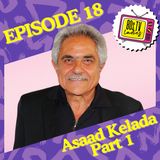
Season 3 · Episode 18
The Facts of Life with Director Asaad Kelada | Part 1

About this episode
Susan and Sharon welcome legendary Director Asaad Kelada. In a career spanning four decades, Asaad Kelada has directed over 340 episodes of television, including Rhoda, Phyllis, The Tony Randall Show, Benson, WKRP in Cincinnati, One Day at a Time, Night Court, Valerie, Who’s the Boss and The Office -- as well as four seasons of The Facts of Life. In Part 1 of this wide-ranging interview, we touch on Asaad’s relationship to the young actors on Facts of Life; learning to trust them -- and himself; and his beginnings as the lead singer in Egypt’s first ever Rock ‘n’ Roll Boy Band!
THE CONVERSATION
- WHAT I REALLY WANT TO DO IS DIRECT! - How getting accepted to the Yale School of Drama taught Asaad which side of the stage he really wanted to be on.
- THE 5-YEAR DIRECTING SCHOOL: Observing all the MTM shows from the bleachers, for five years, got Asaad ready for his first TV job: Directing Valerie Harper in Rhoda!
- DAY ONE: On his first day directing The Facts of Life, the only person he recognized that he had worked with before was… Tootie (Kim Fields)!
- DOUBLE STANDARD: In this early episode of The Facts of Life, Asaad realized the potential of the show: “It was just like being in the theater, like working on a play -- with substance, with humor, with intelligence -- and yet they were young girls. This was television in a new form.
- RUNAWAY TRAIN: Asaad describes the increasing tension and hi-stakes artistry of a show as it speeds thru its season -- and how he learned to not fall off!
- ON CHARLOTTE RAE: “She and I were the grownups in the room. She was the centerpiece in a show about four girls.”
- STORY CONFERENCE -- WITH THE CAST: “After the table read, we’d just talk -- talk about what the episode is dealing with, what it’s about, how it all ties together.”
- FACTS OF LIFE GOES TO PARIS: “It was a trial by fire. Every single shot, every single frame was filmed on location. We were at Notre Dame, the Champs Elysee… How can this be called a job?”
GET READY FOR PART 2 -- NEXT EPISODE! Don't miss more Facts of Life stories, plus Family Ties and Who's The Boss!!
AUDIO-OGRAPHY
Find out more about Asaad Kelada at IMDB.
STILL IN FLUX: Watch Season 2 and 3 of The Facts of Life for free on Tubi.
Season 1 and 3 are available for sale on Amazon Prime.
Buy the complete season on DVD at Ebay. Check YouTube for other episodes.
VITAL READING
Get Handbook for A Post-Roe America by Robin Marty at Bookshop.org.
Check out Men In Dark Times by Hannah Ahrendt at Bookshop.org.
Read Democracy Awakening by Heather Cox Richardson at Bookshop.org.
CONNECT
Visit 80sTVLadies.com for transcripts.
Sign up for the 80s TV Ladies mailing list.
Support us and get ad-free episodes on PATREON.
This year is the 45th anniversary of President Carter's Crisis of Confidence speech. Get Susan’s new play about it: Confidence (and the Speech) at Broadway Licensing.
Visit 80sTVLadies.com for more info.
Listen to 80s TV Ladies at YouTube. Subscribe and help us grow.
Don’t miss out. Sign up for the 80s TV Ladies mailing list!
Help us make more episodes and get ad-free episodes, video interviews, and exclusive content on PATREON.
Transcript
Automatically generated, so expect the odd misheard name.
Weirding Way, Media Hands Pretty through the City, god Man World. Welcome to Eighties TV Ladies, where we lift up the stories of women in television. Here are your hosts, Sharon Johnson and Susan Lambert had him. Welcome to Eighties TV Ladies, where we look back. In order not to lose our minds.
I think that. Might be the one. Or where we celebrate the women and shows that help shape our culture. Before it goes to the bury, that bury it deep, salt the earth, before we take a sled. And just beat it.
Tell oh God, how is that? That was great? Okay? Hello, I'm Susan and I'm holding onto the idea that when the world never seems to be living up to your dreams, you're suddenly finding out the facts of life are all about you. And I'm Sharon, and I believe it takes a lot to get them right, especially when you're learning the facts of life.
That is right, Sharon, and today we get to interview a champion director for eighties TV and seventy seven episodes of the Facts of Life, mister Asad Colada. One of the things I'm thinking about every day and when we record these podcasts, especially now is how did we get here? And it's not just a tagline. I think we have to look back in order to leave forward. We have to know and often relearn the lessons of the past.
Talking about pop culture is talking about culture and what we want to consume in our lives and what we want to put out in the world. I'm so impressed, Sharon. I've been so thrilled with the stories of those who worked in eighties television, and it's been such a gift to have this chance to interview icons of seventies, eighties and nineties TV. And I'm really fascinated by the female directors, in particular that we've interviewed the almost hidden female directors that we've talked. To figures as it were, female directors.
Exactly like Mary Lou Belly and Nima Barnett and Janelizberg. And it's been a treat to try and find people I only knew of my name. I'm not a ultimately quick names and dates kind of gal. I don't really study. I couldn't pick out stars in a crowd.
However, I am a sucker for interesting names. So Today's guest is one of those names that even in the eighties stood out for me. Even before I was studying film and TV, I remember seeing interesting names that kept showing up on shows. I liked names like Eugenie Ross Lemming and Brad Buckner, which isn't as interesting as Eugenie Russ Lemming, which is why I remembered her name and not his. WANNEDA.
Bartlett and the man we're interviewing today Asad Klata. Mister Kalata is a director from Cairo, Egypt, who emigrated to the United States to study at the renowned Yale School of Drama. And like you, Susan was also one of the few names that I personally picked out, because, as I think I've said before, I never really paid a lot of attention to the names on this but his I remember well. That may be because he directed over three hundred and forty episodes of television. His first television credits were on Rota and Phyllis in nineteen seventy six.
He went on to direct episodes of the Tony Randalls show, Benson WKRP in Cincinnati, One Day at a Time, Night Court, Valerie, four seasons of the Facts of Life, and over one hundred episodes of Who's the boss. He directed well into the two thousands, including shows like Dharma and Greg Sabrina, The Teenage Witch, and even The Office. What a special treat to have him with us in studio today. Welcome to eighties TV ladies, mister Asadklada. Thank you so much, pleasure to be here.
I'm so excited that you said yes and that you wanted to be in person. That's really a treat for us, and it's so delightful to meet you. It gives us a chance in person to thank you for all the amazing television that you helped create, the we still enjoy and laugh along with today. Well, I must tell you, we forget when we're working day in and day out that we're actually connecting with people. Just it's work, and we go and we forget.
And so it is the most rewarding thing is to get that return voice and to know that we actually were and the work still continues to speak to people and hopefully make their lives a little happier for a half hour or so. I love that. And I almost don't know where to begin, because you worked on so many amazing, like groundbreaking seventies, eighties and nineties shows, worked with so many iconic eighties TV ladies, but I will start in the middle. I did really know where to start because we're doing a dive right now into the Facts of Life, So I would love to start with the Facts of Life and how you got involved in that. Well, The Facts of Life is one of the high points of my career, my life.
It was. I was with the show for four years. I think back to it with nothing but joy. Being with that. I started on the Facts of Life.
I was given one episode long before it became the Facts of Life as we know it, and I walked into the studio and it was like walking into a herd of untethered horses phonies. The cast was made of nine there were nine yes. When it was the Giant Cat it was the Giant Cast, nine girls. The headmaster, Charlotte Tray was there and it was really startling. I walked in.
I didn't I remember one face that I recognized, and that was Kim Fields, Dear dear Kim Fields, because I had done a pilot about maybe six seven months before, maybe a year before, and it was called Baby I'm Back with Denise Nicholas and the Mound Wilson and their child tiny, tiny child with big tails, this adorable young person, and her character played the drums, which was it was all very unique. She goes she went from drums to roller skates, but anyway, it was Fields. It was Kim Field's and we just adored her and we got along so well, and so it flashed forward. When Fats of Life came, the only face I recognized and could relate to was Kim Field, and it was that made it personal, and it was a wonderful reunion between the two of us.
She'd grown up a bit, of course from that time. So I had that one episode, and it was one of the more difficult logistical weeks because there were so many people. The rewrites were going on continuously. Every hour we'd get more pages. It was still finding its way, finding its voice.
But the thing that I do remember is the title of the episode was Adoption Yes, And Mindy Cone had just realized, or she had just found out, that she was adopted, and so the episode was about her trying to trace back where she came from and who she was and all of that in the middle of all the comedy and hilarity and silliness and all of that. But it struck me that this was a topic that was We hardly ever deal with things like that in sitcoms at that time. And so even though the show was still unfocused and the rewrites and coming down, and my shooting script came to me at five o'clock in the morning the day of blocking. So I remember it for being a very kind of contradictory week because on one hand it was rigorous and difficult to get through, but it was very fulfilling because it was a sitcom that was trying to deal with something to talk about something that was important.
So we shot the show, everything went fine, and then about maybe a couple of months later, I got a call from my agent that they would like me to go back and Facts of Life would like me to go back and direct a couple more episodes. So I said, do I want to go back Ponies or he said no, the show has changed drastically, there are new producers, new a dake on the show, and so I would say, I think it's a good idea for you to do it. And I am forever grateful to him and for having had the foresight to say yes, because it was a turning point in my work in my career in my own kind of sense of relating to the work that I was doing on a more personal basis than just fighting to get a career going. And so I went back and sure enough I walked in and it was a different universe.
Linda Marsh Margie Peters had joined as co runners of the show executive producer with Jerry Mayer and Jack Allenson, and everybody was so welcoming and receptive. And I remember they said that there was one new character being added to the show. Charlotte Tray was still there, but the headmaster was no longer there, so it was the four young girls and Charlotte Tray and they said there's a new character and the character's name is Joe Polniachek and it was going to be played by Nan and Nancy McKeon walked on stage and we started to rehearse, and there was like an instant sense that there was a quantitative and qualitative thing that has changed. She was a young young girl, beautifully on, but she brought a poise and the presence and maturity.
And again that episode, which was called Double Standard, was about a young girl from Eastman College who goes on a date and has to fight an attempted day trade. I said, man, this is really out of the norm, and we started to rehearse and I went back to being in the theater. It was just like working on a play with substance, with humor, with intelligence, and yet they were young, young girls, so it was all very unique to me. This was television in a new in a new form. So I remember the first on camera blocking day when we started seeing those faces up close.
And Nancy. I remember there was one scene when she came in when she's talking to Blair about what it was like, and then her face she had started having tears in her eyes with her and there was a sense of kind of discovery that this is what the series is going to be about. It's going to be about young people with all their shenanigans and maneuvering and all of the silliness that takes place with that, but it was going to be about growing up, what it's like to grow up, and about friendship. That's what struck me the most is that it was what keeps these five people together in the middle of all of the SITCOMI behavior and all of that. It always ended up being and at least That's what drew me to it, and that's what I tried to bring to it.
It was all about the fabric that holds them together. And I think that that is what was the through line in the series that kept it going, and that I think that has continued to resonate tonight. And so after those two episodes, I did the two episodes and I had a wonderful time, and I said, God, I hope they liked me. I hope I can come back. And then I got a call that they would like me to do the series.
And then I was there. And you did like three seasons? Did you did four seasons? I did all of the episodes except maybe occasionally not know, I don't remember, but I think it was again during the twenty twenty. Four season, almost.
All of them, I think all of them every year. How do you prep? And like well as well, yeah. This is it's a little different with sitcoms from our shows because the prepping, I mean it is arduous. That's why I said we forget in trying to just get a show done and then move on to the next show.
I would edit the show. I'd go to the Monday morning meet with the editor to look at the cuts rough cut of last week's episode, give my notes whatever, and then we'd move on. And then a couple of days later, I would very often forget what last week's episode was because you immediately pulled into the new one next thing. So the prepping was more prepping the play itself, not prepping in terms of the the hour shows and location shows where you actually have to go on location scouting and you have you know, the second production all of that. This is theater.
It's theater that is shot for audiences, theater and television combination. So the prepping that I would do, I would get the script. Occasionally I would get it maybe Sunday night before Monday morning, or I would if I'm lucky or it was ahead of its schedule, we'd get it on a couple of day later or so, but never before Friday night at the end of the show that was just shot. Then if everything was running according to plan, then there would be next week script. So I would spend the weekend working on the play.
What it's about, how we want to do it, what's funny, what needs to be done? What notes I can give the writers for Playwris. We'd start Monday morning, have a table read, and then we'd be on our way. Were the writers pretty much on schedule in other words, making sure that you had the script. Yes Friday night.
The first the first third of the Sea was always the easiest part because there was hiatus and they worked during that time to have seasons prepared in advance. As the season went on, it was palpable. You could begin to see the tension, feel attention in the air, and deadlines were approaching. They were closer, closer, closer, and then it was almost writing a week ahead of time and during drastic times rarely happened, but there would be on occasion time to have to shut down so that if a script was problematic, then take a break and get it fixed over the week. But they were remarkable that Linda and Margie were absolutely extraordinary in not only what they brought to the show in terms of substance and guidance in the sense of direction of what the show is about, but their efficiency in getting strips out and we lose sight of what that demand of the writer's room this is.
It's really a skill that is unique to itself because it is telling stories and coming up with ideas and making it funny. But there is also there are rules to be followed there. It's all proscribed in a way, and to have to kind of somehow meet all of those demands week in and week out and week in and week out is extraordinary. My respect for writers is endless, as it is for the actors who then do the same thing. They shoot a show, then they come in on Monday, they have to clear this late, get in all the others play every play every week.
That's how I saw it. I mean, that's how I ended up doing sitcoms with my background in the theater, and that's what I loved. So it's your starting fens. I was thinking of network television production in particular as a runaway train. The train starts at the beginning of the season.
At first, it's not kind of going at a nice clip, but comfortable, but then it starts picking up speeches. That's just the exact analogy that I've used with myself when I was just a guest director on shows, which is a very difficult place to be in exciting, difficult, frightening, rewarding because the show has been going, it's running. Everybody's on that train, and then the director comes in and you have to hop onto that runaway train in a matter literally of minutes sometimes when the day begins, to somehow assimilate and be accepted and be the leader. And at the same time you're the guest. And so it's a combination of a lot of things.
But the runaway train is exactly how I saw that. And when the show is is well run, well written, well performed, that train is just a speed train without any problems. It's a turbo train. It's a turbot train. Okay, before we move on from the facts of life, because we could stay on this the whole time.
But in that first episode with the nine cast members, one of them was Molly Ringwalll was she. And she was in the episode and she was a standout and for many reasons. And I realized because I remember when we were shooting the show, when we were on camera, there was something when she was on camera, it was difficult to know where she's focusing. There was a phenomenon there, and we talked about it and I was told that she had some issues with eyes, with her her eyes that were pretty serious. It was never ever evident when we were working and she was just fluent and remarkable.
But this was to me again, it said, these are young people. How do they cope with all of these challenges and not make it? And they're still there? And she was lovely to look at. She was very good in the show, and actually I was surprised when the show came back.
I looked for her and she was gone. And then of course her career took off on a complete sail to. Do okay well and working with Charlotte Ray, I mean, she was obviously incredibly experienced actress. Yes, how was that joy? She and I were the grown ups in the room, and so we were colleagues, but we were parents and we were kind of the anchors that kept the show steady.
But Charlotte was needlessly I mean, it's common knowledge how brilliant she was to be. She was funny, she was quirky, she was quick and lovely to work with. But also it was a bit difficult because she was there as the centerpiece in the show. But the show was about the four girls, and so that had to be a balance in the writing, a balance in how we worked together. There was never an issue on the set of who's getting the attention or what this particular episode was about.
But it was a delicate balance. I just was aware of it. Intuitively, that's something to be protected. That Also, Charlotte's role, her position on that show was complex in a way. She was really in a way, even though we're always talking about the four young characters, Charlotte really was the anchor.
Without her. If you try to think of the Facts of Life without missus Garrett, it just it would I think it would take off, it would fly into the atmosphere. It wouldn't have any balance to it. And she was that. The thing that was that As as a footnote to all that to what we're talking about is that The Facts of Life was very, very popular and has continued to be kind of an iconic television presence in television history.
But while we were doing the show, it was not really taken that seriously within the industry. The audience adored it, but within the industry it was an eight o'clock show. And actually there were some jokes about the moral at the end of each episode that there has to be a lesson, and people that if you want a lesson, said Western Union like that. But this was this dichotomy also was kind of revelatory to me that the way we tend to look at things from the inside is very different from what the world out largest seeing. Because this was this show was an important part of that week experience for millions of people.
It's one of the experiences. I'm most most proud of working on that show, being part of forming it and shaping it because it was maybe the first I think Double Standard was maybe the first episode that was shot in that new format. So the role that I played with with Lynd and Margie and the cast and everybody else was we all put that show together, gave it its identity, and gave it its shape and form, and I'm inordinately proud of that. It is sort of you definitely see the difference in the first season and such and then and then the next the reboot, even though it's not. But it's so interesting how resonant that show weirdly is because it's it's it's about female friendship, which you don't get an awful lot of, and certainly not in the eighties like where it really is real characters building an ongoing life together so long that they had to make up reasons for them to stay.
It was like you. Got to be kidding me. Aren't they supposed to be? But I don't know. It's just it's very iconic, and it's weird that that is a show that again, I remember it feeling like, Oh, that's the kids show, that's the family show, that's the you know, the girls show, and that's the show people remember and they really still watch it.
I think that it's because we made a very conscious effort. I know that's the only way I could work on all the shows that I did. But with the Facts of Life, it was always about something more than a series of funny lines, funny business, charming, delightfully young people having a good It was all of that, but at the core of it, each episode was about something that they either learn or that they are exposed to. The changes and with the way we worked is at the beginning of every week we'd have the table read, and then after everybody left and I was alone with the cast, we sat around the table and we just talked every single week and I said, Okay, what let's just talk about to what this episode is dealing with.
What is it about? Why does scene one relate to scene ABE relate to scene see, And so that they were always grounded on something more than just the individual scene or my line or this. There was a connection to something that this is all tying together to something that will fall in place by the end of the show. There was a reality, a reality to. What they were doing because it could have very easily turned into just chaos, because that's that.
I mean, I remember there was a show that literally was about chaos where they're repainting one of their room or something, and it's they're all throwing paint around and their stuff. I mean, it was that. But then there was always a sense a moment when you pull all of that together and say, yeah, but what what was behind all of the stuff that we did? So I think that maybe one of the reasons why it has lasted. When all is said and done, they're actually talking to each other, they're actually finding something about one another that they may not have known.
Yeah, we have to take a break. We have so much to ask mister Kolata. Stay tuned, there's so much more to come. We haven't even asked about Cloris Leechman. Welcome back.
It's pretty incredible. So you enjoyed working with the girls too. In Kim Fields. Loved enjoying with them and loved being with them, and whenever I run into any of them right now, it just warms my heart to see them young women with families. I love that.
Any guest stars that came through during that, I mean there were a lot, but that you remember. I remember now George Clooney was not You didn't get the joy everybody George Clooney, And I say. Damn, I didn't. I wasn't. I wasn't there then.
There was, But I know you worked with Jerry Jewell. Yes, that's what. Yes, am I. Pronouncing that correct? Jerry.
First episode that she did on television, I directed that, and I remember and that was landmark. She was the first person with a disability to be cast in his prime time network SERI. Was Norman Lear had seen her do her stand up act and he was completely taken by what he's watched while he saw and he came went to the producers and said, she is the one to start to be the trailblazer. And so she she was caused to play cousin Jerry in an episode that was called Cousin Jerry, and I remember that week was again an important learning moment for me working with Jerry because I was a bit anxious. How am I going to How should I make it easy for her?
That's all my thinking. How should I talk to her, how should I help her play the role, and all of that without crossing a line with It was all about being cognizant of whatever it is that she may be or will be dealing with. I remember in the middle of rehearsal, we were rehearsing, and then she took me aside and she said, I want to tell you something. You know, you can talk to me like anybody else. I am like anybody else, except my body doesn't respond to me when I wanted to sometimes.
And then she said a joke to everybody. She said, you know the thing that people Laura invited people dinner, The thing they loved best was my salad because I was so good at tossing. And she said, so anyway, relaxed, I can do anything you asked me to whatever. And I realized that I was spending all my time trying to make her feel better when she was trying to make me relax and be okay, that she is okay. And it was a lesson that very often we make assumptions about others when we should be looking to our own sensibilities and behavior.
So anyway, she made her mark. She was returned several times. She and I remained very very close. We met frequently after I left the show, and when she had her book published. I went to see her when she and when she went normally was awarding her in a special award she invited me.
So so she she is an extraordinary human being, and she's courageous and talented and is herself when she went through a life being Jerry Dewell. Yeah, I mean I remember when she came on the show as when I was younger, and that being feeling groundbreaking. I didn't know was actually that groundbreaking until we went back to start looking at this. She's never been anyone before that. Yeah, and kind of amazing, Like in her career has been kind of amazing.
She is has continued to represent in a really fabulous and sort of I remember her stand up. I remember that it was okay right. It was like I'm okay exactly now you need to just it's okay. That was that was her That was her message. Yes, is that okay, get used to this, get used to the exterior for a moment or two and then let's all get past it.
Yes, there's something else going on, which is that life lesson. I would imagine that Tax of Life was the first time you worked with so many young people, whether it be in theater or in television at one time. I just wonder if there were things you learned or that you. Yes, it was. I mean I have worked with As I said, there was this pilot with Kim Fields as young I'd worked with the young people while I was doing Facts of Life.
I directed the pilot for Family Ties, again a family situation, but it is certainly the longest stretch that I worked consistently continuously with young actors, and I learned that there is something obviously to be taken into account with that there is a language that has to be spoken and methodology maybe to get the best out of them. But fortunately I found myself never ever talking down to them. I just talked to them as intelligent, talented young people who just needed to be spoken to clearly and in a vocabulary and in a methodology that just intuitively I felt would work for them. And so it evolved over time because they were getting older as we went, I saw them grow up on the screen on television.
They were growing up from young girls to young women. And the thing that I am fortunate to have had, I suppose is that I think the thing I find easiest is working with actors, working with people that's been part of the theater training and just part of what I think I bring to the table. I've never felt as cure with the technology or with lenses or whatever, but it was always about what we are trying to express and communicate and how to bring the best out of the people I'm working with, And working with people who were that young for a cast that is predominantly not even teenagers yet, it was I had to stop and pay attention to that. I couldn't just go in and direct. I was the director, I was the mentor, I was the father, I was the confidante.
We talk a lot and privately if there was anything going on, because it was all part of the package. It's not just about come say your lines and leave. For me, it was about the totality of it. That they had to feel safe. That was the main thing, is that they had to feel safe on that set and they had to be treated safely, and so they developed their confidence, and they were remarkable.
It's remarkable young women. I mean when we started, they worked for twenty minutes on set and then they had to leave for twenty minutes and meet with their set tutor, their teacher, and then I would work while they were gone with their stand ins, give them the notes, stage the scenes, give them the notes. Then they would communicate these to the actors when they came back, and it was just astonishing how in minutes they absorbed all of that and then made it their own and they continued, so it was reciprocal. I learned from them and they taught me. Wow, US is amazing, all right?
And then you ended up directing the Facts of Life Goes to Paris Treay movie. How did that happen and how was that experience? Well, they were talking about they were going to do a movie and was going to be shot in Paris, and I was the series director, so I lobbed hard to do it, even though I had never ever directed a single frame of a single camera show. It was all multiple camera, but I can like, they just put me there. So fortunately they said, okay, we'll do it.
And it was a trial by fire because every single shot of that movie was on location. There was not a single frame that was shot on a set. We shot a few days, maybe a week in Los Angeles, and then we flew to Paris. I had flown there beforehand to meet I was coming back actually from a visit with my family in Egypt, and then I stopped in Paris, met with a French production manager. We scouted locations and whatever.
It eased a bit of the tension in that I could speak a little bit of French, which is a little better now than it was then. But so I spoke to him in French and what I said, Okay, this may work, but I was terrified, to be truthful, I had never done this. We had a director of photography was an American, a local DP, and the assistant director, so the essential crew people who were from here. Everybody else was a French crew. So when we went to Paris, I was the liaison between the American producers who were there.
Linda and Margie and Jack and Jerry went to France and it was very, very exciting. I mean the first day I remember, okay, how what will be the first words I say? These people I've never done it, and they're a French crew, very kind of the French. They are. They have to study you and decide whether they're going to accept you, whether you're not, whether you're worthy exactly.
So fortunately I my name was a sad Kalada, I was not John whatever, so I was already maybe in between yes. And again I developed a very good relationship with him and I accepted me as one of their own, so that made it a lot easier. The DP was extraordinary. He was very, very helpful, always by my side, never overstepped the fact that I didn't have the experience nowhere near what he had, but always supportive and just this and this, and as it went on, I just found it liberating. It was wonderful.
You can put the camera anywhere you see people. We're at Notre Dame and we're at the sucrecur, we're at the shows. Easy. I mean, what how can this be called a job? So it was a wonderful experience.
I look at it now and they say, oh, it's so primitive. I could have done so much better, And clearly it was my first go at it, but it worked air that people were happy with it, and it was a fantastic opportunity. It's very lucky that opportunities led to other opportunities, and I tried to make the most of each. That's amazing. Now, I just want to note that the first episode of Rhoda that you directed was entitled.
What Rola questions her life and goes to Paris? There we go any relation? I was the only command. You went to go to Paris for that? Nod went to Paris.
I thought, maybe, oh the Paris I wish. So I do want to go back to your beginnings, Okay. I read somewhere that you started as a singer in a rock and roll band. Yes, I as a teenager. I was the lead singer of the band that introduced rock and roll to Egypt.
Wow, I was a kid. I was just doing whatever came along of music was always part of my life and my family and so forth. But just very quickly how that evolved is that there was I was part of a huge variety show, the first of its kind in Egypt, with my cousin and other people. We did the variety. We did one performance and the next day the war, the Suez Crisis nineteen sixty six took place.
So Egypt was under attack and so the show stopped all the instruments were sent. We had a big basement at our home. We all thought this was going to be a few days and then we'll get back. Well, it wasn't. It was a long troubled time.
Anyway. During that time, while we were in the basement, my cousin and other friends, they came over and we would just play with the instruments past the time. Universities were closed, jobs were closed, the country was at a standstill, so nobody had anything to do. So we were doing passing our time that way, and my parents would come down and bring us pop, sodas and whatever. And then one day a friend came and said, we found this album that you should listen to.
It's really new music. It's exciting. Maybe you can play that stuff. It was Bill Haley Rock around the Clock, Bill Haley and the Comments. So we listened to the vinyl disc and loved it.
We spent the next few weeks just copying every single note. We were all amateurs, none of us. My cousin was the only musician with any experience. I just played the guitar and I sang. I taught myself and I was doing it on my owned before that, and so we all just picked it by ear and copied every single cut and they were pretty good.
And then we had a kind of a concert to introduce ourselves. We became a band to make a long story short, and came a band anyway, and said, okay, Bill Haley and the Comets, what can we call this. My cousin's name was Mike. He was an ironautical engineer and he had discovered or not discovered. He was studying at the time and knew something rocket whatever that was called the sky rocket.
So we said Mike and the Skyrockets. So Mike and the sky Rockets in tribute to Bill Haley and the Comets. Became an entity and we started to perform, first just rock and roll, and we got our first engagement playing at the New Year's Eve party at one of the top kind of country clubs in Cairo, the nineteen fifty six fifty seven New Year's Eve. And then after a while it caught on and we became the top band in the country. There was nobody else playing the music we played.
It grew from rock and roll to international music. We were all multi lingual and became it became a big deal. It was we had our own club that was built for us, and we started in that and it was sold out every night for a couple of years. And then I got an unexpected admission to Yale University, to the School of Drama, and I left Egypt in four weeks, left it all and came here and another journey began. You broke up the band, well, they continued.
You know, I didn't think I was going to leave because I didn't have a visa, I didn't have a passport or whatever. This all came so unexpectedly. We were really at the top of the game, and it was extremely difficult to decide do I give all that up? But then there's Yale University, and there's a whole other opening to a life that I may not ever have access to. And so I didn't think that I could make it in time, frankly, because I literally had to leave in four weeks when I got the admission letter.
It was going to be four weeks later that i'd meet with my advisor. So I said, Okay, it's not going to happen. I'm not going to tell the band, and so I continue to play every night while you'd go even my father to get the paperwork. All of a sudden, it all happened. I got my visa, I got my passport.
I had to tell them it was very, very hard. They continue to play for a couple of years after that. So they were I was, it was never as good. I how amazing? And were you singing those songs in English or Egypt?
It was it was Bill Haley and the comics translated by my in the skyrof. But then when you did other songs where we all sang in multi languages, I mean I sang in English, there was another member of the band who sang in French, the third one who sang in Italian. We all did harmony work in all of these languages. And I listened to it now I have a couple of tapes and CDs, and there it was really quite sophisticated. It was remarkable how we all did that as amateurs, as as a hobby, and then it became a major ongoing thing.
And it was the beginning of the path for me, because then it just opened up opened up my passion, I guess, for for entertainment, for being in this world. And I thought that I would continue when I came to the States that this would be my secret agenda was that I was going to become Paul Anchor. I was going, I mean his leveniese and Egyptian. What the hell? Okay, he was sixteen?
I was sixteen. I was going to say, how old were you. With sixteen when this band? When the band? When the band took on, then how old were you.
To twenty to twenty? I was singing with the band, and I'm embarrassing that I was a celebrity. It was a big deal. It was I made were like a boy band? You're an Egyptian boy band.
Egyptian boy band? Okay, awesome sad styles and I did. I made a couple of films. I was discovered by the one of the top Egyptians. Are they can you see that we have a man?
They were, Yeah, they were. He was one of the top film directors in Egypt. He was given the fiftieth anniversary Lifetime Achievement Award at CAHN. He became my mentor for my life. We were friends and I was his protege.
He was my mentor for fifty five years until he passed away, and I was I was there a couple of weeks before so anyway, that also was an outgrowth of the band. He came to the to where we were playing one night, which was dazzling that he would be coming to listen to us play. It was very early in our in our history, had just started getting engagements. We were playing at the Nile Hilton Terracehlton, Nile Hilton. Was exhausted, sont.
This was nineteen fifty six. Hilton, Nile Hilton, beautiful just over We're on the rooftop terrace overlooking the Nile. And then and we played from six to eight before going to another club to play the nighttime shift at the Oberge de Peramide next to the next to the Pyramids, and Cairo would start glimmering. The lights would come up and it was really magical. And I was just sixteen, seven teen eighteen taking all this in and so Yusef Shaheen came to the club and he during a break the methw D came to me and he said, mister Shaheen would like to talk to you.
I said, yes, they're talking to me and anyway, and then I walked to him and he said would you like to be in the movies? And I said, I'm sorry would you like to be in the movies? Which I would like to be in my next film, Come tomorrow to my office and we'll talk. And so it was a small part but featured with the little dialogue, but it had a lot to do with the main character. So anyway, I did that, and then there was another big role in another of his films a year later, and so that started me on this path.
And then I came to America not knowing what it would lead. The last thing I expected was that I would be directing comedy on television, but. You never know a lot. Again, one step leads to the next. Was it your expectation, then, after all that and doing the two movies, that when you went to Yale you would study to be a performer.
I have my secret agenda again with that, I was still continuing in music because I knew nothing about directing. He advised me when I got the admission, and he told me before that, he said the way Yale came up as I met with somebody who was working at Yale, a professor or something, and I said, what do you think I should do with my life after this? Whatever? I hear? Yale as a school of drama.
He said, yeah, but it's extremely difficult to get in. They take a handful every year. Write them a letter, tell them what you want to do. I talked to to Joshaheen and he said, write to them and tell them you want to be a director. I said, I don't know anything about directing.
I'm a singer. I'm Paulaka. And he said, it will give you a foundation for anything you want to do after that. If you study directing, you will be what directing is. But you'll know how to talk to actors.
You'll know what goes into a production. Just do that. I said, okay, So how long after you got to Yale did you realize, Okay, this directing is what I want to do. I don't necessarily want to ask. For about a year a year and a half later.
I was completely lost when I first arrived. First of all, I arrived in February. Because I left in the middle of the year, right, I had no idea. They didn't tell me. I told them I need to leave quickly to getting harder, to get a visa in Egypt and all of that.
So they said, okay, come four weeks later. It was the middle of the year. I got there in the second semester, and these are all interactive courses. Everything is dependent on what came before. So I was four months late.
Everybody else was doing stuff. They had their cliques, their friends, their group. So whatever I was this strange little person coming in with an odd name and had knew nothing about directing or what to do. And so again this is another long story. By the way, I just finished writing my memoir, so all of this is in there.
Hopefully it will be out. You can go more detailed there. So anyway, I had to drop out, spent six months in New York on my own with no money. Another story. Then went back to Yale the following fall and started to get my bearings.
And about a year or so after I was there the second time, there was one particular exercise we were given and I did it, and it was the most personal thing so far, because it was not to use any play, not to use any dialogue, not to do anything, but still to present a scene. So it all had to be created, and for the first time it was something this. It was all about what you see, what you hear, how you grew people. I read a play that inspired me, a play called Luther about Martin Luther, and so I created a ritual whatever, and I said, I used music that they were chanting, and I said, this is everything that I love. I love to read, I can read and research and do there's music.
I can use music to stir people, but without having to see if my voice will crack. And so this is when I said maybe. And by the time I graduated, I knew that this was the voice how it was going to be expressed, though I had no idea. Because I graduated and I sent two hundred letters to get the job, there was no way to stay in the country unless I got a job with an employer who was going to file for me to get my green card whatever. And the only job was teaching.
I mean, I couldn't go as a freelance director, go to Broadway or do this and that. Nobody's going to say that we need him a part and from anybody else. So I got one job teaching at Antioch College, and they filed on behalf of me to get my exact state, and so I got that. But the point is I did not know where I was going or how I was going to express myself in terms of an ongoing career. I was started to direct place in a college environment, and I loved the process.
I knew this is what I wanted to do. I was introduced to teaching. I loved teaching and the interaction with students and feeling I was making a difference that way. But it was all I'm still kind of in limbo. I'm still in a process, trying to find my way.
I taught that Antioch for four years, then came to San Diego to I got another job that felt a little bit more professional. It was in a school of professional arts, performing arts, and I was head of the directing department, and I was closer to Los Angeles, and I was in California where the sun was shining as opposed to snow in Ohio. And so I said, okay, this is getting me closer. The next part is I moved to Los Angeles, and then it all began. Another whole journey began.
That's and that whole journey involved Rooda and Phyllis and Mary Tyler Moore. You get to Rhoda. The only directive I was given or suggests, is you know a friend of mine said, you know, there's a company called MTM they're producing shows that are very similar to theater. You have theater background. I had no knowledge of film at all.
At all, I didn't know anything. So they said, why don't you talk to him? Because these shows are filmed in front of an audience, they've staged like a play. Why don't you talk to them? So I went.
I met one of the people at EMPTYM and they said, yeah, we're doing these shows. I said, well, what would it take. How can I get a directing job? He said, well, you can't get a directing job. The only thing we can offer you is if you want, you can come and sit in the bleachers and watch the shows being rehearsed and shot, and then the rest is on your own.
You just sit there if you want to. You can meet people, you can learn about the process. So by that time I was I mean, I was struggling because as a freelance director, I was not as you said, that broke a lot of the time. So I said, well, okay, this could be my new path. So I said, okay, I'll do it.
I said, what, maybe it'll take a few months, Okay, I can Well. It ended up being five years. I was at EMPTYM in the bleachers, sitting every day I started watching. First it was all the shows, whatever show I could get in, but I was under no formal auspices, so I was really just on my own. It was not that, Okay, this is a sad Colada.
He's here as an observer. So it was just they said, the door is open, walk, nobody will kick you out. So I sat there as an alien in the dark, watching the Mary Tyler move, showed about New Heart show whatever I could. Year after year, nothing happened. Did you meet people there?
I was never good at kind of glad handing and going and saying I'm a sad Colada. We were talking about this in the car coming here. I'm still not good at it. I mean, people saw this, this face with the dark eye with with sitting in the who is this potent? And I just met a few people, But I didn't meet anybody who met it because I'd go to the people who talk to me, and the people who talked to me were the gaffer this that people who were I don't know, not of the hierarchy.
So anyway, finally, after two years, I decided to focus on one show, and that's when Rhoda was the spin off of the Merritaro motors. So I made Rode my focus and I went there every day. I had a friend who was on road of Beverly Sanders, who had a recurring role, and she induced me to Valerie, and so there is the beginning of personal connections. So I went and spent my time on Rhoda for two years more. That was now four years.
There was nothing happening at the time. I would leave. I would maybe do a play somewhere whatever. Were you still teaching or whenever. I could, but I was not under contract because I wanted to focus on the thing.
So this was really the most difficult stretch of this whole journey because more than anything, not even the logistics of surviving, but the sense of feeling that I was completely disappearing. I was invisible after I had been as a star when I was sixteen, and I was literally invisible. I mean people just walked past me. And if I met somebody socially and they said, Okay, how are you what are you doing? If I didn't say I just came off a show or whatever, they literally walked past me.
So this was the biggest challenge of all. How do I maintain my own sense of self. This is It's not a SOB story, it is just a this is the process. It was the reality, and I had to decide over and over, make a new decision. It's my choice.
I mean, I could choose to be. This is not the only way people live, and so I had to choose, and I chose to continue. So this was my choice. It's nobody else's responsibility but mine. Finally, Valerie called me one day and she said she was doing a play during hiatus with an actor named Anthony Zerbi who was very very successful as a character actor, wonderful man.
And she asked me if I would want to direct it. It was going to It was at the Seattle rep which is a very was a very well established theater. So I said, of course. I directed the play. This was after my third year watching.
And then I said, okay, the play went well. Valerie was very happy. I said, Okay, now she knows what I can do. This is now firsthand. So I went back to observe and.
This is such a wonderful story on so many levels, not the least of which the perseverance that it took. And that's the only reason why I actually talk about it. It's not too the grandiosity of saying, see what I did, and how I came from and where I came from and all of that. It's because it's a practical, almost step by step thing. It doesn't always have to happen that way.
Because when I started to direct and was successful, there were other directors would be want to be directors who came and observed me, and I made it possible for them because I know how much it meant to me, and they would come for two weeks, three weeks and say I don't need this, I can't do this, or they would give me notes. It was the other thing when directors who were observing me little say why don't you use this shot? In terms of that, I said, You've got a long way to go about exactly. So so I directed the play and then I went back to Rhoda the following season saying, Okay, this is bound to be the break I've been waiting for. This was the fourth season.
The list came down with the directors and the shows, and my name was not on it, and so I really began to despair and said, there may be something illogical about you. The only option I had left. I said, I will try to do what is against my nature. I contacted Grant Tinker, who was Mary Tyllums husband and I head. He founded MTM and an extraordinary unique man in terms of who his person is and what he's done to the business.
So I called and said, maybe I can make an appointment as secretary. Called back and said, mister Tinker will want to see you. I went and talked to him and I told him my story and I said, I don't know if this, maybe this is not for me. What do you think I should do? He said, I've heard about you.
I've known that you were here, and I haven't heard of anybody who's done what you've done. Hang on, you're doing the right thing. Just hang on for a little more. Try to meet people, try to talk to them. This is Rhoda is a good show to be on.
It's young, it is successful. So anyway, he encouraged me, and I felt that I felt he was seeing me when I was feeling so invisible. There's this man who's the head of the company, a big, big shaker and mover. He took the time to meet with me, to talk to me. There may be something he's seeing I'm losing sight of So I went back stayed till the end of the season, and then the next year, the fifth year, about halfway through the season, I got a call that they wanted me to direct an episode, and that was Rhoda Goes to Parison.
And an interesting footnote to that episode is that one of the people I did connect with when I was observing a Rhodo was the writer named Michael Lee, who's brilliant and he's gone on to do a lot of wonderful stuff. Anyway, he was one of the few people who actually acknowledged me. He would say, good morning, how are you doing whatever. When I got Rohta Goes to Paris the day we had our table reading, Michael Lison came to me and he said, I want you to know something. This script is one of he wrote it.
He wrote Rota Goes to Paris, Questions of Life. Anyway, he said, I just want you to know that this is one of my favorite scripts and I've been holding on to it, keeping it hoping you would direct it. Wow, I didn't know what to some mean. It just moves me today that he saw something by my sitting there. Whatever, I don't know what it prompted, but anyway, the fact that this would be the episode that I would launch my career with would be my debut, And so I directed the episode and that night Alan Burns came to me and he said, this was a really auspicious debut.
We have two more episodes we'd like you to do that are still unclear. You got that right after that, I got the first one, and then two more for that season. Then I thought I was home free, and then. For a for real Yeah. But anyway, that's that's the story.
We all know. There's always anything. It is, as I said earlier, the perseverance and the fact that there is no one First of all, there's no one way to do this career that you've been so successful at. But it also isn't something. That's probably going to happen to everybody overnight where you're going to walk in and everybody's going to acknowledge your greatness and say, please come in to show business.
And no, you it takes time. It takes a little bit of luck, but it can take time, and you have to want it, and you have. You also, you have to be ready when the time comes. During the whole time, I wasn't just going sitting. I was doing my homework.
I read countless books. I watched television shows and compared what I was seeing on the set with what is here. It was I was going to school, and I was going to the best school I could possibly go to, watching James L. Brooks, watching Alan Burns, Alan Burns and those writers and producers and editors who they were the cream of the crop at EMPTM. At that point, you have to be ready, right because the pressure that I felt when I got that one episode is that, Okay, I've been sitting here for five years.
I have literally five days to demonstrate whether well us all I learned anything, whether I'm worth putting any more investment in, or whatever. And it is unbearable pressure until we started rehearsal, and then something else happened. I was just doing the war. Were you just did it feel like home? It felt like home.
Okay, we have so much to talk about with a psycholode. This has to be a two parter episode. So keep your eye out for the rest of this incredible conversation. Next time we come back, you'll be able to hear part two. Just trust me, you're gonna want to hear part two.
Please send us your. Thoughts at Eightiestvladies dot com, on our website, or email us at Eightiestvladies at gmail dot com. As always, we hope Eighties TV Ladies brings you joy and laughter and lots of fabulous new and old shows to watch, all of which will lead us forward toward being amazing ladies of the twenty first century. So bread. Any every stablood, nothing trained cunning, We got Hard board, the money, the bamper, anything right This



Similar episodes across the network
Matched by shared keywords.
-
Columbo Explains the Seventies
1 shared keyword: pop culture
-
Special Report: I Am McLovin
1 shared keyword: pop culture
-
Special Report: A JAWS Companion
1 shared keyword: pop culture