
Season 4 · Episode 13
Writing Fearless Women: Cagney & Lacey, China Beach, and Sisters | Georgia Jeffries
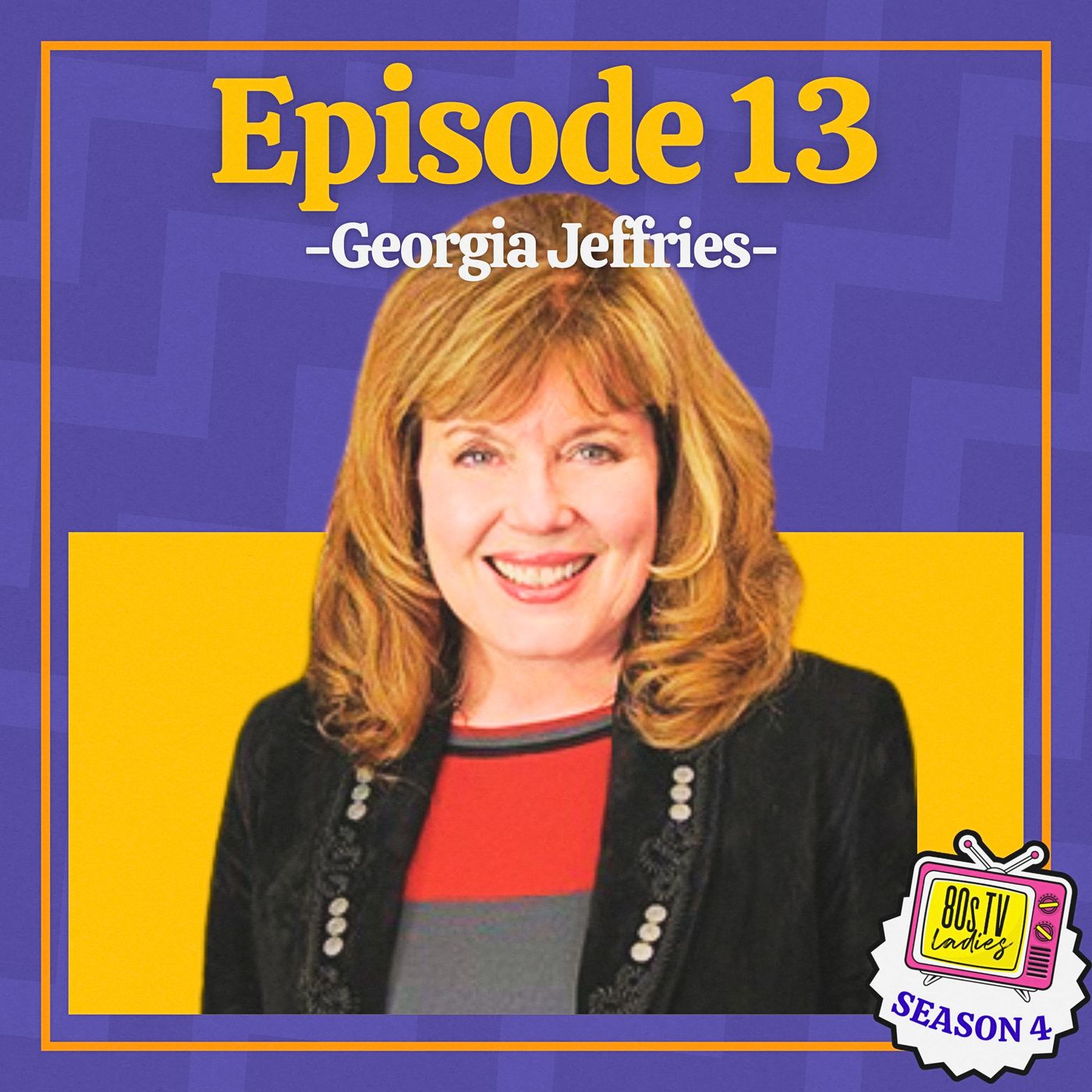

About this episode
Hosts Susan Lambert Hatem and Sharon Johnson welcome writer-producer-professor Georgia Jeffries, an Award-winning writer known for Cagney & Lacey, China Beach, and Sisters. Jeffries recounts growing up as an only child, loving The Twilight Zone, reading history, and finding an early spark for writing through school assignments and UCLA journalism and creative writing courses.
She talks about her time working as a freelance journalist while caring for her family. And the pivotal LAPD ride-along that inspired her first produced Cagney & Lacey episode, “An Unusual Occurrence,” which won a WGA Award.
She compares the culture of Cagney & Lacey with China Beach, discusses unproduced pilots and projects (including HBO series, and an unmade Cher/Jessica Lange/to-be-directed by Frank Oz movie, Confessions) She reflects on writing episodes that tackled addiction, AIDS-era conversations, and sexual assault. Jeffries also shares details about her novel, The Younger Girl, current writing projects, and advice to emerging writers.
00:00 Welcome and Guest Intro
01:33 Childhood TV Influences
03:56 Good Girl Expectations
05:16 Finding Writing Path
07:48 Early Jobs and Teaching
10:43 LAPD Ride Along Story
14:34 Cagney and Lacey Breakthrough
16:09 Feminism and California Move
18:09 Film Journalism to Screenwriting
19:34 Unmade Cher Lange Film
24:16 Women in Film Opens Doors
29:47 HBO Script to Book Rights
34:54 Working Mother on Set
36:14 Writers Room Culture Then
39:55 Favorite Episodes Tease
40:09 Why This Story Matters
40:47 Writing Cagney and Lacey
44:28 TV Breaking Taboos4
6:45 Breaking Into Screenwriting
48:17 Saying Yes and No
49:11 Joy and Rejection
51:11 Unmade Pilots Heartbreak
52:55 China Beach Bigger Canvas
55:55 Writers Room Culture
57:50 Showrunner Dream Team
58:39 Vista Clara and Timing
01:00:31 Teaching at USC
01:01:07 Resist AI Stay Original
01:02:00 You Write Like a Man
01:04:33 Working on Sisters
01:06:27 The Younger Girl Novel
01:14:36 Prose Versus Screenwriting
01:16:49 New Work and Wrap Up
01:19:11 Where to Find Everything
01:21:58 Final Thanks and Callouts
AUDIOOGRAPHY
Find out more about Georgia Jeffries at georgiajeffries.com
Get Georgia’s book, The Younger Girl at Bookshop.org
Find out more about the groundbreaking and Emmy-winning show at CagneyandLacey.com
Call your Reps. Let your voice be heard. Go to 5calls.org
Watch on Roku for Sisters and China Beach.
PROMO DEALS
Get awesome sheets and pajamas at COZY EARTH.
Be sure to use the promo code: 80STVLADIES.
Happy Shopping!
MARCH 8TL DEALS BLOCK:
80s TV Ladies deals and discounts:
Cozy Earth (21% Off)
🔗 Get them at: https://MyDeals.Page/19wy
🎁 Code: 80STVLADIES
📻 CONNECT WITH 80s TV LADIES
- Official Website: 80sTVLadies.com
- Email Us: 80sTVLadies@gmail.com
- Support the Show: Get ad-free episodes and bonus content | Support on Patreon
- Website: ArtsALaCarte.org
- Instagram: @ArtsALaCarteLA
CELEBRATE 100!
OUR 100th EPISODE is coming! Don't miss our special episode with Ms. Morgan Fairchild!!
Visit 80sTVLadies.com for more info.
Listen to 80s TV Ladies at YouTube. Subscribe and help us grow.
Don’t miss out. Sign up for the 80s TV Ladies mailing list!
Help us make more episodes and get ad-free episodes, video interviews, and exclusive content on PATREON.
Transcript
Automatically generated, so expect the odd misheard name.
Weirding Way Media. So pretty. Through the city. World. Welcome to eighties TV Ladies, where sometimes we have to take a deep breath and remind ourselves how far we have come and that moving forward is not always a straight path.
So deep breath, everyone, and remember joy is revolutionary. So here are your joyful resisters, Susan Lamberton, had Him and Sharon Johnson. Hello, I'm Sharon and I'm Susan. We have a wonderful show for you today, bringing on a writer, producer, professor, and an incredible eighties TV Lady, Miss Georgia Jeffrey. Miss Jeffries is a writer of Emmy Award winning dramas and has been honored with multiple Writers Guild Awards, Golden Globes, and the Humanitis Prize.
She worked as a journalist for American Film before writing and producing some of the most iconic eighties and nineties TV Ladies shows, Cagney and Lacy, China Beach, and Sisters. She is also an accomplished short story writer, journalist, and novelist, as well as a professor at the USC School of Cinematic Arts for eighteen years. She's awesome. We are so excited to welcome you to eighties TV ladies, Miss Georgia Jeffries. Thank you so much.
I am definitely an an eighties TV lady. So this is the place for me to be today. And it really is a pleasure to have you here in studio with us. It's always our preferred way. So the fact that you're able to be here is just such a treat.
It's a treat for me. Thank you, Sharon, Thank you, Susan. I'm super curious when you were growing up, did you watch a lot of tele vision? Was television a big part of your life? I would yeah, I would say maybe it was a big part of my life.
I would say my favorite show was it was a Twilight Design. Oh yeah. And I found a lot of shows, a lot of sitcoms that I remember watching that didn't industry at all. And I have to say a lot of the women characters or little girl characters I saw, and there weren't that many. I thought they were pretty boring.
I liked The Twilight Zone because it was very unpredictable. There were like ordinary people and ordinary situations, and suddenly everything became extraordinary and fascinating and sometimes terrifying. And every week it was a different story, and so there's a lot of novelty to it, and that intrigued me, and no continuing characters. And I was raised in the Midwest until I was thirteen and my parents moved to California. They also had a classic TV station there, and every Sunday afternoon, I'd be on my tummy on the floor looking up at the TV watching these classic films and a lot of Shirley Temple's stuff, you know, when I was very young, all those films, and then I started to watch more mysteries and adaptations of classics.
So and I was always an avid reader. I had no brothers or sisters. I was an only child, so my playmates were books and some of these old films that I was watching. Then there was one movie that I saw in this old TV channel called The Barefoot Contessa starring Ava Gardener with Humphrey Boguard. It actually was a kind of mystery because it opened at a funeral and how what happened?
What happened before this moment, because clearly it was a tragedy. I watched that film. The main character played by Playbay of a Gardener, was definitely a wild woman, a bad girl rebelling against things that society told her she could not and should not do. And I was very intrigued, very captivated, very captivated. I was, you see, I was a very very good girl.
So that's why I was so captivating. I was an only child, I was an only grandchild on my on my maternal side, So I really dot in my eyes and crossed my te's and did my best to not create any trouble for my parents or my family, because that was important to them at the time. High expectations for you. I think they did have high expectations, but it was not so much about succeeding in the world. It was about I guess, being a good girl and honoring the family and honoring the fact because both my well both sides of my parents' families had dealt with quite a bit of tragedy in their parents in grandparents' lives, and so yeah, I guess I was the hope of the next generation.
Yeah, so you were Your behavior was very important? Oh, yes, behavior was. Yes. Yes, One of my father's greatest tributes to me was that I never caused them any trouble. So, yes, I knew the rules.
I knew the rules. Like, like, at what point did you decide you wanted to become a writer. Wow, that's a great question. It wasn't a uhha light bulb going on, I want to be a writer. It was that I did well in I love school, you know.
Actually, recess was my toughest class because you know, I didn't have any siblings. I had one very close friend who I really consider a brother, a little boy. We lived a block apart, we were both only children, and we were each other's best friends. So I just did my best in school because I loved everything about school. I loved my teachers.
I did very well in my classes, and particularly in essays and stories. I remember I did some assignment in high school. I was a short story assignment. I'd never written a short story before, and I remember the criticism was the teacher told me it was too dramatic, too dramatic because I dealt with the subject of the an Adam bomb being dropped another one in the Third World War and all of that, and that was not proper material for a short story, you know. So yes, no, no pleasant, But yeah, So I would say probably the idea of earning money as a writer didn't really come to me.
Until my senior year at UCLA, I took a number of journalism classes. I was a history major. Always always loved history. In fact, that's a lot of my reading as a child was reading biographies of American heroes and heroines. I preferred the historical books versus I never read it.
Nancy drew mystery in my life. You know, I figure that life itself is a mystery and you never know what's around the next corner. So that's what intrigued me that, Wow, these people really lived and they really survived through all of these obstacles. I had won an award in high school for my writing, but it was the last year of UCLA. I was taking a lot of graduate classes then because I fulfilled my earlier requirements.
And I took a great class with Robert Kirsch, who was a book reviewer for the La Times, and had to keep a creative writing journal and observe everything that was going around me and all this its and it helped me to be in real time. I think that's when I first developed my love for using imagery and cinematic settings. And then I also took some classes in PR and my first job actually out of college, was writing copy for a CBS TV station KPIX in San Francisco, and I wrote the continuity, the audio continuity at the time, and you had to say something really bright and catchy to keep people staying with the tuned in right, staying on the station right. Oh my goodness, Oh wow. Up until then, were you thinking that you'd be a teacher.
Or is this interesting? I never wanted to be a teacher until decades later. And then after my career in television bloomed, and I was invited to sit on aline a path and do some presentations at universities, and I thought, wow, it would be really interesting to maybe teach some classes at the university, and then ultimately I became a professor there. No, I didn't. I wanted to do something more adventurous, and early on in college I was pretty sure I was going to go on the Foreign Service and save the world.
But that didn't untrol that. But I took a lot of language the first couple of years. So my career as a screenwriter so unplanned, so evolutionary. It was just like one link in a chain was another link and one on that And I did a podcast a short time ago and the person who interviewed me, which is assumed that I came to LA from Pory, Illinois to break into the business. No, I was in the backseat of my parents' family car on Route sixty six and we ended up in San Francisco Bay area, and then I did arrive in LA but to go to UCLA.
Then you ended up doing sort of entertainment journalism, which I have also done. I ended up back in LA. I was married at that point. I married early. We had to start our family early, welcome to adulthood, ready or not.
And I was doing a lot of caretaking early in my life because my mother died from I graduated from college and my father was in ill health at the time, and that kind of evolved more so with the years. And my mother's mother, so I was taking care of her after she moved to California because my mother had been her only trial right, So there was a lot of caretaking involved. And my career essentially was part time at home for the last for the first five years. So what could I do at home and bring in some money to help pay the rent and then the mortgage. I decided to become a freelance writer because I knew how to write right.
And my first article was for Los Angeles Magazine, and they gave me some nice little assignments, and one of the assignments I pitched to them that ultimately served me very very well in my television career. A couple of years down the road was I wanted to do an interview with some of the new women officers at the LAPD. It was then called the Isn't this quaint? The unisex program? The program of the LAPD.
Yes, yes, way, here was this. Oh my gosh, this was probably this is seventy nine. Probably yeah, yeah. One of our children was just a member. She was five months at the time.
And so I showed up to do my interviews with THEMMEN officers and what a surprise, none of them were available. So instead I was assigned to go out on an all night patrol with a young sergeant and he was assigned to the Rampart division. So and I said, well, I need to take him. I have my quarter. How quaintly is so?
Right? Well, okay, if he agrees, so that you can, but just sorry, no women are available right now. Goodbye. So that ended up being a really pivotal night in my life. This officer and I bonded over being parents.
He's probably ten years older than I was. He had three children, and he got a call in downtown LA to respond to shooting an apartment house, and he was going to leave me in the car, and I said, oh, I really need to go with you because I have this assignment. So well, okay, So I followed him up an apartment building and sadly, there was a young man who was bleeding on the higher level, the second floor, outside the landing. He went in to investigate the shooting. There was another shot while we were up there.
We went down to the car. He's leading me down to the car and there was a bullet hole in the door of the passenger side where I would have been sitting. I don't know if that bullet went in the car, I don't know, but there was a bullet hole in it. We then went on a hot chase pursuit. Apparently the assailants are also involved in all.
I knew that it had to do with drugs. There were a group of cars were going to the edge of the Inglewood Cemetery, and then at that point he wouldn't let me out of the car, so he told me to lay in the backseat of the car on the floor, and that's where late until things were a little resolved, and then we got back to headquarters in Rampart Division, probably about I don't know. He had to fill out the report four am by the m and I'll never forget driving home to we lived in Woodland Hills at the time, back to the valley at a different place than Round Parts, and gave my four month old daughter a kiss as she lay in her best and it was very happy to be back there. Yeah, So it gave me a real eye into what some people do to make a living and how we can make certain assumptions and judgments through our own ignorance of what they face every day.
Because, believe me, I approached the interview with a certain attitude, not just because of my progressive politics, my feminism, but because I thought I knew what was required of the job. Had no idea. Really, I had an intellectual hint of what was required, but what that night offered me was a visceral experience. So flash forward to when I pitched my first five ideas to Cagney and Lacey and the hope that I would get an assignment. The first four rejected.
The last one was about a journalist going on patrol and then having I said, her eyes open to what was required. And Terry Lewis Fisher, who was the producer who was interviewing me at the time thanks to Barney's setting up this meeting, said, you know, I think that could be really interesting, but let's do a mail journalist and let's have Cagney be the cop who is under the eye of the media judgment. And so that was just the bear bear seed that planted unusual occurrence. It was called an unusual occurrence. That was my first television series episode.
It was my first produced television and it won a Writers Guild warn Yeah, suddenly it happened. Suddenly it happened. You know, the years of wondering you know what next? Right? Wow.
You do a lot of that in this in that you take something from your life and then put it into story form for fictionalize it. I love that, Like, I think that's really neat. I think that's some of the best TV writing that we get, is when it's really got a personal in but then can become universal. Thank you. I consider that high praise.
Thank you. Now did you grow up? Did you? Did you consider yourself a feminist in the seventies and eighties, It sounds like you did. Oh yes, oh heck, yes, oh absolutely?
And what was where did the I don't know what I have. Because I can. I can remember in class being outraged, you know, if I felt the boys were getting more attention or whatever. And I believe it or not. I went back to an eighth grade reunion once upon a time back in the Midwest, and I remember one of the boys who was there, who was now a very grown up man and had had pretty hard life himself.
But he said, yeah, I remember you. You're the one that used to argue with the teachers. And I said, I never argued with the teachers. I love the teachers. I did ask a lot of questions because I wanted to know more, you know, And I guess in that sense I have to.
Even though certain behavioral rules were expected in my household, I was always encouraged to speak up, especially by my mother. Especially by my mother. Yeah, and my dad used to call me a tomboy because he got me a pony. And you know, I love to roller skate and ride a pony and get bucked off and all that stuff. So you know, he was sweet that way.
I said, you know, did you really want a boy, dad, And he said, well, I got a tomboy, so you know it works on. Yeah. I mean I was excited about moving to California. You know, I'd seen the Mickey mouse Club. Wow.
Wow, this is where they do the Mickey Mouse Club, right, So that was that was exciting, and my mother was very excited about moving as well. We pretty much moved from my dad's work. He was going through a difficult time and so he was not as excited. So it was it was a transition. Yeah, and yeah, it was a transition.
I'll just say that, all right. So how did you get started in television movies? The transition from journalism? You know, I just queried every magazine I could think of to try to get an assignment. I just I was and.
This is the days of typewriters. Yes, yes, my electric typewriter, my baby. I loved it, and so just wherever I thought I could bring it, you know, one hundred and fifty dollars here there. And so I read about American Film Magazine and queried them, and very surprisingly, I think, considering my few credits. At the time I was hired as a contributor, I was interviewing filmmakers whose work I did not even know.
I'm thinking of Paul Mazerski, So it was it was a real learning curve for me. I was so excited when I interviewed Joan Tewksbury, remember her wrote Nashville so exciting with a few women directors at the time, and she was so gracious. Frank Oz I visited the set of the Muppets and that was thrilling to my two little little ones kids about this time, Oh gosh, I guess they've moved into the nursery school. A budget was probably kindergarten and Patrick still a nursery school. And so Uh and frank Oz actually came into my life again very brief about probably at least a dozen years later.
When I was writing a feature script for Universal. There were two production companies behind it, Shar's company Isis and Jessica Lang's company. They were both at Universal at the time and they wanted to do something together. So this was post Cagney and Lacy, and so they asked me to pitch. I pitched Uh and I did two drafts of what I pitched and got paid well for.
It never got made, but Frank Oz committed as a director to it, and I thought, oh, how exciting rite full circle. Shar's company was very happy with the script. Jessica Lang's company, I think, wanted more for her role. So was this for a movie or for a TV show? A movie?
A movie with Cher and Jessica Lang, Yeah, never gotten directed by Frank Oss. What was it called? And it was called Confessions and it was set in the fifties. They wanted, Oh that was the that was a log line, two women in the fifties. That was the log line, two.
Women in the fifties. Okay, give us a story, Give us a story. And so I made Share a writer of True Confessions magazines, which of course she was doing secretly because they were supposed to both be good housewives, except one of them wasn't such a good housewife. She was carrying on an affair, Jessica Lane character. I had a lot of fun writing it, and it's like it was almost going to get made because Jessica's company wanted another rewrite on it with another writer.
I guess who came in to do that rewrite and Spielbert. Oh, and my agent at the time said, Georgie, it's going to get made. It's going to be a lighter touch Yours was a little bit more serious, you know, kind of a dark comedy. They wanted a little bit lighter stoke. It's going to get made because Anne Spielberg is doing the next draft.
But it did get me. No, right, there weren't a lot of female buddy pictures at the time, but that was one of the ideas behind the the two of them coming together, which Sharon Jessica Lee, right, two great actresses, but I. Never would have put them together in the movie. So yeah, that that's very. So maybe it worked out just fine, No, no.
No, but it's it's it's very intriguing. I mean, like you, I would love to see that whatever it is. I think this was right after this was right after she got her Oscar. More than it's just wonderful. So but but I deviated because you asked me about movies of the week, and at the time I was very intrigued with movies of the week because they were considered the platinum storytelling of television in the sense of taking on important issues, And I remember I saw the mini series that Sally Field had started in Cult Sybil.
Very just powerful, powerful writing, directing, acting on her party means really what created her serious career right dealing with mental health issues, which has always been interested in mine as well. I thought, oh, maybe I could do something that would help people. I want to write something that would inspire people. I did have these idealistic intentions, and I still do, by the way I own up to it. But I just never anticipated that where I would really be able to explore those interpersonal and social issues would be on a television series.
Okay, and so now I'm going to share something with you I've probably shared with Barney a long time ago, but I'm sure he doesn't remember it. I had never seen Cagney and Lacy before I got the invitation to come in pitch for it. I've never watched the show. You asked me, what shows did I watch in the seventies. I had no time to watch shows because I was finishing college and then I was doing a lot of caretaking and then trying to get magazine assignments to help pay the mortgage on me.
I'd been able to buy first little house then, and so I had heard of it certainly, but also had been canceled several times. Right, However, this is what the importance of being generous in one's life and doing a good deed when you can. And I always share this. I've always shared this with the students I've taught. So I was and there's a connection to this too.
Right. Women's organizations have supported me from day one in my life, and so after I graduated from college, I became a member of the American Association of University Women, so and then after that women in Film, and then active in the Writer's Guild and the Women's Committee and the Ages and Committee. When I was thirty seven years old and I walked in and people said why are you here? And I said, well, I hope to live long enough to qualify with this, right, certain I have so because of that support of women in film, and I had the opportunity to become really active in it very early, and I was on one of the boards and I produced an award show called Crystal Wards, and I think it was probably my third treatment that had been optioned at the time by an entertainment company.
And I had invited several of those executives to one of the lynches to help support the organization and produce the name Phil Fairly who called me and said, Georgia, I just met with a wonderful woman, Niki Marvin, who was a producer at the BBC in London, and she's just moved to la and I maybe can help her with some contacts through women in film. So we had lunch and I gave her three suggestions and I don't know whatever happened with that, but she ended up being Barney roses VI's executive assistant. She called me and she said, Georgia, he needs to read your work and I said okay, and she said, have your agent send him. And I knew there was only one script to send at that point, and that was Nobody's Fool.
That was my first feature that I had written on assignment, and that's the one that won the Film Festival Award, and I'd gotten a lot of attention for it, opened a lot of doors through the years. It's a story of young MP Military Police officer Station Okinawa who's fighting sexual harassment on bass had since nineteen eighty four, okay eighty four, Yeah, and I had a very small agent I mean, yes, he was short that it was a very small agent. It is the time also have a boutique agency. Yes, there was a lot of boutique agents. Yes, yes, and that was definitely very boutique.
So I asked, I asked Jeff to send the script, and Nikki called, like a month later. Georgia hasn't arrived because she was seeing all the scripts coming in. I said, okay, well I asked him to. So I called again and and she called a second time. This is over a period.
It started in January, and in May, my agent receives a call from Barney roses Vie. He's read my script on the way back from New York and he wants me to come in and pitch for the show. And it just and so I give full credit to Lisa Sideman, who was the aspiring screenwriter who took Nicky Marvin's place. There was a lot of credit to go around. Nicky and Lisa ultimately saw my script on the slush pile.
Nobody had read it. She read it, she recommended it to Barney, and then Barney read it. And the way it was presented to me was he knew I could write Cagney. He wanted to bring in a writer that he felt could really capture Cagney's voice. And you probably remember this time, Tying had already wanted least her first Emmy and Sharon needed her turn.
Yeah, they needed to start trading those emmys back and forth, keeping everybody. Locked down for both wonderful actress. And I mean it was such a joy. I think I mentioned you know it was. Fortunately I brought in five ideas and not four yes, and I got to the fifth and Terry Lewis Fisher said, yeah, let's I think we can.
I think we can do that. Because Barney had set up the meeting with Terry and then that that script as well. You hadn't watched the show, Oh, I'll tell you I did watch. I did watch it two weeks before because Lisa Signman, even though Nicki had left the show with creative differences with Barney, right, Lisa and she were good friends and they came out to visit me, and I said, we want to tell you about the show, and the reruns are on now, so you should take a look next week. You've got two weeks before you got to go in.
And they kind of gave me the lay of the land in terms of the series, how it had been canceled twice. This was, you know, the last hurrah, Sybees. I've given them a full order, which for the first time, so it was a great opportunity. But I never pitched for series before. I'd never written for series before, but I had written Tough Women.
Yes. So did anything ever happen with the MP sexual harassment movie? Well, that's so interesting. No, it never got produced, never got produced. When that film fast award, but it never got produced.
However, that was the script that was read by Carrie Putnam at HBO when I received the call. This was the log line I got from them, A female Breaker Morant. Now this would have been in probably nineteen ninety five, maybe ninety six, ninety seven. I don't know if you know the Australian film Breaker Morant. I know of it, I don't know it.
I had heard of it, but i'd never seen it. So I did watch that one right away, to the story of a young Australian soldier who escapedoat during the Boer War in South Africa and an ultimately shot by his soldier comrades because they were losing the war and somebody had to take blame for it. So what HBO wanted me to do was to and this is they wanted me to imagine a time when women would be able to serve in the military in the United States. Flash forward. I could imagine that, and they're involved in some kind of unpopular conflict.
The We could imagine that over and over again, and she's brought up on charges in some ways, she escapedgoaded. That's all they gave me. And so originally I was going to set it in the Middle East, and then with some other conversations, we decided to set it in Mexico because that was shortly after the Tiapus apprising Mexico, and so that actually got green light to production. Meg Ryan was going to be one of the stars in it, and then the executive was relieved of his stories at HBO. They were wonderful executives to work with and went onto other opportunities and it fell into to purgatory.
It just fell into development purgatory, but then flashed forward two thousand and seventeen. I had the rights back and I decided I wanted to write it as a book and then turn it into a limited series. So I made that pitch to a company called Adaptive Studios, which at the time was doing Project green Light, and they also were doing something very novel. But at the time, this was about ten years ago, they were buying developed scripts had not been produced to turn into hardcover books as ip and yeah, you got it. So they'd had success with a book written by Ryan Gaddis.
So I'd already worked for Adaptive Studios as a consultant to a podcast they were doing called False Idols. So I did my treatment, I made my pitch, and they hired me to write the book. And so the real origin of that book called Melentche was that HBO script, and it was supposed to be published in December twenty twenty one, and then Adaptive Books and Studios dissolved post lockdown and was bought by mad River, another future company. So you've had a very Hollywood career, a very Hollywood career, and close it so close, And it only took three years for me to get rights back, you bet. And I kind of still hope to get that at least the book published, because it would make a heck of a film and it's another woman's story that needs to be told.
Getting the rights back. What does that entail? And obvious say, there's some legalities involved. Tremendous perseverance at the time. Fortunately for me, I was still represented by an attorney that worked for me on a percentage basis.
That was very helpful. He's now retired, but I very much appreciate the assistance at the time because it helped me to get the rights back, which was a little challenging. Yeah, the movie the week I did that, it aired as a terrible title, My Husband's Secret Life, But it was originally based on a novel called Tin Wife. I had written that adaptation actually, when I was still working at Kay Mean Lacy. Terry Fisher had been approach to write the screenplay.
She was too busy she handed it off to me. So I was working out on weekends. I'd be writing the script on weekends and then doing the series during the. Week And now, how old were your kids when you were on Cagney and Lacey, And how is that? Well?
Our son? I think by the last year, our son had turned eight, and because he was so young, the long production hours, I think we're particularly hard. Yeah, yeah, I think our daughter was more thrilled with the idea of seeing her mom's name, you know, with these two glamorous actresses on the show. That's why actually I was able to write Lacy's character as well as I did, because every working mother can identify with it. You just there's a day that goes by that you don't feel guilt.
Yeah, I don't know it. You were quoted once it's saying that Tyn Daily would call up and say I need a mother speech. I did, yes, and I actually I was very honored that she did that. I can remember she called the office or one of the producers with Camen. And it's not that there weren't other mothers on the show, Shelley Liss and of course Barbara Corday and Barbara Avadon, whom I never met, but they had co created the show, but their children were adult at that point.
Yeah. I was the one still in the trenches. Yeah, and so there were a lot of women on Cagne Light, see, unusual for the time, happily. How was that and how did it differ from other places you went into. Well, you know, in a sense, I was really really very fortunate that that was my debut in the writing room, because it was usually half and half Terry was there.
It was huge that Terry was there. She had a male partner, Steve Brown, who was a West Point grad and that shares a lot I think about his personal So he was very very focused on structure and also gifted in that Terry was more focused on characterization, and so they worked well together as a partnership. Pat Green and I worked well, especially together on doing rewrites. There was a wonderful episode called the Gimp if you recall that, and it was a wonderful idea and it was brought in by the partner of a friend of mine who we invited to pitch. Barney was happy with the story but not happy with the script, so Pat and I pretty much rewrote that.
But the great thing about Cagne and Lacy, and there were many great things about it, but all of the writing staff that did the rewriting, we didn't take the credit for every single story that was rewritten. But that was what was different from a number of other shows. I'm not sure about Saint elsewhere, but certainly on all of Bochko's shows. I mean, you'll probably remember seeing the Emmy Awards at that time they shows and whenever Hill Street Blues won an Award as they did often. Bochka was always up there, excepting getting another Emmy for having co created the story.
And when I was invited to go on to La Law after Terry left before I decided instead to go to China Beach. I'd gotten both authors Bochko's very talented writer and had an interview with them, and I said, tell me about the logistics of the show and how they were well. The story was broken in a room with him leading it, and then parts of the story were handed out to the writing staff, so one person would be writing the A line, one would be writing the bc D right, But at no point point was the originating writer doing the first second costbleev Thursia by himself or herself. Also, the majority of his writers were male until he and Terry Lewis Fisher started working together on Hooperman and then of course they co created Eli Law, and both of them working together wonderful rights yant.
But as Terry said at the time, she said, you know, it's a good time Georgia to be breaking into serious television because there are more women being hired now obviously than ever before, more progressive themes being dealt with. She said, In fact, this is Terry's sense of humor. She says, it's almost fashionable to be working with a woman now because it shows how progressive you know that the particular male showrunner is. She was. She was absolutely right.
So timing was very important when I when I broke into series television. I mean, if it had been ten years before, there wouldn't even have been a series drama that was co written by two women. Yeah, yeah, or one woman. Here were some pretty amazing episodes of Cognium Lacy. Which are your favorites of the ones that I wrote?
You wrote, Yeah, well, I'll always love an unusual occurrence because of it its history, it's personal history to me, and also because I felt it was a very important subject. Yeah, a very very important subject. Let's show the other side of assumptions and judgments and the prejudice that each of us carry with us in different ways. Right turn, turn, turn Part one, very personal, very personal. What a tour de force on all parts, but particularly from Sharon Glass and oh yeah, but particularly like from the writing, like to write like that, thank you, really stunning.
It was. It was really such a wonderful opportunity to be able to write that story because it had been simmering with me for a while, probably from really probably from the first season I was on the show, because you pretty early on you see the lay of the land. Her dad is alcoholic, she's walking in his footsteps, certainly trying to please him. She's had this elite education, but she's basically a rebel, and she's challenging the system every way she can. She's recklessly ambitious actually at different times.
And also what was funny? I love I love to write scenes where she could be funny because she was so vain, you know, the time Lacey. Lacey was so serious. I a serious mother and taking care of everybody. I could write that those scenes half asleep, you know, Cagney, Cagney.
I could really channel a lot of other feelings into that character. That that I a lot of that dark feeling, oh yeah, and you know, and it mirrored women's culturally, culturally, politically, personally. Uh. The existence of both of these complex, multi dimensional women mirrored so many women's lives and that they were they were, they were everything to everybody in their family right, but they still wanted to follow their own dreams and of course, above all, they had to help pay the mortgage. It started then, Yeah, you know, where was I yesterday?
Oh? I know, have you ever heard of the Jona Club in downtown LA. It's an exclusive men's social club, and we were taking an LA Conservancy tour there yesterday and I was doing so also some research for a short story I'm working on, and I learned that they accepted women as full members in nineteen eighty seven. For years, they had some restrictive rules in terms of religion, color, sex, everything, and apparently accepting women was the last door to be pushed open, and it was nineteen eighty seven. I thought that makes a lot of sense to me because so much was going on culturally in our country at that time.
And I remember serving on some panels and the question would be, well, yes, we have a title mind and so on, so what's And when I was interviewed for some of the like the TV's Second Golden Age, what came first? You know, the political change, the cultural change, and the first all kind of happened simultaneously, and each one informed the other. That's sense. Very grateful that I came of age professionally in that time. Be grateful you were on advanced TV hearsory.
You said it was obvious the zeitgeist was influencing us, and we were influencing the zeitgeist. I couldn't have said it any better. Thank you for saying that. Thank you for reminding me what I said. It was wonderful.
I was. That's more succinct than I like it less is more one of the big lessons I learned in writing at Cagney Lacy and Dialogue. Yeah, but such an interesting time And was that being reflected like so turn Turn Turn was a big one for you. Yeah, because it was also personal. Yes, And also it took on an issue that really hadn't been I hadn't seen it discussed that much on television at that point, which is the issue of addiction alcoholism.
I mean, now it's commonplace. It was fun doing the was it right? A passage? That was an episode where or got Lacey talked to her son about, oh, son, I love you so much. Good idea to use a condown and protect yourself and oh, by the way, your family as well.
Right, And again it sounds quinet now, but that was a very big deal in nineteen I believe it was nineteen eighty seven. In eighty six. In fact, Barney and I were interviewed about that episode on Entertainment Tonight because condom the word been used on television before. Had not been used on television before. Another first for Cagney Lacey, that's amazing, you know, AIDS is starting to happen.
Oh, absolutely, absolutely is the. Word, because up until then, it wasn't something that could say your. Life really, that's right, that's right. But when was designing it? Because Designing Women was the same year, But I don't know that Designing Women.
They broke a lot of boundaries too, which is challenging even more in a certain way because it was a comedy, right, so they were very brave. There was a lot of bravery and going on at that period of time. And also I will say, I guess some rebelliousness going on. Let's name it, let's name it. You know, most of us working at that time, we all grew up with fifties, sixties, early seventies television.
I know Cynthia discovered that what was a Marlo Thomas show that that girl apparently she had addressed certain issues. I never saw that show, right, but there were a little glimmers of people very progressive thinkers and actors and creators who wanted to reflect more what was going on as I geist, Yeah. That's not one of the interesting things out watching a lot of the shows that we've watched. Every now and then something will pop up and you'll go, oh, my gosh, I can't believe they're talking about this. The second influence on my moving into screenwriting was my father in law.
My father in law was a very pragmatic man, and he had a neighbor who was a screenwriter, and he said, you know, I think you could probably make more money in screenwriting than you could have a magazine writer. And that was the impetus for my taking my first UCLA Extension class in formatting screenplay formatting. And I did get one meeting with his neighbor. I lasted for about thirty five minutes. He was a polite guy, and then he'd done due diligence and that was pretty much it.
Yeah, you know, but hey, the idea sounded intriguing to me. And I was doing the interviews with American Film at the time, so it was the juxtaposition, you know, timy, Yeah, yeah, that opens our minds to new possibilities. Well, and I also think again. It's it is seeing where there's an an opening always. Yeah, you had that eye, not really on the prize, but on the next move.
I did was kind of have my eye on the next move for a couple of reasons. One very pragmatic by nature, and it's important that we be two income family. But also, I guess as far back as I can remember, I think I always wanted to make my mark in some way. I just never knew how I would be doing it, how and when that might unfold. The universe brings things into our path and we say yeah, you're nay.
And as I've said to many of my classes, I've said, say yes, you know as if except if you know that some offer is going to violate your values and you got instinct is telling you you're moving into dangerous territory, then you say no. And I remember hearing an MPR interview with Tim Robinson and it it always stayed with me, and he said, one of the most important words you can say in Hollywood is no. You just have to know when to say it and who to say it to. Yeah, And that comes I think with maturity and experience. Well and knowing your values.
Yeah, values and listen to you got instinct. Yeah. Yeah. One thing we discussed in my classes is that it requires a certain level of hubris just to write, to put anything on the page, to assume that you have something to offer that someone will want to read this someday, because yeah, I've done journaling off and on, but I think I've always thought about sharing my writing. I always wanted readers for my writing, or audience or whatever.
Although with the passing years, the most important thing is just I'm the audience and the joy. You asked about joy. Where's the joy? The joy is in the storytelling and getting it on the page and creating a scene that's fun to be in. When you get to play, you get to play all the characters, all the voices.
I love to act on the page with the characters. And so you have to have at least you know people who want the work scene and experience by other people. You want that co creating with readers, right, You have to have a certain sense of hubris that it is worth looking at, and you have to have a great humility knowing that you're going to receive hundreds, if not thousands, of rejections through the years, even when you're succeeding, and you're getting wonderful opportunities. As you said, it's all these almost almost right, you're being paid. So yeah, supporting you.
But I mean I wrote dozens of pilots and they each creating a world and the thought files with this thick of the storylines that I had first second season. When you work in a writer's room, sure you think in terms of seasons and years, and then when it wasn't picked up, there is a real there's a real a little bit of a heartbreak and letting go of it. So I'm curious of the pilots that you developed that didn't go which ones are the most heartbreaking or that's the one that I'll never forgive them for not putting on the air. Well, the very first pitch I did for my own pilot was for a series set in China Beach, believe it or not. And that was about eighteen months before China Beach happened at ABC.
And I made that pitch to CBS with a movie the Week production company that wanted to be in the series business. And yeah, I did that this summer after my first season, to Cagney and Lacy and at the time CBS, nobody wants to see a series about Vietnam, so instead they gave me an order for pilot about two women who were young medical residents in Walter Reed Army Hospital. It was called Ramsey Right. I mean, I had the opportunity and the gift of being able to do a lot of research in some very very interesting places. And I was at Walter Reed for a week doing a lot of that, the interviewing, so that wasn't picked up.
But then I said, two or three years later, I was invited to go into China Beach. I was just leaving Cagne and Lacy at the time, but I was in business with Barney contractually with the Rosenesvite company. He had his own business for two years, and so we set up at Sunset Gower. He wanted to develop a new series. Right was looking also for shows for Sharon in Time.
But then he received the offer to go to Wine Trop Productions. And then I received the second offer to go to China Beach. What was exciting about China Beach Trio bigger canvas. Of course, we dealt with social issues in a very exciting, inventive way. In Cagney and Lacey but China Beach is an era that I'd lived through, you know, I can never forget the documented work coverage that we grew up watching on television.
There was also a different kind of show in the sense that had a much bigger budget. Yeah, Warner Brothers, much bigger budget. I mean, other than our few exteriors being done in New York once every several years for Cagney and Lacey, I mean China Beach. We had the exteriors up in Santa Clarita. We had all the sets on the Warner Brothers stage.
It's a very epic show. Yes, I mean the music budget alone alone, right, which is why it took so long. Yet as you get out in DV and love the music. But also the dialogue was much I mean the two creators, Bill Broyles, who was a lieutenant in Vietnam and John Young had a different approach in the sense that the stories were often more metaphorical than as specific and on the nose, as some of the issues were caguinly see. So in a sense this may saw odd, but it could be a little bit more poetic with some of the writing and take chances in new areas, and so how to Stay Alive in Vietnam Part one.
I had seen a one man show starring Troy Evans, who was a character on the show, was speaking about his own experience in Vietnam and the track may that I do depict in the voice over with him and being able to use the director was Fred Gerber, who was also the line producer for the show. Being able to go from first person breaking the fourth wall to the camera and then to documenting what was going on out in the field, that was another thing I wanted to do more out in the field that was not always well received actually on the show because they wanted to stay more in the hospital bay and focus entirely on on McMurphy. Although I really Casey was one of my favorite characters on the show and also one of my favorite actresses to work with.
You asked about that, Mark Halgenberg, I just thought she just brought a real edge to it. So I guess I was. I had the opportunity to spread my wings more and pretty much, I mean pretty much did the same thing that I did on Cagning Lee as a producer. I mean, it's always in the editing bay. It was always breaking story in the writing room the circle.
John Wells and I were the co supervising producers at the time. But I will say that it was more of a male fos on that show. Yeah, And I would say that because I would say that because of the creator well. Other than you were there. How many other female writers were there on the show?
There were two, There were two other women writers. But but then and but it was usually the majority was just a little bit more edged to the males. And of course Barney was not never a writer, you know, I think until the last episode that he wrote for the show. He was outstanding producer. But John Young outstanding uh and he and good director.
He wasn't interested in being in the writing room. He was never in the writing room. When we broke story, it was John Wells and I and the story editors. So it was a much different ambiance, much different ambiance. And I will say, at least from my my experience, I thought that there was more of a spreed corps on Cagney and Lacy with the co writers I worked on there.
But you know, so much is personality oriented depending on the show and the casting. It's not just casting on the screen, it's casting. In the room. In the room. Yeah, So it was a different it was a different experience, and I was doing pretty much, you know, at least a couple of pilots a year at that point, and so I decided I just wanted to move on and do more pilots, and and then I had, you know, thankfully, I had a very very nice deal to develop pilots at MGMTV for several years.
I had. Any of your pilots gone the series, I would imagine you've given some thought to what kind of showrunner you wanted to be and what kind of writers room you wanted to run. Oh, Sharon, so interesting you asked that question, because for years I kept a list of the writers that I wanted to bring on the show, and Tony Graffia one, Joseph Anderson whom I'd work with on Kagi and Lacy, and also I brought him on his story editor at China Beach. All very humanistically or I did all team players, excellent writers, let's ego, more imagination. That's what I wanted to bring if I had ever had that opportunity, right, But in terms of the personal pilots, fistic Clara.
This to Clara, I did for a production company called Krishna Locke. This to Clara dealt with a lot of magical realism, and yes it had the trope of the main character was an attorney, but she moved to Santa Fe and this was probably probably five or six years before Six Feet Under. She in the show had a relationship with her dead mother. So on one hand, yes, there was a legal case every week, but also there was this relationship between an older woman a younger woman, and all based in areas of magical realism and what is real and what is not real, So that would have that I was creating some new ground with that pilot. And you know, we had Leah Thompson committed to the show.
She was a name at the time. Her husband was going to direct it. And NBC didn't order it, and I said, tell me what did I miss? Yeah? What did what did I need to do?
And he said, well, Georgia, I think we went as far as we could with it. But you know, there were no there were no shows with female protagonists ordered for this season with lead female protagonists, and so the doors can really go wide open and then there's a different executive regime and then they close a little bit and then they open again again timing. Timing has served me very well in aspects of my career, and then there and then timing. You know, the way I look at timing at this point in my life is, uh, where's the divine order here? Okay?
What else should I be experiencing? I'm looking straight ahead. Maybe I need to look at new directions and know that I'm being called to do something else. At this point, and shortly after that, the opportunity opened at USC. It was more than an opportunity.
I mean in a sense it was a new family. And I'm not talking about being sentimental. You know, they talk a lot about that family, But I mean in the sense that the community, the community of faculty in students I just follow, was a great opportunity to inspire new writers and also to share some of the ill use the L word lessons that I'd learned in my career and that you keep learning. So yeah, I'm I really enjoyed it. And what would be your I mean, every year is a new decade, But what would be your advice for emerging writers?
Be very very innovative and trust your gut instinct because everything is moving so very very quickly. Now, please please resist AI every way you can and be original, even more original, and know that your guild is not always going to be able to protect you, and more than ever, be willing to cross different lines of the concentric levels of storytelling. And that means in terms of distribution as well as creativity. So many students now are posting it on YouTube. That's how they're getting attention.
All right, And so you wrote an essay about breaking in to TV? Do you remember, oh, first, the first time they told me I write like a man? Yes, Now, the actual title of the book was the first time I got paid for it, and there was a pulp cover right with like the forties looking secretary that I was not a big fan of that, but I said, we could say the first time for anything, right, That's what I chose, because I did actually have the experience of showing up for a meeting with a development executive who had read Nobody's Fool, which was that first script about the female MP and I would have been an R rated film had it ever been made. And I walked into the room and he was shocked to see a woman in front of him, and he looked at the script and he said, I thought this was written by George Jeffries and I said, no, Georgia.
Me. And he actually did say in the meeting he said, well, you really right like a man, and that was a tribute. I knew what he was saying. Yeah, I knew what he was saying. And so I thought, and as I shared that story with my students and my womistress had a great reaction, I said, I wasn't going to lose that meeting.
I was in that meeting. He had to deal with me whether or I got good feedback on that script, and he saw I was dealing with a woman. So I guess a woman could write a script like that, with all those four letter words and dealing with sexual harassment and rape and what everything else was going on there, and you could still like that script, mister. And maybe this will open your mind to look at other scripts and not read the first name wrong right, and not throw it away of it says Tiffany instead of George. Right, that's what I wanted to write about, and I did.
But it goes on. The beat goes on, it really does, just in different ways at different times, and so there's such huge progress. But then there are steps back and we all know that. Yeah. Yeah, I'm going to just ask you a couple of questions about Sisters, because it's a very different show from Keegnica.
Yeah yeah, yeah, yeah, very different. Well, I was asked to come on. I was actually come on, as is Koe p And I was working on my first novel at the time, and I didn't feel that I had the time to do that, so I agreed to come on as a consultant and and you know, and I ended up breaking a lot of stories there. And the two executive producers, Ron and Ron, and yeah, the true executive producers. We're actually big fans of cagn and Lacy.
And then I think even though the show's tenor was lighter and almost more soap operation in certain ways, I think they wanted to do their bit to deal with more multi dimensional women, right, And so I ended up writing the episode about Cela Ward's daughter having been a victim. Yeah, I mean, I think the main reason, frankly that they want me to be on the show is because they admired certain of the shows that we did on Kadie and Lacy, and I think they wanted to add some Gravitas to Sisters in the last couple of seasons, and so that was fun for a while, and then I was doing a lot of extra work on breaking story, which was really not my responsibility as an executive consultant. I was supposed to be there three days a week.
I was being paid to be there three days a week as opposed to a full week, so I had to kind of step out of that. Deal was very friendly and they both understood, and the next year they invited me to come back again as Coe P but I had another pilot dal at that point. Well, let's talk about your novels for the younger girl who came out last year. Yes, Yes, at the end of twenty fourth was actually inspired by a trip in the late nineties that I taken with my dad back to his hometown in the Midwest, in Illinois, and I always knew there was a story there because I had known of the tragedy of his older half sister being murdered when he was a child, and I learned a lot more when I was back there on that trip, and I fought it was a story that I wanted to write, but I knew I needed to do it as a novel, and I guess I kind of felt I needed to do it for my family, and also because I had seen the Chicago front page headlines that had been saved by my dad's family of this beautiful young woman, twenty year old heiress killed Mary mann Held, you know, and I wanted to know the story behind it, And very slowly I was able to collect through several trips back to Illinois to do a lot of research in the courthouse, property records, et cetera, to find out who was not only responsible for her death, but also for the embezzlement of her inheritance that she was supposed to receive when she came of age at the age of eighteen.
So it was a mystery always for me. It was also, yeah, I would say, a kind of a labor of love for my family, and also a cautionary tale really because she was only fifteen when she was seduced by a married man who was ultimately found responsible for her death. It's historical fiction, It suspense, and it also as a magical realism. Based on a true story that happened to your family. My father came from a blended family.
His mother had been Mary three times, what or twice divorced. Third time my father's father abandoned the family, and so a lot of drama and dysfunction in my father's family, which is always good christ for a storyteller. And I wanted to know more because I knew that that had affected my dad deeply in terms of his issues of mental health and depression and addiction. And I also wanted to know the truth for myself about what really happened with this young woman who lost her voice in her life way too early. And yeah, and so yeah, it really was something that I felt I was called to do.
And only I did a podcast recently, actually, I was on a panel, and I for the first time, I was thinking of this story more as a tale of two women, and in the sense that it opens with the story of forty year old daughter who is trying to help to save her father who was in ill health by coming to terms with the murder of his older sister who had a huge impact on him when he was a child. But I intercut the story between third person POV of this adult daughter and her father with the teenage diary of the young girl aldan younger from the age of twelve to nineteen, just before she turned twenty and was killed. And I've been asked, how did you find the diary, and I said, in my imagination. But it was inspired by a lot of oral history.
And it was also very very freeing to write at first person. And in fact, one of the short stories I'm working on right now is from first person, very pretting. I'd recommend that to any writer who wants to break into a new creative territory. But it is, it is, yeah, because truly El Dean was also trying to find justice for the inheritance that in Bedavesel shortly before she was killed. And I think most of all, she wanted freedom.
She wanted to get out of that stifling small town that couldn't contain her spirit. And so that's quite a journey writing the story, and it was over over a decade that I was writing at like somewhere between college teaching and then also writing the book that was inspired by the HBO Screenway We Luncheon. So and then finally I decided, actually after the deal that was dissolved, after the publishing deal was dissolved in late twenty one early twenty two, I said, Okay, where's the gift here. I mean, I know, you know, it's another heartbreak, but where's the gift? Time to go back right to that novel and finish it.
It's time to finish it. That's amazing because it was so personal, even though you it's also like historical, like it's made up. It's a fiction book, but based on a lot of real stuff. So she yeah, yeah, And the transcripts are taken out of the transcripts the property records that I viewed and I reference and in which I found that there was some implication in terms of the theft of her inheritance from another family member. That's all out of documentation of the interviews that I did.
Yeah. In the research, was it harder or easier to write? Because it was so personal? Both? I mean, the toughest part was weaving together all of the research with the visit of the father and daughter and not just there our history, but all of the other research I'd done.
What was the joyful and therefore, and I would also say the easiest was writing l Dean. I could come home from teaching a class, go to bed, and wake up at two or three in the morning and go and write a scene that was in one of her personal journals. Right, and it just came. I just came, and then I could breathe easy, and I could get back to bed. And what was interesting about that whole experience is I didn't write any of those diary entries and sequence.
Did change your relationship with your father? My father died within I guess it was three months after we return from Illinois in the late nineties. So no, but no, no, Actually, you know, it's a great question. Thank you for asking. Yes, it did change my relationship with my dad because because it brought more compassion and understanding and acceptance into that relationship.
Yes, it did, it did. So what a gift, What a gift to write it. It wasn't just not just chatteling her character, but being able to write about that father daughter relationship. It's very much a father daughter story. I write in scenes, and even when I'm writing prose, I create scenes.
Right relationship. People are always in relationship with right. So and one of the first things I learned on the TV series was you always write about conflict, because the truth of any relationship is revealed through conflict and dialogue. Love writing dialogue. I had to learn how to write dialogue.
Well, but once I learned, it just becomes one of the favorite things to do, so both in my prose and also in my film work. I mean scenes, conflict, dialogue. But the real difference is the external, the exterior versus the interior, so that everything I write in a film script is going to ultimately be expressed by the actor through the eyes, the expression, a turn of the shoulders. I mean, it's endless. You are totally dependent on the actor conveying the deepest sense apart from the words.
And in prose, I can step aside from that scene, that external scene, into the interior of the mind. So there was a scene when father and daughter were driving back into Illinois, and I'm in his voice and her voice in their internal mind. Neither one of them knows what the others thinking. We just know that there's a lot of tension in that car between the two of them, and that was also you know, I love writing that way, So I would say to you at this point in my life, I love writing prose because I can do it all. I don't need an actor.
Yeah, I love actors, especially when they bring what they bring to what I give them. What our writing team gives them right, but it's wonderful to be able to do both. Yeah, all right, are you working on a new novel? Actually, yes, I was doing some edits this week. It's actually it's a reincarnation of this earlier novel that I've taken in all sorts of new directions.
It's interesting that it's an eighties story. It's inspired by the La Mister Goodbar murder that made headlines up and down the West Coast. So it is a novel, but it is inspired by true incidents, and so there are some real things in the story as well as a lot of fiction. And it's very much about the eighties and the and Los Angeles that, you know, just that cult of longing and yearning for people who especially are on the edge of Hollywood. And then I'm also I just got an assignment for a new short story that's called Desert Noir.
So, oh, all right, some more short stories in the future too. That's amazing. What an incredible career you've had. I'm so thrilled that you were able to join us and we can sort of continue to complete our Cagney and Lacey journey. And Lacy the beginning for so many of us in so many ways, right.
Yeah, really what a special show. We tend to count you know who's behind the scenes on those. Cagning Lacy holds up very well with the number of women writers and directors. Absolutely. One of my colleagues at USC, Helene Head, who directed The Clinic, I'll say, one of our first directing jobs.
Yeah, Sharon Miller, wonderful director as well. Cagging Lace. I don't know if you've ever interviewed her, but. We have not, but we'll put her on the list. But I mean, that was such a groundbreaking show in so many ways, it's hard to explain, you know.
I remember I remember seeing the cover of this magazine. Yes, yes, at the time when right and I was pretty young, but it was like can two women work together? Like it was it was literally an insaneline that you're like, wait, what that's the question? But women women who were just defined in limited such women in points of view? Right?
All right? Where can people find you, oh, Georgia Jefferies dot com. Yes, my website for the Younger Girl. And also some events that are coming up because I'll be spaking at a writing conference in San Francisco and a couple of bookstore events. And I also welcome anyone to sign up for my newsletter.
My most recent newsletter actually was an homage to one of my mentors, Harry Lewis Fisher. I'm Cagney and Lacy. Yeah, and I think coming up I may be writing a newsletter about podcasts, So stay tuned, Okay, stay tuned on that the opportunity of a podcast to reach out to people and bring new stories to them. And yeah, it's been very exciting. I like jumping into things that I've not done before and pulling roping my friends into them.
Well, just the journey we've gone on so far has been just remarkable. And all the people and women in particular we've spoken to. Me, such of my students, forget this three dimensional. I mean, it's just like infinite mission more you can reveal. And also, you know, don't don't condemn your villain.
You need to write from your villain's point of view. Whoever you consider villain isn't even a good words to victorian, but the enemy, whoever the enemy or the other is. It's been so exciting to have you. Thanks for the time, thanks for the interest, and I know this is this is work ahead of you to finish it, so thank you for that too. Yeah, in today's audiography.
You can find more about Georgia at Georgia Jeffries dot com. You can find her book The Younger Girl at her website or at bookshop dot org. Hey find out more about Cagnium Lacy at cagnyan Lacy dot com. Cagnian Lacy is streaming for free on Roku and Pluto TV. It's available for purchase at YouTube, Apple, and Amazon.
And don't forget to check your local library. Yes, you should be able to find all of these at your local library, although Sisters may be a little bit harder. Sisters, though, is currently streaming on Ruku, is currently streaming on Ruku. It's currently streaming on Roku. I did it right, Yeah, but I was still clapping.
I think you have to. Sisters is currently streaming on Roku for free with ads and China Beach is also available on Roku. They're having a good time for eighties TV right now. Good for them. By the way, your voice matters, Now is the time to speak up.
Call your representatives and tell them what you think about what is happening. The website five Calls dot org makes it easy by helping you contact your reps and gives you starting scripts for what to say. We love hearing from you, guys, our listeners. Please send us messages at our website Eightiestvladies dot com. That's eight zero s TV L A d I E s dot com.
We so appreciate your feedback. One way is to leave us a rating and a review on Apple Podcasts or Spotify and mention what shows or ladies you want us to cover on Eighties TV Ladies. Our next episode will be our official one hundredth episode of Eighties TV Ladies. We will be talking with a true icon of eighties television and an en credible person and activist. Don't miss our very special episode with the Emmy and Golden Globe nominated Miss Morgan Fairchild.
Can't wait. We hope eighty CV Ladies brings you joy and laughter and lots of fabulous new and old shows to watch, all of which will lead us forward toward being amazing ladies of the twenty first century. So pretty through the city



Similar episodes across the network
Matched by shared keywords.
-
All of Me
1 shared keyword: 80s tv ladies