About this episode
And as we get caught in an elaborate Rube Goldberg plot, we also bring up... Frances McDormand, throwing dinner rolls, the American success story, flashing it's beautiful lights, to play the whale to his Ahab, the wife monologue, Grumpy Old Men, an otherworldliness, our sense of drama, Marilyn Manson, a day or so of his regular life, The Sopranos,matching your story to the appropriate format, maintaining their chapterness, he plays with a lot of sentiment in his movies... and yet there's always this fist that hits you right in the face, Saving Mr. Banks, David Lynch, The Wire, it's funny how it gets its hooks in you, the pure dark heart of capitalism, face to face and moment to moment, everytime I say that line I get goosebumps, Norm Gunderson, Partly Fiction, The Biograph and the Bluebird, it's a search not a question, The Path, it never loses its humanity as dark as it gets, it goes off the rails, John Lee Hancock, a really complicated acting problem, David Fincher, Bug, the interior journey, American Horror Story, the rhythm of the words that he's creating, there is no debate, The Man in the High Castle, a response to our echo chambers, there is no rod and staff, playing 50 in your mid-20's, Joel and Ethan Coen, how do you address those things in a way that can change minds, football vs. theater, Three Billboards Outside Ebbing, Missouri, Michael Keaton, he does what most people want to do... and can't, that's his guiding principle, Philip Seymour Hoffman, I'd lost my taste for that individual sense of violence, the choice of living... in the valley of the shadow of death, Nick Offerman, nostalgic and creepy all at the same time, Twin Peaks and the Speedee System.
"I think that, over the course of time, if you're fortunate enough to work, you slowly begin to realize, it's not about you - at all."
Follow Lucky on Twitter: @LuckyFilm2017 and spread the word with #LuckyFilm
For more info on Harry Dean Stanton Fest, go to: harrydeanstantonfest.org
Transcript
Automatically generated, so expect the odd misheard name.
Hi, this is Monty Hellman. You're listening to Movie Meltdown. The following feature has been rated R by the Motion Picture Association of America. It is intended for mature audiences and parental discretion is advised. It's showtime, folks.
Enjoy the show. Our nuclear reactor pumping out one million kilowatts of power. Five more cooling in the containment chamber. To your stations, we have a movie meltdown. See, an ordinary person spends his life avoiding tense situations.
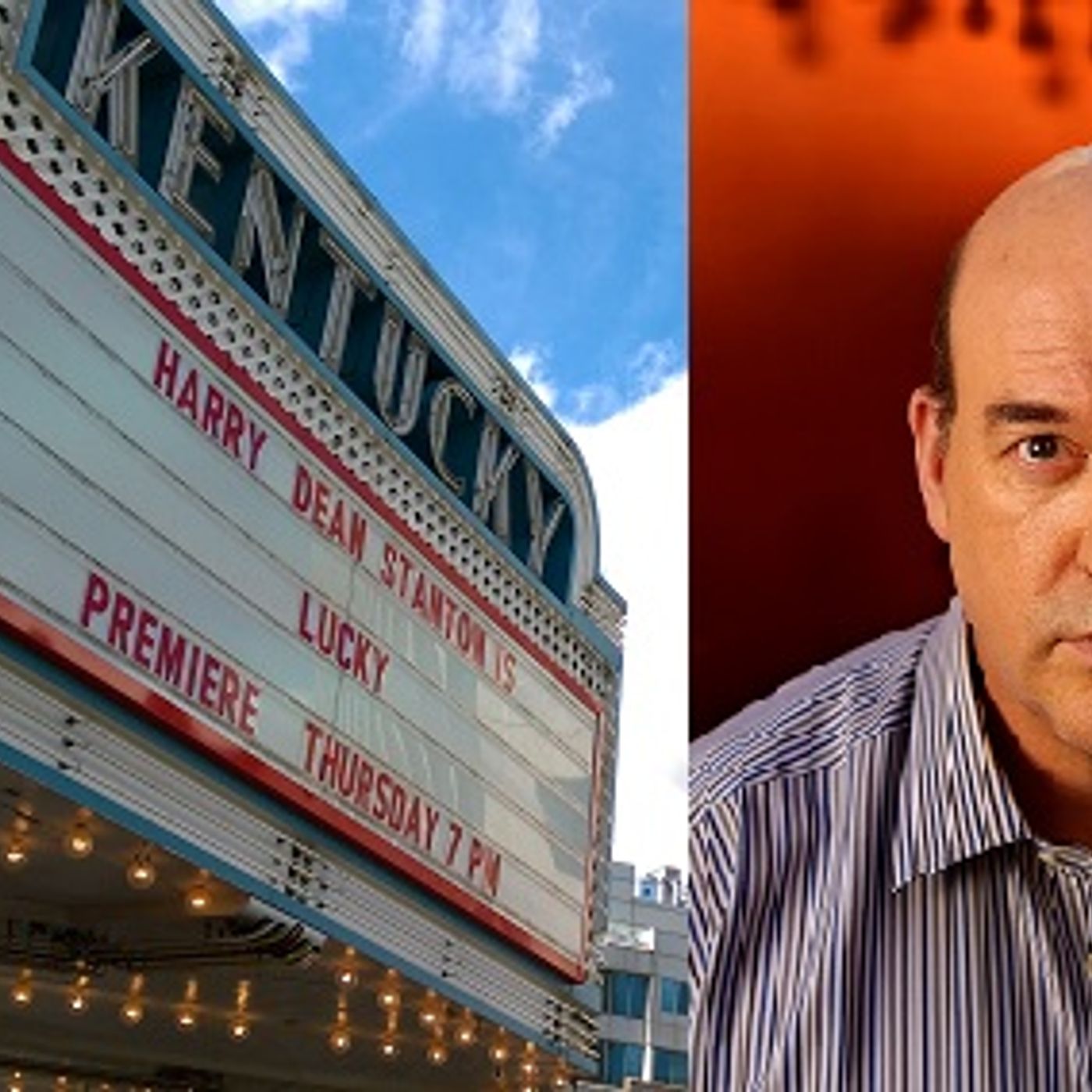
Repo Man spends his life getting into tense situations. What's up, and welcome to Movie Meltdown. I'm Brian. I'm Wesley. And we're coming to you live via digital recording from the outskirts of the Kentucky Theater. right here in Lexington, Kentucky, the home of Harry Dean Stanfuss.
Yes, we can see the glorious marquee just a few feet in front of us. It's flashing. It's a beautiful light. Look at it. It's sparkly.
I want to go toward the light. Yeah, or any old school theater, which we, again... Most towns around here don't have any more. So it's one more reason that Lexington's kind of awesome because they still have their theater. They didn't knock it down like a lot of places seem to do now.
Add the Kentucky Theater and the Lucy Jones. That's a one-two film combo. I'm sure that's what brings everybody to life. I just kind of assume that now. When I find somebody who's either from here or knows people, I just go, so you know Lucy, right?
And sometimes they don't and they think I'm insane. No, everybody knows Lucy. Come on. Yeah, I love this event. I'm thrilled that I get to come to all three days this year.
I took some vacation time off. Yeah, you sent me that message. I'm like, that's kind of cool. You actually don't live here, and you made a trip all the way up here, not just for this one opening night event, but you're here for the whole festival. Yeah, I'm about three hours away, but it's definitely worth it for Mr.
Stanton. That's a good haul. Definitely, yeah. became way more of an interesting year, I think, than even we would have realized a few weeks ago. Yeah. Like, as putting this together, you know, I saw quite a while ago when Lucy was announcing the lineup and working on different, you know, bringing in people.
And, yeah, it was, I don't think we could have, I mean, it seems like we should have seen it coming, but, you know, he lived forever. He'd been around forever. Yeah. He was always so sharp, too. Like, in interviews, that's like...
He always seems so together. That's so impressive. I think we'd all just sort of fooled ourselves into thinking he'd be around forever. It is funny how much I've heard more people talking about him lately. And some of it is because of this movie.
But I think some of it, again, it may have just been a weird universal thing. He may have just been put in everyone's minds for some reason. Maybe some cosmic reason that he probably doesn't believe in. Yeah. It was weird because I was listening back to shows that I downloaded talking about movies and like they went on this like 15 minute tangent about Harry Dean Stanton that had nothing to do with this movie.
They were just talking about him as an actor. And I'm listening to it like two days after he died. But it had been recorded weeks before because I hadn't had time to get around to listening to stuff. Have you listened to the Marc Maron interview with him from a couple years back? Did he re-release it?
Yeah, I think he put it back out. I listened to it, I think, the first go-around. But yeah, it's one of the last two or three. You should definitely check that one out. It's a great interview.
He's an interesting character. Yeah, and as I was telling you before we started recording, a friend of mine said, like, what festival is it you're going to? And I told him what it was. He's like, I think I heard an interview with Marilyn Manson where they were talking about him. And I was like, oh, yeah.
And he played the clip for me. And there was a mansion. I can't remember all the details because it was at work when he showed it to me. So I didn't catch everything in the break room. But apparently there's some sort of mansion that's like a hub for artistic people out in California.
And Marilyn Manson was there. And Dita Von Teese, this was at the time when they were married. There were a few other celebrities there. And Harry Dean Stant was there and apparently was throwing dinner rolls at Dita Von Teese, which is hilarious. The merry prankster.
Yeah, he did seem like he just liked to mess with people a little bit. Yeah, and it's like a very grandfatherly thing because I grew up in a Kentucky town too and my grandfather was good with the jokes for sure. That's the thing. We were trying to decide how much of it. He always seemed like you know, he certainly had no problem pulling off grumpy old man if that's what you needed out of him.
But it's like, if you look a little deeper, like there's definitely so much more to that and so much more that like he takes from things. And again, he's sort of aware of it and doesn't even want to let people know he's aware of it. Like he's, he kind of wants people to tune out and be like, ah, that's just the way Harry is. But like there was always a little more going on. Right.
He's a very deep man. And, uh, one thing that they said tonight was that there's a guy working on a biography of him for the university of Kentucky press, which is super exciting. I definitely want to read that. There's a lot to work with there. Yeah.
Like when you, I mean, just think about like what happened before he even got into acting, like his, his early days, you know, and off in the middle of nowhere in Kentucky. And then like, he goes off to war and like, he comes back and is going to school at UK. And then like, as I heard this story, like, his, his like professor is acting coach more or less at the school was just like, you need to. Get out of here. Like you, you know, again, he just recognized talent and he's just like, you, you got potential.
You could probably make a go of this, go ahead and head out there. So like, it's funny that encouraged him to leave school, you know, it's like, it's probably not what, you know, professors and your teachers are supposed to do, but I'm like, good, good for him. Like he, he kind of broke away from that. It was just like, no, I, this guy is actually talented and he could make it work. And he obviously did for decades upon decades.
So yeah, the sweetness, uh, he's like so good at that too. Uh, you, you said you haven't watched all the new twin peaks, right? No, there's just so many. Yeah. I won't, I won't give anything away.
And it is a very frustrating watch, but he is, he is an amazing part of the show. And there are like two scenes in particular that I'm thinking of that I won't, won't mention that he's just, There's like an otherworldliness, which, you know, was a common thing with him. But it's just there's some looks. And there's one involving music where he's singing, which in the film we saw tonight, there was also a singing scene. He does a lot of singing.
Or always did. Yeah. The segment tonight was one of my favorite segments of the film. He's got such a wonderfully expressive voice. And it was also in Spanish, which was kind of cool.
I love mariachi music. But, yeah, it was a great film. What did you think of it? Yeah, we didn't totally break it down. So this is the opening night of Harry Dean Stanton Fest.
And the big focus of it was that it was the premiere. They actually, and again, they've been planning this and normally it actually hits a little early in the year. And Lucy was working to kind of push things back specifically to coincide with Lucky being finished and getting through post and like being able to premiere it at Harry Dean Stanton Fest. And this is, As far as I know, this is, you know, outside of the people working on it, this was the first real premiere of the film. Red carpet and everything.
Yeah, there's red carpet. You could pose by the banner. We have to go do that as well. But how else can we be fancy film fest goers if we're not standing. In front of a banner?
But, yeah, it is funny that it was so much work to get it to this point. Right. Again, odd timing because had it happened earlier in the year, had even the festival happened earlier, it wouldn't have been on this weird note that it is now. But again, I think it kind of needed to be. It's kind of the way everything needed to come together.
If he was going to pass on, it's interesting timing that he also, within a few weeks, gets this huge tribute that ties into the last lead role that he ever had. One of two lead roles he ever had. And the last, you know, big film that he really worked on. Yeah, and thematically, it couldn't have been a better final film for him. Yeah, and it makes me question some of his reasoning for it, and I'll get to that later.
Yeah, it's interesting. It's a weird place to come to, you know, just in life, when you realize, you know, what a fan you are of a performer. And when you see them getting older, and I guess we all start to question, we all question our mortality, but as you start watching the characters that you love getting up there, you do have to kind of stop and maybe prepare yourself. But again, I don't know that we were ever really prepared. The plot-wise, how would you go about breaking down the plot?
Because it's kind of like almost like he's playing himself and like a lot of the a lot of philosophies he espouses are worked into it now they said the co-writer was his assistant correct like for yeah i think if. You'd seen i think it's partly. Fiction Okay, I haven't gotten a chance. To see that. I think he's maybe in both of them, but I know one of the two recent documentaries they've done over the years, I think you get a pretty good window into that guy's life, and he has spent, what did he say, like 12 years or more as his personal assistant.
So it is interesting that this isn't just like a random... you know, movie that kind of has similarities to his life. And, like, so they decided to stick him in it. Like, the people writing it are both friends of his, one of whom has spent, like, most of the days. Like, as you watch that documentary, like, he was just with him a lot of the time. I almost asked during the Q & A if, like, he advised him on the philosophy of it.
I mean, I know he knew a lot of it from working, but, like, if, like, he went through the script and corrected this or that, I don't know. I get the feeling from just what I've seen of Harry Dean over the years, if it was wrong, he would have corrected it. I believe you're right. Or he just wouldn't have told him and would have said the lines that he would have preferred to have said. So, yeah, I feel like Harry Dean would have taken care of his philosophies getting out there the right way.
Definitely. Yeah, plot-wise, again, it's just coming out. We're not going to throw too much out there. But as far as a general idea, because I don't think I knew much about it other than it was you know, another starring vehicle for Harry Dean. But it's, it, I think it goes into like what life is like when you're the kind of, again, it mirrors his life because Harry Dean, so the stories go, spent like a lot of his life just sort of hanging around his house that he bought a long time ago back in Mulholland.
And like when nobody, when it was, you know, kind of run down and falling apart. And now as time's gone on, A lot of it has come up and become a fancy area in L.A. at this point, but his is still the same. He hasn't done anything to it. He just sits there and watches TV and smokes his cigarettes and drinks and leaves to go to Santana's and occasionally make a movie or a TV show. I feel like it's sort of doing a low-end version of that.
Lucky certainly isn't living in L.A. This is a little more Is that Arizona? Is that where they shot it? Yeah, it certainly looks like it. So yeah, he's not quite as well off, I suppose.
But other than that, it feels like it really is trying to tap into this, like, what do you do when you're an older person and this is all you have. Again, he doesn't have to go to work, so what do you do with your day? So we get a little of this snapshot of a day or so of his regular, in quotes, regular life. And then you start to see things change and you start to see how him aging and him starting to deal with him aging comes into play maybe in his head and then in the people that are around him. It's like, he seems like he's kind of closed off and alone, but you come to realize he's has this little like makeshift family that he comes across, you know, in his daily wandering around.
So it's, yeah, I don't know. I think that's the cool part for me was we start to see these other people notice this change in his life and start to interact with him a little differently than they did in the, the normal day to day process. The cast is really great. Like I love David Lynch as an actor. David Lynch is amazing across the board, but like, You really have to strap yourself in when you're doing David Lynch, the director.
David Lynch as an actor, I don't know how you can not love him. He's so much fun. Wholesome, old school, almost like a Jimmy Stewart quality about him. But a lot of yelling. He's always yelling.
Especially as Gordon Cole. He's not far removed here either, but God, I love him. He has the coolest hair too. Again, for an old dude, he has hung on to that hair and it looks awesome. yeah man it's so that yeah jumping from our harry dean crossing over into the new twin peaks so if you didn't know yeah david lynch is a an actor in lucky and it's if it wasn't already worth seeing you need to see david yeah you need to see i. Want him to do i know he doesn't direct as much as he used to i would like for him to do more acting i think.
Yeah yeah that i would think would be a lot less overwhelming so you'd think it would be a little easier to lure him in but I guess we'll see what else he does post Twin Peaks now. Yeah, hopefully more Twin Peaks. I know a lot of people are frustrated by the new go-around, but I want to be in that world more, even if it's frustrating. Again, the little I got into it, it is interesting that I just sat down and it started rolling. I got that feeling.
Again, I was there watching that first run through, and then I kept finding friends that wanted to watch it and sort of rediscovering it again. So just sitting there in the dark, listening to that music kick on, it was just kind of, like, nostalgic and creepy all at the same time. So then as I got into it, yeah, just that little bit I got in that first episode, I'm like, no, this, like, there is a weird homey quality if you like the old Twin Peaks, but even the parts that are very different, I'm like, I just want more David Lynch stuff. Even if you don't like it. There's tons of people that don't get Eraserhead.
But I love that it's out there. I love that it exists and I'm giving David Lynch freedom to do whatever the hell he wants to do. We need to do that. As a society, as artists, we all just need to let him do some weird stuff. Even if you don't like it.
I like knowing that it's out there. Especially as he's getting older too. Again, He used to do two-hour movies. Now that he gets to do an entire span of this series, that's a lot of hours of his artistic, creative mind at work that we get now, that we all get to have forever. More or less.
And not to sound too repetitive, but man, Harry Dean is so good in the new Twin Peaks. It's just a wonderful performance, for sure. And not to go too far off topic, but if you haven't read the Twin Peaks books that they put out with this season... The first one's already out, the next one comes out next month, and both those will definitely increase your enjoyment of the shows, for sure. If nothing else, yeah, lucky.
I was also impressed with Harry Dean stepping up on this one, and like, As much work and time as it took. I mean, they're shooting this, he's 89 years old. Yeah, and he's like pretty much in every scene. And he's in pretty much every scene and wandering through the desert sometimes. Oh yeah, with the jacket on.
Yeah, just like the level of commitment alone plus just like how personal he lets it get for a guy who doesn't get into that. Yeah, it's amazing. For sure. But yeah, in addition to all that, the other big event here tonight was we also had John Carroll Lynch, the director and, you know, an impressive actor in his own right. And I definitely, you know, wanted to sit down and talk to him just as an actor alone.
But also the fact that he was here, you know, with this film to discuss this film and was there to kind of witness those, you know, this this last big performance of Harry Dean Stanton is like just. if nothing else kind of wanted to, to round things out with that and have him kind of give his take on what he got out of making this movie. So yeah, I, I'm glad to welcome him on the show and I think we should go talk to him right now. Yeah. I usually try to start early on and sort of get. A feel for where everybody's inspirations come from, and kind of like where they started off.
So was it Boulder that you were originally born? I was born in Boulder, Colorado. I was raised mostly in Denver. I moved from Boulder when I was five years old, so I was a Denver dreamer. Did you initially latch on to the arts, or was it something that you found later on?
I always did plays in elementary school and stuff. There was a young woman named Dewanda Lynn Reese who wrote plays. She was in my class. until I was out of elementary school. I did plays in, I don't think I did any plays in junior high school, but by the time I got to senior high school, I really knew I wanted to participate in theater. I was a football player for my freshman year in high school, and I never played again.
Did that go over well? The crossover? I mean, at that particular time, there was a we were still stuck in a kind of a viewpoint on that. That's changed. It's still kind of a fight now.
As long as 15-year-old boys are as stupid as they were then, I don't think that changes. I think they'll always have a problem with it. But that being said, I was very happy to have made the change. I had lost my taste for that individual sense of violence. Yeah.
I mean, is it something that was specifically theater? Or did you, again, at the same time, were you kind of latching on to film? I mean, I watched movies all the way through my life. I was obsessed with certain movies. I watched them over and over and over and over again.
I mean, I saw Blazing Saddles probably 19 times and Young Frankenstein into the teens. I saw Paint Your Wagon into the teens. I would go to the Biograph and the Bluebird in Denver and watch retrospective films, both with my parents and without them. And also I would see everything that came out because that was the primary form of entertainment at the time I was growing up. It had yet been...
I mean, obviously television was there and we were watching television too, but that was... Movies were special. Yeah. And it's still, I mean, it's just in these last, maybe the 2000s, you had that kind of push of TV getting, well, again, because it left network and became like the pay TV cable offshoots. It found sort of a new footing as far as trying to contend with film.
Yeah, once you stop forcing the writer to write to six-act breaks and make sure that people get back from the soap commercial. Yeah. It changes the dynamic quite a bit. It makes it kind of unfair to the people who are still doing that. Although, man, when you can write really good network television, that's impressive.
It's still its own... And yeah, I've had people say that. They're like. When you're still trying to set it up so that you go into a commercial break on a cliffhanger. It's like, that's still writing TV the way it was meant to be.
The way it was meant to be, to sell soap. Otherwise, you're just doing a 16-hour movie. But even then, television as a format, even in long-form television like you're describing, the relationship with the audience is so vastly different. Especially with binge-watching. Which I have done.
Massively, yeah. It changes the relationship because, first of all, you don't have to say previously on because I just watched the last one. You just sat there, yeah. And secondly, the chapter of it stops being so prevalent because when you meet out even in a pay-per-view or like an HBO circumstance, when you're writing, when David Chase is writing The Sopranos and he knows he's meeting him out once a week, he has to drive that to a climax that makes you want to watch the next one. And it makes you want to wait a week to watch the next one.
And even he didn't. That was somewhat recently. But still, there was no binge watching when he started. No, that's what I mean. He was still planning.
There was no concept that you wouldn't be writing episodes or chapters. The first season of the... Did I say the wrong guy? I did. I called it David Chase.
David Chase didn't write Sopranos. He wrote The Wire. So we'll have to cut that out. Anyway, The Wire, the first season of The Wire is like a book. I mean, it's chapter headings.
And it's arguably one of the best pieces of writing for television ever. And yet, you know, as the seasons go by, which they were all excellent seasons of that thing, they still maintain their chapter-ness. Whereas I watch... I binge watch something like a television show I like a lot. It's the Man in the High Castle.
And they have much more leeway not to drive things towards some climax, although they do, because it's an individual story, even so. I think it is, and it's like a constantly changing format, so it's also a constantly changing art form, because that's what I've said about so many of those now is the creators are still not even fully understand how to pace at this point because some of them just get repetitive because they're like oh wait we have 13 episodes to fill and like so it becomes like if you plan it out right you don't run into that problem but i think again this is sort of being thrown at people as they start working in it. Yes it's very i think i think you're right it's very difficult to um to not feel as if there's placeholders seen in those circumstances yeah That's why when you see one that doesn't waste an instant of it and doesn't seem to...
No scene you seem to think, we could cut this and nothing would change. Yeah. There's almost... I mean, that's... But it's...
Boy... My hat's off to people who write that well at that level. It's an almost impossible task. I kind of like having all these new options. Again, as long as it's the ever-expanding art form, I kind of like that.
It gives you just different options. By ever-expanding, what do you mean exactly? Again, there's no way you could have done... You either had a 90-minute film or you had a week-to-week sitcom, maybe an hour-long drama. but the fact that now you can tell like you can if you want to you can still do it as chapter breaks or if you want to do literally a 16 hour movie you can write it as one big arc one big continually you know moving forward kind of a plot so again I think it's new freedom again it comes with all the same problems and new additional problems but again it's art in general like the more freedom we have the more great things come of it and problems trying to get it out there but I like the idea behind being able to do that.
It's great if you can match the story you're telling to the medium that you want to tell it in. And just to clarify, David Chase wrote, David Simon wrote The Wire. See, it all came together. Davids and Davids. Davids and Davids.
Anyway, I think that's what's interesting is if you can find a way to. Naturally write the story. And the opportunity is going to be, in a lot of these circumstances, is to tell, say, this is a 17 episode show. There's not going to be any more than that. There's not going to be like you'll have to match it up to what it is.
I recently did a half hour sitcom for Comedy Central and the CBC in Canada called Crawford and it's 12 episodes and It has the potential of going on. But hopefully those 12 episodes will be a cohesive whole as intended. And the most important thing in that circumstance is that they be funny. That's a crucial thing about comedy. It's a little bit.
It's really kind of a deal breaker. You would think. There's some weird audiences out there. Yeah, but there's also things that aren't really comedies that are listed as comedies for a wide variety of reasons. Partly because they don't fit into drama. because our sense of drama is so limited to...
I don't know. Drama is a... We like melodrama a lot. We don't necessarily like drama a lot. And there's ones that do skate the line, and you don't know where to file them.
No. Because they work on both levels. No, exactly. They don't know. They're not intending to define themselves by those genre names.
Well, on all those mediums, I guess going back to when we had a few less, when you started out, did you have a plan? Like, was it just you wanted to pursue theater, or did you actually have, like, I want to get into film? I really had no understanding or conception that one got into film or television. Yeah, you just followed that path? No, I just went into the theater because that's all I thought I'd do and all I thought I wanted to do and it sounded great to me and my dream was to be a member of a regional theater company which they still had at the time I was getting out of school and I ended up in one in short order really.
I was asked to join the Guthrie Company in Minneapolis by the time I was 24 so I learned how to act there so for eight years I I applied my trade almost exclusively inside one building. Yeah, and found a really well-respected group. Yeah, that worked out well. Yeah, yeah. And that is something like, is it when you want to go outside of that?
Do you start looking to like, okay, I want to expand my horizons and try to get into film? I think what happened was I started to feel as if I had come to kind of a glass ceiling. there that that um i needed to find other opportunities to grow that didn't necessarily fit into the plan of the the company or the or the um you know the people running the place yeah um but this was not to say they they i mean i came back after i had made that decision So I went to New York for a little bit. I had planned to try it out. I went and started auditioning and got an offer to do a play at the public lab in a very short time to be in New York, probably about six weeks I had an offer for that, and that was from a general cattle call.
So things were going well, and then I was offered a. By. This time, I think I'd done two pieces of film... The Cure. Interestingly enough, I got my SAG card first.
I didn't get my equity card first. When I was 19 years old, I did a Red Cross industrial film called Bleeding Control, and I called 911, and that's how I got my SAG card. Beautiful. So jump forward a little bit. I'd gotten an after card after my equity card by going to do some commercials for Northwest Teleproductions in Minneapolis.
That group made all of the public service announcements for the armed services. So when they show network television overseas, they don't show commercials. What they show are PSAs. And at the time that I was in Minneapolis, that's where they made them. So you gave... you did performances in these commercials that were about making sure people, you know, got a military clause in their lease, stuff like that.
I think they've gotten away from those industrial films, but not really. I don't know. I think they've just changed now because I was thinking, like, that's how a lot of early filmmakers started. And then, like, thinking now, like the people I know that are kind of involved in indie film, half of them are, really making their paycheck working for, like, the local hospital outfit that's doing videos for, like, in shop or for the entire corporation. And I'm like, yeah, that's still kind of going on.
No, it's the same kind of thing. And then I got into two films, Grumpy Old Man and The Cure. And then I came back from, went to New York, got these offers, and I was offered a season at the Guthrie. I couldn't turn down. I love these roles.
And people thought I was nuts to come back to a place that I'd already felt I'd started to outgrow. But I just needed to do these pieces of work. And also my longtime girlfriend at the time was there. She's now my wife, so that was also a compelling reason to come back and to work with her in one of the pieces, so that was great. So then while I was working on that season, Fargo came to Minneapolis, and one of my buddies in One of the plays I was in said, I read this screenplay, man.
You've got to go in on it. It's great. You're made for this part. And that's where I first read Fargo and I first auditioned for Norm and ended up getting that part. So suddenly you're a legitimate film actor because the Coen brothers have said you're okay.
Yeah, definitely. I definitely wanted to get to Norm. Beforehand, I did want to ask because It is interesting kind of talking to different people and watching these kids that get into the industry really young and then are 19 and in a blockbuster movie. Do you think it prepared you a little better? Because you were certainly further along than some people.
Again, the Hollywood system is by the time you're 25, you're old news. Well, I mean, the good news for me was I'd played 50 since I was in my mid-20s. To play a character that was in their 40s, I was built to come later. It was never going to be... There was very little career for me in film and television at 25, I think.
Sometimes it works in your favor. Yeah, no, no, no. Now you get this long stretch. No, this was. As far as that was concerned, my instrument fit right in when it needed to.
But emotionally, if you would have been thrust in there at 19, would you have been able to handle it? No, I would not have been able to handle it. And in terms of certain circumstances in my career, I think I've not handled it well even after that. But I think that over the course of time, if you're fortunate enough to work, you slowly begin to realize it's not about you at all. So.
So that was, yeah, I mean, I was grateful that that happened, but that changed everything because once I'd done that and I thought, well, this would be silly to not try to do this, and so I sold my house and moved to Los Angeles, and three months later I started working. I did my first TV show then, and then I started working consistently and gratefully have been ever since. So norm changed everything everything rightfully so like i remember at the time just watching that the first time through and like that moment comes with the two of you in bed and it's just what is this like this is such a different dynamic that's going on right now and i think that's that's that's so impressive when you see that just like that the characters as a whole but specifically the way that both of you know you and so i guess i was going to see what what the dynamic was like between you and Frances McDormand as you enter into that?
I can't. I mean, I can't say enough nice things about Fran McDormand. Frances is incredible. She's an amazing actor, and she's such a warm spirit and such a thoughtful and open-minded collaborator. She and I had wonderful discussions before we started working, and then when we worked with Joel and Ethan, I had to throw a lot of that out, which was great.
And even now when I get an opportunity to see her, it feels like you're at the same party and she's just turned away to talk to somebody else as have I. And when you come back together, it's like you're starting the same conversation that you've had. And I love where she's gone and where her work has gone and what she supports in her work and how she's never not lost. She's just fierce and true. I love her work.
I can't wait to see that. I can't wait to see Three Billboards. That mixes a lot of people that I really admire, including the director of writer whose work is great, but Woody Harrelson and Sam Rockwell. It just goes on and on. Yeah, it looks great.
Again, you mentioned working with the Coens. What Because, again, it's pretty early on for your film work. Was it jarring dealing with that? Because they have a very specific way of working. And did it seem different at the time?
And now that you've worked with a lot of other directors, does it seem different to look back at what they were doing? Well, what I didn't know then when I walked onto their set was how much of the drama of film sets which can happen just don't exist on their sets because everybody knows... who's in charge. Everybody wants those two people to be in charge. There's nobody who questions why they're there. They're, everybody's there and they're, the writing is excellent.
You don't want to, you don't want to, you know, I remember thinking, no, no, I remember, I remember, I don't remember ever some thinking in Fargo. These lines are heavy lifting. Do you mind if I nudge them around a little bit? Um, no, they didn't. It's not like that at all.
So you want to say what they, they've written. You want to, live in the world that they've created but also they're open to your ideas when you have them and there's a couple of those in the movie that Fran and I had talked about and that worked out quite well for the film. How in sync are they between each other? I mean again I've only worked with them for such a short period of time but it's my experience that they've already had all the discussions they need to have, and by the time they're on the set, they're not in doubt about where they're headed. They don't question themselves.
Well, I mean, I don't know that they don't question themselves. I just know that if they do, it's at a place where they don't. It's at a place where they're not insecure about it. Yeah, they're not wrong. They're finding something better.
They're searching. Yeah, finding a better option. It's a searching that's happening, yeah. It's a search. It's a search, not a question.
Yeah, definitely. Well, again, you've done so many great things. I can't hit them all, but there were a few I wanted to as we moved forward. I definitely wanted to talk about Zodiac. I mean, that's, again, and I was kind of hitting some of these themes of directors.
I mean, that's, again, coming into Fincher, He's already kind of found his place. He's made his name to some extent. So how different is that? And then. Approaching that role, because again, within the context of that story, how they unfold, it's a pretty heavy role.
Well, his aesthetic, his sense of what the camera does and how to do it, and the stories he seems to... really intent on telling all uh are all um harrowing and dramatic there's humor in them um and there's always a a core of human evil that he seems to want to explore yeah and uh and zodiac was no different than that i had been an admirer of his work for years i obviously I loved Seven and the game and I mean I just thought he was incredible so the idea the. Way he looks at that that isn't even like it isn't even damning the evil it's almost like scientifically almost examining it without passing judgment. I actually really appreciate the way in which he does it because it never loses its humanity as dark as it gets it never loses the fact that it's people doing this to people which makes it more important, I think.
It's more reflective. A little darker in the big picture, but I think you don't lose sight of what you're doing. You can't dismiss it. You can't dismiss what these people are doing with each other and to each other. So anyway, I auditioned for that part and went in and met with him and Loray, the casting director.
I had a fantastic talk with him and saw the exhaustive research that he had done with a historian to explore the books and build them into the film that they became. And then when I got the part, I was sent videotapes and books and transcripts, and really I could have kept on going through that. But eventually you have to act, and it comes down to the actors you're working with and the director and the crew, obviously, so. When we got to that point, I sat down with Marty Lodge, a guy I knew from D.C. He played the manager of the place I was in.
And then Elias Koteas, Mark Ruffalo, and Anthony Edwards. And we sat down and spent a day and a half on that scene in the center of the movie. And all three of us, all four of us at the end of that day and a half, just looked at each other when we were all wrapped up and go, that was really fun. It still is. it's close to the best days I've ever had on a set to work with those guys. And David was spot on with his notes and, and, uh, and we explored and explored and explored, which some people drive, it drives them crazy.
I could have, we obviously the four of us could have kept on going, so we didn't have any problem with it. But, um, on that, on those days and then to work with Jake again in the circumstances that I worked with him in that movie and to be the whale to his Ahab was, uh, was a lot of fun. I had already played his father and already played his tormenting boss, his tormenting, you know, miniature, um, fascist boss in the good girl. So I, we had, we had strange experiences together, but, um, yeah, that was a good, that was a good time. And then to go back and look at it and see the kind of care that's taken in terms of every single frame, every single choice in every single frame, every single, Added every single...
The encyclopedic knowledge that Fincher brings to filmmaking is awe-inspiring. Yeah. It's pretty amazing to watch. It is one I try to revisit in the last several years. It just gets deeper every time you look at any of his work.
It always just gets deeper. Thrown like a star in my life, I sleep, I open my eyes to take a peek. To find that I was by the sea Gazing with tranquility Then when the hurdy-gurdy man Came singing songs of love Then when the hurdy-gurdy man Came singing. Songs of love Hurdy-gurdy, gurdy-gurdy, gurdy-gurdy. Sad.
Yes folks it's intermission time so how about taking a break get out and stretch a little and relax before the show begins again And why not make it refreshment time, too? We have lots of tasty, delicious treats waiting for you at the refreshment center. Our courteous attendants are ready and waiting to serve you with a wide and wonderful variety of good things to eat and drink. So step right up and make yourself at home. In space, no one can hear you scream.
Alien, rated R from 20th Century Fox. So this is a great episode, right? Well, if you'd like to keep more awesome discussions like this one coming your way, you need to join the club over on the Movie Meltdown Patreon page. If you can chip in just a couple of bucks, you can keep the show going. With your contributions, we can continue to keep producing great episodes, keep organizing these fun conversations about film, and keep booking amazing guests.
So just go to patreon.com slash moviemeltdown, or go to moviemeltdown.com, and the link is right there at the top of the page, and you can help keep the show going. Plus, you get exclusive episodes every month, just for club members. So go to our Patreon page, join the Meltdown Club, become a Melketeer, get. Cool stuff, and keep the Meltdown rolling! Damn the man.
Save the Meltdown. Hey there, this is John Doe. You're listening to Movie Meltdown. Glad you are, because otherwise you'd be wasting your time playing some stupid video game. All the toys were out in black and the.
Boys had to. It's part of your problem, you know. You haven't seen enough movies. All of life's riddles are answered in the movies. And now, on with the show.
The End. Thank you. Well, then I'm kind of skipping over a couple of other directors along the way. But I wanted to– there's a couple that I've hit recently that I wanted to discuss. And, again, one was just by chance.
Actually, just the last episode we did, one of the people on the show was like, oh, let's watch The Invitation. And I didn't know– like, I didn't know– pretty much anything about it, including that you were in it. So I'm watching it through the first time, and I'm like, oh, I'm going to talk to him next week. So it was really strange going in, kind of blindsided on that one as to what was going to happen. Because again, I hadn't even seen the trailer, so not knowing what you're getting yourself into in that film.
So I don't know, were you approached early on to become Pruitt, or was that just. Years ago I'd worked on a film called Bug, not the one with Ashley Judd, a different bug. It's a kind of a Rube Goldberg kind of story about a young boy who smashes a bug outside a Chinese restaurant and then everything that happens flows from that experience. And I played this fantastically fun character, just a great character that was written by Matt Manfredi and Phil Hay, and they directed it. It's a lovely movie.
It's got a nice cast, Jamie Kennedy and Sarah Paulson, myself, Ed Begley, Brian Cox. It just goes on and on and on. Anyway, it's a fun and weird movie. So they've been friends ever since, and they started talking about it. And I met Phil's wife, Karin, after they married.
And they wrote the script for Karin to direct, and they wrote Pruitt to some degree for me. They had hoped I would be interested in it. And I really kind of love those guys so much, pretty much. If they call, I'll come. They gave you the wife monologue.
Maybe the best. That's the money thing. It's an incredible piece of writing. The character, the whole piece, but it's really director dependent. Karin did such a fantastic job of playing the interior journey of Logan Marshall Green's character against the exterior expectations of a social event.
And she drives an audience so deep into a picture without them really knowing anything that's actually going on. And the suspense is incredible and it's done with such meticulous care and with such a disciplined palette, both in editing and in visuals. Incredible. And then it just... Off the rails.
It just goes off the rails and you just... And then the ending is... is spectacular. So all of those pieces are done so beautifully, and it's really a testament to her embodying the vision that they had in the screenplay to begin with. Because the screenplay was exactly like it. But as an actor who's read a lot of screenplays, I was like, I don't know if we're going to make, I don't know if we're going to get, I don't know if we're going to be able to drive an audience all the way into this picture.
It's a long way. You do go two thirds of the way through at least. It's a long way, sure. And you're still questioning it. You're still questioning our main character.
Yeah, you're still questioning his sanity and whether he's watching it. And then you go, oh no, he is crazy. Well, maybe he's not. Maybe, yeah. There's a fake out in the middle.
It's fantastic. It's really, really brilliant. It's amazing. But then the other thing that I, the question that I raised, and I wanted to see coming from the inside, because then as I was thinking, I was like, well, there was, you know, there was, I was, you know, sound of my voice, and then there was like Martha Marcy and Maggie Marlene. I was like, what?
In the post-2000s, there's this weird resurgence of cult films. Films about cults. About, yeah, not just cult movies, but movies about cults. Maybe more so than even that 70s run that is like, it is just, Is it a weird returning underlying fear that America as a whole has? I don't know.
It seems to me that we are, even in the most recent season of American Horror Story, it's called Cult. They have the show on Hulu that Jessica Goldberg writes, The Path. There's a lot of these. I think it's a a response to our echo chambers. And that two people can sit across from each other and experience the same event.
And one of them will go, well, of course it's about this. And the other one will go, no, it's about that. And literally not be able to speak to each other about it because our fundamental belief of what we see is so. Is so sunk into the foundations of team or of worldview that we cannot hear anything that disregards, that questions us. We've gotten out of the conversational, even the debate part of it.
It's just right or wrong, I'm right. There is no. Other way to look at it. There is no debate. I'm right and you're evil.
That's where we've come. That's what we're at and And I do my best to reject that in terms of talking to people about any subject, particularly about politics and all those other things. However, there are things that are just wrong. And how do you address those things in a way that can change minds? Because that's not, I don't want to get into a fight with somebody.
I want to have an opportunity to change your mind. And I don't think you can change your mind unless you listen. Yeah, and that's even something as basic as this over the years. It's like all I want it to be is conversational. All I want it to be is expanding these takes that we have on things and maybe finding something in someone else's version of it that you didn't see.
People have lost that in general conversation anymore. No, and I don't know whether or not it's... I think there is a lot has to do with the reinforcement of the drama of social media that I can go on to my Twitter feed and never, like, I mean, my Twitter feed seems to be entirely about Lucky, so I just assume that the whole world is talking about Lucky. And, of course, that's not the case. It's just, you know, I hope they are, but likely I'll never know.
I've thrown those hashtags out there. Good, good, good. That's also what I keep seeing everywhere. Hashtag Harry V. Stanton.
Hashtag Lucky Film. Yeah, Lucky Film. Well, again, I'm going there. But before, the only other one lately that was just so amazing was, and I've now talked to both McDonald's brothers. Last year, I sat down with your brother.
With Nick. With Nick, yeah. And I was like, it was, I think, right before I'd seen it. So now having gone back and watched this and seeing the founder, And it's one of those, I think it kind of sneaks up on you. I think you go through and it plays like a drama for the most part.
And Michael is amazing and you guys are both amazing. And you get to the end and you're like, huh, that's a weird story. And then as time goes on, and I've seen this with a lot of other people because I keep, I'm like, you need to watch this. And there's one in particular that like, I don't even think that's his type of thing. He's like an action movie kind of guy.
And I just started talking about it and he got kind of sucked in. And he went home within the first couple of nights and watched it. And now, probably not a week goes by that it's not constantly being referenced between the two. And I'm just like, it's funny how much it sort of gets its hooks into you because it's about something so much bigger. I don't know.
I was just like, again, that's another one of those I kind of wanted your take on it thematically. John Lee Hancock, another director who's a master director who I admire very much, he is an ambitious... This is my take. I've never asked him about it. He's ambitious to make movies for people other than cinephiles.
He's ambitious to take the scale of studio films and make them say something beyond simply getting you to buy toys or get a Happy Meal. Literally. Pardon the, uh, plug, but, but he, he takes, he takes movies, he makes them on a studio scale. He's visually ambitious. He knows how to, he knows how to do that really, really well.
He tells story with, with editing and color and with cuts. Um, so well, he plays with a lot of sentiment in his movies. And yet there's always this fist that hits you right in the face. And, and he's just setting you up for it. And, and, um, There's a scene in Saving Mr.
Banks, the movie you made just before, the founder, which I love, and the acting is wonderful in it. And it's a movie that I watched and went, this is just a little... It's a little too studio for me. I'm watching, going, I love John, but this is a little too studio for me. It's a little too colorful.
It's a little too... And then. I've told him this too, and then Tom Hanks, as Walt Disney says, when he's trying to talk P.L. Travers into coming back to work, he talks about her father, and then he talks about his father, and you've seen the little sign of Elias Disney's livery on Main Street at Disneyland. And he tells the story of his actual father, and he says, there isn't a day goes by where I don't think of old Elias Disney with a belt in his fist.
And Hanks delivers it. And every time I say that line, I get goosebumps. And I think that's what he's been setting me up for the whole time is for me to accept the truth that not everybody wants to see their parents for real on film. Yeah. Like maybe they need a little redemption.
And I think characters in general, like it's so rare that you get somebody that wants to put a questionable character in the front of a movie. And again, what, what Michael Keaton's doing there, it's like, I'm in that. And I kept coming back to that. I was like, I'm most of the way through this movie and I'm still like, he's made a few questionable moves along the way, but like, he's still just, he, you kind of have to have pride because he's driven and like he's in, He does see opportunity and he wants like everything about him is like it is the American dream. He's going for this great thing that he wants to build and be part of.
And then you see this turn and it's a real subtle turn in the beginning. And then it just becomes once you get to the real estate, it's just a hard turn. And you're like. That's what does it. You're led down that path.
Well, the things that I love about the movie in terms of how I root for Ray Crocker don't. He's a hardworking man. He's a salesman. He's a fighter. He's a fighter.
He's cunning. He takes advantage of circumstances. He understands the heart of capitalism much more, the pure dark heart of capitalism far more than the The McDonald's brothers do. The McDonald's brothers in the movie, their understanding of capitalism is a harnessed. It's the difference between theirs is a harnessed ox and his is that bull on Wall Street.
He doesn't want it harnessed. They want it to do something good for people. And he just wants it to run rampant and destroy it. And when the McDonald's brothers are talking about quality and service and the need to be a part of the community, in the film, Ray Kroc only sees those as ways to dress up what he's actually selling you, which is sawdust. Because he doesn't care whether or not it's good.
And he doesn't care whether or not it's nutritious. And he doesn't care whether or not it serves you. All he cares about is how much money he can make from not putting milk in the milkshakes and putting Coca-Cola at the bottom of the menu. And all of that makes perfect sense if you don't care about anyone. You don't care.
And you kind of see that change. Like in the beginning, I feel like he did kind of care. He did seem like he wanted, at least if nothing else, he wanted it to be uniform. He wanted to create this thing and have everybody on board with this idea, which at the time was still built on quality food. Well, he definitely understood that what they had could not be messed with.
That what they presented, that the speedy system required the simplicity they engendered. And, of course, you know, the speedy system, we'll not name that anymore, transformed the way in which we eat to not a very good degree. But I will also say this, that I kept on saying this at host show discussions about the founder and will continue to. Mac and Dick McDonald were American success stories. They had nothing at the end of the Depression in 1929.
And from 1929 to when they sold, they both became millionaires. They were the American dream. After that, the American dream changed. The American dream stopped being about those things that we were talking about, about community, about republicanism with a small r. Yeah.
And became essentially what a lot of people seem to be describing as corporate capitalism. Yeah, just success at the cost. Yes, success at the cost of people. Yeah, specifically at the cost of others. And specifically at the cost of others.
And that the sociopathy of a corporation which only is intended to make profit, which does not intend to make people's lives better or to protect anything, it is a rapacious... And again, I benefit from so many corporations. So it's a rapacious instrument of capitalist greed that sucks money towards it like a magnet. And that's what it's supposed to do. It's an amazing film.
Yeah, I think it is one that's still kind of finding its way. I think it is one in 10 years more people might be referring to. It's going to. Yeah. No, I feel it now as people watch it.
They they. they have questions about, like, why didn't I watch this in the theater? What was it about? What was it about how it was marketed or how it was released that made me not think I would be interested in this? Well, and even the Academy. Like, it seemed like it really should have been taken into consideration.
Well, there's no comment there for me, pal. So, you know, I just... Yeah, that seemed really strange to me, how much it got ignored. There was some... It certainly was built as a prestige picture.
It was intended to be a prestige picture. It kind of is. It is intended to be award bait to some degree. And the crafts are good in it. The story is good.
The writing is excellent. The pace is terrific. The acting is good. There's nothing wrong with the movie that perhaps some different creation of marketing might not have cured. Yeah.
But then again, you roll your dice, you take your chances. The film is still the film. It's still that good. It's still that good. And boy, I'm just so proud of him.
I'm so proud of John Lee's work in it. I'm so honored to have been in it. And especially since a lot of the craft work that I had only known intellectually up until then, I was in the process of doing when the movie opened. So I got to see the film and talk to him briefly. as somebody who had now experienced the process of directing, you know, face-to-face and moment-to-moment. And that made me appreciate his work even more.
Well, then, yeah, that's what I was sort of getting to eventually here is after all these years of working in front of the camera, what made you finally want to go into directing? Well, first it came, you know, it started to come to my understanding that I wanted to do that about 15 years ago. I just felt like I wanted to try to figure out how to tell stories that I'm not necessarily right to cast in. I wanted to support themes in work that one can't necessarily from the point of view of acting when one's a hired gun. Because there's a lot of movies that are made that I participate in that I'm more than happy to participate in.
And they may not necessarily say fully what I would want them to express. Most of them have some piece or degree of it, otherwise I wouldn't pursue them. But there are very few that I feel like I've made the mistake of being in that didn't have the ambition to say something I wanted to say. That being said, the opportunity to be directly involved in the storytelling process from the very beginning attracted me, and so I tried to do that for a while. Why this one is kind of a two-fold thing, well, three-fold.
Circumstance or happenstance. I, Dragos Shumanya, one of the two co-writers I'd known for a long time, and he knew that I wanted to direct, and he was the one who eventually suggested it to Logan, his writing partner, and then we had a conversation, and we all agreed that was a good idea. So there's there's odd circumstance. I had simply acted with him in a short film almost 20 years ago, and that was how we became friends. And then there was the material.
The story of this screenplay, the theme of this screenplay, was palpable to me. I had recently lost my mother. Myself, I had had some health scares. I was diagnosed with prostate cancer, so I had to treat that, and that was part of why I did it. And my father's was at the time of shooting, 84.
He's now 86. So I was thinking about him, and this movie seemed to talk about the choice of living in the valley of the shadow of death. In that phrase in the Bible, Yea, though I walk through the valley of the shadow of death, I shall fear no evil, for you are with me. Thy rod and thy staff, they comfort me. Okay, so what this screenplay said was, Yea, though I walk through the valley of the shadow of death, I shall fear no evil, because there.
Is no. You are with me because there is no Robin Staff. For lucky, there is no Robin Staff and there is no you. So that extremist fascinated me. And also, it seemed so true.
Yeah. And the answer to the question in the movie that's provided seems so true, too. And that really made me want to talk about that. I could see I was passionate about that. And then the third and probably most important thing in terms of getting the movie made, as well as a very compelling artistic argument, was the opportunity to work with Harry Dean Stanton.
Yeah. Even as an actor, I said yes. But as a director, when you could look down on your call sheet and have Harry Dean Stanton at number one, you were in a good place to succeed. Especially knowing how little you'd seen people take advantage of that, other than Ben Vendors. No one made use of him as a leading man.
It gives you a whole new palette. To play with that people haven't done. Well, that's, I mean, it's true that he is an actor who makes five seconds look interesting, let alone two hours, or in this case, 88 minutes. He's fascinating to watch for any length of time. This material was so personal to him, was so vulnerable, was so revealing.
And it's not that he hadn't made documentaries with this material before. It's not that. It's that since it kind of sprung from his life, it was an interesting opportunity, I think, for him to kind of say some things that he'd always wanted to say in a theatrical context. And also, for me, I discovered with him, it also created a really complicated acting problem. Because he is playing a character... that is inspired by him.
That is not him in circumstances that don't match his life in which you're taking autobiographical material and rearranging it into a different context to go to a different place than his life is going. And to do all that, uh, with one of the greatest actors of his or any generation on film. Yeah. But also to do it in 18 days with first time director and, uh, There were a lot of. 15 days is a pretty quick turnaround.
It was a complicated acting problem. So those were all things that were... Well, I would have preferred more time, but those were all things that were fascinating to me. The limitations are what they are. They are what they are.
But I was, yeah, especially as I saw what this film was as it was coming together and the promotion started, it made me wonder, and now I can ask, how early on was he the center of it? I mean, they started writing it with him in mind from the very beginning, and even when they sprung it on him, which I had been telling a different story than the one that I heard the other night, that he had been an alt. No, apparently he wasn't. They wrote it. They had their first draft done.
They had talked to friends of his to be in it. And then they sprung it on him. They wanted to make it a compelling package because he was saying no to a lot of stuff. And he'd said no to things by things that, not similar in material, but well, They are because they were about a man that age, but there were movies that came to him that he was offered that were expressed and explained to him that he read and that were fantastic pieces. And he went, hmm, it's too much work.
I'm not really interested in that. That's kind of how he looked at a lot of stuff. I don't think so. I don't think so. I just want to play my music.
Yeah, exactly. So this thing had something to it. And partly it had to do with the fact that friends were willing to come play with him and all of that. But then there was something else, and I've been thinking about that a lot. I think there was something he wanted to say in this, and I'm glad he got a chance to say it before he died.
Yeah, I mean, it does make me wonder, because even just seeing him in this theater that we're in right now, just a few years before, he stood up here, and this entire room stood up and applauded, and they gave him the key to the city. And I think there was sort of that, like, Number one, it was him sort of accepting how much people... He was always so... He just kind of rejected so much of the stature that came with who he was. He just seemed like he had no interest in any of that.
But there was almost this moment of him kind of allowing that in for one night, maybe. And he was still very funny and very humble, but there was at least a little bit of him kind of accepting of that. And it's made me wonder, looking at these choices, like, Is it him sort of dealing with, you know, do I want to get one more story in that tells this? Did he kind of know? I mean, time-wise, I guess we all know it's coming.
But, like, you know, as you're winding down, like, you're in your 90s at this point, you know, you, I guess, have to start thinking, is there a story left that's worth me devoting my time to? That's a great way. Well, if it wasn't, he wouldn't have done it. I mean, the fact of the matter is Harry didn't do anything he didn't want to do. No.
Definitely not. Definitely not in these last 30 years. Absolutely not. Absolutely not. He turned that corner.
No, he's like, nope. If I don't want to do it, I'm not doing it. And it didn't matter whether it was an interview or selling something or whatever it was. When he wanted to go home, he went home, and he never didn't think about it twice. And so there was something about this that he wanted to do, and he worked his ass off to do it.
And he did it in circumstances that for even a person half his age were exhausting. So it was an impressive piece of work. And then to watch the material and to watch over his performance and to help it, sharpen it and put it into the context of this character's story that he had it. He still had it. I guess for you, being there, what was...
Again, now it's so poignant that, you know, I guess it'd be different if he could have come to a premiere somewhere, even if it was just in LA, because he didn't like to fly. But on top of that, like. Most of the reason why he didn't like to fly is because he couldn't smoke anymore. I really do think that's true. I don't think he cared about the flying so much as the smoking.
They give you liquor, but they wouldn't let me smoke. No, they wouldn't let me smoke anymore. I'm sure it was like. It's probably part... That's why, yeah, it was amazing that he came here that night.
What are you talking about? I mean, I can't... What the hell? But then... I think they actually flew him here in stages.
Yeah, so he could stop and have a cigarette. Yeah, I think they stopped him in Denver or something. Like, they stopped him so he could walk outside and have a couple cigarettes and then walk back in. I honestly think that's how he got here. That does make me wonder, like, how was that experience?
Like, you watching it, you know, what is his... legacy is what i'm trying to figure out is we especially moving on with this festival every year and what was your take on it being that close to him those you know the last movie well. The the the legacy of this film festival was set i mean people can't have um started this film festival in celebration of harry dean sam himself. I'll say lucy She's amazing. Yes. I mean, I do.
My hat's off to her in terms of she's a force of nature. The whole city has sort of rallied around this idea. Sure. And the dynamic may change with him dead. But they couldn't have done it for him.
I feel like it would almost gain perspective now. I agree. Because it's so hard to do. Now it's a compendium. Now it's a tome.
It's capped off. Now you have the end. Yeah. But that's the other thing. You had to have wanted to do it because of the work.
Because you didn't know him. He didn't want you to know him. Yeah. That's what it kind of seemed like. Especially once again.
That's what's so interesting. Maybe always. That's what's so interesting about him being willing to do a movie with autobiographical material. Yeah. That he was like, I don't want you to know me. except for these.
This is my presentation. And even at times in the shooting of the movie, there was a, there was a moment where we were going to shoot this one sequence about, uh, you know, this one story about him and the mockingbird that took place here in Kentucky. And, uh, and he, uh, called up Logan night before we're going to shoot and said, I don't think I'm going to say that. No, I don't think I want to do that one. And they were like, yeah, but, It's in there now, and you said so, and we're set.
We've got a whole day around it. And also, not that any of those would be compelling to Harry. So they had to find a way to be compelling for him. And they managed it, because by the time I got to the set, it was all taken care of. And he did it not just once, not just twice, but three times at his request.
And then he went home. We did a bunch of other stuff, but he went home after the end of that day, and he turned to, I think it was Drago driving him. I'm glad we did that. I'm glad that's. In the movie.
Again, watching these last several documentaries, I feel like there's a presentation that he always had of this I don't care persona, but there's such the heart of an artist that I was watching his work over the years, I'm like, he does care. He cares about the important things. Even watching him in the documentary, he's... he can't not be aware after 60 years of filmmaking, he can't not be aware of what the, I mean, even there's, there's a piece in that documentary where he's telling the, he's translating the lyrics of a mariachi song. He's about to sing. It's a beautiful shot, straight up hero shot him underneath the mic.
And he's just with that kind of beautiful voice that, that sounds from the outside as if it's monotonic. It's just, enough air over his vocal cords to create the words. And there's a moment where he's talking about something and he says, that's the break. And you know he's aware of the rhythm of the words that he's creating, the poetic rhythm of the words that he's creating and the caesura he creates in the midst of the discussion. He can't not be aware of it.
Now, because of the level and degree of his artistry and mastery of it, He never lets you catch him at it. It really is how he operated, just watching him. But he's not... He's fascinating. It's not unaware.
And that's one of the reasons why he's so captivating and so compelling, is that he never... He does what most people want to do and can't, which is make you never catch him at any moment that doesn't feel completely to the bone true. And that's one of the reasons, too, I think, why he has been an actor who has whose the acknowledgement has been inside the the the guild has been inside the branch of the the academy but doesn't necessarily reach the outside because There's so many performances that are spectacular that are responded to. And they're spectacular, but they're responded to partly because of the effort with which they were made. That you see the effort, that it's pointed out.
I'm not saying people are intending to create that aesthetic. I'm not saying that. I'm saying that the material itself and the actor itself is such a... I mean. Philip Seymour Hoffman is incredible in Capote.
Incredible. He should not have been cast in Capote. He's not the right size. And yet, unbelievable. So you watch it and you go, that's incredible acting because I know he's not Capote.
I know he isn't. But you find some new version of him. That just works. The spirit, the essence of it. Yeah.
The way in which he's shot helps that. The other people that cast, so he could maintain some sense of diminutiveness inside the rest of that, because he wasn't my size, but he was a big man. And so, you know, they did all of that. And he is riveting. a riveting performance, but it is a performance. You feel it.
And Harry Dean, you never feel is performing, ever, even when he's singing. Yeah, I mean, everything about him is Harry Dean to some extent. Well, that's his guiding principle, is that if it doesn't fit me, I'm not interested. And I appreciate that. The challenge of directing that was interesting for a first-time director. particularly in material that was autobiographical in nature, so at least in inspiration.
But we found our way. So all that having been said about how awesome Harry Dean is, what's the best way for people, assuming you're not going to be at the premiere here at the Kentucky Theater, what's the best way for people to either see it in the meantime or look for it in the future? Well, it opens on the 29th of September, depending on when you edit this, It opens on the 29th of September in New York and L.A., which is two nights from now. And then after that it opens, it kind of does a traditional platform release over the course of the next few weeks across the country. Those places that it's going to be opening are fluid and can't expand with the passion of the audience.
So they can go to magnoliapictures.com, find Lucky among their films, go to the theaters, find theaters that they are And if they are not nearby a theater, they can call their local theater and email them and have their friends email them and demand that that theater program, Lucky Starring Harry Neenstanton. You can do that at this point. It's a changing system. It is. They will try to find you because they want you to see it.
And then it will come out a lot more old school. It will come out in a streaming and video format. and a DVD and a Blu-ray, but that'll be in several months because of the way in which Magnolia has decided to honor this throwback movie with the throwback release. And hit the social medias. That's right. Start using that hashtag.
Hashtag lucky film. Hashtag Harry Dean Stanton. All right. Well, thank you very much. Thank you.
It's really our honor to be here and share this film with you and to. Realism is the practice of accepting a situation as it is. What you're saying is what you see is what you get. But what you see is not what I get. They call me lucky.
President Roosevelt escaped. How does a 100-year-old tortoise escape? I hope he turns up soon for Howard's sake. I got this anxiety attack. I fell.
Lucky fell down. Let's not make a production. Out of it. No sign of concussion. Lungs are great, even though you smoke.
You get much exercise. I walk around all the time. I do five yoga exercises every day. Nice outfit there, cowboy. I was scared to death.
I started thinking there's nothing out there. It's all black. The void. Do you have any kids, Lucky? None that I'm totally sure on.
You know, most people don't get to where you are. They never get to the moment that you're in right now, where you have. The ability to witness what you're going through and clearly examine it. I know the truth and the truth matters. And you have to face that and accept it.
There are some things in this universe, ladies and gentlemen, that are bigger than all of us. And a tortoise is one of them. I'm U.S. Devotee of the Church of Hurricane Stan. have an extant responsibility to make sure that you convert others and get them. To see this movie.
Please use any means necessary in social media to make that happen. Make sure that you speak from the heart about how important this movie was to you, and make sure people get it to the theaters. It's not an easy sell when you say, well, it's this 90-year-old man who's thinking about death. Not a terrific sales pitch. And it's not about a man who's thinking about death.
Of course, it's a man who's thinking about living. So, you know, use whatever you can. Hashtag lucky film. Hashtag Gary Dean's tank. Thank you.
Thank you. Thank you so much. So a big thank you to John Carroll Lynch for sitting down and discussing all of that. And as he said, go find the movie and help spread the word because it's a key part of any process anymore. Making a film is okay.
We'd made it. It's done. Now, how do we get it to people? How do we make people realize that it's out there and go find it and seek it out and sometimes ask for them to play it near you. So, I got a feeling the word of mouth is going to be really strong, especially after night, because I don't know that I've ever seen the Kentucky this packed.
It was, yeah, it was really full. It usually gets a good crowd, but this was, yeah, this was packed. And I think that's, you know, sad timing, you know, but at the same time, maybe that will get a lot more people to see it than, you know, had this come out and then six months later it happened, then, you know, you would get such a small crowd probably compared to what, you know, this attention that it will get being his last, you know, big starring role. So in a way, maybe that's, you know, the, the, again, the timing is the way it needed to happen to get it out there to more people. So I guess we'll take it as it comes.
All right. Anything else to tell? Uh, no, I'm, I'm looking forward to the rest of the, I'm, there are a couple of films that I'm going to get to see that I've never seen before that he's done. Like, I'm sorry to admit this. And I know it's going to make me sound like a horrible fan, but I've never seen Paris, Texas.
And I'm definitely going to check that out tomorrow. It's pretty amazing. I think it's going to be great to see it in a theater. Yeah. From what I understand, it's really visually appealing.
Yeah. It's amazing. Yeah. The Avengers kind of knows how to shoot a movie. Definitely.
Definitely. And I'm excited to see John Doe play, which he was in town. A few years ago, I think Lucy had something to do with this event, too. It's Lexington Film. They played his movie here, and then, yeah, he kind of came to my town, too.
So he was making his little tour around this area. I had a chance to talk to him, just not on mic or anything, just back on the couch. He's a real chill dude, and I'm looking forward to seeing him play. I really like his solo material. And as an odd tie-in, as we were sitting there getting ready for the movie to start, he came up and sat in the row in front of us.
So John Doe is hanging out. In this very area right now. Yeah. As we speak. But yeah.
Straight story too. That's the, I haven't seen that one either. Oh yeah. I'm looking forward to it. I know they're showing that one for free on Saturday, like outdoors, which will be neat.
Another David Lynch. Yep. Maybe David Lynch tie. Well, if nothing else, you know, you obviously have to go look for Lucky, but I mean, a huge thank you to Lucy for not just letting me come to this and be part of it and talk to John, but. Just for putting this together.
She works so hard. Every community needs a Lucy Jones. She's a big inspiration for me in my own work in my hometown. I work at the public library. We do a lot of film stuff.
I see what she does. It's very inspirational. She's a great person. Just so dedicated to what this was going to be when she came up with it and now what it's become. It's definitely...
Again, you've driven... Hours to be here. It is worth planning a trip next time around. For sure. This is a great event worth driving three hours plus for.
Yeah. Just go to harrydeanstantonfest.org, and that's the basic layout. And then I know if you're on Facebook, they do a really good job of kind of keeping up with everything on the Harry Dean Stanton Fest Facebook page. So go and join that, and that way you'll know what's coming next time around. So I say, yep, start.
Go get in the car. Start driving now. Or at least start making plans for next year's Caridin's Den Fest. I'll be here. There you go.
You can come hang out with us. Yeah. Load her outside the theater and talk about movies. For sure. All right.
Well, it's been a great kickoff to the event. And, yeah, I can't wait to see what else they do this year and in the future. Same here. Otherwise, that about does it. We will return next time.
Same Geek Feed. Thanks for listening. Este amor apasionado. And I'm going to go back to Taro for a moment. I'm going to go to madness.
I'm going to torture myself. If you want. Voy camino a la locura, hay un que todo me tortura. Sé querer. Nos dejamos hace tiempo, pero me llegó el momento de perder.
Tú tenías mucha razón, he dado caso al corazón. Y me muero por volver Y volver, volver, volver A tus brazos otra. Vez When in the course of human events, it becomes necessary for one nation to divide itself from another. Not, yeah, not milch. There's no milch involved.
This episode is a production of Movie Meltdown, produced and edited by Theodicy Studios, with opening music performed by The Empires. For more on how to sponsor or support the show, email producer at moviemeltdown.com. Talk hard! This program is a proud member of the Battleship Pretension Fleet.