Season 10 · Episode 32
Mental Illness in Movies (or Nora's Crazy Episode)
About this episode
Movie Meltdown - Episode 449 This week we welcome our friend Nora to lead an over-all history and general discussion about the way mental illness is portrayed in the movies. So join us as we hit some key films over the decades as well as some unusual personal favorites on how we look at "crazy people" and therapists on the big screen. So as we work toward finding the most healthy way to deal with what we're messed up about, we also mention… Isle of Dogs, he got a road trip out of it, he wanted to troll your dad but there was no technology to do it yet, it was actually banned by the Army, mechanized version of a person, dissociative identity disorder, let's get ourselves a robot and get emotionally attached to it, post-suicide recovery, Wes Anderson, forgotten events in their early childhood, healthy coping mechanisms, she's a very predatory therapist, John Huston, tics and movements and speech, nervous conditions, crazy families, it's almost more of a parlor trick than a mental disorder, Doug Jones, touching on what's going on in mental health and treatment at that time, something that makes a villain a villain, sometimes you have to go to the special shop and you pick out a friend, sexual psychopathy, if you have a therapist like that get a new one 'cause that guy would lose his license, a cheap plot device, shell shock, the evil sleepwalker, irrational drives that are rooted in your subconscious, accidently everyone's gorgeous, gettin' in there… in the brain, there's a lot of crazy people… and they end up in every movie. "...so, it's kind of an interesting view on the brain and what goes on in the inner workings… and what is sane and not and all of that spooky, fun stuff."
Transcript
Automatically generated, so expect the odd misheard name.
My name is Brad Dourif and I'm listening to Movie Meltdown. The following feature has been rated R by the Motion Picture Association of America. It is intended for mature audiences and parental discretion is advised. It's showtime, folks. Enjoy the show.
Our nuclear reactor pumping out one million kilowatts of power. This is a place for crazy people. I'm not crazy. What's up? Welcome to Movie Meltdown.
I am Brian, and this is a momentous occasion because this is the first official episode... Full episode, discussion episode, and guests coming from the new and improved Oddity Studios. So you can all applaud now. It's fine. And joining me for that guest episode is...
Hello. I'm Nora Inman. Feel free to... You can elaborate professionally if you want, if it's going to come into play later. Or just...
You roped yourself into this, really. I did, kind of, yes. We met semi-recently, and what's weird is it was like two seconds after I hit stop on a previous episode. So you were almost like shoved into the middle of an ongoing episode, but you just grazed it. And before we were done, I was just like, all right, well, obviously, you fell right into my normal yammering on about movies.
I'm like, we're going to have to do something. So here we are now. So. I am honored to be here. If you want to ease our way in, I usually ask everybody, have you seen any movies lately?
Oh. Outside of our big dumb topic in a minute. Have I seen? Nothing new, but I recently re-watched Psycho, which will come into our discussion. So I re-watched that one a couple days ago, and it's just so good.
Such a classic. Can't go wrong with that one. Well, I did see something just this weekend. I watched Isle of Dogs. Oh, how was that?
Are you a Wes person? Um, kind of. Because it is like, definitely. Well, I mean, there's kind of no light Wes setting. Like, everything is so, like, you'll be five minutes in and be like, oh yeah, this is Wes Anderson.
Like, he's a weird dude and he's impressive and like super that's why i feel like because i've said this about the last stop motion movie i'm like this is probably the perfect medium for him because it's so meticulous everything about it has to be down to the most minute detail that i'm like that's how he is anyway even with humans so it kind of fits him really well and like he does have a weird as like perverted as it is in his live action movies there is a weird childlike version of the storytelling that goes on even in his grown-up ish movies so but yeah this one's definitely like fine for kids to watch but i think like most of what's going on they're gonna be like i don't i don't really care like they get into weird like talk about the government or or the other well i mean there's like there's the guy kind of running the whole thing because basically they quarantine dogs to dog island or trash island actually and they just dump all their dogs there so it's a weird semi post-apocalyptic version of the future where dogs get you know mad dog disease and they decide they don't need dogs anymore and they dump them all on an island just off side of Japan and so like it's this weird alternate reality and like again all of that just screams Wes Anderson so that part Works really well if you're into the West part of it.
And then the stop motion is great. And yeah, I really liked it. But again, it comes with a asterisk of you better like Wes Anderson because it is just dry and weird. And there's something... And again, this is always really weird in his live action stuff with actual humans, which is also why maybe it works better in stop motion.
He's so... detached from his characters i don't and like there are times where it feels like he almost has no feelings for him they let he's gotten better like i feel like that last one the what was the hotel when oh grand budapest yeah grand budapest i i really like that one and i felt like he did care about our main characters and there was a little shift towards some sort of an emotional reaction to him which i don't think you get out of some of his older stuff so I think he's kind of improving maybe as a, as a writer and a director as time goes on. So, but yeah, we at least care about our main, you know, dog and the group of dogs are way more entertaining than most. Again, the humans in this story are way less interesting than the dogs.
So we've got our main kid that barely talks and nobody speaks English except the dogs really. So it's a weird little world that we're immersed into, but yeah, it's yeah. The rest of the human characters are as, devoid of feeling and emotions as most wes anderson characters so you just you side with the dogs and the dogs are what it's all about. So i'll have to check that out i think i usually get frustrated because like you said in a lot of his movies it's just like look at these white people. They sure are weird white people aren't they mad about stuff they are they're pretty weird they're weird and they don't seem to care about anyone yeah and.
After a while it's like i don't even care about them why am. I watching them they're so detached that i kind of get detached but yeah i think the last one was was not like that really and now this i don't know the live action shift back into stop motion it kind of works for him so maybe he'll just move he'll he'll become the new pixar he'll do nothing but animated I don't know how he would work in computer, though, so stick with stop motion. Just an entire saga about more dogs. Yeah, yeah. I would like that.
All right, so with that, would you like to move into our actual topic? This actually, I was thinking, it kind of falls into a previous ongoing category, which is we haven't done the grind in a long time. I'm not real. I'm not real. So in that one, and I'll probably have to explain it to you guys listening at home because you're such slackers, I used to invite people to write in with like a general topic and be like, hey, if you want us to talk about something, a specific, you know, area, genre, general question, throw it out there.
And usually people are slackers and they don't do it. So... This one, you actually came up with yourself. So what, how would you like to, like, word what it is? Because even beforehand, I was like, do we want to pin it down?
Do we have a specific way to phrase this general area? So how would you describe our topic of the day? Yes, so I think we'll just call it mental illness in movies. It's obviously a very broad topic. I think we started talking about it. with um silver linings playbook and the bad bad therapist in that movie.
That's why i was like do we want to focus on just really bad therapists because there's a lot of those two or just a little more broad with kind of the way movies treat mental illness and crazy and all of that so yes i figured that yeah but leaving it a little wider gives us room to roam around so I also assumed this was sort of your coming out and just, you know, you're publicly stating that you're insane. Is that the case? I don't know. I assume that's why you chose this as well. It's just like, I need to let people know I have mental illness.
Yeah. Well, there's that. And also, the reason I'm interested in this topic is because I have my master's in social work. I am a social worker. In grad school, I focused specifically on mental health.
And even in undergrad, I was on a peer counseling hotline where people would call in. We were trained to deal with suicidal callers and all of that. So it's always been something that's been important to me. And also movies. My dad is known as the incredible Inman around town.
And so I grew up watching all sorts of movies and having a weird... Steel trap mine for random facts. Force two, whether you liked it or not. Yes. Yeah, I think I told you that first time I met you.
I worked with a guy who I think constantly wrote to you. your dad to complain. It's one of those... Because your dad started pre-internet, so he was doing the, hey, what was that guy in that thing when nobody could immediately just go look it up? Yes. And this guy, no offense to him, loved the man, but...
He already knew everything. So when anyone would come up with something, he'd be like, well, no, it was this and that. And he'd want to argue. Again, it was like internet geek arguments before the internet was there. So he wanted to troll your dad, but there was no technology to do it yet.
So he might have written paper or letter. I don't know. I just remember hearing him complain semi-regularly about things that, oh, no, that's not how it is. And he would rattle on. So I take no responsibility for any of that.
He had some of those, yeah. Yeah, I'm assuming he would be forced to. So yeah, from an early age, you were shoved into that geeky lifestyle. So now we're cashing in on that. I think I just kind of noticed a pattern of how mental illness is portrayed in movies.
And I think lately we're moving towards more true-to-life representations. But it's pretty interesting, the whole history of it. I don't know. I think it's equal as much... Because now we just have so many that I think we also get just as many that get whatever Hollywoodized treatment of it we feel like we need.
And I don't really mean that as a backhanded comment about Hollywood. But, I mean, Hollywood knows what it is. So it's like it will play up what it needs to out of the story angle or the drama angle. Yes. Whether it worries about...
A, if it's doing horrible things to the characters, or B, if it's accurate to the way things actually are in the world. So, yeah, I think all of that is kind of the case and probably always has been, but I don't know that it's getting better. We just have had some better representations maybe in recent years, but... So did you have a specific, do we want to start with the old Silver Liners playbook? So I, in typical grad student fashion, wrote up like a six-page outline of different notes and things I wanted to talk about.
Anyway. I was trying to figure out how I wanted to organize everything in my brain because there's so much that you can talk about. Yeah, like this is, again, a huge topic. So I just wanted to stop in certain areas and pick some things out. Yeah, I will go ahead and put an extra asterisk on right now.
We're not going to get to everything. So number one, you don't have to try to cram everything in. We can return to this later if you'd like. Or you guys listening at home, we're not going to hit whatever one you're thinking of more than likely. So don't start firing off your angry email.
Just send us a nice email. Go, hey, what about this one next time you talk about it? This is definitely one we can revisit ongoing as we continue this process. So this can be a first in a series if need be. There's a lot of craziness in the world.
All right. That having been said, now you don't have to overload everything. So where do you want to begin? So I kind of took it like decade by decade and just thinking about how the culture and society at that time kind of influenced these depictions or how the movies influenced the culture. It's vice versa.
That's kind of one of my favorite things of this ongoing conversation about film is like from both angles. I will look at how, you know, what was going on in the world affected the movies that they made at that time and then Also, the other way, it's like, well, then you had 10 years of films being made this way, and then suddenly the world started to change around the films being made. So it's a nice little balancing that goes on. Yeah. So how far back did you go in this process?
All the way to the 1920s. All right. This is kind of what I was hoping for. Yay. Okay.
I like a wide range of stuff. Yeah. And there were so many weird... movies back then okay. So in a good way actually like the more because there's so many i still haven't hit even as geeky as i am there's still so many older ones i'm still like finding out about and i will hear some stuff lately and i'll just like first of all how did i not hear about this movie by now and then i'll hear the story i'll be like how the hell did they get this made in 1931 or whatever year it was so there's some crazy movies back there oh yes so Just real quickly touching on what's going on in mental health and treatment at that time. Freud is big in psychoanalysis.
A very level-headed, well-balanced man? Yes. So basically, to kind of sum up what he thought and how this will play into other things, basically a person's development is determined by forgotten events in their early childhood or So it focuses a lot of like irrational drives that are rooted in your subconscious and things you're not even aware of. And a big emphasis on sleep and dreams and all of that stuff. So really getting in there in the brain.
It's your mom's fault. Just face it. It's all your mom's. Yeah, everything is. It's true.
That's where it comes from. So the movie that I thought. kind of reflected this a lot, is the classic, The Cabinet of Dr. Caligari. All right. I do like that one.
Again, it's normally latched onto for the visuals, but a lot of people don't pay that much attention to the storyline. So what aspects tie into this on the story end of it? On the story end. Okay. So there's Cesare, who's the Somnambulist, the evil sleepwalker who is controlled by the doctor and does his bidding and murder and all of that bad stuff.
We all have one of those, sure. Yeah, exactly. So again, sleep coming in. The dude is constantly asleep. So maybe those subconscious drives are kind of what's leading him to do bad stuff.
And also the ending. It's a twist ending. Probably one of the earliest twist endings. Where it turns out that the whole movie was just a delusion by a patient in a mental hospital. Take that, M.
Night Shyamalan. Yeah. And since then, that twist has been done a hundred more times. Many of them that we can get to later. Like there are several I'm like, well, just throwing it into this category almost spoils certain movies.
So I'm like, I guess we'll... Throw warnings out ahead of time. But yeah, it's like some of these things, I'm like, just the fact that you know that comes into play throws off a key element sometimes. Yeah, exactly. And that the villain is really the psychiatrist.
So that kind of shows the perception. Like always in life. Yeah. He's not a happy, good guy that you want to talk to. He will make you murder people in your sleep.
So kind of an interesting view on... The brain and what goes on and the inner workings and what is sane and not and all of that spooky fun stuff. All right. So how much of a jump do we have in between these in our timeline? So next up would be like the 40s.
All right. And one that stuck out to me is Spellbound. Spellbound. Alfred Hitchcock movie, 1945. It's a very upfront with its psychological aspect.
Yes. To the point of just explaining it to people, which will come up again later with another Hitchcock movie. But anyway. Yeah. We won't jump that far in.
Mm-hmm. Yeah. So, Spellbound. Yes, so that one takes place again in a mental hospital. Ingrid Bergman is this gorgeous doctor, and Gregory Peck is this gorgeous guy at the asylum.
This also happens in Hollywood. Sometimes you just accidentally everyone's gorgeous. What are you going to do? That would be my kind of mental hospital. Am I right?
Sadly, that's probably not. It's a little more 12 Monkeys most of the time. Anyway. So Gregory Peck shows up. Um, they kind of figure out that he's an imposter of who he says that he is.
And he knows that this doctor is dead, but he doesn't remember how it happened. And he has amnesia and blah, blah, blah. They run away together. Um, so she can kind of get to the bottom of what's going on, which again, bad therapist, uh, you don't do that you don't help somebody solve the mystery first of all. You want to get personally involved and by that it probably means sleeping with them and then on top of that you need to like throw yourself into the mix and you make sure you're involved in every step of their recovery you will say yes.
So yeah that's she's a very predatory therapist nice um But I guess another main point about it is it does a lot of dream stuff too, like the big reveals done through dream therapy. And specifically, it's always my go-to because it's one of my favorite crossing overs of I'm an art geek and a movie geek, so when you work Salvador Dali into an Alfred Hitchcock movie, it's like the umpteenth level of awesome, so. Even if the rest of what goes on in that movie is questionable, just that weird sequence and the fact that they came together in one place and time is kind of awesome. Yes. It's super cool.
But again, a very on-the-nose representation of here's exactly what happens. You know how dreams are and everything's exactly the way you think it is. Not weird nonsense that you have to sift through later and be like, the hell was that supposed to be? yeah but these are all very accurate as to well obviously this means so yeah a little a little ham-fisted but you know we'll take it because it's weird salvador dali. Stuff yes so that's one in the 40s and then another one um is more reflective of World War II and the post-World War II and everybody coming back with PTSD. We didn't know that officially.
Just a little shell shock. I'll be fine. Just let me drink excessively. Yeah. I will deal with it my way.
Not the best coping. So that was a pretty big deal for a ton of people. And so there was a documentary made by John Houston in 1946 called called Let There Be Light. And that actually followed 75 combat veterans who had come back and were being treated with PTSD. But at the time, they called it nervous conditions.
But all of those symptoms... Just a little shell shock. You'll be fine. Yes. So what we now know as PTSD.
And it actually depicted them and their therapists in a really positive light, rather than I mean, just. Usual for most movies of that sort. Yes. Yeah. Just kind of being, I mean, showing it honestly and showing them with dignity and not these broken people who've come back.
Let me actually try to help you, not just prey upon you. Exactly. Yeah. Hey, science. A little less Freud, less of the dream stuff.
Now we're getting into like. Actual working through things that are going on. Yes. Yeah. Yeah.
Yes. But an interesting point to make about that one is that it was actually banned by the army when it came out due to, quote, Potentially demoralizing effects the film might have on post-war recruitment. So they did not like that. Let's pretend like this sort of thing doesn't happen. Yeah, exactly.
When has our country ever done something like that? That seems unlikely. So that's just that attitude again of sweeping things under the rug and this isn't a big deal, it's fine. We need new people to join the army. Yes.
So that was an interesting one. Yeah, yeah. It's interesting how they, again, they interact with the real world sometimes. Your movie might mess up our stuff in life, so we don't like your movie. We're going to fight your movie.
Yeah. Yep. Not cool. Not cool, Army. Putting that on the record now.
We've got a lot. Of people to kill. We don't have time for this. So then, moving on to the 50s and 60s... More negative portrayals of mental illness.
The hell you say. But, of course, my favorite that I want to talk about, 1960, Psycho. That, to me, is like, other than the little shoved in scene at the end, which again was not Hitchcock's doing, the rest of it is like, worlds ahead of where everything like it's so like layered and so kind of upfront with the weird stuff that's going on with this character and kind of like honest about almost bringing a balanced portrayal of it it's almost like we're seeing so much of that movie from norman's point of view that by the end you're like oh i kind of like norman still is that okay? Like now I know he's murdering people. Is that, wait, now how am I supposed to feel?
So you go, again, he already like switches things up with the Marion shift. Yes. Swap. And then from that point on, we spent, I mean, we bring in new people that are sort of supposed to be our good guy characters. But at the same time, it's like, we're seeing so much of what's going on from Norman's end and from Like, trying to figure out what is going on with him, and you don't really get most of the, you know, until it's revealed, very obviously.
So, like, it does put him in a very almost sympathetic light. So that, to me, is a pretty balanced portrayal, like, especially for that far back, that, like, everything was supposed to be about, you know, the villain is bad all the time, where this one... the villain has problems. The villain is kind of confused and like maybe if horrible things hadn't been done to him the rest of his life, like he wouldn't be like this. again, it gets very heavy handed with the explanation at the end, which was forced upon him as many things were in Hitchcock's career of like, I don't, I didn't know that. Yeah. I feel like a lot of the time he was, he was fighting for stuff even as far as like, as soon as he came to America, like his, his British films, you know, they kind of knew who he was and let him do what he, but as soon as he gets here, he starts doing like Rebecca and like David O.
Selznick is just fighting him every step of the way. So it's like, That's another one with a weird little mental, like, have you seen Rebecca? No, but I've read the book. Put it, well, yeah. Again, it varies.
It becomes a little, because the book, I think, is very definite on how that ending happens. And I think they switched that up, which, again, may be more of Selznick influence as the stories go. But it was also, you're coming into Hays Code there. So they have to start readjusting things so that, again, that weird thing of like, Well, we can't have bad people coming out okay, so we have to find some ridiculous way to punish them, even when it doesn't make sense within the context of the movie. Bad seed.
God, that ending's ridiculous. So, yeah, we won't go down that road. But it's that kind of level of almost tying your hands. Like when you're an artist, you can't even tell the story you want to tell because we wouldn't want anything bad to get out there to people. So almost an over-correcting for the situation.
Yeah. So yeah, that was sort of what was going on. But yeah, Rebecca's fascinating. You get into this weird little dynamic of the woman who was like the head matron, more or less, the one taking care of the house that was so kind of in love with the former owner, Rebecca, that like starts doing all these weird twisted things to the new wife when she shows up. So that one probably will fall into many of these categories too.
So future reference. Yes. We'll get back to that one again. Yes. I guess another big thing about Psycho that continued to be a plot device used a lot is multiple personalities.
Or now as we know it, dissociative identity disorder. That is the proper name, but used to be called multiple personality disorder. They told me I had. But anyway. I don't know if I'm supposed to talk about it.
Anyway, never mind. Shut up. Like, it's kind of, it becomes, at least to me, I feel like it becomes a cheap plot device later. It's a crutch. Yes.
It becomes like, I don't know what to do with, oh, I know. Let's use multiple personalities. Like, it's a get out of jail free card of like, how can I not really deal with my problems in this plot? Just throw that out there. Good enough.
So it's an easy move as time goes on. Mm-hmm. I feel like, but it also kind of, at least for me, kind of gives the viewer more reason to have sympathy for him because it's like he's not really even committing them. It's his mind. In his mind.
Yeah. The him that we know isn't even aware of what's going on in the other half. You know, it's like it's different if it's like just other parts of his brain, but he's sort of conscious of it all is one way that sometimes you'll see it portrayed. But this is like, entirely separate people and unbeknownst to themselves so it's like it it's yeah we we get to one more recently that again i don't want to jump ahead you may have it on your list but i'll refer back to it if we don't come to it yes so how many more avenues on psycho again psycho's brilliant so feel free to loiter around. Psycho as much as you want um i was going to go into the um criteria for dissociative dissociative identity disorder um just so we can see that like if he really did a good job in actually having these little things that it makes sense that that would be his diagnosis um so one is that it's spurred by some sort of childhood trauma That is so bad that your brain just kind of separates.
Breaks off. Yeah, just like, it's not going to process that. And so that would be in this movie, of course, when he killed his mother. Spoilers. And again, it also depends how much, if you just want to take it as its own self-contained little movie, or if you go on with that series, which it's been a while since I've revisited, but the fourth one...
Which is directed by Mick Harris. The fourth one, because I talked to him about that movie, jumps back in time. And it's kind of prequel to before the original Psycho movie would take place. And you see how the relationship went with Mother and Norman. It's not healthy for Norman.
So you start to also feel sympathy for that end of it. Of like, oh, you're just a product of child abuse. And sexual abuse. And, like, there's a lot of horrible things going on in this childhood that would kind of cause you to want to separate and break off. And there's reasons why.
So, again, whether or not that is actually part of the storyline... depends on how you want to look at this again it's different people kind of getting involved in writing and directing every step of the way really so it's it's arguable what you want to call that timeline especially if you start working the tv show into it so yes it's all very complicated but yeah just just the movie itself is its own weird little snapshot of who Norman is, and it gets more twisted the more we go in both directions on that timeline. Yes. And, of course, all the Ed Gein stuff, too. I mean, that's the other thing. That book and then that movie, like, was the touchstone for every crazy that came after that.
I mean, it's like every weird movie that became an important horror film was stealing stuff from that Ed Gein story, basically. It's like Psycho took the mother angle and some of that stuff. Texas Chainsaw Massacre takes the human skin and all the weird stuff that he's into. Silence of the Lambs steals from it. Everything that came along after that, kind of like Ed Gein was such a cornucopia of insanity that everyone that came along to make a horror movie was like, oh, that weird thing.
But they took bits and pieces. Rarely did anybody use the entire story. There's a couple of early Gein. There's a really pretty schlocky one, I think, from early 80s that tried to do a decent version of it. I still don't think they even got into everything, but...
Yeah, it's rare that you saw them try to do the Ed Gein story until recently. Usually it was just, here's some weird stuff, let's steal that and put it in our movie. And so, yeah, you do see how much, once again, art is stealing from real life by this real world story, and then they kind of weave it into their story. Yes. And Gein, actually, when he was arrested, he was diagnosed with schizophrenia and sexual psychopathy.
And. fine furniture making lampshades are to die for oh that would never. But i mean yeah there is something about that that captured the interest of everybody and it still does. Yeah it's that probably that there are certainly people killing other people and even serial killers well before that but that was that first like weird pop culture win that like At that point, we didn't have the pop culture, like, scene and media and insanity that we have now. But I feel like it just enough bled through into the real world that you start seeing it, like, take root. And, like, you start seeing after effects, like, showing up in all this art.
Where, like, everything after that, you get to the 70s and, like, we're overrun with people being sort of morbidly fascinated with serial killers and murders in general. And so, like... That's the first key one, I feel like, in American history that really sort of captured a sick fascination for people and then probably spawned a bunch of other people going, hey, I want to be a serial killer, too. Literally, by the 70s, it was sort of an almost trendy thing. There were so many.
Oh, my God. It's weird how trendy it felt like it was. Yes. Yeah, it's very strange. And that's a...
Another thing that I wanted to mention is that in movies, especially in like starting in the 60s and 70s and before, mental illness is often something that a villain has or that makes a villain a villain. Whereas in real life, people who are seriously mentally ill are much more likely to be victims of violent crimes than to commit them. Yeah. As a social worker, just had to throw that out there, let you all know. Or one leads to the other.
Like usually that's the other thing you find is this person who's committing these crimes is also the child of those kinds of crimes. So it becomes a really horrible little scenario that repeats itself over and over. So yeah, it's either one or the other. You swing the entire opposite way and you become the best parent ever. Or you go right down that same road and find some new twisted way to mess up your child.
And so, yeah, it's, some of these are not fun. The real world is not fun. No, no, it's not. Um, but yeah, so that was something that kind of emerged. I mean, even the title psycho is implying he's crazy.
I mean, they got a point. Yeah. He's a little crazy. So it's just, that's when, um, All that started happening, and I'm a secret horror movie nerd, so I know so many movies where the evil killer is something weird happened to him in childhood, or he's just crazy and indiscriminately killing, and he's an antisocial personality disorder sociopath, psychopath, Christian Bale and American Psycho. So, just pointing out that...
There could be movies showing people with mental illness in a positive light, which we'll get to, but not yet. Yes. I mean, it is, again, it's a pretty easy card to throw out there, too. It's just like you almost don't even have to back it up. Be like, oh, he's crazy.
You know, and like, oh, good enough. He's the bad guy. So, yeah, it is an easy move that you don't. Occasionally you get like more developed screenplays and characters that like will give you reason to be like, oh, yeah, he's messed up. But like, here's what happened.
Yes. And then we almost get too far into it as you get to like late 90s and like early 2000s becomes the let's overanalyze everything. Let's overanalyze every villain. Let's see the other side of every villain story to the point of like, I kind of don't care. Like you're going too.
Deep into it. Yeah. So yeah, I've complained enough about the Halloween remakes. Let's stop trying to psychoanalyze Michael Myers. Like that's not how he works.
That's why his character worked before is we didn't know anything. Yeah. You can go too far in the other direction. Definitely. Let's psychoanalyze what happened to Darth Vader.
How did he get like that? What was his childhood like? Or not good? Slave boy thrown into a religious cult? Guess what?
He didn't turn out well. So, yeah, it almost swung the other way of like, let's overanalyze crazy. So, yeah, I... It's so many, so many different avenues we can go down. Yes, definitely.
In America's heartland upstate in Wisconsin, there's a tale, a tale of a fiend. That a cannibal butcher and grave robbing monster The groom of Wisconsin he did When his old mama died And he said and he. Cried And he put in her old bedroom. He loved her so dear And. He wished she was there And he prayed she'd come home real.
Soon Good evening. It's intermission time. Our service is friendly and quick. You'll find hot dogs, hamburgers, pizza, your favorite candies, hot and cold beverages, and other delicious snacks. So add to your fun of watching the movie.
Visit our refreshment stand right now. We're glad to have you with us tonight. We hope you'll come to see us often. It's great to get out to the movies. In the mood for hot coffee?
When you are, nothing else will satisfy. You'll enjoy the show more while you're enjoying steaming hot coffee. Come and get yours now. Sounds like a plan. I need more coffee.
You need more coffee? Why? Where would you go to get more coffee? Why? Heine Brothers?
Do you need more coffee? I do. Where would I get some? Perhaps from our house that has Heine Brothers. You probably got it like in a bag.
I did. Directly from Heine Brothers. What's all of you should do? I want to tell you about the Heine Brothers coffee subscription. Wherever you are, home, work, or out on the road, you deserve great coffee.
And the Heine Brothers subscription plan gives you top quality, organic, fair trade coffee delivered right to your home or office automatically. You select the frequency, the quantity, and the variety of coffee, and Heine Brothers will take care of the rest, shipping included. So just order online at heinebrotherscoffee.com slash subscription and use the offer code MELTDOWN for $ 5 off any gift subscription. And if you're not familiar with Heine Brothers Coffee or the spelling or any of that that might make it a little harder, just go to moviemeltdown.com and look on the right-hand side of the page and you'll find a link to take you right to heinebrotherscoffee.com. That's right, the Meltdown Caffeinated Movie Geeks are hooking you up, so get your subscription started today.
Coffee has a flavor, an aroma, a deep down satisfying goodness all its own. And our coffee has something extra, the care with which we brew. And serve it. His name is R.P. McMurphy.
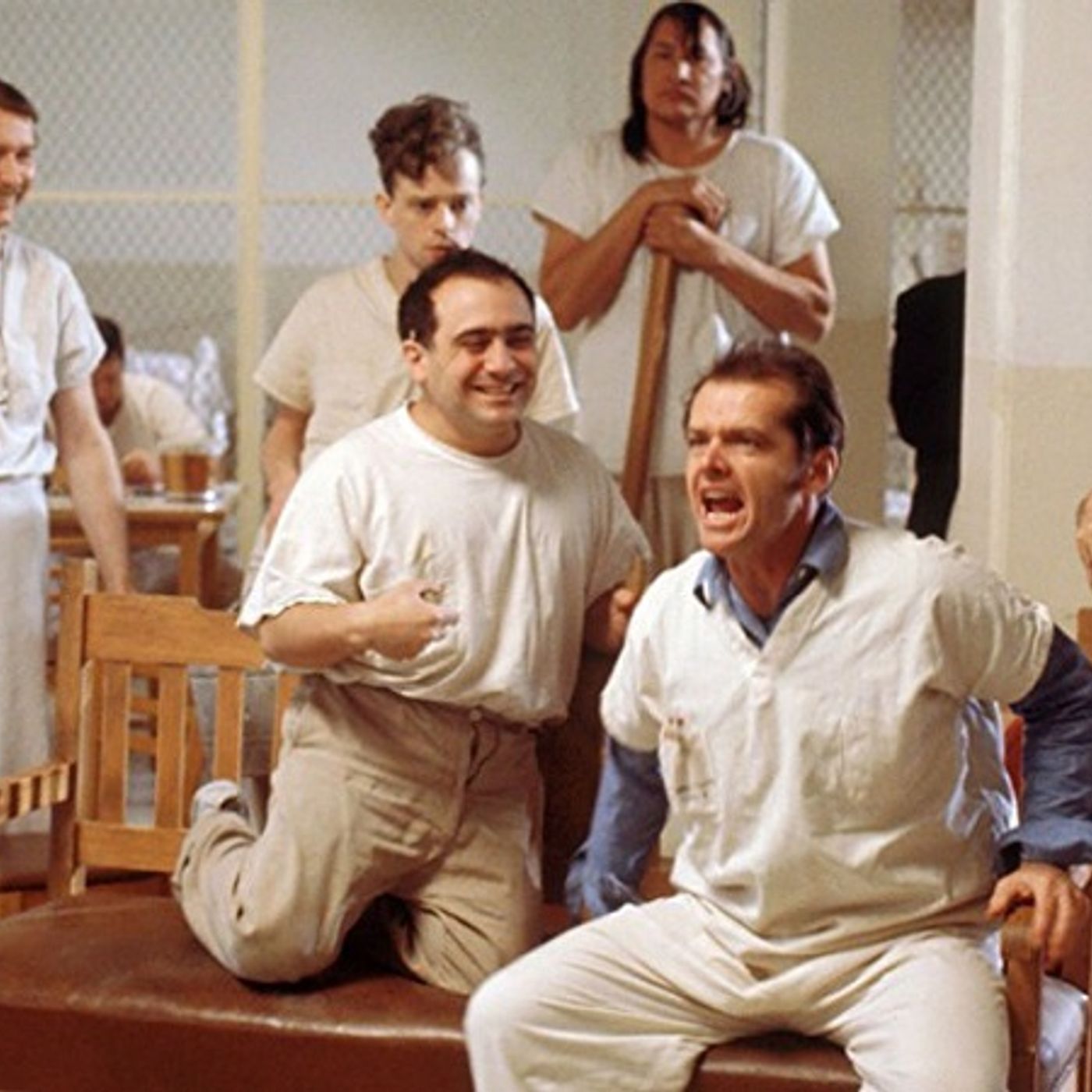
He's 38 years old. He's being confined to the state mental hospital. They say he's crazy. Why do you think they might think that? Don't make a bit of.
Sense to me. Jack Nicholson. Is R.P. McMurphy in One Flew Over the Cuckoo's Nest. Do you think there's anything wrong with your mind, really?
Not a thing, Doc. Excuse me, miss. Do you think it might be possible to turn that music down so maybe a couple of the boys could talk? Your hand is staining my window. God almighty, she's got you guys coming and going.
He broke all the rules. Change never hurt, huh? A little variety. He challenged the authorities. Oh, come on.
You're not going to say that now. You're not going to say that now. You're going to pull that henhouse shit now. When the vote the chief just voted, it was 10 to 9. I want that television set turned.
On right now. I don't think he's overly psychotic. I want something too. I think he's dangerous. He defied the system.
Jesus, I mean, you guys do nothing but complain about how you can't stand it in this place here, and then you haven't got the. Guts just to walk out. I mean, what do you think you are, for Christ's sake, crazy or something? Well, you're not. Hey, wait a minute.
See how easy it is. He took a group of helpless, lost, and broken men and showed them how to live again. We're from the state mental institution. This is Dr. Cheswick, Dr.
Tabor, Dr. Scanlon. I'm Dr. McMurphy. And how to laugh again.
How about it, you creep, you lunatic, mental defective. He helped them remember what they had forgotten with their dignity. Thank you, Mac. Thank you. I'll never forget you.
Jack Nicholson is R.P. McMurphy. If he's crazy, what does that make you? I'll take every cent you've made. So, you guys know we're broke, right?
We're always broke. I know. And yet we're trying to put this show together. Now how the hell can we keep the show rolling if we're broke and we can't do this? Sell special fiddle fowl.
Oh. Or instead, murder people. Are you just taking random money out of their pockets? Well, yeah. Sometimes you gotta do what you gotta do.
Hopefully it won't come to that. Especially if they're peeping. Some people will get on board with this. Get on board with what? The new Movie Meltdown Patreon page.
And what is this? If you go there, you can sponsor the show itself. Basically, you just join the club. You join the Meltdown Club. You become a milketeer.
Do you get a special decoder ring? We already sent those out, but those. People, nobody cares. I didn't get a decoder ring. You're not part of the club.
I'm never part of the club. You're part of the secret circle, though. It's okay. But if you become a milketeer, you can get special episodes that only come to you. I think you should do it right now.
Right now? I'm just saying. It's maybe a couple of bucks. There's other levels you can kick in and get fancier. Maybe a couple bucks.
You don't know. Fancier stuff. But really, just a couple of bucks will keep things rolling. What'll get me a pony? That's a really high level.
I'll have to figure out exactly what. That's platinum membership right there. That might be above platinum. We'll have to see. What is above platinum?
Titanium. Titanium. Really? Maybe that's a step below. I don't know.
We'll have to see. Aluminium level. That's way below. Not if you say it fancy. Yeah.
Unobtainium. Yeah. Good luck with that. But for the rest of you, go kick in a couple bucks. Keep the show rolling.
Go to patreon.com slash movie meltdown. And if you don't know how to type all that in, go to the movie meltdown.com page. And the link's right there. And you can save this show. And help me get a pony.
Damn them, man. Save the meltdown. Get Missy a pony. Yeah, priorities. Hi, I'm Mick Garrison.
You're listening to Movie Meltdown. It's part of your problem, you know, you haven't seen enough movies. All of life's riddles are answered in the movies. And now, on with the show. Watch it on your.
Well, going back to broad themes, so then after Psycho, then we started to have this movement towards closing all the mental health institutions, and The original intention behind that was to, you know, welcome these people back into the community, help them live everyday lives with, you know, as independently as possible, kind of getting these community supports. And guess what? Somebody dropped the ball on them. None of that happened. But by, you know, by their nature, like, again, I think even some of those horrible things that happened, like, nobody set out.
Like, they weren't being villainous. Yeah, it was some sort of plan, and then as many of our plans go in our system we've built, somebody drops the ball, and financing falls through, and funding runs out, and then they're like, oh, oops, oh well. And everyone shrugs and moves on with their day, and a lot of people filter through the system. And now they're all in prison. That's become the new mental health institution.
But, so... speaking of that um that really kind of picked up in the late 50s and 60s they're closing down these hospitals um and one of the big influences for that was it was first a book and then a movie um book came out in 62 by ken casey and it's called one flew over the cuckoo's nest. I was gonna say like to me even when you threw out this option like that's the first one i was like that's so like i mean we spend our entire movie inside in a mental in the same asylum like you know you and you see like crazy portrayed not really in a glamorous hollywood way like it's everything going on there is like at best i guess some of it's funny but for the most part it's played as grim as it really is so yeah it's it's a it's an amazing movie and it is sort of a rough watch at times and Also amazing to look back at that cast and be like, good Lord, everybody's in this movie.
How did you pull that off? Yeah. Luckily, none of them are stars yet, so you didn't have to pay anything. And that kind of moves towards a more sympathetic look at people who are in these mental institutions as well. And I mean, it is rough, but it's, Pretty honest.
I mean, the lobotomies and electroshock treatment, that was pretty popular. That was going on. We have to deal with them somehow. Yes. These are the answers.
So they have decided. I guess, yeah. Easiest and quickest way. What gets them out of our way the quickest? It's the least amount of work and money that we can take care of this problem.
Usually is what happens in a lot of scenarios. So it really showed that like, these institutions aren't doing great stuff. It was a big driving force in kind of shutting them down. Which, again, is a double-edged sword. Yes.
Okay, but somebody needs to deal with these people. Yes. Yeah, both ends of this come out losing, actually. And I think it kind of brings an interesting perspective to it that Jack Nicholson isn't really... quotes but crazy he's kind of faking it. Kind of but at the same time it's like he isn't right either so you do start seeing this like it's that same era it's really because again I always return to this 70s era of film and it is that it's also the director like it became his thing like this is one of his first movies but you see like almost every movie he makes after that it's this weird loner outsider kind of person who's very against the system and like so you start to see that happening in the 70s anyway where all we start focusing and all our main characters are people fighting against the system even if the system's an institution you know it's like it's still like is sort of the beginning of that happening in cinema in general in the world in general like Yeah, that era is kind of notorious for that anyway.
And yeah, we definitely see it come out of that director over and over and over for the rest of his career, really. Yeah. And it's kind of interesting to think about how it might have been viewed differently if it was just instead following the story of someone who is schizophrenic or... you know or from. The other side of that if you're nurse ratchet watching that movie you're just like i'm just trying to do my job yeah these guys are a nightmare to deal with day in and day out so it's like she's sort of the villain of this but at the same time i'm like rarely is she crossing the line most of the time she's just has a terrible job yeah so it's like it is perspective it is like there are people that are like just going to work every day like these guys wrestling him to the ground like sometimes that is their job you know so it is like a weird perspective angle of like we're seeing it from the crazy person is the good guy side like these are our team of you know ragtag misfits we love them and the institution's keeping them down yeah well There's a flip side to that, too.
Sometimes there really are crazy people and they do need someone to contain them before they injure themselves and other people. And so, yeah, it is sort of that balancing act of like, well, where's the real story here? So, yeah, that's definitely obviously a quintessential one whenever you're talking about this topic. That's the first thing a lot of people think of. That was kind of my initial response, yeah.
Mm-hmm. So there's moving on a little more. The 80s and 90s. Again, I think just kind of slowly moving towards a little more sympathetic representation. Definitely not always accurate.
Time for some cool music video influenced crazy people. Oh, yeah. Trying to think of cool 80s movies that might also be insane. I know, and this one was hard for me, actually, thinking of trying to find a good. Trying to think of, yeah, my go-to reaction for an 80s-era movie that's also kind of dealing with either full on crazy or just mental disorder.
And I look right off. Like the main ones that I could think of, and they both deal with autism actually. So more of a behavioral health disorder than the mental, you know, disorder, but still falls into that. Which really nobody even fully understood and certainly wasn't acknowledged yet. Oh yeah.
Yeah. Yeah. So Rain Man and What's Eating Gilbert Grape were the two that I could think of. Um, I mean, obviously Dustin Hoffman is praised for his performance, even though it's, again, not totally accurate. It's almost more of a parlor trick than a mental disorder.
Yeah, like he's very on the savant side. Yeah, he has like. a few moments where it's sort of a downside but most of the time you're just like wow that was pretty cool yeah it almost leans more towards the like this mental disorder is kind of handy i might want to rob a casino someday so like it does find such weird ways to work it in that like it it is like seen in almost a positive light which i guess you want but at the same time i'm like yeah but he's kind of dealing with a lot and his life up until now has been kind of a mess so it's like it's Yeah, it is a weird, we're kind of thrown into a very narrow window of time when it's like, and then these characters come together. So we don't see the whole rest of his upbringing that was probably not great.
Yeah. But he gets a road trip out of it. Exactly. There you go. And like comparing his character, who's super smart, to Leonardo DiCaprio's character in What's Eating Gilbert Grape, that's a completely different end of the spectrum in terms of kind of not super verbal and doing the typical like movements.
Ticks and movements and speech and all, which again points to him. Cause the first time I'm like, if I had, I not seen growing pains, I might've thought he was really like that. It's so convincing the way that he does that stuff that I'm just like, if I didn't already know who you were by that time, like I would totally buy it. Like he is so good in that. And then it's, uh, I guess it's kind of interesting to think about, how that could cross the line so quickly into being, like, really inappropriate.
Like, what if he wasn't such a good actor, and then you just have this guy who's just pretending to be autistic? Like, that could have been so bad. It's a fine line of... Well, I mean, with anybody playing some sort of mental disorder, like, it's a fine line of, like, at what point are you doing an accurate portrayal, and what point does it become... offensive like you know it's like when we get to like sean pin doing it a few years later it's like and that was a weird that was a weird movie because they cast other people who genuinely had those mental disorders to sit there in the scene with him so it's like he's faking but like he's sitting there with a table full of people who like actually deal with this every day so it's like at what point is like okay is it good artistic you know thing to do this maybe it is is it crossing a line?
I don't, yeah, I never really decided. It's just a weird situation that they kind of put themselves in, which again, maybe just for accuracy sake, maybe it's way better to bring in people who are actually dealing with it. And like, those guys were actually pretty funny. What's that? What I remember of those scenes, I'm like, had pretty good delivery for non-professional actors.
Like they, they were pretty good at doing those scenes. So again, it's a weird thing of like, at what point do you, bring in actors who aren't the thing they're supposed to be. Because we get into that a lot now. We just had a huge thing with people dealing with gender. So now we aren't allowed to have actors, or we should certainly have more people actually who have dealt with the situation move to the front of the spotlight here and get cast as the...
It's a weird game. Again, we're at a balancing act of which side comes out with a better... I guess it's like, you still want to look at it from an artistic standpoint. So do you want to go with the best actor of the bunch or do you want to balance out the social injustice and be like, no, I think this person needs to be in this role. So, I mean, it, it applies towards, you know, mental situations as well as other life.
I don't know. It's a very gray area. I still don't know what to do with any other. So we jumped ahead a little, but okay. So yeah, I didn't really come up with many other eighties era characters.
I did. One of the. Ones I jumped to was Girl Interrupted. Yes. Which is very...
Again, we spent an entire movie more or less inside a hospital of sorts. So, yeah, that one is one I remembered at the time being, yeah, like... And again, early on for Angelina going, oh, yeah, this girl's a pretty good actress. Yeah. I like Noni and all, but Angelina kind of steals that movie away from her.
So, yeah, it's... but again, I feel like that one was not pushing any weird boundaries. Like it's just a pretty decent, you know, interpretation of, of a story inside of a hospital, but I don't know. It didn't feel like it was doing anything really out there and like really rubbing people the wrong way kind of a situation. It was just like, Oh, these are good performances. Yeah.
Yeah. Okay. Moving on. 2000 to present. Um, I mean, there's no, like, huge theme that I could think of for this other than just kind of people are learning more about mental illnesses.
It's being talked about more. So it's less stigmatized. Definitely not totally stigma-free. We have a long way to go. I don't know that we'll ever fully get there.
Yeah. As long as we're making progress, that's all we can ask. I feel like there were... more movies that had characters that had certain things going on that it wasn't necessarily the entire plot of the movie is focusing on that, you know, it's just something that they have and then it's part of them as a character. But then... Which I actually, yeah, in a lot of other, again, different portrayals of characters, like I always kind of like it better when you just make that part of a life and that's not the focus of whatever...
That's not the entirety of their identity. Mm-hmm. That, like, whatever they're dealing with, whatever different, whatever is different about their life than the rest of the characters isn't played as, like, that's their gimmick. Like, it's just part of who they are. Yeah.
Like, I always think that works better, which was kind of, like, a hard lesson for, like, movie makers to learn. Like, it became a real easy move to just kind of use everyone as a caricature. But, like, as time went on, we saw a few better portrayals of different types of characters. Mm-hmm. Yeah.
So, like, one that I thought of that's kind of like that, also one of my favorite movies, is Little Miss Sunshine. Because in that, Steve Carell, in the beginning, he's in the hospital for a suicide attempt. And then it's not like the entire rest of the movie is in the hospital. You know, he comes out and he gets back with his family and they take this whole trip together. And it's not, they're not, like, always focusing on that.
But it's just plainly, like, he tried to commit suicide. It is a part of his story, but again, that's with a lot of people. It's part of your life from that point on. Exactly. And sometimes something that you return to.
So you can't just write it off like, oh, well, it is something they're working through and needs to continue to be worked through, or you end up right back at that same place. Yes. And the whole theme of family support, and really everybody in that movie, every character has something Kind of. Weird or dark around them. Yeah.
And so even if they're not necessarily coming out of a hospital, you know, they all have their own things to deal with and one's not more urgent and huge. than all the others they all kind of as a family I mean all families are like that at least mine everybody's crazy got their weird stuff you know got their quirks crazy families yeah but you love. Each other anyway and you strangle I mean you love each other anyway. Hopefully um and i mean kind of similarly to that lars and. The real girl what it seems normal have i introduced you to my girlfriend oh no wait yeah keep that under wraps. Like clearly that's the big the big plot point um but again his family is you know those are supporting characters that are maybe a little too supportive yeah yeah but what i don't know what would you do in that situation that And I don't even remember if he has an actual diagnosis or anything in that movie.
It's just a little strange. There's just something off about him and his sweaters. Seems fine to me. We've all had those times. Everybody's brought home one of those.
Sometimes you have to go to the special shop and you pick out a friend. I'm waiting until those good Japanese ones show up. They're working on nice robot versions that thinking that's really gonna change things when i mean i do kind of look at like they may you may you look at like a the new blade runner movie and i'm like we're not that far away from that or we have some sort of mechanized version of a person that you can have hanging around your house if you want and like at what point do we start to actually like emotionally rely on these people people people whatever they are yeah it's like whatever I mean, it is. It's a weird sci-fi jump forward, but I don't think it's that far of a jump. No.
You look at some of the weird things there, and again, I usually blame Japan, but they're making some really impressive and weird things now that I'm like, it's one shade away from that. Where then, at what point do we all start becoming Lars? And we all start becoming like, well, yeah, I know it's a thing. And then six months later, you're like, talking to it a lot. And then at some point, and then they can talk back to you now.
Yeah. what point do we like again like i do i think like that's going to be a real issue in the future yeah so we almost need to start deciding what do we need to do in this situation. Because i think it's gonna be real yeah that's a whole other can of worms human robot relationship. Get ourselves a robot and get emotionally attached to it yeah that's bound to happen which. Could even lead to its own new classification of mental disorders maybe i. Have special feelings for r2 and always have.
People are, you know, into whatever they're into. Some people like cars. It's just finding the most healthy way to deal with it. Exactly. We're all messed up, but you have to find the most healthy way to deal with whatever thing you're messed up about.
Yeah, that's a good takeaway. For this episode. I mean, it's kind of true. Take it from us. We're messed up, but we're finding productive ways to deal.
Healthy coping mechanisms. Yeah, yeah. Talking about it on that's the most useful way to deal with all of this yeah you guys know that right. Um and then another one that i think you were kind of thinking about earlier in terms of the split personalities would be split split yes which. Is a pretty obvious one, but at the same time, not a terrible presentation.
Like it's a very, again, over the top dramatized version of it, but it is watching. That was kind of fascinating because it is that same thing of all of these characters are so self-contained. It's not within a one person who knows all the voices and they know about the voices and they're talking to each other. This is completely separate personalities and they, treat each other like they are certain completely different entities and they interact in a world as though the other people are people out there like it is so pinned down like how that character sees the world around him and each of these individual characters see the world around them like it's a good again I don't know how accurate it is compared to actual cases but I'm like within the world of this movie it's a really great acting performance and it like really paints that picture of who this messed up character is.
Yeah. And again, that's like a real thing that happens with this disorder is that when you are switching between these different personalities, you kind of black out. Yeah. Then you don't really remember what happened during that. So, That's an actual thing that happens.
So it's accurate in that way. And again, I think it kind of helps you sympathize with him and kind of at least root for him a little more than if he was just your classic scary guy locking people up. Or some of him. Yes, exactly. Again, there's certainly ones that you're like, oh, no, I like this kid.
All right, I like him. And then I go, oh, no, wait. Oh, wait, what the hell's coming in her mouth? Or you can, you know, feel bad for him that he is experiencing all of these drastic shifts. I mean, I'm sure that's exhausting for him.
And he doesn't, you know, totally understand what's going on either. And it does sort of introduce the idea that, again, and this has become a weird thing, like in the post 2000s era, when we like everything is kind of centered around a superhero movie. like now these mental disorders have kind of crossed over into, which, you know, the X-Men has always kind of been like weird things that are going on in people's lives or then turned into like, well, it's kind of my superpower, but it also sucks for me, by the way. Like it's always been pretty balanced in the way it's like, it's not really a great thing, but this is what, this is the burden I bear and this is what I'm doing with it. So that kind of comes into play here as again, the M.
Night Shyamalan twist of like, it comes back into play into another movie of his, which is kind of a superhero genre movie. So now we're seeing this, I guess more of a super villain, but like his mental disorder, like physically is turning him into a creature, a super villain monster, which I'm like, well, maybe this is just an extreme version. I haven't run into this one yet, but I'm like, I do like that. Again, it's, it's, Putting a very real world version of like this. Again, we see so many superhero stories that I'm like, they all seem, you know, comic booky and detached from real world humanity.
And I'm like, well, what if it's a shade difference? What if it's these people are dealing with something real in their life and it's manifesting itself in this way and these horrible things they're doing are real. I mean, most superheroes, especially supervillains, But even the heroes a lot of times come from somewhere. I mean, the Batman story, for God's sakes, it's all like a traumatized childhood that has turned you into this weird, messed up character that like, so this is just sort of following that road. And like, what if physically it manifests you into this horrible creature?
Like it really does sort of, I like that balance of like, yeah, it takes it a little extra Hollywood step, but at the same time it's rooted in real mental disorder and like, there really is just kind of an extra little nudge into that area that I like that it grounds it a little bit and gives you that. Cause that's kind of the other half of that. If, if they end up crossing over the way they're talking about, like back over into the unbreakable world, like he also was like dealing with these weird, like almost powers, but he didn't understand where they came from or how they attached themselves to who and what he was. So like, it's, It is sort of a very real world superhero story. And again, maybe they're not all from outer space and it's not, you don't need gamma rays to turn you into like, maybe it's something weird inside you already that we don't quite understand.
So I don't, I always liked that aspect of both of those movies, I guess. Yeah. So there's, okay. Then the last one that I have on my list and then we can just bring up whatever, but it's the one that started this conversation. silver linings playbook. The most healthy way to deal with mental disorder yeah everything going on in that movie and the thing is what's weird because i did a whole episode on this movie and i'm just like i ended up really liking it it's so weird the things that are going on and the thing that to me is the most jarring is the fact that two thirds of the way in, it forgets it's a movie about mental disorder.
It just becomes a dance romance movie. It was the weirdest ending. It's a very strange shift because so much of that first two thirds is dealing with his, you know, mental disorder. And then we're introduced to her and then how they interact with each other and how messed up their families are, which kind of led them to this possibly. And like, so we get so engrossed in all that.
And then that last third kicks in and it's like, throw all that out the window i want to make a rom-com and so like we have a dance-off and we have a very traditional are they aren't they gonna get together moment i'm just like how does this have to do with what happened earlier yeah but that last third is really effective in its own way like it almost just needs to be in its own movie and like go ahead and finish this story And then do a more traditional romance kind of a movie to put that last third into because that end is really effective. Like it does really work, but at the same time, it doesn't match everything else going on. on the first hour no i mean it's very strange. It kind of makes it seem like uh your bipolar disorder and your depression and anxiety are cured with a kiss and now you're gonna go i mean that's true like it's just like yeah.
I don't know that's why it's fine for doctors to start making out with their patients they're just trying to cure. Them yes take a clue from ingrid bergman. Yeah that's what she always does so. It's And that, I think the reason we started talking about it was because that was my example of a terrible therapist. That guy's therapist in that movie is horrible.
It's so bad. When he plays Bradley Cooper's, like, he and his wife's song, I can't remember what song it was, but he plays it in the waiting room of his office to see if it would still affect Bradley Cooper. That's pretty twisted. And he starts freaking out, and all these other patients are there waiting, and he just has this huge freakout, like, that is a bad therapist. Everyone just needs to know, don't do that.
Therapists, Bengali, whatever, I mean, you know. Man should lose his life. And then he comes to his house after the game where they got arrested for getting in a fight. And then he shows up at the dance competition in the end and is like, you go, my boy. It's okay because they're like pals.
So it's okay to torture your pal. Mentally torment your pal. Yeah, so I just, if there's anything that I can spread to you listeners today is that that is a bad therapist. If you have a therapist like that, get anyone. That guy would lose his license.
That's why Bradley Cooper is so messed up. Maybe, you know? I like to transfer all these activities onto the actual actor. Bradley Cooper is a little bit crazy. Yeah, it's because he's got a bad therapist.
Yeah. So that was just. That's my, yeah, I barely get into the mental problems with it as much as the story structure. Yeah. I just, like, couldn't get over the fact that it just flipped a switch and, like, we forgot all about that stuff.
Like, it just becomes a total normal romance movie. It really did. It works, sort of, on its own terms, but it doesn't match the words to this movie. Like, It's very strange. Although the man making that movie is a little disturbing.
Not that I'm the person to diagnose him, but he's got some problems. He's got some anger issues. So yeah, if you don't believe me, yeah, go Google his story. Because when you have footage of him yelling at one of his actors on set in front of everyone else to the point that it goes public. And then later is like, oh, whoops, sorry about that.
And oddly, they made up, because again, I asked her about that one time. But aside from that, we also have, I think, because I think Lucy called him out for this on a previous episode. He blamed that, like the whole reason that Silver Linings Playbook came together was because he was kind of like influenced by his son and his son dealing with those. I'm like, wait, wait, wait, you're saying... You don't have anger issues.
You don't have some mental issues hiding in there. No, no. You're going to shift all the blame onto your son? There's a healthy parent for you. Oh, man.
Yeah, he's a twisted character. I occasionally make some fine films, but he's a weird dude, so I don't know what to do with that either. Again, the real world crosses over sometimes, and it's very strange. Yeah, and in terms of... Just movies in general.
And I think a lot of creative people are also usually sometimes they have some sort of something going on. Not necessarily a diagnosis, but their brains, I think, just work a little differently. Process things differently. Again, I think that's why I've been so drawn towards not just the arts, but maybe people that are interested in the arts. And it may be a sign of my own disorders.
But I, like, I really, like, it is interesting how much I will want to sit down and talk to people who are, like, really ingrained in that part of life and their brain and art and, like, versus normal people who don't claim to be involved in that kind of stuff. And I could care less about them. So it is really, like, it is something I've noticed in myself over the years is why is it that I constantly want to talk to these people about their artistic pursuits and, like, what is it that draws them to make those? And then why do I then want to discuss them at great length? It is a weird little scenario that's happened over the years.
Yeah, it's fascinating stuff. And it's them kind of taking what's going on in the internal workings of their mind and quirks and whatnot and putting that out externally in some way for other people. Some jerk makes you talk about it. Try to figure out why your brain made you do these things. Are we having our own therapy session right now?
Maybe every week I'm just having a therapy session. Yeah. I do invite people to lay down when we start. It usually doesn't happen, but I'm just saying. Okay, Doug Jones.
He just wants to get on the floor. That's different. I love him. Doug Jones is a wonderful person. He is who I talked at great length about with Silver Linings Playbook.
He's the one that requested that we talk about that movie. And no surprise, he didn't want to talk about the mental aspects of it. He wanted to talk about the lovely romance that it was. Oh, Doug Jones. Again, he was totally on board with that finale.
I mean, again, I think it's massively effective. But, yeah, it's a strange movie. So, again, it is a weird little therapy session every week. I'm pretty sure. I'm not sure which one I am.
Maybe I'm on the couch every week. Speaking of who the hell is the doctor, this was one I thought of, and it does kind of fall in that gray area in the 90s that we didn't have a ton of stuff for. The other one, I think after Cuckoo's Nest, my next one I jumped to when we were thinking about more of the therapist end of it was, what about Bob? Have you seen What About Bob? You know, I haven't, and I had so many people recommend.
It to me. Yeah, I think you need to, because it is one of, like, it's one of, first of all, most genuinely funny and like so not even Taylor made to Bill Murray like Bill Murray just moved into this movie and made it his own and like he's lovable and definitely very messed up not even like they pencil in some very specific things in the beginning but as time goes on you see like what a weird messed up character he is and then you do see the doctor trying to deal with him and it doesn't go as he plans and And then you do see how like family involvement like changes who you are and changes how you deal with things in your life. It's, it's pretty amazing. Like it is one of those that I think at the time just sort of flew under the radar.
And then eventually everybody found that on cable and now everybody kind of knows it, but I still don't think it ever got the recognition for how good a movie it is. Like it is just really well written and amazing performances from both like Richard Dreyfuss is an insane person himself. By the end, the way that everything balances out is so amazing. If you haven't seen it, there's a recommendation for everyone. Go watch that one.
It's kind of funny how that theme can cut across so many different genres. There's comedies, there's dramas, there's horror movies, there's thrillers. There's a lot of crazy people. They end up in every movie. Yeah, which makes sense because I think one in four Americans at some point will be diagnosed with a mental illness.
That's not even counting the people who can't even go get help. Or be diagnosed. Who don't get diagnosed and just deal with it. So no wonder it's so pervasive in media in all different ways because so many people have dealt with it, even if not themselves, then a family member or a friend. But pretty much everybody has some connection.
Yeah. to that topic definitely and we I mean we even start to see now where it's not even a disorder it's not like before it was such a stigma of like a handicap but like I think I've mentioned before I now deal with a kid who's autistic and I'm like he is so freaking smart it's ridiculous but the way that he deals with the world is different and that's one of those like watching that firsthand is just like fascinating because it really is like It's such a balance of like you see how smart the brain is, but it doesn't know how to interact with other people. And it doesn't know how to insert himself into a normal daily life. So he just does what he thinks he needs to do throughout the day. And like it's so interesting to just kind of watch that.
So now we're starting to see that like that in and of itself isn't even seen negative anymore. it's starting like people are getting a little enlightened about all of these things that I'm like they don't have the stigma that they probably even looking back to like a Rain Man where it was still like kind of it's something you would keep in the closet they wouldn't talk about that so much so that he never mentioned his brother for most of his life like that kind of weird thing where now it's like it really is just a different aspect of your life and like something you have to deal with it's to the point of like you know now it's dyslexia. It's like you've learned to think in a different way and maybe things are okay for you.
Like it's almost like a weird version of that. Like it's almost like the more you deal with it, the more open about the stuff that we are and everybody accepts it as a real thing. Mm-hmm. And starts to work at it like it can just become a normal life. It isn't like a kiss of death from day one.
You'll just be in an asylum the rest of your life because you have this problem. Like now it's things that people can work through and actually have a life that's pretty normal after the fact. So it really is. Yeah. It's interesting to see that shift kind of happening as time goes on as well.
Yeah. Like it's not. bad it's just different yeah and sometimes even seeing things in a certain way can be a strength because of how different it is yeah i mean i don't know wes anderson probably doesn't have any diagnoses but the way that. He probably does maybe they might not have officially been documented but look at his movies there's something weird going on. But yeah exactly like that's how he sees things that would be his you know ideal version of the world i guess. With Again, tell me there isn't something like that going on in a brain that's that meticulous and obsessive compulsive.
Yeah. There isn't something almost autistic going on there. So, yeah. Maybe he was just early on and didn't get diagnosed, and instead he channeled it into filmmaking. Yeah, which, I mean.
It's worked. Exactly. He got a fan base and makes some quality movies. Yeah. I'm trying to think.
There was another one I was going to see if you'd seen. There's just so many others. Like, again, that's why I'm like, we're just scratching the surface. Like, I see so many others that, like, because I knew you had such a list going that I was like, I'll just kind of go with it and not bring up a ton of them. So, like, looking ahead, I know the one, yeah, the one I was going to ask if you'd seen only because you said you like horror.
Again, I brought this one up a lot on the show. Have you seen Session 9? Section 9 is brilliant. Yes. And not a traditional horror movie and not a traditional mental disorder movie and not even a traditional ghost story.
It kind of is everything rolled into one. Yeah. It's amazing. But we do, you know, we spend the entire time in an insane asylum and we sort of have a supernatural element. We have them going through these tapes of the doctor and then by the end you start to see a very we want to get into some schizophrenia.
There's a little bit of that going on. So it's like, and by the end, it's almost how you take what happens. I have a very definite version of how I feel like it happened by the end. And I've heard other people discuss it and totally going in a different direction. So I'm like, it is one of those, which I kind of like, like, I kind of like when you can take your, Oh, I think again, I think that's good art when, people see it from totally different sides and have an entirely different perspective while watching the same movie.
You know, I think that's, that's an impressive work of art when people take something different from it. So that's one of those that like, it kind of is, I think how you look at things as to what you feel like happens by the end of it. But yeah, one that kind of grazed all of those things we were mentioning. Cause anytime, any giant hospital or asylum, I just have flashbacks of session nine and It's so weird. Yeah.
Like, those visuals are amazing. Yes. I think that hospital is long gone now. I think shortly after they shot it, they, like, the whole thing got dozed. So the fact that we at least have that movie, like, looking at that, because any giant abandoned place is sort of fascinating, as well as old hospitals.
Yes. That kind of hits all those points. Super atmospheric. Oh, yeah. Spooky.
And I guess, again, like, just the history of it with the people being in there and the things that probably happened to them, that just makes it even more creepy and. Rooted in reality. Yeah. More than you, again, uncomfortably, more than you wish it was. Yeah.
Because that's the kind of stuff that was going on when they were shutting down hospitals. Yeah. And, of course, that's not the only, you know, horror movie to ever be set in an abandoned, insane asylum, which is kind of funny. But I felt like it was. kind of approached it differently yeah and wasn't so like hitting you over the head with. From a couple of different angles like it is like again i think that movie's brilliant because it's so not what you're expecting it doesn't do anything the way that you would expect even by the end it's unconventional like yeah another one of those that i don't think has fully gotten the appreciation it deserves yeah that's a good one so yeah any other random one-offs Because, again, we can certainly devote an entire another episode or multiple episodes to this.
Because I feel like, yeah, there's so many more. Everyone's crazy. By the end, you're just, yeah, there's something in every movie that like, well, actually, if you look at it this way. Yeah. They're probably dealing with this.
So, yeah. I don't know. Anything else major we want to hit? Or what is, I guess, if we're wrapping up, what is your overall take on all of this? Again, you've watched all these over the years.
You've sort of seen it as you're also building your own career based on these things. So how did they cross over and what's the takeaway from it all? Well, I think, like I mentioned in the beginning, just the interesting relationship between movies and culture and how attitudes from either one can kind of influence each other yeah and and i think it is an individual thing um person by person how they interpret these sorts of movies. And that that's that's what i was saying like that i do feel like there is almost a shade of it maybe in everything because there's so many different people and so many different ways that people interpret things and deal with things that like, maybe all of these characters are dealing with something along these lines.
It's just maybe a lesser version or maybe they're a little better equipped to handle it, but like they're all kind of dealing with their own weird neurosis and issues. And so, yeah, I think it bleeds into almost every story in a way. Yeah. And just like, don't believe stereotypes. Um, Hollywood likes to make things very simple sometimes.
But it is interesting to just kind of look back and see how things have shifted and how attitudes have shifted. And I hope that they continue to become more accepting of these things and that it becomes more normalized and portrayed more accurately. You know, people actually thinking about what their portrayal could mean for, people who actually have that disorder. And so, I don't know. I think I do see a shift towards more acceptance and more realistic portrayals, less dramatized, which is good.
So I hope that we just continue to kind of move forward with that acceptance and that people can feel more comfortable just being themselves. I'm not saying don't occasionally make really schlocky horror movies with bad stereotypes. Killers. I'm using air quotes here. Crazy psychos.
You can still do that every once in a while. But for the most part, we'd like to balance it with some really well-written, you know, real-world representations of what people deal with. So somewhere in between, we can find a good medium. Yeah. Like, I hope to see more involvement of people who actually...
Have those diagnoses. Again. You know, writing and directing and acting and actually being a part of it. Yeah. Which is.
Not just Wes Anderson. Which we've decided. Is a little off. We're just kidding, Wes. Not really.
Sorry. Kind of for real. Call us. We'll talk it through. But yeah, it is interesting.
I think we are kind of moving somewhere to that. to that area so it would be yeah it would be interesting to see if if now that we're treating that as something normal if we have like full-on artistic kids that are then going to grow up and become filmmakers yeah and and it's going to be very public and they're going to be you know like addressing the fact that i grew up and dealt with this and you know reshifted things in my brain to be able to function a little more in normal society and now i'm a productive member of society, which is what I think they're going towards in every kid's life. Everybody that's dealing with that stuff, that's what they want. So it'll be nice if we start getting success stories that actually are, you know, bringing us artistic versions of all this stuff.
Yeah. It'll be kind of cool to see that. Assuming that's where we're going. Yeah. Come on, Hollywood.
Assuming we survive that far into the future. Well, yeah. And we all fall in love with robots. Right. That's also going yeah that's the last point i want.
To make it's life it's real life yeah don't fall in love with robots it's coming i'm okay or do i'm okay with it really it's the only hope i have for you know don't. Hurt yourself or anybody else and. Yeah yeah just everybody be nice to each other and as long as nobody's getting hurt in the process everyone's consenting your robot says it's okay it's all good then it's all good. I can't wait for this future it's gonna be awesome. All right.
Well, thank you for joining us. Thank you for having me. And you're definitely welcome back for Not Just More Crazy if you'd like to sit in on any specific topic. Again, you're the only one throwing out topics for the grind. So if you come up with another one, feel free.
If not, if you slackers at home want to write in and go to the website, the email's right there. Give us some new topics or tell us some. Again, don't yell at us. You can make a list of ones that we haven't covered that you'd like to hear us discuss in the future. So that can all be arranged on a future episode.
Otherwise, that about does it. We will return next time. Same geek bead. Thanks for listening. Bye.
I remember when, I remember when I lost my mind. There was something so pleasant about that face. Even your emotions had an echo in so much space When you're out there without care I was out of touch It wasn't because. I didn't know enough I just knew too much Does that make me crazy? Does that make me crazy?
Probably And I hope that you are having the. Time of your life Overthink twice That's my only advice Come on now, who do you, who do you think you are? Whoa, that's your soul. Do you really think that you're in control? Well, I think you're crazy.
I think you're crazy. I think you're crazy. Just like me. My heroes have the heart to lose their lives out on the ground And all I remember is thinking I want to be like them Ever since I was little, it looked like fun It's no coincidence that I've come I can die. When I'm done.
Baby, I'm crazy. Baby, you're crazy. . . . . . Speaking of Isle of Dogs, we're also testing this new facility for dogs. You may have heard me comment on my goranimals in previous episodes, but Now they're jammed right next to us, commenting on their thoughts of Iowa Dogs, which they were watching it, kind of. They were in the room.
Feel free to shut up any time. Did they like it? Did they approve? They were not paying near enough attention, I felt. I'm like, look, it's dogs in stop motion.
Come on, keep watching. This episode is a production of Movie Meltdown, produced and edited by The Oddity Studios, with opening music performed by The Empires. For more on how to sponsor or support the show, email producer at moviemeltdown.com. Talk hard! This program is a proud member of the Battleship Pretension Fleet.