Season 10 · Episode 23
Michael Possert Jr. and some Time-traveling Adventures
About this episode
Transcript
Automatically generated, so expect the odd misheard name.
Just where is our future? The things we've done and said Let's just push the button We'd be better off dead Cause I hate you And I. Berate you And I can't wait to. Get to you Hey, this is Kirk R. Thatcher, the punk on the bus in Star Trek IV.
First of all, I hate you. Secondly, you're listening to Movie Meltdown. And I eschew. You And I. This episode is rated M for Misty.
Yes, that's right, this is a Misty episode, so it will be laced with profanity even more than usual. If you're not comfortable with this level of profanity, perhaps this isn't the episode for you. But we have many other episodes to choose from that do not feature Misty and will probably be far less offensive. Okay, maybe. With that having been said, on with the show.
It's showtime, folks. Enjoy the show. Our nuclear reactor pumping out one million. Kilowatts of power. Provide more cooling in the containment chamber.
To your stations, we have a movie meltdown. Why do you have to go and get everyone involved in all your weird stuff? What's up and welcome to Movie Meltdown. I am Brian. I am Misty.
And we are coming to you live via digital recording from right here in the middle of Wonderfest. Actually, it's downstairs. Actually, I guess that's because we're in the middle of two different rooms that could possibly be Canadian Wonderfest. We're right in the middle of Wonderfest right now. There's people talking over there.
They're showing movies and slides and doing special presentations. There's awesome people downstairs and models of all sorts. And toys. I like toys. There are a lot of toys.
We didn't buy any toys. I've contained myself. That's one of the, you know, for doing our cool things going on in the world. That's one of the things I'm in the middle of right now. It will eventually kind of affect you guys listening, but not really.
I'm trying to, as you've probably heard me complain for years now, been in between good places to record, which is one of the many reasons we end up at other people's places. The on location is never going to stop. We always do that. So I'm working on having the actual Oddity Studios home base in the near future. We'll still probably go to other places, but it'll be nice to actually have a place to record.
So I'm in the middle of shifting things and I've already got the table set up where all the mics will soon go. And so suddenly in the near future, the Oddity Studios will have a for real home. Crazy talk. It's been a long time since it's had a somewhat permanent home. So it'll be kind of nice to have a home base to potentially or at least have an option to work out of because it's been a long time.
A place to put all your own crap. Yeah, that would be nice. That's why we do so many sitting in your kitchen. That's my crap. So I can have my own crap.
It's not even actually in the middle. It's in the near area of the kitchen, but it's within sight of a kitchen. We're not even going to be in the kitchen. It's so official. It's got its own recording area set up.
Are you prejudiced against recording in the kitchen now? No, no. I'll take wherever I can set up a microphone. I could care less. Are you saying our kitchen's not good enough for you?
Please. You have the machine right there on the table. I do. We've discussed it many times. The little devil machine.
The mystic's ear. It sits right on your kitchen table. So to me, that's like the ultimate place to record because I have the little mystic's ear head bobbing at me the whole time we're talking. It can get distracting though. It kind of can.
That's usually why Jay's kind of zoned out. He's just staring at the head bobbing up and down. It is hypnotizing. It kind of is. So, how's it going?
It's going. It's actually been a long time. Sort of a long time since I've seen you. I went on vacation. You went on a long, long trip.
So, do you have cool stories from your crazy trip? I went to a couple of cool places. I mean, honestly, it was just a big epic road trip of like many mountains. Is that tiny mountains? mini mountains just little ones. No big ones but multiples multiples large mountains yes what you just said um i guess i can tell it with some of the uh high points of my vacation which was like it was pretty epic it was like a week and a half long it wasn't the full two weeks we came back a couple days early.
I mean i did post on one of your photos i are are you coming back i didn't think you were ever going to come back like i just kept more and more days would roll by and new photos from some other state and i'm just like I don't get to go on cool trips. You suck. Because you're not awesome like we are. I guess. So we started off, we went to the Mothman Museum in West Virginia.
Being home of the cryptids that we are, I mean, obviously, we welcome many, many cryptids. And that was pretty exciting. It was a small little museum that pretty much covers all the basics of the Mothman history and mythos. Was Richard Gere there? He was not, but there were several articles of clothing that he might have touched at some point.
Aww. They did have a large section of memorabilia from the movie. The movie's not bad. I feel like it's one of those people slowly discovered. They wrote it off because it's either they think it's a silly premise or it's a Richard Gere movie and a lot of people kind of avoided those for years.
And there's no gerbils in it. I'm not even going down that road. But yeah, eventually I think people watched it on cable or DVD or whatever and were just like, huh, you know, this isn't a bad movie, so. I know I've seen it, but I think it's been a while, so I'll probably need to go back and revisit the film. I think it's worth revisiting.
What little I remember. I'm putting it back on the list myself. Yeah. I mean, I love the idea of the whole cryptid thing in general, so any chance I can get to go visit areas that supposedly have their own cryptids, except for the one in my own hometown that I'm just like, whatever. You don't go to the train bridge?
I've never been there. I've never been to the train bridge. If not, get a hold of me, guys. I can clue you into the train bridge legend and the goat man, as it were. Yeah.
We didn't see any extra cryptid. We did not see the actual, in real life, Mothman. They did have several statues. They were very large. Or that one looked like it was.
The metal one? There's a huge metal one outside that is just pretty epic. I've seen pictures of that on the internets, but that was then, like, you sent it. And I'm like, oh, it is a real thing. Because you're there.
You took a picture of it. And then they added several on the inside. It was a cute little town. Point Pleasant, West Virginia, I'm pretty sure. Was it empty because Mothman had snatched up and eaten all the people there?
No. No. There were actually quite a few people in there. It's a really cute little town. Interesting.
Like I said, it has the whole... I already forgot most of the history because we did a lot on our vacation. Learning stuff. You know, it was just like there was some promoted sightings of this mysterious Mothman like on several occasions and then the bridge collapsed. Just like boom.
And then there were several more sightings and like a. Kind of plant like not like a plant like a growing a tree but like an industrial. Plant industrial plant collapsed. Like a warehouse caught on fire exploded or something so it's like whatever they you know. This mothman's up to all kinds of no good he's just.
Trying to warn people like hey y'all you best watch your shit something's gonna happen y'all better be careful oh wait you didn't listen to me look you died. I always listen to the mothman you don't argue. With that shit um I went to a couple other really cool places. We hit like every mystery hole and mystery spot and mystery. That's mostly why I was jealous is the fact that you went to ridiculous side of the road stuff that I would want to go to.
Like most people go to like normal nonsense. I'm a complete sucker for Mystery Hill. That's when I'm going to hit Mystery Hill and we hit Mystery Hole. Was there a mystery hack? Yeah.
Hand or shack? That would have been awesome. But yeah, I love that stuff. I sucker for it every time. I was kind of disappointed one of them you couldn't take pictures in.
The other one was just like, here, do whatever you want. Take the main pictures if you want. He left us there. It was just me and Jay. We're the only ones at the Mystery Hill at that point.
We got there like a half an hour before it closed. What was going on in this Mystery Hill? It's just one of those things where they take you to the Hall of Blacklight posters and stuff like that. Water fountain or the little water thing that like. It runs uphill or some magic.
No, it's like the thing where it's like you have like the water spout and it just looks like it's coming out and it's just really there's a pipe that comes up and. Everything's just an Escher poster brought to life. Pretty much. And they have like the slanty floor. The Mystery Hill was pretty cool because it had the metal swing you could sit in, which is pretty awesome.
That's pretty cool. The highlight for me was when we went to the Dinosaur Kingdom 2. Oh, God. You showed me pictures earlier, and I'm still trying to process them? This is the most epic thing.
They themselves had their own wonky room of the slanty floor, so they're trying to get on the. You don't want to miss that wonky room with the slanty floor market. Exactly. There's people just driving around looking for those. Yeah, me.
You and me, but I don't get to go anywhere. You can go to Big Mike's Mystery House. I've been to that one. And now I need to go back and get another shirt because that shirt doesn't fit. So I need a new t-shirt for mysteries.
Mike and what was the giant? Was he Mike? who was the giant creature mo there we go. Big mo you not know these things. It's because my shirt doesn't fit so i never wear. It anyways we went to uh dinosaur kingdom 2 Which is apparently, it is epic in all of its awesomeness.
It's something. He's an artist, Mark Klein. Apparently he got hired on by someplace to make these dinosaurs for a park. So he decided on his own to have his own theme. I wouldn't say theme park.
It's not like rides or anything. You just walk through and they have all these statues. It's just a themed park. Yeah, literally. And the theme is, what if dinosaurs had helped fight the Civil War?
You know, we've all thought that in the past. We've all just sit around half of the day thinking about, huh, Civil War. Yeah, I don't like it. But what if dinosaurs were there? Because the dinosaurs were the secret weapon that helped the South.
I don't know. I didn't read the comic. I bought the comic book. There is a comic book that tells. The entire story.
Oh, of course there's a comic book. There should be. Which is epic in its own right. Which I bought the comic book. I bought a shirt.
I was just like, here, take my money. All the things. I really hope there's like a bad B movie in the making right now. Like, I can only hope. I want stop motion animation dinosaurs, but I know it's going to be CG dinosaurs.
It's going to be on the sci-fi channel. It's going to be sci-fi level of entertainment. But I still, I just kind of hope somebody does something with this idea. But it is literally the most awesome thing. I mean...
You just keep going and there's just, like I said, dinosaurs. You know, dinosaurs. Civil War. Civil War guys. And I'm not even being sarcastic.
I literally love this place. And me and Jay were the first ones in there the day. So me and Jay had this whole place to ourselves. Oh, God. We were running up and down the halls.
This is outside. I know, but the hills were alive with the sound of dinosaurs and you were just running, spinning in circles, singing. What's the dinosaurs? Because they did have sound effects being piped through there. Most of it sounded like cats fighting.
Did you at least make your own sound effects? Well, duh. The whole time. Literally, this place was amazing. They have little scenes set up.
It's in a woods area. Little things set up. They had like A pterodactyl stealing the Gettysburg Address from Abraham Lincoln. And he's trying to get it back. And it's just, oh, it's the most amazing thing I've ever seen.
I mean, that is a pretty epic image right there. You guys are picturing it all right now, I hope. If not, it's all in the comics. I would assume she's making this up, but she showed me the pictures, so. I was there.
If we need to forward pictures on, once again, send me an email. I posted them on the Facebook, so they do exist. Get a hold of me. I'll forward them to you if you didn't see them. And also interspersed in with the dinosaurs and Civil War things, there's these little green monsters.
Yeah, I never did figure out what that was. I mean, not that the other idea is not kind of ridiculous, but like that one stands out as like, wait, what? This doesn't even match your theme. Well, apparently he had also had a really awesome, another themed park, like close in proximity that was all like horror movie monsters. It was an entire museum set up of like all these monsters that he had made.
That would be cool. But these monsters weren't like recognizable movie monsters. It's just a weird little green thing. Yeah. They were everywhere.
I loved it. It looks like the kind of monster that I draw on the side of a piece of paper or something, which I do draw a lot of monsters. Maybe if I actually read the comic book fully, it will explain. Maybe I can get the true backstory of the little green monsters. But seriously, if anybody out there has a chance to go to this place, it is in, I'm not sure if it's actually in, but it's really close to Natural Bridge, Virginia.
And it is amazing. Dinosaur Kingdom 2. Mark Klein. Off he wasn't actually there when we were there because we were told to say hi to him by somebody who even though we already knew we were going to go there somebody else recommended it to us so i'm like well it just doubles like double solidifies the fact that we're going to go there but randy had suggested. We go there oh no previous call-in guest randy many many.
Years ago but anyway so we uh we checked that out like i said it was like literally mind-blowing. I mean it's it's the most specialist of concepts i. Dinosaurs civil war civil war coming at you yeah smashed together but yeah he apparently had the monster museum but apparently that meant to tragic ends as it was set on fire by vincent price from what i've gathered it might have been the christians. I'm not really sure they're even worse. Yeah but uh It was some religious group that was not okay with the concept of.
What he was working. That's not cool, man. Leave this stuff alone. Burn down part of his warehouse. I guess not his warehouse, his workshop.
That's not cool. Leave artists alone. I don't know who really did it. This was just like the rumblings I heard. Maybe it's in the comic book.
Maybe it's in the comic book. Maybe it's a dress. Maybe there's a footnote. Probably. And if I'd bought the Monster Museum comic book, I would get more story on that one.
Next time. But yeah, basic stuff like that. We went to Charleston, South Carolina. We were all over the damn place. Like I said, we went down, we hit the Blue Ridge Parkway, South Carolina, over to Charleston, then back up the coast until we.
Got to Maryland. And then we cut back across. We hit a couple of penitentiaries, which is a thing that I'm talking about, like old penitentiaries. Like we hit the Eastern State Penitentiary in Philadelphia. Pretty sure that's correct.
Yeah. We went so many places, dude, I could be totally getting all this shit wrong. That's true. You were gone a long time, so I couldn't keep up. I don't know how you did.
I love old penitentiaries, old hospitals, any old buildings that have fantastic architecture and just have general spookiness, and you're pretty sure a lot of people died in there. Yeah, probably in that one. Oh, yeah. Apparently Al Capone was imprisoned there for quite some time. Had a very fancy room.
Oh, yeah. It was delightfully... I was a very... As far as. Prison cells go, it was quite fancy.
It was very opulent for a prison cell. Yeah, I'll give you that. I saw the picture. Pep the dog was present there, which I mentioned to you briefly while we were getting pizza at that point. I think so, yeah.
You were showing photos of Pep the dog's mugshot. Yeah, it was a dog. From what I gathered, he was the warden's dog who apparently attacked and killed the warden's wife's cat. So he was imprisoned. Yeah.
He got a mugshot. He had a mugshot. He was locked up in the jail. I don't know if he got a fair trial. I don't know what the standard procedure for that is.
That's true. I don't know what the rules are for dogs when they go to prison. I have no idea. Was there a jury of his dog peers that got to decide? Like, nah, screw that cat.
They were like, let him go. Well, that's obviously not how it went. Maybe it was a jury of cats. Those are not my peers. Those are not my peers.
Yeah, that place was amazing. Is it a mooter or a muter? I thought it was Mütter, but I really don't remember. I've always called it the Mütter Museum, but then somebody else I heard recently referred to it as the Mütter Museum. I've never heard that, but again, I haven't been there.
But I've heard about this for many, many years. I've always seen pictures, and I've always seen it on TV. Right before we were in one of the hotels, possibly still in West Virginia, one of those mysteries at the museum... shows was on or whatever and that was one of their things was something at the Muter Museum which actually I did not see the actual item that they were discussing on mysteries at the museum. It's a trap I know right they suckered you right into coming which was. Interesting and all but any place that I'm not allowed to take pictures I'm very disappointed with because if I pay you a lot of money to get into your place I should be able to take pictures of it unless you're going to let me in for free then I understand not taking pictures but if you're going to charge me to come in I want to.
Take pictures Yeah, that's what I said at Graceland. And then they confiscated my camera. Because that's because you're not allowed to have video. They don't know if I was shooting video. Technically, I wasn't.
I mean, I've gone in there with my camera on several occasions. And, like, as long as it's just a camera camera, now they can't even get everybody to get their... Everybody has a damn phone. Oh, I know. There was a guy downstairs.
Did you see the guy downstairs with his flip phone taking pictures? I'm like... I mean, not everybody can be as cool as you. Rolled my eyes so hard I think I hurt myself. You might have but yeah I don't know I just thought that was funny I remember the Memphis Mafia compass getting my camera at the time because it had video capabilities and.
That camera was huge by the way that thing was massive it would even do like real videos it would do like 15 second video clips. It was digital it was digital before everyone else was digital it was digital before everyone like had digital on their own phone They probably had flip phones at that point. I don't know. We might have had those big, like, block Nokias at that point. But it was a long time ago, just in case you're wondering.
But, yeah, I just thought that was funny. That's the one place I remember I couldn't take pictures because they. Took my camera. What year was that? Was that 2001?
That was a long damn time ago. 2000? Something like that. I remember 2001. That was a long time ago.
But, uh. Penitentiary. Eastern State Penitentiary, which we hit, which was amazing. I literally could have spent the entire day in there. We were trying to do that and the Mütter, and they both closed at 5.
So, yeah, we had to try. Like, alright, shit, it's 3 o'clock, we gotta get to the next place, which was raining, and. It was uh i mean you did find your best friend your potential best friend if you. Would have been in prison that was the other prison it was a. Different prison how many prisons did you go to.
Two yikes uh so yeah after we did that we basically visited friends in maryland we went to the spy museum in dc. Which did have a giant 007 section. It did. It had its head. For our movie, Dorky Tie-Ins.
Yeah, it did have a very large section. It had some of the memorabilia from the movies, posters. Did you touch a thunderball? No, I did not. Oh, damn it.
I think there was a golden gun, though. There was a golden gun. I do remember you posting a golden gun. I don't even think it was the real. Damn it.
I know, right? This is a scam. But that was pretty cool. The whole rest of the museum was pretty exciting because it did have a lot of examples of spy technology, like the wristwatch, the little cameras. And flip phones.
It was the 60s. It was really impressive in the 60s. But we did that, and then we were heading back across Pennsylvania. We stopped to visit Mark, which you probably don't remember Mark, Mark and Heather. I remember him by name, but a little crossover.
After that, we went to the. West Virginia? I can't remember if it's West Virginia State Penitentiary or just West Virginia Penitentiary. That was the one that had my friend. Your bestest friend that he doesn't live there anymore, but you found your connection through time.
He would have been my spirit animal. It's like the lake house. You guys found your time traveling way to communicate with each other. I have no idea who this guy actually is, but this prison in West Virginia, it's not as old. As the Eastern State Penitentiary.
Again, I can't remember if it's Eastern State or East State. I get into shit all fucked up. I'm tired, okay? But West Virginia State Penitentiary. It was active more recently than Eastern State Penitentiary was.
I don't know when exactly they quit having prisoners in Eastern State, but at West Virginia Penitentiary, they were still there until like 25 years ago. Obviously, into the 90s. Oh, yeah, because at least Use Your Illusion had been out because there was like Axl quotes and Guns N' Roses logos. This guy was all about some lies, lies. Let me tell you.
They left his cell the way he had left it, which was just cut based on your photos, covered like the entire walls were just like writings. Yeah, not all of it was Guns N' Roses stuff. But a good. Majority of it. There was a lot of G & Rs.
Yeah. There was Guns N' Roses written on the wall. I'm like, dude, if I was in jail, this would have been me. Give it time. You still have a chance.
But yeah, it was Guns N' Roses quote, like lyric quotes. He got kind of wrong, which I mean, I guess he didn't have the internet to fact check his little lyrics. Couldn't quite Google in the 90s and in prison. Yeah, probably wasn't the hotbed of internet activity. But yeah, the place was amazing.
Our tour guide. Whose name I can't even remember. He was amazing. He has his own YouTube channel, by the way. Everyone has their own little outlet now.
Everybody's got something. We all got to have a blog. That's a cutting-edge thing. Everybody's got blogs, right? It's a blog.
Exactly. I know what a blog is. Everybody has a YouTube channel and a podcast. Everybody has their own thing. I don't have a YouTube channel.
You have this. You're obviously the star. This isn't mine. This is yours that I got suckered into. You're a sucker and you get brought on board for many, many episodes.
First it was the magazine, then it was this, and then whatever shit you make up next. TV network I'm starting. As soon as I finish the Oddity Studios, I'm going to build around it. I don't do television. I don't think I need to be on television, truthfully.
That's why we have radio. The camera adds like 10 pounds, so it's like, it's the last thing I need. That's why we're on the audio. That's what we do best. Is it like subtract 10 pounds?
Yeah, it takes 10 pounds right as soon as you start talking. It takes it right off you. How heavy do I sound? You can write in, guys, but you're going to piss somebody off. So I wouldn't if I were you.
Just estimate really low. We'll be good. 90 pounds. There you go. Let's just go with that.
So. Any other stops along the way? West Virginia was our last stop before we headed home, I think. By then, we were like five hours from home. So boyfriend's like, yeah, we can fucking do this.
And it was like five o'clock. So it's like we made it safe and sound. So many adventures were had. Went to the ocean, mountains. We saw all the different landscapes.
Oceans, mountains, you know, things. Things I don't see on a normal basis. Do you see mountains here in Kentucky? Not much. There's some hills occasionally.
Yeah, I guess. So, here's my question. Did you stay at any creepy motels? Actually, not this time. Hmm.
We went through thehotels.com, which we were not getting any money. Like legit versions. And I would check. I'm like, this one's got this many stars. We're okay to stay here.
This one's got good reviews. We're going to stay here. It wasn't before. We're almost like, all right, this is the closest hotel I can find. We're going to stay here.
We stayed in a really shady one in Buffalo maybe two years ago. Where the mysterious stains were everywhere, and I'm pretty sure there was blood stains. Hey, dead hookers gotta go somewhere. Dude, that place was really shady, and it was just ugh. Nothing can top the good old days when you stay with the guys sharpening knives outside the...
Or machetes. Machetes. Machetes outside your window. The time me and Marlena and Jessica stayed at a hotel near Akron, Ohio. Did I tell that story?
I'm pretty sure you have, but it's still my favorite of all motel stories. First of all, this place was really shady to begin with. It had bars on the windows, but we were coming back from a Shack Shaker show in Akron, Ohio. We were on our way back, so it was probably way after midnight. We found this really cheap hotel, and I'm like, okay, cheap.
This is literally like a $ 40 a night hotel. Classy, all right. Yeah, everything's stained. Everything. You don't want to sit anywhere.
The stains have stains. Jessica didn't really want to go to the bathroom because she was afraid something was going to come up out of the toilet and grab her. That's most people's fear, isn't it? I assume we all suffer that. But literally, like, not even ten minutes after we get into the hotel, the phone rings.
I'm like, what the fuck's going on? Why is the phone ringing? And I'm just like, don't answer it, don't answer it. And I think Jessica, she was the one who decided to be a great idea. So Jessica answered it, and she's like, did you girls order an escort service?
I'm like, uh. You're like, yeah, we did. Uh, no. Bring it on, buddy. And then the stained, nasty chair gets wedged under the door handle.
And then the sharpening begins. That was in Memphis. Oh, man. Yeah, that was Memphis. I'm surprised there's no picture to that because that was definitely in the digital camera age.
Me or Jesse should have taken pictures of that for some reason, but we did not. I don't know what you're thinking. You're supposed to have good creepy motel stories every time you go somewhere. Yeah, I don't think we've stayed anywhere really creepy or really annoying. We went to Colorado Springs last year and there was a guy in the room next to us who was singing really loud opera Italian at three o'clock.
In the morning. That's how loud opera is. We drove straight there. from here after we after jay got off work it's a good run so we were at the hotel because we went to his actually went to his aunt's house first we didn't get to the hotel till like midnight and so from like midnight until probably 2 30 3 o'clock in the morning so i'm thinking okay eventually this guy has to stop really loud until eventually boyfriend falls asleep which pisses me off because i'm like if i can't sleep you're not fucking going to sleep so i kept kicking. Him That does sound like your behavior. Dude, seriously.
So eventually he called the front desk. Our fur guy is downstairs. Please stop him. He was right next to us. I was banging on the wall, but one of those walls was reinforced enough where my banging is not doing anything to affect his singing.
So he calls the desk clerk downstairs, and the desk clerk comes up there, knocks on the door. The guy won't answer the door, but the singing stops immediately. And the guy did not open the door. Ugh. All right, next trip.
I'll Google search the creepiest looking motel. Where's the clown motel at? There you go. I have seen pictures of the clown motel. We'll pick the worst places to go, and then you can review them.
I want to come back from this vacation. Jay will be there. He'll stab people. He's got all kinds of ways to kill them, so it's fine. I would ask you if you've done anything, but as I've removed.
Just recording episodes and setting up the new soon-to-be studio home base. So that's pretty much most of what I've been up to as of recent. So with all that, I'd say now we should take our break and join this week's guest. She got a smile and it seemed to me Minds of your childhood memories When everything was as fresh as the bright blue sky. She got.
Save your battery and your disposition. When it rains, you can still enjoy the movie with a Drizzle Guard Rain Visor. Simply press suction cups to the windshield as shown in the detail on your instruction sheet. Drizzle Guards are on sale now. Hey, Sterling.
What's up? You like coffee. I do like coffee. In fact, we're drinking coffee right now. Funny enough, we are.
You know where you should get your coffee. Where should I get my coffee? I think you should go to Heine Brothers and get your coffee. Heine Brothers? I think I used to work there.
You probably did. A lot of people in this town. Well, that's what Louisville is. They're kind of like taking over. Actually, driving this past week, there was a place that used to be.
I won't even out them as the failed massive franchise that they are. But they had this place, and it was sitting next to the road, and they sold coffee, and now. Suddenly they're gone. Actually, I think I know exactly what you're talking about. I just noticed it this week, and now they're gone.
It's empty, but it's already painted up with the Heine Brothers sign. Coming soon, another. Heine Brothers location. You know, you say they're taking over. I say they're our number one community coffee.
Just saying. They are. And I mean that literally. Yeah. I mean, that is kind of why I'm like, you know, it is interesting how much they've continued to spread and become super successful.
But yet they're completely independent. They were started independent. out of this town by a couple of guys and they came up with this process and this general idea of what they wanted to create. Yeah. And it's kind of cool that it's been accepted by people and like people signed on and like, not only do we like your coffee, but we like the idea of this little community that you've created around this coffee shop and this series of now many coffee shops. Sure.
And moreover, Mike Mays, you know, one of our prominent leading businessmen in the, in the community. And I, one thing I can definitely say is that, you know, Heine Brothers has, like many local businesses, been deeply involved in charity work and stuff around town, and that's great. But the thing I like most about buying Heine Brothers coffee, if you don't mind me saying, is the fact that I know that the person behind the counter that's getting paid with the wage from this, like my first job when I got to Louisville was working at Heine Brothers. their first job out of college or in college or whatever is working at. Yeah, exactly. So to my mind, uh, the nice thing is just you knowing that, you know, you're talking to people who are going through a cycle that I think is actually part of the common life that we have here in town.
So, well, and I was talking with a couple of recent guests. I was like, I, I, you know, mentioned like, that's one of the cool things that's happened this past year or so is that they came on board and, and they were like, even people outside of our town were just like, wow, that's really cool. And that's one of the things I think is really impressive is that they've gotten. To this point. They're a successful local business.
They've branched out and done more and more and have helped not just charities, but you see them giving back to other people, like other independent operations. Like, I don't know, movie meltdown. They like couldn't exit. Well, that's the thing. There's so many people I've gone to over the years trying to keep this show running and that like, great job.
Well, I just won't hear back from, or people have like come on, gotten involved and then disappeared really quickly. And like the fact that they came on board and have continued to support us is like a really big thing. And I've even started to see them doing it with other shows. And I'm like, I don't think that's a bad thing. Like, I'm like, cool.
Like, seek out these new different places to, you know, not just advertise yourself, but to also in doing that, you're supporting these independent artists and operations that are trying to do something outside. Of the norm. And normally bigger businesses won't have anything to do with that unless it's cut and dried the generic way that we've always done advertising or, However we spread the word about our business, we only go through newspaper ads because that's what the kids read today. Well, and that's actually incredibly vital, especially for those of us like yourself and myself who are part of the independent arts community. I'd like to think that.
Would you mind if I stuck in a promo myself? Feel free. Excellent. Well, speaking as a member of the independent arts community, the theater community to be specific, which also thrives on Non-traditional businesses giving us their okay to slap a logo on a program for a show that you've never heard of. I'll be working with the Alley Theater once again, bringing back our Star Trek boldly going way too far.
Way too far. Again. This will be the third mounting of the show that we premiered and originated about four years ago, I think at this point. which is kind of amazing because it's a freewheeling, exciting thing. We first threw it together in like a couple of months to, to put it on, to put it on, but it'll be coming back this July, the 12th through the 28th, I believe. So mark your calendars.
It is an exciting show where we take an adventure through all the different series and of the franchise and throw in some references and some jokes about other franchises as well. And it's really not only a, celebration of Star Trek and all things Star Trek but also of the weirdness and goofiness that's fundamental in my opinion to the show and not only is that the case but also if you arrive and if you are selected to be one of the unlucky few, you too can come up on stage and be a red shirt. You will be given a red shirt and the job of dying to defend one of the more important cast members before the scene is done. It's not going to end well when you put on the red shirt. No, it won't.
But, you know, as a friend of mine once said, hypothetical scenario, space is being traversed by the human race and we're traveling to new planets every day and they say to you, You too can join Starfleet and they offer you a red shirt. Would you say yes? The truth is, I think most of us, dear listener, would indeed say yes if it meant that we got to be on the bridge of the Enterprise. Or it'd be like, eh, I'd have to like get up and. Leave the house.
I'm connected on the internet to everything I need. The 23rd century is no place for slackers. I don't want to have to go out on adventures. That seems like a lot of work. Now you're talking like a 21st century geek.
Yeah, that's what I keep seeing our society do. I don't want to leave the house. Eventually, that's going to be all of our pop culture heroes. They're not going to be the people who are like, Heck yeah, I want to go on an adventure. They're going to be like the people who are like, oh man, do I have to defeat the Dark Lord?
I think it'll be more like, I'm going to put this headset on and like go and digitally take. On the universe from right here on my sofa. Dude, I think we've given Ready Player One way too much of our time, okay? So all that having been said, I think you should go to hineybrothers.com. Slash subscription and sign up for the coffee subscription.
And that way you don't even have to live down the street from that new one that they're building. You actually can live wherever you want across the country. Maybe even other countries. You should check the website. But yeah, that way you can have coffee delivered to your door and you don't have to do anything.
Fabulous. Like everybody in this. society seems to want to do just kind of hang out at their house. That's certainly the image we're painting of it right now as we sit on my couch videos. On your youtube and drink your coffee that's delivered right to your porch what else do you want so yeah just if you can't spell honey again maybe you're not from this town you don't know how they spell honey brothers. Just ask a local.
Just go to movie meltdown.com right there on the right hand side of the page there's a button. There's a little logo that says Heine Brothers Coffee. You click on that, it'll take you right to the website. And then, when you're there, more importantly, you use the code MELTDOWN, and you get $ 5 off your order, and that's what we're doing for you. Again, we're trying to give.
Back to you. I'd buy that for a dollar. Five of them. You'll have five extra ones once you use this code. Meltdown.
And from there, you can sit and have extra money to invest in your online internet obsession. So, for instance, if you happen to stumble onto a Patreon page for a particular podcast. You know, I'm not going to say Movie Meltdown slash Patreon. But it's a circular business model, and it would really be great if the money that you save thanks to this podcast also goes into... This podcast.
I'm sorry. That's not Mr. Meltdown over here proclaiming this. I'm just a random guy. I'm not going to say patreon.com slash movie meltdown.
But, you know, if you accidentally went there or the link to that that's on that same right hand side, I'm not going to tell you not to give money to a certain movie on Patreon page that's, you know, surviving only. by you guys and the wonderful people at Heine Brothers so this is the only way we survive is help from other people and that's how you build an awesome artistic community of people using the funds that are created through whatever you do and then giving it back to other people to do other cool interesting things and then it becomes a circle and we all we support those businesses that support the independent cool. Stuff like Heine Brothers yeah so it all it all comes. Full circle so I'm just saying go do all of that Wow, that was a great promo.
Go there right now. I'm going to drink some more coffee. There's my coffee mug right there. there. To some, it was the fulfillment of a dream. To others, it was an instrument of destruction.
A creation that could change the course of history. It was stolen from my factory. What do we tell the president? Tell me exactly why this merchandise is so important to the feds. It's a rocket.
A rocket? Ow! What? What's the matter? I don't know.
There's something under the seat. Oh, my. What have you got here? What are you supposed to do? Is it a bomb or something?
No. I wouldn't touch that if I were. You. How do I look? Like a hood ornament.
Stand clear. What was that? Big gopher. Are you trying to kill yourself? I like it.
Uh-oh, we got company. You steer, I'll push. For what? I will not rock it, Eddie. Not next week, not tomorrow.
Now. Keep your eyes open for this dame. Jenny's in trouble. They're working for a Nazi agent. With an army equipped with these, you could rule the world.
You touch one here on her head, I swear I'll... Shoot him! We've got the girl. The rocket will come to us. I love her, Peeve.
Does she know that? This is Fred Decker, director of The Monster Squad, and you're listening to Movie Meltdown. Movie Meltdown. The forces of evil come out to fight. The ambulance, they must destroy.
Or spend forever in the darkest void. Who can stop that deadly might? Who will stand up for the right? From the mouth of veins comes dynamite. The monster squad gonna groove tonight.
First came Dracula, now the wolfman too. Mummy and the creature from the black will do it. We need silver foot, we need wooden sticks. Normal stuff won't stop because that M.O.H. Speaks a magic word.
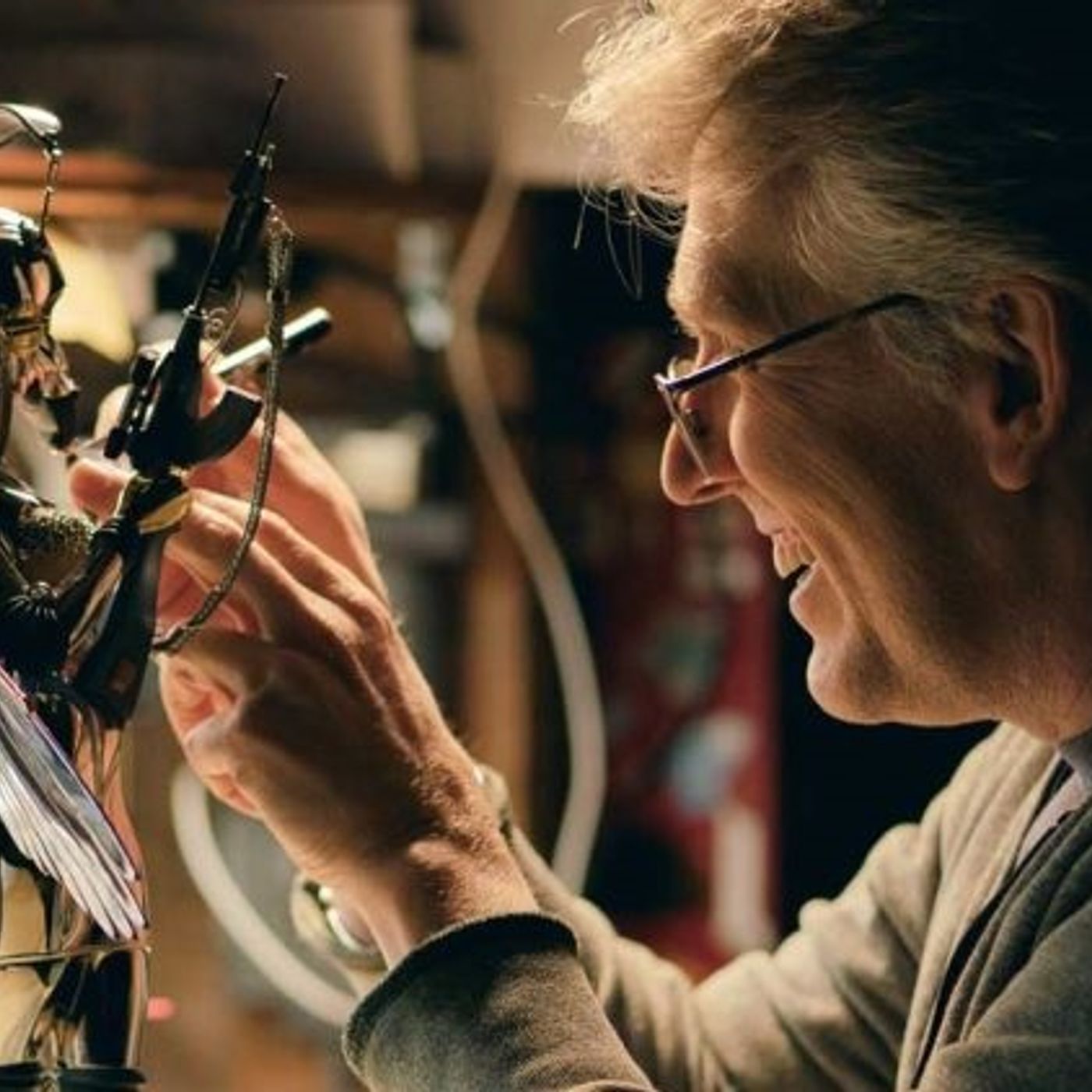
So this week our guest is Michael Possert Jr. Michael has, as you're about to hear, spent pretty much his entire life working on different films. From childhood Super 8 projects to working as a special effects model maker for huge movies like The Rocketeer and Apollo 13, as well as his years working with Leica on Oscar caliber animated films like Kubo and the Two Strings, The Box Trolls, and Paranorman. So now that you've had a little introduction to him, let's go talk with Michael right now. If we're starting at the beginning, what were you like as a kid?
What were your interests early on? Yeah, this is a common story I tell for me is, At age five, I made my first model. It was a box kit. It was the USS Battleship Arizona. Nice.
And not knowing any better, I promptly took it that summer to the lake and put it in the water and started throwing rocks at it. And my father... um who was a world war ii vet and pulled me aside and explained it's not funny son exactly explained to me the uh the error of my ways. So you're the little kid melting your army men and yeah i did all this poor guy's leg got melted oh i did all that battle damage like. Yeah and then uh kept building stuff just always enjoyed it um the guy that became my brother-in-law uh in the early years showed me how to use things like an airbrush how to draw illustrate things like that. Did you start off artistic in other ways were you drawing before on your own just like.
Yeah a little bit and he he helped me refine it yeah things like that that's that's. What it yeah we we've talked about that with with eric too who's here this weekend that like yeah his take was like you know everybody can get to the point of being a pretty good artist it just takes practice yeah it's like The more you work on it, the more you refine it, like, the better you get. You just have to actually log in time. Totally. Everybody always, you know, I just don't have that talent.
I'm like, hmm, you also haven't honed that talent. Yeah, yeah, you do have to put the time in. I've gotten pretty good with the airbrush, and that's only because of time. Yeah. And it's one of those things when you don't do it for a length of period, it tends to fade off a.
Little bit, you know. So I guess, you know, you could have been doing vans and stuff. Sure. How did you? What first led you into like working in film?
What was the first? Yeah, well, then at age eight, I was at a neighbor's yard sale, garage sale. Nice. And I found a regular eight movie camera for a dollar and really didn't know anything about it. But it intrigued me.
What hero was it? Was it like the really older ones? Because now I've become a geek and I'm buying ones from the 30s to the 60s. No, this one was. The 70s ones had the cheap fake wood grain on them.
It might have been one of those. This one was probably mid-60s. It was Kodak Brownie. Crank handle so you had to crank it up. Those are cool too.
I had a very stark lesson right off the bat. I got a roll of film after I'd done my chores for a few weeks and had enough money for the two dollars worth of film nice and uh they never they didn't tell the eight-year-old kid to load it in a dark. In the dark or not open it midway in. So yeah so i didn't know any better at an eight-year-old and i just pulled the roll of film and it wasn't in a cartridge like super eight safety yeah yeah and uh So I'd ruined that roll even before I'd sent the first frame through the camera. Yeah.
That was a hard lesson. I remember doing that. I think I had more issues after the fact. I remember we had, again, I think it had like cheesy wood grain on it. It was one of those nice like mid-70s models of. of Kodak and it had the built-in zoom though.
They got starting to get fancy then. Right. But I remember I did shoot some weird stuff and like a lot of like toys and trying to animate them, which I'm sure we'll get to later with you. But yeah, I did a lot and I did like a clay animation version of like a dinosaur, which is again where we all started. Yeah.
And then like at some point, I don't know if it was that one. I think that one's still intact, but at some point me trying to run it through, I would just shred it through that projector. Like I would shave the entire like, Because it would only have one side of the sprocket action and I would just like sheer the whole time. I'm just like, this is a very complicated version, which is funny now why I think I think of that as I'm buying them. Like for weird nostalgia, like artistically, I think that the cameras and even the projectors back then were like aesthetically pleasing.
Like they put work into those old ones that like, I have one that like it is inlaid with metal art. Like it is a work of art. And I'm just like, It was just a practical, functional thing in the 30s when you made this. But, like, so, yeah, it's pretty interesting some of the times when, like, that stuff comes around. But, yeah, I was kind of doing that, too.
But I had more trouble with the projecting. And destroying them. I've lost more footage to the projector than to the camera. So, I guess after the first hard lesson, like, where did you go after that? Yeah, it was just me and the neighborhood kids.
This was pre-Star Wars, so we were into doing the classics. We'd do Frankenstein and Dracula and just zombies even before that was a thing and that kind of thing. And I actually got into special effects, doing miniatures and stuff like that, trying to set up a faux villa that would be the opener, the establishing shot of where Dracula would be, that kind of thing. The fact that you're acknowledging that, you know, that's more... filmmaking style than most kids have at that age. Yeah, I was really addicted to it.
And that was back before Cinefax even. And so my mom would be reading something in the newspaper and they'd say one line about how they did a special effect. And I'd save that whole page. It went off in your head. It was like gold because it was so rare to find behind the scenes stuff back then.
Nice. Yeah. And then 1977, I was 13 and Star Wars came out. And that Changed the world. Yeah, it crushed me, and nothing would be the same again.
Yeah. I mean, was it just all of it as a whole, or was it that there's so many makeup effects and special effects and miniatures, and was all of that actually registering, or was it just the. Yeah, it was overwhelming. My sister took me for a birthday about a week after it opened, and I was that kid about 10 rows back, and the screen was so giant. Because we were at the Americana in Detroit, Michigan, where I was born and raised.
And it was one of the last giant theaters. yeah and it it really was just overwhelming experience and uh immediately starting right after that day we stopped doing horror and fantasy and we started doing it was all sci-fi from there on. Out So you started already perfecting your special effects and putting a sparkler in and making it. You're right. I did have some sparklers in my special effects. Yeah, the first couple of movies we did, I did with the other guys, was the thinnest of plots just to get spaceships on screen to blow them up.
That was the main thing. Yeah, throwing rocks at the battleship. It never steers far away from that. So I guess at what point, I mean, did it keep... escalating did you keep doing like stuff bringing in more people that you knew and making more like side project movies or did it did it hit a lull until you started getting into it professionally. Yeah it hit a lull because of uh cars girls and college.
You know that some of those things are very alluring yeah so the college nonsense it didn't drop. Off but it became more uh I would start, you know, I started collecting Cinefax, and there was a magazine that was awesome. It was called Cinemagic, and it talked about behind the scenes. I had several of those. Yeah.
In a box somewhere right now, I'm sure I still do. Yeah, I still have all mine. And that taught you how to, like, do it, you know, more hands-on for, like, Super 8 and 16. There was a couple of them I remember. They had one that was, like, a shot with an arrow effect of, like, sawing the arrow in half and putting it through a belt and, like, so I think I did an attempt at that, and I had the one that had the weird, like, I think it was one of the Corman ones that had that creature with the big neck.
So they had like a version of how to make your own, like shove your arm up and make this puppet that it kind of looked like that same. That was, those were really good magazines. They were good. The second issue was devoted to how to build a pro grade spaceship and with mount points and all this stuff. Yeah, exactly.
And so I kind of went into just learning about it for a while as I got through high school and college. And, uh, but I, I pretty much knew, Because that was also a golden era for movies in my mind. It started around like Jaws and Star Wars. And you'd get things like Raiders of the Lost Ark. You'd get Alien.
You'd get Blade Runner. You'd get just Empire Strikes Back. And just a lot of big budget, really well-written and crafted movies. And I kind of knew by the time I was getting out of high school that I was going to have to do something with Hollywood. So I went to college, Central Michigan University.
Not really known for a film school, but they had a small film department got i got a film degree uh major in that and two minors one in marketing one in advertising those were mainly to keep the parents off my. Back that's become a running theme through this discussion is like how supportive were the parents of this and sometimes they're kind of grew up in the arts and they're gung-ho and other times they're. Like you need a real job yeah my mom was always very supportive of me being creative but my dad he was born in 1920 so he Came through the depression in World War II and eight kids. That changes. I was the last of eight.
Yeah. That's a lot to deal with. Any of those is a lot to eight kids. Maybe more than anything. He couldn't understand where's the nine to five steady paycheck in it.
Still a legit question. It is. It is. It is. But once I was out there and I'd been doing it for two or three years and not calling to complain about money or asking for money, he slowly turned around and by the end became my biggest fan.
Yeah. That's awesome. Yeah. So was it, was it fully out of college when you like started finding projects or? Yeah, I got out of college and I did some PA work around Detroit for a little while.
That was mainly, uh, automotive stuff. And so I was a glorified like car cleaner because keep them clean for the commercials, you know, and that was fine for a few months until I got my act together and just decided to, to just go to, uh, California. I had a couple of contacts. I'd met a guy in college who'd worked as an illustrator part-time in the summer as an intern. And he said, well, if you want to build stuff, they pay people out in LA to do that.
And he had three or four contacts for me. And I thought, well, I'll go out there for a month or two and see. Meet these people, see what it's like. And I got out there and I went and I interviewed with all these people. And they all said the same thing, which really shocked me because I look back now, I cobbled together this really crappy little portfolio.
It's embarrassing. And they looked at it. I think they looked past that. And I think what they saw was just my enthusiasm and drive. And they all said the same thing.
They said, well, this is all well and good, but when you're back in town, let us know. When you're back in town for good, let us know. Yeah, when you're willing to fully commit to this. Yeah, we don't want anybody half. Yeah, right, right.
You're all in or nothing. So I went back to Detroit for just a couple more months and got my affairs in order and then just moved out there and never looked back. Mm-hmm. That's again, that's kind of the jump that not everybody's willing to do. And I think that becomes the dividing line.
And even then there's no guarantee, but so I, again, I had sort of some, some running things from that time, but I guess, you know, I'm throwing most of them to you, like what were sort of the big moments for you or what was the, the job that you're like, okay, now I've, I've definitely like, this can be a career. This is something that's going to work out. Like, I guess, what was it that felt like, you would actually kind of made it in your mind at that time. Yeah, it was a, I'm not sure that's even happened to this day. I think that's more interesting because I, again, I will approach people and I'm like, I think you've done all these amazing projects and they'll just be like, I'm still just trying to get by from one job to the next.
It really is true. I think that's really interesting because a lot of people from the outside don't always see it that way. No, not at all. I mean, I make a joke that I've managed to keep my mortgage paid. That's more than many jobs out there.
But when you look at it, it's weird because a lot of people, especially, you know, I'm from Michigan, so a lot of Midwest ethics, you know, work hard, nine to five and all that. And there's just none of that out there. It's project to project. I've worked on projects that are one day. And I've worked on projects that the longest was 10 months, but then you're out on the streets looking for the next one.
I think that's what scares so many normal people. And what keeps them at home is just like, there is no guarantee. And you do have those like huge lapses in between, even like, you know, working actors will get out there and get a job. And then 10 months later, you know, I get another job and I losing my health insurance in the meantime. But like, so yeah, I think it's that, that, you know, that, uncertainty that is what keeps so many people at home.
Yeah, yeah. So I guess, I mean, what is it then that is one of the first go-to jobs that you're like, okay, I can't believe I'm doing this, that it is a very legit thing that you feel like, now I'm making movies. Right. I was working at, went to Boss Films in one of the old legend houses. And I started working with a guy, Pat McClung, Patrick McClung.
I'd read about this guy in Cinefax. And here I am working with him and going to lunches with him. And that was cool. And Greg Jean would cruise by. And all these people I'd heard from, from movies that I admired and projects I wished I'd worked on.
And so I'd worked in a few small shops my first year or two. And Boss Films was the first big shop. And when I got there, I felt like, all right, I'm starting to get some traction. And then I worked there off and on for a few movies or a few projects. And I worked on Alien 3, the third one, and got a screen credit.
And that was the first real screen credit that mattered. See it on the screen. And that was a big deal. So I'd say that was probably early 90s when it started to feel real after I'd been there since 87. That's a good time logged in there.
That is one I was kind of interested in just because I– For several reasons. I mean, most sci-fi fans love the Aliens series or at least parts of it. But I was also like a huge Giger fan. So I guess coming into the visual effects, like how much of the over... I mean, his overwhelming influence on the artwork and the sets and everything.
So I mean, how much did they factor in of like, here's the basic rules of what we have to do. Like you can't stray too far from this overall look. So I mean, did that factor into... The building of props and sets and everything they were working on? Yeah, we got the puppets from the guys at ADI.
Yeah. And I never talked to them directly, but it sounded like they wanted to start slowly evolving away from the original design. Which, I mean, even from his concept art, it veers away. And then with each one, especially by three, they started trying to mutate into new forms. Yeah.
Yeah. But yeah, his influence on the visuals in all of those are pretty amazing. Yeah. And Fincher wanted the mining colony to look pretty industrial. And I think we pulled that off.
Yeah. Yeah. And the escape pod that I did at the beginning of the movie that they eject in is known also. It's the EEV. Is its proper name but they call it the flying door hinge derogatorily because it's not the best design but i loved it because it was one of the first models that i was thrown where i could do it from start to finish yeah see it all the way through so that was cool that's.
Definitely again even to have a Fincher-related credit at that point is pretty impressive even today. I was trying to look. This was another one of the, I guess, kind of around, like, the early 90s was just working on RoboCop 3 because we had Fred Decker on. And, like, it was funny because he kind of had the same response most people would, like, again, he came in as such a big fan of film. And so like, they're giving you the third in this franchise.
And most fans even are not thrilled with the way it turned out, but he's like, they asked me to do a Robocop movie. I was like, of course I'm going to do it. So I guess was, was that kind of like your attitude going in as I get to work on something that's, At that point had built up a pretty huge following and had such a fan base of the original film. I also got to do that at Apogee. And they were one of those that grew out of ILM.
And it was a John Dykstra shop and Grant McKeown. And so I was just thrilled to be working at Apogee. And it was one of their last projects on the way out. I mean, it was a little earlier, but it was still towards the waning days of Apogee. And, you know, a lot of people have these beliefs rightly and wrongly that there's tons of money floating around in hollywood there is but there is rarely do we see it down at the level that that i'm working at and so we had we only had like a week and a half two weeks to bang these buildings out it was a a wide establishing shot for the city of detroit and that uh main police building and so we went fast and hard for two weeks and it It made a really nice establishing shot.
And I can say I worked on RoboCop 3. That's right. But we didn't really have a lot more involvement with them. But it was Detroit. So you're like, I got this, guys.
You're right. I got this. I know all of it. I know all of it. This is all from memory.
Don't worry. Right. Well, again, just trying to look through some of the bigger ones. I mean, True Lies at that point was like one of the biggest things in the world. So, again, where do you come in to a project that huge and then– how much of a cog in that machine are you?
He's the biggest director in the world at that time, and that was before he made two of the biggest money-making films. Right. So, yeah, that's huge. Yeah, we did that at Digital Domain in Venice, California. The best part about that is it's about a block and a half from the beach, so lunches were very nice.
Nice, nice. But you'll like this. We built a mountainside that was probably, oh, boy. 60 by 60 and maybe 30 35 feet tall and the gag was a helicopter was going to crash belly flop on the side of it and then skid all the way down in an s track and they were fighting inside you know and we built the thing we built the track for the miniature helicopter to go on we built the structure. Like I said, it was 60 by 60 by 30.
It was pretty big. It took six of us about three months to build. And we'd gotten it to the point where it was foam coated. It had been carved. Got the first couple layers of paint on.
And we were pretty close to being done. We had a bunch of fake trees we were going to start dressing in. And we went home on a Friday night. And that Friday night, James Cameron and producers or whoever decided that they didn't want the scene. They cut it.
And we came in Monday morning. And it was gone. They had hired a demolition crew to come in over the weekend and dismantle it and cart it away. And it was kind of surreal because it took us three months of pretty hard work. That's crazy.
And it was just gone in a weekend. I mean, sadly, I've heard that this was not even show. This was just somebody I knew that like he actually lives here, but like he works out in L.A. and got on doing like set and a lot of like, you know, set building and stuff. He worked on Terminator 3 and there was one that was like this huge setup shot and they were building more or less like a tunnel that they were going to like drive through or do one of the alternate future shots or something. So it had to be super industrial and all these little pieces glued onto it.
And again, they spent all this time putting this thing together and there's like a half second that it's on screen. Like they cut the segment that was mostly based in it. So, like, it survived enough that it's, like, a few seconds of night. Oh, there it's gone. So, like, all this time invested into it and it's gone.
Yeah, that's more common than I want to admit. Yeah, I think, once again, I think people don't realize the amount of work that goes into each little background thing that then somebody goes, no, I don't like that scene. Right. Yeah. That always seems weird to me that, like, they will put that much time and effort.
You would think you could make those calls beforehand. Yeah, you would think so. Like, on the screenwriting. Yeah. But, yeah, before you put...
And, again, this is why you get these huge budgets of, like, I'm going to build this mountain and then destroy it. I don't need to use it. So, yeah, again, I was looking through some of, like, the Apollo 13 is, again, like, moving into spaceships and, like, some of the... I'm assuming that level of building stuff. What specifics did you end up doing?
Oh, that was a fun project. That was one of the longer ones. That was also a digital domain. Yeah. And.
Yeah, I worked on the service module, which is the cylindrical part where the oxygen tanks blew up and tore out the side. And I worked on painting the splashdown capsules and was part of the crew that took them out off Catalina and dropped them into the ocean to make it as believable as possible. And then just a variety of other things on the launch platform, did some paint on that. But you'll like this. This isn't a well-known story.
It might have been told in a Cinefex a little bit. They came to us. We were going out to lunch one day on a Tuesday. And they stopped me and one of my co-workers, Brian Ripley, and they said, where are you guys going? We're going to lunch.
They said, no, no, no, there's an emergency. Well, what's the emergency? We're not near any deadlines. Well, we need you to make the panel... that supposedly blew off the service module during the explosion they want to use it for the trailer and we said well we thought cg was working on that this is you know back in the day and they're. Like finding a little footing in cg it's not the early early days but it's still pretty early yeah yeah 1994 yeah and uh it's coming off of jurassic park that's pretty early yeah and uh we go without cg guys are handling it and they're like yeah well They've collapsed.
It's not going to happen. And they're like, well, what do you want us to do? And they gave us a quick sketch of a panel. It had some, you know, ribbing on the inside, a lot of riveting, and a little American flag on it. And they said, you know, start building this.
All right. And when do you need it? They go, oh, we need it tonight. I go, what do you mean you need it tonight? And they said, well, yeah, we have to shoot it tomorrow and get it processed and conformed on Thursday and to the theaters Friday night.
All right. So me and Brian got out and we stayed into that evening and we pulled it off. We made the panel. We put all this substructure on the inside. We did riveting.
We bent it. We hammered on it with a hammer and made it all messed up. We painted it. And by dumb luck, we were going through our graphics file. a drawer full of old decals and graphics. And we found an American flag that was the right size.
And just pure luck. And we got it on there after paint. And we did a little weathering and a little char from burning. And we managed to get two mount points on there for them. And we delivered it.
And it might be the last victory that Practical Effects had over CG. Cg you failed us right finally yeah yeah so we thought you know we were pretty proud of that pulling that off and in less than a day nice again that's it's that to me i think that's still where and i've said this before like i think that's where it all kind of lies is like finding the way to meld the two it's like you're there are things you just cannot do physically especially the more ridiculous and elaborate some of the movie projects get so it's like you have to have cg for some of those things you know to even come into existence but the best stuff is probably gonna look practical or certainly used to you're getting a little better but right practical is like you know i i think there is like a tangency to it all like if you're if you can actually feel like you hold it you know if if you know the sets seem like they're actually standing in it and not in a green room you know it's like you you get to that stuff where practical stuff still works better for for the audience i think maybe even like the director will like this better or have the freedom obviously to do whatever they want in cg but like i feel like it it weighs a little better with the audience having a physical thing.
You know there's that intrinsic value yeah. Yeah you actually respond to it you know a little different a lot of. Us even those that that make sets and props and miniatures We're not anti-CG. We just would like to see a more sensible use of it. Yeah, yeah.
Or some use of practical. Right, right. There are some that have just thrown it out the window. It's just like, this is cheap. We're going with this.
Yeah, but it looks cheap, too. Right, right. So, yeah, I think there's a mixture. There's a balance there. Well, we kind of skipped over maybe one of the bigger ones.
Certainly, this weekend, you're discussing a lot of the Rocketeer. Yeah, the Rocketeer. That's... I mean, even at the time, it's grown to be such a weird, like, nostalgic place. But it was almost, like, made to be nostalgic from the get-go.
Yeah, from the beginning. from the comic and into this really well done version of that idea so you ended up building some pretty impressive props I guess did you know you were going to get into that from the beginning no. That came about well first I have to say it was at a place called Design Setters and they were mainly just known for building sets but the movie before they'd worked on was Twins and they'd done they'd done some props for Jim Bissell, which was the production designer. And Jim was so impressed with Design Center's quality that he didn't even bother looking around for others to bid on it. He just offered it, Rocketeer, to Design Center's, and they said yes. And we just went from there.
And I actually was a fan of the comics. So when I got on that job, I was pretty excited. But we had no idea that it was going to go through all the iterations that it did. And that was a classic. like an Escher thing is what Dave Stevens could draw on the comic that looked awesome. When you started doing a single engine rocket and strap it to the back of Bill Campbell, it just, it didn't look right.
It looks silly. It looked downright, just foolish. And so then the evolution started and that took, I think took longer than Disney wanted it to, but, but in the end we came up with, I think a pretty iconic and beautiful design. Oh yeah. Yeah.
I mean, it just, The look of all of it, but specifically the rocket and the helmet and his outfit, and all of it kind of comes together pretty perfectly. And that makes sense because you had a talented illustrator in Ed Ith, and then you have James Bissell and Joe Johnston, and they're no slouches in design either. So that was probably a good group. So again, physically, what did you actually have to do to put together this? Because you end up with the rocket and the helmet?
Or just what were you building? We did the rocket pack and we did the helmet. And we had a seamstress, a lady, Jenna Marie Bonar, work on the harness, the leather harness. And, yeah, it was such a blur because we only had eight weeks to go through four prototypes. And then we only had a few more weeks to get the final stuff done.
And me and Henry Darnell, Henry Darnell ran it, ran the crew. Me and him, the crew fluctuated up and down as they were giving us answers and we were doing the next prototype. But me and Henry are the only ones that saw all the prototypes through to the end. And the real curveball is when we finally got to the fourth prototype rocket pack that everybody agreed would be the one. And then they decided that they wanted it to be real metal.
And we were all a bunch. I think the oldest guy in the room was Henry. He might've been. 25, 26. And so I look back now and realize that we were kind of flying by the seat of our pants.
We were weighing over our heads on certain things, but we, uh, we stuck with it and we pulled it off. Jim Bissell recommended a specific kind of zinc spray. And we had to make some very unique, unusual molds that I never made before and haven't made sense to hold the zinc just the right way. And, uh, we managed to pull it off. We, We made two hero packs for Disney and probably about a dozen hero helmets.
Yeah. I mean, both of them, again, you've been chewing around and showing it to people and like they, yeah, they look so amazing and kind of fit so well with that time period and like everything has its own like kind of deco feel to it. Right. To be able to find a way to work that into the props, especially the most essential in that story. It's great that it all kind of came together and looks as good as it does.
Yeah, yeah. That's awesome. I was, again, trying to go through this one. I just wanted to throw out because, oddly enough, we were talking about today. My co-host just went on a road trip and stopped at the Mothman Museum.
Okay. And then we started talking about the movie. So I guess what was your role in Mothman Prophecies? Yeah, I was part of a crew at Fantasy II Effects. And we did the sequence of the bridge.
Yeah. With collapsing. We were discussing the bridge. Yeah. And it was mainly just building all those vehicles.
Yeah. Because there's so many on there. And again, they wanted it done quick. They didn't want to spend a lot of money. I mean, you know, at the other end of the scale, that's always their job is, like, get it done on time, get it done as cheap as possible.
And we did two layers of vehicles. There was probably a dozen that were closer to the cameras, the angles they were choosing. Yeah. And those had to be much higher spec. So we spent a lot of time on that, you know, doing grills and trim and bumpers and stuff that mattered and well-placed cameras.
Glass in the windows. What size frame were these? Oh, boy, let's see. They were probably, I'm going to say about fourth scale. Pretty good size.
Each car was probably about three, three and a half feet long. That's a good size model to be building. And then there was a couple of dozen or more secondary cars that were further back. And we did that by, those were vacuum form shells. And things, you know, corners were cut.
Yeah. You know. Wheels were cut out of plywood, spray-painted black. If you can't tell on screen, it's okay. You work with what works.
It's movie magic. Yeah. But the ones that were closer up were fiberglass layups, and a lot more care was put into things. We had rubber wheels and proper frames and all that. Yeah.
That was the sequence I did. Yeah. Yeah. I mean, that's, again, it's interesting to me, all these weird little pieces that fall into place to be able to do this. And maybe more impressive that they ever orchestrate any of this to come together, let alone that, you know, so many times a year, all these big movies come out and everybody has their little part in it.
Right. Works on this scene or I made this costume or, you know, so the fact that they can ever get any movie made sometimes is amazing. That's true. Let alone that, you know, so many actually kind of come out pretty successful. Right.
Yeah. So I guess, I mean, any others you want to throw in, I mean, I can definitely throw Serenity out there. Everybody, you know, is excited by, you know, anything related to that. Anything Joss Whedon. Yeah, yeah.
Well, that was good. That was at Grant McKeown Design and, uh, I did the entire, uh, firefly shuttle that nests in each side of it. Yeah. And, uh, that was. Probably about, I'm going to say just under two feet, maybe, maybe 20 inches.
Yeah. And, uh, yeah, that was my part of that. And it's funny because we got all those drawings from his production company and they were fully fleshed out three-dimensional drawings and, uh, three-dimensional and just beautifully rendered. And we looked at him and we said, well, well, Why aren't you just doing this in CG? You're 90% of the way there.
And we found out in the long run that Joss Whedon wanted something for the lobby of his company. And that's cool. But also, I think he was. Again, I almost respect that as the fan boy that I am. It's like we all have that.
But also, he understood the final sequence when it crash lands. There's something about the natural weight of things. Yeah. And having it bounce and be motion controlled in front of green screen and interacting with other pieces, it's very tricky to fake that, even in CG, even as good as people are today. I think it changes.
And so I think it was a combination of that final scene and him wanting a toy is how it got made. Again, I think we all understand that. Yeah, totally. But that was a fun job. That was a good crew.
Definitely. Well, I mean, the stuff we haven't that I was super interested in was the moving into like stop motion animation, which, again, we have many fans of that here, too. So, I mean, what what different mode is it for you as you move into something? I mean, obviously, I guess you're going a little smaller, but I mean, it's a totally different style project. So how much does it change for you when your job moves into something as specific as stop motion animation?
Yeah. I really love stop motion animation. And I have to be careful what I say because the purists will jump on me if I get it wrong. I'm not that pure. I'm sure I'll get in trouble myself.
It's fine. There's this aura that the miniatures in stop motion animation are much more different than what we do for visual effects. And it's not true. It comes down... This is really going to jump on me.
It really comes down to two things. For stop motion, the miniatures... should be lighter because the animators are dealing with them. And sometimes puppets have to hold a prop so it can't be heavy. And the other difference is in the bottom of a lot of things, you have to build in a tie-down. Just to be able to put it on whatever set they're building.
Yeah, and so it doesn't ever move. But other than that, the rules of making stop-motion miniatures and props are very similar to visual effects. Does it vary as far as specifics of what you have to do? Again, because they have such specific motions that they have to do. So is lightness really the only main difference that you have to do when dealing with something in that room or that they have to pick up?
Is that. Yeah. If they're not picking it up, it mainly has to be tied down. Yeah. If it's going to be held, it needs, it's this tricky world of, it has to be lightweight, but it has to be durable in that they can drill into it.
Yeah. And it doesn't fall apart and, and things like that. And we, at that point we mold everything because once the, Here, I'll get myself in trouble again. Some of the animators are pretty ham-handed, let me say, about my models. And they can be pretty rough with the models.
Stop tearing my stuff up. Yeah, exactly. And so when I was running the model shop at Leica for a couple movies, my edict was just mold it. Just when it's done, let's get some rubber on it because I don't trust what happens out on stage. That's true.
So I had to cover us. Well, on specific ones, Paranorman is amazing. Were you overseeing everything? What specific roles did you kind of have into something like Paranorman? Paranorman was unusual.
I came in as it was starting, and I started out in a set shop, and then I quickly moved into the model shop. And then I was asked for a variety of reasons to step up and take over the model shop as head of the model shop. But throughout it all, I was involved. quite heavily with the van sequence. The van chase is a favorite. It is pretty epic.
We were doing so much. It is. It's fun. And we were doing so much nickel plating for the bumpers and wheels and stuff that they got tired of sending it out of house. And so they had us dial in a nickel plating system at Leica.
And that was a challenge because early on we'd get maybe one in ten that worked. But by the end of it, we got it dialed in before Box Trolls where we were getting nearly 100% every time. And so that's one of the accomplishments there I'm proud of. And then moving on to Box Trolls, I had such a stellar crew. It was so good.
We set a record in stop motion animation, the model shop, which involves the mold room and paint and a lot of others. But that large crew in the art department, we generated over 20,000 individual handmade items in 18 months. And so that's a record that I don't think anyone's going to break anytime soon. So I'm pretty, I'm pretty proud of that crew for, for pulling that off. Yeah.
I mean, that's one of those, I think, and it's, it is weird. Again, you guys putting as much work in as you do, you don't have any control over all the other ends of it. And like, that's the one I feel like so many people are just discovering now because they didn't know that it was coming. Like, I think I, maybe the week before or something like it came out really quick. And then I don't think anybody realized it was the same team from Paranorman.
So I think it was like, it was later people are rediscovering it going, Oh wait, these are the, you know, the great animators we had from these other movies. And like we, so yeah, I think, I think that was just one of those that like people are just now kind of catching up with. Yeah. It's really interesting because admittedly when those movies came out, they didn't do spectacular at the box office. They did good.
Paranorman did pretty, again, I think it had the extra bonus of people kind of love that little horror genre, but kind of like a kid's safe horror genre. And stuff on, yeah. And it's, yeah, I think that's, there's kind of like a growing list of ones that are like good starter horror movies for kids. And Paranorman's a great version of it. But yeah, I think Box Trolls just fell somewhere in the middle.
Yeah. And didn't have that. So yeah. But they've all seemed to, once they got out on the DVD, their audience has really kind of grown. Yeah.
I mean, that is part of it too now as the business model. Like there are so many kids movies that come out. Yes. Or what they consider kids. Again, I feel like those are above and beyond usually what normally gets thrown out there for kids.
And I think that's it. I think parents end up just kind of going, you know, to shut the kid up. Right, right. So sometimes they do pretty well across the board just because, you know, it's that weekend. You got to go take the kids to see something.
So sometimes I think it's kind of a false return and you'll get sequels to lesser movies just because. So like you do get ones that fall through the cracks and you're like, but all these other kids movies made money. Yeah. Yeah. So it's kind of hard to gauge like a real response because you're getting so much money from you also kind of double or more because the parents have to go too.
So you're getting like double the returns on some of these not so great kids movies. Right, right. It's kind of awesome to see them still sticking with this. And you see them backing something like Kubo and the True Strings that is like Oscar caliber performance on all ends of you guys and animation and just everything they put together. That's the high end of that tier that gets lumped in with other weird kid movies.
Right, right. It's frustrating for those of us that worked on those movies because we believe that they should have done better. far better than they did. And don't, again, because the quote unquote kids movies don't get treated the way others do. So it obviously is going to get thrown in the best animation, but I'm like, maybe it needs to be best picture. Right.
Right. You never see that kind of stuff anymore after Beauty and the Beast. So when they created a category that then killed it for any other animated movie from that point on. So, but yeah, I don't know what specifics did you end up doing on Kubo? On Kubo?
Um, I was fortunate early on to help determine very little bit. I don't want to take too much credit, but some of the look of the paper, I did a raft that's in the opening sequence for Sariatu, one of the characters, and she wrecks onto the beach with it and she ends up using it later on as a bookshelf. And I worked with Nelson Lowery, who's production designing on the movie, and we went back and forth a little bit with some paper effects on the the raft and then the wrecked boat that was a bookshelf and kind of dialed it in after a few attempts and he ended up using that as as an example to show others in the art department yeah one of the directions we were going. I mean i again i've jumped around is there any specifics along the way that you're like really proud of that most people don't bring up you know you get a lot of the animated stuff and rocketeer but are there other weird one-off ones that you're like nobody ever loves this thing that i did yeah well.
There's a movie that admittedly is very bad it's solar crisis we did it at boss films it's a again. That has no bearing on your work right but it's a it's. A common refrain you'll hear out of model makers is we'll often leave a cast and crew screening and we'll say well our stuff look. Good yeah i think with a lot of effects yeah anybody behind the scenes. And that's definitely the case for solar crisis what was Fun about that movie is it was designed, a lot of the ships, it's a space movie.
And so a lot of the ships were designed by Sid Mead, a well-known illustrator, artist. And it was the first time I was allowed to, I was young in 1989, 90. And I was able to do a spaceship from start to scratch all on my own. Nice. And it was the 14-inch Helios.
And the effects in that movie and the spaceship designs are beautiful. But you still got to plot through that awful plot. Well, again, that's kind of what you get going into either the lower budget or, like, people that are kind of young and getting started. It's like you see that, you know, I always return to that as the example, but the Corman Studios of, like, out of these schlocky movies, we built the most impressive group of filmmakers and actors and, like, and effects people and, like, they would all go on to do much bigger, better, more appreciated things. But like it all came from that school, whether it was officially a school, it certainly was the school of hard knocks.
Cause so I think you, you kind of get that. Like you won't necessarily get the opportunity to do a whole ship in this huge, big budget, you know, project later, but like this, they're like, we need somebody. So, you know, you, you kind of end up getting more out of it, you know, from the experience, I guess, then, you know, what, what box office comes with it. Right. Right.
Well, again, looking at, you know, just career path wise, like how do you end up finding the next project? Or do you are you at the point where you can kind of pick and choose projects? Or is it still again, as you said earlier, are you just glad that another project comes along? I would just be glad if another project came along. It's it really is one of the last industries, I think, where it's so tied, really tied to who you know.
Yeah. And they know your reputation. And can they get along with you? That's a huge part of any job. Exactly.
Really, when I think back, I'm like, why do I not want to work there? Oh, yeah, these people were terrible. And also because it's gotten much, much, much smaller because computers have really crushed visual effects as far as practical and miniatures go. And so that's why I'm up in Portland now and not LA is because there's a stop motion– a pool of talent up there. There's two or three companies now doing it.
Leica is just the biggest fish. Yeah. And yeah, I just wanted to get going on whatever the next project is. Jobs are jobs and we'll take them. We'd actually here last year and in previous years, I've talked to people who've done effects and then just kind of went into CG because it's where the industry was going.
Is it something you. Are interested in somewhere heading down that road or just like this is what i like and this is what i want to stick. With yeah this is what i like but i've looked at the cg stuff and uh when you're building a model or you're building a prop there's a chance for you to be active where you get up and you're going over to this tool or you're working over on that table saw or you're doing this or you're going to the paint booth or mold room and You're active, you're physically active a lot of the time, not all the time, but a good chunk of it. And the idea of sitting in front of a computer for 8, 10, 12 hours a day and hardly moving. It's not something I can embrace.
That's why we're all just going to be giant creatures. Right. It's, yeah. Like WALL-E. WALL-E is kind of a sad prediction.
Right. The way that the people are in the big box store, I'm like, one day we'll look back at WALL-E and we'll be like, oh, God, it was right there. We missed our warning. Right. So, yeah, I think we're all.
But having said that, I am learning Rhino and Illustrator and some other programs because Rhino, you cannot put files for CNC and for rapid prototype. Yeah. And Illustrator, you can put out files for laser cutting. So that will help facilitate me being practical. So.
Again, I guess everything you learn, you can put to use even back in the other version. It's finding ways to make it all kind of apply to what you're doing there. Again, I'm not anti-computer. I just want to find what makes sense, how to use it. Yeah, a good balance.
That's what it comes to. So is there anything else we've left out? Again, we've jumped around. Is there anything else you wanted to discuss in your retrospective? I mean, I got tons of stuff, but I'm not sure what you're in the audience would be really interested in.
Again, it's up to you. I've hit a lot of the big points, but yeah, I just didn't want to leave any out if you had specifics. No, I think we hit those highlights, yeah, if you're happy. All right. Do you have projects you're allowed to talk about coming up?
Or sometimes I know that's all. Especially on your end, it's so far in advance that the effects end starts that nobody can announce anything until it's well beyond when you're done with it. Well, there's the latest Laika movie that's coming up, and they've announced the name finally. It's called Missing Link, and I think that's all I can talk about. Look for Missing Link.
Look for Missing Link sometime in 2019. And then you're still looking for projects. So how do people find you if they have work they want you to do? I have a website, michaelpossert.com, and you can contact me through there. And I know some of the older guys don't like it, but I try to encourage people to get onto Instagram because it's a very visual-based medium, and I love it.
And if you want to see my portfolio or a good representation of what I've done over the years is I use it. uh, to put all my, my behind the scenes photos from all my years. And I am circa 1964 on Instagram and you should check out, I've got several hundred behind the scenes photos from all the movies and commercials and projects I've worked on. Like I said, I use it as a portfolio. Cool. We can actually put the link for that in the show notes for this episode.
So yeah, definitely go to your website and follow you on Instagram. Yeah. All right. Well, thank you for sitting in with us. I appreciate this.
Thank you very much. Thank you. Not that anybody really cared about my vacation. It's plenty to talk about. And you did all kinds of dorky things with many movie tie-ins.
Dinosaur Kingdom 2. Dinosaur Kingdoms and Mothmans. What more do you want? Ah. And also stood in the exact location where Brad Pitt and Bruce Willis were in 12 Monkeys.
12 Monkeys is an awesome movie. That was an Eastern State penitentiary. Games. Games that want to be free. Get out of my chair.
Brad Pitt's pretty amazing in that movie. Whether people fully want to acknowledge or just think he's crazy in the head, which might be true, but yeah. Very uncharacteristic for that point in his very pretty boy career. To do the look and the performance that he gives us in 12 Monkeys. So yeah, if you haven't watched it or haven't watched it recently, go revisit that crazy version of Brad.
He's pretty damn good. Have you watched the TV show? 12 Monkeys? Yeah. No, I think I do remember hearing it was a thing.
And once again, there's too many shows and I never get around to most of. Them, but. I forgot it was a thing, but then I saw trailers for it when I was watching something else, which we could probably cover during the geek thing, because I forgot that I did watch something else. It pissed me off. All right.
So, we've had fun here today at the old Wonderfest. I love Wonderfest. I've been coming for how long? Since 2001, I think? At least.
I've mapped it out one of these times. You can go back on the website. And it's back on a Saturday, because Saturday's when my mom got married. I made her rearrange her wedding, so. You can go on the website and, like, go back and look at all the people that were guests.
I was trying to look back at the really old, like, 20-plus years ago and, like, figure out what year was that first year that we were both here. And then I was here, like, a year, at least two years before because I remember coming with somebody, like, I worked with at that time. Like, it was just a long time ago. So, yeah, we got to, so you should all go and find that on their website yourself. It is wonderfest.com and see what they've got in the works for next year.
But with that, otherwise, that about does it. We will return next time, same geek feed. Thanks for listening. Bye. No, baby, my time has come Gonna step above this.
Ship today and head for the sun Don't know what I'll see there Don't know what I'll find Maybe I'll be happy. If I find a piece of mine Time travel has been getting me down. I've been gone so long I don't ever think I'm coming down I've seen tomorrow and I've seen yesterday. Well, I see your face again Well, baby, you know I just can't say Oh. No, no.
No, I just can't say Baby, I'm coming down I'm coming down No, I. Just can't say Baby But I'm coming. Down Will we see the sunshine, baby? Will we ride the skies? Will we find tomorrow, baby?
Will we travel time? Will we see the sunshine, baby? Will we ride the skies? Will we find tomorrow, baby? We own the sun.
We own the sky. We own tomorrow when we want to fly. We own the sun. We own the sky. We own tomorrow when.
We want to fly. We own the sun. We own the sky. We own tomorrow. When we want to fly.
We own the sun. We own the sky. We own tomorrow when we want to fly. We own the sun. We own the sky.
We own tomorrow when we're one. We hold the sun, we hold the sky We hold the fire when we're on the fly We hold the sun, we hold the sky We'll be right back. It's all unraveling now. The pressure's on. But they all.
Love you, I mean. Oh, thank you. Thank you so much. Oh, Lord. Again, you're always welcome to sit down.
I know you have, like, work you can share. Hey. Oh, I'm sorry. This is Beau. Hello.
Beau, you're responsible for many of the ridiculous things that go on during Wonderfest. So how's it going this year? It's actually going incredibly well. So, knock on wood, I've probably jinxed myself at this stage to say that I've had no major snafus of any sort. And all of our.
Guests have just been fantastic, save Mike. Troublemaker that he is. This episode is a production of Movie Meltdown, produced and edited by the Audity Studios, with the opening music performed by the Empires. For more on how to sponsor or support the show, email producer at moviemeltdown.com. Talk hard!
This program is a proud member of the Battleship Pretension Fleet.