Season 11 · Episode 26
Sam Irvin: Living the Dream of Every Monster Kid
About this episode
Transcript
Automatically generated, so expect the odd misheard name.
Hello, this is Caroline Munro, and you're listening to Movie Meltdown. It's showtime. The following feature has been rated R by the Motion Picture Association of America. It is intended for mature audiences and parental discretion is advised. Our nuclear reactor pumping out one million kilowatts of power.
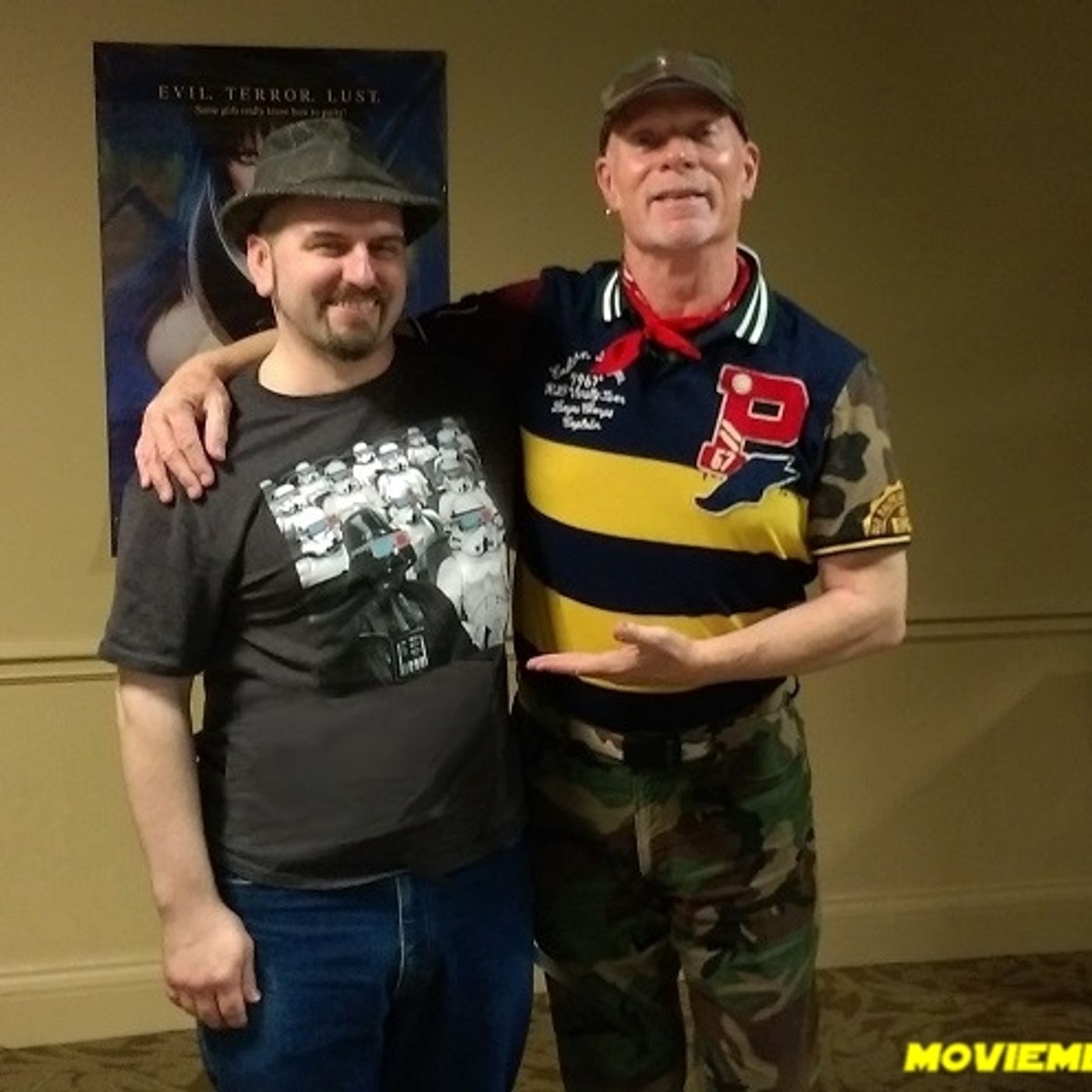
What's up, and welcome to Movie Meltdown. I'm Brian, and this week we round out our coverage of Wonderfest. And I will say this is the grand finale, because this week I sit down with Sam Irvin. Sam is a director, a producer, a screenwriter. And as you're about to.
Hear, he's had a lot of different jobs and a lot of amazing experiences. No, really. I've been doing this for quite a while now. I've talked to a lot of different people over the years. But there are only a few times that I've sat there listening and every few minutes, my mind is completely blown by some amazing project that they got to work on or some legendary person that they've come in contact with.
And Sam is definitely one of those people. The phenomenal amount of awesome experiences he's had... Well, I won't even bother going into it because you're about to hear all about it directly from him. But first, I do want to give a big thanks to Bo and Dave and everyone over at the staff helping to keep Wonderfest running. This convention is a huge machine with many moving parts, and those parts are continually in motion all weekend long.
And I've seen firsthand what a challenge it can be to make sure everything goes off without a hitch. And their staff is terrific because I also know there are still many hitches that come up along the way. But the crew here just rolls with the punches and keeps the fest running smoothly. So much so, most of the time, the patrons don't even know that there was a problem. And that's what you want in a good convention.
They are an impressive group, and I am glad they have let Movie Meltdown become part of all of this. And I say it every year, but if you haven't made it here so far, start making your plans for next year. In the past few weeks, you've heard a sample of just some of the great guests that they bring to the show every year. And if you haven't seen the huge display of vinyl model kits... Well, you're missing out.
But you don't have to miss out next time. Just go to wonderfest.com and start planning your trip to next year's Wonderfest. Alright, but now let's get right into it as we focus on director Sam Irvin. Well, I usually start at the very beginning, so I guess to let people know where you were born. Well, my name is Sam Irvin, and I was born in Asheville, North Carolina, longer ago than I would like to admit.
We don't have to get into specifics. I don't with mine at this point. I've just given up. Numbers are meaningless. But it was a very long time ago.
So I grew up in Asheville and went to film school at the University of South Carolina in Columbia, South Carolina. And then moved to New York right after that to work as Brian De Palma's assistant. That was my first job in the business. I definitely needed to get there. But we skipped.
We skipped a bit. Was this true? Were you like a movie theater legacy? Did you have movie theaters in your family? Yes.
My grandfather was in the movie theater business. He worked for a big chain of movie theaters as the district manager for the Southeast. And then my father, he and a business partner own movie theaters. So they were competing with my grandfather, which was kind of interesting. That seemed like an interesting aspect.
How personal did that get? Very friendly competition. And so I grew up. Being able to go to the movies for free and seeing movies as many times as I wanted, which was just an amazing thing. Yeah, that didn't happen then.
No. Now kids have that freedom. Yeah, and this was long before videotape and all that kind of stuff and owning films in a collection. You just didn't have that when I grew up. So it was very unusual.
And I, at a very young age, maybe starting around 10... I guess I started programming kitty matinees on Saturday at my dad's theater and they were all horror movies. And I would just, I would, you know, order all the movies that I hadn't seen or just stuff that I wanted to see again. And it was all Vincent price movies and hammer films and all that kind of stuff. So it was just, you know, I'm a very spoiled brat.
I mean, and that's the perfect ones to kind of, not only for you to get caught into it, but all the other kids you were bringing there. Like, we were talking about that recently, that, like, people will still to this day ask, like, well, what's a good horror movie for kids? And, like, I always go, like, super old school. I'm always like Universal Classics. If you get into anything from that era into the 60s and they like that, it's in their blood.
They're automatically going to be horror fans. Totally. That's the perfect time to hook all those kids. I'm talking about in the 60s. Back then, there was a package of syndicated television package of all the great Universal Classics.
It was called The Shock. That little reboot. And local channels could program those films. And a lot of local areas would have horror hosts. My hometown was very behind the curve on that.
But they would run the shock package on Saturday afternoons. And it was called Shock Theater. But there was no host. It just had a title card that would come up with weird music and then the movie would play. We had a version of that, yeah.
So that was like about 2 o'clock in the afternoon on Saturdays. So I knew if I scheduled these kiddie matinee horror movies at my dad's theater in the morning, it had to be done in time for all those horror kids, all those monster kids like me to race home and watch Shock Theater. And There were 35 prints available of films from the 50s and 60s that I could bring to my dad's theater. The Universal Classics were a little old for that, even though there had been some real art releases and re-releases and stuff like that. Those prints, for whatever reason in our area, were not easy to come by.
So it was the perfect blend because... all the classic Universal stuff was showing on TV in the afternoon. So you didn't need to play those anyway. I didn't need to play them. So we were doing the Vincent Price, Edgar Allan Poe, Roger Corman movies. We were doing the William Castle movies.
We were doing all the Hammer films. So it was just a... I mean, if you were in Asheville, North Carolina around that time, there was an ample opportunity to see a lot of cool stuff. Nice. And it's all you're doing.
Well, at least half of it sort of was. In the theater. In the theater. So coming out of that, is that because then at one point, didn't you get into fanzines? Yeah.
Before we get into that, I do want to say that there was a seminal moment in my childhood that determined that I wanted to be a movie director, which was in 19... all right, I'm going to reveal my age. Okay, here we go. I was born in 1956 and I'm 60. I'll be 63 in a couple of weeks. Not buying any of those people.
In 1964, when I was eight, my family took a cross country trip to California to go to Disneyland and, you know, and Grand Canyon, do all those sites. And because of my dad's, um, being in the movie business, he was able to get a VIP tour at Warner Brothers Studios. So I was able to walk onto the set of Blake Edwards' The Great Race, where they were shooting an iceberg scene and a gigantic tank of water with Jack Lemmon, Tony Curtis, and Natalie Wood with antique cars, wave machines, huge wind machines, and. Storms. I mean, it was just the most incredible scene to see them shoot.
And the eyes just popped right out of my head. It's enough to capture any kid, really. I literally thought up until that time, if you needed to shoot a scene like that, you'd have to go to the North Pole and wait for a storm. I think a lot of people still don't realize what they can recreate and create from scratch sometimes in studio. And it was just unreal.
And then I also got to go to another soundstage where they were shooting a thriller called Two on a Guillotine with Dean Jones, Connie Stevens, and Cesar Romero. It was actually written for Vincent Price, who was busy, and they got Cesar Romero and said. Odd maneuver, but all right. Yeah. And it was directed by William Conrad, who was the heavyset actor who later was on Canon TV series and stuff.
I see him at three in the morning on MeTV all the time. There you go. And as we were just watching, William Conrad came over to me and he said... There's a part for a little red-headed, freckle-faced kid, and I'd love for you to play that. And I was like, oh, my God.
I'm being discovered the first day I walk onto a film studio. And he said it was going to be shooting in a week. And my parents were like, well, you can't do that. We are due to be in the Grand Canyon on that day. And I'm like, oh.
Disowning you all. You're kidding me. Emancipation. I'm moving here right now to be a movie star. Literally.
If I could have been emancipated at eight, I would have. And I've never forgave my parents for that. But then I took, you know, my dad had an eight millimeter home movie camera and I just took it out of his hands and never gave it back and just started directing little movies and, you know, Dracula films with my brother. playing Dracula wearing a black beach towel for a cape and lots of ketchup and plastic fangs that they handed out at the double bill of Plague of the Zombies and Dracula, Prince of Darkness. You know, I mean, it's just like all, my childhood was, you know, reading famous monsters of film land religiously. You know, it was just very stereotypical monster kid stuff. growing up in that era for sure.
But you were already specifically it was directing like did it consciously or you were just doing it because you needed you everybody else to shut up and do it you wanted to happen in the movie or was it already like in your head of like oh no this is what you do to make a movie is it was it a conscious enough. Thing it was very conscious yeah yep absolutely. Because i remember yeah we shot some sort of weird sci-fi thing on a super 8 when i was a kid and I don't think anybody was in charge. I remember we had a basic idea, and then I think the film got ruined. I don't think anyone ever even saw this mess.
When I think back on it, yeah, I'm a bit of a control freak. I was like, I knew exactly what I wanted to do. Nobody else, none of my friends or whatever, they just didn't seem like they had the initiative or whatever. So I just took charge. we are making a movie. If you have the vision, shut up kids and get behind me.
You're doing this. Exactly. Exactly. So I'm getting back to your other question about the fanzine. When I was in my, like seven rounds, 1972, I started a fanzine called bizarre and it was a horror film, um, publication.
You know, the first issue was very, pretty crude. Um, But it was, you know, offset pages that were stapled, you know, that kind of thing. I've seen these. I might have made some of these. Yes, exactly.
And the first issue was basically just reviews and lots of photos that I had gotten through my dad's theater and movie ads and from the press books and things like that that I kind of collected together. And I put Dr. Five's Rises again on the cover. Was it actual artwork? It was kind of an ad, kind of a trade ad that doesn't get seen a whole lot.
And it was really cool. I loved it. But then by issue two, I was like, you know, nobody cares about my opinions of movies. And I really wanted to start interviewing all these great actors. So I started writing to them, especially the Hammer film writers. people in england and i would write to them care of hammer film productions i had their address.
The plan to like ask questions over the. Mail yes okay with questionnaires yeah so for my issue two uh i had interviews with christopher lee peter cushing ingrid pitt and uh and a Peter Sazdy, who directed Countess Dracula and some other films, and Taste the Blood of Dracula. It was such a different world. Even with just the promotion end of movies at that point, the fact that they would have promotions set up to mail out 8x10s that were signed to anybody that won them, versus the industry that it's become now. But that just used to be part of the promotion machine.
It was. And these actors, especially... Peter Cushing, Christopher Lee, Vincent Price. I started writing to all these people and they would send me photos. They were just the nicest, nicest people and would respond.
And so, I mean, it was incredible. So then I just couldn't believe my luck of getting, you know, the, like the top people. Um, so then the, and I did one issue a year. I worked on it in the summer during my summer break. So, um, For issue three, which would have been the summer of 1974, I graduated from high school and I bamboozled my parents into sending me to England.
This is a good trick, by the way. Yeah. I have not made it. So I could interview these people in person. And since I had already been corresponding with them, I immediately wrote to.
Them, I'm coming. I'll be there. I'm going to be there. So. I mean, the greatest story is Christopher Lee invited me to have lunch with him at Pinewood Studios when I get over there.
And this is the honest God's truth. He didn't even tell me what film he was working on at that time. You know, there's no Google. There's no way to even find out. And it's not.
Press, you know, pushing it. And like, again, it's such a machine. So I get to Pinewood. We meet in the commissary, which I assumed would be plastic trays, you know, like going through a cafeteria line like at school. Oh, no, this is a fancy restaurant with, you know, white linen tablecloths and waiters and uniforms.
And it was absolutely lovely. And we're having lunch, and I'm interviewing him. And, oh, by the way, what is the film that you're working on right now? And he says, oh, it's a film called The Man with the Golden Gun. Oh, just a little James Bond movie, you know.
Oh, James Bond. You might have heard of that guy. Yeah. So after lunch, he goes, do you want to come back and watch us shoot the rest of the afternoon? And I'm like, oh my gosh.
So, I mean, I was as big, almost as big a Bond fan as I was horror films. And so I go back and he introduced, he first, before, I guess he had been released for lunch earlier than the rest of the people. For years. Reworked the day for me. Or he finished shooting a scene and they had other stuff to do without him or whatever.
I'm leaving. But I remember he takes me back to the set and literally we had about an hour where no one was there. It was just... They were all at lunch. So.
Were you playing with the golden man? Shooting people? He was giving me this private tour of the Bond sets. It was unreal. See, if you had your cell phone camera.
Yes. If the kid version of that was an option then. So, so crazy that I don't have pictures of it. So he's showing me Scaramanga's lair and we're walking through and I go, I see There's a little alcove, this very incidental walk-by in the movie. You wouldn't even notice it.
But he played the man with the golden gun, the villain of the movie. And he not only had the golden gun, he had a third nipple. One of the many things you don't know about Christopher. Right. Anyway, this little alcove had... these glass cases lined on the walls, and it was a collection of butterflies.
Just some little quirky thing that the production designer, Tony Adam, I guess, decided this character should collect butterflies. So I'm looking at them closely, and I turn to Christopher Lee and say, are these real? And he goes, this is a James Bond movie, not a Hammer film. And the way he said Hammer Films was like his nostrils were flaring like it was excrement on the bottom of his shoe. And, you know, being a Hammer Film nut, I was kind.
Of offended by that attitude. But, you know, to his credit, I mean, Christopher Lee really, I mean, he did look down on some of the horror films that he had done. He didn't like the word horror, he was very snooty about having to split hairs about, well, I like terror. I think it's a much better way to describe the films. But he really wanted to work with the big boys.
Yeah. Now he was on a freaking James Bond movie. Once you're in a different category, you don't get those. Cast calls anymore. Yeah, so now he's on this perch, you know, on a huge film.
And so, you know, his ego was a little bloated at that particular moment in time. But as we all know, he went on to work with the most incredible directors. Steven Spielberg, Martin Scorsese, Tim Burton, Peter Jackson, George Lucas... On and on and on. And so, you know, he did it.
I mean, the guy did it. The irony of it, of course, is that every single one of those giant directors wanted to work with him because they were Hammer Film. Saw him in a Hammer Film with that guy. Yeah. With that guy.
Anyway, it was just kind of amusing. Okay, so then people start coming back from lunch. And it's very casual because they haven't started shooting yet. And so he's introducing me to Roger Moore and Britt Eklund and Maude Adams and the director, Guy Hamilton. And I watched them shoot the rest of the afternoon.
It was, you know, unfortunately, it was basically a dinner scene. Action-packed dinner. Yeah, an action-packed dinner. There were no car chases, explosions. There was no shagging.
But, you know, it was still, I got to watch them shoot. a James Bond scene. Roger Moore, pretend to eat food. Yes. So at the end of the day, um, Christopher said, do you want to, um, you can, we're going back to London. Do you want to lift back to London?
I was like, yeah. So we go outside the studio and provided this, uh, Rolls Royce limousine chauffeured. And I start to get into the back and there's already an occupant in the seat and Christopher's getting in. And I, and you know, and I give, course the actors they have they get the prime seats yeah and i do the little fold down little trundle seat that folds down and faces them faces the back seat okay so the person sitting in the back seat with christopher lee is herbe villashez oh lord the little actor from amazing yes herbe from fantasy island the plane the plane um and he played uh knickknack who was the um diminutive little sidekick to Christopher Lee's character. Sneaky assassin.
Yes. He had all kinds of roles. And it was really the inspiration and basis for Mini-Me in the Austin Powers movies that Vern Troyer played. But anyway, Herve, who's kind of known as a bit of a lush, well, let me tell you, he was about 14 sheets to the wind already. And we start to drive back to London, and Christopher Lee is like 6'6, and Hervé is about 2'1.
And I'm watching this very strange duo, and Hervé starts to tell us all the stories about the prostitutes that he's hired since he got to London. And go into detail... as to exactly what he's done with them. And everyone was really needing to know these things. A little too much information. So at first, Christopher Lee was very sort of uptight about this, and he was embarrassed for me, because I'm like 17 years old.
Are we going to find. Wait, what are we doing? He's like clearing his throat, and giving me looks like, oh God. And then he starts to get tickled. by what Herve is saying. And every time Herve says...
I can't even say it. But anyway, this is a clean show. It doesn't have to be, but that's your. Yeah, well, let's just say another word for kitty was being used a lot. And about the 14th time it was used, Christopher started to laugh.
And then he started to laugh harder. And he just, at a certain point, just completely lost it. And then I lost it, and we were just literally doubled over, just howling with laughter. And then Christopher would try to compose himself, and then Herve would say another nasty word that would just send him into hysterics again. So when we finally got, the first person we dropped off was Christopher Lee.
He lived on Conduggan Square. I remember it so vividly. And he gets out of the car and he's all composed because his wife is waiting for him. But, you know, she just hasn't come out the door or anything. And I just remember as we were driving away, I look out the back window and he just busted a gut.
Just like, you know, just holding on to the gate on the sidewalk and just doubled over laughing. And that was my final image of Christopher Lee pulling away from the curb. But that was the most amazing, amazing moment. Another thing that happened on that trip, which was pretty freaking crazy. I had been writing to Vincent Price for years and I'd actually gotten to meet him when he was touring with his lecture tour.
And he was, I think he was in Atlanta or maybe Charlotte, North Carolina or somewhere where we drove to see the show. And I went and because I had been writing to him, I went backstage and immediately remembered who I was and all this stuff. That's impressive. It was always so nice to meet you. I was like, wow, this is incredible.
So flash forward then to this first trip to England. I really wanted to interview Diana Rigg from the Avengers TV series where she was so iconic as Emma Peel. but she was also in the Bond film on her majesty's secret service. And she had just played Vincent Price's daughter in theater of blood. And, um, I, and she was one person who was a little bit more elusive than some of these others. And I hadn't been able to get a response from any of the letters I'd sent her.
So I decided I'm just going to go. Oh, and she, at, just by sheer luck, she was on stage in London at that time on the West end in a production of Pygmalion where she was playing Liza Doolittle with Pygmalion. Everybody knows, uh, was the basis for, um, my fair lady when, which was the musical version, but this was the dramatic version of the George Bernard Shaw play. And Alec McCowan happened to play the, was the leading man. And it is, um, um, as Henry Higgins.
Anyway, she, uh, I just thought I'll see the show and then go stand at the stage door, at least try to get an autograph and maybe talk to her and convince her to do an interview. So I go in the theater, I sit down in my seat. Um, it was sold out. So I had, I had got actually stood out in front of the theater, hoping that someone would sell one of their tickets, which happens. And I caught this amazing ticket that was down in the orchestra section because it was just, you know, one person.
And so I'm sitting there waiting for the show to begin. And I hear this incredibly familiar laugh right behind me. And I turn around and lo and behold, there is Vincent Price sitting in the chair right behind me. And as my jaw is dropping, I haven't said a word. And he goes, Sam, what are you doing here?
And I couldn't believe that he remembered what I look like. They remembered my name. I mean, you know, he meets a billion fans, especially when he was on tour. I was so impressed. I couldn't believe it.
So I explained to him that I was hoping to see Diana Rigg after the show at the stage. He says, oh, well, you're coming with us. You know, we're going to go backstage afterwards. And oh, by the way, this is this is my new wife. And I look over and sitting right next to him is Coral Brown, who he is just married.
And they had met on the set of Theater of Blood. She was one of the theater critics that he kills. And they were first introduced by Diana Rigg. I mean, the whole thing was so amazing and all these bizarro connections. And so I'm like, how do you do, Ms.
Brown? And it was all just so incredible. And they took me backstage afterwards, and we all had champagne. And Vincent said to Diana, oh, you're going to have to give this young man an interview for his excellent magazine. And she, you know, how could she say no then?
And so she said, come back on Wednesday, I do a matinee, and I have an evening performance, and I have time to kill between shows, and I just hang out in the dressing room so we can do it then. So that's what happened. So I was somehow really charmed. You know, there was just something where all the stars were in alignment during those heady days. And so that was kind of the fanzine thing.
But, I mean, I interviewed, you know, Jane Seymour and Terrence Fisher, the great Hammer director, and Sir James Carreras and Michael Carreras of the heads of Hammer Films. And the list just goes on and on and on and on. Yeah. And it was so successful, the whole trip, that I came back the following year and did a whole other round for my issue number four and interviewed Bob Fuse, the director of the Fives movies that I just absolutely adored. And, you know, it was just, I think back on those days, I was naive enough to think, oh, I guess this happens to all fans. and uh now i look back on it and just think my god i was so freaking lucky how.
Did i luck into getting all that to come together yeah i mean but it didn't derail like you could have kind of just gone down that road and then become like in publishing and so but it's still like you were focused enough to be like this was fun but i still want to you know pursue at least getting into production and then eventually directing. Yeah yeah for sure and And I was a big fan of Brian De Palma's movies in that time. And when I was in college, I organized a film festival in his honor showing Phantom of the Paradise and Sisters and some of his early films, Hi Mom and Greetings, De Niro and stuff. And I looked in the trade journals that my dad subscribed to and saw that De Palma was in pre-production on a film called Carrie.
And they had a little phone number for the casting office. And I called up that number. And they put him right on. And I explained what I was doing. And they were casting in California.
He lived in New York. And he said, I'm broke. I need to get to New York and get some stuff for my apartment. So if you can give me the airfare to South Carolina, then to New York, and get me back to L.A., I'll come for the Triangle airfare. And I'm like, done.
So he... came out and took him around to film classes. He was doing storyboards on the chalkboards to show how he planned out his scenes. It was the most incredible thing. And it turned out that that casting session that he was doing on Carrie was the most famous casting session in the history of cinema. Yeah.
Because he and George Lucas were jointly sitting at a table reading every young actor in Hollywood. Who would become huge within two or three years. For Star Wars and Carrie. And every actor that walked in the room read a scene from both movies. So, I mean, it's just, again, just the weird... timing of like when i approached him just happened to be this incredible moment.
I'm also trying to force the image of john travolta is on solo out of my head right now. I yes or or carrie fisher as carrie that might work yeah so um anyway i mean there's so many great stories but but We had a midnight show of Phantom of the Paradise. We had everyone come in costume, and De Palma was going to judge the best costumes, all that stuff. So it's sold out. Everybody's just totally hyped.
De Palma picks the winner of the contest. We give the prizes, and we're all psyched to see the movie. Lights go down. Boom. The death records, the dead bird graphics starts to rotate on the screen.
And there's no sound. God. And I race up to the projection booth like, what the frickin' hell's going on? Turn the sound on. And it turned out that the sound bulb for the optical soundtrack was burned out.
You didn't check your digital print beforehand? Yeah, exactly. It's a whole other world. Yeah. And it was Saturday night, and now it was like way after midnight, and there was no spare bulb, and there was no place to go get one.
And we had to cancel the screening and send everyone home. It was the most embarrassing moment of my life, and I thought all the goodwill that I've built up with De Palma has now just flushed down the drain. I mean, they all had the costumes. You could have just acted it out. Just De Palma knows how the story goes.
Tell him what to do. Yeah. So, with a tail between my legs, and I just thought, this is it. I just totally freaking blown it. Luckily, De Palma is enough of a sadist where he actually thought it was hilarious.
And he, you know, and I ended up the following, he, of course, went back and made Carrie, and it was this huge breakthrough movie. And then the next movie he was going to do was The Fury, which was a much bigger budgeted studio picture with 20th Century Fox and Kirk Douglas and John Cassavetes, et cetera, et cetera. Well, that was going to be shot in the summer of 1977 on location in Chicago. So I call him up and say, could I please come and work on the film? And he was like, sure, come on up.
So I went up there. I worked as a production assistant and an extra. You can see me in the amusement park scene where Andrew Stevens is going through and all the rides are going crazy. And I also got an assignment to write a journal on the making of the film from Cinefantastique. And now I knew Fred Clark because he knew my magazine, Bizarre.
So that's how that whole connection kind of happened. And De Palma had... forgiven me for the debacle with the Phantom of the Paradise screening, but he loved to tell everyone the story about it. And then bring you into it. Oh, and this is the guy. Oh, Kirk.
Kirk Douglas, come over here. I want to tell you a story about this kid. And But it actually, in a way, it actually worked in my favor because he just, he loved to tell that freaking story and embarrassed me. It endeared everyone else too. Yes.
And it did. Poor kid, look what he did. And because of, and I had learned this with my own fanzine, you know, if you want to really, you know, you need to get one-on-one interviews. So now that I had the assignment with Cinefantastique, I could request one-on-one time, with Kirk Douglas, with John Cassavetes, with all these people. And it's a recognizable name, so you've got, yeah, you've got the inside track.
So, it's like, oh my God, no production assistant would ever, you know, like, oh, could I sit down for an hour with the lead actor, the legendary, you know, superstar? That would just never happen. Yeah. So, again, I just was, just getting that assignment meant difference between night and day. Yeah.
So then I, that was between, that was the summer between my junior and senior year. And I went back, finished, finished college and then. De Palma calls me in the spring of 1978 and goes, you're graduating next month, right? And I'm like, yeah. And he goes, well, I've been teaching a screenwriting course at Sarah Lawrence College, and we've come up with a script called Home Movies, and we're going to make it as a low-budget film this summer.
Do you want to come up and work on it? And I'm like, yeah. I guess so. So I figured I'd be going up there and just being like I was on The Fury, a production assistant, and maybe an extra, whatever. I literally finished my last exam, didn't even go to my graduation ceremony.
I just went direct to the airport and got on a plane, went to New York. And we were going to shoot the film out at Sarah Lawrence College and stay in the dormitories. And they had some of his students working on the crew, but other professionals were working on it. And the movie started. Kirk Douglas and Nancy Allen, who was De Palma's squeeze at that time.
They hadn't married yet, but they were soon to be married. And Garrett Graham, who was beef in Phantom of the Paradise, and Vincent Gardena from Moonstruck, and all these great actors. And De Palma tells me, you're going to be the associate producer and production manager, basically throwing me into the deep end to see if I can swim. Mm-hmm. And so it was just this kind of meteoric, just a thing that dropped in my lap.
It was absolutely crazily fabulous. And we made that movie. And then De Palma asked me to be his full-time assistant. And I worked on dress to kill and lots of projects that were in development. And we worked on about a year developing blowout and whatnot.
And then, Just about the time that Blowout was about to start shooting, he recommended me to produce a film called The First Time that he was going to sort of shepherd as like an executive producer. And it was being directed by Charlie Leventhal, who was one of his students at Sarah Lawrence College and the screenwriting, um, course. And, um, and Charlie Leventhal had done a draft of the script, but De Palma felt it could be a lot stronger. And he brought in Bill Finley, the actor who was, uh, the lead in Phantom of the Paradise and the villain and sisters. He and his wife, Susan Finley to rewrite the script.
And, uh, And it was just, again, a kind of charm project. It had Wendy Jo Sperber, who you might remember as the heavyset comic actress. Tons of stuff, yeah. She was in 1941. She was in Back to the Future.
And Zemeckis' first film, I Want to Hold Your Hand. And then she was a regular on Bosom Buddies, the Tom Hanks series. Just a fabulous, fabulous comic actress. And I just absolutely adored her. And it also had Wallace Shawn and Catherine Damon from Soap.
And it was just a really fun little movie. So as the producer, I had to put together financing on it. Half of the money was being put up by the director's rich dad. Yeah. But we needed the other half of the money.
So I went and had a meeting at New Line Cinema with Bob Shea. Boom. Boom. Sure, we'll give you the other half of the money. I mean, how do you even know what to do as a producer when you're that young?
No. Most people still don't know what producers do in the world. So to be thrown into it. Thrown into it. And then just to get a slam dunk, like the first meeting, I'm like, oh my God, this never, ever, ever happens ever.
So it was just crazy. But I, you know, I really... didn't want to go down the route of producing. It's not something that I enjoy doing. It's the business side. Yeah.
It's a way different part of the industry. I, you know, continued to want to direct and I did a short film called double negative that I shot on 35 millimeter and it had Bill Finley, Phantom of the Paradise guy, uh, Wayne Knight, who was Newman on Seinfeld and Bill Randolph, who was the cab driver in Dressed to Kill. And, um, an actress that I'd grown up with and had been in a lot of my kids, you know, when I was a kid, short films and stuff. Um, her name is Dory leg. And, and then I also got, um, Justin Henry to play the main character and flashbacks as a kid.
And that was the, and Justin was very famous at that point of being the young boy in Kramer versus Kramer. And we made this little film called double negative, uh, And it was about a horror film director who's making a low-budget horror film called Coathanger Massacre. And this was coming off the heels of Mommy Dearest, and coat hangers were a big thing at the time. Still pretty scary. And his sleazy producers, played by Bill Finley and Wayne Knight, decide that the movie is so bad that they'll make more money if they steal the negative from the lab and collect the insurance.
And the leading lady, who is also working as their secretary, she overhears this plot and she runs to the director and says, we've got to save our movie. So they beat them to the crime and go to the lab and steal the negative first and put dummy negative in there and then they set up surveillance cameras to get the producers on... Stained operations. Yes. And beat them to the crime.
And anyway, it got... uh, got accepted at Sundance and got a lot of buzz and it opened theatrically in New York and LA played in front of Scorsese's after hours and John Borman's Emerald forest and, um, got reviewed in the New York times, a really nice review. So that became my calling card to launch my career as a director and get my first feature film going called guilty as charged. with Rod Steiger, Heather Graham. That's what I was going to say. Even as you get into your first couple of features there, you pull in some of the most amazing cast, you know, just like how that came together that early on. Well, I, you know, I loved, I, I felt like I want my casts to have like recognizable people in every role.
And that's what I was going to say, looking forward in the rest of years, like it becomes this little family of like every time. I'm like, Hey, look, he's back again. Like, And I like a lot of directors create sort of that little troupe of actors that turn up in all of their stuff. But you already had planned that out that early on. I had.
And I was really impressed with people like John Waters who would get these, just these eclectic groups of people together in his movies. And so I wanted that eccentricity to my casting. And so on the First film, Guilty as Charged, we had Rod Steiger, who played a madman who kidnaps murderers who've gotten off and fries them on his own electric chair, as one does. And it also had Heather Graham, who's just coming off of Drugstore Cowboy, before Boogie Nights. And Lauren Hutton, Isaac Hayes, who I loved.
I mean, he was Oscar winning, got Best Song Oscar for the theme from Shaft. but he had also been an actor in things, but also escaped from New York, which was one of my favorite John Carpenter movies. So, um, so he was in it. Um, and we had Zelda Rubinstein from Poltergeist. Amazing on her own. And, and then, um, you know, Steiger fries a whole bunch of different criminals in this electric chair.
And I'm like, and this is a year after, um, Wes Craven's Shocker had come out. And that starred Mitch Pelleggi. And I said, what if... Who is fried in the electric chair in that movie for people who haven't seen it. And I'm like, what if we got Mitch Pelleggi?
We could fry him again. And he thought the idea was hilarious. This is going to become my thing, I guess. Every movie I know. So...
We did that, and Erwin Key was it. I mean, it was really magical. And it was written by Charlie Gale and produced by Randy Gale, and they were the brothers of Bob Gale of Back to the Future fame. And we got Steve Bartek to write the score. Now, Steve Bartek was a member of Oingo Boingo with Danny Elfman, but he's even more famous as Danny Elfman's orchestrator to this day.
And he is really the... He's the one who was classically, musically trained, whereas Danny Elfman kind of. He's just a weird prodigy kid. Yeah, I mean, he kind of hums a tune into a. He had a brother in a band, and that kind of lucked out for him, and he just happened to be a weird prodigy kid.
Yeah. So, you know, he hums a tune into a tape recorder and hands it over to Steve, and then Steve expands it for a full symphony orchestra. Well... Steve did this incredible score to the movie and we got the Seattle Symphony to record it. And literally when you hear it, you realize, you know, wow, Steve is a major, major force behind Danny Elfman scores because this is, you know, it feels like a Danny Elfman score.
And so again, it was just a charmed production and it got really, really nice reviews. And I was just absolutely blown blown away. The LA Times just absolutely raved. Kevin Thomas just went crazy for it and compared Steiger's performance to Vincent Price in Theater of Blood. Boy, that was like, yes!
It's all come full circle. Yes, and then the review, I'm pretty 90% sure it was the Variety review compared it to Bride of Frankenstein, which is my favorite film of all time. And, I mean, I was like, oh, my God, this is unbelievable. So it was just, you know, it was a really good launch of my directing career, except that it didn't do a damn thing in theaters. And there was no money for the distribution.
It was put out by a very small company called IRS Media. It was also the production company. It was part of IRS Records, Miles Copeland's company. Which, at the time, I saw that, and I was like, they really did put out, like, that little stretch there, specifically, like, early 90s, like, IRS put out so many, like, really impressive and influential like between music and movies yeah that at the time didn't make tons of money for any of them but there's so many bands that i look back and i'm like yeah they were on that label there and they were like they really were kind of like finding new talent yeah and it just wasn't paying off for them but like the things that came after that from irs it's yeah it's pretty.
Amazing so it wasn't the big breakthrough box office hit that i was hoping but uh but it is a cult kind of cult film and people keep discovering it to this day on on home video and stuff and it's actually streaming for free on amazon prime right now you can see it for free. Get on that kid yes. In america violent crime is out of control A mugging occurs every three minutes. Hey lady, you can hear me in there. Open up.
A murder is committed every ten minutes. Someone's got to do something. And someone is. Who are you? Justice.
He's a vigilante. You've certainly picked an unusual hobby. Hobby? Oh no, my dear, this is not a hobby. And he's turning up the juice on creeps.
Old enough to kill, old enough to die. Crooks. You can't help being a coward and a murderer. This doesn't change anything. Maybe this will.
And killers. Tonight's your night. The way I look at it, when your time comes, your time comes. Bingo. Bingo.
In a mind-shattering Shocking, isn't it? Side-splitting Ben Callen Callen beats I know you're bacon. Hair-raising Just pull the wig! Yeah! Spine-tingling Justice is done High-voltage comedy.
I can get you something real special for your last. Meal Rod Steiger Lauren Hutton Heather Gray. Lyman Ward. And Isaac Hayes. How about some Kentucky Fried Chicken?
Oh, good chicken. Guilty as charged. Good evening. It's intermission time. Our service is.
Friendly and quick. You'll find hot dogs, hamburgers, pizza, your favorite candies, hot and cold beverages, and other delicious snacks. So add to your fun of watching the movie. Visit our refreshment stand right now. We're glad to have you with us tonight.
We hope you'll come to see us often. It's great to get out to the movies. Don't you guys like horror? Yeah. Don't you think everybody should join the Meltketeer Horror Club?
Yes. I think you should go to MovieMeltdown.com right now and just click on the Patreon link and join up. And then all these amazing horror-themed episodes we've got coming up that you can listen to at the lowest level. I try to keep it so everybody can join in. So you can throw more money at us if you want.
But mostly, as long as you kick in a couple of bucks, you can always listen to to the horror episodes and experience the horror with us. So join the club now. Yeah. Don't you want to be cool? Yeah.
I mean, really don't you want to be cool? All the cool kids are doing it. Okay. Wait, just by being a movie geek, you're already not a cool kid and neither are we. So all the geeks are doing it.
Join the club now. Cool is a relative term anyway. Certainly is today. So yeah, get on board. Join right now and you can partake in that and all of our other ridiculous discussions about horror.
What is the minimum again? Two bucks. Two dollars. Two dollars. Two dollars.
That's all you need to listen to the episodes. So, I mean, it kind of keeps us alive. I was discussing the horrible situation it's been to try to keep things going earlier to these poor bastards. Like, yeah, it's not just like, hey, I'm rich and I want your money anyway. It's, It really does keep the show going to the level that people don't realize.
It's kind of the only way it's survived this last year and a half or so since we started this. It's... Yeah. So, it is not only greatly appreciated, but it gives us kind of a good way to come up with something specific to put out there just for these people that we... no actually care enough to kick in. So you get a lot of great stuff for that $ 2.
I'm saying I like, I like being able to craft something for a very special group. So you guys are super cool. And then you get these awesome episodes. So one more reason, go join up now. So go to our Patreon page, join the meltdown club, become a milk a tear.
You get cool stuff and you can help us keep the meltdown rolling. Damn the man, save the meltdown. In the mood for hot coffee? When you are, nothing else will satisfy. Coffee has a flavor, an aroma, a deep down satisfying goodness all its own.
And our coffee has something extra, the care with which we brew and serve it. You'll enjoy the show more while you're enjoying steaming hot coffee. Come and get yours now. We should have our coffee. I know you like coffee.
Oh my God, is this a segue to something? What? You don't want to run out to Heine Brothers right now? Actually, you know, now that you mention it, I'm drinking some fine coffee here, but I feel like enjoying a nice hot cup from my local Heine Brothers might actually be an even better idea. Well, really, you don't even have to leave the house.
Like, you could just have it, like, ordered right to your doorstep. Really? Yeah. I can do that now? It's not just something you can do.
You can also get a deal from your friends at Movie Mountain. No way. Movie Meltdown? That's the show we're on, right? Yeah, this one right now.
Oh, that's awesome. Hey, insert a sound of me kicking over this table with this substandard coffee. There. Right there. Yeah, you heard it.
And then let's run out, jump in the car, and then screech sound effect as we head on down to our local Heine Brothers. There. Man. Subtle. Subtle segue.
I want to tell you about the Heine Brothers coffee subscription. Wherever you are, home, work, or out on the road, you deserve great coffee. And the Heine Brothers subscription plan gives you top quality, organic, fair trade coffee delivered right to your home or office automatically. You select the frequency, the quantity, and the variety of coffee, and Heine Brothers will take care of the rest, shipping included. So just order online at heinebrotherscoffee.com slash subscription and use the offer code MELTDOWN for $ 5 off any gift subscription.
And if you're not familiar with Honey Brothers Coffee, or the spelling, or any of that that might make it a little harder, just go to MovieMeltdown.com and look on the right-hand side of the page, and you'll find a link to take you right to HoneyBrothersCoffee.com. That's right, the Meltdown Caffeinated Movie Geeks. Are hooking you up, so get your subscription started today. This was my father's world, Mr. Barnard.
The shrieking of mutilated victims became the music of his life. The blood of a thousand men and women was spilled within these walls. Limbs twisted and broken, flesh burned black. Starring Vincent Price, truly a master of the macabre. John Carr, in a challenging role.
Barbara Steele, more blood chilling than in Black Sunday. And introducing taunting, Luana Anders. I'm going to torture you, Isabella. I'm going to make you. Suffer for your faithlessness to me.
You have it! All the violence of angry seas. The unseen forces of the unknown. The unforgettable memories of a long-forgotten childhood. All these you will feel in your very blood.
Do you know where you are, Bartolome? You are about to enter hell. No! The world's largest bourbon festival, Bourbon and Beyond, will make its anticipated return to Louisville, Kentucky, Friday, September 20th through Sunday, September 22nd. Expanding to three days full of incredible music, unique culinary events, and unmatched experiences from the region's best distilleries at the new Highland Festival Grounds and Kentucky Expo Center.
In addition to an unforgettable lineup of bourbon and chefs, the weekend also includes musical performances with a unique mix of rock, roots, bluegrass, and folk. Headlined by Foo Fighters, Robert Plant and the Sensational Space Shifters, the Zac Brown Band, John Fogerty, Daryl Hall and John Oates, and ZZ Top celebrating their 50th anniversary. Additional acts include Nathaniel Rateliff in The Night Sweats, Trey Anastasio Band, Leon Bridges, The Flaming Lips, Alison Krauss, Ethan Sharpe in The Magnetic Zeros, Live, Grace Potter, Little Steven in The Disciples of Soul, and Joan Jett in The Blackhearts, just to name a few. In total, more than 45 artists will play on three stages, including the side-by-side Oak and Barrel main stages, bluegrass stage that will be curated by the genre's leading authority, The Bluegrass Situation.
To find out more details and order tickets, go to bourbonandbeyond.com and start planning your musical weekend getaway today. This is Roger Corman and you're listening to Movie Meltdown. It's part of your. Problem, you know, you haven't seen enough movies. All of life's riddles are answered in the movies.
And now, on with the show. And then. Second film, I mean, I won't go into every film I've done. I've done over 40 now. The first one's kind of mulled the whole system there.
But I will say the second one, another production company loved Guilty's Charge, and they hired me to do a Showtime original movie called Acting on Impulse. And It was this cool story about a Scream Queen actress whose producer has been murdered and she's implicated in the murder and she goes on the lam to try to prove her innocence and find out who really killed the producer. And it starred Linda Farentino, who I loved in After Hours, and C. Thomas Howell, Nancy Allen from my department days, and I brought in a I had just met at a Hollywood party Cassandra Peterson, who was Elvira. I was going to say, there's two castings in that that I definitely wanted to get into.
I saw that was, yeah, where you, I guess, crossover. So you hadn't. Met her before that party? You didn't know her before? Well, I didn't know her before the party.
It was a party thrown by Terry Sweeney, who was a regular on Saturday Night Live. He always did Nancy Reagan in drag. He was the first openly gay. Yeah, I'm kind of remembering him. Yeah, he was the first openly gay cast member on that show.
And I knew him because his lover was Lanier Laney, and also his writing partner, who I had gone to school with at the University of South Carolina. And so I knew them and I got invited to this party and Cassandra Peterson's there. And I'm like, Oh my God, Elvira misses the dark. I will. And I went over and introduced myself.
I love your hosting gigs. I loved your first movie. And, um, and she said, and when, what do you do? And I go, well, I'm a director. I did this film, my first film recently called guilty as charged.
And she goes, Oh, I saw that in the theater. I loved it so much. If I ever do another Elvira movie, I want you to direct it. I'm like, what? There you go.
Little did you know. Well, I'm like, is this what happens at Hollywood parties? Have you had too much to drink? Missy, what's going on here? And so I didn't quite believe it.
But, you know, we struck up a friendship. So when I did my second film... I asked her to do a one-day little tiny cameo part where she played a bouncer at a country western bar. It was not as Elvira. And she borrowed a blonde wig from Daryl Hannah and did this kind of Dolly Parton turn where she cards Linda Fiorentino and C.
Thomas Howell and Nancy Allen going into the bar and improvises some funny lines. And we had a great time, and she enjoyed it. And so I kept kind of in touch with her for the next several years. She did an Elvira TV series pilot. And she invited me to the taping of that.
It was a three-camera thing in front of a studio audience sort of deal. But it didn't get picked up. So there were trials and tribulations. Okay, so about, I guess it was 1999-ish, she calls me up and goes, well, we are finally going to do another Elvira movie. My husband and I have given up shopping it around we're just going to finance it ourselves we're mortgaging our house we're going to do this but um we we i'll be honest with you we're interviewing several director possibilities but i want.
You told it was me i know i'm like damn it should have got her to sign something that i know she's drunk but she said you know we want to definitely give you a shot and i'm come you should come in and meet with us so i go in And she hands me the script. It's called Elvira's Haunted Hills. And she goes, now, Sam, this is going to be a spoof of the Vincent Price, Edgar Allan Poe, Roger Corman movies. Are you familiar with those? And I'm like, Cassandra.
A little. A little bit. So I said, stand back, girl. That's amazing. This is Vincent Price's monologue at the climax of Pit and the Pendulum.
Do you know where you are, Bartolome? You are about to enter hell. Hell, the Neverworld, the infernal region, the abode of the damned, a place of torment, Gehenna, Naraka, the pit, and the pendulum, the razor edge of destiny, thus the condition of man, bound on an island from which you can never hope to escape, surrounded by the waiting pit of hell which must destroy him finally. She looked at me like I was nuts and said, you're hired. Obviously, I've chosen the right person.
And by some miracle, that monologue, I had been assigned in junior high school. The assignment was to do a monologue from our drama teacher. And they wanted us to do Shakespeare or, you know, whatever. And I'm like, I'm not doing that. The classics.
Yeah. And so I went to the teacher and said, could I do a monologue from Pit and the Pendulum? Master, Thespian, Vincent. Oh, I didn't say that. I just said, can I do a monologue from Pit and the Pendulum?
And they were thinking, Edgar Allan Poe. Poe is a master. And they were like, okay. And what I was doing was going to be quoting Richard Matheson's script. So...
And back in those days, it was before videotape and everything, but I recorded audio of movies on reel-to-reel tapes like all us Monster Kid geeks. So I had Pit in the Pendulum audio, and I would back and forth, back and forth, back and forth, transcribe the whole damn monologue. and memorized it, and it just has stuck with me my whole life, and came in very handy, because it secured me that, that directing job on Avar's Haunted Hills, so that's how that came about. And it is interesting, just because it's such a shift from that first movie, like, she, she got, kind of made, at least mainstream, like, the fans already knew her from the show, but like, That movie, she was like fully became just pop culture at that point.
Yeah. And it's such an 80s movie. Like when you watch it now, the only thing that's Elvira in it is Elvira. Like there's no horror to it. It's just. her in the car and everything else is more of an 80s fish out of water look how weird it is that I'm in this dumb neighborhood like everything else is just such an 80s movie so.
And that first movie was financed by NBC and they inserted they made them add all of the teenage kids and just all these sort of commercial elements to it and so yeah Elvira's Haunted Hills is not a direct sequel the first one just took place in the present day ours takes place in the 1800s figure it out we don't know yeah we don't know how this happened But, you know, it was basically just taking the Elvira character and dropping her into a Vincent Brice movie. Which you can kind of do in any scenario, really. As that first one. Like, it doesn't make sense that she's there, but it's Elvira. It works.
Yeah. I always felt like she should have done a ton more movies. And every one of them should have been dropping her into a genre. Into a different genre, yeah. Like, let's drop her into a Godzilla movie.
Let's drop her into a Frankenstein movie. Let's, you know. That action cop movie with Elvira. It just. Anyway, I think it was a huge missed opportunity to not do more of that type of thing.
But that's what it was for Elvira's Haunted Hills. Now, she. cassandra the first horror film she ever saw was house on haunted hill it scared her out to death and she couldn't wait to see all the all the other vincent price movies the same thing with me the first first horror film i saw was pit in the pendulum first run at my father's theater in 1961 and i was five years old and it scarred me for life in a very good way and uh And so we both had that in common, that Vincent Price was our introduction to horror. And she had gotten to know Vincent. I had gotten to know Vincent. And so this whole movie was a labor of love for us, a love letter to Vincent.
And the same way that Mel Brooks' Young Frankenstein was an ode to the Universal Frankenstein horror movies, this was our ode to Roger Corman's Edgar Allan Poe, Price movies, and we dedicated it to Vincent Price, and it was just fantastic. Basically, she goes to a castle, and the castle is run by Lord Helzibus, who is an amalgam of all the Vincent Price characters, from Pit and the Pendulum, House of Usher, to Melugia, Haunted Palace, all of those. And all the afflictions that he had in each of those, he has every one of them in this. Crammed together. Yep.
And so we wanted to get somebody pretty formidable to play this Vincent Price like character. And, um, we first approached, we wanted to get Christopher Lee. Of course. Uh, his manager wouldn't have it. He was like, nope, Christopher doesn't do these kinds of movies anymore.
It's behind him. So that didn't work out. Uh, they tried to approach Mick Jagger, which would have been very interesting. Um, She's very good friends with Richard Chamberlain because she had done a movie with him in the 80s, that sort of Indiana Jones kind of movie. Oh, Alan Quartermain.
Yes, Alan Quartermain. There's two of them. Yes. They're interchangeable in my brain. She did a small part in the one with Sharon Stone.
I think she might be in both of them, too. Oh, maybe she is in both of them. Was a weird span for Sharon Stone. Yeah, yeah. But she became very close friends with Richard Chamberlain, so we talked to him a little bit about playing it, but he wasn't really quite into it, and I don't think was as passionate about horror and all that.
It would be a weird fit, I feel like. Yeah, yeah. I can see him trying it, but I don't know if it would have gone well. Yeah. And then a relative on her husband's side, who was a director, Robert Dornhelm, recommended Richard O'Brien from Rocky Horror Picture Show.
And suddenly we were like... That is a brilliant idea. And for people who don't know, Richard O'Brien played Riff Raff, but he is... It's his thing. Yeah, it's his Rocky Horror.
He wrote the play. He wrote the music. He wrote the lyrics. He stole the theme song. Yeah.
He was still kind of pissed about it because I talked to her recently. Oh, my God. She's still bitter. Oh, Lord. But he also wrote the screenplay for the movie version and was referring to the movie.
I mean, you know, he is Rocky Horror. Mr. Rocky Horror. But an absolutely brilliant guy and really funny and loves Vincent Price stuff. So he totally got what we were doing and couldn't wait to do it.
And it just couldn't have been better. So, I mean, it was the perfect casting. Is he ever not? Richard O'Brien. He always just seems like weird Richard O'Brien.
There's no off mode to that. Not really, but at the same time, I mean, I absolutely loved him. I love everything he does in a weird way. Definitely all the Rocky stuff, but even since then, he always turns up in the weirdest things, and he's still just a shade of strange Richard O'Brien. Yeah, yeah.
I mean, you know, with 40 movies, you make these quick families when you're working on a film you get very close with everybody and you have all good intentions of staying friends with people yeah but you just you're on a different project everybody goes in separate ways and and it just doesn't so there's only really a few handful of people that you really really stay in touch with and and that friendship continues and it certainly did with cassandra peterson And it has with Richard O'Brien, even though very, very, very long distance, because he lives in London, and I never get to see him, but we do exchange emails pretty regularly and stay in touch, which is really cool, because I just think he's such a cool guy.
So that was really fun, and we had Mary Shearer from MADtv, and Scott Atkinson, Dr. Bradley Bradley, who was magnificent in it. Anyway, it was just a I mean, probably the most fun I've ever had making a movie. Yeah. And we were able to, Cassandra originally had gone to Romania to scout castles.
She thought we were going to shoot in a castle. Is where, especially at that time, that was like where everything, like every full moon feature was made in Romania. Including two films that I did, Oblivion and Oblivion 2. Which I was going to get to at some point. But yeah, definitely.
She thought we'd just shoot at castles. And I had already toured the castles when I was over there for... working on Oblivion, on our days off, we'd go to castles. Every castle there claims it's Castle Dracula. Of course. If Vlad the Impaler, you know, visited a place for tea, you know, oh, Castle Dracula.
So, anyway, I said, no, we're not going to shoot in a castle. The castles are remote on tops of mountains. A lot of them don't have electricity. They have dirt roads. They're not accessible.
It's just, it's impossible. And, by the way, when was there a real castle in a Roger Corman, Edgar Allen Poe movie? And the fun of those movies that you're tributing, like where they were kind of cheesy and had a big, a bunch of sets. Yeah. It was all recycled by Roger Corman.
Yeah. It was all sets. And it was, you know, and the castles were matte paintings. And, you know, I said, we've got to really embrace that. And the reason to come to Romania is the cheap labor where we can afford to build the sets.
Cause we can't afford to do that in the U S. So, That's what we did. And we had the production designer who had worked with me on the Oblivion films, did the most amazing sets. I sent him the Corman films, and by now, you know, videos around, and I could actually show him stuff. And I said, you know, notice in the Pit and the Pendulum that they built the slab and a little bit of the walls and stuff.
But in the big wide shots, they had matte paintings to sort of expand out the thing. And he was like, oh, great. Okay, so we have some great old-time matte painters that worked in the studios here in Romania in the golden era. And we'll get them out of retirement and do matte paintings. And I'm like, great.
So... I get over there. You know, this was all over the phone and pre-production and stuff. So when I get over there, he meets me at the studio and this production designer, Radu Korcheva, and says, good news, bad news. First of all, all the matte painters have died.
It's a dying industry, literally. We can't find any. It is dead. But come with me. And he takes me to the soundstage and opens the door and we walk in and there, my friends, is the Pit and the Pendulum set.
Wow. From top to bottom. Unbelievable. It literally reminded me of the day that Christopher Lee had taken me around the tour of the Pinewood sets for a James Bond movie. I've never seen such a huge set and It was unbelievably gorgeous.
They had painted Hieronymus Bosch murals on the walls. It was just unbelievable. I cried. It was so beautiful. I can see that.
Then they showed me the castle interiors. And I had actually drawn a little crude drawing of what I wanted with the staircase coming down with no banister. And they had done it just perfectly. Everything was made to order beyond my wildest dreams. And so that was wonderful. there's only been a few movies where I've been able to really design sets from the ground up.
And it was guilty as charged. That great dungeon is very sort of, um, German expressionistic. And with oblivion, we built the whole Western town from the ground up. It was a cornfield when we got there. Uh, and that Western town is still being used to this day and stuff.
There was, um, I saw it a few years ago in the Hatfields and the McCoys miniseries with, with Kevin Costner. I mean, It's amazing that that thing is still around, and it was stuff that I designed. I don't want to take away from the production designer, of course, but it was like, we want the saloon here. Because of you, yeah, it all came together. And then Elvira's Haunted Hills.
I mean, those were the three movies that really come to mind where I was able to build from the ground up, and just amazing experience. Well, yeah, I saw Oblivion when it, again, when it first kind of came out on video at that point. And was, again, it was such an original idea at that time. And now we've seen several other people kind of revisit that in bigger budget ideas. Well, for those who don't know, Oblivion, it's a Cowboys and Aliens kind of movie.
And on our poster, we had a copy line that said Cowboys and Aliens. And lo and behold, a few decades later, there's. Somebody came along. Somebody made a movie called. Cowboys and Aliens.
But I have to be honest. I mean, even ours was, you know, inspired by things like Westworld and Valley of Gwangi. Or, you know, there's always, there's been mashups of Western movies. I've even seen just artwork doing similar, you know, Cowboys fighting generic looking flying saucers. Yeah, yeah.
So it's definitely been out there in that, you know. For sure. but we took it to a really fun sort of tongue in cheek level. And we had, um, George decay from star Trek doing, you know, the town drunk. And I was going to say, this is also kind of the, is it too much to say stunt casting when you have Miss Kitty? Yes.
I know we had Julie Newmar playing Miss Kitty who runs the saloon. She's a feline alien who, who says perfect. And, um, Yeah, that was definitely stunt casting. And we had Carl Stryken, who's lurching the Addams Family movies, and in Twin Peaks, he came in and played... gaunt, the undertaker who has. He's amazing just as a presence.
Yes. And Isaac Hayes was in it. Who's that by, by then was like a repertory player for me. He had been in guilty as charged and acting on impulse and then did the two oblivion films with me. And, um, Just a fantastic guy.
My God, I adored him. And then who else? Oh, and we had Maxwell Caulfield in Oblivion. His character doesn't show up until the second part, too. And...
Gosh, it was just so much fun doing those Oblivion films. Lord, we had a great time. At that point, you start working in different types of special effects than you'd probably dealt with. How much was that to kind of juggle. In this new process?
It was fantastic. And I got to do stop motion animation. The dream of every monster kid. Every monster kid. I got to do my Harryhausen homage with giant scorpions and It was just, again, another dream come true.
And that literally was practically the very last gasp of stop motion animation. Because, you know, everything became digital very quickly after that. So I was really, really happy to have gotten that experience too. And were they put together by Full Moon? Yes.
Or was it just distributed? Because, again, that was such a. They sort of found their stride at that point. Were they kind of good to work with on that level? No, they found money.
They had a deal with Paramount at that time. Those movies had a real budget for once. And we made them both simultaneously. I convinced Charlie. I was like, if we're going to build this whole... western town and all this stuff we you know let's get let's maximize.
Our investment level this is the back to the future two and three plan. Well for me it was harking back to three and four musketeers yeah the richard lester thing which was really that he pioneered that broke it up into two pieces yeah i mean that was intended to be one movie but that was kind of the what i was thinking of it's like man let's just so peter david who wrote this first script He quickly put together a second script, which was really great, and thank God. And Peter's a big Star Trek writer, a very legendary writer guy, and he just did a fantastic job. And so we turned it into two movies and shot it set by set. If we were shooting in the saloon, we'd shoot all the saloon scenes for both movies and just went through the schedule that way.
That's impressive juggling there, too. Now, when we got done shooting. Um, we, you know, Charlie was like, just edit number one, focus on the first one. And then we'll, we'll shelve all the footage for number two. And we'll get around to that.
Cause we'll release that, you know, a year down the road. And, and so we cut together number one and we got Pino DiNaggio to do the score who, who, you know, I, had met in my De Palma days. I mean, God Pino did the score for Carrie and Dressed to Kill and Home Movies and Blowout. And he had done Don't Look Now, the great Nicholas Rogue movie. I was a humongous fan of his and still am.
And somehow, by... coincidence charlie band knew him charlie is it has italian background. His family has been yeah invested in so much of what was going on there yeah that doesn't surprise me so so i mentioned to charlie how when we were talking about a composer and i i said god you know some of my favorite composers are you know and he's. Oh i know pino and you know i'm like oh my god so that's how that all came about and uh So, again, it came together exactly as I wanted. I mean, it was just perfect. Well, then Charlie has me go off and direct Magic Island, which was a time travel fantasy film for his sort of family.
Off to kids' label. Kids' label. Moonbeam. Yeah. And we went down to Mexico and did that with Zachary Ty Bryan from Home Improvement and French Stewart from Third Rock from the Sun and Andrew Divoff.
As Blackbeard, and he had played Red Eye, our villain in the Oblivion films. And, you know, again, paramount money, nice budget. We do it all the way it should be done. And then after that's all done, we come back. Now we're going to do post-production on the second Oblivion films.
And we start editing that, and the whole Paramount deal goes down the drain. And suddenly Full Moon has no money whatsoever. So Charlie is. Actually, it was right around that time we were just getting around to getting the composer for Magic Island. And instead of...
I wanted Pino to do it. But now they had no money. So Charlie was like, okay, well, my brother... I. Got a brother that does nothing but these scores.
So my brother, Richard Mann, who does digital scores, one-man show, one-man musician in his recording studio in his garage, is going to do the score for Magic Island. And I'm like, okay. And Richard's a good composer. And the music was great on Magic Island. And so, as we're finishing part two of Oblivion, you know, Charlie's like, well, my brother's going to have to do it because we have no money.
And, uh, and I was like, you know, and it was, he was, Richard was great for Magic Island, but for Oblivion, it had already been established with this orchestral Pino D'Onozio music. And one of the things I wanted, I just, this nightmare scenario hit me in the face. One of the things that I was with, I love three and four musketeers, the Richard Lester films that had been shot together. And a similar situation had happened with those. They put off doing the post-production on four musketeers to focus on the three musketeers.
And Michelle LeGrand did the score to the first one. And for some reason, Michelle LeGrand wasn't available or too expensive or whatever happened. And they ended up getting Lilo Schifrin to do the second one. And I love both composers, Michelle LeGrand and Lilo Schifrin. But the tone just completely changed in The Four Musketeers.
And I really missed having the continuation of the flavor that Michelle LeGrand had started. So I was like, No, we are not going to have Charlie's brother do this. Not because he isn't good, but because it isn't going to be the same flavor. And I had tempt scored part two with all of Pino's cues from the first one. And so I went in with a music editor and we very carefully edited all of those cues to fit everything perfectly.
And I went to Charlie and I said, we're going to use... pinot score again and so most fans. Won't be that upset by that and. That's exactly what ended up happening so it is a recycled score but very artfully artfully edited and stuff and there were there were a two or three little cues that didn't get, ended up getting used in the first one. So it does have a couple, you know, a couple of original things that people hadn't heard and stuff. So I was really, really happy that we went in that direction.
Once you get on that series, you don't vary it. I mean, even huge John Williams kind of process, like the Star Wars one still just kind of, it's rare that there's like a really different thing. It's not, you know, it's every once in a while you get, you know, your Phantom Menace score moment. But other than that, it's like, Yeah, that's John Williams. Yeah, this is Star Wars.
Like, it still kind of falls into that same category. Yeah, for sure. Yeah. Well, yeah, the only other, like, older casting option I wanted to go into was Paul Bartel. Ah.
Because I love Paul Bartel. Yes. So, like, anybody that's worked with him, I was like, okay, do you have Paul Bartel stories? Like, he's just an amazing actor and a director. So, like, anything he was connected to.
Yeah. I was such a huge fan of Eating Raoul. Mm-hmm. Paul Bartel and Mary Warnoff, that I, in my second feature, Acting on Impulse, I had gotten to know Paul. I actually don't even remember how I first met him.
I think it was at a party. But I asked him to play a director in the movie. And I'm like, well, now I have Paul Bartel. I've got to get Mary Warnoff in here somewhere. It's a deal.
It's a deal. A package deal. Yeah. I wanted them to end up. with a scene together but they it didn't work out schedule wise so we had her play the receptionist at the hotel so they didn't actually cross paths in the movie but uh but it was still i could claim that i worked with both they were both there and uh so that was fantastic and paul was just unbelievably nice guy you know where i did meet him now that i think about it was at a film festival. With Guilty as Charged.
It went to the Seattle Film Festival and Houston World Fest and a few other places. I can't remember exactly which festival it was that I met Paul, but it was, it was at one of those and we struck up immediate friendship. He was gay like I am. And so we, you know, we hit it off in terms of just, you know, pointing out all the eye candy and, you know, stuff like that and hitting up the gay bars in the local place, wherever we were. And, um, he was just fantastic.
And his, he lived in the Hollywood Hills and, He collected art. He had David Hockney paintings of himself. And he had some original Andy Warhols. I mean, it was just incredible. And, you know, Mary Warnoff is an artist herself.
And so he had some pieces of hers. And just an incredibly nice guy. And was someone that I really... became very friendly with and that friendship continued up until the time that he unfortunately passed away much earlier than, than he should have. And, um, and I'm not in touch with Mary as much, but, um, do occasionally, you know, hear from her. Um, we did, Femme Fatales did, uh, a story on me and, and also on Elvira's haunted Hills and interviewed Elvira had sort of a whole cover story, um, for that big issue.
And Jason Paul column was the journalist who interviewed us and got everything together. And he decided, you know, for this big issue, let's get a photo session of Sam and all of his scream Queens, um, And so we have this incredible photo shoot at my house. At that time, I was living in studio city and I have an original cat people, six sheet in the living room, the, the Val Luton. And that was sort of the backdrop to this photo shoot. And, I called up.
We got Cassandra Peterson there. We got Julie Brown from Earth Girls Are Easy. I love Julie Brown. That's another one I could have easily talked about for hours. We'll talk about her in a second.
I love Julie Brown. She's one of my absolute closest friends, and I've directed her in so many projects. But anyway, she came. Um, and I, at that time I was directing Julie in episodes of strip mall and one of the other characters, one of the other cast members in strip mall was Stella Stevens. We got Stella Stevens to come over and we got Mary Warren.
I have to come over and Musetta Vander who played lash the dominatrix and the oblivion films and, uh, Brink Stevens who had played a waitress in acting on impulse with me. And, uh, So anyway, I think that was all the ladies. But it was just... Oh, and Nancy Allen was supposed to do it. And then they had a last minute conflict and had to cancel.
So she was almost part of it. But at any rate, all this was... because of Mary, you know, going back to the Mary Warnoff thing, you know, she came over and participated and it was really fun. And, and it was, you know, many years after I had worked with Mary so briefly on, on acting on impulse, but she very graciously said yes. And, um, anyway, I just adore her. I think she's magnificent.
That's, that's quite a lineup right there. Yeah. It was fun. Yeah. My, my, uh, Julie goes all the way back to her album.
Yeah. And, and, um, homecoming queen's got a gun. I. It's funny. I haven't, I still, I keep waiting for her to come this far in to do like a convention or something.
I still have it physically crossed over, but I did, it was, I guess Facebook or something somewhere years ago. I, I ended up like just messenger and saying, you know, Hey, you know, I've liked you from this far back. And I got talking about something on the, um, the, like the, cause I'd gotten into like the fan club or whatever. Um, And I started talking about these messages that she would send out. And she's like, I don't even remember these.
So I'm like, well, I'm a geek. I have them. So I made copies of them and sent them to her. Because it was like the standard thing they were sending out to everybody. But I was describing some of the weird stuff that she.
Put in it. And she's like, I don't even remember doing this. So it's sad that she didn't have a copy of it. But I did, of course. Wow.
That's amazing. Yeah. So I'm like, I don't know. I almost feel like there was a moment in time where she had an assistant or somebody doing posts for her. And it could have been during that period.
Because she had no idea. That's hilarious. I'm like, well, you need a copy of your fan letters. Well, I met Julie on, I did a film called Out There. It was a UFO comedy for Showtime.
It was 1995. And it starred Bill Campbell, who was the Rocketeer. And Rod Steiger came back and played a general, which was, I think, that entire character and wardrobe was stolen later for Mars Attacks. Yeah, a little bigger budget, I suppose. Yes, and there were other things in Mars Attacks that seemed to be drawn from our film.
Like our aliens were... The Achilles heel of our aliens were accordion music, and they exploded into styrofoam popcorn packing chips. Tim, we're going to have to have a talk is what we're saying. So anyway, but in Out There, again... a dream cast that I've put together of just all these crazy eclectic people. Um, uh, Bill Campbell, Rod Steiger, Billy Bob Thornton did a day.
Um, we had Jill St. John from diamonds are forever. And now, you know, um, we had PJ souls from Carrie. Yeah. We had, uh, oh my god it just went on and on and on Dick Sargent from Bewitched it was his last film um I'm Donnie Mose from Happy Days but um anyway I was like Julie Brown these girls are easy.
She definitely needs to be in whatever alien feature we need to do we need to get her so um I luckily. One of the producers uh knew her got her to come in for a meeting and I was just genuflecting and fawning all over her and we just became best pals she and cassandra peterson are are literally my best friends we just pal around all the time and many times we pal around the three of us yeah and they had known each other um julie had a show on mtv called just say julie was. Again i think like cutting edge like i look at stuff that came after that and i'm like she was doing Such a weird, relaxed version of this show that then I saw so many people kind of take from. Yeah. And then Julie's never really went anywhere.
Like she never really got as big as she needed to. Be in my opinion, too. But it was a it was a sketch comedy series. And she and she had Elvira on as a guest one time. And so they already knew each other.
And it's just weird. We're just all pals. But so I've directed Julie and out there. Fat Rose and Squeaky, which was a film with Louise Fletcher, Cicely Tyson, and Julie. I did a Christmas movie that Julie was in called My Santa.
And then I did a bridal comedy with her called Mothers of the Bride. And I directed a bunch of episodes of Strip Mall, which was the series that Julie created and starred in for Comedy Central. And there was a gay comedy series I did called From Here On Out, and she did a cameo in that. um anyway i just try to use her whenever i can it's she's just she is just magical she she's hilarious and brings anything any character to life. Yeah it's it has been good to keep seeing her pop up on you know she turns up in clueless and then turns up in like she's still doing sitcom appearances so i'm just like i'm so glad to see her still working but again i just she should have been she'll be. Brown she should have been huge i agree i agree She's also done stage musicals.
Yeah, I've seen some of her ads. She'll advertise them. On her website. She took Homecoming Queen's Got a Gun, the novelty song, and expanded it into this whole crazy musical. And she stars in it.
And the other lead, she always has a drag queen play that character. And there's a club in Los Angeles called the Cavern Club. And they performed it there. I've seen it many times. And then she's also done a musical version of Earth Girls Are Easy, which she wrote.
Which, again, should have been her as the lead in my mind. I'm assuming that's studio involvement. Yeah. But she does play the lead in the musical version. And it's also really great.
And so anyway, she's just. Fabulous. I consider her royalty. Well, some of those that you mentioned is what I was going to say. You've hit so many different types of things over the years.
There is a weird... Christmas theme going on there. Is that purposeful? In recent years, I have kind of gotten into a niche of being a director for hire on Lifetime thrillers. and Hallmark. That is an industry all its own.
Yes, and Hallmark Christmas movies. And I have done, I've lost count, I think I've done six or seven Christmas movies, and I'm doing two more this year, at least two more. Back to back, I'll be doing those later this summer, and I just did a romantic bridal comedy for Hallmark that we shot in Palm Springs. It's going to air in July. And last year was my busiest year ever.
I directed six movies in one year. Good Lord. And five of them were sort of Lifetime-ish thrillers, and one of them was a Hallmark Christmas movie. So it's like that's my life. I'm either killing people or giving them– person's presence well and.
Then like they're throwing in like the the stuff for like world series and super bowl and like there's just these weird offshoot projects very weird. Offshoot there was a production company that hired me for a little while and they were in good with fox sports and and had all these sports shows they were doing i have no interest in sports and. I mean, many geeks out there. We understand. I mean, when I say no interest in sports, when people talked about the Super Bowl, I would be like, that's bowling?
That's a bowling league? What? I remember that show with the puppies. It's that one, right? And I got hired to direct the opening of the Super Bowl.
So I'm like, okay. I'll do it. But it was... I forget what year, but we went to New Orleans and it was just, you know, again, this is like not really having to do with sports. It was like a music video.
And we created a parade in New Orleans. We shut down the whole Bourbon Street and hired a thousand extras. It was a huge budget thing. And it was dueling musicians where we had, saxophone player down in the intersection of a street and then up on one of the balconies overlooking it was an electric violinist or something and it was like dueling banjos and deliverance and they were going back and forth and I had no idea what that had to do with the Super Bowl but this is the concept they wanted and I directed it and it was one of the biggest budgeted, most numbers of extras and craziness that I've ever done, and it was fabulous. I absolutely loved it.
Then I did the opening for the 100th anniversary of the World Series. They hired Sheila E., who wrote a special song for the occasion. Impressive in her own right. And we did a music video of her in 10 different settings, one representing each of the decades of the 100 years of the World Series. And had her in different costumes.
So like in the fifties, she was a waitress at a fifties diner, that kind of thing. So each decade sort of had a stereotypical sort of setting and, and style. And, um, so again, a huge budget, all these elaborate sets and extras and dancing. And, and it was just so much fun. It was, it was just a dream to, to do that.
Um, also going back to the Superbowl, I also directed, um, Oh, shoot. Who is the guy who's the dad on the American Pie movies who was from SCTV with the big eyebrows? Eugene Levy. Eugene Levy. Thank you.
I knew it was in there somewhere. My brain's getting useless. Anyway, the fabulous Eugene Levy. We hired him to do these comedy sketches that were going to be sort of sprinkled throughout coming in and out of commercials for the Super Bowl where he played this sort of crazy scientist who was coming up with gimmicks to how to make football more interesting to watch. So there would be like, he'd had an experiment where he put rocket, uh, motors on the football.
So when they threw it, it would kick in and go shooting. And, you know, just like the XFL or what? Did they try that stuff? Like, And, of course, each experiment blows up in his face or, you know, does something wacky. He's the Wile E.
Coyote of this industry. He is totally. That was the concept. You got it. And those were hilariously fun to do.
That year, they were going to have Will Smith introduce one of the teams. And so I forget it. who was introducing the other team, but I didn't get to direct that, but I got to direct Will Smith for about 10 seconds. That's all you need, really. He's Will Smith. They said, you know, he's a very busy guy.
He's just going to come in, do the introduction, and leave. So we rehearsed it with a stand-in. We got all the lighting, everything perfect. Who got to be the stand-in for Will Smith? Yeah, I have no idea.
And literally, we were just waiting for the moment Billy Bush was there from whatever the show was, Extra or Entertainment Tonight, whatever show he was working. Whatever those interchangeable weird entertainment shows are. Whatever show he got fired from because of the Trump incident. Whatever that show was, that was the show he was working for at the time. He was there with his film crew to shoot us shooting Will Smith.
I mean, it was the most elaborate kind of. You know, all this crew and an entertainment show, you know, shooting us. And so we're waiting and he was running late and everything. And so then finally, you know, his handlers come running in. It's like the arrival of the President of the United States or something.
He's way more important. And literally, Will comes in, hits his mark. I go, I'm Sam Irving, your director. Shake his hand. Thank you very much.
We have the cue card. And action. Action. And cut. And then he leaves.
And then he just bolts out the door. And it was literally one take. So, I mean, I'm not even sure it was ten seconds. It might have been eight. One take Will Smith.
He's on it. He's a professional. But, man, I directed Will Smith. Not everybody gets to claim that. Yeah.
And then we had Jimmy Fallon and Drew Barrymore did a little sketch. They were sitting on... Didn't they have a movie? They had a couple of movies. They did another one recently.
A romantic comedy or something. Yeah, they've had two or three together. So that was one of their romantic comedies was coming out at the time. I think it was maybe the first one, if they did more than one. I don't think.
I knew they. Did more than one. Amnesia movie or whatever that one was. I don't know what it was. But they were sort of promoting that.
So this was kind of a little cross-promotion for that. But they did a little romantic comedy bit. like they were sitting on the back row of the bleachers at the Super Bowl and ended up, you know, and, you know, winked at the end and maybe mentioned their movie or something like that. So again, it was, but it was also literally a drive-by shooting kind of deal because we rehearsed it with stand-ins, we had the cue cards, they raced in. Here they come, here they come. And shook their hand and action and we did maybe a couple takes on that one.
And then they were out of there. So, but it was, you know, it was just fun. I mean, those were just kind of crazy things. I love working for that company. And so you get invited to do the most bizarre things in this industry at times.
Very random. That's what I was fascinated by. Like, especially as you get into like, you know, once you're established, like, how it pans out and how you get from one job to the next because it's hard enough kind of breaking in but even then there are people that I see that like they have to start doing different kinds of jobs and some people feel like they have to and some people really embrace just the freedom of whatever's coming next or what people offer me and So yeah, I, I, it just seems like it's, it's sort of a different take everybody has on, on what they, so it's good to hear you're having your busiest year ever. Like it's crazy. And who knew at this age that I would be that busy.
It's really nuts. Um, I did a series that I'm very proud of called Dante's Cove. Yeah. Directed three, all, all three seasons of that. It was for a gay network called here TV and it was a supernatural gay series.
And, um, which was very close to me because I'm gay, but also huge fan of, of that genre, obviously. And, um, but what was exciting for me is this was back in 2005, six and seven. It was before people were probably ready for it at that point. Yeah. I think it was ahead of the curve a bit.
There'd been a, you know, there were a couple of gay shows. I mean, obviously Will and Grace and there was Queer as Folk. Yeah. Um, but what, You know, a lot of those shows, especially Queer as Folk, were kind of dealing with social, gay, LGBTQ issues. Yeah.
You know, coming out. In a very serious way. Yeah. And what I wanted to do with our show is just, I wanted it to be total matter of fact, not do the political stuff. and and go into all of that this was just going to be a really fun supernatural show that just matter of factly happened to be mostly populated with gay people and uh And so that's what was really exciting. And in a way, in an overall way, it was making a political statement.
By not making a gimmick, it's just telling a story. Exactly. And just making it all matter of fact and making it a popcorn entertainment show. And it was really a cross between... you know, dark shadows and Buffy the vampire slayer or something like that. And, and we just had a blast.
It was really, really fun. It was also very sexy. We had nudity and all kinds of stuff that we could do. That's what I was trying to, I was like, what network was that? I was trying to figure out where they could show this.
Yeah. It was a premium channel like HBO. And so we could have the nudity, but, um, but here TV was a subscription based channel. Um, The head witch was played by Tracy Scoggins, who was on... Lois and Clark.
Lois and Clark. Probably the most mainstream thing. Yeah, yeah. But tons of horror and sci-fi. And had done Dynasty and those shows.
And I love, whenever she was interviewed about her character, she said, well, it's a cross between Joan Collins and Barnabas Collins. And I'm like, yes, that is so. There's the copy for your whole promotion. That is the show. So...
Anyway, we had a great, great time with that show. And we had, in the first season, we had Stephen Amell, who went on to be Arrow, big star on that show. And so, you know, it was great fun. Definitely. Well, and still, technically still writing.
Still, it's all, again, come full circle. The fact that you just were looking at, there's a Rondo sitting very close to us right now. So, still tied it all together and did an interview with Elvira and just got a Rondo Award for it. Yes, well, I don't, I've kind of, a lot of films that I wrote that tried to get off the ground, passion projects that I wanted to get off the ground, many times those didn't happen. and so they're very soul-crushing when you have your you know blood sweat and tears put into something and you work on it for years and it still wasn't finding the financing and all that kind of stuff and at this point i've just kind of i i am very very very lucky right now that i am getting called to do these director for hire gigs and as long as that's happening i'm Great.
I am in my element when I am working. I'm not in my element when I'm trying to find work. That's the fight everybody gets into, yeah. So I am just riding the wave. If I'm being hired to direct, great.
I will do that till the cows come home. And what I do first... for labor of love projects is writing, and the writing now has become writing articles for horror magazines. I did an incredible in-depth study for Little Shop of Horrors magazine on the making of Frankenstein the True Story, which was a 1973 NBC Universal miniseries of Frankenstein. It was. Actually... uh, had a whole sort of, um, subliminal, well, you know, sort of, um, gay element to it that not everybody picked up on, but it was definitely there.
The screenwriters were a gay couple, very famous gay couple, um, Christopher Isherwood and Don McCarty. There's even been documentaries made about them. Christopher Isherwood wrote the book that The Berlin stories that Cabaret was based on. He wrote the book A Single Man. It got made into a film with Colin Firth.
He did... There was a very autobiographical book called Christopher and Me that Matt Smith played Christopher Isherwood in that film. Anyway, brilliant novelist and screenwriter. He did a number of different scripts, this being one of them. And his partner...
Don Bacardi is a very famous artist, and they collaborated on this Frankenstein script, and it's absolutely brilliant. And the uniqueness about it is that the creature, when he is created in this film, he comes out beautiful. And it's played by Michael Sarazin, and the Doctor was Leonard Whiting, it was Romeo and Zeffirelli's Romeo and Juliet. And eventually the creature starts to deteriorate. And so you have this fabulous arc now where, uh, the creature has, you know, emotional, this, this emotional arc of somewhere to go.
Um, so anyway, it was a, it was a brilliant film. It was very moving for me as a kid. I picked up on the subtext of the gay elements in it. Uh, and you know, a lot of people were like, eh, I think you're reading into it. No, I interviewed Don Bacardi, who's still alive, and he was like, oh no, we were putting it in there, we were lacing it in there like crazy.
And the producer of the film was also gay, Hans Stromberg Jr., and he had discovered Vampyra and created her whole show, so he's basically the granddaddy of all horror hosts. Yeah, yeah. And he was a huge... His dad was a big producer at MGM, produced the Thin Man movies, and... Mask of Fu Manchu with Karloff, and Karloff was a family friend.
Anyway, this gay son, his favorite film of all time was Bride of Frankenstein, which is the same with me. There's just all these things that were really interesting. He not only discovered Vampyra, he then became head of programming for CBS, and he developed helped develop and champion the Munsters. He cast his friend Yvonne DiCarlo as Lily Munster. He put the two white stripes in her hair as an homage to Bride of Frankenstein.
On Route 666, he instigated the whole episode with Karloff and Peter Lorre and Lon Chaney Jr., where he got Karloff to put on his monster makeup again for the last time. Anyway, I just. There was so much to write about that I did this whole issue. I guest edited the whole issue and ended up winning the Rondo Award for Best Article of the Year. And then did, as you said, for Scream Magazine, did this amazing interview with Elvira that won my second Rondo, which we did the ceremony last night.
And I was really, really proud of that. And then completely away from the horror genre altogether, I did a book. a biography of Kay Thompson who wrote the Eloise children's books. She starred in funny face with Audrey Hepburn and Fred Astaire. And she was a big whirlwind behind the scenes at MGM. She was the head of the vocal department, a big musician worked with Sinatra and Judy Garland was her best friend.
And she was the godmother of Liza Minnelli and guided her entire career and lived with Liza Minnelli for 20 years. Just an amazing unsung heroine of the 20th century and, directed John F. Kennedy's inaugural gala, directed the most important fashion show of the 20th century that introduced all these great designers and helped propel American designers into being recognized. I mean, just unbelievable stuff. And that book got published in a big way by Simon & Schuster, and I'm really proud of that one.
And so... I love writing about showbiz, and that's what I do between movies. Well, that's kind of what led me to this. It's that same thing. I just sort of love talking about film, and anybody who just wants to talk about film in general, I'm drawn to, and we kind of click in a weird way.
Yeah. So, especially somebody who has the amazing amount of stories and crossovers that you've had. Yeah. Definitely thank you for for sitting down and sharing them with me and everyone else now so is there stuff coming up or do you want to what what should people look for or come find you or what what's anything you want to plug. Look me up on facebook and um i have a pretty extensive bio that's pretty updated on wikipedia and of course all my credits are on imdb um i've got the Lots and lots of Lifetime thrillers and Hallmark Christmas movies and romantic comedies coming up.
So just watch those channels and you're bound to bump into me. Definitely. All right. Well, thank you for being here. Otherwise, that about does it.
We will return next time. Same geek feed. Thanks for listening. Thank you so much, Brian. That was great.
Thank you. When day is done and shadows fall. I dream of you. When day is done, I think of all the joys we knew. That yearning, returning to hold you in my arms. won't go dear I know dear without you night has lost its charms when day is done and grass is wet with twilight's dew my lonely heart is singing with the sun.
Oh, I miss your tender kiss the. Whole day through. I miss you most of all when days die. It was just sitting there the whole time. How did it get there?
That's weird. I know. It did fall on its side, but I mean, on a rug? Enough, yeah. It's not from the table.
That's weird. When I was in the bathroom, you got up and shook it. I mean, not that you can prove. Let's go back to the footage. This episode is a production of Movie Meltdown, produced and edited by The Oddity Studios, with opening music performed by The Empires.
For more on how to sponsor or support the show, email producer at moviemeltdown.com. Talk hard! This program is a proud member of the Battleship Pretension Fleet.