

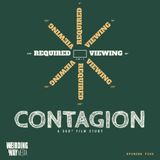
About this episode
We get into Soderbergh's refusal to dramatize (he dispatches one of his Oscar winners inside the first ten minutes), Scott Z. Burns' script that treats a virus as a logistics problem, and a camera that teaches you to fear a door handle before anyone explains the science. We dig into what the film called correctly — the spillover, the contact tracing, the race for a vaccine — and what it badly underestimated: us. Jude Law's blogger selling a fake cure looked like a subplot in 2011; it reads like the main event now. Science versus rumor, the system versus the people it serves, and a film that only got more required the longer we waited — from every angle.
Media scholar Dr. David D. Perlmutter and Chris Stachiw, the Doctor of Podcasting, wash their hands and trace it back to Day 1.
———
The Kulturecast is a film and culture podcast from Weirding Way Media, hosted by Chris Stachiw, the Doctor of Podcasting, alongside a rotating table of guest co-hosts. Each week digs into where film and culture meet — and how each one bends the other. Now home to sub-feeds including Required Viewing: A 360° Film Study with Dr. David D. Perlmutter.
New episodes weekly.
Subscribe on Apple Podcasts → https://podcasts.apple.com/us/podcast/the-kulturecast/id931361376
Spotify → https://open.spotify.com/show/5wjxip9XVYapYuY12yEaGY.
Back the show: https://www.patreon.com/cw/kulturecast
Transcript
Automatically generated, so expect the odd misheard name.
We're in way medium. It's quite possible you're highly contagious. Don't talk to anyone. Don't touch anyone. We're working very hard to find out where this virus came from.
It's in schools and it's in the mall. Have you found any treatment at all? No. It's going to spread. It gets on airplanes.
It travels at 500 miles an hour. We're all guinea pigs. Oh, my God. Contagion, rated PG-13, in theaters and IMAX September 9th. Hello, everyone, and welcome to Required Viewing, a sub-feed RSS podcast on the CultureCast feed.
I am your host, Chris Tashew of the CultureCast, and I am joined by my good friend all the way from Texas Tech, where he is the professor of media and communications. He wrote a book in 2008, or is it six, about blogs that just had Jon Stewart's mind spinning on The Daily Show when he was on there. Your friend and mine, the professor, Dr. David Perlmutter. Hello, Chris.
You're not going to say what a great day to be talking about the most upbeat film known to man. On this episode of Required Viewing, we are taking a look at Steven Soderbergh's 2011. That's right. I said it. 2011 medical thriller called Contagion.
So the film is directed by Steven Soderbergh on a script. By Scott Z. Burns. It stars a lot of well-known actors. Marion Cotillard, Matt Damon, Jude Law, Gwyneth Paltrow, Lawrence Fishburne, Bryan Cranston, to name a few.
The film is about a fictional outbreak of of a virus that in 2011 probably seemed far-fetched to people to lay people that watched it though if you read what the experts said about it at the time and subsequently it is closer in reality than a lot of films that had been done or have been done since but the film is about a respiratory outbreak that starts in china that spreads to the united states that kills people does that sound like real life does that sound familiar because it is unfortunately On this episode of Required Viewing, we are going to be talking about somewhat sensitive subject material. So if you are triggered at all by that, just a fair warning. We are not going to belabor the point about COVID, however, because the comparisons to COVID are obvious.
It's not like we're having to do the heavy lifting with that. Plenty of other people on the Internet since 2020 have done that as well. But we will be talking about why this film is required viewing from a 360 degree lens. So, Dr. Perlmutter, I am so infinitely curious because you are you are normally such an upbeat fella.
And I can't imagine what would have been going through your mind. I'm all I'm just I'm obviously putting on an act here. I want to know why. Oh, why did we spend an hour and, you know, 45 minutes watching Contagion? This film, when it first came out, did not particularly interest me.
I mean, there's a million films to watch and books to read, and I just have to make some decisions. And part of the block was that, yeah, I had read this book before. I had played this game before. I'd watched this TV movie before. I'd watched this cinema theater movie before.
Like the plot of a virus comes and kills a lot of people. And you follow the medical authorities and the government, but you also follow people, individuals who are caught up in it. It is a very, very familiar folktale that's in our culture. And I can go back to stories from the 1930s that have this plot. There's a very famous novel, Earth Abides, about a spread of a virus and there's only some people left.
So I thought like, yeah, you know, I don't need to see another movie on this. Then about a year passed and somebody I really respected, this is before I knew you, I would always follow your advice, but somebody I respected before you said, yeah, you really should watch this. And I did. And I came away with some impressions that I felt really applied to what we're talking about when we say 360 and required viewing. First is when you're dealing with a topic that even before the events that later impacted this film and made this film have a second life, literally, on streaming because of what happened later years, almost within a decade of this movie, you always have a question, right?
You're making a movie or you're appreciating a movie and you have, and I was noticing when I was rewatching this movie that it's under the category drama, medical thriller. And I was thinking how unlike most dramas and medical thrillers this is, because there's a certain distance here. This is a very Coen Brothers adjacent type of movie where you see things happen. People die. Children die.
Disaster strikes the human race. Terrible, terrible things are happening to characters that you come to like and empathize with. But the camera is not further away. It's not like this film is shot with a 600 lens from wildlife or something in a valley. But there is this distance scene. semi-documentary form.
And that's a really interesting choice by Steven Soderbergh. And that's something to talk about. Like, I think it works to have that, to not have melodrama, to not emphasize the drama with like, Sundering music and like people bursting into the tears. Because the other thing is his direction of the acting is he's a lot of the actors. They're not reacting in a normal drama or a medical thriller.
They would. There's not a lot of like bursting into tears and ranting and raving and like real emotions here. And those are all fascinating as a choice. with this topic. And then the second part is it's often been remarked that if you knew nothing about the 1930s and didn't know that there was a Great Depression going on, it would be hard to tell that there was a Great Depression going on in, say, American society just by American movies. That a lot of American movies from the 1930s were super focused on entertainment.
They might be gangster films, they might be all dancing, all singing musicals and people jumping in and out of water in synchronized swimming. I mean, There was a lot of emphasis on entertainment because Hollywood felt, and I think that was a very good, astute observation, people didn't want to see their misery reflected on the screen. They already knew they were unhappy and miserable, and we're going to pay a ticket to go see somebody else, even a great actress, being unhappy and miserable because of the Great Depression. So there was something to talk about in this film Because we, to some extent, this has been classified as a COVID movie, but it didn't happen during COVID. But think about it.
How many COVID movies have we had? Like, almost none. And that was a Hollywood decision. That was a creative decision of many people. We've had documentaries.
We've had a billion news reports. We've had probably a trillion social media posts. But it is interesting how often... people will just say without thinking about it, like, yeah, movies reflect the society that makes them. Well, sometimes they do, but it's in a mirror darkly, or it's like a reverse image, or it's a mirror that a blanket has been thrown over, or the mirror is redirected in another direction. And I think that it's very interesting to see this second life of this film as maybe the only representative of this Big shock we had a few years ago to our society, our economy, our life, many people's lives.
And why is that the case in terms of how cinema reflects society? So there's so much to talk about here beyond the actual film of what is happening on the screen. I, similarly to yourself, did not see it when it came out. But I did, unlike yourself, not watch it until, like most people clearly did... The early months of the pandemic.
I remember watching this in, let's call it a window of April to July of 2020, which at the time, I mean, you know, your mind is racing. I mean, I can't put myself back in that position, but my mind was racing as to... the possibilities of what we could be experiencing in the real world based on what we're seeing in this film. And in a lot of ways, and this is the thing that I think you've already kind of alluded to it a little bit, cinema does allow us to live out our fears, wants, desires, like any good art, especially as the way we interact with cinema, I think is so personal. And it's so kind of sustained i mean you look at a piece of artwork like a painting. And you just sit there and you can spend as much or as little time with it as you want.
But cinema requires a layout of time to be able to enjoy it completely. If you watch five minutes of a movie and go, I didn't get it. It's like, well, you watched five minutes. If you watch five minutes of Star Wars and you don't get it, yeah, well, it's because you watched five minutes of Star Wars. And maybe there's five minutes in there that you can watch to get the basic gist of it.
But Cinema is a art form similarly to, I would say, video games and board games and anything more interactive that requires you to interact with it direct and lay out an amount of time to give it because it's expecting that of you. With a film, that's the runtime, obviously. And so cinema allows us to explore things that we hope never happen in real life or are exaggerated, embellished versions of things that happen in real life. So, like I said, I just wanted to get this out of the way here. The contagion in the film, as we see it, is four times deadlier than COVID actually was.
It kills one in four people, which is insanity, because the world that we see in Contagion, like you've already alluded to, is not the world that we lived in. The world that we. Lived in was a lot, not less exciting, but it's a lot less cinematic than the way even this film that's attempting to be pared down, to your point, is in fact doing. I mean, we have in this film people looting and rioting and all these things that never really happen. And again, it's that... processing of what we perceive our fears to be ahead of time versus should these things ever happen what they actually could be i mean you know to talk about another kind of touchstone point for so many people especially my age 9-11 there haven't really been great 9-11 films either because no film about 9-11 is really going to reflect the actual genuine insanity of what so many people saw and went through and experienced on that day, either people who were seeing it on TV or the first responders or people in the buildings or or the people in charge, or any of that.
Nothing can actually speak to the genuine insanity of that event, other than, like you've already talked about, documentaries, or things where we're genuinely just talking to the people that were involved and having them tell their stories. There are shockingly few films about COVID. I don't suspect that there will be any films about COVID for a while. We may get one kind of definitive thing, but I think, unfortunately... For COVID, there's just too many extenuating circumstances that kind of have become baked into it that have created a longer tail for it in kind of an overwhelmingly negative way than something like a 9-11 or other kind of things that we as an American society or a global society can use as a touchstone.
I think it's interesting. Contagion speaks to the globalness of a pandemic, which... a film had not really done. You know, the other film I really think of when I think of these kinds of films is Outbreak, which was a much more like localized, I would say fake proposition, but I believe, correct me if I'm wrong, Dr. Perlmutter, because I think you probably have seen it or at least know about it. It's like air, it's like Ebola that's passed through the air, which is, I mean, infinitely more horrifying than COVID, but it's not real.
I mean, what this film is attempting to be, like you've already mentioned, is real. as real as maybe a documentary or documentary adjacent, but it's not trying to make this... It's not that it's not trying to make it exciting, but it's not trying to turn it into a full-fledged, the world is going to end and we have to stop it. The stakes aren't to that point. We see that society still exists in some capacity and is not completely broken down, so this is not an I Am Legend situation, but... Ultimately, the thing that I find so interesting is kind of this opening conversation to have about the movie is, for even the things that we did see in real life, the film is even more exaggerated.
While it's not as exaggerated as one would have thought in 20, you know, to look back on it in 2011, that may have seemed like a complete insane embellishment and exaggeration. Looking at it now, it's like, The film, for me, ends up being somewhat sobering. I'm like, oh, wow. Some of the things that did happen happened worse than in the movie. Some things that happened in real life that happened in the film didn't happen at all.
But at the end of the day, what's so interesting about a film like this one is I would say it's intentionally prescient because I think Soderbergh. And Burns and everyone involved. Were trying to be cognizant of the way the CDC and the WHO do things outwardly. But I also think it's very interesting that they took to task the idea of like, what is the back channel communication that we as humans who are at a lower level don't see from the people that are still humans at a higher level. And we get to see some of that in a way that feels more honest and genuine than anything else where it's like all these stalwart people with absolutely no foibles making decisions.
And maybe there's one person who wants to blow up the city or turn the city to glass to stop the spread of the virus. But that person is often the one who's taken out of command at the end of the film. In this, it's like, no, no, no. everyone here is trying to do their best within the framework of things. And I like that there is that honest conversation here about that, because again, like it's, it's not every day you see a film like this. And it's not every day you see a film like this, that I think most people in a global kind of community have had at least one shared experience, or there are things in this film lines in this film that are like a slight, like, Oh, wow.
What a weird thing to hear in 2011, keep 10 feet apart. Like, Something that would have been a line in 2011 that no one would have thought anything about that now has kind of a cultural touchstone. It's weird because I haven't seen him. I saw this film originally, like I said, in 2020 and having watched it five years later. six years later now, it's just, it feels different. It's not as kind of scary and foreboding.
It's more just like I said, it's kind of sobering. And really, in a way, I think it speaks to the kind of introspective nature of cinema that they could have this conversation nine years before it actually happened. And even they wanted to push it further, probably because again, it's not that COVID wasn't entertaining or exciting, but compared to this movie, it was not. Yeah. And we often discuss here about filmmakers have this infinite array of choices.
Everything is a choice. The electricians make choices. The carpenters make choices. The costumers make choices. And you hope that those choices are aligned with a vision of what you want the film to be.
And obviously, the default choice for the traditional Hollywood or Bollywood or any film industry is that every style and scene and acting, every element of the film contribute to the intended tone and feel of the film. So yeah, we're watching, if we ever watch Fast and Furious and the soundtrack is Fast and Furious and the dialogue is Fast and Furious and the lighting is Fast and Furious, irregardless of the cars. speeding along and crashing and blowing up. And that's the default, right? So when a film decides, okay, we're going to have a subject matter that is sensational, that is thrilling, that is stressful on the edge of your seat, it's like, wow, there is a global pandemic that has a Extremely high death rate.
People are dying everywhere. What's going to happen? The decision to make an anti-tone of this, I won't even say, maybe the medical word antiseptic is not the right one, but this social distancing of the camera. I would say it's pretty apropos, though, in terms of if you want to lean into it. Yeah, it is very.
It's very, the film is clinical in a way that a film like this needs to be. I mean, we have multiple characters in this film played by well-known actors and actresses just die, just die. They just die. It's not to say it's like real life, but sometimes in real life, things do just happen. And a scene with Matt Damon reacting to, and I don't think it's a spoiler because I think it's the psycho or scream moment of this movie.
So they spoil it more or less in the trailer. Having Gwyneth Paltrow die in the first 15 minutes of this movie, and in a pretty graphic, horrific way, and having Matt Damon essentially, oh, we were just at home, and now we're at the hospital, now she's dead. To have that just presented so matter-of-factly with no... It's not with any pomp and circumstance, but it's just kind of clinical in its presentation. Or when, again, when Kate Winslet dies in the film.
I mean, it's a smash cut to. She's sitting in this bed suffering and dying to then a smash cut to her in a mass grave. Like it is presented with so little. It's not even emotionality, but it almost feels like I said, clinical. And I would say antiseptic is a good way of presenting it because a virus does not care.
A virus doesn't care about your feelings or anything like it operates on its own time. I mean, Morgan, not Morgan Freeman, Morgan Freeman's an outbreak. Larry F is my girlfriend and I have been calling him because we've been watching Hannibal and he plays Jack Crawford in that. He says, you know, the virus has just been sitting around with nothing to do other than to mutate. That is its singular purpose is to infect, mutate and spread.
And I like that again, like all the characters in this film are just kind of it's not matter of fact, it's just that is it is what it is. And that's kind of. Of as close. That's what makes this film feel kind of so not icky in a way, but it's just so matter of fact and clinical because that's kind of the way life is for the most part. Yeah, I mentioned sort of the absolute classic science fiction novel Earth Abides, which has been developed into a series.
I haven't seen it out yet because it's one of my favorite science fiction post-apocalyptic novels. An alternate Earth, there's a virus that spreads and a lot of people die. And the title and sort of the tone of the book is that this is sort of a natural part of life on Earth. I mean, we live in this very, very specialized time in the first world, in the 20th and 21st century, where the infant mortality rate, if you live right now with medical health insurance in certain countries, you probably don't have to worry too much about infant mortality, which was the, or, or death and childbirth, which for 99.999% of hominem, you know, human like creatures on this planet, that was like the biggest worry you had.
We don't have to worry about starving to death, but it's all based on this tiny little flick of, of time, right? Because you just go back a hundred years and people had to worry about those things. And then you go back a hundred years and even today people are, I mean, again, you restrict yourself to like Western Europe and North America and But, you know, some other countries, too. But it's just so interesting to me that that moment, let's just let's go into the film for a second. There's that moment there.
And Matt Damon, I know he's there's some controversy about Matt Damon. Like, is Matt Damon really a good actor? I think he is often a good actor. I think sometimes he's asked to do things which seem a little bit over the top for me. But boy, he was restrained in this film.
And, you know, sometimes you sort of visualize the moment where an agent calls an actor. And I sent you a little text because last time we talked, we did Jaws. And we mentioned Michael Caine. And I had forgotten. I just saw on the Internet recently after we recorded that a story about Michael Caine did a lot of terrible movies in the 80s and 90s after he'd become a star.
And And he told on a talk show about this conversation where an agent called him and said, I have a role for you in a new movie. And Michael Caine said, what's it about? Obviously, meaning originally the movie. And the agent said, about a million pounds. And Michael's saying, I'll take it.
Well, it was Jaws X, you know, what he was in. Jaws 4, which was filmed in the Bahamas, which he also mentions how he loved filming in the Bahamas, which was the other positive. It was like, oh, at least it was in the Bahamas. It's like, okay, sure. Terrible movie, but at least you get to go to the Bahamas on vacation.
And I was imagining Matt Damon's agent calling him and saying, yeah, there's a Steven Soderbergh film. It's about a virus, you know, Probably you don't have to read, you know, but Steve wants to talk to you about this. And I bet that when Damon read the script, he said, you know, I like this. And I'm going to talk about one particular scene. And you've referred to it is that Matt Damon's wife, Gwyneth Paltrow, is not quite patient zero, but close to patient zero.
Right. One of the first people in the United States to to get this virus. And she's there's a whole backstory, which we literally see because the film starts on day two. Which I think was so smart, by the way. Brilliant.
Absolutely brilliant choice. So he takes her to the hospital and she dies. And there's this moment there where he's being told by the medical people, like your wife is dead. Your wife has passed away. And he, this is good act.
He, he, he says something to the effect of like, I just brought her in here. She just has a go, like he's not accepting like the brain. And I can imagine that must be true a lot. You know, the, the, like there's, there's death where, you know, grandpa has been sick for a long, long time and he's in hospice. And I'm sure the conversation at that point, but like, Grandpa has, you know, has finally passed away.
OK, thank you. We understand we've been preparing for this. But like you're super young, healthy, vibrant wife of your young son. What? And you see that shock.
And I think that's that's really so well done. Is that and it even it is it isn't even like shock. It's like, what are you saying, doctor? I'm so shocked. It's he's ready to move on to the next item of business because his brain can't register what he's just been told.
And that is throughout the film where people default to professionalism. They default to what they know and what they're familiar with. And again, it's a brilliant way of doing a thriller differently than having every single component of the film, including the acting, be thriller parking adjacent. I guess I wonder if you were to just, you know, to show this film to aliens from Galaxy Quest and say, is this, you know, is this the historical document? Is this the historical documents?
I think that this film would convince a lot of people. You know, again, it doesn't play up the fact that Gwyneth Paltrow is a well-known actress. We know that she's a well-known actress because we exist in a framework and society outside of the film. But the film doesn't care that Gwyneth Paltrow is a well-known actress. She's the first person to die.
I mean, in terms of the big name actors in the film. There are other people that die. Like you mentioned, there's other kind of patient zero adjacents or patient 0.5s. But it's so pared down. I think of other films that I really like.
And I think in a lot of ways, this reminds me of Zodiac. Because it does have with the day two of it all, it has that kind of not investigative journalist, but it does have this kind of who done it? How did it happen? And the film, I think, smartly punts on it for the last two thirds of the movie or last third, I guess, in terms of the Gwyneth Paltrow, Matt Damon story. Because I think for me, and I don't know how you feel about this in terms of a film that is a ensemble film. with some of the most well-known actors of the mid-2010s in it, including Bryan Cranston.
It was just like an everything for a while. I guess that's what happens when you're on the most successful television show at the time. They're just like, hey, you want to be in Contagion? Hey, you want to be in Godzilla? Hey, you want to be in...
I was in Power Rangers at the time. He was in like every... Matt Damon's character and his story in a lot of ways is if you were to make that film now, that's the character that you would make the movie about. The entire film. Because it's kind of the experience that we as human beings were getting in terms of the closest experience most of us could have had would have been what Matt Damon's story is.
But what's funny is Matt Damon's story is the one that ends up being the most, in a film where there's very little manufactured drama in terms of like, things that are happening that seem kind of bombastic or unrealistic. Matt Damon's story is the least realistic in the film, which is kind of shocking to me because again, having lived through the reality of it, what his story is, is so not what really happened, but all the other things are so much closer. And I kind of almost wish that there had been no Gwyneth Paltrow story in the film. There had been no patient zero story because for me, I really, really resonated with the parts of the film that are the investigative parts because I think that's the part that's kind of, like you said, it's not Coen Brothers, but it is Coen Brothers.
Soderbergh is such an interesting director because it's not that he does or doesn't have a specific style, but the way he makes films is not workmanlike, but it seems like when you watch a Soderbergh film, you're like, okay, that's a Soderbergh film. It has a feel to it. It has an intentionality, the way it's put together. I mean, my God, the scenes in this film of showing the door handles and the doorknobs and the screens are just, you could just see Soderbergh sitting there going, we have to have these shots in here. We have to make sure that the audience is privy to kind of the dark black humor of the film, which is like, you know, we as humans are the ones who are creating the problem, solving the problem. making the problem worse.
We as humans are trying to do everything. We're doing everything. It's just weird. We as human beings are part of this framework of what's going on in the movie so much, but yet at the same time, the film just feels a little bit emotionally restrained, more so than another film would be. I like that about Soderbergh.
I haven't watched enough of his films. I But the films that I've watched, they don't lean into the bombastic emotion of things. The ones that I have seen are kind of... They're restrained in a way that it's aping real life as much as a film can without belaboring the point of making it like, well, this is... We're trying to make this a mockumentary.
I don't think... Again, if you showed an alien in this film, I think they might think it's real life, but anyone... watching it is going to be like, well, this is a movie, obviously. There's Matt Damon and Gwyneth Paltrow. I think that's kind of the smart thing that they did do is cast all these big name actors because if it had been just Matt Damon and Gwyneth Paltrow and a bunch of second tier actors, that would have been distracting. In a film like this where you have Gwyneth Paltrow dying in the first 15 minutes, you have to load your movie up with a bunch of other well-known actors because otherwise you're just kind of distracted by the fact that Gwyneth Paltrow died at the beginning of the movie.
So I remember a long time ago, and I cannot credit who said this first. Sometimes you think something was an insight that was just a collective. But I swear this goes back to the 1970s about Academy Awards, that they go to the people who act most, not necessarily the people who act best. And that insight has had a recrudescence on the internet. But it's been around a long time.
And it goes to another aspect of film that we love to talk about, is that film, despite its electronic medium and celluloid, still sometimes, and it's got all these other technical elements, you are most of the time watching humans played by humans on the screen. And yes, you can have a film like... Hail Mary, where one of the characters is a technical creation, but still does a great job. I remember when I was watching The Muppets long, long ago, I thought, why isn't there an Oscar for Best Marionette or Puppet or something to give there? But Rocky in Hail Mary....
Andy circus would have gotten that Academy award for best motion capture. That's the, that would have best puppetry would have probably transitioned into mocap is what would have happened, which would have been great. But you know, we don't live in that forward thinking of a society, unfortunately. Now in this movie, Lawrence Fishburne, of course is famously known as a low key actor, like a slow burn actor. Like, like he doesn't tend to play roles where someone's screaming into a phone, you know, Missiles are incoming or something like that.
However, I would argue that Kate Winslet, Matt Damon, and Gwyneth Paltrow, these are some of the best performances of their career because they toned down some of the acting, sort of what makes them better. themselves, right? Like, this was not a Gwyneth Paltrow performance. This was not a Matt Damon performance. This is not a Kate Winslet performance. This was acting, like in a role, which again, I'm just assuming must have pleased them a lot to not be told.
Can you imagine being a famous actor and you show up on the set and the director says, well, okay, you don't really need to act here. We just want you to be you, Cary Grant. Now, Cary Grant apparently was very comfortable playing Cary Grant in movie after movie. But I think somebody has to be right. Somebody has somebody has to be.
And he did a great job. Edward G. Robinson was the best Edward G. Robinson. And he played along with that, you know, in double indemnity as an insurance investigator.
He was Edward G. Robinson. You never forgot that. But like, wow, what a performance as Edward G. Robinson as an insurance investigator.
This is also something when you're creating a movie, especially if you have name actors that have a persona that is well known to the public, the decision to tell them You are going to be playing a role here. I want you to bury yourself in the role and not have us ever think that we are looking at you, the actor, the name. And I thought that was just so good a choice. And I would assume for the actors, a very gratifying choice. I think that continues to speak to this kind of Soderbergh clinical pared down nature of the film.
Like you said, you have some of the biggest actors at the time in this movie being given what I would consider to be relatively mundane roles. I mean, yes, you have Gwyneth Paltrow kind of emoting and dying and Kate Winslet doing the same thing and Marion Cotillard and all these other really great actors. I mean, I want to say this is around the time Marion Cotillard ends up winning the Oscar. It's either maybe a little bit before, a little bit after she won the Oscar for La Vie en Rose. And yet they're asked, I think it's funny, you really shine a light on this.
It's not that they're not asked to do anything, but they're really not being asked to do a lot. They're being asked to kind of inhabit a real person, an amalgamation of many real people. It's interesting. I would say that there's less roles in this movie, but more jobs that these characters are. Kind of exuding or inhabiting.
You mean you have John Hawks playing a janitor, so kind of like the lowest rung person in the film, all the way up to Bryan Cranston playing like the rear admiral who's kind of in charge of everything. And then Lawrence Fishburne, like you have all these levels of people. And yet, the characters are played convincingly by these great actors because they're really inhabiting the job, less a character. And what's interesting is it's kind of, the film is more of a seeing what a stress test would look like on a system that is set up in a certain way, that's organized a certain way, and seeing where those kind of weak points are within the system. I mean, one of the, I forget exactly who it was, but in the moments after the pandemic, the actual pandemic started, But before the vaccines were made available to people, an official was Matt Hancock in the UK revealed that watching the scramble for vaccines in Contagion inspired him to order a much larger quantity of vaccines for the UK than his advisors had recommended.
And it's things like that where it's like the stress testing in the movie that is done is so interesting because again, it's less about the actors in the movie. Kate Winslet A third of her scenes are in a hotel room. The other third of her scenes are her lying in a bed dying. Like she's not, it's not that she's not been given anything to do, but it's more about seeing these things in a, cinematic sense and less in a documentary sense, which I think gives us maybe as the audience a little bit more empathy and sympathy and understanding for these characters. Because like you just said, we already have a connection to Gwyneth Paltrow or to Matt Damon or to Lawrence Fishburne.
These add these actors who, play normally play these kind of acting roles and they're just being act asked to play normal people and there aren't a lot of I mean even in a film where it's you know to just to speak to a random example where the crawdad sing that's supposed to be a normal person like a real everyday person or those Hallmark films. They're meant to be real people, but yet the tone is so elevated that it doesn't feel remotely like reality. This film, because the tone is so muted, it does reflect reality in a way that so many films I watch struggle with. They try to be reality or real or reality adjacent. And this film, I think it's what's so uncomfortable about this movie is Soderbergh, I think, is uniquely qualified to make a film with a tone like this one about a subject material like this one, because, again, the clinical nature of a virus is it doesn't care. whatever it wants to do, it's going to do, it's going to spread, it's going to promulgate, it's going to continue to infect because that is its sole purpose.
And Soderbergh understands that with this kind of the forward momentum of the movie, there is this kind of pressing nature of like, we got to handle this because things aren't getting any better, things aren't getting any better. And showing that, you know, we don't already mentioned the day two of it all, but showing that kind of day tracker at the bottom of the screen, I think is that kind of just ticking time bomb of like, we need to get this, you know, we need to solve this problem because things are getting worse and things are getting worse. And, and I liked that Soderbergh once again, it's like, it's, you know, it's not the world ending, uh, But for a lot of these people, it's seeing their world around them kind of crumbling.
And how long can they kind of put up with that and handle that until it breaks? And I like that again, we don't see it. We see the film, they find a vaccine and then things start getting back to normal. And I did find it funny. It's like day 135 in the movie, less than a year.
Jeez, what an inconvenience. What an absolute inconvenience. It's very funny. Like the movie can't bring itself to really go that far. And I think it's funny.
Soderbergh, Soderbergh and Burns are holding themselves back as filmmaker and screenwriter to kind of say, well, what would be as far as we think it could go realistically without gilding the lily and having it kind of seem out of touch and completely over the top? And even here, they seem kind of over the top and their best interest to try and not be, it still is not reality. It's more reality adjacent, but it's fairly far adjacent over, which again, I think in the best intention of a screen reader, writer and filmmaker trying to make something real, I do think it's smart to kind of still take some artistic license with it and not say, well, we want it to be as real as possible and as baseline reality as possible.
That doesn't serve an audience well if you're trying to at least still somewhat be entertaining, because this movie is still trying to entertain or shock and thrill. Yeah, and on the word entertainment, There are different kinds of entertainment. So you can watch a very serious, dark documentary about some terrible episode in the human condition, and you can be entertained in the sense that you're riveted to the screen, and who knows, you might be in tears at the end or just depressed afterwards. Or in awe of the human spirit. Or the opposite, yeah.
So entertainment is a very broad tent, and there's a lot of films that can be, or any other kind of creations that can fall under that. And I do think that This movie will go down in history because it I think there's probably more quotes than the one very apt one that you brought up. I think a lot of people immediately, of course, we haven't talked about the actual phenomenon because it's so self-evident. but yeah, this, this movie had this amazing second life of suddenly, and I, I've, looked up some of the numbers, but it was, for a while, it was among the most rented, among the most downloaded, watched movies of COVID. And it's interesting that it was sort of singular. And again, there's a term in Hollywood, I don't know if they had it 30 years ago, I don't know if it still exists, called non-recurring phenomenon.
My Big Fat Greek Wedding did not set off 300 My Big Fat Albanian Weddings. Hollywood considered it to be a sort of one-off hit. And this film was not a massive hit when it came out. It did okay and then left. And it didn't really leave much of a cultural impression until, of course, COVID came along.
And then so many points were different and so many points were the same. But it's really, if you're writing 100 years from now, if there's somebody to write film history... Or cultural history. They will say, like, this was this not very often happening phenomenon where a film by years becomes popular because the events mirror so closely something that happens. And I want to talk about one.
So I mentioned I did not see the film originally. Well, one of the reasons I eventually saw it was... We haven't talked about the Jude Law character yet. And this is 2011. And thank you for the plug.
Yeah. In 2008, I published a book and I was on The Daily Show with John Stewart to talk about it. And the book was called Plog Wars. And it was about the rise of this world, which was relatively new because the Internet had been around since 1989. But For a long time, the Internet, and I did a little history of it in the book, was more of an interesting place where people would post something and then maybe somebody would take down something and then add something.
But you had to go to use nets or other places for real social interaction, the social media world that. we think of, was really born in the mid-2000s in the world of politics. That's where I studied it. But I also noticed that blogs were exploding for everything else, sports and, yeah, medicine. And so this movie was like really only about four or five years into that world. And you think about COVID came along when we were fully within society. the everybody's online.
And especially during COVID, so many people were home with a lot of extra time on their hands. And social media was like the only place for them to directly, to have any social contact whatsoever, positive or negative or everything in between. And I thought the Jude Law character there was fascinating because I think that was one of the very first characters in a film who hit the zeitgeist of the social media conspirator. There had been characters in films before who had posted something on the web or downloaded something or cracked open somebody's bank account on there. But he did a good job, too.
Because Jude Law was not known as a sniveling... villain character before this, but boy, he pulled off the absolutely rapacious person who happens to be sort of right a little bit, you know, but that's really the challenge. And I've done separate other podcasts on conspiracy theories, and that's really the challenge is that we do live in the world today, and you could, I don't know where you can start dating this, but certainly from the Kennedy assassination onward, Long before the Internet, trust in government, if you use polls and you look like trust in institutions and it almost doesn't matter that much, you know, your politics. There is very, very little trust in major institutions and governments.
And so this was this film did a very good job of. saying who has influence and power in those situations. It's not necessarily the government. It's not necessarily... Do you notice how the press plays almost no role in this movie? Really, some things were not that prescient, I would say.
That's one of them. The traditional industrial legacy press. If this movie was made in the 1970s, there would be a crusading reporter from the New York Times. There would be You know, some conferences at networks, the president would be calling the president of CBS and saying, look, you know, we have a problem here or something like that. Just the talk about a prediction where the large irrelevancy in often in news of what was the traditional news industry.
And everything, especially for people who skew younger demographically, that was there too. Boy, this movie was just this treasure chest of themes and ideas and conditions and situations that are now so much of a part of our world. And so that's why I think, well, we've certainly talked about movies before, whether it's Jaws or Barry Lyndon or something, where they've earned their historic place in the history of film. This is one of those few films that has earned a historic place in the history of history. Well, and you mentioned it already, and I want to kind of belabor the point just a moment about things that films do and don't.
So, and you know, I like, I think what's interesting is that the reasons this film is remembered is because of the things that it does, the things that it's prescient about, the things that it kind of got right ahead of time that should have been warnings or kind of, you know, like, well, Hey. If this happens, this might happen. But the thing that's also very interesting are like you already alluded to the things that it misses, like the press being a bigger part of it, um, This movie had no idea that there would be any sort of bipartisan or partisan nature behind a pandemic, which is another thing that we saw. It never thought about remote work or anything like that. We still see people going in and out of the office.
There's no supply chain backups, which is another thing that was like, again, talked about. And then the toilet paper. Right, right. No, no toilet paper. Media.
And I say this as somebody who's been reading science fiction my whole life. I swear I have thousands of science fiction story, apocalyptic, post-apocalyptic in my head. And at no point were there riots over toilet paper in any Isaac Asimov or Robert Silverberg story. And it's, and it's, it's stuff like that where it's like the, the things that they thought would happen are more exciting than the mundane dystopic things that we did see. Like people, fighting over toilet paper or other things that are just kind of, again, so just kind of what one would think is just something we take for granted.
But during a supply chain breakdown, those are the things that people really kind of worry about. But you nailed the point that I think is the most interesting one for the choices they made and the ones they didn't make. With the Jude Law character. Because now we kind of have all these influencers on the internet, podcasters, YouTubers, content creators alike that all have a thing they're trying to do or something they're trying to sell or an idea that they're trying to put forward and push. And the thing that I find so humorous is, yes, they nail it with the Jude Law character.
But the thing that seems so goofy is he's seemingly the only one Really? Movie? One guy? Come on. Like, I guess we're maybe led to believe that there are more of him out there in the world doing what he's doing.
But I like that it's just, you know, he seemingly exists in a vacuum, which is a very kind of movie cinematic way of doing things. Because in reality, it was like eight, like you've said, eight million different things going on at once with eight million different hands being stuck into the pot or, you know, rays trying to get people's attention. And I like how the film's like, no, no, it's just one guy. It's just one guy. It's like, I mean, yeah, if it were easy enough to go after and pin it all on one guy, I guess we probably might have been able to do that.
But it's so I love how the reality of the situation ends up being so much more multifaceted than even the movie could attempt to understand. But I guess if the movie just wanted to boil it down to. one character representative of the many, which I think is what the film is ultimately trying to do. To have one character with Jude Law playing a kind of conspiracy theory blogger on the internet is probably the best way to do it. Not having like an army of them. I will say, just to point something out, I know if you notice it, I feel like it would be hard to miss.
They were just like, you know what would make Jude Law look ugly? a fake tooth, right on top of his other tooth, facing kind of off to the side. That will make Jude Law look weird. It's like, what are we, he can't just be like a good looking guy. He couldn't just be like a charlatan, a snake oil salesman who's good looking. Like they had to give him like some like crooked tooth.
I just, I found it very funny because I was like, is that Jude Law's real tooth? That can't be, it doesn't look like that, right? Nope, he does not. The ugly Jude Law up 5%. I'm sorry.
Well, Chris, there's two scenes that I think are missing in this movie, and I can send my notes to Steven Soderbergh for his updated 2027 director. I think you mean Steve. You're on the first name basis with it. I hope so. But first is, while it is so typical in Hollywood to have these situations where one character is conflated and stands for hundreds of others, I think to give a sense of the chaos of the internet and social media at that time, you're right that There probably should have been a scene where maybe some stranger Matt Damon, is watching their screen at home.
And there's 500 little boxes of people screaming into their own social media feed, all contradictory pieces of information. Or maybe Bryan Cranston is noticing this and talking to Laurence Fishburne. About it. And then the other part I thought was that we live in a world where there... I've just actually co-written a book chapter about massive attempted disinformation by different malicious actors overseas who try to manipulate American public opinion and use either fake influencers or surreptitiously use influencers.
There should have been something about other countries. I mean, if. If it wanted to go that other level of predictive realism is that, you know, it wouldn't just be the CDC and the government and one podcaster, right? There would have been a million voices. And I think it would have been helpful and realistic for 2011, but certainly for 2012 or 2013 or 2019 and 20, that there'd be more craziness than just one representative.
Yeah. Yeah, I would say it boils it down. It boils some of that down a little too far and to have it represented at all, but so kind of underrepresented in the film. feels like such a missed opportunity for the filmmakers. And given that the film is an hour and 46 minutes long, just punch it up to another two hours and give us a little bit more of. Give us a little bit.
I mean, again, it is a global response film because we do see Marion Cotillard in Hong Kong, and we see Lawrence Fishburne at the CDC, and we see Kit Winslet in Minneapolis. But it is a rather American-centric film, which... Again, the contagion is an international contagion because it comes from a bat that ate a banana that a pig ate in Macau. And then it was. Prepared by a chef who shook hands with Gwyneth Paltrow.
And so she's the patient zero and that's case zero. So it is an international thing because it didn't come from the United States, which is funny because we haven't seen that yet in a film where it's a outbreak that started here that's a genuine, like, real thing as opposed to like, well, it's the I Am Legend mutant disease or whatever it was in that movie. It's always this kind of, you know, there is some of that kind of fear of the outsider-ness in this movie. You know, there's none of that as well, which is surprising. Remember, there was a lot of anti-Asian sentiment during COVID.
There's none of that here in this movie, surprisingly, again, because the film does not even, the film doesn't even hide that it talks about a A American businesswoman who traveled overseas and just came back. There's literally a news report in the film talking about. So there are things that the movie missed that I do think are interesting because for the things that it missed, it did get a lot of things right. But for the things that did get right, there were things that it missed. And those things, like you said, especially the Internet angle of it all.
They almost make the film feel a little bit more dated than it should. But at the same time, I don't know if I need that movie because I've seen what that movie would look like. And I don't think that cinema could be as ridiculous as some of the real things we saw happen. And that's the thing that I kind of take some solace in with cinema is cinema is, unless it goes that far... tends to be a little bit more restrained because we know that real life is not always as exciting as movies. That's not always the case, but not everybody's life is a movie and as exciting as a film.
But that's what's nice about this movie is this movie doesn't take it upon itself to kind of blow everything out to the nth degree. It really wants to kind of tell a more grounded, real story. But even in attempting to do that, it does still miss a couple of things. And those choices that it does make, I think, are so interesting. But the choices that it doesn't make, I think, are just as interesting because, again, it speaks to what the fears were in 2011 and 2010 versus what the fears ultimately would end up being in 2020 and the years subsequent.
And that's, again, just to speak to who was making it when. Like, you can tell when this movie was made. It was made before the pandemic. There's no way, you know, like it just, you don't know how many years before, but it was made years before. That's for certain.
Yeah, this is definitely a 2011 movie, and that's fine. I just think it's worth registering that it was prescient, it was prophetic in some ways and wasn't in others. But that is always the way of speculative fiction. And again, I'm a science fiction nut that has been reading science fiction and reading science fiction writers talking about science fiction. You talk to a lot of scientists, and they'll say, you know, I watched Star Trek when I was a kid, and that really inspired me to be a physicist or something like that.
So science and science fiction have always been very adjacent to each other. The other thing, and I guess this is my sort of last take on this movie, which it does a very good job of showing, is one argument I made to my students over the years is that I... strongly am loyal to the journalistic method, because I'm a journalistic professor, journalism professor. I like to think I'm a journalistic professor as well as a journalism professor. The scientific method and the historical method, which are very much the same, in which you dispassionately try to investigate something to try to find out the truth as much as possible. And you follow the clue, right?
So let's just take in terms of, say, a forensic investigation or a crime investigation, you want the police, the detectives on your detective show, to not make up their mind three seconds into showing up at the crime scene and ignore everything else to focus on proving what they want to be true. And same thing with science. Same thing with journalism. I always tell my journalism students, if you're rooting for the story that you're investigating to turn out one way, that's a problem. You have to pull back and actually be extra careful in checking any facts that you think confirm what you hope is the conclusion.
Do not write the headline before you investigate the story, even if it seems self-evident from the very beginning. We've had so many examples of this. So this movie does a really good job of praising science, like the idea of science, the scientific method, the precision, the professionalism, while also saying, you know what? science is done by institutions which are flawed and fallible, and it's done by people who are flawed and fallible and have the same problems and maybe loyalties or error-proneness or personal. Lawrence Fishburne, his fall is straight out of Greek tragedy of somebody who is probably, if you looked at his record, I'm sure if you looked at his resume, his CV, This is somebody who was a lifer for medical investigation and following things, and he makes one mistake.
It's a very human mistake, but it breaks the rules of science. It also breaks the rules of government service and the rules of what they were deciding to do for the public good. And I really like that they included that, that they didn't make the crazy podcaster internet nut. to be all of the bad guy, and then the scientists were all just perfect and doing everything super competently all the time. The humanization of the scientific method in action execution was a very important lesson from this film. I think it's important that cinema try to reflect real life, but not to the point where like you've already talked about people are sitting there going, well, I came to the movies to get out of real life for even five minutes and you can't stop for five minutes to give me something other than real life.
What are we doing here? I like that, like you said, there is some, and not by some, I mean, there's a fair amount of nuance to this film with the characters, especially the scientific ones. And they're put in a position in this film that's the unenviable one, which is they're trying to be the arbiters of information for a public that is slowly growing jaded with them. And what's funny is 2011 feels like such a far cry from where things would end up. But even in 2011, Soderbergh and Burns understood that kind of push and pull, the give and take of the medical field with the public and the way that those two are perceiving one another.
And I do like that Laurence Fishburne's character does something that is, you know, not it's not bad by any stretch of the imagination, but it is a thing that he is doing based on personal preference, choice and desire. not good science and smart decision-making. He's doing it because he feels a humanistic need to make things better. And I like that we see those small human moments in this film because, again, the film is so kind of stark in what it's presenting a lot of the time that to have those kind of more human emotional moments throughout a film that is kind of really clinical in its presentation, I think does reaffirm to me like, well, there is still good in humanity and there is faith in the world, but it is not necessarily visible all the time.
Sometimes it's obscured because it has to be. It has to be obfuscated forever. you know, good reason and for bad. And I think for me, you know, the last thing I want to say about Contagion, the smartest thing the film does is that day two at the beginning of the movie, because it has you the entire movie asking the question of, okay, what in fact happened here? And, you know, it's, you know, I talked about Zodiac earlier, a film that, and I really resent this about Zodiac, that that film was dragged for not having a satisfying ending. Have you read the case of the Zodiac Killer?
That still doesn't have a satisfying ending 40. 50 years later. So to expect that your film is going to wrap up a real life case in a satisfying way that doesn't have a conclusion in real life, I think is kind of missing the point and missing the point of what Fincher was doing in that movie, which is creating a film about what is the obsession with finding out the truth look like? And are there ways that you can lose yourself to something that don't involve actually losing your life? And.
I mean, I think it's pretty clear that's what Fincher is going for in Zodiac. And I like in this movie, it has that same level of kind of withholding something from the audience for as long as possible. In Zodiac, they do it the entire movie. And then at the end, they're like, we're not giving it to you at all. We'll give you the minorest kind of decision of like, well, we'll stick our foot one toe in the pond and say that we maybe thought it was arthur allen but we're not gonna say it was him because that's not fair because that's not what the movie's about and i like that this movie understands that at the end we do need to give the audience something and i like that it's this kind of it's i would say it's the nastiest kind of it's the punch line of the if the movie's the joke the punch line is the last scene of the movie because we have the The company that Gwyneth Paltrow works for and the reason she's in China being the reason the pandemic starts because of a spillover event where a bulldozer makes bats go crazy.
The bats move. The bats go where they're not supposed to. They interact with pigs. The pig then interacts with the chef, and that's where the thing comes from. I like that that scene is at the end of the movie, because it gives you something to ponder the entire movie and almost forget about.
And then you see the scene with Matt Damon looking at this picture on his camera with Gwyneth Paltrow and the chef, and you're just like, they're lingering on it for far too long, so there must be some importance to it, but we don't know what it is. And then at the end of the movie, they show it. And it is just, I don't know, like it, it always makes me chuckle because it's the movie being so mean. It's like, and oh, by the way, this was all started by a bat eating a banana in the jungle somewhere. Like it's, it's very mean hearted because like, again, like it just shows the banality of things stacking up over time.
You know, I watched a documentary recently about the challenger disaster and it's like all of these little things went wrong, but it's, it's not always one big thing going wrong that causes big, bad things to happen. Sometimes it's just a, it's an, it's a, it's an, a summation of all these small, bad things that cause a big, bad thing to happen. And all, you know, if one bad thing can happen, all these other small, bad things can happen. And I love that this movie, again, even at the end of it, it's like, but by the way, It was just this one small thing that happened. And all these small things are happening all the time and nothing bad ever comes of it.
You think this is the only bat that ever ate a banana in the jungle that dropped it? No, but it's again, I like how they even say it in the movie. They're like, well, one bat and one pig had one bad interaction. And there you go. Life is like that.
Things do just happen. I mean, you know, to speak to the real world of it, we don't know where COVID came from even now. In 2026, there's not one specific answer as to where it came from specifically. And the movie shows us where the virus came from. but we're not sure that the characters in the movie know. I'm not sure that the characters in the movie could ever find that out because there are some things that the movie shows us that the audience is privy to that the film is, the characters are not.
And I like that we as the audience are given that moment at the end of the movie just to kind of be like, well, see, it is just this one small thing as opposed to like this huge kind of inciting incident that's, you know, exciting and bombastic. It's not, it's just a bulldozer's, disturbing some bats okay and it's just such a mean like it's I wouldn't say it's a mean movie but it leaves you going out of the theater being like man that movie is just a little mean spirited at the end because it's just kind of I don't know like the characters talk about it throughout the movie of like what what could have led up to this happening and we're not sure that the movie is ever going to show us I mean again by saying day two we kind of assume there might be a day one but there might not have been a day one if I had been Soderbergh I may not have even shown day one I'm going to just let leave it up to you know Night of the Living Dead.
Night of the Living Dead. They never tell you where the zombies come from. And that's the thing. The movie kind of deigns to give you an answer. It doesn't need to.
But I think that's probably one of those moments of like giving the audience something to walk out on that isn't tonally what we've seen throughout the rest of the movie, but also sends the audience out on this kind of uneasy feeling of like, well, if that's all it takes, why. Hasn't it happened? And that's kind of, you know, to go back to why this movie got reappraised in a way that so many films never did. It got reappraised because real life happened. But just think of a world where contagion is not a thing anybody ever cared about, and its life was as long as 2011.
It's so wild to me, because I do wonder what that conversation would be like in a world where you could have covered... I guess, what would it have been like to cover this film from 2011 to 2019? That's the question that I have. Because I wonder what the conversation would have been like if you had covered this film in those preceding years up to the real life event because I wonder if the sentiment would have changed about this movie if we would have had different feelings on this movie but now it's kind of hard to uncork that or recork that bottle and that's the thing about this movie is like it's an interesting time capsule of a time and a place where The mass public was very uninformed about things a lot less than they are now.
And now we can't live in that society anymore. We're like fundamentally changed. And this movie, I think ultimately serves as an interesting artifact of a time and place that does not exist anymore. but also of a world... It creates a world that is parallel to our own that is not the one we inhabit, but we could look at it and draw parallels from. And also maybe, and I think that this is the big takeaway, stumbling blocks to avoid in our real world, which is seemingly my hope for a movie like this is it serves as kind of a... a prescient warning for the future, as opposed to a, let's look back and remember.
It's like, no, let's continue to take the messages from this movie forward and know that, you know, a movie like this, I think serves multiple purposes, but being entertaining as one, being informative as another, but also being a warning as a third. And I think that this movie succeeds in all three of those ways, which so many of these films just kind of feel stale or boring or really bombastic. And this one, It really manages to balance all three of those plates at the same time, which is a very hard thing. I think that this movie stands on everything we've discussed, including it being a transitional movie from one era, where if this had been made 10 years before, it would have been very... big media, industrial media, top-down centric.
Again, the president would be meeting with the president of CBS and NBC, and there would be a crusading reporter from the Washington Post. And it would be very, could have been done in the 70s type of- Yeah, China syndrome. The centralized powers that be, what we used to call in journalism, the golden Rolodex, Whereas a reporter wanted to do a story on earthquakes, they'd flip through their Rolodex, ask young people to look that up on eBay or something there, but the list of contacts, paper, cards in a rolling card file and say, oh yeah, there's a professor at USC wrote a book on earthquakes. And like, there's a former chairman of the National Graphic Survey who did a report on earthquakes and I'll call them, right?
And now everybody, you could say everybody's an expert. And like Discovery Channel will have two parts on alien abduction documentaries. We live in a world where, for good or ill, information is chaotic. It's diffuse. It's democratized.
I wrote another book called Visions of War about the visualization of warfare. I ended in the late 1990s. Now I can watch a video where all the video was taken by Ukrainian soldiers using body cams and hundreds of drones. And then these young Ukrainian soldiers, because they're young, they edit it together and you get the most incredible combat footage that no human has ever seen in history outside of a fictional movie. And it's available on YouTube every day.
So we're in this amazing world now of just being bombarded with billions of fake, misinformed, mal-informed, disinformation, whatever. Bad faith actors as well. Yeah. I mean, avatars, AI, AI news, whatever. And This movie was made just before that chaos began and is reflective.
So it is reflective of its time, but also was, as we said, prescient about some things. And that's why this will be a required viewing movie even long in the future where we learn about how a movie can be relevant, which is something that's very interesting to ask about any movie is, is it still relevant? And I think this one is. And that's all I have. And you know what?
I think the last thing I will mention is they didn't say YouTube in this movie once. They didn't say YouTube one time, which I think speaks volumes to when this came out, because there's not a single cutaway to YouTubers or anything. There's Jude Law and that's it. But there's no YouTube. There's no social media.
It's very. it's a very different time. And yeah, it's a, it's very rare that you have a time capsule like this. That's also entertaining. That doesn't feel stale. And that also has a lot, you know, else going on.
So like Dr. Perlmutter mentioned, though, if you want to hear him and I talking about things that aren't super upbeat and bright films like contagion, You can find us over on the CultureCast RSS feed, where we do required viewing once a week. Every Thursday, we talk about films that should be required viewing for one reason or another, or most of the time, many reasons. Multifaceted, as one might say. You can find that over on the CultureCast RSS feed.
And if you want to hear me and Dr. Perlmutter talking about films that aren't required viewing, just talking about stuff we want to talk about, you can find that on the CultureCast feed as well, where the professor and I talk all about just films, movies, in general, sometimes good, sometimes bad, sometimes everything in between. So you can find us over there, like, rate, and review the show on iTunes and Spotify in that order. That's the one that helps. If you want to help out the show financially, patreon.com slash culturecast is where you can go to do that.
Every little bit helps, but more importantly, like and rate the show on iTunes than Spotify. That's what helps the most. And as always, come back when we talk about something that's not contagion, but, you know, might not be any more optimistic, which probably won't have as much viruses. Thanks for watching!


Similar episodes across the network
Matched by shared keywords.
-
S1E3 — Denial, Anger, Acceptance
2 shared keywords: chris_stachiw, weirding_way_media
-
S1E2 — 46 Long
2 shared keywords: chris_stachiw, weirding_way_media
-
S1E1 — The Sopranos
2 shared keywords: chris_stachiw, weirding_way_media