
Season 1 · Episode 833
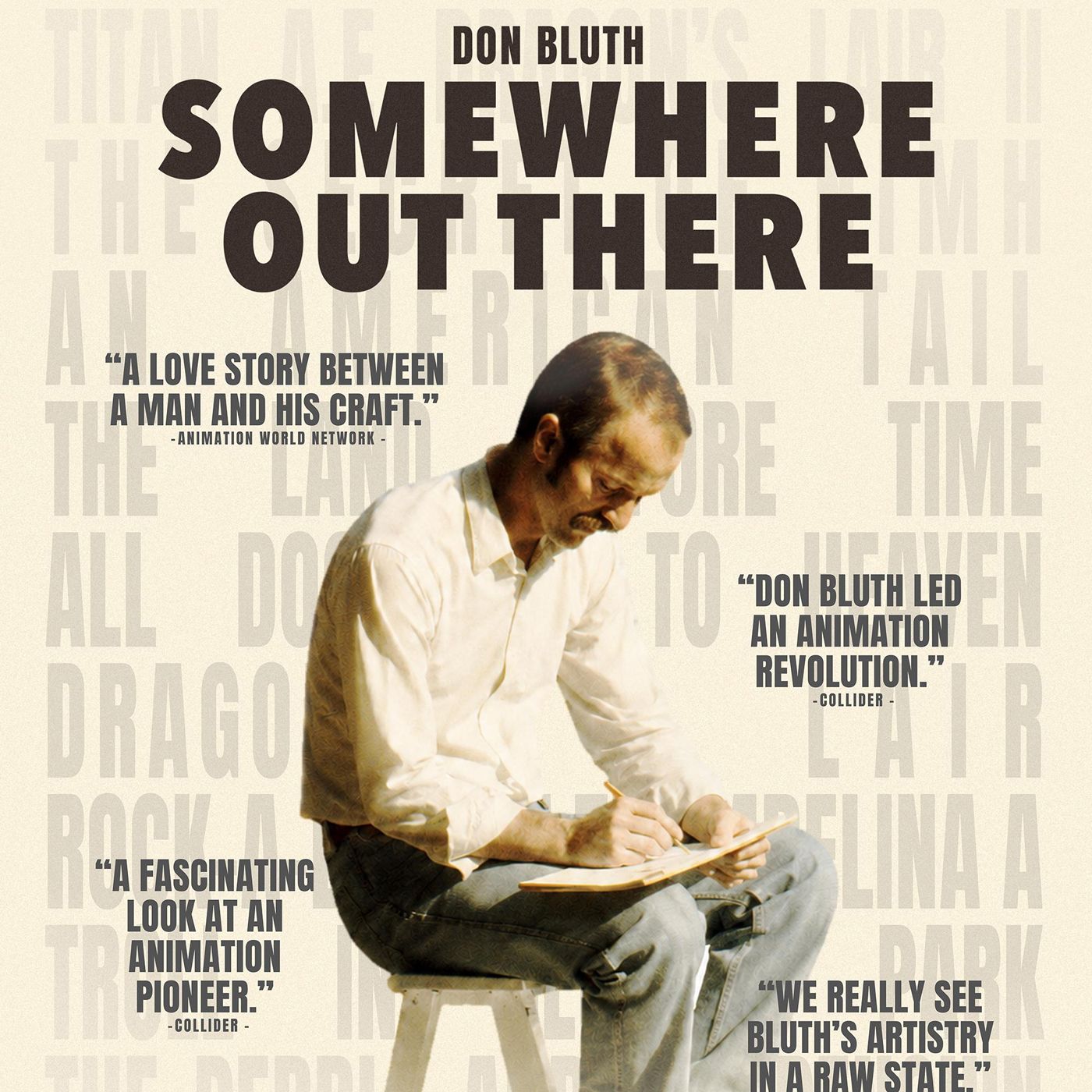
Special Report: Don Bluth: Somewhere Out There (2025)
About this episode
LaMattina and Walker met at Blue Sky Studios and made I Am Big Bird: The Caroll Spinney Story (2014) before turning to the man behind The Secret of NIMH (1982), An American Tail (1986), The Land Before Time (1988) and All Dogs Go to Heaven (1989). They recount a first shoot in Arizona where the cameras kept failing, and the Rubbermaid bin in Bluth's house that rescued it: raw film reels of a news piece shot just after Banjo the Woodpile Cat (1979), outtakes and all. That footage set the film's intimate tone and convinced them to drop the talking heads and stay with a single point of view, Bluth's own, as he wrestles with ego and the pull between art and commerce.
They explain why the story ends at Anastasia (1997) and not Titan A.E. (2000), what it was like to sit in the room while Bluth watched the film, and how it traveled from its premiere at the SCAD Savannah Film Festival to Dublin, where people who had worked for Bluth nearly filled the house, and on to Annecy. Fergal Lawler of The Cranberries composed the score.
Follow Copper Pot Pictures on Instagram and visit the film's official website.
The Projection Booth is part of the Weirding Way Media podcast network. Explore more of our shows at http://weirdingwaymedia.com.
Transcript
Automatically generated, so expect the odd misheard name.
Hold your ears, folks. It's showtime. People pay good money to see this movie. When they go out to a theater, they want cold sodas, hot popcorn, and no monsters in the projection booth. Everyone pretend podcasting isn't boring.
Turn it off. Turn it off! Don, why did you and the other animators who are working with you now leave the Disney Studios? Three years ago, a former Utah artist walked out of the Walt Disney Studios and formed his own company. They walked out because they thought the original Disney traditions were no longer being followed.
Here at Don Bluth Productions, we are very excited about the growth of the animation industry. How would you like to grow up to be hailed as the new Walt Disney? I'm a different flower in another part of the garden, and I'll. Do something else that won't be the same. Megan's Lair is the first video interactive arcade game in.
Which a player has to watch it like he would a movie. It's like super live action. I think it's great. We're currently in the beginning of our second phase, which is a creation of our own live action pictures and our own distribution arm. Are you trying to compete with Disney?
If they're not going to make this art form grow, then don't stand in the way. We're very disillusioned by the commercial failure of that film. We're really excited about these pictures because we think they're the best entertainment and the most commercial films we've ever created. But in recent times, there have been reports of big financial problems, perhaps even collapse. I'm made of rubber, and I bounce back very quickly.
Yeah, I wish I were a better businessman, you know. That's what I do. Hey, folks. Welcome to a special episode of The Projection Booth. I'm your host, Mike White.
Today I'm talking about the new documentary Don Bluth, Somewhere Out There. Talking with the directors Dave LaMattina and Chad Walker. This film, of course, looks at the life and career of animator Don Bluth, who left Disney to make The Secret of NIMH, An American Tale, Land Before Time, all kinds of good stuff. Longtime collaborator since their Blue Sky production days, La Matina and Walker, turned up rare archival footage that shapes this film's intimate tone. I had a wonderful time talking with these guys.
Great, great documentary. Really insightful. I hope you have a great time listening to this interview. Enjoy. Well, Dave and Chad, how do you guys know each other?
You've been working together for a long time. Oh, that's my favorite question. Chad and I have been working together in one form or another. For 21 years, we actually met working at Blue Sky Studios. We were just drawn there because we had a love of animation, but not the skill to do it.
So Chad was a PA and. Story on Ice Age, The Meltdown, and I was the director's assistant on Horton Hears a Who. And I can tell you that the first time I met Chad, I'm a little bit of a competitive person. And I thought to myself, this guy is either going to be my best friend or my worst enemy. And here we are 21 years later, and he is still my worst enemy.
Were you jealous of his baseball hat collection? Oh, I think maybe I have a problem now that you're pointing it out. I collect hats. I collect movies. Oh, no.
A funny little nugget is that I saw Blue Sky. Sorry, I saw the first Ice Age in the movie theater. And that was the movie that I was like, I want to make movies. I want to like be a part of the machine. You know, I want my name to be in those credits, you know, became like a bucket list thing.
And then got the job at blue sky met Dave. Right. Amazing. I did not realize until we made this movie that Don Bluth was set to direct ice age in 2d. Oh, wow.
Yeah. And I thought that was bad. We were going through all the archive and all of a sudden we'd look at a tape and it would be like, hey, that's the old Blue Sky. Studios logo on this tape. What's this all about?
So anyway, all comes full circle. That's pretty amazing. It sure does. What was your guys' experience with Don Bluth apart from that when you were growing up? Yeah, you know, it's funny.
There's like a sense memory thing when you think of Don's movies. And so I almost sort of, I almost sort of remember his movies, his feelings, right? So Seeger and Nim, I remember just like kind of abject terror. And I like, it was one of those ones where like, I was scared of it then. So I didn't really watch it again until we came back to this movie.
And I was like, oh, what was I scared of? But it's fine. And then there, All Dogs Go to Heaven was another one where I was like, I don't think I can process the emotion of that movie again until we did this. But for me, the film that was, like, the one that still sort of holds that place in my heart was An American Tale. Just because of, like, you know, obviously the music is great, but the, like, Fievel as a character still lives so real in my heart and so emotional.
And, like, I could see him walking the streets of New York and sort of feel that. That, to me, was the first. animated film of its kind like as i experienced as a kid was just like oh this is more than you know like a fairy tale this is like a really real human drama that just happens to have mice yeah yeah for me growing up every time i'd go to my grandparents i would watch land before time that was like the one and like i don't think i realized it at the time but like something was going on up here and in my heart that like watching that movie with my grandparents you know for like the 30th time not realizing like oh yeah he loses his parents and he gets you know reunited with his grandparents at the end it just like is permanently imprinted on me and so much so that like it was one of the first movies I showed to my kids when they were younger you know that's incredible.
How long had this idea kind of been with you guys as far as we're going to make a movie about Don Bluth yeah. I think that sometimes I craft these origin stories in my head that probably are not, are just memories of what I want them to be. It's like a storyteller in me, but like no one's actually asked us how long, but there used to be this cabin in a blue sky where they had all like your wall there, there was all DVDs and they would, you'd take them out for reference. And I sort of feel like in that moment, Chad, at this point when we had moved the studio to Greenwich, we're in Greenwich and I'm like in the closet and I saw it and I was like, oh, that would be a really cool film to make about Don Bluth.
Because by that point, like when I started Blue Sky, I didn't know any of the things about Don. But animation is such a small industry that, you know, you'd be working with someone. And at the time, I'm taking a lot of lunch orders. So I'd take a lunch order for a story artist like Bill Frake. And he'd start telling you about his time in Ireland with Don Bluth.
And you're like, well, this is really cool. So it always been sort of percolating since those Blue Sky days. But it wasn't until, you know, I don't know, sometime, after we had made this film about Carol Spinney, who was Big Bird on Sesame Street, that we thought, well, this is an area we like to explore, this idea of artists who have shaped so. Much of our lives that you don't really know anything about. And certainly, no one knew much about Carol Spinney, and I don't think a lot of people, unless they were diehards, knew much about Don Bluth.
And so, I think it's been percolating for many years. Yeah, I think we started, you and I started talking about it probably seven years ago, I think. And then maybe five years ago, we really started thinking about. Because it's hard with Don's story. If you just look at it through the lens of the movies, it's hard to be like, well, it kind of ends not happy.
It's not a really great ending, you know? And so we talked about it a lot and we researched it a lot. And then, you know, Don has his book and we read his book. And then you start to think, oh, this is like actually a love story between a man and his art, you know, like the, The movies, even though some maybe didn't perform. Very well, you know, like why?
Like what happened? You start to get curious about different things. And so we finally were able to get in touch with Don. And from the moment we talked to him, it was like, oh my God, this guy's amazing. He's so poetic in the way he speaks.
He was just so open, just right on the phone call, like with us, you know, that we were like, I'm so curious. I'm so curious. And then we started interviewing him and it became very clear that it's not a movie that about. His movies, you know? It's about this man's journey to try to save the thing that he loved more than anything, you know?
And I think he did it. Was there a certain thing that kind of pushed you over the edge that just said, we have to do this now? There's no way that this can't be our next project. I think we are each other's first hurdle to clear. It took a long time convincing Chad that this was right.
So, like, once Chad was on board, I was like, oh, cool, we're in. Also, Don said yes, you know? I think it was just learning more, right? So I think we we have a Chad and I as as creative partners and friends of many years now have high expectations of one another. And so I think we're always pushing each other to like have more.
What's the answer? What is this really the right project for us? I mean, we're always it's always some project is in the conversation like that. And so I think he would kind of be like, that's nice, but why should we do it? And then it'd be like, push me back.
Okay, what is it all about? Don wrote a book, which I think gave us a better sense of who he was. And we had been talking to him at that point when that book came out. And I think it was, Chad, I don't know if it was the archive for you that pushed you to say like, yeah, but we got really lucky with this film and that Don had donated his entire archive to the Savannah College of Art and Design. And I think that was probably around the time when you know, we started really thinking about doing this because we could see what was in there.
You couldn't see the videos that hadn't been digitized yet. We actually did most of that. But you could see like a description of like live action reference, American tale, a recording session, you know, never say never, whatever it might be. We started to see like, oh, maybe there's something there. Yeah.
Yeah. For me, you know, you sit around, you read a lot about a lot of people and you go, oh my God, this person, they're amazing. Let's make a doc about them. And then you look into, oh, they already have one made about them. Or, you know, you try to get in touch with their representatives and maybe you don't hear back or maybe they say no, you know?
So there's like a lot of hurdles to all your great ideas that never get made, you know? And so yes, Don saying yes, that's a huge part of that, you know, because now you think, oh, this guy is pretty fascinating. I want to I want to talk to him more. And he says, yes. Okay.
That's great. And then you talk to him on the phone and you're like, Ooh, I'm very intrigued, you know, but maybe you're not convinced. Like, cause like making a movie, man, that's like a couple of years of your life. You know what I mean? Like, so you're like.
Intrigued, but I don't know. And then you go to Arizona and you sit down and you start talking to him. And all of a sudden you're like, Oh my God, like, this is a really great conversation. He is, he's very, this is like so important. He's not holding back.
He's very truthful, you know? And, That, to me, that first conversation, even though we can talk about the first shoot, it wasn't ideal. It didn't go great. But just talking to him, I was like, oh, yeah. Oh, I'm so fascinated by this guy.
Yeah, I think everyone else will be. Remarkable that nobody has made a documentary about him before. I mean, it just blows my mind because he was such an important force in my childhood as well. Growing up with Secret of NIMH, that was such a great movie for me and such an important film. And then Yeah, like he made so many waves in the animation business that I thought for sure there would have been another doc.
But it's amazing. And what you guys put together is fantastic. So tell me about that first day of shooting, though. I'm very curious. Well, I think we were both shocked, too, that no one had made one.
Yeah. You know, and I will. Credit two people for for us. First of all, I think, you know, a lot of people had asked to make a film about Don. But Don has worked as a long partnership with a man named Lavelle Lee, who was our executive producer on the film.
Lavelle had seen I Am Big Bird and sort of could see who we are. Because we do definitely wear our hearts on our sleeve, for sure. And there's no better example than that film. And so back in the day when Carol said yes to us when we were just young pups with not really any credits to our name, That opened a lot. It continues to open all these doors for us.
So we'll always be thankful to him and his wife, Deb. But then Lavelle having seen it and saying, oh, I get these guys. I see who they are. I see how they can handle a legend. Open the door to us to have that first phone call with Don.
And I think that once the door is open, I usually feel pretty good, pretty good about our chances. But sorry, Chad, you tell us about the disastrous day that we had. Yeah, it was a disastrous day that led to probably the most golden moment of the whole project. So we go down to Arizona. We get set up at Don's house and we're interviewing him.
And he's great, you know, like I said, being very truthful, not holding anything back. But the cameras are just like turning off randomly, malfunctioning. The SSD cards are just completely crapping out. Luckily, we're shooting two cameras, like very, very stressful. And so we didn't really get through everything we wanted to get through.
But luckily, we had a second day. And so we go back to the Airbnb that we're staying at and we're just discussing like, how can we fix this for tomorrow? And we get a call at Don's not feeling great. And so the next day. We can't shoot.
And we're like, oh no, like, you know, pretty small budget, this movie, you know, like something like this is pretty catastrophic. So we go over to Don's house the next day just to like talk about next steps. When can we come back? Like that kind of thing. And out of the corner of my eye, I saw this like, Rubberman bin, you know, and it was just full of stuff and sticking out of were these huge film reels.
And we're like, Don, what is that stuff? And he's like, I don't know. And we're like, can we take it with us? You know, we'll like digitize it and we'll, you know, give you a copy. He's like, yeah, sure.
And so we took it and it had a whole bunch of great stuff in it, but it had the raw film reels for a news piece that Don did right after he made Banjo and right before he was about to make Secret of NIMH. And it was like the raw reels, like it had all the stuff, like he's just talking and a reel runs out, you know, like that doesn't happen anymore. But it's like magical. And like you see him sitting there, the expression on his face before he starts talking, you know, so you hear before action, you hear after cut. And that really shaped the whole tone of the movie, you know, was like, oh, we want it to be intimate like that.
And so we went out and we started looking, we found a whole bunch more footage that was like that. it actually influenced like our next shoot. We were like, you know what we're going to do? We're just going to, and we'd never done this before. We're just going to go with an audio recorder and we're just going to sit and talk with Don. We'll just see what happens because he was so honest and so poetic in the way that he spoke that like, we didn't want to constantly be like, Oh, Don, you're getting ahead of us though.
Let's jump back to when you're doing this. And we just had these amazing conversations and they turned out to be amazing conversations with a legend who, just about how to make a movie, you know what I mean? And like all the stresses that go into it and all these themes started to come out. The battle with, you know, ego, like he has ego and alter ego. He has a name for this, you know, battle that he has within himself and this battle between art and commerce, you know, like all these things started to come out and it fit the vibe of that footage that we found just randomly in the corner of his, you know, room.
That was brilliant. Yeah. of everything, and even hearing the voiceover guy at one point screw up and have to say things again, and, oh, this is how I said it before, now I have to say it again the same way. It was remarkable, guys, and that must have been so freeing for you. I have to say, I experienced it like you did, Mike. Chad edited this film.
He edits a lot of our films. This one was really special, because I don't think, since we went back to the beginning of our friendship, we've evolved a lot. And he basically was like, I need eight weeks with this footage. And I was like, all right, cool. Find that time for you.
So like he went off and sort of did editing on this picture and was going through all the material and everything else. And I was doing other things around the business and other projects or whatever. He would send these, this film stuff. And I don't think he thought I was going to, you were a little worried about how I was going to respond to it. Cause like, I think when we started this, it was like, yeah, we're going to do like the, you know, there's a talking head and this is done or whatever.
And he sends me back this thing that I can only describe as like really lyrical. But it so beautifully captured Don that I was like, yes, dude, let's do this. This is awesome. And so that led to like, you know, I love I feel like this film is fitting for what Don is, the artist that Don is, you know, but it would lead to these things like he would send like an eight minute montage that was just like a memory sequence for Don. And again, he's like, I think you're going to hate this.
But we were actually, the first time I saw it, we were in Ireland where we were doing a scoring session with our composer, who was one of the guys from the band The Cranberries. And he showed this thing to me and I was just blown away. I love this. So for me, this film for us represents a big step forward in how we work and also what we see on the screen. So that's all just to say, I love how he put this together as an editor.
And I think it is so I don't know. It's like Don is an artist and he deserves a film about himself that is more than just a standard thing. And I feel like that's what this is. Yeah. Yeah.
I feel like a lot of those decisions in the edit were directly influenced by the type of conversations we were having with Don, you know, like originally in the budget, we had like money set aside to go interview other people, you know, but very quickly we were like, oh man, this has got to be like single POV of Don. Like he, he was just, in my opinion, like, So dynamic and just so truthful, you know? Yeah, well, it was so refreshing that it wasn't just a typical talking head documentary where you're like, oh, let me get this celebrity to say something nice about Don Bluth. Yeah, I mean, that's definitely how we crafted it on paper. And they're like, nope.
Yeah, well, I mean, it means a lot that you say that, you know, because I do feel like there's kind of a risk, you know what I mean? To like break away from that. But the process of making this film was just so enjoyable and so inspiring. because Don, to me, is so inspiring, that we hope that it is an intimate look at this man who then can inspire other people. Well, once you kind of figured out the shape of the film, which sounds like you're kind of figuring it out as the film is starting to really start, right? What are the biggest challenges after that, once you have that in mind?
Yeah. Yeah, I mean, I think... I'm sorry, go ahead, Chad. No, no, go ahead. No, I was going to say, I think it is, he's an artist, right?
And artists, and Carol Spinney said this, says artists continue to work. You know, they're just, it's not, okay, I hit 65, I'm out, I'm retiring. And so it's like, well, how do you tell the story of this man's life who is still, you know, whose work extends beyond even what we show in the film, which like, you know, we get in the film at Anastasia and part of the joy of working with someone for so long is we do have hard conversations. And I will say like, when we came to the Anastasia bit about where we were gonna end the film, that was a big talking point for the two of us. We wanted to end the film in a way that, you know, felt representative of Don's life.
I think Don looks back on his life and career and he's very happy with what he's done. And so we didn't want it to be like, And then Titan A came out and struggled to the box office. But the reality is, and the real story reason behind where we end it there, is that Don is a pure artist. He came in, though, to Titan A kind of as a hired gun to rescue it, right? And so the last real, like, artistic expression, purely Don Bluth vision, we felt, was Anastasia.
And then Anastasia happens to be his most commercially successful film. So our take is that when he is allowed to do what he does best, people respond well to it. And so that was, it was a hard decision to end there because obviously Titan has meant a lot to a lot of people, including Chad. Yeah, that was, that was one of my favorite. I would come home from college and I'd watch it with my younger brother.
You know, we watched it dozens of times. We loved the band Lit. You know, like, I was really, really into it for what it was, you know. But when you compare it to the rest of Don's work, Dave's 100% right. That really wasn't a pure Don Bluth, movie because he was asked to come in and try to get it over the finish line and save it.
Lane, it's the first time that Don gets to actually see the documentary. It was, I will say, showing a film to the person the film was about is never fun. And we were premiering the film at the Savannah, College of Art and Design Savannah Film Festival last October, which was actually awesome because premiered it in a theater for like a thousand people and it's mostly students there and you go I don't know if these students know who Don Bluth is I don't know what this experience is going to be like and it ends up being sold out and like people waiting around like a line around the block to meet him it was really a wonderful experience but before that we're like Don should probably see the movie first so fly out to Arizona sit in his room and we watch the film and now I think I'm sitting now I'm a bald guy so I'm sitting in front of Don and my head is just pouring sweat it's like Arizona whatever and it's like there's some tough parts of the film right where he's like talking about an ego where he calls you know when you ask him why the studio is named Don Blue Studios and he says well it's not Michelangelo and the other guy that painted the big areas it's Michelangelo and it's like this is a rough thing for you to watch with this guy but to his credit like he was kind of, I think, surprised about the ego, but, and we had some, like, factual conversations about, like, this or that other thing, and he had, actually, there was a bunch of temp music still in it when he saw it, and he had some comments with the temp music, and then as we're walking out, he sort of touches me on the shoulder, and he's like, you guys did a good job, and I was like, whoa, like, this is that sort of thing, you go, okay, hold it together, get outside, like, before you, yeah, it was, it was great, he was, you know, sometimes people are just, he never backed down from who he was, was always very honest with us.
It was just, he was great. And so he saw it and respected it. And I think he felt our love for his, his journey, you know? Yeah. Yeah.
That's the tough part. When you're making a movie, you know, the subject of your movie is they're not supposed to love every frame of your movie. And so, yeah, that could have been a really difficult moment, but Don was really cool about it, you know? And I think, you know, He was so reflective, you know what I mean? That like hearing yourself say certain things, you know, I can imagine that's like, whoa, I said that?
That's kind of crazy, you know? But he knew it. You know, he knows. He knew the battle that he fought. And so, yeah, it was just really cool of him to be like, oh, yeah.
Good job. Awesome. So that's October 2025. It's now November 2026. What happens in the interim?
That's a really great question. And it's an interesting time in the industry, right? Where we have something that we know we're really proud of, it's going to resonate. And so we wanted to be very purposeful. About our rollout.
And so we launched at SCAD, which was incredible. You know, there's like a cool part of our job where we make films like this, where you get to bring someone like, because Don actually came to SCAD, which was super cool. And he was able to feel that adoration. You know, Don does conventions and things like that. And I think that sort of outpouring of love is great, but it's smaller increments versus like you go into a stage in a glorious old movie palace in Savannah and you get a standing ovation.
And then, you know, all these students, like literally kids are coming up to, and I say kids, I'm an old man, but they're students. So students are coming up to him and crying. And I was like, this is so cool. Like, you know, we had that experience with Carol Spinney as well. And it's just a really cool thing to be able to give to that person.
So anyway, so we launched a SCAD October 1st. And then we targeted a couple more festivals that were really meaningful to the film. So we went to Dublin, which was incredible. At the Dublin Film Festival, we screened to an audience that was almost full of people, because there's like an I Worked for Don Bluth in Dublin Facebook group, almost full of people that worked for Don. So that was super awesome.
We had, not only were our families there in attendance, which was great, Fergal Lawler, who was our composer, who was the founding member, one of the founding members of the Cranberries, He was there. That was super cool. And then our festival run concluded at Annecy in whatever that was, June, because we wanted to get in front of the animation community. And that was the whole other thing, right, where I had no idea how that was going to go, but we had two sold-out screenings. I introduced the film in French, which was pretty awesome, and I'm still very proud of that.
I don't speak French, and I probably didn't speak French then either, to be honest with you, but I tried. But it was like, that was really, and that was a really cool moment for like a talk about a full circle moment for us, because now we're showing this film at this festival. Like, well, it feels like we contributed something to an art form we love, but also like my old boss, Steve Martino, who's now directing the next peanuts movie. Like he was in the audience cause he was at Annecy. So it's like cool for him to see a couple of us goobers that, you know, grew up at blue sky now directing this film.
And so that was the big festival run to sort of get it out there and build the buzz because when you're doing an indie film like this, so much of the importance of it is people are going to see it only if there's a buzz, right? And so we built a nice little buzz there. We're coming out November 20th, so we can hopefully hit a bunch of families and co-viewing over Thanksgiving. It is on Amazon. I'll do that plug.
But yeah, it's just like, it's an interesting world out there. And in so many ways, it ties back to what Don himself did I'm not necessarily comparing ourselves to him anything other than the indie entrepreneurship spirit, because you do have to fight for every film. You know, it's like we're not the first people to say every film is a miracle. But getting it made is like legitimately half the battle. Now we have to have people watch it.
And I think they will. But it's it is all the long tail to try to get it out there in front of people. Yeah. Did you have anything to add to that? Yeah, just like Don says, man, life's full of these ups and downs, you know what I mean?
And you make the movie, and even if it's the most glorious, stress-free experience ever, that next step of getting it out for people to see, it can be tricky. And it's getting trickier. It's getting much trickier today for independent film to get out there in a meaningful way And I think Dave and I, we have figured out a path for this type of movie. It took a little while, you know what I mean, to kind of line everything up to get it out into the world. But we're ready to launch it now and super excited for everybody to see it.
And, you know, if this path is successful, it might just be the path. Of the future for, you know, for us, at least when we make kind of these smaller budget indie docs. Well, what is the next smaller budget indie doc that you've got lined up? It's a good question. It's like always a thousand things.
I would say that there's probably we've done a lot in sports and we've done a lot in animals, which I know are not at all related to the nostalgia of Carol Spinney or Don Bluth. But I think all of our projects, the hope is that it is like something that people leave feeling good. So we are really deep in something, which I'm not allowed to talk about. That's a little bit sort of maybe larger. But I will say that we just released something on PBS about the Baseball Hall of Fame called Echoes from the Bleachers, which we're really proud of and was super fun.
And we've got a show launching first in Australia on Paramount about an animal sanctuary in Tasmania. But I think, you know, it's like I just took my kid to New York comic-con which is super fun and we had something in the nostalgia space from the 90s that brought chad and i to 90s con and it's like it's really fun for us to walk around those places and look and be like oh there could be a story there there could be a story there but It is such a high bar, as I said, for both of us to each other to first clear that it's not just enough to be like, oh, I love that. I was going to say a name of a show, but I'm not going to because that would sound bad. But I love that show. But maybe there's not enough there to make it.
It's just that's not enough. There has to be a story. And with Don, you have someone that like it's that magic thing where like he has these films that really define my childhood in so many ways. Then he has a really compelling personal story of like how he fought, you know, so hard to save the thing he loves. And he left Disney, left his dream job.
There's like all this drama and that. Then on top of that, Chad's finding Rubbermaid bins of, you know, unseen archive. It's like that sort of magic formula only happens every once in a while. So it's a space that we love. We love I'm Stealing Your Line, Chad.
We love box of tape movies. But it is, yeah, we're always out there. I mean, look, if you got something, We're open. We want to go into music. We want to do some music stuff.
We're in that space. So whatever you got. This industry is so crazy. Like, like Dave was saying this year, we had three movies come out. Wow.
You know, we had our summer of 94, which came out during the world cup. We just had the hall of fame movie come out on PBS. And now we're having this movie come out, you know, and that doesn't mean that we were making all three of those projects at the same time, necessarily. You know what I mean? It's just when kind of things hit, you know?
And so, Yeah, we got a bunch of stuff in development. We have some big things. We have some smaller things. But yeah, the mystery is when do they come out? When do they hit?
You can get a project and all of a sudden you're done in a year and it's ready to go. Or you can have like what Big Bird took us, what, three years to make? You know, like it's crazy. But it's also that's why it's so fun because everyone is an adventure. Yeah.
Is there a good place for people to keep up with you guys and the film online? Yeah, we are. Sorry, go ahead, Chad. I was going to say, on our website, right now you can get kind of release alerts as to when the movie comes out. You know, it'll be, you know, like the Inside Baseball thing is we're launching in all English territories first, but if you're not in an English territory, you can sign up for release alert and we'll let you know when it comes to different territories like that.
But yeah, it's all on our website, which is copperpotpictures.com. Cool. Perfect. Well, Dave and Chad, thank you so much, guys. This was so nice talking with you.
It was so fun. I love this man. I love this movie. I love people's passion for his work, so it's always fun to talk about. Somewhere out there Beneath the pale moonlight Someone's thinking.
Of me And loving me tonight Somewhere out there. Someone's saying a prayer That we'll. Find one another. In that big somewhere out there. And even though I know how very.
Far apart we are. It helps to think we might be wishing on the same bright star. And when the night wind starts to sing a lonesome lullaby. It helps to think we're sleeping underneath the same big sky. Somewhere out there.
If love can see us through. Then we'll be together. Somewhere out there. Out where dreams come true. Thank you.
And even though I know how very. Far apart we are. It helps to think we might be wishing on the same bright star. And when night wind starts to sing a lonesome lullaby, it helps to think we're sleeping underneath the. Same big sky.
If love can see us through Then we'll be together Somewhere out there Out where dreams. Come true Thank you.
Similar episodes across the network
Matched by shared keywords.
-
Required Viewing 10: The Last Unicorn
1 shared keyword: animation
-
Jackass: Best and Last (2026) — "Welcome to the first day of our final film."
1 shared keyword: documentary
-
Melania (2026) — "Here we go again."
1 shared keyword: documentary