
Season 3 · Episode 8
All My Children, Mama’s Family, The Nanny | Giving Thanks for Dorothy Lyman
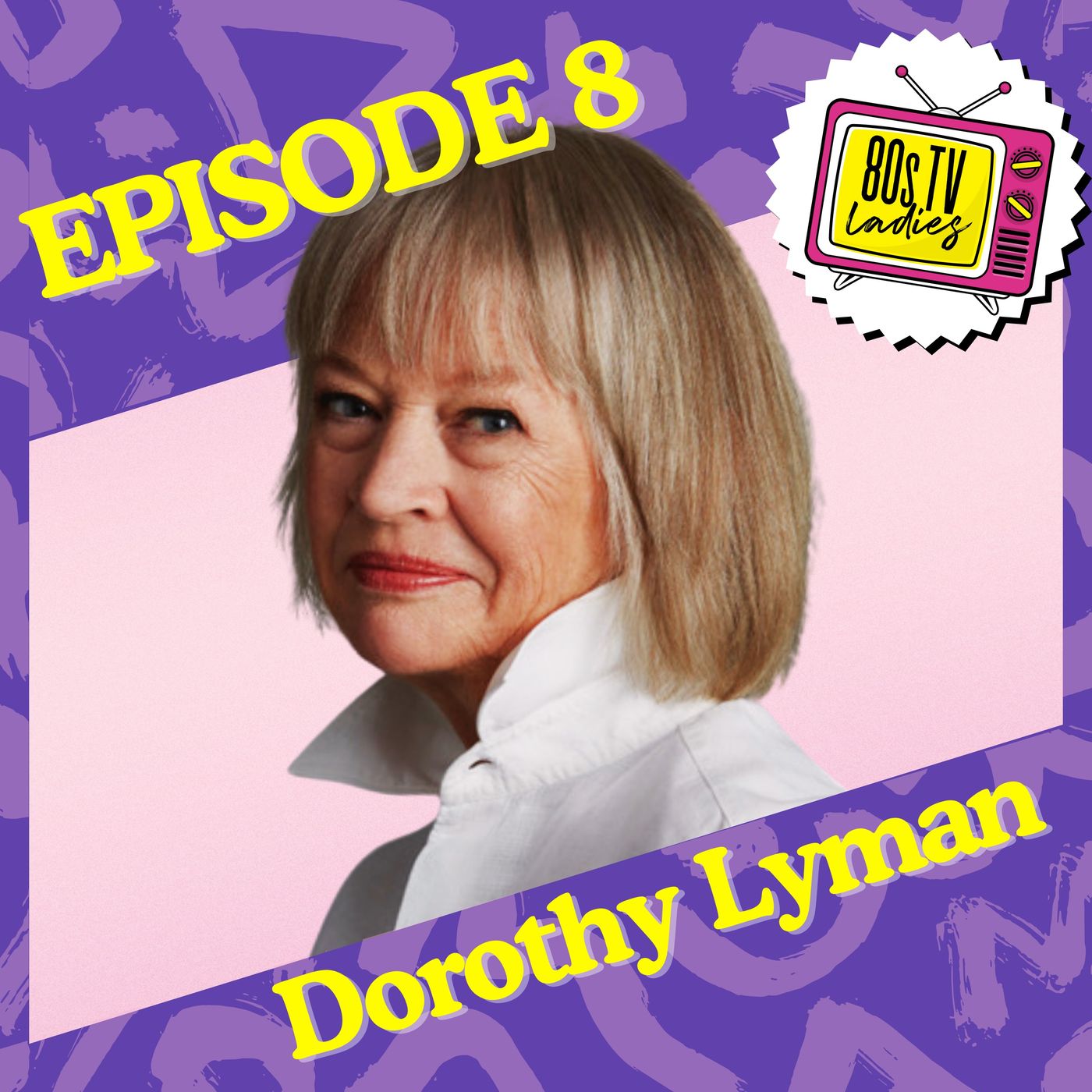
About this episode
Just three chicks sitting around talking...
Susan and Sharon clean house -- and air some dirty laundry -- with The Nanny director and Emmy-award winning actress Dorothy Lyman. You may know her as Opal Gardner from the long-running soap opera All My Children or as Naomi Oates Harper from Mama’s Family. But did you know she also directed an astonishing 74-episodes of the classic Fran Drescher comedy, The Nanny?
THE CONVERSATION
- One-day of work a month on Search For Tomorrow was enough to keep Dorothy from “serving cheeseburgers.” The pay was $400 -- and rent in NY was only $65!
- COMING CLEAN ABOUT SOAPS: Soap operas addressed abuse and abortion and mental illness and many other issues long before prime time TV. “I think it helped a lot of women stuck at home feeling the same things.”
- ON SOAP OPERA FANS: “I couldn’t buy myself a beer anywhere in America the whole time I was on the soaps. The fans are different. They feel like they know you.”
- WHEN CAROL BURNETT CALLS: “Carol Burnett and Vicki Lawrence would watch me as Opal on ‘All My Children’ during their lunch hour on ‘The Carol Burnett Show’ -- that was their ritual. And that’s how I got the job on ‘Mama’s Family’.”
- A COUPLA WHITE CHICKS SITTING AROUND TALKING: on directing the long-running, Off-Broadway hit starring Susan Sarandon and Eileen Brennan.
- TRY AGAIN: Mama’s Family was completely reconceived after the first pilot. “We shot one that was really awful. I think the problem was, it was too mean. And it wasn’t funny at all.”
- THERE’S THE DOOR: After directing three seasons of The Nanny, Dorothy says, “I never got another job directing a single moment of television. I spent many years thinking I’d done something terribly wrong. But it was because I was over 50 -- and I was a woman.”
- What do you do when Hollywood directing gigs go away? You buy a chicken farm in upstate New York and start writing plays, of course!
- ON CHANGE: “Change is where it’s at. Nothing stays the same. And I’ve always been one of those people -- if I wanted to do something, I did it.”
- ON DIRECTING: “It fits my personality. I’m bossy.”
So join Susana and Sharon -- and Dorothy -- as they talk Milton Berle, Edge of Night, Celine Dion, visiting Egypt, Another World, Bette Midler, The Women’s Room, Fran Drescher, baked croutons -- and “Where do you keep your Emmys?”
AUDIO-OGRAPHY
Watch Mama’s Family for free on Pluto TV.
Follow Dorothy Lyman at Instagram.com/dorothy_lyman
Native American Heritage Month
Find out more at NativeAmericanHeritageMonth.gov
For more information about the land you live on go to Native-land.ca
BLACK FRIDAY DEAL!
It's an “80’s TV LADIES” HOLIDAY SALE! - Get 20% off on all merch at tinyurl.com/8TLshop
Make sure to use promo code “Festive80s”!
CONNECT
Visit 80sTVLadies.com for transcripts.
Sign up for the 80s TV Ladies mailing list.
Support us and get ad-free episodes on PATREON.
SUPPORT OTHERS
Support those seeking abortion in states where it is outlawed or restricted. Go to ARC Southeast.
This year is the 45th anniversary of President Carter's Crisis of Confidence speech. Get Susan’s new play about it: Confidence (and the Speech) at Broadway Licensing.
Credits: 80s TV Ladies™ Episode 308. Produced by 134 West and Susan Lambert Hatem. Hosted by Susan Lambert Hatem and Sharon Johnson. Guest: Dorothy Lyman. Sound Engineer and Editor: Kevin Ducey. Producers: Melissa Roth. Sharon Johnson. Richard Hatem. Associate Producers: Sergio Perez. Sailor Franklin. Music by Amy Engelhardt. Copyright 2024 134 West, LLC and Susan Lambert. All Rights Reserved.
Visit 80sTVLadies.com for more info.
Listen to 80s TV Ladies at YouTube. Subscribe and help us grow.
Don’t miss out. Sign up for the 80s TV Ladies mailing list!
Help us make more episodes and get ad-free episodes, video interviews, and exclusive content on PATREON.
Transcript
Automatically generated, so expect the odd misheard name.
Weirding Way Media, Hello listeners. A little note on this episode. We try to craft our seasons to make some kind of thematic sense together, but then sometimes things happen and we end up having to change our minds. So this interview was originally intended for last season and was recorded in twenty twenty three, over a year ago, right at the tail end of the writers' strike. So it's kind of like a sweet little time capsule for you back when we were all younger and more hopeful, all bright eyed and bushy tailed.
But either way, in this time of being grateful, I actually want to give it a very important thank you and shout out to our producer Melissa, who chases down so many of our amazing guests. It takes time and a lot of emails and phone calls. You know. We love to get people on both from in front of the camera and behind the scenes to talk about their experiences on the eighties shows we cover, and we were holding these episodes hoping we be able to add, say a Vicky Lawrence or a Carol Burnett. We keep trying, so let us know you've got an in with one of them, But until then, I'm just so grateful for all of you, for our amazing team, and for the amazing people we get to be in conversation with on this podcast.
I hope you enjoy them as much as we do. Sending you all the best for a mindful Native American Heritage Month, a peaceful and lovely Thanksgiving, and a beautiful holiday season to come enjoy. So pretty to the City the Money World. Welcome to eighties TV Ladies, where we look back in order to leap forward. Here are your hosts, Susan Lambert had Him and Sharon Johnson.
Hi. I'm Susan and I'm Sharon. This next show we're looking at was not on my list, and I have a long list, but then when it came to our attention, I was like, yes, yes, of course it is an eighties TV lady show. Today we're talking to a special guest from the eighties Vicky Lawrence and Carol Burnett sitcom Mama's Family. Mama's Family was a sitcom spinoff of the Carol Burnett Show.
It started as a series of sketches on Carol Burnett, which ran nineteen sixty seven to nineteen seventy eight, and then also on the Carol Burnett and Company, which ran in nineteen seventy nine. The sketches spawned a TV movie called Unice. The movie launched the series Mama's Family, which ran on NBC for two seasons from nineteen eighty three to nineteen. Eighty four, and then it was picked up for syndication like many other eighties TV lady shows, and ran from nineteen eighty six to nineteen ninety. Mama's Family starred Vicky Lawrence as the titular Mama, Ken Barry, Dorothy Lyman, Rue McClanahan, Betty White, Karen ar Good, and Eric Brown.
And today we get to talk with an actress, writer, director, and producer from the eighties that you may remember from your favorite soap or from her work playing Naomi Oates Harper on Mama's Family. Dorothy won two Emmy Awards for her role as Opel Gardner on All My Children. Dorothy Lyman directed the breakthrough off Broadway hit A Couple of White Chicks Sitting Around Talking, which starred Susan Sarandon and Eileen Brennan. In television, she directed seventy four three entire seasons of the hit nineties show The Nanny, starring fran Dresher, Dorothy Lyman. Welcome to eighties TV ladies.
Thank you. We're delighted to have you join us today. We're so thrilled. It's really we're really looking forward to the conversation today. Okay, I know Sharon is because she wants to talk soaps and I want to talk theater.
Because you just got back from the Edinburgh Fringe Festival, I understand. Yep, yep. I went for a month and performed a one person play that I wrote and it was really really fun. Had you ever been there before, to that festival. No, I just heard about it of course, like everybody else has for years.
But it's a place for basically for young people to launch themselves. There were thirty five hundred different acts. If you can believe it, Wow, I know it. It was it's the catalog of events was like a phone book. I don't know how anybody ever decided what they wanted to see, you know, So there was a lot of competition for the audience, but there were tons of people there.
It's a very very popular festival. So I basically performed mine for an hour and then spent the rest of the day in evening watching other people's projects, and basically I tried to see as many one person place as I could, since that's what I was doing, to see where I fit into all of that. Yeah, it was very very interesting. That is amazing. Our theme song singer and co writer with me, Amy Klheart, was there with a one woman show as well, and so I was like, I know, you're super busy doing her show and so all, but you should go see Dorothy Lyman's show.
Oh. I wish i'd known that. I would have looked her up. Did she have a good experience there? She did.
We haven't really had a chance to sort of talk with her about that. We just got to see her show. It's really quite amazing. It's called Impact. She knew five of the students that were on the pan Am flight that went down in Scotland, Lockerby or whatever, be yes in Masabi, and so it's sort of about her journey back there, like thirty years after the event and what that meant to her.
She's very funny. She's sort of a musician and the comedian, and so it's really like, you know, super grief and funny, which is you. Know, yeah, a good combo. Yeah, but I am interested in your play because it's called Violet in Me right, and it's about your mom as your mom Violet. Yeah, can you tell us a little bit more about the play.
You know, my mother was an orphan and so we really didn't know much about her past, and for some reason I got curious about it. During the pandemic. I found a little suitcase full of her papers up in my study that I'd never really looked at, and in it I found all kinds of interesting stuff, including the names of her real parents. I had always thought that foster people were her adopted parents, but she really didn't go to live with them till she was fourteen, So she had lived with her real parents till she was and then she was in an orphanage. But she really suppressed that part of her life, you know, she never talked about it to me at all.
So I paid somebody to research her people and found out all kinds of interesting stuff. So it explained a lot about my mother to me. The play charts my searching for her identity, but also coming to terms with my own as a mother, because I actually left my first two young children with their dad and went into the city to have a career, which was not a popular choice to make in nineteen seventy eight. And I've always carried around a lot of guilt and regret about that action, even though my daughter's fifty two and my son is forty nine and they're perfectly happy, healthy people and we have very good relationships now, But I know that my leaving them when they were three and five was traumatic for them.
And I know that my mother's mother leaving her when she was six and put her in an orphanage must have been traumatic for her. So it's just about how these things seem to repeat itself from generation to generation, and you know, about loss and forgiveness and motherhood and a little sprinkling up my journey as a feminist. Well, that sounds amazing and right up my alley. You know, I am fascinated by that, you know, that journey. I think that's sort of one of the reasons we make this podcast is sort of looking back at the roles for women literally and figuratively, and kind of how we got here from where I feel like I started, which is sort of coming aware in the eighties of you know, just life and art and roles for women.
So I'm fascinated by anybody who is balancing all the aspects of life that we have to balance now, but particularly as a mom and stepmom, balancing how you feel like you're what you're doing well, you know or not? Yeah, So hod you perform the play before the festival or did it take its debut there? No. I wrote it over the last year, and it was sort of tailor made for the festival. I had one hour and fifteen minutes to get on, set up, and get off.
They had plays coming in every hour and fifteen minutes, you know, every hour and a half. It had to come in at fifty three minutes, you know, nothing more. So we did four performances in New York City before we went to Scotland, and then a week later opened up down there. So yeah, it was. It was a whirlwind summer.
So we'll see. But I think I have a piece that's viable anyway now, and I just got to figure out what to do with it. That is me. And you've been writing a lot of theater the last few years. I've written three or four plays over the last decade, I suppose.
Yeah, ye, you know, in my career in Hollywood was inadvertently terminate did because of my age, I suppose, you know. I moved away in a kind of huff and bought a dairy farm upstate New York and spent twenty years living up there. And I began to write mostly to create roles for myself and my friends who are my age, who are at the peak of their abilities as actors. But there is very few roles really that I feel are worthy of us and our stories. So that's been my personal mandate as a writer to try to just you know, I'm very aware that all of the greatest women's roles were written by men, Ibsen and Tennessee and the Arthur Miller and Cliff No Debts, you know, but Edward Albey certainly, yes, But why shouldn't women write some?
You know? Yes, when we spoke with Time Daily, she talked about all the stories, our dad's telling stories and men telling stories, and all of our passed down stories. We've lost the women's stories. They're not as forefront. Well, Tyane and I are on the same page about that.
Then, well, I would love to back up a little bit and find out how you ended up doing theater and movies and television. What took you there from You grew up in the Midwest. I grew up in Minneapolis, Yeah, Mineapolis. Yeah. Actually, I did my first play in the basement of our church at age fifteen, and you know, before that I wanted to be a Spanish teacher, but after that experience doing the play, I was committed to being an actor and did community theater my last couple of years of high school there, and then did a summer of summer stock before going to Sarah Lawrence and then at college.
I stayed for only two years, but I studied theater there with tu genius teachers, and one of them was a man called Joe Chaikin who had a group called the Open Theater. And so when he heard that I didn't want to go back to school for my third year, he invited me to join his company off Broadway, and I did that and worked with them for the next two years. And then after that I began to get a little bit of work in daytime television, just a day a month or something, which in those days was enough that I didn't have to serve any cheeseburgers, you know. So the first one I did was called Search for Tomorrow, and I didn't have a last name. I was just the young ange who named Kelly.
Would her characters like confidante and best friends, so whenever they needed her to tell any secrets, I got a day's work out of it. Paid four hundred bucks. My rent on McDougall Street was sixty five dollars a month, so I had plenty left over. Yeah, that's great, we should have that ratio again. Exactly exactly.
But I kind of got my break on the soaps on a show, the Edge of Night, which was live in those days, and one of the young actresses went skiing and ran herself into a tree, and so while her face was healing, they called me on a Sunday and said could I come into work the next day and play her part until she got better, which was something which you could do on the soaps. You know, the part of Norma will now be played, you know. So I did her part for a couple of weeks, and I guess out of gratitude. A few months later, they offered me a part of my own and that was my first real running part, and people really dug it and it lasted about nine months and I was voted best Female Newcomer of nineteen seventy two by soap opera Digest Nice, you know.
And then I got blogged down having my kids and raising my kids, and my next break came on a show called Another World, which was an NBC soap. It starred Beverly mc and Doug. And you played Gwinn. I played a character called Gwen Frame and she was an architect. And I got a lot of letters from young women who said, you know, I decided to go to architecture school after watching your character, which I thought was like, really cool, you fantastic that you could play, you know, a sort of a woman with a career.
You know, I've always found that the roles that I've had on soaks are infinitely superior than anything I've played anywhere else. They are about women and women's stories, and the men we refer to them as handbags, you know, they're there too screw you or screw you over or marry you or but the stories are about you, you know, the women. And also I felt that so served a very important social function. That they popularized topics like abuse and abortion and adoption and mental illness and things like that suicide, you know, long before it was popular fodder, and I think it helped a lot of women stuck at home feeling these same things. Also, I found the fans of soaps very different because you're in their living rooms every day.
They feel they really know you. You know, I couldn't buy myself a beer anywhere in America for the whole time I was on the soaps. You know, movie stars are kind of in awe of you know, but soap stars, they feel, are just them. It's really cool. It's like television cubed right, Like it's like superpowered television soaps, and that it really is coming to my life, you know.
And I'm engaged with the characters so much. I mean, soaps are so much about the characters that the fans fall in love with. I feel like, yeah, especially because the episodes run five days a week. You check in to see who what's going on with your favorite characters, and for good or ill. I think the writers, especially you know, the Agnes Nixons and the other women who wrote for soaps, took it upon themselves to use what was going on in the world to tell women's stories, which I always thought was really great.
And as you were talking about earlier about how you know, just a day part would pay your rent for quite a while. It occurred to me that in some ways, you know, certainly at that time, soap operas were what kind of some of the other I think of Law and Order, which shoots in New York, and all the theater people and all the theater actors who had a chance to do work on those shows in between their shows, and it gave people exposure in ways perhaps that other things did not. And I've always thought too that they're some of the hardest working people in show business because of the nature of the fact that you know, it's a five day week show. You got to get get it done and move on. And it's hard work.
Yeah, it's very hard work. If you want to keep up with the plot, just watch every Friday. That's that's the day they do the recap. Yes, Mondays and Fridays were usually the best days to watch because of that you get to see what's coming during the next week. Perhaps on Mondays and Fridays you get to catch up on what you miss.
But yeah, Susan said, I was and still am a soap opera fan during the time that you were doing it. It was a time when it wasn't feasible to watch every episode for me anyway, because I was in school or at work, and until VCRs came along, it really wasn't possible to follow along. But I've been trying to think of how I managed to stay up to date, nevertheless, and the time before the internet and the time before you know, YouTube or whatever to catch up. But somehow, some way I managed to. And overtime, I think I watched most of the shows somehow, someway.
I never even thought about that, Sharon, Like, we didn't get home till three thirty, Yeah, right, and then I was doing a lot of after school stuff and get home till later. But somehow I managed to. I didn't watch soaps quite as much as you did, but I still caught them. And I'm not sure why. Maybe summer, Yeah, I don't know.
Well, if you're homesick or Christmas vacation or yeah. All right, well we have to talk a little bit about Opal Gardner and all my children, all my paychecks. Yeah, Now, do you get residuals for soaps? No? No, Well, I would imagine because at the time, there was no expectation that these shows would ever be seen again.
They aired once and they moved on to the next episode. That's right, you know, so there was there probably was no thought about the need for visuals being in the contracts. No, wow, I mean it really was like a play a day totally. Yeah. So how did you find it making that transition into that kind of volume, in having to learn it and perform it so quickly?
You know, Luckily I have a kind of photographic memory. It was very, very easy for me to learn those lines, and frankly I made half of them up, so you know, I mean, everybody said, well, why doesn't she sound like the other characters? And I said, because I refused to say what they wrote, which was what the same stuff they wrote for everybody else, you know. But the thing is, if I was going to change my lines, I changed the words. I never changed the meaning the thought, so the other actor wasn't thrown by what I was doing.
And I always did it from the very first rehearsal in the morning, so that they knew what I was going to be doing, and it played so well that they never suggested that I stop it. It was such a humorous and I mean just a breakout character obviously, which is why you have two Emmys. Can you talk about what it was to be nominated and win your Emmys? Well, you know there was Susan Lucci, you know, who had been nominated every year for her entire life and never won on a long eye com and scoop, but one for Best Supporting Actress in nineteen eighty one, and then for Best Actress the following year. And then I left the show, you know, because I had my commitment to Mamma's Family out in Los Angeles and they had worked around me for the last year of my contract.
They had shared my time between California and New York, and I would work three days a week on the soap playing Opal, and then I'd fly out to LA and do the other four days making an episode of Mama's Family with Vicki, you know, because we did three weeks on and one week off, and because the soap is pre taped, it's a pain for them. And it was very nice of them the soap to accommodate my schedule like that, and Carol Burnett traded a week's worth of work on all my children for my services, which they were thrilled to have. Of course, Vicky and Carroll used to watch me as Opal during their lunch hour while they were taping the Burnett Show. That was their lunchtime ritual. They'd watch all my children.
And so when Carol decided she didn't want to do the Burnette Show anymore after eleven years, but didn't want to throw the two hundred men out of work who were her crew all those years, so they cooked up this idea of making a show for Vicky and she and Vicki said, why do we ask that young woman to come out here and do it with us? So that's how mamaos, I'm watching you on the soap. That's right. One day my phone rang in my apartment and a woman said, hey, Doro, I think this is Carol Burnette. You know, how'd you like to come out to Hollywood and work with us on a sitcom?
And I was like, yeah, which one of my goofy friends is this? You know? Oh? She said no, really, it's really it is Carol, and we're big fans of yours, and Nicky and I were wondering if you'd want to be part of her sitcom. So that's what happened.
I mean, did you just fall over at that point? Well, there were a few hiccups in between. After they'd negotiated a contract, they suddenly decided maybe they didn't want to fly somebody they'd never met out to La to be in it, and they tried to back out of it, but my agent said, oh, no, no, no, you know you will either use or pay her. And so I said to them, I wouldn't hire me if I hadn't met me either. Yeah, you know, let me fly out and read with Vicki and meet everybody and see and if they don't want to use me after that, after I've had a fair shot at it, you know that will be fine.
And so I flew out and I said, but I want to meet with Joe, the executive producer, Carol's husband. I said, I want to meet with him first. You know, I don't want to walk into a room without anybody on my side. Yeah, and so yeah, I met Joe for breakfast, and then he and I went into the meeting and after that it was all systems go. You know, I knew that Carol Bennette was a big fan of all my children, but I wasn't aware of how she ended up on the show eventually, because I know that she I think a couple of times over the years, but I had not heard that story before.
That's awesome, that's fantastic, stick And it is a little surprising that they decided to I mean, I think you were great on all my children and subsequently on Mama's family. But it's it's almost unheard of that they would not at least have you come out for some sort of chemistry tests or to you know, or something before signed a contract. So how great, That's really great, And that was really smart of you, I think too, to insist on not just coming out, but getting a chance to meet the executive producer first before going in. That's that's really smart. Well, you know, it has showed business.
I mean, talent is really the least part of it. Sometimes very true. I'm just impressed at just how savvy you were, well ahead, good advice, excellent. Yeah, that is amazing, all right, But I hear there were two pilots for Mama's Family. There were they We shot one which was really awful, and then then we were all sent home for months at a time.
Then we came back and it had been completely reak deceived. And so what was wrong about the first one? Oh? You know, I really don't remember. I just think it's mean.
I think it was mean. You know, it just wasn't funny. And my character was like a poor white gal with six kids and hang and wash out on a clothesline and an apron. You know, it just wasn't funny at all. I mean.
And after that they fired the two executive producers and retooled it and reconceived it. Were Betty White and Rye McClanahan in the original pilot or did they come with the retooling. No, they came with the retooling I think. And so what was it like to go and start working with what we're considered at that point, you know, sort of TV comedy icons. Yeah, for sure.
Did you feel like a newbie? Did you feel like I got this? You know? They were all very welcoming and I had an MA two. Yeah, it always helps.
Had the one that's right. Now. Carol is the nicest woman in the world. You know. There was a big bouquet of flowers on my dressing table every episode for one hundred and twenty six episodes.
Wow. Yeah, that's the kind of thing you love to hear about someone that you admire. Oh yeah, I know, and here she is ninety. I can't believe it. Still amazing, you know, amazing career, seems like an amazing person and everything I hear all true.
The gifts that she gave to the world, you know, oh, totally, totally. The astonishing thing about Vicky Lawrence was to realize later in life that she was not an old lady. Well, you know, I just spent a weekend with Vicky in Tennessee at one of these well not a comic con, but a kind of television con sort of thing where you sit and sign autographs for fans and stuff. And so we spent a nice long weekend together reminiscing. And of course Kenny's dead, which is sad.
Yeah, ken Berry. And you know, Vicky is still playing Mama. She has a nightclub act. I know she's got the show. We were trying to get down to see it.
She does half as herself and half as Mama. I haven't seen it, but I'm sure it's absolutely fantastic. She's a wonderful performer, wonderful singer. So Harvey Corman directed most of the ones that I watched. Yeah, the first twenty six I believe, Yeah, yeah, before we were canceled by the network.
That was a surprise to me that he was directing. I always had thought of him as an actor. Well, you have to understand the nature of the job of a television director. He didn't shoot the show. They had a proper director.
Harvey was there to work with the actors. Okay, but you know that's the easy part. The hard part of television is how to move those four cameras around and back those shots up against each other and tell the story visually. And Harvey was not doing that. That was a wonderful guy called Dave Powers, which directed all of the other one hundred and twenty five episodes that we did for Syndication.
Okay, yeah, so it was sort of he was of the family, knew how Carol and Vicki and everyone worked, and was directing the part well her. You know, he ran the rehearsals with the actors. Yeah. Yeah, and then and Dave was there figuring out the shots. And I hear that you were interested in directing on Mama's Family, but they didn't let you.
No. Dave Powers taught me how to do it, which is why when I finally got my shot working for fran On her show. I was able to do her show in four days instead of five because I'd been taught by Dave Powers, you know, how to get a show done. But it was a deal breaker every season in my contract with Mama's Family. They were not about to give me a shot at a no.
And why do you think they didn't want to give you a shot? Well, if they let me do it, maybe they'd have to let Beverly Archer do it. Maybe they'd have to let VICKI do it. You know, every show has a lot of actors in it, but only one director. Those jobs are highly coveted and highly sought after, and you know they even when I got my job with Fran, there was a feeling that, oh, I got that job because I'm a friend of Fran.
You know, I was a comedian. I didn't come up through the news. You know, what did I know about focal Point and Lynn's length? And you know, had you had some interest in directing before you went to Mama's Family or did it develop during the time you worked on. I had directed in the theater.
I'd had a big success on Broadway with a play called A Couple of White Chicks Sitting around talking by John Ford Noonan that starred suss Randon and Eileen Brennan and then after three months, Dixie Carter and I took the roles over. And after that, who was it? Louise Lasser and Joe Beth Williams did it, and Archer and Susan Terrell did it. Harry Snodgrass and Candy Clark did it. And then it closed and then there was a national tour with Elizabeth Ashley and Susan Anton.
So I had that big success in the theater as a director. Yeah, and that was a huge that ran for a long time. It ran a year off Broadway. It became one of Samuel French's, you know, top ten best selling scripts because it was for two women. You know, every summer Stock, every college theater did it, you know.
And it kind of launched Susan Sarandon. Well she's doing movies, but it made people think of her as a serious actress. Yeah, it did ruined our friendship. But other than that, oh no, she and I had been very very close girlfriend, you know, chumps, until I became her boss, her director and her producer. And then you know, the power sort of shifted and she wasn't happy about that.
That can be difficult under the best of circumstances when someone becomes the boss. And I guess I was thinking more in terms of television directing. I didn't mean to imply I didn't know that you had directed theater as well, but you made that transition, obviously from theater to television, which is not always easy to do, so that's really awesome. I spent much more time doing TV than I did doing theater. I mean, television was always my bread and butter, and frankly my preferred medium, and so I was always hanging out on the control rooms, even in the soaps, and looking at the camera and asking the camera guys to let me look through the lens.
So and then I spent five years after Mama's Family ended before I got my shot from Franny, just observing other directors, you know, and I thought, if I had to sit and watch, you know, one more week of one of these sitcoms, you know. Anyway, when I finally got my shot to do one of Friends episodes, I was really ready. And you know, you get one episode to direct if you're a friend of Fran, you don't keep your job for three years and do seventy five consecutive episodes because you're a friend of fran right. But once my years at the Nanny ended, I did seasons three, four, and five. I never got another job directing a single moment of television.
So that tells you something. And why why not? Didn't like? I don't understand that at all. It was one of the biggest shows of the ninth you.
Know, I was over fifty and a woman. I mean, I spent many years thinking I had done something terribly wrong that I must have really, you know, gotten drunk at the cast party. I don't know what I thought I might have done that caused the industry to which I had given such good service for forty years, you know. And then I realized that it was my age and my sex, and there's nothing I could do about either one of those things. So that's when I started to write.
That's when I moved away from Hollywood, became a chicken farmer, yes, and I raised eggs I still do. Moved to the country and became a playwright. And did you know about chicken farming? You know, my first husband's father had been a chicken farmer in New Jersey and when he died when I was pregnant with Emma. We did move to that farm and tried to run it for a year until we were able to find a buyer for it.
So I actually do know something about you. So you had some experience and you were like, okay, I can do that. Yeah, that seems like a huge life change to go from Hollywood to chicken farming to upstate New York. It was, yeah, it was, but it was at a time I was ready to do it. You're ready to do it?
And were your kids grown at that point? Yeah? Yeah? And so were you alone? Well?
I was with somebody when I first bought the farm, but that relationship packed up after a few years, and so I was on my own there, Yes I was. And then the year before the pandemic, my son and his wife bought a place down here in Connecticut with two homes on it and an old barn, and they said, why don't you bring your horses and your hands and moved down here with us, And so I did. And then the pandemic hit, and thank god I did move here, because I would have been really alone up there upstate. This way, at least I had them to be a little pod with Yah during the pandemic. So yeah, yeah, yeah, Okay, we're going to take a short break.
Oh totally, and then we'll keep talking for a little bit longer. Wonderful. Okay, Okay, we're back. I mean, you've done a lot of things. Well, look, change is where it's at right.
Nothing stays the same. And I've always been one of those people that I guess, if I wanted to do it, I did it. You have to have the wherewithal you know, lucky, I made a good living, I have retirement, social Security and things like that, so I'm kind of free to do whatever i want right now. It's great luxury. I realize that.
Yeah, that's awesome. Did directing take precedent over acting for any specific reason or just it was always both? Well, you get to play all the parts, don't you if you're the director. Also, you know I'm bossy and so directing kind of suits my personality. And well, it's just I've made two films and there's nothing better than that, really, especially since when you make a film, every audience member sees exactly the same thing.
When you do a piece in the theater, it's kind of different. Every night. Because it's human and the actors get up to stuff or don't you know. But films, everybody sees exactly what you meant, and you can direct their eye. You know.
In the theater, you're welcome to look anywhere on that stage you want, but director is really choosing for you what you are to look at, and that is an interesting exercise for me. It's extra bossy. Do you prefer directing over acting? Sort of? I mean acting is like totally fun now, especially when I say my own words.
The inside matches the outside, you know, truly for the first time, and so I feel my acting has actually better than probably ever, you know, right now, at a time when there's really nothing for me to do. Your words are very needed because there is a lack of roles for women, you know. I audition for parts. The description is a woman in her eighties lies in the hallway of her brownstone, severely beaten, and I'd like to say it to my agent. I'm like, is this a career move for me?
Do you think? You know? I read the words severely beaten, and I know that that's three hours in the make chair before you ever get on a set. So I mean, we're hearing that things are better in terms of roles for women, but clearly there's still a long way to go. I mean, I do think it's true.
I think that some of the complexity and female characters has gotten better over the years, but it still has a way to go, that's for sure. And women of all ages, not just younger or whatever, just the complexity of women of all ages can be better seen. And frankly, you know again, I know that's so such asparage, but that is a place where you get a chance to see women of all ages having interesting stories to tell. For sure. Can we talk for a minute about Ruby and Paradise.
Oh what a lovely film. I love that film and I remember you from that film, you and Ashley Judd. It was such a beautiful, poetic, calm film. And Todd Field and todd Field, who's become. Like this ace?
Yeah director, you know, No, Victor Nunnez that you know from Tallahassee, sort of a Southeastern filmmaker. I don't know what he's been doing. I've lost touch with him, but he made a film called Yuli's Gold after that. No, it was wonderful. It was Ashley Judd's first first movie.
Yes, so, and it sort of came out of no I remember being like indie film time, when indie films could do that, you would never hear of them, and then suddenly they were out and successes. Well, he shot it with a little old camera that made an awful whirring noise and had to have a pillow wrapped around it, and he knew exactly what he wanted, you know, he shot exactly what he wrote. It was an amazingly nice experience to go down there Panama City Beach, Florida. You know it's not on DVD. I mean, I mean a disc.
It never it never came out. Yeah, I don't know what it was with the contract or what it was. That's a shame that you can't get it. I mean you could probably find an old yeah, an old VHS. I think I have a VHS in Spanish or something upstairs.
But yeah, yeah, there's a lot of lost in between, right, there's a lot of saving the very old films and such, and then stuff that was made recently is much more easily digitized, obviously because it started digitized. But there's some eighties shows that don't exist, and you're like, how could it have run for four seasons or five seasons and not be anywhere. And disappear like that. I know. Yeah, No, I feel very lucky that Mama's Family and The Nanny both have become kind of really classic.
I mean, the Nanny is still supporting me twenty years later, as it should. And how about our friend. Yeah, how about our friend. President of the huge labor union. That speech?
Oh, I know, man, that was some fiery goodness. I got a robo call from her today. Hi, this is Fran You're newly elected president of the Screen Artist get trying to encourage me to get out and pick it or something like that. Yes. So I've been revisiting The Nanny and really enjoying it.
My husband had never seen it. I'm like, you're gonna watch Enny with me, and he was very trepidacious because he's like, I've never seen it, and I'm like, you're gonna love it. He loved it. He's like, this is just a big farce every episode, and I was like, yes. Well remember the Donald Trump episode.
I do not remember the Donald Trump episode. Yeah. Yeah. He and Marla came on to do an episode. You know, it's all about how mister Sheffield was trying to raise money for his Broadway plays.
So he invites Donald and Marla over for drinks, I guess, or something to try to get him to invest in a play. And meanwhile, Fran and Marla, you know, become friends or something. And it was really Marla who was in the episode. Donald was in just a little bit. But when he first ran for president, Let's see, the Wall Street Journal called me, the Sunday Magazine section, the La Times, Vanity Fair, they all got in touch with me.
Oh, you directed Donald Trump. You know, what can you tell us about Donald Trump? And I said, listen, he's going to be president, and I don't want my taxes audited. Okay, so I'm nothing. I'm not saying anything about him except that his hair was very, very strange.
Some things don't change. Enough about that. Let's talk about Time Daily because she was on an episode that you directed of The Nanny, one. Of the first ones you directed, I think, if I'm remembering correctly. Well, I did seventy five of him, so I don't remember Time Daily.
So, but there were a lot of guest stars on The Nanny. Did you have any favorites? Do you have anybody that surprised. You, Well, I mean it's kind of amazing when you have Elizabeth Taylor, you know, as your guest star. Milton Burral was horrendous.
Oh yeah, no, there, Bet Midler was fabulous. Celine Dion, I mean it was, you know, one thrill after the next. You know, No, it was wonderful. So you're directing, like, how do you direct back to back episodes? Do you just never stop?
Well, somebody else is editing it. I mean, all I am responsible for is Monday through Friday nights shooting, and once it's shot, it's out of my hands. The director is supposed to get a first cut, but by the time I saw the first cut, the executive producers had already made a bunch of changes that they wanted. So I thought, this is kind of wasting my time. So Fran liked the consistency of one director, and as I say, I was able to give her a whole day back in her schedule, because you know, you read the script on a Monday for the writers and then they go away and they completely rewrite it and you get a brand new script on Wednesday.
So I said to them, why are we working on Tuesday on a script? Which is going to be completely different by Wednesday morning. Let's go home after the table read on Monday and come back on Wednesday. These actors know what they're doing. We can stage twenty two minutes and one day, and so we started ten in the morning and by two in the afternoon we were able to show the thing on its feet in the sets.
We luckily had our sound staged rehearsal, and the writers follow along and look at each scene. Then they rewrite again, and by about eight o'clock that night, I get a brand new script and then I write my shots and facts that in and the next morning. We have camera rehearsal day all Thursday, and then at the end of the day in the afternoon on Thursday, we tape it. Not in costume or hair or anything, but we just tape each scene so that the producers can look at it again and then make whatever changes they want for Friday, when we come in at noon and tape twice, once at five and once at seven thirty in front of live audiences. And we've been taping each scene all day until five, so that basically it's in the can by the time those audiences come in, but they don't want to use that.
They feel the audience brings a life to the performances, so they try to use the footage from the two live shows. And if we didn't get it clean in either one of those shows, then they would take it from what we had done in the afternoon and stick it in in the editing room. So you know, I was done at eight o'clock on Friday night until Monday morning when we'd start another episode. So the people who are editing it and putting it together finally, they were the ones who really had to go to work once we finished. Well, it's a very busy schedule.
Yeah, but see, you learn something new every day because I had not thought about the process on a four camera show like that, and how it differs from a one hour, you know, single camera a drama. Oh totally totally shoots for eight. Days, right, and then the director is involved with the editing process. So it's impossible to have the same director week in and week out because they've got other things to do. That's very interesting.
That's very interesting, right, Well. Even most sitcoms change directors. They'll give you three or two or one a month or something. But as I say, Franny liked the consistency of one person, and also we were chums. She had been my acting student before she was famous.
I started a little theater in Hollywood, and in order to pay for my productions, I gave acting classes and one day this fabulous scal showed up. It was Franny oh Darth. They got such colors out of me. I had her do Lillian Hellman's The Children's Hour quite a second brand dresser, Yeah, and Lilian Hellman's The Children's Hour, you know. And at that point she and Pete had a crouton business.
She made these croutons which were baked not fried, which was like in nineteen eighty four whatever it was eighty seven, maybe it was a new wrinkle, you know. Most of them were fatty, Yeah, And so she packaged them and sold them. They baked on Thursdays, mailed them out on Fridays, you know, she and Pete, and she said that they don't make it as actors. Some they're going to have a food empire. You know that this was just the flagship.
But you know she sold that Creuton company to Pilgrim Bread or something. Well it was a big la brand of bread. I've forgotten the name of it now, but yeah, so she made good on the krutons, and then then the nanny happened. You know, she was sitting on an airplane. You've heard that story, how she knows.
I haven't heard that story. She was sitting next to the head of comedy or something at CBS on a flight to Europe. So she had his undivided attention. I think in self defense, he said, all right, all right, you can come in and pitch it. Just please stop talking.
I'm talking. Let me lie in peace. Well, you know what, actors are very entrepreneural. They have to be right, and so many arts people. You're producing for yourself.
You're doing all sorts of things, but in particular, like I know a number of actors that have sort of side businesses that are like really intriguing. It's like lunchboxes and croutons and you know, cookies. Perfume or something. Yeah, yeah, yeah, for sure that's meaning. So.
But you were one of the few and early female four camera sitcom directors. There weren't a lot of you. There were nine of us listed in the Director's Skilled Registry of four camera sitcom. But of course, if you shoot with four cameras. They don't think you can shoot with one camera, so you know, I said, it's a camera, right.
Yeah, and it shots. Yeah, but there were nine of us. But you know, recently, at the last two jobs I had, I had a part I played Sarah Jessica's mother in her series which I thought was charming, called Divorce Okay with Thomas Hayden Church. I did an episode of that as her mother, and that woman director came up and said to me, I just want to thank you. You know, I know what you did, and that meant a great deal to me.
Then the next job I did was in a series that that very talented young woman, el Fanning did not the great but you know the story of the girl who persuaded her boyfriend to kill himself over the text message and he did and she was sent to jail for it. Carter, the Michelle Carter story or something that had a woman director. That episode had a woman director, and she also said to me, I actually hired you because of what you've done. Oh awesome, that's fantastic, because from one there will be many, right, yeah. No, it's good, you know, I mean they promised me in the seventies that it was going to be about women.
Well I'm sort of still waiting. Yes, well they tried in the eighties. They really were making some efforts and making some inroads. As we're finding and looking back at some of those shows. Yeah, well now it's all in retreat.
Yeah, I'm not sure what happened. It's all under attack. Yeah, it's all under attack because of the inroads I think. But well, that's a different podcast it maybe maybe not. So where do you keep your Emmy's?
Oh they used to be here in the dining room? I think I put them in the bedroom. Yeah, they make excellent door stops. For example. They are very heavy.
I keep saying they're lonely. They're lonely. They want a friend. It's a long time ago. Now, those Emmys forty two years or something.
Shocking, you know what the time is shocking? It really was. Let's go back to your question that you were talking about in your play, because it struck me when you said how you got to feminism or how you became feminist. I read a book called The Woman's Room in nineteen seventy seven, and I realized that I didn't have to stay home and look after those kids. You know that I could go live my dream if I just had the courage to do it, And you know, that's what I did.
I didn't have enough money to like take the kids with me, so I left them with their dad in Connecticut, and I was a visiting parent and he was a living parent. I mean, I had to partner with room for the minute and things in New York, but basically he wanted to stay out here with the kids, and they were in their school and they had their friends, and so that was the choice we made. That the mother would not be the custodial. Parent, and that was an unusual choice for the time. It was as a soap opera.
Digest reminded me. Yeah, the headline said, Dorothy Lymon sacrifices children for career. Wow. And they had two little pictures of Emma and Sebastian at age three and five, with the caption underneath it, Oh, mommy, do you remember when you used to live with us? I mean, thank god there was no internet.
Oh my goodness. Yeah, you know that's terrible. No, it's awful. I'm sorry. I only recently, when I was working on the Mamologue, as I call it, I came across that article, and you know it was horrified.
So that's horrifying. But your husband was like part of this discussion. It wasn't like he didn't have a choice in the matter. Oh no, he wanted the kids. Yeah, he would have fought me for the kids.
And I was like, no, I can't get into that. You know, you go to court and he accuses you of this and that, and you accuse him of that and that. No, no, the child protectives No, No, I will walk away rather than get into any kind of mess. No. You know, I don't talk about that part in the play.
And you know, I hope he's not going to listen to the podcast because he and I have become you know, we're sort of back together. It was my son. I'd moved back here to Connecticut and he lives eight miles away, and we see each other all the time, you know, where we're grandparents together. We spent a month in Egypt last winter to get away from the cold. We spent two weeks and our daughter's place in Montana together.
I mean, we're you know, we're as back together as two old people can be. And my son said, you know, oh, mom, my whole life I wish you and Daddy would get back together, and now to have you know, I don't really care. But you know, it does seem like the two of you, as difficult as it must have been at the time, it seems like the two of you made the best of it for the kids, and that's the important thing. Yeah. And then I had a second marriage and had a third child with my second husband, and that I was a much better mother at age thirty eight than I had been at age twenty four, and that kind of healed the wound left by my first marriage, and I was finally able to forgive myself for what I had done.
But did your kids think you had done something? I mean at the time, their kids, and you know. Well, I kind of always worked, so I guess yeah, you know, no, I think they knew that. You know, Yeah, the. Kids are pretty resilient.
But on the other hand, they liked coming to the studio, and you know, they unders stood I was I was. Working, and your daughter's a producer, and I would imagine some of that exposure. Yeah, help you. My daughter's huge. She produced both Jokers.
Yeah, she's at the Toronto Film Festival right now with a couple of projects, and she was Martin Squat says, he's producer. Yeah, for twenty years she worked for mister Squa says, and now she's striking out on her own, which is so great. It sounds like you have a great relationship with your kids. Oh yeah, no, it's all good. Yeah.
My mom was a working mom and my dad was gone right. Oh, my dad was a gone dad. He didn't pay child support. He was supposed to, but he didn't. Oh my gosh.
You know we saw him when my mom would fly. Us would pay for us to go see him. I don't think he paid for those plates. No, probably not. Oh wow.
And no one was like, oh Vic and his sad children and my dad. It was the right situation for us. It would have been better if he were more dad like. But at the same time, he wasn't mean, he wasn't you know, he was doing a thing, but there was no there was no judgment on him. So I mean, it's interesting that you got that judgment.
But no one really ever, you know, called my dad out. Of course he wasn't. He wasn't on a soap opera, but they wouldn't have you know, no one's ever calling out men for going off and working. Well. I think that's still true today.
The way that society responds to the same thing done by a male or female parent is very different because there's still this expectation of what the mom is supposed to do versus what the dad is supposed to do. It's better, but we're still not there yet. No, Oh my gosh. So my husband had to kids. We had chair custody completely down the middle.
So when they were pretty young, he got his first TV show that he was making, so he sort of had this little side office and he sort of set it up for the kids, and then his assistant would go in the week that it was his pick up the kids, bring them back to the office, and basically she would sort of babysit for them while they continued the workday of you know, breaking the episodes. And everybody thought it was the greatest thing in the world. So charming, Oh my god, so amazing that rich is watching his kids. He wasn't, the assistant was, but he would go in and play with them, and he's an incredible father. But the perception of that versus a woman doing her first television show trying to pull that off, it would not have been as praise.
Yeah, so we're writing roles for yourself and other women of your age. What is the drive for your writing? Well, after my twenty years on the chicken farm, for example, I wrote a play about a widow dairy farmer whose kids want her off the place after four generations. They want to buy a place in Florida, so they want to move their old mom off the farm, and I was processing my own grief about leaving my own farm. The first play I ever wrote was about a feminist professor and the young woman from the New York Times magazine section who comes to interview her about why the professor quit her tenured position at a top eastern university in a huff when her young female protege was passed over for promotion for a man, and because she was the head of the feminist studies department, she felt that her remaining at the university was promoting an awful lie and so she quit.
Anyway, this young girl, who is far from a feminist, comes to talk to the professor, and the third character is a professor's husband who's busily setting the table and cooking the dinner and you know, picking up the dry cleaning, and they're in a very special marriage that the young girl doesn't understand of course, and disparages. So that was kind of a dialogue about famin of them, the first play I ever wrote. And then I wrote another play about two old women who bought tickets to the moon from Elon Musk. And what are those plays called? Well, that the moon play is called soft Landing, And of course one of them is terminally ill, so they're not really going to go to the moon.
But isn't it more fun to talk about going to the moon than about the fact that you're terminally ill. Yes, So it's a comedy about assistant suicide. That's, you know, as you do, kind of a tough sell, although it's really very good, I do say so myself. And the farm play is called in the Bleak Midwinter, which is the name of a Christina Rosetti poem and also a Protestant hymn. And the play about the feminist and the all is called a Rage in Tenure.
And then I did an adaptation of Ibsence Enemy of the People, called Enemy, which is set in Desert Hot Springs in modern day Desert Hot Springs, and I made the two brothers, two sisters instead. Interesting, even Ibsen has not been spared. That's right, the linean treatment. The Limon treatment. Well, I'm excited for those plays so very much.
I hope I get a chance to see them. Are you doing something with the One woman show next? Oh? I've got to do it once in November. I'm part of a group called the League of Professional Theater Women.
It's a New York group, but there's a Connecticut chapter that I'm a member of since I live here in Connecticut, and they've asked me to do it in November. And I've had a couple of offers from well, a college somewhere outside of Chicago and a theater somewhere in Michigan. And you know, if I could make a little tour happen, that would be good. Yeah, that would be great. Theater is a tough business right now.
It always is, but I think a little tougher than usual. Yeah, man, Broadway is all revivals of musicals. And you know it costs a million dollars to put the two character play off Broadway. Yes, yeah, I. Used to be able to afford to produce my plays.
But not me, Moore, Not not like that. It's a very expensive event. Again, it's tough. It's la is in a little bit of a crisis moment itself. You know, Center Theater Group basically stop the Mark Taper season in the middle of the season.
Yeah it closed, didn't it It closed? Wow? Yeah? But hopefully out of crisis will come opportunity. Oh my god, this has been amazing.
Thank you so much. Thanks so much for having me, and best of luck with your series. Thank you for much and thank you for all your stories. It's been delightful to talk with you. Is there way that people can find you a website?
I have Instagram. I'm on Instagram. You're welcome to click on there. I usually am able to notify about things on Instagram. Okay, it's just Dorothy Underscore Alignment.
I think somebody put me on it years ago. But it's not exclusive at all. I mean, you can just go get on it. Okay. Thank you for a lovely afternoon.
Thank you so much, Thank you for joining us, my pleasure. For our audioography today. You can watch Mama's Family for free at Pluto TV, or it is available for purchase at Apple TV and Amazon Video. Follow Dorothy Lyman on Instagram at Instagram dot com slash Dorothy underscore Lyman. For Native American Heritage Month, you can learn which Native lands you live on.
Go to Nativehland dot ca for a really cool interactive map. I highly recommend it. And did you know that? We have Eighties TV Ladies merch now on sale at our online store. Go to TinyURL dot com slash eight tlshop.
We are currently running a holiday sale on all of our products. T shirts, mugs, tots and more. For fifteen percent off your whole order. Use code Festive eighties. That's fees TIV eight zero s.
That's fifteen percent off your whole order. Stay tuned for our next episode will be with Eric Brown, who starred in two seasons of Mama's Family as Buzz, Mama's grandson. As always, we hope Eighties TV Ladies brings you joy and laughter and lots of fabulous old and news shows to watch, all of which will bring us closer toward being amazing ladies of the twenty first century. Next time, Babies dais hand so pretty Asta out through the city, every stabling train a ghetting working hard. For the money in the band world.
Aid



Similar episodes across the network
Matched by shared keywords.
-
Columbo Explains the Seventies
1 shared keyword: pop culture
-
Special Report: I Am McLovin
1 shared keyword: pop culture
-
Special Report: A JAWS Companion
1 shared keyword: pop culture