
Season 3 · Episode 9
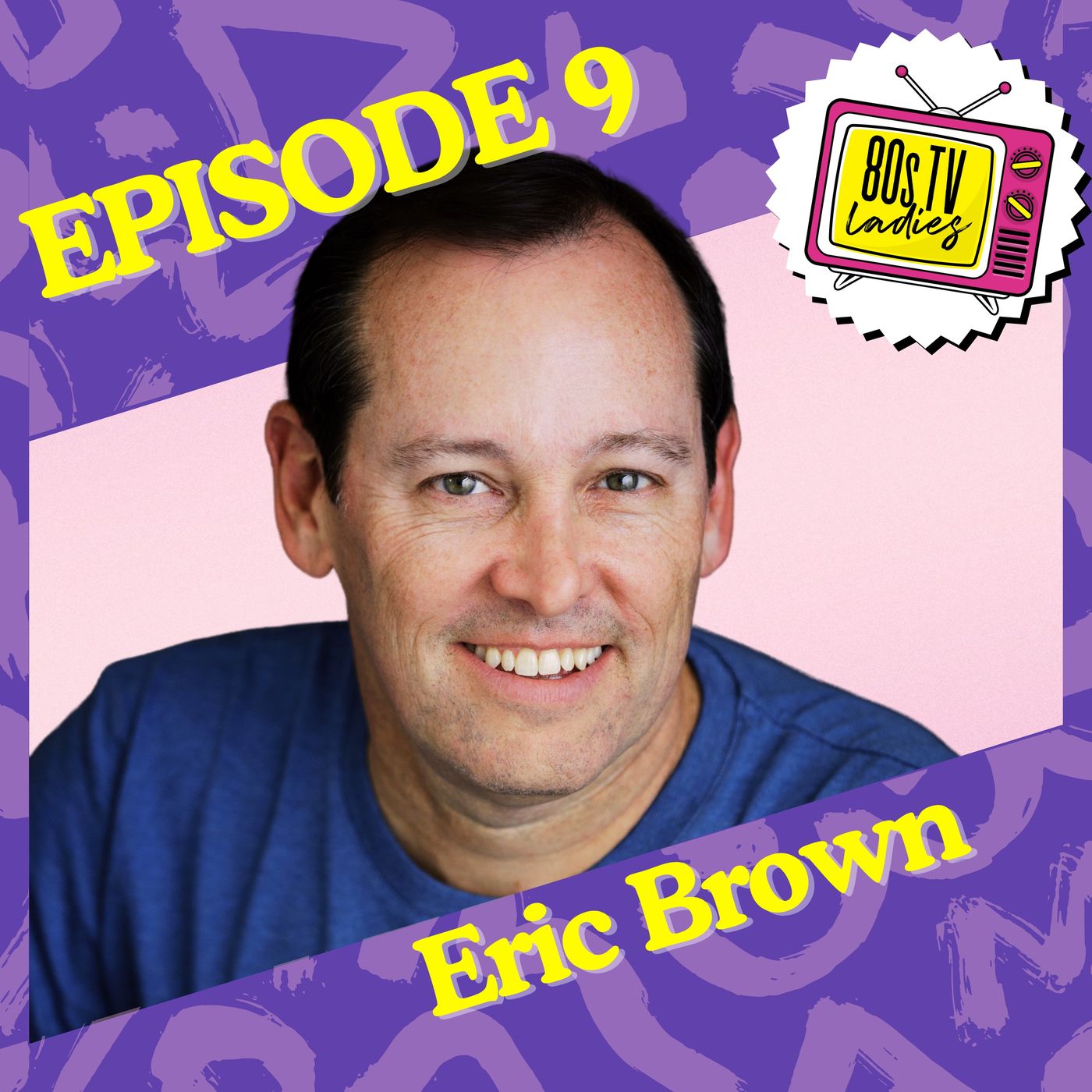
Mama’s Family, Crushing on Stephanie Zimbalist & Private Lessons | Actor Eric Brown
About this episode
- actor Eric Brown
THE CONVERSATION
- TAKING THE PIPPIN BUS: Nine-year-old Eric played the lead in the original touring company of Bob Fosse’s Pippin! “It was 1974. I was the only child in a cast of adults. One-and-two-night stands. In a bus. Thirty states. Six months.”
- PRIVATE LESSONS: The lead got fired -- so Eric was promoted to star!
- 15 GOING ON 30: In Private Lessons, Fifteen year-old Eric Brown, played a fifteen-year-old -- being seduced by a thirty-year-old woman! “My wife is still mad at my mother for letting me play that role!”
- KICKED OUT OF SCHOOL: Eric was kicked out of St. Francis Prep School for being in Private Lessons: “They said, “We think you’d do better at another school considering your career goals.” It was a very Franciscan way of saying, “Get out”.”
- MAMA’S FAMILY: “You know the rumors that Betty White had a dirty streak? All true.”
- On working with Carol Burnett, Vicki Lawrence, Dorothy Lyman, Betty White, Rue McClanahan and Harvey Korman: “Everyone was so funny -- you were always laughing. They were constantly futzing, because they knew what was funny -- and if it wasn’t, they would fix it."
- DIRECTOR SPLIT: Mama’s Family had TWO directors: Harvey Korman worked with the actors, while someone else blocked out the camera moves (Roger Beatty).
- THE METAVERSE OF MAMA'S FAMILY: Vicki Lawrence started playing the at least 63-year-old “Mama” when she was in her late 20’s!
- THE EPISODE THAT NEVER WAS: Eric pitched an episode where he and Ken Barry -- both tap dancers -- could dance together in a talent show. But it never happened.
- TAKE THE TOUPEE: Carol Burnett would do anything for a laugh -- including pulling the hairpiece off a certain co-star during taping -- when no one was expecting it!
- BAD NEWS, GOOD NEWS, WORSE NEWS -- Mama’s Family gets cancelled. Then it comes back! But not with Eric.
- LOVING LAURA HOLT: After Private Lessons, Eric did a replay on Remington Steele -- playing a kid with a crush on an “older woman”: “I was head over heels in love with Stephanie Zimbalist. In real life!”
- BE KIND, REWIND: After jobs dried up in Hollywood, Eric moved to Monterey and got a job in a video store: “I was renting movies to people that I WAS IN.”
- FIRST RULE OF COMMUNICATION: For the MacArthur Foundation or a lost chicken in Queens: Know your goal.
- WHAT CAN ONE PERSON DO TO HELP THE WORLD? Find what you love and offer that.
AUDIO-OGRAPHY
Watch Mama’s Family for free on Pluto TV.
Listen to Eric Brown’s podcast about philanthropy, Let’s Hear it. Or on Apple.
Check out what Eric Brown is doing now at Brownbridgestrategies.com.
Enjoy Eric’s blog about traveling the world with his wife at Eat, Bicker, Love.
PLUS -- AN “80’s TV LADIES” HOLIDAY SALE!
Get 15% off on all merch at 80s TV Ladies Shop on Fourthwall.
Make sure to use promo code “Festive80s”!
CONNECT
Visit 80sTVLadies.com for transcripts.
Sign up for the 80s TV Ladies mailing list.
Support us and get ad-free episodes on PATREON.
This year is the 45th anniversary of President Carter's Crisis of Confidence speech. Get Susan’s new play about it: Confidence (and the Speech) at Broadway Licensing.
Visit 80sTVLadies.com for more info.
Listen to 80s TV Ladies at YouTube. Subscribe and help us grow.
Don’t miss out. Sign up for the 80s TV Ladies mailing list!
Help us make more episodes and get ad-free episodes, video interviews, and exclusive content on PATREON.
Transcript
Automatically generated, so expect the odd misheard name.
Weirding, Weird Media, and so Pretty Bai. Through the City and gunning Good Money Man World. Welcome to Eighties TV Ladies, where we examine female driven television shows from the nineteen eighties and how that particular pop culture phenomenon shaped our world then and now. Here are your hosts, Sharon Johnson and Susan Lambert HadAM. Hey everyone, I'm Sharon and I'm Susan.
Our guest today is by way of serendipity, we ran into a guy who knew a guy at Podcast Movement Evolutions, but also because I think of the eighties as the Kevin Bacon of decades. They are one degree off from. Everyday everyone knows someone who worked on eighties TV. So thank you to Mohammad from Podcast Movement Evolutions who introduced us to our next guest. Our next guest is Eric Brown, who starred in two seasons of Mama's Family as Buzz Mama's grandson.
Eric is now the head of brown Bridge Strategies, which does strategy and communications consulting for nonprofits. Mama's Family was a sitcom spinoff of the Carol Burnett show. The sketches spawned the series Mama's Family which ran on NBC for two seasons from nineteen eighty three to nineteen eighty four. And then it was picked up for syndication like many other eighties TV lady shows, and ran from nineteen eighty six to nineteen ninety. Mama's Family starred Vicky Lawrence as the titular Mama, Ken Barry, Dorothy Lyman, Rue McClanahan, Betty White, Karen R.
Good, and Eric Brown. Hello, Eric Brown, Welcome to eighties TV ladies. Well, thank you for having me. This is gonna be fun. That's the idea.
We're so happy to have you here. How are you doing. You're coming in from the East coast, San Francisco, California. Our side, our side. We're finally seeing the sun.
It's been like living in the Bible. I'm waiting for the frogs and the locusts to fall because we've had forty days of rain. I don't know why I live in San Francisco. I have no blood, so so I'm always cold. How did I get here?
What happened? All right? Well, we're gonna find out today. There you go, You're going to find a long saga of what that got me to this gold. I am so excited to hear your story because it sounds very interesting from the outside, so I can't wait to hear the inside.
There are some twists and turns. Well, why don't we start with your time in Hollywood? How did you get started? And how did you end up on Mama's Family. Hey, okay, now, then I'm going to try and tell this faster than sometimes happens.
I was a very young child actor. I got my SAG card when I was four. Wow. My grandmother had a friend who was a talent agent, and I was an extrovert even then, and I think my parents said, oh, you know, kid's cute and we could use whatever a new dishwasher, so let's, you know, put him to work. And I went for my first audition for Listerine, in which I was meant to blow bubbles through a straw into a glass of milk.
I don't know why. I don't remember. I was four and I got the job and I went in and it was in the middle of the summer. I do remember. It's like some maybe it's just a fake memory, but I remember being hot and it's kind of sweating, and they were putting whatever that stuff is seabreeze on me to keep me cool because they'd have to turn the air conditioner off for sound.
And so I sat there all day long blowing my bubbles through the straw into a glass of milk. And they were like, kid is a you know, he's a natural. That trooper put him on Broadway. And so so I did commercials for quite some time. And when I was nine, I auditioned for the first national tour of Pippin, directed by Bob Fosse, whose show was on Broadway at the time.
This is nineteen seventy four, and I didn't get the job. I got number two. But the kid who did get the job apparently his parents didn't realize that he was going to have to go out on the road for six months in a bus, and they decided that they didn't want to do that. My mother said, like, fine, send him in the bus. Gives She kiss me on the head and sent me on my way.
And I was out on the road for six months in Pippin. Wait wait, wait, wait, we may have to do a podcast all that that. Yeah, whole podcasts. So interestingly enough, I've been interviewing all the people who are still alive from that production, just to get their perspective. You know, it's like the bind person who tries to tell you what an elephant is by putting his hand on it.
Well, I started asking other people about their perception of that tour, including Barry Williams, who played pippin Wow. And the woman who played my mother came to stay with us last month. We're still in contact and it was so interesting. Nineteen seventy four in a bus, thirty states, six months, one and two night stands. They don't really do tours like that anymore.
Wow. So they're called them bus and Trucks. And you know Bob Fozzy stories And Bob Fosse wasn't with you, guys, No, no, no, no, okay. He barely directed the show. He was at the time he was editing Lenny.
I think he was doing a revival of Damn Yankees with Gwyn Burden or something. I had to look it up. But he was very busy, and his dance captain was the choreographer and the producer directed the show. He was basically remounting the Broadway production, but Bob Fosse came in for the last run through. Before you go out on the road, and he gave everybody notes, like really detailed notes.
And Carol, who played my mother, said she got the best note she had ever gotten from anybody ever from him. And what he said was, I don't even know the show at all. But she played Catherine, who's this woman who lives on a farm and she's trying to entice Pippin away from his life of debauchery. But she's kind of tricky, and she has this little boy. And I played the boy and I was nine, and Bob Fisz.
He says that Carol said, you're afraid to manipulate him, and she was like, oh my god, I just figured out this role in one line one of the five hundred million Pippin stories. So I did Pip and I came home back went back to fifth grade after six months on the road. I can't get off Pippen for a second. Hold on, there have more questions in here? Did you have an adult with you?
Ish the. Swing dancer, the male swing so the swing dancers, the one that covers all the chorus rolls. So he was my chaperone with a very small c and super duper air quotes because he kind of didn't really chaperone me much. But I was a barely precocious kid, so I was able to put myself to bed and do things. And I but you were nine.
You were the only kid in the show. Yes I was. You were the only child on that bus, Yes I was. Wow. The moment actually has a lot of questions.
I'm totally on Benjamin buttoning right now. I'm going backwards, trying to read trying to have a childhood now because they didn't have one as a child. So, yeah, that's that's exactly what happened there. You go to the seventies, that's the seventies, ladies like go in the old days. The kid we used to play in traffic and never got hit by cars.
So it was kind of like that, you know, who knew. It was an interesting time, a very very interesting time to be traveled, and we traveled. I mean we traveled around the South, and the dancers had to be careful where they went. One time we were in I think we were in New Orleans or Baton Rouge, one of the other and the answers didn't take their makeup of just got on the bus and went and they still had their weak caps and they would just go back to the hotel and get out of their makeup there because for whatever reason, was late or something, and so walking down the street and they coupled over versuslicitation because they thought they were dressling sex workers. So that was life on the road.
No, we're just in a Bob Fussy show and the Fussy Show. With the jazz hands. Yeah, so that was that was then. That is so crazy. What an incredible experience.
And yet do you, like, do you have like vivid memories? I mean, nothing is very much so yeah, very fad. I don't I don't remember fifth grade or sixth grade, but I remember my six months on the road. Yeah, yeah, I was sitting there with Carol. Oh, yeah, I remember we were in Davenport.
We walked over the bridge to Rock Island, Illinois, and we said, went to the read More bookstore, Like, how the hell did I remember that stuff? It's like, I have no idea what you're talking, but it was true. I looked it up. I don't know if you ever had an opportunity to compare notes with any other kid actors and find out whether your experience was it all similar to theirs, and that you were on the road by yourself and really no adult supervision and all the rest of it. I do have a friend.
We did Peter Pan. We did what he called a summerstock production of Peter Pan with Tovah Feltche and George Rose. George Rose played you know, the major General on Broadway with Empirates of Penzance and is Tova. She's done a million things and it was a very interesting cast. It was me.
Iron Zerring was in it. Remember Ian Zeering from nine to two one zero. Yeah, And Glenn Scarpelly who was on one day at a time. Yeah, and this guy Willie Morrison who was a Broadway actor. We all ended up.
We were just Schmoe's. We were equity, but we were Smoey equity kids. And we did the show. And Glenn and I have stayed in touch, and he was here for dinner. Not that long ago.
He was in bould on Broadway with Anne Bancroft and so he would hang out with mel Brooks and across. He was in Richard the Third with al Pacino on Broadway, so he Thatino. He was in They all left, directed by Bogdanovich with John Ritter and Dorothy Stratton. Wow. And then he was on One Day at a Time.
He knew value Birtnelli really well and like the whole One Day at. A Time ladies of the eighties. So all right, well, he and I are gonna get a couple of phone numbers from you, and he's great. We have very similar kind of unchaperoned experiences as as young people. That is just so amazing when you think, like now, what it is to cast a child on stage and put them on the show.
I mean, you just you don't do that without three adults in the room. It's crazy. I mean, I understand it. I don't make sense the fact that Glenn and I we ended up upright as a great thing, but probably fair a good fortune involved. I'll go to the really fast version.
I did a bunch of other theater and then I ended up understudied on Broadway in on Golden Pond. Then I got this movie called Private Lessons. I was cast as the sidekick in Private Lessons, I was a mister bride'smaid and the lead got fired and I stepped into the role of the lead. I did that, came back to New York, and. We're going to talk about that from a mama's perspective, and.
We'll come back to that. That's a tricky bit right now. But then I went on the national tour of On Golden Pond, and then my senior year of high school, I got an audition from Mama's family. I went in. I did one, like one short scene in New York on tape, and they called me the next day and say, can you come out to LA and meet with Brandon Tartakoff?
And oh I knew who he was, uh, and an audition for him? And I went in there and I went back out into the room and they say, you got the park? Can you We started shooting in two weeks or three weeks or something like that. So I moved and moved to La. So I lived at the Sheraton Universal for six weeks.
Were you by yourself on this tour or two? Yes? I was okay, And I rented a room in someone's house at Woodman and Oxnard out in Van Eys, and eventually got an apartment down in Hermosa Beach, which was a bad mistake because nobody comes to them for most of each And I did the show for. Two years and it was really fun. I didn't have a very big part because you're going to take lines away from Bay White, Real McClanahan, Harvey Corman.
Or those kids. Let's get it, like, let's give the lines to Eric and stet So I used the joke that I was the highest paid performer in Hollywood if you were counting by the word. Oh my god. All right, So where did you guys? Shoot Mama's Family?
At CBS Television City, which was weird because it was an NBC show, But Carol had such a relationship with CBS that they let her use her stage, which was the same stage that Price Is Right was, and I think maybe even still is taped on. And so we would Monday through Thursday. Wednesday it would be Prizes, right, and then we'd move in on Thursday and then shoot on Friday or whatever it was. And that was Yes, we were in at CBS televigenc City, right at Beverly and Fairfax. Can you talk about your first day walking on the set or the first table read where you are now meeting all these folks, these legends of television.
I don't know how else to describe them. I used to, like I used to say, I still say that it was like being a bat Boy on the nineteen twenty seven Yankees. We're like, there's Big Ruth and there's Luke Garritt, and I'm like, here's your bat sir. It was, it was really cool. I was probably too stupid to be intimidated.
But because I had fancied myself a real actor and had come out of theater and all this other stuff, I also considered myself a professional, and so I went in there to do my thing, and it was scary because I had so few lines. And I will tell you, the first time we taped might have been the first run through. Like you do two shows in front of an audience, and the first one is considered the dress rehearsal, but they'll use things if it's good, and they'll have something to cut with and all that stuff. So the first time I go in, I've got one or two lines in this scene. And if you're in a scene and you only have one or two lines, you're not in it.
It's not like you're reacting, you just have You're sitting there waiting to say your words. So I'm listening for my cute. I'm listening very cute, and the Q comes and I go. Ah, nothing, came out of my head and I'm like sap tape stop, Like, oh my god, what did they just do? I'm fired?
So that was kind of what it was like a lot of the time. I'm just listening for my cue because I'm really not. I'm gonna come like, hey, Grandma, how you doing great? Thanks by, I'm gonna go to school now bye, and that's that. I'm gone, like why am I in this joff?
But being with them was extraordinary, and sitting there watching them rehearse was honestly like being a fly on the wall in comedians Heaven. They were really funny. They were incredible kibbitzers. They were always fussing about, they were always trying new things. They were right as they went.
They'd add lib all the time in the rehearsal room, and then the writers would go scrambling back to tryump put things in and characters of the highest order. Rue McClanahan was a quirky, gooky lady from Oklahoma. When she would make mistakes, she'd go any roue because her really full name is Eddie, like. Any oh, any ring, what do you do? Then she would she would talk about herself.
Yes, she talked she talked to herself in the third person, using her. Her give me real name, any rue, that's awesome. Betty was as you know, there's the rumors that Betty why it was, I had a kind of a dirty streak. Yeah, like a blue a blue streak. They are true.
Okay, but you've been on the Pippin bus, so was it really like then? I couldn't handle. But still she had a just a kind of a you know, she was the whatever Suellen's opposite yang or whatever and so, and the crew would take advantage of that and they would do practical jokes that kind of steered towards her blue side. And you couldn't you couldn't or wouldn't do that today on a on a television set. I will just say, and I won't get into detail, but it was cheesyed.
It was. It was body. It was a body time. They were like constantly fusing. It was hilarious and wonderful because they just knew what was funny and if something wasn't funny, they would fix it or make it better.
And because they were all generous and they all knew each other so well, it's not like, oh, you know, like adding lines for yourself. Huh Corman, Yeah, you know, no, none of that. They were just it was like great, great jazz and funny. You're just always laughing. So we spent a lot of time laughing.
And you know, Harvey Korman was the director, and there were two directors. How did that work? Well, we had a camera director. Carvey didn't care about where the camera was. He just cared about the performances.
So we had two directors, Whowevey was there in the room. The camera directors in the room there too, because you're trying figure how to shoot it. But Harvey didn't have to worry about that stuff. He would just direct the actors and direct the comedy like it was a theater piece exactly. And then Friday you do two shows like a like in the theater with an audience, with an audience.
Yeah, you bring the audience. There's a stand up comic or somebody who's supposed to warm them up and get them excited, and you do one and then you take a break, and then you do another and then that's that and it takes a week and they do it. It's kind of crazy, that's so crazy. And then you would take your eighteen year old self and drive to back to Hermosa beac to Hermosa Beach. That's what I did.
So since you spent so much time in New York working in theater on the road, how much television were we able to watch as you were growing up? I guess I'm wondering how you might have known who these folks were the adult cast of Mama's Family before you started working on it. Oh. I mean, everybody watched the Carbernett Show. I wasn't out all that often, you know, but I was a huge fan of Carobernett Show.
And I'm sure as I knew who all those people were. Ye know, I knew Betty White, Dorothy Lyman who was on the show. She was on All My Children, I knew that right. She was Opal Gardner. Wow, that's crazy.
And she was doing both shows at the same time. I don't know how she did it. That's amazing. Yeah, it's also amazing that both shows were able to work together and to accommodate that since they were on different networks. I believe Wow, I think so.
Yeah, No, it was I who knows why her how? But it was super cool and Dorothy was very funny, very very very funny and grace smart. And I ended up stage managing a play that she directed that Oh, Yardley Smith was in this play that we did called Living on Salvation Street. It was an equity waiver way. And when was this?
This was this is eighty in the eighties, so right around the same time, eighty six something like that. I don't know. I think I was probably off the show by then. I was okay, So it was eighty six eighty seven, but Yardley was discovered by the casting director for The Simpsons who was watching that play. According to some.
Story I read, so it's really you're responsible. You should get a little percentage. You endure him a holy repuzzle if it went wrong. Guilty, but never resond. All right, So one of the episodes that I watched that you're in is is Mama's Birthday.
And you got actually this great scene, Like it's rare that you had a whole scene, right, it is true, Like the kids were pretty shoved to the side. Yeah, but you had this lovely scene in the attic where she's going to tell the story. Yeah. You know, the show starts off pretty sketchy, like sketch based, not sketchy. It was also sketchy.
I went back and watched a couple of EPISO. I was like, WHOA, some of this stuff was out there for network television. There was fairly it was pretty on the edge. But anyway, continue, No, that's what I'm saying, Like, it definitely starts off edgy because there's lots of sort of alluded to sleeping around, but it got warmer. Did you the show got warmer?
Like it started off being everybody pretty awful to each other like the sketch. Yes, and then the end of season one and in season two you had those sort of kind of sad and sweet moments. You're right. I think early on we didn't know what we were doing. I mean, I don't say that in a bad way.
I mean like we just didn't know what the show was. And as it happens memory serves me, we did two or three episodes and we went on a hiatus to fix it. Oh, because I think I think the network said this isn't really landing. We were mid season replacement, hoping to get on at some point, and I think we ended up on in January of eighty three. I think we had thirteen episode by for the first season.
But the first couple of episodes were I think they were a little clunky, yared. Something wasn't quite clicking, and I think that's perhaps what you were sensing there, is that they show didn't know what it is yet. And then it kind of found its feet a little bit. And after we went back to the drawing board a little bit, and I think they just rewrote some of the scripts and spent a little more time thinking about it. And so I went home.
I went back to New York after two or three weeks, and we we thought maybe we would get canceled or we didn't know what was going to happen, and then they brought us back out and we resumed operations and the first season went pretty well. I mean it did. I think it did fairly well. Vicky Lawrence was what twenty five thirty Let's do the man? Okay, she knew she was older than thirty.
Let's see eighty five. Vicky Lawrence was eighteen when she started the Carrol Arnett Show, which would. Have been in the late sixties. When she started on the show, I believe, so. She was thirty three thirty three, and she's playing someone who's sixty three.
Yeah, at least or something whatever she is according to either IMDb or somebody. On Mama's birthday, she's turning sixty three. Oh okay, according to some internet thing. Yes, these numbers don't make any sense anymore because Rob Low was sixty three, so I know it doesn't. It does people's is he really?
But she was playing that character of Mama since she was in her twenties. Right exactly, Yes, and which is kind of the joke anyway. It's not meant to be an accurate depiction of a person of a certain age. It's just the you know, it's so crazy. Thing and it's so insane that entire show was built around for the concept.
Yes, but it worked. It worked on the Carol Varnett show. That's it did. That's what it was, Yeah, it did. It's a and then people who are older than her are playing her daughter's.
Children, her children. It's a big doop. Like there is the moment when Betty White is hooking up with a younger man. Oh yeah, yeah, yeah, there's big conflict. I'm blanking on the name of that episode, but you know, Mama is upset that Betty White, who's in her fifties at that point at least.
Yeah, as an actress. It's hooking up with someone in their thirties who is actually the same age as Vicky Lawrence, who's playing someone in her sixties who couldn't possibly have a daughter that age. But that's fine because it's the magic of television. You know what. We invented the television metaverse.
We just didn't know. It was like wonder Vision, early wand it was a fair amount of suspension of disbelief. It's true. Yes, all right, Well what were some of your favorite episodes? Definitely doing the fifties dance thing.
Oh yes, yes, super duper fun. Look like it must have been a real who it was really Actually, all right, we're on video here, I have something really cool. That's so this, Oh my god, is the character. And so Rhett who is our you know, he's a Bob Macki's assistant, and he was our costume designer. And then here's the picture of Karen and me.
Oh my god, and our costumes. Anyway, that's that is amazing. That was really fun. I you know, as happens, I was a tap dancer as a kid. Oh my goodness, Well this is why you were in Pippin' and no tapping.
I don't think I know, but the fact that you could meant I could. I could have. And I always wanted them to let us do a show where Ken and I danced, because Kenny's a great it was a great tap dancer. And they said no. I was like, would me be great?
A buzz his dad had like entered the talent show or something and did a tap thing. And who cares whether it picks any answer not because for all the reasons we already discussed, but. It didn't go. That would have been my favorite episode, the episode that didn't happen but should have happened. I'm in That.
Sounds crazy, so much fun. There was another one where we're going to the prom and makes Yeah, the curfew one makes two different curfews. That was fun. I had stuff to do and I got some laughs, but it was hard. It was I didn't know much to.
Do on that job. The curfew one stands out for me because you know, Sharon has a similar story. I think that one would resonate with her emotionally because she. Had love it. I think it was called double standard.
Double standard. That was the name of that was the name of the episode double Stand. Did that happen to you, Sharon? Oh? That was that was just sort of my life.
My my older brother, who I love dearly by the way, was a year older, and she, to Michael, yes, had a lot more freedom as a male child than I did as a female child. So that's just the way it was. But you had to go, I've gotten over. It until you're reminded my Mama's Family episodes. Oh yeah, that's right, she triggered you.
But that's that's the interesting thing about the show is the character and the family have a little, you know, all in the family like element to them. Mama seems very traditional for the eighties. She seems like a fifties mama in many ways, and yet her son moves back in with his kids because his wife has left him. She also lives with her sister playbou Room McClanahan, and then you know, chaos ensues, right Like, so there's lots of sex jokes because then ken Berry's character starts dating the next door neighbor and then they get married and are in theory constantly having sex, right, and then they slip in something like well, you know, women shouldn't have a less curfew than guys. Like suddenly they're like standing up for you know, girl power.
Right, they did whatever they wanted. I think that was the short version, like where can we find comedy? And they didn't care whether it was battle of sexes, whether it was generation gap, whether it was they were certainly mining class issues, but where can we find funny things? Because their first love or their first responsibility, was to the joke. What was funny?
What's funny? What was going to be funny? Where can we find some funny? And Carol, Carol could find funny anywhere wherever she went, she found funny. There was just one episode we did.
This is one of my favorites. I wasn't I don't even think I was in it, or if I was, I was in it for a minute. But where they did a community theater and there's this it was very waiting for Goffman. Yeah, and I'm sure that they looked at it at that episode. I'd be surprised if they hadn't.
And they made it movie. But the directors, of course has failed whatever and he's got this very funny hair piece. But we never talked about the hair piece. The actor who was playing this character. And then when we did this show for the second time, not the first time, the second time, Harold reaches over and pulls the hair piece off and he's got like, this guy's totally bald.
And I to this day do not know if she was planning I mean, she was planning it, whether she told anybody, she told that. We never rehearsed it. She just did it in the final on the final tape, and that, to my mind, she's like, oh my god, this is going to be very funny. I'm going there. And like I said, we never rehearsed that.
We never rehearsed that moment. So part of me thinks that she just did it. He just did it. How did the rest of the cast react when it happened. I think we all just melted.
Did you break a lot? I mean was it hard not to break? Uh? Yeah, yeah. Watch Carol Burnette play Unis, which is insane, like she's great.
I'm thinking of Rush and Mamma Yes, which in which they, you know, tell the story of how Mama ended up in the hospital from each of their points of view, and oh my god, that is a lot of humor. And each time is pretty amazing, But in particular it's a Carol Burnette. I mean, although Betty like, they're all they all have, you know, Dorothy, Betty White, they all are spectacular. And because they're so strong and sketch, they were so grounded they could do whatever they want. It's like it's like being a great jazz improviser, Like you knew a key you're in.
You knew at the time signature was as long as you stayed unbeaten, stayed in key, you could go wherever you wanted. And they as long as they hit their mark and found their light, they could do what they wanted to do, and they did. That's why they break is because they just couldn't stand not acknowledging the genius of the thing that that person standing in front of them just did you know, so you had to you, I mean, you'd be crazy hard to imagine a human being not be moved by that. So that's why they and they were having fun. And if you ever go see improv, the funniest moments are when the cast starts laughing because now you were all in on the same joke.
Yeah, right, And I think there was there was a kind of a flavor of that in this show because it was absurd. It's it's all the premises were absurd, so we know what we're looking at. It's not like we're looking at real life. We're looking at something different. And so that gave them flexibility to do different things.
And because they were so talented and so incredibly well schooled at this stuff, they could do things that mere mortals couldn't. Mere mortals like myself, right you and. Did you and Karen bond a little bit who played your sister because you were like, okay, we're just the flute section here, so right with. The furniture, Yes, we did. We were friends, actually, Dorothy and Karen and I were friends and we would hang out and do things and stuff like that.
Dorothy of course had lots to do, but Karen was great and we were pals and hang out do things. And so any special guest stars, I have one that in particular I want to ask you about. But is there any special guest stars that you worked with that you're like, oh, that was super fun. Oh no, Actually the ones that I was not in the show where Jack Guildford and Image and Coca came on. But because they were there, and I did know they were.
I just went and spent the week sitting in the rehearsal room anyway, even though I was not in that episode. I mean these yeah, like they are the masters of the live television era, and you know from Stance, Caesar Show and all that stuff like extraordinary, so that those are big, but there are so many. We had so many fun people who would come through. Jerry Reid was great. I want to ask you about he was amazing in person, he was.
He was good. I'm a huge smoking the Bandit fans great and I love Jerry Reid. There were a few others who were really fun and cool. Bred Willard was Fred Willard, Bred Willard. Yes, you're right, Bred Willard.
Fred Willard was Oh my god, he was amazing. Just again he he plays Fred Willard. Fred Willard is Fred Willard is Fred Willard, and so he has that very dry, dead panty thing twenty four hours a day. It's not like when they turned off the cameras. He goes, it's just Fred Willard, alt time fun.
Oh. Bill Wyndham, Yes, yes, Bill wasn't That guy was incredible also, I mean a terrific actor. Yeah, really spectacle I was like sitting there, going. Who is that? Who is it?
I thought it was Hal Hulbrook for the longest time. Right, Yeah, there was real pathos often surprisingly, particularly in the second season. Again, you know when the other thing is once you know something's going to be funny, then you get the butts around with it, which I think to your point, and maybe it's the network is saying we need to make them nicer or whatever, but I couldn't. I wasn't preving those network conversations. Eric knows a thing or two.
He's been on the Pippin' bus. I was just trying to keep my job. I was going to say, so, what are you thinking? What are you feeling when you're on this show? And you're like, I'm not being used enough, but I'm in a successful sitcom.
Funny because my agent was Wilt Melnick and I'm not making that up. He's like the most agency name in Hollywood, Wilt, Who's a great guy. And as soon as I got on the show is I got to get you off the show. You don't have enough to do. I got to get you something better, which you know, it wasn't his fault that he failed, but and I'm thinking to myself, I'm learning, I'm here.
I'm happy to I got to go to the Network Affiliates conventions, which is what the upfronts used to be called, and they send a limousin into your house and they give you a voucher for a Duxiedo rental, and you hobnob with Morgan Fairchild and those people, and I'm on television and so far, so good. Yeah, So I was not complaining. Put it that way. I wanted more to do, but I also understood why I was doing what I was doing, and. I just wanted the chance to be funny.
And the normal person in a scene full of crazies can be really important and valuable, and they didn't use me that. So if you think about Marilyn on The Monsters, yeah, or in any improv or sketch comedy, there's always one person who represents the audience who goes like that's crazy, and so they become the proxy for the audience. That's the normal person who's reacting to the madness around them. And I could have played that role if they had wanted to. But I don't blame them.
Why give me any lines when you got all these other people there, so in the show and off the air, which is disappointing. Let's just say it was disappointing. And then when they brought it back and they didn't bring me back. Yeah, So how do you find out in the eighties that your show's got canceled? Yeah, the producer calls me up, like we got canceled and then we're off, and then reading things in the trade that they may bring us back, which was really exciting.
We're going to go back in the original syndication, which was exciting. And then they announced that it's back, and I got the same call from the same prodigious signing like, hey, good news, bad news. Good news is we're back. The badness is not you. And they made the boy character a big dumb guy, so he was funny, he was more it was more of the he was of the group, so they didn't have a normal person who was I think they just decided that from a comic perspective, it didn't work.
So whether they're right or not, I couldn't say. But I mean, Alan Kiser was great. He was very funny. The show was funny. I don't blame anybody.
That's how it goes Yeah, all. Right, So how did Vicky Lawrence and kral Burnett get along? They seemed to really work well together. I know that later. I think it had to do with the pickups for syndication from what.
I've read, oh that they they didn't get along and then they later made up. Huh. Interesting, Ill I'm rereading about it to be hon the City. But and maybe had something to do with the fact that Carolyn Joe Hamilton had divorced by that point, so there may have been and it was Joe's show, he owned it, but she must have had a part of it. I think it had to do with that.
Yeah, it probably got complicated, yes, when your personal lives and your professional life aren't entwined. Yeah. And like Joe Hamilton is funny because he was the opposite and my recollection is very serious guy and. He was married to kra Burnett and Producedette Show and Mama's Family. Yeah, just a very serious dude and always found that to be interesting.
You know, you never know, Well, it's it's the anchor that let somebody you know. Yeah, the business guy and Vicky's husband now similar Okay, I was her makeup man on the Carvernet Show. And he's like a little he looks like a truck driver. He's like a big, strapping mato dude, and he's a makeup man. It was not what you think of when you think about, you know, make a person.
But and he became Vicky's manager, and he was i think very protective of her image and her work and he kind of managed that. And he was also kind of her interlockertor between her and Joe or her and Carol, so who knows what that was all about. But he was also just not the person you would think to be married to someone who is funny and creative, because Joe just look he just looked like a football player. Vicky, you'd have us out to and she. Lived out and out in the valley wherever thousand Oaks or something like that is fabulous house and she'd invite people to cast over for parties things like.
That, and it was fun. I'll tell you it sounds fun and you know, like so, Vicky Lawrence is still worried. She does a show that she calls a two woman show about her and Mama, have you seen the show? My mother's seen it in Las Vegas. I want to go see that.
It was Las Vegas. Bless her. Okay, I would love to go see it. I did see Carol do her show here San Francisco. I think people still watch the show.
Yes, it's still popular. It was forty years ago. It was such an iconic character. Her inion is like, you know. They felt something great.
I mean, it's really cool. The absurd version of what was reflective of a lot of what was happening in female relationships in the eighties. I think four I would say my parents and the generation. And there was something about Mama and the Unice relationship that, while it was funny, it also hit you knew it, You knew people that were that close to that. Yeah, mothers and daughters.
It was mothers and daughters. But relationships, yeah yeah, but they're challenging, and so if you can find the humor in that and still tell the. Truth, people they want to see that, you know. But that's what builds a comedy too, because whether your relationship with your mother as a woman is as extreme as Unice and her mother's is, there's a kernel of I see that situation or I've seen it elsewhere. There's a level of roundedness in it that makes it funny.
And hopefully you don't have the kind you're like, well, at least we're not that exactly. It doesn't make you feel better about your own exactly existence. What do they say, comedy is tragedy plus time exactly, so you know. And all right, so there was some singing on the show. Did anybody ever sing because I want I want that, Matt, Yeah.
Well, we were up in the in the attic, she saying, little little grass, shack, little grass finds the ukulele, and you know, in her classic way, she picks it up and she plinks it. But like by picking it up she makes a noise with it. She looks at it, you know, finds them and sees the moment and starts to play. So she did do that in as Mama, of course as Mama. Kind of funny.
Was that a different one? Yeah, in the first first episode of season two, I can't you know the show a lot better than well, no, just we've just just been spending some time refreshing because you're right, because it was it was part of the story. She was looking forward to performing and everything and with you guys at the dance as that forties theme and then she's plunking on the ukulele and you guys, anyway, you guys walk in and tell her that. Oh, they've decided to do something else. She's so disappointed.
But I can't remember what song it was, and I just watched it the other day. I did get the Jitterbug with Vicky Laarnce. Yes, that was probably one of the highlights of of being. On that show, all right. And in my imagination, sometime backstage, she's saying the ninth the lights went out in Georgia.
Maybe it was on the episode where Immagen, Coco and Jackie that I. Wasn't in it. All right, So let's take a break and then we'll come back. We have to talk about Remington Steel. Oh yeah, yeah, you know, and some other things and what you're up to now.
So we'll take a break. All right, we're back. We get to talk about Remington Steel and other things. And I want to hear more about your podcast and where you are now. But let's go to Remington Steel.
Okay, what do you want to know? All right? So, you were in Blood Is Thicker Than Steel? Yes, and you were playing you were about eighteen, Yeah, I think I was eighteen seventeen or eighteen. So is this something you did before Mama's Family?
Then no, it was during a hiatus. Okay. In the show, Remington and Laura have been hired to sort of protect a billionaire who's going to testify against other bad billionaires. But he wants his kids protected, and so he hires Remington and Laura to protect his two kids. You play the son who's fifteen sixteen, and then there's a daughter that's like nine eight or nine like that.
Yeah, yeah, and so they have to go take you away and then ultimately get you to Arizona from La and then you know there's bad guys after you the whole time. Of course, Hi Jenson Sue, Hi Jenkson Sue, and you have a big crush on Laura Halt right, Which was easy. Okay. So what was it like working with Stephanie Symbolist and Pierce Brosnan. They were still at the beginning of their careers.
Pierce Brosnan was a long way from j was Bond. Yeah, and the character I play, so I play this kind of arrogant rich kid who has a crush on Laura, and I had played a not a version of a sort of kind of a version of that in Private Lessons, where actually I was an innocent, naive, kind of stumbling rich kid who has this relationship with this older woman in her plot to extort money from him and hijinks also in Sue. You can never make that movie today, that's for sure. I'm surprised that they even allow anyone to watch it, and my wife is mad at my mother for letting me be in it. But I landed on my feet, and so that's how that goes.
Anyway. Oh, you think you're getting out. Of more questions about that, We're going on back around, but thank you for starting. I wasn't able to close the door on that company. We weren't happy to talk about it.
But so I'm in this kind of playing a little slightly typecast character in and I have to tell you I was head over heels in love with stephanie'simplist. She was fabulous and funny and nice, and we taught each other to juggle on the set. And Pierres Brosnan was a gentleman and humble. He was like the Q Grant without all the terrible stuff. It was like really nice.
He used to make jokes about his hair, how it was just a piece that he would put on the hat rack. When he walked into the office, he was as his wife we come by. This is his wife who passed away. I think she passed away in the nineties. He was utterly devoted to her and he was.
Like, oh, my wife was coming. I'm so excited. It was It was really fun. And we basically did most of the show inside an RV that was on this soundstage and they would rock, you know, shake and bake the RV. So it's kind of the RV show.
And but it was it was so much fun. It was so much fun. I can't begin to tell you how much fun it was. Well, and you had really great scenes with them, Like you had scenes with Laura that were really meaningful. Then you had like this scene where you're, you know, you stop being kind of a jerky kid and become like, hey, what's it really like to you know, you trying to get some guy advice about girls from Pierce Brosnan's came from Runnington Steel and that scene is so neat.
Well, the other thing is that, Okay, I'm kind of blocked on this other show where I know you have to do much and if you're the lead guest. It's called top of the show and they pay the most money that they make available. So I was at the top of the show, lead guest on this show, like, wow, this is fun kind of I see how this could go if I played my cards right and got to work with these great people. I knew the show and Pierce brother was who was already kind of very popular. He was a big star at the time.
And Stephanie also Barba Peters directed and she was like a great director, no nonsense. She knew what she wanted, but there were very few women directors in television at the time, and she was That was fun to work with her, and she just was great, especially with television which goes so fast. The crew was it was a good cruise. This kind of a they've been doing the show together as a unit for a time for quite some time or yearn and so, and it wasn't kind of a heavy turnover, so everybody knew exactly what the and they just plug you into their machine and you know, say your lines, hit your light, you hit your mark, find your life moving on? Well like you get do you get two takes and we're going.
So you have to be on your toes. They don't have time to mess around. Well, Barbara Peters was so was that the first female director that you worked with or did you work with others? Good question? Well I worked.
I don't think I had done the play with Dorothy yet, so I ended up understandying in that play and then I took over the role at some point. So she I didn't work with her? I think probably not. I think she Yeah, I think you're right. I think Barbara was probably my first female director.
It was a great experience. Like I said, I had such a crush on Stephanie and we ended up doing a couple of celebrity event type things. I used to do the golf tournaments and the skiing things and whatever. There was this promoter in Hollywood named David Mirish, who was I think a cousin or something of Walter Mirish, the great famous producer who just passed away. And David I was on his celebrity softball team.
I did a lot of golf. I was a golfer. I did tennis. I think I was in a celebrity paddle board thing. I once did a bowling event in Rochester.
Denzel Washington was on our basketball team. Wow. When he was on. Yep, some really fun. Jack Coleman, who was ONSTY was this like the time like the Night of the Network Stars or the Network Stars, except there wasn't televised.
We just go around and do things. But I'm met some of the super cool Lauren Green was there, Susie Chaffie was that one? Mary Hart and Dean Dean Well it was Mary Heart's boyfriend, Dean guy from a little house in the Perrie. Oh oh, oh, I. Know who you're talking about.
I had the biggest rush on him. Dean Butler. Dean Butler, Yes, Dean Butler. Yeah, Jane Butler. Golf Tournament of Dallas fort Worth.
He was in fort Worth and Mickey Mantle and Billy Barty were at this golf. Wow. I got cool with Billy Barty. Okay, it was a weird life I had. And so Billy Barty he said, you know I have a handicap, and all I get to have an advantage over you.
And I was like, what's the He'd reach it and you'd be you'd be about the line up shock and he would reach up behind you and grab you between your legs and that was his advantage. Now hold on. You reserved the right to do that at any time. It was very hard to beat him. In cool.
With social media, you feel like you have a relationship with people that you don't know, and back in those days, folks were behind the curtain. You didn't have a relationship, and you got to see them up close and it was a different kind of experience. It was also kind of sweet. People were, you know, polite, dude, they didn't know when and yelled at you, but they were actually nice. Well, because it was such a yeah, and it was such a treat it was, it was special, and so people tended to treat it.
That way, I would think. And now, I mean they have that crazy big, uh what do you call it autograph thingy in Hollywood once a year, but it's expensive. There's a big long line of celebrity signing autographs and it just seems a little it seems a little different in fact then where you got to play, Oh you can play golf. You if you'd signed up, you could play in a celebrity golf tournament. Were you a good golfer?
Yeah, I was a good golfer as a kid. I am not anymore a good golfer. I grew up in Queens and on a public course in Queens, where, of course, of the nineteen seventies eighties in New York was not a good time to be in New York and using any of its public services, so they didn't really water them. Of course, it's a hammer and nail to. Get the to get then to get the tea in the ground, tea in the ground.
But but yeah, so when I came out the golf and I had nothing else to do, I'd play golf. Since you brought up Queens, do you want to tell us about your time in Queens and how you were first famous? Although I guess you were first famous being a four year old I was below and bubbles in milk. It was funny as a child actor where I kind of had no childhood, as you can i'd have imagined, because I was like, how you doing horrible? You know, I'm seven years old of it's second grade.
Like, hey, you're horrible. I haven't worked in months. You know. It's like some old vaudevillian or something like that. It's not a cigarette.
Come on, let me tell you had stuff out there? Kids? I mean, were you enjoying yourself as a child actor. Yes, I mean because it was it was burning an energy for you. Right, good.
I was good at it. It was you know you get when you get good feedback from people about things that you're good at, pits, you're happy. Yeah, so I was okay with that. You're referring to my famous chicken story. When I was a kid, I was walking down the street with a bunch of my friends and we saw this white flash coming out of this bush and we looked at it and there was a chicken in the bush.
And you know, this is nineteen seventy. Nine or something like that, and it's not like there's you know, candlebar, mustache, waxing home chicken, grow your own chickens and make your eggs thing in Queens. That was not like there was no chickens in Queens. You did, so it was weird. Do people now have a handlebars like chicken?
Hey, ken, we're growing the chickens over here. Hipsters in their backyard chickens. There's a big thing we didn't have that. I grabbed the chicken, carried it home with my friends, and the first thing I did was I called the New York Post and I said, hey, I found the chicken in Queens send a photographer and they did, and so I. Was how old are you both?
I was like twelve, I think, And so I always say I tell the story because you would think that this is like I'm the idiot, savant, pr genius. But the problem was I didn't tell the photographer that we were looking for a good home for the chicken. And so this the caption on the photographs, it's the good to need for the day, like these look at these wonderful boys who found this chicken in and so adopting it. You spent it, spent the winter in our garage where we would normally park a car. And and because I do communications strategy for non profits and foundations and others, I always tell these people this is my first story of abject failure as a communication strategist because I didn't have a goal.
But it definitely a weird story about life and Queen's censers. Well, dare I ask what ultimately happened to the chicken? Well, another good story there, Like one good story gives you another. My mother was on the lookout for a good home for the chicken and nice lady and saw some story on the on the news about this farm in New Jersey that took in wayward farm animals and things like that. So she called them up.
So we have this chicken. It would be delighted to take your chicken. And we promised we were not going to eat it. It's just going to live on its life, live out its life on the farm. Meet us at the Broadway Theater where The Whiz is playing, because our we have a dog in the show.
So are our doggie is Toto and the Wits. So we met at the Roadway Theater. I think we wanted well, we couldn't because we had the chicken. So we did, like we uploaded the chick. Chicken transfer at the Broadway Theater where it can be now be friends with a Broadway star Toto, and they took n off to New Jersey and it lived its life.
Oh that's fantastic. I don't know what your life is when you figure it out, please let me. I say, all these all these stories have the added benefit of truth. I've always I always zagged. Well, I think it makes perfect sense after a few years in show business that that you would think, yeah.
Let's let's get some let's call the let's call the post that Sunds he was worthy to me. That was an avid newspaper reader, even from a very very early age. I always had a paper under my under my arm, usually the Daily News, and then sometimes I wasn't until I was much older than I figured out to read the Times. But I always kind of fashioned myself as a kind of a blue collar kind of New York as. A Mets fan.
And I had an English teacher in high school who said that you'd make a great who handed me what I hoped was not a backhanded compliment by saying, I think you'd make a great writer for the Daily News. Okay, so let's go to private lessons. Okay, fine, I'm not afraid you get cast as the best friend. You're fifteen years old, yes, and then you guys start shooting. Yeah, I'm a sophomore at Saint Francis Prep and Queens, a Franciscan high school.
Yeah, so work that out. They shoot this movie in Arizona based on Wikipedia. Yes, that's so far, so good, And they shoot it in Arizona because there's like fewer child labor laws. Correct. That is also correct, And basically the story is a fifteen year old is seduced by a thirty year old maid to your family, Governess.
Governess, she's an immigrant, and she and the chauffeur played by Howard Hessman, yes, have basically come up with a plan to ultimately blackmail you, right correct, Yes, that's the story. But then the two of you fall in love ish ish I'm not sure that that character was ever really in love with my character, but so it's It may have started the genre of thirty year old women seducing fifteen year old boys and that being a really cool eighties thing to do in movies. Well, you know, the graduate was the obviously doesn't plated an older Ka wasn't fifteen, but it was the December that was. And that, of course was a high brow movie, so that was different. This was a low budget film.
But the funniest thing about that movie it was it was based on a novel, a black comedy by Dan Greenberg, who was a very accomplished author, and he had essays in The New Yorker and that kind of thing. You wouldn't think that it would be fodder for a low brow sex comedy, And what ended up happening was when the film was shot, it was shot as a black comedy, very dark, and they tested it and it tested not well. They didn't like seeing this kid being manipulated and all other stuff, so they lightened it up considerably and reshot a bunch of scenes and turned it into a kind of very quirkies like sex comedy or what was perceived like that. And then it did kind of set that genre in motion. There was the one with Matt Latanzi and somebody.
Class, and then there were several have at school, there were more privates, more privates. The producer was trying to he was mining that not franchise. There was my tutor, I think that's the one with with mattla Tansey. There was a couple ofs so you know, it did kind of set that thing into motion. And were you just like, I'm happy to have a job, and then I'm happy to get promoted.
In my job. I was happy to get a job, happy to be in a movie, definitely happy to get promoted. And so I've gone back and watched it and it was it was a really fun part to play. So I played this real a naive kid, which I was not by that point. I was quite the I fancied myself.
I had been on Broadway, I had done all this stuff, so it was and a chance to play comedy. I did a lot of physical comedy. I walked into the walls, I banged my head, I fell off bicycles. I did all my own stuff. It was that was fun working with Howard Hessman, who I had loved on w Carap in Cincinnati, and Ed Begley, and it was directed by a gunny, Allen Myerson, who used to direct, who used to direct the Committee, which was a sketch company.
Howard and Ed and another guy, Dan Barrows. All these guys, it's sketch comedy together. So in a sense, these were also great comedians, and they were trying to make a black comedy and it didn't work out and they ended up kind of changing its focus and it made a lot of money. But these were all really good professionals who were doing and Yon Debant was the pot was. The cinematographer, which is crazy, who went on to you know, direct Speed and shoot Diehard before he directed Speed.
Oh yeah, yeah, that's right. He shot Diehard. So you know, these were not These were no schmos that we were working with. So when we were on the set, it was a real movie and people like, oh, you're in this crappy sex comedy. It's like, actually, it wasn't.
It was a real movie with really terrific folks. I learned a lot, it was, and I was in almost every shot in the movie. And it starts Sylvia Crystal as the as the main the Governor's and Sylvia Chriusa was a Manuel. This is a Dutch actress who played Emmanuel, which was one of the famous software porn movies or whatever you want to call it these days. It was you like, wouldn't qualify or like these Netflix.
I was gonna say, it might not even you know, be cool enough for HBO exactly. Anyway, it was. It was hard work when we were we were shooting sixteen hour days, six days a week, one day off, and I was in every shot almost and it was I it was. It was exhausting fun. I learned a lot.
I learned a lot about film acting. It was kind of cool. I mean, did you feel like you were fifteen or did you feel like you were in a I'm starting to feel like I'm fifteen. But then no, I again, I was good. How you do it?
Ah, horrible? I haven't worked in a week. So I took it very seriously, and I just I had work to do and I needed to make sure that I knew my lines and hit my my mark and found my light and was played the moment. But like, I would not send my fifteen year old off Arizona. Now I have a very different fifteen year old.
Doesn't matter. I wouldn't send any fifteen year old. Like I said, my wife is still mad at my mother. How could you let him do that movie? And because I mean there were nude scenes.
It was you know, it was. It was inappropriate by the standards of today. Downhill with a tailwind, it was inappropriate. I mean it was inappropriate. You should not do that.
You should cast an eighteen year old. Yeah, someone who's yeah as it happens. I don't think it did any lasting damage to me, but good Yeah, And did anybody acknowledge that on the set? I'm just so curious. No, it was just okay, stand there, do this.
But do you care? We do not care that we are putting a underage person in the position to work sixteen hours a be in a position to do basically sex scenes with a thirty year old person. No one seemed to notice. Do you think the fact that you had been working since you were for helped you with in terms of getting through that experience or working on that with that subject matter. Yeah, oh yeah.
I just I was just acting in a scene and I was a little professional, so it never occurred to me. I mean, there's a swet scene. I don't think I've told this story lately, where I'm in a bath hub and I'm anything on and I had to get out, and I'm with Sylvia. We're in this bath up together and I naked, and in the scene she's she starts to, you know, soap me up, and I get scared and I jump out of the bathtop and I have to back to the camera at exactly the right angle if you understand the meaning, and yawn the TP. He would scream, God, I saw something I'm not supposed to see.
I was not backing out at the right angle, and he would just go, god, I saw it again. They had nothing on you, Oh my goodness. No, but for you, it was just. Okay, well, okay, I must have not gotten the angle right. Like I was too busy being ready to do my job to notice that that.
Was not the thing. I mean, you were on the pip and bus and the and backstage during quick changes and things like that. Yeah, so it was there's nothing. I hadn't the undersne or anything and anyway. Wow, okay, all right, well the it's no wonder they got you to hit on Stephanie's embelist.
It was so innocent and it was so sweet and sweet. That's that's so interesting. I think about that, I go, I can't believe that. That's crazy now, no, no, no, no, no, no, you can't do that. Literally, the poster says, what happened to him should happen to you.
Right. Who do you think the audience for that marketing campaign? Yeah, exactly not the eighties TV ladies audience, I'll tell you that right now. Perhaps not, but great people. So who were some other amazing people that you worked with, you know, like Jerry Reid and Howard I'm still not over the Jerry Reid of it all.
Jerry Reid, who was the guy that who was the dad in in My big fat Greek wedding? Michael Constantine Mama's family. That's right, that's right, man, Harper versus Harper. I assume he played the judge he played the judge. Of course he was great.
He was such a sweet man. I think he also recently just passed mm hmm. He was. Yeah, they got the they got you know, the good stalwart you know, great TV people, they did. Whoever they wanted would come.
Oh yeah, I can't imagine they had. You can't take no to Kara Burnette. No, nor should you. No. And you know, we haven't talked much about Harvey Corman, but Harvey Korman was really one of the most hilarious, crazy, neurotic, fun goofy people I ever met.
I'll tell you funny Harvey Korman story, please do. So there was this one point where where he was he was gonna see had cancer and in really go in in real life. Yeah, like I'm going into the doctor. I had this thing on my finger or whatever was, I commits I have cancer. And he's really nervous about it.
He's, you know, a lot of anxiety, and he he said, this reminds me of my when I had divorced my wife and she moved out and I was living in this house in Hancock Park, this great big house in Hancock Park, and I was all alone. It was at a moment when they were there was a slasher who was slashing middle aged men, and I was convinced that I was going to be the victim of the slasher, and so I would spend hours and hours locking the windows and the doors. And he was in group therapy at the time. He told this story to his group therapy and he said that his therapist, who's this Viennese, actual Viennese therapist, said zavandah to me, mister Coleman, is that you are not the slasher. So you know, there's Harvey who's absolutely convinced he as cancer and he's talking but his most you know, his previous w yes terrifying moment of neuroses and picked poking fun at himself.
I'm feeling. His therapy therapist, I thought he was a slasher. I mean, there's so many layers to Harvey's wonderfulness and his ability to laugh at himself, and at the same time he was genuinely concerned, and that was also a way of him being kind of honest and open to people that I didn't really concerned. I'm worried. And here's when the last time I was worried and somebody made fun of in group therapy.
So that was that was like a quintessential Harvey story because he was he was so genuine and so kind of dear and. Oh my god, And now I want the television show of Harvey Korman in group therapy in nineteen eighty. That would be larious. Yeah, he was. What if you walk into your group therapy and it's Harvey Korman, Like You're like, okay, well I have to stay, but it's really this is never going to be about me.
I may not get my needs met, but at least that'll be entertained. Wow. Okay. So Dick Claire and Jenna McMahon created the show. Ah, there we go, okay.
And then there was a Liz and Rick who were the head writers. Yes, Liz Liz Sage. Sage, thank you. And Rick Hawkins and Rick Hawkins Hocket. Okay, all right, you're right, yes, forty years I'm pulling this.
It's very good, very impressed. Rick Hawkins and Liz Sage wrote together, right, and they were the basically the head writers, Okay, and they would they were in the room with us all the time. And I think that Dick and Jenna it was important that because Jenna was one of the creators that there were women writers involved and having written and Liz as a partnership. It feels to me like they kind of mirrored those that relationship and Dick and Jenna were on the Carabernet Show, so it was sort of like the whole machine kind of moved over exactly to turn these sketches into sitcom. And then they went on to create Facts of Life.
Right, that's right? So yeah, I was like, I know. That name and it's from kind of looking at Facts of Life again, very strong in the female numbers. Mama's Family both in front of and behind the camera, particularly on the writing. So what happens next for you after Mama's Family?
So Mama's Family gets canceled and then they bring it back and they don't bring me. Everybody on Mama's Family stand up not so fast, Eric, So Kara, they didn't bring Karen. It's life. I was. I was sad.
I liked the job, and so I started auditioning for things and I got close to a million on a million things. I auditioned for Karate Kid and with John Avilton working his video camera and he didn't have a windscreen, so he used a sponge mob I was. I met Coppola for The Outsiders in his in his apartment at the Sharon Devlarund Hotel. I was called on a Sunday morning saying, can you come to the Scherry Nedland at six o'clock to meet with Francis Ford Coppola, just pretty in pink. Matthew Broderick always beat me out for everything.
He still sold my life, but that's okay, because of good life. And at some point I'm like, Okay, this isn't something I gotta go to shake things out. I gotta make things happen. So I started doing production work, and I did every job on a movie set that you can think of. I was a soundman.
I was actually wasn't ara. I'd never worked in the camera department. I always wanted to, but I did first dad on a lot of things. I was a production sound mixer. I was a grip electric all that other stuff with an eye towards writing and directing, and I wrote a bunch of scripts.
I was commissioned to write a couple of scripts from some of my producing some of the producers i'd worked with. I was supposed to direct a movie that got canceled right before we started shooting, and that was like I've had it, I'm done. I finally I had to get out. And so my then girlfriend still wife, we've packed up our bags and we moved to Monterey, California because it was the nicest place we could think of to be depressed in. And I first thing I did when I got to money, I got a job in a video store, renting movies to people that I was in.
So that's that. That's its own sitcom. That's its own sitcom. Orts on tragedy, many on how you think about it. But it was okay, it was fine.
And then I went to community college and studied political science and transferred to Berkeley and went to Berkeley, I worked on the Clinton campaign in ninety two volunteer coordinator and I did campaign advance. And then after college we went moved to Japan and taught English for a couple of years, had a baby, and then we moved to DC and I was I got a job as a press secretary for Congresswomen in Media of Alaska's of Queen's in Brooklyn and she's still there. Then I got a job as a communications director for an environmental nonprofit whose motto was more fun less stuff, which seemed cool to me. And then from there I got hired as the communications director for the William and Flora Hewlett Foundation, which is a fifteen billion dollar charitable foundation in Silicon Valley, and moved back to the Bay Area in two thousand and three for eleven years.
And after that we quit our jobs and sold our house and traveled around the world for a year because we could. We shipped our kid off the college and figured we'd, you know, we'd take the what do we call it, the nest, like the family nest, and we would burn it and we would eat the ashes. And that's what we did. So I really we did the thing that we wanted to do when we could do it, and. It was fantastic.
It's great. We came back to the city and I've been consulting for foundations and nonprofits for the last nine years, and my clients are the ones you would think of, the whatever, the MacArthur Foundation and the big foundations. And you consulted in communication strategy. Yeah, how to make sure that when you call up the New York Post about your chicken you found in Queens totally. You also mentioned that you're looking for what you're looking for a home for the That's really all I did.
And three million for year fund exactly. Now that you've enjoyed the Chicken story, I. Go, well, you know, I'm proud of it. I'm proud of my failures. You need to be transparent.
Learn at twelve. At twelve, you should. Tell them about what you learned at nine. They don't want to know. It's funny.
I did have the other side of the world. This is going to catch up with me on this one. But I had a client who saw my IMDb page, which with the has a not a great picture with me and Sylvia Cristelle. She's like, oh my god, I can't believe that. So like that twin every so often the world's collide, but not not really.
But the funniest thing is that, you know, it's nice. I work with these really great organizations doing wonderful work and things like that, and we'll be in a conversation and about whatever we're doing, the environment or something, and then someone will say, oh, did you know Eric was on Mama's Family, And then it's almost. Like, oh, really, wow, that's. Like, okay, great. The most interesting thing about me happened forty years ago.
How do you feel. No, one the most Hollywood thing about you. The show biz is very attractive to people. Saving the world is good too. It was just a shmo a minute ago.
No, I'm interesting when the other the thing is that as it happens. I'm sure you've never heard of this. But I also have a podcast which is called Let's Hear It. You can find it at Let's Hear It cast dot com and it is a it is a very specialized thing, which has been nice thing about podcasting is you can pick a little thing and have fun with it. And we interview people in philanthropy who mostly who are doing communications and messaging and that sort of thing.
And it's a found it's it's a thing for people who do my job, who are communications support for foundations and nonprofits. In philanthropy is we are all, i think right now, trying to figure out how do we solve or address some of these huge challenges. You can't walk down the street or pick up a newspaper without seeing that there's so much to be done, and philanthropy is one way to address it. It's only one way to address it. But I work with large foundations and small nonprofits who are working on the environment or education or you like health, those sorts of things.
And to be able to help those organizations spend their money more wisely to help more people is a good reason to get up in the morning. And I've been very, very lucky that I've had this bizarre winding road of a career and that it has led me to this interesting place and it's fun and I've had it's been cool. When I was at the Hewlitt Foundation, I traveled around the world, spent a lot of time in Africa and China and Europe working on these kinds of things, particularly on climate change, but also on women's health and other things. So it's been like, I'm a lucky skuy Hunter. You know, Nathe Broducts had a good career, but you know what has he done for women seriously in the environment.
Well, and yeah, they're they're great. I went to actually, by the way, I went to I went to high school with Sarah Taska Parker and she's so I went to the Professional Children's School for a senior after they kicked me out of Saint Francis Prepp for doing that movie. Did they really yeah they did. Oh they kicked you out of school for doing the movie. Well, they said that we think you'd do better in a school that is more aligned with the things that you're doing professionally.
So in the very Franciscan way of saying, please get out of our school. But and I got to go. I went to high school with Sarah Barker and who else, Triny Alvarado. You know Trinny she was in Little Women. Okay, yeah, yeah, yeah, Diane Lane was.
I never met her. She didn't shut up, but she was. She was there. She was busy, she was me and a bunch of other people. So that was high school.
Was Those years were great. I was gonna say, were those years where everybody's sitting around going having got a call? God? We had so much fun. High school is great.
High school with a bunch of children, adults, Amber Bugsy Malone, that movie with U. Yes, it was. That's what it was. It was like Buggy when we're all sitting in the in the saloon, you know, on these twelve year old saying in a saloon, you know, shooting things. Bugsy Malone, God, that's so funny.
All right, So I have a question that you may not be able to answer. But being as you work with these very large nonprofits that are doing and small nonprofits that are doing work of trying to better the world and save the world and help people, what can a person do? Huh? Because I think people want to know what's impactful? Now, what can they do?
There's so many problems and so many things that feel urgent. What can one person do? What's the What might be your advice to someone who's like, I want to do something, but I don't know what to do or where to start. I always tell people pick a thing. This isicularly when people come to me looking for a job.
They'll say, you know, what do I do with my career? I say, pick the thing you're most passionate about. Then just do that thing, and don't it's not your responsibility to solve every problem in the world. Apply the things that you're good at to the issues that you care about, and you'll be fulfilled, and you'll also do the greatest amount of good with your with your skills and your wherewithal And I think that's important because we all want to live meaningful lives. There's no shortage of causes, and it would be crazy to think that you could do them all.
Just pick the thing that you care about and do that. You know, if it's animal protection, that's important. That there's also environmental things in which the beneficiaries are so far beyond anything you'll ever know. But I think that's great, and I think those are lives well lived. And I see a lot of people who are working really hard at a very narrow thing, but they really believe in it and they're doing they're doing meaningful work, and we need that, We need much more of that.
And so and for if you have a skill or if something interesting in an organization you care about, volunteer your time, call them up, say I like to help, and you'll see the kind of response you get from people you're craving it. They're really hungry for that kind of connection with other folks who are going to help them advance their work. So that's that's my advice. All right, Okay, where can people find you? My firm is called brown Bridge Strategies.
I'm at Brownbridge Strategies dot com. And and you know, you listen to the podcast if you're interested in that sort of thing. Podcasts are fun, and I think that niche of finding your audience and addressing the needs of that audience or the desires of that audience. You know, I'm not sure how many people need the eighties TV ladies except for me maybe Sharon Lisa I need it definitely like me too. Well, we want to be connected to the things that matter to us.
And if during our childhood, if those shows that we watched when they first came on, that's there's something valuable in that. Or if people are now discovering these these great characters and these great shows that are bringing joy to people's lives, that's good too. I mean, you know, these are. These are trying times. You know, if you can find something lovely in it or meaningful, then you're doing a great thing.
So I love that. I think joy is a big part of being able to sort of keep going right, like being able to laugh at yourself and being able to also go where. This is kind of like my own group therapy with Harvey Korman and Mama. The London to me is that you are not the slasher. You're not the slasher told it.
Oh my god, this has been so wonderful. Thank you for sharing all these stories with us and my life and these memories. Thanks for having me. It's always fun to reminisce. Thank you.
The audioography for today includes Mama's Family. You can find viewing on Roku, Amazon, and many more links which will be on our website. You can also check out Eric's company at Brownbridge Strategies dot com. His podcast can be found at Let's Hear It cast dot com, and the blog about the amazing trip around the world he and his wife took can be found at eat Bicker dot Love. That link will also be on our website.
Thank you so much for listening to eighties TV ladies. Please look for us at all your favorite social media sites at eighties tv Ladies like, follow, and tell your friends. As always, we. Hope Eighties TV Ladies brings you joy and laughter and lots of fabulous new and old shows to watch, all of which will lead us forward toward being amazing ladies of the twenty first century. Eaties Deep, I'm like sands, so pretty deep out into.
The city's deep up and dream of gooding. Were good hard pull the money in the man world. Eighties Dight



Similar episodes across the network
Matched by shared keywords.
-
All of Me
2 shared keywords: 80s tv ladies, susan lambert hatem
-
Columbo Explains the Seventies
1 shared keyword: pop culture
-
Special Report: I Am McLovin
1 shared keyword: pop culture