
About this episode
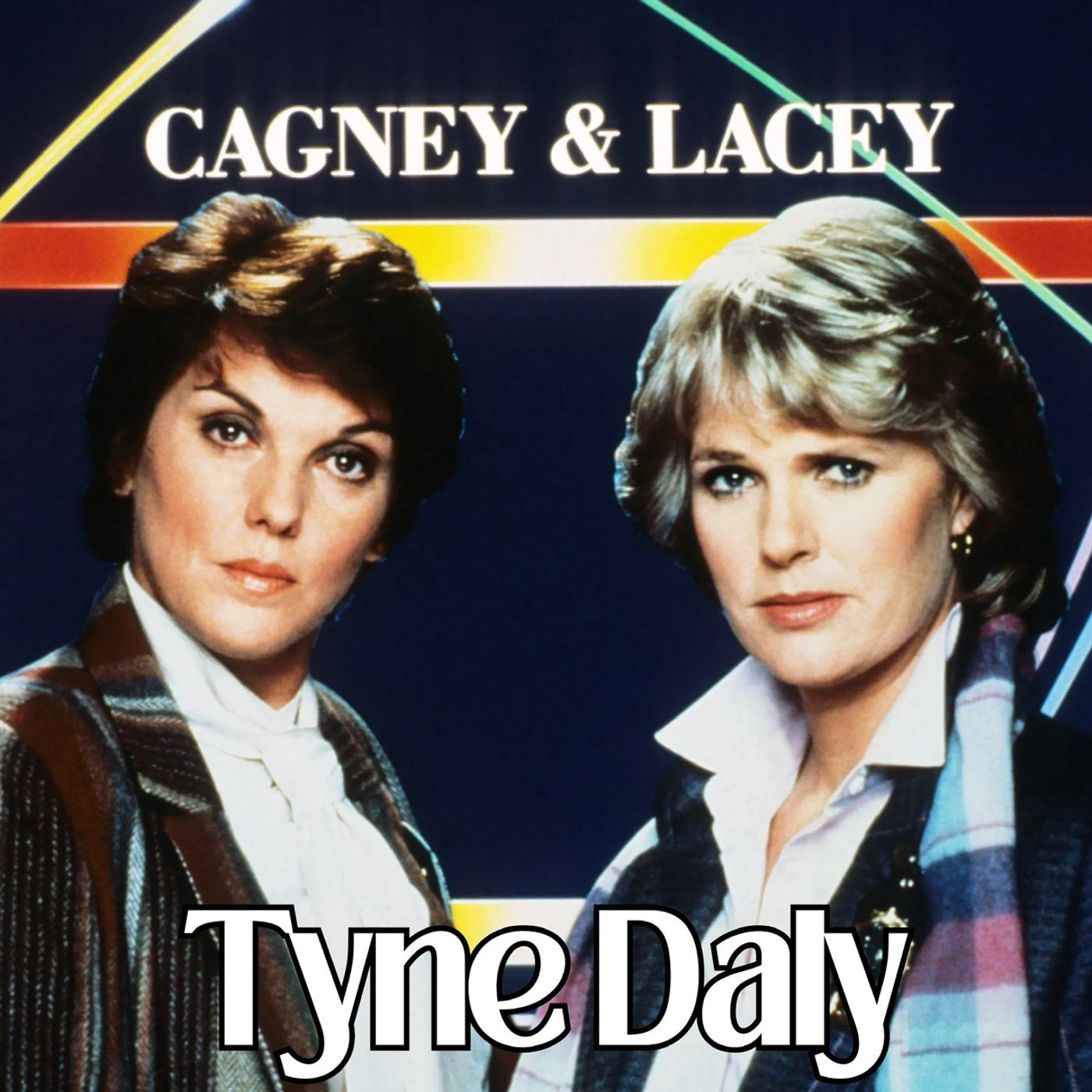
Meet the woman behind Mary Beth Lacey. Sharon and Susan are excited and honored to talk with Emmy and Tony Award winning actress and the star of Cagney & Lacey, Tyne Daly. In a career spanning eight decades, Tyne Daly has appeared on stage and screen in over 100 roles in everything from “The Mod Squad” and “Judging Amy” to co-starring with Clint Eastwood in the Dirty Harry film “The Enforcer”.
She has received six Emmy awards – four of them for her outstanding portrayal of Mary Beth Lacey on “Cagney & Lacey.” In this intimate interview, Tyne Daly shares stories of her childhood, barely finishing high school, her early days acting in New York, her eventual move to Los Angeles with then-husband actor/director Georg Stanford Brown -- and a lifetime of acting, politics and poetry.
THE CONVERSATION
- How Dustin Hoffman opened the door for “non-perfect” people on film and TV.
- Coming to California -- and being “done at 21”!
- How the internet is the death of conversation.
- The power of words.
- Doing her early pilots – and hoping they didn’t go!
- “I Did My Cop” - How Dirty Harry almost kept Tyne from doing “Cagney & Lacey”
- How Tyne went to the mat for Meg Foster at the end of season one – and almost lost her job for it.
- What it was like to read with the (many) actresses auditioning to play the third Cagney – and how it felt to hear what the producers said about them when they left the room.
- Why Tyne hasn’t re-watched the show – and doesn’t want to.
- Tyne’s idea for a new holiday: Interdependence Day – a day celebrating everything we have in common as a people.
- Tyne reads the poem “Life While You Wait” by Wisława Szymborska
- How after a lifetime of striving and struggling – as an actress and woman – Tyne sees that certain battles are never over…
- What's Tyne's one word to explain the 21st century? And what's yours?
AUDIOGRAPHY
Keep up with Tyne Daly at Tynedalyonline.com
Visit the Official Cagney & Lacey Facebook page.
Tyne Daly’s Official Facebook page.
WHERE TO WATCH
Cagney & Lacey on Roku.
The Bread Factory, Part 1 and Part 2 - Stream it for free using your library card or university log-in at Kanopy.com
On Apple TV.
BOOKS
Remembering Cagney & Lacey with Sharon Gless & Tyne Daly by Brian McFadden
Poems New and Collected by Wisława Szymborska
The New Handbook for a Post Roe America by Robin Marty
CONNECT
Visit 80sTVLadies.com for transcripts.
Sign up for the 80s TV Ladies mailing list.
Support us and get ad-free episodes on PATREON.
VOTE
VOTE for us at the PodcastAwards.com
Suppport Kamala Harris for President - KamalaHarris.com
Register or Check your Registration at Vote.org
It's the 45th anniversary of President Carter's Crisis of Confidence speech. Get Susan’s new play about it: Confidence (and the Speech) at Broadway Licensing.
Visit 80sTVLadies.com for more info.
Listen to 80s TV Ladies at YouTube. Subscribe and help us grow.
Don’t miss out. Sign up for the 80s TV Ladies mailing list!
Help us make more episodes and get ad-free episodes, video interviews, and exclusive content on PATREON.
Transcript
Automatically generated, so expect the odd misheard name.
Hello, I'm Sharon Johnson and I'm Susan Lambert Adam. Welcome to Eighties TV Ladies special summer reruns. Sharon, We're supposed to be on vacation right now, aren't you in Hawaii or Europe or somewhere. Oh not yet, but I am actually out of town visiting my mom. That's so cool.
I'm going to be heading to Atlanta to see friends and family, and then the summer is going to be over very soon and we'll be getting our teenager ready for his senior year of high school. Hey. What a crazy, nutty, insane few weeks. It's been once again. The world has turned upside down and changed three times.
But this latest change has made me very, very hopeful and excited me too. Kamala Harris is running for president of the United States. Let's make it happen. We are not going back. If you're so inclined, and we hope you are, you can join the Kamala Harris campaign at Kamala Harris dot com.
It's amazing, two hundred million dollars in like a week, and one hundred and seventy thousand signing up to volunteer for the campaign. People on Zoom's and it's been pretty incredible. Thank you to President Biden for being a spectacular president and once again being the true statesman we need in this time of chaos, who put the good of the country over himself. What an incredible man and president, and his decades of public service are unmatched. We've been so lucky to have him in the White House.
And I'm very excited for him to finish out this term. It strongly absolutely regardless of that, we thought it might be fun to remind you of what it was like back in the summer of eighties television by giving you some reruns of our favorite episodes. And just like the Networks forty years ago, we'll be back in September with brand new episodes. I have to say covering Cagnan Lacy was a real dream, and we got to talk to the trifect of creator Barney Rosenswag star Sharon Gless, and star Tyne Daily, who created the role of police detective Mary Beth Lacy. We re ran the Sharon Gless interview in May during podcast Move and Evolutions, and y'all loved it.
The Tyne Daily episode was truly a special interview for us as we got to interview her in our studio in person. We're so thrilled to be able to rerun it for you today. Please enjoy this conversation with the incredible actress, activist, human and the inspiration for us, Miss Time Daily. Have a great summer, So pretty to the city. Hello, and welcome to eighties TV ladies.
I'm Susan Lambda and I'm Sharon Johnson. We hope you are hanging in there and finding joy. We are super thrilled to be looking at Cagney and Lacey. We have such a very special guest today who is here in our recording studio right now. And by our recording studio, we need my garage office.
That's correct. Cagney and Lacey was a groundbreaking eighties show starring Sharon Glass and Tyne Daily that won fourteen Emmys. This detective drama ran from nineteen eighty two to nineteen eighty eight on CBS and examines both the cases and personal lives of two female police officers in New York City. It also spawned several TV movies. Well let's get started, so to that end, our very special guest today is Tyne Daily.
She is a stage and screen actress and a multi Emmy winner. She won a Tony Award for Best Actress and a Musical playing Mama Rose in Gypsy on Broadway. She has been inducted into the American Theater Hall of Fame. She may be best known for her role as Mary Beth Lacy in television's Cagney and Lacey. She also starred as Amy's mom, Maxine in six Seasons of Judging Amy, and has done multiple television appearances, stage productions, and movies, from the nineteen seventy six third Dirty Harry movie The Enforcer, where she played a female cop, to Spider Man Homecoming.
She's also an activist and co hosted a Night with Sharing Glass at a reading of the play Row by Lisa Lumer that was at the Fountain Theater here in Los Angeles. Tyne Daily has won six Emmys, four for Cagney and Lacey playing Lacey, of course, one for Christy, the one season period drama, and one for Judging Amy. All right, well, welcome to the show, Tyne Daily. Thank you so much for joining us. We're very excited to have this discussion with you.
I'm very excited for joining because I have a very difficult time in the twenty first century, with everything being filmed and everything being sent through the air, and everything being electronic. When you get old, which I hope you do because it's a really interesting time of life, but when you get old, there'll be a whole lot of stuff to adjust to that you will not have seen before. I promise you. I'm already finding that things that are happening where I just find myself going, I don't understand the need for this, or why we should be pushed to that, or what the heck is that you know? And why is anybody interested?
Kind of thing? Well, I think I began to. Tell you I'm asking people to give me one word on the twenty first century. So far, we're not a quarter of a century old century and we're moving in on it though, But a little assessment about if you had to find a descriptive, if you were a poet for insan a thing to say this century, you get one word. It's very tricky.
Oh yeah, it is. Oh, you don't have to answer immediately. Goodness, However, perhaps at the end of the time you can give it, because if you'd like to know my I'll tell. It to you. Yes, or I could wait.
We would let's wait wait because okay, so where are we now? Okay, well, I do want to talk about the beginning of your career first, if we can sure you come from an acting family. I went in the. Family business on base. It was the only way to get their attention.
There was a there was a young There was a theater, a local theater. The Antrump Players from the place we moved after, well, there was a lot of schools before that. We moved around a lot. When we settled down and stuff for New York. There was the Antrump Players, which just closed their doors forever, which makes me very sad.
Oh I didn't. They're going to turn into a church, oh dear. And but they had a program for kids and uh and for grown ups. And I got to escape there and do my apprenticeship yeah uh, and then played there a little bit. Then the parents, you know, they were parents.
They they they wanted me to. Go to college. They wanted me to finish high school. I mean they were said they were so they pinched me so hard because by the time I got to the Antine Players, I wanted to do it all. So I did.
I finished high school barely on the good graces of a of a history teacher who said, basically, oh, get out of here, you know, with your D minus. I went to Brandeis University for a quick year because there was a man from American history of the theater named Jasper Deeter. Great either a ballplayer or theater right one or. The other, a Jasper Deater, and that he was gone after my freshman year as a teacher, although I learned a great deal from him. He was one of my lucky teachers.
And then I found out they weren't going to let me on the stage until I was a junior. Really, so the hell you say? So I went home to the parents and said, I quit college, send me to trade school. Went to trade school, met my husband, got married, got pregnant, came out here. I had done a couple of plays in New York quickly, and a couple of seasons of summer stock.
And I got out here and called in all of the connections that I had, and none of them paid off. What was because you wanted to work in movies and television? Is that? What was it? Or did you want?
I wanted to follow my young husband and for us to raise up our baby together, and I didn't want to leave New York at all. This was foreign territory and in many ways still is because this is a movie. This is the movies. New York is the theater. There's the movies on those terrible, you know, dichotomies that we are forced to do.
But I tried to find theater out here. I did do some theater out here, but I felt that I was leaving the theater town forever, and I was. I was in mourning for that, because that was what I had fantasized about Broadway, Broadway, how rich you are, not the not the the silver screen that was for ideals in that day and age. It's only for ideal people. And they cried ideally, and they suffered ideally, and they made love with a certain amount of coolness, cool not hot.
Coolness was the big I wasn't any of those things, and I wasn't going to be. But the luck of timing, which they don't talk to you about in acting school, was that we hit the Dustin Hoffen. We hit the real people time you could look like a person, you didn't have to wear your bra. We hit a wave, as did my young husband, who hit the wave of the inclusion of black people for the first time very long time. So the luck was those cultural timings, both for the women's movement and for the social revolution of race.
And in that sense, we were very lucky. And then we did the work. And then I was middle aged. I was thirty four years old. I was done.
You come on, who's that wonderful wonder who directed Some like It? Hot Billy Wilder? Yeah. Billy Wilder famously said there's only one thing for a woman to do in Hollywood after thirty, and that's leave town. And he was one of the nice ones.
They were exploiting little girls from twelve, like the Gish Sisters all the way up. But nobody wanted to take a look at anything that wasn't smooth and white and feminine. Let me put some quotation marks around that. No threat to the patriarchal feminine I and the ugly people were allowed. The non perfect people were kind of in fashion.
So I was just definitely not perfect. I feel like in the movies, I couldn't pass the physical movies like the Marines. In terms of your assignment, you know, there's a there's a requirement for a certain kind of strict adhering to the rules, and I was really much more interested in being a mash unit, you know what I mean, ye help people patch them up because they've been hurt. When you first came to La, though, did you find much to your liking of the theater community here or was it fairly non existent at that time? We made a couple of theaters.
We made a wonderful little theater on the valley that was this little space. We did some very esoteric plays, We did ball and it was fun because we turned into a sweet little theater. This is when there was a under one hundred and then under you know, and you could still get a dispensation from your union some of us reunion women and somewhere you know Milkman. At any rate, when we lost that theater after two seasons, we had to turn it back into a storefront. It was heartbreaking.
It was sweet little theater thing. Some of the little box ups all this time. No, it was on Moore Park. Who was in it, interestingly was David what's his name? Starsky used to called Cagging.
Likes to go to say which are you, and I'd say Starsky Starsky and David cheers it will come to me. This is why, David, David. I'm going to help you out with the internet. Okay, that's cheating though, that's the depth of conversation that machine. There's people don't you know what's his name boos in that movie with them, you know she was married to them.
Oh, that fellow would have the thing that he was doing. He worked for you know at that studio. Well, we know what at the place behind that. We're done. We never go about this and tempers and you've got.
Another ten years. You've got another nine years before your brain leaves. Oh no, it's already leaving the station. It's it's it's so we were speaking of culture being lucky. What happened before?
That's so I did ten years here of freelancing on television and getting jobs through my connections and through having you know, delivered on those collections. You know, but the getting the job is hard. My dad had to show my husband had a show. Your husband was in the rookies, right, he was in the rookies. We were talking about Aaron Spelling too.
In those paternal you know, producers who could announce at the end of their season there would be another season everybody has a job, go on vacation and hiatus and have a good time so them days are over. I had done a couple of pilots for various proposed series and gone home and falling on my knees and prayed to my maker not to have it sell. Please don't make me have to do that for another fifteen minutes, much less, you know, five years. I got lucky in the movies a couple of times, but that didn't pan out to be anything in terms of work. I was approached by by agent with a script called Caddy and Lazy, and I said, I did my cop I did my cop with Eastwood, the unfortune.
That's that's so, you know. And he said read it, and I read it, and I thought, oh, there's room in here for something else besides running gun and yeah and every and the other thing was that I'm By that time, I was a little bit smart about the business. I thought, every single actress in this town is going to throw a blonde wig on her head and want to play Cagney, because Cagney's glamorous, and Cagney's funny, and Cagney is sharp. In a very specifically second wave feminist way, yes, which. Shelf life, I'm not so sure.
But anyways, so I thought, I thought, I actually thought Mary Beth was more interesting, had more possibilities in terms of a long run thing. And then we did it, and then it wasn't appreciated. Well, it got good numbers with the Retta got very good numbers because the Redda was a pistol playing hot thep school lant and so it was her. They owed her a movie the week like they did to sweeten contracts then and uh, yeah, I got sensational numbers. Got it's sixty something.
It doesn't happen anymore. No, But there wasn't any inkling in doing the TV movie that there might be a series in this. No to me, I thought it was a one off, you know, And so we had no contract for it. So then there's this network lives and dies on math, which is the difference actually between the theater and the movies. The theaters is words and the movies is numbers.
So just by the way, so they got impressed and they went to Barney and the said, where it's our series? Maybe he told you this story? Yeah, And he said, I don't have daily, I don't have sweet what do I do now? They said, it's Switts tied up in her series doing the eleventh year. I believe of.
Mash Yes, they said, get Daily, you know. So we we came to a deal and started looking for a new a new Kidney. And then they told me the long history of who they'd wanted in the first place, and bloody blood, that's a long that's eleven times told to you. But but so then you did the first season with Meg Foster, Yes, as Cagney. Yeah, and like this was your second run as Lacy.
What changed for you for that character between the movie and the and the show and then with the different Cagneys. I'd been playing with the big boys, and I'd had to make compromises, personal ones, personal ones about loyalties and about advancing my own career and about Yeah, it was. It was. It was a very tough time because Megan and I had worked well together and we had done what you television series don't spring full blown from the mind of zeus, Right, there's an. Idea, you do it.
And then, as Amy Rennerwin once said to me famously, she called me up after after we were picked up for judging Hamy, she said, I know what it is now. I know we have to keep doing these I said, yah, maybe we do at least. Well, yeah, it's a whole, it's a whole different animals. So I thought we were done, and we weren't done. And I was.
I was for about a minute and a half, well or a week and a half in on the casting process of the new Cagney, and I was still aching from Meghan and I Megan I because I thought we'd sort of started to figure it out. Yeah, but there wasn't a start to figure it out. There was delivered, Deliver, Deliver. You know. So oh, after that, sitting with these listening to these people audition, these actresses, all of whom I admired, I mean, any of the smart ones, said oh that's a good part.
I like to have that part. We don't see those parts very much in TV, you know. And they all came in and they read. And after the first day and a half of my reading with them, I said, Fellas, I can't stay in this room with you. When these actresses leave, I cannot listen to you speak about these women and these workers.
I will go down and get them from the waiting tank and I'll bring them down to you and we'll read together, and then I'm leaving because I did not have the soul of a boss do that. It was my souls are heard from trying to protect them physically from these assaults on their personhood that to me had very little to do with acting anyway. So I'd had an encounter with the powers that be, and I'd been threatened with a court if I broke my contract. And what was his name, Harvey Harvey, not Harvey Purr. That's a play, right, Harvey Lacy.
That was my husband, Harvey Weinstein. That was a bad guy, one of those Harvey's, one of those Harvey. He said to me. Over lunch at some very fancy place. I was knitting like a mad thing.
That brought my knitting. He said, well, would you like to be working for me next year? Or would you like to be in court? Is this because you were like I was saying, I was trying to I went into Meg over Meg. I said, we've laid the groundwork, We've done thing.
You know, we're just beginning to roll with it. This is going to work. It's going to be great. She's she's a she's my Cagney little did we know anyway, Oh god, it's a long time ago, and the struggles were real, and the struggles were mostly about trying to make a better product, right from everybody. I think now I'm a little kinder at the time.
You know, since you were so personally involved. This is your You're going to be your literally your partner on the show, and it's it's yeah, it's it's not just a it's hard to be to be objective about it in that way because it's different for you than for the producers and everybody else involved. Well, people say often don't take it personal. Whatever it is, this is very personal work. Yeah, this is my instrument here, it is sitting in front of you, size, shape, age, whatever.
This is what I have to work with and my brain and my memories and my guts and all those things. And it is personal work and it's about and it doesn't work if someone doesn't pick up on how personal it is to you and feels that same way too. It becomes personal for the person you're telling the story to. And that stuff is that's tricky stuff. You know.
I wonder half of us go mad and turn into drugs. I'll admit until we started doing this podcast and started looking at Cagne and Lacy, either I didn't know or I just didn't remember that Sharon Glass was Cagney number three in the show. Well was a dude, didn't need to and that's good, That's very good. She became the one, she said, they were the one they wanted in the first place, and she was tied up in a series of her own. We had met a couple times.
I went to full courtship because I wanted the job for myself. Come on, I wanted it to work. I didn't want it to fall apart, right, do you know anyway? Now? And then we were fired, and then we were hired, and then there were prizes, and we were fired again.
It was a really nice, chunky roller coaster, I was going to say, for such a successful series. From the outside, it had a very tumultuous history. We learned from Barney and from reading about the show and stuff, and so I imagine being in the middle of it, just trying to do your job and being surrounded by whether we're going or not going, who we're going with, who is being handed to us. Well and more. The more difficult assignment was to be some kind of a example or a role model, or you know, what do we stand for?
How do you account for the success of this show? When we go to actors and we put stick the micros on their face and we want them to know stuff that isn't often in their can and sometimes they're deeply stupid about And I want to say. Go talk to the people you elected. No, what are you talking to me for? What do you want my opinion about this?
You know, do I have one? Sure? No, I don't think it's appropriate for you'd be asking me about this, ask me about what I do anyway. That was very annoying to me. I didn't you know.
And the the part where you're supposed to represent something. It's at this point that miss Daily notices the Jimmy Stewart retrospective poster on the wall of my office. There's Jimmy Stewart right up on the wall. Look, hi, Jeeves. So I.
Sorry. I went to school and organized a retrospective of Jimmy Stuart movies because I wanted to see them. Yes, and I got to meet him too at the last It was it was really again an incredible memory and he was so kind and gracious that he was lovely man. Yeah, did you did you go around when he did his show and talked about his. Past and all that.
Oh, I wasn't out here then. But yeah, it's a strange deal for actors, actors and all performing artists. Although we have film and although we have all of that recording devices, you only serve in your own time. I could not have served in the thirties. And bet Betty, Betty, Betty David Davis could not turn down, couldn't get a job.
I mean, you know, the styles change. And had a very smart friend who said to me, once styles changed, but the truth does not. So you can see the truths tellers, you know, in the movies and the theater. And I think it's one of the kag gang Lacey holds up. And I think it's because you guys are truthful in your moments.
There's truthful moments. That's what we were working for. Yeah, and it comes through it. And there's a whole lot of bullshit too, I mean there's but yeah, no, but the end of the season, we used to get to appoint me in Varney Rosens and we say okay, So this year we did twenty two or twenty four, and which ones. Would you keep?
If you would keep eight, we're doing great, we keep eleven. That was a very good season, if you know, and if and it was going down into the round like, well, I'm not proud of then we were. Then we jumped the shark. Then it had gotten silly. Then we were grasping its straws, and I wish we were more then like the English, are you know to say this story has a finite amount of time to tell.
Yeah, I'm of two minds of that, though, because as a television consumer, a lover of television, I'm happy to spend as much time as I possibly can with these characters that I like, these shows that I enjoy. But at the same time, it is nice when that, you know, the expression about going away before you're missed or let the miss you is I want you. To go away. Yes, exactly, I understand that as well. So I'm always of two minds when it comes to that, because yes, I would love to spend as much time with characters that I enjoy and shows that I enjoy as I possibly can.
But when you're doing twenty two to twenty four episodes a season, they're not all going to be, you know, keepers because of the runaway train that is television production, you know, so there's just not a lot of time for that. But it's but it's so love well. When my daddy started doing serious television, they did thirty nine episodes a year. That was one of the hiatus was fifty two weeks cut in quarters, thirty nine episodes ours and yeah, and he was on an hour show. And so then I saw it slip for him when he was going out to the coast and it became thirty six, and then thirty four and then twenty eight.
That was a big dip, you know. And what has changed again now it's six and maybe eleven was what I was thinking about about the Sopranos. Eleven. How do you know, all that same money, all that same amount of time, time and money makes things excellent. But yes, we had when Sharon and I did three shows together, they showed two of them on television, and then Barney begged to have the third one also shown, you know, and my friends thought I was lucky because they were only making two of which it's the business.
I know far more about this business than. I want to. I never wanted to know anything about show business. I wanted to pretend to be somebody else and so like and just think that's not uncommon impulse. I wanted to disappear into somebody else and show off at the same time.
See that's it's one of the nice dichotomies. I used to say, you know, the impulse to show off and the willingness to disappear. But in terms of reality television, if I was remotely interested in reality, you think I would have. Been an actor. No, let's pretend then have dress up except fantasy.
Old school. So that reminds me of an interview that I watched with you where you talked about one of the first things you do is find the voice of the character. And your voice is so amazing, right, But I love that thought that that's how you approach Well. It's not so much as finding the voice, is it that is hearing her? And the hearing of it doesn't come just out of my brain alone or auditory hallucinations as we say, it's it comes from the page.
It comes from the from the written what's on the page. And I, as I say, I'm not a visual I'm an a oral learner. We used to don't talk about that. They just started talking about that with my little girls. What kind of a learner is she slow?
U? Or so? Yeah? I often music, the the auditory thing is a stimulus for me more than the visual. Whereas my young husband, George, I used to catch him, you know, standing in doorways staring at the space, and I knew he was directing.
I knew he was, you know, seeing it, trying to envision it. Yeah, does that answer your question? You know, I'm just it was fascinated by different actors, different approaches to creating these characters. And and Mary Beth is such a subtle character in a lot of ways, much more than Cagne. Cagney is sort of through the door first, I guess.
Yes, right, Well maybe in cliche, Cagge's a little more available, you know, because she's more showy Lacy. I just liked her, and I also thought she was doing a struggle that I was involved in myself, but on being an actress level, not of being a housewife and with a second job at you know, the local hotel cleaning rooms. Yes, I mean. She was trying to do that, particularly juggling act. I'm gonna get getting into it.
You know of the of the eighties woman you can have it all, and that wasn't true. You certainly can't have it all at once. You can have it all very quickly, one after another, if you are have an endless supply. Of energy and good temper. Yeah, she was throwing herself up against a bunch of walls with her husband and her kids and her work that I thought was worth telling stories about.
And then what do you know, A whole lot of people wanted to hear stories about themselves on TV. What a surprise, I know. And they wanted to see themselves reflected. They wanted to see women being real in their lives and everybody else too. It was, I mean, it was, it's it's it's again.
It's a crack in the. I'll read the statistics of our union. Still, how many stories are told about the white male in the society, and it's and we reflect. Some people think television's leads. I'm not so sure.
I think we reflect. I think a lot of what we were talking about on Caddye and Lacy had been talked about in the world, you know. But here we are again with people, you know, assaulting clinics that take care of women's health, with people marching in the streets saying we matter. Can you see us with people confused about the well police to have played a policeman. Both my husband and I played policemen in those days.
If you think we can't go home and discuss and decide to accept that in them days, then you underestimate both of us because it was not easy to say I'm lining up with the pigs, not only been marching for Vietnam and meaning it, you know, compromises. Yeah, the end of the Vietnam War was really not that far away from when No and all the things that went on, you know, around it. It was not that far away. So it's it's totally understandable. Entertainment industry for peace and justice the worst?
What are those things that NATO's the one that those things into a word the e I P J. Jane Fund and Don Sutherland and us with carriages in the street, you know, street theater, all that stuff, and we've be I I did street theater again a relative Sharon and I introduced a play by Lisa Lumer called Road that's you know here, yes, you know, to a bunch of people, two hundred people and a thing saying, don't give up the ship. It's it's disheartening. And yet I know there's progress, but only progress if you, if you, if you insist on it. Yeah.
Yeah, the fight never stops. For a lot of things you have to keep you have to keep fighting. So I just don't. I'm not an idea my version of fighting because I'm not very I don't have a very aggressive spirit. So my version is storytelling.
Yeah, and I think human beings these stories. I don't think it. Sometimes I think, oh, I've spent too much time with words. I've wasted my time with too many words, and I'm still looking for the right words. I still call up my friends and say, you want to hear a poem?
You know, I just uh, And I know that that can be not as useful as deeds. Words and deeds. Well, I think everybody has to contribute what they can. At the end of the day, everybody can't do everything. Our words are very powerful, which we're seeing the policing of words, and we're seeing you don't get to call yourself what you want to call yourself.
And we're seeing the words are very, very, very powerful. And you know, it's the First Amendment. Well, freedom from fear, Freedom from fear. All right, So we're going to take a little break. We'll be back, all right, welcome back.
Oh my gosh. So did we get up to Cagyan Lacy? What do you want to talk about? We want to talk about Cagnean and Lacy, more about Cagney and Lacy. And you know what your favorite moments were, like what you still hold deer?
Hmm, I don't went. At the end of the show, they gave us an opportunity to have all of the episodes, the entire series, and it was a choice between Beta Max and VHS. Yes, VHS. I didn't understand it, but I did the little research. I found out Betamax was smaller and better resolution, both visually and audioly, so I said I'll have Beta Max.
So I haven't seen Kaddy and Lacy in forty years, and uh, not really interested in it, looking at oneself as a mixed bag. And Sharon will tell you maybe or you know, she used to sit down with with Monique James, who was her mentor at Universal, and they'd watched dailies and moniqu would say, Runner, that's that's good. I like that when you do that don't don't ever do that. Watch out when you do that thing with your don't don't do that, and and talked her through how to look. And it was just foreign to my nature.
I thought for a while I'd look at the shows, and Barney said, it was an interesting opportunity to see, if you know, if you've made a table that had four good legs or one leg was short, you could assess the work. But the opportunity to really see yourself when you're making it was very rare. There wasn't any TVO or look at it afterwards. I remember looking at daily as every once in a while from a scene I was interested in for a while. Because we had the whole operation at Lacey Street, which was an old brick factory that they turned into a studio with everything.
The first year or so season or so, we didn't have the sound department, but we had the writers upstairs, and we had the cutters downstairs, and we had the costume department. It was all kind of a self contained, a little factory of our own. We didn't have to report to Universal and if the powers to be called up and said, oh we hate that scene, you can't do it anymore. You said, sorry, we filmed it, Oh, too bad shot, and then they were too cheap. So it was a lovely cocoon in a way out there.
But collecting favorite moments, I don't you don't do it. I don't do it. Really, I know that I had very good times working with a particular director or on a storyline what we were being the heroes. And then as the thing went on, there were there was the victim requirement. People had to be date raped, and people had to have breast cancer, and people had to have you know, the things that were the victimhood of the female cop was not required from some of our colleagues with penises if I could see that.
But and that was that was another interesting thing to negotiate. I remember, uh yeah, you know, trapped in the in the thing we did called heat when you're the bad guy, trapped you in the in the in the hot being a victim. Yeah, they were good acting opportunities. I like the quieter ones. But it's.
It's painful to me to try and name you episodes. I mean we picked out did they work or did they don't work? A very smart man named Arthur Lawrence, whom I encountered later as a director, an old fox of the theater, and he said to me, there's no right and wrong in the theater. Does it work or not? The workerate doesn't work, you know.
So I think we worked it mostly. I don't feel that there were times when we really betrayed the side or something. There were a couple of stupid episodes, you know, but they were mostly just relief from you know, now I've done twenty of these lists. Who's something silly? We did a lot of laughing together as workers.
We had a good, good, tight crew, you know, who knew each other for I mean, we lost people, but that they held together. Mostly. You had some really you had for the time a number of female directors did. We tried consciously to hire female directors and ads and stuff and and to help on that you know front in terms of technology, which. It If you remember Karen Arthur, we're going to be talking to her.
Yes, she's in New York now, as far as I know, last time I saw he was in New York. Yeah, well, I think she'll be zooming in so I don't know exactly, but yeah, yeah, she was one of our regulars. So you mentioned you were talking about how you really never really watched the show, remembering correctly. So is that consistent across the work that you've done on film and television that you haven't gone back and after you've finished it gone back and watched it pretty much? So, I mean, in the in the we had a couple of moves.
The handful of movies that I've done. Some directors have dailies in the olden days, which was kind of another communal activity, you know, come and have drinks after the thing and watch the day's work. God, it's such weird. Work because because there's no because I prefer the theater where you don't have to look at yourself when they look at you. And in fact, they're not even allowed to take your picture unless they're doing it on the snake.
Do you know? It has to live in the memory of you and the person you were telling the story too. So the non communalness of this last couple of years, which is changing our business of law of gathering any place and gathering with comfort and ease and rather than suspicion and nervousness. And I'm wondering if going to the movie is going to make you sick. That's something I'm kind of looking at for the margins because I'm not, but I have done enough work to see how different it is.
This guy wants to know about about burn. Notice, I have to tell you the reason I did it was to keep my pension open. My pension had faded. I called Jar and I said, Charon, and I got to make this much money to do my pension, get me a job. I mean, if you want about how it really works, folks, you get to be old and they kick you to the curb.
Okay, so what was I going to tell you about something? Though? Theater and theater? And yeah, the recording of an experience so that you can look at it again and again is very different than having it have to last in your right and you could retrieve what you can. And I understand that.
You know, there are kids who are recording their teachers in college class instead of taking notes, taking noteses one kind of recording, but recording the whole thing. And I did then go what and fall asleep over it? Again? I think it's an excuse for paying attention in many ways. And that makes me sound like an alta kaca, which I am, so.
I'm probably pretty far down that road too. I mean, as you know, a cell phones have proliferated. When I first was able to take pictures all the time, and as many as I wanted, I did that, I'm gotten to the point now where I almost never take pictures because I want to see an experience and I want to look at what I want to look at and pay attention to what I want to look at, because I there is something about being in that moment, and that's one of the beauties of theater over film. As much as I love film and television and filmed entertainment. And it's lovely to see things again, it is I'm wonderful to see great performances and all that stuff.
I don't mean to be to be religious about. It, but there I mean, I think there have been a number of actors who've talked about how they don't watch themselves. They don't, so you're definitely not alone. And so I was just I was just curious if that was a you know, something consistently over your your your career, that you've mostly done when it came to the finished product, you know, as opposed to dailies, which to me is a little different because you're seeing the work of the day and helping you know that maybe be useful in terms of going forward. I don't know, but I have I think I have only like eight percent since at Bullard in me.
Just enough, that's just enough. Yeah, not my favorite form of fun. Let's say that understandable. Sure, So let's move on to theater, because I want to talk about Gypsy and I want to talk about what theater has meant to you over the years, and because you've done a ton of theater. I've done some, but I also had there was this distraction of my husband's career was out here.
My career turned out. To be about television and a little bit of a way, you know, the movies where I couldn't pass the physical and uh to be a marine, which I remember the reading something about to me Moore saying that she was a hands on mom and she also spent eight hours a day in the gym. I thought, baby, how do you do that? Which eight all in a row? How many hands?
I don't know, I just didn't. It was it was made amuse me. And I couldn't figure out that kind of juggling without a lifestyle that I didn't wasn't designed for do you know, very bad at delegating responsibilities and asking other people to do my shop. You're home. So the theater and the movies, I've been very lucky.
I've gotten to do some of each, do you know? And and uh uh, but my yearnings for my dream time, as I said, was the theater and not the movies. Not to be in the silver screen, but to be but to be, you know, on the Broadway stage. And the music part was fun, and getting up for it was fun. And and uh uh retraining again uh uh, you know, to make the cabarets was fun.
And so I didn't I wasn't required to choose, to say you do this or this. I was happier being a jack of all trades. And I think that was that has changed. It used to be you were doing television, you did television, if you did movies. Movies.
There was lots more snooziness about it until Laurence Olivier sold cameras. Oh until old Larry got that ad for Polaroid. Yeah, there were in rows were made on what was the fancy stuff? And you know, where you earn the monies and where they want you. So the theater takes a different, different kind of energy.
I don't I don't know that I could do the first act of gypsy without falling over. You know, these days it's just you age out of that part of it and the memory fades and that, you know, the. Attrition of old age. But hopefully I always wanted I was interested in telling stories about women from the beginning to the end. I didn't like cutting out and leaving only the fifteen years between fifteen and thirty, that those were the only ones we looked at.
Yeah, no coming, very few coming of age things for girls, very few getting through the middle passage for girls, very to you after I can't make you babies for the girls, and very few. Old wise hags. To add a little bit of the female spirit to the overbalance of male stories about how they figured out the world and how they run the world and what is necessary to run the world. I'd have thought the other day about the Bible and the and the and the Constitution and all of the things that are rolling around since in our society right now, and the words, the great words, And I thought to myself, I wanted to say to the founding fathers, who told you that story? And they'd say oh my dad.
And I say, well, who told him that story? And they say, oh, my dad, your dad told you that story. We've all been listening to the dad stories for a long long time on the verge version of what's creative, what's nurturing? How do we get to be better people? You know?
And so I thought there was room for the mom stories, particularly the mom, not the girlfriend and not the rival, for the for the job. Well, it was such a big part of of of Lacey, and there's a again rewatching these. There was the line that struck me from one of the episodes where she and she constantly questioned whether she was being a good mom. But there was like a I thought I was stronger than this. I thought I was a good mother as a mother and a stepmother and a working person, and a thing like I was like, yes, we're constantly asking that question of ourselves.
Yeah, serving all these masters and wondering if you're feeling them all. It was a condition and still is a condition of a lot of people. And I know that's not that men don't question themselves so that they don't blah blah blah, but the running of everything and the reason being instructed that I'm a second class citizen officially now from the highest court in the land. Is painful to me and my daughters and their daughters and their sons. You see, if you can announce that somebody is a second class, it isn't officially.
Again, you could pick take your next group. There's that, you know, who do they come for next thing? To say? Your personhood is in question, your citizenship is in question, your value to the communities in question. So I'm Lacey had a hard time with that in the eighties, and daily is having a hard time with that in this whaties.
Yeah, you know, yeah, and it's you know, one of the reasons, you know, we sort of have this little saying like look back on our delete forward, and yet we're tripping sideways like in backwards and forwards, like it's it seems like a bit of a hot mess right now. Yeah, well maybe it's always a hot mess. I just it's the idea that you and it's and it applies to the acting game, right It's the idea that that you've arrived someplace and now you're there and that's it. That's the end of the story. You've got to this platform and then you don't have.
And no, it's an ongoing thing. There's on back the whole ebb and flow and blah b. All that stuff is is is hapening in our country and happens in the career. So when you get to something and say, okay, this is it, this is what I do. You know, I live in New York City and I do bad plays.
Oh no, this is what I do. I go and sell out in Hollywood and make money and win prizes and get famous and that's you know, uh, and that's and that's it for up. No, there's no arriving and how to be of service. I always wanted this to be a service job. That's how I was brought up.
Human beings tell stories to each other about themselves because they need it. Yeah. And more importantly than that for me was, you know, human beings come to the theater to watch actors because they've all been actors, all of them, even the starving ones, have pretended to be somebody else and to get themselves out of this condition and have played dress up and have you know, shown off, they all and they've all forgotten. We're the ones who remember how to how to how to play dress up and show off and be silly, and and they come to get that from us, you know, but there's no there's no arrival at some. Law.
We were so innocent that we thought we would change the laws, and we forgot they could be changed. Back as a generation, I think, a hippie dippy, you know, against the war and all this stuff. We thought we were the only people in Marshtown, Washington. Ever, we forgot all about them civil War soldiers who never got their pension, no sense, you know. And history shows us.
That you have to going to go out again and again again again. You have to keep fighting for your rights. You have to keep fighting. And fighting is an interesting word, right we you. Know, striving, struggling, questioning, oh, challenging.
I like all those. My mama said to me one time, I hate all this stuff on TV. Everything's a fight. You're fighting ring around the collar, and you're fighting the yellow on your floor and you're fighting that you know, you're cold with this medicine, and everything is pitched. As a battle.
And I thought, that's really interesting. That's a hell of a long time ago. But yeah, the idea that of combat and aggression and struggle, I think we sort of run out of that being useful. Yeah, I think that anybody that thinks that war is a solution to anything is wrong. Yeah.
PERIODO got to figure something else and I gotta do it. We got to look for different ways. And I think that's That's one of the reasons I wanted to do this podcast is I wanted to celebrate women in all ways and and also examine what our choice of language is. Like we we sort of question each show that we look at and we be like, Okay, is this a feminist show? What is a feminist show?
Did they know they were making a feminist show? You know? What does it mean to do that? Well? Mostly I've played women girls in my career.
I did play an eight year old black boy in Moby Dickperhearst in the Open and Denver, but that was unique, and mostly I've been asked to play to play women. So if I'm doing it, it's a feminist show. I mean, it's about If it's about women, it might be about the women standing in the background. I mean, but that will give you the you know, the story on the woman of that story, the everything having to sit in its own category. This is for girls, This is for boys.
This is for black people, This is for Asian folks. This is for the bitsing up and categorizing everything. I here, okay, here we go. I'll tell you my last idea Okay, Independence Day, fourth of July, bombs bursting in air, and I thought, I want a new vacation. I want a new holiday.
I want a holiday called Interdependence Day. On Interdependence Day, we celebrate everything that's like about each other, everything everything we have in common. No show of military might, no uniforms, no banners, no anthems, no borders, and nothing that smacks of anything that's like a badge or a symbol. Just Interdependence Day. I'd like to see us move towards that instead of towards the the disaster of the twenty first century, which is tribalism actions my opinion, period, That's it.
I got to read you read let's because is going to read us a poem because I like to say, Vista Vajimborska. This is a terrific poem if I can make it called because this is what I'm doing now. What I'm doing now is is working with words. And I have been for a while to try and career you've been working with words. Well, I can't memorize them anymore, so I have to read them, you know.
And I and I, but I can still throw the poetry in the room, as we used to say. I'm going to this will betray me as a theater actor. I'm going to go to the home of Alfred lunten Lin Fontane. Anybody raise your hand, never mind the greatest acting a couple of the early part of the twentieth century. And yeah, they live in a place called Genesee Deepot.
I'm going to do a seminar for actors. They all have to have been in the business for more than twenty years, and I'm going to try and refresh their spirits in terms of and find out what they're up to and how it's been for them for these two years of masked things. And the name of my seminar is renewable energy. Oh my God, you as you have refreshed my spirit. Life while you wait by Vistovajimborska life while you weight performance without rehearsal, body, without alterations, head without premeditation.
I know nothing of the role I play. I only know it's mine. I can't exchange it. I have to guess on the spot just what this play is all about. Ill prepared for the privilege of living, I can barely keep up with the pace that the action demands.
I improvise. Although I loathe improvisation, I trip at every step over my own ignorance. I can't conceal my hay seed manners. My instincts are for hammy histrionics. Stage fright makes excuses for me, which humiliates me more extenuating circumstances strike me as cruel words and impulses.
You can't take back stars, You'll never get counted, your character like a raincoat you button on the run. The pitiful results of all this unexpectedness. If I could just rehearse one Wednesday in advance, or repeat a single Thursday that has passed. But here comes Friday with the script I haven't seen. Is it bear?
I ask, my voice a little horse, Since I couldn't even clear my throat off stage, you'd be wrong to think that it's just a slap dash quiz taken in makeshift accommodations. Oh no, I'm standing on the set, and I see how. Strong it is. The props are surprisingly precise, the machine rotating the stage has been around even longer. The farthest galaxies have been turned on.
Oh no, there's no question. This must be the premiere, and whatever I do will become forever what I've done. That's awesome, that's awesome. Cheers, Thank you so much. That was absolutely beautiful.
Oh all right, will you say the name again? Her name is Vistova double I s T A w A Vistova Jimborska. S z y m b O r s Ka. Please tell me you've done audio books. I have not.
I failed completely. Oh this is a funny story. They approachally wants to do an audio book for new mothers, and it was a little book of contemplations, you know, so that you could read about you. I said, if this new mother has ten minutes a day for herself. She's doing, she don't need this book, God bless her.
I spend my experience them ten minutes. Don't call until the kid is thirty five. Let's be let's be serious. Okay, Oh my goodness, Oh wow. No, And I tried.
I tried, I listened. I got so we were doing a long distance trip and I got books for the girls to listen to her drawing my daughter back from school in Wisconsin, and I got, uh, Ruby d doing their Eyes Are Watching God? And I love Rubud and her and we had I worked for her and for Ozzie and stuff, and I got the thing made me fall asleep driving and it was like it was like a supper. I can't so I say, I listen, but I can't. Very few books on tape move me.
I find it hard to listen to nonfiction audio books. Yeah, fiction audio books, I find it easier to listen to, maybe because it engages my imagination in a different way as opposed to trying to take the eyes. Are watching God? Come on that? Uh what else Jim Dale?
Do you have Jim Dale in your mind? He did all of the. Voices for the Harry Potter and Daughter, something like three hundred and nine voice. I thought, shows what kind of a thing is that. Those audiobooks are amazing to them?
But he said he recorded them and managed to remind himself of who everybody was. You know, sometimes he'd lose that kind of see that kind of gift is just amazing to me. Can I ask you really quick? I know we got to wrap up The Bread Factory two part movie like such a charm like how did that happen? That I did?
I saw? Patrick Wang is a lovely genius filmmaker. You should see his film called in the Family, Oh Yummy, And then there's one called Grief of Others. But yeah, Bread Factory was a shot in under thirty days with two hundred and ten speaking parts. It was a miracle put dancing and seeing carrying on.
And I got to it through my friend, like happens a lot in my business of my friend Brian Murray gone from us now but a great actor, and he had done a piece for Patrick. And I'm trying to remember which show, and I think it's the first one in the Family. Just lovely and the two that was such a brilliant like two movie that you shot both movies at the same sething. Back to back and a breath taking the amount of no time and a tiny and Janine Garo funny people you know who just came because they were charmed by the material. Basically anyway it was.
It was a favorite. Where did you see it? For God's sake? I found it streaming, because that's the great thing about streaming. Let us I will, I will when we do our audiography I will, I will, because I have to look it up again.
I found I have to see a Red Factory Part one and two. Yeah, it's about a you know, a local arts center that these two ladies run together and have forever and where kids can draw and paint and sculpt and act and sing and carry on. And it's it's being threatened by a consortium of modern entertainers who are pretty electronic at any rate. Okay, so it's three questions. You can't name your own shows, but is there an eighties TV ladies driven TV show that resonate with you?
And I can remind you of some to get you going, like Golden Girls and Murphy Brown, China Beach Designing Women, Remington Steel or were you too busy being a mom and making TV? I have never been a regular television watcher. I used to watch my dad, which was kind of interesting because you know, he'd be on these show and there he'd be and he'd be being you know, Robert E. Lee, or he'd be being. Walt Whitman, or he'd be being well in those days when they did he was always somebody who played give us Barabas.
He played Barabbas in the You know, he played a lot of different stuff on a lot of different interesting long front and it was very strange to see your dad. I remember my brother Tim the first time he saw it when he was ten years younger than I. But the first time he saw my dad on TV and my dad was being threatened by a bad guy, he freaked out. He couldn't truth and illusion. He couldn't make the thing.
Even Daddy was sitting next him and he couldn't make So. I mean, I watched the Rookies regularly because I was home in the seventies. I haven't owned a television set for about twenty years now. It's it's a and I don't mean to be graceless about it. And Sharon tells me all the time, they're such great things on TV, and you have to see these shows.
I think I saw three sopranos, you know, I. Is there an actress? I like those actresses on Designing Women. I thought they were terrific. And Sharon's in love with what's her face?
Who's doing her new show? Jane Smart's a wonderful actress. And occasionally. It sounds like I sometimes feel I'm an ingrade about this because I do love to go to the theater and I love it when it's good, and I love to see the actors afterwards and stuff. But sorry, that's okay, I'm sorry about Alextra Beck.
I watch alex faith really and go to sleep actory he's gone, Now what. I thought that would be a great job. I would loved that job. But they wouldn't let an old lady do it. But I think I would like it be Trivia.
You know, trivia? Is there an actress out there that you wish you could work with or wish you had worked with. I've enjoyed the ones I have worked with. Their real famous. When I was a kid and came out here, I was leaving New York with my three day old baby.
She'd been born. Father her father he came back, couldn't he was out here earning the. Money to pay for her. And I was in the airport and there was this It wasn't Playboy. It was another kind of men's magazine like that, less sex and more gentleman's GQ, possibly GQ.
And there was a picture of a woman on the cover, obviously naked. The part we couldn't see, but she was. She had her stuck in a big trash can, and so her legs and her arms and her you know, were hidden by this corrugators. Ever, they're called calvinized galvanized, a huge silver trash can, and her long hair and her stuff and her and kind of posed. And the headline was the California Woman Through at twenty one.
And I was twenty one. I'd had my first baby. I was just turned twenty one, and I was going with my baby to California. And I wondered, why am I going to California if I'm already through? And then I would sit and I had my baby, and we had our little thing, and had no money.
George was working as a janitor to and there'd be these fan magazines and they'd say, and here was the new actress, and here was the next new actress, and here was this other new actress. And I kept saying, not me, not me, No, not me again and and and I. But I didn't want to be them. I didn't want to turn into Meryl Street right. Treat had already done that.
You know. There's a little card that says, be yourself. Everybody else has taken, you know, and I just wanted to be there. You know in the mix, but I didn't want I wasn't envious to be somebody else or to admire somebody else. Not that I haven't had fun in the theater and had people move me and and tell me stories, but I just I really don't have anybody that I wanted to be like or wanted to have their career instead, you know.
I mean everybody wanted Angela Lansbury's career, but you know, but I. Think a lot of people want your career. Well, they can't have it. You're I'm almost dead. And second of all, it taken.
You know, there's no repeat. You can't put your foot in the same river twice. All that stuff is true. So I love seeing there being more stories for women. I'll tell you that I love those.
I love seeing those girl cops on lapd thing and stuff. I mean, there were the cracks were being made. I was aware of that, but I didn't have time to sit down and watch it because I was busy doing it. You know. Yeah, No, that's great, that's great.
Last question, what's a moment that you've had that you felt like is this scripted? Am I living in a television moment? Right now? You were on set all the time in television moments, but like one moment we were like that was so memorable or so like out of that. I felt like I was in a movie, you mean, or yeah.
Yeah, like a movie or a television moment of drama. Well, i'll tell you what my brain things, because I don't I'm not quite sure I understand that. I remember George was doing The Rookies and was directing and got me a job. I got the end because I was married to the co star and we were doing a show. We'd been in school together from the time I was seventeen or eighteen and we were babies, and we were doing a scene which he was also in.
He was directing, but he was in it, and he came up and stood up next to me and I said, Hey, it's. Even me in the movies, and we had the best laugh. You know that. I could tell you there are moments when it's amazing that you're that you're on the stage or you know, uh, on the stage. You can't let that awareness in too quickly or you'll not know what you say next.
Anyway, this work, it's good work. It's you know, lined up with other things to do for a living. It's not it's not a terrible thing to do. Thank you so much. Again.
We cannot thank you enough for this, and it's something you've been looking forward to and it's exceeded. I think our expectations, says, thank you so much. Okay, cheers. So time Danny challenges to come up with one word to describe our time now here in America or on earth. This first part of the twenty first century, this.
First part in this time period, the first part of the twenty first century. And then we forgot to come back to that, to circle back before she left. So I'm going I'm going to get in touch with her and find out what it was her word we think, we think, Kevin thinks it's tribalism, which might be right, and now we have to come up with our own. The first word that popped in my head was change. I'm just I think I found my word turmoil.
Turmoil because from the beginning, first we had nine to eleven, two thousand and one, we're still dealing with ramifications of that insanity. We had the historic election of Barack Obama, followed by the kind of what's the word I'm looking for? Obstruction from the right that I don't think any of us have experienced in our lifetimes. Maybe there have been periods in the history of our country where similar things have happened, but this is a whole take into it. It was a whole new level.
And it's only gotten continued to get worse from there. The fact that we went from Barack Obama, in my mind, one of the best presidents, one of the best men that's ever been president of the United States, to arguably the worst person that has ever been put into that job, the worst kind of person that ever could have or should have. This is not about ideology. This is about person. This person.
And that that person because I refuse to say the name. We're not going to speak that name. That person continues to not only be an effective stir, but that there are still so many people who are who have been brainwashed into believing and to sustaining the lies and distortions that he created in his time and office. He built a cult on hate and vitriol and fear and and division. Yeah, and continues to work to divide the country.
Yeah. Sometimes I'm like, oh, of course, that's who was nominated by a faction of people who want to punish, like, oh yeah, you're not gonna have a woman president. We're going to give you the worst of men. That's exactly what happened. Oh my gosh, we will take the worst of men over any woman as a payback.
Oh my god, Sharon just broke her a paper club. That's how though. That's how wild we're getting here. Okay, all right, have you come up with your word? Well, I I the first word was changed, but it wasn't enough.
And I think turmoil is indeed, And you also reminded me that the twenty first century started twenty years ago. So I'm also going to say opportunity. It's an opportunity for turmoil and crisis, and it's an opportunity. We're change and we've seen both of those in the last twenty years, and we'll see and we know we're not at the end of this. We're not at the end of COVID, We're not at the end of the chaos of the result of the last six years in politics, that last twenty years in politics.
We are also in the middle of this enormous technology change and a speed of information that's unprecedented and that we're not built for. Right speed of information and disinformation. Yes, and it's a crisis, but it is also an opportunity. It is we are in this. I mean, I think the word that I can't come up with right now because my brain isn't working is something that represents both of those.
Well, because you're right, there always is opportunity in chaos and disruption. There's opportunity there. It's just a question of do you seize that opportunity to make things better? Do you know, whether it be something big like the things we've been discussing, or even in your life. It's hard to see it sometimes it's hard to believe that it's there, but it is there, It can be there.
And it's not even so much about the silver lining. It's about when things are breaking apart, it is a moment to rebuild them in a new way and to decide to do things differently. So I think that question, which again is sort of resonating from all of the stuff we talked about today, which is how did we get here? Right? That's sort of we're looking back to be like, how do we get here?
And then how do we get out of here? I think is one of the other questions and it's you know, again, very serious conversation for in mostly alike podcasts. But the undercurrent of everything right now is a struggle to define the new way we are going to be and because there is opportunity in these crises, because we can recognize things and name them in ways we couldn't. We can recognize that our healthcare system in America is is not appropriate to the situation. It needs to be different.
We can recognize that our involvement in government has to be more for the people, by the people than of the people. We can recognize that these things that are breaking down are things that we can rebuild in a new way of looking at things. I don't think anybody is interested in doing the same thing. I'm seeing it in theater, you know, I'm seeing people take power from their own place that is often a disenfranchised place. But they're now saying, I don't care.
We're now going to unionize. I don't care. We're now going to demand not only these rights back, but more rights. And even though there's a lot of work to divide us into these factions, there's a lot of people that are saying, no, more people in my history than I remember ever are activated, are engaged, are paying attention, and with that attention comes the opportunity. And I again I'm seeing really exciting people running for office and really like amazing people stepping up and finding their voice in their community in a way that I think is not what I all happened in the eighties when things were falling apart, and in the nineties when people were sort of ignoring that things had fallen alart anyway, maybe got into a serious vein because I think I'm still searching for my word.
But I if I don't, I'm just going to say opportunity, because there's also an opportunity for bad forces, right, So it's an opportunity for everybody. And the question is is which opportunities are we going to take advantage of? And which opportunities are we going to demand change for good? We'll see. Now it's your turn, Eighties TV Ladies listeners, how would you answer Tyne Daily's request?
What is your word? What one word describes our time now here in the twenty first century so far? Send us your thoughts and your word to Eighties tv Ladies at gmail dot com, or contact us through our website or on social media. I don't know, Sharon Turmoil is a pretty good one. Sadly, yes, I think so.
And now it's time for our audioography for websites. First, I want to let you know that you can go to the official Facebook page for Cagney and Lacy. Facebook dot com slash Cagney and Lacy. There is a Facebook page for Tyn Daily Tyn Daily Online, Facebook dot com slash Tyn Daily Online. You can find The Bread Factory Part one and Part two at various streaming sites.
You can stream it for free using your library card or university login at canopy dot com. That's ka n op y dot com and that's for thousands of movies. You can also rent or buy it on AppleTV. It was available on Amazon. It's currently only available through fandor on Amazon right now.
What's vandor? I don't know. It's one of those new things. We want to shout out. Our friends at Rainbow Remix Podcast, South Florida, singer rocker JD.
Danner and podcaster to Niece Warner invited us onto their show, which features LGBTQ lifestyle, news, music, arts, media, mixology, and so much more. They are delightful and they just loved our show and reached out to us. They had us on their podcast to talk about eighties TV ladies, eighties television and why we started this podcast. Denise and JD are delightful and we are going to have them on in a future episode to talk more about queer representation in eighties television. And seventies and nineties.
You know, it's slim Pickens, I realized, which was a little disheartening, but a very vital part of television history, her history, and all of us. Three. Check out Rainbow Remix podcast. A link will be in our audioography. All right.
So the books that I'm going to call out today are Remembering Cagney and Lacy with Sharon Gless and Tyn Daily by Brian McFadden. And I'm also going to shout out the book that Tyme Daily read to us from. It's called Poems New and Collected. And I'm going to mispronounce this name, this Tava Zimborska. It is the winner of the Nobel Prize for Literature.
And I'm going to run out and get it right now and then dream of time Daily reading them all to me. And the last book I'm going to shout out today is new Handbook for a post row America by Robin Marty. It's very helpful. Oh my gosh, thank you so much to our Patreon supporters. Thank you Michael and and Kate.
Y'all are awesome. If you want to shout out on the show, join our Patreon at patreon dot com slash eighties TV ladies. You can get all sorts of cool stuff, but you also can just support us and support us making more episodes. Support at any level is most welcome, and listeners of any kind are most welcome, and we're grateful to you all. Next episode, we have Cagney herself the incredible Sharon Glass.
I can't wait. Once again, we're just like trifecting. I'm just thrilled that we have another Sharon on the show. There aren't too many of us out there, it seems. It was funny during this episode time Daily kept saying, well, Sharon says this.
I was like, when did they have that conversation? And then I realized she was talking about Sharon Cless because they're all friends and stuff. It was a little confusing for me too. Occasionally, even though I knew that she was not talking about me, there was a moment where my brain thought, you know, when she mentioned Sharon, of course I'm the only Sharon in the room. Someday we're going to get you and Sharon Glass in the room together.
That'll be very fantastic and probably at times very confusing. Too many Sharon's, we hope, Eighties TV. Ladies springs your joy and laughter, and lots of fabulous new and old shows to watch, all of which will lead us forward toward being amazing ladies of the twenty first century. Like Time Daily, I want to be Time Lady, but she won't let us because she's timey. Sayand so pretty Ehsta beating live it out into the city every stabling up and dream of getting working hard for the money in the man anything n



Similar episodes across the network
Matched by shared keywords.
-
All of Me
2 shared keywords: 80s tv ladies, susan lambert hatem
-
Columbo Explains the Seventies
1 shared keyword: pop culture
-
Special Report: I Am McLovin
1 shared keyword: pop culture