
Bonus
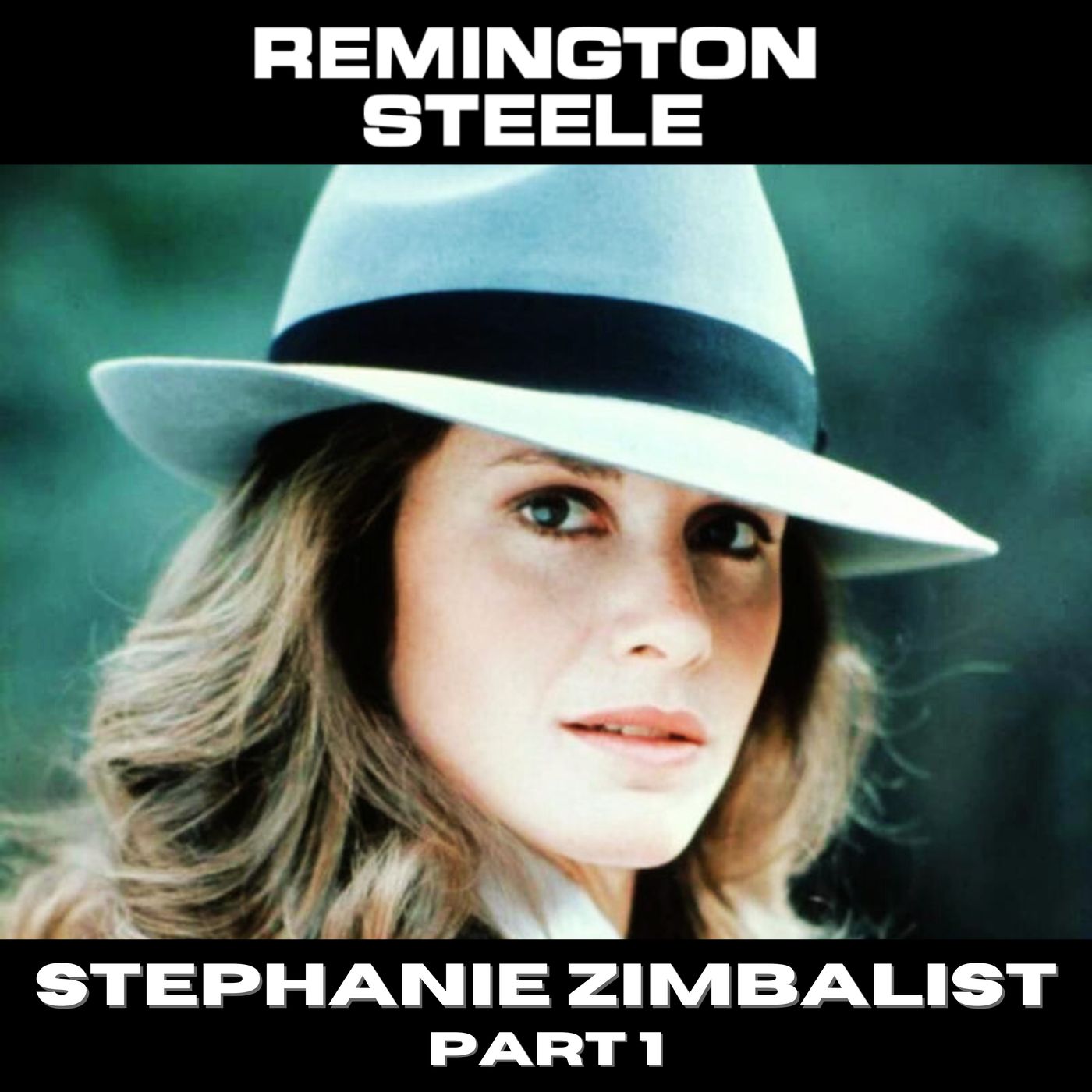
ENCORE: Revisit Stephanie Zimbalist Talks Remington Steele, Part 1
About this episode
Susan and Sharon sit down with a true show business icon and classic 8os TV Lady -- “Remington Steele’s” one-and-only Laura Holt -- Stephanie Zimbalist.
In a career spanning six decades, Stephanie has performed on stage and screen with everyone: Alec Baldwin, Walter Matthau, Jessica Tandy, Anthony Hopkins, John Goodman, Patricia Neal, Alfred Molina, Tommy Tune, Jimmy Stewart AND her own father, the legendary Efrem Zimbalist Jr.
THE CONVERSATION
- Growing up Zimbalist: what it’s like to be born into a true show business dynasty.
- How Stephanie started writing, directing and producing – at the age of seven.
- How she attended Julliard with friends and classmates Robin Williams and Christopher Reeve -- and then got kicked out!
- Winning – or not winning – an “Enema” (oh wait -- “Emmy”)
- A Life in the Theater: performing award-winning roles in classic plays by Shakespeare, Chekhov, Tennessee Williams and more.
- The gift of making “big choices” on stage – and screen. And the pleasure of refining and reinventing a performance over a long run.
- Playing Katherine Hepburn in “Tea at Five” – and how she discovered they’re cousins!
- Turning down the role of Laura Holt three times before finally taking it on.
- “Backwards and in High Heels” – on water skis! Stephanie takes us through doing her own stunts on “Remington Steele” -- and working with legendary stuntwoman Debbie Evans.
AUDIO-OGRAPHY
Stephanie Zimbalist on Facebook/StephanieZimbalistFanPage.
Steele Watching Podcast w/ Kerry Carlock.
Native Land Digital at Native-Land.ca
Read about Land Acknowledgment at LAist.
CONNECT
Visit 80sTVLadies.com for transcripts.
Sign up for the 80s TV Ladies mailing list.
Support us and get ad-free episodes on PATREON.
VOTE
We're NOMINATED for Best Film & TV Podcast. Please VOTE for 80s TV Ladies at Women in Podcasting Awards.
Suppport Kamala Harris for President - KamalaHarris.com
Register or Check your Registration at Vote.org
This is the 45th anniversary of President Carter's Crisis of Confidence speech. Get Susan’s new play about it: Confidence (and the Speech) at Broadway Licensing.
Visit 80sTVLadies.com for more info.
Listen to 80s TV Ladies at YouTube. Subscribe and help us grow.
Don’t miss out. Sign up for the 80s TV Ladies mailing list!
Help us make more episodes and get ad-free episodes, video interviews, and exclusive content on PATREON.
Transcript
Automatically generated, so expect the odd misheard name.
Hey everyone, it's Sharon. Susan and I are still on our summer hiatus, but please enjoy this rerun of our interview with the incredible Stephanie Zimbalist aka Laura Holt from Remington Steele Eighties. So bread Bab through the City Man World. Hello everyone, I'm Susan Lambert HadAM and this is Eighties TV Ladies. And I'm Sharon Johnson.
Eighties tv Ladies is our podcast where we get to talk about female driven television shows from the nineteen eighties. Today, we have a very very special guest from Remington Steel. Remington Steele starred Stephanie Zimbolist, Pierce Brosnan, and Doris Roberts. It ran from nineteen eighty two to nineteen eighty seven on NBC. It's a mystery crime show following cases of a female private investigator who starts her own detective agency, ends up having to create a fictitious male boss so people will hire her agency, and then partners with a former thief and con man who assumes the role of said detective, the already famous Remington Steel.
I couldn't be more excited for today's episode, Sharon, we get to talk with the star of Remington Steel actress Stephanie Zimbelist. She created the role of Loreholt. She has had a vast career across television and the stage, and as a theater maker myself. That makes me very happy. In addition to being the star of a groundbreaking five season hit TV show, Remington Steel, she starred in the movies The Awakening with Chelton Heston, The Magic of Lassie with James Stewart, and the TV and miniseries Centennial, The Gathering, Incident in a Small Town, and Stop the World.
I Want to Get off. On stage. She's performed in an incredible amount of theater productions across the country, from South Coast rep to the Long War Theater in Connecticut. She's been in A Little Night Music, The Lion, and Winter Tea at Five, You Can't Take It with You, Hamlet, The Night of the Iguana, The Rain Maker, The Cherry Orchard, The Philadelphia Story, and many more. Stephanie comes from Entertainment Royalty.
Her father, Efrem Zimbalist Junior, was an actor who also appears in several episodes of Remington Steel. Please welcome Stephanie Zimbalist to eighties TV ladies. Hi, Stephanie, thank you for being on our show. Hello my dear, Hi, Hello Sharon, Hello Susan. We are so excited to have you.
I'm completely nerding out because I obviously was a huge fan of Remington Steel, which is why we're covering it on the show, as was Sharon, and so Laura Holt was a huge icon to so many women and so many young women because it was one of the first times we saw a character like that on network television. I'm just going to start by saying thank you for creating Laura Holt. I had something to do with it. Actually, I'm sure that my friend Robin would tell you that we tip our hats to Michael Gleeson, and before that, we tip it to Robert Butler, who came to Gleeson with the idea. Yes, and we're thrilled about them and I want to hear about working with them and all that kind of stuff.
But let's start off with like, really, how you you come from a performing family? You were acting since you were a teen? Was it inevitable that you were going to be an actress? Well, I go back to several generations. Actually, my grandfather e from wonderful, gifted genius of a violinist was Russian and he four generations before the family came from Hungary.
Came from the area of Budapest. So if you go to the Budapest phone book, zymbalist is sort of like smith in the phone book. And his father in Ros was the head of the orchestra. And so Grandpa grew up under the timpany and he knew all of the great pieces of music by the time he was seven. So I come from that, many generations of that, and then uh, there's lots of My father's mother, who is my grandmother, was a great great singer named Alma Glook.
She was from Romania. She was actually from Transylvania to be specific. She was the first person in the history of the world to sell a million records. Wow. He sang with Caruso, she sang with McCormick, she sang with Nellie Melba.
She said, if you go, if you google Almah Glook, it's just you have just an orchestra of links. It's just it goes on and on and on. She was a great singer. She was a singers singer. Her daughter, who is my half aunt, Marcia Davenport was a fabulous writer, really great, great writer historical fiction and fiction.
And before that she was she was a music editor of the Harold Tribune and close friends of all kinds of amazing people. She was a wonderful lady. And on my mother's side, there's a lot of diplomats, lots and lots of diplomats. I think my great great grandfather was. He dealt with the Austro Hungarian Empire.
He had big mutton chops. He was Czech, he was I believe he was Czech. He was Propnik was his name. So that's where I come from. I started writing, actually I started writing and directing and producing when I was about seven.
Wow. And my stage was the hallway of my house, my parents' house, not far from where I live now, I don't have to say where it is, but pretty close to where I am. So I was. I never wanted to be in front of them on stage or in front of the camera. I wanted to I wanted to be in So that's where it started.
And then I went. My mother booted me off to summer camp in Lake Champlain Malets, be Vermont. It's called the brown Ledge Camp, and that's where I got the itch and the bug to be an actor, and so I started on the stage there when I was about twelve. And by the time I was halfway through my stint at boarding school, I had already been accepted to Juilliard and then off I went. So that's basically how it happened for me.
Juilliard was not They didn't do that much for me. They had very little to do with me except kicking me out. I believe they told me to take a year off, and I think I might be in my like fifty second year off or something like that, something like that. Were you a lot of trouble. Not at all.
I wasn't trouble enough. I was too sheltered and they didn't like it. Oh, but they. Booted me out. They booted Chris Reeve, who was a year ahead of me out.
They actually, I think they booted Robin Williams out too. Sounds like you're in good company in that regard. Yeah, there were thirty two of us that were accepted, and there were three of the thirty two that graduated. After four years there were only three, and of those three, I don't believe any of the three is still working as a performer anymore. That's an interesting purpose, interesting statistic anyway.
So I do want to talk about though, when did you meet Robin Bernheim And you said you started writing really early together with her? Well, I started in school. It was Marlborough I started. It was a really excellent girls school. I started in seventh grade there, and there was a gal in my class of eighty two.
I think that decided she wanted to bring her best friend from elementary school and have her join us in eighth grade. And so when I met Robin, we became fast friends, absolute fast friends. And over the course we went to we stated, that's a couple of years. Then we went to another private school that was co ed. Robin wanted to leave.
She didn't think it was healthy to have just a you know, single sex school, and I didn't want my best friend leaving me and leaving me there, so I switched and then I went off to boarding school in Virginia. But the times that we were together in school, we wrote, and we you know, we pretend that we had a radio show and then we wrote. I can't tell you how many we wrote these outgoing messages for our tape machines. Those funny like phonemte big old machines that you had to accept your calls when they first came out. They were these giant things and you had to push buttons.
Well, we wrote, had I still have all of them? I should transfer them so I have them properly saved. But we must have written about thirty. We have about thirty of those that we wrote. You have your own Rockford files opening that's right.
You know. When I got on Remington, Roman was she had she got her She told you, I bet she got her Masters in Arts administration, and she got that at UCLA. And she lived with me in my little house while she was there, so we were there together. And so in my first break on my first hiatus of Remington, I said, why don't we write a spec So we wrote a spec I took my whole hiatus that first time, that first year, and we just buckled down and we wrote a spec script. Spec script.
You know it. It's you don't get the assignment, you don't have money in your pocket. Nobody says it's ever going to be produced. But it's a spec script to put under the nose if you can get it under the nose of an interested, director, producer, writer, and so we handed it to Michael and he said, this is damn good. We're not going to do this one, but this is damn good, and we're going to give you an assignment next year.
So the following year is when we wrote our own script, which I'd always been intrigued by. I mean, we each had our parts that we did, and it was clear. You know, Robin was a very gifted writer and I was too, but I always loved that movie. It's a mad, mad, mad mad world. So we patterned our script after that.
And the mcguffin. What we were chasing was a chocolate chip cookie recipe that had no calories, which sounds so stupid today, but it was. It was revolutionary then. It doesn't sound stupid to me. Who wouldn't want a calorie free chocolate chip cookie?
They would be piled up around me. So exactly, so into Laura's cabriolet. As the story progresses, there's another character that at we add on and add on and add on and add on, and of course by the end, my little cabriolet, which was patterned after my own VW Diesel Rabbit. Of course, they patterned everything about after me silly. So but there must have been like ten people in the car, all chasing down this recipe.
I can't remember. I think Geene Smart was in. That yes, yes, Smart, and a young Geena Davis. Yes, Geena Davis was in that episode too, and that fabulous actress. Oh god, she was a really great actress, stage actress.
I'm blanking. You probably have the list right there and. We're looking, uh, we're looking at the list. This is going to look it up right now. If you say her name.
Oh, she was fabulous. We had really really good actors in that one. But it was delightful. It was fun, it was silly, and it was also very much what Glenn Gordon. Glenn Gordon, oh god, he was a producer on our show, Cameron Cameron.
He he took sort of that silliness and brought it to uh, Sybil and Bruce's show Moonlighting. Yes, but he liked that kind of thing. He said, that's the kind of show I like. I said, I do too, because because you know, we couldn't ever throw ourselves totally into comedy. And I used to say to I didn't say it often because we were working too hard to even be bothered for me.
But we never really got Emmy nominations. I think I think Doris got an Emmy nomination for the show, but Pierson I didn't. And it's because were we serious? Were we fun? And what was it?
You know? Was it tongue in cheek? And I think oftentimes we weren't silly enough to sort of fall into comedy, and we weren't serious enough to sow those episodes, you know, when Laura's crying over the destruction of something her apartment or her house or whatever, or something terrible happens, or some emotional thing happens between them. You go, oh, that's too bad, that's that's fine. But it never was dealt with as a true drama.
So we called ourselves a dramedy. And there wasn't a category in the in the Aenemals, I call them the enemas. Now, there wasn't a a category in the Enemus for dramedy. So we kind of fell through the cracks. Which is, you know, such a shame because the ability of of you and the and and Pearce and Doris and the rest of the cast and and all the other guest stars to do both comedy and drama was remarkable is remarkable.
Thank you. You know, we had I don't know if one of the magic things about Remington, which I don't know if Robin covered, but one of the magic things we had was the casting of the guest stars and that was all in the capable, gifted hands of Molly Lapatta. Molly Lapatta gave us the most extraordinary cash of actors. Pierce and I would start to, you know, rehearse a scene and I'd find myself, you know, in a chair sitting next to one of these wonders, and I'd say, God, you're good, Oh, thank you? Uh are you here from New York?
Oh? Yeah, yeah? And how long have you been out here? Three weeks? Every single actor that was good on the show was from New York stage and had been out here for three weeks.
And so I said to myself, hmm, there's a pattern here. And I had kind of let go of my theater roots to do Remington. And that's where I went launching out after I finished Remington, because you know, I was never interested in celebrity. I wasn't interested in being famous. I wasn't interested in making a pile of money.
I was interested in being the very best that I could be. And that's why I headed to the theater after Remington was because of these fabulous actors that we had on the show. That is amazing. Because I wanted to talk about your theater work. I'm a huge theater fan.
I write plays, I produced theater, and so you have played so many stages, done so many classics, and work with so many incredible people, and you've played Katherine Hepburn like, so, I'm curious what your favorite the favorite theater productions that you've done there. Well, then you know, you know, Susan a little bit about about the leaps that you take. You know, the theater is about the boldness of choices that you make, and film is your ability to react because it's a reactive medium, it picks up. I'll just pick a performance. She's always staggering, but the woman that was in don't look up.
Oh, Jennifer Lawrence. She is unbelievable. She's extremely gifted because we want to know what she's thinking and what she's feeling. It's not a theatrical gift and it's not a theatrical performance, but it is definitely a film performance, you know. So that's basically the difference.
And if you're lucky enough, if you can bring both of those gifts to play. That's what I started to do when I started on stage, is that I could bring my reactive sensibilities, my chops from doing a lot of film at that point to the theater, and people appreciated it. Tell me, you know, tell me tone. When we were on the road for so long with my one and only you know, he'd say, well, I don't know, you know, I don't know if you're the best dancer I ever saw and you can sing a little bit, but my god, you're the best edith that we ever had. So that was because of the nature of my gift on the screen.
And then once you're you know you've got some stage chops, then when you come to film, you can be a little bolder about the choices that you make on film because you know it's not going to kill you to make a big choice. Go ahead and do it. I once was doing a production of I was doing a production was playing Varia. It was the second time I'd done Cherry Orchard. The first time was it was a notable production at the Long Wharf.
In between the I forget which I was. It was between Remington, you know, seasons, and I was playing At that point, I was playing Anya, which is the young girl. I didn't know what I was doing, but we had some wonderful actors in that one. But I always knew I wanted to play Varia. I knew it.
And my friend friend Brill, who was she was the voice. She was the first. She was Prairie Dawn on the Muppets. Oh yeah, she was. That was she was Prairie Done.
She had had funny little voice, that kind of gurgly voice. Anyway, she was a wonderful Varia. She was really great. So when I did get to play Varia uh on my second production here where I live in Los Angeles, I found the reason I took the production because it was a whopping seven dollars of performance. I got.
The reason I decided I had to do it and I did and I got the part was because Alfred Molina was playing Lapocken. So I played in that production for five months and I'm sitting there with a friend of mine. I asked to come see the show before we opened. Fabulous actor named Daniel Davis. You probably remember he has a great stage actor.
But he was the butler in The Nanny, right, yeah, right, Yes, he's a great actor. I mean, he's a great stage actor. It's just he you know, Danny's one of the one of his handful of greatest actors ever. So he came to a preview before we opened, and he wasn't saying much, and I said, Danny, you know, I have this idea of what I want Varia to do. What I want to do at the end of the play.
You know, when Lapackin walks in and has a he looks at her. The cherry orchard has been sold. It's going to be gone. The trees are going to be chopped down. There's going to be no more cherry orchard.
It's gone. He looks at me and he walks out. Well, the way it's written, of course, is that Varia falls apart and that's the last time you see her once more. But that's her big moment, right, So I played it the way it was supposed to be written. You just fall apart after that.
And I said to Danny, I said, I just feel so inclined that I have to burst out laughing the minute he leaves. I have to burst out laughing, and at the top of the laugh I have to just peel in tears and just turn into a heap. And he said, Stephanie, you're getting seven dollars a performance. What the hell do you think you're doing this for if not to be bold and to do what you want to do, Do what you want to do. And so I did what I wanted to do.
And that's all that anybody ever talked about when they saw that perform with whole production, was that moment that I had where I did that. It's one of the most powerful things about theater. I think. I love that story because you get to do what you want to do. It may not work, that's right, but it's it's one of my favorite things about writing for theater is I just write what I want to write, of course, and that's a very freeing.
Yeah, when you have to write on assignment even then because you've already sort of gotten to release a lot of the other stuff that you have to say. And so, yes, that's right. And is that moment Is that reflective of one of the things you like about theater? I mean especially that maybe that helps keep it fresh for you over a long run. The ability to find something or find a moment and not necessarily experiment, but to possibly take it in a slightly different direction or sort of play with it a little bit as you're.
Going along that you bring that up because there's two kinds of stage at They are the ones that they just repeat their performance and there they just show up at the theater and you know, they're either doing a national or their Broadway run, and they get their money and they do it and they get bored. They get bored pretty fast. And then there's the other kind of which I am. I'm the latter, where I am constantly I'm fine tuning, I'm changing it, I'm not. I had the pleasure by the way of I was doing a big old scene with Jessica Tandy.
We were doing a movie for NBC called The Story Lady and jess and I. I'd worked with her daughter, I'd worked with Tandy in the theater, Tandy cronin Who I Love. She's just divine in a wonderful stage actress herself, and so jess knew me through Tandy, and we had to wait and wait. They were setting up a crane shot, and so I had this lovely time with Jessica and we were talking about I don't want to rat on another actor, but we were talking about a big, big performance that was playing in New York at the time, and it was a performance that had gone astray. It was I think the gal won the Tony, by the way, but it was she started.
She started at a and it became a vaudeville act. It was a disaster. It was a complete disaster. I don't know where the performance started, but when my friends and I sat there in the third row center, we just thought we were watching a bomb go off. It was so terrible.
So so Jessica and I, you know, to make conversation. I said, did you see blah blah blah and in blah blah blah, And she said, ah, yes, I did, And I said what happened? And she said, well, you see, I always feel that when you're in rehearsal, what you have to do is you're laying a groundwork. You're laying your your area that you're going. You're putting up the scaffolding on the character that you're playing.
It's very important, and you work with the director doing that and it's key. And when you go off on your own and you're playing in the production. You don't leave that scaffolding. You never never leave it. You must be married to that.
And our friend, and she mentioned her name. Our friend did not pay attention to that. She was wooed by the audience and the audience's response, and therefore there was no production. There was no performance anymore. So I always remembered what she said.
It's one of those little nuggets that goes down. You never forget it. You know, that is amazing. And by the way, you're an amazing voice actress. Yes, at some point I'll do my Catherine Hepper, but I'll tell you how that came about.
That's it's pretty funny. I mean, it's hilarious how it came about. But well, tell us I do. I have a lot of voices. I do my neighbor, my neighbor.
I have a Russian neighbor. I do her really well, she's heard me do it. But basically, I was who came to me. I was come to, as we used to say, I was approached to do t at five. It's that Matthew Lombardo wrote this one woman piece that used to be a two act.
The first act of t at five it's nineteen thirty nine, I believe, I'll tell you when it was. It's right before the big big hurricane. Where on the sound on Long Island Sound, right where her house is. And of course I'm blanking on her fabulous house, you know, but that's where that's where the first act takes place. It happens during the hurricane.
He married the idea that she's getting, the rejection that she will never play Scarlett O'Hara in Gone with the Wind. She'd failed, just as the hurricane hits, And that's the first act. Then you have then the actor actress has fifteen minutes to change from playing thirty nine to seventy six. And now it's the end of her life and she's reflecting on her life. Well, there's it's it's quite a turn for an actor for many reasons.
First of all, in the beginning, you get to play that wonderful you know, that lovely light thing, all that that she did and all those lovely movies that she did, and a lot you do all that lovely stuff. But then you get to yet to go into the second part of her life. Well, she actually has the wabble it. She talks like this, but also along with that, I got really good at the makeup. So when I turned from the fireplace, the audience would go, it's quite delicious, it's great fun.
So it was great fun, great fun. Well, this is the part one of the things I wanted to tell you. So I had a lovely gal who was starting up my website at the time, and she was she was in it freak. She could find out anything. So in the story and in the play that Matthew Lombardo had written, there were I think I'm counting, I'm Timex's off the top of my head, there were like four suicides in Katherine Hepburn's family before Katherine Hepburn's line, before Katherine Hepburn hits the line.
And so I wrote to my friend who was managing, you know, my website, and I said, I'm just curious, were there any suicides in her family since then? So she sends me this huge link, this huge email with all these salacious links, and they're all about, oh, this person you know was shot and murdered, and this person was having an affair, and this person, I mean, it's just on and on these awful things. And this person, you know, fell off some bridge, but it goes on and on, and it's worse and worse, and I'm going Jim any crackers. And one of the links, one of the stories, it's like sixteen forty nine. We have Edgar Spaulding of Massachusetts and he had ten children.
Now my family is Spalding on my mother's side without the you. This Spaulding was with the you. And I go. At that time, my mother's brother, her oldest brother, was Francis Lacompe Spaulding Junior, and he had written the Spalding Family Tree, which is about four hundred pages. So I wrote to my very serious, educated uncle who was alive then, who had no sense of humor and no sense of the extraordinary, and I said, Jick, I'm curious.
Let me send you this link. I didn't say why, I just said, can you tell me do we have any connection between this Edgar Spaulding of Chelmsford, Massachusetts. So he sends me this very dry thing, and I'm reading it and reading it, and basically he's putting down all the salacious links that she had sent me about other Spaldings and other people, but this particular one. He says, Okay, we're of the line of Joseph Spalding because he had ten children. So we're of the line of Joseph, and Katherine Hepburn is of the line of Benjamin.
So I count backwards and countdown, and I realized at that moment that I'm her ninth cousin. Now, the interesting thing about that is that there are a lot of actors that are related to Katherine Hepburn. We're all right, so we're gonna take a little break and come back. We'll be right back, and we're back back to it. Let's go.
I had the pleasure by the way of I met her, Katherine Hepburn, Linda Pearl and I. There was a play that was written for us called The Baby Dance, and we did take it to New York. It had a wonderful run, and there was only one person in the eleven weeks that that original cast played it that any member of the audience came up the stairs or were invited to come up the stairs to the dressing room, and that was Catherine Hepburn. And she said, oh, you were all so good. She said, I thought I was the only one.
Well, I had my aunt Marcia, who who I mentioned to you, was a good friend of Kate's. And I said, miss Hepburn, you know I'm Marcia's I'm Marcia's niece, Marcia Davenport. Oh Heaven's sake, she said. And I said, listen, I have one shot left on my Conica Auto reflex te my little camera. Would you please please cajolus and let us have one picture with you?
Oh, couldn't you just remember me in your memory? And I said please? All right, So I have this picture of the cast and me. She's right in the center. She's got a purse with these gold rings on the strap, and it looks as if, on a quick glance, that she's holding her Academy award.
And it's the most glorious picture. And because my camera was a little busted, there's a beam of light that comes down from the top of the picture right to her, right over her head. And so for Christmas that year, after our show had closed, I made beautiful eight x tens for each of my cast members, and I framed them and I said them to them for their Christmas present, And they all of course still have that picture. Now. I come from a family my dad was not a fan of Katherine Hepburn, mostly probably because of her politics, but that's not all.
So I was not a fan of Katherine Hepburn either. I was a fan of Audrey. I knew Audrey. I met Audrey. I was on the set of Wait Until Dark.
I remember the moment when she came up to me and took my face in her hands. It was like a deer. It was like a doe. And I couldn't believe this woman. She was just poetry in motion.
So my connection with Katherine Hepburn was I'll pull it off. I'll do it. I can do this. I'll be fine. The writer Matthew Lombardo, said, you have to arrive off book for the first rehearsal.
I said, what a one woman show? Off book? Oh god. So up until that moment when I started to rehearse this place, it sounds really dumb, but I had never seen a Catherine Hepburn movie. I'd never seen one.
So we start to rehearse with with the writer, producer, the writer, director. I'm rehearsing in New York and I'm off book right away, and he's kind of stunned. He's then we get Joey Tillinger, who was going to be directing US, but he decided to go to Europe. He's he came in for one day to see how I was doing, because I'd done other things. I did Sylvia with them and stuff.
I've done other things, and so Joey says them to Matthew, Well, I think we picked the right person, don't you. I mean, she's just great. I don't have to be here. So he he went off. And I didn't have a director.
I had no director, no director, just a person to say, you want you want to be on this mark, on this word because our lighting cues, you got to you got to fall into the blocking for the lighting cues. Oh okay, So when you hit this word in the text, you have to be right there. Oh okay. So basically it was the two of them, the stage manager and the and the writer putting me on my marks. So I'm doing this thing directing myself.
Nobody's directing me. He's just correcting me when I blow a word, that's all. So we get to the we get to the the ord Way. I guess it's called met in St. Paul.
It's the ord Way. And we are a huge hit. I mean, we're a ridiculously huge hit. But before we went. Before I got on the plane, I said to my niece Christy, I think I better watch a Hepburn movie.
I'm just winging it with this accent. I don't know. If I don't know, i'd better go listen. So I went down to her apartment in Chelsea and we got somebody got about four films, five films, a little DVDs, and I watched. I spent one afternoon watching, Okay, I got it.
I got it. And then I watched and I know all of her work, and I know you know which ones I like the best and why I got her old voice or you know, I got it. I got it. I got it. So by the time we opened at the Ordway, I had it.
I had the voice. It was done. In fact, I hate to say, you know, I'm bragging on myself. But the main reviewer in Minneapolis, he said, I have to have a personal interview with you. I gave you a rave in the paper, but I have to have an interview with you.
So we went off to lunch. At some point he said, how did you do this? I said, I don't know. I don't know how I did it. I just did it.
But it was great fun. And after that then it was we revamped it about five years later. Four. I've done it in a lot of places. We've done it all over California.
I've done it in the Cape, I've done it in a gunk Wit, I've done it. I've done it in a lot of places. It's play, but it was great fun. It was great fun. And that's one of the it's really fun to be to have an audience in the palm for your hand for two hours, just by yourself.
That is insane. And you said it used to be a two act. Cape Mulgrew originated the role. I never saw her do it, but she she pulled it off. She did it and had a slammingly awful thing to say about me just because I was going to do it.
She never saw me do it, but she said, oh, she's just television actress, what does she know? So yeah, it was really bad. But at any rate, I never I never got to say but I never got to say that. I think she's a smashing actress. I think she's really a good actress.
But at any rate, recently, I think it was at the beginning of COVID, they hired Faye Dunaway and they were in Boston. They were in tryouts in Boston. It's a hard knuckle for most actors to take. So they put Faye Dunaway into it. And it was a car crash and it was a disaster, and she said some terrible things.
They said some terrible things, and she quit. But she quit in the middle of a production, in the middle of a performance. She quit. Wow. And so I emailed Matthew and I said, Matthew, I'm here in Connecticut.
If you need me, let me know. And so they never did, so I never got to do it again, but that they had made it into this one act thing where basically, as I have heard, it's basically Kate just reminiscing about Spencer. It doesn't have all those delicious bumps that you take in the first act and all that other stuff. I just I was saying earlier to Robin that I got to see Holland Taylor do Anne at the Past Playhouse yep. And that's a one woman show, ye, and quite beautifully written.
And it was spectacular to see her reprise that role. We got to see her on Broadway doing. She's been attached to that for a very long time. It started with my friend Lou Antonio directing her in it here, which I heard ended up being a bit of a car crash. But but.
What's her name, Holland Taylor Holland. Holland was a really good friend of my sister's. My sister was gay and Holland's gay. I'm sure everybody knows that much. I know, but she's been to our house in Connecticut many times, and I know her pretty well, and she's a wonderful actress.
So it's a performance that I would have liked to have seen. It's quite it's quite spectacular. But you're just always I'm always startled when people do a one person show and are able to carry that through. I mean, just the weight of that, carrying the drama all together on yourself is really quite spectacular. Did you see, Susan?
Did you see that this actor named Sean Hayes has some one man show that he's doing in New York. I did see that. But what's it called, don't I. Can't remember, but I hear I've read the reviews. I get this thing, which if you don't get it, you've got to get it.
It's called grace. Notes have you ever heard Grace Notes. Yeah, I've heard of it. I'll get it free, okay, and. It's maybe it's not free anymore.
I think Susan has has booted it up, so it's like forty five dollars a year. It's an online daily theatrical bullet and it covers the United States and it also covers London and you don't miss anything. It'll give you like the three top reviews on something, and you can click and read the whole thing if you want to, but you don't have to, so it kind of keeps me up on every Oh, it's great. Sounds like a great highlight race. No, it's called Grace Notes.
Race Notes, all right, I love it. Her name is Her name is Susan Grace. Yeah. All right. Well we could keep diving, but I think we have to save some theater stuff for the theater podcast, and so we're gonna swing back to Remington Steel and Lower Halt.
Okay. And I do like Michael Gleason and Robert Buoker give you a lot of credit on the DVD commentary about about the character of Laura Halt and the Fedora being you and sort of you really getting that thirties vibe. Yeah, I would go shopping. I'd go to the I'd go to the swap meet here, the rose bul swap meet, and buy my suits. And I go to some pile, some like hilltop pile of old suits and I'd buy these suits for five dollars and then we do we we'd have them fitted to me for about four hundred dollars.
I still have them. In fact, I'm getting back to where I might one day be able to wear them. But I was a size two or a four. Then I'm getting back to where I was. But it was a pretty disastrous menopause that I had.
It's it's as are interesting turn that, uh that lady. But I did. I did the suits. I did the hats because I always knew I looked good in hats. I looked great in hats, So I brought the hats in.
And I was constantly battling, of course, the DP, because he always wanted me to raise the lip of the front of the door. I'd say, no, it looks stupid if I'm wearing it that way, and so they turned me v But yeah, well Dennis Metsuda nnis Montsuda was not It was no, Dennis Montsuda was the operator. Okay, Kenny Kenneth, Kenny Kenny was our DP. Oh all right, I'll look it up in just a second. Kenny Kenny p Dennis.
Dennis was terrific. Kenny Peach. Yeah, that is fantastic. I mean, it was so funny because Robert Butler also went on to say that for the pilot that they the reshot pilot, he got excited about the Fodoras and put him on everybody, and then he had to reshoot some scenes with the bad guys and pulled them off because it was looking ridiculous. It does give you a sense of thirties though you know it does.
It does, and there's such a love it's just a love letter that those first early episodes to the look of it and the snap of it was very much in that style of the thin Man and the thirties and carry Grant and you you really captured that. You guys captured that with the with the show early on. But I also thought it was interesting. There was another comment that start with me about you saying that you understood and basically something like this, You said, this show is three feet off the ground, so the only way to play it is with your feet firmly on the ground. Oh that's interesting.
Yeah, that's true. But you had to have a little bit of tongue in cheic. You had to have that little sense that you were playing it just off the ground. That's correct. Pierce used to say that too.
Yeah, and you're struck by how confident the character of lower Halt is. And I'm also struck now, like I was a teenager and I was watching you and it felt like you were way more adult than I was. And I wasn't that far behind you, but your ability to play confidence in nineteen eighty television was unprecedented. Thank you? How'd you do that?
Well? It was you know, my pop was I mean, Daddy didn't coach me or anything like that, but I mean having having I mean being on a set with my pop. You go, oh my god. And Pierce felt the same way. I mean, this is the master and this fellow, I mean I would.
I couldn't believe how much he knew. I mean I thought I knew a lot, you know, I thought, but he just, oh my gosh, you know, he just knew a great deal. He knew, he knew the medium, He knew how to do it. He knew grace, he knew culture, he knew all that stuff, and he knew what was most important, which is how you treat your fellow members of the set and the It was terribly important how you acted. And that's what the guest people would say to both Pierce and me.
It's it's just amazing you treat us so well. And a lot of people that went on to have their own series said, you really set the example for us, you know. And I remember there was a daddy had a first Paul blanking. But Paul and he used to tell me. He used to say, Stephanie, when your dad would come on the set, I think it was on FBI, it would take forever because he had to go it was a Monday, and he'd have to ask everybody how their weekend was, and did did your wife have that surgery?
And did she get my note? And I hope this is all right? And did you ever get your car fixed? And if you need a little extra cash. I mean, that's the kind of guy he was.
You know, we were just talking about that on a set. Scott Bakula is apparently like that. On set we were talking about quantum ly with Robin and and so yeah, it makes a huge difference to the tone of a set. And so in terms of building the character of Lure Halt around these beautiful words that Michael Gleason wrote in the sort of setting that Robert Butler did. Did you know you were creating a feminist icon?
I mean, which you were. We've already said it ten times, so well, you know, I fought hard for the original again when we talk about what Jess said, I fought hard for the structure because our scaffolding was that there. Was a woman behind the man, and that's what made it different. The man was a front man and the woman was the one that was calling the shots and was the smart one. And they started to change that, you know, they started there was a place where I really had to put down my foot and I don't have to go into the weeds on that.
I really I'd rather not. It was It's like I had a friend over for dinner last night and he complimented me on my dinner and then he said, it's much better than the meal that you made. Do you remember the meat loaf? And then he went on about the meat loaf for about ten minutes, It's like, why are you talking about the meat loaf. Why don't we talk about the meal I just made?
That was real book, Let's talk about that. So but no, I lost my train. Of thought creating the character and keeping creating the character and so keeping it real. So there was a part of it was really looking kind of wobbly. And I said, let's go back to what I signed on for.
And this is what I signed on for. And that, by the way, guys, is why I have top billing. Don't forget that my name is first, and there's a reason that it's first. It's not second, it's first. I am not Girl Friday in this.
Let's stick to what we made. And so I put my foot down and I came close. I mean, I was prepared to leave the show, and I didn't. But so to answer your question, yes, I was aware of what had been presented to me, what was unique about what had been presented to me. Why they picked me, by the way, they came to me three times.
Jerry Windsor was the head of casting, and I kept turning it down. I said no, and I turned it down because I thought I had a big career as a feature actress, and I'm going to be serious. I'm a serious actor, and I've done this and that, and I'm going to do this and that and this little light fluff. But somebody finally convinced me. But you're not quite old enough at that time to be a big feature actress, and you're actually too old to be that sort of young ingenue that you used to play.
So this will cover the gap. So basically, that's why I took Remington to just cover the gap. That's why I did it. Okay, all right, I'll do it. Well, we're very glad you did it, and very glad you kept their eyes on the prize, if you will, of understanding what it is that made the show unique and interesting for the audience because there wasn't anything else like this on television and really hasn't been since, with this strong, independent woman who knows who she is and knows what she wants and isn't afraid to say so.
Thank you. Well, it's you know, it helps if you have And you know Michael and I he was one of my best friends. Of course he was just the best. But you know Michael, because I had he we had gone through writing sessions and we had gone through all that, so he knew that I knew what I was talking about. And the reason I never pursued anymore writing, at least on Remington, was because I didn't have time.
I did not have time. And then when I started to get rolling, I do really interesting pieces in my hiatuses. So I didn't have time. But what he did allow me is I would I would read the script and if I didn't understand anything, I'd write. I had a red marker and I'd say, what's this?
What about this? You have this idea here twenty pages ago, and nothing ever happens to that? What happened to that? And Laura was this, and she followed this, and what happens to her that? And I had a couple of pieces that he wrote some and I said, you know what, I don't understand anything of what you're trying to say in this.
I don't get it. I'm so sorry. One time he got mad at me and he said, I don't care. You just do the work. You just go into you just do the work.
So he loved to complicated script, but the problem was sometimes it was too complicated. And my sweet pop said, I can never follow a Remington script. I never know what's going on. I don't understand it. I said, I know, Daddy, I know, I know.
He said, really, I just don't understand it. I said, I got it. I got it. Well we know that that. Eventually you and Robin did write a script together, which I have to tell you is one of my all time favorite episodes of the show.
Thank you. It made it. It was so much fun, It made me laugh so hard. It had everything that the show that I loved about the show and in one place. And I honestly, until we started working on this podcast, I didn't know that you had written co written an episode, probably because I wasn't paying attention to those kinds of things when the show was on.
I just knew I loved the show. I watched it and all those names came up, and I didn't pay a lot of attention to them, unlike Susan, who would watch it and was paying it and paying more attention to that sort of thing. There's a woman on the credits, What can someone do that? Yeah, but it actually made me think about something you were saying earlier about how you and Robin worked together and wrote together and on some things together. As you when you were kids.
But obviously at some point you decided that the acting point, or maybe it was always the acting that was always more important to you, the direction you thought you were going to go. Yeah. Well there's the other thing, Sharon, and that is that there's time that is not on your side when you are a leading lady. If you're a character person, it's a whole different thing. But there are very few gene smarts out there.
There just are very few of them. And you know, when Merrill thought that her career was waiting at some point, she squawked. She squawked all over the New York Times, and she squawked and said, what's happening? Why are men getting this? And I'm not?
And she squawked loud enough so that they listen. Now she's you know, she can take whatever she wants, she can do whatever she wants. But all those wonderful years didn't go away that she had in front of a camera. She got to use all those wonderful years. We got to see her all the way through.
And that's the that's the bitch about about being a film actress. You know, you can't sort of take your time off as you've noticed that lovely gal. We just mentioned that's in Don't look up. She was supposed to Sharon. She was supposed, isn't it Sharon?
Is that her name? No, Jennifer law Jennifer Jennifer Lar not Sharon's. Has a big difference. I like Sharon Launce. But she was supposed to retire.
She said I'm retiring, and then all of a sudden she's not retiring. Retiring you can't retire. It was like Robin said, you know, women have to do everything men do, but backwards in high hills. Backwards in a high hills. Yeah, that's right.
And speaking of high heels, you do a lot of running heels and running and steel. I'm looking at my bunions to prove it now. I love I think it's in that episode that you wrote Steel in the Chips where Geina Davia's like, how do you do that? And you're like practice, Yeah. But I love that you noded that.
There's a nod to what that you are Lower Hall was running around in high hills and I want to give you a nod. Also, you're very athletic, right, amazing. I am not only athletic, but they made me an honorary member of the Stunt Woman's Association. Wow, I had my white jacket for a long time. Debbie Evans was my stunt gal and we're still very much in touch.
In fact, we've got to have lunch pretty soon. She could, I mean, she could drive a motorcycle up a tree and stop it. I mean, she's unbelievable what she can do. She's still working. She's terrific.
And all right, you'll have to help us get her on the show. We got to get her on the show. Oh, she's great. That's that would be a piece of cake. Very interesting person.
She's got a whole lifetime to tell you all about. Debbie Evans is her name. And yeah, they they had me do my own stunts. But they didn't worry about, you know, about insurance and stuff. We didn't worry about that kind of stuff because they knew I could do almost everything, and if there was a certain amount of danger, then they pulled me.
And then they had Then they had Debbie and whoever Pierce had a few of them. He had more than one Miles I think was one of his guys. But I did a lot of stunts, and it's the thing is is that the first shot, the first you know, the first shot is usually a master and it's usually at eight in the morning, so you're usually doing the stunts in the high heels at eight in the morning. That's a nice way to start your day, I guess. And it it is donning.
I don't think that they do that with actors anymore. You guys are throwing yourself out of cars like and at you, yeah, look at you. I couldn't believe it. I was like, that's impossible. I'm like backing it.
I remember there were two things with Terror that I remember because we did a lot. I mean, I haven't mentioned this appears in a long time, but we when we were shooting in France, there were these things called wet bikes, and the shot was behind us. It was the master was Uh, we run in a scene and there's, oh, there's two wet bikes. So we jump on the backs of our We each have a wet bike. And a wet bike is a motorcycle.
It's got one ski and when you give it the gas, it rides up like a like a horse rearing. It rides way up, and then as you give it more gas, it planes and it planes on the ocean. Uh I had, you know, God, I water skied and acapula I learned how to learned how to ski. Finally won ski in Acapulco. But that was we were shooting Remington.
We had an amazing guy, Carlos Mendoza, whose brother Alfredo Mendoza was the number one water skier in the world at that point. So Carlos taught me how to ski on one ski to do a deep start. He taught me, and from that moment I've been able to do it. So I was familiar with skiing and all that stuff, and I used to ski a lot and snow ski anyway. Oh, he'd go to do the shot, you know, and I'm I'm skiing and I look back and Pierce is still in the water.
He's still near the shores. I circle back and I say, no, we got to do it again. Pierce Piers couldn't figure it out. So they worked with Pierce a little bit, showing that to it, and again they set up the shot. I go planing off and again I look back.
Nope, there's no Peers. I think eventually I had to do it with the stunt double. I don't think that he got my shot. He did that shot. But it's astonishing.
I mean, I don't know that I that there were any other shows that at that time that had their actors, their lead actors doing as many stunts as you guys did. Yeah, it just was such an anomaly, I mean amazing. Well, I'm sure it helped Pierce, you know, when he was doing Bond. Of course, it feels like a couple of those episodes are like an audition tape, like hold on now, you. Know, speaking to him and of him, he is so grateful for everything that was given him.
It is such a delight to hear from him because you can hear thanksgiving in his voice all the time, and it is you know, we've done our things where I've said you did this, he said, oh, I'm sorry, I'm sorry. We've done all that. You know, we've done all that and we're friends. It's you know, his career is booming, and it's it's relevant. Is the word it's irrelevant.
Mine is not relevant. But that's okay. It doesn't mean that I didn't have it. It just means that it's not I don't have Spielberg, who was darling to me at one point in my life. He's not knocking on my door.
I would knock on his. Because I think that west Side's Story is the best film of the whole season. It was so good. God, it was so good. Oh yeah, oh my god, fabulous, fabulous.
And I have to guiltily admit that I haven't seen it yet, but I did see Tiktic Boom and I did see In the Heights, and so I'm excited. It's on the list. Almost fantastic. It was very good. And anybody, I'm sorry I shouldn't gossip about it, but anybody that can make a character like that who is so myopic and so self obsessed, we care about that person.
That actor did a fabulous Joe fabulous, He's really fabulous. And I thought it was really well directed, Like I I actually really was like, superb. This is really smartly done. Yeah, I think you're right, because they do they make a character that isn't likable, likable, that's right. Oh my god.
We have so much to talk about it, I know, I know, Oh my gosh, we're gonna have to stop here. We've run out of time. We're going to have to save the part two for our next episode. Sharon, Well, them's the breaks. I guess we keep doing this to them.
We're sorry and we're also happy. But trust us, you definitely want to come back for part two. Let's find out what Stephanie has to say about Pierce Brosnan in part two, and all sorts of questions that haven't been asked yet. Stay tuned for next episode where we finish our conversation with Stephanie Zimbolists. We want to wish you a very happy Thanksgiving.
If you celebrate, I hope you are able to share a meal with people you love and give thanks for the year we've gone through and the gifts we have been given. We want to acknowledge that for many Americans, particularly for many Indigenous Americans, Thanksgiving is a national day of mourning. We record our eighties TV Ladies podcast from the traditional ancestral and unseeded territory of the Gabrielino Tongva peoples. We pay our respects to the ancestors, elders, and relatives, past, present and emerging. If you want to know more about Native land acknowledgment, LAist has a nice article about land acknowledgment, especially from Los Angeles.
Go to our website for the link. You can also find out whose land you live on by going to native Land Digital at native land dot ca. A native Land Digital strives to create and foster conversations about the history of colonialism and Indigenous ways of knowing and now for our audioography. The website I want to point you to is Stephanie zimbalist dot net, the official website for Stephanie Zimbolist. You also may want to check out the podcast's Steel Watching.
It's hosted by mother daughter duo Lois and Carrie Carlock. They do an episode walk through the first season of Remington Steel and it's pretty adorable. We'd like to take a moment to acknowledge some of the comments we've gotten from some of our listeners. Please keep your comments and questions and all of your thoughts about our podcast coming. We love hearing from you.
First off, MJ wrote, Remington Steele is indeed a feminist show. Remember Laura Holt is the real Remington Steele. Pearce is just filling in. Also, this show mocks the traditional man in charge who is surprised that a woman, oh my, while clutching my pearls and gasping can actually contribute by showing this in a reverse situation. It's like inception.
People watched and didn't even realize they were being educated. And on email from Sandra G. We got this comment. Just happened to stumble across your podcast this morning and was immediately taken back to my college and med school days in ann Arbor, where television was a rare treat amidst hours of studying. You hit all the right notes immediately out of the box.
The first two shows were weeknight favorites, with Remington Steel holding a very special place in my heart. I well recall right now adding several fan letters to Stephanie Zembolist, who was a wonderful role model. I have been a practicing OBGYN for thirty two years now and still look back on Laura Holt as one of my greatest inspirations. Keep up the great work. Really enjoyed your insights.
Thank you, doctor Sandra. What a great comment. Thank you so much for reaching out to us. And last, but not least, we had a review from nineteen eighty six Hoosier via Apple Podcast. They said, love this.
I'm an eighties TV fan and this is a great look behind the scenes. Five Stars, Thank you nineteen eighty six. Who's your We're so glad you're enjoying listening. I'm thinking they're a basketball fan, but I don't know. Wouldn't surprise me in the least.
Please keep the comments coming, and we're always interested in finding out from you. What's the eighties Ladies driven TV show that you remember or heard of and want us to cover. What are your favorite twenty twenties TV ladies. You can contact us through the website and through social media. The website is eightiestv Ladies dot com.
That's eight zero s t V L A d I E s dot com and of course our social medias are at Eighties tv Ladies. Let us know you're listening, and if you're liking this podcast, please rate and review us. It helps out a lot. We hope Eighties TV Ladies brings you joy and laughter and lots of fabulous new and old shows to watch, all of which will lead us forward toward being amazing TV ladies of the twenty first century. I want to be a TV lady for every century.
Every century to come sounds perfect. Let's go through the city world



Similar episodes across the network
Matched by shared keywords.
-
Columbo Explains the Seventies
2 shared keywords: feminism, pop culture
-
Episode 52: Homeless + The Tontine + Examination Day
2 shared keywords: 80s tv, comedy
-
Good Luck, Have Fun, Don't Die - Kulture Meltdown
1 shared keyword: comedy