
Season 4 · Episode 19
Jennifer Jones: Precision, Resilience, and Breaking Barriers on the Line
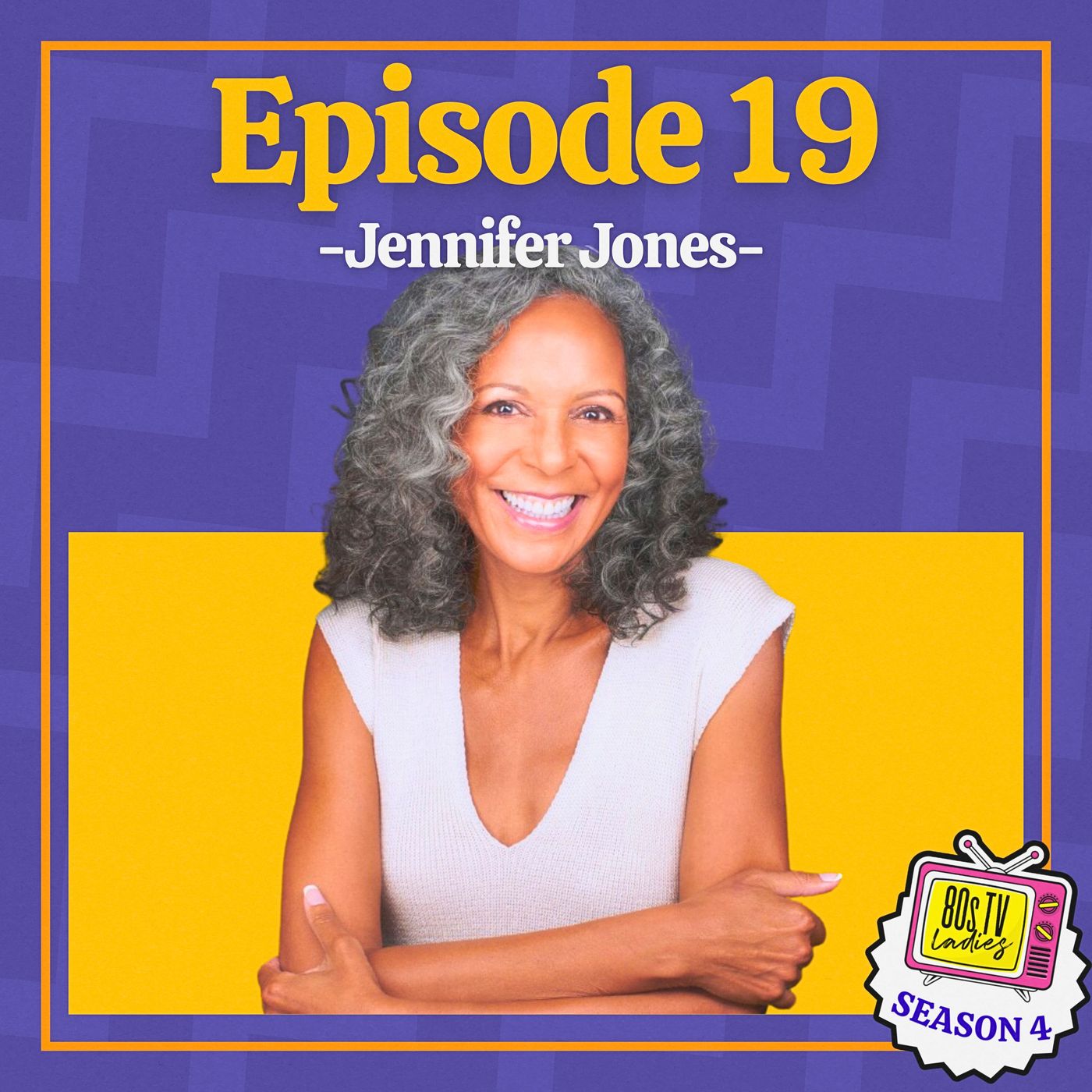

About this episode
For a century, the Radio City Music Hall Rockettes have represented the gold standard of precision dance, synchronized routines, and eye-high kicks. But for the first 63 years, that famous line failed to reflect the diversity of the audiences watching them, and the demographics of America herself. In 1987, that history changed forever when professional dancer Jennifer Jones was hired as the very first African American Rockette, making her unforgettable debut on television screens across the nation during the 1988 Super Bowl XXII halftime show!
In this episode, Sharon and Susan sit down with this groundbreaking icon to talk about what it was really like to break through a decades-old institutional barrier at just 20 years old. Jennifer shares the stage with us to discuss her incredible 15-year tenure on the line, her full-circle Tony Award-winning run on Broadway in 42nd Street, and her deeply personal, triumphant battle surviving Stage III colorectal cancer with that signature Rockette resilience.
🗣️ THE CONVERSATION
- STEPPING ONTO THE FIELD AT SUPER BOWL XXII: Overcoming intense nerves in a massive football stadium, learning complex precision terminology on the fly, and feeling the ultimate validation that she was exactly where she was supposed to be.
- NAVIGATING INSTITUTIONAL RESISTANCE: Dealing with antiquated industry mindsets regarding "uniformity," handling behind-the-scenes pushback from PR and management, and the crucial, historic knock on the door from the NAACP that forced Radio City to change.
- THE ART OF PRECISION DANCE: Moving your limbs "through peanut butter" to seamlessly look like a single dancer, and how the mental discipline of a professional athlete shapes a lifetime of character.
- FROM THE WIZ TO THE TONY AWARDS: How seeing vital Black representation on stage as a child inspired her dreams, and her breathtaking full-circle moment performing at the Tony Awards inside Radio City Music Hall.
- THE RHYTHM OF RESILIENCE: Her sudden diagnosis with Stage III colorectal cancer at age 50, learning to fiercely advocate for her own health when doctors brushed her symptoms aside, and her vital mission to spread awareness about early cancer screenings.
📦 AUDIOOGRAHY
- WHERE TO FIND JENNIFER'S WORK
- Official Website & Socials: Connect with Jennifer at theofficialjenniferjones.com or on Instagram and Facebook.com/RocketteJenn.
- The Books: Grab your copy of her powerful memoir, Becoming Spectacular: The Rhythm of Resilience from the First African American Rockette, or her beautiful children’s book, On the Line, online via HarperCollins and Bookshop.org or at your local bookstore.
- The Dancing Jen Doll! Check out the beautiful "Christmas Spectacular Dancing Jen" doll designed to accompany her children's book, available now at Walmart Marketplace.
- Get Screened Early: Colon cancer is being diagnosed in younger adults more than ever before. The routine screening age has officially dropped from 50 to 45. Listen to your body, advocate for your health, and learn more at coloncancercoalition.org
- Your Vote is Your Voice: Don't let your voice be silenced. Head over to Vote.org to check your registration status or register to vote today.
📻 CONNECT WITH 80s TV LADIES
- Support Us on Patreon: Want to see videos of our incredible interviews? Join our Patreon community for exclusive video drops, special merch, and behind-the-scenes extras!
- Rate and Review: If the 80s TV Ladies bring you joy and laughter, please subscribe and leave us a 5-star rating on Apple Podcasts to help other amazing ladies of the 21st century find the show!
Visit 80sTVLadies.com for more info.
Listen to 80s TV Ladies at YouTube. Subscribe and help us grow.
Don’t miss out. Sign up for the 80s TV Ladies mailing list!
Help us make more episodes and get ad-free episodes, video interviews, and exclusive content on PATREON.
Transcript
Automatically generated, so expect the odd misheard name.
Weirding Way Media. Eighties sand so pretty Avery, into the city, every Man World. Welcome to eighty Stevie. Ladies, where we look back in order to leap forward. Every day is a new day filled with possibility.
And it's possible that our producer Melissa, who usually does this part of the introduction, is traveling back to see family. I'm one of your co hosts, Sharon Johnson, and I'm your other co host Susan Lambert HadAM. Today our very special guest is Jennifer Jones. She was the first African American roquette ever hired in nineteen eighty seven. Nineteen eighty seven, Sharon, we know what that means.
Those crazy eighties added again. For one hundred years a century, the Rockettes have been the gold standard of precision dancing, complicated tap, synchronized routines and I high kicks. That's what they're called. I researched it. They began in Saint Louis in nineteen twenty five, known then as the Missouri Rockets, founded by choreographer Russell Markert.
They were brought to New York to play the Roxy Theater, where they became the Roxy Etz and then ultimately the Rockettes of Radio City Music Hall, best known for the annual Christmas show, the Radio City Christmas Spectacular. We know the high kicks, military precision, and the sparkling costumes, But for too long a time, that famous line didn't represent everyone. Our guest today is the woman who changed that history forever. In nineteen eighty eight, she stepped onto the field and enter our televisions for the Super Bowl twenty two halftime show and did more than just perform. She broke a decade's old barrier to become the first African American Radio City Music Hall roquette.
Since that historic debut, Jennifer Jones has danced in the Tony Award winning Broadway show forty Second Street and become an inspiring advocate for equal rights and representation in the arts. But her most profound display of rocket resilience may be her own personal journey through a battle with coorectal cancer, a fight she fought with the same determination she brought to the stage. We are so thrilled to have this groundbreaking icon of American dance, plus inspirational author and speaker join us today. Welcome to Eighties TV Ladies. Ms.
Jennifer Jones. Hi, Sharon, Hi, Susan, thank you so much for having me on your show. Thank you so much for being on our show. We are so excited to talk to you. We love talking to groundbreaking women.
That's one of the things we do best. I just want to start off with that moment in nineteen eighty eight when you step done onto the field for the Super Bowl twenty two I think halftime show. Yeah, as the first African American radio city rocket. That moment was simply amazing. I had trained so hard to become a professional dancer in New York City, and to not only become a professional dancer, but open the doors for other black ladies to call themselves radio city music hall rockets.
For me, it was right before the music started, just standing on the field, I was a bundle of nerves. I was, you know, nervous. It was the it's not only am I performing in a football stadium, but it's being televised. And then the music started. I ran out to my spot and it just felt like I was supposed to be there.
It was something that was It was so amazing. I truly believe that there are points in life where you just know where you're supposed to be and I was supposed to be there at that moment. And that was was if I'm remember correctly, if you your book, was that your first performance with the Rockets? That was my very first performance with the Rockets. We started rehearsal in nineteen eighty seven in December, and it was the I didn't even know who the Rockheads were when I auditioned for them, so it was my first learning experience of what precision dance was.
And these ladies had danced together for twenty five thirty years, so they knew how to break into line seamlessly and do a circle of kicks. And so not only was I learning new choreography, I was learning terminology what precision dance was. So it was a lot to take in. I would imagine that the whole performance just sort of seemed to go by in a flash of Sometimes these moments often do. How did you feel after you came out the field.
It was surreal, It was amazing. Like I said, at twenty years old, it was my first big job, and I was very fortunate to have my parents why out to San Diego to be with me, if only in spirit, because I was doing so much for rehearsal and press before the show felt I felt kind of validated because that is what I wanted to do my entire life is to dance on a grand stage, and so there was a sort of a validation that I can do this, and it was very surreal and amazing. Did you get to see your family after the performance. No, we had to go back to the hotel and we had to get our things ready. We were flying out, you know, as a teen, so I really didn't get a chance to see them until I got back home.
But that's so amazing. Did you feel also though the weight of like history? You were making history? You know, when we're going through our life experiences, we rarely in the moment feel like we're making history. We're like living our lives, you know.
And at twenty years old, I didn't know what you know, how like opening the doors being the first black roquette. I didn't really know the roquette history. It would take my fifteen year tenure to like really know what it was about. So I didn't know. And there was actually a woman in PR who pulled me aside right before my Super Bowl halftime debut and she told me that I was old news, nobody cares about my story, that I was lucky to be there.
So I thought, oh, well, she's in PR she knows, and I guess, you know, nobody cares. It's not. I thought it was a big deal, but she's telling me it's not. So I believed her. So it would take me a long time to like really know the impact that I was making.
That is just shocking to me, and I can't I can only imagine that even though you were like, I'm just here and you were twenty and you couldn't necessarily understand it. That's a terrible thing that happened. Yeah, well, you know, The Rockheads were founded in nineteen twenty five in Saint Louis, Missouri by Russell Market and his idea for the Rockeads came based off the British Killer Girls, and he thought if he could get an American dance troupe, you know of ladies that can do intricate tap steps and do I high kicks at the end, that he would just wow the American people. And back in the nineteen twenty five, black dancers were not allowed to perform on this same stage as white dancers. That's just the way it was.
So his thought process of having a black woman on the line just you know, never came across his mind. But you would think in nineteen eighty seven, under the backdrop of New York City, that a black dancer would have been hired. But Russell was still alive. He passed the line down to Violet Holmes, who was also a Rocket, and she still had those antiquated thought processes. And it was Radio City and Hazel and Dukes from the NAACP who had a heavy knock at their door saying you're not an equal opportunity employer.
And I think it was the weight of that knock and the changing of the times that they decided to hire a black dancer. And when you make that change in an institution sixty three years, it's not all welcoming. You know, there are some people who are comfortable the way it was, and you know, there's resistance to change. So there was resistance from people in management like the pr person, and there were some resistance from ladies on the line, but of course there were people who are warm and welcoming, and I really leaned into those Rocket ladies who helped me be the best Rocket possible. Yeah, it's never easy to be the first.
Whatever the first may be. Right, there are challenges that come within the change. So some people may think that, oh, you know, they made it, they made the change, but there is still work that needs to be done. You may not know this, but can you tell me how long it was till the second African American dancer came on the line. I believe the second black dam Sir, came on four or five years after I was hired.
You know, it's shocking. You know when we talked to eighties, you know, we're looking back at the eighties on our show a lot, and there's the eighties was a time of these kind of first The first African American woman director to direct a primetime sitcom, Nina Barnett, happened and in the eighties, so all of these groundbreaking things were happening, and yet at the same time, there was also this sense of like, really, it isn't that long. Yeah, it's ridiculously late. You guys are ridiculously late. It's embarrassing.
Yeah, and that it's not that long ago. Yeah, yeah, exactly. Yeah. And there's a New York Times article where Violet states that having one or two black girls on the line would distract from the uniformity of the rockheads, which is their hallmark. So it was just you know that thought.
But if you look at the line today, there any child can go to the music hall and see a reflection of themselves. And it took a long time. We just celebrated our one hundredth year anniversary. It took a long time. It does.
It's not an easy dirt journey. So how did when you faced resistance or things that my statements like that that might make you feel small and unimportant, Like, how did you find your importance? And how did you maintain yourself. When someone came at me or was very mean to me or made it clear that I was not welcome on the line. Well, I still had my love for dance.
I loved putting on the costumes, the lashes, the lipstick, going onto that landmark stage and I got to dance on the same stage as then and walk out of the backstage door, which I wanted as a child, my childhood dream, and no one was a to take that away from me. So I leaned into to my dream as a child, and I was living it wholeheartedly. And they weren't allowed to take it away. That's awesome and as well you should and nobody should be able to take that away from you. Can you take us back though through the audition process and what that was like for you, and were you aware during the audition process that they were perhaps looking to add a black dancer to the line.
I was studying dance in New York City at Broadway Dance Center. There was a publication that came out weekly with a list of all the auditions Broadway off Broadway, and my friends and I would we would go through it. And I saw the rock Heat audition, but I flew by it because I was going to be a Broadway star. And one of my friends said, Jennifer, you shouldn't go to this rock Hett audition. You would make up perfect Rockette.
I was like, I don't know. Like I said, I didn't know who they were. I don't know what they you know, I didn't know them. But I was very green in the business, very nervous and intimidated at auditions. So the morning of I decided to go.
I got dressed. The audition started at ten. I got there at ten at the Music Hall, and when I arrived there were ladies draped around the music hall, one more beautiful after another, and I got at the end of the line and I was like, they are never going to pick me. And I thought about leaving numerous times. I thought, if I leave right now, I can make my favorite jazz class, which was Frank Hatchet.
And I kept toying with the idea, and just as I was about to leave, my inner voice said stay so much so that it almost like pushed me back into the line, and I stayed. And I got up to the small rehearsal hall where you know, they took about twenty girls, and we were all warming up, and the intimidation set in. Everybody was a better dancer. Everybody could you know, turn better, kick higher? And the stage manager came in.
He said, I'm going to call your name, have your tat shoes in hand, have your picture and resume and your comp card, which was the card they had given us that you just fill out with basic information name address. And he called my name and I got in line with my comp card. I didn't have my picture and resume and I didn't have my tap shoes, no taken for my Broadway break. We go into the large rehearsal hall, and they were about twenty people behind a big table who were at the audition watching. And we had our height requirement.
If you didn't make the hike, you weren't even allowed to dance. What was height requirement at that time? It was five five and a half and five nine. Oh okay, yeah, But since the one hundred year anniversary, they've done away with the height, so anyone can audition now. So I put on my character shoes and I went out to learn the tap portion of the audition.
Violet Holmes was the choreographer, and she didn't teach in a typical five six seven eight type of choreographer. She bedeedled and bedottled badetaly deep bidet ly da begetallydda ly da. She she would hear the taps in her head, so that's the way she taught. So I bedeedled and I bedottled, and I'm just you know, absorbing all of this information in. We also had to show off our eye high kicks, and they were also casting for the Chiita riveratour so we had to do our can can kicks and our jump splits and all of that.
I went in the back of the room to pick up my bag, and the stage manager taps me on my shoulder. He said, Jennifer, we're giving you a call back. Bring your picture and resume, and bring your tap shoes. A few days later, I'm back in the callback and there was one other black woman there. I didn't see another black woman in the initial audition, but I did see one at the callback, and I had my tap shoes, my picture and resume and bbadeedled and webadoddled, and as any performer does, they leave the audition in the room and then they forget about it.
So I left my audition there and I left. So that was the audition process. And how long was it before you heard back from them? I guess it was maybe a few weeks. A month later that Violet called and I picked up the phone.
She's like, Jennifer, this is violent homes. We'd like to offer you the Super Bowl twenty two halftime show. And I was so nervous I asked if I could call her back. I took a walk around the block, thinking, can I do this? Am I?
You know? Am I talented enough? And I called her back and I accepted. A few nights later, I'm watching the eleven o'clock news and the local news anchor comes on and she says, Radio City just hired their first black woman to become a roquette. And I was like, I wonder who that is because they didn't they didn't say anything.
No one mentioned it. My mother called me, She's like, Jennifer, is that you? And I said, I don't know. Nobody said anything. And then a few days later, Radio City called and they told me I would be the first black woman.
They immediately put me in media training and still I didn't know the history of the roquette, so it wasn't There was no Internet, we didn't have phones and like something I could just go and google, so it would be uh learn as I go who they are and what their history was at the time. It really is such an example of how things have changed in terms of the flow of information and the ability to reach out and on your own get some information without having to know somebody who can answer your questions right exactly. And then in terms of the people that welcomed you, because it's all women, I always think of it as one of those Broadway women movies, right where you're all living together and you're all having a grand time behind stage, Like, what is it like to be a rocket?
Like you're part of it? You're part of a part of history now right. It is incredible to be part of it feels like a part of America. You know, everyone knows who the rockheads are, where Radio City Music Hall is. So it's actually an honor to be a Roquette and to dance on the legendary, iconic stage of Radio City Music Hall and to be part of a sisterhood.
And then is there a what does the word I'm looking for? You go to college and then you're. An ALUMNIUNI, thank you? Is there an alumni who? Is there an alumni where you guys get together and you talk about your rocket days.
Yes, so there is the Roquette Alumni, which has been in existence, I would say since nineteen nineteen forties that the ladies have made a custom. And there's also the Roquette of Color alumni where you know, the Rockets of Color we can get together and talk about our stories. And Radio City also has an alumni where we can get tickets to see the show every year and they give us like the one hundred th year celebration over seven hundred ladies have flown in just to be able to see each other and celebrate the U one hundredth year. So there's three different ones. Wow, it does feel like it's a very particular thing.
Like it's it's like being an astronaut. There's only so many astronauts. Yeah, you know, there's only so many rockets. So initially you were hired for the Super Bowl show. So how soon after did you again, I'm not sure i'd proper phrasing, joined the regular show if you will.
How long after that? So I did the Christmas show in nineteen eighty eight. At the time, there was a roster of women. There were thirty six women on the roster, and it was thirty six because thirty six women fit across Radio City Music Hall, the stage. And in that roster there was also maternity leave, leave of absences, healthcare.
So if a woman chose not to come in that year, they would call in the rotation ladies. So I was called in because someone in the Christmas Show was out, either out on maternity leave or they took a leave of absence. So I was called in in nineteen eighty eight. And dancing on Radio City stage, how was that for the first time. Oh, Radio City is my favorite theater.
It is so simply amazing. We were doing tech rehearsal and we were doing Christmas in New York and we came up to do the kick line and it took my breath away, and the lady next to me, she tapped me. She's like, are you okay? I was just like, this stage is breasttaking and she said, it'll get you every time. That was my first experience on that stage, and every time I go see the Christmas show, it's more beautiful than the last time.
So here's something I've actually been dying to ask you. I went to see the Rockets in nineteen ninety five at Radio City, and I'm wondering if you were still dancing with them that year. Yes, So I retired from the Rockets in two thousand and two. So yes, I was there in nineteen ninety five. That really makes me very happy.
We're likely, but not that I probably saw you perform. That's awesome. That's awesome. And at that time we were doing up to five and six shows a day, and we were we would do all of the shows. Now there's two casts.
There's a morning cast, and an evening cast, so I was definitely there. Awesome. That is so crazy. You would do every show five to six times a day. Yes, yeah, there would be five or six shows on the weekends and then usually four four shows every day throughout the week so we would do every single show.
That would be that young again and that much. It's crazy. That's a lot of dancing. You guys goin to come off and ducked into some ice baths. Okay, so how do you feel when you're dancing?
What brought you to dancing? My parents growing up, had my sister and I involved in all sorts of after school activities, whether it was dancing or baton twirling, gymnastics, horseback riding, and I always just had a love of dance, and my parents were big, avid Broadway goers. They would go see all the Broadway shows like Ben Veren and Pippin and Jesus Christ Superstar and when The Whiz came to Broadway and it was kid friendly, my parents took me and my sister not once but five times. Wow and yeah, and each time just like just going to the theater, holding my ticket, being given my playbill, being ushered to the seats and then you hear everybody coming in and talking, and the orchestra's warming up, and then the overture starts, the lights dim, the curtain goes up and transported into oz for two hours with the greats of Stephanie Mills and Mabel King and Andre Deshield and hid in Battle.
And then after each show we would wait backstage for their autographs, and that door was magic to me. And they came out and they just seemed so happy and they want they'd signed the playbill, and I remember going home through the Lincoln Tunnel staring at the playbill, looking at all the autographs, and I just knew right then and there, at ten years old years old, that that is what I wanted to do, not knowing what the training it would take, or the talent or how to audition. I didn't know anything about the business, but I knew that I needed to be on that stage and do what they do. That's such a great gift to know that, and then to achieve it is even better. Yes, And you know, I thank my parents for like giving me those dance classes and showing me a Broadway theater.
And there was actually my fourth grade teacher who introduced me to my love of the stage. He came into the class one day and he said, we're going to do an end of year recital. It's going to be the nineteen forties, and I need six people to be leads. And I just wanted to like melt into my chair. I was very shy and very quiet, and he picked me, and that required me to go to rehearsal before school, stay after school, and the day of the performance, I was on the stage and I was so nervous and the music started, the curtain went up, and I was full on.
I was full out, and I just loved the stage. So he really introduced me to that love of the stage. And then my parents kind of just like followed it up and showed me that, you know, black girls can become Broadway performers, and so it was just a mixture of all of that that I just feel so blessed. That's amazing. And as you were growing up, did you take classes in various dance disciplines, be it ballet or tap or jazz or what were you studying.
I was enrolled in all of those ballet, tap, jazz, but I really took to tap and after a class, my mother would go to the super market, I would ask to keep my tap shoes on, and I'd tap all up and down the aisles, so much so that my parents even got a piece of linoleum to bring down in the basement where my father had his office, and so when he was down there, I would tap away, you know, and I just loved it. Oh, that's fantastic. And in terms of seeing like The Whiz and seeing representation on stage of people that look like you, because you're going into dance at a time that there weren't a lot of black dancers necessarily anywhere on Broadway, Yeah, there wasn't. There was breakthrough stuff like The Whiz and Ben Vrain who could do anything right?
What did that mean to you? Did it make it more possible or did it make it seem against all odds. For my parents to show me Broadway made it possible. It instilled in me that I can try to go for my dreams and don't let the color of my skin make me feel less than They very much encouraged me to try anything in life. And I hope that that's part of my story to encourage people to let everyone know that they have this unique special footprint, a legacy to leave on this earth and not to let anything hinder them or deny them, not to try that we all have something special to give our community.
So what was the most spectacular, Like, there was Super Bowl that's going to be hard to as your first run out the gate, but you also dance Christmas Spectacular, the Macy's Parade Marchefeller Center on Broadway, which was another moment in your career where you went, I am dancing here. There are many moments over my career that again just I felt like I'm supposed to be there. There was Comic Relief that we did at Radio City Music Hall with Whoopi Goldberg and Robin Williams and Billy Crystal. Yeah, that's the most that's like the comic relief. That's crazy, that is the comic relief.
And actually Whoopee did a roquette number with us, So that was one of one of my most treasured performances. But also I got a chance to tour. I got a chance to see the country and do what I love to do and see places that I would never really go kind of being so young, actually grow and build character, learn who Jennifer Jones is becoming. So the Rockets offered me a lifetime of opportunities and growth and being able to love what I wanted to do as that little girl watching the Whiz. One of the things I I was really surprised about in learning about your time with the Rockets, and I don't know if it's still the same way now, but you were employed by them for the year, and obviously you could take time off if you needed to, for as you said, maternity leave or other things like that, which also meant when you got ready to start a family, you were able to take time off the time off that you needed and then come back with I would was it basically that you would pick up the phone and say, hey, I'm ready to come back, and they'd make they'd make room for you on the line, or how did how did that work?
Because I have to say that that sounded very civilized and not necessarily what I would expect for a job in performing like this. I know it was very unique. So the Christmas season was our biggest season, and if I took a maternity leave for that Christmas, I would automatically, since I was rostered, be offered it the following year. It would just be automatic unless I decided to take a leave of absence. They did break the roster.
There is not a roster in tact today. So you know, a lot of the ladies have to reaudition year after year. Even though there is a core set of ladies who are considered full time rockettes, especially now with the social media presence, and they do a lot more throughout the year, but a lot of the ladies do have to reaudition every year. Yeah. I just thought that was so civilized and perfect and in a lot of ways, maybe it wasn't intended this way, but thoughtful for the women who did the roquets, who were able to understand that they had a job, a commitment, and that basically was up to them to a large extent, all things being equal as to whether or not they were going to come back or I mean, that's that's hard to find today.
Yes, yes it is. That's awesome, But fifteen years dancing that kind of intense dancing, how do you find that discipline? Because you because you're coming back, but if you can't make the kicks I'm here, you're not staying there very long. Yes, exactly. Other rockets and I have had a conversation about, like you said, the discipline, the thought process, especially with the precision dancing.
It really is a mindset that I think is quite unique that pretty much all the rockheads have that same trait of being able to put your arm up at a certain level and then move it through peanut butter and to all look like one dancer. It's the discipline, my love of dancing, you know, wanting to dance at Radio City the Christmas season. I think all of that just you know, kept me going. And then at some point you were able to dance on Broadway. I believe it was in forty seconds st How would can you tell us about that experience.
Yes, let's take a quick break. We'll be right back. We're about to move to a new house, and we've decided to gift ourselves in this move all new sheets and towels. But the sheets. I'm going to use our twenty one percent off discount at Cozy Earth to get some amazing soft bamboo sheets for our new house.
You can go to Eighties tv Ladies my Deals link in the show notes to see all our Eighties tv Ladies deals. Use promo code Eighties tv Ladies. I get twenty one percent off Cozy Earth. Between carrying scripts to the theater and hauling podcast gear around the country, I always need a bag that actually lasts. That's why I'm obsessed with Terrain.
These bags are made from upcycled materials like rice bags, making them totally water resistant and lightweight and best jet truly sustainable. They each have a bold, one of the kind design that I just love. You can get the highest discount available fifteen percent off by using our code Eighties TV Ladies. Click the Eighties tv Ladies Mind Deals link in our show notes to see all our eighties tv Ladies deals and grab yours today, or go to terrain dot org and put in the code eighties tv Ladies when your checkout. Welcome back.
Yes, I did finally get my Broadway dream of performing on Broadway for forty second Street. It was the revival which we won the Tony for Best Revival of a Musical, and Broadway dancing is so much different than the roquette precision, and I really had a chance to put a little bit more of my own personality, my own spin on some of the choreography. It was really a wonderful experience and something that was very serendipitous to me. A full circle moment was that we were opening up for the Tony Awards in two thousand and one and we were performing at Radio City where the awards were being held, and we also won the Tony, so I went back home as a Broadway performer. We won the Tony for Best Revival of a Musical.
So it was something that I just hold very near and dear to my heart and again one of those places where you just feel placed. I truly believe that we all have these moments that, yes, this is where I'm supposed to be. You know, you want to sign from the universe, you feel it, and you just know that's incredible. What an incredible experience to perform at the Tony Awards in the in radio musical and then when. For your show, like that's it, you're done, Yes, just walk off, You're good.
But you didn't do that. So when did you decide to write some books about your experience? You know, I always wanted to document my rocket journey. A lot of people were asking me what was it like to be the first black woman on the line, So I always had this notion of wanting to put it down and I started, you know, picking up the pen and paper when I was on forty second Street and it just wasn't coming out the way I wanted, and then I got sidetracked. My kids were young, I was a single mom.
I always just felt like the universe will guide me. And it took as long as it did because I realized that I had more of my life to share to put in the book, to hopefully inspire others, to encourage people who are going through a challenging time to keep going, and there was just more more for me to give. And I love the children's book. I listen to somebody read it on YouTube, which was really fun. And I imagine you've gone and done book events with that book.
What does it feel like? And what does it mean when you have little kids with that you're inspiring that are reacting to the book. How does that feel? Going and doing school readings is one of my most favorite things to do. Number one, because I knew at such a young age what I wanted to do and that mister Juliano had such an impact on me that I want to make an impact on these kids, like dream big, go for it, thoughts become things, just do it.
And what I love about the children's book is actually the last page. And I hope that it fosters a conversation between like the school teacher and their students, or the parent and child, who what that child loves to do most in the world, because it may not be something that the parents or the school teacher even knows, and we can nurture that, we can support that, we can help that grow for the child, and that is my hope. And I just hearing the kids, their questions, their curiosity, just everything. I just hope to have an impact on them. Did your own kids inspire you to write the children's book to to go down or any other kids in your life, whether it be nieces, nephews or friend's kids or anything like that.
Well, when I wrote the book, my kids were much older. They're like in their late twenties now, and I don't have any grandchildren. I think it just came based off of my life and mister Juliano, like I said, had a big impact on me that I would hope to have an impact that way on a young child, you know, just to pursue their passion as. Well, and to ask about when you were diagnosed with cancer and that story and how that impacted you. Yes, I was diagnosed with stage three colorectal cancer at the age of fifty after a routine colonoscopy.
And I had just turned fifty, and I knew something was wrong. I was vegetarian at the time for at that time, for like twenty five years, I was active every day, former professional dancer. And I thought, oh, maybe it's a gluten allergy. I'm allergic to dairy. I can't eat as much cheese.
And when I went to see the doctor, I can you see me a little sooner, something isn't you know right? Oh you're fine, look at you, You're healthy. She kind of like brushed me off. I went to the scheduler. Can you squeeze me in sooner?
You know? Two weeks out was, you know, the first appointment coming out of my coloni hoscopy. She comes in the room and she tells me that I have cancer and it looks like I have about five years to live now. This is the same woman that brushed me off and said you're healthy. So I was extremely ashamed.
I was embarrassed. I didn't tell my family for a month. I was considered the healthy one. In my family. So I went to labs and blood work and MRIs all in private for a month.
And then when I finally told my parents and my family, my sisters and my kids, they immediately directed me to Memorial Sloan Kettering, and in doing so, I almost felt halfway healed. I was met by an almost all female a surgical team oncology team, and patients have to be so comfortable with their doctors not to feel brushed off or like there are another vacation for their doctor's family. We have to be our own best advocates. If something feels off in our bodies, number one, off with the doctor, see a new doctor. I did eight rounds of chemo and then I had surgery in December of twenty eighteen.
My surgeon called me January of twenty nineteen and she deemed me cancer free. Yes, and that was a blessing being diagnosed at stage three and then being able to become cancer free. I'm a staunch advocate for early screenings. The kolonoscopy age has since dropped from the age of fifty to the age of forty five, and if you have a family history, you need to be seen sooner. And also they're finding this disease in younger adults and they don't know why.
So if someone is twenty one or twenty nine and something that feels off and a doctor may say, oh, you're too young for a colonoscopy, having documented in the record that they are refusing to give you a colonoscopy, and then go see a new doctor. It's better to be safe than sorry. You know. Both Susan and I have had experience with breast cancer. Mine Susan much more recently than mine, but I will never forget when I was first diagnosed and told one of my friends about the diagnosis.
She had also been dealing with cancer, and one of the things she said to me is, if you don't like you're in collegist, if something doesn't feel right, get another one. And I have told so many people that because of that very thing, you need to feel like whoever that person is is listening to you and is going to fight as hard as the hand for you. And if you don't feel that, then there's so much many other doctors out there. Find somebody else, and don't be afraid to go look for somebody else. But I'm so glad, obviously, so glad you did listen to that voice in your head.
And yeah, because getting detected and getting treatment as quickly as possible makes all the difference. In the world. Absolutely absolutely, and having that support. You know, I'm curious because it is such a journey too, and you have such a unique relationship as a dancer and an athlete to your body. What that also meant to you.
All. I going through chemo, I was very nervous about it, and I didn't tell a lot of people. It was only like my very close circle of family and close friends who knew what I was going through. The sort of chemo that I went through. I didn't lose my hair, but my hair did thin out at my diagnosis.
What I didn't realize is that I was micromanaging my diet because I wasn't feeling well after eating. So I weighed in at like one hundred and fifteen pounds, and I remember after my first chemo treatment, I was like, oh my god, I'm starving. I am so hungry. So I went and I got this big Italian eggplant meal with bread and pasta, and I ate the entire thing. It tasted so good.
It was like a long lost friend that I had forgotten that, and then I sat on the couch and I waited for the chemo to kick in, like am I going to throw up? Or is something going to happen? And all I felt was good. So I had to relearn how to eat during the chemo treatments what was affecting me. But even more so it was after the surgery and relearning my body, and that would take two full years for me to do to feel really comfortable in my skin.
And because you had such a physical discipline to be a rocket, you had to have that, and then you have to sort of there's a body thing you feel like, is my body betraying me? Is my you know? Am I betraying my body? What did I do wrong? You know?
So I'm just curious how the discipline of a dancer worked for you or against you with dealing with cancer. It definitely helped me during my chemo treatments. I was very regimented of when to take my pills in the morning and to take them in the evening, and to really put in a system a routine for my own therapy. On the side, and I also incorporated more juicing in my diet, more weak grass shots, I incorporated more meditation, and I was like stressed out to a hen before I was diagnosed. And then I took a hard look at my life and I said, what is happening?
I turned my back on situations that were not serving me. I let some relationships go that I had no business being and in the first place, and I just kind of, really, what is my legacy, what is my footprint? What is my gift to the world. And I really honed in on that and I think that is also what got me through a lot of things. Yeah, and I'm pretty excited about your book becoming Spectacular.
The Rhythm of Resilience from the First African American Roquette, I love that line, Rhythm of Resilience. I love it because it works on many levels, but also because it is what you have to find if you're going through something hard, because it's not just one day, right, it's a long time. I've just started listening to it on audiobook and I'm loving it. Thank you. What made you write that book?
You know, like you wrote a book for kids, and then now you've written a book kind of for adults to tell your. Story, right right, Like I said, I always wanted to document my rockhead legacy, but I also wanted to let people know that some people think that, oh, she's a first you know, they made it, they'll never have to, you know, worry about anything ever again. But even after my dancing career, I was a divorce, single mom, two kids. I had to keep the lights on, put food on the table. What does that look like in a life?
And then I also wanted to talk about my cancer journey. I just had so much to share. And I feel like if I'm open enough to share the ebbs and flows of life, that people will know it's okay, that if they're going through a challenge to talk about it or give them hope to know that they can get through it. Just be a beacon of light, just knowing that nobody is alone, even if they just you know, I've had people reach out and tell me like different sections of my book have helped them, and each section is so different, and I love hearing that because it was hard to put my whole life out there, you know, So I'm glad it's serving as a helpful resource for people. It's interesting we talked to a lot of people on the show, particularly a lot of women.
It's our favorite favorite subject, but it is also very interesting. I think that women are often not used to telling their story. They tend to downplay their story, and some women are kind of afraid to tell their story. So I think it's really vital when people do. Did you have a fear of talking about the cancer or even the resistance that you think?
Absolutely? I had my husband read the book three times, and each time he would say is it true? And I would say yes, and he said put it in. And just being so open and runnerable and feeling so exposed, letting people know the difficulties and the hardships that I went through, and now I can look back on those as opportunities of growth, making me and chiseling me to the woman that I am becoming, becoming spectacular. I feel like we all are becoming spectacular.
And if we can look at those challenges as opportunities to grow, to refine us so we can shine bright and give our gift to the world. I think that is what I hope to do with this book. Well, that's its own mic drop too. That was fantastic. Oh what are you up to these days?
What's bringing you joy? What keeps you inspired well. I practice hot yoga. I love hot yoga. But I do have a thought of writing a book for middle grade.
I would really love to inspire them at that age to follow their dreams. What is it that you love to do most in the world, believe in your thoughts. I would love to see becoming Spectacular on a big screen, and I would like to see on the Line as a cartoon. I would love to see kids doing a kick line in their living room. Yeah, on a Saturday morning.
When you get together with your racquettes and your alumni groups, do you what do you what's your favorite thing to talk about? I think reminiscing about our time on the line together. Oh do you remember the time that you did this or you did that? It was such a great time for all of us just to remember it. Oh my god, thank you so much today, this has been amazing.
Thank you. As Susan mentioned earlier, we've been fortunate enough to talk to a number of really spectacular women, and it's really our honor to be able to talk with you as well. We count you among them, So thank you. Thank you, thank you so much for having me on your show. It is a pleasure speaking with the both of you.
Also, thank you. I have a beautiful rest of your Sunday. And oh, where can people find you? Hold on? Yes, yes, we got to do all that work stuff.
Okay, go ahead. You can find me on Instagram the Official Jennifer Jones or my website the Official Jennifer Jones Facebook, Rocketjen. And oh, you can find my Dancing Jen doll at Walmart Marketplace and my books anywhere where books are sold. That's fantastic. Well, hold on, can you tell us more about your doll.
You're Gen Doll? Please? Yes, so I have Dancing Gen. Oh, I do you have one? Oh?
There she is Christmas spectacular. That's fantastic. This is Dancing Gen. And I designed her actually to go with my children's book because I wanted the kids to hold on to something tangible to remember, like if they're going through a hard time or a rough day that never give up. Thoughts become things, keep going.
So that's why I designed her. You can find her at Walmart marketplace. Oh, that's fantastic. That's fantastic. Two books and a doll, it's pretty good.
Thank you again, it's been thank you. Thank you. For our audi biography. Today you can find out more about Jennifer Jones at her website, Theofficial Jennifer Jones dot com. You can get Jennifer's book Becoming Spectacular at HarperCollins or Bookshop dot org.
Links will be in our description. You can get her children's book on the Line also at Bookshop dot org or HarperCollins. Hey, It's true. Colon cancer is being diagnosed in younger and younger people all the time. Find out when you should get a colonoscopy at Colon Cancer Coalition dot org and learn about it.
It's really important that you get screened for all the cancers. We know that all too well, because if you catch it early, it's a much better story. It's more important that ever, that we take care of ourselves and listen to our bodies and advocate for our own health. Indeed, I think we learn from all these interviews. I love all these interviews that we get to do with people where we really learn that entertainment isn't just entertainment.
It can be a catalyst for change, a spark for resistance and revolution, and teach us lessons about what we can accomplish in the world. If you can see it, you can be it. And we need that more than ever. So to that end, don't forget your vote is your voice. Go to vote dot org to make sure you are registered to vote, and if you're not, get registered as soon as possible.
That's right, We need all the help we can get. Hey, you can also help support this show. You can support us on Patreon. You get videos of select interviews, you get special merch. We'll do a video of this show on Patreon, and if you can't afford that, go to Apple and make sure you've subscribed and give us a rating.
We love those five stars. That helps us out too. And up next, well, Susan and I finished moving. We can't wait to look back at a fan favorite episode where we kick off of a different world with Nicole Levy, television writer found their crude and swat. It's gonna be amazing.
We love dropping reruns. It reminds us of back in the day when we got to watch reruns of our favorite shows during the summer and during mid season breaks. If you haven't caught them, it's a great chance to catch them again, or to catch them for the first time. One of those catch them again whatever. We don't know what we're doing we're all trying to move.
Oh moving so much fun and as always we hope adies, TV Ladies brings you joy and laughter and lots of fabulous new and old shows to watch, all of which will bring us closer to being amazing ladies of the twenty first century. Do you think we could do high kicks? I high kicks, Sharon, I can do kicks. I can't do high kicks. Never have been able to do high kicks.
The city a bard Anythingite pis



Similar episodes across the network
Matched by shared keywords.
-
Episode 52: Homeless + The Tontine + Examination Day
1 shared keyword: 80s tv
-
All of Me
1 shared keyword: 80s tv ladies
-
The Stuff
1 shared keyword: 80s