
Season 3 · Episode 23
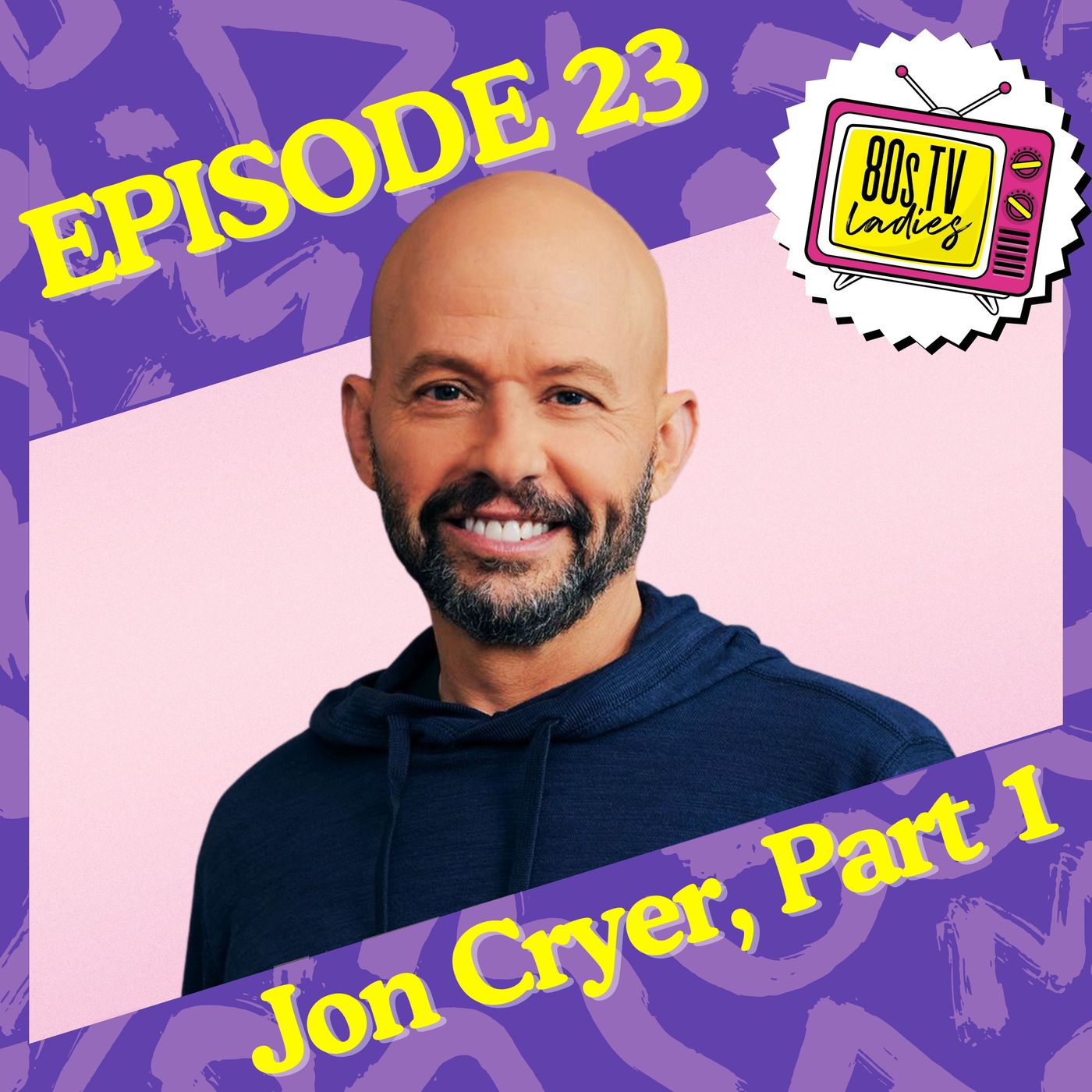
Jon Cryer, Part 1 | The Facts of Life, Pretty in Pink and Annie Potts

About this episode
Jon Cryer is an Emmy-winning film and television icon, known for starring as “Duckie” in the 1986 John Hughes teen classic Pretty in Pink -- and then going on to star in all twelve seasons of Chuck Lorre’s long-running, award-winning sitcom, Two and A Half Men.
Along the way, Jon has starred or appeared in dozens of television shows including The Famous Teddy Z, Partners, Dharma & Greg, Family Guy, The Practice, CSI, NCIS, Will & Grace and The Kominsky Method, and such films as No Small Affair, Hiding Out, Hot Shots!, Holy Man, Dudes and Due Date. For three years, Jon Cryer gave an award-winning performance as the legendary evil genius Lex Luthor on CW’s Supergirl.
Jon authored the 2015 autobiography So That Happened and currently executive produces two hit podcasts: The Man Who Calculated Death and Lawyers, Guns & Money (which he also narrates). In Part 1 of a two-part conversation, Jon reflects on growing up in a show biz family and learning acting the hard way. Plus what it’s like playing the romantic lead opposite two of the most famous actresses of our time: Demi Moore and Molly Ringwald…
THE CONVERSATION
- Susan and Sharon share the crazy story of how they met Jon Cryer and got him on the show!
- BEING AN ACTOR IS CRAP: First day, first film, Jon is 20 years-old -- and Robert Altman is throwing fake bird shit all over him. That’s showbiz!
- THE FACTS OF LIFE: Jon was a huge fan of the show -- and then got to work with 8TL alum director Assad Kelada on Two and A Half Men!
- ACTING FOR TOOTIE: Jon just worked with Kim Fields -- she was his director!
- No Apology Necessary: Demi Moore recently apologized to Jon in her autobiography Inside Out for not being more sensitive when she “took his virginity” while shooting No Small Affair. But it turns out he wasn’t a virgin: “I just seemed like one.”
- On opening day of No Small Affair, Jon snuck into a theater just in time to see himself take off his shirt on screen -- and hear someone yell: “Where’s the beef?”
- When Jon met Andrew McCarthy and Molly Ringwald on the Pretty in Pink set, he thought they didn’t like him. Turns out he was only half-right.
- The original ending of Pretty in Pink has Molly Ringwald’s Andie politely shutting down Andrew McCarthy’s Blane, and dancing in solidarity with Cryer’s Duckie (to Davie Bowie’s Heroes) -- but test audiences HATED it! So, the ending was changed making sure that Andie ended up with cute and sensitive, rich-boy, Blane.
- GETTING MOSHED: While filming Dudes, Penelope Spheeris had Jon and castmate Dan Roebuck thrown into the mosh pit at a Vandals concert -- and they barely lived to tell about it!
AUDIO-OGRAPHY
Listen to Suzanne Rico’s podcast The Man Who Calculated Death (produced by Jon Cryer and Lisa Joyner) at TheManWhoCalculatedDeath.com
And Jon's other podcast, Lawyers, Gun & Money at Apple.
Watch all 12 seasons of Two And A Half Men on Peacock.
Watch Jon Cryer as Lex Luthor on Supergirl on Apple or on Netflix.
Buy Jon Cryer’s autobiography, So That Happened at Bookshop.org.
Or Listen to So That Happened on Spotify or Audible.
Arts Funding is under attack in this country. Find out how to support the arts, locally and nationally at https://www.artsforla.org/
VITAL DEMOCRACY READING
Check out Democracy Docket here.
Learn more about the ACLU here.
Let your voice be heard! Call your reps. .Make 5 Calls makes it easy.
CONNECT
Visit 80sTVLadies.com for transcripts.
Sign up for the 80s TV Ladies mailing list.
Support us and get ad-free episodes on PATREON.
Join the Facebook discussion at Facebook.com/80sTVLadies
VOTE FOR US
Help us get THREE PODCAST AWARDS!
You can NOMINATE us. Give an email and register, but it's pretty easy!
GO HERE: Podcastawards.com
CLICK ON: Sign Up To Vote Now
NOMINATE 80s TV Ladies for: Best Female Hosted, People's Choice and TV & Film
PS: Whiile you're there, also NOMINATE Richard Hatem's Paranormal Bookshelf in Religion and Spirituality.
Visit 80sTVLadies.com for more info.
Listen to 80s TV Ladies at YouTube. Subscribe and help us grow.
Don’t miss out. Sign up for the 80s TV Ladies mailing list!
Help us make more episodes and get ad-free episodes, video interviews, and exclusive content on PATREON.
Transcript
Automatically generated, so expect the odd misheard name.
Weirdy Way Media. Eighties, So Pretty eight through the City. Man World. Welcome to Eighties TV Ladies, where. We look back at television shows and pop culture from the nineteen eighties from a modern feminist perspective.
We hope you are looking at a fabulous summer of love and respect. And here are your hosts, Sharon Johnson and Susan Lambert had him. Hello. I'm Sharon and I'm Susan. You know, we've been very lucky to be nominated for several awards.
By now we've been nominated like eleven times. It's actually really great, obviously for a lot of reasons. And I'm really grateful to all of our listeners who have voted for us and when there's been a voting component, so thank you very much for that. And sometimes we've lost and sometimes we've won, but it always brings us something cool and not just trophies and certificates. Frankly, the best is the opportunity to meet other podcasters.
We met via email a wonderful podcaster, Suzanne Rico, when we were both nominated for the Abies, an award given by the Podcast Academy which we are members of. We met by email congratulating each other, sharing our interest and admiration for each other's podcasts. And by the way, her podcast is really great. It's called The Man Who Calculated Death. And she's listening to our podcast and she's like, oh my god, I love the eighties.
And just as I'm about to go, hey, maybe you want to come on the show, Suzanne was like, oh, and John Cryer is our executive producer. So what comes out of my mouth is, hey, just John Cryer want to be on the show. As well? It should. So cut to the Ambi's and Susan and I are walking down this gigantic hotel convention complex, try to figure out where we're supposed to go, and completely lost when we start following these two people, and I assume the beautiful lady with John Cryer is Suzanne.
But I gotta be brave and so I say, hey, are you Suzanne. She's like, no, I'm Lisa Joyner and this is my husband, John Cryer. Now I knew that John Cryer was married to Lisa Joiner, who used to be on Entertainment Tonight or one of those shows, but I completely spaced in any event, We're like, hey, we're the eighties TV ladies and we're nominated too, and they congratulated us. So we're sitting in the audience for the Amb's with John Cryer. Well actually John Cryer and their team were at a fancy table because you know, he's presenting as well, and he's John Cryer and there's other big wigs there like Ira Glass and Rondan Pharaoh, you know.
But we go on, we're very excited, and then we lose in our category. But it turns out the man who calculated death also loses in their category. I mean, we were robbed, robbed, I tell you. Actually, Susan, we were up against some very good podcasts and we were actually very happy and delighted to be nominated. Well yes, okay, that's true.
But we did get to commiserate with John and Lisa about losing, which was fun. And you know, I mean, this guy has two Emmys, I'm thinking, but he's also lost some awards too, so he knows what it all feels like. And we're like, where's Suzanne, And they're like, oh, she's over with those folks. She knows all these peoples, and so she's over in the big crowd with Iraglass, so Sharon and I are just like, well, let's go find dinner. Actually I did have a chance to quickly say hello to Suzanne before she took off to go find the other people she needed to talk to, but unfortunately, Susan I think, was talking to Lisa and John when I was doing that, and then Suzanne left.
Wait wait wait, wait you got because I was like, I never met Suzanne's are you cut to beat Suzanne. I didn't even know that. You were talking to John and Lisa. I think it is Nes Murad. Yes, rightly, so rightly.
So anyway, we're trying to find a place for dinner and find a place to eat. The one we went to was crowded, but the one poor waitress is like, find a table and I'll get to you. And we find kind of one of. The last two two tops, and right behind us is John and his wife Lisa. So of course we left them alone.
We didn't go and rupt their dinner because we're not that crazy. But it was funny, And then again I thought it was funnier still that even after all of that, we never met Suzanne. But apparently you met Suzanne, so forget about it. Either way, the events of the evening all led to John Crier saying yes to coming on adies, TV ladies. And you meeting Suzanne and me not well.
Yes, I did meet Suzanne, which you will have the pleasure of doing very soon. I'm sure. Okay, thank you. Anyway, for most of our audience, John Cryer should need no introduction at all. If you were alive in the eighties, or if you are a television fan, then you know that John Cryer is probably most famous for the nineteen eighty six romantic comedy Pretty in Pink, also starring Molly Ringwald and Andrew McCarthy, directed by Howard Deutsch, written and produced by John Hughes.
John is an actor across film, TV, and stage. He won two Emmys for playing Alan Harper in the twelve season hit comedy Two and a Half Men, first as Best Supporting Actor and then as Best Actor, and then went on to get Rave reviews for his performance as Lex Luthor on the CW's Supergirl. And He's done many television shows and pilots and movies. Is also the executive producer for several podcasts, including The Man Who Calculated Death and a podcast called Lawyers, Guns and Money, which he also narrates, and he has written an engaging Amma a little bit revealing autobiography. So that happened, so let's make this happen.
Welcome to eighties TV ladies, mister John Cryer, thank you so much for joining us today. We're absolutely delighted to have you can and talk with us today. My pleasure, such a pleasure to be here. I waved at you. You won't be able to see that in a podcast, but I'm waving at everybody at this.
Moment, and I appreciate that. We can kind of feel the way. Oh goodness. See see that's nice. That's the great thing about audio is you can feel things that are happening as often as you can hear them.
We'd started talking about your parents and their work in the business and how you're basically. That's your Hollywood royalty. You come generation. Royalty. That's really aristocracy, not royalty.
Let's let's please. Part of the entertainment aristocracy. Why don't you tell it's a little bit about but what both of them have done and maybe how you guys started. Or I could be a NEPO baby. There's there's ways that that can go.
Two ways. My parents were both actors. My father's a guy named David Cryer who's an actor, did a few films, was on an episode of wonder Woman, which to this day is like probably the proudest moment of my young life. I was like, my dad's on wonder Woman. My mom is an actress and a playwright and a composer.
Gretchen Kryer probably most famous for a show called I'm Getting Back Together and Taking on the Road, which was a big off Broadway show and then ran all over the world, huge in Japan and Germany, which kind of surprised me. I was like, Oh, all the Axis countries, let's uh, let's okay, Italy, Austria, let's see how you go to Korea? Yes, but yeah. But I grew up in show business and fell in love with it very young, mostly just because if you ever in backstage at a show, there's this wonderful energy that's around, and performers are nuts and idiots and brilliant and they just sort of let it all hang out. And I always loved sort of being in that atmosphere and being around writers and just people making things.
So I loved growing up in it, and by the time I was thirteen or fourteen. I knew that I was. I was going to pursue it. But it sounds a little bit like you had a fairly normal childhood. You read my book I did.
It wasn't that normal. It was not. You weren't traveling the world following you know, the no up in New York City, went to public schools. There were little odd things every now and then, like well, my parents were divorced when I was four, But again there was always stuff just happening in the apartment. At one point years later, I remember my mom had a reading, a play reading in her apartment.
So I come home from school. I opened the door and there's al Pacino sitting in my living room. I was like, oh, hi, you know, and he was just doing a reading, you know, because New York actors just like to help and try to be a part of things and set things up, and so you do readings all the time to sort of help playwright friends, and it's a great community thing. But he was already hugely famous by this point, so it was very odd to see him in my living room. He was very nice.
We didn't get to talk much. Was he taller or shorter than you imagined him to be shorter. He's not. Most always are yes, almost always almost Morgan Freeman taller. He was on Electric Company, which was a television show that I loved at the time.
It was a children's electric company. So when he came over, he was, you know, the easy reader from Electric Company. But he had just done the movie with Christopher Reeve that made him sort of explode as an actor. What was that their name? And it was it was the first thing that sort of made him, Oh, you're looking it up now, No, I'm not.
Somebody should be looking it up. Shouldn't we have somebody times out of ten that I'm looking things up? Okay, but I was trying to be in the moment. Sailor's on it. Yes, thank you.
So. At any rate, my mom and dad never made a lot of money at the thing. You know, my mom's biggest hit was getting my act together, and that took us out of you know, we had hit some serious, uh monetary rough straits before that. But thankfully we were in a rent control department in New York City. They still had rent control and that allowed us to stay in the home that we were comfortable in.
And my dad after the divorce, moved to California and tried to make his way as a film actor. So he did a few films. Besides the Wonder Woman appearance that was so important to me, he also The Bee, Yes, exactly, the most important one. He was also in American Jiglow and he was an escape from Alcatraz. He actually hosed down Clint Eastwood in his cell.
He was a vicious guard was like, who is Like, you know, Warden, don't like when people have fights on the yard. Did that make you proud too? Yes, yes it did. But interestingly, I didn't see American Jigglow then because I was actually underage. It was an R rated movie.
Richard Gure was naked in it, and thus I was forbidden from seeing it at the time. So I had only seen that recently actually, which was crazy. The craziest thing was that my dad's still alive, and I got to text my dad and his wife about the fact that Trump was going to reopen Alcatraz because he saw the movie over the weekend, because literally it showed in the beach and they so all of a sudden, He's like, well, we're really yeah, yeah, I love living like that. Yes, it's those kind of little surprises keep life interesting at least. That one may not kill us all exactly.
So there's that there's some upsides to that one. Street Smart was the name of that Street Smart. Yes, him and Christopher were even of dramatic role and yes, and he was the bad guy in Street Smart. Morgan Freeman, by the way, we're still we're back on Morgan Freeman. We're we jump around a lot, we jump around of it, and that's fine, nothing wrong with that.
But yeah, he had broken out in Street Smart. And I don't remember why. I think it was just a party that he was at. But again, I loved that. As a kid, I loved being in the theater and meeting these performers, and I love the theater.
I was a sucker for musical theater. You know, the most ridiculous of it was the stuff that I loved. And so you know, I pretty much you know, as I said, by the time I was fourteen, I knew I wanted to be an actor. At that point, did you know if you wanted to do theater versus television or film or were you just kind of open to all of it at that point. I actually loved movies.
I was one of the kids who waited online for an hour for Star Wars and Close Encounters and a lot of the science fiction stuff at the time I really loved. So I wanted to act in movies and direct them. That was like, that was the goal. But I also loved sitcoms, love, love, loved sitcoms, you know, and I grew up in you know, some would say the Golden Age, you know, there was the sefeties. Some who were podcast about seventies eighties teletelevision.
I might just say, but you know, the Mary Tyler Moore show, Mash, you know, All in the Family, All those were concurrent at the same time. Was pretty amazing. And I loved growing up in that time, you know, Good Times and Jefferson's and just so many great shows. Cheers, Taxi, holy crap, you know. So all of it was good for me.
But I figured I'd have to start in the theater. That was just where everybody did it. Everybody started. I was in. I grew up in New York City, so I'm there.
And interestingly, my very first job was in Brighton Beach Memoirs. I was an understudy for Matthew Broderick, then I got fired. That story in the book is great. Oh well, thank you. I thoroughly enjoyed your book.
Oh thank you. I'm so glad. I'm so glad. It was fun to write. I didn't know what I was going to write about because the publisher approached me right after Charlie Sheen had his meltdown on two and a half.
Man. I think that's what they wanted most was what's the behind the scenes on that? But I said, you guys, my career has been full of surreal stuff not too dissimilar from that, So you know, how about I just do all of the surreal stuff and I think you'll enjoy it. And so that's how the book came to be. It ended up being a really fun exercise.
I'm really glad I did it. Just did sort of walk you back through and take a look back. Was it like nostalgic to do it or was it like discover what did you discover writing it? Well? You discovered that you that you remember time wrong.
You know, there's so many things that I would say, Oh, that happened in second grade and it's like nope, you know that was like three years later, or you know, and you go oh, well, yeah, Like I remember watching the moon landing on TV and my mom was like, Nope, it did not occur. And so the stuff like that, you realize how flawed your memory is. That over the years, stories get altered a little bit, the context changes a little bit. Sometimes you realize that there was a funnier ending, so so you work the story a little bit toward the funnier ending. That was a big thing.
But it was really wonderful to reach out to friends and get stories from friends and get their input on it, and get my mom's side of a lot of these things that I had never like, asked. Her, hey do you remember this? You know? That was really fun. I had a fun experience.
I talk about the summer camp I went to, which was a theater camp in upstate New York called Stage Door Manor. It was an amazing place. There's been a few movies about it. There was a movie called Camp that was literally shot at that summer camp and it's wonderful, one of Anna Kendrick's first roles. And then there's this more recent theater camp which really nails the whole vibe.
But I went there and one of my roommates was gay, and so in the book I stated that he was gay, and the publisher said, you need to contact him and make. Sure that he's still gay, to make. Sure that I'm not like gay or defaming him or something, you know, And I was like, Okay, that's going to be an awkward phone call. So I was like, hey, Dave, how's it going. Hey?
Are you still gay? He said? He said, wait, let me let me ask my husband. So, yes, yes, David, David is still gay. But you know that kind of stuff.
It was fun to reconnect with everybody and see what I remembered wrong, you know, and sort of realize a lot of the things I went through, and it just sort of put them in context. You know. It was like, oh, yeah, this was my story, I guess. And what did you think when you were done? Were you like, this is the story I thought I was going to have.
Or yes, I did feel like I accomplished what I wanted to, which was to communicate how surreal it is to be I mean, I hope you got that from reading it. Yes, that it is a surreal business. It's a business that you go, Okay, I never it was never predictable. It was always a little bit bizarre, and like the opening story is me doing a film with Robert Altman. It was this revered director of Nashville, and but our film was a teen comedy and the first scene we were shooting was a scene where my family is this kind of rich family.
We're having a wedding and we come out of the chapel and these birds are supposed to poop on us. The bird, you know, we're supposed to release a flock of doves and they're supposed to poop on us. But of course the doves, once released, didn't actually do that. They're not trying to do this. There's no way to train pigeons to do such a thing, so they had to fake the poop.
Now, this involves all kinds of technicalities, and he is pre this is this is pre CGI. So this is nineteen eighty three, eighty three, Yeah, okay. So it's basically this very haired special effects guy over on one side with this poo gun that he would shoot the poo so as to rain down upon us. But Bob Altmans, you know, stopped it because he's you know, he's really a stickler, and he said, wait, the trajectory of the poop is completely wrong because the guy was shooting it from the side and you can just see you see, there's no way this is you know what. The bus's doing this.
So he said, okay, it's got to come from the top, and so special effects guy is busily making up some more fake bird poop, and Bob Altman decides, okay, he sends a guy up onto a ladder to throw the poop at us. We do that, and the scene is yet again a flop, and Bob is like, what this is not working, And so he decides, I've got to do this myself. So Bob Altman, director of Nashville and mash you know Academy Award winning Gosford Park Shortcuts, you know, one of the most revered American American directors working, decide is just sitting on top of a ladder flinging bird poop onto me. And Jane Curtain and Paul Dooley and Ray Walston and Cynthia Nixon are very young. Cynthia Nixon uh, and I was like, and this is my first day, this is my first day of being in the movie business.
I was like, Okay, this is gonna be this is gonna be a wild ride, and it was. That absolutely was well. And I love the moment in the book when you described that you were all jocking to basically get the right amount of boot. Yeah, we wanted to work, want the. Shot to work.
And I realized, I'm looking around it. You know, there's Cynthia Nixon and Jane Curtin and Paul Dooley. Uh and but but because we know that Bob has a limited amount of bird poop to dump on us, we've got to sort of act like catchers in the outfield, like like we've got a sort of jockey to get into the right position to get pooped on in film micfashion. So uh, you know that that also says a lot about the real position of actors, and that's a jockey and they get. Pooped on by Robert Altman.
Oh my god. Okay, so well, sorry, you know commination is going to go there. I'm sorry, Hey, you you you can't handle the truth, all right. So before we go further into the film, the early films, which I do want to go to. Okay, you also talk about in the book.
I'm really going to bring keep bringing the book back because you've said some things I want to come back to which is you talked about watching the Facts of Life, and you mentioned the Facts of Life in your book several times. We have literally just finished a series looking at the Facts of Life of episodes, so I would like to know your thoughts on the Facts of Life growing up. Well, you take the good, you take the bad, you take them both. In there you have the Facts of Life. Well, I I love the Facts of Life growing up.
Me and my my male friends used to watch it ironically, but of course we secretly enjoyed it. The crazy thing was Molly Ringwold, young Molly Ringwald was on it for the first season perst season. Yes, uh and uh you know uh she she didn't quite have a developed comedic persona just yet, but that was but you could already tell she was. She had this wonderful soulfulness to her. But but yeah, we loved it, and we would have much fun of with the drama of you know, Blair and Touty and you know and Joe and all that.
But it was funny because I saw you guys recently had a sada, Yes we did. Who's a prince by the way, lovely lovely with him? Yes, he's directed a couple episodes of Two and a Half Men actually, but it was funny because at at I don't know, fourteen years old, me and my friends would watch that show and my friend Eric loved that the director was a guy named Asad Kialada because he was like this, this Middle Eastern guy has got to deal with these crazy American teenagers, you know, and he would do his impression of Tutti when you come in here, you say, Bob Blair, what is this? You know? And and then I met a Sad Kialada and that's him, that is one him.
Uh you know, working with Asad was so lovely and he he's an old theater guy, so he really know, he's plus he's just funny. He just you know, he gets what's funny. And that's really what all you need is a director, you know, if the writing is there, just don't get in the way of it. Yeah, you know. Uh and uh so you know it.
Was but that was a real full circle moment for me to work with this guy who for years, uh you know, we used to talk about on He also used to do WKR Pere, which was another show that I loved at the time, and uh so, you know, his name was all over. I mean, we like we cared about those things for some reason, Like we cared about Jim Burrows and we cared you know. Uh and I don't know, I don't know why. Like Jane Curtain, she had a show, what was the show that she had that she and k Elly thank you, thank you so much? That used to shoot in New York That was one of the few sitcoms that actually shot in New York City.
Uh. And I remember going to a. Taping of that show as a kid, so we were again I was a I was you know, a TV show was was exotic for us. Uh and uh, you know so so so going to do something like that was like a fun weird to see. Oh yeah, exactly exactly.
But uh but you know it wasn't like uh but but again in retrospect, we were very keyed into the the behind the scenes aspects of sitcoms for some reason. I don't I don't know why. Well, Sharon and I talk about that because we both you know, have sort of different We met in the eighties and then we you know, have talked about pop culture pretty much since then. That's all we talk about. But the we have different experiences because I when I was growing up, there were names that would pop out.
I really wasn't paying that much attention, but Asad Colada is one of the names that popped out, Eugenie ross Lemming, who was the co creator of UH, Scarecromus is King, thank you, Sharon, and uh and it was those like oh wait, and usually it was unusual names or women's names. Yes, for me, Juanita Bart that was the one that I never got to meet. But but yeah, but you noticed it because most of the names are Bruce Geller, you know, most of them were guys and the you know, the business was very white guy centric for a long time. It's all of them are remarkable, are the female writers. But the crazy thing was, like the female writers you go back to like Lucy, you know, I mean, it's it's not like this was an unheard of thing.
It's just that it's just that, you know, men were used to run in the room. I guess you know, which is you know, it's not cool, and all the more remarkable that Asakilata, you know, can break through that and and uh and be a part of that. You know, when it's when you know it's not culturally who is but he just he gets it. He gets it all. You know, it's you know, he's got a fascinating story.
I'm sure he started as a pop star in Egypt. Oh my god. He was like a boy band. He really was that. They were like the first boy band in Egypt because they heard this music and they were like, we want to do that and that sort of and then ultimately he was like, oh, I like performing and I like I like putting things together.
And he ended up at Yell Drama School. So there you go, which helps, Which is a nice thing to you. Yes, back to me. Oh and another facts of life thing, just got to work with Kim Fields as a director. Have you had her on the show?
No, we want her? You got to have her on the show in a good word for Oh, okay, let's see what I can do. I am not I am not the agent of Kim Fields. I have no power over It's okay, we. Won't hold you.
But that was a thrill as well, because I had, you know, a dorder, working obviously, living single, and you know, so so many other things, and I had met her, like if she was on a talk show. Sometimes I'd be like the next guest on the talk show, and I'd be like, oh hey, Kip Fields, Oh my god, and then she. You know, walk away and like god. So when they were talking about her directing an episode of Extended Family, which is the most recent sitcom I did for NBC, I was like, yeah, I'm all in uh and she was great. Absolute Uh.
You know, a lot of direct all directors have different styles. Obviously, like I said, has this wonderful gift for making everybody feel incredibly comfortable, and he just you know, it's you just know that there is not going to be a crisis. You know that he can take care of all this stuff. Uh and uh. And Kim uh was just incredibly specific, specific with timing, specific with gags, specific with uh you know, and it was great.
It. I loved it because that kind of specificity is just a gift you just you know. You you uh. If you've already got somebody who with her comic chops, who knows how their joke's going to work, that's you know, it's it makes it, uh, it makes it a lot easier. Well, yes, I've had a lot of the really nice things to say about Kim and her moving into directing, and how well she's doing as well.
Yeah, she's gonna she's gonna do great. All directors have different styles, and you know, actors can come at it two different ways. They can say I've got to find this, you know, I've got to let me, let me work on this organically. It's like, no, no, no, we don't. We don't need that because you know, we're just we're doing a show here.
And I was really grateful for her economy and uh and grateful for her experience. That is so cool. All right, So you've worked with the facts of life ladies. Fine, fine, all right, so let's go back to the movies. Okay, we're back in the eighties.
We have to take a break, but we'll be right back with more John Cryer. Check out this introduction to The Man Who Calculated Death by Suzanne Rico. You can find it at the Man Who Calculated Death dot com or your favorite podcast player. I sy you to come home, mom. This is a story that begins with a dying wish.
One thing I would like you to do. My mother's last request that my sister and I finished writing the memoir she'd started about her German childhood. When her city burned, and her father designed a secret super weapon for Adolph Hitler. My grandfather, a man named Robert Lesser, headed the Nazi project to build the world's first cruise missile, which terrorized millions, ripped his family apart, and left a legacy that dogged my mother like a curse. I think Mom often felt like she suffered.
You know, that's what she deserved because her dad was it was a Nazi scientist, and see what happened to the family. My mom always seemed to be haunted by a question that was shrouded in time. Who bombed a remote farmhouse at the end of the war and killed her mother? And why she had some secrets? Mom had some secrets, she did.
All we have to go on is the dusty family legend that the attack was British revenge for my grandfather's flying bomb. You know my experience, even with secret projects, nothing stays secret forever. The odyssey to finish the twisted story our mom ran out of time to tell takes us deep inside our own ancestry, to the dark intersection where family history and world history collide. It was something even a nightmare can not to repeat. I'm Suzanne Rico join my sister and me as we search for the truth behind our grandfather's work, solved the mystery of our grandmother's death, and for the first time, face the ghosts of our past.
Jeez, who is here? Listen to the man who calculated death? Available now wherever you get your podcasts, and welcome back. Let's get right back into it. You did No small Affair with Demi Moore?
Yes, and how was that experience? That experience was interesting. I had done the Bob Alton movie. That was technically my first movie, but I was a small supporting role, and you know, it was a fun experience. But Bob shoots movies in a different way than all movies are shot.
Bob, basically, you have a sort of an outline of the way a scene is going to play. You know, you've read it, you have a script, but that's just the merest outline. He wants you to improve it, basically, So he mics up everybody in a scene and all of the characters and keeps a wide shot with a couple of roving shots, getting singles, and and you just improve it a bunch of times, and he'll show all of the dailies to the whole cast the next day, because they take a day to get developed, and and everybody just sits and laughs and doesn't laugh, or you know, he'll have some box wine, which always makes the proceedings fun. And that makes everybody laughs. Yes, exactly, And this is not how movies are made at all.
The No Small Affair was a movie I did with Jerry Shatzburg directing. Was a very soft spoken man who had directed Panic and Needle Park, some very sort of gritty seventies movies. And he was very thoughtful, had excellent choice of hats, and and it was and the the director of photography was a guy in Filmo Sigmund, who is an Academy Award winning brilliant cinematographer and I worshiped him because he did Close Encounters of the Third Kind, which was one of my all time favorite movies. Uh. And so for me, it was, oh, okay, I'm I'm in a real business now.
You know, Bob Altman was fun. That was a weird party, but now I'm in the real business. And oh and the funny thing about that movie. And I was just remembering that, I wonder what did I okay? I I was auditioning for two movies at once.
I was auditioning for No Small Affair, which had been going as it was. It was supposed to shoot a year before with Matthew Broderick and Sally Field and I think Martin Martin Writt directing. Oh wow, But then I think Martin Ritt got ill, so they delayed it, and then Matthew Brodick fell out of it, and then the movie just sort of hung there, and they said, okay, you got a recast. So they were casting No Small Affair and Mask to share a movie with the and so Peter Bogdanovich was directing that. And I remember meeting.
With uh, the director on No Small Affair, and then going to meet with Peter Bogdanovich and uh, they offered me the part in No Small Affair. Like that night on Mask. They said, oh no, no, you still got to meet and work with share and we've got to see if that's going to work. And I didn't have any time too to take one or the other, so I chose. I chose No Small Affair.
Peter Bogdanovich was not pleased, and I and I had you know, Peter Bogdanovich is a master. Uh. Uh you know, even even like like What's Up, Doc, which is like a movie of his that people say, oh, it's just a screwball comedy. It's an amazingly precise, stunning piece of work. Yes, absolutely, Okay, then we're yes tribe here.
But at any rate, so I I uh, I found out later I got I actually got sick halfway through No Small Affair, and they had to shut down production for a week. And I heard Peter Bugdanovich was just thought that was hilarious. I was like, oh, Peter Bugdanovich, but. At any rate, because he was mad, you wouldn't. He was mad that I didn't do mask.
But Eric Stoltz is amazing in that movie. Eric Stoltz is wonderful in that movie. There's you know, And I honestly I don't think I was one hundred percent right for that part anyway. I mean, uh, you know again, Stilts is amazing in that movie. So I have no no regrets.
But for me, uh, that was my first sort of starring role. So I I you know again that the Bob Allman movie was such a bizarre, non usual thing that like I still had to learn things on the set, Like I had to learn marks, precisely like the heart, Like like if there was this one shot I recall where I had to walk down this long hallway but then hit a very precise mark at the end. But I'm also not allowed to look down and see it, so they give me little foot things. But every time I got up to it, I would trip over the little foot thing every time a little bit, so you'd see me sort of go bobble a little bit in front of the camera. And that was driving the focused guy crazy.
And so so you know, I still had a lot to learn just with tech, the technical aspect, and you know, I like like I mean, and then there was also just goofy work stuff, like like at the end of the day, I'd take off my costume and I assumed they were going to wash the costume completely, so I would just leave it in a pile after, you know, and the costume the costumer walks up and says, what do you do? Just leave in your costume in a pile. You hang it up at the end of the day because people have to come in and take your stuff and then sometimes to have to steam out the stuff and steam out the wrinkles, and and you're gonna use it another day and I was like, oh, oh, you're not going. To clean. Uh because in theater and theater yeah, no, it's everything's gonna yeah, because you're a sweaty mess at the end of the day.
Everything gets you know. So there was all kinds of things that I had to the just basic actor stuff that I had to learn and uh uh. And it was funny because I was working with to me Moore, who had a lot more experience in in she had done some films and she had done General Hospital for a long time that the soap opera. With John Stamos. Uh.
He was like he was like the first like star guy that. I met in in Los Angeles and he was super nice actually, uh but but he was just huge at the time on on General Hospital. Uh. And uh, I just I you know, I remember telling my my friends back in New York, oh, it's hung out with John Stamos today, and they were like, what what al Pacinos nothing compared to the John Stables. But to me actually was a little she she thought that because I came out of the theater I was kind of a classy person, and I was like, I assure you, nothing is further from the truth to me.
Actually, here's a funny thing I had. Her biography came out recently, her autobiography, and it's terrific if you if you have the time she did she did. You know, obviously she went through a very some very rough things in her life, and she's. Very very brave about a lot of what she talks about. But she at one point talks about No Small Affair briefly and says that she's very sad.
She felt bad because we dated while we did the movie, and she felt bad because she she took my virginity and she didn't feel like she had sort of given understood the gravity of of of of doing that. And I unfortunately had to uh because she she she was apologizing in this book, and I was like, well, you know, uh, and I said, you don't. You shouldn't feel bad because honestly, uh, you weren't my first uh. And uh, I can understand from my level of skill at the time, how it may have seen that that this was my first uh swing at the at the ball there. But uh, it's funny that the publisher didn't ask her to call you.
No and exactly say hey, hey, are you still still a version at that point. Yeah, And it's not like we were on like bad terms or anything, you know. Uh, you know, I I I don't know. Apparently saying I was a virgin doesn't defame me in some way, I guess. Anyway.
But but No Small Affair was a that was my first sort of starring role, and I learned a lot in that, and. I've never. I've never interestingly, it was one of the few sort of romantic movies that I was ever cast in. Uh. And and I never felt comfortable with it, never felt you know, on screen intimacy is weird, a superstrange.
There's a lot of people who are great at it and great at making it look like, oh I believe that, but I'm not one of them. And I mean, like in Two and a Half Men, we had a lot of sex jokes and stuff like that, but invariably it was about my my awkwardness, so that was not difficult for me to. For me to so that was a better fit, yes, for the screen. Yes, yes, And I actually seered into my memory is uh. I used to when when No Small Affair came out, I got a limo and went to a bunch of the theaters where it was playing, because just want to see.
Oh, how are people enjoying it? You know? And I was there. There's there is sort of a love scene at the end of it, and and I take off my shirt at one point. And I took off my shirt, and in the theater somebody yelled, where's the beef, which was a catchphrase at a time from a very popular commercial, And and that sort of seared in my mind that perhaps I should keep my shirt on inure.
Although interestingly, on Two and a half Men, they discovered that me being naked was hilarious, so they ended up working that that. Note quite a bit. In later iterations of the show. Some might say adorable, you know, yeah, sure, Some might say that sure, okay, so pretty in pink, pretty pink. Yes.
You know something that nobody ever asked me. I know, well, I do want to ask you about working with Annie Potts. Danny Potts, who was lovely Annie was the Howie Deutsch. First before he had me sort of hang out with uh with Molly and Andrew, he had me hang out with Annie Potts because we were supposed to be sort of the same tribe, and he wanted us to have a real comfortable vibe, and she had done this incredible her career was really taking off. And and she had a terrible car accident that had that had destroyed both of her legs.
She had to both her legs had to be completely rebuilt. Perhaps she was in a she was in a car accident. I think that was after was a Corvette Summer. Was there her first big it was it was a movie with. Mark Hampdavette Summer.
It was probably Corvette Summer. Uh And and everybody said, this woman is a star to watch. And then she had this awful act. By the way, Mark Hamill had an awful accident right after Star Wars. People needed to drive better in the seventies, Yeah, and they just needed.
To be more careful. This is why we now have safety belts. Yeah, but at any rate, so that really put a side put her career on the sideline for a while while she recovered for that. But she was always one of those people whoever was like, oh my god, this woman has an incredible charisma on screen and you just love her from the moment you see her. So she and I immediately hit it off.
She's lovely and fun and made me feel really comfortable. But by contrast, when I started rehearsing with Molly and Andrew, it was awkward. It was very you know, it was very. Molly is not a super gregarious person, and I'm from New York. As you can.
See, I'm a very gregarious person, and so people that are super quiet immediately I overcompensate. Andrew was the same way. So I thought, oh, they're teaming up against me. You know, they're both kind of remote people. What I did not know was that Mollie just keeps to herself, which is fine, and part of the part of the reason she's wonderful as an actress is because she doesn't just give you everything.
She keeps some to herself. That and you can just tell on screen. Andrew, however, I didn't know that he was going through a lot of rough psychological stuff at the time. He was having his first burst of fame and it was kind of alienating him from some people in his family. He was dealing with it.
With alcohol already at you know, twenty years old or whatever, and twenty one years old, so he was going through his own stuff and I just totally projected it on, you know, I was like oh, they just don't like me, which, of course later came to be that he didn't like me. Eventually I was able to turn. Him against me, although but Molly and I actually never you know, we were fine, you know, but I just assumed because she was remote, that there was some problem. There's it's the challenge I think of being a young person in an industry that is all about liking something so desperately, and and I think it's hard not to walk into that situation and immediately be going, do they like me? Do they not like me?
I'm sure I doing when I was from the theater where you're but it's all a family and you're all working towards the same thing every night, and you all gather and it becomes this big, fun group of people. A movie is totally different. You know, you come, you shoot on the days that you're there, and the rest of the time. You know, you can be in a movie with somebody who you never meet because you know they didn't come to the rat party or whatever. But it's a very different situation.
It's much more business like, much much less of you know, we're you know, we're a family now and we're going on the road like a circus, you know. It's whereas I think sitcoms maybe a little more theater. Like, Yes, you have to kind of get along with everybody. Yes, exactly. Eventually it will will not work out if you because you're you're working that closely all day.
Exactly. You build a family. You see each other every week. You you you come to depend on them. You understand their timing, you understand what they're great at, you understand what the things are.
You know how you can help them, you know, and it's a when they work well, it's a it's a great it's a great situation, but it is very It's much more like theater in that respect. So that's Ryan. Did you ever work with Anni Potts again? She did an episode of Two and a half Months she did. Okay.
One of the great things about doing Two and a half Men for twelve years is sooner or later everybody's on it. Yeah. John Stamos, John Stamos, absolutely see, it. All comes around. It all comes around.
I will admit to being one of the few people at the time that that did not see pretty in Pink I as people who listen to the podcast know, I'm I was notoriously anti teenager oh interesting, and just didn't find their stories about teenagers featuring teenagers to be particularly interesting. For the most part, the eighties. Must have been tough for you because it was like all teen movies. Well, no, there was. I liked all the grown up movies, Okay, I mean I did.
It's not like I watched American Jigglow, but I was more interested in what the grownups were up to. But I watched it recently, and I have to say it was great. Oh, thank you. It really was great. I was very, very pleasantly surprised to find that it was something that I actually liked, and I probably would have liked if I had seen it back when when it first opened.
And of course you were great as well and everybody else. So well, yeah, it's a prom movie, you know, and so it's so it's it's got that sort of quintessential teen thing, you know. Plus interestingly, you know, it dealt with class, which was not a super common thing in the eighties. We kind of wanted to ignore that that was happening, uh, you know, or you know, it was very aspirational. It was like, you know, the pretty rich girl is the one I want to date, you know, and it's like, but you know, it's funny because it was about class and it was it was, you know, the original script, the the friendship between Ducky and Andy Molly Ringwold's character was really the prime thing.
It originally ended with you guys dancing. Yes, the original ending of Pretty and Pink was was Molly's character shows up at the dance. She's scared. Ducky shows up saving the day. They go in together and aner McCarthy apologizes and she basically says, well, you know, you should have been a better guy.
And that's the end of it. And then she and I danced together to the to the school, to the to David Bowie's heroes, as a matter of fact, and then. We shot that. But when they first showed. It the the test audience, which had been loving the movie up until that moment, suddenly uh suddenly started booing uh and that's not that's not what you want.
Uh So But it was interesting because that that meant that what the script was saying had to change a bit, because originally it was about this sort of you know, hey, f the rich kids, you know, are what what's the you know, if they're not going to be, they're not gonna if you know. Uh. But but instead the message became, you know, you can still have the cross class romance. The cross the cross class romance can work, which is a different thing. Uh.
You know, I I personally was fine with the first one. But was I was I the last person on earth to to because I honestly I didn't know how it ended, because again I just wasn't on my radar. I was getting to the end fully expecting her and Ducky to get together. I was very surprised, and I was like, I don't know. I feel about Well.
It's interesting because because people, you know, people have sort of it's sort of been twisted pop culturally into Ducky and Andy were supposed to be romantically in love at the end, and that's not really what the script is. I might be mis representing it when I say that they were just dancing together in sort of an FM al, you know. Solidarity in solidarity. It wasn't necessarily saying that they were going to be romantically involved. Uh.
And but it's been interpreted by you know, everybody's like, Dook, you should have she should have been with ducky at the end, you know. Uh, so it was the script was never really that. Uh but you know, let's face it, Andrew McCarthy's a dream boat. Uh. He's a very sensitive guy.
He's a sensitive rich kid, so and thus worth and head and he feels bad about it. So it's okay. It but it goes to that the romance movie is really hard and it's and even though this was a movie about class and it has so many other things, I think that's one of the reasons it holds up so interesting because there's she's very interesting, and she's trying to like stuff with her dad. All this stuff is a little bit out of the. Norm of a teenage romance.
Yes, and so when it comes down to it, we still want to ship everyone, right like. And I think in some ways the shipping was what an audience was was going, Yeah, but I need, I needed, come on, true, it's. Really true, you know it is, uh, the the. You you wanted. There were times of their vulnerability.
I think I think that's what it was for when I because I had to watch the movie fairly recently. Actually, Annie and I were doing a benefit and they. Forced us to watch the movie and it was really fun actually, because obviously times have changed in their social moores that are like, oh, his Ducky's stalking her. Stuff like that. But the vulnerability between Molly Ringwald and Andrew McCarthy is such that you do want that to be honored in some way.
It's so powerful and I can see that's what audiences were going for. Also, if you recall the eighties, was you know it's fun to be rich? You know? There was, Yeah, there was this absolutely unashamed pursuit of it where you know, it wasn't you know, it doesn't mean you're necessarily bad, you know, And I think I mean John Hughes was becoming very wealthy, so maybe he was like. Hey, you know, I'm still a good person.
Maybe rich people weren't so bad. Yeah, Ide to go back and watch those older those old movies that you're in from that you haven't seen for a long time, or maybe you know, I don't know if you watch all the things that you. Do, or yes, I just basically sit in my basement. In most days, I make myself some sort of alcoholic drink or just straight alcohol, and I sit in my basement in a threadbare robe. My dogs come in and I show them away, and I just watched my old movies on repeat for hours and hours at a time.
You know, every now and then I am forced to reassess them. I recently rewatched Hiding Out because they wanted me to do an interview for it, and that was fascinating. Hiding Out was a movie about I was a stockbroker who gets in trouble with the mob, and so he has to hide out by pretending to be a high school student again. And that was the fun of it was adult in high school, you know, who's been through all this other stuff and should know better than this, and you know, and and it's you know, there's like a very chaste but you know romance between him and a high school senior that's not cool. That is not okay.
That is a troublesome to say the least, you know. And there's some racial politics that are a little uncomfortable as well. You know. It's it is fascinating though, because the seventies and the eighties were an interesting time culturally. You know, the seventies you see all these amazing movies like Bad News Bears, and you know, with just.
What was the Paul Newman Hockey movie that was so amazing. Slapshot, slapshot, Thanks just incredible vulgarity and homophobia and racism. Holy shit. If you watch Bad News Bears, you're supposed to really love the kids who are super duper racist, you know. And uh, you know, And and I was trying to think.
I was like, why it was? Why did we feel like that was okay? And I feel like in the in the seventies, because the Civil Rights Acted happened in nineteen sixty five. The seventies was like we're past that, right, It's all cool now, you know. And I think that was the why people felt like that was, you know, okay to see.
Also, it was because they were trying to portray reality in movies. You know, like Madew Bears is actually kind of very tay if you watch how it's shot, you know. And it is like kids are all yeah. And these kids are big personalities, you know, and one kid is a flipping hoodlum and you know, and. Everybody's so fuckings.
Is driving the kids around, drinking out of his exactly, you know, he's got he's totally drunk. The entire movie, the entire movie, entire movie he's in charge of children. Yeah, you know, but it is a wonderful snapshot of America in the seventies. Yeah, because actually again, my dad was taking us to bars when we were in the seventies. Holy crap.
Yeah, but but yeah, so I do I have enjoyed looking back at my movies for that kind of stuff. I hate watching myself perform. There's very few times that I have enjoyed myself. Like I really loved Hot Shots. That's a movie I can watch over and over.
This Goofy, you know, comedy. Sheen is in it and he's wonderful, and Lloyd Bridges, it's. Very We were watching clips from it. We were like, we got to watch this again. Yeah, it's fun.
It's a really fun movie. Like that's one I can watch. But most of them I just cringe. I just I have a little I don't love myself as an actor, and there's always things I feel like, oh I could have I could have done that better. So so I try to sort of stay away.
But interestingly, like on Two and a Half Men, I used to watch them every week, mostly just for sort of quality control, because I was trying to see if I was starting to get hacky if I was trying to rely on the same stuff week after week because you're you're you're in an ongoing enterprise. You every week you get to do another one. So so it was a way to sort of keep on top of, as you know, as my character getting too broad. You know, well you did it for so long. I did it for twelve years, So.
I imagine you could be like, oh, i'm am, I just you know, it's like doing I don't know. Well, no, I mean it's it's there's two hundred and six two episodes. Yeah, that's a lot. That's a lot. That's a lot.
It's a lot. So every week of being and then you directed some yes, and then how was that? Directing? That was fine? It was a little overwhelming because because it's a lot of moving parts.
Uh, directing a multicam is you know, it's a it's it's it's four cameras at once, especially if you're in the thing. What you end up doing when you're in the thing is you basically you have a thing called a tech coordinator who is who is Usually they're somebody who's directed as well, and they will make sure the cameras are in the right places while you perform, so they're so it's like there's two directors almost at that point. But but for me it was great. I I had. A you know, by by the time I was directing two and a half men, obviously, the cast was just just really cohesive and yeah and fun and uh and.
And the crew was incredibly cohesive already. And one thing I discovered as a director that was wonderful was that that everybody on the crew really does want to help and can you know, you know, from the prop guy to the camera guys, to the you know, uh to the set designers too. You know, everybody wants to find a way to feel like they helped with the show. So like Brian, one of the camera guys, came up with my two favorite shots in the in the thing. You know, it wasn't me being a genius.
It was him saying, hey, John, I could do this, And I was like, yeah, you guys, and that's an amazing shot. But but you know, you have to be open and and say, hey, if anybody has any ideas about this, let me know, because I'd love to figure this out to to be able. To admit, hey, I don't know how we're going to do this. Does anybody have a anybody have an idea? And and people will, people will chime in.
It's amazing. That is so cool. So some of the directors you were let us go to. You worked with Penelope Spirits, Yes, on a movie Dudes. Yes, with Dan Roebuck.
Who I am. I know he's he's so lovely, so lovely. Yes, he's so lovely. Yes, And that was that was a fun movie, but a a very difficult shoot. Penelope Speirris went on to direct Wayne's World and she became a hugely popular director.
But this was in her tiny, tiny budget phase. Uh And we shot in Arizona and immediately got hit with horrible weather issues and we lost sets and and uh so we were behind the eight ball for the entire shoot. And it was very very it was very hard that way. Uh So the movie is it's a cult favorite. Let's let's call it a cult favorite.
But we had you know, she had to do a lot of trying to fix things and editing because we just we we. Lost entire sets for weeks, you know. Uh and uh you know, she really had to call on all of her her skills as a director to piece it together, but I, you know, it was it was Penelope Spears also did the Decline of Western Civilization movies, which are a bunch of documentaries about punk rock and heavy metal and the music scene in La So she was very much a part of that. Uh And and because of that, the movie was very much a part of that. So and we were playing punk rockers.
So we did scenes with the Vandals, the band at the time, and because Flea was in it, Anthony Keatis would come by and so we had our red Hot Chili Peppers representatives. So it was hardcore and super cool. Yes, yes, it was. You were hanging out with absolutely, absolutely and really. Uh, you know, the the.
Being a part of that music scene was my favorite part of that of that particular movie. And Dan and I it was funny because Dan and I were like musical theater geeks. Yes, so we did not come from that group at all. The first time that uh, Dan and I had just been in Dan had just been in River's Edge, which was this kind of breakthrough movie where he played this evil, evil, hulking killer. Uh and he and I but but you know, in person, he's like the most jovial, hilarious guy and uh.
And so he and I would would have We had to do this one scene where we're in we're watching the Vandals perform punk band uh and uh uh there and and we have to be in the mosh pit. And Dan and I are completely innocent of the mosh pit. Yes, we have no experience in that whatsoever. And Penelope, to her credit, said, nobody's going to believe a bunch of actors in a mosh pit. I got to get a bunch of punks in a mosh pit and then just throw my actors into the middle of that.
And uh. And so she did that, she told us, and uh. And Robert Richardson, who was the DP of the movie, who was who went on to win Academy Awards for Platoon. And but you know, he's a he's a revered cinematographer. But they threw the three of us into the mosh pit.
Uh. And first take, all three of us, including the cameraman, got the kicked out of us. And we were looking at each other like people do this as a hobby, People do this for fun. Uh. But uh, but you know, interestingly, you know, after we did the first couple of takes, there there's a certain.
Uh, when they know you can stick it out. Uh, it acquires a different Uh. They're not they're not trying to surprise you anymore. And uh you earned their their Yeah, you've earned their respect to some degree. So that was, Uh, that was that was an eye opener.
That's well, that's what I'll call that. Okay, I want to give you a little break if you need it, because we've been talking for a while. But I really have a couple of more questions about the nineties and two thousands and tennessee. The eighties and that's the tail end of the eighties, the tail end you got in there, Yes, under the wire, but yes, give me a moment, have a little water, all right. Obviously you cannot just talk to John Cryer for a short time when he's willing to talk to you for a long time, So be patient.
Our next episode will be part two, and there will cover everything you ever wanted to know about two and a half Men and Lex Luthor, So be patient. It's coming. I don't know if it's everything you want to know Sharon about two and then, but it's some interesting tipbits that I didn't know. I'm excited as always, we hope Eighties TV Ladies brings you joy and laughter and lots of fabulous new and old shows to watch, all of which will bring us closer to being amazing ladies. The twenty first century.
Eties, My Hands, Pretty dept In Through the City Eyes, Dead Up and drain Aghatton were good, Hard Bore the Money, The Man World. Eighties Daylight



Similar episodes across the network
Matched by shared keywords.
-
Episode 52: Homeless + The Tontine + Examination Day
2 shared keywords: 80s tv, comedy
-
Nothing But Trouble
2 shared keywords: comedy, demi moore
-
Good Luck, Have Fun, Don't Die - Kulture Meltdown
1 shared keyword: comedy