
Season 3 · Episode 24
Jon Cryer, Part 2 | 80s television, Two and a Half Men and Lex Luthor
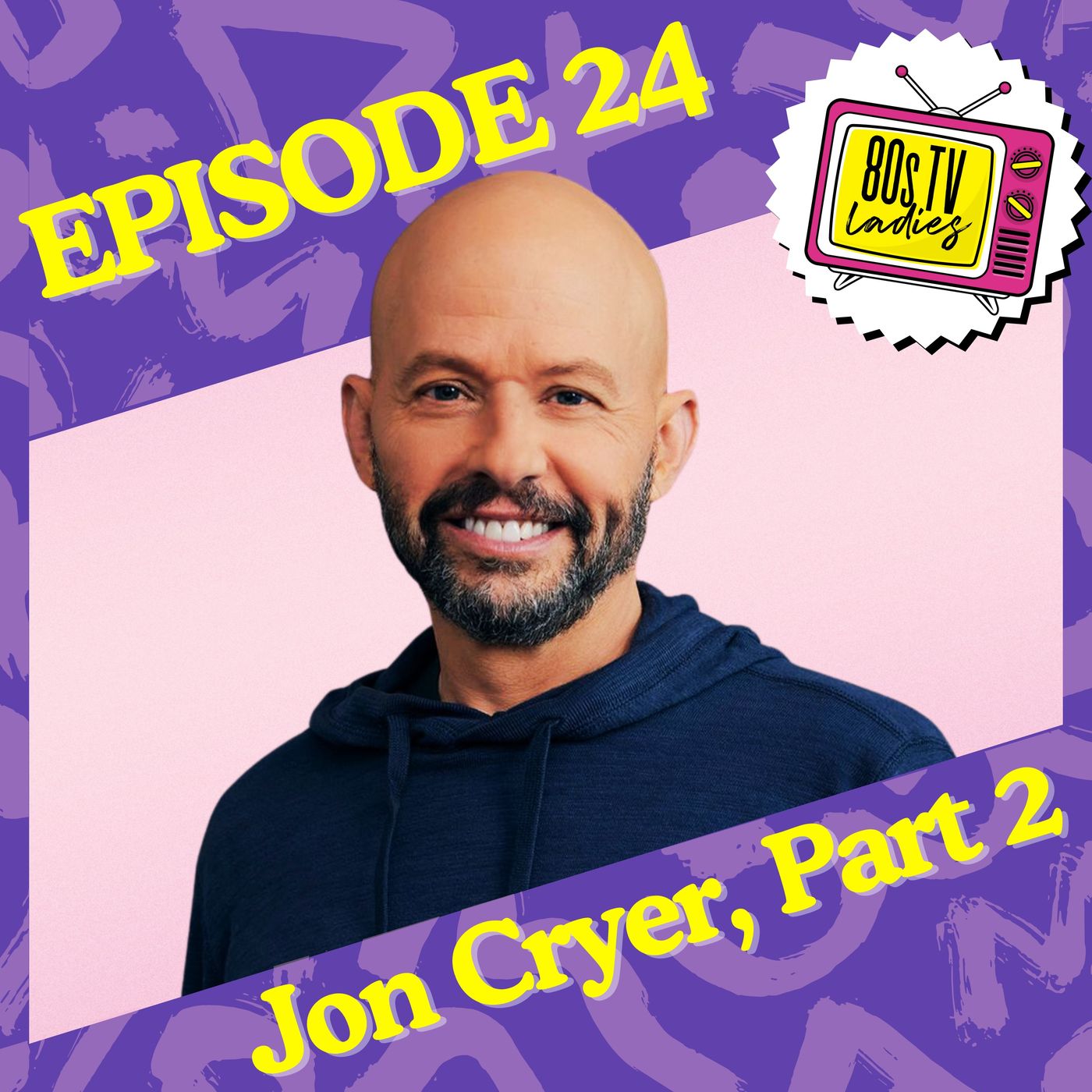
About this episode
In this episode:
- Jon’s journey from 80s movies to TV stardom
- The making (and unmaking) of "The Famous Teddy Z"
- Working with one of his idols, Hugh Wilson (WKRP in Cincinnati, Frank’s Place)
- Lessons learned from sitcoms like "Partners" and "Getting Personal"
- The inside story of landing "Two and a Half Men" and working with Chuck Lorre and Charlie Sheen
- Favorite guest stars and the casting of Holland Taylor and Conchata Ferrell
- Reflections on the show’s humor, its approach to masculinity, and Lorre’s ability to write for women
- Jon’s Emmy wins and what they meant to him
- Playing Lex Luthor in the Arrowverse and being a lifelong comics fan
- Producing podcasts, including the award-winning "The Man Who Calculated Death"
- The importance of storytelling, speaking truth, and making art in today’s world
- A special trailer for "The Man Who Calculated Death" podcast
- Fun anecdotes about the joy of making art and how he was involved in the making of the k.d. lang and Roy Orbison duet, “Crying”
- The Man Who Calculated Death
- Jon Cryer on IMDb
- Lawyers, Guns and Money Podcast
- Listen to Jon Cryer, Part 1 at 80sTVLadies.com
- Help us get THREE PODCAST AWARDS! GO HERE: Podcastawards.com
- Give an email and register. It’s easy! CLICK ON: "Sign Up To Vote Now". NOMINATE 80s TV Ladies for: Best Female Hosted, People's Choice and TV & Film
- PS: While you're there, also NOMINATE Richard Hatem's Paranormal Bookshelf in Religion and Spirituality. Podcastawards.com
Don’t forget to subscribe, rate, and review! Follow us for more conversations with the women (and men) who shaped 80s TV and pop culture.
Visit 80sTVLadies.com for more info.
Listen to 80s TV Ladies at YouTube. Subscribe and help us grow.
Don’t miss out. Sign up for the 80s TV Ladies mailing list!
Help us make more episodes and get ad-free episodes, video interviews, and exclusive content on PATREON.
Transcript
Automatically generated, so expect the odd misheard name.
Weirdy way. Media's so pretty bad. Through the City God, the Money World. Welcome to eighties TV Ladies, where. We look back at television shows and pop culture from the nineteen eighties from a modern feminist perspective.
We hope you are looking at a fabulous summer of love and respect. And here are your hosts, Sharon Johnson and Susan Lambert had him. Hello, I'm Sharon and I'm Susan. Welcome back to part two of our interview with John Cryer. You can totally start listening here, or you can back up one episode to part one and then come back here for part two.
Like so many things in this interview, I learned so much about John Cryer that I didn't already know. And as those of you that have listened to part one already, you know what a delightful interview subject he is. All right, shall we take you back to the eighties. When did you start working in television? My first television project was the famous Teddy Z in nineteen eighty nine.
I had been doing movies up until then, but I had in nineteen eighty seven. I had a bunch of movies come out and all flop at the same time, Dudes came out flopped, Highting Out came out flopped, Superman four came out flopped. So all of a sudden, I was cold. There wasn't a lot of demand for my work. So a couple of projects came up in nineteen eighty eight and then they just went away, including one actually this kind of fun called Young Men with Unlimited Capital, which was about a movie about the guys who put together Woodstock, who were these two sort of young capitalists who ended up being transformed into hippies via the experience.
So it's going to be It was going to be and Ralph Macchio and Robert Downey Jr. And then it fell apart at the last minute. I know, come on, I would have watched that absolutely, So that fell apart. So I had this long period of nothing, and they approached me about They said, Hugh Wilson wants to develop something for you for television. And I had been such a huge fan of w KFP in Cincinnati that I said, yeah, let's let's do this, and it was for CBS.
I met with Hugh and I liked him. He's a very he was a very rascival is the wrong word. He's sarcastic, you know, but in a good way. You know. He'd obviously been through a lot in the business, and he he wanted to do something about a talent agency because he wanted to do the story of Jay Canter.
J Canter was a very, very powerful talent agent. But when he started, he was just in the mail room and they sent him to pick up Marlon brand at the airport and he ended up. Mont Breda took a liking to him and said, oh, I want the kid from the mailroom to drive me around, and so he drove him around. And then finally when the agency made their pitch saying hey, would you would you join our agency, he said, yeah, join if the kid who drove me around as my agent. And so suddenly this kid in the mailroom was one of the most powerful people in Hollywood, and he later became known as one of the nicest people in Hollywood.
And the reaction to that was, well, yeah, you know, if Marlon Branda just picks you out of the blue and suddenly you're the most powerful agent in Hollywood, you might as well be nice. But it doesn't always go that way there, it does not. It's true you're absolutely right. So at any rate, I thought that was a really fun story. I said, you know, dude, I love that idea, but just don't make me Gary Sandy, which is which what I mean by that is Gary Sandy's a wonderful actor.
He was in w KPI and Cincinnati. He was sort of he was the lead guy in it, but he didn't get as much fun as everybody else because he was surrounded by all these incredibly quirky characters. So he didn't get to have the comedic fun. He was the straight mastry man. The thing is, though Gary Sandy is a wonderful, funny supporting actor.
I mean he's he's absolutely a character actor. So casting him as this lead guy was was, you know, always kind of a little bit of a waste of a wildly talented guy. And and so I said, don't do that to me. I want to I want to be able to have fun comedically on this. I want my character to be quirky and fun.
And he said, okay, sure. So then he wrote the script and I got it, and uh, and I was Gary Sandy. I was I was just the nice guy in the middle of all these quirky Hollywood characters. And I realized that that's a function of the story, you know, because the story is about this kid from out of nowhere, it gets to be the most powerful Asian in Hollywood. But I knew from day one that it was going to be a problem because it was always it was always a little bit of a square peg in a round hole.
I sort of always felt a little bit like, I'm not I'm not sure I'm one hundred percent the right guy for this, because being just the nice guy in the middle actually, you know, that requires a lot of skills. You know. I felt like, Okay, I'm just going to be frustrated doing this. And Hugh had a very quirky working style. He surrounded himself with people he knew in the writing staff, but they weren't people who are generally writers, like he hired his realtor as a writer, you know.
And then we started, we started shooting, and the buzz was incredible for the show, and it was you know, I was learning sitcom, which is a different a different skill because actually it's interesting because it's not because it's it's different than theater in that because you do have to appear real, you have to keep things small enough that people still buy it, but big enough that it does communicate to the studio audience. So it is a little a tricky balancing act. So I learned a lot of that. But we started having trouble pretty much like eight or nine episodes in. I could tell that Hugh was having a hard time with the writing staff and it was making him very anxious and unhappy.
And then the pilot came out and everybody loved it. Everybody just went insane for the pilot, and so all of a sudden, the critics were crazy for the show, and there was all this pressure on Hughes. So now there was even more pressure on Hugh, and he just was not happy to be there. So he fired a bunch of the writers, brought in a bunch of new ones, and we were still trying to figure out the show when it finally came on the air, even though we were on the cover of TV Guide as the hot new show and all this stuff, and everybody was making fun of an show that they thought, this this other new show. Nobody's going to watch this other new show Rescue nine one one, No one's going to watch that show.
That's a stupid show with William Shatner, who cares about that. They look, they're going to love the famous teddy Z. And we came out and immediately our ratings just plummeted off of a cliff and rescue nine one one shot to the top and we lasted half a season. Nobody knows anything. Nobody knows anything, that is the thing.
Yes, but it was. It was a great education for me. And uh uh. And I could see a lot of the pitfalls of of you know, of the pressure of being on a show. And I think you had, sort of, in a quest to sort of completely control the show, had just left too much on his own shoulders.
I think if he had surrounded himself with people who might have been a little threatening to him artistically, but at least could carry a show by themselves, you know, he might have had help when he needed it, you know. So that was a that was an interesting lesson, all right, Well. At least you never got to be on another successful TV show. No, And that's a shame. It's a shame.
It's a shame. That was my shot and it was gone, and there we go. Yeah, I mean I didn't the the sitcom as a as an art form. I had loved growing up. There were so many of them that I loved that I ended up doing another one In like nineteen ninety three, I did one called Partners for Fox that lasted.
This one lasted a whole season. So I'm getting a little bit really good letter. I was going to say, so a friend of mine worked on that show. I was a costumer. Oh my god, I was, and we were literally last night.
She was over and I was like, you never worked with John cry She's like, oh my god, he'll never remember me. But he was delightful. Oh he was one. So you came off good. Oh well that's nice.
Yeah. So that was the Partners was a great experience. Two of the writers from Friends. This was their shot at having their own show after Friends had had this huge first season and the cast jilled right away and the pilot was great, and Jim Burrows was directing Who's you Know a Legend? And he directed almost all the first season episodes, and Fox was really trying to create a new comedy night for themselves.
They were doing Monday nights and it really looked like the stars were aligned. But you know, few episodes in when you're supposed to be getting momentum, we started falling off a little and that was it. You know, that's how that's how the cookie crumbles in television back in the day. And they moved us into another place to try another thing, and it just it just didn't you know. We did a great first season that I was really happy with, had a cliffhanger at the end and everything, but we just we just didn't get another one.
It's surprising how hard it is to make a hit TV show. It really is. It really is. I mean, there's so many things to conspire against it. You know.
It's really a one in a million shot to get the right people together at the right time, to have the right sort of corporate atmosphere at the network or whatever, stream or whatever. You know, all those things are million to one shots. And so when you have million to one shot after million to one shot after million to one shot, it adds up and that's a lot of millions against you. So just getting on the air is such an unusual experience. And I got very lucky.
I got partners, and then I did another show called Getting Personal for Fox. That was that was fun. We did technically two seasons. We were a mid season replacement the first season, and then then we started the new season but only got through half a season, so sort of two seasons. But that was another one where I felt like we had a great cast and the writing was terrific and we were really, you know, hitting our stride and then nope, rug gets pulled out from under you.
And after that I had a nice run of nothing. No, that's not true. Even even when I had three years. I had three years where I worked three weeks. I did a Becker episode I did that was the Ted dance and show where he was a doctor.
I did Andy Richter Controls the Universe, which is actually a terrific show on Fox that only lasted a season. And I did Oh, I did The Practice, the Legal Show, which was super fun because it's, you know, a serious show. But I got to be sort of comedic relief on that show. So I played a guy who was like a I think I was a flasher or something like that, which was hilarious in the seventies. Now that's like, that's like sexual assault.
Basically, that's not good. That's not good. It was funny in the seventies, not so much now, all right, But so how did two and a half men come up and happen came about because I had worked with Charlie Sheen on Hotshots, so we knew each other. But also I had done a pilot with Chuck Lriy that didn't get picked up in the late nineties. Chucklrie who has become probably the most successful producer sitcoms.
I mean, it's like him and Norman Lear, that's those of the two. He was doing a show for Jim Belushi called It's Good to Be King about two brothers, one of whom's a bit of a wild guy and the other one who's super uptight. I guess which one I was. And what happens is their dad dies and wills them his old jazz club. So the two brothers, who are estranged, have to come together to run the club.
And like Abe the Gooda was on it, and you know, it was a really fun Tom Posten was on the pilot, so it was it was. It was fun, but it was an odd It was. It was a pilot that never you know, there's pilots where you go, oh, this one, this is going to work, like the Partner's pilot one, like yeah, this is going to work. Getting personal pilots same, We're like, yep, we're getting on the air. Good to be king not so much, and that happens, you know.
You just you're like, this one's a little this is look pushing a rock up hill. But Chuck was the showrunner on it, and he asked me to do it, and I had read the part and I didn't want to play the uptight accountant guy, and so I turned it down. And the studio just came after me like crazy, because exactly, there's nothing you can say that is sexier than no. They just want what they want when they want it. So they just kept coming in, offering me more money.
And I had been I had written an independent film script at the time, and eventually they offered me so much money that I was like, I can make the independent film script myself now, which I did. I eventually did that, but in the meantime I had to do this pilot and it was crazy because oh oh, and it was kind of dramatic actually, because I had said no, and they said, oh, well, we're having the reading tomorrow, so you got to say but you got to say yes or no by by noon tomorrow. And I said, I just said no. So the next day noon comes and about twelve oh five I get a call from my manager and says they're making another offer. I said, no, I don't want to do this.
Twelve thirty comes around. They're making another offer, and that was that was the amount that was financing my movie. So I said, okay, I'll do it. So the studio and Jim Belushi and the whole cast, the whole rest of the cast are waiting at the studio to do this read through. And it's now a half hour after the read through was supposed to start, and my manager says, okay, I guess you're going to twentieth Century Fox.
Let's do the read through. And I was like, oh okay. So I got in my car, so I get there at once, So it's fully an hour after they were supposed to be there. We get in and Jim Belushi is like, ah, you're in on and he literally picks me up and carries me to the table, you know, and this is all and everybody's like comploding, and it's just like, oh, this is so the comedy yay, he said coms and you know, and there's all the suits and everybody's just so excited about it. They sit us down at the table.
Now, what they did not realize was that they placed the read through table underneath the air conditioning vents for the studio. We were in a big studio on the lot, on the twentieth lot, and at one five pm the air conditioning turns on automatically and goes, oh so, and nobody can figure out how to turn it off. So we're five minutes into the pilot. We can't stop, and nobody can hear what we're saying. So so the rest of the pilot is us yelling all the jokes just so that the executives can hear what we're saying.
And there's so no laughter. There's no laughter. The read through is useless in terms of figuring out what it's funny or not. And you know, we start rehearsing after that and it just never caught fire. But I loved working with Chuck and so we waited.
A couple of months after we shot the pilot. ABC ordered more but wanted to recast it, and then they couldn't find somebody they were happy with in the casting, so they were stuck paying me for just doing the pilot, and they financed money to have been a movie, which was amazing. So it ended up being a good experience. And then out of nowhere, Chuck calls me and says, hey, would you do just a cameo on a new show I'm doing. So sure, he said, yeah, it's called Dharma and Greg, and you're going to be in the second episode and you're going to be the guy who Dharma was supposed to have a date with, but instead she ended up marrying Greg.
Like, oh, okay, so that was fun. But at any rate, Chuck and I were on good terms certainly. And I'm sorry if you just asked how did Two and a half Men happen? And I just I'm now telling I'm telling you late this hour of a story about how another show didn't happen. So, but at any rate, so I knew Chuck and I knew Charlie.
I could have just said that. I could have said I knew Chuck, I knew Charlie, And obviously I'd worked with Jim Burrows on Partners. Yeah, and he directed the pilot of Two and a half Men. So the Two and a half Men script came to me from a friend of mine actually, who had been one of my co stars on Partners, and she said, oh, you're this guy. You got to do this, You're this guy.
And I had heard the sheine was doing it and said, oh, I know she Okay, this will be this will be cool. And I went in and I remember reading for Chuck the first time, and Chuck Laurie is a notoriously generous laugher. He laughs at a lot of stuff, and it's really helpful actually, because it helps you time and you know what's working. It's also he just lets you know that the guy who wrote it enjoys what you're doing, you know, which is very helpful. So I remember I had a bunch of ideas about what I wanted to do, and I was sitting in an office listening to the guy before me audition, which is awkward because you can overhear stuff through the doors.
I heard what he was doing and I was like, oh, oh no, that's not right, because he was playing him super up, I mean, like a nervous wreck. And I said, no, you can't. No, he's a guy who thinks he's got his stuff wired but is wrong. So I went in and I read for Chuck and he did not laugh at all, and I thought, oh, okay, well I've blown it. And I got in the car and got home, and within like ten minutes I got a call from my agent saying they want to see you again tomorrow.
Can you come in? I thought, oh, I thought I blew it. So the next day I came in to read with Charlie and Chuck, and Charlie and I read together. Chuck was laughing it up and having a great time, and I was like, what's up, Chuck, Why did you Why did you not like yesterday, I'm doing the same stuff, And he said, oh, no, I was. It was just the first time somebody did it right.
So he was just kind of surprised, stunned him into silence. But it was, you know, Charlie and I had incredibly easy comedic chemistry. It was just not hard. You know, we just totally got each other. He's a great guest for you to have, by the way, because encyclopedic knowledge of sitcoms, seventies eighties sitcoms.
Part of the reason he was so good on Two and a Half Men was he totally gets the art for him one hundred percent. So, you know, same thing with Spin City. Everybody was so surprised that he was really good on Spin City. It's like no, no, no, he gets this, he absolutely gets it. Then I had to audition for CBS, and this was scary because Les Moonvez was, you know, the king of media at the time and not the nicest not known for being the nicest guy.
And he kind of didn't. He didn't. He made it clear he did not want me to do this for some reason. I assumed it was partially because I had eighties movie baggage, and I think between Charlie having some movie baggage and me having some movie baggage, it just didn't feel right. Or I think he wanted a new face, which is my face is old.
I get it, you know, and people deserve a new chance. Why not, you know, it's a new faces are often wonderful. I was a new face at one point, but Chuck said to me, you know, I've never seen anybody change Less's mind. But Charlie and I went in and somehow we changed Less's mind and he turned around to Chuck afterwards because they used to do it at Television City, which which was so awesome to be at Television City because I remember from Television City in Hollywood, So having the audition actually at Television City was great. They did it in one of their little screening rooms, which is actually terrible because they sound damp the whole place, so it feels like a dead room.
It feels like you barely hear any laughter. But we got a lot of laughs. And at the end of it, Less turned around to Chuck, who was in the audience, and said, Okay, you win this one, and we were on our way. Well, there is great chemistry between the two of you. Like that's the show did very well.
I think because of that, you guys really clicked. Yeah, we did. We absolutely did. We go. I got what he was going for comedically, and he got what I was going for comedically.
And the writing was great. The writing was never I think got the acclaim that it deserved on that show. So favorite guest stars, I know that you got to work with Holland Taylor. Yes, well you know, Holland almost wasn't on the show. The original mom was Blithe Danner, which was amazing.
Yeah, this is amazing. She's wonderful. She came in and we did the first read through and killed, just slaughtered. I turned to a friend of mine actually one of the writers from friends who had done partners who just who just came in to you know, to see you read through. And I turned to him afterwards, I said, she's got like three more Emmys lined up because of this.
But then we started working and the thing about that character was she had to be incredibly cruel and blithe that gear for her. It was easy for her to do that in a read through because she was just tossing it off when we were actually acting it out. She couldn't help but feel the pain of the awful things she was saying and try to mitigate it a little bit. And that doesn't work. You know, if this woman is in any way aware of how awful she's being, it doesn't work.
Yeah. And so we were, you know, we're like, this is Blinde Danner, no qualifying terms. She is a great actress. You know. All week we were like, why is this?
You know, there's you know, trying to put our finger on what's the thing that's that's not quite gelling here. And after we shot the pilot, I got a call from Chuck the next week saying, we got to we have to figure out what to do with blythe you know, and he asked me about Holland Taylor. And I had actually done a failed pilot with Holland Taylor years before, called The Medicine Show for NBC, where I played a doctor, very serious young doctor. But the problem is I couldn't do suit shows back in the eighties because if I put on a suit, I was so young looking. At the time, I looked like I was going to buy Barbin mitzvah.
So you certainly didn't buy me as a doctor's No, but I loved Holland and I'd loved Holland from Boz and Buddies. Yes, So he asked me, do you think Colin Taylor? Was like, yeah, if are you kidding, we'd be incredibly lucky to get Holland Taylor. And then he went after her and he got her on board. And when did Conchetta Farall come on?
Toodda Farall came in the second episode. She was not in the pilot, but they wanted to have a wise in the mix somehow, and they got Chatty, who's just got this kind of brusque demeanor, but underneath it is just a cream puff. She's just one hundred percent cream puff. I remember the first day on the set because I was a big fan of hers from the movies in the seventies and so, and I reeled them off for her. I was like, oh, you're kidding me, you know, I'm a huge fan of yours.
And she refused to believe it, you know, and I was like, you know, network, you know, and I just was hitting her with him, and finally she was like, Okay, Jesus, you're weird. You know. It was it was first scene. It was a parent that was like, yeah, she's she's got to be on the show all the time. I mean, And when you think about it, Holland Taylor and Conshatta Ferrell and marn Hinkel and Melanie Lynsky, Holy Christ, you know, that's a women powerhouse.
Yes, a remarkable lineup of actresses, all of whom have gone on to do amazing stuff. You know, Chuck has written wonderful roles for women, you know. But also the show has been accused of sexism, which we absolutely yeah, you know, I mean, the the the whole thing of you know, men men, men, men, manly men. The whole thing was making fun of masculinity to some degree that we were that we were idiots the ideas we were, you know, we were you know, he was this lithario but also an idiot, and I was this uptight, you know, you know, very righteous, self righteous guy, but also an idiot, you know, and that that was and that we had, you know, we have this son who is you know, an idiot. And that was the point of the show was that these three goofballs are are you know, not going to make themselves?
Yes, we're not going to make good choices is what you can expect. And actually that's great, that's great for for commoner sitcoms, you know, which is generates so many stories, you know, But also there was you know, there was a lot of of eye candy women who were treated very objectively, you know, you were objectified rather, that's the better term. And he's playing this lithario who you kind of enjoy that he gets away with the awful behavior. Yeah, it's a sex comedy. It is a sex comedy.
Yeah, and so there are limits to how much, you know, how much sympathy you can feel for that character. But they also made fun of him and had women get their revenge on him. So it was a mix. But you know, I think you know, Sybil and Roseanne, and you know all these amazing Grace under Fire and Darwin greg and you know, just so many wonderful, amazing female characters that Chuck has has written. You know, women love being in his shows.
The first thing I directed after Two and a half Men was Disjointed with Kathy Bates, which was a sitcom about a marijuana dispensary. It only lasted like a season or two seasons, but Kathy Bates was right on board to do that show with Jack because he does write great, great email characters. I've seen both seasons. Okay, okay, that's special. Thank you for checking it out.
It was very funny. It was very funny. Yeah, it was a great cast. And they took some weird, some really sort of risky things with the format they did. They did odd things, you know, weird segues and you know, and if some of that was just for the sake of let's try something, you know, which I thought was really cool at the time.
I mean, because you know, sitcom is a format that can get stale. Yank you three. Of us, we can almost cover everything, but I'm curious about your immates. Oh okay, we have to take a break. But We'll be right back with more John Cryer and as we go into break, check out this introduction to the Gracie Award winning podcast The Man Who Calculated Death by journalist Suzanne Rico, Deduced by Suzanne, John Cryer and Lisa Joyner of Discount.
Sushi and sy to Come Home. This is a story that begins with a dying wish. One thing I would like you to do. My mother's last request that my sister and I finished writing the memoir she'd started about her German childhood when her city burned and her father designed a secret super weapon for Adolph Hitler. My grandfather, a man named Robert Lesser, headed the Nazi project to build the world's first cruise missile, which terrorized millions, ripped his family apart, and left a legacy that dogged my mother like a curse.
And Mom often felt like she suffered. You know, that's what she deserved. Because her dad, it was a Nazi scientist, and see what happened to the family. My mom always seemed to be haunted by a question that was shrouded in time. Who bombed a remote farmhouse at the end of the war and killed her mother?
And why she had some secrets. Mom had some secrets. She did. All we have to go on is the dusty family legend that the attack was British revenge for my grandfather's flying bomb. You know my experience, even with secret projects, nothing stays secret forever.
The odyssey to finish the twisted story our mom ran out of time to tell takes us deep inside our own ancestry, to the dark intersection where family history and world history collide. It was something even a nightmare cannot repeat. I'm Suzanne Rico. Join my sister and me as we search for the truth behind our grandfather's work, solved the mystery of our grandmother's death, and for the first time, face the ghosts. Of our past.
Jeez, who's here? Listen to the man who calculated death? Available now wherever you get your podcasts. And welcome back. Let's get right back into it.
Okay, back to your Immy's Oh yes, back to. My Yes, Well, we can do a whole podcast episode about Miami. Are you surprised? Yes, I was surprised. The biggest surprises the first year I got nominated, because it's just it's I had done.
We had done a couple of seasons and Holland had been nominated, I think, and maybe Chatty had been nominated, but I had not, and nor had had had Sheen, and so I it was weird. It was like all of a sudden, you're invited to the party, you know, because I remember I was out in my backyard in my kid's play structure, I don't cleaning it up or something, and I got a call on my cell phone from Peter Roth, the head of Warner Brothers. This was actually before they announced. He said, he said you should be prepared. You might hear something tomorrow.
And I was like, uh, huh, what are you even talking about? And he said, oh, they're doing Emmy nominations tomorrow. Okay, well, thank I'm glad you're confidence. That's good to hear. But he was Peter Roth, who ran Warner Brothers during some of its heyday, was great at talent relations.
He just he loved everybody. He hugged everybody. He called you on your birthday, he wrote you email. He's great at that stuff. So the next morning I was like, I guess you got to call super early in the morning because I used to announce him for the East Coast.
Yeah, so yeah, I got a I got a call from my publicist at six am or something saying, hey, you're doing you know, and so I was stunned. I was really stunned, and your heart starts racing. And then my publicist was like, we can get you on KTLA doing an interview in fifteen minutes, so you want to do it. I was like, okay, again, it's like you've just got invited to a big party. So I got nominated for a few years, and I think the second year I actually wrote a speech to be ready and I did not win, and then the third year I did not win, and then I think the fourth year I did not win, and I'm reckon up not winning.
But it's fun because you're getting invited to the party everyhere. But by that point I felt like, oh, I'm never going to win this, you know. I get yeah, So you get good at keeping your face animated and happy when you hear somebody else win, because you know the camera's on you and they're going to see you. But the year that I did win, it was funny because they had seated Kristin Chenow with me next to each other in the front row, which was a little unusual. But we were way off to the side, and I was like, we're in this section.
Nobody's going to win in this section. So you have assigned seats when you come in and they take you to your nominee, they have they have as signed seats like a wedding table exactly. So I was sitting there and like three categories in Christian shenow with who's sitting next to me wins and I was like, maybe we're not in the bad section. And mine came up. And when the words come out of their mouth, you kind of don't believe it because your brain short circuits for a second and you're like, oh, this is happening to me, you know, and you go they just said my name, and so you stand up and you're you're like, wait, what's happening at this moment?
And the cameraman's like on you and standing up all excited, and everybody around you leaps up, and my wife was like crying and I and I turned to my wife and I, you know, I don't remember what I did. I hope I kissed her, I don't know. And I started walking a couple of steps, but then my mind went to, oh, wait a minute, did they actually say John Cryer? Because I thought, oh no, you know, did I remember that correctly? It's this weirdest thing is that your mind plays tricks on you.
You're like, wait, did my mind just make that up? And so suddenly you think, oh wait, am I walking toward the stage and they called somebody else's name? It is so strange. And then everything seems like it's in slow motion, and then you're worried that you're going to slip because the floor is super slick and shiny and you're walking up, and then you think, oh no, the applause is going to stop long before I get to the microphone, which is really embarrassing to have this long, you know, awkward tap tap tap as you walk across the shiny floor to get to the middle where there's a tiny little microphone. So I got up there and again it just feels so real and you don't know, you know, And then I realized, oh, I didn't write a speech this year because I'd been there, you know, so many I'd lost so many times.
But then I at least remembered the first few lines of the thing I had written two years before. So I've delivered that and it got a nice reaction, and then you're just sort of like your head is pounding, and you're looking around and there's all these famous people that's in the front row, and you're like, how did I how did this happen to me? And before you know it, it's over and they're and they're ushering you off stage with this very heavy Emmy. Emmys are heavy. They have that huge base and they're you know, very substantial feeling.
Uh. And then they take you back in the press and you're just again, you're just you can't. It doesn't compute for a long time. But interestingly, long term, the wonderful thing I got out of it was some days it is your day. You know, you get used to things not going your way.
And even though I've had a lot of lovely things happened in my career and a lot of success, you know, if you're trying stuff all the time, you fail a lot. So when something like that happens, you go, oh, sometimes you're in the room, you got invited to the party, and then this wonderful thing happens, you know, and it can happen to you, it can, and it just broke this barrier in me. That was like, oh, it could happen to me. So it was a lovely thing and it was great to be amongst all these amazing writers that I really respected and people in my category who were just better than me, you know, and you're like, that's another thing you realize, Oh, this thing is it's political. And sometimes the Television Academy, after like four nominations, was like, let's just give it to them.
Oh you know, so there are emotional narratives that people go on. I mean, the second I mean, I'm sure came because you know, it was right after Sheen melted down and they had to resurrect the show and you know, we had just done it with Ashton and it was getting really good ratings and everybody was talking about it again. So I think that it was kind of their way of saying, you made it, kid, Yeah you made it through. But I was up against like don Cheatle, who's amazing, and Rain Wilson, and you know, you seemed very surprised for that one. I was.
I was speechless, absolutely speechless. I was like, I was like, I am as surprised as you people, you know, but again, you know, sometimes things go your way. Yeah, you know, and most of the time it doesn't in this business, but every now and then it does. I think it's also a testament to how hard it is to navigate a successful show, to relaunch a successful show. I mean, that could have just not worked, yes, and so I think there was a lot of like, oh, we can we can keep.
We can keep this going. Yeah yeah, but it's amazing that you won in both Best Supporting Actor and Best Actor, right, yeah. Yeah. Well it was interesting because for for all those years, you know, it was not lost on us that Charlie was in every scene and I was able to flit in and out, you know, and so you know, whenever it came time, I was like, actually, it just doesn't feel right for me to put myself in the lead actor category. But then once Ashton was on, they were using me so much it was like, okay, uh, you know, I'll go with the category change.
But you know, obviously it's these shows need everybody. The difference between supporting and lead and you know, a lot of that stuff is just so nebulous. It's really hard to put a label on it sometimes. I mean, we've got so much to talk about. You've had such an incredible career because you really have encompassed theater, TV, film.
You've acted, and you've directed, but you've also produced and I want to get to that. But before we get to that, I want to talk about playing Lex Luthor and. As later come on, Okay, okay, you played Lenny Luthor. Yes, and Superman four Yes, which was the last of the Christopher Reeves Superman Yes in the eighties and the eighties. Did you get to work with Christopher Reeves?
I did. I did, And it was a thrill. It was an absolute thrill because I had loved the movie, the Superman the movie Ye, back in nineteen seventy eight. I think it was We're first, we got helicopters, held it, got a helicopter off to the end. Yes, once again, got it vite to the party.
Yes, I did get to work with with Christopher Reeve. I had loved Superman the movie back in nineteen seventy eight. That was a transformative experience for me, just because they had heightened the superhero movie. So you know, it was a totally different level. Same way that Star Wars heightened the science fiction movie, Superman heightened the superhero movie.
I mean, it defined the superhero movie for the next two decades, you believed a man could fly. You believed a man could fly. Absolutely, they absolutely fulfilled that. I loved it. And I also thought Christopher we was just he was a perfect embodiment of a Superman.
That was he was a boy scout, you know, and the seventies had become very cynical, and so having this sort of boy scout, you know, the superpowered wise boy scout, was really sweet and really touched me as a kid, and so I really wanted to be a part of that. So after Pretty and Pink came out, they told me they were doing a new Superman movie. And after Superman three they had kind of put the franchise away, but they decided that they were going to rebuild the cast. They were going to have Margo kidderback, and they were going to have you know, Jackie Cooper and Gene Hackman obviously, and so they were really going to get the group back together, and they had a really terrific script. The one fly in the ointment was that it was going to be produced by Golan Globus, which was a producing team that was famous for low budget movies.
They were trying to go for respectability so they had financed a bunch of movies all at once. He Man and The Masters of the Universe at the time with Franklingella and Dulph Lungren, which had a script that everybody said was great, and Superman four, which was a terrific script. They were doing a Dustin Hoffman movie. So all of a sudden they were the hottest in town. But what nobody knew was that it was mostly a lie.
Their financing was evaporating day to day. They didn't know how to make expensive movies. They made cheap movies, and that was what was great about them. So we started making the movie, and within a few weeks it was clear that something was off the rails and they were running out of money and they were cutting weeks out of the schedule, and so we you know, we soldiered on, you know, and still tried to make the best movie we could. But you know, when they finished, I ran into Christopher Reeve on the street in New York and he said, oh, let's go have lunch.
I was like, Okay, sure, this is gonna be awesome. What I did know was he was friends with my mom. You know, I did not I didn't know she never mentioned it, but we went out to lunch and he just leveled with me. He said, the movie's a mass They ran out of money and they didn't shoot a lot of the post special effects, and so we had to cut huge chunks of the movie because there's no special effects for it. And the movie is famously nonsensical now and not good.
How did this get made? Did a great podcast episode on it, and you know, and then at comic conventions they asked me to come do a let's do a panel about Superman fours? Like, okay, I mean because it was painful for me because I wanted to be part of the magical thing that I loved, you know, and then at the movie ended up being kind of disappointing, was very frustrating, and was the nail in the coffin of the Superman franchise, which hurt me even more. I also wanted to ask you about working with Gene Hackman. Well, Gene, Yeah, Jane was lovely.
Gene was great to me. It was famously a a kind of brusque guy. You know, there's all these stories about him just taking no bs, you know, but I didn't see that. I think he was having fun, you know. I mean he you know, when he was done for the day, he was done, and he'd just go play golf, you know.
But he was very nice to everybody. I just ran into Mark Pillow actually, who played the Nuclear Man, the super villain we create to battle Superman. You know, everybody has these tough gene Hackman stories. But I didn't see that at all. He's like, no, I mean neither.
I didn't. He was so nice to me. Maybe it's it's because the whole thing was kind of a lark, I guess for him. But also I did see that once they started dropping weeks, I could see he kind of checked out a little bit. He kind of was like, you know what, this one's going to have a rough road.
But he was very nice to me, and we joked a lot about, you know, all kinds of stuff, and I was, you know, asking him all the stupid fan questions. You know, what's your favorite movie, you know, and he said, uh, you know, the favorite movie he was in was The Conversation. Okay, which is we all agree about that? I mean absolutely, he said his favorite role. And I've heard him change his mind about this a few times, but to me, he said His favorite role was in Young Frankenstein when he played the blind Man, which is a wonderful choice.
Yes, but you know I was like Popeye Doyle, no, no, okay guy and Young Frankason okay, sure, but nothing but happy experiences and you know, obvious sadness that he recently passed away. But you know what a life. You know, he lived the life he wanted to. He left the business when he wanted to, and that's all we can ask for. Absolutely.
Yeah, and then you got to play Lex Lusor and then I got to play Lex Luthor. Yeah, totally came out of the blue. It was crazy, weird, a bunch of events. I got a text from an old friend of mine from summer camp who said, you're going to get a text very soon asking if you want to do a really big role. And I was like, well, that's wonderful to hear.
But this was from a friend of mine from my summer camp. He's not in the business. Not. I was like, how do you know these things? Quin Cookie gout.
Yes, No, he's a teacher. He teaches at a school in New York. Where's my agent? My agents don't hear this, you know. So I got that and then I got an email from Bill Prady, who was the producer of Big Bang Theory, who said, just to prepare yourself because they're going to ask you to play a character whose name rhymes with the Schmicks schmoother.
And I was like, that's a limited number of roles. And I sort of sat with her for a second. I was like, who would ask me to play that? And why? And then I got a call from Jessica Kueller, who was the new producer of Supergirl, and I was like, ah, here we go.
She said that they had finally gotten permission to have Lex Luthor in the Arrow Verse because Arrow and Flash and Supergirl and Batwoman were all in the same universe of Tomorrow actually, and they at the time were doing this really cool thing where they were crossing over and having fun like the comic books used to yes, and so they had really nailed something that the DC comic movies were having a hard time at that point, because the DC comic movies were you know, Man of Steel and Batman Begins, and you know that had taken the DC characters in a very dark direction. But it was starting to hit some trouble in the movie area. But the TV shows were having a great time and had this amazing fan base, and I was aware of it all the time, but I had no idea they'd asked me to do something like that because I was aware of it because I was a comic book nerd from way back, loved you know, immersed in it as a kid.
So when they asked me, I said, well, I got to think about this because I was like, what what on earth? And I had already shaved my head because after all, through Two and a half Men, through the twelve years of Two and a half Men, my hair had been gradually going and Ralph, my hairstylist, God bless him, had used every hair product that has ever been invented to try to keep every single strand in my skull. This poor man, it was just it was, you know, it was a losing a losing battle, but God help him, he tried. I mean it was you know, shoe polish, you know, everything that could possibly be deployed on my skull. So finally, when the show was over, I said it's time to say goodbye.
You know, I had a good run. I'm going to shave my head. So I think that's how I got the role. I think they saw that I had shaved my head and thought, who's a wise I was shaved head John Cryer, and so they asked me to do it. But I didn't say yes right away because you know, I knew that there'd be the fans wouldn't be thrilled, because I just I was just allan on two and a half men, and sometimes those things can be, you know, controversial.
And it was only a couple of episodes, and I was like, ah, maybe, you know, is it big enough thing to do? I don't know. But then I started thinking about it and saying, oh my god, yes, of course I have to do this. I have to do this because, as I said, I was such a fan and I knew all this stuff, and I knew that the Aeroverse was about to do a thing called Crisis on Infinite Earths, which was this thing that happened in the comics in nineteen eighty six where they basically took all of the DC comics and created this one huge story where they killed off a bunch of characters and joined all of their universes into one universe. And that was like, that was a game changer.
In nineteen eighty six. You know, it was a big, big deal and that I knew they were going to do something that ambitious. I was like, oh, well, maybe I could be a part of that somehow, because he was in the comic. But it was only supposed to be three episodes of Supergirl. What had happened was d C Comics had for years said we won't let the Erroverse use Lex Luthor as a character.
He's too important a Superman. They were using him and Batman versus Superman, and you know, and they said, you know, Jesse Eisenberg had done it, and they said, it's just it's too important. We don't want to dilute it by putting that character on in the Aero Verse. But for some reason they changed their mind for just three episodes on Supergirl. As long as he died at the end, he's got he can live and into the Supergirl universe, he's gonna die and that's that.
And so I thought, okay, I'd like to do this, But it was funny because I didn't. I didn't accept it formally, but they kept sort of working me until I was at one of Sadly, one of the counselors from my camp passed away, and I was at his memorial service in New York City and my phone just keeps. Literally the guy who originally had told me turns out, by the way, he knew the producer of Supergirl, and that's how that came about. So I was surrounded by all these people from my camp, all these actors, all these people crying about the guy that we lost, and going into very lengthy stories about him, to the point where I kept saying, I can answer you in a minute. I'm sorry, I'm at a memorial service.
They just kept calling, kept calling, until when the memorial service reached like three hours, I was like, f it, I'm picking up the phone. So I just started literally like negotiating the deal at the memorial service. I thought it was a really fun opportunity, and I had hoped that at best I could do the three episodes and then maybe I could do a couple episodes of the Crisis on imprintet Earth's thing, and that that would be fun. What ended up happening was we had such a great time with the character, and they did such a great job on Supergirl that they decided to let Supergirl have Lex Luthor for you know, for the next three seasons. Yeah, and I did Crisis on Impanet Earth, which was really joyful and fun for me.
And it's been fun because the fans who were originally very unhappy that I was cast as Lex Luthor understandably because Alan Harper is not a particularly scary guy. That I was able to show them that a guy who really knew the character and really knew the comics and knew the history that that mattered, you know, because I was a comics nerd. You know, I think I'm the first comics nerd actually who played Lex, you know, who used to go to comic con for fun, just for fun. So that was a great experience. That's amazing and you're really awful.
Thank you, thank you. Flu there is so mean. He's mean, and you're and you're like, had you done any No, No, it was it was It was really fun. Like I said, I knew him from the comics and I knew what they wanted. That was very different from what Gene did.
Gene was great because he was so great with the quips, but you know, you could tell there was some malignance down there. But it was really you know, they made a lot of it funny in the movies, and this one they really wanted to play up the malignants and the malevolence and really give him a dark backstory. And again, it was such a great cast and so much fun. And it was hilarious being a super villain, you know, amongst all these twenty eight year old superheroes who are just you know, in perfect shape and chiseled and you know, and a holy you know, I'm just this duf isst walking around being abl But I loved it. I made a lot of great friends, and I'm so glad I got the chance to do it.
I like it. Thank you. Sure, you're so welcome. It's really great. Uh you're producing now?
Yes, well yeah, I've been producing on and off. I've produced a few movies, independent movies, and I've produced on shows that I've done. I was a producer on Getting Personal, and I was a producer on Extended Family recently, so I've done it before. Independent movies is the hardest producing. It's just it's just awful.
It's everything bad about producing it all wrapped up in one job. It's just begging for money all the time, begging for money and then arguing with people and then rolling a boulder uphill. It's awful. I don't recommend it, but I did it. I did it a few times.
That's how dumb I am. Now I mostly produced TV stuff, and I've started to produce a couple of podcasts, which has been really fun. Mostly I do narrative history ones. I did one called Lawyer's Guns and Money, which was about the Iran Contra scandal, which is a crazy story behind the scenes, it's so full of characters. Everybody was nuts because the Iran Contra scandal was really about an illegal war, and when you're trying to fight a war illegally, you got to hire a lot of people who are nuts, and so it's an absolutely great story.
So I did that one, and then I most recently did one called The Man Who Calculated Death, which I'm really proud of. That's a story about a friend of mine. Her grandfather was one of the Nazi scientists who was smuggled into the US for Operation Paperclip, and her mother had passed away fairly recently, and on her deathbed had begged her and said, listen, I've been writing a memoir, but I won't be able to finish it because I'm not long for this world, and she begged Suzanne to finish her memoir, and so as she got into reading it, she realized that her mother had always been haunted by the death of her mother, the wife of this Nazi scientist, who had died mysteriously at the end of the war. So Suzanne set about solving the mystery of who killed her grandmother and why and how on earth her Nazi grandfather got to come to America and be a part of the space program.
You know. So her name is Suzanne Rico and she actually used to be an anchorwoman here in Los Angeles. It's on CBS, and she did an amazing, amazing job on it. She's won some awards for it, which is really cool, and you can listen to it right now on Apple Podcasts. She was nominated for an A B along with other really cool, really cool shows.
And that's where we met. And I love it, Oh, thank you so much. Love it. It's an amazing it's an amazing story and it's so beautifully produced. It's personal political documentary, but very heartfelt.
Yes, it's earned her going back and going to Germany and traveling all over the country. Yes, to dig up this story and discovering this harrowing story of how her family survived their country falling to authoritarianism and then this war just ravaging Germany. And the first season is just about the family surviving World War Two. The second season will be about them in America and working on the space program. That's great that there'll be a second season.
I think thinking it was just going to be just one season and done. But yeah, I echo everything Susan said. It's exactly the kind of story that podcasts tell really well, you know that they have the time and to get really in depth, and it's really a terrific podcast. Yes, that's really My wife's fault actually was the one who came up with the idea of making it a podcast, because Suzanne went about writing the memoir and she did a bunch of interviews for it, she did a bunch of video stuff on a GoPro, and when she told my wife that she had all that, my wife said, you should make a podcast. Yeah, and she was right.
You know, it has come together to be this really really beautiful thing, really moving thing, and you know, telling the story of a family as their country falls to authoritarianism. Unfortunately relevant at a moment and you see a lot of the echoes in it. But you know, I'm really proud of it. And it's weird because you know, I'm obviously known for comedy, but I love those those deep dives into history. Yeah, it's pretty cool.
In The podcast format, obviously, is one we love very much. So it is a great format for sort of undiscovered stories and stories that you can spend some time with. But it's just a beautiful audio experience too. Like, I really appreciated the craft put into that. I'm so glad you like it.
And Suzanne really did the vast majority of the work herself. She became good. She had never made a podcast before, and she mastered the descript program and we had a sound a sound designer and a music writer. But other than that, she did it all. And she won a Gracie Award and it's so well deserved.
Yeah, she put an enormous amount of care into these things. So anytime she can hear from listeners, she's really grateful for it. Absolutely, And I'm really enthusiastic at anybody that sort of is taking effort and time and money to put into good, amazing work. And there's something really special about doing that, and you've been doing that for years. Well, thank you.
Yeah, I feel lucky. I feel I've been really lucky in this business, and I've got to meet amazing people and gotten to be a part of amazing stories, whatever form that takes, you know, whether it's a TV show or a documentary or a song or a podcast or whatever. It's just I can't believe how lucky I am to be a part of this kind of stuff. Like, Okay, here's a fun, little sort of demonstrator that when I was doing Hiding Out, the movie about the stockbroker who ends up having to go back to high school, they were looking for songs for the soundtrack, and my manager had listened to this new artist, Katie Lang, and he said, Oh, she's great, She's great. We should have her do like a duet with somebody with like somebody old school.
Roy Orbison and my manager, Marty Tudor, who was a producer on the movie, literally made like three phone calls. She was like, are you kidding? I would love to do that. He went to Roy Orbison's people. Roy Orbison's people were like yeah, sure, and they were recording like within three weeks.
And then they did a duet of Crying and it won a Grammy, you know, and that was entirely my manager saying, you know what would be great, you know, just to watch that happen. I mean I went to the recording session because I was like, this is gonna be awesome. And it was awesome, mostly because they both were such pros by that point. I mean, Katie Lang was still new but just had that astonishing talent. So they laid it down and like because they both just loved the song and obviously he doesn't have to do it more than once, you know, and again it happened in like two hours or something.
I mean, it was just, you know, it amazing. I didn't know that's amazing. I love that song. But that's the thing. I just I love to be around this stuff.
I love that I get to be lucky enough to see art get made that way. Is that what brings you joy? Yes? Absolutely absolutely love to be a part of it, all right. And I love that you're active and your philanthropy.
But also in a time where a lot of artists could not be speaking up for America and democracy, it's you. You are doing your part. I'm trying you know, I'm trying because I feel like some of this stuff is just so obvious from history. It's like, guys, you guys, this has happened before. You know that.
I just keep trying to point that out for people and keep it to simple declarative statements, you know, But there's sometimes a little shocking. I don't mean it to be that, but sometimes you just have to say it. And I think art is going to be really vital at this time to tell the stories of people that already got a target on them. You know, we've covered just about everything that I had questions about. I watched hot Shots recently for the first time.
I was that made me think, okay, is this the first time that they worked together? And sure enough, you said that that that was for instance, So. We had actually we had met in an audition years before that he got that I did not get for a movie originally called Federal Express but it ended up having a different title. But he had been really lovely, and we've sat around, you know, the actors, you sit around in the in the audition room. That doesn't happen anymore because everything's everything's put on tape.
But you sit around when you know you're both in costume, you know, and he was super friendly and he was already a big star. I was surprised he was auditioning at all. But we've always had an easy time of it in terms of getting along. And are you in touch now? No, we haven't been, you know.
I wish him the best. It got really weird, you know, And my understanding is he's actually doing really well now that he's been sober for a while and that he's getting back to work, which is great. And actually I did a documentary recently that he sent me a note saying, hey, would you participate in this? And I was like, oh, he wants to hear from everybody. I guess it was interesting to sort of go back and examine that period.
I really do wish him well. You know, a lot of us were really worried about that, that that he was gonna that he was going to go off the edge and it was just going to be over for him. And that he's managed to bring himself back around is pretty great. That's pretty great. All right, Well, thank you so very forgetting much you guys.
It's so fun. Oh I hope, so, I hope. I so appreciate you coming on the show. Thank you, thank you, thank you, thank you, thank you, Sharon, all right, Dan, thank you John. Thank you guys.
For today's audioography. Find the podcast we've been talking about with John that he produced at The Man Who Calculated Death dot com. You can find more about John Cryer at IMDb. The link will be in our description. And if you haven't watched hot Shots, well pretty in Pink is the best and then hot Shots.
I think Two and a Half Men was really great in the early seasons. I thought it was really really good. And I actually thought the sort of reboot with Ashton Kutcher was surprisingly great. You didn't like it. Not so much, maybe because I'm just not a big Ashton Kutcher fan.
I don't dislike him, but I'm not sure he brought enough to the table. Well. I like particularly the hymn showing up. I thought that was very funny, and then him being a very different character that would allow John Cryer's character Alan to kind of evolve to being sort of the big brother rather than the little brother. You can hear John on the podcast Lawyers, Guns and Money at Lawyersguns and Money dot supercast dot com.
The link will be in our description. Hey, and if you want to have a lot of fun, watch John Cryer playing Lex Luthor in Supergirl, currently streaming on Netflix and available for purchase on YouTube, Apple and that other place. As always, we hope eighties TV Ladies brings you joy and laughter and lots of fabulous new and old shows to watch, all of which will bring us closer to being an amazing Ladies of the twenty first century. Ladies deplenso pretty ees dept into the city. These debated getting God pull the money in a man world had



Similar episodes across the network
Matched by shared keywords.
-
Episode 52: Homeless + The Tontine + Examination Day
2 shared keywords: 80s tv, comedy
-
Good Luck, Have Fun, Don't Die - Kulture Meltdown
1 shared keyword: comedy
-
Justine Nelson - Unsung Cinema
1 shared keyword: comedy