
Season 2 · Episode 26
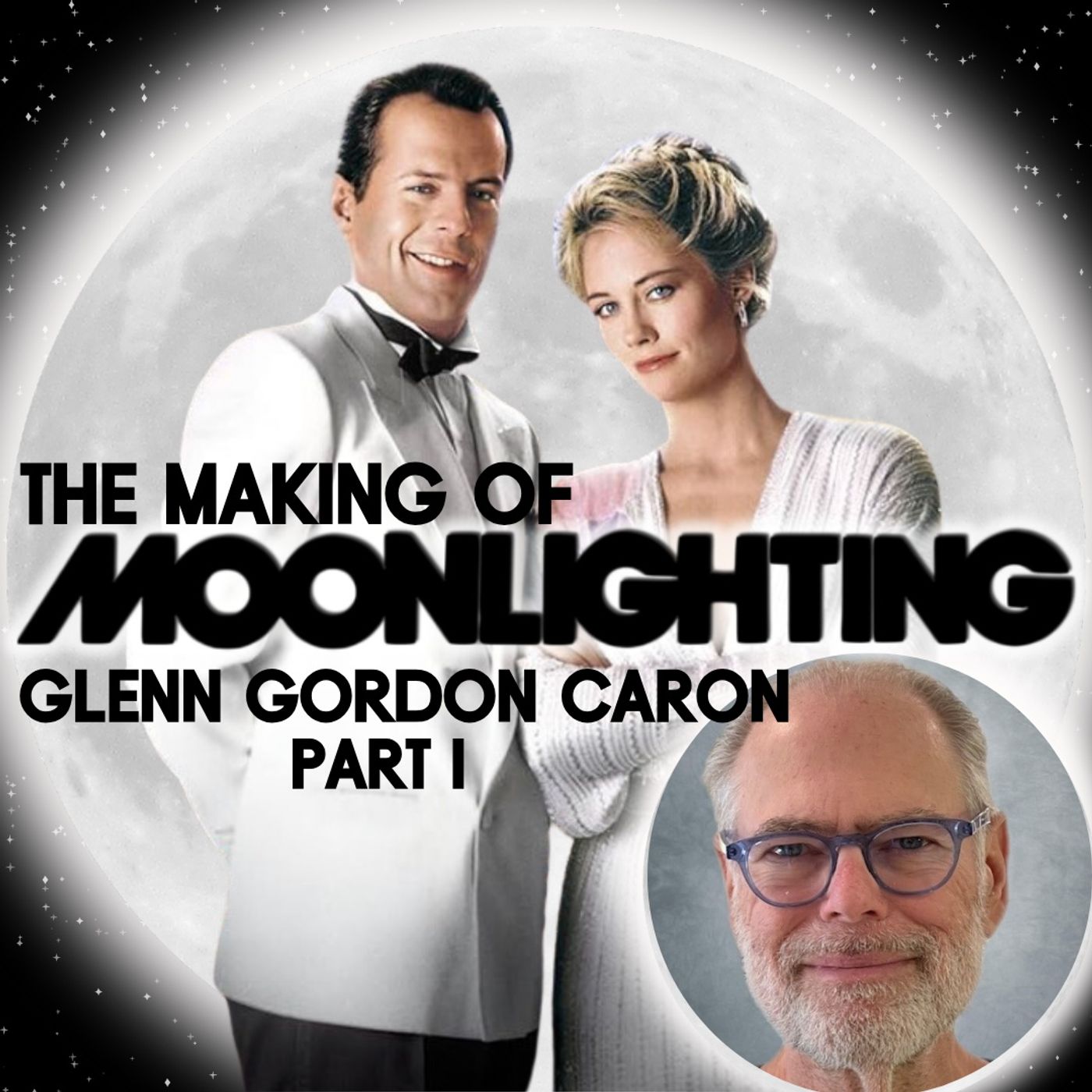
The Making of Moonlighting | Glenn Gordon Caron, Part 1
About this episode
Some walk by night, some fly by day… Susan and Sharon cross paths with legendary writer, director, producer and creator of the classic 80’s series Moonlighting for a rollicking conversation about David, Maddie, Ms. DiPesto – and everything in between!
Moonlighting ran from 1985-1989. It starred Cybill Shepherd and a then-unknown Bruce Willis and would become a landmark classic of 80s television. Tasked with making “one of those boy-girl detective shows” Caron agreed on the condition that he could do whatever he wanted. What he – and as it turns out, we – wanted, was Moonlighting. Glenn Gordon Caron has been a force in television for over four decades, since his first job on Taxi – followed by a stint on Remington Steele -- before going on to create the seminal 80s romantic comedy/detective series Moonlighting. Caron later went on to create the long-running Patricia Arquette show, Medium. Moonlighting is now streaming on Hulu.
THE CONVERSATION
- 300 SONGS in 66 episodes – the MANY hurdles of getting the music rights for Moonlighting for the Hulu broadcasts.
- Glenn’s first pilot turned out to be for a little actor named… James Stewart.
- Steven Bochco asked Glenn to come work on his new show, then called Hill Street Station: “I said no – this is never gonna go.”
- On the crazy tone of Moonlighting: “I’m showing the episodes to my youngest child, who’s fourteen. He’s come to believe that I’m mentally ill.”
- Cybill Shepherd signed on to Moonlighting -- after reading only half the pilot!
- On casting the role of David Addison: “I brought Bruce Willis in to audition eleven times. They rejected him ten times.”
- The role of David Addison’s brother was originally written for… David Lee Roth?!
- GETTING PAST THE CENSORS: ABC censors wouldn’t allow David & Maddie to say “frig”. But “fig”? Um, Okay.
- On being a maverick: “I was young and arrogant and didn’t care about my reputation. I would live to regret that.”
AUDIOGRAPHY
Watch Moonlighting on Hulu.
Check out the Moonlighting fan website, DavidandMaddie.com
Susan’s new play Confidence (and the Speech) has just been published! Now available for purchase and licensing at DPS via Broadway Licensing.
8TL EXCLUSIVE OFFERS!
Special 80s TV Ladies offer!
Invest in yourself at TheNextish.com - Get 10% off an already 30% off promotion on their newest online course that will help you chart a course forward: "Be The Disruptor" - Use code "8TL24" at checkout at TheNextish.com. Act now. Offer expires: Feb 15.
CONNECT
- Read transcripts and more at 80sTVLadies.com.
- Sign up for the 80s TV Ladies mailing list.
- Follow 8TL on Facebook.
- Check out 8TL on Linkedin.
- Get ad-free episodes and exclusive videos on PATREON.
- Find more cool podcasts at our host sight, Weirding Way Media.
Visit 80sTVLadies.com for more info.
Listen to 80s TV Ladies at YouTube. Subscribe and help us grow.
Don’t miss out. Sign up for the 80s TV Ladies mailing list!
Help us make more episodes and get ad-free episodes, video interviews, and exclusive content on PATREON.
Transcript
Automatically generated, so expect the odd misheard name.
Weirding, Wayne Media, Eighties ND so Pretty Babies, to the City and Dream and Getting God to the World. Welcome listeners to Eighties TV Ladies, where we explore female driven television shows from the nineteen eighties and celebrate the people who made them. You're your fabulous hosts Sharon Johnson and Susan Lambert had him Hello, I'm Sharon and I'm Susan. So this past October, a little dream came true for eighties television fans and eighties TV ladies fans. Do you know what that could be?
Sharon Bear's bear to bs B Susan, Yes, I do. On October tenth, twenty twenty three, Moonlighting began streaming on Hulu, and as of this month, it's now available on many streaming platforms for purchase. Moonlighting was a comedy drama detective ish show that ran March nineteen eighty five to May nineteen eighty nine. It starred Sybil Shepherd and the then unknown Bruce Willis, along with ELISEE. Beasley and Curtis Armstrong.
Moonlighting was in many ways one of the quintessential lady shows and one of the most bonkers detective shows to ever air. Some say it invented the modern television dramade. It was a detective show that sent up detective shows often less about the case of the week and more about the sexual chemistry of the stars, sparkling and yelling, banter and seeing just how far a show can go with breaking the fourth wall. Created by Glenn Gordon Karn, who was tasked by ABC with making one of those boy girl detective shows. He said he would only write it if he could do whatever he wanted, and he proceeded to do just that in five zeen seasons and sixty seven episodes.
Here's the premise. Sybil Shepherd plays former model Matty Hayes, who wakes up one day to find that her accountant has absconded with all her money. She is now broken in debt, and one of the few assets she has is a ne'er dowell detective agency that was designed to cost money and be used as a write off for her. The Blue Moon Detective Agency is run by David Allison played by Bruce Willis. He's a guys guy, a wise, cracking, fun loving wild man of a barely detective, but he convinces Maddie that if they become partners, they can turn the agency around and make money.
In most episodes, the cases in this show are almost irrelevant. It's all about the personal. Series regulars include a mostly background cast of office workers, with Elise Beasley playing the sweet, perky, often naive, and always rhyming receptionist Agnes to Pesto. Season three brought Curtis Armstrong in as Herbert Viola, a temp who becomes a detective and love interest for Miss de Pesto. But a lot of the show was the big swings between comedy and drama, most of all revolving around the will they won't they he she, don't Shay, fast talking Howard hoxeyan Bnter and Marx Brothers insanity.
There was big success, so many nominations, a few awards, behind the scenes, high stakes drama, TV stars having twins, other TV stars becoming overnight action movie stars, ninety plus pages of scripts, giant budgeted episodes, last minute changes, undelivered, late delivered, not delivered episodes, chaos, and somehow a lot of television magic. It was an eighties television show some thought might never make it to streaming, mostly because of the amount of music and music drops in the show, but now it has and we get to talk to the man behind the show. This one is very exciting for us. Welcome to eighties TV ladies, Glenn, Gordon, Kara. We are so happy to have you.
Thank you, thank you for inviting me, Thank you for joining us today. So shall we kind of start closer to the beginning Susan or shall we just jump right in the middle. Usually I go all the way back, but we're going to get to that. I want to talk about how you got this show to streaming. I am so excited that Moonlighting came to streaming.
I remember when you announced it in social media over a year ago. It was something I've been trying to do for about four or five years now, when I first heard that they were going to start Disney Plus the streaming service, and that was the original service. People don't understand this, but Disney owns the rights to Moonlighting. They basically have since they bought ABC. And I've been trying to get Moonlighting out there because the only copies that existed was sort of bad copies on YouTube, and whenever I would approach them and they'd say no, it makes no financial sense.
People don't realize, but we did sixty six episodes, and in the course of those sixty six episodes, we used three hundred songs. Wow. So trying to secure the rights to those songs again because they never got the rights anticipating anything like streaming, it's a herculean tesque. Additionally, we had to restore the show visually, and that costs quite a bit of money. So, you know, they said no for a very long time, and I kept thinking, wouldn't this be great programming?
And you know, not knowing what Disney Plus was going to be, wouldn'tess be great programming in the evening when children are no longer watching and parents want something for themselves. But nobody was buying. Then finally about it was a little over a year ago. Suddenly there was a change in attitude and they called me and said, you know, under certain circumstances, we would be willing to try and do this if you would agree to this and that and that and this and blah blah blah. And I said, sure, yeah, I very much wanted it, simultanue not to bring everybody down.
I had known for a period about two and a half years that Bruce was going through a bunch of health challenges, and my concern was he really wanted to see it on the area, wanted his children to be able to see it in a pristine way, and I was just afraid that we weren't going to quite make it. And truthfully, I'm not sure we did. But it means the world is families, families watching it and all of that. So there were all these different things it sort of came together. I hate to see this.
I think COVID was a factor. I think, you know, COVID is one of the reasons that Disney Plus took off the way it did, one of the reasons that Hulu took off the way it did. Obviously, Disney buying Fox, which got them access to Hulu, mattered, And now they're discovering that by resurrecting other shows that have been lying to orm, they're actually doing quite well that this is something people are anxious to see. A long answer to a short question. But that's the cliptum version.
Well, long answers are are great, and that's what podcasts are for, as far as I'm concerned, so we can get the full story of whatever it is we're talking about. So tell us what involvement of many did you have in the process of restoring or other production issues related to getting it available for streaming less than I would have liked. But part of that was due to the fact that there was a writer's strike and I'm remember the Writer's Guild of America and Disney didn't want to do anything to seem to flaunt the rules of that strike, and I didn't want to do anything to flaunt the rules of that strike. And we had a timetable that had to be mad, so we so often somebody would whisper in my year and say, sort of, here's where we are, here's what we're up to.
But I did not see much of anything till the very very end, and I didn't hear much of anything because they had this, as I say, secure all these music rights, and a lot of people don't understand about that. Can't compel people to sell you the rights to their music. You also can't compel people to sell you the rights to their music for the amount that you're budgeted to spend. And when you're going to them and saying, hey, we're going to relaunch the show and all this kind of stuff. To a certain extent, you're saying, we have a gun to our heads.
So it's a very complicated process. And so what Disney did was they brought on the same team that does the music or licenses to the music and helps select the music, the music supervisors that worked on the Marvel films for them. You know, people will ask me, you're happy with all because they had to make some change. I mean, we knew we weren't going to get the Rolling Stones. We knew there were things we knew we simply couldn't afford, you know, in the current world.
And given the money that Disney was giving us, and by the way, they've been giving us a lot of money. It's not that they were being cheap or anything, but I felt like I was in pretty good hands. People ask me, are you happy with all the music? And I would say overall, I am. I said this time, my heart's going to be broken, you know, eight or ten times over the course of the sixty six episodes.
There are music cues that are very important to me that we just couldn't make happen. I'm not sure they'd be important to anyone else. The really important stuff, for the most part, we were able to get and they bent over backwards to get They sacrificed other things to be able to afford it. But there are some fairly minor changes, mostly in incidental music that plays deep in the background and that kind of thing. And what they did visually, you know, was storing it, making it high death and all that.
I thought they did an astoundingly good job. But the main thing is I'm just happy that it exists, that it's out there, because for almost two decades it wasn't. Yeah, I guess for like the episode Big Men on Mulberry Street, they kind of had to get that one well, and they went out of their way, not just to Big Man on Mulberry Street, but to get some other Billy Joel music that was featured in the episode. No, they were the people who did this were for the most part, really reverent about it. First of all, they were fans.
They couldn't tell me enough how much they cared and how much they wanted it to be as close to what was originally broadcast as possible, but some of that wasn't possible. Unfortunately, we were actually able to correct some mistakes that were made when it went to DVD, you know, when it went to DVD they left out the William O. Teloverture in a Lady in the Iron Mask I think it's called, and the whole sequence was cut to the William telloverture. So in the past there had been mistakes and things that we were able to show up when the DVD set came out. I want to say in season four they actually had the episodes.
They had the episodes in the right broadcast order, but they didn't have them in the right story order, and people go, how is that possible? And I had to explain that was during your period where we never had Bruce and Sybil at the same time. So because Sybil was pregnant and was giving birth, Bruce first had a shoulder injury and then was doing Guy hard, there were a bunch of a bunch of things going on, so the episodes were sort of pieced together and not always in the way that made the most sense. And when they let them out on DBD, they just duplicated the broadcast order, which was basically, do you have an episode ready? Glenn, I said yes, and they put it on television.
We were able to get it back to the story order, the intended order of the episodes a lot of nice little touches like that. I love that. I was just thinking about also when you were talking about how carefully the sound and the music, it sounds really good too. And I have to say this, not all the streaming shows from that era sound that good, So I appreciate that somebody took time with the audio. And what's all the overlapping dialogue, it's really lovely.
Well, the overlapping dialogue is actually recorded as I mean, I used to make people crazy because we would record it as I knows. They would say, Okay, we're gonna we'll do Bruce's side, and Bruce will say his lines and then Sybil don't say anything. Well, no no no, no, no, no no no no, that's not what we're doing. And we would actually film it that way and record it that way, and it gave it a kind of energy that otherwise wouldn't have. And also as actors, I think it was easier to execute that quite frankly.
But it was recorded basically in mono. I remember pleading with them, can we please make the show in stereo. It's right around the corner, We'll come in to stereo and no, so it's recorded in mono, so people had to go back in and sort of split channels and do all kinds of interesting things to make it so that people it wouldn't sound like it was coming out of a mousehole on your HDTV. You're you know, five point in one alby speaker systems and stuff. But it makes me very happy that it's out there.
And some of these shows I didn't look at for almost thirty years, so it's kind of great to revisit them. And now I'm showing them to my youngest child who's fourteen, and he, you know, he's come to believe that I'm mentally ill, but at least he has a full picture understanding of the mental illness of what, yeah, exactly, and that'll come in handy later in life for him. So no, it's just been very exciting. And I've spoken with everybody. I've spoken with Civil, I've spoken with the Lease, I've spoken with Curtis, and you know, they're all thrilled because it's a significant portion of their legacies too, you know, and Jay Daniel who produced with me, and many of the directors that worked on the show, and some people obviously are no longer with us, but a lot of them are, and you know they've reached out to say how happy they are that it's out there.
Well, we're happy to We have so enjoyed looking back on these shows and seeing what holds up, what doesn't, what is is so interesting, and this one is extremely interesting and such a times capsule and such a groundbreaking show. I think community wouldn't exist. I realized watching this without your show, all right, So I want to go back to the beginning for you of like how you got started in television movies and what made you want to do that well, And I don't think people are aware of this. When I was eleven years old when I did move Lenning, Wow, yes, that makes prodigy. You know.
Once I once I figured out left to right, I was I was ready. No, I, like a lot of people, I grew up watching TV and movies. The truth was, I was a big snob and really wanted to work in the movies. I came of age during that fantastic period of American cinema where literally every Wednesday, a seminole film came out. You know, whether it was Robert Altman or Mike Nichols or you know, it was just one after the other.
And I grew up on the East Coast, very modest household, so the possibility of making movies, of working in the film industry seemed like a really distant thing. But I was very, very lucky. When I went to college. I started writing screenplays because it was the one thing I could afford to do. I couldn't afford to rent a camera.
I couldn't afford to rent a navel, which is how you recorded soundback then, but I could afford to learn to type, basically, So I started writing screenplays as best I understood what a screenplay was. And somebody I graduated with was working as an assistant to Alan Arkitt, who passed away recently, and gave one of my scripts to him, and he said, hey, this is pretty good. And so I felt like, okay, what I'm doing worth it because I was working in gas stations and movie theaters and then I would spend every spare moment writing And then finally one of my scripts got to these two young fellows who were working in New York and they called me and said, hey, this is pretty good, which you write something for us.
So I wrote something for them and then didn't hear anything for a very long time. And then they called me again, but this time they called me from California where they were working for a guy named Fred Silverman, who was the head of NBC at the time. One of those young guys was a guy named Steu Chezloh. But the other guy was a guy named Warren Littlefield. And if you know your history of television at all, Warren went on to be the president of the network and presided over all those great Thursday night shows that gave birth to all those Thursday night shows, you know, Friends and Cheers and er and you know, extraordinary guy.
But anyway, they were working for Fred Silverman and they said, hey, Fred has an idea for a show. Can we share it with you? They told me the idea. I truthfully didn't like the idea, but I soon to be white if I was living with, said, don't be ridiculous. You have to go out and have a meeting about this.
This is how naive and cloister to life. But I said, well, how do I do that? And they said, you get on a plane And I said, well, who pays for that? Because that's making like one hundred and twenty dollars a week. And they said you do and I said, oh.
And my wife said, put it on a credit card and we'll figure it out. And oh, I said, yeah, but what about work. I would have to miss work. She said, we call in sick. And I said, but that would be lying.
That was the sort of idiot that I was. I got on this plane and I was in the fetal position from New York to LA I had never been on a building that flew. This thing seemed enormous to me. I got to California, took a cab from the airport to NBC. I thought every place was like New York.
You know, everything was, you know, twenty five minutes in a cab and it wasn't wipe me out money wise. Got there, and of course I was convinced when I got there that well, what happened is I'd go up to the guard at the door and I'd say, my name is Glenn Karen. I have this meeting, and he'd say, I don't have you on the list, and I'd fly home. But that isn't what happened. I went in and I had a meeting.
Warren was there, and Stewart were there, and so were these other young people who went on to be People of Consequence, Brandon Tarta Cough and Dick Ebersol. And they looked at me and they said, where do you live? And they said, oh, I lived in New York on twenty seventh Street between seventh and eighth. And they said, oh, that's a shame, because if you lived out here in California, we'd send you. Owed me.
You'd write this a little story. If we liked the story, maybe we'd let you write a treatment. If we like the treatment, maybe we'd let you take a crack at the script. And the meeting was over lasted about two minutes, and everybody started to stand up, and as they stood up, I said, you know, if you let me do it, here's what I do. Mind you, this was an idea I didn't like.
And I started talking and I did not stop for an hour apparently. And when I was done this, you have a deal. It was as crazy as that. And I wrote this pilot. And when I was done writing it, James Stewart, Jimmy Stewart, said I'll do that role.
If you can make it like so it's a day or two days a week, I'll do that. And so they changed this role that I'd written to accommodate him, which was a great thing. And the script was completely rewritten by a producer at Universal, and they shot the pilot and the pilot didn't go, but my original script started to make the rounds. I'm curious what the idea was for the pilot that you didn't like that you wrote. Oh, it wasn't a great idea.
It was called the God's Squad. And this was sort of in the shadow. If you remember, Warren Bady made a movie called Heaven, a wonderful movie called Heaven Can Wait, and the idea was that three people would die they go to heaven, and God said to them, if you go down the earth I'm thinking on Tuesdays at nine o'clock, and you each do enough good deed, say about seven years worth, you will find a place in heaven. Seven years would have given us over one hundred episodes. That's what I think God was trying to get at them.
And I just thought there was the stupidest thing I'd ever heard. But I wrote it, and you know, people seem to like it. We liked it enough to film it anyway. But Jim Brooks read it and he was putting together this new show called Taxi, and they invited me to do some scripts on Taxi. I did one script, which was well received, and then I got offers to do other things.
And at some point a name has kind of been forgotten. A gentleman named Steve Tassi who won the Academy Award. He wrote a film called Breaking Away, wonderful film. He was asked to turn Breaking Away into a television series and he reached out to me, I have no idea why, and said, will you help me with this when you get involved with this? And I said sure, because I really didn't want to do what was called three camera comedy.
I wanted to do filmmaking, and to me, breaking Away was filmmaking. Long story short. They hired some other people too, who were much more senior than I were, but they all sort of fell away for one reason. One had a heart attack. They were a bunch of things, and suddenly I was sort of the only guy left standing.
And I was twenty some years old, and I had never produced a television show, much less one that was being shot in Athens, Georgia and post produced in la and Bubblus. It was really baptism by fire, but I did these six or seven episodes of Breaking Away for ABC, and when it was over, they said, hey, we'll give you three pilots, a three pilot commitments. You go out and form your own little company. That would you consider that. I didn't even really understand what they were suggesting, but my lawyer said, this is a very good opportunity.
Is should take it. So I did. So we did literally did these three two hours There were two hour movie the week pilots. The third one was Moonlighting, the third wound was Motlelighting. Because the first two that we did, which I'm still very proud of, was very very ardy.
I think I think they were just two arty for the room, if you know what I mean. And you have to understand the times too. ABC used to be called Aaron's Broadcasting Company because Aaron's spelling pretty much dominated the schedule. And I take my hat off to him for being as prolific as he was and as successful as he was, But the kinds of shows he made were of no interest to me as a twenty se year old man. In no way reflected life as I understood it.
So I had no interest in doing those kinds of shows. Who are making those kind of pilots. In fact, when ABC said to me, for your third pilot, since you blew the first two, the third pilot, you're going to do a boy girl detective show. And I went, oh, I hate those The made me do that and they said no, it'll be like hard to heart and I said, oh no, please. You know I had done a season of Remington's Steel.
I was going to say, you had just done Remington Steel, or you were doing Remington Steel. No, I had done Remington was the interesting thing. None of this will reflect well on me. Stephen Boschko would come to me. He created this called Hill Street Station and showed me the pilot that he'd written it with Michael Cozle, and it was directed by this guy that I so admired, Robert Butler, and he said, come on, do this with us, Produce this with us, write this one.
And I looked at it and I said, well, it's never going to go. And he said what do you mean. I said, well, first of all, you're killing the wrong guy because they killed Charlie Hey. There was a bunch of things. I said, but this is never going to go.
So I turned it down and I had already alienated myself. Bruce Paltrow had asked me to write an episode with White Shadow, which I did and was about corporal punishment. And when I handed it in, she had a lot of notes and I didn't think it's notes so very good. And I told him I didn't think they were very good. And I said, did you go to a public school?
And he said no, and I said, I went to a public school. I was corporately punished constantly. You know, corporal punishment is physical put people who hear it today and they go it sounds like it's from a Dickens book. But you know, if you were an idiot like I was, they would take you down to the gym and they tell you to bend over and they'd paddle you, and they weren't kidding. I went to an elementary school that was run by nuns.
Yes, and if your wooden desk or your wooden chair fell over one too many times, they'd make you carried around the school on top of your head. And then there was also the rulers and the I remember seeing a kid laying on the floor being kicked by the nuns. So yes, corporal punishment wasn't and hey, Bruce wasn't going to have me on the whit channel, and suddenly I found myself without a place to be at MTM, which was the place everyone wanted to be, and I had sort of blown two opportunities. And then they came to me and they said, we have this other show. It's it's not typical of our shows, but you might want to get involved.
And it was Remington Steele. And for me, the primary to get involved with her, I mean, still other than the fact that it was an MTM show, was Bob Butler had directed the pilot, he also having directed the Hill Street Blues pilot. He was someone I very much wanted to learn from. So I said, yeah, I'll get involved with that show. And it was really great that I did, because I did get to know Bob quite well.
He ended up directing the first three pilots that I wrote, including Moonlighting. I got to be very very close with Pierce Brosnan. We're still well, not close close, but I mean I just saw him a couple of months ago. It isn't a real education, you know, in that sense. I did thirteen of those and then ABC called I had written a pilot for them, and they had suddenly decided they wanted to do it, and that's what started my relationship with ABC, the three pilot things, So that's sort of how it started.
So they said, you're going to do this show, this boy girl detective show, and I, you know, moaned and told him I wasn't the right guy and I don't wear along the way. They went, Look, you can do it if you want with it, but that's what you're doing. And all I heard was the you can do whatever you want with it and sort of made that my mantra, and in my arrogant mind thought, I will write a boy girl detective show that kills this stupid genre. Because, for the life of me, if you watch television back then, and this is the early to mid eighties, you would think there was a detective agency on every corner. They were everywhere.
And I had in my life never seen one detective agent, not one, you know, like it wasn't like you drove through acme detective agents and that didn't exist. And I thought, somebody needs to put a knife through the heart of this sh and that was your job, that was my job, you know. I think, frankly, a big part of why it was allowed to be. What it was for a long time was that they didn't care because frankly, they were watching the spelling shows. I don't think they really thought it was ever going to go anywhere.
You know. I did end up bringing Bruce to audition eleven times. I mean they were rejected in ten times, which was difficult on both. And I never really brought anybody else. So they would bring people for me to see, and I'd say no, no, no, no, no no.
We had Sybil. Sybil came on. I'd written half the script and realized I was sort of writing Sibil Shepherd and my agent put us together. We had lunch, she and I and Jay Daniel, who was my producer line producer, and she said, this is really good. If the other half as good as the first half, I would do this because you know, this is a hawk see in comedy.
I had no idea what she was talking about, I mean none. She was saying, oh, it's like a Howard Hogg's comedy, but I did not understand the reference at that point. But finding somebody to play Bruce's role proved to be really, really difficult. In fact, at one point they were saying, we're just going to pay everybody off and not make the show because it's uncastable. And I heard that there was in one of the interviews, you said, you guys saw thousands of people.
We saw three thousand men. Yeah. I didn't personally see three thousand men. But Ruben Cannon, who cast the show, set up offices in New York, Chicago, in Canada, in Toronto. I believe we had like seven different casting offices looking for this guy.
And then they became so convinced that this was a disaster in the making that they fired Ruben over my wishes and brought in this other guy who was a very famous casting director who didn't understand what I was looking for at all. And I want to say, finally, after two weeks, I was able to get him replaced and brought Rubin back. And they actually brought in I remember we had casting session that must have been fifteen guys. I want to say, who's the guy on HBO. Bill Maher came in, you know, pretty much anybody who walked and talked.
But Bruce came in and I saw him, and I I he was just galvanized by him. I thought he was amazing and when he left. I was talking to the other people saying, oh my god, I think that's him, and they thought I was talking about the guy before him. I said no, no, no, no no, and I went outside and I ran down Piko Boulevard to try and stop him because he came to California to audition for desperately seeking Susan for the role that Robert Joy ultimately paid. And he was really punked out of me.
His hair was, you know, and he was wearing ear rings, he was wearing camo and all this stuff. I said, tomorrow, how about we don't do the earrings, Maybe we don't wear the camo, because I wanted others to see what I had seen, and I could see they were put off by that. Just the look of him, right, yeah, he looked so radical, you know, in that moment. And again it's ABC. So he did that, and then everybody started to get on board.
From my team and from ABC's team. They didn't get on board. I don't know if they ever got on board. To be honest with you, the good news was the excuse they used, as they said, he's not a leading man. No one will believe him next to Civil Shepherd.
He's not a leading man. And I said, I gotta tell you when I bring him over here, because ABC had this huge headquarters in Century City, so it's like a ski lodge. Wallace would and you would. I'd walk him down the hall and back then they were called secretaries. They'd be rose of secretary and the secretaries would go the circ not you know, it wasn't it wasn't casual, it wasn't subtle, it wasn't nuanced.
It They were clearly having a visual reaction to this stranger because Bruce had so much swagger and so much there's just you know, I always say, Shabba Davis. He's so clearly put that out there. So anyway, I took him in the eleventh time. For the eleventh time. They were about to dismiss him, and finally this woman named Anne Daniel, and she was there were not a lot of women that ran ABC at that point.
Again we're in the this is now nineteen eighty four. I think, interesting choice of the air and this woman and Daniel finally stood up and said, look, I don't know if he's a leading man or not. I don't know if he's a television star or not. She said, but he sure looks like a dangerous to me. And the air went out of the room.
All these men were just you know. And finally the head of the network, Tony Camoppolis, turned and looked at me and went, okay. It was like he was he just didn't want to have to go through this process again. And I refused not to bring Bruce back. And he said, okay, then you can do it, but don't let them get romantically involved.
No one will ever believe that. And I said, okay, And on that note, let's take a break. This mess bhich is brought to you by thenextish dot Com. We are living in a time of incredible change. The Next Dish dot Com is a company that trains innovators to be ahead of the game through courses that help you create in demand skills every professional should know.
Just for eighties TV ladies listeners, they are offering a special promotion, an additional ten percent off it's already thirty percent off promotion. Use the code eight t L two four at checkout when you purchase their newest online course. Be the Disruptor, and the Next Dish dot Com offers a risk free thirty day trial. The course never expires, so you can come back any time you need a refresher. This special offer just for eighties TV ladies listeners ends February fifteenth, twenty twenty four.
This is the year to invest in yourself and we're back. Ooh so exciting. Continue And he said, okay, you can do it, but don't let them get romantically involved. And no one will ever believe that. And I said, okay, I lied, And I thought, did they read the script?
I mean, they can't romantically the whole backbone of the thing. And so we just did it. Very lucky. I mean finding Bruce was providence. That was really extraordinarily lucky.
He says, extraordinarily lucky for the both of us. But truthfully, I believe had it not been me and my show, someone would have come along and said, hey, this guy is quite something. The thing that I like to feel I did that might not have happened as quickly. Is Use's got instinct at that moment in his career was to play tough. And I was like, no, no, no, no no no, we're not doing that.
We're going to lead with our arts. I said, you get that done when you walk in the door. You don't need to add to that. I said, stop leading with your lead with your heart a little bit. I said, that will make all the difference.
And he got it. He got it right away. The other thing was, Bruce is fundamentally musical, she really is. He thinks musically. So he understood the dialogue and understood that the dialogue was fundamentally musical, that had a very specific chadence, and that it served a very specific purpose and that you couldn't mess with it.
He sort of had to embrace it, and he understood the references that we had the same references. She was the three Stooges hapving in castello, all this stupid stuff, you know, bugs, bunny cartoons. It was really, really wonderfully serendipitous that we sort of found each other. You mentioned earlier that you thought that the way that you were going to approach this show was going to kill this genre. Can you expand on that a little bit about what your point of view is going to be and how you were going to well, just it's ridiculous.
I'll give you an example. We did a scene very early on where you know, and these are inevitable and detective shows. They go to see somebody. The person isn't own, the house is locked, they need to get inside. There's some piece of evidence they want.
Typically a detective show, you're supposed to dream up away where this clever detective picks a lock or does some stupid thing that is a foregone conclusion. Obviously they're going to pick the lock, or you don't have a scene. If they can't pick the lock, we all have to go home. So instead of doing that, what I did was Bruce's simple approach that for they realize the door is locked. He looks at her.
She's got a bobby pin, she says, she goes huh, and he reaches up and he takes a bobby pin from her hair. He sticks the bobby pin in the lock. And so you stay the bobby pin. Then you pull the bobby pin out, just say the bobby pin in, and you shake it all about. You do the oky poky, and then the door opens.
And ABC called me said they said you can't do that, And I said why not? And they said, because no one will ever take the show seriously. I said, I don't want anyone to take the show seriously. They said, all your Jeopardy will be gone. I said, what Jeopardy.
They said, well, they might be danger behind there, don't They might get hurt, they might get killed. I said, they're on a television show that has to come back next week. Everyone knows they're not going to get killed. They're not even really going to get hurt. It was like talking to a religious ze lot and explaining to them there's a possibility that some of these things that you old as closely held truths may not be literal truths.
That's what I mean by that, and by the way, very arrogant point of view to take. I recognize that now, but at the time, I mean I remember thinking, I know what William Goldman was doing when he was writing Butchcasts and in the Sun Dance Kid. He wanted to say, is there any more to say? You're really going to watch a bunch of cowboys anymore? Once you have those cowboys acknowledge how un serious and I mean, you've got Robert Richford and Paul Newman running around the West and going I can't swim, and all these silly things that dared you to them because they were acknowledging these sort of silent truths that you had said to yourself when you win and watch these silly movies.
I meant it in that way that if you could sort of peel back the veneer a bit. And of course probably the height of that was at the end of that first group of six shows, they have to get into an event that's being guarded by like CIA guys or something and said they're not allowed in. There's a guy standing here at tuxedo and he won't let them in. And they realize you've got to try and draft his help. So Booth says, hey, if you've seen a man with a mole on his nose and the guy answered that, They said, a molan his nose, bousas a molan his nose.
Now do you suppose this man with the ball and it turns into this whole long Doctor Seuss thing. I mean, ABC called me you would have thought somebody brought a bomb into the building. They said you can't do that, and I said why and they said because, and again they gave me the whole thing about Jeopardy and blah blah blah. I said, does it make you laugh? They said yeah, I said, being entertained, They said yeah.
I said, you give a hang around for the commercial they said yeah. I said, so, then what because they didn't quite understand. And I understood that because I was much younger than everybody else, and I honestly thought, we'll do six of things and then they'll show us the door and I'll find something else to do. And it was interesting because it was the advertising community the first said, well, we really like that. Run that again in the summer.
We want to beyond that, in fact, renew that, because there was a lot of pressure not to renew the show Meracklely, when it first came out, ratings wise, it didn't do that well. It was I think number sixty three among shows, which is pretty low down there. So it took a while. In fact, here in La course, you guys are from La so. But that time it was a very powerful critic who reviewed television shows in the La Times, Howard rozenberg End.
When Moulight premiered, he ran out of review and the headline was Beauty and the Beast. The beasts, of course referred to Bruce Willis, and he basically tour the show bar so this is a horrible show, horribly acted, horribly written. And then three weeks later he wrote another review and he said Okay, I didn't get it. I get it now, And I think for a lot of people that was the process because it didn't sound like other shows, it didn't look like other shows, and it didn't behave like other shows. It was much faster in terms of the you know, we would put out ninety one and ten paced scripts and then shoot them and then we'd be fifteen minutes short.
You know, I would do these silly little openings. Well, I do have a question about the sillily opening. I think it's the first episode of season two where you have the intro with David Maddie saying, we're running short and so we have to talk for a few minutes. Right. That seems like the first time you literally break the fourth wall.
That was the first time we had the time when we were doing the other six, we were so far behind schedule that basically we would just put them together and you know, they showed them. I also, I didn't want to have the philosophical conversation with ABC. I was just you know, weary of that and the idea of these characters talking to them or directly to the audience at the top of the show and acknowledging that it was a show that felt like it would take a few hours, but at the beginning we handed in the show and they really love the show. I want to say that was the one with Charlie Rockett that he plays Bruce's brother. It's brother Can you spare Rod?
Yes, which I wrote, here's an ego. I wrote it for the lead singer of Van Halen, David Lee Roth. David Lee Roth, that's who I thought Bruce's brother would be. Oh, I knew no, batter. I just thought I'll write it and he'll do it, and that'll be that.
And then of course he didn't know that was my plan and said no, and Charlie Rockett did did I thought a terrific job. But we shorted to the network because it was the first episode of the season. But this is great, and I said there is a problem. I said, but I know how to solve it, and they said it's the problem. I said, we sure, I know how to solve it, and they said, oh right, go solve it.
At that point, they you know, they had sort of faith, so enough people had told them that this thing worked that they had faith. So we did that opening and a lot of that stuff was born of necessity. You know. I'd like to tell you that that it was part of the original vision, but it wasn't. We were short, and it was the quickest thing I could think of, and the most efficient thing I could think of, and the funniest thing I could think of to remedy the problem.
Truthfully, it was meta before meta was cool, like it was. It's so meta, yeah, but nobody knew what meta was back then, including may so you know, and frankly what I thought of, because then there was a lot of conversation about a lot of people wrote it backs they're breaking the fourth wall, and I thought, do I dare tell them that? When I was a little boy and I would watch black and white reruns on TV, on the Burns and Allen Show, they would break the they would talk to the audience. On the Old Abney Costello Show, they'd come out at the beginning in front of a curtain and they would talk to the audience. And the reference that meant the most to me was if you watched any of the road movies with Bob Hope and Bing Crosby, they would turn and talk to the audience to talk about how it was a paramount movie.
And they weren't being paid enough and all this stuff, and I just always cracked me up, and I thought it was funny. I wish I could tell you that I was this visionary, but in my mind I was just somebody once sit steer from the best, you know, That's what I was doing. I was trying to do anyway. So after the first season, did you begin to feel emboldened to try things? Yes?
Yes, That's why the second season in many ways is the most audacious, because it was like, you know, an idiot unbound. Bruce would come in, I mean, what do we want to do this week? Boss? And I said, let's do a boxing show, Let's do a musical, Let's do this, let's do that. And also the public was starting to pick up on the show, and the entertainment community was starting to pick up on the show.
So you'd get calls like from Phil Ramone would call and say, hey, Billy, Joel wrote a song for you, a show you what what? And I'd been looking for an excuse to do storytelling through dance. So I mean, and that's all I heard was here's the song, and we can do storytelling through dance. I'll construct the whole episode to support this idea. I had always had the Shakespeare idea because Shaming of the shrewd in any ways, was the inspiration for the show.
I had seen it. It's Central Park with Meryll Streep and Royal Julia and my first wife had done it in college, so I saw a number of times there and it was just very much front of mind, and whenever I saw it, I thought, boy, if I could figure out a way to get this dynamic into a modern iteration, it would be terrific. I wasn't thinking detective shows. I wasn't even thinking television, but I just thought, this is a fantastic piece of music. If I could just make it my own in some way, I think audiences would be very entertained.
So that's where that I mean. Most of those shows from the second season were sort of like ideas that were just uncorked, you know, that had been living in me. A couple came, like the black and White show, The dream Sequence, Dream Secrets Always Drings twice, Carl Sorter and Debbie Deborah Frank. Is that what you're talking about, Deborah Frank, He's a wonderful woman. Carl passed away pretty much while we were doing now WHI we were doing that episode, but while we were still doing this series, he died at the a aides.
She was very tragic, obviously, but anyway, they pitched this idea for a black and white show, and then I, because I can't leave well enough alone, said what if we do two different kinds of black and white? And it was a wonderful premise, and again we went to ABC, so we did this show, it's gonna be black and white and were no, and we said yeah, They said, you know what, ye don't meet in color? And then we'll take the black and White album. We broadcast it and I went no, no, no, no, no, no, no no no no, I'm not that big an idiot. But then we couldn't find any labs to develop the film because nobody developed black and White then, so it turned into quite an undertake, much bigger undertaking that I think we realized when we started, in addition to all the musical numbers and the period dress and you know, but I'm so proud of that episode.
It's a beautiful, beautiful episode. I mean it's and so many wonderful references like yes, yes, Sybil is great in it. And Burr's is great in it. But you had an introduction on that show too, Yes, so here's a weird story. So now we have the episode and ABC looks it and they go, well, this is amazing, but we need someone to tell the audience that their TVs aren't broken, or you know, to set it up.
So I thought, what about Orson Wells And thought I knew that Sybil knew Orson well said Orson having lived at Peter Bogdanovitch's house for a long time. So and we have different recollections about this. So for a while Sybil was not a happy camper on the show. The show was a lot of work, and I think much more work than she had anticipated. I think when you make movies, particularly in the eighties and in the seventies, television's thought of as this sort of minor league team.
So if movie making is hard, television can't be nearly is hard because it's it's a much more so. And of course we were doing I mean, she would come in and go, I am a Pantameter, why why do we have to do it? Pop? Yeah, So anyway, said we want on a great basis at that point, and I said, hey, could you reach out to Orson Wells from it? She said no, but I somehow got out his number.
I don't remember how I got this bird gosd Branna called him because I would call anybody back then, and he said the phone, and I explained who I was and what I wanted to do, and he said, send me the script for what you want me to do and if I like it, I'll do it. And at that point I hadn't written anything. So I wrote this thing, you know where he talks about monosyllabic monophonic experiments and get the kids and the dog and lock them in the basement and come watch Moonlighting and blah blah blah. And I thought, well, see the worst that happens is he says no. And I didn't really think we were going to get Orson Wells anyway, so sent it to him and he called back he said I'll do this, and you know, I was sort of startled.
And then Jay came to me J Daniel and he said you have to direct this and I said why and he said, well, you know, Orson Wells has a reputation for being a very unfriendly human being, particularly unfriendly to directors. There was a famous tape that was going around on a wine commercial that he had done Rescreams at the and it was an audio cour It's like a radial coercion and he just eviscerates the s guy and he didn't have a great reputation. So I said, okay, I'll do it. And I had come up with a thing with the prop guy. I said, if I think, I said, if I tug on my ear at the end of a take, dropped something, so we haven't reason to shoot it again.
But it was completely unnecessary. He was just so wonderful, I think, authentically sort of thrilled to be a part of something there at that moment, and it was considered to be very modern, very in the moment. And the sound stage was like three hundred people on the sound stage, mostly young people, you know, up in the flies and stuff. Everybody wanted to see or soon wells. And you knew he wasn't well.
I mean, his feet were enormous, and so he had galloped all this stuff and he had been wheeled in in a wheelchair. He remember he drove up somebody drove him in this huge Pontiac Bonneville, you know, with big Doors and ach Man and but but I never needed to ask him to do another. He would say, would you like another? And I go, oh, that would be great, you know. And then when we were done, all these people sort of changing forward, the surrounding him, and I'm going to get all the names wrong, but I mean, like, I would approach him and he'd say, mister Wells, my name is Johnny Smith.
And he goes, Johnny Smith any relation to Bub Smith? And he go yes, on his son, and he said, Gubb worked on the Magnificent Anderson's with me, And you just thought, I mean, it was mind blow for me, who never thought I'd even be allowed into California. The idea that I was on a soundstage and yelled action and cut when Orson Wells was also on that soundstage was mind blowing, and that all these people had come to sort of it was like a religious expergence. It was just amazing. And then we put it in the show and he passed away before the show was even broadcast.
So we put a little thing at the end saying, you know, tonight's show is dedicated to the memory of Orson Well you know. And it turns out so after a fashion I was the last guy to direct orson Wells. I ended up directing movie years later with Katherine hepburn And I was the last guy to direct Katherine Heppern or was my first wife. Like to put it, I was the kiss of death for a great many, great great motion picture figures. Oh wow, okay, good to know there you go.
Oh my god, Okay, At what point did you feel like I found the rhythm of this show? Did you know you had it at the beginning or did you like were you no? I didn't know how far I could push it, like on every front. I mean, in the pilot where the lease, Beasley brings Sybil Shepherd in to meet Bruce Willis. She brings him in, the door opens, Bruce Willis is in his office playing sort of basketball.
He's got a waste basket that's up on the hinge of the door and he's throwing maybe waddled up paper or a nerve ball. I'm not sure which anymore, but anyway, and Lisa and Sybil come through the door. The door opens, and of course the waste basket falls. It falls on at least Beasley's head, and no one acknowledges it. She comes in and so she's now got a waste basket ahead and she says, oh, yes, Dave, this is half foolitch he ran and Bruce looks, he goes look at a little pale today in Mi Sebesta, And and Bob Butler, who's the director, turning me with Glenn really and I said, yes, it's funny.
I think it's funny. And then we would do a scene and Bob, by the way, was amazing. I mean he was the first one to say we should all sit down and watch Howard Hawks, not bringing up baby but his Go Friday because he knew that pace was important. But while we were filming, I would say to him, let's do another faster and you go glad. We can't go any fads it please, And invariably the fastest ones were the ones we used in the pilot.
I had read this book that Frank Kapper was sort of my hero. People don't even talk about Frank Kaeper anymore. He's an amazing filmmaker, yes, and he made He's wonderful. He's really the father of the romantic comedy in many ways. But he talked about that he would try and get things as fast as possible because the screen caught them by half.
Something happened in the alchemy of the film that it made it comprehensible, but the speed gave a lift that otherwise, you know, you don't want to get into my Really, I can get very obnoxious from all this stuff anyway, So on the Pilot and the Pilot probably heares closest to a conventional boy girl detective show of anything else we did, because it was still me trying to sort of get past the ABC guards and seeing what I could get away with. That scene was one of those scenes. I remember thinking, Okay, everybody, hang on to your hats because you know, they may tell us all to go home. But it was really important to me. The guy the doctor walking with the lobster bib who's dating Sybil, and you know, because you know, again everybody's looking at you, going really really you know, Bruce talking about his bikini underwear.
I mean, it's just you didn't do that on shows that didn't have a studio audience, where the audience wasn't aware of the art of this. So when did I really feel like, Okay, I can do anything I want. Probably the mole on his there were a lot of like different moments at the end of the Lady and they are in mask when you've got Bruce dressed as a woman in the veil, you know, a Sybil dressed as a woman, and Dennis Christopher dressed as a woman. And I remember thinking, I'm going to have Charlie do a rap song at the beginning of this is nineteen eighty five. I think most people know what a rap song.
And by the way, it's not a great rap song, but I mean, it's just it's just just anyone sort of making that on television, your mainstream television was you know, clearly slightly out of their minds. And that was me. I was slightly out of my mind, and I just but it amused me. And my whole thing was if it amuses me, maybe it'll amuse someone else. I never I've never been didactic in that way, like, well, I don't like this, but I think someone else will.
I've always just stopped it. I don't like this, and I won't do it. But if I I do like it, I've been wrong, by the way, I've been wrong a lot in my life. I'm not suggesting otherwise, but luckily I'm moonlighting more often than not. People agreed with me that that was very, very comforting.
When the failures started, it was a big shock. But no, so I would say those were sort of seminal moments, them all on his nose, certainly because they actually called said you cannot do that. Did they call with the script or did they call after they saw the dailies? They called with the script, and I would say, just watch it when it comes in. The other thing I would do too, because we also had censor problems on the show.
So I would try and send the show in as late as I could, usually on a Friday, because if I sent it in on a Friday, the sensors and those people were all on the East coast. So we would send it by plane. We'd get off the plane that would go to these people, and they would invariably watch it with their families at home on Saturday. And if they watched it with their families, that families would laugh, and so they need then giving away a laugh if they made me. And so I can count the number of times they said, no, you have to change this.
I remember once we had a thing where Sibil and Bruce were disagreeing about something and he says, uh, well, I don't agree with you it. She says, I don't give a freak what you think. He says, what's a frig? And she says, I don't know, and he turns to the camera he goes, well, if they do, And that was the thing, and they said you cannot say frig on the American Broadcasting Coping. I said, why, what's a frig?
Come on? And they said, you know what a fig is and we're not saying it on ABC. So I was like, and I didn't know what to do because it meant we had to shoot it again or do I just didn't know what to do, and so my lawyer said, take out everything but the F and it's so I took everything out but the F and they went, you can't do that. That's worse than what you had. So we ended up taking out the R.
So they said, fake, I don't give a fig. You don't give a it. They know what a fig is, which have the exact same effect. But I mean, that was one of the few times I remember doing this joke. We did a Christmas episode that I was very proud of, twas the episode before Christmas before Christmas but at one point Bruce comes down a chimney.
Oh as Santa, Yeah, as Santa, And he comes out and he's coffee and he's dusting himself up, and Sybil goes, what's the matter, and he says, you forgive me. She says, that's the last time I squeezed myself into a tight hole with clothes on. And I thought, this is never getting on television. They let it go. I mean, it's just you know, and all that stuff was written.
Was this a fun time in your life? Were you like, I'm getting away with this or was it so stressful just to get it done? It was both simultaneously. I could not believe. And Bruce, I think they'll say, like we both was certain that at some point somebody was going to come up and tap us on the shoulder and go, we're onto you.
Yeah, even town by Sun driving, you know, we were in one of those things. And at the same time, I was giddy and honestly thought this is going to be very short lived, because not only was I, you know, upsetting people at ABC who were enjoying the show and recognize that it was entertaining, but I was making their jobs really difficult because they had people the answer too, but I was also shooting the shows till I felt we had it right. I really had little sympathy for this idea. These have to be made at that time of seven days. My argument to ABC was, if I make them funny, you can run them more than once and they will earn their keep, and they will earn the fact that you spent more on them than they will normally do that.
And by the way, as long as I have you all in a room, that's insane premise that every show I should cost the same thing and take the same amount of time to make. Where does that come from? You know, it's obviously some accountants somewhere when Oh, but briant the idea, you know, but it doesn't make a great television. And frankly, I was young and arrogant and didn't really care. I didn't want to be doing television.
I wanted to make movies, so I wasn't terribly concerned with my reputation. I would live to regret that, frankly, but so that's what I did. I would just keep shooting them until I felt they were worthy of the audience this time. And that's not to say they were all really good. There were some that if there were a fire in the vault and it happened to burn up, I wouldn't be upset.
And then there are some that people loved that I still struggle with and think, oh, I did not do my best there, So it's funny how that works. But I would just shoot themuntil they were and that costs money. It costs a lot of money, and you know, and it ticked people off. And we would shoot like the Shakespeare Show. I think we had three unit shooting simultaneously twenty four hours a day, so it's literally the crew.
At twelve hours crew would leave the equivalent, another crew would come on take the equipment, and we continued shooting. Wow. I was not unsympathetic to Sybil's protestations because I knew it was hard and it wasn't helped by the fact that I held myself in the same standard. So I would not give them script pages till I felt the script pages were worthy of them. And what was great about Bruce He had this amazing facility If I wrote something.
If I wrote him about three page monologue at five thirty in the morning and he got it at seven in the morning. He would have it memorized word perfect by seven forty five again, and that's a musical thing. That's a you have a metronover and you're held and you you know. He was amazing. But not everyone has that facility, and so it becomes much harder.
And then I would say, not only do you need to memorize this, but when we do it, we need to do it fast. Because my joke used to be if we do it really fast, nobody will realize how weak the writing is. So it was difficult for everybody. It was difficult for the directors. Sometimes they didn't know what they're shooting that day.
Poor j Daniel, who was amazing, amazing, Now you had worked with him before. He had done all the pilots with me. Yeah, and the third was Moonlighting, and then he stayed and did the show with me. But he would literally say to me, Glenn, how does it end? We have to now it ends, And I'd say, well, I think there's a pie fight in a ballroom.
I would have that much of it. Then you go, all right, I'll get a ballroom because that was the only thing left to shoot. So they'd get a ballroom for that evening they don't know what the scene is, they don't know how anyone's dressed, they don't know why people are in the ballroom. They just know they're going to be pies. I could see where that might be challenging for the production crew.
I mean, I think I gained forty or fifty pounds over the course of the show. I was already a pretty heavy smoker when I did the show. It was not a healthy lifestyle. And it was the eighties, so you know, so yes, there was a lot of anxiety. And you have to remember too, back then there were only four places to work.
You were either working for CBSNBC, ABC, or that new place HBO. Fox didn't even exist yet, so your decors mattered, you know. But again, I had this thing, Look, I'm I'm going to go make movies, come hell of high water, I'm going to go make movies. And I somehow had convinced myself that that was a different group of people. And it wasn't.
But I mean, but it was also so exhilarating and so great. But at the same time, for me, what I did was I didn't participate. I was not present. And I tell people now, because I've come to know people who have this sort of sudden burst of oh my gosh, what I'm doing matters and I'm relevant, and I go be present. He only a one first time.
Everything after that is different. But I truly couldn't process how enormous it was. I remember I need to Rochester, New York once. When I got off the plane, there were reporters waiting and they wanted to know was that Mark Harmon's baby or Bruce Willis's And I thought, this is scary, you know, do they not know that it's pretend? And I remember being in Hawaii and going into a gift shop and there was a Mad magazine on the rack and Bruce and Sybil were on the cover of the Mad magazine.
For me, that was like wow, on the cover of mag magazine. That was That was the moment that that was the moment being on the cover time. I wasn't on the cover time, but they were, you know that stuff. Then unfortunately we were on the cover a lot of like the Inquirer and stuffs that doing what I do, there was still a fair amount of anonymity. Bruce, Oh, clearly, you know, you don't become an actor of that sort unless you want to be famous, but was not prepared and really had a difficult time.
But I actually apologized to him at one point and said, I'm so sorry because I can see that this is authent degree messing with you in a way that isn't productive. You know, he loves life so much. It was an adjustment for him to say, Okay, I get it. I'm being watched all the time, and so I have to be more a little more circumspect about my behavior. I also can't say the first thing that pops into my head is people actually think I know what I'm talking about.
You know, it's so tricky. It's so tricky, and there's no school for it. There's no learning it. You try and surround yourself with people who will tell you the truth and help guide you. And you know, but he and I were both visitors additionally, and then you know, he had a second that we know, when Diehard came out.
Then it was a whole nother thing where super had been through it. You know, she had been a huge movie star. You know, it was a funny period. But also but yes, to answer your question, it was fantastically exhilarating, somewhat scary, but also like I pinched myself a lot. I like it every day and go because you also think I'm quite a fake or and die.
I mean, I've never directed anything, I've never written anything of consequence. You want me to balance a budget? You know, before I got into this business, I've never made more than one hundred and thirty five dollars a week in my life. You know, you're just completely unequipped. Oh my gosh, this interview is so exciting, We're gonna have to break it into two parts, so stay tuned.
Our next episode will be part two with Glenn Gordon, Karen and Today's audiography. Moonlighting is now streaming on Pulu and is available for purchase on iTunes and Amazon. A great Moonlighting fan website is Davidimatti dot com. You can check out fun facts on the episode the dream Sequence Always Rings Twice, which is from season two and is the black and white episode that we talked about in this show. Also, I'm going to shout out my own publication, the play I wrote, Confidence and the Speech has just been published by Broadway Licensing for Dramatist Play Service.
If you want to pick up a copy, links will be in our description. So thank you for listening to Eighties TV Ladies. If you like this show, please rate and review us on Apple Podcasts, Spotify, Good Pods, or wherever you listen. We hope Eighties TV Ladies brings you joy and laughter and lots of fabulous new and old shows to watch, all of which will lead us forward toward being amazing ladies of the twenty first century. Thanks for listening.
Eighties Hands Pretty Deep into the City, Ever dep and trained, Getting God, pull the money, The Man World Eighties Den



Similar episodes across the network
Matched by shared keywords.
-
Columbo Explains the Seventies
2 shared keywords: classic tv, nostalgia
-
Episode 52: Homeless + The Tontine + Examination Day
2 shared keywords: 80s tv, nostalgia
-
BONUS - Director Paul King on Beneath London - The Story of Alien War
1 shared keyword: nostalgia