Full episode
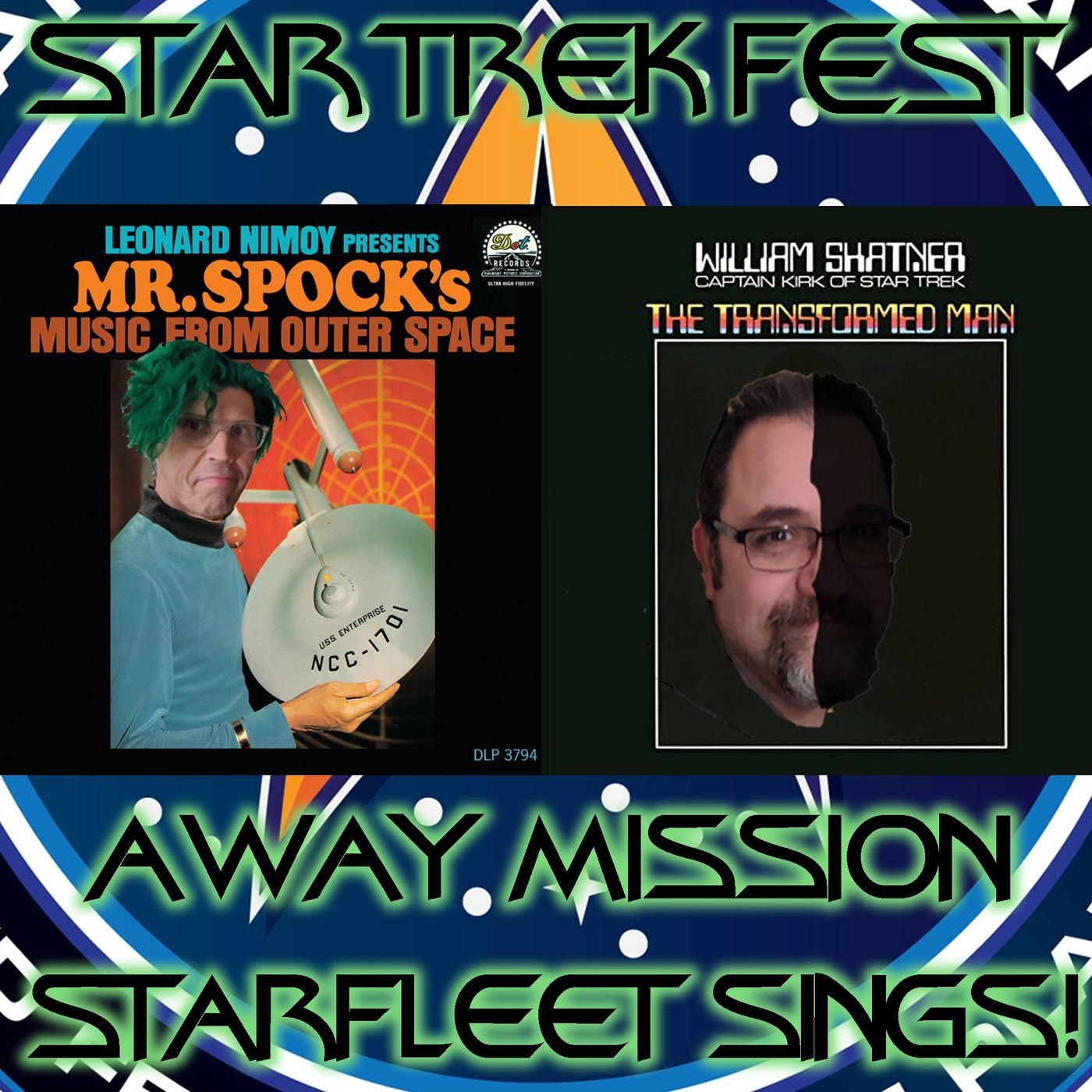
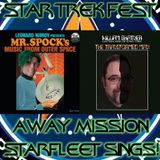
PATREON EXCLUSIVE: Star Trek Fest - Away Mission - Starfleet Sings
About this episode
HP
HPmusicplace.bandcamp.com
https://www.spreaker.com/podcast/noise-junkies--5771848
Father Malone
@Midnight_Viewing
FatherMalone71@gmail.com
Transcript
Automatically generated, so expect the odd misheard name.
Music Music Welcome back, Midnight viewers, to I don't even know what this is. I guess it's a crossover. Oh my god, it is. It's a crossover with HP. We are talking, oh, this is an away mission, actually.
What the hell am I talking about? This is an away mission, but it is also a crossover with Noise Junkies. Woo! Yes, fantastic. We're back, we're back.
Finally. Finally. What was your last episode? What was the topic? Ooh, it might have been Scott Walker.
I think it might have been part two of my Scott Walker, which I was actually very proud of, and I would encourage people to go check it out. I'm going to encourage them to do that as well. There's going to be links in the bio for Noise Junkies. I really ought to be putting those in every episode. It's fine.
Either way. I'll get on that. Everyone go listen to Noise Junkies. Well, you're listening to Noise Junkies right now, whether you like it or not. All right.
These are away missions. They are Star Trek in theme. We're trying to... The original idea was that we were going to look at particular episodes of Star Trek, the original series, and so far... we've had one head-to-head competition, Columbo-based, between Nimoy and Shatner. And now, apparently, that's fucking continued because it is another head-to-head competition.
Shatner, Nimoy, for your auditory pleasure. H.P., what are we talking about here, man? So, we are talking about the albums that were released about a year apart from each other. Leonard Nimoy, his album, Leonard Nimoy Presents Mr. Spock's Music from Outer Space from 1967.
And The Transformed Man, William Shatner's album from 1968. Take us there. What are you looking at me for, baby? All right, so let's get into this. Yeah, this is going to be a little bit of a different Noise Junkies episode for the one or two listeners that maybe have heard the show in the past.
This is not going to go as heavily into facts, details, dates, credits, whatever. This is going to be a little more of a, we're going to talk about our own opinions of these albums and rate them on how successful we believe they are. I will say I've owned and loved these albums for years and years and years. They've been issued and reissued over time through CDs and so forth. So let's get into it.
We're going to start off with Leonard Nimoy's album, Mr. Spock's Music from Outer Space. Now, this was an album that was attempting to capitalize on the popularity of Mr. Spock. 100%.
Yeah, this is. Jed Clampett presents songs from the Southern blah, blah. You know what I mean? Like, yeah. So look, to break it down, it becomes even more obvious because this is the original release on dot records was 11 tracks.
Okay. The 1995 CD reissue that I picked up originally on Varys Saraband. Is that how you say it? I love Varys Saraband, man. They released all of my favorite soundtracks in the 1980s, including the Escape from New York vinyl.
That's what I remember most was they did Escape from New York. All the John Carpenter movies were on Varys Saraband. Halloween. So that came out in 1995. That release had side one of the album Two Sides of Leonard Nimoy. tacked on as bonus tracks.
So that increased the track count to 18. But for our purposes here, Father Malone, we're just going to stick with the original release of 11 tracks. At a high level, this album alternates between space-themed instrumentals, action instrumentals. There's a few cover songs that appear to be genuinely attempted by Nimoy, and some spoken word songs that are definitively in the character of Mr. Spock.
Now, the reason why I think this is so much more of a cash-in than Shatner's is that we're dealing with 11 tracks, okay? Now let's break this down a little bit. The instrumentals, there are one, two, three, four, five instrumentals. So already almost half of the songs are instrumentals that have nothing to do with Leonard Nimoy, okay? Those instrumentals are the theme from Star Trek.
I know I'm not saying much, but I'm laughing through this whole thing. Go ahead, HB. So it's a theme from Star Trek. These are all, like I said, these are all space, outer space themed, and that's kind of the vibe we're going for. And they're all done, there's a groovy sort of instrumental background with synthesizers.
You could have very easily imagined a line of women doing the frugue to these songs. It's very swingy, very. It's lounge. It is very lounge. Yeah.
Exactly. Esquivel would not be out of place performing this version of the Star Trek theme. Absolutely. So it's Theme from Star Trek, music to watch Space Girls by, which I had heard elsewhere. On an album of lounge covers, actually, I heard that one.
A parody of the music to watch Girls by album, which was popular at the time. Exactly. Which I own. I own this album, too. Any lounge music I happen to mention tonight, I own all of them.
So I'm curious to hear your take on this when we talk about the actual songs. There's a song called Beyond Antares, which was actually written... for the Trek episode Conscience of the King, and it was originally performed by Nichelle Nichols, but here it's just an instrumental. Which, by the way, it's my favorite inclusion on the album. It feels so weird that it shows up here as an instrumental from Star Trek, and you're meant to just sit back and enjoy. Anyway, go ahead.
Yeah, but it's a little disingenuous to include so many instrumentals on Leonard Nimoy. Defending bald-faced greed that is motivating this particular LP, certainly. It's silly. And then we have a cover of Mission Impossible, which is interesting because Nimoy would obviously go on to co-star on Mission Impossible. I wonder if he was in talks at that point and said, hey, why don't you throw Mission Impossible?
That'd be funny. I'm not sure. Do you know when he made his debut on Mission Impossible? This was 67. 1969 is when he made his debut.
So it's two years away. So they're presaging it, but I don't think there's any actual connection to his. He's on Star Trek when this album comes out. Absolutely. And then the final instrumental is called Where No Man Has Gone Before, which is basically a, it's like the end credit music from Star Trek, basically.
It's a theme, but a little rewritten. Okay. The actual songs on this album are, there's Where is Love, which came off of the musical Oliver. There's a song called Lost in the Stars, which came from the musical of the same name. And there's also a, inexplicably, there's a Kurt Weill song called You Are Not Alone, which is actually my favorite of the actual songs, air quotes I'm using, that he attempts.
Then we get into the spoken word songs, which are, overall, they're my favorite, because that's why anyone buying this album was looking for. They're looking for Spock, right? Noise Junkies fans will already know this, but HP and I are fucking crazy devotees of the 60s wave into the 70s of spoken word. It's really just a whole universe unto itself. Love it.
There was, in fact, we did a whole episode on Noise Junkies Mark I on spoken word music, and we had a ball. So this is, for me, this is really where this collection lives or dies, these spoken word songs it's alien which there's one called twinkle twinkle little earth and there's one called a visit to a sad planet okay the real songs that we're talking now nimoy is singing very earnestly i don't want to shortchange the effort that went into singing these songs but he does appear Maybe you'll agree that he does appear to be straining at times. He doesn't have the best voice. It's a very low, deep voice, but it's not, no one is in any, Frank Sinatra is not in any danger of being ousted by Leonard Nimoy, let's be honest.
This is early in his career. He'd need to work up to singing about hobbits. Where is love? Does it fall from skies above? Is it underneath the willow tree.
That I've been dreaming of? Right, that's true. We haven't gotten up to Bilbo Baggins or Highly Illogical, which is another great one. But people love to match up or pair off Nimoy's albums versus Shatner's albums. And for me, there's no contest.
Nimoy's voice is a better singing voice than Shatner's. But honestly, in the case of Shatner, that's really a feature and not a bug. You don't go, you don't listen to Shatner to hear his wonderful singing voice. We'll get to that in a little bit here. Nor does he sing, I mean.
He doesn't. And that, but that's, again, that's the charm of Shatner. So for me, we'll get, let's get into some of these, these spoken word ones first, because that's the, like I said, that's The reason for this thing existing, the song Alien, he's never explicitly called out as a Vulcan, but there are mentions of being free from feelings, and it's basically a narration of how an Earthling views this alien and how being free from feelings can actually be a blessing and not a curse. It was once my home, and calls to me when I look up into the void. But it is not the verdant place your planet is that warms and cools you as the seasons go.
Oh no. My mind recalls a seething cauldron flung among the stars and satellites and galaxies of boundless time. There, through evolution, I became the creature I am now. No heart or feelings show in me. Perhaps I'm better off than you.
For I see things without emotion as they are. Some may envy me, but I pay a price to be from human feelings free. Perhaps in me, you see your destiny. Here's the other thing about this album that I want to mention. Aside from the last track, A Visit to a Sad Earth, there's no song on here that breaks the two and a half minute mark.
This is a very short album, and these are very short songs. And when you suggested we do this episode and I put this album back on and realized how brief each of these tracks was, I high-fived myself. It's true. And it's fascinating for a variety of reasons. We already talked about this being a cash-in for Star Trek, obviously.
But based on his future work, I mean, this isn't the only album that Nimoy would record. He recorded a whole series of albums. with increasing numbers of actual singing that he does on it. So I get the sense that he did have aspirations to be a singer. And if he didn't, maybe his agent or there was somebody in his circle who said, you know what, you have a good voice, you should keep up with that. He wrote books of poetry.
I think there was more to Nimoy. There was always going to be more to Nimoy than meets the eye. But it's not as well represented on this first album as some of the later albums. What are the odds that they wanted this to be more like Transformed Man, where they just wanted to have him doing spoken word recitations, and Nimoy himself went, no, I'm going to sing a couple. Don't forget, this came before Transformed Man.
No, I'm not saying that they're trying to parallel it in any way. I'm just saying, what if their intention just had been, let's get him in here, he'll read this dialogue, and then get out of here. And then Nimoy took it as an opportunity to... I'm making this scenario up. It doesn't really matter.
No, but the numbers, the breakdown bears that out because out of all these songs, only three are done in this spoken word fashion. So if you're putting yourself in that scenario, it's not hard to imagine that he, those were thrown in just to give the diehards something to latch onto and maybe sell a few more records. But he did marginally record more actual songs than he did spoken word. So I think that's a pretty fair guess on your part. So the real songs themselves are all chosen to convey these feelings of loneliness, outer space, solitude.
So even the songs themselves, Fathom Alone, have that Vulcan Spock essence of being among the stars and the loneliness and all that kind of stuff. They're really emotional, though, for trying to evoke a Vulcan. They kind of are. Some ways he should be rejoicing in how distant everything is and how far away from his own world he is. This is an emo album from outer space.
It really is. And there are some charms to be had. Like I said, I do like You Are Not Alone. That's a decent song, and he carries it off well. Some of the others maybe.
Whereas Love is a little odd, I think he falters when he has these long, drawn-out notes, and somehow his voice... still reads as wispy, despite the fact that it's very bassy and rich. And I just chalk that up to just his inexperience as a singer, a professional singer at this point. What are the odds that he had performed in a production of Oliver and went, oh, let's do that? It could be. I mean, this was pretty de rigueur for musicians to take on these sort of Broadway roles.
Show tunes. I know like Sinatra used to do that all the time. Sammy Davis Jr. It was not uncommon. So maybe he was just following the trend of the time, which is let's pick a few.
Because I think the show tunes were considered like these were often written by the giants of Broadway. So I guess they're looking for good material. Like Sinatra with the Impossible Dream from Man of La Mancha. He did the Impossible Dream? Get out of here.
He did a pretty famous cover of it, yeah. Oh, okay. Yeah, or like I said, I know Sammy Davis Jr. Did it. I think The Candyman, I think was, I don't know if that came directly from a musical, but I know he didn't like The Candyman, but he did it and he had a big hit with it.
And that was a big Willy Wonka tune. Yeah, I mean, it was Anthony Newley. Yeah, I think, I don't know which came first, the chicken or the egg in that one. Did he write it for Sammy Davis Jr. and then reappropriated it when he got hired to do the songs for Willy Wonka, or was it the other way around? Damn it, I don't know.
Which end of the chocolate bar do we need to open here to figure this one out, man? That's a very good question that, sadly, I don't have the answer for it. But before we move off of the real songs, because there's not much point in digging into these quote-unquote real songs, because they're just semi-capable covers of show tunes of the day. But let me ask you, how did you find those real songs, his singing voice? You said it.
He's straining most of them. And it feels like somebody very earnestly trying to do a good job. And I can applaud that, but I don't want to listen to it because it makes me uncomfortable. I agree with you completely. I will say, just spoiler alert, out of these two albums, there's only one that I listen to on a semi-regular basis.
And it ain't Nimoy. I'm sorry to say all due respect to the man, but this is not something that rewards repeat listenings. But let's get back to the spoken word stuff, because that's kind of where this lives or dies, in my opinion. Oh, I disagree. I actually think all of this album actually lives and dies in the instrumentals.
Do you like those better? I think the instrumentals are top-notch here, man. I like their interpretations of these Star Trek themes and the lounge style. I have many compilations from the 1990s with tracks that I made off of this fucking LP to include with... Remember they did the cocktails in the cantina there?
Yes. Eventually, like, mixing it with that. Like, any sort of sci-fi thing that you could find in a loungy way was all about it. So.... I've listened to this album way more than I've listened to The Transformed Man, honestly.
Because once you have an honest background, you can tune out Nimoy and his singing. It just becomes another part of the tapestry that is this spacey lounge thing. You make a good point, and it's themed very well. And I guess, looking at it from that perspective, I think you're right. Maybe it's something that can be a little more of a fish tank in the background.
And I think when we talk about the Shatner, we're going to find that that sort of demands attention. Exactly the phrase I was thinking, that Shatner fucking demands your attention as soon as the fucking horns start blaring. I guess it all depends on what your goal is when you're listening to these albums. Do you want to just kind of chill out and enjoy and have a good time? then Nimoy is your jam. You're right.
I think the fact that there are so many more instrumentals means that there's more to love there, certainly. And they're performed well. I mean, they're done in that great, very credible lounge style. And there are songs that everybody knows. Everybody knows the theme to Star Trek, of course.
How often do you get an incidental song from your favorite TV series reinterpreted in some other style? Yeah, I don't know. I'm totally sold on this album as far as... and the entertainment value of it as pure entertainment without irony. It makes perfect sense, but I guess it's all in the ear of the beholder. It's what you want to get out of it.
If you're tuning into this album or listening to it, looking for the essence of Nimoy, then you'll probably be disappointed. But if you just want an interesting collection of spacey, space-themed songs and some fun stuff, then I think you'll be very rewarded by this. It's not, I don't think it's a terrible album by any means. It's very entertaining. It's just, do you want, are you looking for Nimoy or are you looking for him as an incidental piece of the album, I think.
I agree with that 100%. There is no Nimoy here. He's just playing, he's a hired actor on this album. But I really like the album. Who is, this reminds me of, anyone who's ever gone to a yard sale and you flip through certain people's, when they have the bin of record albums.
Seems like in the suburbs, amongst older people, they always had these Sing Along with Mitch Miller albums. There's a million of these things. This felt like. They're still out there. I still run into Mitch Miller all the time.
But you know what I'm saying? This is more like under the umbrella of the concept of Mr. Spock or Leonard Nimoy by extension. This is just... It's a little disingenuous because it's not really Leonard Nimoy.
It's kind of like in the wrapper of Mr. Spock. But. Again, it's not a bad thing. If Adam West and fucking Burt Ward had put out an album.
Are we sure they didn't, though? That would have been fantastic. I really wanted to get the AI on that. Seriously, we'll have to get people to research that. So we talked about Alien.
There's a song called Twinkle, Twinkle, Little Earth, which is probably the most embarrassing thing on this whole album, frankly, because it's another Spock perspective. Thing. And it's the melody is, as you would expect, it's just Twinkle, Twinkle, Little Star. But it's Spock positing that, you know, hey, maybe have you ever thought about the fact that other planets maybe go Twinkle, Twinkle, Little Earth? Well, on Cestus Omicron 3, the all time hit song is Earth Dusty.
Also, people will. Sing, catch a falling earth and put it in your pocket. And might you not have difficulty accepting the idea of a national anthem called the Earth Spangled Banner? You see, it is, after all, a question of. Point of view.
If I were an emotional creature, I. Would be shocked by your earth concept of stars falling on Alabama. Really, I find that most illogical. We talked about this as background music. Way in the background for that track.
Yeah, I'm not paying attention to that no matter what. Actually, the final one is the one that I probably love most and least simultaneously, and it's A Visit to a Sad Planet. And this is the most explicitly Spock of all of the tracks, because it takes the form of a first officer's log that Spock is giving. He visits a planet that And we all know where this is going. It's a planet that is careening out of its orbit.
He lands. It's in ruins. It's all covered with a fine radioactive dust. Oh, no. What has happened?
He can't... There's no sign of life, but he does find. Is that the Statue of Liberty? That's it. Upon beaming down to the planet's surface, all I could see were ruins.
Ruins of some type of civilization. Crumbled buildings. Deserted streets. charred vegetation, all covered. With a thick layer of dust, which our scanners indicated as intensely radioactive. That's exactly what I was thinking.
He finds the last remaining survivor, this man who's led to believe is mutated and irradiated, and he's on his last breath, and the guy tells Spock that once this planet was beautiful and rich and abundant, but we all fought. We couldn't help ourselves, and our quarreling led to a war. And we killed each other. And this is our legacy. At least I think so.
I grew up in these ruins and I've just heard these things. Legend has it. And this is what really makes no sense. The conclusion, which is your Statue of Liberty, Planet of the Apes moment, where Spock asks him the name of the planet. And then in the last breath, the man replies, Earth.
Okay, I get the allegory. But we all know Starfleet is based on Earth. It makes no sense. You're coming at this from a straight-on canon perspective. Yes.
I'm surprised you're not. Oh, man. No, I never have. I've always thought of this as some bullshit flight of fancy for Rod McKeown fans. But if you want to attack this from a Starfleet perspective, what is he even talking about?
HP, are you familiar with the concept of the Mirror Universe? Yes. Of course. Spock with the goatee? Yeah, tell me more.
How does that tie into this album? I don't know. Maybe this is Spock in the Mirror Universe. He shows up on Earth. It's like the Twilight Zone, that Mirror Universe.
It could be. But if it was the Mirror Universe, Spock, he would not be so compassionate towards this survivor. He'd be like, yeah, he's dead. Here's how it should have ended. And then with his last breath, he said, this is the planet Vulcan.
Oh, no! No! Get gone! Or, no, even better, highly illogical. And then they end.
There you go. It's a hit single, man. Hit 123 on the Billboard charts. Did this really? Number 123 with a bullet?
So I appreciate the fact that, look, by this track, by the time this track rolls around, at least the subterfuge is over. We're not dancing around the idea that, is Mr. Spock? Is it not Mr. Spock?
This is Mr. Spock. And we know how historically ambivalent Nimoy always was with the character of Spock. He wrote the book I Am Not Spock. Then years later, he wrote a book called I Am Spock.
So there's a bit of that push and pull here, even in this silly lounge album, I think. But ultimately, I have a feeling I was going to ask you what your thoughts were, if you like this album. Clearly, you enjoyed this album, and it sounds like one that you revisited over time. Is that not the case? Of course, yeah.
Now, I will throw this on every once in a while. If I stumble on it, if I'm going through my collection and it pops out, just the sight of the Enterprise on the cover of an album makes me want to listen to it immediately. And like I said, this is, look, lounge music, yes, it is meant to be listened to, but it is just as much meant to be in the background of whatever party you are throwing. And this completes that task pretty wonderfully. Sure.
I am the proud owner of four Leonard Nimoy albums, so I can appreciate it on a more kitschy level. Hearing him do his take on Ruby Don't Take Your Love to Town, it's fun. I don't think anyone's in any danger of mistaking it for the original or preferring it to the original, but I appreciate the effort there. I appreciate the aim that Nimoy had. To me, people can make fun of it all they want.
It's kitschy. I like it. Because it's kitschy. I like it because it's sincere. And speaking of sincerity.
Oh, man. Speaking of earnest and sincere, this is where we get to the transformed man from 1968, William Shatner's first album. This is really where it all began. Okay. This is where the rubber meets the road.
Because the thing of it is this. Okay. Shatner, at a certain point, Shatner... gave the impression that he was in on the joke. Okay. For years and years, people made fun of his acting style or what they presumed.
Really, they're making fun of Kevin Pollak doing William Shatner. We've talked about this, but people loved to poke fun at him and his self-seriousness. And at a certain point, he turned it around and he became, he turned it around on people. So he was no longer the joke. He was in on the joke, but eventually he would release a number of albums and These all came really after his collaboration with Ben Folds, which I would say as a side note, the song that Shatner did on the Fear of Pop Volume 1 album, as well as Ben Folds producing the Has Been album, those bits of music, those pieces, I think stand the test of time as legitimately good albums and songs.
And we can talk about that at some other time, but... After that. Let me just comment on the bullshit of him flipping the script and changing the conversation. And I was always being hammy on purpose. I made all of those albums as a joke.
No, you didn't, old man. I'm glad. Look, we all love William Shatner. And I agree with you agreeing with me about agreeing completely. together about Shatner is a better actor than he's ever been given credit for. People have been not, it's worse than doing Kevin Pollak.
It's people took into their minds, they're like friends impressions of William Shatner who were doing Kevin Pollak. So they were getting this really exaggerated bullshit and he was never part of any of that. However, he was a major fucking cheesehead and he was self-serious and he was a prick and we all knew that about him. And there's no whitewashing that. It's been endlessly debated over decades whether the transformed man, whether Shatner was serious when he made the album or if he was simply having fun and poking fun at the self-seriousness of it all and of his image.
And My opinion, and I think you, by what you just said, I think you share the opinion on this, is that it's the former. I think he believed in this project. I think he believed he was making a serious artistic statement with this album. The album's own liner notes bear this out. There's not a drop of insincerity in the album liner notes at all.
Shatner talks about how he was inspired by his love of the overture and he always had a secret ambition to do something with spoken word combined with the magic of music. I bet he did. It shows him that this, to me, doesn't seem like a lark that he did just to, oh, I'm just going to have a laugh. There's very little laughter in this album. This reads to me like a serious statement of intent of an artist.
You can feel free, not you specifically, Father Mullen, but the people can feel free to have their own opinion on whether this is the worst album ever made which is something that's been levied at it or if this was secretly a successful piece of kitsch or if it's so bad it's good that's we're not going to settle that debate here for sure because it's just it's been going on like i said for longer than we've been alive in fact but at least the evidence to me says that he was very he was as serious as a heart attack about the goal behind this album okay he And this... Sorry, go ahead. No, he 100% thought, I'm getting a whole new career here. This is going to take off, and then I can do nightclubs where I perform this, and I can release other albums, and then if this Star Trek thing goes away, who cares?
I'll already have a whole new cash flow. Sure. And he... It's no secret that he had an ego. He has and had an ego, and I'm sure he thought that this was going to be his entree into a whole new creative sphere.
That he was going to make this really... to be honest, this is really a concept album. At a time when, at that point, concept albums were, it wasn't Ziggy Stardust, it wasn't stuff like that, Quadrophenia. A concept album was more in line with Frank Sinatra. These are songs that are linked by a central theme or mood. Like, sings for only the lonely people.
That's like a famous Sinatra concept album. This is, there's concept all over this album. Now, Oh, I'd like to, before you go any further, because we are going to be talking a lot about spoken word. Yep. And everyone within the sound of my voice, go listen to Ken Nordean.
Oh, I was going to mention him earlier. Yeah, you're right, man. Go ahead. He's the king. Anything you think is cheesy about spoken word, and particularly spoken word like paired up with jazz or anything, like the cliche that it's become, like, Everything is free verse now and all that kind of bullshit because it is free verse.
It's like beat poetry that he's doing. But if you want to hear it done right, Ken Nordean is your man. His Word Jazz albums are essential listening for anybody who is interested in spoken word and specifically the intersection of spoken word and beat poetry and jazz. They're unbelievable and I revisit them often. I can't say enough.
He is. the alpha and the omega when it comes to that, right? That's actually a very apt comparison here, Father Malone, because there's an element of that here. I'm not suggesting that Shatner is in any way as good as Ken Nordean. He's not. But the influence can be felt.
The influence and the ambition of what he's doing. Again, I know that this is an album that a lot of people deride as being the worst ever made, but I would dispute that. I agree with that already because I've read that as well. And I was like, are you kidding? There are albums I can't get through.
Those are the worst albums ever made. It makes no sense. So the album itself consists of Shatner. It's not singing. He's doing dramatic readings of various pieces of theater and poetry and accompanied by an orchestral backing, a real orchestral backing.
What originally brought this album to my attention is probably what brought a lot of people's attention, which was the Rhino Records 1988 compilation Golden Throats. Golden Throats! The great celebrity sing-off. Do you remember it? Of course.
It is where I was introduced to Shatner as a singer. I already had, at that point, owned the Nimoy album. In fact, I had a couple of Nimoy albums, because he was a little better known as a singer, as somebody who was trying to get away from Star Trek any way he could. So those were more readily available. But I had never heard him sing before.
I was shocked. And like everyone, oh, what a joke. So that compilation included Shatner's version of Lucy in the Sky with Diamonds. And I think it also had Mr. Tambourine Man, if I'm not mistaken.
It sure did. Now, if that's all you heard in isolation, if you weren't familiar with the album as a whole, you're taking those songs out of context, maybe you might be forgiven for thinking, oh, this is just so bad. He's not singing it. He's just kind of doing these goofy interpretations of These songs, and it's not even really lounge. It's just kind of bad.
That's what I thought. That's what we all thought. That's what we all thought, and I got it. And then I was immediately mad at myself for buying this because no one's going to buy the Golden Throats compilation to get into the music and enjoy the music. You're getting it to have a laugh.
And it's the worst kind of novelty songs because novelty songs, by their nature, are very re-listenable. This is novelty of one. You hear it and go, okay, I got it. You hear it and you go, I'm never going to listen to this again because why would I? Because it's such an assault on my ears to hear these actors try to play it being a singer that it's pointless.
So I could have just left it at there. But then I remember when I was in college and I was at a local record store, as I often was, and I came across a CD that containing the full transformed man. This wasn't the reissue that came out. I think it was also in 95. This was actually the album in mono.
And it was unique because the songs were individually tracked, whereas the album itself is supposed to be listened to. We'll talk about each song works as a pair. And I'll get to that in a minute. But I immediately fell in love with this album because it really demands, to your earlier point about Nimoy, you can just kind of put his album on You could even put it on shuffle and it really doesn't make much of a difference because there's not meant to be a flow to it. There's no beginning, middle, and an end.
You could just hear these songs in really any order. It's way closer to what you said about concept albums as far as Sinatra goes. This is about summertime and all the songs have a vague summertime thing. That was Nimoy's version of this sort of vanity album. That is a fantastic point.
But in this case, the way this works is the track list for The Transformed Man, each track track is basically two songs in one. And the whole idea of it is that, as listed in the liner notes, each pair unfolds multiple perspectives of the same subject, like two sides of a coin, tension and resolution. That's what it says in the liner notes. So let's talk about the track list. Track number one is King Henry V, the speech of King Henry V, crossed with a poem called Elegy for the Brave.
So what you have is the bloodlust, the cry for war, and the excitement of that paired up with the elegy for a fallen soldier. And it's like the bloodlust and the mourning after. The next track is the theme from Cyrano. It's a monologue. Is that a peace button on your helmet?
And what do you have written there, son? Is that some kind of sick joke? I think I'm saying something about the duality. Anyway, continue, please. Next track.
That's what this is all about. This is the duality of perspective. We have a speech from Cyrano crossed with Mr. Tambourine Man, which is great self pride in oneself and matched with the sort of mania of somebody who's desperately following somebody else. We have the famous to be or not to be from Hamlet matched with it was a very good year, which is supposed to be like uncertainty, and supreme self-confidence.
You see where we're getting at here? Each pair is in concept an opposite of each other. We have the Romeo and Juliet scene, the balcony scene, matched up with a song called How Insensitive, which is lounge. It's pure lounge. It's the excitement of pure love matched with somebody who's callous and disdainful of real love.
Did I mention Hamlet is matched up with It Was a Very Good Year? Yes. Which is uncertainty with satisfaction at a life well lived, I guess. Then we have something called spleen, which is a weird one matched up with Lucy in the sky with diamonds, which is like self-loathing matched up with, with bright psychedelia. And then the final track is the only one without a pair, which is called, which is the transformed man, which by its definition, they describe in the liner notes has its own beginning and middle and an end.
So it doesn't need a pair. So yeah, Those are the songs on this album. Now, what your point earlier, I want to get back to, which is you could just put on Nimoy, have it on the background and enjoy it. But the thing of it is, this is such a bombastic album. And it's so in your face that you can't really put this on in the background.
It demands that you listen to it. And it demands that you listen to it in sequence. Because it doesn't make sense if you skip from King Henry V to It Was a Very Good Year. In fact, that's not even the intent. The stated intent of the people who made this album is that these songs all complement each other in sequence, right?
And how else will you learn about different sides of the same coin if you don't listen to this track by track? Put on your headphones, your cans, smoke a doobie. I talked a little... That's right. Just zone out, man.
And it's not... The instrumentation is very different from Nimoy's albums. Nimoy's has, it's a band with synthesizers and drums and things. This is much more orchestral with strings and horns and flutes. And it feels like it's much more theatrical.
It feels like a theatrical experience, which I think is one of the things that I love most about it, which is it's very cinematic in its presentation, I think. How did you, on a high level, like we know you love the Nimoy album, but what was your opinion of Shatner's album? It feels like a lounge act, honestly. Like dinner theater. Yes, very much.
And that earnestness we were talking about earlier drips from the album, particularly when it comes to its high-mindedness about its pairings of this and that. Overall, I continue to enjoy Spock's album better. Okay, what I do like about this album, I'm not as devoted to it as you are. What I like about it now, and I think I've liked about it for a while now, is what I initially was making fun of it about. The ironic appreciation of Shatner's songs, particularly if it's a cover of a song we all know, like Mr.
Tambourine Man or Lucy in the Sky with Diamonds, They're like instantly hilarious, particularly when we were listening to them, which is the 90s, basically, the early 90s. Now listening to those, I love them. I think they're really good, actually. No irony at all. I think they're worthy interpretations of those tunes.
Where this album falls down for me are his dramatic performances. I don't believe him at all. When people make fun of Hammy William Shatner as an actor... They're talking about this side of William Shatner. Once more under the breach, dear friends, once more to close the wall up with our English debt.
In peace there's nothing so becomes a man as mother's stillness and humility. But when the blast of war blows in our ears, then we imitate the action of the tiger. Stiff the sinews, summon up. The blood, disguise fair nature with hard-favored rage. Then lend the eye a terrible aspect that it pry through the portage of.
The head like the brass cannon. He is singularly unsuited for period pieces. William Shatner is a modern actor. He does not belong in a castle in England in the 14th century. It's just, he sounds too modern and he's trying too hard to sound medieval, that it just comes off stilted and weird.
And you know what it reminds me of? It just, it reminds me of Americans who have, and at this point, method is everything, who have said, no, I'm going to continue this Royal Shakespeare Academy training, no matter what. I refuse to be anything but this and that. I mean, I've got more, but. Sure.
And that's all completely fair. obviously, and it's, I can't, it's your opinion. So I'm not, I would not dare try to argue it because I don't necessarily think you're wrong. But despite that, it just, I love this album. I love the earnestness of it. I, like I said, I, it was, it's so frustrating to me to imagine that people wouldn't think that he was being honest in what he was trying to accomplish with this album, because no one is going to spend this much time and effort and resources and money and everything to To make something that's just a big joke, it just doesn't make any sense to me.
The shame of it, though, or I guess not really the shame of it, but the thing of it is, once the toothpaste is out of the tube, there's no going back for him. Once he became in on the joke, quote unquote. Right. Because what you then see here, part of it is, recently, it was announced that at however old he is, like, what is he, like 89 or something now? Weave Shatner?
It was announced that he's going to be doing a metal album. heavy metal album okay which on the social media a lot of people I know were reacting with glee oh I can't wait it's gonna be so great it's William Shatner and I could not have greeted the news with less of a shrug and a dismissal of it because I know because I've followed his career ever since like I said this album the Ben Folds albums and the song and all that After the Ben Fold stuff, which again, I think is legitimately good, he went the route of doing a lot of albums, a lot of themed albums. He did an album called The Blues, where it's literally him doing Born Under a Bad Sign, Manish Boy. But because it's Shatner and because he wants to let you know that he's in on the joke, there's nothing sincere about these performances.
It's just him doing spoken. It's basically Lucy in the Sky with Diamonds, but every track. There's nothing interesting about it. It's just bad covers of songs that are better done elsewhere. And they always have celebrity contributors like Brad Paisley's on it.
Edgar Froza from Tangerine Dream has been on an album with William Shatner or Johnny Winter. He's put so many of these out that they just bore me to tears. So the news that he's doing a heavy metal album I don't care because I know it's going to be more of the same bullshit, Father Malone. There's no ambition. He's just looking for people to go, oh, that's so funny.
He's doing Paranoid by Black Sabbath. That's so great. Or he's doing Living After Midnight. Isn't that cute? It's William.
No, there's nothing cute. There's nothing funny. There's nothing amusing. It's just to make a buck. That's the way I see it.
The way I see it is novelty heavy metal records is what killed Christopher Lee and it's going to do. That's exactly... Yeah. And it's going to do in Shatner as well. I was thinking that too.
And I like what you said about you can't go back now. He can't embrace any of his early work as a sincere artistic endeavor anymore because he's embraced the this has all been a joke that I've been in on. His fragile ego... over being made fun of for his earnest attempts at a spoken word career, basically. I don't know, because I hate latter-day William Shatner. The Kevin Pollak joke is, you had a starship.
That's what I think of every time he releases one of these dumb novelty albums. The only time I've ever thought that he was in on the joke and we were all in on it with him was when he appeared on the MTV Movie Awards. where he performed the songs for all the nominated categories in the Shatner style. I thought that was like the brilliant summation of all the irony and new sort of character he had taken on. But that was the end of it because I don't believe him as a jokester or anything. I know he's still the fucking narcissistic dickhead under there.
And that's what I liked about him to begin with. It would have been refreshing had he just forged ahead with this as a sideline. But he could have tried to become i mean i don't know how it's. You know and tash is still putting out shitty music after all these years he never backed away from it he never made a joke of it other than playing up the fact that it's kind of a joke sure but he's still doing it man sure i. That the man wrote round ball rock which was the theme to the nba on nbc Look, I give the guy credit.
I give people like, I mean, is Yanni still doing his bullshit? Probably. He never gave it up. It's goofy. We all laugh at this mustachioed guy with long hair rocking out with keyboards and pirate shirts.
But God damn, he stayed true to himself. I think it is. I wonder if anything was lost by Shatner not sticking to his guns and saying, you know what? This means something to me. This is important to me.
And maybe if you don't like it, whatever. I don't care. I'm going to continue to be me. But his ego wouldn't allow him to put himself out there at the risk of being ridiculed. So he had to turn it around and say, oh, yeah, you know what?
I'm just having a laugh. It's just a goof. I don't really mean any of this. I can point to Shatner's Live 1978 album, which was a spoken word album that he did. I think he was on a tour of colleges at the time.
This would have been prior to the most in picture. And this album is basically him doing dramatic. Star Trek conventions. Star Trek conventions. This is him doing dramatic monologues of Galileo.
He does another Cyrano de Bergerac. He's not doing this because he thinks he's going to get a laugh out of it or it's something that'll tickle people's fancy. He's doing it because he believes he's a good actor who has something to offer in the dramatic reading realm. And he knows he's never going to get cast in these roles ever again, so he might as well get his acting Jones out here and fucking do some Shakespeare. He might as well do it.
So I think it was a little cowardly maybe for him to just turn his back on it and pretend like this wasn't something that was important in a serious venture. But nevertheless... We will always have The Transformed Man to listen to. It's not going away, no matter what Shatner does with this bullshit heavy metal album. I can still listen to The Transformed Man and zone out and enjoy the cinematic experience.
You know what The Transformed Man is? It's Love Me Tender, and the rest of his career is Clambake, as far as movies. Oh, Elvis is a pretty good actor, man. He could have a real career. What are you doing, Elvis?
No! Remember there was a bootleg? That came out called Elvis's Greatest Shit. And it came out after he was dead. And it was a compilation of all these bullshit songs that he did off of these movies.
Like Clambake was on there. And it was an effort to, because at that point he was so lionized. Elvis was, he was dead and he was the king. But people tended to forget that there was a lot of bullshit that went along with his career. There's some bad music, including Clambake.
I mean, that might be the worst. Do the Clam. It was a twofer. It was a medley that went from Do the Clam into Clambake, in fact. I love Clambake.
I mean, I love Do the Clam as a song. I want to give credit to the Billion Dollar Record Club that covered this album, but their assertion was, look, most artists go their whole career with doing even one song about clams. And Elvis did too. I guess there's that. But that's a very good point.
For me, though, to kind of sum this up, I love both albums. I don't love them equally. Clearly, anyone who's listened to this understands that I hold The Transformed Man so dearly. dear to my heart, and it's the one that I listen to most often, because it's such an experience, and sometimes that's what I want out of an album. It does demand your attention so much so that I can't listen to it, because the dramatic readings are just so poor. Let me point out that this is maybe a by-comparison situation, but say what you want, or whatever one wants to think about Kenneth Branagh, but of course he hit the scene with his film adaptation of Henry V, so he does the same lines here.
So I'm used to hearing it in a natural and passionate way. So hearing it here in the Royal Shakespearean version was, it's laughable to me. I don't want to listen to it. And then even worse than that is one of the greatest speeches in all of literature, which is the Cyrano de Bergerac. Again, just by comparison, I'm probably going to cut it in here, the Shatner version. with the greatest version you will ever hear from the film version of Cyrano de Bergerac.
That's José Ferrer doing the exact same lines. And it's so passionate. And it is tangible. And Shatner is off somewhere, talking. What would you have me do?
Seek out some wealthy patron and crawl like a clinging vine up the lordly tree, rising by deceit and trickery instead of. My own strength? No, thank imitate what others do and dedicate my works to the rich in the hope of arousing a smile of recognition from some sterile face? No, thank you. Breakfast every day on insults?
Wear out my knees and warp my spine with endless bowing. And groveling in the dust? No, thank you. Become a master of hypocrisy and opportunism, never letting my right hand know what my left is doing? Burn incense for some glorified idol of the day.
Pull all the proper strings. No, thank you. What would you have me do? Seek for the patronage of some great man and like a creeping vile on a tall tree, crawl upward where I cannot stand alone? No, thank you.
Be a buffoon in the vile hope of teasing out a smile on some cold face? No, thank you. Eat a toad for breakfast every morning, make my knees callous, cultivate a supple spine, wear out my belly groveling in the dust? No, thank you. With my left hand, scratch the back of any swine the roots of gold for me, while my right, too proud to know his partner's business, takes in the fee?
No, thank you. Shall I use the fire God gave me to burn incense all day long? No, thank you. Struggle to insinuate my name into the columns of the Gazette, calculate, scheme, be afraid, love more to make a visit than a poem, seek introductions. Favors, influences.
No, thank you. No, I thank you. And again, I thank you. Aren't we having a laugh together, you and I, here? Well, Jose Ferrer, that's definitive.
I mean, it doesn't get any better than his interpretation of that. But I would say that clearly Shatner... Look, I'm not going to suggest that it's in any way... better or as good as that but clearly Cyrano was a figure that stood that loomed large in Shatner's estimation because like I said this live album that he did at Star Trek conventions or what have you he did another different monologue from Cyrano so he was just begging to play Cyrano what. Should I compare thee to I don't know that's it but I guarantee you that's the other speech that's the when he compares his nose to things. Yeah, I don't remember.
I'll have to go back. I should have re-listened to it, but I didn't. But, you know, like I said, it all depends on what you're in the mood for. If you want something that you can kind of groove to and maybe listen to while you're working on something, Nimoy's your guy. That album is perfect for that.
But you're not going to get that. If you want to zone out and kind of get in, get into yourself a little bit and get a meditative thing going on, then Shatner's your thing. But I guess, ultimately, what I want to have people understand is that don't believe what you heard. If you think that this is the worst album, either album, if you think either, if you've heard that either of these albums are terrible or without merit, that's just flat out wrong. They both have a lot to offer and they both stand on their own merits.
I think pretty well for their own reasons. Yeah. I'm being unkind here to both of these albums in certain cases, but listen, I own both and I listened to them. Well, not as frequently as HP here. Who's insane for Shatner.
I love it. I'm not insane for Shatner. I'm not like his biggest fan, but I will say, like I said, this album is good, legitimately good. Has Been is legitimately good. Fear of Pop Volume 1 is legitimately great.
And his song is my favorite, which really leverages, it's a song called In Love, and it really leverages Shatner's ability to make himself into the sort of a Lothario figure. Because the whole song is basically about him not bending himself to the whims of a woman or any woman, for that matter, and putting one over on her. He does it very well. How insensitive. He's so good.
And has been, came out, I think, just after the death of his wife, who, I don't know, did she commit? She drowned. She drowned. Yeah, yeah, yeah. And there are songs where he actually does spoken word about finding his wife.
And it's so heavy, man. That's really horrible. And it's and actually I do it from the perspective of the pool, at least. No, no, it's I think the song of the title is actually What Have You Done? And it's I guess I'm kind of going against what I said earlier, which is he never looked back from he turned his back on this and never went back to it.
In a sense, some of these songs, I guess he kind of did go back to it because it. takes a lot of guts to go into something as heavy as the death of his wife and finding her body in the pool. Yeah, your song is immediately critical proof. How are you going to make fun of that? It's so impassioned. Sure, but somehow Ben Folds, who I have no great love for, I never liked Ben Folds 5.
I don't get it either, man. I just, okay, he plays the piano and sings kind of clever shit. It's so twee, and I never liked it, but there was something alchemical about his working with Shatner. I can't explain it. I can't explain why it really.
You better explain it. Get going. I better, man. That's for another episode, I suppose. But no, I think we've said it.
I mean, just do yourself a favor. Check out these albums. I don't think you'll be disappointed. And then listen to Ken Nordean, if you want to hear a genuine article, and listen to Esquivel. That's a great entryway into lounge music.
Absolutely. I mean, check out the Noise Junkies episode on spoken word. Yeah, do that too, man. That and more. It goes into much more detail than we're going to go into here.
But do yourself a favor and check that out. Do yourself a flavor, everybody. Open the door and let them in. Then we're wrapping up our crossover Noise Junkies Midnight Viewing. Thank you all for listening here.
HP, tell your listeners where to find you. You can find me. I co-host the Night Mr. Walters Taxi Podcast with Father Malone here. Hey.
And I host the Noise Junkies Music Podcast. In this case, I'm co-hosting it, technically, with Father Malone, who was an original Noise Junkie. I don't know if anyone knows that. I was a founding member when I had to retire. He was a founding member.
That's right. But, you know, some great material. Check out the back catalog of Noise Junkies. And. not last but not least i have a band camp site hp music place.bandcamp.com as. For me you're listening to it here and this is a patron only show hey patrons thank you for your patronage you've really come through for me and i really appreciate it a fucking ton keep listening and eventually this will probably show up in the regular feed and you freeloaders how dare you we'll catch you next time on star trek fest away missions until next time everybody try to beam or Beam yourself somewhere happy, because everything right now is on fire.
Hey, Mr. Tambourine Man, play a song for me. In the jingle, jangle morning, I'll come following you. Take me on a trip. On your magic swirling ship.
My senses have been stripped. My hands can't feel to. Grip My toes too numb to step Wait only for my boot heels to be. Wandering © transcript Emily Beynon Thank you.