About this episode
Transcript
Automatically generated, so expect the odd misheard name.
The following program is a proud member of the Palover family of podcasts. Check out all the shows over at palover.com. That's P-A-L-A-V-E-R dot com. The following feature has been rated R by the Motion Picture Association of America. It is intended for mature audiences and parental discretion is advised.
Our nuclear reactor pumping. Out one million kilowatts of power. What's up and welcome to Movie Meltdown. Once again, I am Brian and I'm. Doing the intro solo this week because we have a special guest.
But before we. Get to that, I did want to mention that Movie Meltdown is going to be a featured show on Slapdash Radio. Now, if you're not familiar with this, Slapdash Radio is a podcast site that gives you sort of the best of both worlds. I mean, at this point, you've got a lot of different options out there, especially with the new quote-unquote smartphones. So it sort of shifted the way that people are listening to stuff in the last few years, and...
Slapdash Radio is a podcast site that kind of gives you the features of the traditional PC or Mac sync-driven podcast players, and then all the mobility of the current on-demand streaming players that kind of go with your new smartphones. So it's basically a podcatcher, but it allows you to update new episodes without having to hook up to your computer and sync every time. Plus you sort of avoid the problems of straight streaming by being able to actually subscribe and store several episodes on your player. So it does give you sort of the best of both worlds. So what more do you want?
Go check it out at slap-radio.com. And while you're there, subscribe to Movie Meltdown. And I guess you can look at some other shows too. Alright, so with that we are going to take a short break here and be back with this week's guest, Mr. Dave Conover.
He's a friend of mine and an author who's written about what I think is one of the most interesting stories I've heard in years. So, we'll be right back, and Dave will tell you about the unmaking of an epic. Thank you. Oh, the time is now, the time is here. Now's the time to abide a cheer.
The tasty life where the price is right. Well, look in here, you'll dig this site. The moment's handy for a piece of candy. Just name your brand, they're all so grand. Hey, what do you think of a nice cool drink?
Oh, big box filled with a popcorn trill. Let's chase what's mean with an ice cream treat. Invest yourself, it's time to eat. So come on, folks. Let's join the band as we all head for the refreshment.
Wing Kong is coming. A monster, all-powerful, beating down all weapons, smashing all barriers. You won't believe your eyes. Here he comes. Switch it.
Ranking out of the dense jungle, King Kong comes to claim his human sacrifice. The first white girl he has ever seen. She looks like a trainee doll in his huge, hairy paws he tramples toward his cage. Listen to her shriek. Hear the din, the confusion of pursuit that is trailing him into the depths of mystery.
King Kong is coming. The picture that staggers the imagination. Hi, this is Tom Kane, the voice of Yoda. And listening to Movie Meltdown, you are good. All right.
We're here with the author. Dave Conover? Do you need to go by David? Is there mix-ups out there? Dave is the casual term I always use.
I went with David on the cover because it always looks better. It looks more professional. Definitely. You've worn many hats in your life, I'm assuming. Do you bill yourself with anything other than that right now?
Are you author, or how do you come across now? Now I am. I've always written, but not prolifically. And It took me a long time to kind of find my niche as a writer. Being a huge film fan, and some people call me a film historian, I would call myself that.
Most of my future projects are going to be of a writing nature, whether they're blogs or books. So I'll go by author. I like that. I just go with movie geek. And that too.
That applies to most people. Convention guy, you know. Well, this may be surprising to listeners of our show, regular listeners anyway, because usually the only books we talk about, we have a running theme of pop-up books. One of our crew is quite taken with pop-up books, and we have an ongoing review of those. But, you know, usually it's just movies and podcasts and audio-related stuff.
I don't like to read. It makes my brain hurt. But from day one, this story was kind of fascinating. It's funny that this, I mean, you... You've joked about this several times now that, yeah, this was several years ago, and you were at your old job, and I just came in and started talking to you about stuff.
And at some point, it turned into like an hour-long pitch of the story, including props. Yeah, I get rolling. It's dangerous for people. You brought out photos. You brought out drawings.
And I was fascinated with it. I was like, this is an amazing story. Why isn't there a book like this? why isn't this movie out there? So yeah, I definitely fell right in with all of that stuff, which is why I wanted to go ahead and sit down with you here and try to pass the word along to other people as well. But I guess to start sort of at the beginning, at least from your take on it, how is it that you learned about this?
I learned about War Eagles from an issue of Famous Monsters of Filmland magazine by Forrey Ackerman, which half of working Hollywood will credit Forrey Ackerman for getting them into the businesses. which, of course, started publication in the late 50s, all through the 60s and 70s. I was a little younger, so I started reading it in the 70s. And it was summer of 77. I can't remember the issue number. But summer of 77, an issue came out.
The new Ray Harryhausen picture was coming out. I was a huge Harryhausen fan. It was the last Sinbad movie. It was the Sinbad and the... What was it?
The Eye of the Tiger? Eye of the Golden Tiger? Eye of the Golden Tiger? Yeah. Not one of my favorites, obviously.
But it's a cool movie. But that was on the cover. And I bought anything related to Harryhausen projects, who I was a big fan of already. And inside, they always had a section called Rare Treats, or you axed for it. And this was in Rare Treats, and Ford would occasionally pull out some images that were kind of unusual.
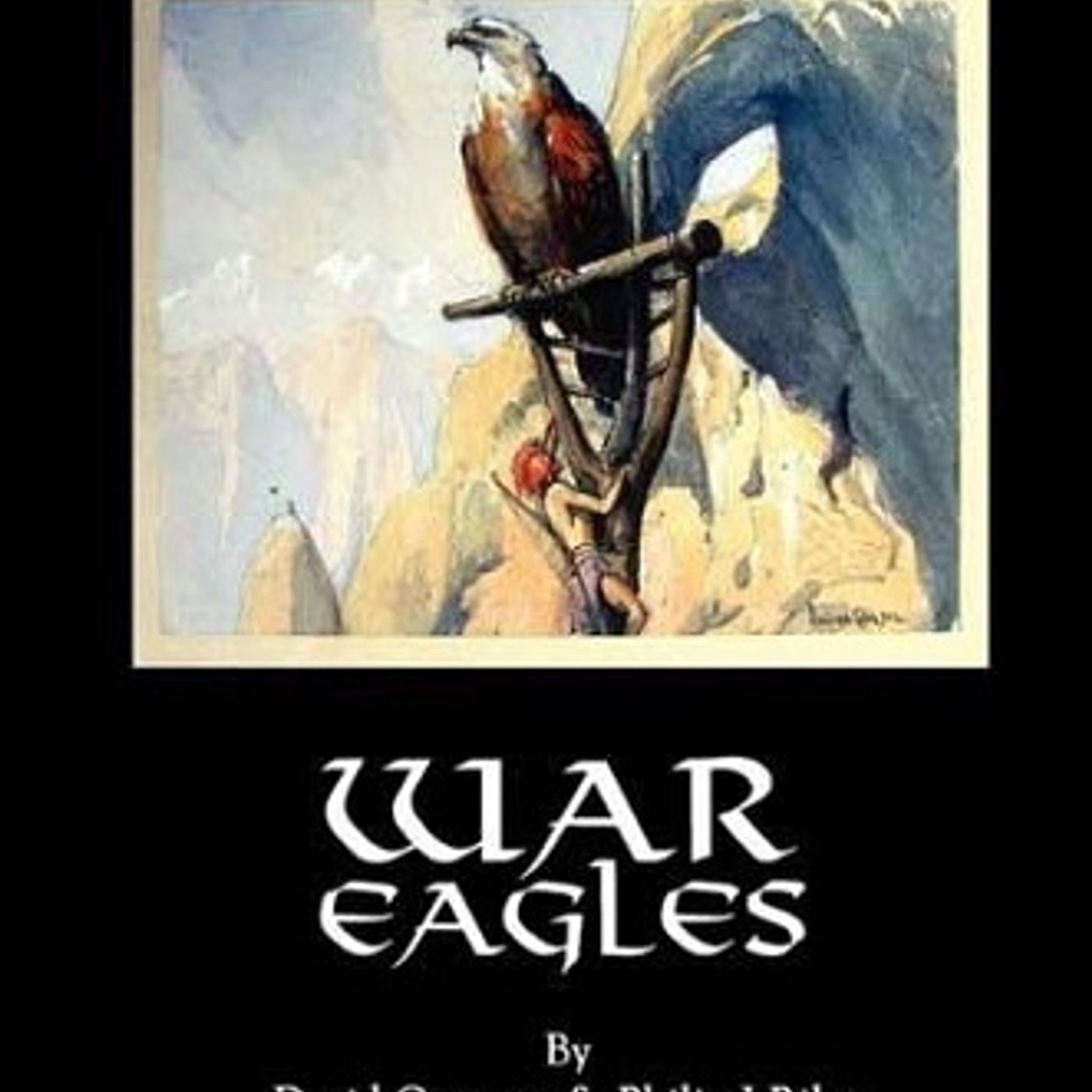
And on the cover of the Rare Treats section was this production drawing of a giant eagle tethered to the ground with these men standing around it who were sort of dressed in not really Viking outfits, but sort of South American native type outfits. It had a ring through its bill. He had a little caption that explained that this was from The Ill-Fated War Eagles, which was a Willis O'Brien production that was a casualty of World War II. And I was fascinated instantly because my favorite movie was and is the original King Kong. and Willis O'Brien was the director of special effects, and Marion C. Cooper was the producer, and this was apparently a film both these men were going to work on, and I just was stuck with it, and it seems like over the years, maybe one or two images popped up briefly afterwards, but almost immediately in the aftermath of that, I decided I'd try to give Foy a call.
He was a big hero of mine, but he was also a guy who was kind of famous for being pretty accessible, and I was a pretty hardcore geek already, and there was a local science fiction club, and there were guys that knew for it. Because he had been in not only, you know, the publisher of FM, but he'd been in sci-fi fandom for decades. And everybody had his number. That's still funny now. I can't remember the area code, but I think it was like 606.
Moon fan. You just dial that up, and he'd very likely answer. and he was one of the first guys you know i knew that had an answering machine and he always had a great you know had a great line running on the answering machine and you'd get through that and you start talking and if you felt like it you pick up the phone he did he picked up the phone because i was asking a question that didn't have to do with boris karloff or lon chaney jr you know the usual crowd and I asked him what was War Eagles, and he told me what he knew, and kind of elaborated on it a little bit. Said material had just come up. There was at least one script floating around that people thought Willis O'Brien wrote it, and it was going to be a big picture like King Kong at MGM.
It involved Vikings riding eagles and dinosaurs, and somehow the Nazis got involved. He didn't really know about the end of the picture at the time himself either, just that it... It was big, and he was a fan as well, a huge fan of this material. So that's what started it. I talked to him.
Over the years, we would actually have met him a couple times locally in Louisville. He'd be at different conventions. We'd talk. He said he was digging up more material. He might one day do a book or an extended article in one of his magazines.
Later, we met much later in life at other conventions. He still remembered. And I met him at his house, so I went to the Acker Mansion a couple times. Wow. That was one thread of War Eagles.
And then a few years later, I think it was 1982, Cinefix magazine, which has sort of become the big industry magazine for special effects. Back then it was more of a history mag. They had a whole issue devoted to Willis O'Brien's life, and Don Shea wrote that. He was the publisher as well. And it had a pretty, for the time, a pretty exhaustive article in there about War Eagles, which exhaustive meant like four pages.
Considering there was nothing dug up on that point. Yeah, it had some paintings, and it actually had a couple of shots from a test footage, and I was like, there it is again. And I'm like, this was just always fascinating to me, this sort of what-if movie. Yeah. And, uh, I always thought, even back then, somebody should do a book about this.
Before he might, but, you know. You know how that goes. And I got a little older, and, uh, over the years, more would pop up, and, uh, I went to work for Wonderfest as the, uh, programming director. And, uh, I've had people as guests over the years. Ray Harryhausen, one of my biggest heroes, spent a lot of time with him here.
And, uh, Bob Burns is a great collector and historian as well. And over the years I would talk to them and get their input because Ray Harryhausen was actually the only living person in the War Eagles production office. He met Willis O'Brien when he was a kid there and more and more would come up. And I started just consciously keeping what I would find. And, uh, Clues would pop up about scripts existing in certain archives.
I'd follow those up, and I began sincere research on the book project in 2003 based on what I accumulated to that point. But that turned out to be more or less the tip of the iceberg. And how much, I mean, you have kind of mentioned how much the story itself is partially about the movie and the movie that never happened but also the the you refer to it as a detective story of. Yeah your take on it because it was an unmade film it's a strange situation i had a professional writer ask me when i did a talk a couple years back he says how do you research an unmade movie and i it ain't easy yeah i pointed to the other people on the panel i said well you got to know guys like bob burns and bill stout and ray ariels and uh There's a common passion that ran with these people who really wanted to see this movie made for decades.
And that was the angle I chose to pursue because it couldn't be a film history. It was an almost film. But there was a lot of work put into it, and a lot of the work was primarily visual. And so I started calling it a forensic investigation because you had evidence. There was no body.
For a while. It's a cold case. Yeah. It was literally a very old cold case. But an amazing amount of material had survived, largely by accident or by the actions of collectors who saw it in a garbage can or took it out of a building before it was condemned.
Nice. And things like that would come to light. And this weird connectivity started up because... If you have an esoteric interest, you generally will find other people eventually, and it turns out everybody knows everybody. Weird coincidences start to happen, and that's what started happening, is people would start popping up out of the woodwork.
Well, I've got this, and I've got this. That started to snowball pretty heavily by 2005, 2006. A lot of material came to light, and a lot of material was hidden away in studio, not studio archives. MGM really didn't have anything. Mostly university archives.
USC had the scripts, and some private collectors ended up with a lot of the visual material. It's amazing how much it works its way into the populace there. Yeah. And then it sits in a drawer. Yeah.
Unless somebody comes asking, that's where it stays. And then you come along. Yeah, I came along at USC, and they're like, well, we think we have some material. Yes, here's a file box. And then they're like, well, there's a lot of material here.
And no one had ever been there. And I knew guys in Los Angeles who lived near the university. Yeah. have speculated for years about War Eagles, but they never went over to the university. And I just walked in, and they said, well, you're the first person to ever ask. I was stunned.
And I called my friends out there, and I said, well, it's all over at USC, and I don't think any of them have ever yet walked through the door over there. It's just like, well, they just took it as that's what it was. So it was nice that it kind of fell to me to kind of be the historian of this film. It was kind of my niche, and that was the key, was kind of sticking to that. And because it was a lot of the people involved in King Kong, there happened to be a lot of supplemental personalities and stories that you could track down and learn about.
I guess, again, that part of it's an interesting story on its own, but the plot is pretty interesting as well. The plot's interesting. By today's standards, you've seen some. Of it before. But it predates all of that.
Yeah, this is 1938, and the concept is Marion C. Cooper's. A lot of people were always trying to give it to to willis o'brien but he was a collaborator as always but the concept is cooper's and it was uh his twin interests were film and aviation and in film he was interested in spectacle he made king kong so he wanted to try to top king kong and he wasn't having much luck with with producers they wanted to scale down everything he wanted to do and he said i've got to come up with something huge and he did and uh There are various drafts of the story. His version and the final draft are very similar, so I'll go with that. It's about an Army aviator.
This is before there was an Air Force. It's 1938. It's an Army aviator. The world is on the brink of war, as they were in 1938. They all knew who the aggressors were.
They knew it was Germany, but nobody really talked about it much in the United States. We were very isolationist about that. Cooper was not. Cooper was a very blunt, forceful man, and he had fought them before. So his movie is almost a battle cry.
An aviator is based in the New York area, and he takes a plane out. He's a test pilot. He starts stunting around downtown New York and flying around the Statue of Liberty and terrifying people and flying them down the street. His superiors are tired of this behavior, so they finally strip him and basically throw him out. And he's upset about his future, and he's a very... basically you can imagine jimmy stewart in this role as a young kind of shy and stuttering pilot a very talented guy an aviator himself yeah he wasn't and uh would very likely have taken this as a role at that point but he stumbles across some guys who are going to do big advertising stunt it's this is the period of lindbergh so they were doing lots of uh aviation themed things flying around the world and doing crossings of the ocean and They want to do a circumpolar flight.
They don't want to fly an equatorial route. They want to go from pole to pole, and that's their advertising theme because they sell a medicine called bicarbrome, which is kind of like an alkyl seltzer, and it's to help cure hangovers. So there's some weirdness about pole to pole, like from your head to your ass. I'm not sure, but something's going to cure you, and they want him to fly. In this version, he's going to fly to the South Pole first, And they've got a very nice, tricked-out experimental plane set.
He's got to do broadcasts. He takes off and flies down as far as he can go and dumps his partner and starts heading down over the pole himself. Is that Ted Zucker's voice? Anyway, it's a voice from our past back there. Anyway, he hits something in the air over this polar area.
It's like a crater. It's all this fog, and suddenly the temperature's going up. It's almost tropical in Something collides with the plane, and he crashes. And what turns out what collided with the plane was a giant eagle that destroys anything that comes into this valley. But he survives the accident and crawls out, and he's rescued by this girl.
It's a beautiful girl, of course. He learns by accident, actually speaks a form of archaic English and understands what he's saying. She takes him to her settlement, and they're a lost tribe of Vikings there who've been there for hundreds of years. in this beautiful valley that is heated by volcanic action. It's just this big bowl. And of course, in classic venture tradition, they have dinosaurs roaming around.
That happens a lot. Yeah. And in this case, there are other animals. And the further up the walls you get, the more it becomes more like a sort of European forest and the temperature changes. They have these giant eagles that they... domesticated and learned to ride on and their culture is wrapped up with these are the war eagles and they have to ride down into the valley a couple times a year to do the harvest because it's tropical down there and all the food grows down there it's always a very dangerous time and the dinosaurs are around so he goes down with them He tries to prove himself to be an equal warrior.
They're very good-natured guys. They're all like Thor. And they just don't have much confidence in this outlander. He's in love with the princess, naturally, and he decides he'll prove himself. So he wants to try to tame the White Eagle, the White Stallion.
And he does so. It's a pretty fun sequence where he jumps off a cliff and lands on him. They tussle in the air. He tames White Eagle, which no one has ever done. So he proves himself to the men.
And he wants to go down to the harvest. There's a pretty harrowing sequence where these allosaurs attack and kill eagles and riders and people. He's like, why do you people live this way? Why can't you figure out a way to get rid of these animals? They're too terrified.
The girl is brave, so they track them back to their lair, which is a cave which is near the volcano because they're reptiles. They sleep in there all night. And he devises a way of breaching the cave wall and letting loose all this lava and destroying the allosaurs. He saves them. And they're very thankful for all this, and therefore he gets to marry the princess.
It was a great big party. And over the months that he's been there, his radio still works occasionally, and he'll tune it in. And he wasn't one to really like the outside world much, and so they're always kind of fascinated and horrified by what they hear. He's expecting to play this music during this big party, and instead there's an announcement that war did break out while he was gone and that Europe has been conquered. and that America is next. And New York has been given an ultimatum.
They have three days to capitulate or they will be bombed. And the reason they can be bombed is because the bad guys, who are Nazis, although they're not allowed to say that in 1939 because of the production code, they have developed a real weapon, and it's a secret weapon that they were working on, which is kind of like an electrical neutralizing ray that shuts out all electrical impulses. You can't start an engine. You can't run a radar. You can't move your guns.
And if you're high enough up, you can pretty much bomb at will. And they've got it mounted in this giant Zeppelin with a landing field built onto the top of it. So it's the Death Star. It's the Death Star of 1939. The big ray cannon and fighter planes roaring off of it.
And they're headed for New York. And they only have three days. He can tell that, well, the eagles are there. They're biological. Nothing can affect them.
And. There's a taboo against leaving the valley, but they admire him and they decide they'll join forces. So they all mount up and begin this trek. They have three days to get up to New York, and they do so. And they arrive pretty much in the nick of time as the Zeppelin is breaking the clouds over New York Harbor.
And this huge dogfight ensues. And a lot of people are killed, but they eventually manage to board the Zeppelin and knock out the Ray, short-circuit it. And then all the good guys on the ground, who happen to be his old flying partners... They get to start their engines and roar into action. It ends right there with the action still happening.
There's this huge hyper-patriotic image where the eagle lands on the shoulder of the Statue of Liberty. It's all in scale now because it's a giant eagle. He jumps off and is standing next to it. His friends go roaring by in their aircraft right past the Statue of Liberty. He's saluting them.
I always joke saying, well, if this had been made and actually reached production, there would have been a big banner across the bottom of the screen that said, Buy War Bonds, because this was very much an incitement to action. And that's the plot in a real wrapped-up nutshell version. Definitely. And just, yeah, I mean, so many of those are interesting all on their own, especially mixed together, and by the time you get to planes fighting with giant eagles over New York City, it's like, it is, it's an amazing idea. Yeah, it's this huge, you know, Pulp Fiction adventure.
Yeah. Very appealing, you know, to, to current generation. It's just at the time it was really an extreme idea. Yeah. Both politically and technologically.
But Cooper was about pushing limits in all areas. So, um, that's not surprising considering who it was. MGM was probably shaky about it from the start, but they did go ahead and finance production and they worked almost two years on pre-production for this film. And, uh, various drafts of script written by good writers, uh, A lot of technical tests. They were going to shoot it in Technicolor, which was a big first for this kind of a picture.
Also stop motion in Technicolor had not been done. And they got pretty far into it. They did one full test, about five minutes of an action sequence with the Allosaurs and the Eagles. And they were preparing to shoot a very elaborate second test. When they kind of pulled the plug on that, they thought the script was getting a little too ambitious.
Had Cyril Hume come in and doctor it up. And he's the writer who later wrote Forbidden Plan. He's very talented. And it kept working. But eventually in September of 1939, Hitler actually did invade Poland, and the world finally paid attention to what was happening.
And nobody remembers that about a week after the Germans invaded Poland, Russia also invaded Poland. It was the time they had a non-aggression pact. And this probably really set Marion C. Cooper off because he had fought both of them before. Yeah.
He was an aviator in World War I. He was shot down and put into a German POW camp. After he got out, he went right to work in Poland with their air corps, flying against the Russians. He was shot down, put into a prison camp, escaped, got out, started making movies, started getting involved in risky business ventures because he liked danger. And when the opportunity to engage in real danger again presented itself, He decided to do that instead of making movies.
He's like, I have to go fight the bad guys. And that's what he did. And so War Eagles was a casualty of that. There's only one audio interview of him that exists that mentions it. And he does say, he says, oh, I thought I had a brilliant script, great idea, all the right people.
And I was at MGM. But he said, I knew this was going to make about three years to make, and I didn't have time to do that and fight World War II. So he had to abandon it. So what was his fate, I guess, as that went on? Cooper, you know, he went into combat.
He planned bombing missions. He worked for Claire Chennault, who ran the Flying Tigers earlier. He was intimately involved in a lot of aspects of the war. Pacific Theater. Retired as a brigadier general in the reserve.
But he went back to filmmaking and continued to make really good movies. Actually, his career improved Because he had always been in partnership with John Ford. Yeah. And they were... Cooper was extremely loyal to his friends.
And he went back to work with John. He's really famous for... I think he bailed out of... I guess one of the reasons he left one of the earlier studios he was with. He was with...
I don't know whose track it was. Maybe Zanuck. Because they wanted to make this movie called Stagecoach. But they wanted to use this unknown actor named John Wayne. And.
They didn't want to do it, so he left. He ended up using John Wayne. Of course, he was right. His instincts were always good about that. He did continue to work with John Ford.
He did a lot of Ford's great pictures in the 50s. The Searchers, which is probably the best Western ever made. She wore a yellow ribbon and all those pictures like that. He was an executive producer on all those. He invested heavily in aviation.
He was a founding board member of a lot of airlines. They did Mighty Joe Young. later on but he never really topped Kong and his ambition was to do so and his only real chance to top it was War Eagles and so he you know he never really reached that pinnacle again but still a very successful career was there any reason. He never came back to it did he just miss the window once World War II happened they. Thought at the time they were like well we're not about to make a movie a fantasy movie where Germany's attacking New York in this atmosphere yeah but also a lot of people look at it and say that Well, the idea of a Zeppelin as a weapon was passe by then. And that's not necessarily true.
The only reason the Zeppelin was a dangerous tool was all that hydrogen. Well, the reason that they put hydrogen in Zeppelins instead of helium is because the United States controlled helium production. And they weren't going to sell helium to one of their potential enemies. Sounds like us. And you could put a Zepp up so high at the time that no aircraft could reach it.
Germany did have plans to actually attack New York during World War I using a Zeppelin. They call it a height climber, and everybody on board would have to have oxygen, which was unheard of in 1917, but they had it planned, and they could have done it, but they didn't implement it. Those actual Zeppelins were destroyed on the ground. Otherwise, they might have done it, and so they probably could have dropped a nuclear bomb on New York with a Zeppelin in World War II, but just didn't have time to develop that. Hmm.
And Cooper was aware of all this. He was a member of the OSS, and he knew about all the developments going on everywhere. And he'd heard about the death ray, and he read Pulp Fiction a lot. I have a magazine that came out right before he did his synopsis. It's very likely that he read this article in Flying Aces magazine that talked about the death ray that was coming.
It was very much what's in the film. So he was rooted into pop culture, knew a lot of references, read a lot, and put almost all of it into War Eagles. And his synopsis is about 11, 12 pages, and it's all there. And then MGM went about hiring writers to try to realize that. A lot of good people worked on it.
So it's sort of floundered forever. I mean, you've said other people have taken up interest as time's gone on, but it's still... Yeah, the. Like I said, they just thought it was old hat. And, you know, you can imagine that for a few decades after World War II.
Yeah. Well, we can't make a movie where the Nazis attack New York because that didn't happen. Yeah. The whole idea of an alternate history was not popular. No, no.
So... In the 60s, Foy Ackerman, he'd always been a fan of this idea. He did tell George Powell, who was working at MGM at the time, I think in 1967 on The Power, he said there's this project called War Eagles, and it's probably still there. You can find scripts and things. If Powell would have been a logical choice, he made big epic pictures.
He said he looked for it. He couldn't find any trace of it at the time. Now, that's very likely because MGM was already throwing stuff out. and had already probably divested themselves of a lot of the script material. He couldn't find it. In the 1970s, the early 1970s, Jim Danforth, who was a pretty well-known animator, he won an Oscar for special effects for When Dinosaurs Rule the Earth.
He was interested in War Eagles, so he approached MGM, but he didn't have backing and he didn't have a lot of funding. Does he think he would do it animated? Yeah, he was going to be stop-motion, because he's really an incredible animator, one of the best. And he said, I want to look at this project. And MGM basically said, well, how much money do you have?
And he said, well, I don't have anything yet, but let me at least... They wouldn't even let him see the script. It was like a shell game. They were like, we'll show what you have, what we have if you show us what you have. So it was frustrating for him.
He had to walk away. He never had much confidence in the script, but he had only read fragments and didn't know the full story. Ray Harryhausen himself... Like I said, he met Willis O'Brien during production of this film. He was interested in doing it, and after his last film, his last film was Clash of the Titans in 1981.
It was a very successful film financially. It made MGM and him finally a fairly wealthy man. He said, well, what do you want to do now? And he said, well, I kind of want to do this film you already own called War Eagles. And they were like, oh, you don't want to do that.
That's old. Now, this was said to him in the summer of 1981 and in the summer of 1981 also saw the release of Raiders of the Lost Ark, which of course was a fantasy film with Nazis as villains. So obviously these guys didn't go to the movies, because they could have had something even better right there. They were like, no, that's old. You don't want to do that.
And their attitude remained that, at MGM at least, probably to this day. It's an old project. There was a guy shortly after that who was interested. Al Taylor did a new script, and tried to talk to them, and they were just like, nope, not acceptable. So they wrote it off.
And that's how it stayed. Over the years, there was always a lot of interest. Its reputation is one of the greatest films ever made. Various people got interested in the history of the film, including me, obviously. And attempts were made to get something off the ground.
I was already working on this as a history book, just on my own. and had worked with everyone, Bob and Ray and Ray's agent. When Ray's agent, Arnold, called Bob one day and said, well, who in particular would be the best person to talk to about war eagles? And Bob said, well, Dave Conover, he knows all about it. And Arnold already knew me because I'd had Ray at my show. He called me and he said, well, confidentially, we're trying to get this made again.
We're looking to get the rights secured. I had seen the paperwork that included Cooper's synopsis, and it predates all involvement with MGM. They're not mentioned. So it's the first dated paperwork. So all the lawyers go to work and realize, well, this means Cooper's concept predates MGM's scripts.
We can license that, not the screenplay. And that's what they did. They decided, well, the rights to the concept have reverted to the Cooper estate. The rights to the MGM material remain in the hands of MGM. Not that MGM cares.
No. They probably don't even know where the scripts are. Nice. They're not in the business of caring about that kind of stuff anymore. The reason those kind of rights do exist is due to...
Disney got into a panic sometime, I think, in the 90s that they realized they hadn't renewed copyright on Mickey Mouse and a few other things. And they're like, oh my God, someone's going to start producing unlicensed Mickey Mouse material. Nobody's afraid of Disney. I don't know what their thinking was, but it was fueled by their lawyers. So they petitioned Congress, and I think in particular Sonny Bono, to let's get extended rights on work for hire.
And with that kind of muscle behind it, that got passed pretty quickly as a copyright law. So now anything for a studio that was produced as a work for hire, meaning you were paid as a writer, belongs to them for 100 years. No questions asked. which means anybody who wants to make a script based on what's in my book without directly dealing with MGM, they're going to have to wait until 2039. So that pretty much cooled it. But they had the concept, and they decided, well, we can write scripts based on the concepts.
Ray Harryhausen's group of people, Ray Harryhausen Presents at the time, was the company's name. They started commissioning some people to write different new versions of the script. They still were period films. And word got out, and... I started getting involved with marketing that idea.
And then that publisher connected with them, was interested in doing my book. So I didn't have to look for a publisher. That was kind of nice. They would say, Oh, sure. Another nice coincidence.
Well, that's first. It was nice. And then, uh, they were going to do novelization and, and, and just bring it out into the public a little more. And they like, they always like to have a book to point out. We have this comic or we have this novel and that's why they did it.
A property. Yeah. And, uh, Karl Maycheck did the novelization. He was pretty well known to anime fans all over the world. He was a guy, you either loved him or you hated him.
He was a nice guy. He's the guy responsible for bringing, essentially bringing anime to America. He worked with Harmony Gold bringing in Robotech, which was made out of three different Japanese shows rolled into one, but he did it. He did Robotech, Macross. He got Miyazaki's films into the country.
He's the first guy to do a dub of My Neighbor Totoro. He had a big impact on that world. Some people like that, some people don't, but he was a nice guy. He unfortunately passed away a couple of years ago now. So his book didn't get read much and his screenplay didn't get seen much.
Things didn't work out very well dealing with those people. I guess I won't say anything nasty about them. This is a public venue. So that didn't work out for a lot of people working with that group, that publisher in particular. So I never signed a contract with them.
They all severed their business agreements shortly afterwards. But during that period, a lot of people were interested. Peter Jackson was interested because he's a huge fan and collector. And he was making King Kong at the time. Yeah.
So he was very interested in the material. He's got copies of all the stills and artwork from me. He talked about maybe having Weta start doing preliminary work on an idea. At the time, the thinking was, well, he's doing Kong. And if it's huge, they're going to want a sequel.
And he doesn't want a remake, Son of Kong. King Kong Lives. Or that. That's what you want to make. It is a masterpiece.
King Kong Lives. I love that movie. It's audacious to make a movie called King Kong Lives. It's more audacious to put a nuclear heart into a giant's body. Jervic 7.
Yeah, it's huge. I love that movie. It's awesome. For all the wrong reasons. But it's, you know, they want a sequel.
So the idea was that, well, he remade Marion C. Cooper's greatest film. Now we're going to make the movie Marion C. Cooper could never do. Nice.
And that was a good angle. Yeah, that's the way to pitch it. But King Kong was not as big a success as they planned. It was a very expensive movie. It wasn't kind of long.
Critics didn't savage it at all. They all liked it for the most part. Some of the hardcore Kong fans weren't so crazy about it. It made half a billion dollars, but that still wasn't enough to let Peter make whatever he wanted. So now he's having to make Hobbit movies again.
That's what studios will do to you. But he's interested. The Conrans, who did Sky Captain, which is very retro. I was thinking that as I originally heard the pitch. I was like that.
It certainly falls into that category, that style. That's another film that was very unfairly forgotten. Yeah. They bungled the release. And promotion.
And the promotion. Yeah. They promoted it fairly good in connection with Lord of the Rings. Yeah. Because the kids would come in that I worked with at the theater, and they'd say, what is this guy captain thing and I was like looks pretty cool and they were all excited but then they didn't release it until September and I'm like that's a dumb time to release a picture like that you know Angelina Jolie in an eyepatch it's pretty hot stuff but they blew it but they've been interested in doing it a lot of other people have expressed interest but it's been a matter of getting some producer there to write the checks and they're not looking at it seriously special effects companies have all said yeah because they want to work with Harry House and he'll be an executive producer on this but it's kind of run into the wall and seems pretty stagnant right now Ray is 90 he's slowed down considerably because of that he's in England not planning to return to the US anytime soon has other concerns so the efforts continue but at the level they're at right now I don't see it happening anytime soon.
Well, how many, I know at the time you originally were telling me about it, you had already pulled out pieces that you had gotten. How many different pieces of evidence, I guess, at this point have you picked up and now have in your collection? Quite a bit. I have a lot of vintage studio stills. That's where most of the material comes from.
Some of them, I've got materials from my contributors. Mark Berry had gotten some studio stills. A lot of vintage studios still. Somehow a lot of this material survived. It survived at MGM.
Most of it is from sequences that were actually cut from the script. That's why they survived. They were obviously put in a box that didn't say War Eagles. Because everyone thinks War Eagles basically is pitched a lot. A lot of material went to the furnaces.
A lot of material went to auction. It just got chucked. But starting sometime, obviously around 1970, I would say. That's when Bob Burns received some of his material. They had a big auction at MGM.
That's when he first saw the time machine for sale, but he couldn't afford it, so he had to track it for years until he could buy it. That same auction, they were just throwing stuff out, and a guy was walking by, a friend of Bob's, saw something on the market. He looked, and it was some... Photos of dinosaurs and things. He picked up another sheet, and it was like a slide strip, and it was color photos of dinosaurs.
He said, well, Bob would like this stuff, so he just pulled out the garbage. This all turned out to be War Eagle's material. Over the years, Bob collected a few other images here and there. Material showed up at Larry Edmonds' bookstore in the 1970s. A lot of.
Photographs of artwork, probably from the art director's estate. So roughly 20, 30 images showed up then. Some color, not color, but some actual stills of film of an eagle fighting an allosaurus, things like that, surfaced. Some of them were made public, some weren't. The armatures, they built several animation armatures.
The armatures started to pop up in the 80s, I think late 80s. Well, one popped up, I think, maybe in the 70s. It was a A lot of the guys have gone on to become big special effects guys. Dennis Murin, Dan Forrest, various other animators. They found a box that belonged to Pete Peterson, who was one of Willis O'Brien's assistants.
And in the box were a War Eagle armature. some of the creatures from the spider pit in King Kong, the giant being, things like that. And a War Eagles armature popped up then, which ended up at Jim Danforth. Now it's for the collector named Ron Borst. We knew there were other armatures. Well, there was an auction in 1989 where three of the Eagles were auctioned.
They didn't even call them Eagles. They thought they were dinosaurs from 1 million B.C. The guys who really knew knew what they were, but nobody had any money, so One collector with deep pockets got all three for $ 1, 800, which is nothing by today's standards. Those Eagle armatures have auctioned over the last few years. One, about five years ago, to Peter Jackson, we spent around $ 16, 000 for it.
The other two sold yesterday in Los Angeles. And I don't know the prices realized. They were expecting $ 50, 000 to $ 60, 000 for the pair. Peter would probably be buying those, I would imagine. But I don't know if he was...
He knew about it, I know that. Because he's an obsessive collector of all Kong and Willis O'Brien material. He has the dinosaurs from King Kong, he has one of the Kong armatures, he has Willis O'Brien's 35mm Mitchell camera. I mean, you name it, he's got it. Everything but the Kong armature that Bob Burns has.
But he's got lots of... Well, he ended up with the paperwork for War Eagles when he got all this material from Forry Ackerman, somehow over the years, Forry had gotten hold of the art director's paperwork. So Peter ended up with that and was very generous and let me use that for the book. So a lot of different finds, a lot of sites. And like I said, the original scripts turned up at USC.
Some original script pages turned up through the estates of various writers. And I found out about these and eventually obtained three pages from what looked like the last draft that Hume actually wrote himself. So I have the last typed page of the last draft, which is pretty cool. And it's got his weird obsessive corrections on it in pencil, where he's changing words here and there, right down to the end. He wrote the end, then scribbled out the, and then decided to write the again off.
To the side. It's funny. And so that's cool. That's probably the coolest thing I own, is that. Nice.
And since the script has always been central to my research, that's kind of nice that that was the piece that I ended up getting was a script page. There are still a lot of material. Like I said, it exists in the hands of various collectors, but they've all been very generous as far as letting me use it, make copies. The production designers' daughters, the Gleason's, have been really great. And they found material at home that no one knew was there.
There were War Eagles drawings and other guys have found it in various places, everywhere from, like I said, buildings being ready to be condemned to antique stores. Art has turned up, and probably will continue to turn up, especially if the book's been printed. That's usually the key. If you want to write a book about something, as soon as you write the book, that's when everything else will fall into place. The floodgates will open, and you'll find out how wrong you were about everything.
So far, that hasn't happened too badly. Well, I guess, if nothing else... Give everybody the details on it. It is just entitled War Eagles. Yeah, it's War Eagles as part of the series of books.
My co-writer, my editor on this is Philip J. Reilly, who's been a genre writer for years and specializes in screenplays. And in the 1990s, he had a series called The Magic Image Film Books, which I bought nearly all of them, and they're all the classic universal pictures. And he used scripts provided by Forrest J. Ackerman, and he had a lot of production material. added to it.
He had like the photo press books and the poster sheets and stills and he had some really good writers contribute to that series. He's got Greg Bank and Tom Weaver with production history material. And I said, well, this is ideal for War Eagles. So when the opportunity finally arose to publish and Phil was interested, we decided to pursue that same style because he's got a new series of books that are all about unproduced films. And a lot of them are all genre films like The Boris Karloff Cagliostro or the alternate script of Dracula's Daughter that James Whale was going to direct, things like that.
And he always was interested in War Eagles, so we partnered up on this. So initially it's just called War Eagles. It's on the binding. But the title I always wanted to use for the book is War Eagles, the Unmaking of an Epic, which is what's on the title page because that's my production background. So I always call it War Eagles, Unmaking of an Epic.
If you check on Amazon, that's what you'll find. You can type War Eagles or The Unmaking of an Epic on there. You can put my name in or Phil's name, and it'll pop up. It's on Amazon. It's on a lot of different online sites.
You can get it directly from the publisher and Bear Manor Media, or you can buy it from me. Is there a way to get a hold of you directly? WarEaglesGuy at AOL.com. All one word, very simple. I'm happy to talk to anybody who knows anything more about the production or is interested in the book.
You can always reach me there. Sounds good. Well, like I said, I think it's an amazing idea for a movie and, as it turns out, a book. So it was definitely good to pass that along to people and get the word out and hopefully find people that are interested as well and pick up a copy of the book. So thanks for talking to us today.
Thank you. I really enjoyed it. Thank you. Tweet Audio, your source for high-performance, noise-reducing earbuds. Available in three styles and seven colors...
Thrivel and designed to sound great for both music and those chatty podcasts, like the one you're listening to now. Tweaked Audio earbuds come with a one-year warranty, and now there's a special deal for Movie Meltdown listeners. Just go to tweakedaudio.com, and when you check out, enter the discount code MELTDOWN. Then you'll get 33% off and free shipping. Tweaked Audio.
Sounds better. Dear Mr. Vernon, we accept the fact that we have to sacrifice a few hours a week to podcast about whatever you find important. But we think you're crazy asking us to write an essay telling you who we think we are. You see us as you want to see us, in the simplest terms and the most convenient definitions.
But what we found out is that each of us is a podcast about other podcasts. A podcast about television. A podcast about films. A podcast about music. A podcast about books.
Does that answer your question? Sincerely yours, The Podcast Podcast. The Podcast Podcast is your one-stop source for all the podcasts on the internet. Each week we have very special guests from some of the best shows on iTunes so that you can decide if you should check them out or keep on moving. Find us at thepodcastpodcast.com or search for us in the iTunes store by looking for me, Fozzie Bear.
That's F-O-Z-Z-I-E-B-A-R-E. Don't be shy. We'd like to hear from you. So give us a call at 502-365-5565. Or you can email us at geeksatmoviemeltdown.com.
And just stop by the website for our frequent updates. That's moviemeltdown.com. On by, on by, on by, on by, on by. It's part of your problem, you know, you haven't seen enough movies. All of life's riddles are answered.
In the movies. And now, on with the show. We walk the streets at night. We go where eagles stare. They pick up every movement They pick up every loser With jaded eyes and features You think they really care I ain't no goddamn son of a bitch You better think about it, baby I ain't no goddamn son of a bitch You better think about it.
Baby Alright, we are back. Thanks again to Dave for talking with us and sharing the process that went into writing this book. But that was still just an overview. I mean, there's so much more in the book itself, including all of that concept artwork he mentioned, pictures of some of the scripts that he'd uncovered as he went along, and the pictures of the stop-motion animation skeletons that surfaced in recent years. So, it's just an amazing book.
And as most of our listeners know, I'm a little more of a movie guy than book-oriented, we'll say. So the fact that I think this is a book worth reading, that should say a lot. Again, that's War Eagles, The Unmaking of an Epic by David Conover and Philip J. Reilly. And with that, I'll say, okay, kids, get out your decoder pins.
It is time for the Movie Meltdown Secret Circle reveal of an upcoming exciting feature. That tonight's message was really important. Now this one we've actually been talking about for a while. I brought it up several months back and mentioned it. I think I just ran across it sort of cross-referencing one of the actors and came across it and wasn't sure what it was and started reading up on it.
And I mentioned it to Misty and Misty was like, oh yeah, I've been wanting to see that. She'd had that on her list for a couple of years. The movie is called Forget-Me-Not. It actually was made in 2009. The director is Tyler Oliver.
And I was actually going to give you a big heads up on it because it had been through some sort of rocky path at least after it came out and making its way to the public. So at first I thought I was going to have to tell you you're going to have to go looking for it. You're going to have to go find yourself a copy in one way or another. But actually in checking today, it seems like just in the time that we've been talking about it to getting the show actually recorded, it's become available. So it's actually easier for everyone involved.
So it is now available on DVD. I looked it up. It's actually available through Netflix. And another odd one, and I've heard this was coming, but this is actually the first time I've seen it. It did come up as a rental on YouTube, which I knew they were going to get into that because basically every online outlet is going to get into that.
That's just kind of the way the business is going at this point. But yeah, that's the first time I've seen that. So for, you know, four bucks or so, you can go rent yourself a 48-hour window through YouTube and watch it. So that's a new interesting development in the movie world, too. So it's, you know, several options of how you can get a hold of a copy.
But yeah, it'll be interesting to see what everybody thinks about this one. It seems very much like a typical teen horror movie, but Is it? It sort of takes a turn midway through that I think will be interesting to discuss. So you go find yourself a copy and see what you think, and we'll be talking about it in a few weeks now. Otherwise, that about does it.
We will return next week. Same geek time, same geek feed. Thanks for listening. The closing in, the force of the spirit standing high in the sky The game was hard, the only way in, it's really impossible to play They made their way. They chose to fly.
Now we're finally finished, sort of. You're never finished. No. This show is a production of Movie Meltdown, produced and edited by Brian Renfro, with opening music performed by The Empires. To help support the show, email producer at moviemeltdown.com for ways that you can contribute or advertise with us.