
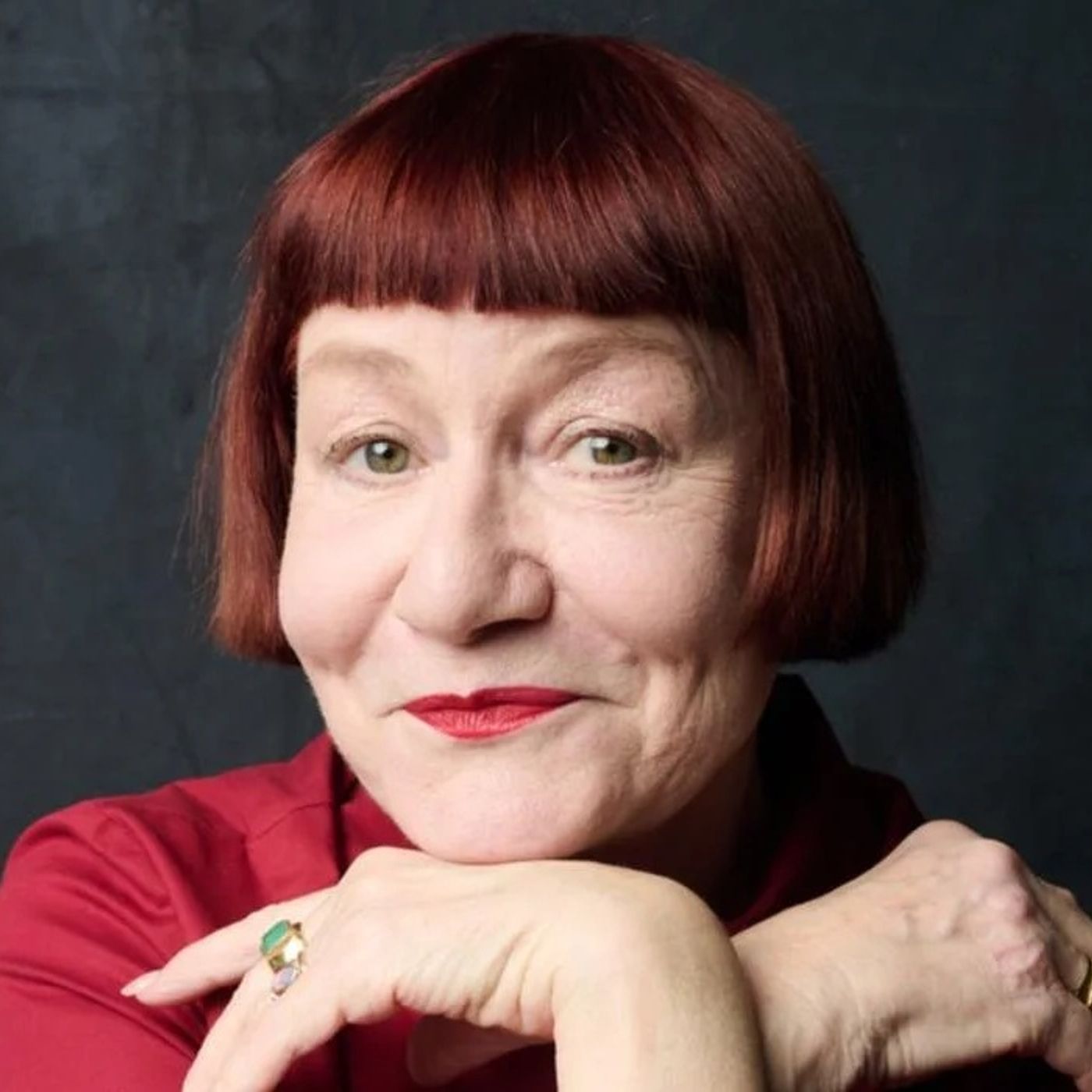
About this episode
And while we each continue to do our own thing, we also delve into… Federico Fellini, Roger Daltrey’s torso, Jules et Jim, Jubilee, Phyllis from The Office, tap dancing, 400 blows, Satyajit Ray, Shock Treatment, kindness is everything, Barry McKenzie Holds His Own, The Golden Egg, Summer of Secrets, Akira Kurosawa, Richard O'Brien, selling a milkshake at the right soda fountain in Hollywood, Jim Sharman, the shadow cast, Ken Russell, he kept looking at me with two different pairs of spectacles, Lisztomania, Ringo Starr paying for lunch, François Truffaut, science fiction, Derek Jarman, French new wave cinema and making out with Adam Ant.
Transcript
Automatically generated, so expect the odd misheard name.
Hi, I'm Linus O'Brien, and you're listening to Movie Meltdown. What's up? I'm Brian. And it's interesting timing, given that the last episode of Unsung Cinema, we were just talking to Linus about his documentary on the Rocky Horror Picture Show. And now this episode, I'm talking with someone I've wanted to get on the show for years now.
Little Nell herself. Yes, Nell Campbell has lived one of the more interesting lives out there. If you don't believe me, hit the internet and look up pictures of Nell hanging out with Andy Warhol, proving, regardless of what she says, she was and continues to be the center of coolness. A pop culture icon that has some amazing stories, and since she usually gets asked about playing Columbia, I mean, she's touring the country right now talking about just that, so I thought I would use this episode to talk more about her getting into the entertainment industry, as well as some of the other films she's been in over the years. And along the way, she'll mention some of her favorite filmmakers, and eventually we'll round out the episode with her Unsung Cinema pick, which she didn't want me to get too into the details, because she thinks everyone should go watch the movie and experience it for themselves.
Which I agree. So we won't throw out a full spoiler. Warning, just a light one as we keep that specific discussion to a minimum so you can listen to her recommendation and then go watch the movie for yourself. And maybe, in addition to a movie suggestion, Nell might also just give you some pointers on how to live your life. And I feel like she's lived one hell of a life, so she ought to know.
So let's hear about all of that right now as we talk with Nell Campbell. I usually start at the very beginning with people and just try to get a sense of, like, how they became interested in the arts and what they were into as a kid. And, I mean, from what I know, you started in Sydney, did you? That's correct. And then you sounded like you had pretty open-minded parents.
As far as, you know, the arts. I would think writers and journalists. I very little... intelligent, marvelous parents who encouraged us for children to, you know, do whatever we wanted to do in life. And I'm so blessed to have had the happy childhood I had. Were you already, like, I guess, when did all that kick in?
Were you, we know, we know dance came about later. Did you start with dance or was it acting or where, where. Did you begin? Well, I actually was very ill with hepatitis when I was 10 and after three months recovering at home, which I adored, and during that time I started watching, every day had a midday movie and I would watch, that's where my love for movies of the 1930s and 40s began because I'd watch Fred Astaire films and Ginger Rogers and Greta Garbo and old that whole niche of you know musicals and films and so and then once I was strong enough the doctor suggested to build up my strength I do dance classes so that's when I started ballet and modern dance and I was 10 and then when I was 18 I started doing um actually not 17 I started doing tap dancing classes too.
So as you're watching those movies that young were you Was it some sort of, you know, hidden away in your head that maybe you. Wanted to do something like that? Or was it something. Darling, I wanted to do... I wanted to be in show business since I was around two.
That was just so obvious that I was, you know, a showgirl. I had a very outgoing personality and loved to perform and loved to, you know, make up plays. Well, actually, my mother would write the plays and I'd perform them with my neighbour. So that was all within me from the very beginning. And at school, after when I turned 16, I left school, 16 and a half, and went to drama school.
So it was, and seeing all those wonderful performers in those movies, I was just like, yes, this is what I'm going to do. And that's why I wanted to study tap dancing as well once I left school, because I was doing ballet and modern and jazz quite, I was doing at least three or four classes a week, which was a lot. And so, yeah, that's my beginning to that. And then what else would you like to know? I was mostly going to get into films.
At what point were you... I know you were already kind of making stuff while you were still in... Before you went to Britain, you were already making film. No, I hadn't. The only thing I'd done before I went to London...
I left for London with most of my family when I was eight. I'd just turned 18. But... The only professional role I'd had was in a play, Alfie. So the first, I had a tiny role in a film.
I can't remember which was first, but I don't think I'd done any film before. I was in something called Barry McKenzie Holds His Own. But I think, I don't know if that was before or after Rocky, but it was just, you know, a day's work, so I didn't really count. And then I was busking in the streets of London when Jimmy Sharman saw me and then he saw me again just tap dancing in a restaurant where I was a waitress. And he was with Richard O'Brien and I was cast on the spot for Rocky Horror, this tiny little, it was the Rocky Horror show, which was a tiny little musical that he was going to be directing.
I'm sure you've discussed Rocky so much over the years. I thought I would try to hit some of the other stuff around, especially the early 70s into the 80s. You were in a lot of really interesting films. So aside from Rocky, I guess, or around that same time, which one did they shoot first? Was it Rocky or Listomania?
Listomania was after Rocky Horror. Listomania was just a total treat, directed by the great Ken Russell. whose movies, well, I actually prefer his black and white documentaries on composers that he did for the BBC, I think, before he started doing his crazy movies. Though I loved Women in Love at the time, but I think his movies went a bit over the top. But anyway, I was thrilled to be cast in Listermania and, of course, my scene. I was in bed with Roger Dolch, who had the most divine torso.
Which is what's bringing you. I think I see how this is all coming together. Yeah, and then he and I are in bed and then the Pope rushes in and the Pope is played by Ringo Starr. So I can't believe I don't have a still of me with Ringo and Roger. But Ringo then did take us to lunch at the studio canteen. which I was thrilled that someone else was picking up the tab, and why not a Beatle?
Yeah, Beatle Trump 2 member. He's got plenty of money. He'll be fine. Yeah. I heard he lost a lot of money, but that's another story.
I've heard differing stories on Ken Russell, so you seemed impressed with him, but how was he to work with as a director? Well, I wasn't. When you say impressed, well, he was a very successful filmmaker and I was thrilled to be chosen. When I went to audition, I took with me these Japanese books that opened like concertinas and that I had stuck photographs from photo booths I used to pose in, in different attire and completely different looks. And I would do them in a way that I would each photo, they were long strips, not flat. not two next to each other.
They were like one, two, three, four photos in just a long strip, one photo beneath the next. And I would do my head in one and I'd quickly jump up and do, it was like playing heads, legs and bodies, what I would do. Anyway, he loves these and I'm sure that's what got me cast because I'd hardly done anything. Anyway, that was great. And I'll tell you another audition I did that it didn't lead to a role, but it was fun to do.
It was, I auditioned for Fellini. Oh, nice. And he kept looking at me with two different pairs of spectacles. He'd look at me with one pair and then he'd take them off and look at me with another. But curiously, the person he cast for the role was the woman that answered the phone in the casting director office that we were all sitting.
Isn't that a hoot? I guess you never know. I guess who else got cast like that, who's made a lot more money from her casting? And that is, I'm trying to remember her name, character in the American Office, Phyllis. The terrific actor Phyllis.
She worked for the casting director and she would read with the actors that were doing reading lines to be videoed to show them to the directors. And she ended up being cast. Isn't that great? I mean, that's the legend of movies. You know, anybody can be a star.
Yeah, exactly. Exactly. You don't just have to be selling a milkshake at the soda fountain in Hollywood. Tap dancing while you're waiting tables. Yeah.
That's how Lana Turner got discovered. I think a lot of those early actors, that's what everybody did. Yeah. Well, then I recently watched Summer of Secrets sort. Of around that same time.
Oh, my God. Yeah. That's so good. I figure that's at least hanging out on the beach, you had some good stories. Well, that's so funny.
I haven't seen that film since we made it. And, of course, your listeners, to the listeners that don't know, which will be, I would imagine, every listener listening, that's also directed by Jim Sharma, who directed the Rocky Horror Picture Show, which... No one, sorry, I mean, you'd never guess that, would you? I was surprised, especially coming as quickly behind Rocky as it did, how similar, you don't realize it, but eventually it becomes a very similar story. And of course, one of the actors, one of the Transylvanians is one of the main actors.
Yeah, yeah, your other one of. The main four, yeah. Well, no, one of the Transylvanians. Well, I mean, in this movie, the main forecast there, he's the other guy. Oh, right, right.
Exactly, exactly. But yeah, I just thought that was interesting just because it was so different and most of it just kind of hanging out on the beach in the first half. And then you get to that really strange and kind of unusual ending that you didn't see coming as it started. So, Carrot, please just keep asking me questions that you'd like to know about movies I like. Because I'm just going to start telling you what movies I like.
So I was living in London in the 70s, right? I arrived in 71. I was 18. So you can do the math from then on. But I was around very much for the French new wave cinema.
And this was when people, you know, before we all had smartphones and computers, it was the only way you'd see a movie. Obviously, you went to a cinema. And it was a really... It wasn't that expensive at all. And you so wanted to see, you know, a new movie.
But if you were interested in, you know, there was a new French movie out. We all used to go to the cinemas that showed foreign films. They were fantastic. Like, you know, even older movies like Jules Agin. I mean, Truffaut did so many great, the 400 Blows.
And then I used to love going to Kurosawa films and Sajit Ray, the great Indian director. So foreign films are very much something I've always loved. And I continue to love and watch. I much prefer seeing them on the big screen. But mercifully in Sydney, they have retrospectives of great directors.
And anyone listening, I urge you to... Jump in on a foreign film to take yourself to another time and another country where everything's so different. And I mean, of course, Kurosawa's Seven Samurai. Is that what it's called? It is called Seven Samurai.
I'm so used to that. What's the American version is? What's the American version? Magnificent Seven. The Magnificent Seven.
Yeah. So many of his have kind of been unofficially remade into our movies. That's right. And that's just the most wonderful film. I recently saw it again at the cinema at a Kurosawa Retrospective, which was so fabulous.
But, you know, a lot of fans of Rocky Horror are sci-fi fans. And I'm not really a sci-fi fan. And I was curious that Rocky came under that category. You know, I understand it more now. And I was asking somebody... what is their passion about sci-fi?
And when he described it, it was exactly how I describe the joy of reading a book or of being taken to another place, another period, you know, a totally different country. That's the sort of how I like, you know, when I read books or when I go to the cinema and I realised that But that's exactly how sci-fi people see sci-fi movies. That's their version of going to another period in another place. But to me, theirs is more like magic. It is sort of magic.
It's a little more fantastical, yeah. Yeah, exactly. And now I totally understand. I've always appreciated that they love something that is not my genre. But I now understand that we all come from the same place in how we like to travel in our minds.
And I always encourage people that haven't the joy of reading books because I'm so lucky that I was brought up by a very literary... My father, he was a journalist in one of his jobs. He was a book reviewer. So I grew up in a house full of books and I just... I have a passion for reading and I wish, I hope I would just, if one person listens to this, could this go, you've got libraries, you can get eBooks and libraries as well as, you know, the hard copy.
I just urge you to start reading on any subject that you enjoy. Yeah. I mean, I, I've gotten so far away from books, but being into film, like, like you were saying with the immersing yourself in a different time, that's, that's one of my favorite things about film is like specifically watching older film because it puts you, it gives you that snapshot of that place and that time and the people that were making this film. And like, it's so immersive into a culture that's totally different from yours. Yeah.
Oh, exactly. And that's why going to like Sergeant Ray takes you to India in an entirely other period. It's just fabulous to see how people live doing. And when you see, The early Kurosawa movies, they're showing you, you can just get a complete feel for what Japan was like, you know, 80, 100 years ago. And to me, that is like science fiction pretty much, if you think, and of course, all the, what they used to wear when they went to battle, et cetera.
Yeah. I've done that recently with a movie. It was a very different time and place because I rewatched Jubilee. And oh that was wild wasn't it. That was one of those as I was watching it though I was like I was like this really does like time and a place like it is it is in a different country for me it was in a very different like even if it wasn't a different like people it was definitely people that were experiencing a different life than we have.
Now yes and that of course is the director Derek Jarman and his movies were very avant-garde really what would you would you consider them avant-garde? Yeah, it was, I mean, it was a mixture of that punk mentality, but also very theatrical, yeah. Yes, that was a lot of fun to make, and Adam Ant was in that, that was the beginning of his career, really. I figure that was your selling point. You're just there to make out with Adam Ant, we know.
Well, not really, that was a very, I mean, he was just a kid that, And so was her name. Oh, anyway, but it's got a lot of interesting people in it. Were you involved in that scene any? I mean, that was definitely a very specific punk scene. Oh, God, no.
I've never been involved in any kind of scene. You make the scene. Come on now. No, I just do my own thing always. I've never followed fashion.
I can look back on all photos of me and my you know, my haircuts, my incredible dyeing of hair. There was only three of us in London that had bright, like neon, neon, neon colored hair. Zandra Rhodes, Janet Street Porter, myself. And then, I mean, that was way before punk, but yeah, just doing your own thing is, I encourage it. And I think that's what's so, one of the effects of knockoff, sorry, knock on effects of, Rocky Horror that encourages people to do their own thing and express how they feel.
That's really, really important. Yeah. I mean, that's become almost more than the movie itself. It's just sort of what it stands for. Yeah.
But also, of course, when children are at school, they understandably very much want to feel that they are accepted and one of just like everybody else. and look like everybody else. And it takes confidence to recognize that you're different. And that sense of being different can mean anything, whether it's your interests, whether it's your sexuality, what's your parents, your ethnicity. The great thing is that you should be proud of being different. I mean, it comes to it, I've always, felt completely individual, but I'm so lucky that I grew up in such a loving family that I embraced the feeling of being different.
Yeah, if you're encouraged. To me, it was a plus. So I had an, you know, and I had also, I had an extrovert personality, so it was a win-win for me. But I completely sympathise with people that feel more vulnerable, and particularly when, you know, they're at school, when everyone's trying to fit in. And I just, I'm so upset when I hear about people being bullied.
And I met a friend's son recently who's 21, and his pronouns now are Ray, and he told me that he was at English boarding school and was totally bullied. And I just was so shocked. I mean, sadly I wasn't shocked, but so disappointed that people still bully people for reasons like that. And I guess those English boarding schools still, and American schools too, you know, it's the athletic boys that get the athletic males that get the attention and other, you know, if you're not that way inclined. I mean, there's some stuff that's changed, but, but it's still, just when you think we've made a little progress, you hear a story that's equally as bad as it was decades ago.
That's right. And I think because in general, America is such a conservative country that it's very, it's still hard for people to come out to their parents. And there was, I mean, so many people are homosexual and bisexual and, you know, a lot of people now feel that they're born in the wrong body. I just think people should be able to express themselves and be what they are. I mean, it's, you know, particularly for transsexual people, it's an incredibly challenging journey for them and for their families.
And they need all the love that they can get, you know. And they shouldn't be judged harshly because, I mean, you would not choose that journey on yourself because it's a very hard journey. Being homosexual is an easy journey, really. I mean, you've just got to, as long as you're, I mean, it's just as long as your parents and family accept it, which of course any educated or sophisticated person does. But, you know, I don't, I feel badly even saying that because of, You know, if your parents aren't educated, that's one that just sympathises with them.
And also so many people are religious and all religions to me are cults. I'd say that a lot actually. As you should. And the only good cult in the world we know is the cult of Rocky Horror. Obviously.
But anyway, I just, it's all about being compassionate and understanding and And I think kindness is the most important quality a person can have. And I always encourage young people, you know, teenagers, when you're looking for friends and also especially in your, well, not especially, but also in your romantic relationships, you know, when you meet somebody, of course, you're much more concerned about whether you fancy them and you know, want to hang out, enjoy their company, then you're not necessarily looking for kindness, but you will find as that relationship continues, that kindness is the most important quality they could have. I mean, that's going to come into play way more often. So absolutely.
So you need to, you need to look for that from the very beginning and also, you know, be kind and tolerance. I just, I, I, I make such an effort to be tolerant when perhaps my impatience, which I read is not a, it's not something you're born with. You decide whether to be patient or impatient. And I'm sort of impatient by nature, but I really make an effort to not be impatient. And I was on a bus in London and someone was, you know, had their phone going and didn't have AirPods or anything in and it was just, you know, scrolling through movies and videos or Instagram or whatever.
And so we were all having to listen to it. And I thought, no, no, just don't say anything. Sit quietly. That person will be either getting off the bus or you'll be getting off. It's just because I think that everyone's become so intolerant now.
And that's why everything's becoming so explosive. Well, people just don't understand anybody else's perspective and don't care most of the time. That's correct. I know that my daughter reminds me to be like this too, that you can't judge somebody by your values. No, you have to be kind of open-minded to what they're going through.
People have no empathy either. They don't have any idea what somebody else is going through. On a daily basis. That's right. That is right.
And so just because I was brought up knowing that you shouldn't do this and you shouldn't do that, and if someone's behaving, you know, they weren't necessarily brought up that way or feel that way. Therefore, I can't judge them by it. Well, again, the rocky world is always open-minded. I did recently re-watch Shock Treatment. I wanted to get your take on that one.
Oh, well, it's funny. It's funny you mentioned I was talking about it over breakfast because I was... staying with Richard O'Brien in New Zealand earlier this year. And I said, Richard, I have to confess, I have no idea what shock treatment is about. And he went, no, nor do I. That sounds like him.
So we all know how brilliant, well, how original it is. But I do think that it's a shame that they didn't sort of edit it i think it's too complex that what's going on in it because it is ahead of the truman show it's very much yeah that's what i'm saying yeah everyone i think a lot of people recognize that and i think that um but there's just too many characters too much going on and but the the uh the it looks brilliant again with the brilliant sets of Brian Thompson in costumes of Sue Blaine and the songs that Richard O'Brien and Richard Hartley wrote are just fabulous. Yeah. And the visuals are amazing. Like I just noticed this time, like how many of those great shots in the hallways and like all the weird.
Specific set design stuff is so impressive. I totally agree. There's a lot to be said for shot treatment, but it's just a shame it wasn't a bit simpler, I feel. Yeah. When I forgot how much Rick is in it, working.
With Rick Veal. Yeah. And also, you know, Jim, Jim had offered the lead role to Tim Curry, who sadly declined. And I think if it had starred Tim, it would have been a whole other thing. Yeah.
I mean, by that time he was already in the middle of his music career too. It was so busy. He, you know, but I'm not talking about, I'm talking about the fact that if it had had someone with the charisma like Tim in it it would have been a whole different world game definitely yeah yeah yeah because that's you know Tim brings so much charisma to Rocky and also so does Meatloaf in his very small role which I so wish had been bigger um in Rocky Horror he's so fantastic in that yeah. He was always an underrated actor like all of his performances were really impressive. I haven't actually seen him in anything else, but every time I see that bit of him in that, I go, oh, my God, he's so charismatic in just the way he looks at the camera, everything about him.
Yeah. So I guess before I go, I wanted to mention, you know that year when you said, oh, what do I consider an underrated movie? Yes. Alright, if we're getting into the movie, I will usually give the breakdown. So, our unsung cinema feature is The Vanishing.
The year is 1988. The director is George Slyzer, and they plot, according to IMDb, Rex and Saskia, a young couple in love, are on vacation. They stop at a busy service station, and Saskia is abducted. After three years and no sign of Saskia, Rex begins receiving letters from the abductor. It wasn't necessarily underrated.
I would, definitely in this country, again, I feel like America in general is always sort of undereducated in the ways of international cinema. So it is one of the few that a lot of, it kind of broke through, maybe the only Dutch film that broke through around that time. But even then, I would still say it's massively underseen by people. So it was then remade. And of course, I didn't see the remake, but I would like it to be noted.
I mean, as someone that, I love psychological thrillers. And that to me is the best psychological thriller I've ever seen, The Vanishing. And I thought about that film when I left the cinema. Hitchcock would love to have made that film. Oh, yeah.
Just up his boulevard. So I really urge anyone listening to try and see it and forget about the remake the Americans did. It's called The Vanishing. And is it– does it come under a Dutch movie? Because it's set in– I.
Think it actually had trouble. I think they were trying to submit it as foreign language film to the Oscars as the Dutch entry, but it had so much French language in it, they disqualified it. So it is a mixture of Dutch and French. That's what I was thinking. I wasn't sure if it came under being a French film.
But the director is Dutch. That's right. And it was based on a Dutch novella called The Golden Egg. And the film is originally, I think, called The Golden Egg, believe it or not. Anyway, I think that's what it was called when I went to see it.
But anyway, it's called The Vanishing. I know it's listed as kind of like one of the scariest movies ever. And it gets into like pure evil. Like he's got that theory of like you can't be a good person unless you experience, you know, at least the thoughts of evil and choose not to do it. I just wanted to get your take on that.
First of all, I want you to know that I'm very interested in, I suppose, as a generalisation, serial killers, but I'm not at all interested in the gory details of murder. I'm far more interested in why the person is committing the murder and how the murder is tracked down. And the amazing thing about The vanishing is that you get both sides of the story, which is very unusual in a movie to the degree you do in this particular film. And I've never seen that in another film. And I'm not going to give away any more.
No, it's impressive the way it sets everything up. That's right. Even within the character, it's like the character himself wants to know what happened. It's figuring out the murder, figuring out the mystery. And like, are you willing to.
Don't say another thing. The fact, I think people, the reason it was so terrifying is that it's such a, the way it all, the way it starts, the very gentle way. And then you see it suddenly, everything, we can all identify with what, how it all began. Yeah. And how much he loves her.
Yeah. But know how the original situation starts. You're just stopping in a gas station. So from there, you know what I mean? But I think that everyone can identify.
That's why they feel. But it's not a gory. It's a psychological thriller, which is, to me, far more effective. So I'm here. I'm in Detroit right now.
And I'm on a tour all October, this spectacular tour. where I'm doing solo appearances all around America. I'm in Toronto. And then I'm also joining Patricia Quinn and Barry Bostwick in some of our venues. So you can either look at my Instagram, at Little Mel Campbell, or my website, some name, or go to the Stander website to get all the dates of where we're appearing. It would be fabulous to meet you.
And it's a really fun night. It's like a party night of, fancy dress and meeting the three of us or just one of us and getting a photo with us and an autograph. That's if you do the VIP meet and greet. Otherwise, it's still, if you just get a regular ticket, it's a whole party scene with the shadow cast performing in front of the screen. The shadow casts are amazing.
They take their roles very seriously and they're so imaginative. And there's a Q & A with, you know, on stage with whoever is in that particular show with either me or me and the other two. And so there's lots to enjoy. So I hope you can come to one of the shows. That includes you.
Definitely. I've seen some clips of it. It looks like you're getting involved a little more than your regular Q & A. There's some dancing going on, I've seen. Oh, well, just you don't want to give everything away.
You've got to get some surprises. But that's, yeah, that's impressive because not everybody usually, you know, get up there and sit in a chair and, you know, just answer. No, no, no, no. We like to give everyone a good time. Yeah.
Well, thank you for joining me. It's been an absolute pleasure. And to those listening, just remember to try and get out of your comfort zone in every way in your daily life. And in your choices of what movies you watch and what books you read, because the more you know about anything, the more interesting it becomes. I used to have any interest in sport.
And then I was my mother who was very interested in every sport, having four brothers. I was watching the world cup one year with her. And ever since that got me into soccer. And I'm also now very interested in tennis. And I even enjoy watching golf, all kinds of things.
So it's, You know, once you start following something, it's amazing how more interesting it becomes. And the more things you're interested in in life, the more interesting your life is. So curiosity is the great key of everlasting youth, I think. Yeah. It is the fountain of youth.
Absolutely. It's the fountain of youth. Definitely. So onward and upward with all of you, and kindness is everything, and health is the most important thing to it. So look after yourselves.
Okay. Well, thank you very much for having me on your show. It's been an absolute pleasure. No problem. Thank you for joining us.
Thank you. Okay, then. Bye. Bye. You heard her.
Get out there. Live your lives. Be interesting people and open-minded and accepting of others. That's not that much to ask. Otherwise, that about does it.
We will return next time. Thanks for listening. This episode is a production of Movie Meltdown. Produced and edited by the Oddity Studios. With music written and performed by Andrea Davidson.
For more on how to sponsor or support the show, email producer at newlymeltdown.com.
Similar episodes across the network
Matched by shared keywords.
-
Halloween II (2009) — "Man was meant to eat meat. We, all of us, have a little bit caveman in us."
1 shared keyword: horror
-
Halloween (2007) — "Behind these eyes one finds only blackness, the absence of light. These are the eyes of a psychopath."
1 shared keyword: horror
-
Train to Busan (2016) — "At a time like this, only watch out for yourself."
1 shared keyword: horror