About this episode
Transcript
Automatically generated, so expect the odd misheard name.
Hey, we're out. Semper Fi, do or die. Hold them high at 8th and I. Gunnery Sergeant R. Lee Ermey here.
This is Movie Meltdown. You better pay attention or I'll drop your ass down for 25. It's showtime. The following feature has been rated R by the Motion Picture Association of America. It is intended for mature audiences and parental discretion is advised.
Our nuclear reactor pumping out one million kilowatts of power. What's up and welcome to Movie Meltdown. I'm Brian. I'm Sterling. I'm Greg.
I'm Lucy. I'm Fred. I'm Christian. I'm Dave. And we are coming to you live via digital recording from the Dreamland Film Center in And yeah, we are back with more of the crazy activities.
I'm going to get right into mine. I have my geek activity and I was pretty thrilled with it. And it leads to this week's interview. I recently got to hang out with Arlie Armey. And I wasn't really prepared.
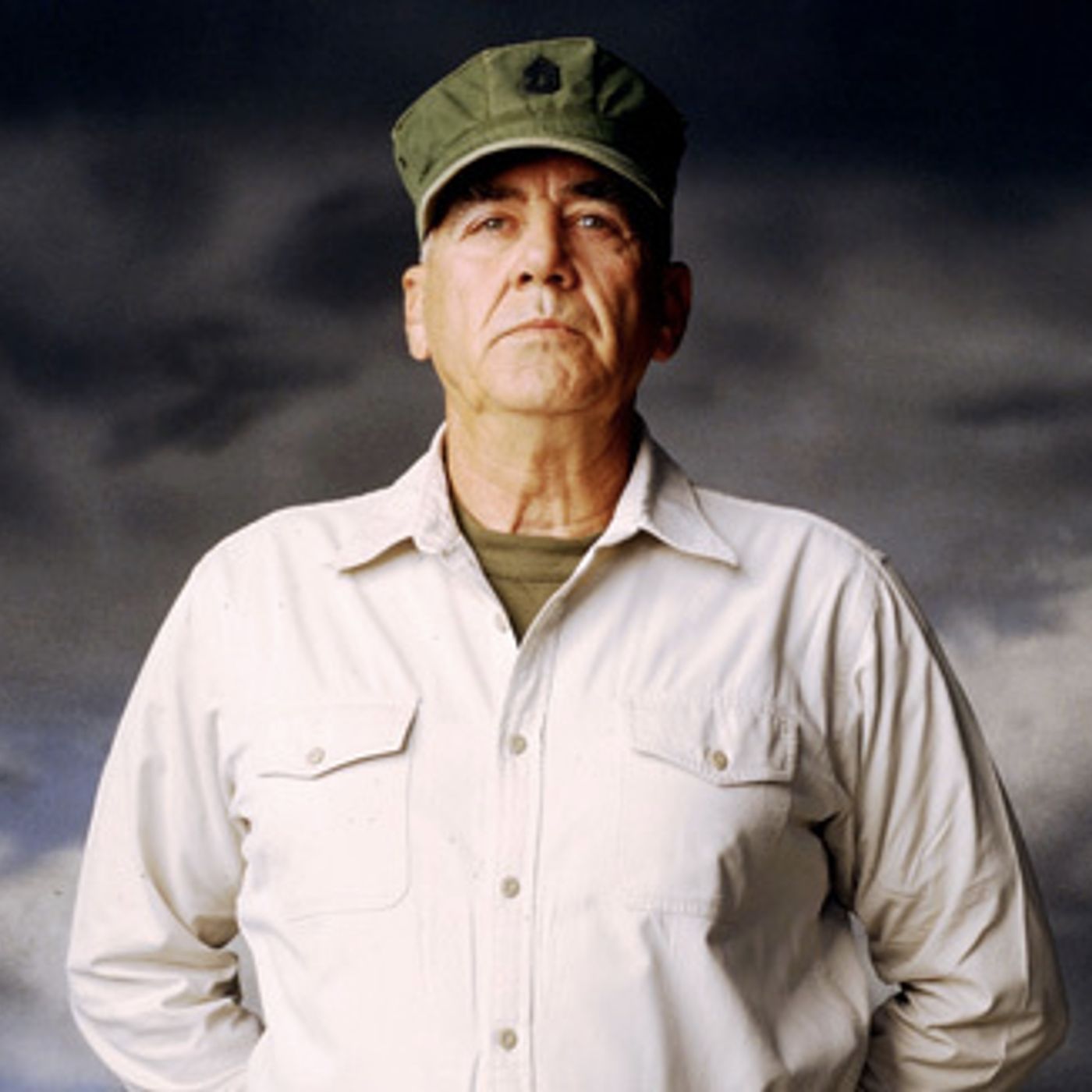
I didn't know it was coming. And next thing I knew, I'm standing there talking to the gunnery sergeant himself. And he's quite a force to be reckoned with, I have to say. So I'm assuming everybody in the free world knows him from Full Metal Jacket. But then looking through, he's got a... ridiculous amount of credits to his name as time's gone on so um yeah i i figured at least for a few minutes we would have to uh to talk to him so any arlie comments before we get into it i'm a fan.
Seconded yeah i think there's going to be an entire generation of people that that's the voice of military to them. I think it has been really like any, any time you need somebody, like it's just such a tie in that. Yeah. It's, it's kind of amazing that we found like this one person. And even when they get somebody else, you're kind of like, Oh, they couldn't get earlier.
Yeah. I mean, it's, and I think the thing that sealed it, probably the reason why I say generation is like my nephew and younger is, is the toy story. I think that because then they're eventually going to see things like Full Metal Jacket. They were raised always with that voice. And I think there's never going to be an escaping that.
It keeps coming back to him. I mean, that's kind of what I address with him is just sort of like the fact that he's sort of this character that flows through all these different movies and he's not the same guy. But he kind of has that, you know, he's almost the same spirit of this military man, and he gets enforced into all these different roles. You're experiencing, you know, the shades of army. You've got the family-friendly army, and then you've got the TV version, and then finally you work your way up to full metal jacket.
Fully blown. Yeah, I mean, which he really does focus a lot. I guess the kids will know his voice really well, because he does a lot of voiceover stuff, and he's in SpongeBob, you know, and he's like, he does so many like kid friendly titles now that like, it will be interesting when they grow up and are scarred by full metal jacket, like everyone else. You know, the only other voice that I could think, I mean, it's a distant second would probably be, uh. Keith David.
Cause he does a lot of the army over, you know, the commercials and things like that. And he, he always plays that general kind of guy in films. And stuff like that. So he has that voice. And even presence, but nowhere near.
I mean, light years away from. Yeah, he's still not as recognizable. He's just voice, visually. Yeah, anything you need military, he's thrown in the middle of it. And it always works.
They obviously know what they're doing. Well, I think we'll just get into that. We will go into our interview with Arleon. We're here with Early Army. Just kind of go back to the very beginning here.
Born in Kansas, is that right? That's affirmative. All right. And then I guess, were you one of those kids that knew going in what you wanted to do in life, or were you just sort of figuring it out early on? No, I had no idea what I was going to do in life.
I was trying to get away from the law, and I needed to get out of town fast. The judge kind of recommended that I go in the military, any branch, and I chose the Marine Corps. And that was pretty early on. Were you even 18 yet at that point? I was 17 years old, just freshly 17, 17 at about a week.
I guess as you went into it, I mean, you did training and you were sort of a drill sergeant. Then at one point you actually go to Vietnam. No, I've never been a drill sergeant. We'll clear that up right away because I was in the Marine Corps, and the Marine Corps has drill instructors there. The Army has drill sergeants, not just like Army drill sergeants, but it's just that there is a difference there.
One's Army, one's Marine Corps. But anyway, you know, I went to Vietnam. I spent 11 years in the Marine Corps. I came out, I got retired out of Vietnam, got hurt, and came out a better man. And the Marine Corps gave me a lot.
As a matter of fact... I probably would have been a total failure in life had it not been for the Marine Corps. And my drill instructors worked me over pretty good. I can believe that. It's worn off on you now, hasn't it?
It has, yes. And I was a drill instructor for three years myself. So as far as I'm concerned, probably the greatest tour that I spent in the Marine Corps. It was fantastic. I mean, how was that a few years later once you're discharged and you start making movies, a lot of which were about Vietnam, how...
Strange was that having actually been there and experienced it, you know, in your own horror, and then having to, like, reshoot a fictionalized version of it. Well, it made it real easy. Actually, the films that I got on early on, I was signed on as technical advisor. Well, of course, technical advisor, you must have one, you know, in military films. It's got to all be correct.
And it got to the point where I would rewrite scenes that were incorrect. And then that evolved into putting me in front of the camera because I did it quite well. And it just worked out. Now I was an instructor in the Marine Corps, so you understand standing in front of a camera really didn't bother me too bad. So I didn't have any problems with stage fright or anything like that.
And it just worked out real good. One thing led to another, to another, to another. Stanley Kubrick. Got ready to do Full Metal Jacket, and he called a director friend of mine that I had done two films with, Boys in Company C and Purple Hearts, and his name was Sidney J. Fury.
And Stanley Kubrick called him and asked about me. Next thing you know, Stanley was calling me and asked me if I would come over and work for him. So that's how I got Full Metal Jacket. One thing, you know, it's like one thing leads to another. Yeah.
He's a very specific, he was definitely a very specific type of director and very specific the way he wanted things. How was he as far as working with you? Stanley Kubrick was one of the only directors that I never heard these words out of. That's good enough. Let's move on.
If it wasn't, we'd shoot the scene. And if it wasn't perfect, then we didn't move on. And all the other directors that I've worked with, well, that was pretty good. That was good enough. Let's move on.
But Kubrick was a perfectionist. He insisted that when the scene entertained him, then it was perfect and it was time to move on. But Stanley was a prince of men to work for. He was phenomenal. He squared my young butt away and educated me.
I worked for 14 months with Stanley on Full Metal Jacket. I wrote everything that I said in my role as Gunnery Sergeant Hartman. But I was also a technical advisor slash writer slash actor on that film. So my fingerprints are all over the film, and it was a great film. And what happened, we're talking 32 years ago, and the film's still going strong.
Warner Brothers tells me that it sold more DVDs and videos than any other thing that they've shot. So, you know, that's a pretty high compliment for the film. I won after I did Full Metal Jacket I got won the best supporting actor of 75 I think it was Boston Society of Film Critics and I got a nomination for the Gold Gloves Award so that just bang all the doors flew open and I've been working ever since. Well, I mean, you have some of the most memorable dialogue in cinema history. I mean, you said you did pretty much all of the writing on that?
I wrote Gunnery Sergeant Hartman, yes. Did Kubrick fight you on any of that, or did he want to change anything along the way? Stanley Kubrick insisted. I rewrote a couple of scenes. Next thing I know, he insisted that I rewrite all of the scenes in Boot Camp.
So it just worked out pretty good for me. And you sort of disappear in that first half, but you were still, were you on board, like, watching them shoot the technical stuff as the advisor when they did the battle scenes later? Well, the thing was, we shot the battle scenes first. And then we did the boot camp sequence after we shot the battle scenes. So I was there for the full 14 months.
I was right there. So I wasn't going anyplace. Um, but as far as technical advisor before that you were on apocalypse now, what, how different was it working with Coppola? Uh, Coppola was a, uh, a raving maniac. Uh, what happened?
We had a typhoon that came through, uh, IBA, uh, the Philippine islands when we were right in the middle of shooting and poor Coppola, he was going out of his mind. It blew all of our sets away and just destroyed everything. He had to stop filming. He had to come back to the States and hockey cars and his houses and everything he owned, I guess, to get enough money to come back and finish Apocalypse Now. But Francis Ford Coppola makes good stuff.
I mean, he's a great director and he was perseverance. We'll put it that way. He was not about to let something like a little typhoon blow and he sets away to, deter him from finishing his film. But I think Apocalypse Now came out pretty good. And they were still going through their own battles and stuff.
Was it dangerous during the shoot? You know, safety is really of the utmost importance on a film set. Nobody, no director, no producers want to see anybody get hurt on their film set. So, you know, it's pretty much when the actors, when we were blowing things up Pretty much the actors were far enough away where they weren't about to get hurt by any of the explosions and everything. I was going to ask you, you've sort of created this character that runs through a lot of different movies.
How different is the character from you yourself? You know, I was a Marine drill instructor. So, you know, when it comes to playing a Marine Corps role, pretty much that's the way it was. That's what, you know, the character is different. what I had in the Marine Corps. So not a heck of a lot of difference.
I played doctors, lawyers, judges, you name it, pretty much I played it. So I played a gay homicidal high school football coach in Saving Silverman. They sent me that script up and they asked me if I would play the, they described the role was description of the role was that of a gay homicidal high school football coach. And I scratched my head and said, well, you know, I really haven't ever played a gay, homicidal high school football coach. Maybe I give this a whirl.
Maybe it'll work out for me. So it worked fine. I had a good time doing it. It was fun. That was, yeah.
It sort of found its audience and probably brought you to a whole new audience as well. Well, the thing is, it was a comedy. I love comedies. And I had to kiss Jack Black in the film. It took 17 takes.
Jack Black is just not a good kisser. I tried to teach him, taught him everything I know, and he still didn't know a darn thing. But I want to point out that the old gunny will certainly not be coming out of the closet anytime soon. So that's a redeemer on that. When I kissed Jack, there was no wetness, no tongue.
It was civilized. You heard it here. Jack Black, not a good kisser guy. You've also worked in a lot of... Voice work now, you've kind of moved into doing a lot of different animated things.
How have you taken to working, you know, when you're just behind the microphone? You know, I did three Toy Stories. I've done Batman. I've done a whole bunch of voiceover work. And all I can say about that, the voiceover work is the hardest part about it is the drive to L.A. and back.
Because it's so quick and so easy. You know, you don't have to memorize anything. It's right there. It's on the script right in front of you. So you really can't screw that up.
Do you see that character coming back? In your mind, is he the same character, like in The Frighteners, is he the same character coming back from previous roles, or is he an entirely different guy? As the Sarge, you know, coming back there, is he like, in your mind, like the ghost of a previous role? No, no, he was pretty fresh, this guy. He was in charge of, he was the guardian of the graveyard, you know, he was a pretty cool character.
He had two machine guns, and yeah, he was fun to play, and... Jackson. I'll tell you what, Peter Jackson, as far as I'm concerned is the greatest director in the world. And I think, uh, he's made his mark so far. And I think, uh, before it's over with, you're going to see some more really fantastic work out of Peter Jackson.
He is phenomenal. Great director. How was he to work with for you? He's a nice guy. He's, uh, he's very extremely creative.
He owns, uh, he owns his own studio. Uh, He's just a great guy to work for. He's always got a smile on his face. He's a happy guy. He's got a family.
He's a married man with children. His wife is a sweetheart of a gal. I mean, you know, he's a well-rounded individual, but I think he's a genius. And I think we've got a lot, we'll see a lot more from Peter Jackson before this is over. I mean, Lords of the Ring, come on.
He was shooting three movies at one time. That trust me that can get complicated i don't know i don't know how he could possibly do that there's only one of them and he was there for every shot every scene and and i just i respect him more than any director that i've ever worked for next to stanley kubrick um. i guess just uh... tell people what what all you're working on now what you've got going. Well, I'm pretty much tied up as spokesperson for SOG Knives, which is the best damn knife out there as far as I'm concerned. I'm a spokesperson for Glock Pistols. I work with Victory Motorcycles, TruSpec clothing, and nothing but the best.
It's really good stuff. If I didn't think it was the best, and if I didn't use it, I wouldn't tell you to go buy it. That's the way it works, but I stay involved. I turned down 10 films last year because I'm getting so busy, and my schedule's pretty well set up by about February. I've got my schedule for the year, and I do a lot with the military, and I do a lot with law enforcement and fire departments, and I just, if I take a movie, that means three months out of my life, and that means that I'm going to have to cancel a lot of stuff with the military, law enforcement, and fire department.
I just don't like to do that, so I've done 75 movies. If it's not a primo when I read the script, if I don't think it's going to be a total smash, I just won't bother with it because I've done good stuff up until now. It's not like I'm broke, not like I need the money. Back in the old days, I'd have to take anything that was thrown my way. But nowadays, I'm extremely particular about what I do.
And, uh, that's the way it's going to stay. If you see my name on a movie, better go see it because it's a kick-ass movie. Um, and then you've got your own website. I saw, are you selling, uh, is that the alarm clock feature you can put on your phone? You know, I don't really, I, I gave the website, I got so busy that I just, I had the website going.
We designed the website. We got it all going real good. And I turned it over to my manager and he runs the website. And, uh, I sign everything that goes across the website. That's about the only involvement that I have with the website anymore is he'll come up to my house with cases of stuff for me to sign about every two or three weeks, you know.
And so I do that for him, try to keep him in business. And it's a little income for him, which is okay. What is the website, I guess, just to push that for people to find you? Yeah, the website is rleerme.com. Go there.
We've got a little PX on the website. Pictures, if you want pictures or something, sign by me. Motivational figures or I don't know really what all they have on the website anymore. But I sign it all. All right.
Well, I think that was about all we had. Thank you for talking with us today. It's been a pleasure. Thank you. But not for voting.
You don't believe in war. But what's that gun you're toting? And even the Jordan River has bodies. Floating. But you tell me.
Over and over and over again, my friend. You don't believe we're on the. Eve of destruction. Don't you understand what I'm trying to say? Can't you feel the fears I'm feeling today?
If the button is pushed, there's no running away. There'll be no one to save with the world in a grave. Take a look around you, boy. It's bound to scare you, boy. And you tell me away.
Over and over and over again, my friend. You don't believe we're on the eve of destruction. In a nuclear attack on this country, one of the greatest threats would be radioactive fallout. While heat and blast effects of even the largest bombs would have a definite limit, any area could be threatened by fallout. The large number of weapons which probably would be dropped in a full-scale attack would produce fallout, ranging from light to intense over much of the nation.
Radiation produced by nuclear weapons presents a revolutionary threat to our country. In an enemy attack, it could become a direct threat Fortunately, there are means of protecting ourselves, means so effective that civil defense officials believe everyone can survive fallout if they take a few simple precautions to protect themselves. They called it the war to end all wars. They called those who died in it The lost generation. This is their story.
The story of Paul. He wanted only to create, not destroy. I didn't want to kill you. Forgive me, comrade. The story of Kat.
A veteran soldier who had everything to live for. What about you? Back to the cobbler's bench? Okay. And the children.
The story of seven young men who enlisted for their fatherland. Seven boyhood friends who were part of a generation marked for death. But who had no wish to die. Simply, a story of war, as honestly as we can tell it. They said of Eric Maria Remarque's great novel, All Quiet on the Western Front is the definitive expose of war.
We say it is much more. I want the truth. May I never come back. If he wasn't killed instantly. All Quiet on the Western Front.
Stars Richard Thomas, Ernest Borgnine, Donald Pleasence, Ian Holm, Patricia Neal. My boy. They called them. The lost generation. They should not be forgotten.
Want some music for your ears? Doo-Wop Shop makes it easy to rent for any event, business meeting, or special occasion. From PA systems to karaoke machines to just about anything that makes noise, you can rent it from the Doo-Wop Shop. In Louisville, find them either at their Highland store at 1587 Bardstown Road, or in the East End at 2915 South Hurstburn Parkway. And look for them online at doo-wop-shop.com.
Doo-Wop Shop. We're serious about music. Wonderfest. Our other business at hand, we, as you heard, have Dave here with us, and we're also coming up on the next big Wonderfest, so we thought we'd let you tell people what you've got going on this year. Okay.
Got a pretty mixed bag this year. While the country seems to be becoming overrun with genre-oriented conventions. There's a lot of them. I go to many. And, you know, they're all great, and there's room for everybody, I think.
You're just different, though. At least for now. We're kind of going the other way, whereas most shows are very celeb-oriented and very autograph-oriented. We really can't compete in that arena. I can't pay these kind of upfront expenses and fees anymore.
So, if anything, we're folding back on what we've always have been, which we are a hobby show. Yeah. Primarily guys who build model kits or guys who work in special effects, which is a shrinking business as well, as you saw from what went on at the Oscars this year and all the protests that are going on with VFX. But we've kind of occupied our niche even more, and it takes us back to our roots, and we're happy with that. So we've got a lot of different things going on this year.
Jerry Anderson, who was a producer and a showrunner back in the 60s and 70s, passed away. He produced a lot of fun shows that people grew up with like space, 1999 and UFO back in the seventies. And before they know the weird super marionation puppet shows like Thunderbirds, Captain Scarlet and stingray and all these amazing shows that went on back then. So we're, we've got one of the authorities coming, Anthony Taylor, who's a regular visitor. He's coming.
We're going to do some presentations about Jerry. We're going to have a lot of displays of some of the props and costumes and things from those shows over the years. Uh, I've got, um, Sarah Karloff coming in, Boris Karloff's daughter. She hasn't been with us for about 10 years. So it's going to be kind of neat to have Sarah back.
We're going to be concentrating on Boris's later career in the 60s, which is the era she was mostly around for, and the era when I first was aware of him from The Grinch and Thriller and all those shows he did back then. And she's thrilled because she's about Frankenstein now. She's tired. She's tired. of talking about the classic era, because. It's all anybody ever wants to talk about.
And there's a lot of great stories from the 60s, because that's when Boris kind of came into his own. He was such a superstar at the time. Are you talking about stuff like Black Sabbath and the Crimson Death? Or, sorry, Crimson Cult? Yeah, those.
Also, the Corman pictures. He did The Terror. He did The Raven. Right. And comedy terrors.
I'm going to be showing The Raven on Saturday night, which is really one of my favorite movies. It's a very cool comfort movie. From my childhood, because you've got Peter Lorre and Vincent Price in that as well, and Jack Nicholson, one of his first roles. Nice. And all the episodes of Thriller and things like that that he did.
And Targets, which was one of Peter Bogdanovich's first films. It was actually very good. That's a cool movie. I've seen it. It's a great movie, because Boris owed something like two weeks' worth of work to Carmen, and he told Bogdanovich, go off and write a script.
So he wrote this terrific script about a sniper at a drive-in theater. He was meticulously planning to kill people at this horror movie festival. premiere and boris essentially plays himself i think his name is byron orlock yeah it's it's a weird setup for it's about classic horror versus the new horror and how he literally confronts this this gunman it's a really cool picture uh got that going on i've got a lot of special effects guests uh john eves he's a regular of ours he's a designer he worked on iron man 3 this year he worked on the new track movie which is opening that weekend He's going to be working on the Star Wars films, but of course he's been sworn to silence on all that stuff. We may actually torture him in a public venue.
Could I be there for that? People will sign up for that. He owes me, so we'll see. He owes me for some other stuff. Also, the prop builder from the new Trek film is coming in.
He just joined us and he did all the new phasers. He's working on the new Godzilla movie. He's doing all kinds of cool stuff, so he's. Going to be there. Lee Stringer, who's a A VFX producer did Firefly, the new Battlestar Galactica, all kinds of stuff.
He's coming in from Thailand because the industry is moving out of the country. It's all going east. And he's been there for a while. And I think Eric Chu is going to be back. Yeah.
We're going to try to rope him into doing another episode with us. He may fight it. It's a lot of fun. We like it. John Goodwin, who was the makeup supervisor on CSI, We'll be coming back and doing some live makeup demonstrations.
I've got Lee Merriweather from the 60s. She was on all genre television back. In the 60s. She was in the Time Tunnel. She was the first cinematic Catwoman in the 67 Batman movie, which is the first movie I ever saw.
But you knew? Lee Merriweather would be a really interesting person to talk to. Yeah, she's cool. Her daughter is a professional stuntwoman. She's done a lot of work in the industry, so she's going to come.
We're going to do a Q & A with her as well. So a lot of cool stuff. I'm looking forward to it. Also the Alley Theater. We have a Sunday night event.
It's a post-show party we do every year. And starting last year, Alley Theater did a terrific job. Star Wars in 30 minutes, I think. 60 minutes, yeah. 60 minutes.
Yeah, we cut it into two sections and did that last year. It was great. So they're going to be coming back this year for Sunday night and doing Flash Gordon and Commando Cody. So we're looking forward to that. Yeah.
It will be fun. I'm in that troupe, so you'll see me pretend to improv. Yeah, you've got an appreciative audience there. Everybody's so geeked out. They're very familiar with the source material, so I think you'll really enjoy the response.
We had a great time last year. Yeah, we're really looking forward to it this time. Wonderfest is still the annual expo for model and toy collectors, with a huge display and competition for plastic kits and garage kits. So go to wonderfest.com and check it out yourself. If you're enjoying this podcast, perhaps you'd be interested in GleeCast.
You watch your tone, young lady. Hey, we're not forcing you to download the internet's best, or at least most booze-filled podcast about Glee. You want to be me. Who doesn't, Sue? But we know we can't be.
Instead, Erica and Emily. Uh, Emily and Erica. Who am I? I just don't know anymore. I'd love to stay in chat, but I got a satellite interview.
Sorry, we get off topic a lot. The point is, listen to Glee Cast following every new episode of Glee. Plus our sporadic bonus content on some of the greatest bad cinema that incorporates musical theater or sweet dance moves. I'm going to ask you to smell your armpits. The right or the left?
That's the smell of failure. Failure. Failure smells like dove mine has a pleasant lady speed stick scent kind of makes me think of candy canes. Your resentment is delicious. Visit gleecast.podomatic.com or search for us in the itunes store that's gleecast with a k part of the palaver.com family that's p-a-l-a-v-r.com.
Boy the only thing missing from this place is a couple dozen bodies limed and rotting in shallow graves under the floorboards. We're working on that Hey everyone, this is Jeanette Goldstein and you are listening to Movie Meltdown. Look man, I only need to know one thing. Where they are. Any time, anywhere.
It's part of your problem, you know, you haven't seen enough movies. All of life's riddles are answered in the movies. Now, on with the show. Trying to get to you But I won't wait forever You gotta let me through Now I've been diplomatic But I don't know what for If. You hurt me Then just watch me I won't take no more.
Do they do that anymore where judges are just like, you know, probably be a good idea for you to join the armed services. Like that might be the best thing you can do right now. Cause maybe it needs to be done a little more actually. Yeah. I mean, I'm sure there are all kinds of, you know, issues with like the longterm of like, you know, what happens when you're asking your, your neighborhood drug dealer, okay, well we can send you to jail for all this time, or you can just join the military for a couple of years and get a college degree afterwards.
Like, you know, there are all kinds of questions of what might emerge from that. But there's many a person that could benefit from that actually. But still, I think to myself, like, like how hilarious would it be if like, I don't know, like I did something awful. And then like, I'm sitting there in front of the judge and he was like, You know what? My best recommendation right now is that why don't you just join the Marines?
We got this thing going on in Afghanistan and all that. We could just ship you right over there right now. The things we could do to you will pale in comparison to what the Marines will do. The Marines will beat the hell out of you and hopefully you'll get your act together. I have to imagine that from that commercial that he did, the commercial spot a couple of years ago where he was like, I forget, it was a series of like, these guys should not be this.
It's like, your drill instructor should not be your therapist. And it shows him sitting there, like, chewing out this poor woman, like, lying on a couch, like, sobbing her eyes out. And then he, like, grabs the box of tissues and, like, hands it to her. At the end. And I'm like, man, I kind of want him to be my therapist.
Again, that's showing how many ways he's, like, infiltrated into pop culture now. Like, every performance goes back to that same general idea, you know, that, like, you know, thing that he has but. Yeah he's made himself he is the archetype of that. Thing he's the archetype he's the icon and it's testimony to that power is who remembers the second half of Full Metal. Jacket yeah because it pales in comparison.
It does pale I remember it but. It does pale in comparison it does it's two different movies even It sort. Of gives up on what it's trying to do. Yeah, because it doesn't even feel. All of a sudden it gets sentimental out of nowhere, and it's like you've earned the opposite of that.
It's a weird move. Can we just chalk it up to Kubrick's a strange guy? That's true. But he knew how to direct that first half of the movie. Something I've always noticed not too many people bring up is that Full Metal Jacket is actually a rip-off of a made-for-TV movie called Tribes.
Jan Michael Vincent and Darren McGavin. And that whole segment, the first half, is basically that TV movie from the early 70s. Jan Michael Vincent. Tell me Darren McGavin plays the... He's the D.I.
Oh, nice. Now I do need to see this. He can curse, but in any way. Is it all just nonsense? Is it all just...
Jan Michael Vincent! Papa Sam! No, it's kind of like, you know... As best as TV will allow. Yeah, it's Vietnam-era stuff, and it's flower power versus authority.
Nice. He's a little more caring, but it's all about those conflicts that come up. But when I saw it years later, I was like, whoa, I've seen this. Interesting. Basically the same story.
Now we need to come back to that one. That's kind of awesome. Yeah. So, yes, thank you to Early Army for giving us his insight on all of that. That's a lot of weird stuff that he was involved in over the years and a lot of really interesting projects.
And we're even going to come back to them. I've got one we're sort of going to return to with them. So, yeah, there's another Early Army performance that we'll return to in the near future. So we're back, and it's time for The Grind. The Grind.
In this segment, we discuss a specific topic or question related to movies. And this week's topic comes from me, because I talked to one of the actors most synonymous with the military, and I thought we would continue on a general discussion about war movies. And since Arleigh Armey is associated with movies centering more around Relatively. Speaking, modern era war. We'll focus more on somewhat modern era, say World War I through today, but we can stray if need to for conversational purposes.
So, yeah, where would you like to begin with war movies? Huge topic. Well, I'll begin with like a. War story. It's the return of the soldier after the war.
One of my favorite French movies is The Return of Martin Gar. Mm-hmm. And it's a soldier returns after the war and there's some question whether he is the soldier. It's something that, well, I don't want to spoil it, but I will. I think you've actually spoiled it on a past episode.
I remember you already spoiling this one for me. It's a great movie and it's got a great question. You can't really. Spoil it because you can watch it, you can know everything. It's actually based on an actual case and there's a book about you know they still have the legal records of the trial and of course the Simpsons spoiled it with Skinner's backstory is essentially the same.
I do kind of remember that. He was in the army. That's right. And I believe a judge recommended he go into the army. I think that is exactly what happened.
Because Skinner was like a delinquent. Yes. And a judge sent him into the army, and his pal in the army died? Thought he died in a foxhole. Oh, yeah.
And, yeah, by the way, this is also all, excuse me, spoilers for anyone not on this planet. This is all also Don Draper's story, more or less, is the guy who sort of absorbs the hopes and dreams of someone else. Except, of course, in Skinner's case, it was like sitting there being told all the wonderful things about being a school principal and, you know, living with your mother. So great. Oh, it's fabulous.
But they denied that it was, the writers denied that it was based on Return of Martin, where they said it was based on a Borges story that I can't remember the name of, but it was a similar situation. Being based on a Borges story to me is like saying it was based on a Poe story. It's like, sure, I'm sure that something like that is in there. I've read the story, but it seems a lot more like the Return of Martin Garth. Okay.
I don't remember the name of it, but yeah, that's, I mean, that's one version of a war story there. And that's just the, the one that's one of my preoccupations. Well, I mean, it just became such a huge industry there for, for years. And like, it seems like it changed moods midway in, like you have, you know, that run, I mean, they'd been around forever, you know, since they started making film, but you had that run of, that hit probably like the John Wayne era. And it became a very different thing.
It almost became recruitment films. It's very different the way they present war. Ever since really the beginning, you've had films like All Quiet on the Western Front, which is a very compassionate, humanitarian sort of story. But all along, starting with World War II, where film was the art form, the mass art form. You had that other kind of film, like Flying Tigers and all these other pictures that Wayne did at the time.
Instead of going off to war like most of his cohorts, he stayed home and made pictures, which people love to bring out. And that kind of held the whole genre for about 20 years. Probably up through the Vietnam era, where it became expedient to do some more anti-war horror movies. Well, it got to where they didn't want to make any. It seems like at that point it wasn't...
Yeah, there was that whole. Movement in the late 60s and early 70s where they didn't want to make war movies or have war toys. Imagine that. They didn't want any of that stuff. Yeah.
Another one that looms large for me is Henry V, because there's the Laurence Olivier, and then somebody comes along. And it was like a recruitment thing. I knew some people who told me they were. I think it's... England and Scotland, they were bused from school to go see the Olivier version because they felt that this is about how we're going to win the war.
And it was shocking that, what's his name, Branagh made another one. That was just such a ballsy move to say, yeah, Olivier made a nice movie. I'm going to make another version of it. Well, that's Branagh for you. He's just like, eh.
Yeah, I mean, it's Shakespeare. I can do it my way, and it'll work. That's why he's perfect for the role of Lockhart in Harry Potter, by the way. I don't know. I was going to say.
Actually, that's one of the reasons. It was all preparation. No, the role he was born to play. It was. It's like, I'm a pompous ass, and I don't care.
It's perfect. See, I thought it was perfect prep for his directing of Thor. Oh, my God. I need a bunch of Viking gods bellowing at each other in a technicolor landscape. Well, obviously, Kenneth Branagh is the guy to call.
And that segues into a Natalie Portman love story. But I thought that was a great version of the movie. And it's kind of an anti-war version. But I do think also that nobody has ever done the complete thing where they... They kill the prisoners.
It's something that happens in Shakespeare that nobody really wants to mention. They always cut that part. At some desperate point in the battle, they're just like, fuck it, let's kill the prisoners. But they don't... It's too real.
Yeah. They always keep in how the enemy kills the boys, the messenger boys, but they always leave out the part about the English killing their prisoners. It's funny to think what Shakespeare's people would have said at that show. Yeah, it is funny. It's one of the things I like to say, whenever you're thinking about a Shakespeare anything, is remember that that's like back in the days when booing and catcalling and cheering was expected from your crowd, your audience.
So one of the first things you have to do whenever you approach a Shakespeare play is you wonder, well, when are they going to boo and when are they going to cheer? And that opens up some really interesting questions. Like in Hamlet... when does someone cheer in, in Hamlet? It's like, when do you boo? Who do you boo in Hamlet?
Like what? The porcupine. There we go. It's the porcupine. Um, you're so right.
Thank you. Let me ask back to that surreal image. Um, but no, uh, yeah. Um, so like in, in Henry the fifth or any of these war movies, that's, that's the difficulty of war movies I've noticed or, or one of the, the, the, there's a divide in most war movies. Like you said, there's that John Wayne era war movies where it's like war, uh, hero as superhero where, you know, you sweep in and you charm people, you say some tough stuff.
And then before you know it, the problem is solved and everyone's going home and the bad guys are beaten. This is also, you know, you see that in Indiana Jones movies and anything like that. It's like, you know, clever guys and industrious people versus bad guys, basically. You know, it was, it was, you know, not, uh, it was just not something to do to examine, you know, results in motivation in war movies until, you know, much later. Yeah.
But then that's the other thing though, is that, is that then when you cross over and you start making films, uh, like all quiet on the Western front or anything that has to do with that somber reflectiveness about warfare, that's when you see like the violence coming in and like the horrors of warfare being sort of touted and talked about in the inhumanity of it. But you never see, or excuse me, I should say you very rarely see, it seems to me in a war film, like, a combination of that, like showing the violence, showing the dehumanization and all the negative aspects of war while simultaneously, like in that Henry V moment, holding up like the heroism or the good guys in war. Like to me, that's one of the things that makes Henry V, for instance, a great play.
Like there's all this violence going on, both sides, horrible things are happening. And yet guys stand out and are recognized as heroes. Guys stand out and are recognized as villains. Like it's all happening at the same time. Hmm.
And that's a hard thing to do. That's why they usually cut that line. It's a hard line to walk and to pull off. But, you know, it's still interesting to consider or to think about. I think there's a definite line.
World War II films, especially, are easy to romanticize. We. Because we were clearly the winners. I mean, you know, there's no, you know. We were clearly the good guy.
Not only that, it was the good fight. And I've said that a lot lately. I was like, there's not been a war since then. And people haven't questioned. Nobody questioned World War II.
We had to go do that. If you question, especially the European front of World War II, who's good and who's bad, you're just an asshole if you question it now. So. But we questioned it a lot in the period. We had to really talk ourselves into getting into that war.
But that's also funny. That is the pacifist question, though. It's like, well, what would I do in World War II? What do you say when there are Nazis about? Is that still a moment to stick to your guns and say, you know what?
War really isn't the answer, guys. We really should just sanction Nazi Germany. That's a hard question. Before Japan attacked, we had our own German internment camps. There was way too much gray area, but afterwards it was like, oh yeah, we were always against the Nazis.
No, we weren't. When I was writing the book on War Eagles, I talked about that. This was a film that was very anti-Nazi, but there were laws on the books that you were not supposed to denigrate the Nazi government as early as the mid-30s. And this is 1939, and it was only until after they invaded Poland. They're like, oh, well, go ahead.
Because the film studios, which were largely Jewish-run concerns, still had good business going on in Germany and other places, and they didn't want to lose the European market. And nobody knew what was really happening. And Hitler in. His rush to rebuild or to try to rebuild as best as he could with the state-run government was just making lots of economic deals with people right and left. And one of the things we tend to forget about that period, too, is that the Nazis' platform was, like many platforms, was built up on many different ideological points.
It wasn't just driven by racism. It was also driven by species of economic and cultural reform that were very common in many governments and cultures in the West at the time. So there was a real question. Britain at the time, if anything, looked like the old guard. They were the old imperial power.
They were Victorian England in a lot of people's eyes. They were sort of outdated and stuffy. And Germany looked like it was going to be the wave of the future. That's where you had all the modern philosophy coming out. All of the modern filmmakers that we talked about with the Black Cats started in Germany.
That's where all the futurism was occurring, literally, even in art. All that stuff was going on there. So, you know, it makes sense in a sense that, like, of course, Americans would be a little bit divided as to, well, who do we side with in this conflict? Until, of course, you know, Germany starts, you know, invading Poland and we start saying, oh, wait, that's what this leads to. You know, that's what this means.
You know, it's, you know, policies and contracts written and then contracts immediately subverted and destroyed. They started Blitzkrieg. And they started rolling over all those countries around them. And then it's like, well, we sat back too long. Yeah.
If this is progress, then we need to change. But again, as far as film goes, though, it's so easy to feel so good about World War II and World War II films. And most men or all families had someone that was there. And so that's kind of like the easy win. Hey, let's make a World War II film.
And everybody's going to love it. Everything since then is just so gray and so disgusting, and you can't pin down who's right. Maybe we were the bad guys. The one that sticks out in my mind, I think because I'm still young and thinking, hey, war movies, yay America, and I saw Born on the Fourth of July. I had so many questions.
I hated it because it was. It opened the door to that. Maybe we're the bad guy kind of thing. And boy, we treat our own like crap. And, and so, um, I think that was for me that first moment of, um, that ambiguity of war.
And I know historically it's not, there's so many other films before that, but for me growing up, you know, I, cause like I, like I've mentioned before, I had the, the tape of Red Dawn, and I put that thing in every Saturday. And we acted it out with the kids in my street. It was the greatest feel-good kids' idea is, yeah, we can do this too. It was our cops and robbers or cowboys and Indians. It was us versus, you know, it was like real kids being G.I.
Joe. And then you see Born on the Fourth of July, and it's like you grow up really fast. And that one's almost like anti- everything like not just the anti-war message but even when he's in battle like you get that moment where he gets injured that first injury wasn't that i mean it would have sucked he would have gone home he would have had a limp but he wouldn't have been but like it's only when he stands up and has to be the gung-ho like hero that he ends up getting himself really like that's why his entire life is ruined at that point if he just would have laid there they would have sent him home he would have had a cane. It's like when he has his big John Wayne moment and stands up to be the hero is when it ruins his entire life.
And it's like you never saw something like that in an older era of war movies. It's pretty rare. You've got to go back to people like Sam Fuller. He was making interesting movies in the late 50s and early 60s and addressing Korea in a steel helmet and fixed bayonets. His last big war picture was the big red one back in the 70s, which is really good.
And he would show some of the gray aspects of ideology versus reality. But it was rare, and he was kind of a fringe director. But it was getting out there. For me, the only movie that kind of walks that line where it both glorifies and shows you horror is Patton. It's one of my favorite movies.
And since it's basically a character study, it's about what's in this man's life and his mind. And. it's incredibly well written, you know, Coppola wrote it and Friedkin, not Friedkin, but Franklin Schaffner directed it. And it's just, it's made in 68 right there in the middle of Vietnam, but it still shows both sort of the glorious aspects of what we were trying to do. Plus just obsession. And when Patton says, you've got help me, I love it.
So it really puts you right to the center of, of, of what makes people fight. It reminds me, there's that movie coming out soon. Uh, That's all about MacArthur in Japan. And that first like month after the war was over in Japan would basically, the question was, do we, do we let the Japanese keep their emperor or not? Because of course, you know, like my, uh, cause, cause you know, in that period, and that's funny too, cause for me, like my grandpa was actually on the, was on the, uh, uh, Japanese front.
He was going to be one of those guys who climbs up to trees and like sees how many of the enemy there are. Yeah. They got a really long lifespan. Um, But so when they drop the bomb, like, all those guys are over there for the brief moment, and they're thinking, like, do we let them keep the emperor? Sorry, do we let them keep the emperor?
Do we not? So, because if we don't, then they might incite a riot, which at this point would just be a massacre. Like, it would just be our soldiers just shooting at peasants and farmers, like, and whatnot, because... that's what I'm told actually is that when the boats were off, off the shores, like, you know, and, and, and we were like that close from invading Japan, like there were the peasants, they saw them like massing in numbers, like on the beaches, just like with pitchforks, literally just standing there waiting for the Americans to start trying to come over and going like, how are we going to do this? And at all, try to feel like we're the good guys. Yeah.
Well, there was, there was also like a situation that again, I'm sure they didn't make public at the time that like, when they were trying to make that decision, there was also, there was this weird thing within Japan that like, if we as a country become dishonored, that we also must take ourselves out. Like they were like, part of what they were decision was, was that a huge portion of the country may have committed suicide if they felt that their leader was dishonored and they, That was their only show of solidarity, was to also kill themselves. They were like, well, how are we the good guys there? It puts us in a weird situation. How are we the good guys if we get to the enemy country that's been attacking and bombing us, and then they've killed themselves due to defeat?
How is that any kind of. It's a weird. mixture of just two very different. I don't know. To me, that just seems so emo on the part of Japanese. This is me.
It's a fine line between, uh, Japanese emotional blackmail. Emotional. I love, I love that you just referred to Sepiko as like emotional blackmail. Oh, you're, you're, you just killed yourself to make me feel bad. I was a cutter, but now I'm moving it up a notch.
Um, By the way, apparently the Japanese emperor does do a public declaration every December 8th over there. I think it is December 8th. He does a public declaration. He apologizes to his people. That's a thing still.
The emperors of Japan still apologize for World War II to their people. They say, hey, we screwed this one. We screwed this one. We fought a war. We lost.
It's our bad. It's not you. But no, there's... I was just watching, by the way, talking about that ambiguity. I was just watching.
I feel like we can't talk about the subject without talking about the movie Zero Dark Thirty a little bit. But weirdly enough, I don't want to talk about Zero Dark Thirty. I don't want to talk about Catherine Bigelow's earlier film or one of her earlier films, K-19, The Widowmaker. Just saw that picture for the first time. And it's another one of those pictures that I have a very powerful, ambiguous relationship to because Harrison Ford and Liam Neeson both deliver knockout performances in it. it's got a lot of intensity and it seems to speak to a lot of stuff that, um, does and doesn't fit into a traditional war movie.
It's like, it's, it builds itself by the soundtrack and by the ending and certain other things. It's like a standard, like look at these men standing together and being heroes or standing up for their men or, you know, things like that. But what that movie is about is about a submarine, uh, about to melt down and like, people dying trying to stop it from melting down and possibly precipitating world war three and then no one finds out about it the whole thing is hushed up because it's soviet russia no one wants to talk about like their near misses and their failures and their mistakes in that point like just like our government at the time yeah um uh and now But, you know, it's a film about victory and defeat.
It's a film about people who succeed despite getting none of the credit and despite, you know, having to suffer tremendously for it. And it's like, what do you say about a situation like that? You know, there's that wonderful moment where Harrison Ford says to all of the men who we know will die of radiation poisoning because they went in there without any suits on to fix the leak. And he says, you're heroes. You're all heroes.
And then we're told later the Soviet government not only refused to recognize them as heroes, but they scrapped the entire mission and burnt the documents. And none of these guys got any credit whatsoever for averting a nuclear holocaust. It's an interesting movie because it does kind of loop around on itself. You're on this side and you're thinking, okay, well, this is the guy we're supposed to be behind. And then midway in it sort of shifts and you realize, oh.
Okay, wait, he had our best interest in mind. So it does sort of change at a point with that urgency coming. It's pretty interesting. It's a very interesting film. Like Catherine Bigelow, she's the next director that I really want to get into and sort of really spend some time with. with, especially since, actually, we're going to be doing Point Break Live again at the LA Theater this summer.
But, yeah, but there's, like, her films, like, Zero Dark Thirty also seems to me to have an element of that victory and defeat, because apparently they started out making that movie just about the ampuities of the Iraq situation. They were just going to make a film about, like, okay, here are some people looking for Osama bin Laden, here's some torture going on, here are some people striving to figure this stuff out, and then we got it. And they were like two-thirds into making the movie, and they were like, well, what do we do? Well... We'll just make it with the ending of They Got Him.
I guess we finished the movie. So now we have a film. Which should be a film about the one great triumphant moment in the last 10 years of that war, which is like, ha-ha, that guy got killed, like the guy that we were looking for actually got killed. but instead it is this incredibly ambiguous, strange, dark film, uh, about the uncertainties of whether or not anything we're doing is ever going to pay off. And it just happens to pay off. It looks like, so I don't know, maybe that's just the kind of war movie we have to make now, you know?
Well, that's, I mean, going back to her that she's done two in a row now, like that, that same thing in the hurt locker was what we referenced earlier. That is nothing but about why we do it. Like, More so the soldiers individually. You think of how horrible it is, and then you're like, it's nice to be honorable, but why would you go deal with that? And then it's sort of examining how attached to that life that they get, whether they mean to or not, whether they want to or not, it becomes your life.
And then it's like, well, how do I do anything else? It's rare that you saw movies sort of examine that. Yeah, that's a different take on it than most people have to do. I recently saw The African Queen, which I had never seen before, but had a bizarrely specific idea of what it was, and I was completely wrong. It's kind of like a war romantic comedy.
Those are hard to make. I've never managed to see one myself, I don't know. Well, it's just this mismatched couple of people who I thought it was going to be bleaker and a little tenser, but they seem to get along pretty well. It's got a lot more of a Gilligan's Island feel than I expected. It's pretty low-key, but it winds up having a team up to try to sink this ship.
But the thing it reminds me of, and I've probably mentioned this before, is like the shift in war movies in terms of relationships, like romantic relationships. If you look at Casablanca and The African Queen, it's like, well, I guess two people, the concerns of two people don't amount to a hill of beans. That's not true anymore. The movies we make now is, Oh, the affairs of the whole fricking world don't amount to a hill of beans compared to the interests of two people in love. We've got like the English patient and what cold mountain is another.
One of those. Fuck the war. I'm going to go find this check. Yeah. It's a complete reversal in the way we've looked at like individual relationships against the backdrop of world events.
Well, it's, I see that that's happening on two levels, though. It's that on the one hand, we see you want to tell the story of the one relationship that's going on and the conflict, it doesn't matter. But then you also have those deconstructionist films which want to take a look at a big world conflict and talk about it in terms of just two people really just having an argument in a room and it blossoms into this enormous... A lot of biopics and stuff like that seem to go that way. of just like, well, all this stuff really comes down to the fact that Stalin had mom issues or something. It tries to break things down to a set of relationships.
I don't know. I think the question that raises for me then is, Cold Mountain is a great example because it begins with that great image of the charge at Petersburg. Is it Petersburg? It's something like that, where where the Yankees blew that enormous hole in the Confederate lines. It was a giant ditch.
And Grant, who is kind of, you know, I say this even as a deep Southerner, like he's an underrated military guy. He just orders his troops in because he knows the hole will fill up. And then they'll just be able to walk across the Southern lines. And it's like, that was one of those, that was actually one of the reasons why we were hesitant to enter World War I. we knew that's what trench warfare was is ordering troops into a hole until it's filled with bodies and you can just walk across it. Like it was this incredibly horrifying mechanistic thing.
And that's of course the perfect moment for Confederate soldier to just go, you know what? Fuck this. Like fuck all of it. Like whatever we were fighting for, it doesn't matter to me anymore. I'm getting out of this.
This is madness. But then you turn to the hurt locker and it's like, well, there's actually this kind of person who, for whom this life, suits in which case do wars just get fought because like that's such a weirdly um i want to say like subjective subjectivist you know you know there is no objective truth sort of way of looking at warfare it's like well why are wars fought well because there are people in whom in whose nature it is to fight them there are people for whom war is a thing and that happens there is no larger There's just a bunch of relationships which are very confusing and make you scratch your head when you leave the theater. And people who are okay with the idea of going out every day and being in life-threatening situations.
And there are people that will put them there. There's a different group of people who will put them there. Aware of who can be used as cannon fodder and who can't. And I worked on a Civil War documentary ages and ages ago where we went out marching with a bunch of... and it was weird to fall into step with those people because it began to kind of come up in you. You kind of felt like a soldier, and you kind of understood the mechanism.
You understood what marching in cadence meant, and you realized that probably every guy in that line had some personal reason for why he was going to war. It may not have had to do with the overall political situation. It may have been proving something to someone. And that is useful to the people who run the wars. Fred's idea of the individual greater than the war, I think that reminded me a lot in Saving Private Ryan.
Because I think a lot of people in war are looking for a purpose. And why am I here? And I think whether that story was true or not, it didn't matter. I think finding... some reason, well, we're going to get this guy out of here because it's the right. Thing to do.
We can't do anything else, but we're going to do this. I mean, I know my father. He. Was in Vietnam, and he doesn't really like war movies. And I think somebody brought it over and said, hey, watch this.
And he said, I'm not watching that. I don't care how good it is. I think it was because he started watching, I think, the beach scene or something like that. It's just... just too real. Um, that one in particular.
Yeah. Right. And, and the, the only other moment, cause that, that moment in that, I was like, wow, I, I don't like this anymore. And, um, the only other moment that I've had that with, and it's a far less lesser of a, of a film, but still has some good things about it is, um, in enemy at the gates when he's, he's not handed a rifle. Um, he's told, well, one of you gets the rifle, the other one picks it up when he falls, you know, and you know, that happened.
That's not just an invention of Hollywood. You know, that happened. And I don't like this anymore. I don't want to think about those sorts of things. It's too real.
Even though that that was a overly romanticized film, you know, you know, it didn't matter. It just, it, those are images that I don't know. I don't, I don't feel good watching that necessarily. Yeah. It would be interesting to see what a contemporary director would do with War and Peace now after seeing what I thought was a fairly passable Anna Karenina.
I still haven't seen that. It won me over. There are parts of it that are kind of goofy, but the editing is really, like, you're never aware of any exposition. I'm a huge fan. Of the novel, so I was really hesitant when I saw, like, First it was Keira Knightley, and then I saw that like, and I give cred to Keira Knightley, even like, you know, she takes on some pretty serious roles, but it's like, it's like, I see it's her.
And then like, I saw the first poster, which looked kind of like a Disney princess poster. And then I saw that in the poster, avoid giving any spoilers if I can, but in the poster, of course, Anna Karenina is standing right in front of a train. And I was just. Like, oh, come on. Please.
Actually, a friend of mine said, you know, the movie seems... obsessed with trains. And I'm like, are you. Familiar with this story? Lord. But then I saw that Tom Stoppard was working on it.
I saw that later. I was noticing the writing as we went along. It's like, oh, this seems kind of... He pulls out one line... And it's like, oh, God, that's such the perfect line to convey what's going on in that scene.
And Levin's relationship with his brother. And they film the birth of text messaging very nicely, which is in the book. Like when Levin and Kitty are talking to each other and they just like they do the first letters of words. Yes. And they can tell what each other are thinking.
And it's so romantic and it's so beautifully filmed. The guys in it are disappointing, though, because Vronsky looks like a little gay soldier. Sounds about right. Like a little gay French sailor is what he... He's just mousy.
Sorry, I'm one of those guys who comes away from that book without much of an opinion of Vronsky. The coolest thing about him was that Anna decided to date him. But he's supposed to be dashing, although with Tolstoy's genius. He always does this. He later introduces Vronsky's brother, who is like the taller, more attractive guy.
Oh, yeah. Because nobody is like, nothing is ever clear-cut. It's always life-size. That's one of the great things that you mentioned about filming War and Peace. Because even in Anna Karenina, he mentions that Levin, in the beginning of the book, he mentions that Levin had fallen in love with each one of the daughters in turn he fell in love with the oldest daughter and then she got married he's like okay he fell in love with the middle daughter and then she got married again he fell in love with kitty and kitty was the one he was coming to the house to see today and she turns him down she turns him down and then he's like wracked with pain and all this stuff happens and then eventually they come back together and it turns out it works you know it's like it's like there's this there's this humanism that isn't easily interpreted in his works.
Like, you know, did, was he just kind of lucky with his infatuation with Kitty that he actually happened to get infatuated with someone who's worthwhile or, you. Know, so War and Peace is also kind of riddled with those questions, you know, of like motivation and what exactly, like, because there's so many characters that you can take one side or another on. And I don't know, that's, It seems to me that that's really difficult. Like when people try to do that in a war film or any kind of film, we always wind up, it seems, with something bleak. Yeah.
There are some film versions. Like there's that Soviet version that's really long. But the casting is so good in it. Because with Tolstoy, the characters are so vivid, like you just see the actor and you go, oh, that's. What's his name?
And you don't know the name because it's all these Russian names you can't fucking remember. If it's a Soviet version. But you know who it is. It's probably so long they're still filming it, even though you started watching it. Yeah, the government bureau of film propaganda has yet to churn out the final copy.
But it survived the fall of the wall and it's still just like trying to finish this movie. But Yeah, no, but that's the thing, sorry, trying to bring it back to, like, the only filmmaker, one of the only filmmakers I've seen who's done that sort of ambiguity, at least for me really well, is, we just mentioned one of his movies, Enemy at the Gates. Yeah. Come on, name somebody who... room full of movie geeks. He also did The New World.
He's doing that film that's coming out soon called To the Wonder. He did Tree of Life. Terrence Malick? Terrence Malick. What is Enemy at the Gates?
I don't know what that is. Is that Malick? That's not Malick. Was that not Malick? I don't think that's Malick.
Oh, I just got confused. But he did do The Thin Red Line. The Thin Red Line. Thank you. Sorry, my brain did a total fart.
I was like, that's not a good enough Yeah, because, wait a minute. Ray Fiennes is in Enemy of the Gates, isn't it? Yeah, okay, yeah. Terrence Malick wouldn't do it. No, it's...
Joseph Fiennes, right? No, it's... He was in everything there for five years. Whoever he is, he's fine. He's fine, yeah.
Ralph. What am I... I'm having a. Because it's... I'm holding my iPhone and refusing to check it because I just like...
I don't know if this movie is at all. Yeah, it's Jude Law and Ed Harris. When did this come out? Eight years ago. And it's set in.
Is it Stalingrad or St. Petersburg? It's the War of the Snipers. Yeah, the Snipers. Vasily Zaitsev is the...
I pulled that out of my ass. I couldn't remember Jude Law. I couldn't remember. Vasily Zaitsev? Yeah, and he was a real Russian sniper then.
And he specifically took out lieutenants and up. He wouldn't shoot at anyone else. And he became feared and it kind of was, was there not. By everyone else, just by the lieutenants. And privates didn't care.
Yeah. Um, yeah, that raises an interesting question that, yeah, I wanted to bring up Terrence Malick because he does for me like emotional ambiguity very well. And, you know, I'm wondering what would, what would he make of a war film or something like that? You know, what would he do with those emotional things? And we see in, thin red line.
There's so many layers to that. I mean, it's difficult, I think, for us to make a war film that shows different sides of a conflict, different interpretations of personal relationships and, you know, whether or not individuals stand out in the front or they recede into the background, all these, you know, and it seems like most of those wind up being a very bleak story. It winds up being a, you know, I wonder if there's not another direction for that. Like there, instead of patriotism or, you know, patriotic solidarity or like bleak, nihilistic individualism. Like if there isn't some sort of third direction for war films to go.
There's those characters that are just, I just want to get home. I guess that's probably the closest is, you know, I, I'm being as patriotic as I can, but really I just want to get home. There's, there's sort of that mid level with some of the characters anyway, that, you know, I I'm here because I'm supposed to be, well, that's like mash. Yeah. So mash winds up being the, yeah.
That's the alternative. And, They're just doing their job, but they just want to go home. And there's this kind of huge melancholy about the whole thing. What is it about the characters in some war movies that the supporting characters, that they're willing to... They somehow recognize that they're not the stars.
And they're willing to say. Yes, they're the one that needs to survive. Not me. Go, just leave me. He's Matt Damon.
He's got to get home. They're going to have a barely recognizable face. I mean, I really liked Barry Pepper in that. Why didn't he get to live? Why does it have to be?
You've seen him. I mean, he's no Matt Damon. Come on. It's like they're born as character actors in a world of war. And it's the fucking Brooklyn guy get to go home.
Yeah. Never mind. Because he's the one who was whining. The whole time. Because he's got a direct move.
Yeah, it seems that no matter what kind of war film it is, you have to have that stock group of characters. Yeah. It just makes it a war movie. Yeah. They make that joke.
Wasn't that a joke in Forrest Gump, too? Like where they're enumerating all the different places where the different soldiers come from. Then there was Tex. Yeah. I couldn't remember where Tex came from.
I don't know. Yeah, Dallas. He was from Birmingham. Yeah, there are all the rules. Like if you ever show a picture of your girlfriend back home.
Yeah. You got about a few minutes. If you hand somebody a letter, you're, yeah. Yeah. Give this to my mom.
If you say whatever happens, utter the phrase whatever happens, then you're gone. Any messages to your unborn child? So this is a list of things. List of movie things that you will never do if you. Ever go to war.
Yeah. Hold this watch for me. Whatever it takes. Yeah. Oh, Deer Hunter.
I just remembered Deer Hunter. Deer Hunter. Yeah. I was thinking, of course, of Christopher Walken and Pulp Fiction, and that took me to Deer Hunter. I don't think I know Deer Hunter.
Deer Hunter and Michael Cimino. It was like his one big picture. Yeah. And it's brilliant. But it's also very strange.
It's so mythic and strange. It has that Russian roulette thing. And that's one of the rules of life. You can only play Russian roulette so many times. As I've known very, very well, yeah.
The house always wins. Can't argue that one. That was pretty accurate. Do war movies have to be historically accurate? That's actually one I was going to ask.
What happens when they rewrite history? That's probably the most. There are still people who are going to be outraged if you don't get Braveheart right. Do we ever let it go? That's actually a real question.
I know we're trying to stay above World War I on the chronology. We can wonder if we need to. Just for a contrast, hold up 300. Yeah, oh, yeah, they're gonna make a sequel that's the Sequel like well hundred minutes. I was gonna say it's just an image of like all the dead bodies for two hours But no, it's like it's like that movie the the funny thing about that movie is is actually it fits in pretty well with what heron says about the conflict i mean obviously there's all the stylization done but no no there's really is this this extensive cataloging of these of these exotic peoples and nations that are being herded like slaves to go fight the free men who are the greeks it's got that same like super patriotic, larger-than-life flavor to it with the Spartans, but in a weird way, do we care that that's been made in such a mythic way?
I mean, is that not a war movie anymore? Is it just a fantasy movie? In which case, do we just classify it with Lord of the Rings and not care anymore that it's inaccurate? Well, I think the Greeks wouldn't mind if you... But that's just it.
I don't think they did. I don't think they really considered... history the same way, at least not at that point, they weren't really concerned so much that it was, that it was what we consider accurate. That's not history. Like the Iliad is history. That's a tale worth telling, you know?
Um, uh, so I guess I wonder, you know, um, is our, can that, that's part of that question about like, you know, can war movies be inaccurate? Like, Are we slaves to resources? Are they just of necessity going to be enacted? War is war. War is all about the fog and all about what doesn't go right, really.
So we sort of create a story out of chaos. I read a really good book recently, Stephen Pressfield's, called Killing Rommel. And it's about the long-range desert group, the rat patrol guys in World War II who were basically assigned to go kill Rommel. Go find him and kill him. And they never, ever even get close until they're captured, more or less.
And they meet him, and it's like, hi. And he lets them go. It's all about all the things that go horribly, horribly wrong. Because that's Rommel for you. Yeah, Rommel's a good guy.
Oh, you're looking to kill me? Oh, well, I'll just let you go. I'll give you a day's start, essentially. That's a fair. The book really captured that whole element of chaos that goes on in war, where nothing ever works out like it should.
No plan ever goes exactly as planned. And. People don't demand that of conventional storytelling. They want structure, most of the time. And when they don't get it, their reactions vary.
You get into something like Apocalypse Now, which subverts people's expectations, and you either think that's brilliant or you don't. But most people want a narrative in a war film, something with that much emotion. I think they want a standard. Yeah, it's a war movie that doesn't become a war movie. Yeah, and it's hard to capture.
I think all war movies are going to be inaccurate Unless they embrace that, and very few do. Yeah, that's an interesting consideration, too, because you always want to talk about victories as being due to, like, fate or character or something like that, not as a result of a number of horrific accidents that turn out in your favor. You know, we did it. Have you ever, like, examined George Washington's career? Mm-hmm.
Speaking of just accidents. Like, the only. Like really large battle of the revolution was the battle of New York. And that was like, he, he lost the army in a fog, like he lost the British in a fog and had to retreat. He, uh, you know, there were so many moments of just like, whew, man, glad we didn't die just then.
Like, you know, um, he used to, you know, try to provoke the British at odd moments, you know, and it was just a series of strategic calamities for the British that landed them in his lap. And I don't know, I mean. Like, I've read a biography of him. He seems like a really remarkable individual on so many levels. But yeah, the American Revolution is a great example.
Whereas, by all accounts, the Civil War was better fought on both sides to so many degrees, and yet just how much more horrifying and awful and everything was that. It seems like really well-run wars are just the worst. Well, the saying is about Purple Heart's never been given when things went well. It's only when something really bad happened, somebody messed up. You can make the argument that the Revolutionary War is really kind of where modern warfare starts, because prior to that it was Napoleonic.
It was squares of people fighting squares of people. Nice, neat little rows. You caught a ball and you fell, but the next guy behind you kept shooting and started with the Revolutionary War because they were influenced by the Indians and everybody else fighting. It became much more sort of subterfuge and carried over to the Civil War. Yeah, that's one of the people they tend to identify as a real genius of the Revolution was Nathaniel Green.
And if you ever look at his record, he never won a battle, but he is regarded as one of the more brilliant generals because his. Fighting the British involved simply, okay, I'm going to make you chase me like, you know, 500 miles this way, then 500 miles that way. And then I'm only going to fight you after you've crossed a river in the winter, like a pitched battle. Oh, you won. Well, you lost a lot of men.
I don't care. You're going to now chase me through the woods and then you're going to chase me this way. It's like, he just wore Cornwallis down, like just successful. Like it was literally just him messing with the British army. And it's like, of course we don't tell that story.
We don't tell the story of the guy who also by all the portraits was kind of on the chubby side. You know, uh, we don't tell the story of that guy, like, um, basically winning by not engaging in any, anything regarding resuming, resembling heroics. Um, and instead we have, um, Mel Gibson's the Patriot. Yeah. Exactly.
Another, another very accurate war. Film is made. Wasn't he, was he like, um, scalping the British soldiers. I mean, it was almost, I don't know. Of course the battle ends up at his house.
I don't know. The whole thing just was too Mel Gibson, I think, is what it was. It was like, let's have Braveheart, but set it in the American Revolution. I want to hail a British officer with an American flag. Like, wow.
But I did like that it gave the huge nod to the French. Because in grade school, when you're talking about the American Revolution, they never even bring up the fact that we never would have survived a week if it weren't for the French. Because of course they wanted us to win. One thing I will say, though, about that movie The Patriot, just talking about ambiguity... The love story does die, like, midway through.
Like, you know, the girl is locked inside a church that's burned down, and then the kid goes on his heroic rampage and is promptly killed. You know, and even though he manages to mow down, like, a dozen British soldiers before that happens, you know, it's still kind of a great, like, I'm going to go be a hero and avenge my lost love, and I die. Because that's what happens when you try to take on a British contingent by yourself. You know. Yeah, that's the way it always happens in the real world.
Not movies. Movies, we pick the one person that actually comes through and gets to be the hero. But yeah, we don't tell the stories that are all the other ones that wanted to do the same thing and just got killed in the process. Yes. But that's my favorite kind of story I've realized over time is when somebody sets off on some sort of ill-advised adventure and then it goes terribly wrong.
There's just something about that that I've always... Every horror movie ever, probably. Many of the good ones. You know, like The Black Robe. Oh, I love The Black Robe.
It's a terrible idea to go. And it goes really bad. It carries it all the way to the darkest parts. I don't think I've seen that. Oh, that's a great movie.
Yeah. It's... more or less, Dances with Wolves properly. It is! Now I'm even more curious, because I can't begin to imagine what that movie looks like. Dances with Wolves is kind of like how.
Kind of like how great Kevin Costner is when he's with. An ethnic group. And the teenage Indians just seem like teenage kids. And then there are scenes from Bewitched in it. The guy is looking for his pipe to give as a gift to Kevin Costner, and he can't find it, and his wife goes right to him.
Yeah. But in The Black Probe, everybody just is who they are. And you can see they can't understand each other, even with the best of intentions. It's a collision of belief. You've got your good Indians and you've got your bad Indians.
And they unfortunately fall victim to the bad and to nature itself. It's a really incredible movie. It's the only movie I ever saw at the Vogue where I watched a patron pass out. Wow. It's pretty intense.
The finger cutting, the oyster shell scene. I watched a guy fall out of his chair onto the floor. Oh, yeah. Because it was so realistic. It used to be women that fainted, but now...
In. Fairness, women do have a higher pain tolerance, I believe, than men. Especially red-haired women. Yeah, that's what I'm told. That's what I'm told.
I don't know. I've never tested. I thought it was. A lower pain tolerance that red-haired women had. Oh, is it?
Yeah. I get those confused. Pain tolerance. I'm taking the same pills either way. Is Schindler's List a war movie?
Yeah where do we classify movies like. Of all the of all the war movies they always have that one listed in there so i guess they treat it as. Though it is one it's all about you know i guess collateral damage. But that's a holocaust movies usually i think find their way into their own category for that reason it's like okay here's a war movie without an actual war just you know some camps Just some prisoner of war camps with people suffering in them. Speaking of which, by the way, apparently George Takei is working on a Japanese internment camp film, which I'm really excited about.
Because he, of course, grew up or spent some time in an internment camp when he was growing up. So I think that would be really interesting to see. That's, yeah, I'm still, like, when I first was learning about the, and how much we don't talk about them in this country, and that's, in talking to people over the years, that's also true of Teresa Tana and her family. Her family lost everything. They took it away from them, put them in a camp, and when the war was over, they were like, well, sorry about that, and put them back out there with nothing.
Well, of course, in fairness, you know, one could say that, like, the Japanese internment, like, I've heard people refer to it as, like, the secret holocaust or something, and I don't know quite, I mean, granted, you know, I'm a young white male saying this, but at the same time, like, I don't know how accurate that would be to say, but at the same time, it is weird that this whole thing happened. Like you said, these people were taken away from their homes. Businesses, you know, everything. And then, yeah, and then they were just let go without much explanation, especially without, like, you know, any sort of, I'm sorry from the federal government, you know, or here's some tax write-off status or something like that.
Can we help put you back into a life? It was just, oops, sorry. Whoops, turns out you weren't traitors, or at least if you are, it doesn't really matter now. You know, it's like, oh, you were Korean? Well, we don't really know the difference.
And that's the thing. It's not so much that we didn't know about it, it's just that the other version of it is like, Huge. Like every year they're making 20 documentaries about what was going on there. And it's like most people for years had no idea we even did that here. I don't know.
It's just weird that we, again, being the we always want to look at the good side of things, you know, oh, they were bad over there. Look what they did. But let's talk about some of the things. We were doing it and in our own country for one. I don't know.
Like I mentioned before, just right down the road, Charleston State Park, that was a German internment. Yeah. That's something so close to you that my grandmother remembers that they took people that she knew there. That's great. That's way too close to home.
And again, I didn't learn about that until I was in my 30s. Yeah. You kind of should learn about that a little bit earlier. Yeah. You know, it's not.
And it's, and it's like we said, like these are the ambiguities we talk about with world war two, but we also hold them apart from the war itself. We're like, well, and all this other stuff was going on. I think for me, that's actually, from my mind, one of the reasons why I've never seen a really satisfying film about say the civil war is because all that stuff was going on simultaneously in our backyard. And there's all this ambiguity. It's like, You know, you got Southerners ostensibly fighting for a new country, but is it about slavery?
Meanwhile, you have Yankees ostensibly fighting to end slavery, but come on, how many of them really care? You know, how many of them are really invested and how many of them are just literally immigrants rounded up at ports to go fight, you know, instead there were huge contingents of just Irish people that were just sent to war as soon as they got here and riots and stuff going on upstate in New York and things. Uh, it's just like, how do you begin to capture such a complicated situation where who's fighting who for what? Like what's the, what, what really is the meaningful conflict here aside from just atrocity going on everywhere, you know, uh, in which, uh, such a huge percentage of our population dies.
Like, how do you begin to wrap your head about that or call it, make it into something heroic? I don't think there's any of these though. I mean, the more you think about it, it's like on the one hand, we, we tell them just because it's life, just because it's always been going on. And we, you know, started making movies and we tell Westerns and we tell, you know, anything. So it's just what we do.
Yeah. Mythology about it, but there's no good side. You know, it's like, it's not like it's, I don't know. You're not getting anything out of it other than you're telling the story. And I guess that's ideally what you're trying to do in any situation when you're making a movie.
But it's a weird subsection that gets into so many heavy areas that, I don't know, it's hard to deal with. There really aren't many. The two that kind of get lost in all of it, though, are, especially when you speak of the Korean War and even World War I. They just get overshadowed. Both of them get overshadowed by the war that came after.
They really do. I think if the Vietnam War hadn't come along, I think they could have realized the negative burn of Korea. Nothing was right there. And I think you probably would have gotten a lot more war films that maybe revealed it a little bit more. It's just Vietnam kind of trumped it.
I think the same thing happened with World War I. I think there was a lot of good stories that came out of it. Good story is not the right way to put it. In the cinematics. Yeah.
That maybe got lost because by the time you're getting around to telling those stories, you've got an even bigger and more grand war. I was definitely viewed that way by the generation at the time. Yeah. You know, you look at that whole generation of writers, like we're looking at Hemingway, Fitzgerald, all those guys, the lost generation, they were trying to sketch out the experiences of what was going on at that time, which, you know, if you think about it, like World War I, that's a great example. It's like there's that huge overarching conflict, but then it is immediately followed as soon as it's done.
And we never talk about this either. We always talk about just how, you know, America returned to normal. Britain continued to, you know, have its empire swell and crumble and, Meanwhile, Germany starts to be really, really pissed at everyone again. But immediately after World War I, we have a wave of nationalist movements. Virtually every country in New Eastern Europe has a little communist uprising that's ended in a year.
Greece invades Turkey and is roundly defeated. And a whole Greek population is deported. You have the Spanish Civil War. You have all these huge cultural movements going on in Europe that we just don't really talk about because they happen in the in between time. It happened in the bookends, you know, between the bookends.
And even with, uh, even with Vietnam and what's looking like the other big period, you know, which is the Afghanistan, Iraq period, you know, it's like between then, like you look at the eighties and the seventies, there were still military actions going on being led by the United States, all of the world, most of them pretty tiny, uh, by comparison, but still like, you know, that's an active military presence, you know, military invasions and things like that going on. And not to mention, you know, enormous military scandals like the Iran Contra thing and other stuff that people have commentators beat to death over the years. Like on the one hand, I wonder, well, actually I'll just say, I wonder if maybe we just haven't made those cinematic because we're too used to thinking of them just as history.
Like, it's too much, that commentary section in the New York Times. Like, how do you make a movie about Iran-Contra, you know, or any of that other really shady stuff the CIA and the military were doing in South America or Africa or anything like that? You know, you can kind of touch on that, but that's no longer a war movie. Yeah, we almost consider it business as usual. Unfortunately.
And so we have to get behind the big war stories that seem to be more ideological. We get into the Nazis and we get into the things that are easy to define. Human nature says war is business as usual with populations. People are always going to war. Those aren't the kind of stories people are going to respond well to.
Be more like black hawk down kind of one-off uh because you know i was reading reading articles about you know mogadishu and everything i you know it was like right when i was in college you know in college age and and there was a lot of ambiguity in that why are we doing this what you know and and You even saw news reports and everything. And then when you see the movie, it really brought that to life. And you finally get a feeling of, oh, that's really what that was about. And, yeah, it almost seems like those sort of conflicts need more attention like that. I don't know.
I think a lot of our history I've learned through film, or at least you go, well, I need to find out more about that, and you read about it. um later on and find out what was real and what wasn't and um i don't know i think yeah i think as far as a tool i think that as far as learning very helpful for me at least yeah. There was actually a little bit about this in video games recently, too. There was a. I forget which city it was. In Iraq or.
Was it Iraq or Afghanistan? God, I feel like such an American right now. Which country was it over there? They were going to make a video game about another military video game for recruitment purposes or whatever that they make, and these guys were interviewing soldiers for it coming in from one of the major sieges in Iraq when we first took the country and talking about the fight that happened there, and they got this idea in their head to make a video game based around this battle. Like this battle that just happened is a way of like saying, look, this is what American soldiers just did.
And it wasn't intended to be like a criticism of the war or anything like that. It was just purely like, let's see, this is what current modern day warfare is. This is something that just happened. You know, here are your objectives. Here's the end result.
And woohoo, we've just conquered Iraq. You know, we've done that. And of course the United States government pulled the funding out. and all these organizations just jumped on them because they were turning it into a game and stuff like that. But it's like right there, you had people trying to make a story about something current that was happening, but people reacted very negatively against it. People reacted very negatively against trying to present something that was maybe, I don't know, not so clearly defined for us.
It's almost like it's unbiased. And we want it to be by choice. We want to feel like we're in the right, not this is a horrible thing we just did for whatever reason. This is just cutting it down to the actions. And the actions, regardless of who's doing them, is horrible.
So it's hard to distance yourself that way and just be like, oh, well now it comes through a little too much. We have to let history and generations distance us. So it's okay to make ambiguous movies about World War II. Yeah. 40 years later but you're affecting you know populations opinions about their country.
I want to ask that question in a more general way though about uh about war stories though i mean quite apart from politics you know just just talking about war stories you know from any country or anything uh is it possible for like is it do we want like a bias in our war story is it like insufficient for us as a war movie if there isn't like a good guy and a bad guy or if there isn't like a uh some sort of bias one way or another like because even films that we say are ambiguous like pretty clearly that some of them want to be demonstrating that you know like we we met we might be the bad guys or at least you know they have hero and villain characters You know, like maybe that's just a feature of war movies that we need a bias of some kind regardless of who's fighting who.
Or just storytelling that we just need. Protagonists, antagonists, regardless of whether it's on the battlefield or whatever. It's just kind of how we do it as human beings in our storytelling. And the more sophisticated we get with it, the just more elaborate we make that same setup. While we were on the World War II thing and not doing it in the era, I did want to at least mention the best years of our lives.
That in 1946 is telling this really ultra-realistic version of soldiers coming home and dealing with not being able to adjust in a time when nobody even talked about that. That sort of thing didn't come up until Vietnam, really. But in 1946, they're telling this story of guys that don't know how to readjust, and the actor who actually had his hands blown off, and is portraying that on screen, and just as we're coming out of that situation, that's unusual. It's a standalone kind of film. Yeah.
And it seems like, well, the opinion is, the consensus is, well, that's okay for a standalone film. It tells a noble story about someone who's in this position and speaks for a lot of people, well, let's not make too many movies like that. Yeah, and they didn't. That's another World War I subject, too, is, you know, the guys coming back with shell shock for the first time. you know, British soldiers who came back and like, yeah, you had the first reports of like, I don't know what's wrong with me. I just wake up in the middle of the night and I'm all terrified.
And I don't know why that is. Well, maybe it's because you spent the last four years in a trench with bombs going off all around you. Like, you know, you're traumatized. Like people shouldn't live through that. It's a weird situation.
And the fact that it happens, yeah. Uh, movies or not, it's just, it's a lot to deal with. So yeah, I, I don't know that we can wrap it up in this episode. I think we, I think we best, uh, leave it alone at this point. We can't put a stamp on it here.
I don't think we can. I think it's too much to deal with. Red Dawn, greatest war movie of all time. Well, American movies, you know, they, they are from the point of view of our hegemony. Um, and nobody else has that as a factor in telling their own story.
That's kind of our little, um, we have to justify ourselves because we have that, we're in that position of power. Winners write history. Yeah. And it's like, so Pinocchio's nose grows. And I've just invented the character of hegemony cricket.
Man, I hope he makes a reappearance. You were working that. Oh, man. You're like, where's he going? Oh.
Man, I really hope you were thinking about that for the last 15 minutes. Like, hegemony cricket. I'm going to say that. It just popped into my head. I'm mapping it out on the table.
I really like that, though. Sort of the question of like, well, if we're winners, does that mean that we have to write our history like we're winners? Like, we have this need to. We have to justify ourselves, or else we're just bullies. We have to believe that it's for something, and that goes back to the formation of the country, which we were basically stealing.
But in the name of ideals, this idea that everyone's created equal, and we still have living justices who refuse to recognize that this was forward thinking. How can you not see that that was... part of the deal we're going to pay for this later we're doing that we knew what we were doing we knew we knew we were stealing we knew we were taking over uh but we had these ideals we were just and that's the way we justified it to ourselves is that we have these high-minded ideals that have never existed in the world before and we're going to stand for that and we're still trying to like Keep our account straight with ourselves so we can feel okay about our power and our position in the world. So I think that's unique in American movies.
You don't necessarily see that when it's telling other stories. I think I saw a movie about the Albanian genocide. It's not really a factor there. And in fairness, as ambiguous as we've gotten, we haven't had a real holocaust on our hands. There have been horrible things that have happened in Vietnam and elsewhere.
There have been a lot of shady deals made. I think that's one of the reasons also why we have made so many gray war films is because we haven't really been the villain villain yet. We haven't just... pounded another nation into the ground for no reason or something like that. We haven't had to recover from real, like Germany has had to recover from realizing, oh my God, like our government did horrible things in that period that like we can't really justify ever. You know, we at some of our worst moments were middlemen.
I feel like that was our learning moment. The more you know. The more you know. Knowing is half the battle. Wait a minute.
I think we're on to something. That's the real lesson. Thank you, G.I. Joe. All right.
I guess we should use that to get ourselves out of here. Is that on a timer? No. It's magic. I turned the volume all the way off, but I guess that doesn't affect the text.
I wanted you to know. It's time. So with that, we do want to thank our friends at the Dreamland Film Center for letting us come here and agonize over war. They do have the festival coming up, so go to littlefilmsociety.org and see what they've got in store for us. Otherwise, that about does it.
We will return next week. Same geek time, same geek fee. Thanks for listening. What is it good. For?
Absolutely nothing. Say it again, y'all. What is it good for? Absolutely nothing. Listen to me.
I despise, cause it means destruction. Of this life. I said, whoa! Good God, y'all. Absolutely.
Listen to me The war is an enemy to all men. The thought of war blows my mind. War has caused unrest within the younger generation. Induction, then destruction. Who wants to die?
The war is an enemy to all. Men. What is it good for? Absolutely nothing. Listen to me.
It ain't nothing. But a heartbreaker. War has got one friend, that's the Undertaker. War has shattered many young men's dreams, made him disabled, better than me. Life is much too short and precious, it's been fighting wars these days.
War can't give life, it can only take. Absolutely. Say it again. What is it good for? Absolutely.
Listen to me. It ain't nothing but a heartbreaker. Friend only to the undertaker. Peace, love, and understanding. Tell me, is there no place for everyday?
They say we must fight to keep our freedom. The Lord knows there's got to be a better way. Say what? What is it for? You tell.
Me. Say it, say it, say it, say it. What? Oddly appropriate for the Black Cat, I think. All their references to the horrors of warfare.
Oh, speaking of time travel, I never even thought of this until. This episode is a production of Movie Meltdown, produced and edited by The Oddity Studios, with opening music performed by The Empires. For more on how to sponsor or support the show, email producer at moviemeltdown.com. Talk hard!