About this episode
And while we try to make sense of this vortex of time and mysterious things, we also discuss... Assassin's Creed, Riverdale, fantastic carpet, sculpting, The Rocketeer, finding the hook, a 33-foot Zeppelin, a stormy night shot, if you wanna eat... you better learn something different to do, making farm equipment, painting, Star Wars: Episode III, Michael Fassbender, Pirates of the Caribbean: Dead Man's Chest, very spooky sets, organically very technical, successful artist, whoa... no apple for you, sneak him on out of being dead, Scar's pretty awesome, I like his big sharky-grin, they want world peace but at the price of free will, an optical illusion going on in the hallway, drawing the animals, Con-Air, there would be ten bombs, weird creative projects, it was just a pile of burnt rubble, Peter Pan, Boeing pattern-makers, 28 foot-long miniatures, tandem bikes on winding twisty roads are not a good idea, the making of Star Trek book, doing research, it made me think, that sort of exploration was ok, Episode III, a very elaborate prototype, everything was being operated by humans, counting door knobs, pyro is sort of non-scientific, finding a squished penny, like the circus, he was a rubber monster guy, getting left and right out of the same side, problem-solving, a three-dimensional skeleton, the dioramas were amazing, on a grander scale... and a cheaper scale, scientific wild-ass guess, Kerosene bombs, I don't know why we were not electrocuted that night, it was awful and a little bit confusing and very disappointing, he smashed a model airplane, the idea of a picture in a frame is very much like a movie and... my mother and the wax fruit.
"And that really made an impression. It scared me, but at the same time, I was totally intrigued by the model spaceship on TV. And my idea was, if I could get the TV apart, I could get the model out."
For more on WonderFest, go to: wonderfest.com
Transcript
Automatically generated, so expect the odd misheard name.
Hi, this is Horne Peterson, and you're listening to Movie Meltdown. Movie Meltdown. This episode is rated M for Misty. Yes, that's right, this is a Misty episode, so it will be laced with profanity even more than usual. If you're not comfortable with this level of profanity, perhaps this isn't the episode for you.
But we have many other episodes to choose from that do not feature Misty and will probably be far less offensive. Okay, maybe. With that having been said. On with the show. It's showtime.
Our nuclear reactor pumping out one million kilowatts of power. Provide more cooling in the containment chambers. The point is, how do you know the fairy isn't a crazy glue sniffer? Build a model airplane, says the little fairy. Well, we're not buying it.
What's up and welcome to Movie Meltdown. I am Brian. I am Misty. And we are back. We are.
Our favorite stop. Wonderfest. They have fantastic carpet in here, by the way. Actually, I like the hallway carpet. It's almost like a three-dimensional thing.
It's almost got an odd shadow effect going on. This one's fun, too. This one's cool, but I like the... It's almost like an optical illusion going on in the hallway, so you're distracted and running into people while you're staring at the floor. It's trippy, yeah.
So, yes, here we are once again. Live video recording from Wonderfest. I have that record player over there, by the way. Not the old school radio looking thing. I have the brown closet, the one at the end.
It's a record player. Do you use it for all your DJing? No, but I do play records on it. Scratchings. Don't scratch my records.
Come on. Oh, man. You're down with like the vintage vinyl. You don't want to bust the moves. Well, before we get into the rest of the activities, Misty, have you seen any movies lately?
We did. Me and the boyfriend watched a movie last night, which I kind of regret. This sounds good already. It was awful and a little bit confusing and very disappointing. Because I've always said to myself, damn it, Michael Fassbender.
Make movies that I'll watch. Make action movies. Make video game movies. Make horror movies. Make alien movies.
You don't like his artsy movies? I do not. Even when he gets naked. Not enough for me to. He's a fine actor and has been in some very well-made films.
Assassin's Creed is not one of those films. So y'all loved it. It was just like, they were like, I guess they just assumed that everybody who was going to watch the movie has spent 150 hours playing the video game. Sure. Am I bitten?
So I had no idea what was going on 98% of the time. So they don't really explain these things to you? They kind of do, but it's kind of just like, they throw it at you, and then they kind of maybe every once in a while reference what's going on. Because I spent a good, like, the first, like, 20 minutes, I'm like, I have no idea. What's going on.
And boyfriend's like, yeah, I don't know either. Then another 40 minutes into it, he's like, I still have no idea what's going on. This sounds like fun. And even when you know what's going on, you're still like, what the fuck's going on? I mean, the basic premise is, or whatever, back in the day, a long time ago.
In Assassin times. Assassin times. There was this relic that the assassins were trying to protect. The apple of Sodom. No.
The apple of Eden. It's supposed to have the root of all men's sins or whatever. And if they can get the atom, or the apple, then they can eradicate free will. The Templars. The Templars want to get...
Wow, I actually remembered that part. The Templars want to get the atom, or the apple. I keep calling it the atom. What the fuck? They want to get the apple so that they can eradicate free will so that they will no longer be able to have the assassins.
And they will no longer have any violence and war and all that stuff. Okay. So they want world peace, but at the price of free will. This is complicated already. So the assassins, they're pretty much trying to be like, hey, no, whoa, no apple for you.
So fast forward to modern times, they still want the damn apple. And of course, there's no like regular assassins going about anymore. So they have to track down like the ancestors of the people that were the assassins, like 120, whatever, how many years ago. Anyways, they tracked down Michael Fassbender, who, as an ancestor of the assassins, apparently has a proclivity to violence and killing people. Sure.
Like we all have deep within us. Of course. But anyways, they find him when he's on death row for killing a pimp. Which I'm like, I'm pretty sure he killed a pimp. You're probably not going to end up on death row.
It's not very realistic. They're probably going to. Give you a medal. Oh, Lord. Anyways, so they...
Not really. They sneak him on out of being dead or whatever. And they put him in this program where apparently they do this like regression thing where they try to lock in the DNA and they can trace back the whatever. And then try to figure out what the assassins did with the apple so they can track it down. All right.
That's pretty much it. That's as much as you got out of it. All righty. Put that high up on your list. Things to never watch.
Things you should run out and see right away. It was just so convoluted. They had some decent actors in there. I mean, fucking hell, they had Jeremy Irons. I had to spend a good portion of the movie trying to explain to Boyfriend who Jeremy Irons is because he's never seen a Die Hard movie.
I was going to say, the villain from Die Hard with a Vengeance? He was like, because he's never seen a Die Hard movie. We have discussed that, I believe. We're going to have to remedy that at some point. He's not seen that.
He won't watch Lolita. The remake. What is wrong with him? Many, many things. That's true.
But I was just like, he's Scar from The Lion King. He's like, oh. He's the best part of The Lion King. I don't love that movie, but Scar is pretty awesome, actually. I mean, it was just like, did somebody have some dirt on all these people?
Maybe. It was just so, half of it just felt like you're watching a cut scene from a video game. A lot of these movies are starting to fall into that category. It was just, it wasn't awesome. I'll give it, it was not fantastic.
And I guess you didn't run out and see Alien. Mm-mm. There's some Fassbender there, is there not? Mm-hmm. And a little extra Fassbender and some Fassbender action going on.
And we've decided there's probably going to be some Fassbender fan fiction being written now, so. I think you'll want to get in on this. I have no problem with that. I will watch it. I still love Michael Fassbender and his big old sharky mouth.
I don't even know what it is. It's that shark. It's his teeth. You like his teeth, do you? I do.
I like his big sharky grin. It fascinates me. You're a fascinating specimen yourself. Only on my weird proclivity tour. I keep saying proclivity.
I actually know what that word means. Lord, Elba. It's been a long day. But yeah, I'm fascinated with him and his teeth. Interesting.
Yeah. He looks like a shark. You're very special. I know. Do you not watch anything?
Are we not talking about Riverdale? We can. We can. They wrapped up the season finale. I didn't know if you talked about the show.
I know we talked about it when it first came on, and I didn't know if we needed to bring it around town. I don't want to avoid the spoiler areas. Again, I love this show so much. Riverdale is just... It doesn't pretend to be anything other than exactly what you want it to be.
So when it leans into its soap opera roots, it's just like, oh, my God, it is so good at it. Oh, it's so fun. From beginning to end, the mystery was good. Mystery still, it's gotten very complex and yet still kind of has a nice through line. I'm on board with it.
Because, I mean, they wrapped up the main story. Sort of, but in the way, threw open six other doors and just like, oh wait, now we gotta figure out what all is going on over here now. So it did its job well. Again, I was wondering if they were gonna get to it that quick. I felt like it was one of those, maybe they're gonna push it off a season or more if they wanna drag it out and add all kinds of new complications and Then give us the payoff of who the big murderer involved.
But no, they wrapped it up in this first season. I was like, I was surprised that they got through the murderer before the end episode. Yeah. Because usually they say that for the last, but it was like the second to last episode. And they were like, well, shit, here's your.
Killer right here. And I'm like, whoa, really? And I'm like, oh my God. Yeah, I know. I thought that was an odd choice.
But again, like points to them for taking those weird turns that you don't see coming. That's awesome. And could they have cast this any better? I don't think so. And it's funny that there is thought going on behind it, and I don't think I'd heard that, but supposedly the, I guess, producers, or whoever was putting this together the fact that we have all these people playing the adults the the grown-ups in the scenario it's like obviously you know you watch these kind of shows you're gonna latch on to the kids it's coming from their perspective so you're gonna be on their side but the fact that we have all these adults that we saw as teenagers on stuff.
So we've got teenagers from Twin Peaks and 90210 and every John Hughes movie and Scream. So it's like we watch all these people that we saw. Let's take a second to talk about Molly Ringwald's face. All right, go ahead. Can we do that?
Feel free to. What the fuck happened to it? She's not 16 anymore? I think it's more to it than that. I think she has gone the route of some really bad plastic surgery.
Craziness. And she didn't sound like Molly Ringwald anymore. Time goes on. I mean, it is weird. I'd heard the week before that's who their big reveal was going to be.
They already leaked it out of the press. But it was weird. She came in. I was like, is that Molly Ringwald? It just looks a little strange.
If I hadn't known that it was Molly Ringwald, I would not have known that it was Molly Ringwald. It's very strange. But again, all of that was actually consciously thought about. And they're like, well, as you get into the story, the grownups also have all these stories and they also have these stories that date back to being a teenager. So we want you to kind of come in again.
They're using like this outside world angle to bring in. So you have a little sympathy for these characters that if they were just random people that they chose to be the grownups, you'd be like, Oh, grownups are stupid. I like these kids, but we know there's these weird complex stories in the grownup end of it that date back 20, 25 years. So it's like now all of a sudden you're like, Oh, well, maybe there's a reason why. Like, it gives you a little in that you're like, well.
Luke Perry's pretty cool. I want to be on his side. So it gives you this little, like, reason to care about these characters a little more. And I was like, that's kind of genius. Like, to use the outside world programming part of it to put together aspects of your writing, that's kind of cool, actually.
And how gorgeous is Mad Genomic? Whose name I can't actually say correctly. Either way, pretty damn hot. It is surprising. Not everybody holds up that well.
I'm not naming any names, but I'm just like, damn. She is gorgeous. And I don't know. Veronica, Betty, I can't make up my mind either. Every week I'm just like, but they're both so damn hot.
I'm more Betty. I am. I kind of am. But every once in a while, Veronica, I'm like, oh, okay. No, I see it.
It works both ways. Are you thinking the dance-off? Because that's what I was thinking. Oh, I mean the hot tub scene for both of them. I was thinking the dance off between a redhead bitch.
Yeah. Who I still adore. She is such a bitch. Again, like that's when it is soapy at its best. I'm just like, oh, she is villainous.
Like she is the black widow of this show. She is so good at doing her job. And yet once again, like you don't just write her off as a cartoon villain. Like you're like every couple of weeks, you're like, man, she's so bitchy. I hate her.
And then all of a sudden you're like, Well, she's got a lot of shit going on in her life, too. Like there's reason she's this messed up and dysfunctional. So, again, it's decent writing for as pulpy and fun as it is. Like it's also rooted in some decent drama that's woven into a ridiculous comic book story. So I don't know.
I'm surprised how well it's come together. I was just surprised that it was so dark. I wasn't familiar with the comic books at all. So I'm assuming there's nothing. Minorly.
But again, it's not near. They probably didn't have any murders in the comic books. As they went on, they got very. There's a lot of weird offshoots and reboots and different series. And like it does get very strange the further in and the more modernized it becomes over the years.
But if you go back to the early days, I don't think it was quite like this on any level. All right. I didn't watch anything else. I'd say now we should go talk to this week's guest. Let's all go to the lobby Let's all go to the lobby Let's all go to the lobby To get ourselves a treat Delicious things to.
Eat The popcorn can't be beat The sparkling drinks are just dandy The chocolate bars and the candy So let's all go to the lobby To get ourselves a treat Let's all go to the lobby To get ourselves a. Treat To some, it was the fulfillment of a dream. To others, it was an instrument of destruction. A creation that could change the course of history. It was stolen from my factory. we tell the president.
Tell me exactly why this merchandise so important to the feds it's. A rocket a rocket wow what's the matter i don't know something under the seat oh my what are you gonna hear what are you supposed to is a bomb or something no i wouldn't touch that. If i were you how do i look like a hood ornament stand clear. What was that. Big gopher.
Are you trying to kill yourself I. Like it On that rocket Eddie Well next week. Not tomorrow now keep your eyes open for this dame Jenny's in trouble They're working for a Nazi agent. With an army equipped with these you could rule the. World You touch one here on her head, I swear I'll...
Shoot him! We've got the girl. The rocket will come to us. I love her, Peeve. Does she know that?
She's gonna find out. Let him have it! Hand over the rocket! The Rocketeer. Go get him, kid.
Woke up this morning feeling low. Where my loved one used to live, she ain't there no more. Poor me. Why such bad luck fall on me? Poor me.
I'm living in misery. Hey, Jacqueline. Hi. Guess what? What?
We're broke. Yeah, we definitely, I'm pulling up, turning my pockets out right now. Nothing. That's what I'm saying. I do that every week.
And yet, I'm trying to produce this show for you guys listening right now. Yeah. Freeloaders. I'm just saying, you know, if you want to keep this thing rolling, it'd be kind of awesome if you'd go to our Patreon page and like kick in like, seriously, like two bucks. I mean, you're going to do like Netflix for like $ 9.
99. Yeah. And you're probably not going to watch it all month like I do. Yeah, you need our commentary to figure out what to watch on Netflix. I think so.
It's like a companion piece to all your Amazons and Netflixes and all of these things. So just think how much you don't make use of your other streaming services. But every week we're loading up a whole new episode of us going in-depth more than you may want. About whatever movie we've decided. Or bringing in some awesome guests.
So I'm just saying. Two bucks. It's not so bad. Two dollars. You won't even notice it.
And you'll look at your bank statement and be like. Two dollars. Oh yeah. Oh yeah. I'm supporting an artist that I like.
That's all. That's all I ask for. Trying to keep this thing rolling. And all we need is your assistance. So go to patreon.com slash movie meltdown.
Or if you can't remember all that, go to moviemeltdown.com. The link is right there at the top of the homepage. That's all you need to do. I contribute more than $ 2 a month. Because you're awesome like that.
Why don't you be awesome like Jacqueline? I'm just saying. I mean, really though. I mean, you can't be that awesome, obviously. But you can get closer.
You can climb the ladder a little bit. Just saying. Patreon, go support us. Fall down on my knees and pray she'd come back home for me. Why is her bad luck falling on me?
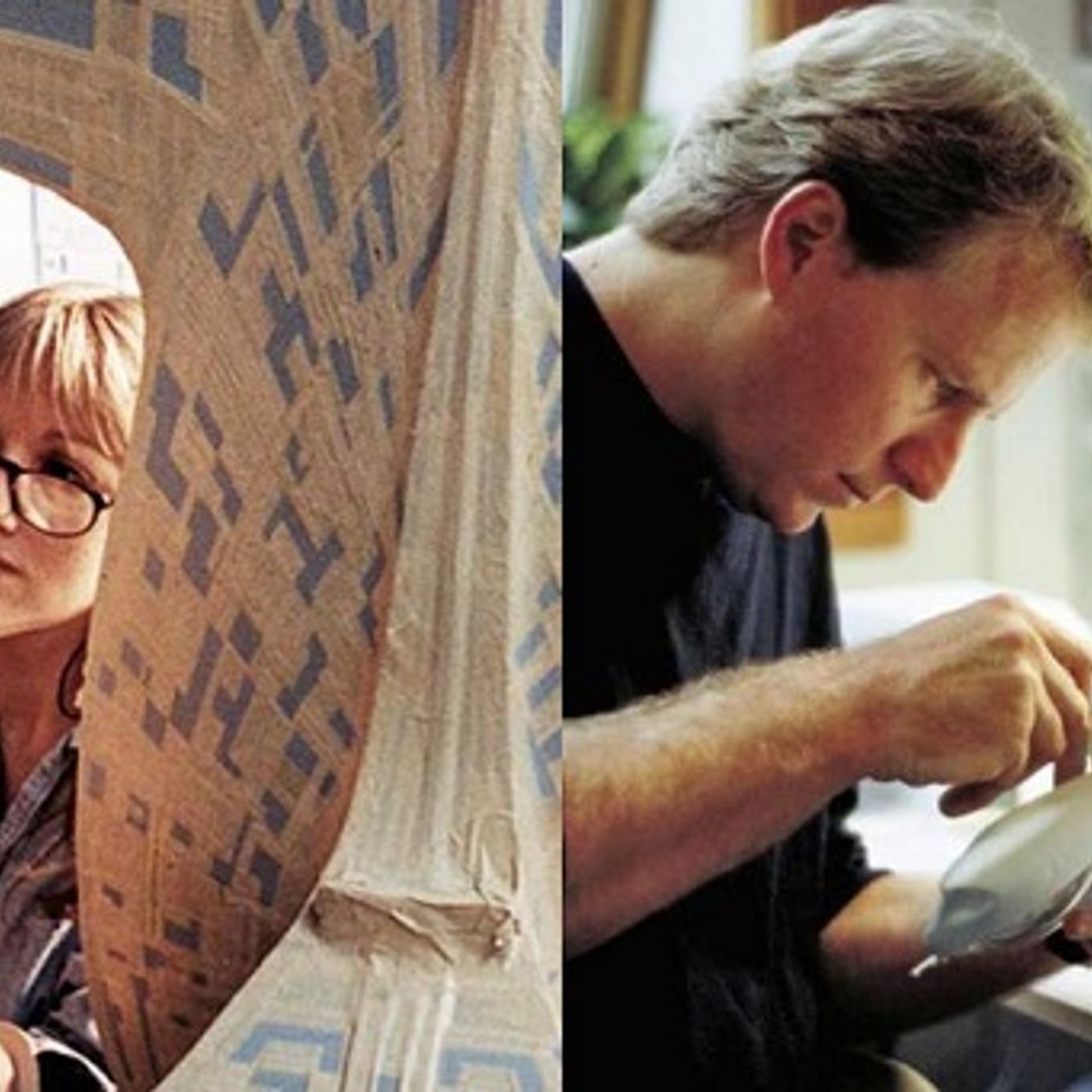
For me. This is Carol Bauman, and you're listening to Movie Meltdown. Movie Meltdown. This week we have not one, but two impressive special guests. They're both model makers and digital effects artists, and both have spent many years working in industrial light and magic.
Yes, in just a moment I'll be talking with Kim Smith and John Goodson. Now Kim started at Industrial Light and Magic back in 1988, where she worked as a model maker on over 50 feature films and 25 commercials. She spent 15 years in the ILM model shop on paint and detailing support, and then moved into their digital paint department in 2002 with a stint in the Star Wars Episode II art department. She left ILM in 2007 to work for Image Movers Digital, a Disney Animation subsidiary, and Digital Domain, another digital effects company, from early 2011 to late 2012. Then she came to Creature Art and Mechanics in 2013, which became Pulse Evolution in 2014, And needless to say, over the years, she's accumulated a lot of movie credits.
Now, John Goodson coincidentally also joined Industrial Light and Magic in 1988, and over the years has served as chief model maker, model project supervisor, art director, designer, and concept modeler. His credits include the Academy Award-winning Pirates of the Caribbean Dead Man's Chest, Transformers Star Trek VI through VIII, Back to the Future II, The Abyss, Ghostbusters II, and the Star Wars prequels. Now, John is still currently working at ILM, and over the years, he too has racked up an amazing number of film credits. And one of the bigger, more recent projects that both Kim and John have worked on is that in 2016, they were both involved with a team that were brought together to restore the original filming model of the Starship Enterprise for the Smithsonian's National Air and Space Museum.
It was a huge and seemingly meticulous project, and we're going to find out a few details about that before we're done. But first, I want to hear how they both got started on the technical side of filmmaking. So let's do that right now as we talk with Kim Smith and John Goodson. So I try to start early on, and I guess with both of you. It'll be kind of good to have sort of tag team here, and you can take each question as you want.
But I always try to start early and see what your interests are like as kids, and then how that sort of manifests itself into where you are professionally. So I guess for both of you, were you interested in the arts that early on? Yes. Both of my parents were artists, actually. My dad was a really successful illustrator, and my mom had been a successful artist.
That's rare, successful artist. I know a lot of artists, but successful artist is hard. She gave it up to have You need to get married and have kids and so on. And then later on, she went back to it. So she's been painting up a storm for 20-some years now.
Wow. So, yeah. So I was steeped in the art world from the time I was very little. You didn't know any better, really. You were just, this is what people do.
This is what people do. This is what I do. And I liked doing sculpting. My father was primarily a painter. And.
I found that I really like sculpting also, and it was probably partly, I would imagine that I just didn't want to be a total chip off the old block. It was some sort of rebellion. Do a different dad. Yeah, so I liked working in 3D. I mean, early on, was it just like starting with clay, like really basic sculpting, or were you already doing like model making, or what type of?
I was working in paper mache of all things, first off. Yeah, it was actually a great material to work in, and I feel like going back to it, too. I've pulled out some old pee. I'm like, oh, this is falling apart now. I didn't coat it enough, I suppose.
It's not very permanent. Not really. But I like working clay also. And, you know, as an adult, I wound up working in bronze, too. I like working in wax a lot.
Interesting. Yeah. The wax museums are making a comeback. I wasn't so much a model maker when I was little. I did make model stuff, miniatures for my my collection of horses, because I was into horses when I was little.
I was a horseback rider. So I would make paddocks and all kinds of farm equipment for them. I also enjoyed, I remember Halloween was a big deal for me. I liked making these kind of very detailed spooky sets. Probably everybody in this building all weekend.
I share stories with so many of the guys that run this, and I'll be talking to Dave, and we'll be like, our weird Halloween stories. It's like the one time a year when kids like us, we're all like, oh, it's finally around. I can be myself and nobody calls me a weirdo. So yeah, I think we all kind of like are drawn to that October time when we can indulge our weird activities. But yeah, I guess with you, were you early on?
Mm-hmm. You know, it's funny. What came to mind when you started that question was I remember my mother and the wax fruit. And it was interesting because my mom painted, and it was something she dabbled in. And she was doing various things that were creative, but she was just doing it as a hobby thing.
But I remember the wax fruit because she was making that, and she dropped a fake apple into the pot of hot wax, which splashed all over all of us that were in the kitchen. So that made an impression. Scarred by a remark. Well, it was interesting, though, because something as simple as that, seeing her work with that kind of material, I think, because I was like three or four or something like that, but it didn't make that sort of investigation, made it seem pretty natural that she was into painting and doing that sort of thing. It just made me think, does anybody do wax food anymore?
I don't think so. We might have to explain what it is to people. It's true. I don't know what the core was, but there was something that was an apple-shaped object that was being dipped in red wax when everything went wrong. It seems more complicated than it needs to be.
You just get an apple, right? It does, longevity-wise. But it's funny how that's the first thing that popped in my head was that damn wax incident. Again, scarred for life, literally. Or inspired for life, maybe.
Just because it made me kind of think that sort of exploration was okay. And it's a weird creative project. You're like, oh, that's something you can do. It throws those switches when you're little. That's why I love hearing these stories.
Yeah, it was funny. That's the first thing that popped in my head. But, you know, my dad was a doctor, so he was organically very technical, but he was not technical with machinery and that sort of thing. It's interesting. He'd have to call somebody to change a tire, you know, that sort of thing.
But, I mean, it fascinated me that he could be a surgeon. But he really wasn't comfortable with the machinery part. Interesting. But, yeah, and I think I just, you know, I gravitated towards the sci-fi stuff from a really young age. Lost in Space.
Oh, yeah. I saw the episode of The Derelict when I was three. and that really made an impression. It scared me, but at the same time I was totally intrigued with the model spaceship on TV, and my idea was if I could get the TV apart, I could get the model out of the television. And fortunately I didn't do that, or I wouldn't be here to talk to you. Yeah, well, you'd find out.
Three-year-old electrocuted in horrible wax and TV incident. Just be another, you know, really make its mark on you. I lost this hand, so I have to sculpt with the other one now. Poking a screwdriver in the back trying to find it. But I guess, yeah, I mean, as you went on, did it become sort of like high school-based stuff, just getting into the art department kind of idea?
You know, when I was five, there was a kid who was older, and we were living on an Air Force base, and this kid took this model airplane, and he smashed it. I can't remember what he smashed it with, but, I mean, he obliterated it. So that kid in every neighborhood was lighting their argument on fire. Well, he fortunately smashed it, like with a brick or something. And I took all the pieces.
And I didn't have the wings. And I used the brown cardboard out of Mars bars. Those were the wings. And I put the body back together again, sort of. So that was the first thing I can remember building that was a model kit.
And it was an atrocious mess. It's kind of a Dr. Frankenstein. Yeah. I can rebuild this.
From the parts. Yeah. But that was that first moment. That's the first time I ever played with trying to build a model kit. And that was about five.
And ironically, how so many of those big models eventually got made, it was stealing pieces from other models and putting them on a spaceship somewhere. Those early ones, yeah. No more Mars bars parts, though. That's way better than my Star Wars cool van that I... Do you remember they made that run in the 70s that was like...
They were like the traditional 70s van, but it had a weird moon roof on the top. Yeah, that was, I think, maybe my first model, and it was... It was a snap together, and I probably messed it up. I never took well to the modeling. I was always interested in them, but it never went.
Well for me. I burned a lot of them. I know there's an A-Wing somewhere I tried to paint, and I'm like, this paint looks terrible. I can't do straight lines. It saved my life.
So as you get, again, into, I guess, as you're heading towards high school, at what point does it occur to you, oh, this could be a career path? At what point does it start becoming a professional idea for you? Well, I came to it a little bit by accident, but it occurred to me as you were just speaking that having experienced a lot of... The idea of a picture in a frame is very much like a movie, of course. You have an image that's isolated from what's around it.
It's something that you look into and you admire. When I was in high school, I used to love going to the Museum of Natural History in New York and drawing the animals and the dioramas. And the dioramas themselves were amazing. The art that went into the backdrops for the dioramas of the Museum of Natural History, they're just works of art. They're masterpieces.
And it was that whole idea of looking through a frame into another world, basically. And I continued with that idea sometimes in my own artwork, whether it's prints or paintings or whatever. And then I got interested in theater also, the idea of designing for theater, theater sets. So probably eventually landing in the film industry was not a big stretch. I think I took to it just fine.
But you weren't gunning for it? I was not gunning for it. I wasn't. No, I wasn't gunning for it. I wound up, well, when I moved to L.A. many years ago, I thought that combining my interest in sculpting animals and fantasy, it would make sense for me to apply to Disney.
And I called there and they said, we don't hire women to sculpt. we only have male sculptors here. And I said, okay. So I went and I worked at Sotheby's for a while because I have an art background. And somebody lured me to work for another model company, model making company, did fully realized models for theme parks, art directors models for theme parks. And so I had several years of experience making these really intricate models fully working models of the theme parks that were going to be built.
So that's where I got a lot of my model-making experience. The little tabletop demos that. They did to get funding or something? Well, they were pretty big. Some of them, I mean, were 10 feet long, or maybe not quite 10, but 8 feet long.
And they might be a building sort of cut in half. You could open up, and it would be fully realized on either side of it. And it could be photographed. It was big enough so it could actually be photographed using a sort of snorkel lens to look real. Yeah, I mean, those things have to get made for presentations.
Yeah, well, it showed what it was going to look like, and we could photograph it. It absolutely looked full-size because you could use a special lens for it, get in there. And so that's where I got my experience. Interesting. I guess trade-off.
Well, it was funny because the other thing that was really influential was watching Star Trek when I was about five or six, and I think it was being broadcast at that point. That would have been 68, 69. And our next door neighbor was a fighter pilot because we were living on an Air Force base, and he got me watching the show, and somebody got me a copy of the making of Star Trek book. And that was a eureka moment where I realized this stuff is fake, and this is really cool. I mean, everything.
It was so fascinating to me they would have to invent all of this stuff because they're in a world that doesn't exist, and I was totally intrigued with that. So at a young age, I realized it wasn't real. And when Star Wars came along, that was a place to start focusing. It's a whole new, yeah. Yeah, and I started writing letters and, you know, how can I come and work there?
And they would write me back and say, thanks for your inquiry. Don't write us anymore. How old were you at this point? I think I was 14, you know. But they were nice letters, but they were letters of, yeah, don't write us anymore.
The letters of a 14-year-old. Yeah. Really, really, really, really, really want to come there. But I had a friend I went to high school with and we both had said, you know, if either one of us makes it to ILM, you got to call the other guy. And I don't know, four or five years later, he called me.
That was in 86, I think. And it was during Star Trek four. Went out to visit ILM, spent five weeks sleeping on his couch and going in on the different shoots and stuff. And that got me an introduction to a number of people there. And one of them was a guy named Greg Jean who was working on Batteries Not Included.
And Greg said, go finish school. Because I had another year and a half of college. He said, go finish school. This is going to be here when you get back. Then come out here.
So I followed Greg's advice, which was good. Yes, that's cool. Came back out and got hired for a week. And then that turned into two weeks. And then it's been 29 years now.
I mean, talking to different people, especially in the technical end of it, it always seems like it takes a different path. And that's kind of why I like hearing them. But at the same time, I guess if you're a kid and you're listening, I want to ask you guys, is there a path to get to working in the technical end of the film industry? Especially at this point, things have changed so much even since when you started. Is there even a direct path to get to that?
Or do you just keep trying these things until you get to the place you want to be? When you say technical, are you talking about making practical models? I guess all of it, but I mean mostly I guess from your experience. But it's like the technical end of working behind the scenes and either model making or just filmmaking in general. It's such a.
Weird path now. Well, we probably both– John can speak for himself really, but I think we both kind of agree that right now you can't depend on being able to make practical models in the movies and support yourself. I know. I don't think anywhere in the world, really, because so much has gone to digital work. But you can certainly have fun with it.
I mean, you can do it for yourself, and it's a very good thing to do, to actually make something. And if you were to choose the route of doing digital models, where most film work is right now, you would still learn about how something is put together, how something is created. physically made so that you would understand it when you built the digital model. Unfortunately, also, most of the digital work is going offshore. So even that, in the United States, it's getting hard to keep a job. Well, it's funny.
I mean, the part about practical model making, there still is some demand for it in art departments, but that's pretty limited. You're on the pre-production end, and it's going to be, and it's always been as long as I've been doing it and we've been doing it. You're going from show to show. I mean, I always think of it like the circus. It's like, what's the next town we're going to, you know?
Is there a next town? And so it's always like that. But I think there's less of that sort of art department work that's very specialized and it's a pretty small group of people. And the digital stuff, in some ways, there's more of a path to it than there used to be because when I, you know, back when I'm writing Lucasfilm and, you know, whenever it was, 77, 78. Yeah.
The only thing I could come up with is you look in the back of the art of books and people's, they had a little bios on some folks and you know, there were a lot of people industrial or industrial design or architecture. So that was kind of the only thing I could find that really gave me kind of a path. So I went to a product design at NC state and hoping that would help lead to this. But now there are schools out there that teach visual effects. Yeah, lots and lots of that.
Almost more schools than there are jobs. Well, that's what I was going to say is you've got them churning out people constantly. It's the same thing with the effects. Highly possible for them also. Yeah.
You've got schools where you can go learn it, but whether there's an actual career out there, unless you're willing to travel. That's what's crazy is that weird makeup effects thing that kicked back in in the last 10 years. And I'm like, it's almost... fun for the viewers at home. But I'm like, you realize how many of these jobs aren't available now. And then all those schools started opening up when it became its own cable show and everything.
And now it's like, everybody that comes out there is like, wait, okay, now what do I do? Exactly. Exactly. So it's, yeah, it's, it's all kind of falling into that, I guess. And you mentioned the different paths now that you have digital, you are both people that have started in the physical world, making things and moved into digital and, I guess, was it just necessity?
Like, could you just fight it and still be trying to do the other one? Or did you want to? We wouldn't be eating. We'd be very, very, very skinny. Did you embrace the digital?
Like, were you excited by the idea when it came out? Or was it like, oh, what is this? I was excited about it when I was ready to leave the model shop. I was in the model shop for, I don't know. I think I was in the model shop for almost 16 years, something like that.
And I knew when it was time to go. And I was just saying earlier today, I was working on Peter Pan, the movie Peter Pan, on stage, and episode three was ramping up. And I got a call on stage saying, are you interested in working digitally on episode three? And he said, yes. And they had a meeting that afternoon, and they called over and said, come in to the art department tomorrow so I it was basically stepping off the stage one day on on Peter Pan and stepping into training for the digital production.
Was it an easy process not again you were so. It was not in the real. World it was not an easy process it was it was a it was a completely vertical climb for us um. Maybe more so than just a kid coming in cold. Like you had so much real world experience dealing with physical things.
Well, it sounds like, I mean, since John and I had been talking about this earlier today, some of the semantics of terminology in the digital world, it's the same words, pretty much different meaning in a sense. Like the word scene means something different. I mean, you can relate it if you really know you can relate it, but we have so much of that built into our practical knowledge. But our automatic response is to understand it as a scene in a practical world, not a scene in a digital world. And the scene is something different.
I had to get used to the idea of using the word scene, using the word asset, using the word camera in the way that it was intended digitally. Well, it's funny because I sit with a guy, Howie Weed, who was the Wampa in the Empire Strikes Back Special Edition. Nice. And he was Vigo in Ghostbusters when Dan Aykroyd gets possessed. Dan Aykroyd didn't want to wear the makeup, so Howie did it.
And Howie was a creature guy. He worked on Gremlins and Enemy Mine, and he was a rubber monster guy. And then he and I started doing miniatures together because he could make molds. And we were doing that work together. And so we were doing that kind of on the side.
He was a creature maker. I was a model maker. And then over time, it became apparent. It was like if you want to eat, you better learn how to do something different because the practical work was being eroded. And it's a strange thing to be in an industry and watch it go from being a practical photochemical world to an all-digital world.
And the end result is the same. You're getting these images on screen, but the tool set and everything is totally different. And Howie, the other day, he said, well, you were born to do this. It's just what you want to do. And I said, no, no, no, you don't get it.
This was not the destination. This is an evolution. Because I didn't start off to wind up sitting in an office at two computers. That wasn't the plan. It just went that way.
And it's fascinating to me to look at it now and see we're still doing the same thing, but just a really different approach to it. That's something that's occurred to me a lot lately because everybody, like all of the changes that have kicked in these last 15, 20 years, when I'm like the film industry as a whole hasn't changed. And it does not care about any of these things that we nitpick about. I mean, you look back at like from adding sound, oh my God, the whole system is going to fall apart to going to color, to fighting against TV being introduced, like each step of the way, the industry just kept on rolling and adjusted as it needed to adjust. And it's going to keep making the movies it needs to make.
And all the players have to go, Oh wait, now what do we do? And like, that's why you had, you know, stars that were huge silent stars that just died as soon as sound got in. It's like that same thing keeps kicking in every 20 years. It's like something changes massively. but the film industry doesn't care and keeps on moving. And it's, it's the rest of us trying to catch up and, and make a living.
And they're always trying, they're always trying to reinvent the theatrical experience to keep people coming in for something they can't. They have to, because I mean, everybody's got a home theater and all that. And you know, look at the TVs we can all buy, you. Know, and sometimes better. Yeah.
And no one's texting next to you except your partner. And you smack her. What did I say? So I guess as, as you were, talking about that, I was trying to decide also the, cause you were talking about the specifics and just the terminology. I think that's another thing that from the outside is so baffling for people.
So I don't know, as far as like the different things that you've done, I guess for people that really don't know, like how many other than like model making, but all these other distinctions that you guys get roped into doing over the years, I guess, what are some of the different aspects that you deal with? And then, how they differ from each other, because there will be so many different titles, and you're still the same person coming in with the same background, but you just readapt to do different things, I assume. Are you talking about both practically and digitally? Definitely practically. Again, I'm still living in model making in my head.
But I think those used to really confuse people. What different skills we would have to have? Well, and different like titles for each thing. So people were getting, you know, these specific little jobs to do that were all part of the big thing. We didn't worry.
I mean, titles weren't so much a big deal, I don't think, in the model shop. And what was interesting, we talked about where, you know, how people were inspired to go into model making. Some people came at it very intentionally, like Bill and John. Some people came into it sort of obliquely, like Lorne Peterson and Charlie Bailey and maybe Steve Gawley, who also liked to make models. But a lot of them had backgrounds as industrial designers.
One of our best people in the shop was Ira Keeler, who was a pattern maker for Boeing for years. Wooden pattern maker. And he made beautiful things. So some people kind of fell into it. Some people were there intentionally.
But I think we all kind of hoped to when it came time to doing something different. We did have titles. For example, some people were more creature-oriented, maybe a little bit more rubber monster-oriented, and some people were carpenters or something like that. But all those skills would come into play. Even if you were a creature person could— could put their skills sometimes to doing hard surface model making.
There would be something that they knew that would come in handy when making a spaceship. I mean, it was kind of amazing just kind of culling information from everybody that was in the shop. People could make contributions and things that would not seem to be an obvious fit for them. I was also in trying to, I guess mostly in that era of still physical and probably miniatures and whatever, What do they start with? Like, are you physically starting from scratch creating everything as you're, like, building a spaceship or a miniature set?
Do you physically create everything on there? No, it's different every time. I mean, sometimes you can start off with something. Space Cowboys, I remember we bought a commercially made space shuttle that was about six feet long as a starting point, you know. And then we had to modify that to make it into a shooting model with an armature and wiring and all that stuff and all the details.
But it was always different. And that was the interesting thing is you're doing prototyping. But it pretty much had to work. I mean, you could do some testing and stuff. But it was basically a very elaborate prototype.
And that was kind of the beauty of the job was that it was a lot about problem solving. And so someone would come with some really unusual issue. You know, we want a 737 to crash in a rice paddy at night. The left wing is going to hit first. It's going to pirouette.
The tail is going to come off. And then the cockpit is going to land right here. And it's like, okay, we'll give you a bid. you know, but it's like, exactly. But, and obviously there was funny cause Conair came in with a map like that for a plane crash. And I'm like, wow, it was very specific exactly what had to happen exactly at this moment, that moment.
And we'd give them a number and I was always like, wow. And Steve Golly, I always loved this. His, his thing was, he called it swag for scientific wild ass guests, you know, but it did come down to that. It was a leap of faith a lot of times because you hadn't done something like that before. You could build on the experiences you had before with different projects and But a lot of times you were dealing with a unique situation.
And again, that was the cool part about the job. And it was also sometimes the really stressful part. Yeah. I mean, that's why I think it's sort of boggling for most people on the other side that are just like you're creating not only an entirely different world, but sometimes worlds that don't exist that are an entirely new thing that doesn't even follow the rules of our world. And you're starting with potentially nothing.
So I think it is like. I think. It's kind of hard for people to wrap their heads around just what all you have to do. And probably don't think about it that much because it's too much to worry about. Yeah, but you look at the length of the credit lists on films now.
All those people are doing something. It's almost as long as the movie. It's a 15-minute run after some of the movies now. One of the ones I was going to go into, and this is something, again, I think this is because everybody's so... We all grew up as such, you know, big movie geeks and like we attached ourselves to these properties.
So once you enter into the professional end of it, how, and again, I'm almost using quotes, how responsible do you feel for the end result? Like you can look at it and go, oh, that thing that I built looks great. I don't really like this movie. Like, do you ever sometimes have to be like, I wish I liked the movie more? Yeah.
It's just a job and you show up and do your part. Yeah. Yeah. Because often the objects that we make are beautiful, but the movie is not. At least not to us, anyway.
So many moving parts. Yeah, right. So yeah, I think sometimes that would be hard to detach yourself from. Well, it's funny because I always look at it, I always try to find what I call the hook on every project. There's got to be something I can find in there that I find interesting.
And sometimes it's really big and juicy sometimes. Sometimes it's a little thin. But it's something you can invest yourself in. And it's interesting because one of the things that we do a lot is research. You start looking at all these things.
And I always think it's an interesting aspect of it anyway because it's something you've never paid attention to. It's like a door handle. It's like, well, we're going to have this door handle in there. And you start realizing, if I count the number of different door handles I see today, it'll be 64. And they're all going to be slightly different.
Yeah, and it's something I never paid attention to before. And suddenly you become this expert on doorknobs. or a B-25 bomber or whatever it is that the project has to it. So it's interesting. There's that part of it. And then the end result, I mean, there are a hell of a lot of steps between where we are and the end result.
So it's kind of like, you know, it's hit and miss. It is interesting that they're just, as we said, that many lists of people at the end of this thing and everybody's doing their part. And hopefully doing a great job. And then in the end, it still may become this big, crazy mess. I don't think anybody really ever blames us for that. we don't usually get the blame for that just.
Pause like the 400th person nope that one they totally ruined. This thing I was going to say something because John brought up something that is also really important to me, and I know at least a couple other people it's important to is doing the research on the projects that we're doing. That's one of the big incentives to do it, actually. That's one of the things that keeps making it fresh, not just the problem solving, but learning more about the subject that you're dealing with. I think, again, that's something that really early on just attracted me even as just a movie fan.
If you're into. Stamp collecting or whatever like that's it it's your little window and that's all you can do but film you can be into the overall process but at the same time you can pick your specific movies and each movie kind of opens up this door to a new area and you're like oh this is about bike racing and so for a minute i've got this little snippet of information about this world that i didn't know anything about and then you'll pick a different this is about you know you personal shoppers you get these weird little windows that open up and you kind of learn a little bit. It may not be accurate information, but you at least get this little window into different worlds with each movie that you pick.
I think just even as a viewer, it offers kind of a little bit of that. You don't get quite the full-on research, but it gives you that little shot in there. If you are interested, maybe you'll go read a little more about this or learn something else about it. I think film in general has such a wide area that you can kind of throw yourself into and you're drawn to whatever you're drawn to. It conveys information in a way that there isn't really another medium.
You can draw and you can paint and you do all those things, but filmmaking, it was interesting. Somebody was giving an example. It was something like a guy riding a bicycle and there's this field of wheat and the camera's drifting through the wheat following him on the bike. How else can you tell that? I've said that and I will get in that argument all the time of people that want to compare books to movies and I'm like, first of all, they're entirely different mediums.
You can't. And there are things that one can do and not the other, but film is so complex that like, it's the only way that some of these things can, where at least books, it leaves such a weird gray area of like you're filling in the blank. So it doesn't even have to do some of the work on screen. Everything has to be represented. You have to find a way.
Sometimes you guys have to find a way to make that physically represented in the scene. And that's, that's a lot harder. I feel like, and people don't realize that sometimes again, I feel like I defend film so much from that angle that I'm like, it's just a different world that trying to physically create every thing that needs to be represented on the screen where most other art forms don't have to do that. Your, your creative brain has to fill in the blanks, but you can't cheat that way in filmmaking. It's all on the screen.
Sometimes I feel like we're the worst offender in terms of people's imagination, because when you, I always think about when people used to sit and listen to the radio and they'd all sit around intently sort of looking at the radio, but they're their own art director and cinematographer. They're generating all that in their own heads. We fill in all the blanks for you. Don't think about anything. It can go both ways.
I always kind of take it the other way. It's like it's so much more invested in it this way. But, yeah, it's kind of that same thing. It's a double-edged sword. Maybe we used to have really imaginative people, and now I kind of wonder looking at kids now because they're so distracted with everything that I'm not sure what's going to happen in this next wave of kids coming up next.
I worry sometimes. Well, there are a few specific stories out there. I guess I was going to let you guys pick at least a project or something, maybe one that you haven't had, that hasn't gotten as much attention, just something that you found really interesting that you've done. Well, somebody asked the other day what was one of the more memorable events in the course of doing model making, and I think that the Rocketeer sapling was, like, I think it's one of my favorite ones to pick on because it's pretty momentous. John and I can tell that together.
He's actually a little better at telling that story. But we built this. Do you remember how long a Zeppelin? 33 feet. 33-foot-long Zeppelin.
And it took us six months to make it. I think it took eight months. Eight months to make it. Yeah. Why don't you tell the rest of the story?
Because he's better. He remembers the details better than I do. Well, it was a replica of the Hindenburg, but it was called the Luxembourg. And they had laser cut out of quarter-inch apple ply plywood. all the internal structure for it. So it was very intricate.
And it's interesting because if you look at the Hindenburg, if you look at a side elevation drawing of it, it's like the first five sections, which look like there may be 15 feet long. They're all the same length. You get to the next block and they're all slightly different for like the next eight and the next eight are a little different. And it's all, it's all a little bit unique all the way through. And so they laser cut all that stuff, put it together.
And one of the things they did that was kind of iffy was they didn't usually with pyro because pyro is somewhat, non-scientific. They're going to blow it up, but it's a question of how big or how it blows up. And I always think pyro is like a science experiment because sometimes it's surprising what you get out the other end. But we usually built three of things if we're going to blow them up, just so you have some coverage in case it doesn't work. A backup for the backup.
Yeah. And they opted in this instance to just build one because it was such an investment to do it. And So it was the laser cut plywood with all the internal bracing and stuff like that. And it kind of went together like one of those wooden dinosaurs you can buy where it's all flat when you put it together. Slots and other slots.
But you get a three-dimensional Zeppelin skeleton. Then over that, it was a layer of black cheesecloth. Then over that, it was a layer of black fishnet. And then on top of that was a material called Solartex. And this was a synthetic polyester fabric.
And it was really neat stuff. It had an adhesive backing to it and Unfortunately, right as we were about to do this, the first Gulf War started. And when it did, all the solar techs vanished from the planet. The military soaked it up. So we're like, ah, ah, you know, having to scour the earth to find enough to do this thing.
And it was funny because you'd have a guy, you'd roll out about 35 feet of it. And it was about two feet wide. And there'd be a guy standing either end holding this. And there was a clear protective film over the adhesive side. And somebody would, third person would have to strip that off.
And so as you're walking, pulling this stuff off, you're building up one hell of a big static charge. So the guy at the other end knows it's coming. Because when you get down there, you just reach out and get about an inch from it, and you see this bolt of electricity. Bang, hit him, you know? So it took us about a week to cover it, and then I painted it.
It took me about another week to paint it. I've got a Binx automotive spray gun. I'm running down a scaffolding next to this thing, blasting it, you know? This is a lot of work for something that's going to go up in flames. A lot of work.
And then it was going to blow up, and it was really important how it blew up, because the rocketeer and his girlfriend are running from this bad guy on top of the Zeppelin. As they're running from the nose towards the tail, there's a series of explosions that are following them. So in the model, they were going to have 10 bombs that would blow up in sequence, starting at the nose, working their way to the tail. And we took this thing out to an abandoned Air Force base where we could film on the runway. We had a nice unobstructed skyline.
And it sat on a little trolley. And there were six slots in the bottom of it that were each about four inches by about 22 inches. And these were open. And that's where the trolley connected. Once they put it on the cables they were going to lift it up with, we needed to seal those.
But we had to do it with this iron-on material. So you literally have to take an iron that's plugged in, iron it on, hit it with a heat gun to get it to shrink in place. There's a lot of heat being thrown at this thing, too. Yeah. Well, before we break for lunch, we asked the power guy, I said, before you guys load the explosives in it, can we patch the bottom?
He's like, oh, yeah, no problem. No problem at all. So we break for lunch. It was a night shoot, so lunch or dinner or whatever it was, it was like 2 a.m. Yeah, whatever you call that.
Well, we come back, and it's 25 feet in the air, and it's got 10 black powder and kerosene bombs in it, and it's still got six big gaping holes in the bottom of it. So we're like, well, what are we going to do? And they're like, well, you're going to go up in this. You're going to have to go up and seal them up. So we're going to go up in cherry pickers, and the pyro guys got us these Nomex suits that cover everything but your face and your hands so that when the explosion happens, we'll...
We won't have a head or hands, but the rest of you will be okay. You can hear the Looney Tunes theme, right, man? This is Wile E. Coyote material going on. Yeah, so we're getting ready to get in the cherry pickers, and the pyro guy comes over.
He goes, well, if you see a flash, there's a five-second delay between the flash and the explosion. And the guy driving the cherry pickers says to me, he goes, well, if you see a flash, there's a five-second delay on the cherry picker. We're not going anywhere. I'm like, well, what are we going to do? Guard your face.
They said, I guess we jump out. I'm like, it's going to blow up and fall on us. And he's like, eh. So we get in the cherry picker. And I'm in one with Dave Herron and Charlie Bailey's in one with somebody else.
And we're doing it. And there's a picture of me in Cinefix magazine, like, really terrified looking doing this. Oh, God, here it goes. And there's kerosene running out of the holes. But we get up there.
We get it all ironed up in place. Everything's good. Nothing explodes. And it takes a few more hours to get everything prepped and all the lights set. And we've got, I don't know, four, maybe six high-speed cameras on this thing.
And so the stage manager comes out and he goes, here's what's going to happen. We're going to get all the fans going for the wind. We're going to get all the lights on. We're going to get the cameras all up to speed. And then I'm going to wave this flag and it's going to be action.
And then it's going to start with explosion one at the nose. We're going to go one, two, three, four, until we get to 10 at the tail. And when we get to 10, the guy's going to have fire charge that cuts the cables and it's going to drop out of frame. Okay. In theory, yes.
So get everything ready. Get everything going. The fans are going. The cameras are going. Action, speed, blah, you know, go. and instead of one through 10, it goes one and 10 and the guy cuts the cables and it drops out of frame and it blew up partly on the way and then on the ground, but it has dropped out of frame.
Now it's not visible. The only thing on camera are pieces and fire going up. And in about 15 seconds it was gone. It was just this pile of burnt rubble. And I was standing next to one of the stagehands who was actually at the Hindenburg with his mother because his dad was on it.
Dickie Dover. And, uh, said to Dickie, I was like, is that what's supposed to happen? He goes, I don't think so. I don't think so. And that was it.
It was gone. There's no more models. So there was a second one that was built. I think the movie was coming out in something like eight weeks. So there was a second one built.
There were three shifts around the clock, which was really cool. It was like having magic elves. You'd come in in the morning, and there'd be all this stuff that was done. And in six weeks' time, they built a second one. They took it out, they shot it, and that's what's in the movie.
Oh, my God. But, yeah, that was an exciting evening. That was unscheduled entertainment of the wrong kind. Death defying the whole process. I can think of one of my favorite times.
One of my favorite events working in movies was on Pirates, Curse of the Black Pearl. We had built, for the first Pirates, it was going to be probably one of the last hurrahs of making, maybe the last year or two years that we were making really cool models for movies. And we had a tank, I think it was like 26,000 gallons or something that we had built especially to work on Pirates. And we had made several models. but I think they were like 28 feet long, sort of on average. Yeah, that's a miniature.
We had a version of the Interceptor that we had built, and also, of course, there was the original Black Pearl. So they were going to do a stormy night shot, and... They had called in about every possible special effects machine that you could have. They had a rainmaker. We had three airplane propellers.
There were big water dumps at one end. There were cams that would move the water underwater in waves. We had 10K lights ranged around the tank to provide some light for them. We had everything going. There was smoke.
And I don't remember how, we must have had a 30-person crew out there that night. Do you remember? It was something like that. It was a lot of people. And John Knoll was in charge.
And I just remember, oh, we also had a light gag. We had this huge globe that was suspended, that was lit from the inside, and it was hanging out of frame, of course. And it was a night that felt very old-timey because everything was being operated by humans. The interceptor itself actually had no belly. It was operated by, it was on a track, and it had gimbals in it so that the stagehands could operate it with cables off, outside the tanks.
So we had, all of a sudden, we had all these people, like, Just, you know, blowing smoke and raining. And the stagehands were cranking the ships. It was bang, bang, back and forth. And there was water sloshing out of the tanks so that we were all standing with a bunch of 10Ks in about two inches of water all around the tank. I don't know why we were not electrocuted that night.
But it was an incredible, incredible night. And there were people standing on cars outside the fence watching what we were doing. And there were people phoning into the local radio stations because they had seen the glowing orb hanging over them. People driving across Richmond Bridge could see the glowing orb, and they thought that there was a UFO out there. I knew it was ILM all along.
Conspiracies are true. Yeah, it was really a very exciting evening, and I was really glad to be part of it. It was a beautiful shot. In most of these, you've referenced and cross-referenced the stories, so I guess you've worked together a lot as time's gone on? Oh, yeah.
Is that a good thing or not? It was a good thing. We worked together as partners for a long time. We were both married, and eventually, when we were both married, we became partners in life, too. Sometimes.
I don't know. I know people that work together and it does not go well. We've worked on a lot of stuff. Maybe because you already had that pre-built into your relationship before you were a couple. Yeah, that may be part of it.
We had a few tiffs over model stuff, but very few actually considering. Don't you think? Yeah. I just think you're very tolerant because our house looks like a model museum inside. I would assume it is at this point.
It basically is. We actually need to have a special building that's just for a movie. We're just going to get a Planet Hollywood sign, put it over the door. And then move out. You can probably pick one up.
We can move into the restaurant. There we go. I need storage, but that's just for my files of my own stuff. I don't even have good models involved. Just junk that I keep buying that are usually movie-based.
I keep finding more. Like, why do I have boxes of this? why do I need more Beetlejuice action figures? I don't know. You have to have them. You do.
That's why you're here. I keep trying to tell people. I'm like, no, this is important. I need this. I can't tell you why.
Don't make me think. Well, then I guess to round out here, you've been doing a lot of discussion about the Enterprise lately. So I guess tell people what all that entailed and the process you had to kind of go through. And then it was for eventually the Smithsonian, wasn't it? For the Smithsonian.
John was on the advisory committee for it early on. They had a group of, what, eight people, I think. And maybe it was more. I think it was eight or nine. Something like that.
And the funny thing about it, I mean, John will tell a large story, but my impression of it, when I finally got to see it in pieces, which was, I guess, December of 2015, was that they'd actually had, they'd known they were going to be doing renovation on this thing for years, actually, at that point. And I'm going, I'm thinking, it's still dirty, and it's just in pieces. And they had just taken it apart, like, since June or July, I think, something like that. And I said, so they'd known it was going on for this long. They had done some x-rays.
They borrowed the National Zoo's x-ray machine that they use for elephants and things. And they brought it over and x-rayed it. And they'd had Dr. Buck, who's a very well-known paint specialist, come and do core sample analysis of it. And they'd done that kind of thing.
And there was one of their machinists was beefing up the secondary hull on it to strengthen it because it needed help. But they actually, for considering how long they'd known they were doing this didn't seem like a whole lot had been done and there was a whole lot more to do before I think originally they wanted to have it done by February or have our side of it done by February so that they could put the electronics in it but that extended to April April is when we. Came I think that's when they brought you guys. We brought in in April. We don't want to clean this thing.
But we were kind of shocked at how much there was going to have to be done between December and the time that we were projected to come on to the project. I've seen this listed as a thing that was going on. Just to clarify, I guess, for me and everyone. Is it the original TV Enterprise? It was the one that they originally used in the 60s series.
Yeah, it was 11 feet 2 inches long, and it weighs a couple hundred pounds. And it's the one used for the series. And then they also had a three-foot model that was solid wood that didn't light up. And this one initially didn't light up when they first built it for the initial pilot. And it went through a couple of different iterations.
Eventually, they wound up... the nacelles the fronts of the engines were just solid wood painted red yeah and they had a spike on them and the bridge was taller there were a lot of a lot of things that were that were in the initial pilot that thing got altered and they sawed off those wooden domes they replaced them with uh acrylic domes with a lighting effect inside of them they retrofit the whole model so the windows would light up and everything but it was only on one side. So that was all originally they'd slowly started to modify as they went. With the initial pilot, you know, it didn't light up and, you know, it was just a blank thing. It was, you know, then they, they did a second pilot. And then when that got greenlit, they made more iterations to it for the, when it went to series.
And then over time, any of these kinds of models, once they go out on stage, they have this whole other life where for this particular shot, they've got to weather this or change that. Or, you know, there was, and it's interesting because it is only painted on one side. And their thinking was they had additional decals so they could change the markings, reverse them backwards on that same side. And then you would film that, and you would flop the film. So you could get left and right out of the same model, but you'd have to spend all the money to do it.
But ultimately, I think in the episode Mirror, Mirror, what they did was they actually taped a piece of gray paper over the numbers, the NCC-1701 on the engine. They put gray paper up there with them reversed, filmed that, and flopped the image. But if you look at it, you can tell it's a piece of gray paper. But it's also one of the neat things about film. was that you could do that. You could economize by only building the one side of it, and you could get both sides of it if you're.
Willing to do the work. Again, it's people thinking on a grander scale and putting these together. Well, on a cheaper scale. When you realize budget constrictions. You're like, God, what do we do now?
And we did it on the movie Alive. We did, we crashed the, it was an F-27, Fokker F-27 that we crashed where the soccer players were in the plane accident in the Andes. And the airplane, we built it so that the right wing would shear off. So it had a special tearaway section. And then we had the tail so it would break away.
And then it was supported out of the left wing that went to a tower that was on a dolly track. So we filmed it where we smashed off the tail on the right wing. We put another wing on, same thing. We left the tail off, and then we took all the graphics off and we reversed them, same trick as Enterprise. Crashed the same wing and flopped the film, and we got the left wing and the right wing out of the same rig.
So, you know, it's just a way to save money. But then Enterprise, I guess, what all did you have to do? What steps were involved to get it ready for the Smithsonian? They did the work to get it ready for us, actually, is what they did. I mean, you did a lot of advising.
Well, we had the whole advisory group and everybody was, they would ask for input at various points along the way. And one of the things that's really different for us is they're working in museum time, which is different than production time. Oh, yeah. And so to us, it looks like slow motion, but they're also spending a lot of time on research and they're trying to dial in exactly every detail, which is kind of hard for me to get my head wrapped around. It's something I've become more accustomed to because I'm dealing with more museum stuff.
Yeah. But it was a very different mindset. And so, you know, to us, it looked like slow motion, but in reality for them, They're going through all the steps that are necessary to get them to that point. And they did the majority of the preparation work to get the model structurally repaired and then put a base coat on it so that when we came in, we were dealing with things. We replaced the navigation dish up under the front, produced new domes for the bridge and the counterpart underneath with a little phaser weapon on that, and then the lighting effects and the new nacelle covers for the engines. and the graphics.
But, you know, there were different parts of our advisory team that were involved in all that. So people like Rick Sternbach and Gary Kerr. And Gary Kerr, he was kind of our advisor who knows every technical nuance of that ship. He has studied it his entire life. And, I mean, down to the most intricate details.
And it was interesting because the lettering, the NCC-1701s that are on the engines and they're on the bottom of the saucer, they were altered between the pilot and production version. And so there are subtle differences between, I think, the sevens and the ones. And Gary knew exactly which one. The one on the left side of the saucer on the bottom is the one from the pilot, but the one next to it is the one from the, you know. It's crazy.
He knows all of those details. And so he was the most indispensable member of the team in terms of being able to kind of guide all of us in the right direction. And the other thing that's really nice about the Enterprise is, People have been watching Star Trek for 50 years. There's a lot of documentation. And so there was a huge database of stuff.
And the Smithsonian put out an appeal to the public for any photographs they had. And at one point in 1974, the model was on display. I think it's at Golden West College in the Los Angeles area. A guy had an association with Paramount. They were doing some kind of a science day.
And he was able to borrow the 11-foot model and get the lighting and everything to operate. He had to replace Christmas light bulbs in the engines and stuff. But he got it all illuminated. and there were a handful of slides that were taken of it, and those were invaluable. But they just lent it out? They didn't even send someone with him?
I don't know the particular reason. I think that they were talking, I mean, that at the time, it didn't have the, it wasn't, As much of an icon as it is now. It didn't have the following. And so it wasn't thought of in the same way. And even the Smithsonian didn't think of it.
I mean, it was just kind of this thing they had. I wasn't even thinking of it as a historical piece. I'm just thinking of it from production value of just like, don't break that. We need it. I think once the series ended, they were kind of done with it.
And if you think about it, the series ran for three seasons. It wasn't super successful in its run. No. I mean, the ratings really plunged in the third season. So it was a failed science fiction series.
We look at it now in hindsight, you know, and Star Wars came out, and then suddenly we got Star Trek, the motion picture. And they were gearing up a new TV series, and they shifted gears and made it into a feature. But, you know, now we've got, what is it, 13 or 14 movies probably. We've got Star Trek. We've got Star Trek The Next Generation, Deep Space Nine, Voyager, Enterprise.
We've got a new one coming. We've got 50 years of Star Trek. But at the time, you know, the model was given to the Smithsonian in 1974. None of that had happened. All you had was a failed sci-fi TV series at that point.
Lucky it just didn't get broken into pieces and used in other... Yeah, exactly. Roger Corman, it's in the background of a movie he was making at the time. Well, so much movie history, so many of those kinds of things have disappeared because of that very thing. They weren't valued or they were recycled.
They're just throwing them out. That's so many stories I've heard here. The studio was done with it. It was in the dumpster out back. Get rid of it.
Bury it. Burn it. And it's funny, Irwin Allen had a rule that He wouldn't build a prop unless he thought he could reuse it at least three times. Yeah. That's a lot of those, too, for the low-budget stuff.
You'll see it pop up. Or Lost in Space was a good example. You'll see movie props pop up on Lost in Space all the time. Well, it's funny. Gary Kerr found the episode The Derelict, which had this big, weird alien spacecraft that was a sphere with these kind of points on either end of it that opened up.
Well, that thing got taken and got recycled as set dressing. And so you can see it on set. So you can see how big. That thing was huge. But it's really interesting.
I mean, it went from being the miniature spacecraft that was in a couple episodes to big set dressing piece. And who knows what life it had beyond that. Because, you know, the studio probably had it for other things. I kind of like that. It is like its own world.
And you will see it pop up in the background of other sci-fi. So I like that the sci-fi props have their own little life. And I'm sure that's a Pixar movie waiting to be made. Oh, it could be. One thing that was really interesting was that being a TV model or shooting model was something that was a little bit outside their normal experience in doing restoration.
And to us, it was another shooting model. And so we looked at it and probably immediately mentally went to work on what we would like to do to it to make it better without trepidation. Yeah. And they were like, ah, we don't know. Well, we heard you guys.
That's what we brought you here for. There were a lot of discussions on how to handle certain things. So that was, I found that kind of interesting. It was something that we were just sort of all ready to get to work. There were still discussions to be had about how to actually handle those things and whether they should be done that.
Way or not. I'm assuming a lot of discussions. Yeah. Well, I guess in general, what do you have? I would say a new project, probably multiple new projects in the works.
Is it stuff that you tell people about or in your situation, is it best to wait till they happen? Is it one of those things you're telling people, Hey, I'm working on this. Or do they like tell you, just wait a while till we see how this turns out. I mean, cause you're in such a different perspective than like where they're doing promotion for the movie. You're so far ahead.
Of the game. Are you talking about what we're doing? Just upcoming projects and stuff like that. Like what we get paid to do, like as employees? Just stuff coming up that you're working on or potentially going to be working on, just if there are some people.
You need to look for? I can usually talk about what I'm working on. Okay. Well, actually, technically, maybe I shouldn't talk about that. I know.
Yeah, maybe we shouldn't talk about that. Yeah, it's kind of the same thing with ILM. It's like, yeah, technically we're not supposed to talk about what we're doing. That's why, yeah, normally I throw that up because people want to promote stuff that's coming out in like six weeks. But with you guys, you're so far ahead of the curve on what's happening.
Sometimes we're years away and it's still kind of sacred. Yeah, and the other thing that's weird too is that now everything has code names. Yeah. And so it gets so confusing because it's like somebody, you know, we're looking, we have a digital basically backlot. And so somebody's like, have we got helicopters?
Where do we get helicopters from? And somebody will be like, old G.I. Joe. And we're like, well, what the hell was G.I. Joe called?
Nobody can remember the name. And then somebody will go, oh, Long Branch. You know, that's what it was. But nobody's written down a list. So it makes it really hard to keep up with what's what.
So you just tell everybody your code name. We're working on a boy's life. Yeah, that's what it's called. Yeah. I don't know who comes up with those names either.
All right. Well, unless you have anything to put out there for people or you have upcoming appearances you want to tell people or. I assume that's on the fly, too. Yeah. Mostly I'm locked in an office where I can't even tell there's daylight.
So, you know, it's like they don't let us out that often, you know. Well, yeah, I guess if you have something coming up, come look for you guys out on the road there, maybe doing appearances, and come and see one of your talks and listen to your stories. It's been really fun to be here. Yeah. Thank you for being on the show.
Thank you. Thank you. Misty, have you had fun times today at Wonderfest? I have had fun and or exciting times all day. You saw many things?
I saw many things. I didn't personally, but somebody found for me a squished penny out in the parking lot, which is very, very strange. Only because you were telling the story of your epic road trip where you got how many squished pennies? I lost count. There was like five book fulls involved.
Book fulls the books hold like a million the books hold like 36 don't exaggerate a lot of squished pennies let's be realistic here you have a. Problem i didn't fill the winchester mystery book one up though so that's not really i thought i didn't fill it it's. Okay but we were standing out in the parking lot of this very convention and we were discussing all your squished pennies that you got And I have to say, I don't know that I've ever just looked down and found a squished penny. I've looked down and run across a penny on the floor or the ground many a time in my life, but I don't think I've ever just accidentally stumbled upon a squished penny from somewhere. Also more strange, we had also been talking about the location in Around About Legs.
We were talking about Disney. Yeah, we were talking about different road trips, and the person we were talking to was talking about having gone to Disney, and maybe I'll go back, whatever, but seriously, like, Five minutes before, we were just discussing Disney and going there. And where is the Squishpenny from? The Magic Kingdom. Mm-hmm.
That crazy train ride roller coaster is what the Squishpenny commemorates. So that's just very odd, if you ask me. Yeah, there's a lot of weirdness going on there. Because, I mean... I immediately assumed you were able to manifest things with your thoughts and talking about it.
So I was talking about having a million dollars, having a million dollars. But so far, it has not just appeared in front of me. So. It's not working right. It was the magic combination of all three in that one spot that was like, I forgot we went to the mystery spot.
Oh my God. Which mystery spot? The mystery spot in Santa Cruz, California. All right. What goes on there?
A vortex of time and mysterious things. That sounds crazy. You've never heard of the mystery spot? I don't know. It's one of those places where things that should grow up go down and Like all the trees grow straight except for the vortex of the mystery spot where they all grow out away from it.
Hmm. Is this in Gravity Falls? I don't know. I've never seen Gravity Falls. God, that show's awesome.
I keep getting sucked into it. I'm just like, man, it's so well written for a cartoon. But anyway, moving on. What is yours? What other crazy things go on in your mystery spot?
The mystery spot? Yeah. Okay. Well, like I said, it's one of those where she'll get a level out and she'll show you that the thing is leveled. But then when you look at it, it looks like it's not level.
It should go one way, but then she'll put a ball or water, and it'll go the opposite. Way and go uphill. Magic. It is. It's spoopy.
Craziness. Yeah. It's just there's all kinds of, like, weird shit that happens in the mystery spot, and it is glorious, and we almost killed some people. That sounds about right. Tandem bikes on windy, twisty roads are not a great idea.
Don't. I didn't hit anybody, and I wasn't driving. They let you two on a tandem bike? No. No.
There was tandem bike people in front of us. And you clotheslined them. No. It was a very windy road that goes like this. Woo, woo, woo.
And there's cars. And when you're stuck behind somebody on a tandem bike and you go to try to pass them and a car comes flying around that corner and you have to jerk back over and the jackass behind you has been riding your ass for the past three and a half miles, loses their goddamn minds and honks at you. And I'm like, dude, do you want us to run these people over? Which they probably did because they were in a fucking hurry like nobody's business. Maybe so.
So, yes. Mystery spot. Santa Cruz. California. Alright.
There's your wrap up people. They gave me a free bumper sticker and I was super excited. That having been said. Otherwise that about does it. We will return next time.
Same geek feed. Thanks for listening. Bye. Any old time you want me, I am yours. For just the asking, darling, any old time you.
Need me, I'll be there. With love that's lasting, darling, all through. The years we'll stand together, sharing the tears and stormy weather. And the sunshine. We'll be yours.
And mine. Any old time you're blue You'll have our love To chase away. The blues And any old thing you. Do I'll see you through So just. Remember that I am waiting there If ever.
You want me I'll be. Near © BF-WATCH TV 2021. So I'm going back to what was the initial question? I was just listening to what you were saying. Are you saying I'm straying off the subject?
No, no, no, no. It's been long enough. I've strayed off the subject. I'm meeting a Jolly Rancher. Oh, we've noticed.
This episode is a production of Movie Meltdown, produced and edited by the Audity Studios, with opening music performed by the Empires. For more on how to sponsor or support the show, email producer at moviemeltdown.com. Talk hard! This program is a proud member of the Battleship Pretension Fleet.