
About this episode
Follow Brian on Twitter at: twitter.com/BrianHoweActor
For more on WonderFest go to: wonderfest.com
Transcript
Automatically generated, so expect the odd misheard name.
This is Nick Offerman and you're listening to Movie Meltdown. The following feature has been rated R by the Motion Picture Association of America. It is intended for mature audiences and parental discretion is advised. It's showtime, folks. Enjoy the show.
Our nuclear reactor pumping out one million kilowatts of power. Provide more cooling in the containment chamber. To your stations, we have Movie Meltdown. This place is really fun! What's up, and welcome to Movie Meltdown.
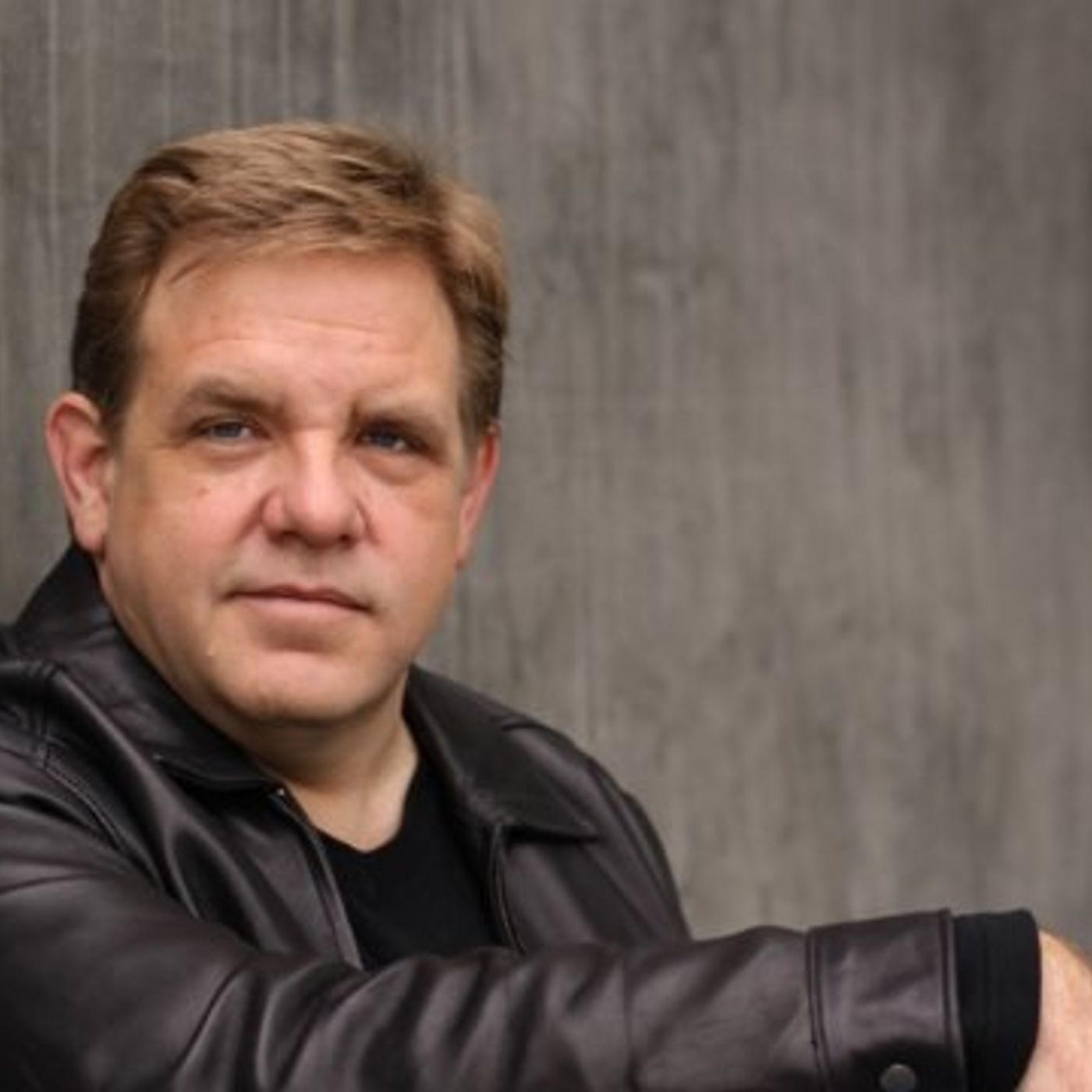
I'm Brian, and this week we are coming to you live via digital recording from Wonderfest. And it's a good thing we are, because that's where I happen to sit down with this week's special guest, actor Brian Howe. Now, these days, you may know Brian as Sheriff Pickett from the HBO series Westworld. But even if you haven't caught up on that series yet, when you see Brian, you'll probably say to yourself, hey, I know that guy. Now, where do I know him from?
And this is a point and a circumstance that Brian himself addresses later in this episode. But yes, he's one of those actors that you've seen kind of everywhere over many years. Ryan's been in Catch Me If You Can, The Pursuit of Happiness, American Horror Story, Annabelle, K-Pax, The Majestic, Deja Vu, Evan Almighty, Gran Torino, he's on Lie to Me, Criminal Minds, House of Lies, Nikita, Justified, and of course, he's one of the cast of regulars in the Larry Blandmeier films. If you've seen The Lost Skeleton of Cadaver, well, then you know what I'm talking about. But all of those titles still don't quite do him justice.
Brian's had a fascinating career, and being the working actor that he is, he really has some interesting perspectives on the entertainment industry. And with that, I say we hear more directly from him right now. No, I'm good. I don't know what it is you want to ask me, but just go ahead and ask me. I assume I'm here for a reason.
All of your life. I start at the beginning. I kind of do. I like hearing how people got into their life. So I guess, where were you originally born?
I was born in Springfield, Massachusetts. And we moved to Barrington, Rhode Island. I was but a tot. And stayed there for pretty much the rest of my childhood up through... you know, my 20s. No, not through my 20s, because I was in college and all that kind of stuff.
But, you know, grade school, high school, that whole deal. Early on, were you kind of drawn to, again, I always fall back to the arts, but I guess were you like a big sports kid or were you already kind of interested in theater? No, I was already, I was clowning around and being a dork and entertaining people and doing impressions and puppet shows and clowning around. I didn't know it. I didn't have a consciousness of it.
But I really liked making people laugh. That's why I like tracking it back this far. Because it is funny how much we start laying the groundwork and we don't even know it. Don't even know it. That early on, we don't even realize.
And it's true. And I had two older brothers. And I got up through... I mean, I was in a school play in grade school. But that wasn't registering as anything.
It was just... I knew that I was. I did notice that I was one of the only people comfortable even being on the stage. Like I was way okay with being up there. But again, that's in hindsight.
That's a different mindset. I know that was true then. I know I wasn't like all nervous and stuff. I know it was like, you know, this is, I'm okay. What's everyone so nervous about?
But it was when, and I had two older brothers and I knew a bunch of their friends because they came by the house a lot. And when I was in ninth grade, we weren't physically in the high school building yet because we were such a large, class so we were in the junior high school building and one night my mom came up and said we're going to the high school to see the school play and anything that meant I didn't have to do homework was fine with me and we went to the high school and sat down near the back of the auditorium and it was Oklahoma was the play and I knew nothing about an Oklahoma but the school band was down in front And they started, you know, striking up the band and all these great songs happening.
And it was, you know, and then the curtain opened and the play started. And the audience was laughing and clapping. And people up on stage were singing and dancing and saying lines and getting laughs. And then partway through the play, a couple of people I knew showed up. Hmm.
And that was a magic moment. You were like, wait, regular people can do this? Because I watch TV and I watch movies, and I didn't know those were people I could know. And a couple of my brother's friends were in the play, and I went, that's it. And were they any good?
Yeah, they were, because they were getting the laughs and singing the songs, and that was like a side point for me. Hmm. And I went. Planted that seed right there. That was the epiphany right there.
That was it. I'll never forget it. So at that point, you started reaching out, trying to find that? So then I realized, wait a minute, I can study this. I can like, you know.
So the minute I was in the high school, I went right to the first play audition, which was Inherit the Wind. Did they have a whole setting for theater? Or it was just a couple times a year they did a play? Or did they already have like you could study? They had a theater department.
Yeah. And they had some theater-oriented classes. They had a wonderful coach, Barbara Dooley. She was just terrific. And I think she essentially created a theater department there.
And I just gravitated to it immediately. And it just became my passion right away. And anything I could do, I did. Was it at that point you were because you even said, oh, yeah, I can study this. You know, was it something that you were already taking seriously enough that you're like, this is my path.
This is what I'm going to do, because I do remember kids in high school that were like the A stars, like they were in all the plays. They were really good. They would get up there and just kind of own the stage. I never saw any of those kids. Like since then, I'm like, and.
They were good. So I'm like, is it? Well, you know, because it's hard. Yeah. It's not.
I wonder sometimes if it's just like filling that need for them at that point for high school and they're done. And then what kind of sets it to like. I think it's both. Yeah, the next level. I think that's very, very accurate.
I think that's entirely justified in that it does fulfill something at that time. Yeah. Or it's something that they think they want. And then reality hits. This is hard.
And it's time to sell real estate. It's just not going to happen for one reason or another. You discover just how hard it is and just how many people you're up against. Yeah, everyone. And many of whom are very serious.
Yeah. And they're going to do better than you. When did you have that moment? When did it hit you that you were like, oh, this is a lot to deal with? Was it still in high school?
Well, because, yeah, it was in high school. And you still had to audition for the plays. Nothing was given to you. You still had to audition and stuff. And I knew about being ready early on.
Again, it wasn't something I was necessarily conscious of. But I just knew when there was something I wanted, a part coming up, I read it and read it and read it. And I knew... about making choices and how I would deliver that line and how I would deliver this and how I would do it. And I would show up and I would really pour myself into it. That makes a difference, yeah.
It makes all the difference. That separates you away from the other kids that just kind of show up, but when you've immersed yourself into it. It separates me away from a lot of actors in Los Angeles because it's a climate there that encourages laziness. Oh, just be familiar with it. Literal.
It's warm outside. I don't have to do this. But literal, like, professional laziness. Like, just, oh, just be familiar with it. Get the gist of it.
Just show up. Just read. Like, literally, I'm going to read for part, and people go in and read. And I started to fall into that. And then I took a wonderful class by a guy named Larry Moss, who's a renowned acting coach.
He's coached, you know, Hilary Swank for Boys Don't Cry. And she won an Oscar. and he coached Jim Carrey for The Majestic he got nominated for an Oscar this guy knows what he's doing he's serious and what he taught me what I walked away from in his class was he introduces the first class by saying welcome to Los Angeles the worst city in the world to be an actor suppose And he said, because it teaches laziness. And he said, you're not going to get praise for that here, for knowing your lines. That's expected. He said, you're not going to do scenes from TV shows and movies in this class.
You're going to do stage plays. You're going to do Eugene O'Neill and you're going to do Tennessee Williams. You're going to work. You're going to do Pinter, Mamet, Shakespeare, whatever. It's going to be stage plays because we don't fool around here.
And it got me back into a groove where I didn't anymore show up for an audition without knowing in full completely memorized my sides and i would still show up with them in my hand dude because i'm not above playing my own game yeah and i would walk in the room with the sides in my hand and put them down and go all set. Which then makes me wonder what if for a lot of people maybe not even just you but leads you to los angeles like if you're just concerned with acting, like there are, you know, decent theater troops all over the country. No, it was a road. You're right. I skipped ahead.
Cause I did, I did go, I, you know, I got out of college with my theater degree. That'll get good luck with that kid. Um, uh, and, and I went right to work in a kitchen of a restaurant and, um, washing dishes. Yeah. And, uh, And a friend of mine called, who I'd gone to college with, and he was running a summer stock theater in the Poconos.
And he called me and said, come do plays, and I'll even pay you under the table a decent amount and put you up. I said, you're in. This is pretty good. I'm in. And from that, it was a short hop to New York, where the first time around, I didn't accomplish a whole lot.
But I wasn't there even a year. And a friend of mine from Boston called, whom I'd known from college as well. And he was directing a play at the Boston Shakespeare Company called The Shadow Box. And he said, come on up. I want you to play this part.
And I said, I barely have any money. I don't have a place to live. He said, I need a roommate. I said, what train am I on? All right.
I was in such a hurry to get there. I think I left boxes of stuff that mom had given me in this ratty old apartment that I was in. Free stuff for the next person. Yes. Someday we'll talk again and I'll tell you about the night of a flaming mattress.
But moving right along. All right. And so that was my skip hop to Boston. And I stayed there for almost 10 years. And that's where I got my equity card and doing a play called Sheer Madness.
And that's where I got my SAG card doing a show called Spencer for Hire. And Boston was really good to me. My Boston years are very, very fond memories. And then came the time when it was time to make the hop. And I had gotten known enough by local Boston casting directors that I started putting out the word like, who do you know in New York that I might be able to, that I could maybe, you know, drop your name or whatever.
And one of them, sure enough, practically Xeroxed her Rolodex for me and said, I contact all these people all the time. Try them. If they call me, I'll talk you up a blue streak. And that was really sweet of her to do. And that started me on the road to having a commercial agent.
And then eventually, like a manager, I hooked up into a company called the Manhattan Punchline Theater Company. And that was enormous fun to do. But it was going back to a day job. Because in Boston, I'd gotten into sheer madness and got my equity card. And I quit having a day job.
That was my job. I was, for the first time, Working as an actor. I was paying my bills as an actor. And that's a milestone in your life. Would you have been okay with that?
Assuming nothing else took off. If you were still part of the troupe there in Boston. Because I wonder that sometimes. I see a lot of people that are just lifelong actors in smaller theaters. And I'm thinking that's what they wanted.
Or it fell back. It was tremendous fun to do. I don't know if I would have been content with. Staying there. In other words, I always had to try the next step.
If the next step didn't work, I would have been okay going back because I would have been able to be an actor for the rest of my life. And know that you've done what you needed to do. That was paramount to me. I want to be able to be an actor. But I always had to try the next thing just because I couldn't be on my deathbed one day and go, why didn't I try the next thing?
I should have tried. Try and fail, but at least try. That's part of it, I think. It's a drive that you have that not everybody does. Right, right.
And that was kind of what propelled me forward. And then kind of one thing really does actually lead to another if you just stick to it enough. It's the having the day job, going out on the commercial calls at lunch hour, rehearsing the play at night, which I look back and I go... Only in my 20s. How would I have done that?
Only in my 20s could I have managed this. That's what the 20s are for. You're insane. And then New York became more comfortable. I was doing pretty well as a commercial voiceover artist and getting the occasional Law & Order gig.
And then friends out west started saying, you know, pilot season. Come out for pilot season. You should come out here. Yeah. Brian's like, Brian, you work.
You might consider coming out. And so I had an agent that had a West Coast office. So I went out and kind of got to know them, told them kind of what I was about. This is what I do. I don't expect to be the big star, but I'll be the big star's neighbor.
I'll be the big star's partner. It is interesting because there are some people that are so driven to be the focus of everything. And then there are just working actors that are like, I'm fine just being, again, character work is an art form in and of itself. It's an art form in and of itself. Yeah.
And it's interesting to see, like, all the lead, all the star actors that we know of now didn't start out star actors. It's something that happens to you. And sometimes you go back. And sometimes you slip. You had your, again, somebody was just talking about, because now.
Stars fade. In the new King Arthur thing. Like, 10, 15 years ago, King Arthur might have been Jude Law. But now he's the king. And he's still very attractive, and he's a great actor, but he's got a different role now.
Literally, in life, he has a different... It's really true, and I was always attracted to the character guys. I always liked watching what they... J.T. Walsh is a favorite example of mine.
God rest his soul. I loved J.T. Walsh. And could always make being not likable... okay, like he could make it work because it was rare that he was. Ever a likable character.
You would love not really liking him. Yeah, you'd be like, oh, this guy is terrible. He's great at being a dick. I can't wait to see what he does next. Like he's the slimiest.
I loved him. I loved him. And I said I would rather have his part in any movie. He's memorable across the board. Because stars do a movie a year and supporting actors do five.
Yeah, at least. Depending on what kind of run you get. I'll stand next to the guy making the money. No, I don't get the big bucks. But I can also go to the mall.
Yeah, you keep the insurance. Big stars who don't get a role for two years. And when you're asking whatever happened to about the star, you don't care about me. I'm showing up with the new star. A few years later, he's back on stage.
I'm the new star's dad. And you're like, yeah. I'm good with that. I'm way good with that. So, you know, that was my, I just decided, you know, that was going to be what kind of what my attitude was and what I.
I was going to just be happy working. I just like working. And as a result, I get to work with Tom Hanks and with Will Smith and Kevin Spacey and Jeff Bridges and Steven Spielberg and Clint Eastwood. I mean, that gets to be my resume. Yeah.
Which is equally as impressive. Jeff Bridges and Tom Hanks. Might never do a movie together, but I get to do one with both of them. You're the connecting thread between. So I always like, show me the problem with this.
Because I really get to, and I do get people who are ardent fans of certain movies or whatever. People are very sweet, and I do get recognized once in a while. But I get usually what I call reverse recognition. If Will Smith pulls up to the gas pump and gets out, someone's going to go, oh, my God, it's Will Smith. Huge movies are pumping gas.
They're going to flip out because they see him in the movies. If they see me pull up to the gas pump, they don't say shit. But then they go to the movies and see me with Will Smith and go, that's the guy from the gas station. You don't get a lot of, wait, aren't you? Wait a minute.
I just saw him tanking up at the shell. Didn't you top off? You weren't supposed to be tanking up. How did he get a movie? I'm going to fill up there more often.
I mean, in a way, that's the better way to go in the long run. You don't have to put up with near as much insanity as somebody in this crazy high-end scale. It's like they can't leave the house. They can't go to get gas. They have to put fake.
Names on the call sheet. They can't do anything. Jim Carrey, when we were shooting The Majestic, had to have a fake car to pick him up on one block while he got in a real car on another block just to be able to go home. And that's your life. Every day.
And that's your life. That's insanity. It's like hiding. And I just went... You know, the fame and the perks and the riches, yes, I'm sure that would be great, but wow, what a price.
Because, you know, I live in a tiny little hovel in California, and I wouldn't want... paparazzi stationed outside, and I know my wife wouldn't. She's not in the industry. You know, she likes her privacy, and I wouldn't want that. I wouldn't want it. Send her outside.
Go in the back yard in the bikini again. You know, airports are very good for my ego. Well, that's, yeah, I mean, that is one of those. You also, once you leave that area, like, you can probably go to just about any other town, and you're fine. And I'm fine, but airports are very good for my ego, because there's a cross-section, and there's someone who goes...
Wait a minute. Are you an actor? I've seen Spy Hard. Hold on a minute. Yeah, Spy Hard.
Yeah, exactly. That was a little bookmark career. Move for me. Yeah, that's breaking into the mainstream there. Because I loved the Zucker Brothers-style movies.
Yeah. And I loved what was always going on in the background. Somebody just doing something mental. Yeah, the genius. And I got to be that guy mixing drinks with plastic beer rings and mittens and a blender.
And so that was, yeah, that came from doing a commercial. The director had done a commercial. Yeah. And like all directors, during the commercial, he said, I'm going to be directing a movie. Yeah.
Okay, pal. You want to put me in it? We all tell you. Yeah. Call me.
I'll wait. Wait by the phone. But sure enough, he did. Credit to him. Were they still involved at that point?
Were the Zuckers still? No, no. This was. because they all kind of fell under their. This was using Leslie Nielsen. He started doing a lot of those.
They took him from the airplane movies and the police squad. I think Spy Hard was supposed to be another franchise for him, but it wasn't quite good enough to make it. Neither did Dracula Dead. No, but it used Leslie Nielsen, who was a lovely man. And Robert Guillaume.
I got to watch them carry on while I mixed my insane drinks in the background. He's amazing in and of himself. What have you done by that point? But then, I guess, again, I was going to throw out some of the bigger titles, but I guess anywhere along the way, if you have a. Good story, better story, feel free to throw me one.
Well, I was just like, again, you were talking about doing the hardcore theater stuff, and then you end up in state and main, so that's kind of this crossing of both. You've got mammoth words, you've got mammoth directing... And then you're. Doing a full-fledged movie about movies, really. About movies, yeah.
And so I had done, I had done, a friend of mine, during my Boston years, a friend of mine, Jim Frangione, was starting a theater company, and he was going to do a fundraiser. And he had helped put together a big fundraiser night for Mamet, for Vietnam vets, called Sketches of War. And Mamet being Mamet, knew everyone who's everyone. And so Sean Penn, Al Pacino, Christopher Walken, I mean, name it, they're showing up to do readings and sketches and essays and whatever, what have you. So he and Mamet kind of got to know each other, and a little down the line, Jim wanted to do a fundraiser for his own theater company, got in touch with Mamet. and said, have you got some material?
I'd love to do some stuff. If you've got throwaways or stuff you've never, and he went, oh yeah, yeah, yeah, I've got some, yeah, sure, no problem. And he sent him a giant sheaf full of material, like scenes cut out of plays. Just a phone book full of material. Yeah, and Jim was like, oh my God, this is like a treasure trove.
So he starts putting this evening together, and he's calling us, like, hey, do you want to be a part of this? And I'm like, yes, absolutely. And he puts out an ad that, That's supposed to say an evening of David Mamet, right, at the New Orlick Theater, blah, blah, blah, and this and such a date. And they misprint the ad to say an evening with David Mamet. Oh, damn it.
And Jim, and it's in the paper. And Jim has a heart attack because he doesn't want this to piss off David. He goes, look, it's a fucking typo, dude. I'm sorry. I'll issue a thing right away.
And Dave was like, no, no, I'll be there. I'll show up. So Mammoth showed up and offered to get on stage like twice, you know, to like read a thing. And Allison Martin and I, who Larry Blemire fans will know from the Blemire films, we read a sketch together called The Tesla Pitch or something like that. And we had a blast doing it.
And it got huge laughs. And Mamet was just, like, enamored of both of us. That's impressive. You're a funny fucker, man. You're funny.
Yeah, you're fucking funny. So thanks, Dave. Thanks. Tell someone important, which he loved, you know, because I just, like, immediately. You're putting that on the headstone now, right?
Here's my quote from Mamet. Yeah. And years later, I was in New York, and I literally bumped into Jim Frangione on the sidewalk. And he was understudying Mamet's play Oleana off Broadway with Bill Macy and with Rebecca Pigeon. And Macy and Rebecca were going to be leaving soon.
And Mamet had offered Jim the part to take over. And they were looking for an understudy. And Jim said, you want to understudy me? You'll probably go on. Nice.
Yeah. And I said, yeah, I'll do that. And he said, great, because Dave already knows you. He won't even have to read you because he hates coming into New York. I said, okay.
And we did a mere formality because of equity rules. The stage manager, Carol, who was a former roommate from Boston, so I knew her going in. She said, just come in and just get up on the stage and read some stuff from the play. We have to do it. All right, I'm fine.
So I did Oleana, and I got to know Dave from that. And then Again, a couple of years went by, and I'm living in L.A., and I get a call from one of Dave's assistants saying, oh, Dave would love for you to come to Massachusetts to shoot this movie he's doing, State in Maine. You'd be a bartender. But we can't fly you here. And I said, well, I don't know.
I have the money. I said, what if you just flew me coach? Okay, great. We can fly you coach. We can do that.
And so I did, and that's how State in Maine happened. It's just like one thing– Does actually, with persistence, lead to another. Where you're like, I've already done a bartender. You just have to say, damn it. Typecasting already.
Bartender for real, and I sucked at it. So I was going to say, that's your fallback. You're like, look, I've played a bartender. I have played a bartender. I have a professional.
I made mimosas with the expense of champagne, but still, I have been a bartender. A professional pretend bartender. It's okay. It wasn't good. It wasn't pretty.
Well, you mentioned the lost skeleton. That's around that time it kicks off. We've had Larry on the show. I guess, what is your take? How did you get involved that early stage?
The Boston years, going back to the Boston years, I had... I think it was before I hooked into the play Sheer Madness. So I was still bopping around, might have still been working the day job, and. The word got out that Israel Harvitz was going to be doing this play of his, a new play called Henry Lumper up at the Gloucester Sage Company. And the director, a guy named Gray, who got to know me through other things, wanted me to come up and read to be part of the ensemble.
And so I did and got in the play. And it was all these great, wonderful Boston actors that I really admired. They were really some Really talented people up there. And I got to be a part of that company. I was very excited.
And one of the actors in the show, towards the end of the run, a guy named Eddie Yapchick, said, do you know this Larry Blemire guy? And I knew Larry's name because he had done plays with this other company that got written up in the paper and he was kind of getting attention as a writer. And he'd done acting as well. I said, I know of him, but I don't know him. And he said, I was doing this really effed up play called jump camp and uh you should read one of the parts because you i think you'd have a really good time i said all right and i read this play it was deeply disturbed it was just so it was just so badly nuts and i loved it i just loved it i said this is wrong and i have to be a part of it and so i read the for the one of the lead roles is a role named axel uh and it's a bunch of uh a famed psychologist takes a bunch of his case studies to a remote town and lets them form their own society.
And I play Axel, who you think at first is the psychologist, and these are all his patients. It turns out the psychologist has to become one of the patients to hide from me. And I'm like the worst psychopath of all of them. And I'm just looking for an angle out. I want out.
So I can go wreak havoc. And it made like the 10 best list of every critic in town and was just something I'm proud of to this day. It was just terrific. What a cast of all like local actors who were just all just extraordinary. And it was one of those bookmark experiences.
And then Larry and I stayed really good friends well after I moved to New York and including my moving to L.A., And he had gotten a job with an internet startup and was coming to town. And I said, bring a screenplay, dude. Like, bring something. Adapt Jump Camp or bring something. Yeah, do something.
And he said, and so he did. He brought Lost Skeleton of Cadaver. And then I pretty much cast it. Yeah. And then we went to an old friend of his for some money, like 70 grand.
But this guy was a software mogul. And that was the beginning of that. I mean, do you, are you taken more with that kind of thing? Because it's so, I mean, it's so removed from doing super high end, you know, studio pictures, like the love that goes into the stuff that Larry puts together. And there's, you know, he has no money to piece it together.
So, I mean, the fact that it's all built. Around passion and love that like, I don't know, are those, better for you in the in the grand scheme. Well it's very telling that i went from shooting the lost skeleton for you know a dollar and a bucket of chicken uh to kpax which was a huge universal movie yeah massive and as thrilling as it was to work on kpax i can easily say i had much more fun doing lost skeleton because it was a bunch of friends it was like going on a picnic with your friends. Just hanging out and and and someone had. A camera and you get to do this goofy script all the same time you know it was tremendous fun it was really really a great time and we were kind of all in the same boat together those.
Are kind of amazing when you get those earlier films sometimes of filmmakers that really are just them and their friends and again i just was doing a piece on the the multiple maniacs which was john water in the early, early, and it really is just him and his friends, and they kind of came up with a basic plot, but you're kind of just watching them hang out on. A normal weekend, really, and doing horrible things. So you do see those early films of guys that just get enough gumption to. Be like, oh, I'm also gonna make a movie, by the way. It sort of has a plot.
Let's make this happen. I think that stuff's always kind of fascinating to look at. Also, just it capturing that time and place And that group of people. And, like, it really does kind of just give this little snapshot into that time. Those were always fun. ¶ ¶.
Mr. Projectionist, stop the show. Here's great news you ought to know. We've just got a shipment of taste-thrilled treats, all tip-top quality and delicious eats. There are hot dogs and popcorn and candy galore.
There are soft drinks and coffee and a whole lot more. So direct your steps to our refreshment stand to enjoy the finest snacks in all the land. We're now on exclusive combat radio adventure from the waterlogged adventure book of. Big Dan Prater. Hey, look, my pencil porter fits right inside this pie partner.
His curious sidekick, Dutch the Swede Anacromby. I think it might be the sock side. That thing they always show on TV. And the always helpful Millie Healy, town librarian. You mean this candle mani is yours?
This episode, Big Dan Prater and the Night of Presence Tent. Music Keep organizing these fun conversations. About film, and keep booking amazing guests. So just go to patreon.com slash movie meltdown or go to movie meltdown.com. And the link is right there at the top of.
The page and you can help keep the show going. Plus you get exclusive episodes every month just for club members. So go to our Patreon page, join the meltdown club, become a milk a tear, get. Cool stuff and keep the meltdown rolling. Damn the man.
Save the meltdown. You don't know the lost skeleton of Kadabra, but you will. You will. Hi, this is Larry Blamire, also known as Dr. Paul Armstrong, doing science for Movie Meltdown.
What's part of your problem? You know, you haven't seen enough movies. All of life's riddles are answered in the movies. And now, on with the show. Um yeah larry had come to la and uh i was the uh de facto casting director for lost skeleton because uh larry had just arrived he had jennifer in tow yeah his wife and uh and very little else uh And so I had been here for, I'd been in L.A. for, you know, a few years, and I'd recommended first Alison Martin to play the role of Betty because I didn't know to what degree Larry wanted to go with Betty.
And I knew Alison could have played it, you know, kind of straight and still silly or could have gone full absurd. And it was decided that Betty needed to be straighter and so I said okay Larry you make that call you can tell Allison and I had done a pilot a comedy pilot with Faye Masterson and we had stayed really good friends and so I said well you know what about Faye and Faye I guess read for Miguel and for Larry and just you know hit out of the park because Faye's great and that pretty much nailed down the cast I said well Dan Conroy was an actor I got to know in New York. We had done a show together, and his nickname was America's Most Beloved Action Figure. And he came in and just nailed Ranger Brad.
Bob DeVoe, who plays the farmer, was an old friend from Boston. So Larry flew him in just as a tribute to the old gang. And it just kind of fell together from there. Yeah. At the time, again, because you said it was just sort of hanging out with friends, it's now become this whole series and other spinoff movies.
Did you see all of that. Coming from it in that first initial installment there? I didn't know. I didn't know if Larry would try to make more movies. I didn't know if he would make another skeleton movie until Skelly got distribution through Sony TriStar and went on DVD.
And then started showing up on internet message boards all over the place of people just totally getting it. And Larry also did a full page of blurbs from virtually every major newspaper in the country that had done a review of it. And all of them just fantastic reviews. Like every critic just got it, you know, which is what you want. Impressive.
They got the joke. Completely got the joke. Um, and, uh, and so, you know, feedback was, was like pouring in, uh, not that Sony was paying any attention, but, but, uh, we were, and, uh, Larry, you know, came up with, with, uh, a sequel, and, um, he recruited Frank Dietz, uh, and Dave Scow to do a, uh, some, a cameo, um, but, you know, corralled most of the rest of us, Trish got in the mix, Trish Geiger got in the mix, um, I was doing my other character's twin brother. Of course. Yeah.
And et cetera, et cetera. And, yeah, they just became so much fun. They really became tremendous fun. To do. It is one of those, especially with something like that, you either get it or you just don't.
And it did find this audience that's like, most people, again, it won't click with them at all, but I remember one of the first times that I think he came to this, it was like the end of the day and this couple comes rushing in And it was like the end of the last day and he was about to close up his table and they're like, oh, he made it. And they had driven from like states away because they. Found Larry was going to be here. And like, That was it. They just came in and they shook his hand for like five minutes and then they walked out before I even left.
And I was like, that was your entire trip was just to like say thank you for making this movie. Like they drove all the way here and like bought a copy and had him sign it, shook his hand and walked back out. And I was just like, that's amazing. And, you know, one of the side effects is a corollary effect, which was not intended, was that kids love it. Yeah.
Just because it's so fake and so stupid. It's still kind of very basic in the way that we all latched onto stuff back in the originals that he's kind of making fun of. And so we were pleased to know that it had that crossover thing, that the whole family can watch Lost Skeleton for different reasons and laugh at different things. Well then, again, kind of around that time when you mentioned doing pilots and stuff, and this was one, especially because you mentioned being fine with playing the neighbor of the guy. When you get to a minute with Stan Hooper, that was kind of coming in right on the edge of the old school version of the way network sitcoms worked, and kind of in their heyday.
That 90s run where actors were being paid astronomical. Amounts of money, And they were still getting like, shoot. Well, but I mean like the leads were like pulling in the kind of money that they will never see again. Like no show is ever going to get that again. And the, and the shares that were coming in then versus the like minute things that happened on TV.
Now, like it was the end of that. That was Norm, uh, McDonald to his credit really wanting. Cause his, his favorite sitcom was the Bob Newhart show. Yeah. And, um, uh, And he really wanted to be, whereas most stand-up comics who get a sitcom want to be the funniest thing on the sitcom.
And Norm said, no, I don't want to be the center of attention. I want you to surround me with funny people, and I'll be the reactor. Yeah. Because they'll laugh at my reaction to it. I mean, that's kind of what he does, isn't it?
It is. Like, he's so deadpan in his comedy that you have to kind of apply that. But he really, like, took that and ran with it, and he surrounded himself, you know, with just a cast of small-town, you know, lunatics and you know I was the butler who unlike Benson who hated being the butler who was better than everyone I loved being the butler and was a point of pride and when he wanted me to stop being the butler I hated him for it because he wouldn't respect my wanting to be the butler so it's just a really fun twist on it just you know just being merciless to him you know and Norm loved it he just told the writers you know keep having Gary just like insult me left and. And that, well, I mean, that was such a great, like, Fred Willard in there.
Yeah, having Fred in. Penelope Ann Miller, Garrett Dillahunt, Daniel Roebuck. Daniel Roebuck, yeah. I was like, we've had him on, too. And it was like, it was kind of like such a weird group of people to, like, put together and, like, again, in that weird end of the run of that era of sitcoms.
Yeah. That was kind of cool. It was really. It was one of my favorite experiences ever. I wish, you know, every show I've done, the Bonnie Hunt show and Stan Hooper and Journeyman.
I would have stayed with any of them for a long run. I just thought they were high-quality, great shows, and I'm proud of all of them. I wish one of them had lasted more than 13 episodes. Yeah, at this point, it's so hard to get any of that stuff to work. And from that point.
On, that weird shift in TV that I'll get back to you by the end, but I guess, again, just sort of going through the timeline. At that point, you're also getting to, again, I was going to. Go to Deja Vu just because it's Tony Scott. What was, I mean, as far as was there dealing with him or watching him work on set? That was, yeah, that was very cool because it was the size of the role was such that I probably under normal circumstances might have passed on it because I was looking to try to do Just bigger stuff, you know, not star stuff, but at least bigger.
But there was a feeling from casting and from my agent that I would stand a good chance of getting this. And it would have been, you know, one big scene with Denzel, directed by Tony Scott. And I went, okay, there's no downside to that. I said, I'm not going to get rich off this, but I'll have a hell of a day. Yeah.
And so I went for that reason and got cast in it. And it was one of those great moments where, oh, man, that's awesome. I'm going to work with Denzel. God damn it, I'm going to be with Denzel. I can't suck now.
You have to be really good because I so respect him as an actor. I just think he's phenomenal. And it was a fun day. Tony Scott was a benevolent madman. That was his reputation.
Yeah, he was a benevolent madman. and Denzel I got him to warm up to me I cracked the ice with Denzel I think he has kind of a shy streak which a lot of actors have so I don't begrudge them that but I had a great story because I had done Catch Me If You Can with Tom Hanks and during Catch Me If You Can Hanks showed up one morning it was a Friday morning and we were talking and he said he was going to be presenting at the upcoming Oscars which was the following Sunday or Monday And I said, what are you presenting? He said, best actor. He said, one of the nominees is Denzel. And they did Philadelphia together. And Tom won the Oscar for Philadelphia.
And he said, I'm going to go, and I'm going to present, and I'm going to be packing heat. And I said, what do you mean, packing heat? He said, because if I read that card and it's anyone's name but Denzel, I'm going to pick them off as they come up the aisle until there's no one left. And I told Denzel that story, and he laughed and loved it. And so we had a really fun day as a result.
We kind of clowned around a little and improvised here and there. I'm waiting to see that news report. Tom Hanks wrestled to the ground at the Oscar like that. They really installed the metal detectors after that year. Hanks loses it.
You wouldn't really see that coming from the most beloved man in America, Tom Hanks, loses. His mind at the Oscars. Denzel Washington gives thanks on many levels. He also provided bail that night. Yeah, very, very nice of him.
But, I mean, I did kind of skip over there. I mean, Catch Me If You Can was huge, too, like coming in. Working with Spielberg in that cast alone. That was a bookmark moment, that one. Because, you know, I hadn't met Spielberg.
He doesn't attend the auditions. Because they need to at this point. Me and Debra Zane. And she was great. You know, when a casting director kind of goes the extra mile for the actor.
She was even helping me stage scenes. Because it took place in a car. And rather than be over there, she would position herself like we were in a car together. So I would kind of, you know, have the right way to turn and everything. And just went in ready.
And we did the scene a couple of different ways, a few different ways. And I left trying to, like, forget it and put it aside. Yeah. And we assume you have to do that every time, right? You have to.
You have to develop the thing. You have to just, like, go to lunch and just forget it because now it's in the hands of, you know, others. And sure enough, man, it took, I want to say it took the better part of a month to find out. It's a huge production, yeah. It took the better part of a month.
They had a lot of casting to do. And I think they had a board to keep. And I found out surreptitiously, actually, because I had... I had done a movie called The Majestic, and I had to go in for an ADR session. And Frank, I found out later, had shown a print to Spielberg to get feedback.
And it was after my audition for Catch. They kind of collided, you know, the end of Majestic, beginning of Catch. And they're both sitting there watching it, and I pop up quite a bit in The Majestic. Yeah. And Stephen apparently turned to Frank and said, that actor, he just read for me.
Who is that? And Frank said, oh, that's Brian Howe. Yeah, he's great. And Stephen said, he's got a great face, doesn't he? And Frank said, oh, yeah.
And he's, you know, funny and blah, blah. Frank, you know, talks me up. And Spielberg thought a minute and went, Kirstie, cast Brian Howe as Earl Amdurski, like on the spot. He turned to his assistant and just said, cast him. That's what you need.
And Frank said he had to keep his mouth shut all weekend long. He couldn't talk to me. You just need to get Darabond to follow you around everywhere you go. Yeah. And I found out, I think, that like Monday morning or something.
Just before I went in to ADR. And I go in and Frank's looking at me just beaming. Like, well. So, yeah, that was kind of a Cinderella moment. And then, I mean, Spielberg, as far as dealing with people, I mean, once you get to witness these guys like on set. how does it affect you like looking at other directors or projects yourself when you're kind of watching these guys work?
Um, you know, I, I just, I, I, I go in in a state of trust, uh, whoever I'm working for, whether I know who they are or not. Um, I just go in, in a, in a state of trust. Like, you know what you're doing. I'm going to come in knowing what I have to do. Ding.
Fries are up. Um, And I have to come in knowing my stuff. And, you know, and it's been a good run so far. I haven't encountered anyone. Stephen especially was...
It was fascinating to watch him work because no sooner did they decide on what this shot was going to be, and he would hand it over to Janusz Kaminski to set it all up. Then Stephen, you know, most directors kind of sit back and wait and, you know... make a phone call or whatever. Steven would immediately head to another part of the set with like a lens and start thinking about the next set up. And then the one after that, like he would map out really like geographically on the set, what the angle was he wanted to get. And he, you'd see him like thinking about it while they're setting up the, so always a step ahead.
And again, somebody just immersing themselves in the same thing as you, showing up, knowing your stuff. Just know it. Just know what it is you want to do. Have an idea ahead of time. And then just stay busy.
And it was an extremely fast shoot for a big production. We shot fast. We had a three-location day on that movie. On that level, nobody ever does that. No.
No. You're lucky to get one scene knocked out. Right, exactly. And we had three different locations. We had a downtown, no, we had a house looking over downtown, a downtown print shop, and then a Santa Clarita, not a Santa Clarita, San Pedro, a house up in San Pedro somewhere.
That's great. And it was just like, it was like the biggest, like most lumbering independent film I'd ever been involved with, but They were ready, like strategically. They had trucks in both places kind of ready. I guess if you're, again, one step ahead of the game, if you have. Everything already laid out in your head and have people that are ready to put it together.
It was kind of amazing. It was kind of amazing. And it was just a tremendous amount of fun. And my favorite boy-I'm-making-a-Hollywood-movie moment was in late March in Pasadena. shooting Christmas Eve on Long Island with real snow. That's impressive put together.
It was a balmy night, and they had snowmaking machines up the block pumping through ducts real ground-up ice, like real snow. Not Hollywood snow that goes in all directions. Real snow that falls down to the ground and that you slip in and make your feet cold. And I'm going like, wow. Wow.
This is Hollywood magic. This is what I came to do. Pasadena in March. Didn't know it, but this is what I. Came to do.
It was Christmas Eve on Long Island. Have a snowball fight. Yeah. We could have. Well, then, again, some of the bigger ones, and working with different people, Pursuit of Happiness.
I mean, that's, again, Will Smith doing something kind of different at that point. Yeah, very different. Yeah. I don't know. That was kind of just my... my luck at that time because Catch Me If You Can was a diversion for Steven.
Yeah. He'd come off five dark movies, you know, AI and Private Ryan and Schindler and AI and Uh, and you know, uh, several that were just, and, and catch me if you can was like a piece of wedding cake. I think it's still like, doesn't register to people. Like when you're, they're naming off all the Spielberg, like nobody goes to that one because it feels, especially that era, it feels so different. Yeah.
Yeah. And it was a blast. He was having a blast making it. And I think it shows up on the screen. I just, how light and frivolous and great.
And you know, it's, it's a, it's a wonderful movie. And, uh, So Pursuit of Happiness is exactly opposite. And Pursuit of Happiness was the same for Will. And Gabriele Muccino, it was his first American film. Yeah.
And they charmed the mayor of San Francisco, so they got to shoot in San Francisco and not another city posing as San Francisco. Pretending Toronto as San Francisco. Right, yeah, which works like for one hill. Yeah. And so that was just tremendous fun.
And Will really made that film a joy. Will was just, he's such a genuine, warm, nice guy. You know, he's affable, he's total pro, didn't keep the set waiting, showed up, knew his shit, took the notes, you know, and Gabrielli was not fluent with English. He not only was fresh off the boat, he had one foot still on it. So he didn't understand a lot of words.
He couldn't communicate well. And we mercilessly mocked him. We were merciless. He would come up to us after a scene and go, that was terrible. That was terrible.
I see you acting. I see you acting. It's fake. It's bad. And I'm sitting next to Wilson.
And Will's just taking it in stride. And he goes, I go, well, what do you mean, Gabrielle? What does the scene need? What does it need more of? And he would go, he would say, it needs more, more, and he didn't know the words.
So we would start filling in words. And I'd go, table? Does it need more table? You know, and Will would go, lamp? What is table?
What is lamp? Magic? Health? Does it need more health? And the crew was just dying behind him.
And so that's how we got our revenge for his rather indelicate criticism of our Of our work. And then introducing Jaden into the business. This little boy. Yeah. Again, now he's become his own entity, but how was he dealing with it that early on?
He was really cute. He was very funny. Will told me a story that they were doing a scene at the kitchen table, and they finished, and Jaden looked up to him and said, Dad, that wasn't good. And he went, what? I didn't believe you for a second.
Just like really, really balls out honest, you know. You need more table, Dan. Yeah, you're doing too much acting. You need more table. Yeah.
I've been talking with this guy over here. We decided not enough lamp. It needs more health and table. Definitely more table. Yeah.
Less lamp. But that was a great experience. That was a lot of fun. And it doesn't hurt to have to be in San Francisco. Yeah.
That's a particular perk. I mean, that's one of those that changes so much. How have you dealt with being on location versus occasionally when you shoot in Los Angeles, but now that once you get taken off to different cities? I can say now that I'm older and married and I have a house and two dogs. The bloom is off the rose as far as the traveling goes.
Yeah, I would think eventually. I've become a bit of a homebody. I really like... uh, being at home and, and I, I would, I would just as soon keep shooting in LA. Yeah. Uh, but there's a lot of production in Atlanta and there's a lot of production still in, you know, Toronto and Vancouver.
Atlanta's the new Toronto. And South Carolina and, you know, um, so, you know, it, it, I, I take it with mixed feelings when I'm told I have a gig and I have to fly to one of those places. I'm like, I wonder how often I get to come home. Yeah. I guess I'll take this job.
Well, at least I'll get per diem, you know. Well, then one more of the movies, a more recent being worked into Annabelle. And then, to me, that's interesting because even the horror franchises now have their own universe. Yes. The fact that it's part of, like, the Conjuring has become such.
A huge ordeal now. Yeah. So I guess what was it like being brought into their universe? It was really fun. I forget how that even came about.
I don't know how that even came about. It might have been an offer. Casting might have told production, look, I can get you Brian Howe to play Pete O'Malley. And it's a small part, but he'll do it. But let's just offer it to him.
He's terrific. Take my word for it, whatever. And so it kind of just came down the pike. And I thought, oh, you know, a horror. I haven't done an actual... serious horror movie.
I've done the Blamire kind. Those are very serious. But I haven't done an actual horror movie. The characters think those are very serious. That would be fun, you know, and then I realized it was part of The Conjuring and I loved The Conjuring.
My wife and I both just like, wow, that's just a good movie. An old school kind of Hollywood movie. It's a good movie. That happens to be a horror movie. That's the key.
And I just thought, well, this would be fun. And it didn't look like it was going to be more than a couple days. So I thought, you know, go for it. Just have a blast. And I met Carrie O'Malley, played my wife on that.
And we've stayed fast friends ever since. We're both in The Last Tycoon together coming up on Amazon the end of July. And we've stayed good friends ever since. And that was just fun. That was just so much fun.
I haven't been on the set of a horror movie. And so I was just taking mental notes the whole time. The atmosphere you yourself have to create. It's a different mode that, again, you have to deal with. directors that get it and like if you if you don't it can go horribly wrong. Right well john leonetti had been the dp on the conjuring yeah and had worked with with uh james um one.
He'd been a ton of director wasn't he like yeah yeah huge because i remember looking at it. And so john had a you know he he had it down he had a good feeling for it and and what the suspenseful moments were and how to handle them and all this stuff so um He was a lot of fun to work with. He was fun. He was excited when something went well and everything. He made for a good set.
He made for a really good set. So when it's a good experience, it makes all the difference. Do you buy into some of these horror concepts? There are a lot of weird supernatural things in the Conjuring universe. Are you?
On board with any of those? Or is it just. Like, do I believe if they're real? Again, there's so many weird levels to it, but I'm like... Because I'm always like, I don't really know what's going on.
So, like, when you see a movie that puts. It together so well that you're like, all right, maybe I'm buying this for a minute now. I don't think I'm on board with haunted dolls. I think I might. It does get very...
Again, that's a very, like... movie way to take it yes. It's it's you know it's a movie conceit you know the conjuring is you know there's a bad spirit in the house feels pretty real i think houses can have you know bad mojo. They have horrible history sometimes yeah yeah. Um and i think you know it only takes a small step to kind of go okay but what if that bad mojo really is kind of like a an organism. There's weird presences in this universe that I don't understand.
I'm on board with that. And again, The Conjuring takes that and kind of explodes it a bit. But so well and so convincingly. I like the quiet, scary moments when the camera's tracking with the character walking down a hall and they go past a living room door. And you see into the living room and there's a thing standing in the living room, but they just keep going.
And there's no music staff. There's nothing. Nothing happens, but you just see this thing and you go, ah! It's right there. Turn around.
Turn around! If you're screaming at the horror movie, you're doing something right or horribly wrong, but you're getting a reaction out of people. That's what you're looking for. I love that. I love when someone just has a good handle on it and knows how to toy with you in that way.
I'd rather a movie get under my skin scare me with a boo. Boo movies are cheap. I mean, those can be well done, but it is one of those, yeah, I'm always drawn more towards one that they're just like dread. Yeah, a sustained level of dread. Or just a general creepiness.
I'd rather have that than creeping down the hallway, and the cat jumps out. Yeah. You know, and you jump for a second. Those moments work for a second. That's not being scared, that's being startled.
And they don't stick with you. And I can get that in traffic. A really unnerving movie, like, will stick with you for days. Yeah. And you'll just be like, oh, I saw this the other day, and let me now tell you to watch it so you can suffer too.
Yeah. I don't want other people to feel this. Yeah, I love that. Yeah. Again, I try to hit mostly movies, but then as of late, and this was going to lead to kind of a bigger question, I guess you've done a ton of really impressive TV series and cable series, and so looking through Justified and House of Lies and Masters of Sex and even going into Vice Principals, so it's like I keep asking this of just general people on the show, but it's more interesting when it's somebody who's done it.
And because you've done old. Version TV too, like coming off of a big network sitcom and then trying to look at the way things are working. And just that span of, you know, 10, 15 years, the entire industry has. Kind of changed. So for you, I mean, coming from a side of working on it, what.
Do you think of the way that the series is now turned and how. It's affecting the film world and what's being made? And, what used to be TV and how it's kind of struggling to keep up too. Yeah. Well, I mean, broadcast TV still has some lessons to learn.
Yeah. They're still dealing with an old paradigm. They don't seem to notice the change. Like there still seems like there's executives just. With that same map from 1996 trying to put a show together.
I'm like, but you can't do that anymore. The world is different. And I'm becoming just my wife and I as viewers are, Are becoming just less and less interested in the procedural because they're just that. And we're more tuning into, you know, FX. Yeah.
Because FX is like the HBO of basic cable now. They've got amazing shows on that channel. How to tell a big story. Like that's what these new– and like Netflix series and Amazon. Like all of them are like, okay, let's just make a 16-hour movie versus– The network shows are still doing that.
44 minutes, we've got to knock out the story. It's got to be done. Oh, my God, a crime happened and it's solved. There's a little bit of carryover for the characters from one week to the next. But for the most part, we've knocked out the story.
We're done. That's true, yeah. Again, I feel like it still gets network numbers. I feel like it's the older audiences, but I feel like new audiences have gravitated. And I feel like that's going to die.
Yeah, no, there's a major shift coming. No, it's palpable. You know, look, I'll take a gig anywhere. And I don't want to get into the weeds about my union's negotiations with these entities and how they're still dealing with basic cable as new media. Let's not go into that because that's frustrating.
But it's exciting in that from a purely technical day-to-day point of view, You used to have to bank on getting a job on a TV show between January and March. That was pilot season. And if you didn't get something then, it was a long summer because then you had to wait until production started in July and August. to even get guest star roles on those shows. And you had a long-ass time to wait. Figure out how to keep your finances.
So you had to get either a show or a movie or something. And when you didn't, it was going to be a long slog. Now, yes, there's still kind of a pilot season. But if you don't get something in that period, you're nowhere near done. Because shows come and go.
They begin and end in the summer. Summertime is not dead TV anymore. There's brand new shows that crop up. Game of Thrones is a summer show, and it's amazing. And you don't necessarily wait around to see if the show gets picked up, especially like Netflix.
They've knocked out 16 episodes already. And they're already there. You can go watch them now. Right. So it's not like waiting.
Four episodes to see if they're going to green light six more. Yeah. I mean, Spacey and who was it, David Fincher? Yeah. On House of Cards went to pitch the show to Ted Sarandos at Netflix and did not expect him to say, just make 10.
Go make the whole series. Here, just make 10. Because they thought it would be a pilot and green light and blah, blah, blah. And he sat there and listened to them both. And he's not an idiot.
Yeah. And so he went, yeah, sounds good, sounds good. Here, here's money. Considering who you are, I'm going to throw some money at you. Go make all 10, and when you're completely done, we'll throw them all up on the service and people can just, you know.
And those two just kind of went, okay. We weren't expecting that. And that, in a heartbeat, that changed everything. So it's very exciting for that reason. in that it means more often during the year I can get up for a job. So that's great.
It's a new paradigm in terms of residuals and all that financial actor talk. There have to be some changes made as far as that goes too, number of downloads or whatever. As a viewer, how are you taking it? Oh, I'm loving it. Oh my God, how can you not love it?
It's a new golden age of television. My complaint every week on the show is... There's so much. I can't. I don't have time.
There's too many good things. I can't. Especially now. What a great complaint to have. I guess.
But that's still why I end up coming back to movies so much because I'm like, at least in two hours I can knock this out. But they just drop a whole new season of this. I'm like, good Lord. Where do I fit in 10 hours? I can't do it.
Yeah, yeah. Exactly. So it is an undertaking now that I guess people just want– I've heard that recently, too. They talk about how like the new audiences have no attention span and YouTube has killed it. I'm like– I don't buy that.
But the other side of that coin is they want 16 hours continuously of this new show. People are sitting for 10 hours and watching the show. Because they have to wait another year for the next season to come out. Clearly, the attention span's okay. But there's no middle ground anymore.
We'll complain because we don't want to wait week to week to watch a new thing. I want another 10 hours now. I want my new series now. No, I'm loving it. I think it's a new golden age of TV.
It's very exciting. It's a very exciting time. And it doesn't show signs of... No. Of waning.
It's kind of picking up more and more. Just when you think it can't get bigger, another. Six new shows show up. Because creative people are now being encouraged. Yeah.
Because they don't have to put it all in a pilot. Yeah. That may or may not hit the notes you want. They can now, you know, expand it. They can now just go in and give a hell of a pitch and go, you know, give us six episodes.
You know, give us, you know, ten. My other question is, do you think it's, hurting or eventually going to really put a hurt on film I mean I think it's definitely already changed the way that studios make big budget films so because there's no middle ground on that either now it's you got you know maybe a million dollar indie and a 40 to 200 million dollar tentpole and like that's it those like middle of the road stuff don't get greenlit. Now not to sound selfish or anything But when I start booking more giant tentpole. Movies, I'll feel bad for them. I didn't say there were a lot of them.
I said there were. I'm not worried. That's what they're doing. When I get to do an Iron Man, we'll talk. But I'm not in any of those.
I feel like it's changing everything, though. Just the way that people are approaching stuff. If I have... a good story instead of making this little indie movie, I'm going to go pitch it as this like 12 episode run over here. And like, Oh, I see what you mean. Yeah.
I think it's changing the way even filmmakers are approaching their concepts now is like, it would have, you know, a couple of years ago been an indie movie, but now I'm like, I can probably get this green. Yeah. But by the same token, you can make your little indie movie and not depend on Sundance. Yeah, that's true. You can show it to Amazon.
You can show it to Netflix, post it on your own page. And there it is. Yeah. And millions of people are seeing it at their leisure. You're not constrained by weekend box office and all that nonsense.
If you just want to get your film distributed and seen, it'll still get reviewed. It'll still get awarded if it earns it. So I think it's done more good than harm in terms of that. Nothing for me will ever be better than going to the movie theater and seeing a movie. I'm glad I don't think it's going away.
I think it's just changed the way it works now. Well, it's interesting that what's happening now happened in the 50s when TV started to threaten movies. They started doing CinemaScope and 3D, and that's exactly what they're doing now. How many plates can we spin to bring you in over here? Look at all this.
Easy chairs with power recliners. That just makes it easier for me to go to sleep. You're not helping me. You better make the movie good because I'm napping if I get bored. Okay.
Well, then of that golden age of television, I was going to let you kind of round out with Westworld. I mean, that's one that you've gotten a lot of acclaim for. And that's, you know, that's like, that's the zygote cell because it's such an exception. Yeah. Because there's such smarts behind it, which I don't think anybody expected.
Yeah. I think everybody thought, oh, every day, you know, every week a new robot will go crazy, you know, and that'll be it. Not enough Yul Brynner. That's my complaint. Yeah, exactly.
Yeah. Well, he showed up. He was in the background of one of the shots down in the basement. Want more Yul Brynner? A little tip of the hat.
Yeah, very exciting to be just even a part of something as huge and awesome as Westworld. That was something I didn't see coming. Yeah. It was the hardest work I've done on a show. Hours were long.
Temperatures were torturous. Facial hair was not fun. And, you know, just like really itchy. And, you know, being scalped was, although it didn't appear on camera in the pilot, you see the aftermath of it, but you don't see the actual scalping. But it was fun, I'm sure.
It was tremendous fun. Blood all over the place. It was great. Yeah, and, you know, it's always fun when effects, when you're in something that involves effects, when they're practical. Yeah.
Because Jonah Nolan really wanted to go that route. Yes, there is some CGI. There has to be some. Yeah. But we're not staring at tennis balls most of the time.
Most of the time it's something that's really there. You know, when I glitch out in the pilot and half of my face is still and the other half of my eyeball is rolling around... That's all really me doing that, but it's because there's an optical plate. Yeah. And they shot me doing nothing for 30 seconds.
And then they shot me with a fly wrangler putting a fly on my face. And a lot of people don't understand that's a real fly really on my face. They go, no, all the flies are real. It says real. You can feel it.
Yeah. And then they said, move your eyes around and look for the fly. And then they just split the frame so that one eyeball is rolling. It looks so wrong. I think that's, again, back to that last question, I think maybe that's where we're going and maybe that's like the most hopeful thing coming out of all of these different projects is I see them all kind of working in tandem because you see how many things are a TV series made from a movie.
And now we see like there's this weird thing of then they'll take movies and turn them into big Broadway shows. So it's like we're watching it. Westworld, the musical. Well, and then the Broadway show, because I was just talking about the Dirty Dancing, and then the Broadway show becomes a TV movie again. So it becomes this vicious cycle of kind of stealing from ourselves.
Yeah, these self-consuming hybrids. So if we take anything, it's like we'll take whatever you want and just do. Something good with it. I hope that's what comes from this is like, We're blurring the lines so much, but as long as we find something good in the mirror and just kind of do whichever project you want, whatever kind of thing you want to make with it. So I think that that's our hope.
That's what we can take. Yeah, absolutely. Yeah, I agree. All right. Well, I guess, first off, thanks for being on.
And second, what's the best way for people to watch what you've got coming? Do you have new projects to push other than these we've mentioned? I'm on Twitter, at BrianHowActor. Yeah. Because at Brian Howe was taken by the former lead singer for Bad Company.
Well, I was going to talk about all your songwriting next. Songwriting. Yeah, right. Your stage persona, you know. Yeah, that, the Twitter account, and if I could throw in a plug for the Adventures of Big Dan Frater.
Oh, yeah. By Larry Blemeyer, available on iTunes. The audio adventure book of Big Dan Frater Volume 1. That should win you over right there. And that's all of us actors doing very silly Big Dan Freighter adventures.
If you don't know who Big Dan Freighter is, they're in a little scene, Larry Blemmer, a movie called Trail of the Screaming Forehead. Again, just the title alone needs to win you over. I needed, I had to have a big, long, clumsy title. Well, see, it works. And it's, you know, an hour and 15 minutes.
Riotous Blimeyer content for a mere $ 5. There you go. That's your plug right there. There you go, my friends. All right.
Well, thank you for being here. It's been great. Thanks so much for having me. I'm so glad I did this. It was great fun.
Definitely. Thank you, man. And thank you, Wonderfest, for having all of us. As wonderful as it always is. So show up next year, all of you.
Excellent. Sayonara. Yes, Brian's right. A big thank you to Wonderfest for not only bringing Brian and I to the same place at the same time, which is kind of handy under these circumstances, but also for letting me hang around and be involved in the show all weekend long. Again, that is wonderfest.com to find out more about them, follow them online, and plan to join in next year.
And while you're at it, go follow Brian on Twitter, because as you heard, he's a pretty great guy. And tell him you heard his stories on Movie Meltdown. Speaking of that. Very show, that about does it for this week's episode. We will be back at Wonderfest in the near future, as well as some other awesome episodes already.
In the works. But until then, we will return next time, same geek feed. Thanks for listening. Could never be what they want him to be He's stranger than fiction And he's got the past, he's a mystery. He's got ambitions.
And there's always been a mountain to climb And. This one's just higher But it shows no fear. It's just a matter of time. You know he's always. Been a fighter.
Yeah. There's no need. To ask him why. Yeah, you can see it in his eyes. Yeah, he.
Shouldn't fight. And no one should fight in it. Let the. Borders break, no, no And here we'll fight for the powers above Till the world knows his name Till they know his name. He knows what he's feeling inside He's burning with passion There's only.
One way out He's. Gotta get that right He wants to go straight. To the action Sometimes it seems so long But his passion is so strong We'll see you next time. Bye. Had to bring the laptop.
Oh, yeah. It's Frank Dietz that's sending me a text, for those of you wondering why I'm mumbling incoherently. This episode is a production of Movie Meltdown, produced and edited by The Oddity Studios, with opening music performed by The Empires. For more on how to sponsor or support the show, email producer at moviemeltdown.com. Talk hard!
This program is a proud member of the Battleship Pretension Fleet.