About this episode
"Making movies was sort of an accidental occurrence."
For more on William's artwork and appearances go to: www.williamstout.com
For more on WonderFest go to: www.wonderfest.com
Transcript
Automatically generated, so expect the odd misheard name.
Hi, this is William Stout. I'm really happy to be here on Movie Meltdown. We're going to talk about my career as a production designer, as an artist, illustrator, lots of other things. So stay tuned. This episode is rated M for Misty.
Yes, that's right, this is a Misty episode, so it will be laced with profanity even more than usual. If you're not comfortable with this level of profanity, perhaps this isn't the episode for you. But we have many other episodes to choose from that do not feature Misty and will probably be far less offensive. Okay, maybe. That having been said, on with the show.
It's showtime. Our nuclear reactor. Pumping out one million kilowatts of power. To provide more cooling in the containment chamber. To your stations, we.
Have a movie meltdown. Ha ha ha. That's so funny. The last time I heard that, I laughed so hard I fell off my dinosaur. What's up?
Welcome to Movie Meltdown. I am Brian. I am Misty. And we are coming to you live via digital recording from Wonderfest. Hell yeah, we are.
The return to Wonderfest. How many years has it been now? A thousand. It is the 28th year of Wonderfest, though. So take that, all these other ones.
You know, there's one or two old school ones that have been around for a long time, but compared to most of the conventions out there that have been around like. Three to six years, like this is pretty hardcore. Yeah, my mom reminded me again today about her wedding and the postponement that had to be taken into consideration when. Why you must mess up other people's lives. It's not my fault you chose the day that George Romero was going to be at Wonderfest.
Priorities. But before we get into that, it has been quite a while since you've been on. I went on Epic Adventures. Because some people, as mentioned on a previous episode, everyone else in the show gets to roam the world and do cool things. First, before we get to your trip, let me just say, When I was growing up, as I was a kid, I planned this epic trip that I wanted to take.
It was like right around the end of high school. And I was like, man, I'm going to have a car and I can drive and I can go do cool stuff. None of which ever happened. And then I was like, I went so far as to like map out this big thing that I wanted to do, which was drive. Route 66 and go to the end and hit West Coast and see cool LA stuff.
And so much so that I like went to the library. This is how long ago it was. I had to go to the library and get books. The library. So there were books of like weird stuff that you could see on the way and I could stop on the way and I could see that bar that Jerry Lee Lewis shot a dude in, which is a true story, by the way.
And I had all this stuff mapped out of like cool places to stop. Guess what? I haven't done any of that, by the way, because somehow since high school, I've been poor every day of my life. This sucks, really. So.
That having been said, hey, Misty, what'd you do? We did the awesome things that you will never do. You suck. We didn't do it. We didn't do the complete version.
We picked up, we went to St. Louis and hit Route 66 from there through most of Missouri before we realized that, holy shit, we did not take into account the actual driving of Route 66. And we had like a deadline. So we're like, all right, well, let's jump back on. Was it 40 or 44 or whatever it is.
And we saw most of the awesome stuff, so we didn't skip out on all of it, but we had the special maps. Special. Special. It had the certain attractions that you don't want to miss, kind of like the Blue Whale. You don't want to miss the Blue Whale.
I suppose not. And just different stuff, places that the... movie cars was based sort of off of like some of those destinations and like. Cause you love cars. Hey, that is the first conversation that me and the boyfriend ever had was about cars. Oh no.
Not just random cars, like the movie cars. It was one of those survey things that I filled out on like MySpace. You remember MySpace where they have these little like surveys? I used to, it's funny. I used to like, cause you could pick some of the random ones off there were actually kind of cool.
So I occasionally would like, I would like out it as like, here's three random questions. I picked off one of those and then make people I was talking to answer them. They were kind of interesting. Well, this was one of those surveys. It's like, what is the closest thing to your left?
And it was little doc Hudson from cars. And that was my answer. And he had already friended me up on the mass, the my space. So he was, he messaged me about how that was, he had just taken his daughter to see it and how he embarrassed his daughter. I, when doc came out, Hey, it's a.
Hudson Hornet, you know, He does that a lot, doesn't he? Yeah, that was our first conversation was about the movie Cars. So it was kind of epic on our 10-year anniversary, which we've been together 10 years this year. Yikes. Yeah, 10 years.
What is he thinking? I have no clue. I wonder that every damn day. So yeah, we decided this year of our 10-year anniversary that we'll make it the most epic road trip, which I'm pretty sure we can't even possibly top. You were gone a long time and did a lot of stuff, so it's going to be hard.
At least two weeks and a couple days. We went and we took Route 66 and some of the other roads down to hit the Grand Canyon, which is pretty big. That was Jay's take on it. It's bigger than he thought it was going to be. To which, what was your response?
Well, they don't call it like the medium-sized canyon. It's grande. They fill it with coffee now, I think. So, yeah, we hit the Grand Canyon and then we went to Las Vegas. I'm telling you.
I'm doing it right now. I'm doing the cowboy dude move. Yeah, I'm telling you. I'm doing his arm. I don't even think he does the movement anymore.
He just kind of stands there. I miss the thing that I never saw. But when I think of it, I always think of the big neon cowboy dude. It was awesome. Like certain parts were just very overwhelming.
Well, you don't leave the house much. There's a lot of stuff in Vegas. There's a lot of lights, a lot of people. You stay at home, and then all of a sudden you throw yourself in the middle of Vegas. That's, you know, you're going to send your whole system into shock.
The nerd part of me was pretty excited because, like, on every corner you go, there's these guys, and they're hanging, handing out cards. They look like trading cards. Oh, no. You got sucked into it. I didn't take any of the cards, so I'm like, I don't want to touch anything that that guy has touched.
But they're like. You got sucked into a cult. Didn't you? No, they were call girls. Oh.
They're whore trading cards. I do need to go. They're whore cards. That's what they pretty much are. They're pretty much, hey, here's this girl.
She's naked. Call her. It's pretty much what it is on every corner. I didn't know that was an option. But they're everywhere.
Although it is Vegas. They're scattered all over the ground. They found a weird legal loophole that I don't understand either, but whatever. Because they do have brothels out in that area. We saw several brothels listed, labeled on the big side, saloon and brothel.
And I'm like, holy shit, that's not even like a jokey brothel. We went to the old West Times. Why don't we take this left turn? Took the wrong kind of apple cookie. But yeah, we didn't really, like, I lost $ 7.
You have a gambling problem. How much did you invest? $ 7. That's what I figured. I've been to a casino boat with you before, and I think you spent all of, like, $ 2 that time. That's probably $ 5.
It's usually, $ 5 is usually around. And then the one time you won, like, $ 20, didn't you? I won, like, $ 25 on the Elvis slot machine, and I had no idea what happened. I was like, what's going on? Why are the lights?
And she's like, oh, you just won some money. And I'm like, She was like a random passerby, too. You're just like, I don't understand. And she's like, you won money, weirdo. Yeah.
So I cashed out and left, unlike anybody else who probably would have just sank that shit back into it. Once again, we're not really casino people, obviously. I was just looking for the universal monster slot machine. My jam is usually the Munsters. Yeah, I did play the Munsters.
I think there was both. I think I played a Creature one, I remember, and then there was definitely a Munsters one that I also did. I couldn't find the Munsters one in Vegas, but most of my search was just finding one that were like penny slots, because I'm like, I am not spending a lot of money on this shit. I'm not spending upwards of a dollar. No shit, dude.
Someone would trick you, too. They're like, oh, it's only one credit. And I'm like, one credit's like 30 cents. I'm like, oh, you tricked me. Scam.
The most money we spent was going to see, which I was pretty excited about, We went and saw Penn and Teller. Oh, Lord. Which anybody who knows me knows my deep love and appreciation for Penn Gillette. I love him when he juggles. I don't understand it because I hate magicians normally.
And yet, Penn being sort of the anti-magician, he's okay in your book. He is. And he juggles. He juggles like nobody's business. And he's so tall.
I got a picture with him. Apparently, if you, like... They, like, wait out in the lobby. And, like, anybody who wants to get an autograph and a picture, they will wait until everybody is done. That's pretty cool.
That is awesome. I mean, it was kind of like a, hey, like, hurry up. Like, you know. They weren't, like, rude or anything. They were nice.
I mean, they don't have to go out there and do this with all these people. But, you know. It wasn't, like, sit down and chit-chatty time. But, you know. I got my picture.
I was excited. I look crazy. There is full... That's pretty standard. Full-on crazy eyes going on.
You do have that. I've seen the photo. It is, yeah. I mean. You're pretty keyed up, though.
I know. The one Teller took actually turned out really good. Wow, Teller. And I heard him speak. He says words.
He said words, and I'm not really sure what kind of accent it was, but considering he's from, like, Pennsylvania or, like, Pennsylvania Dutch, maybe? Because I thought maybe it was kind of like a slight British accent going on. Tellanese? I think it's Tellanese. Is that what it is?
He has his own race of peoples somewhere. There's a whole island of people, and they just don't talk. So delightful they were just they were nice and the show was awesome and it was just hilarious and you had to participate that's that's trouble not really like super participate. You might get sucked into the magic box or whatever the there was a. Magic box that they had you look at the beginning of the show which i did you looked.
In it and it sucked into a parallel universe. And then they had the whole little thing where you like during the before the show started you go get like some playing cards and a cup and i'm like you had to do this thing where you'd switch them around and it was all complicated. And I got it right. And of course, boyfriend failed epically. And I was just, I was felt sad that a tear the cards in half.
And I'm like, but I don't want to tear the cards and have to ruin their mint condition. These are perfectly good cards. I know. And I'm like souvenirs. But then I'm like, Oh no, I got twice as many souvenirs.
Yeah. Um, Vegas was, yeah, it was kind of intimidating. Being the super Elvis fan that you are, I'm assuming you were there in the middle of your people. All these Elvises everywhere. I only saw one Elvis walking across the street.
What the hell? I know, right? I didn't like go to any other shows. And there were some, but they were like kind of expensive. And we missed the Fat Elvis show.
Seriously, he's listed as Fat Elvis. And he's a big dude, apparently. So yeah, we saw one Elvis hanging out with some Transformers. And that was about the extent. That's a weird combo that way.
I know, right? I did not hear Viva Las Vegas one time. I think you were in charge of playing it and you didn't do it. Because by the time I got to Vegas, I went through most of my mobile data and I couldn't stream anything. Don't they have free Wi-Fi in Vegas?
Not at the hotel we were staying at. Jerks. We got one of the cheap hotels because it didn't have a resort fee because almost every hotel in Vegas has a resort fee. That's the time except for them being like cheap and like, ooh, $ 14 a night for a hotel. Oh, wait, $ 40 resort fees per day.
And I'm like, I don't need a resort fee. But you're at a resort. A wonderful resort. We stayed right off the strip. It was awesome.
And then after that, the journey continued. Uh-oh. We then went to San Jose. Because I'm like, because the thing started off as boyfriend's idea for a vacation. He wanted to go to the Grand Canyon.
The really big canyon. Yeah. The mediocre size Grand Canyon. So I'm like, hey, you know, it's only like four hours from the Grand Canyon, Vegas. You know, it's only about eight hours from Vegas, the Winchester Mystery House.
You've added a few extra steps on there. I added all the steps. I'm like, we are going to keep adding the shit on. How often am I going to be out here? On this side of the country.
If you're me, never. Exactly. So you suck. So Winchester Mystery House, not as big as I thought it was going to be. That was not as big.
This counterbalances your Grand Canyon. Exactly. So I'm like, oh, it's huge. It's got 150 some odd rooms. Yeah, but they're all really small and close.
They're mostly closets. A lot of them are really tiny and they're small. And I'm just like, this doesn't take up near as much room as I thought it was going to take. I expected like this sprawling estate. When I move in, where am I going to put all my stuff?
That's what I was planning as I was walking through. I'm like, I could put all my books in this little room over here. Parsham, at least A through, like, M or something. I know. You have them alphabetized.
Yeah, duh. I keep telling you you get a card catalog. I know. But, yeah, like I said, not as vast. I mean, it's sizable.
It's a nice size house. You know, and the story behind it is still interesting, which I'm sure everybody already knows it, so I'm not going to... Go into detail. If not, Google it. I'm sure there's a Wikipedia page for it.
Oh, there's like a bajillion informational sites on the register. It's a lot of craziness. But it's interesting and, you know, it's cool. After that, I'm like, hey, you know, it's only about two hours from the... Well, actually.
You're suckering him in. Not including traffic. It would have only been like an hour. But the traffic was ridiculous. What the hell are you saying?
In this part of the world? No, in California part of the world. That's what I'm saying. So it then took us about two and a half hours to make it from San Jose to Santa Cruz. Now, what would be in Santa Cruz that a geek like you would be into?
OMG. I was so excited because the boardwalk from Lost Boys, this is where they shot a good portion of Lost Boys, was in Santa Cruz. That's, you know, it was, that's because in the movie it's referenced as the murder capital of the world. Was it? Were there dead bodies everywhere?
I did not find one. I know, right? Collect them all. Keep looking. It's like those little trading cards.
But in this town, they're like, hey, dead body. Want a dead body? Because apparently for the longest time, at least during the 70s and early 80s, it was actually referred to as the murder capital of the world because there were so many serial killers based in and around. Because Detroit wasn't having its problems yet. Yeah.
Fuck Detroit. Sorry, Detroit. I'm not sorry. They have problems. I actually feel bad for anybody who is currently living in Detroit.
They have an uphill battle going on all their own. That's where Chris Cornell killed himself. Fucking Detroit. Chris, what are you thinking? Nothing now.
Damn it. I know. So we went to Santa Cruz. Like I said, a lot of Lost Boys was shot there. And the boardwalk where they ride their motorcycles down to the little pit where the amphitheater with the greasy saxophones, who I love, by the way.
You need to get him on the show. We'll see what we can do. You work on that. He seems like he's nice. He seems like he'd probably do it.
He's awesome. As long as he's oiled up while we're talking. If not, When we start, he will be by the time we're done because I will oil him up. Don't mind Misty's hands while we're talking. Feel free to just continue telling stories.
About Lost Boys. I'm sure it would not be the first and or last time that has happened to him. Or to several of our other guests. There's a few restraining orders. But anyway, continue.
We are not at liberty to talk about those at this moment. Legally, we are not. Seriously, there's no lawsuits that I know about. That you can prove. Yeah.
But, uh. Yeah, there were several. We didn't get to go see the grandpa's house in the woods because apparently there's a fence. Again, grandpa from the Lost Boys. Yeah.
This caused confusion earlier. Because we were talking about Lost Boys. I know. But even earlier when you were talking about it, I was like, Grandpa Munster, he lived in the basement. That doesn't make any sense.
Yeah, so we went to the boardwalk, which I was super excited about. I wanted to go to the train bridge because apparently they made it into some big walk park area. But by then we were on a time constraint. And you would have jumped off. I probably would have hung from the bottom, and then I probably would not have been well.
You wouldn't have been a vampire. I have, like, fat noodle arms, so I wouldn't have been able to hold myself up, and I would have fell in the water, and I'd have been wet, and boyfriend probably wouldn't have let me get in the truck wet. Probably not. Big ordeal. We went to San Francisco, and then we didn't see much there.
There was this really cool place, the name of which I can't pronounce, but it was awesome. If you ever go to San Francisco, look this place up. Look for this place that we're not telling you the name of. It's at the wharf. It's at the Fisherman's Wharf.
All it has is like old coin-operated machines. You did show me pictures. They are awesome. Like anything old coin-operated. Pre-video game era.
Back when you had like physical, like your test your strength and like the love meter. Only some of them are way more elaborate. Like little dioramas that when you put your quarter in, they do like a little show. Like marionette puppet dancing and all kinds of weird stuff going on. It's crazy.
It's insane. It was amazing. But it's like Museum Mechanikik. I can't even pronounce it. It's a word.
But you try to figure out what I just said and look it up because it's awesome. There's your endorsement. It is. I can't even remember what pier it was on. Pier 43?
I could be totally wrong. Just look near the ocean. Yeah. Just go out that way and eventually you'll find it. Just walk around.
You'll run into it. The guy who ran it was awesome. He was running around on roller skates. He was like rolling around because I had a problem. And I'm like, I broke your machine.
He's like, oh, my God. I didn't actually break the machine. Tearing shit up. It was all jammed up from somebody else who jammed it up. And I was like, I want my fortune.
He gave me my 50 cents back, but whatever. Did you wish to be big? No. I saw so many Zardas. Zoltars.
I saw so many Zoltars. There were no Zartans. That would have been awesome. So many Zoltars and all the fortune telling machines, which are fascinating to me. That they are.
Then we went to Lake Tahoe and saw a homeless person scamper about some rocks. And then Salt Lake City, which had the best bookstore I've ever been to. And if I could remember the name of that, I would tell you. It's Utah Book and Magazine Exchange or something like that. Awesome, by the way.
Did you buy 400 books? I bought five magazines. That sounds about right. And about four books. One of them was a twist of plot that I was super excited about because it was the first one that was written by R.L.
Stine. So you know I was down. Your bestest friend who you recently met. Oh, my God. I was super excited about that.
I don't think we talked about that on the show. Did we talk about that? Oh, my God. I don't think so. We both met him.
He was pretty damn cool. You almost made me cry. I fixed it. You did fix it? I fixed it.
After I almost cried because you did not. Make a picture. There were camera problems and her one photo with him got messed up and. It was not a photo. It was a video.
It was a video. Which does not translate well into screen grabby and clearness. But now you have an awesome video of you saying your name in front of him, proving that you didn't forget your own name. I came really close. There was some hair twirling and some full-on fangirly giggling.
It kind of is. It's pretty damn entertaining. I was pretty proud of myself. Now you have that and a photo. You'll be okay.
I was a lot more okay with the video once I had the photo. But yeah, we waited in line for like two hours for R.L. Stine when it was totally worth it because he was R.L. Stine. He's pretty damn cool.
I've read like every Fear Street book that has ever, except for Midnight Diary, which is not really like a book book. It's like an activity book. So if anybody can hook me up with a copy of that, I would be forever grateful because, yeah, hard to find. All right. But yeah, R.L.
Stine. Fucking amazing. So did that round out the trip? We hit Salt Lake City and then we went to, not quite done yet, went to Colorado Springs. All right.
Where boyfriend then proceeded to climb the Manitou Mile. I do remember him mentioning this on his Facebook page that he was going to do this before he left. And I was like, that seems like a lot of walking and going uphill. It is. It's only one mile long.
But in that one mile, it goes up 2,000 feet in elevation. Seems like a bit of a hike. Yeah. Yeah. And where was Misty during this, you might ask yourself?
Napping? Misty was in the hotel. Watching TV? Nope. Asleep.
She got up long enough to go eat some breakfast in the continental breakfast room. Hell yeah. That wasn't a really good one. It was like, I had some oatmeal or something, but. Oatmeal and gravy.
They always give me the weirdest combination of waffles and oranges. I don't know. It's just that nothing pairs up right. It's like not eggs and bacon. It's always like waffles and gravy.
I don't know. It's always like the weirdest pairings of things at my quote unquote continental breakfast for the conventions that I end up at because that's the only place I go. Well, boyfriend survived the Manitou Mile while I napped. Hi. And then after that, we left to the drooded lands of Kansas.
Your favorite place. I hate Kansas. Kansas is the worst. There's like, why would Dorothy want to go back? I'd have just stayed in Oz if I was Dorothy.
I'd be like, hey, you know what? Things are in color here. I'm going to stay. These monkeys are pretty cool. I'm going to see if I can get them to do my bidding.
Hell yeah. That's my plan. The only redeeming, not even, I don't want to call it redeeming. The only good thing about Kansas is apparently Topeka, Kansas has opened an Evel Knievel Museum. Which reminds me, I forgot to talk about one thing in Vegas.
If anybody's ever in Vegas, Evil Pie. Best pizza that has ever existed. I didn't know it was there, but now one more reason for me to kickstart this fundraiser to get me to go to eat Evil Pie. I think I had initially, like when we first started planning this, like acknowledged that it was there, but by the time we got there, I totally forgot. And then we were walking down Fremont Street and I was like, holy shit, it's Evil Pie.
We need to go in there so I can look at stuff. And then I'm like, Well, shit, we're already here. I might as well eat some pizza. And, oh, my God, best pizza, hands down, that I've ever eaten. Did they bring you your slice, and then you got on, like, a BMX bike, and you jumped over it first?
No. Because I really kind of feel like you should have to jump over your bike. No, like, it had, like, a counter, and you're just like, I want some pizza. They're like, okay, here you go. And then you had to go find your own table.
That sounds way more normal. I know, but it was still awesome. Evil is not a normal man. No. The whole thing had, like, all the decor and decorations and toys and extravagant displays.
Leathers, too. There was no leathers at the pizza place, but there was leathers at the museum in Topeka, Kansas. All right, I'm getting excited with my evils. I'm getting them all mixed up. But yeah, back to Topeka, Kansas.
Why Topeka? Because, I mean, he had nothing to do with Topeka as far as I know. He's from Butte, Montana, right? Yeah, you're a nerd. You know these things.
Sounds like the right place, sure. So I'm like, why the hell are they putting an Evel Knievel Museum in Topeka, Kansas? Apparently just because there's a Harley Davidson Museum. He did like his Harleys. But yeah, I mean, I guess it's kind of hard because it's like a lot of the stuff was like, well, here's the motorcycle.
I'm like, this one piece is original. That's what I said. It's because the rest of it's at the bottom of Snake River. Yeah. Like all of them got smashed at some point.
So it's like, this fender is still good. Here, look at that. Pretty much. Here's this tank, this one seat. Here's one bent wheel.
That's the only thing we could find. This one nut and bolt came from a motorcycle. Let's keep that. That guy is so awesome. Ridiculous and awesome.
He was amazing. He was such a dude. He was a dude. He had a lot of the original leathers. The Sports Illustrated cover outfit was there.
The Viva Knievel Leathers were there. A lot of the original letters. One of the finest films you'll run across, Evel Knievel. Still, all I can think about that movie is when he throws the doll at the kid or tosses it. I'm like, here you go, or whatever.
I thought he smacked that kid. Maybe he did. Remember when he went in and they were sleeping and he wakes them up by smacking them? He's like, hey, wake up. I'm like, he just smacked a random kid he doesn't even know.
That's Evel Knievel for you. I love you some Evel Knievel. He's amazing. Yeah. And ridiculous.
Yep. All at the same time. Yep. So, yeah, that had a lot of memorabilia. They had the big red truck.
The big red, I guess what it's called. Like, the big. Like, the one he loaded stuff into? Or the one, like, his living quarters when he would, like, go places. Like, where he would, like, do all his stuff.
And then, like, it had, like, two sections where he would, like, the original ramps that he used were there. Nice. This ramp launched him to almost his death. Several times many many times several times yeah and they also had like this one spot where you could like get on a motorcycle and it was like a 4D experience like put this thing on your head and you were driving the motorcycle and you'd wee and all that stuff we didn't. Do that crazy technology yeah it was.
Like I said it was pretty exciting I don't know like I said I guess maybe I had thought maybe there'd be like a little bit more original stuff but like like you said most of it's like gone like smashed there's probably not a lot of stuff that actually still exists in it they had like one of the tests uh Stunt Cycles? Like the rocket, basically, the one that he launched himself into Snake River. Yeah, they had like one of the original, the test one. Yeah. Because he didn't want anybody to know that he was using test ones.
They wanted him to think that the one we have is. Again, showmanship. Yeah. Because he was nothing if not a showman. He was, you know.
Through and through. Yeah. He was, they don't make him like evil anymore. With good reason. They broke that mold.
Don't get me wrong. I love the guy, but he was not right. But he was glorious in his not rightness. He was and will ever be. And to think, all that shit, and it wasn't even like a motorcycle that killed him.
It was like, what took him out? Heart disease? Heart attack, like everybody else. I don't know. Everybody gets cancer as a heart attack.
It's sad is what it is. Yeah. Not what you would have thought would have taken him out. Really, after all that stuff, you would assume he would just be like careening into a tree or something. He broke just about everything.
Yeah, pretty much. I mean, is there anything he didn't break? His bones in his ear? Maybe? I don't know.
I would think he probably jarred his head a whole lot, which is why he kept doing all those things, so. My only complaint about the museum was that there was not a sufficient gift shop because I like gifts. You wanted stuff. I want stuff. I want memorabilia.
I want some evil stuff. I want like a tacky snow globe that has him jumping and crashing and like blood splatter, like sequins in there, you know? I want one of those little pins that you turn it upside down and it like smashes into something at. The other end. These are all good ideas.
We should get on this. They had like two stickers. You guys are doing it right. I know. They had some shirts, but they were like... way expensive i'm like cheap i want to sound like where's where's the clearance.
Right novelty junk yeah. Exactly little monies like we went to the back to when we went to las vegas i bought a snow globe from the nuclear testing museum and it's a little mushroom cloud and when you shake it blue glitter like flies. Around you posted the picture of that before you even got back and i was like oh first off i hope you bought that hell just. Second of all i'm like man that is delightfully tacky And it. Was only like $ 10.
That is awesome. That was worth the taggy. I'd be all over that. Hell yeah. It's pretty damn cool.
Yeah, but then that about wraps up our... After we left that, we just went to the right home. You were gone a long damn time. Two weeks and a couple days. It felt like even longer.
I know. Once again, that's why we veered away from Misty Town. Like, you haven't been on in a long damn time. I know. Welcome back to Wonderfest.
You can't escape your annual home. Made it back just in time. Just in time. All right. So now I say we get to this week's guest.
Viva! Viva! Viva! Viva! Viva!
Viva! Viva! Viva! Viva! Viva!
Viva! Viva! Good evening. It's intermission time. Our service is friendly and quick.
You'll find hot dogs, hamburgers, pizza, your favorite candies, hot and cold beverages, and other delicious snacks. So add to your fun of watching the movie. Visit our refreshment stand right now. We're glad to have you with us tonight. We hope you'll come to see us often.
It's great to get out to the movies. At the far end of the universe, there is a planet, ruled by a being of utter evil. And there is only one man who dares challenge him. They are locked in a battle to the death. A battle that will take them across the heavens.
Stop him! A battle that will finally be fought. I want the budget out and brought to me! Across the face. Police!
Nobody move! Of Earth. I think I'm. Gonna need some backup. No!
Julie! From a distant galaxy, they have come to Earth. Dolph Lundgren as He-Man. Frank Langella as Skeletor. Only they have the powers to be.
Masters of the Universe. Live the adventure. Woke up this morning, feeling low. Where my loved one used to live, she ain't there no more for me. Why such bad luck fall on me?
Hey, Jacqueline. Hi. Guess what? What? We're broke.
Yeah, we definitely, I'm pulling up, turning my pockets out right now. Nothing. That's what I'm saying. I do that every week, and yet I'm trying to produce this show for you guys listening right now. Yeah.
Yeah. Freeloaders. I'm just saying, you know, if you want to keep this thing rolling, it'd be kind of awesome if you go to our Patreon page and like kick in like, seriously, like two bucks. I mean, you're going to do like Netflix for like $ 9. 99 and you get.
And you're probably not going to watch it all month like I do. Yeah, you need our commentary to figure out what to watch on Netflix. I think so. It's like a companion piece to all your Amazons and Netflixes and. All of these things.
So just think how much you don't make use of your other streaming services. But every week we're loading up a whole new episode of us. Going in depth more than you may want about whatever movie we decided or bringing in some awesome guests. So I'm just saying two bucks. It's not so bad.
Two dollars. You won't even notice it. And you'll look at your bank statement and be like, two dollars. Oh, yeah. Oh, yeah.
I'm supporting an artist that I like. That's all I ask for. Trying to keep this thing rolling. And all we need is your assistance. So go to patreon.com slash movie meltdown.
Or if you can't remember all that, go to movie meltdown.com. The link is right there at the top of the homepage. That's all you need to do. I contribute more than $ 2 a month. Because you're awesome like that.
Why don't you be awesome like Jacqueline? I'm just saying. I mean, really though. I mean, you can't be that awesome, obviously. But you can get closer.
You can climb the ladder a little bit. Just saying. Patreon, go support us. All I did, all day long, was fall down on my knees and pray she'd come back home for me. Why such bad luck fall on.
Me? This is Roger Corman, and you're listening to Movie Meltdown. It's part of your problem, you know. You haven't seen enough movies. All of life's riddles are answered in the movies.
And now, on with the show. So this week's special guest is William Stout. You may know him by name, but if not, you should. And I guarantee you'll be familiar with quite a few of the different projects he's worked on over the years. Starting as a visual artist, he's branched out into so many different areas, and along the way, worked on a lot of different movies, and in a lot of different ways.
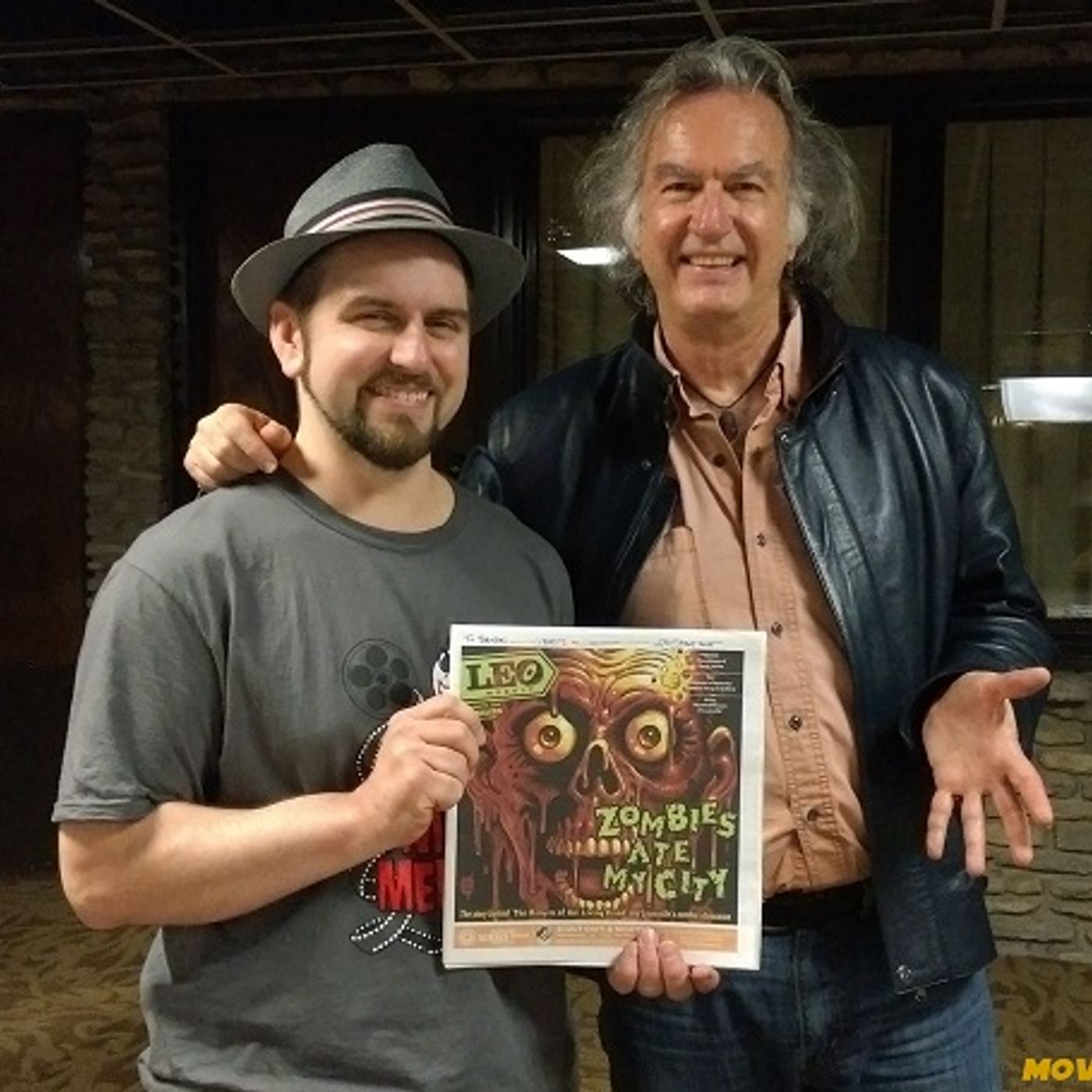
I've known of William's artwork for years now, seeing him at Wonderfest for pretty much as long as I've been going there. Obviously, looking at his prints and books, you see immediately what a terrific artist he is. It was only as I looked more into his past did I come across all the other. Film work he'd done. Now, my first official interaction with him was a few years back when I was asked by a publication in my town to write a piece about Return of the Living Dead.
And they were planning on using William as the main source for the piece since, among other things, he was the production designer for that film. So I did a series of questions with him then specifically about that movie. which turned into a huge written piece that not only looks at that specific film, but also the birth of the modern-day zombie movie and just how it affected the town it was fictionally set in. I eventually posted that written piece in its entirety, William Stout interview and all, on the Movie Meltdown website. So it's there if anyone would like to read that more zombie-focused endeavor. It's called Zombies Ate My City, or How I Learned to Stop Worrying and Love Being Bombed.
Appropriately enough. But ever since that written piece, I've wanted to sit down and talk with William about not just his involvement in that movie, which yes, of course, I will still have to touch on as we get going here, but about his whole career. He's lived a fascinating life from his early days drawing underground comics and album art for LA bands, to his move into creating artwork for a huge number of movie posters over the years, and then eventually getting knee-deep into the film world, working as a production designer. Plus, these days, William is equally known as one. Of the greatest artists working in the world of paleoart and dinosaur science.
Which, for some of you out there, myself included, that means drawing dinosaurs. Which, yes, he not only does paintings and prints for all his fans out there, but he also does huge murals for museums all over the country. So that gives you a little overall introduction on the man himself. But I say now, we just go and talk. To him directly.
Well, normally I talk to a lot of different people and I've talked to a lot of visual artists and I usually kind of like focus on that end of it. But then as you know, I've seen your work for years now. And so the more I looked into some of the stuff you've done, you don't even really fit that because you've fallen into so many different categories over the years. So I guess I. Kind of want to just do more of a general thing and then maybe focus on art and movies and all of it.
But I guess early on, what were you, I guess that leads me to that original question. As you're a kid and you're growing up, did you have a direction initially? Did you start leaning towards art or, I mean, you're interested in film as you grow up, you're interested in music. So like which, which thing kind of took hold of you first? Well, it's, it's, I call it the pinball school of career planning, just bouncing around all over the place.
Uh, I was always interested in Disney and drawing and cartoons as a kid and did a lot of drawings. But my main focus was on science and nature, and I wanted to be a doctor. I was a science math major all through school up until my very last semester of high school when I switched to art. Like a physical doctor? Yeah, a gynecologist, actually.
Very different than dinosaurs? Oh, yeah. Yeah. Well, then that's, I guess, as you get into it, what started, as you start getting more interested in art, what definitely takes hold of you on that? What separates that from the medical field at that point?
Well, it's interesting. In the fifth grade, I had a really pivotal experience. My fifth grade teacher caught me drawing in class when I should have been listening. And instead of punishing me, he said, do you have any more drawings like that? Hmm.
And the kid next to me said, oh, you should see it. He's got a whole book of them. I said, well, would you bring those in? So I brought in my book. It was actually a Cub Scout scrapbook, but instead of pasting pictures in it, I drew monsters and dinosaurs.
And so the teacher looked at it, and he was a teacher that I admired, everybody admired. We really loved this guy. His name was Elliot Wittenberg. And he started assigning me extracurricular courses. activities involved with art from that point on. And he knew I was interested in medicine, so he'd say, Bill, I think the class needs a chart of the human skeleton.
So I'd do a big poster drawing of the human skeleton. He'd say, well, I think we need a poster that shows the human musculature system. So I'd do that, and cross-sections the eye and cross-sections the ear and stuff. What I didn't realize is I was teaching myself anatomy. He was tricking.
He was wax on, wax off. You didn't realize what he was laying the groundwork for. Yeah, and so that's why when I did my very first dinosaur book in 1981, that's who I dedicated it to. Very cool. It is one of those, every once in a while I hear those stories, and it is good teachers.
There's so many, because I remember so many that didn't really seem like they cared growing up. So you find that one, and you're like, oh wait, he gets it. He's supposed to be teaching us and finding what's actually important and about what we're. Doing and turning on the little switches in our. Brain nurturing it yeah it's i think that makes a huge difference a lot easier for him to just punish me yeah and most other teachers probably would have so that yeah that makes a huge difference well then i guess at what point does it start to be like a career path is it all the way through high school you're just still kind of doing it.
As soon as i changed my mind changed from uh wanted to study medicine to art. I was really intent on making a living as an artist. And they had a really great policy at the art school that I went to. I went to CalArts, the school that Disney left his money to. In the 30s, they trained his artists.
He was always grateful. And that art school, the illustration department, I was an illustration major. They had a great policy, which was if you got any real work in the outside world, you could turn that in in lieu of your homework. Nice. So by my last two years of art school, everything I was turning in was real jobs.
So it made the transition from academia to the real world absolutely seamless. Like still in high school, essentially. Fantastic. Yeah. And fortunately for me, I was going to what was perhaps the best art school in the world at that time.
We called it by its old name, the Chouinard Art Institute. And the Gosh, the head of the fashion department was Edith Head, who's won more Oscars than any other person in history. Not a minor name. Head of the music department was Ravi Shankar. Jesus.
The animation department was taught by Disney's non-old man. This is a decent school. It was pretty spectacular. It's doing okay. It was great.
The illustration department, Hal Kramer, he was the very first president of the Society of Illustrators. And I studied privately with Hal for about 20 years after that. Was it, again, still leaning specifically toward illustration? Because then, not further down the road, you end up doing a lot of film work. Is that something that just happened along the way, or were you leaning towards that too?
Making movies was sort of an accidental occurrence. I was really focused on illustration, being an illustrator. I was also focused on making money, and I discovered that, at that time, the two highest-paying sources of illustration were Annual reports and movie posters. Yeah. And my work was not sophisticated enough to be in annual reports, but movie posters.
Movie posters? I was a movie nut. You know, I used to see everything, everything. I'd go to film festivals. I'd go to movie marathons where you walk into the theater Friday night and don't come out until Sunday night, and you're watching movies 24-7.
And that latched onto your artwork where you're drawing the old school monsters when you were a kid still? Oh, yeah. That Cub Scout book was full of Frankensteins. Yeah. So the funny thing about movie posters, though, is that business almost never intersects with the actual making of movies.
It's two completely different worlds. I was really fortunate in that I was doing movie posters in the last great golden age of movie poster illustration. Yeah, pretty much. Now it's all photographs and Photoshop. I mean even by the 80s like there was still great working artists doing amazing that's sort of the very end of them doing original art specifically for even a vhs box but you already started seeing them just slapping heads on the front of it and even when there was amazing poster art already made for it the re-release onto vhs or then dvd would just be crop some stars heads on there and just slap it together and As someone just watching that from the other end, I was like, oh, this is just painful because I know the artwork is out there.
And they just, studios or production or whoever decided that that wouldn't sell as well, I guess. Yeah. Last man standing was my pal, Bruce Truzan. Yeah. Amazing.
Extraordinary. So... A friend of mine, Bob Greenberg, was working as a production assistant on Conan the Barbarian. And I was a huge Robert E. Howard fan.
I'd read all the Conan novels and short stories and stuff. I was intrigued, especially when I found out that the production designer was Ron Cobb. Now, I knew Ron Cobb as a political cartoonist. He did the political cartoons for the L.A. Free Press that got distributed all over the country to the different free press newspapers.
But I was so busy doing movie posters, there was no time I had. There was no way I could get away to get over to the Conan production offices to see that stuff. Finally, I got a break in my schedule, but instead of going over to the Conan offices, I went to the ABA. It was the American Booksellers Association annual meeting, which happens every year, usually in either New York or L.A. That year it was in L.A.
And it's an incredible place for illustrators to pick up work because it's every single publisher and editor in the entire country all in one room. And so I just go booth to booth to booth, show my portfolio, pick up tons of work, and I'm a happy guy. Did you approach the movie poster ideas different than other art projects? Because it seems like it has to do something a little different than just something that you're inspired by. On your own.
You're working a little specific. Yeah, with whatever I do, I always let the problem dictate the solution. Yeah. Which is, since I can work in a whole lot of different styles, I don't like forcing one style as a solution to all problems because I just don't think that works as well as just letting the problem dictate its own solution. So I was at the ABA, and the first person I ran into was Ron Cobb.
And Ron said, look, you're my first choice of who I want to work with on Conan. But I have this agreement with the director, John Milius, which is he has veto power over anybody I want to bring into the art department. I have veto power over anybody he wants to bring into the art department. So would you mind dropping off your portfolio for John to see it? And I thought, well, boy, making movies, that might be interesting.
And so why not? So I went next day to the Conan offices, and John Milius happened to be there, looked through my folio, recalled a, Story I'd done for heavy metal that he really liked, a Harlan Ellison story, Shatter Like a Glass Goblin. And quickly flipped through the rest, handed it back to me, and John's a very dramatic guy. As he's walking out the door over his shoulder, he barks, hire him! So I went in to see Buzz Feichens, our line producer, and Buzz told me what I'd be making on the film, and I nearly fell off the chair laughing, because it was about 10% of what I was making in advertising.
But I thought, well, the job's only for two weeks, so it'll be It's movies. It's probably been fun seeing how movies are made. Yeah, it's movies. Might be neat. And the two weeks turned into two years and turned into a film career.
And, boy, talk about being at the right place at the right time. We had this receptionist when I started. She was really bright. And within two weeks after I was hired, she was John Milius' personal assistant. And about two months after that, she was Steven Spielberg's personal assistant.
And two years after that, she produced E.T. Right place, right time. Kathleen Kennedy. Yeah. And Stephen's, John Milius was executive producing 1941, so Stephen's office was right across from our office.
So Ron and I would work on Conan during the day at 6 o'clock, put our pencils down, run over to Stephen's office and kick around ideas for Stephen's next project, which was Raiders of the Lost Ark. Yeah. I thought it was always going to be like that. It was just kind of ridiculous. Well, I mean, coming into Raiders that early, because you ended up doing storyboards for that, right?
Yeah, I did storyboards for Raiders, and I was originally hired to do storyboards for Conan. And I started doing traditional storyboards, and Milius looked at me and said, no, no, no, I love your comics work. Can you make these look like comic book pages? It is coming from Conan, yeah. And then he said something I thought was really smart, because I asked him, well, how do you want me to do these boards?
He said, oh, just draw the boards as if it was your movie. He said, I already know. I wrote the script. He said, I know everything. Every shot in my head, how I'm going to shoot this.
But if you come up with something better, I'll use that and I'll take credit for it. But that's a good filmmaker to know, like, to bring in other people and to apply what they have. To make a better final product. Yeah, cherry pick all the best ideas. That's great.
Very smart. Yeah, this is a brilliant guy. But as you, I guess, on the Raiders thing, was that concept already... pretty solid what became the final or was there still because he was still pulling from so many different old serial ideas was it pretty set into what became the final finished movie. That was no it was part of a whole process of it developing because i remember when it was first proposed it was first proposed by george and steven uh their idea was let's revive like the feel of the old serials yeah and i would sit with them and we'd watch a bunch of these serials and I could see by the expressions on their face how disappointed they were. It's like, God, I thought these were better than I remembered.
And so what they did was really smart. They made an old cereal the way they imagined it was. Yeah. And made it much more exciting. Yeah.
And really got down to the essence of what made that stuff kind of exciting. Very cool. Well, then, as you go in, because, again, looking at the different things, this is one I wanted to address with you because there's so many different titles that you get. attached to, and so many different people working on movies, do you differentiate as you go in? Because each one, I guess, has its own separate set of responsibilities, but when you're a production designer, and then you get brought in as a storyboard artist, and then as you get later on, it's like working with props and sets. And I don't know, how do you approach. each different area that you're put into, and how vastly different are all those jobs, really?
Well, every film I've worked on has been different, and the jobs have been different. I've been a production designer on a few films. Some films, they just want me to do creature design, like Predator, or Men in Black. I did creature design for that. But when I'm a production designer, basically for those folks out there who don't know what a production designer is, he's the eyes of the director.
So I'm responsible for everything you see on the screen except for the performances of the actors. So all the special effects, special effects makeups, sets, set decoration, all the stuff is under my domain. Typically I'll have about 1,250 people working under me. So everybody does their section, the set people. Right.
Put it together, and then you make sure it all kind of meshes. Into one thing. And a lot of that job for me is managerial, and so much so that on Masters of the Universe, the only time I had to actually design the film was Saturdays and Sundays. So I'd work all day Saturday, all day Sunday, so that on Monday morning I could hand off designs to each of my department heads for them to get started building. So you were like, where you come up with the concept for the sets.
On that one? The sets, the costumes, the monsters, the creatures. Sometimes I'll storyboard a scene and then build to those storyboards so that we won't waste any money by building anything that's not going to be on camera. That's key when you're dealing with this kind of budget. I love saving money as I say any idiot can make a $ 10 million film look like a $ 10 million film.
My job is to make a $ 10 million film look like a $ 100 million film. Definitely. So then, again, something like Masters. Of the Universe, I mean, that's such a huge production at that point. How do you fit into the day-to-day part of it when you're doing that?
Because you said you're mostly just focusing on the weekend, but how does... As they're shooting, are they checking in with you, or do you kind of watch everything behind them and go, no, no, you've got to do this, and how do you keep everything in line? Well, I'm real hands-on. I'm on the set every day as a production designer, making sure that we're not late on anything, everything's in place. I'm also interfering with the director of photography because I'm checking out his lights, how's he going to light my set, because I have very specific color plans for each shot and each scene and stuff, and I don't want to come on the set and find he's throwing a red light on everything, which just kills all the color.
Well, then, I guess, again, of the many hats you're wearing around that time, you're also writing. So I was going to throw out just to... Mostly because I've always kind of loved what Gorman's done, so working on, like, The Warrior and the Sorceress. Yeah, Roger bought my first screenplay. I mean, had you already met him through people beforehand?
No, what happened was... either I saw an ad or I think a guy called me up. His name was John Broderick and he had been a production manager and he's sort of a wannabe director. And he called me up and he, and he said, are you familiar with gore? And I, and I thought he was talking about G O R E. That's what I would.
And I said, yeah, sure. Yeah. I know all that stuff. Yeah. I see all the, Oh great.
Cause I'm, I'm wanting to do this movie. And so we got together, and I ended up starting to write it. And I realized very soon, oh, he's talking about G.O.R., the John Norman worlds. You know, it's sort of soft core sword and sorcery. Yeah, it's its own little world.
But by then, I was in, you know, shoulder deep in the writing of the script, which was originally called Cane of Dark Planet. And it was one of the hardest things I ever did because every time I'd write it, he'd go through, just rip it to shreds and, okay, start over. And it was like I felt like I was flaying my own skin off my body. But finally, the screenplay got finished, and then he pitched it to Roger. And then John lied to me. and said that roger passed on actually roger said yeah i'll green like this uh we just finished a film down in argentina we still got sets up go down and make it sounds like roger yep so john did that uh john was down there in argentina and i called into uh corman's office to talk to the art director there because i've been doing posters for corman did rock and roll high school up from the depths and lady in red and i said so you know so what's going on now what what what's Roger producing?
He said, oh, he's, he's producing this film called King of Dark Planet. I went, what? He says, yeah. I said, do you have the screenplay there by any chance? He goes, oh yeah, yeah.
I said, read, read, read me the first page. It says King of Dark Planet by John Broderick. I go, and? And, uh, I go, okay. So I called my attorney and he, he got right on it.
And Roger's a really honest guy. Roger immediately, uh, took it out of the director's pay and paid me for the screenplay. And then when the film was finished, Roger called me up and said, you know, I'd like to show you the poster for the film. So, oh, great. So I went over to the New World offices, and Roger was really proud.
And I looked, I go, wow, oh, you changed the title. It's Warrior and the Sorceress. Okay, but Roger, there's no sorceress in the movie. There's not. He says, Bill, you have to understand, by changing the title to Warrior and the Sorceress, it allows us to put a sexy sorceress in the poster.
That's all that's important. That will get butts in the seats, and once we have their money, who cares if there's a sorceress? I kind of love his approach. I should be opposed to it, but yet he's so charming about it. It's amazing.
He's really charming. He's a wonderful guy and incredibly smart. Yeah. Oh, my God. The documentary on him is just terrific.
It's really terrific. So was he, again, I feel like he distanced himself as time went on. At that point, was he still pretty hands-on and dealing with anything on the set when you were making it? He was hands-on, yeah, I think with all his productions. He would look at things, and he was very precise with his comments.
I remember I saw him talking to Ronnie Howard. He says, you know, ten minutes into the film, you need to cut two frames there. Okay. And it's like, whoa. Again, he's just a master of how to piece this stuff together.
Plus, he had a massive knowledge of film history, too. Very familiar with Fellini and Kurosawa and all the great filmmakers. That's funny, being what he's known for. As schlocky as everybody throws his stuff into, it's like he's so smart about how he does it. Yeah.
He was getting a Lifetime Achievement Award. Yeah. And I found out about it. I thought, oh, I should just go over there and show support for Roger. He's been so nice to me.
Yeah. And went there and talked to Roger, and Roger blew my mind. He knew every film I had worked on. He was like, he had been following my career since War and the Sorceress. That's crazy.
And I was just, I was astounded. I was like, Roger, you don't have time for that. You're making 17 movies right now. Well, then again, I was looking at some of the other credit, and it's funny that you get almost very specific credits there. that made me wonder how the jobs can like house was what, like a special creature design or special paintings. Oh, how house was, well, Steve minor, the director and producer of house, he wanted me to production design the film, but I just signed a contract with Disney to, uh, work for Walt Disney Imagineering for a while.
Yeah. And I always honor my contracts. I don't break contracts. Uh, but I wanted to help Steve out. And, The main character in House is William Catt, and he played sort of a Stephen King-style writer who was living in the house of his aunt, and she was a painter.
So my studio mate Richard Hescox and I, we did all the paintings that she supposedly had painted. Plus I did the original art, presentation art, for the film that got the financing for the movie. That's important too. But something like that is... so different than like the project. So I'm like, do these, do you just get these jobs sent to you this far in?
Like when you're, when you're already a little bit established, do things just make their way to you? And like, again, cause they're so vastly, okay, I guess I'm painting paintings this week. And instead of setting up the production, you know. It's, well, at that time, every January I'd get about six film offers and I'd have to figure out, okay, which one do I want to do the most? What sounds the most interesting, which, you know, I mean, that's the basic call, which is going to be the most fun or the most interesting to make.
And then if I'm working as a production designer, that's seven days a week, minimum 18-hour days, so I don't have time for anything else. But in between films, sometimes... Well, I was working for Spielberg on a project called GameWorks. It was a joint project between DreamWorks... Universal and Sega.
And it was gaming clubs. It's pretty huge then. And I was working for Steven designing the first three of those clubs. And I got a phone call from ILM. And they were in a panic.
They had just spent nine months animating the big bug creature, Edgar, at the end of Men in Black. And they showed it to Steven. And Steven said, not scary enough. And they were like, oh, no. Because it was finished, man.
It was done. What are we going to do? And someone there said, hey, he loves Bill Stout's stuff. Call Bill and have him redesign it. How early on had you met him?
Or was he just a fan from the outside? Oh, Stephen, well, since I shared offices with him on Raiders, we've known each other ever since. So I got the call from ILM. They said, We need you to redesign this big bug, but not too much. We'd like to retain as much as possible.
Just can you make it a little scarier? Yeah, that's exactly what it was. And so I actually, while I was on the phone, I started sketching. Let's get this started. And I got them a new design, I think, within 24 hours.
And then just returned to my work on GameWorks. Interesting. So, yeah, just constantly shifting back and forth. Yeah. That's what you have to do.
One of the big ones and one I talked to you. About years ago and what led me to this was obviously Return of the Living Dead. So that I just sort of wanted to readdress. some of the basics of like at what point did you get involved? Was Dan O'Bannon already like knee deep in it by the time. You got involved?
No, I got involved really early on in Return of the Living Dead when Dan called. Well, the way it came about was Dan O'Bannon was really close friends with Ron Cobb. And Ron was a very gregarious guy, and he'd very often host parties at his home in Santa Monica, and he'd always invite me. And I liked to bring work I was currently working on outside of Conan, just to get feedback and reaction stuff. And Dan O'Bannon was always really up front and center whenever I was showing work, and he was really intrigued by it.
And what I didn't know is that he was considering me as the production designer for Return of the Living Dead. but he had doubts as to whether I could do the tech stuff. So one night at one of Ron's parties, I brought this cover I'd done for Alien Worlds, and it showed this astronaut sinking into the ground with all these little creatures surrounding him. And the tech nature of the suit, Dan saw that, and he goes, ah, Stout can do tech. This is great. So that solidified his choice.
That is a different mode now that I think about it, because you do. natural world stuff so well that that's a very different ship to do something biomechanical or something so that's. So then uh dan gave our line producer graham henderson a very short list of who we wanted to be production designers first choice is bernie wrightson the second choice was me it's. A good list to be on and so uh. Graham was instructed to hire one of us and graham quickly did his homework found out that i already had worked on a whole number of films yeah And I think Bernie was just beginning his film career. He was probably on Ghostbusters at about that time.
And so he said, well, this guy's done a lot of movies. This guy hasn't done any. Even though I know he wants this other guy first, he called me first. Yeah, he got the experience. We made a deal.
And then he called Dan and he lied. And he said, well, I called Bernie. Bernie turned it down. But I got stout. There's a lot of lying going on in these deals.
Yeah. Oh, man. But I guess that's the business more than anything. Oh, yeah. So then, again, how, because I constantly on this show reference how radically different that film is, mostly.
In the zombie genre. Yeah, because of Dan. Because of, so again, had he discussed, that's what I'm mostly wondering, were these conscious decisions that he was changing the mythology because all of these things that the fact that They're now sort of conscious of what's going on. They can speak. They kind of run fast years before anybody addressed that as a thing.
So it's like, did he consciously realize he was making these changes to the zombie lore? Oh, absolutely. Dan was a total visionary. One of the most visual directors I've ever worked with. He's just extraordinary.
And the first day on the film, he said, Bill, you know how In regular films, there's principal characters. I go, yeah. He says, our film's going to have principal zombies. I want you to design me zombies that are unique to our film, like no one's ever seen. And Tarman was born.
And the half-corps. Yeah. So that was a blast. I love that direction, and it was why our film was so different from the Romero films. Definitely.
And that was something Dan was adamant about. He didn't want our films to look like a Romero movie. Again, was it a conscious, because it feels like, it actually did hit like a whole new generation. It's like, these are the old way that we made zombie movies. And this is like, you know, the, the cutting edge 1980s way to make a zombie movie.
So again, he was kind of gearing it for like this new audience coming up. Yep. And that concept of the eating brains right away, I thought, Oh, I know what it is. They're eating brains for the endorphins. Yeah.
You know, take away the pain. And I mentioned that to Danny said, Oh, I never thought of that, but I'll take credit for that. That's one of the things I was going to ask because that's like giving them a reason, giving it not just random flesh eaters, but now they're eating a specific thing and. For a specific reason. That's amazing that it changed the whole mythology.
Yeah. And now there's a whole. New thread if you want to work that into your new zombie movies. So I guess that, again, you were at least production designer among many, many other things. What all did it entail putting that together?
Yeah. Oh, that one, that was one of the hardest films I ever worked on. We had a very low budget, a million and a half. Yeah. And it was pretty brutal.
But I designed all the sets, designed all the creatures, all the zombies. I was really hands-on. I came up with this idea that when all the dead stuff starts coming back to life, we're in a biological supply warehouse. So I got a whole bunch... big book on butterflies and cut them out and then, uh, made like a butterfly collection, you know, pinned them and stuff and then hung it on the wall. And, uh, so it's in the scene.
And when stuff starts coming to life, I was behind the camera, fanning the butterflies, making their wings flutter so that even the butterflies were coming back to life. So zombie butterflies. Yeah. And I like that you're over there moving stuff yourself, like hands on, literally making this. Oh yeah.
The half corpse, uh, That was me, Tony Gardner, and Brian Peck underneath that gurney operating. I was operating the spine, making it flop around in his spinal fluid. See, Brian was doing the head, and he was also doing temporary voice track for it. And then Tony Gardner, who sculpted the whole thing and created the whole thing, he was operating the arms. And then how conscious, I mean, obviously he meant to sort of take a left turn and make it, comedic but how because that's something that's so hard to do in general is make a comedy work then to do the balance of comedy and horror so like how on set how conscious is Dan O'Bannon and you like in trying to make sure this is landing the way it needs to.
Well again that really fell on Dan's shoulders and he had such a clear vision he knew that to make the comedy work it all had to be played straight and that making it realistic like that made the comedy even funnier. It's like when they, when they, when they checked the, the two guys, they checked their temperature and it's 70 degrees. And what is that? That's room temperature. My favorite, my favorite line.
And I don't know, again, I don't know if it's just the way it's delivered. If it's his re is like, and it's before it really, that's right. When it, the drum busts open and you get him and he's like, look. If you like this job, and his read is like this job. I was like, it is my favorite moment maybe of the entire movie.
That read is so hilarious. So, yeah, it's like those weird little moments that kind of make it click and make it just fall together so perfectly. Yeah, and it's really tough to pull off. I mean, you can count on one hand the films that are successful at being both scary and And funny at the same time. Yeah.
Shaun of the Dead, Abbott and Costello meet Frankenstein. Our movie in... I don't know. A hand. Yeah, I mean, there's Zombieland's semi-successful, but yeah, there's a few that try really hard and don't do it.
So, yeah, that's... And then, it also didn't... Again, what was both of your take on the response to the movie? Because. It's like it found its audience, but it took it years and years and.
Years before it really got to the point it is now where it's so respected. But at the time, it just kind of came out as another horror movie. Yeah. It wasn't given a big publicity or public push to the forefront of the public's consciousness. It kind of found its own audience, and then that audience just grew and grew and grew.
And today, it's so much more popular than when it first came out. It's unbelievable. Yeah. I mean, it kind of rivals the Romero stuff, even to this day. Even the legacy that he has, there's so many fans coming.
Up that love that one just as much. Yeah. Whenever they have a screening in L.A., it sells out in minutes. Yeah. It's just amazing.
It's amazing the fan base that it's found. The other amazing thing, and this was a gift that Dan gave us. Dan? got two weeks of rehearsal for the actors prior to shooting. And since it hadn't been fully cast yet, I filled in and read parts for the parts that hadn't been cast yet. And what this did, it created this real bond with me and with the cast members and among the cast members themselves so that when it got time to shoot, you really had the feeling that these people were friends, that they knew each other, that there was a whole history behind them.
And That's the only film I've worked on where I've stayed really close and tight with the entire cast of the film. We're all still really good friends. For the 25th anniversary, we toured the country for two years, hitting all the horror conventions and stuff. It's just amazing. Seeing everybody out on the circuit at that point.
Well, Dan and I, before the film was cast, and Dan involved me in the casting, too. He would show me reels and stuff. What do you think of this guy? Look at this guy, Don Coppa. Look at those eyes.
Wow. Rightfully so. But Dan and I went all over Los Angeles to different mortuaries and cemeteries to see what crematoriums look like, to see what mortuaries look like and all that stuff. It was more than I ever wanted to learn about those businesses. Fun.
Every single place we went to, as we're walking back to the car, an employee would come running out and they'd have this frantic look in their eyes. They're saying, look, I just got to tell somebody they're having sex with the corpses in there. Every single place. Yeah. It was like, oh, no.
That's not the kind of movie we're making, but all right. I can probably get you some guys that are interested in that. That's not what we're doing. Well, that's what I was wondering, too, is like at that point, everything's becoming sequel, sequel, going on VHS and this new little era that kind of opened up. There were a ton of sequels.
Did Dan want nothing to do with the story after it kind of spiraled off from his first one? Well, yeah, Dan didn't want anything to do with sequels. You know, he successfully done what he wanted to do with the first film and wanted to do a variety of things. He wrote Alien, wrote Blue Thunder. He was a very creative guy.
Tom Fox, a producer on Return of the Living Dead, came to me and he wanted me to be the production designer for the sequel and I read the script and I was so deeply offended that it was basically a plagiarism of the first film. And I said, you don't even understand why our movie's popular. It's not because, Tom thought it was because of the title. They had Living Dead in the title, so that's why people wanted to see the movie. I said, it's not that.
It's a good title, but that's not what makes it a movie. The reason people responded to this movie and it resonates with them is because it's so original. Yeah. And now you want to make a sequel where nothing is original? Including the cast?
I said, not only will I not work on this film. I will forbid you to use any of my designs in the sequel. You cannot have the tar man in the film. You cannot have the half corpse. I'm sorry.
And I was successful in keeping that out of the sequel. They're not, they're not quite the same. And they, and they take a lot of weird turns as you watch that series. Yeah. I said, you know, it shows total disrespect to Dan and his vision to do a sequel.
That's not original. Well, and then you, you mentioned again, jump around a little, you mentioned working on predator earlier. I didn't want to know, How set was the basic design for the creature that early on? Or was there not really anything? When they brought me in, there was no...
Nothing? Nothing. Zero. It was Rick Baker who brought me in. I got in the film business around the same time as Rick.
We were really close. I had a real affinity for special effects guys, especially stop-motion animation guys, and special effects makeup people. There was a time where I knew every single one of those practitioners in the entire business. Yeah, there weren't that many in the early days. No, there weren't.
I mean, at that time, the two guys who had the greatest knowledge of special effects in the world were Ray Harryhausen and Jim Danforth. I was good friends with both. That was just for practical reasons. So Rick brought me into Predator, and I was really pleased because this was my first big studio film. So it was a nice step up for me.
And I was introduced to the director, John McTiernan, and to the production designer, John Vallone. And they gave me the script, and I read the script and went to the first meeting with these guys. And we were talking, and I had already done some initial designs to kind of get a feel for the direction of where they wanted it to go. And I mentioned to the director, I said, you know, one of the great things about this screenplay is you're going to hit two different audiences. He goes, what are you talking about?
I said, well, you're going to get the action-adventure crowd, you know. I mean, it almost entirely changes midway to the movie. It becomes a different movie like a half hour, 45 minutes in. And then I said, but with that great ending, you're going to get a whole other audience. He says, what are you talking about?
I said, well, the end, you know, Arnold kills the Predator and he's looking at the carcass and he's looking at it and he gets closer and closer and he reaches down and he opens it up and inside is this tiny, frail little alien. And I said, that's such a brilliant metaphor for man as hunter who has to load himself up with all this technology in order to kill creatures and stuff. And McTiernan thought about it and thought about it. And he opened his own script up and looked at it, reread it, and then tore those pages right out of the script. I said, John, what are you doing?
He said, well, I can't have that. That would mean that Arnold beat up a wimp. I mean, I guess it makes him less heroic. So that's how I screwed up the ending of Predator. You messed up the ending.
But then Rick Baker took that idea and used it in Men in Black. That's what I was going to say. That's kind of exactly the scenario in Men in Black. No good idea goes to waste. And Independence Day, kind of.
I took one of Rick's best ideas and made that a reality. We were talking about this, and he said, you know, the problem with men in suit monsters is you can always tell it's a guy in a suit. Yeah. configuration of the human body. He said, what if you built a backwards suit so that the legs bent the wrong way when you're looking at this creature? You'd go, well, it couldn't be a human inside there because no human could get in there.
So I used that idea for the drones in Invaders from Mars. Yeah, that's awesome. But then the, I mean, on Predator design, where did the face come from? Because that was such an original concept. Yeah, my early designs for Predator back then was called Hunters. looked nothing like the way The Predator turned out to look.
So it was a process of I'd get closer with each set of drawings that I would present to the director and production designer until finally the final set of drawings was pretty close to what eventually got made. Stan Winston's people and Bob Short, they came up with additions. I think it was Bob's people, Bob or his people who came up with the dreadlocks. Yeah. I thought that was a great idea, sort of high-tech dreadlocks.
And then I had done a design where the Predator had a couple of little sharp, like, tusks or fangs sprouting out from the top and also from the bottom. And then Stan Winston's people turned that into that great four-pronged mouth that opens up. The moving version of it is. So, yeah, you know, I think... all three entities should get credit for the design of the creature. It's just everybody added to it.
And I didn't know that at the time I was designing it that McTiernan was also having Bob Short in Stan Winston work on designs for it too. And did you see any of it hands-on when they were shooting any of that? No, that was all shot down in, I think, down in Guatemala or Mexico or. I know they had the weird Jean-Claude Van Damme version of it, too, for a while. It got scrapped.
Yeah, that got scrapped. The heat and the humidity of shooting down there did a lot of damage to that suit, so they had to completely rebuild it. Well, then, again, I've thrown out a lot of different titles. I was going to let you pick a few that were maybe like the lesser-known ones or just ones that you don't get a chance to talk about much that were just interesting film projects that you'd worked. On in the past.
Well, there was a super low-budget film I worked on called Monster in the Closet. Yeah. And that creature, they wanted me to design the monster that's in the closet. And so I did, but I came up with this other thing. I said, okay, so here's what I think the monster should look like.
And they built it to look exactly like that. But I said, but that's not the monster. The monster, the real monster, is inside that monster, and it comes out of his mouth and bites you and then goes back inside. So I like surprising audiences. Yeah.
Do you, again, as you get into all these things, because you're also so prolific as far as artwork, is it something you don't want to undertake as many film projects now because it's just so time-consuming? It seems like it's not quite as much now, and I was like, do you still want to do huge film projects? Well, what happened was after I'd been production designer on several films, and my kids were born, they're grown up, and I would realize that each January... If I agree to production design this film, the deal is I won't see my kids for two years. Yeah.
That's the deal. The only time I'd see them is when they're sleeping because I'm working 18-hour days. So they wouldn't see me in the morning because I'd already be on set. And they wouldn't see me in the evening because they'd already be in bed. And the big question is, is it worth it?
It's hard. To miss out on your kids growing up. Having a family and trying to work in the entertainment industry. So the other thing. issue is that film is the currency of fame in our time uh that is how our the public validates people and uh i've been to every single comic-con in san diego since the very first one and it's a place where i sell a lot of stuff i generate about a fifth of my annual income at each comic-con And I noticed that when people come up to my table, almost every single person, the first thing they ask is, are you working on any films? And if I say no, they turn around and walk away.
It's as if I don't exist. It doesn't matter if I've just painted murals for their museum or if I just designed a nightclub or something, designed stuff for Disney. It doesn't matter. That's crazy. If I say yes, I just did this, they stay at the table, they buy stuff.
That's so weird. The artwork is still the same artwork. Yeah, and I'm still the same guy regardless of whether I'm doing film or not. And so you know i came to a very realistic realization that i better have a yes answer for that and how can i do that without actually being bogged down by being a production designer for two years yeah and so that's when i started doing lots of creature design because that's usually really quick in quick out and usually not more than not more than a couple weeks yeah And then I have that answer to that question. Yes, yeah, I just worked on Predator, a movie called Predator.
I just did, you know, Pan's Labyrinth. Yeah, I mean, those are amazing designs and, yeah, still kind of keeps you in the machine more or less. Yeah. So do you have other specific, are there still like big projects that you want to work on that's different than stuff that you have? Well, the one film I would love to make that actually I worked on for two years and we never got the financing for it, sadly enough, was An American Godzilla.
That was with Steve Miner working from a Fred Decker script. And I had assembled a dream art department. I started out, Steve Miner hired me originally to do the presentation art to get the financing for the film. That was something I was doing alongside of movie posters. Basically, presentation art is sort of like a fake movie poster.
But it's a visual way to show investors, this is the kind of movie we want to make. And so I'd done a big painting of Godzilla attacking San Francisco on the Golden Gate Bridge and all these helicopters flying around and stuff like that. It's like the old Roger way to make a movie. Yep. Here's the poster.
Go shoot that movie. Well, there was another producer, Sandy Howard, who was a low-budget filmmaker, and he'd come to me every January and say, okay, I've got 12 titles. Terror train. Teenage girls terrorized on a train. Boom.
And I would do 12 little miniature one sheets for each title. Now, he wouldn't have a script. But on the basis of the title, in my art, he'd go to the Cannes Film Festival or to MIFED in Italy, and he'd get financing for all 12 films. Come back and make them. The amazing part of the business, the spin.
Yeah, just unbelievable. So Steve loved what the presentation art I'd done for Godzilla was. And he found out I did storyboards, so I started storyboarding the film because there was special effects on almost every shot, so the whole film needed to be boarded. Which era was this? This was 1982.
Okay, so well before the American remake. The first of the American remakes that happened. Yeah. Yeah, well, even before the 85 sort of American version. So, yeah, this was well before all these reboots.
Yeah, so I was doing storyboards. I was doing really large storyboards, panels. I've done storyboards for a lot of films, and every one's different. Some directors just want thumbnails, some want really elaborate things, and everything in between. I was doing these big elaborate storyboards, and Mentor Huebner, probably at that time one of the two greatest living storyboard artists, he was a friend of mine, and he was visiting me at my studio.
And he looked at the boards I was doing for Godzilla. He said, oh, my God, the detail on these boards, you're really designing the motion picture. You should ask Steve about being the production designer. And I hadn't thought about that. Oh, yeah.
Hey. So I did. I asked Steve. And Steve immediately made calls all around town just checking up on me and stuff. And he called Ron Cobb.
And Ron said, if you give Bill a good, strong art director, he'll be a great production designer. Yeah. And so Steve hired me as the production designer for the film. So then I hired Dave Stevens, who was working out of my studio already, and Doug Wildey, the creator of Johnny Quest, to help out doing boards. And then I hired Rick Baker to start building a gigantic robotic Godzilla head for me.
Steve Chirkus, who was an incredible paleo sculptor, he sculpted the stop-motion animation model of Godzilla for my designs. And David Allen was going to do the stop-motion animation. It was a dream art department. Just absolutely incredible. And I think it's Fred Decker's finest script.
It was an absolutely fantastic story. And I got really heavily involved in this film. I was on it for two years. And I would do weekly presentations to Steve. And I would even put together scratch tracks of music to go along with the visuals that I had created.
Again, so immersed on every level into these projects. Yeah. And the plan was that if we made Godzilla, then the next film we were going to do was going to be Rodan, and I was going to direct. Were you really interested? Again, that's such an undertaking.
Is that something you really wanted to do, was get into directing? Yeah, at that time, yes. But now it's more trouble than it's worth. No, I'm still interested, and I have a film project actually generated from some writer-producers here in Louisville, Kentucky that they want me to direct. So I'm moving slowly towards it, but I'm being very careful.
It's a whole new hat to put on. Well, and then just on the stuff that you've been planning on doing here, what art projects, I mean, are they constantly just being given to you, or are you working on something bigger scale? Both. Projects come in all the time, and I said whether or not I want to do them, but at the same time, maybe I'm between those projects, I'm also generating my own projects. Like right now, I'm working on a huge book retrospective of my entire career.
It'll have over 500 images in the book. Got a lot of books. I'm also hoping to have, by the end of the summer, a book out on my creature design for film for 30 movies that I've worked on. That's a huge, impressive lineup, so yeah, I'd love to see that. I've been asked to write my autobiography by a lot of people, and That seems a little overwhelming to me until I came up with the idea, I know what I'll do.
I'll do it in chunks. And so the first, I'll do a multi-volume autobiography, each volume focusing on a different aspect of my career. And in addition to showing the art from whatever I was working on, whatever that subject matter was, like for instance, the first volume was on all my murals that I've done for museums. I also talk about in the text what was going on in my life at the time. That's an interesting way to do it.
So that makes it much more achievable in my mind, much less intimidating to do it in bite-sized chunks. And so I've already finished writing the book on all my music-related art. Yeah. I'm going to do a book on all my designs and production art for motion pictures. There'll be another one just on movie posters and entertainment advertising art.
I worked on the ad campaigns for about 120 films. Yeah. It's a staggering amount of work that you've put out over the years. It's crazy. Fortunately, speed was really important to me.
I learned how to do stuff fast. And the other thing is I don't need much sleep. I guess that helps. I only need about five hours per night. So I use all the rest of the waking time to work.
That's impressive. So I guess with all these things and all these books and all the projects you have, what's the best way for people to find out more about it or to keep up with you and what you've got in the works? Oh, the best way is go to my website. It's real easy to remember. It's www.williamstout.com.
And I don't always do a lot of postings, but I try to keep my fans updated. And of course, on my website, there's a section for appearances, so you can see where I'm popping up all around the country or around the world. And come see me live. I do talks about my career, and I do talks about dinosaurs and all kinds of different things at museums and universities and colleges and art organizations. You yeah you have an amazing amount of art i'm sitting in the middle of right now it's like it it is terrific to see like in person especially you've got the prints and the books so yeah definitely come out and check it out and pick up many of them all.
Yeah see me in person buy from me in person get it signed and personalized or or pick it up on my web through my website i have a website shop as well. Definitely All right, well, thank you for being on the show. Hey, thanks for having me. This was great. So once again, a huge thank you to William for sitting down with us this week.
Again, his website is williamstout.com. Go there, check out his artwork, order some of his work, check and see where he'll be making an appearance, and go say hello and tell him you heard about him on Movie Meltdown. All right, we've left Misty unattended during this interview, and that can't be good. So let's head back and see what she's up to right now. I'm going to snatch this shit up and take it off out the door.
I could have taken that guard. I don't even care. You really could have. And then he wandered off. I know.
Like when we got closer to it and started messing with taking pictures. He was luring me into a false sense of security. I know as soon as I grabbed my table off there, he'd have tasered my ass, and I'd be down and all twitchy and shit, and that's just not attractive. But in addition to all that. That.
About does it for this week's episode. Once again, a big thank you to Wonderfest for letting us come here and be part. Of the show. Yeah. It's been awesome.
Go to wonderfest.com to figure out what the plan is for next year. You could be here in the middle of all of this and experience cool stuff like we do. Hells yeah, we do. Otherwise, that about does it. We will return next time, same geek feed.
Thanks for listening. Bye. Bye. Bye. And all I want to do is rest my weary head.
I see things at the window. I hear things at the door. I pull up the sheets and I close my eyes. I don't want to see. Now my doctor will tell you that I've got a little history.
But there's been monsters in my closet ever since I was three. They say I'm crazy, say I'm. Certified, but we'll see who is laughing when. Monsters in the closet, they come out late at night. I know that you can't see them, but I've got the second sight.
Monsters in the closet, they're after you and me. Now my nanny says it's time to take my little yellow pill. But I put it up underneath my tongue. I don't feel the least bit ill. They say it keeps me from acting out against my will.
Yeah, but tell me if I don't do it. Then who else will? Because there's monsters in the closet. They're after you and me. Monsters in the closet, they come out late at night.
Monsters in the closet, they just want. We're going to sound like we're under attack. This episode is a production of Movie Meltdown, produced and edited by The Oddity Studios, with opening music performed by The Empires. For more on how to sponsor or support the show, email producer at moviemeltdown.com. Talk hard!
This program is a proud member of the Battleship Pretension Fleet.