About this episode
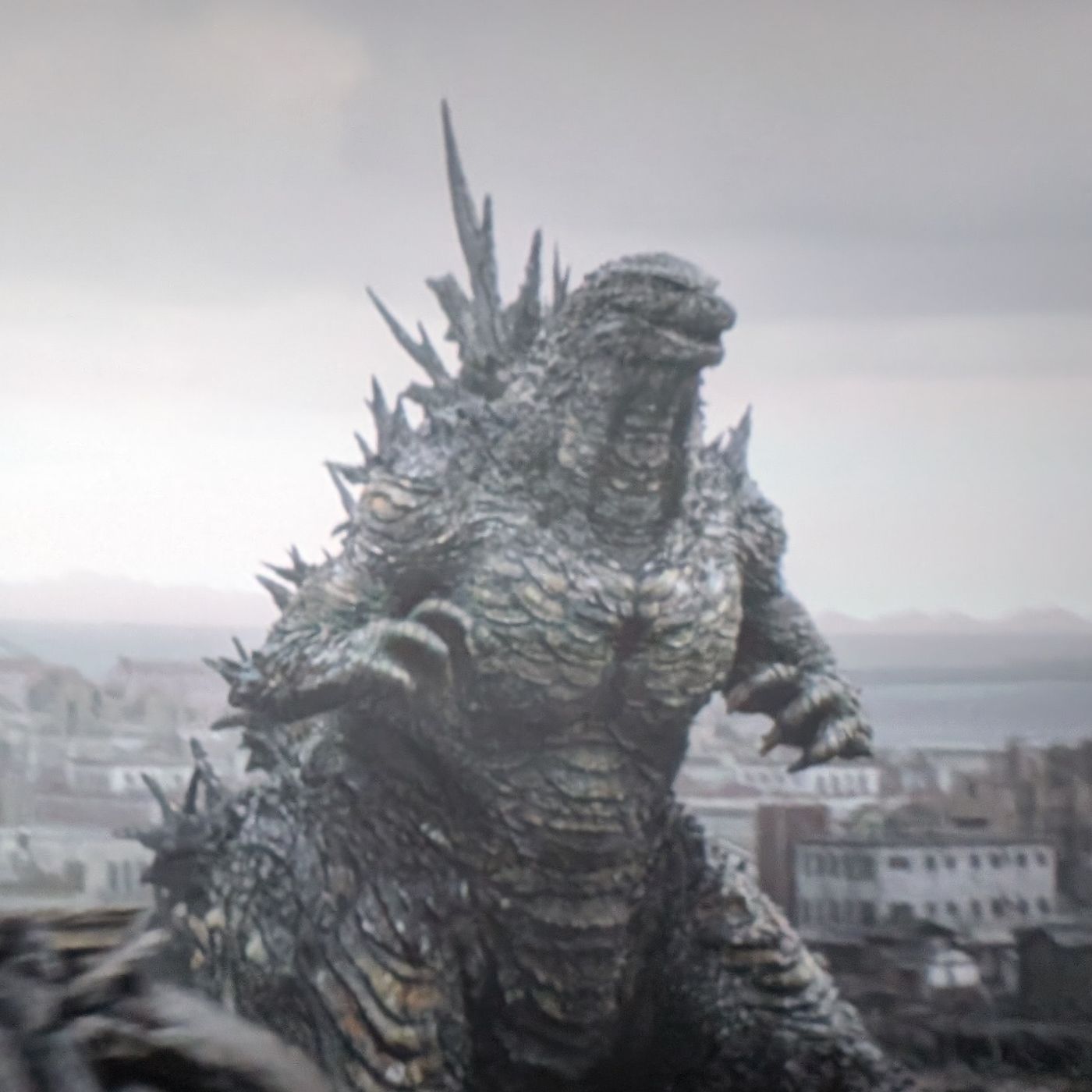
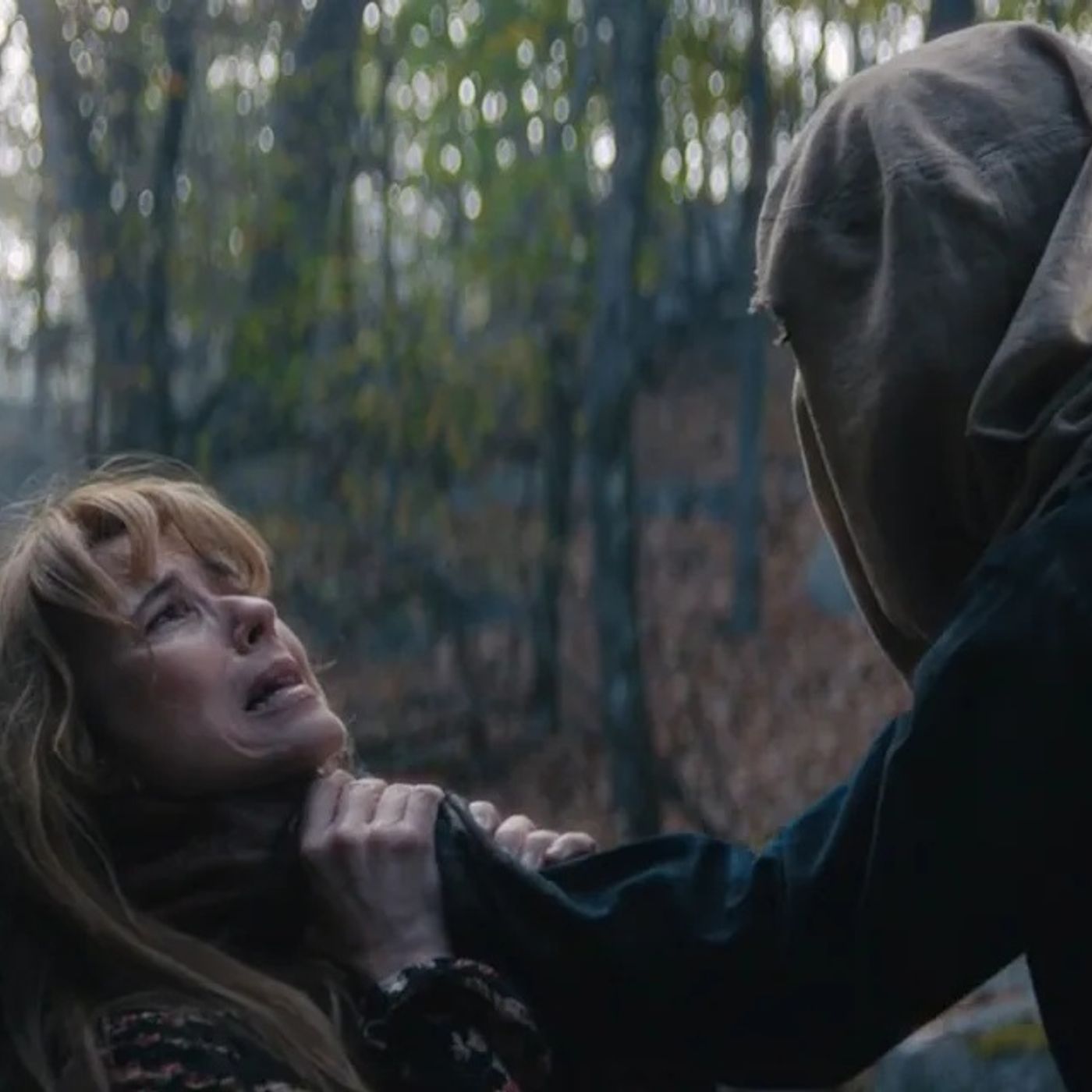
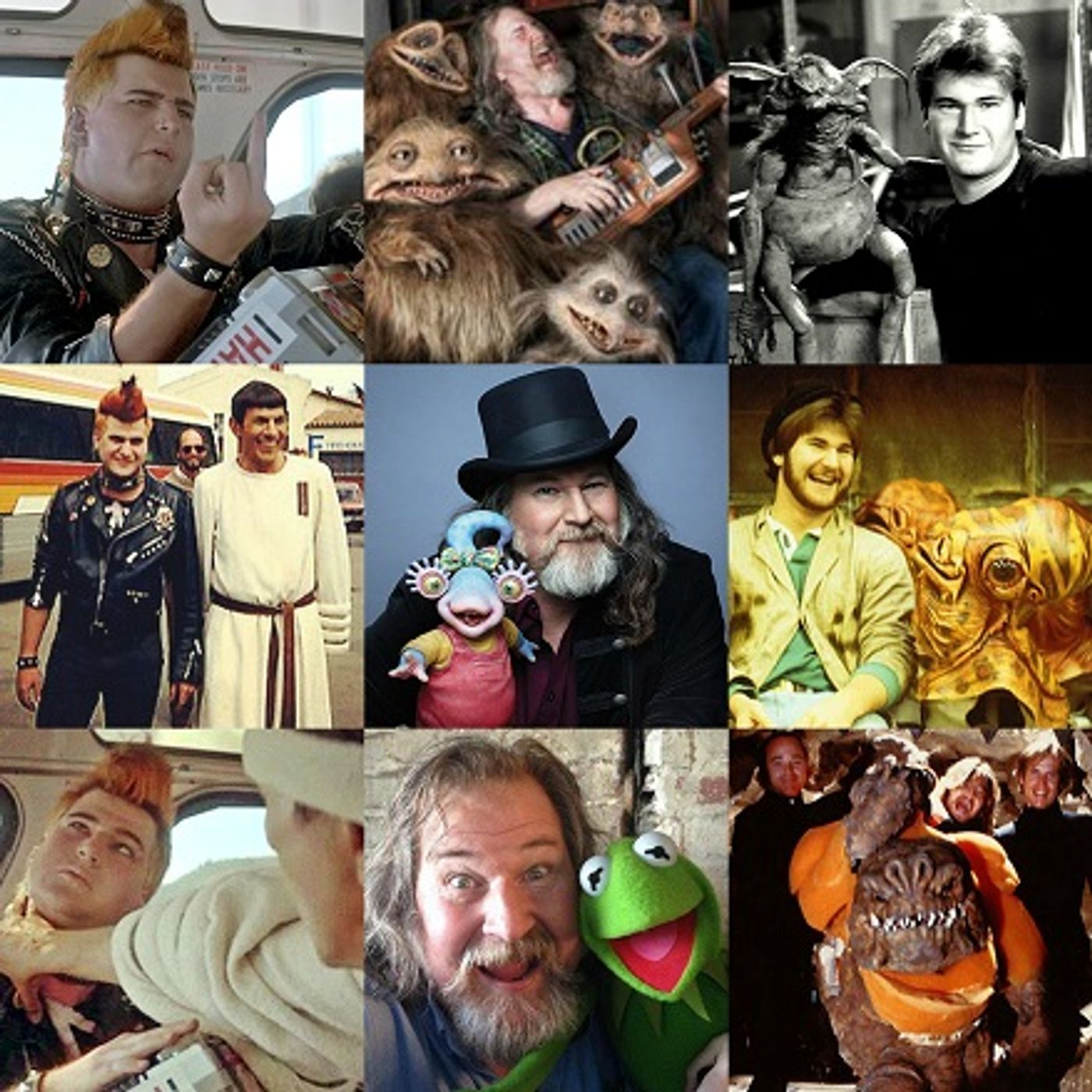
And while we try to determine precisely how many megatons, we also mention... the squid from 20,000 Leagues Under the Sea, the Klingon dog, a Chevy engine and a Sarlacc tentacle, Rick Springfield, The VVitch, dating J. Paul Getty, Dick Smith and Rick Baker, every creature guy knows Methocel, Paradox, Chekov's earbug, Milla Jovovich, movies have become the circus again, itty bitty freakshow goats, reading college level in 3rd and 4th grade, feathering a dolly, ehhh it's watchable, go buy a gallon of latex, strangling Christopher Lloyd with a worm, the first woman screen writer in the writer's guild, a twelve to fifteen pound monitor strapped to your chest, Star Trek and Eddie Murphy?, Goats are pretty creepy. I mean, that's their thing man. That's why they hang out with Satan and whatnot, how are there any demons left, where are the rich girls who like nerds, Rob Bottin is a big lab rat, I kind of felt bad, because I'd get crushes on girls, but I was like - oh well, I've got monsters and movies, Forry Ackerman, but the good thing about all of this is... it's inspired people to be creative, Zoe Bell, you're not supposed to pour half-cured plaster down a sink, no ball on a stick, why do you need the king of hell's mom to show up, Jon Favreau, being interested in your sister... and it's not your fault, it's no #horror, Supernatural and proven creative entities.
"...I spent my weekends... you know, when other people were dating and having fun, going to the beach - I was making models and monsters. But that's what I wanted to do."
To see more of Kirk's work, check out his vimeo page: https://vimeo.com/user3976755
Thanks to WonderFest for letting us be part of the show! Plan your trip next year, go to: http://www.wonderfest.com/
Transcript
Automatically generated, so expect the odd misheard name.
Hi, this is Warren Peterson. And you're listening to Movie Meltdown. Movie Meltdown. It's showtime. The following feature has been rated R by the Motion Picture Association of America.
It is intended for mature audiences and parental discretion is advised. Our nuclear reactor pumping out one million. Kilowatts of power. What's up and welcome to Movie Meltdown. I'm Brian.
Hi, I'm Misty. And we're coming to you live from the outskirts of Wonderfest. Hey, Wonderfest. Misty, how's it going? That's going pretty good.
And usually we'll talk about some sort of geeky things now. Geeky things? Us crazy dogs. I know. Or at least stuff we've seen.
We've seen things? Yeah, I didn't watch anything. What about you? Did you watch things? I did.
You sound confused. I watched one on the Netflix and it was a random, again, sometimes you like spin the wheel and be like, huh, what's that? And then you go, okay, this sounds sort of interesting. And I did that recently with a time travel movie. And it was awesome.
And it was like, that one was great. So I'm like, all right, there's another one that came up. And I was like, okay, what roped me in? And it's not her fault because I specifically went in. And I'm like, hey, Zoe Bell.
I like Zoe Bell. She can do some pretty awesome things. She's very cool. And this was a time travel movies. I'm like, these are all good things.
All right. What could possibly go wrong? It's called Paradox. And it's that's the thing. It's one of those.
It's frustrating because I feel like the story is not badly put together. Like, surprisingly, for a low budget thing, the writer actually sat down and they got themselves the cork board. And the strings and the pins. Oh, Lord. Like, it really, like, it all, like, the weird stuff that happens in the time travel aspect of it all makes sense at the end.
Like, if you watch it, it does tie itself back together and all, but it doesn't leave tons of loose ends. It isn't just, like, they go down one road and then abandon that and move on. Like, it all ties together and is well done. Now, here's the thing. Zoey Bell's fine in it.
The other people, I've never seen in anything before. And then you know why. Like, it's like, She does fine, but I'm like, have you acted in anything before? It just feels very off and amateur. It's just all of the other people involved.
It's like, this is why. The special effects also come into question towards the end. Again, it's a bigger scope than they have budget for. So I kind of allow for that. There's a close-up CG shot that is a straight-up cartoon.
But, you know, like that's the one I will forgive. I'm like, well, you're telling a big sci-fi type of story that usually takes a budget. You don't have one. I can let that slide where you need to take that extra money that you didn't spend on CG and special effects is put it in the hiring other actors because you got the one that had the name. You did the, you know, the selling your pitch to somebody down the line.
But then you needed to bring in an extra grade or two up on the rest of the cast because I was not thrilled with the rest of those actors. Because it even had little moments. And I'm like, in a better movie, that little gimmick that you're using there would be an interesting character treat with somebody that has character. But these people don't have any characters. So it's like the writing tried to throw these little aspects in.
And it's kind of iffy the way that's done. And then on top of that, the actors just do not deliver. So it's watchable if you like sci-fi. If you like the time travel thing, I'd say it's worth watching just to see what they do with it. be prepared to not be thrilled with some performances and special effects. I think I'm going to skip on to whatever movie is next on my Netflix queue.
It's watchable. I didn't even give it a horrible starred review because I'm like, I didn't hate it. There's plenty of things out there I hate worse. It's very serviceable as a low-budget movie goes. It's no hashtag horror.
It's no hashtag horror. Have you watched that yet? Nope. It's on the Netflix. You best watch it.
Whatever it's all about, it is later because I probably will Because that's now the new cornerstone or the new bar for shitty movies. Or movies that I just want to punch is that movie. So you should watch it so that when I reference it, you'll be like, oh, yeah. I probably will. If I get around to it.
It's not that I won't watch just about anything. It's just whether or not I have time. And then this last week, I watched The Vich. The Vich. They wrote it that way?
Damn it. I mean, they got to know smartasses like me are going to continually call it The Vich. So it's I don't think I would like it from what I've heard. I've heard it's kind of slowish. It is slow.
Well, I mean, it takes place in that time. And those people and like those people have nothing else but this little farm by themselves and their family. And that's it. Like and it is one of those like like they do a decent job like. There's a weird little aspect between the brother and sister.
Like, weird kind of? Kind of. But, like, it's one of those, like, you feel bad. Like, the brother's hitting that point, you know? He's, like, he's hitting the summer where, oh, things seem different now.
And, like, the only other person around him, like, they don't live even in a village. Like, they are off by themselves. The only other person... around his age, is his sister. So it's like, I'm like, it's not his fault. It's his damn parents' fault if they take him to a city where he could meet some girls and be interested in girls that he's supposed to be interested in.
So they really, they don't go very far down that road, but they play it enough that I'm like, I'm not even sure. Just to make it a little creepy. Just to, yeah. It's like, I'm not even sure where they were going because I kind of expected them to follow through on that plot line and like see a little something that kind of comes out of it. At least like.
I don't want to see what comes out of that. Not that angle. I'm just saying like character development wise, it's like maybe that's why some things are happening or maybe he feels, you know, weird and guilty or she's. appalled by it but like we really don't even get that far down the road it's just like that weird little aspect comes in yeah it's like they kind of just sort of throw it out there and it's a thing and then other things happen and we don't really get a chance to address that so i don't know i thought that was a weird aspect that i'm like again i'm like i felt bad for the brother i'm like it's not his fault and she's cute what do you She's odd looking. She's a model. As long as she's cute, that makes it okay.
I think so. It's interesting looking. And then I looked it up. She's a model. So it's Anya Taylor-Joy is her name.
She is kind of the find of the movie. The parents do a decent job, but they're just kind of old-timey people, and they're doing their thing. She ends up sort of focusing on her, and she does sort of own the movie, so... It takes a turn at the last third or so. Is she a witch?
It's not what I saw coming. Is she a. Vvvvvvvvvvvvvvvvvvvvvvvvvvvvvvvvvvvvvvvvvvvvvvvvvvvvvvvvvvvvvvvvvvvvvvvvvvvvvvvvvvvvvvvvvvvvvvvvvvvvvvvvvvvvvvvvvvvvvvvvvvvvvvvvvvvvvvvvvvvvvvvvvvvvvvvvvvvvvvvvvvvvvvvvvvvvvvvvvvvvvvvvvvvvvvvvvvvvv So, yeah, it's just, it's one of those, like, I started writing my own ending, and by the end I was like, maybe I need to go make this movie, because I kind of like the way my, I think my ending becomes a little more like. A movie? Well, probably more American, yay, I want it to end this way, where that one ends a little more arthouse.
So, yeah, I'm like, well, I guess I'm just going to have to make my Vovich movie now. Again at arthouse, you lost me again. I have to, I have to. It looks nice. I am too lowbrow for highbrow.
There's a creepy goat in it. You like creepy goats, right? No, I don't. I like baby goats and miniature goats, like dwarf goats. Is it a miniature dwarf goat?
Because I'd be all about that. Yeah, he's kind of a normal-sized goat. Remember the goats we saw at the fair that one year at the freak show? They were like tiny little midget dwarf goats, and they were the cutest thing ever, and I wanted to shove one in my pocket and sneak out. Because it was that tiny.
It was itty-bitty. I've had cats that are bigger than that. Oh, crazy miniature goats. Goats creep me out now, kind of, really. They smell.
He's pretty creepy, though. They work in this goat character. He's got more character than some of those two little other kids in there. Family is lame. But, yeah, it's interesting, and it's funny.
It does kind of, like, start to weave its way into the pop culture because after I saw it, one of the people that I'm friends with on Facebook was doing a drawing of the goat, and, like, it's a creepy drawing of the goat. I'm like, that's cool. It's already worked its way in. Those drawings of goats are pretty creepy. Goats are pretty creepy.
That's their thing, man. That's why they hang out with Satan and whatnot. Exactly. But yeah, so it's definitely worth seeing if you like that type of stuff. I don't know that you'll be...
Again, I think it's one of those that's just kind of... It's all or nothing on the way it ends. I don't think I'll like it. I'm going to skip this one. I'm still kind of on the fence.
Like, I see why it's a decent ending, but I want to write my dumb American ending. Go for it. your super 16 camera out 16 millimeters that the guy was talking about that we watched earlier that I'm not knowing what I'm talking about now because you all have no idea what I'm talking about. A camera. A camera. They use a camera and they shoot movies.
You can do that. If you can get the budget because as I've previously mentioned low budgets lead to troubles. It can be good. I've seen stuff made for super cheap that's awesome but Sometimes that's where the problems lie. If a movie looks cheap, I'm just like, oh, no.
That's what I'm saying. It does hinder you as telling your story. Aside from Clerks. Clerks was okay, but anything that I look at and it looks cheap, I'm like, no, you just need to stop right now because I am not feeling this. It's hard to make it come off as a movie if it feels slapped together.
Anything that looks cheap or like it's in the 60s or 70s. I keep telling you those are good movies. I can't get past the way it looks. Those are like some of my favorite movies. That's like such an awesome era.
Especially 70s. 60s, it's changing. Slowly changing. Late 60s gets closer to the 70s. But 70s, man, gloves are off.
Things are crazy. Yeah, I didn't watch anything else. I've been slacking. Got caught up on the season finale of Supernatural. That's about all I got.
Every time I see the commercial come on, I'm like, God, that show's still on? I know, me too, and I watch it regularly. I like those guys and all, but aren't they cashing retirement checks by now or something? How long have they been driving around looking for ghosts and demons? This is like their 11th season that they just wrapped up, I think.
How are there any demons left? You'd think by now. They've been hunting demons for 11 fucking years. I mean, seriously. Anyways, there's just certain characters that I'm just like, oh, make them stop already, and they make the most annoying characters regulars.
They've got to fill a lot of episodes now. Crowley. Seriously, I don't like Crowley. His mom. Why do you need the king of hell's mom to show up?
What? They've got a lot of episodes to fill. Rowena. That's her name. Crowley's mom, Rowena.
The most annoying character in the history of characters. First of all, she's a soulless jinter. That's not helping her case at all. She has an accent. You know me in accents.
But you don't follow through with any of these things. That's on the accent. I don't like Scottish accents, but I like British accents. But only certain British accents. I don't like certain dialects of it.
And then every once in a while, you'll like a redhead. You're a weird character. You know that. Which redhead do I like? How about Alicia Vitt?
That was a long time ago. That's what I'm saying, though. Every once in a while, one breaks through. That was before my aversion to redheads. So I think she wins.
I'll give you Karen Gillan, though. See? She's super awesome. But she's not like a ginger ginger. She's like just a redhead.
There's a difference. We're not going to get into it. But there is a difference between redheads and gingers. She's a redhead. She loves everyone.
Don't buy this crazy talk. Bitch, please. Ain't nobody out there buying that shit. Quit trying to peddle it. All right.
I say right now we take a break. And then when we come back, we will talk with this week's guest. Yay. Yay. In the shadows Cheer the gallows.
This is a roundup. This is a low-flying panic attack Listen to the sound of the jukebox that goes. . Popcorn freshly popped and buttered. Look good? Sure, it looks good and it tastes even better.
Get some now. Return of the Jedi. The Rancor monster has trapped Luke Skywalker. Can he escape the Rancor's claws as the Rancor Keeper and Gamorrean Guard look on? Luke's only chance is a stake in the monster's jaw.
Will he succeed or fall victim? Only you can decide with Star Wars Toys. This episode is sponsored by World of Leathercraft. Specializing in handmade leathercraft items with a specific nod to the geeky genres. Whether you're looking for a wallet, purse, keychain, bracelet, money clip, luggage tank, book cover, phone sleeve, laptop bag, whatever it is, World of Leathercraft has so much to choose from.
Plus, with genre themes like Star Wars, Doctor Who, Supernatural, Cowboy Bebop, Magic the Gathering, and more, you'll let people know you aren't messing around with store-bought junk. Your fandom runs deep because you're carrying a handmade work of art. And since you're a Movie Meltdown listener, you get a special deal. Just use coupon code MELTDOWN25 at checkout and get 25% off all orders over $ 50. Plus free shipping on everything.
So to find World of Leathercraft, go to etsy.com slash shop slash worldofleathercraft. Or just go to MovieMeltdown.com and click on the World of Other Craft banner at the bottom of the page. Then it will take you to their Etsy page and you can take a look at all the geek-friendly products they have to offer. This is PJ Souls and you are totally listening to Movie Meltdown. It's part of your problem, you know.
You haven't seen enough movies. All of life's riddles are answered in the movies. And now, on with the show. And now we're going to talk with Kirk Thatcher. Now, if you aren't familiar with Kirk, well, I'm sure you've seen some examples of his work.
Mostly because he's done it all. He's been a writer, director, producer, effects man, creature creator, puppeteer, personal assistant. You name it, Kirk has done it. And as I found out, as he recounts just some of his stories... He's led what I'd say is one of the most interesting lives in the entertainment industry.
But maybe that's my opinion. Maybe that's just me. I'd say you listen and decide for yourself. This is Kirk Thatcher. So, you were actually born in Los Angeles?
Yeah, born in Los Angeles, Santa Monica. And do you... Again, sometimes I was one of the guys earlier I was talking to just had seen you talk earlier and was thinking like if he had, because he was from here, and he was like if he had placement, if he had access to it, he thought he would have a better shot at it. Do you think if he would have lived somewhere else, you still would have ended up doing what you do? Or did that help a lot?
Well, I think it's a good question, and I've said this. Growing up in L.A., particularly the age group I'm in, you kind of knew that you could make, I had neighbors and friends and people. I went to school. These parents worked in the film industry. I didn't know anyone who made monsters or even spaceships or, but I met a, a friend of mine in junior high.
His dad knew the head of special effects at Disney. And, um, we met him. Danny Lee was his name. He'd done the, the squid for 20,000 leagues. So, you know, he just knew it was a possible job.
It's funny. Cause I have friends from all over the country that have moved to LA or that I meet on, you know, traveling around and, uh, and they say, yeah, I grew up in Pennsylvania. I grew up in Idaho. I grew up in Kentucky. And, you know, they would say, I want to work in movies and their friends or family would go, yeah, it's crazy.
It's not a real job and it isn't a real job, but you can see, you know, people who do do it. Uh, my next door neighbors, the last friends I grew up with, their dad had his own little production company in Burbank, like three offices with little movie. I was, and he cut movie trailers. He was a composer, but he built his own little post-production facility. but he'd worked at Disney. In fact, he met his wife.
My friend's mom was a secretary there to Walt and, uh, and he was a composer. He actually knew the, um, the brothers, the Sherman brothers. And then they knew him as I was talking to, uh, the last remaining Sherman brother a few months ago. And, and we were talking about his name was Jaime Mendoza Nava and he was a composer. And so, yeah, it was, it was a, not a crazy pipe dream.
Yeah. My parents tried to talk me out of it. My grandmother, uh, my step-grandmother, she married my grandfather when I guess I was a year old, had been a screenwriter. She was the first woman screenwriter in the Writers Guild, Virginia Kellogg. And so... we never talked.
I didn't really know that until I was an adult. She was just my grandmother, and she was very sophisticated and smoked cigarettes and... you know, seemed like she was a woman of, of, you know, woman of the world. Yeah. She literally, she had dated J Paul Getty. She knew the Hearst family.
Uh, and she was very, very, which, and she married my grandfather cause I think she finally won. I think she'd been married three times, twice at least I know, but she wanted a nice guy who would just settle down in her retirement. And that was my grandfather's a lovely, sweet guy. But, um, she told my mom, talk him out of it, just do everything you can to convince him. But I started working at Lucasfilm at 18 and she said, well, If he can pull that hat trick off, then he's got what it takes because you have to have that sort of monomaniacal drive.
And, you know, I didn't date. I didn't date really until when I was working at Lucasfilm. I think I had one girlfriend and I spent my weekends, you know, other people are dating and having fun going to the beach. I was making models and monsters and. So but that's what I want to do.
Nobody put a gun to my head. My brother was out surfing and dating girls and having a loser. Yeah, I know. Well, and I didn't have the looks for it. I had bad skin and greasy hair.
And so and I but I didn't care. It's like I kind of felt bad because I get crushes on girls. But I was like, oh, well, I've got monsters and movies and, you know, sculpting and modeling and drawing. There's so many things I wanted to do, which is what I love about filmmaking is. It's everything.
All the arts. Yeah. From visual dance, dance, music, movement, directing, lighting, anything, any of the visual, any of the arts, really not even just visual writing. It's all compressed into one medium. I've always, I've always said that.
Yeah. Everybody wants to like compare books to movies and all that. I'm like, yeah, they're all impressive in their own right. But I'm like, film is like almost the only one that combines everything. And you have to coordinate it between hundreds, thousands of people depending on the size of the production.
It's amazing. That's the up and the downside. You know, people, the auteur theory, the people that one guy makes a movie is complete fantasy. I mean, unless you're an animator and you're doing it at home or, you know, at some studio. Aside from that, you know, you're working with a bunch of people and, you know, the Spielbergs and the Lucases and the Camerons. have crews of 200, 300 top notch people they've handpicked to make them look good.
And then, you know, it's payback. If you work on a camera and you work on avatar, you're going to have a, you won't have trouble finding work. Not so much. So yeah, it's a, it's an industry that involves pretty much every creative aspect. I think I don't, I can't think of one that it doesn't.
Well that early, I mean, by the time you were, you know, 18 already doing that stuff. Yeah. I think you even referenced how much earlier, like how early was it that you were making that stuff? I started about 10, 11, 12. I mean, buying model kits, you know, eight, nine, 10 drawings since I was three or four reading science fiction fantasy since I could read.
And I was a good, I was a, my mom was a teacher. So she made sure my brother and I read and could read. I was reading at four and five. Um, and I remember her telling me when I was adult, they tested, you know, they do these tests in third and fourth grade and I was reading college level. And it was because I read science fiction.
There was big thoughts and big ideas and big words. And, you know, I was curious. It was just my natural curiosity about the world. I love science and I love science fiction, you know, because it was all learning about stuff. And then I loved making my own creature, you know, reading about real creatures and making up my own.
How did you start? Were you doing latex that early on or what was the first way? Well, originally it was just clay and, you know, model kits where it was all kind of pre-built, you know, pre-made. You just glue it together and paint it. And then I started probably in my late, later teens maybe 15 16 uh buying latex i remember my birthday present was always to go to a company called bjb i think plastics and go buy like a gallon of urethane or you know a gallon of latex plaster.
Again a little easier exit that was mine i remember being interested in it but not knowing how to do it at all so every year at halloween it was just like what do i need when i get some because that was the only time a year you could get it in the rest of the world so It's like I'm buying up makeup kits and then messing with them and doing them wrong. This is back in the 70s. There wasn't any creature maker shop. Now there's shops that sell it. So you had to have a car and your mom or you had to drive to an industrial supply to get the cement, the plaster, which was a hydrocal or ultracal.
Then you had to go to a dental supply to get the release agents and the dental acrylic. And then you had to go to some weird prop house or something to get the latex or send away for it. Then the urethane you got from BJB and Santa Monica. So you would spend two days just getting all the stuff and then destroy your garage sink, not realizing you're not supposed to pour it. Half-cured plaster down a sink.
Oops. Yeah. Luckily, it wasn't the one with the garbage disposal. Well, when you get into ILM, it's... I mean, again, you were a kid of that era.
Yeah. That had to be a dream come true. I mean, you were from... Because you came in at the third one, right? It was all for Jedi.
Yeah, yeah, yeah. So, I mean, that's... You'd experience the amazing phenomenon that was Star Wars, follow up with Empire, and then you're in the middle of it. Well, part of it was you've heard the term monster kid that Bob Burns... coined, well, all the guys who were, you know, the core of ILM started it, were only about 10 years older than I was. Yeah.
And I was so, like, one and a half, I'm the end of the baby boom, beginning of Gen X, I'm kind of like one leg in both. Yeah. Because, like, I like, you know, Crosby, Stills, and Nash, and I like the Ramones, so. That's good. Yeah.
Yeah, exactly. Now I look like Crosby, and I listen to the Ramones. But, so, they were all monster kids, and so it was funny, because I was the only kid I knew who was like me. Yeah. And, there were no mag, you know, Cinefantastic, there were movie magazines and there was one thing called Cinemagic, which came out once a year.
Yeah. Put out by a guy, I think in Delaware or Baltimore. I remember finding those at the comic shop and like. It was huge for me. Yeah.
And, and so that was, and I'd met Johnny Chambers who had a little shop in Burbank through, I think, you know, I'd go to these conventions and meet people and said, Oh, you know, you should meet John Chambers. I'm like, well, how do I meet him? And Craig Reardon was lovely, lovely to me. Uh, I found him through Cinemagic, And I literally just looked his number up. I called information and said, do you have a Craig Ridden?
And he luckily was living in LA in the Valley. And I got his number and I think I just cold called him and said, hi, I read your article and, you know, cinema, cinema magic. And I, back then again, monster making, it wasn't a big thing. There weren't conventions and, and, you know, Rick Baker had just done Kong and, you know, so he was the only guy Dick Smith and Rick Baker were the two names. Yeah.
And Tom Savini was just starting to come about. Um, So Craig was really helpful and gave me like names and addresses of places that sold stuff. And then he, I forgot how I got John Chambers. Oh, you know what it was? I went to the universal makeup show and talked to Keith, Vern Langdon and Keith Crary.
And, uh, they, I think told me about John. That was in the 75, 76. They had a monster makeup show and I read famous monsters and Forry Ackerman. So all that stuff was in LA. So it was crazy.
But there was bookstores in Hollywood that sold, you know, the one makeup book. And you can go to 4A Ackerman's and see there's King Kong's armature. And there's, you know, there's the makeup from the Morlocks and from Time Machine. So, again, it was weird. Like I said, all of my jobs have been odd jobs.
And L.A. Is an odd town that, you know, because it's an industry town and that was the industry. Go back to your first question. It seemed doable and you could at least look at things. Yeah.
Kids growing up elsewhere. Yeah. It was a complete, I mean, now with the internet, anyone, anywhere, you know, I have people contacting me from Italy and Croatia and Romania, you know, showing me their sculptures and they're like amazing because they can now see, you know, that was the thing about, so anyway, ILM was filled with all these monster kids. They're about eight to 10 years older than I was. So I felt like, oh my God, I've died and gone to heaven.
I'm not the weirdo. That's the thing. It's like, that's the difference now. It's like, Even when I was a kid, it was like I was kind of alone in my school. It's like the dorky things I liked rarely did other people get into.
And I think now we have that weird internet connection that people don't feel alone. You don't feel like the outsider in the world anymore. And there's these shows, Face Off and Creature Shop Challenge. And now I've got kid 12-year-old girls asking me and their parents going, hey, would you come and talk at my daughter's school? Which is awesome, really.
Yeah, but I mean it's so ubiquitous. And so there for the taking, just Google it. So part of that is you don't need the drive that we had to find it. You just literally type in a word or two and you find it. You still have to drive to do it.
Now you're fighting against a million other people. Well, that's the problem now, especially with practical creature effects. There's a million people learning how to do it, and the college is teaching it, and there's less jobs than there was. They're just throwing them out into the workplace, and there are no jobs. There's no jobs, yeah.
So we're going to have a lot of. People starting more schools is what I hear. Accountants and bus drivers who can sculpt, yeah. Everybody just, oh, well, I'm starting my own makeup school. And then they bring more.
It's like just perpetually getting worse and worse. Well, that's the joke. When the industry dies, then the people make a living teaching it to people who won't make a living doing it. And not to discourage anybody, but it's just, you know, I also was the right age to grow up and work in the heyday of makeup effects. You know, starting with Jedi and Dark Crystal and those things going all the way through about the mid-90s.
Gremlins, you know, and I got to work on a lot of them. Gremlins 1 and 2 and Star Trek's and the E.T. and the E.T. and the Star Trek's and I'm sounding old. So it was also timing. You know, if you're a kid now, if you're 19 years old now, I don't know what, you know, they're just not making a lot of, you know, there's some TV shows that have makeup effects. Yeah.
And there's, you know, a few movies, but it's just not the heyday where there were like 12 shops in L.A. And every guy who worked for Rick Baker went off and started their own shop and, you know, and did two movies. It wasn't like sat with the throttle of their thumbs. They were busy. So it's like computer graphics now where there's everyone and their brother starting a CG shop.
And, you know, all racing to the bottom to undercut each other. Yeah. And then again, the audience has gotten to the point they don't care anymore. It either has to be top quality or they don't want anything to do with it or they laugh at anything that's less than. I know.
So it's such a, it's such a like, you're almost losing the whole, you know, it's a losing proposition either way, really. Yeah. Well, no one says my dad said beats digging ditches. Yeah, I suppose. But it's, you know, the good thing about all of this is it's inspired people to be creative.
Because we don't have arts training in our schools anymore. And because of all the information on the internet, you can learn how to oil paint, sculpt, make a movie, make a monster, animate something. And it's all free. There's training in schools. But if you just want to dabble in it to find out if you like it, you can find out.
I learned ZBrush by watching free videos on YouTube. And then finally took a class, but I knew enough to know that I was interested in it. As opposed to, I'm going to spend $ 400 or whatever it is, $ 500 on a piece of software that wow i don't it's i don't like it i. So i felt that with the arts in general like it always seems weird doing tons of schooling for the arts it's like you can get the basics like you have to figure out what you want to do maybe but the people that just spend years and years pumping money into artistic training when i'm like you either do it or you don't you have to kind of create what is you're gonna do and. The arts is a weird yeah i mean weird bill stout was uh I just dropped a name there.
William Stout, the artist. I know. You can wave to him. He has a great thing on his blog about the industry and working in it and what he tells people. Like he said, he's not bitter.
It's just true. It's a tough business. But he says, one of his quotes is, don't go to film school. He was talking about film specifically. Go be a PA on any movie, TV show you can get on.
You will learn more in a year of that than you will in four years of film school. And you'll save 80 grand. if you're lucky. And that's the truth. Now, if you want to learn to be a computer programmer, you have to go to school or at least buy some books. Yeah.
Well, if you want to be a lawyer, a doctor, there's things you have to. Go to school for. There's a handful of things you should do a good amount of schooling. Yes, you should learn from other people. Yeah.
But being an artist, you know, is usually trying to think outside of the box. Now, there's artists and there's technicians and it's a very gray area between the two. And I think, you know, half of the jobs are technician jobs. And you need to have an eye. You need to be an artist in that way.
But a lot of it, you know, being a grip and being a lighting guy, unless you're the head lighting guy, you're moving lights and rolling dollies around. But even a dolly grip, which, you know, is sort of made fun of. But those guys are artists. Like, you have a bad dolly. Trust me, if you've got a non-union dolly grip who doesn't know how to feather a dolly into a shot, I've had this.
I've had this on a couple of projects. And you're just trying to do a nice dolly shot, follow the actors. On take eight, you know, the actor's ready to punch the guy because he just can't. you know, hit a mark and he overshoots the mark or he's later. And the real guys feather it and feel they're watching. They're not just rolling a dolly.
They understand the process. I'm not, I do not denigrate any of the technical arts in film because you need to be an artist in that tech, in that technique. But, um, I think a lot of people, I guess, you know, go in thinking, well, I'm going to be, you know, I'm going to be Steven Spielberg or I'm going to be, and, and there's a lot of, uh, technique you have to know too. You can't just have passion. Yeah.
At that point, you're thrown in the middle of ILM. You're telling the story of you almost being the Rancor. That's a huge... For Star Wars. Fans, that's a huge thing.
It's a big thing. Literally a big thing. Well, just to the point we were just discussing, working at ILM on Return of the Jedi, that time was the biggest movie being made, was talk about film school, and I learned I learned everything. And I just, because I was a low man on the totem pole, it's funny. I said, there's two people that get all access on movie sets, the PA and the producers.
And the PA is because he's bringing, bringing the producers, whatever the producer asked for, whether it's the coffee or the script or whatever. And the producer's there because they're paying for it. And so, you know, and obviously the director, but so if you start as a PA and people are like, Oh, I mean, I've had people, meet me in their 30s and say i want to work in film and say we'll get a pa job and i go i i've got a two-bedroom apartment and a wife or a kid i can't live for you know i said you're gonna get paid well it was four now it's like five six hundred dollars a week like oh wow i can't how i can't live on that and i said well then i don't know. How to help you really want to get into the film business you need to.
Go write a hit script or have a family member who will support you because so it's great to start when you're young and just learn by doing you know and if you have Obviously, by the time you're 18, 19, if you've got any skill or predilection or interest in any of the arts that are involved in film, you'll know it. And you can say, I can be an art department PA. I can be a sound department PA. I can be in post-production PA. I like editing.
I like craft services, whatever. You probably have some skill you're aware of. So play to your strengths or whatever. You know, or marry a rich person. I keep looking for that one.
I don't know where this old rich woman. Where are the rich girls who like nerds? Wants to support me. I don't know. I'm up for it.
I have a lot of ideas. I'm trying to get out there to people. I just need funding, damn it. You and every other guy in Starbucks. Yeah, true.
In L.A. And I guess Kentucky, too. Everywhere at this point, yeah. Yeah, everyone wants to be a filmmaker. And you can now.
Anyway, the rancor, as you asked. I digress. I do that a lot. I'm a digressive. George wanted to, so, you know, the Rancor was not shot live, obviously.
They shot all the background plates and they shot Luke fighting, basically. I mean, Mark worked to a big cardboard kind of cutout of what it would look like based on Joe's drawing or Phil's mechanics. It's like pre-CG. There's no ball on a stick. How's he going to know how to act?
Yeah, exactly. So they gave him something to look at and probably, you know, like Ray Harryhausen did with his movies. Yeah. And shot all the plates with Mark acting to the big hand, I guess, we made. And then we had to figure out how to do it.
And it was supposed to be, I think, originally a stop-motion puppet, because that's how Phil designed it. And even the maquette he designed was about the stop-motion puppet size. And George said, and I remember when we were in the screening room at the time, he said, no, I think you guys should try it as a guy in a suit. We all thought originally, I think he was joking, but. He was serious.
He said, you know, show those Japanese guys how to do Godzilla right. And Phil's like, but it's not really designed to be a guy in the suit. Like, the arms are really long, the head's stubby and heavy, and the legs are short. George is like, well, you know, I think you guys can do it. You know, don't sell yourself short.
So we went, well, that's a crazy idea. But we tried it, and we built the suit and built a giant cave set, you know, to make it look like he was big. And we even, Tony McVeigh sculpted about a two-foot-tall statue Gamorrean guard and built a little costume for it. And I had to mold it and cast it in gelatin. So you could tear its head off and kind of bite into an arm and have it wiggling around.
And, uh, it was built for a stunt man. It was about five, eight and very, you know, physical, good, good physical shape, but it was just too heavy for him. So they crammed me in and I was six one and cause I could carry it. It was a very heavy suit and I was young and healthy. And also it was just front heavy.
So it was really hard to wear and not just fall over. And also, the way it was operated was you had to wear about a 12 to 15-pound monitor strapped to your chest. Ah, the good old days. Yeah, it was about one and a half times as long as a shoebox and about one and a half times as wide. So it was a big square rectangle with about a four-inch screen, and you're watching a black-and-white image of what the camera's seeing flipped.
So your left hand worked the creature's left hand, your right hand worked the head and the jaw. So you're basically flying blind, flipped around, and you're supposed to act. Like a monster. And your legs are bent in half because you're trying to kind of crouch. So it was almost impossible.
But, you know, movies are made in little cuts. So we tried it. We did the whole thing. And Dennis and Ken shot it. And we smoked the set.
And it was a bit of a debacle. And my joke was that Phil picked me to wear the suit because he knew I wouldn't do a good job. I'm not a suit performer. But I don't think anyone, like I said, Andy Serkis could have worn it and probably not. it just wasn't made to be a suit. I mean, even when we made a suit to be the creature, it just was not a great design.
Yeah. So we tried it and George saw it and was like, yeah, okay, you're right. So how are you going to do it? And I, and I don't know why Phil decided to do it as a rod puppet, you know, real time or over with an overcranked camera. I wasn't there for when he made that decision.
Cause I thought it was going to be, I think we all thought it was gonna be stop motion, but maybe he and Dennis discussed and said, Hey, maybe I get more realistic movement. So they, They shot it like 90, 120 frames a second. And whatever the multiple of 24 is, it's 96 and 48. It ended up looking really. Good, though.
Yeah, no, it looked amazing. I look better in stop motion because it's not. You know, it's not jittery. It doesn't feel stop motion-y. It does feel a.
Little more real. No, it's amazing. And there's like five guys operating it because it had all these cables in the hands and fingers and rods. And it was a, it was a, you know, kind of breaking ground. Uh, I think some of the stuff they'd learned from the dragon, from, uh, dragon heart, although that wasn't, no, that was a stop motion puppet, but they did a Chris Whaless had mill made a head for the closeups.
So anyway, that's how rancor was finally done. But I was like, you know, I said, I wanted to call my biography, the boy in the Rancor suit. Rancor guinea pig. Test this out. See if this works.
Well, yeah, you're, you were at that point in the room with George, you're watching this unfold while he's still, you know, hands on kind of doing most of it at that point. I mean, there obviously were limitations. Whether or not it was physical, you guys piecing it together to make it look good, or was there somebody at the other end going, you can't do that? There must have been, because they were cutting the budget by Jedi. I don't think he had as much money as he did Empire.
It was George's money at that point, so I don't know. I feel like the studio wasn't backing him, though, at that point. And they should have been. He made them a fortune. But George, I think, wanted control.
If you control the money, you have the control. I think George, you know, he doesn't like to waste money. I remember... This is a funny story I've told a few times. Kit West built a robotic tentacle for the Sarlacc.
We were in Yuma, Arizona. And it was this huge, crazy-looking contraption that ran like on a Chevy engine. It was like a Chevy V8 because he needed the torque to pull the cables because the thing was like 12 feet long. And it was this wonky little or big tentacle that kind of moved really herky-jerky. It looked like a badly animated Ray Harryhausen tentacle.
In real world. And he spent a lot of money to build this and... And I remember I was there on set on the day, you know, we weren't shooting, but George is like, Kit's like, Kit had this, you know, he's Australian or British, but big guy, looked like a, you know, a bit of a brawler, but great guy, great physical effects guy. And he built this thing. And he said, oh, George, I'm going to show you how it works.
It's not perfect yet, but, you know, we'll figure it out. So he sets it up and it's literally, this engine's running, this thing's going, you know, um, clunking around and george is looking at it and we're all like kind of like oh wow that's this looks really yeah so supposed to come up and wrap around i guess lando's leg and so george went well why don't you just why don't we just do the old movie trick where we get a rubber tentacle wrap around his leg and then shoot it in reverse yeah and kit's like well yeah i don't know i suppose you can do that but i think we'll get this working and that's ultimately what we did and then george i remember asking kit well how much money did you spend on that.
I don't know. It was a bit embarrassing. I felt bad for him. And, you know, he didn't get fired or anything. But.
It just seems like he worked better when he had those limitations. Because that became all the criticism of 1 through 3, is that he had nobody telling him no. I can't say what. He totally bankrolled those three and did what he wanted. I think a lot of directors or producers have that.
When they have a hit, Actually, if you look at most directors and TV producers, once they have their hit where they're not given full reign and they're given all the money and all the things they want, it tends to get bloated and sloppy because nobody's saying no. I've said that for years about Tim Burton. I think he made some of the most brilliant movies ever, and now I don't want to see most of his stuff. There's been a few. Frankenweenie was good.
Yeah, I agree, but it's hard to tell somebody, especially when you had a hit movie and you didn't own points on it. You made a lot of people, a lot of other people, a lot of money, and they finally go, okay, you're a moneymaker. We'll give you a lot of money. Then you kind of want to indulge yourself because you weren't allowed to. And then they get the points on that end.
Now finally they can cash in. So I guess it encourages you to make big, giant movies. It's an astute observation, and I've noticed it. Same thing. I've worked with directors, and then they get a big-budget movie, and they get everything they want, and they're kind of bloated.
I mean, look at Peter Jackson. King Kong was amazing, but you needed to cut half. I mean, here I'm telling you, Peter Jackson should cut a movie, but it was about 20, 30 minutes too long. I've said it on this show. I was like, forgot how to edit.
All of them. Because he didn't have to. He didn't used to. I mean, you look at his movies when he started, they were 90 minutes at best. Nobody makes three hour movies except Peter Jackson and Jim Cameron because they have huge hits and they can.
And there's something to that. You know, that nobody's saying no. And again, I think King Kong's an amazing movie. It's got great stuff. Peter Jackson never hears this.
I'm a huge fan. That whole wandering through the water part, I'm like, that goes. On so long. Yeah, there's just scenes that are too long. But anyway, and you can say the same in The Lord of the Rings.
I've seen the director's cuts, and there's stuff in there that's awesome. There's good stuff, but it's too long. You know, make it a miniseries, yeah. It's way too long. Yeah, that is a very good observation.
Luckily, I've never had that horrible, horrible dilemma of being given too much money. I agree. I guess because I brought this up and go in the other direction on a recent episode because we keep seeing superhero movies. They're almost cramming too much in there. So is it one?
Because that's what I've said. I was like Age of Ultron probably should have been a miniseries. Like it should have been a Netflix series because they crammed way too much story in there. Do you think again now that those lines are blurring? I have a big theory about this.
I think it comes from working with the Muppets. And Star Wars. I think movies now, because TV and Blu-ray and streaming, movies have become the circus again. It's a spectacle. Oh, yeah.
You didn't go to the circus to see a great story. You go to the circus to see an elephant jump through a hoop of fire or see tigers run around or clowns jump off ceilings and land 100 feet in a bucket of water. And it wasn't for subtle, nuanced commentary on the human condition. It was like, I want to see crazy shit. So that's why they're spending $ 150, $ 200 million on this movie.
I think Deadpool is a perfect example of what you're saying, the other direction. They didn't give him a lot of money. Deadpool was considered this tiny little branched. He was never a cartoon series. He was a small thing loved by fans, diehard fans.
But I always say what my mom would have heard of him. She knew Spider-Man, Captain America, maybe Thor. Never heard of Deadpool. But because of that, they kind of let it fly on the radar. They didn't hammer it with notes and say, oh, you know, your hero's not likable.
He can't be a potty mouth. Your female lead can't be a hooker. I mean, that's crazy. She's got to be likable and cute. She can't be kind of raw.
She's got to look like the girl next door. So they let him make this great movie with raunchy, funny. You know, some people hate it. I thought it was great because it was like, oh, wow. a comic movie doesn't talk down to me and not that Joss Whedon or anyone's Avengers movies. It's just a different style.
It's a different direction. Yeah. Even made fun of, Hey, you know, this is the only two X-Men you can afford when he went to, uh, you know, Xavier's school. Yeah. Which is a great joke.
Um, but I think that's the thing is if you give, like you said, you give some people, I'm really curious to see the Warcraft movie by the time you guys hear this is probably out. But I'm curious to see if that's bloated or, cause I like Duncan Jones is great. He's a great director. Yeah. But again, like look at moon versus what that is.
That's exactly what I'm saying. He made moon for what? 180 degrees. $ 3 million. Yeah. And now they gave him 300 million or whatever.
And like no effects. It's just a guy in a room half the time. You know, there's some old school model effects. Yeah. There's some good moon, you know, shots, but I'm like, it's not effect heavy.
And basically three actors. Oh my God. Warcraft is going to be, it's just so much to even think about dealing with. Right. So I'll be curious to see that.
And so all of you in the future will be able to call me or send me emails and say, Hey, it sucked. Or, Oh my God, it was awesome. It looks amazing. But anyway, it is a spectacle. Like I'm going to go see it.
Even if the critics come out and say it was a terrible movie, I'm still going to see it because it looks amazing. That's what it's... Yeah, we've become... That's. What I mean.
I don't go to the circus to get a good story. I go to see elephants do tricks. I was like, we're going back to William Castle. Like, we now... It became...
That's why 3D took off, because you can't have that. Now, they're trying to make the TVs better, but essentially, I don't even like most of what... Unless it's shot to be in 3D, you don't need to watch it in 3D, but... Even then, it's like they started doing the super deluxe theaters and you can get dinner while you're there. It's making an entire event just to give them something different than why wouldn't I just watch this on DVD.
There's this whole movement now, I forgot what it's called, but to bring Day and Date to your home. You can pay, and they want to charge like $ 60. Yeah, they've done a few test runs on it. You pay $ 60 and you can watch Lord of the Rings on the first day it airs in your home. Why you'd want to see an epic movie like that at home or at home and then why would you want to see you know a train wreck a little rom-com or a raunchy comedy at home for 60 dollars you can see it for 10 of the matinee or depending on where you live in the country five.
Bucks unless it's an event right it's an event. Movie but you want to see that in a big theater with a great sound system so you know it's one of those things that i know half the directors are who are big name directors are for it and say this is going to save the business because we'll make more money And others are like, you're going to kill the movie. The only version I've heard where it almost makes financial sense is if you have a big family. And you're like, well, I have 60 bucks. It's cheaper than.
How many American families are more than four kids? Not anymore, but we're all too poor. Maybe in Utah. Back in the day when you had eight kids. At a time.
Mormons will embrace it. That doesn't have much. Not that there's anything wrong with the Church of Latter-day Saints. I have very good friends who are Mormons. And I pick on the Mormons because I love the Mormons.
It's just a generational thing. Cause I know two people from like a generation back and like their family has eight kids. Their family has six kids. Nobody has that now. My family in Chicago, my uncle and, uh, I guess, yeah, they're my aunt and uncle.
They had a 13 kids. Yeah. Or my great aunt. Or if you do, you get a reality TV show. Yeah.
Yeah. That was common back in the forties. Um, All the way up to 50s, I think. Anyway, now we're talking about family size. Well, okay, back to working with impressive directors early on.
The mushrooms are kicking in, man. Who are you? You and a 12-year-old David Fincher. All right, I'm slightly exaggerating, but those pictures, he's ridiculous. I know, he looked young.
People thought I was my age. Anyway, Dave is blessed with good genes. He looks. He was always good looking and smart. I was the idiot sidekick.
He was smart and funny and cool. He was just cool. You're going to. Be hanging around somebody. That's not a bad person to get stuck with.
Yeah, I was the wingman. I was the comedy relief. He got the girls and the jobs and I was like, okay, I'll help out. But he's a lovely guy. very super smart. But even and very funny it's funny bringing up the the music videos earlier when you're talking i do remember that music video i watched it on mtv many.
A time they even interviewed us they there's a little document i mean like a two-minute documentary where they talked about you know rick springfield's new rock video with technicians from george lucas's facility and you know we were nobody said with the two youngest guys who had nothing to do so we started doing that and then dave you know obviously turned into david fincher and i worked for the muppets. But watching it, it still has kind of his look. So how is it that he, that young, had already honed it? Because you have taste. I mean, you were around him.
Did it seem like he already had that much stuff worked out already from the get-go? Yeah, that's what I'm saying. He knew what he wanted. He was a very smart guy. He knew more about filmmaking and cameras than most of the guys twice his age. which pissed a lot of people off when he was in his early twenties.
Cause he would tell people, no, let's do this. And they're like, who do you think you are? And he's like, I'm just a guy. No, he wasn't 20 years. You'll know what I'm saying.
He wasn't like that. I think he had a reputation for being that way because he did know more than they did. And they hated that. And so like, this is a little jerk, but no, he's just a smart guy and he didn't suffer fools. Um, you know, and neither does a lot of people.
I am a fool, so I have to suffer. Um, but no, he's amazing. And he was born amazing. He was just always a cool guy. And, and, And I was really fortunate to be friends with him and to do videos with him and watch him work.
And yeah, we had a lot of fun and killed a lot of brain cells. Not the usual way with drugs or alcohol, but just by working 18-hour days. I think Bop to Drop we shot in a day. And it was like two weeks of pre-production. It was a day of shooting with the actors and I think a day of shooting models and creature stuff.
But it was just killer. I remember working 18-hour days and going to sleep and dreaming of work. I've never had... It's the only time in my life. You're never away.
I'm a pretty mellow person. I'm not a type A. And it's the only time in my life I've had a panic attack. Because weeks and weeks of only getting four hours sleep and you start dreaming, it's literally like a stress-induced... But luckily...
So we did Bob's You Drop. And then I think I took like two weeks off and went back to my home in LA and just laid in bed. And then we did a bunch of videos for Rick Springfield. We did a whole... concept video album was one of the first, I don't think they did a lot of them, but the whole idea was an album where every song had a video and you could buy the VHS tape at that point. And so we did like five videos for him and all different stuff and created fake concert footage.
And, and Rick was a lovely, he was a very easy guy to work with and he was Australian and kind of relaxed and had a good sense of humor. Uh, so we had fun and just kind of did all sorts of crazy stuff. Um, there's a, another cameo. So I got to be the creature in that one. Bob to drop.
And there's a Springfield video, um, uh, kind of about Armageddon. I'm trying to remember the. Name of it. It was the eighties. I mean, it was, most things were about Armageddon.
Yeah. I hate you. I'm just, you know, how many megatons is the question we're asking? Um, and I got to play a clown, uh, and like this tweaked kid show where, um, Rick is playing like a Mr. Rogers.
It was like a parody of Mr. Rogers. And he's holding up signs saying like Armageddon fallout, you know, like teaching kids words. And I'm, I think we called me homie the clown, homo the clown. And I'm there with, like, nuclear missiles and blowing stuff up and just acting like a total idiot.
But we had fun. And those were fun because there weren't network notes. It was like, yeah, okay, guys, here's 20 grand. Knock yourselves out. So that was fun and very, very creative.
You know, you could kind of do whatever you want as long as Rick Springfield liked it, his label. I think they thought Rick was happy. And so we'd pitch him these IDs and he'd go, okay. Yeah, a couple he didn't like and we changed them. But it was fun.
And it was great working with your friends. Yeah, it was a very, again, people make fun of MTV now because it's so dated, but I'm like, it was possibly the most influential between the mid 80s and the mid 90s. Like the 80s, it influenced music and filmmaking so much. And then like the 90s, It changed reality television. It changed the fact that animation got taken seriously by grown-ups.
It was the driving force of Western culture. It was everything in that point. And now it's just kind of a joke. Yeah, now it's run its course. Like I said, there's no M on MTV anymore.
YouTube killed the MTV star. Yeah, well, that's it. And you're absolutely right. The internet came, and you can watch anything at any time. Yeah.
I mean, I said the person I wouldn't want a job as a programming executive because nobody cares what time it's on. And now with Netflix, they dump it all and you watch it all that day or that night or that weekend or stretch it out over two years. It doesn't matter as long as you watch it. You know, Blackwood telling me what to watch next. Yeah, exactly.
I'll watch whatever the hell. Yeah, those guys. Well, then you mentioned I Hate You. I mean, one of the most– we're kind of jumping around. But, I mean, does it feel like that?
You've got so many things that are kind of time-wise– grouped together pretty close but they're all amazing I. Did a lot before I hit 30 yeah I know it's like I hit 30 and then just started working for the Muppets for like you know at. That point you're hanging out with Leonard Nimoy and then Muppets. You know these are amazing things Lucas and Gremlins to Fincher and Videos and Nimoy and Henson and all and I you know I was all that before I was 28 by the time I was 28 and then created my own helped create a TV not my own but was influential in creating a TV series by the time I was 29 Yeah. No, 30.
No, it launched in 90. Yeah. I was 28 years old when dinosaurs started. I know. And I was just like, man, I sucked it.
Cause David Fincher had already directed like a feature. Yeah. Alien three. Nobody likes that one. I know.
Well, that's not his fault. It looks amazing. It's a great, it looks amazing, but they killed him on the story and they ran ramshackle over him. I remember I went going to the screening and seeing him afterwards and he was pale and he's like, I'm never going to work again. It's still a good concept, I think.
They messed with it too much. The script was insane. The original script he was given was a wooden planet made by monks that lived on the inside. Literally made of wood. It was insane.
That seems fine. Sure. So he tried his best, but he learned a valuable lesson, I guess. But yeah, then you worked on Star Trek III and then became the assistant. I worked on II at ILM and III at ILM doing creature stuff.
I worked with Dave Sassala and Ken Ralston. on the ear bug and the big ear that ear bug crawls in and out of on Chekhov. Dave Sassola did that, and then Ken designed the ear bug. And then in three, I did the, with Dave, the worms, the bacteria that came from Spock's coffin. And then I puppeteered the dog. I helped cast and put together the Klingon dog, and then I puppeteered him on set for a few days, which was not a good, I was crammed under a chair with my arm, my right arm sticking out, You know, the circulation getting cut off and kind of just having a monitor to watch.
But it was fun. Klingon dogs. You don't see enough Klingon dogs. Yeah, exactly. He's the only time he's ever.
I think they should do a pack of them in the next movie. Why aren't they out on that planet? They're stranded there. Why don't Klingon dogs take them out? Why not do a pack of Klingon wolf lizards?
I can hear McCoy complaining about it right now. Damn it, Jim. I'm a doctor, not a veterinarian. This thing's half lizard. So, yeah, I did that.
And so I'd been on set with Leonard, but I didn't really talk to him. except when I was strangling Christopher Lloyd with a worm. We've all wanted to do that at some point. We're covered in Methacel. It was funny. We were wearing, there's a picture in Cinefax of me covered in a Tyvek suit.
I look like I'm going to do cleanup at a nuclear facility because there's so much snot. Methacel, which is a plant product, you mix with water and it becomes basically clear goo. And you can make it as runny as hair gel or as thick as, you can stick a fork in it. So we'd mixed up a big five-gallon bucket oven and we're just drenched in it. Slinging it on her.
Exactly. Every creature guy knows Methacel. It's kind of the most expensive version of KY jelly. For a dare once at Lucasfilm, I was, I mean at ILM, I was challenged for, I think, like 20, 40 bucks to stick my head in a bucket of Methacel. Which, of course, I did.
You didn't hesitate a second. No, I go, $ 20? Gosh. Yeah, I learned breathe out when you stick your head in a bucket of Methacel. Don't inhale.
Yeah. No, it's fine. I knew cause I'd been a swimmer. I knew just exhale on the, when you hit the water. Um, so yeah.
So then Star Trek, what happened was I moved back to LA. I worked on gremlins for the first four or five months helping Chris, way to set up the shop, mall shop, paint shop, design the paint job, their eyes. And then moved back to LA and, um, started going to UCLA to learn computer graphics because I saw that's going to take over the effects business because, uh, Pixar at that point was still just a George Lucas owned entity. And, uh, they'd done some shots on Trek three. And, uh, and I knew the guys cause I would go hang out and just see what they wanted artists to play with their paint program.
So I'd go over there and basically it was very early version of, you know, paint shop or Photoshop, uh, and, and play with this, you know, multimillion dollar, million dollar system they'd be developing. Um, Because they just wanted artists to see how they interface with it. Figure out how to use it, basically. Or just how artists think, because they were programmers. So I went, this is going to be big.
So I went back, took some computer animation at UCLA, and then Leonard Nimoy's office called UCLA and said, we're looking for an assistant for Leonard who knows special effects, knows filmmaking, and will kind of help him through the movie. And I was like tailor-made for the job. Leonard told me he met with three other guys. One was an SC film graduate. Someone was from Columbia or New York.
And I literally just left ILM, I think, less than a year. I knew everybody there. I knew special effects. I knew production design. I'd been a production designer for David Fincher. so my resume was like literally tailor made for the job and Leonard and I hit it off just got along with him very well so I got the job and like I've said in other interviews I basically started on the second draft of the script Mearson and Krikus had written the first draft which was kind of written for Eddie Murphy and Trek fans know all this And I came in when Nick Meyer was brought in to do the rewrite with Harv Bennett.
So they took some of the basic precepts. And then the idea that Leonard liked was there was something in the modern day that had been lost in the future. And to kind of show like conservation is smart. And originally it was like a scavenger hunt for like all these different elements and things. They were trying to rebuild the dilithium crystals.
And it was kind of a caper. And they wanted it to be fun. And Leonard wanted to be about the crew. But he said, what if it's a thing? What if it's a, you know, again, Leonard's done this in interviews, so I won't belabor it, but that's what the script was being written when I started with him.
And so I got to do a movie from, you know, Jedi. I got to see how a giant, you know, biggest movie at the time be made. And then Star Trek, I got to see how a franchise film made with people work together was made, but literally from the script because Jedi, I never read the script. We weren't allowed to. That was obviously such a top secret thing.
So we didn't know. We just knew the Ewoks are in the forest and here's what they're doing today. And, you know, this is, All we knew was there was a party in Java's house or Java's place. And then, you know, we show up in the desert. I mean, I didn't know.
And I'm like, oh, this is his... I thought it was going to be a building. And it's a big spaceship, sandbarge. So, you know, you could find out when you showed up on the set. For us, because we were just creature grunts and weren't privy to the script.
So on Trek, I knew everything. And that's how I got the punk bit was I read the script and I had said, to Leonard, you know, this punk scene's fun. I would like to play that part. And he, he said, seriously? I said, yeah, I was in a band and I know how to look like a punk.
I had short orange hair and I, you know, ripped clothes and I'd gone through a little punk phase. And so I kind of knew what that meant. I mean, I wasn't an angry, disaffected youth, but, and he said, well, let me think about it. And so I did a drawing, which I started to show. I found the drawing last week.
He scanned it. So I'm showing it at these talks. where you see where I kind of designed what I'd look like. And it's pretty close to what I ended up looking like. Um, and, uh, said, this is what I look like and you won't be sorry. And, you know, I'll really do it up.
And he's looked at it and he's like, you're going to do that to your hair. I'm like, yeah, I had it before. He's like, all right, well, let me think about it. So he thought about it and I didn't ask him again. It was like a week later.
Cause I didn't want to belabor it. He was my boss. He was, you know, like a friend. I didn't want to be like one of those jerks. What did you decide to decide?
Cause I can't stand people like that. I didn't want to be one. but he was eating me up a little bit, but I was like, Nope, I'm just going to stick with work and being his assistant and helping him make a good movie. And so after about a week or so, we had our, you know, end of the day kind of chat. And I was, remember I was leaving his offices literally at the door. He has a sense of drama, doesn't he?
I just thought about that. And he goes, Oh, by the way, that, um, you know, this deep birds on, by the way, the, uh, that, you know, that you want to do. I'm like, Oh yeah. He's like, yeah, you can do it. I'm like, literally like yes yeah i did a fist pump yes and like thank you you won't regret it put together the costume i still own that in fact i'm thinking of selling the costume because it's i'm told people pay good money for.
It if anybody's interested yeah who's. Interested contact me i i own it not paramount i put it together i went i said i'm gonna go do this it's the only thing they provided were the shoes which is funny because the one thing you never see is my shoes. What's weird is when you look like that you look like a guy i used to work Like almost exactly. And he was in a band. So it was one shade away.
I was like, it's always weird watching that thing because I'm like, you're so close to that guy. I stole his look. Yeah, many a band member out there probably had that going on. Every town had that guy. Had that guy.
So yeah, and then the song came about because everyone asked about, not everyone knows that I wrote and sang the song. So in the shot when we were shooting it, there was no music. There was no sound because we didn't want to screw up the dialogue. So I'm just bopping my head to a beat in my head. The editor later told me, our editor said, yeah, you have a lousy sense of rhythm.
I'm like, dude, I'm on a bouncing bus trying to keep a rhythm bouncing in my head. Did you have that rhythm for the song yet? No, there was no... I didn't know I was writing the song. We just shot the scene and they were going to put something in later.
And so then when post-production... The editor, you know, puts in music and he said, you know, we need a punk song. And the studio's like, oh, we have deals because Paramount had a music group. And so they had deals with like Duran Duran or, you know, something that was kind of new wave and not punk at all. Like I'm talking like Fear, Dead Kennedys, Ramones, that stuff that I thought was punk.
And I told Leonard, I said, look, I can write. I'm kind of shocked at the. the cojones I had, because all the stuff I did. And it was never out of like, I'm the bee's knees. It was more like, I just want to do this. I think it would be fun.
You're there. You're like, if you need a song, I can write you a song. That's basically what happened. I said, I can write you a song tonight that would be a better punk song than any of those bands, and it would be a real punk song. He's like, all right, well, do it.
Let me hear what you do. So I literally wrote it in a night and went to Mark Mangini, who was the sound editor, who I knew from Gremlins. and we'd become good friends, and he was sound editor, designer on, not editor, sorry, sound designer on Star Trek, so we'd known each other for a couple years at that point, and I said, hey, you know, Leonard wants to do this, and Mark played guitar, he said, oh, awesome, got into it, and he wrote just a, you know, it's like a four guitar riff, and I'd written the song, like the melody, I should say, and the lyrics, and so I told him it goes like this, and he's like, what if it's, you know, we worked it out, I mean, the The whole thing of punk is it's not belabored and it's usually three or four chords.
It's pretty direct, too. It's pretty direct. And it tells you what it's all about. Well, and exactly. And so I knew the movie, you know, I obviously knew what the script was about.
It was about this, you know, that we were headed for dystopia. The end of the 20th century wasn't dystopia. I think we kind of got there. Yeah, we were, you know, and there was, you know, the whole threat of nuclear war. I mean, that was real.
That was real at the time. I grew up with that. I, you know, so that was literally my generation's. We discussed that before. I think that's why Generation X turned out as... slack assed as they are is because they didn't plan for the future because there probably was.
That one we're probably going to get nuked I mean I remember that TV series about you know LA or New York getting nuked and watching everyone's hair fall out and die and you're like why why why yeah the day after yeah I watched that I remember freaking out I mean I was like well I'm not crying but I read Hiroshima in like fourth grade and I was like I couldn't sleep because we lived near Van Nuys Airport and my mom finally told me because I was like she's like why are you sleeping I'm like I hear the planes she's like oh honey we're near Van Nuys Airport I know, but I don't know which one's going to drop the bomb. I think it is a legit thing. Like, I think it affected... No, it was a real fear. Because I don't think kids today worry about that, guys.
I mean, we have new horrible things to worry about. After 9-11, you've got now Crazy Guy with a Suitcase. It's a different fear, but... It's still there. I mean, it's a different version, but it's the same kind of thing where you just...
That was kind of a given that we were all probably going to die in a nuclear blast. Yeah. And so that's what that song was about. Two things about, you know, literally the line is how the only, you know, the sins of the fathers being dumped on us, the sons, the only choice we're given is how many megatons. And that was real and a real angst.
And it was also, I said, what's the, if you distill punk down to its basic, basic thing, what is it? It's like, I hate you. I hate you. Wherever it's aimed at. Authority or mom, the waiter, whatever.
I hear companies. Listeners. I said, well, that has to be the hook. I hate you. And then it was all about, yeah, just the angst and the disaffected youth.
You know, most punks were angry about something. I wasn't. I sort of wrote it as a parody. There was a band called the Toy Dolls. They wrote funny.
And even the Ramones, some of their own stuff, you know, being on the brat with a baseball bat. That's sort of like, this is ridiculous. They're not really promoting. You know, the mothers were here and go, my goodness, they're saying they should beat children with bats. It's like, yeah, it's kind of the joke.
I mean, now I want to sniff some glue. Turns out they all did sniff glue. None of them made past 52. There's a reason. The band's not touring anymore.
Yeah, yeah, it's sad. I think Marky just passed away. There's none left. Of the original lineup. Yeah, the original lineup.
I told PJ Souls she's an honoring member. She's the only... She gets to carry on the legacy now. Yeah. Joey Ramone.
Funny thing, Rob Bottin told me a great story about Joey Ramone. Rob Bottin, the makeup effects guy, he worked on Rock and Roll High School in his first movies. He was the big lab rat. Rob made it. I think he wore the costume.
He was saying, Joey Ramone talk like this. And he said he was so out of his mind. I don't know if it was glue or whatever. But a great character actor. What's his name?
Paul. I'll think of it in a second. But he plays a character, Mr. Magruder or Magruber. And Joey can only say the scene was, oh, look, it's Mr.
Magruber. And Joey can only come out. Oh, look, it's Mr. Maglube. Oh, Mr.
Maglube. He said most of the scenes he's doing sitting down because he couldn't stand up. Anyway, that I digress. Paul Bartel. Sorry, Paul Bartel.
Oh yeah. Yeah. It was great. It was the director, but a bunch of other movies. Yeah.
He made some really cool movies. Yeah. Actor director. I guess I'm somewhat like him. He's done a lot of stuff in writing, directing, acting.
Yeah. Um, and I'm, I'm, and I'm portly and I have a beard, but I have more hair. Uh, Why are we talking about that? We spiraled off many, many times. So that was it.
It was to be in sync with the movie. And Leonard got that. I said those lyrics are about that line, judging by the pollution content of the atmosphere, I'd say we've landed in the late 20th century. And it's like, judging by the angst from the jerks on the bus, I would say we're in the late 20th century. So the song was fun.
I've had bands play it. I'm told there's bands that do cover versions of i haven't gotten a nickel from that i i think i got 250 dollars 500 bucks when and then i got another 500 about four years ago when they uh bought the rights for me to do the cd release and i didn't even pursue residuals because once it's out on a cd it's on it's on. Youtube you're not getting anything from that point on i. Didn't do it for the money anyway but the notoriety has been great so yeah so that and the edge of etiquette people have asked where that came from was that my band's name and uh the edge of etiquette was ralph winter's nickname for me because i would go to meetings as leonard leonard does his proxy technical meetings not like leonard wasn't slacking he just wanted to focus on the important stuff yeah so i'd go to meetings that the director's always copied on because they wanted to know and And he would tell me, you know, you've got to– this is what I want or this is– make sure this happens.
And so I'd do it. But I would be me. I'd make jokes and not off color but, you know, close to the line. And the term edge of etiquette was Ralph Winters saying, you know, you walk the edge of etiquette. And so he gave me that kind of nickname.
Oh, here comes the edge of etiquette. Because I would say stuff to like the heads of the studio in meetings. Just jokingly. But not so jokingly. But it was never mean.
I wasn't snarky. I was just more like, you know, most people are like, oh, my God, you said that in a meeting with, you know, Don Steele. I'm like, yeah, I don't care. I'm Leonard Nimoy's guy. He can fire me tomorrow.
It's sort of like literally the role of the court jester, like the guy who has the, you can't really fire him. I mean, if I did, nothing would change. I wouldn't get $ 400 a week. I had to live back with my parents to take that job because the pay was so low. But, again, I would have done it for free.
Um, if I could eat table scraps in the commissary. Uh, so yeah, so I would say it cause I had nothing to lose. Ralph, you know, had been on two, three pictures at that point. He had a big career. I had no career to lose.
Um, so that's where the nickname came from. So I decided as an inside joke to call it the edge of etiquette and that's where that came from. One hit wonder. You were the, you know, kind of right hand man to Leonard at that point. I was.
How. I mean, he's also directing that movie. Like he's sort of the star of it. He's directing it. Like how hard was it for him to juggle all that stuff?
Well, that's why he wanted an assistant. Two things that happened. He felt on three that he'd been railroaded with the effects, like that he didn't know when people were saying something, because it was a big effects picture. Yeah. Much more than four in some ways.
Uh, he thought people were telling him stuff that maybe wasn't true or maybe their schedule. You can't do that. And he, Because he wasn't an effects guy. And so he wanted someone, A, for that reason, who knew effects. But B, for exactly that.
He had to direct and act in it. And so this was a tough job. We do a take. And, you know, we had video tap at that point. But it wasn't really recorded very well.
It was black and white and kind of fuzzy. Cheesy little screens on black and white under the tint. Yeah. And so he would, you know, do a scene as Spock. And then he'd ask me how did that go.
And I'd be like, geez, man, how do I answer that? Like, you were great. I totally believed you were Spock. But, you know, it was more like eyeline or technical stuff. And I'd say, you know, I felt right, which is, again, I was 23, 24.
Half directing Star Trek IV. No, nothing. I would never make that. No, let her do it this way. Stricken from the record.
Not at all. Just, you know, it was another pair of eyes. And it was very, I mean, it's really as I got older and directed, I realized what that meant. I mean, he really did trust me. Yeah.
And his interview, when I first interviewed, he didn't ask me, like, Tell me about special effects. He asked me, what do you think is a good movie? He wanted to know my taste. I trust that more with most people, yeah. Right.
It's sort of like, you know, it was a first date kind of thing where it's like, what do you like? What makes you laugh? Rom-coms are great. Get out. Yeah, yeah, yeah.
I didn't say I like punk rock. I did tell him I like Star Trek. You can't go too far wrong. Yeah, well, I didn't geek out too much. So. was hard you know it he has to watch takes and then get out of his director hat and put on his actor hat and um i think that was the other like i said the other reason why i was there to you know and he would say something like make sure on the dolly shot like they're you know in the medium shot when i say that line or when so-and-so says the line and so i would i said yeah you know you they hit the mark and i mean and the dp was right there too yeah yeah but i think leonard wasn't looking for like was it in focus it was like did it feel right and and so He trusted me as much as that to ask that.
Again, I wasn't making any decisions, but I was a sounding board. And Jim Henson had worked that way too. I think what's nice about guys who are that secure in who they are and what their job is, they want just a fresh perspective. And very often, I'm their age now. I'm a year older now, but last year I was the age Leonard was when he hired me.
And I meet 23-year-olds, and some of them are really brilliant. And I would love to have them be an assistant where I pay them peanuts. Here's $ 400 a week, kid. Give me your ideas. And so I think not that I was– I mean obviously I had some skill or he wouldn't have hired me, but I got it.
And then I also really appreciated that he did do that. He did trust me. He had faith in you. He had faith in me, yeah. And he told me once that I was a genius and that– That really resonated.
I didn't tell anyone that until this year. I started saying it because I'm. Now it's on your business card. Tired of being shy, yeah. Leonard Nimoy said I'm a genius.
Genius, yeah. Leonard Nimoy. That's Wile E. Coyote. Super genius.
Super genius. But he was lovely and we had a great time and it was a lot of fun. He was very warm. We laughed a lot, which I tend to hopefully do because I like to laugh and I like people around me laughing. And, you know, the crew, they all knew each other and there weren't really, you know, if there were any little...
Somebody asked me if Leonard and Bill Shatner had a rivalry. I'm like, no, not at all. I never saw it. Leonard never talked about it. He's like, oh, Bill's Bill, and they were friends.
Bill has weird moments, it seems. No, he never. We run into him at these things. I think it's just like dealing with different situations. Yeah, and people expect.
Yeah. He's got a lot of people that have expectations about him. I remember we went to the screening of Star Trek IV. We had a test screening in Arizona, and... People don't know what it was.
I think some word fan had leaked out. But it wasn't stacked with fans. But after the screening, this is one of my jobs. I would walk in front of Leonard anywhere where there was crowds. And Don Steele called me the flying wedge.
Because I would be his point man. And he would walk right behind me. So we'd pick up Brisk Pace. And he would walk behind me. And I would just beeline through.
Because, again, I'm 6'1. I've got 15-inch shoulders. And not that it was intimidating. But you're just going, oh, get out of the way. And then by the time they saw Leonard Nimoy...
It was like he's passed. So I was doing that and he had to go to the men's room and we were at a multiplex. So it wasn't a screening room. It was just a theater that they said, you know, when you go to the mall and they say you want to see a screening. So this was one of those screenings.
So we're going to the multiplex and I'm buzzing into the restroom and like seven kids, teenage boys are following him. And I, so I would just, you know, take him to the door. He'd go in and I saw them and they're beelining. I'm like, guys, you all have to use the bathroom at the same time. Yeah.
I said, look, if you want to go in one at a time, that's cool, but you're not all going to go in to see Leonard Nimoy in the restroom. That's kind of creepy, by the way. Yeah, they giggle. Well, you know, look, I was a teenage boy. I was like, oh, I'm going to see Spock's wiener.
I'm sure that's what they were saying, but I prevented that. Thank you. We all appreciate it. Thank God there weren't cell phones, right? No, but that's, I mean, Leonard has a million stories and I experienced some of just how crazy people are.
So, When you're someone of that stature of a Leonard or a Bill Shatner, I will give them a wide berth as to when they're a little cranky or because people are just jerks. I mean, a lot. Oh, yeah. I mean, that's jerky behavior to go watch a guy pee or watch him go to the bathroom. I can say it.
I mean, that's I play sequel as much blame on the crowds and the fans. And even at these sometimes I'm like, I like our fan base, but sometimes there's some people that have. personal issues and personal space issues and are kind of awkward and probably don't leave the house that much. And I make fun of them cause I'm one of them, but I think it is one of those. There's just, they're socially awkward a lot of times and they don't get the rules of, you know, social interaction. These are teenage boys.
So they were just, and they also, they never have social graces. They're teenage boys. It's scientifically proven that teenage boys are idiots. Literally. They don't have any sort of sense filter.
They really have no filter. Which is why they have a much higher death rate than teenage girls. Insurance rates are higher. Exactly, because they just do dumb things. They're like, hey, watch this.
I wonder what happened. Hey, let's go see someone in the bathroom. Anyway, that's an odd story I haven't told in a while. So that was part of my career, too, is being his bodyguard, or at least his bathroom guard. Yeah, that's the personal assistant.
You take care of all those. He trusted me with his bathroom. You watched the door. I'll be back in a minute. I did.
I would watch the door. Well, then I did at least want to get to Jim. You mentioned kind of the comparison. Jim Cameron? Well, Henson.
Jim Doohan? I mean. Yeah, Jim Henson. I know, we're running out of time. Well, actually, we should do that as another interview.
We'll do Star Wars and Star Trek and we'll do Henson as another interview. Do a cliffhanger. Yeah, exactly. Tune in next time. Stay tuned next time where I'll tell you all about Jim Henson.
Jim Henson. I can do that. And his world of neat stuff. That's what we were going to call the Jim Henson Hour originally. Jim Henson's world of neat stuff.
That sounds like something Jim would come up with. That's what he would say. So next time, tune in. Send money. Well, just to wrap up, what do you have?
I'm sure you have 40 things in the works. Well, yeah, we can play. Let's make a deal. If you can name the two things I have on the bar. It's a row of Tic Tacs.
What do you want to tell people that you've got in the works? I'm always trying to sell. I've got a number of TV shows from comedy to weird kind of sci-fi things. So I'm always pitching those. I can't really talk about them because I haven't sold them.
That's the rule. I don't want to give all of these. Genius idea away um i'm always working with the muppets uh at disney right now i'm developing a web series for one of the characters that's about all i can say. Has it gotten better i mean you really well no i mean like i it had to have changed a little bit when i thought it was really smart on his part to turn it over to disney because He knew he could trust, you know, that company in particular takes care of its own and it would have been a good place. He didn't want somebody doing something horrible with his character.
You're absolutely right. Has it been, I mean, again, I feel like they're a super smart company and they know exactly what they're doing. But I didn't know if it, you know, you kind of saw the tail end of the old way. And then the Disney way. The perfect world would be the old way with Disney's money.
We're all looking for that as well. And a rich woman. Or man. Or just rich family. I'm up for that too.
Jim, Leonard, those guys are few and far between. Creative people who don't have egos, but they're not trying to prove anything. Like I said earlier, they're really comfortable with hiring someone younger and go, hey, that's a great idea. Let's do that. As opposed to It's my idea now.
Because they get it. It's creating the best thing. And something like that that's run, you know, Star Trek was Gene Roddenberry and then moved on to Hart Bennett and then J.J. But those things work well because it's, you know, I said the buck stops here. There's one creative vision.
And usually they're a creative vision that employs a bunch of other creative visions and they all work together. It's a captain of a ship. It's not the guy rowing the boat. You know, an auteur is a guy rowing a boat by himself. A captain of a ship is a guy with 100 people making sure that giant amazing vehicle gets across the ocean and does what it's supposed to do.
So good creative franchises are run like that. You have a captain with a vision, and he hires people who are better at their task than he is, and you all work towards that. So anytime that a big studio has that, Like, look at Pixar. John Lasseter, agree with him or disagree with him, he has a vision and he hires people that get along with him. And, you know, some people are frustrated.
They're like, well, he doesn't do different movies. Yeah, because he's John Lasseter and this is what he does. It's like Walt Disney didn't make R-rated animated films. That doesn't mean he's a jerk. You know, John Lasseter makes Cars movies because he likes Cars.
Okay, great. Don't like them. Don't see them. Yeah. There's another one coming out next year.
I'm sure you'll like that one. Not everybody can't be everything to all people, as Abraham Lincoln said. But what you don't get with a big corporation... is that vision you get a corporate vision which is sell sell sell make product and it's not always you know they rarely say no to something they think will make a lot of money and disney's a great place to work i mean they hire as a creative franchise they are the number one biggest I mean, for everything, theme parks and cruise ships and TV shows. I think the TV shows are pretty impressive. They're better than what's on a lot of network shows right now.
It's funny because I'm not a businessman by any sense of the word. And I was talking about Bob Iger saying, I don't know if he's a genius or just like he's a genius to buy up all the competition. He bought the best comic book company. He bought the best animation company. um to me as an artist you're like well that's that's not clever that's just oh i'm not going to be picasso i'm just going to be rich and hire picasso and say paint my paintings and you now you're picasso but i mean he's made disney literally the unstoppable juggernaut i said all they have to do is buy star trek and they kind of own every major franchise um so they're great to work with because they do you know make stuff and they pay people you know they're they're they're they're corporate side is the hard part the business affairs the you know making the deals and the contracts and and all that is always frustrating for me as an artist i know other artists and everyone has their disney oh my gosh the disney lawyers beat me up or it took me nine months to get paid and everyone has those stories and that's you know the bad part of it um because when you're working with a company that's run by one guy you usually can go to that one guy and go hey jim i didn't get paid hey are we gonna do this you know and you don't have sort of a giant corporation and and Disney has their fingers in so many pies, it's hard to get a straight answer, not because people are lying or jerks, because they don't know, because there's some guy in another division that's above them.
I mean, you look at the tree structure, and you go down about three levels, and there's like 400 people, and they're all senior executive vice presidents in charge of something. They're all trying to do the same thing at the same time in different directions. So that part's frustrating when you're used to a smaller creative vision. Then it put that creative vision in your head. And you're just like, now I have to, you know, where they're banking it, now somebody has to have the creative vision and that gets kind of handed to you?
Well, on a project-by-project basis, yeah, this thing I'm doing right now, this web thing, was my idea and it's with one of the characters I helped create back in the day and was very involved with. And so it's fun for me because I get to write and to co-write them with Jim Lewis and direct them. So, you know, but it's a small little fish. You know, they don't let me touch them. So whenever they don't have money or time, they come to me.
I'm supposed to do like 42 pages in two days. You know, the TV series they just did was four pages a day. Back to shooting that music video. Yeah, I know. Knock us out in one day.
Yeah, exactly. So that's always my joke is like, when they don't have time or money, they come to me. So when you have a lot of money, I can save you some of that. But it's fun to do these things because they're not overthought and they're not expected to sell a product. They're just supposed to be entertaining, which is what the Muppets are, I think, really good at.
Yeah, that's the good part is you do get to be king of your own little project until someone doesn't like it or whatever. But that's just being creative in Hollywood. I could sit around and make my own movies with my jokes and my characters and I thought about it. And fund it out of your pocket. Yeah, doing Kickstarter.
Yeah, which is an option. But, you know, if you want to make a living, you've got to kind of play with the big boys. Yeah. So, you know, everyone likes the bad mouth of the boss or the big company. And I have to be more circumspect because I've shot my mouth off before, usually for a joke.
But I really– there's amazing people at Disney. And Tom Staggs, I was very sad to see go because I had a relationship. I worked with him and I was just like very excited to see him take over. and Iger I've known since ABC. He was the exec at Disney, I mean at ABC when we did Dinosaurs. And he's a nice guy.
You know, I don't know him as well. I didn't work with him directly like I did with Tom Staggs. So, you know, these are the guys who Tom Staggs was being groomed to run the company or so they said. Lovely guy, super smart, super creative, like got it. And I'm like, wow, this is awesome.
So, you know, that's the guy calling the shots. And Iger obviously knows what he's doing with all the things he's purchased with Marvel and then letting Marvel make Marvel movies and Bought Pixar and let Pixar make Pixar movies. And they said, we'll just fund it. And Star Wars, and they're making Star Wars movies more than George Lucas did. Yeah.
So how do you badmouth that? Again, I keep waiting for when they all kept buying this up. It seemed like trouble. And then each step, I'm like, wow, these new run of Marvel movies are really good. They kind of know what they're doing.
And then when they got Star Wars, I was like, you know what? It's a good idea. They reinvigorated. Because they know what they're doing. Well, and they hire like Jon Favreau and Joss Whedon.
Yeah. They hire proven creative entities and kind of let them, I wouldn't say give them free reign, but give them a long rope to hang themselves with. And bring in guys like you that know what they're doing. Bring in guys like me, yeah. I'd love to get up in the Jon Favreau.
I love Jon Favreau's movies. I met him once. He's a lovely guy. I would love to move into Jon Favreau, Joss Whedon territory. So send those cards.
We can do, yeah. I don't know if it will happen with the Muppet web video. But anyway, all right. All right. My voice is running out.
Anything else? So I'm doing that. Just my own TV shows and movies, but I can't... I might do a Kickstarter. I don't know when this is going to be.
When do you. Within a few weeks. Again, there was so much this weekend. It'll be pieced together. I'm getting a Facebook...
I have a Facebook page, both as personal and as director. So I always update things there. And I'm launching a website in the next couple of weeks. It'll just be kirkarthatcher.com. And there'll be stuff there.
Cool. We'll put the link in the episode here and tell people to go check it out. You can see a lot of the pictures I talk about from these projects. I've talked about writing a book, actually. Boy in the Rancor Suit or something like that.
Yeah, again, you've got one or two stories. You probably should get those down. Stop telling them and start writing. Anyway, thanks, man. This was fun.
All right, this was great. Thanks for coming. Keep listening. Remember, send PayPal. PayPal money, not to him, to me, Kirk Thatcher.
You can send some my way, too. No, no, no. I need all the money. After you send me, then you can send him some. I'm going to talk like Pepe de Pran, okay?
I need all the monies. I do like Pepe. He's a nice addition over the years. I work all night, I work all day to pay the bills I. Have to pay.
Ain't it sad? And still there never seems to be a single penny left for me. That's too bad. In my dreams I have a plan If I got me a wealthy. Man I wouldn't have to.
Work at all I'd fool around and have. A ball Money, money, money Must be funny In the rich man's world Money, money. Money. Alright, so we're wrapping up here at the old Wonderfest, Misty. It's been a wonderful time, has it not?
It has been wonderful. Wonderfest, wonderful. Wonderfestival. See how that goes? Yeah.
And you too should come have a wonderful time at Wonderfest. So go to wonderfest.com and find out what they have in store for us all next year. This girl's wearing piggy slippers. And she's out in the world. She's not in her bedroom.
Why aren't you Instagramming that shit? Do I have to? Then I'd have to look at it. And they have matching backpacks. Granted, they're probably freebies.
Their shirts match, too. This couple is special. I don't know how they walk around like that. I want to know what convention they apparently went to where they seemed to have matching free shit because I'm all about that. I'm not surprised by that.
All right. So we're going to wrap it up here at Wonderfest this week. But go to wonderfest.com and find out what's in store for us next year. Awesome things. And be there.
Hell yeah. So thank you to them for letting us be part of the action this year. And all the preceding years that we have. That's true. We've been here for, again, we're just roped into.
I think it's at least 15 years, if not 16 years. It's been a couple more than that for me. Well, mine was whatever year they had Romero was my first. Was it the first? I don't remember now.
I'm going to have to go through. There is a list on the Wonderfest website, which is wonderfest.com. And you can go back and see previous guests. So I've been meaning to go back and track down exactly what the dividing year was for you. And then I think I was like two years before that.
Was Ken Faree here the same year? That's what I'm saying. If it was the year before, then that was the first year. And Tom Savini. Yeah.
Before Boyfriend was mad at him for owing him $ 4 or something. He showed his money. So yeah, we'll have to go to wonderfest.com and go back and look at the archives there and see what all we had. Memories from years past. Yeah.
Misty watercolor memories. Oh, Lord, shut your. See, I worked. That in there. Shut your face.
That was bad. I mean, there have been... They have had... Over the years, they have had quite some actually big-name celebrities. Pretty cool stuff.
You know, it's kind of whatever they can get it. But, I mean, Anne Francis was here. George Romero. Last year, they had. Greg Nicotero.
Exactly. Who was one of the main traumatizers of my childhood. Julie Adams. That was awesome. Yeah.
Yeah. Carolyn, was it Carolyn? Carolyn Moreau, yeah. Bunches of other people. They always have good guests, and, like, again, everybody is so, like, actual career-based people.
It's not just some, you know, even, you know, they get a decent amount of actors, but it's, like, more impressive sometimes when you look at, like, the other people on the list. More effects people or people who are behind the scenes. There are people that, and that's some of whom I've talked to this week and I'm going to, you know, have episodes coming up talking to them. It's like, they're so steeped in, you know, just filmmaking and Hollywood and like so much so that they do totally different things and you can look down their IMDB and it's just like, here they're doing miniature effects. Here they did sketches for the, you know, doing.
Here they made a shark. And, yeah, well, I mean, just, but even people, like, it's just, like, here I'm directing something. Here I did a second unit before that. Before that, I was doing effects over here, and then I was making puppets here. And, like, it's just, they're so versatile and, like, have such a, just, I think it's that work ethic that you have to have if you're trying to survive in Hollywood.
It's just, like. what else is there? All right, I can do that. Like if they're just talented enough, they just step up to the plate and they're like, what do you got for me? All right, let's do it. And like, those are the kinds of people in my press that, that they show up and then they have these stories of like, I worked on this and I worked on this.
And you're like, these are amazing stories. And like, you don't always get those from the, definitely not the big names, but even some of the actors like don't bring that to the table. Sometimes they're just like, I don't know. I showed up, they cast me, whatever. Like sometimes they have no passion about theirs where like, These guys that are on set 24-7 sometimes just killing themselves to make the effects and props and all this other stuff.
They've got the stories. That's where you get the real story. It seems like it's definitely more of a personal feeling than a lot of the other conventions. Yeah, you can kind of just hang out with them at the table and chit-chat with them and it's not really like a here, sign this and get out of the way. It's just like everybody has more of a hang out and talk and tell stories, and it's a way more relaxed atmosphere.
So, wonderfest.com, make yourself part of that fun right now. Come join our family, but not my actual family, because I don't like them. I think mine's tired of me, but what are you going to do? That's why I go out into the world and find conventions and pester other movie geeks. My extended family.
Yay. Otherwise, that about does it. We will return next time, same geek feed. Thanks for listening. Just where is our future?
The things we've done and said. Let's just push the button. We'd be better off dead. Cause I hate you. And I berate you.
And I can't wait to get to you. The sins of all our fathers be dumped on us as sons. The only choice we're given is. How many megatons. And I.
But where is our future? The things we've done is bad. Life is supposed to. I hate you, and I berate. You, and I can't wait to get to you.
The sins of all the fathers, presumption of a son, the only choice we're given. Is how many megatons. It's getting to the point where there's just certain characters. There's a bug in my ear. The mushrooms are kicking in, man.
Who are you? There it is. There's the bug that was in my ear. Not making it up. Rowena.
That's her name. The bug. This episode is a production of Movie Meltdown. Produced and edited by The Oddity Studios. With the opening music performed by The Empires.
For more on how to sponsor or support the show, email producer at moviemeltdown.com. Talk hard!