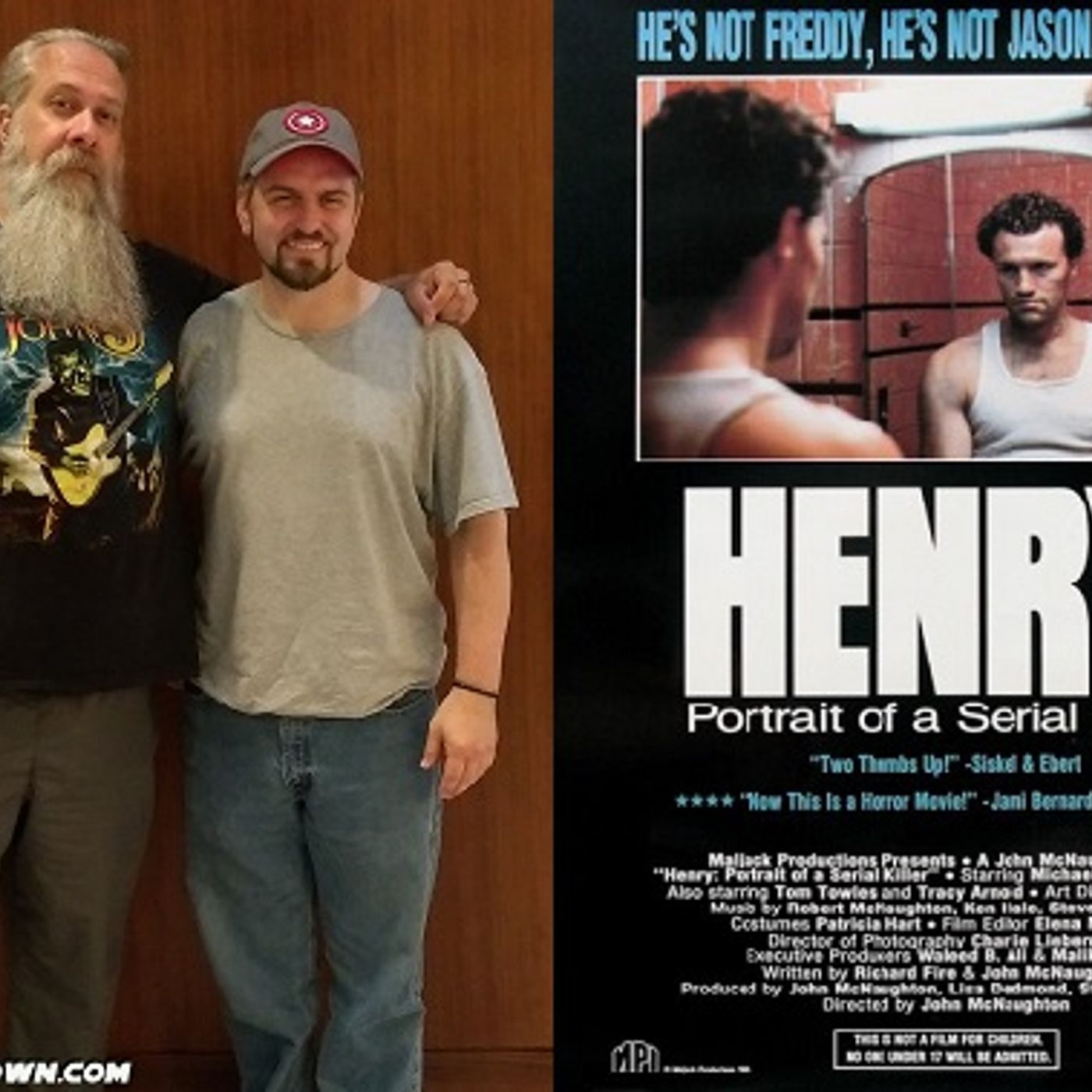
About this episode
And as we both realize we're "special" in our own way, we also mention... people would clam, Jeff Anderson, Session 9, John McNaughton, Brown's Requiem, being a contractor, the best reason to take Criminal Justice classes ever, playing silent foosball, Blue Velvet, still having a code, being a PA, Creepypasta, the room of steel, adding video technology to the mix, Guitar Institute of Technology, you kids stay off the train trestle, ritualistic, RST Video and Quick Stop, Waverly Hills, the end of anonymity, you guys are going to get walkie-talkies, the Jersey Devil, suicide... first day, Devil's Tower, Jeffrey Dahmer, In Search of..., Don't Go in the House, killing people back in the good ole days, escaped psychiatric patient, The Blair Witch Project, the 70's were a time of wonderment and then, as you get older, and you realize this is all bullshit, do you wanna be a getaway driver?, this is too much of a culture shock for some clam boy coming out of Highlands, Slenderman, the ankle bracelet program, doomed from the beginning, when crack hit real big, Dennis Rader, fallen into things, Tom Towles, necrophilia, the Zodiac killer and those creepy staged photos.
"This is our modern day version of a monster. Who doesn't really know right or wrong. And like, does horrible things and just...continues on with their day."
Listen to Bryan on Tell 'em Stave-Dave: http://www.smodcast.com/channel/tesdpodcast?audio=297
Watch Bryan on Comic Book Men: http://www.amc.com/shows/comic-book-men
Transcript
Automatically generated, so expect the odd misheard name.
Okay, you bozos out there, this is Stephen Kioto and you're listening to Movie Meltdown. The following feature has been rated R by the Motion Picture Association of America. It is intended for mature audiences and parental discretion is advised. It's showtime, folks. Enjoy the show.
Our nuclear reactor pumping out one. Million kilowatts of power. What's up and welcome to Movie Meltdown, I'm Brian and with me this week, special guest Brian. They're like, it's another one of his schizophrenic episodes or something. And Brian with a Y, which is so rare.
Yeah, I was like, I've had this... First of all, you spell it right. I've had this argument. I was like, is it better that you run into one with an I? Because then I've had somebody bring up, maybe you can't exist in the same universe.
It makes you different enough you don't cancel out your own existence and create a wormhole. When I asked my mother when I was young, I was like, why did you name me Brian? Because it's such a common name. And she's like, well, I spelled it with a Y to make you special. Special.
I've gotten special all my life. That Y has carried me so far in life. Well, it's funny that you say that now it's common. That's why my mom gave me that, she said, is because at the time, back a million years ago when both of us were born... there were no Bryans. Like she was like, I did not know a Brian.
And by the time I got to grade school, there were four in first grade. So that generation, it just like hit. And like, everybody was like, yeah, Brian, that's a great idea. And now dorks everywhere are called Brian. I know.
And we're outsiders really, because everyone else spells it with an I. So in a way they sort of stigmatized us and marked us for life. They're doing it wrong. That's, that's all there is to it. So I try to at least kind of ease my way in here.
Usually when I talk to people in the industry, I'll be like, how did you get there? You seem like you came through a side door. I guess you have to from Highlands, right? You have to kind of fight your way to get into whatever you're doing, basically. Yeah, I wasn't like Jonah Hill, who was born in Hollywood or L.A. or whatever.
Yeah, we grew up in Highlands. By we, I mean me, Kevin, Muse, and Walt. And it was mostly like people would clam because it's right on the river in the Atlantic Ocean. And people would either clam or they did like housing improvements, like contracting stuff. Like those were the two main things people went into.
Great jobs. Yeah. And I, I couldn't imagine doing either. So I had no idea what I was going to do. You don't want to be a clammer.
Yeah. Yeah. I don't, I get seasick. My father was a contractor and I used to help him from time to time. And I'm like, this is so boring.
As I got older and became a homeowner, I was like, I wish I had paid more attention. Yeah. It becomes useful then. Right. But, um, When we were, God, I guess Kevin was 20, which would have made me 22 or something.
You know, he went to the Vancouver film school and he's like, I'm going to make a movie. And. I have to admit, we were like, sure, you're going to make a movie. Of course you are. I mean, did that kind of stuff ever occur?
Because at that time, you were already, like, 22. Like, in high school, did any of that stuff? You know, I want to be in the theater. I know Kevin was, but, like, you weren't involved in any of that end of it? No, I wasn't in the drama club.
I was the guy that, like, I played basketball, and I would look in the stands, and Kevin would be recording me playing basketball because he was in the AV thing. He's the tech geek, you know. Right. So.... I had no, I mean, I wrote a lot in school and went to a local community college a little bit.
Kevin and I took writing classes together and criminal justice for some reason, because we were into Batman at the time, so we took criminal justice. Of course, that's the tie. But right after that, we were supposed to go to UMass, and he bailed, and I don't like doing things without him, so. I bailed six months after I went there. And I lived in Dorchester, which I had no idea was like Southie and a real dangerous area and all that shit.
So I just walked around, but I guess I looked Irish enough that nobody really cared. Came back. I had gone to, actually before that, I went to LA for a little while for guitar. There's a guitar Institute of technology. And the very first day I was there, I, was walking down Sunset Boulevard, and I saw all these emergency vehicles, and I was like, oh my God, they're making a movie, because of course that's all they do in Hollywood.
And I ran down there to see what was going on, and there's a lady maybe five or six stories up on a ledge. And I'm looking around, and I don't see any cameras, and the lady just launches off the building. Suicide. First day. I'm there.
That really sets things in motion there. How it's going to go in LA. And this was probably, I guess it was like around 88 or so, maybe 89. And, um, that was like when crack hit real big. Oh yeah.
In, uh, New York and LA. And I mean, there were just like people get murdered right and left. There's a, have you ever been to LA? No. There's a place, uh, Hollywood and Highland, which is their version of Times Square kind of.
And, um, if you remember Times Square from like the late 80s, I mean the early 80s, like late. 70s, early 80s. The nightmare that it was. Yeah, it was. Like, you know, prostitutes and crime and all this other stuff.
That's what Hollywood and Highland was like back then. So it was just like everywhere. And down at the end of Orange Street, I think it is, is Hollywood High School. And there's a track and some dude was on the track running around and a couple gang members like disemboweled him for What appeared to be no reason, according to the papers. And I was like, you know what?
This is too much of a culture shock for some clam boy coming out of Highlands. Highlands is a little more calm and relaxed. Yeah. So I came back to the East Coast. And then Kevin and I did the Brookdale thing.
Then we were supposed to go to UMass. And then he said, I'm going to film school. And then we made fun of him. And then he came back. And you're still making fun of him.
Yeah. Yet getting paid for it now, which is not bad. Yeah. Well, then I guess, I mean, as he got into it, did you start sort of seeing like, well, maybe this is something because, you know, eventually you end up making a film and working on writing and stuff like that. So is it just because you saw that window in now and you're like, well, this does kind of look like something I could do.
I've always just kind of fallen into things. I've never set my sights on anything. I have very little ambition. So if like an opportunity is presented, I'm like, oh, yeah, sure, I'll do that. Unless it's something that sucks, you know.
You got to take those. Or somebody's like, hey, do you want to be a getaway driver, you know, or something like that. What's the cut? Right. But we both, like, he asked to borrow my car one day.
He said, I'm going to go apply for a job at this video store. And I said, all right. So he went, he got the job, and that was RST Video. And it wasn't long after that that he said, hey, they need another guy. So I was like, all right.
Again, falling into, you know, whatever. Like, sure, I'll work at a video store. Why not? And so we started working at RST and QuickStop, which, you know, are featured in Clerks fairly prominently. Yeah.
And we did that for a few years, and then he decided to make Clerks. So you didn't want to be yourself in this interpretation of it? No. No, well, he said often that he based the Randall character on me. I wouldn't have wanted to be Randall because I think, honestly, Jeff Anderson did a way better job than I.
Ever could have. He's amazing. Like, yeah, I tried to picture how different it would be because his performance is so... And again, the fact that he wasn't really an actor maybe is why it's so good because there's a difference between him and, like, the handful of other people who were, like, acting. he's so natural. Like it's ridiculous how good he is.
He's very, very good. And I'm glad. And Kevin and I were like, we were sort of like in a tiff at the time. So I, that's why I didn't work at work on clerks. And, um, but I would drive by from time to time, like, you know, right by the store, just check out what they were doing and stuff.
Yeah. Right. Talk to Walt, you know, about how it was going and stuff. And the strangest thing is that we were in such a tip. We wouldn't even speak to each other, but he would come to the recreation center where Walt and I worked and And we would play foosball, but we wouldn't talk to each other.
Yeah, it was like just such dickhead, you know, ego stuff. Yeah, you're still kids. And then he went to this seminar. It was called The Forum, and it was all about, I don't know, sort of like a Tony Robbins type thing. And out of nowhere one day, I mean, it was probably close to a year that we hadn't spoken, he called me.
And I got really like, you know when you think something bad happened and you get that weird feeling inside? Yeah. He called me. He was like, hey, Big, it's Kev. And I was like, oh, no.
I still felt like, oh, my God, something bad happened. Like that's the only reason that would make him call me, something horrible. Right, yeah, I need to help him out with something. And it just turned out you were like one of the assignments was you need to call somebody that you don't feel like calling. So he called me, and then from then on we just started talking again.
That's cool. And, yeah, then he was like, hey, do you want to work on Mallrats? You know, after the clerks thing happened. And we had no idea what PAs were, you know, the production assistants. And Mosher sold it as like, you guys are going to have walkie-talkies.
Oh, shit, we get walkie-talkies? Yeah. I think Walt lasted, it might have, I can't remember exactly, but it might have been three days at the most. I lasted a week. Because really, it's, we had no interest in working.
It really is. It really is terrible. I have done a little of that. I'm just like, this is not what I want to do with my day or life. Yeah.
Even though, like, Eli Roth, even though I'm not a huge fan of his movies, he PA'd on, like, 50 movies before he made Cabin Fever. And I'm like, that is a guy who really paid his dues, Eli Roth. It's one of those, I don't, yeah, I don't want to do it. But it is, like, if you're up and coming, it's like, don't, even more so than film school. Like, go do that.
If that's what you think you want to do. you are thrown in the trenches there. So it's like, you'll realize if you want to make movies or not if you're a PA for a couple of days. You'll be like, yeah, this might be too much for me. I want to go do something else. Yeah, you'll see.
Yeah, it's hardcore. It's the way to learn either way, in or out. Yeah. And it's not that I think like Roth's movies are poorly made. And I read an article about it.
I'm like, this might be true is because when you're young, because I mean, I loved horror movies when I was young. Oh, yeah. Anything from like Gothic to Slasher. There's a movie called Don't Go in the House. It was shot around the area I lived in.
It stars Dan Grimaldi from Sopranos, the guy who plays Patsy Parisi. I love it. I may have seen it. It's been a while. It's kind of like a psycho ripoff, but it's a guy who takes, like he basically, his mother's dead.
Spoiler alert, 35 years later. But his mother's dead, but he hears her voice, and he takes these women to a room that is outfitted, like it's all built, it's all metal, and then just uses a flamethrower and burns them. Exterminator style. Yeah, and I mean, you think of like the stuff we had in the 80s, like shit like that, shit like Faces of Death, like all that stuff. You know, the dawn of the slasher movie with Halloween and Friday the 13th and the lesser known, what was that Weinstein movie?
Oh shit, it was at a camp. Do you remember the name of it? Sleepaway Camp. It wasn't Sleepaway Camp. It was with the Cropsey guy.
I can't remember. Oh, that's, yeah. It's really not bad at all. It's pretty good, actually. It's kind of better than the Friday the 13th.
I think so, too. The Burning? The Burning, yeah. Jason Alexander, Holly Hunter in it. I feel like it's kind of better than that.
People love the franchise Friday the 13th, but I'm like, they're not great movies. It's just a fun concept where I'm like, The Burning is a pretty decent. Movie, actually. Yeah. I was talking to Walt about it the other day where he had watched something and he was like, yeah, it didn't hold up.
And I said, when's the last time you watched it? Because if you watch something when you're 13 and then you watch it again when you're 48, it's probably not going to hold up. But if there's repeated viewings over the decades, it's for some reason you seem to, it becomes more watchable. It's like, well, each time I watch these and I go back and rewatch them, it's like you're a different person. So you're coming at it with a totally different perspective and you are watching things that you would have never seen when you were 13 or 18 or whatever.
It's like, I think you just bring new things to the movie and it kind of changes the way you see it. So some of them that helps, some of them that really hurts. Well, the article also said, I mean, the thrust of it was that because you're older, you have a greater sense of mortality. Yeah. Where like, you know, you're, you know, I saw Friday the 13th theatrically in 1980, I guess it was.
And, you know, of course you're like, this is the best. Yeah. But when you watch something like Hostel theatrically and you're like, oh my God, what if somebody caught me and some rich guy killed me for kicks? Suddenly this isn't fun anymore. Yeah, this isn't fun.
We've got to ban these kind of movies. That's what they said it comes down to is that sense of mortality where you don't want to think about dying because it's a little bit closer around the bend than it used to be. And you start judging the characters. When you're a kid, you're like, yeah, that looks great. That looks like fun.
And then as you're an old man, you're just like, they're going to get hurt. Look, this is a terrible idea. You just start judging from the other end of like, nope, you kids are screwing things up already. Also, the tropes are so well-traveled by this point that you're like, who is going to do something new? What's-his-name did it with... what was it, The Cabin?
Cabin in the Woods. Cabin in the Woods, yeah. Which has its issue. Again, I think you almost have to go way outside the realm. You have to do a Final Girls kind of thing where it's just like, okay, we know there are so many tropes that we're now going to comment constantly on how many tropes there are, which is almost being overdone now.
So I don't know what the next step is. We've had the throwbacks that try to do it straight. We've had the ones that are breaking the wall and talking to you, telling you there are tropes. I'm like, I don't know where else we can go after this. It's just, Yeah, it's tough.
I watched, I mean, and again, it didn't break new ground, but I saw The Conjuring 2 a few weeks ago. And I was surprised at how much I liked it because I don't normally like modern horror. Yeah, I'm hit and miss, but yeah, it's kind of like the ones that have to break through. I haven't seen a ton of the ghost knockoff possession. They crank a new one out every six months, and I'm like, I can't keep up.
I don't care. But I did see the first Conjuring, and I was like, did a good job. Like again, it's decent performances and they kind of just lay that special effects stuff in just enough that it was like, okay, that was kind of creepy. So that one was a little, a little better than most of the other modern stuff being thrown at us. And they're just like, I mean, as you get older, obviously, especially, you know, you have the internet and it's just like the skepticism and cynicism that wasn't there when you were a kid.
I mean, you used to watch in search of and in the seventies and be like, holy shit, man. Unless it was something about like, oh, the pyramids, then you're like, get the fuck out of here, Leonard Nimoy. Talk about Bigfoot again. So, yeah, I don't know. I think it is one of those.
We just kind of figure out where we want to be as far as movie fans. So, horror for you. Yeah, and you steer clear of the IMDb because the opinions and the fighting and the backbiting is just like, oh, my God. I don't know, but it's rare that I've ever even scrolled down there. Like I go there to get the stuff that I get usually for the show or just to be like, wait, what was that one movie he was in?
But like, I don't scroll further down because it's just idiots and I don't want to, I don't even care. Yeah. Opinionated. So many opinions. Oh my God.
So I guess kind of at that time frame when we were just talking about and your interest in horror, I guess what led you to Vulgar? Cause it's a, it's again, just, I kind of went back and watched it recently and I was like, it's a very specific reason to have to make that movie. I would assume. I mean, where does this come from? It was, um, Kevin started view askew and he needed a, uh, he needed a mascot.
You know, or a little opening logo deal. Yeah. Um, and for his business card. So he asked Walt to draw something. So Walt drew that iteration of vulgar with, um, this weird party clown with needle marks, train tracks, and fishnets and all that.
And he named him Vulgar because he said he was listening to Pantera, a Vulgar display of power at the time. So we were sitting around the store one day, Kevin, Walt, and I, and we were like, what would his story be, I wonder? And we were just bullshitting. And Kevin was talking, he was like, I should make that movie. And a little time went on.
And I said, hey man, do you mind if I write it? And he said, no, go ahead. So I didn't write it immediately. And then I think it was like the next summer I wrote it. And at the same time, Kevin got a deal with Miramax.
And part of the deal was he was allowed to produce four small budgeted movies. And then they ended up being Drawing Flies. big helium dog which never came out that was brian lynch's movie he's on to other things like writing movies that make over a billion dollars foreign and domestic. Look things really didn't work out for that guy and uh what was. He oh drawing flies malcolm's movie and then vulgar was the the fourth one and so he was like all right let's make it and i had like at first i had a forty thousand dollar budget but it was obvious that wasn't going to happen i mean these are the days that you're shooting on film, you know, we're pulling a lot of favors. We applied to get the camera for free and, and did, and still it was, I think like the budget before Lionsgate picked it up was like 80 somewhere around there.
Cause Kevin put some more money into it. And, uh, yeah, he basically, he was like, you know, I said, do you mind if I write it? And then after I wrote he was like well why don't you direct it because he had the deal and i was like okay like having no real like i mean i'd seen a lot of movies i had never really studied the craft i looked at shots that i liked in other movies and that kind of thing but it's a rare rare opportunity i mean now it's not rare at all anybody can do it. Yeah At the time, especially, yeah, having to come up with the equipment and the people and the sets. Right.
Now technology's made it so easy, you can just wander around and make your movie all day long if you really want to. Yeah, which is good and bad, because some pretty horrible movies, and Best Buy used to do that. They would package, it's like, you know, five horror movies, and then you watch them, and it's like, this is all shit that somebody just shot on, like. This is one I've heard of, and four that they packed in here to get rid of. Yeah, like, terrible, terrible stuff.
Um. I mean, if it's bad, it's bad, and it's always going to be bad, and no one's ever going to care. But with Vulgar, yeah, I sort of, you know, the movies that I liked that it was influenced by was like, you know, Texas Chainsaw Massacre, Blue Velvet. There is a. Blue Velvet vibe, yeah.
I remember once we get into that room, it does feel a little, yeah, it's got that vibe to it where you can tell, like, you pick up on that. sense of the character being trapped, and yeah, it's... That. Frank Booth kind of mentality. It's very Frank Booth, yeah. And that's actually a good performance.
That's one of the more impressive things, how disturbing that guy is. Yeah, he wanted us to, because you know he's supposed to get all worked up, and he's like, I can't get worked up looking at Brian. He was like, he wanted to hire prostitutes. To stand naked behind the camera? Yeah, so that he could get turned on.
I was like, Jerry, we're not going to do that. We're not going to do that. That sounds like a disaster in the making. But yeah, he's still Matt Mayer, the guy who plays Gino, who I didn't know it at the time. He auditioned. you know, we had open auditions.
He auditioned and I really liked him and then only found out later on that he grew up with Matt and Ben. He's a friend of theirs and you can see him in some of Ben's movies, you know. And Ethan, obviously, I knew from All Rats. He was great too. Like now I'm sure he'd be like, no way.
Especially if he read the script. Which that was what I was going to say. It's so dark. Like what, I'm trying to figure out what you were trying to do with it because it's just, it's so great. Yeah it is it's um i mean i tried to my my idea was and a lot of people didn't like this was to start out sort of light and like you know they're like oh this is like a kevin movie.
Yeah and then like it's gonna be fun. Oh right no dante whoa what's happening to dante yeah and then sort of take like a hard right turn into like what is going on and then sort of plummeting but I mean, like if I were to write it today, I would be writing a totally different movie. But at the time that was, you know, I've been depressed my entire life pretty much. And I've always, you know, liked really dark stuff. I grew up with a mother who was like, always wanted to be like, she always wanted to be a witch, but the closest she could come was like being Wiccan, but she's not really Wiccan.
Yeah. Not the same at all. But she was always interested in horror. And I used to like, she would work at, um, nursing home and I was probably like in third grade at the time and her shift was three to 11. So she got home at like 1130 and then there would be, um, horror movies would come on at 1130.
It was called chiller theater. And, um, so I would come upstairs and I would watch them with her. So like I was young getting early doses of horror and stuff. So I always gravitated towards that rather than the Disney stuff or like lighthearted stuff. I read a lot of, Like when I was in sixth grade, I remember getting back from church.
I'd always had to go to church, which was the worst. We were Methodists, so it was always just like preachy, like good shit. It wasn't even like, I went to a Catholic funeral recently. And the Catholics, they'll never miss an opportunity to give you a sermon. Like whether it's a wedding, whether it's a funeral.
Yeah, you're just like, oh my God. But it really is like so good. graphic and grim and even like the the crucifix you're like god almighty like this is dark it's a grim religion yeah i may have been more interested in it but getting home from church and my mother had bought the exorcist and i was like oh what's this yeah and i read the i read the book in a day i was like i was just i couldn't stop reading it started at like noon and i just went until i was done and i was like this now this is the kind of shit that you know i wish they would talk like if i was a catholic we would have been maybe talking heard about a possession or two you know Not Methodist, though. Well, yeah, I definitely want to touch back on that, on the movie that we've chosen.
But I guess before we totally get into that, I did want to throw it out there. Just, I get the feeling you're into... We've done a running series of movies about cryptids. You are a cryptid fan, or at least interest in the weird things that go on. Yeah, we did.
Years back, Microsoft had this idea that they were going to start paying people to do podcasts. I'm still waiting for that to kick in. For Zoom. Yeah, I know. And so somehow, I don't know how it happened, but somehow the guy who does our advertising was contacted by Microsoft.
So we got 16 episodes and we called it overkill, you know, since we already did a show. And Walt said, well, why don't we just do paranormal stuff? And since all three of us really dig paranormal stuff, we're like, all right, well, that's how we'll do it. And now, actually, on Tell Them Steve Dave, the podcast I do with those guys, one episode a month is dedicated to overkill, you know, like paranormal stuff. But yeah, just growing up in the 70s, like I said, it was not a time of cynicism.
Like you saw something about Bigfoot, and as far as you were concerned... That Patterson film, it was like that. Yeah, it's gospel for those kind of fans. There it is. It's evidence.
We got it. Going to see something like Close Encounters of the Third Kind, you're like, oh, man. That was big for me. I took a motorcycle, like a 6,000-mile motorcycle trip from L.A. and wound around through the southwest up into the northwest, and I made it a point to stop by Devil's Tower, you know? Of course, yeah.
Yeah, and it was cool, you know. There was like a lot of people are like, and they shouldn't say it because it's been said a billion times, but they'll come to the stash and they're like, this is my mecca. And I'm like, we've heard that before. Just bring a box of instant mashed potatoes and be like, can I do my recreation here? Yeah, right.
But it was, I'm not going to go so far as to be like, this is my mecca, but it was like, wow, this is cool, man. Even all these years later to see it in real life. and be near it I was like that's actually kind of cool but yeah it was like the 70s were a time of wonderment and then as you get older and you realize this is all bullshit you. Know the internet destroys all our dreams yeah everything's proven to be bullshit. But the I do like that kids have sort of renewed that that sort of genre with the creepypasta stuff yeah You know, I mean, it's not cool when people, like, they're killing. Like, we never killed anybody over Bigfoot.
We know. You might have covered those up. Yeah, I do know a guy that's on the show. His daughter is really into Slender Man and, like, really, like, totally got into that to the point where he was like, do I need to start worrying, you know, after hearing the story? So it's like, it is kind of cool that, like, there are these new little weird versions that are popping up, and somehow the internet's kind of fueling the fire, so it's kind of cool to see it still have some new incarnation come through.
Yeah, it's gained some traction, and it's making some people creative, and some are better than others. You know, when that Slenderman, you know, the two girls killed the other girl, or tried to kill her, I don't think she actually died, but they go after the father, they're like, you know, he had a collection of skulls, and it's not even like real human skulls, it's just like The guy's into skulls. Most dorky horror fans have at least one skull laying around their house. I have several in mine. Yeah, they really wanted to make it about the father's collection or influence or whatever rather than maybe his lack of influence.
If you have a 12-year-old daughter and that's what she's up to, you should probably know about it. You might want to keep an eye on your kids in general. Watch a little closer. But yeah, we've done a lot of stuff on on some bad Bigfoot movies and bad Yeti movies. We have not done a Jersey Devil, so you're definitely invited to come on for a Jersey Devil film.
Yeah, I've seen a couple. I started writing one years ago, and I wrote like half of it, then I lost it, and then I was on this crappy little computer I had. And then somebody put out a Jersey Devil movie, and it did shitty, of course, so I was like, eh, forget it. But I don't know. When you put like Jersey... into it it makes it seem so regional rather than like say mothman prophecies where which is.
Still regional but most of the rest of the country didn't know it was a real thing now they all do but at the time it's like it just seemed like a general you know creature they made up but yeah. And the ones that have been made that i've seen are they're not very good and they're you know again rely on the same bullshit. I do kind of like that everybody has that though because we have it here in this town during right now. There's one, and somebody, I mean, it started, I mean, it started in, like, the early part of the last century, but, like, stories were really huge in, like, 60s, 70s, 80s, and, like, literally in the last three or four months, somebody just died trying to go find this place where this creature lives, which is on a train trestle, which is why they say it's what I'm like, that's what started the story.
I think they were like, Hey idiots, stay off this train trestle. That's like massively hanging out in the air by itself. And like the, yeah, there's always some dumb kid. It was just all teenagers back in the day. Now I think this lady wasn't even a kid.
Like they came here from another state just to look for this thing. And she fell off the train trestle. I don't know what happened. It's like as an adult, you should be able to say, well, maybe the reason they say it lives there is because it is so remote and weird. As opposed to like, oh, he lives in this easily accessible cabin that isn't dangerous.
Again, I think that the old angry men around there are just like, you kids stay off there. There's a monster that lives there. Don't go over there. It might just be like, don't go there or you'll die. For real reasons, but if you need a monster, whatever, just don't go on the train trestle, you idiots.
Yeah. It's funny that every town kind of has a version of that. There's a tunnel somewhere where the bunny man kills you. Everybody has a weird variation on that. I mean, that's kind of cool, and when people die, it's.
Not good, but. Just the fact that we still have that regional thing that everybody brings their own weird little hometown story to it. We also lived at a relatively short distance to a psychiatric hospital. Well, we have one less year, too. It's now haunted, if you believe me.
Oh, is that Waverly Hills? Yeah. I've wanted to go there. Definitely from the outside, it's an interesting building. Inside, I went when they were doing a haunted house there, and it was just kind of a cheesy haunted house.
No offense. Right. Yeah, I don't know how much has held true. I haven't seen anything, but it's an interesting building. They do have a death tunnel.
Yeah. Because people were dying so fast, they were just throwing them down a chute. That's crazy. So, yeah, weird, creepy places in everybody's town. Yeah, and we would hear, you know, you'd read an article in the paper every once in a while about escape psychiatric patient.
Of course, they're not just trying to get away. They're murderous and they're, you know, dangerous and all this other crap. Yeah, ours wasn't psychiatric. It was just like tuberculosis. They were just dying there.
I always thought Session 9 was a pretty good movie as far as asylums. Again, it's one of those people are kind of divided on it. They kind of hate where it goes. And I'm like, I love that ending. Like, I think it's genius the way it is.
And like, yeah, it's kind of hit and miss with people. Either they're on board for what's going on or they're just like immediately out by the time it gets to the end. But I think just the whole setup for it is so good. Yeah. My cousin was working in, uh, up North Jersey, uh, in some asylum that had been shut down.
And he said they were up in the, the attic or whatever. He's like, and there were all these records, like all these patient records, all these documents. And I was like, get out. I was like, can you, I was like, can you bring them back? And he goes, no, we threw him away.
I was like, are you out of your goddamn mind? Like, why would you do that? Like, that's history, man. That is, like, super interesting history. And these were people's lives.
I mean, those really were real people. Yeah, like the suitcases they found in that place in New York. Yeah, it's like, why would you throw something like that away? And I'm like, yeah, you know what? Dumbass contractor.
Could have just as easily been a clammer who's like, yeah, we dredged up some documents and chucked them back in the river. Yeah, who needs them? Good evening. It's intermission time. Our service is friendly and quick.
You'll find hot dogs, hamburgers, pizza, your favorite candies, hot and cold beverages, and other delicious snacks. So add to your fun of watching the movie. Visit our refreshment stand right now. We're glad to have you with us tonight. We hope you'll come to see us often.
It's great to get out. To the movies. In this house, 25 years ago, a child was given life. Donald, come here. He was raised in isolation.
You're a bad boy. Instructed in fear. You're evil and you must be punished. Imprisoned by a tormented mind. Your father let you do things like that, but.
He's gone now. And baptized in flames. Now he has come of age. His suffering has ended, and ours is about to begin. You hear that, old lady?
I'll punish you again! If you would be spared from the fury of his vengeance, whatever you do, don't go in the house. Stairway by stairway, he draws you closer to madness. Oh! And soon he'll share the terrifying secret behind this door in the room of steel.
Don't make me do anything bad, mother. Don't go in the house because the people who live there aren't people anymore. Don't go in the house. But if you do. Don't go in the house.
This episode is sponsored by World of Leathercraft. Specializing in handmade leathercraft items with a specific nod to the geeky genres. Whether you're looking for a wallet, purse, keychain, bracelet, money clip, luggage tank, book cover, phone sleeve, laptop bag, whatever it is, World of Leathercraft has so much to choose from. Plus, with genre themes like Star Wars, Doctor Who, Supernatural, Cowboy Bebop, Magic the Gathering, and more, you'll let people know you aren't messing around with store-bought junk Your fandom runs deep because you're carrying a handmade work of art. And since you're a Movie Meltdown listener, you get a special deal.
Just use coupon code MELTDOWN25 at checkout and get 25% off all orders over $ 50. Plus free shipping on everything. So to find World of Leathercraft, go to etsy.com slash shop slash worldofleathercraft. Or just go to MovieMeltdown.com and click on the World of Weathercraft banner at the bottom of the page. Then it will take you to their Etsy page and you can take a look at all the geek-friendly products they have to offer.
This is Scott Wilson. I played Herschel Green on The Walking Dead, and this is Movie Meltdown. Stay tuned. It's time for Sofa Theater. Otis, plug it in.
Did you really kill your mama? What? Did you really kill your mama? I guess I did. She must have treated you real bad.
You're the whore. Susie! Sus! You used. To dance naked?
Sure, all the time around town. Otis. Best little naked dancer you ever saw. You never. You telling me you never killed anybody before?
I ain't saying that. Open your eyes, Otis. Look at the world. It's either you or them. You know what I mean.
Don't do that, Otis. She's your sister. I feel like I know you. Like I've known you for a long time. I feel like I've known you forever and ever.
It's like the blood droppings from a deer you shot. And all they gotta do is follow those droppings and pretty soon they're gonna find their deer. I ain't interrupting it. What are you doing? I want to see it again.
It's not easy being me. Wash your face and brush your hair. Well, knock, knock, knock. It's just not fair. I'm Horrid Henry.
So down with school. I'm gonna rule. And when I'm. King, I'll do my thing. And then my life will be so sweet.
I'm Horrid Henry. Na-na-na, na-na-nay, the. Purple hand gang rules okay It's not easy. Being me, I'm Horrid Henry Na-na-na. It's not fair, na-na-nay, I wasn't there Why do I get blamed for everything, cause I'm Horrid Henry No, it's not easy being me.
Tidy up. Just look at your hair. Knock, knock, knock. It's so not fair. I'm Horrid Henry.
This week's Sofa Theater feature is Henry, Portrait of a Serial Killer. The year is 1986. Director John McNaughton and the plot, according to IMDb, usually they just kind of get it wrong. This one, they just barely try. Based on the true life serial killer Henry Lee Lucas.
Period. That's all they put. So, spoiler alert, it's been around for a while, but go watch the movie beforehand. So, yeah, you picked this movie. I guess you previously mentioned being a horror fan.
Was that part of it, or is it, I mean, you also have a personal tie. You've worked with Michael Rooker, or at least were crossing paths at that point. Yeah, I had read about it. In one of the horror magazines, I can't remember, about it being made, then being shelved. And then finally, when I worked at the video store, it did come out.
And I was like, holy shit, well, I got to watch this. Now, you're talking about VHS. That's how I watched it. Yeah, so it's... It's the first time I watched it.
It's kind of like the Blair Witch Project. Like when the Blair Witch Project, even before it came out, they had sent Kevin a screener. with no credits or anything and watching it on vhs was so different. The most amazing marketing scheme again like there's a reason they became the most successful independent film it was that marketing scheme and that that they'd hit just at the right time with the internet where they started spreading little rumors and videos and like it yeah it's amazing how that came together i. Went i didn't see it in theaters but i did peek my head in in theaters and I was like, I got so nauseous within like 10 seconds, I couldn't even watch it. But on the small screen, it was, it somehow seemed more intimate and more real.
And, you know, I mean, I knew it wasn't real at the time, but I had a girlfriend who didn't know that. They sold it pretty hard that it was a real thing. Yeah, that was the worst thing that someone, Kevin did the same thing to his wife. He was like, he didn't tell her it wasn't real. Here, watch this.
But the point being that like that sort of, small screen grainy experience because it is so... Henry is so low budget and raw. I mean, I think they said the budget was $ 100, 000 or something. Like, McNaughton was going to make a wrestling movie and that fell through. Instead, let's make this.
Yeah, the producers were like, well, write a movie and do something else. And he had seen... McNaughton had seen something on 2020 about Henry Lee Lucas. Yeah, so he was like, alright, I'll do something based on that. And.
Rooker, like you said, I met him in 95 and he's probably the only person I've met so far out of everyone I've met that I was truly amazed by. Just like, dude, you have no idea about performance. He's like a force of nature. I see him at so many events and he's in his own Rooker world. He operates on a different level and he's amazing, but like He just kind of does his own thing and does not care.
Because everybody else at those conventions kind of follows the rules. And Rooker does what he wants because he's Rooker. That's obviously how he addresses the movie roles, too. Because I don't know that most people could have done what he does in this movie. That's what I asked him.
I said, how did you get into that headspace? And this was actually at the last con because Ming and I, uh, moderated his panel. Yeah. And I asked him, I was like, how did you get into that headspace? And he was like, I was already in that headspace.
Like he said shit like that. And he really is. He just likes to mess with people. Yeah. He, but he really is.
I, I told him I was like, you, if you weren't in movies, you would be, you couldn't be anything but like a rock star. Yeah. Because that's exactly, he is a totally wild guy. He's a super funny dude. He's, he's a really nice person.
Like he's, he's just great. Like I love the guy. Um, But in that movie, which was his first, you know, I've read conflicting reports where he stayed in character, but he says in a documentary that you can't bring that stuff home with you, so he wouldn't stay in character. So it's, you never know what to believe. I mean, I would believe what Rooker says.
Yeah, seemed like that would be the place to get the information. But yeah, it is one of those, like, seeing him in other things, especially by the time we get to, like, Mallrats, and like, Seeing him in these, and even in the real world, how, like, silly he can be and, like, how, like, laid back he is, like, and then watching that performance and, like, listening to, like, my mother was a whore speech. I'm like, he can just nail those dramatic scenes in a way that, like, you would never see coming out of the guy that you see wandering around being crazy and everywhere he goes now. Yeah, I think the closest he's come to that character is probably Merle from Walking Dead. That sort of hard-ass, very focused, very believable.
I need to go back and watch Mississippi Burning. It's been a long time. I remember everybody being good in that movie. But yeah, he's another one of those heavier roles for him. But yeah, he was... we went watch we watched one of his from a few years later recently that's like totally like brown's requiem i don't know if you've i had not heard of it and a friend of mine went oh we need to watch this it was one of those he just happened to catch on like cable at the time or something or just rented it one day and it's it's pretty interesting because it's early for rooker but he's also the leading man which is not normally what they give him and like He's trying to be a normal guy.
It's sort of like a detective. It's kind of like a modern-day film noir kind of thing, but it's a weird movie. It's just weirdly pieced together, and then he is trying to be way more of a normal guy than he usually is. It's interesting to go back and watch that one. He was pretty normal, too, in JFK.
Yeah. He can do it, but it's strange. It's almost more strange to see him do that. I can see him do super heavy... like Henry, and then I could see him do, like, you know, the distiller stuff, having seen him wander around like that now. But, yeah, it's that middle-of-the-road, trying-to-be-an-average-guy thing that always strikes me as the strangest of the bunch.
Yeah, the thing I wondered about Henry was, like, why McNaughton decided to diverge from... I mean, because it's a very... It's loose. It's very loosely based on. The premise is set up because he does take, like, some of those... flashes of dead bodies are built to be just like crime scene photos.
Like, he did sort of take inspiration from some of the more horrific ends of it, but I think as far as story, he was just like, and we're gonna make our own characters. Like, I feel like they are super loosely based as far as, like, they have the same names, they're in Chicago, but, like, I feel like a lot of it, they just sort of take license, and again, I feel like it's probably a way better film because of it, because I can't imagine. I think that's what's cool about is by the end of it, you do kind of feel for him as a character. And for being the horrible serial killer that he is, you shouldn't. And I think if you've stuck closer to the facts or closer to the way the real Henry Lee Lucas was, you probably wouldn't have any sympathy or you wouldn't have empathy for any characters.
Like, I don't know. It's probably, I think, a better movie just from a character standpoint because he didn't stick that close to it. Yeah. And the other thing is that you know, I think one of the criticisms from some people was like, well, you, you can't let him get away. Just, you know, again, if you haven't seen the movie, you should see it before I say this, but it's like, you can't let him kill Becky and just drive off and continue to do what he does.
But even like the relationship between like Otis or Otis or however they pronounce it. And, and Henry was, and I saw like some of the cut scenes where I guess they were like lovers at one point. I think in the real world, that was the story. And McNaughton was just like, the characters we've created, that would seem weird. He was like, they even shot some of that stuff at the end of that one scene.
They kind of get into that. And it's like, and it's true. As he said that, I was like, yeah, these, especially with the Rooker performance, because he just seems uncomfortable with people. Like the dealing with Becky is like, Anytime she's touching him, definitely when she starts kissing him, he seems so awkward because he does such a great job showing how disconnected he is with the world. I think that's why he has no problem killing all these people is because he doesn't even understand.
Again, that's what they've started to find in real serial killers is there's part of the brain that's potentially damaged sometimes that they really don't understand empathy. They don't know how to see things from other people's perspective, and so they feel nothing when they start to do this. That's a weird thing that now, like, science has come along and been, like, addressing the fact that, yeah, this is sort of a real thing, that they're not just messed up. They are, but it's also... for some sort of specific reason, like a weird blow to the head that they found in a lot of them when they were young. Right.
Well, it's, it's also, you know, like you, if you read Henry Lee Lucas's story and if you believe it to be true or even Otis, Otis tool, whatever, like you read their childhood stories, you're like these kids, like they never had a chance. Yeah. And it doesn't make what they've done any less. Because a lot of people will be like, well, lots of people have had terrible childhoods. But again, shit affects people different ways.
Not to say that there's any sympathy for these guys. But when your mother is forcing you to watch her have sex with customers because she's a prostitute. When your father has his legs cut off and he's dragging himself out into the snow just to die because he can't deal with it. you've got your mother dressing you up like a girl and all that other shit. You know, it's like, it's definitely like, you know, the formation of the brain happens within those first five, six years. And after that, you're kind of who you are, right?
You're going to be messed up from that point on. Yeah. And, and how, what, how, what that, what direction that damage takes you varies. Clearly not everyone becomes a serial killer, but like I've, I've recently just been fascinated with Dennis Radar BTK. Yeah.
Only because of like, I'm just like, what happened? What switch was flipped that made him need to take those pictures? And if you haven't seen the Dennis Radar BTK pictures, not the crime scene photos of the women that he killed, but self-portraits of he's dressed like a woman and he's hanging from like a tree or something, or he's like a mock burial where there's a grave dug and he's like in plastic, like just in a grave. It's like, you can't even begin. Like, look, there's fetishes.
And then there's like, what the hell, man? You're again, I think you start going a little too far to the unhealthy. Yeah. And, uh, yeah, I think you're probably right with Henry. Like if you stuck too close to the actual, um, And who even knows how many people he killed.
And I don't understand that with cops, where they're like, we just want to close these cold cases and get them off the books. So yes, Henry killed 600 people. Somebody figured it out, some reporter that they're like, look, it wouldn't be possible for him to transverse the country. And he would have had to go like 30,000 miles in six months or something. I thought I read the confirmed number as 11,000.
And everything else is just him like, oh, I killed 300 people. I killed 6,000 people. It's just continually been ridiculous astronomical numbers ever since then. That was something, again, as I said, you bring different things to movies as you rewatch them. I remember watching it, again, that was my take.
I saw it on VHS back in the day, kind of hearing about it as almost like a documentary, and it does kind of have that feel at times, but Now, since then, and I guess people who've been listening to the show for a while have heard this many times. One of our, well, actually two of our cast members lived across the street from a serial killer. Oh, really? That got busted two, three, three or more years ago now. And they went over there and dug up their yard.
They found when he got busted, one of them he had just killed in the garage. That's a couple of houses down from them. He used to mow their lawn. So, like, the guy on the show would be out there talking to him, and he thought he was a weird dude, but, like, you. Know, whatever.
He just lives with his mom. It's so cliche. Like, everything about it is super cliche. He lived with his mom, was, like, super weird into, like, he had all kinds of bad prison tattoos. He was probably a Nazi of some sort.
I don't know. But then, like, even to the fact they went there and, like, they busted him, he claimed to kill so many people that now they cannot pin down... There were three. There was one in the garage at the time, one somewhere else in the house maybe, and then there was one buried in the backyard down the street from them. But yeah, he's claimed so many that they've done kind of the same thing they did with Henry Lee Lucas.
They took him two plays and were like, okay, show us where you did that. Henry Lee Lucas got flown to different areas. He almost got deluxe treatment when he started going on this little tour with the cops to show us where the bodies are. And most of them were bullshit probably. And that's what this guy, he started claiming all these murders that either didn't happen or he at least can't produce a body now.
He's like, oh, I buried him here and they'll go there and dig stuff up. Nothing's there. So I'm like, it's weird how sometimes it's so cliche what happens when you fall into these little serial killer situations. And it's like, it seems like it's made up stuff for the movies and then you see one happen across the street from you and you're like, shit, this is all like real and kind of makes all of this a little creepier when you're like, no, this could all really be going on and people wouldn't. Know any better.
Yeah. What's also very telling of like a sociopath who likes to toy with people, the cops included. Yeah. Where, you know, it's like, all right, well, I'll get out of jail for a day. I'll tell them that like, hey, I buried so-and-so in a place that maybe the person wants to go.
Yeah. You know, and, you know, get out for the day and they dig around and he's like, yeah, I guess I didn't do it. If you shoot somebody in the head with a. 45 every time you kill somebody, it becomes like your fingerprints, see? But if you strangle one and stab another, when you cut up, when you don't, then the police don't know what to do.
They think you're four different people. What they really are, what makes their job somewhat easier, is a pattern. What they call a modus operandi. That's Latin. Bet you didn't know any Latin, did you?
Big fucking deer. What? Nothing. It's like a trail of shit, Otis. It's like the blood droppings from a deer you shot.
And all they got to do is follow those droppings and pretty soon they're going to find their deer. That's one thing I think is interesting about this story. And I guess Henry kind of fell into the, in the real world, fell into that category. Because I remember watching it again this time going, Yeah, he really isn't following the... If you're going with the cliches, he doesn't have a pattern.
He doesn't have the standard setup of, like, I only track women between 20 and 25, and I have to do this... Like a Ted Bundy. Yeah, like I have to... Bundy didn't even have to try. He just dated.
Yeah, I know. He's the only one that was kind of attractive and not a creep. He wasn't creepy seeming because he kept luring these women in. There are non-serial killer guys who are like, I can't get a date for the life of me. Yeah, the rest of them just look like serial killers.
But they have a very specific way that they stalk them or a specific way they have to kill them. And then the way they dispose of the bodies is always very similar. And then you get to either versions of the Henry character where he's just like, no, that's why it works. That's why I can do this is because, especially watching this now, I'm like, this is also very pre-CSI. And the things they do now, I'm like, he would be busted so fast.
The blood that they leave everywhere, the DNA evidence that's everywhere, which in 86 and before, you didn't really worry about. But yeah, watching him, it's like, At that point, all they did was base it on– it was cases. It was files. It was just them profiling people and figuring out how to track them down, whereas now we have tons of, again, scientific data gets involved. Not to mention the computer databases that people– You know, the FBI and local law enforcement and state, like, they were very unwilling to share information, you know, because they wanted it to be their case.
That's, like, the running thing in all 80s action movies is, like, ah, the feds are here. Well, don't give them anything. Like, it's the running joke in all those that the local cops hate the feds and nobody's going to share information, where I guess now, hopefully... From this end, we get a little better. Well, that happened in the Pizza Connection case in the 80s with the mafia.
The district attorney of New York wanted it, but the FBI had this. Because it was a huge case, they're going to bust a bunch of dons and made guys and shit. So everybody wants that because it's going to make their career. Nobody's sharing anything. I think that's what's so interesting about watching... this version of Henry or maybe the real one.
Again, I haven't gone back to dig totally into the real story, but watching this version that, that Michael Walker plays is just interesting because he's so conscious of it. He's just like, that's what I want to do. I want to murder people. And the best way is to have a strategy to be like, okay, always mix it up. Always, you know, deal with the bodies different.
Like every step of the way is like you randomize it just enough that nobody can figure out a pattern. Nobody can figure out anything. And it's also interesting how much he just does it all in the real world. Like, there are no cops ever. Like, again, they drive by that one on the highway.
That was by accident. Like, that just happened when they were shooting. And other than that, there are no cops in the movie because, again, he has no fear. So he just exists in a world where he does whatever the hell he wants. And he assumes there's no consequences because he's smart enough to kind of know how to avoid the traps.
And nobody else seems to care. Yeah, sort of a sense of lawlessness. Yeah. The other thing in the movie that they did that um the the real henry was sort of into was uh like in the movie henry was very against like necrophilia like after like what people a lot of people consider to be the most horrific scene was the family yeah you know where he kills the the mom and the kid and the the father uh What's his name? Otis starts to make out with the body.
And he's like, Otis, no. And I think he did it on two occasions where he seemed very against the necrophilia angle. And in real life, they say that he was totally into it. And the other concession they sort of had to make was Becky was– That's. What I heard.
She was way younger. Yeah, she wasn't like the woman, Tracy Arnold, I think her name was, but the woman who played Becky. She was, I mean, she had to be like, what, at least 20 or so, maybe a little bit older. 25, yeah. So it's much more palatable than him going around with a nine-year-old and a nine-year-old coming on to him.
It's really disturbing. Yeah, and I think she was like 12 when he eventually did kill her. But I mean, can you imagine, I mean, what's that 12 year old's life like up to that point, you know, where she's giving a serial killer shit, you know, she's yelling at him until he's like, all right, fuck this. Talk about when you have a kid having no hope. It's like as much as Henry had a problem, like at least he wasn't tooling around with a serial killer the whole time.
Like he just became one. So yeah, it's that, that dynamic again, I think it works better because of those adjustments. Like, I like, that's one of the most, I think that's one of the most interesting things watching the movie is that he still has rules. Like you see in the beginning, like you see Otis come into it and he's just like, he's almost, you know, sickened by it when it first happens. And he's scared because he doesn't want to get busted, but he also feels bad.
You see him sitting there in the car and like, he just feels bad about it. And then he starts to come out of it and you watch him. totally buy into it and be like okay no i like this animalistic side of myself i like the lawlessness of i do whatever i want now we need something we go out and get it we don't care who we kill in the process and he gets to the point where he's just without any rules without any scruples whatsoever where henry still has just enough of a barrier to be like that's your sister. You don't do that. You know, like she's dead. Don't do that.
You know, it's like, he's got those weird little barriers that are, I mean, you watched him murder people time and time again, but like, you still see him pull back and go, no, wait, that's too far. And like, that's fascinating to me is that he has, he still has some sort of weird code that he sticks to, even in such a depraved universe as is like, he still has some sort of weird stopping point. It's like, nope, that's too far. I wonder if today's audiences would watch Henry. Because it's often been described as the grittiest, most realistic, most horrifying film you could watch.
But with so many things that have come out since then, like Hostel and the stuff Eli has done and a couple other movies like that, it just doesn't have the punch. And then you look at real world violence, which is... 50 people getting gunned down, it seems much more horrific than sort of like at times in the movie, like cartoony-like neck. I mean, is a neck that easy to break? Because he breaks necks right and left.
Yeah, pretty quick. Yeah. But again, it's Rooker. He's just ripped. Yeah, right?
Superhuman Rookin' Power. Yeah, and Tom Toles is really, really good in that movie, too. He is because, again, he plays him so just, he's an idiot. Like, and you want, that's what he's supposed to be. But like, you wouldn't want to look that bad if you had, you know, too much of an ego, you know, but it's like, he comes into it as like, they're all three kind of idiots, but like Henry's at least the one that's kind of got a clue.
The fact that like, what's that shirt say? Like you live in that town for God's sake. The other one's a symbol. Like they're so, you know, they're just so clueless. that they barely could get by in the world anyway without all of this. But yeah, Tom just sort of has no problem being despicable, even in a world of people who are extra horrible and disgusting.
He just also is kind of obnoxious when he deals with Becky, and then once he goes down the rabbit hole of killing people, he just gets worse and worse, and there's just... no into his depravity even when you get into the sexual stuff like he's the one that you see hitting on that guy and then attacking his sister and like he just does not care who he he hurts or gets involved with or anything like and that's again that's a very selfless performance out of tom he's he's really good. And the the the thing that um i think still like echoes today is the the guy the good samaritan who pulls over and they just gun him down for no reason you know and that that that shit happened then, it happened now.
That's the one that's. The most out in the open, too. It's just like, people could drive by, cops could hear the gun go, nothing. They just, it is a complete lawlessness of just like, we do whatever the hell we want, and nobody's gonna stop us, and they don't, for them, the only one that does is the other party involved. Like, the law never gets involved, at least in this story that we see.
Yeah. And also, like you say, like reflective of the times where there weren't cameras everywhere. Yeah. Um, there, they wouldn't be able to, you know, they could read the ballistics of the gun and stuff if they could find the gun. But, you know, people didn't have phones on their cameras on their phones and they didn't have, you know, the, the DNA stuff and people committing crimes in the seventies.
And it would never dream that like, well, maybe I'll get busted for this 25 years later because now I have my DNA, you know. They go and bust those guys that like killed somebody in the forties. How can you imagine? I have a friend who's a homicide detective in New York, and he says that CSI has actually done a disservice because people think, oh, well, you find the DNA, and then the next day you know if it's that person or not. And you're done.
There's no police work involved. It doesn't work like that. So he's like, it's easier to get away with than people think, and told me about this great case where some guy, I think he killed a drug dealer or something. And when the guy was on trial, they said, well, have you ever been in his house? And the guy said, no, I've never been in his house.
And they found this dude's fingerprint in the house. Now, had he said, yes, I knew him. I had been over to his house. That would have been it. And the dude probably would have skated.
But since he lied and said, no, I'd never been there. And it's like, well, clearly you have been. Boom, went to jail. You know? So is honesty the best policy is the question here.
Yeah. Or don't kill other people or drug dealers or whomever. Try not to kill people as far as we're concerned. But yeah, I was like, the other thing, you mentioned the cameras thing. That's what I wanted to address with this is like, again, we were dorks and watched it on VHS back in the day.
That's also like right at that turning point of like the technology changing. Like that's the very beginning. I mean, we couldn't even imagine then the like internet nonsense that would come along. in 10, 15, 20 years and be like, watch how much it revolutionized the world. But like just that little bit of it peeking out with the VHS camera, it's like all of a sudden, cause I think he said like, I think the director even owned up to like, he liked in a red dragon that the murderer is taking photos and like kind of documenting his thing. So he's like, I just, you know, he's like, I'm not going to hide it.
Just, they always say, just go ahead and freely steal from it and just do your own thing. So he took it. a step further with them finding, you know, going and getting that camera. And then, um, I feel like it is like kind of, that's one of the things I think it does. That's different than movies previous. Definitely.
And even from then, like it's such a specific little window where it's like, you finally get to see this new opportunity to give them this perversion. Like it's an extra layer of perversion there of like, not only do I want to kill people, I want to be able to go back and watch it. Like I want to capture this moment and, And be able to relive it again. And that's something that, I mean, technically, I guess you could have done it with, like, a Super 8. But, like, you have to get that developed.
Like, you would have gotten busted, more than likely. So, like, it is something, like, you know, like, Peeping Tom kind of goes into that voyeuristic aspect, you know, earlier. But, like, this is one of the first times you see, like, that 80s technology come into it and be like, okay, now... you're in charge of, you know, what you shoot and you don't have to take anywhere. There's nobody else involved. You can, that's again, why we had all the weird sex videos that came out of that too.
It's like, finally you had freedom to do whatever horrible thing you wanted on video and capture it for everyone to be horrified by. Yeah. And now it's like a complete website dedicated to like, all right, here's every disgusting, gruesome thing that happened within the last, say three hours, you know? Yeah. And I, that's what I, again, I think seeing that little window of time where, nobody else could do that or knew of that or like it was so new to everybody that like most people didn't have cameras didn't have access to them or if you did it was they were just figuring them out and shooting bad home videos and like finding this this horrible person who then went oh you know what we can do with it and then watching them kind of sit there and relive it is whole extra layer of perversion.
It's just creepy. And again, even in the moment, Henry is like, what are you doing? And Otis is like, I want to watch it again. Yeah. Again, Otis taking it a step further.
Henry's like, okay, we've seen it. like you know Otis keeps diving in deeper and deeper every step of the way to the point that he goes too far. Do you think I mean I know they closed the books and his own father has accepted it like did were you of the mind that he killed Adam Walsh. I don't know again I don't remember hearing a ton about that specific one so I need to I guess go back That's a weird little connection, though, because that became such a huge story in and of itself. Again, that seems odd. Again, because they're both so well-known in their own rights that that also crossed over.
That seems very strange. There was also talk that Jeffrey Dahmer worked in a store down nearby where they lived at the time. But that seems like not his MO. He was always into older teen guys and middle 20s guys. And again, a very specific way of doing things.
All of his followed that same little routine to the point of even taking care of the bodies was a very specific routine. So yeah, Henry didn't seem like he cared about a routine whatsoever. Yeah, was it like disorganized or something they call versus organized? Yeah, I mean, it's ritual. Like the serial killing thing many times, almost all the time, is ritualistic.
If Henry was smart enough to say like, all right, well, I'm just going to do it a bunch of different ways so that there's no pattern that the police can follow. But it was almost exclusively women, right? Yeah. There's again, it would always be a man in conjunction with a woman. I don't think he ever.
Well, no, the Good Samaritan was just a guy by himself. But then, yeah, like the shop they show at the beginning in the liquor store that they're both laying there dead. There's a man and a woman, which, again, I think that was a photo that was taken from a real Henry Lucas crime scene. Um, so again, I can't, that one almost looks like a holdup. Like did he like stage it to look like that just to be one more thing to throw them off track when they were trying to piece together, nothing that gets pieced together.
And then the, the father in the little scenario with the family. So it's like he did a few guys, but it's still. Yeah. And the prostitutes didn't seem like they set out to do it because. Oh, to seem surprised, like what the hell are you doing?
Yeah. Um, So that was more opportunistic than planned. That's the thing. And again, probably different than the real one, not delving into the real case, but in the movie, it was also like, because most of them, it's a very sexualized thing where Henry in this film doesn't seem, again, I think he's so awkward with intimacy whatsoever. Like, do we ever see him really get involved?
He makes out with that prostitute barely before he snaps her neck. So it's like, Do we feel like he's ever doing anything sexual with these women or he just wants to kill women? And that's his thing like that. I don't know. It's one of those.
Usually there's a weird sexual angle with it that I don't ever really get from this. This Henry. Yeah, he seems asexual. And even when he's it's something as sort of innocent as like he's dancing with Becky and she kisses him. He looks very sheepish.
And both times. She kisses him on the lips and she kisses him on the cheek and both times he looks sheepish and he wipes it away. He seems weirded out by any interaction whatsoever. So I'm like, I feel like he's not even doing anything else with these bodies. He just needs to kill people and that's his thing.
So I think, again, Otis takes it to that other level where he starts wanting to make out with dead bodies or his sister or everything is weird and perverted in a different way when Otis gets involved. But yeah, I feel like Henry didn't really even bring that to the table. His was a different... Which I like that even I think the director referred to it as like murder is his vocation. Like it is what he does, which is kind of like when you see him, it's like when he comes home, it's like he's coming home from work.
Yeah. Here's a guitar I found, by the way. That was a great setup. Just watching that girl get in the car and be like, here, look what I got for you. And like, we don't need anything else.
We don't even need the scene where it happens. that's perfect. You know exactly what happened. That's yeah. That's such great. Just structuring for the movie.
He didn't just steal her guitar. No, I don't think he left her by the side of the road hitchhiking anymore. He left her by the side of the road, but no, it's yeah. I think that kind of stuff is, is part of it. The fact that, you know, he really does seem like, well, going off to work and he just murders people.
And like that again, I, as this, film version of henry goes i think that's way more interesting because it is kind of what he feels like he needs to do but not even for any weird you know sexual reasons it's just it's his calling he needs to go kill people. Most important thing is to keep moving that way they might never catch up to you i'm gonna have to pack up and be on the move too pretty soon where are you going nowhere you want to come We can be back this way in about a month. I'm not supposed to leave the state without telling you. So who's gonna know as long as you show up when you're just supposed to? What if they check up on me at work?
Well, no plan's perfect. Also, like, when the movie came out, it was at the same time, like you say, it sort of hearkened the end of anonymity. Yeah. Where, you know, in this country, it's like, you know, sure, you had social security numbers and that kind of shit, but as time went on, like, 70s into the 80s, it was, like, you could remain more anonymous. Now it's, like, fucking forget it.
Like, there's no possible way. By this point, mid-80s into the 90s, everything became logged into the system. Everything became computerized, and, like, there was, it's, even now, like, if you think somebody trying to get off the grid, you know, even if they're not killing people, they just want to go have a commune somewhere, you know, it's, like, that's really hard to do. Like, you can't get out of the system now, whereas, like, Because I think back of that, you know, killing people in like the 40s and 50s, you could just move to another town. Like that was it.
That's all you needed to do. And just tell people like, my name is this now. Nobody checked anything. You could go get a job. Like you could, you know, you didn't have to worry about any of that stuff because nobody could check your background in any way if they didn't know you.
If you moved, you were a whole new person. Yeah. Yeah, it's interesting watching it at that point where everything's about to change where you can't do that stuff anymore. And even if you purposely don't put yourself out there, it's like somebody might put your, you know, your yearbook picture on there. Hey, this is the class of whatever.
And then suddenly you're up there, you know, by not your doing. But yeah, I mean, you watch the forensic file type stuff or the cop shows and, you know, somebody's like, oh, well, I didn't commit this crime because I was here. And they're like, well, you made a cell phone call and it pinged off this tower and blah, blah, blah. And it's like, so you're full of shit. And why people, I mean, you watch this.
And again, I asked my friend who's the cop in New York. I was like, most criminals are just stupid, right? Like they just don't think these things through. And he's like, yeah, most of them are pretty dumb. Pretty dumb.
But then sometimes if we're doing real stories, some cops are pretty dumb too. Because yesterday on the radio, they were telling the story of, A criminal, and he was sort of getting released, but they were putting him on the ankle bracelet program, and he had a fake leg, and they put it on the fake leg. So he took the leg off and went and killed somebody else, and eventually they caught him, but after he killed another man. I'm like, really? This didn't occur to you?
His prosthetic leg is not the best place to put the ankle bracelet. To figure out where he's at? You know that criminal was like, I can't believe it. You know he's. Sitting there watching him do it going, Yeah.
Yeah, that's, no, I'm fine. That's good. Like, this is amazing. See you guys later. I'll be at home.
You'll know I'm there. And not even like, hey, man, now I can go to the movies or like, you know, walk around freely. He's like, now I can kill somebody else. He immediately went, I can kill somebody. I was like, well, this is why the system isn't working so well, is it?
Yeah. Oh, but yeah, this, I don't know. With this one, I guess I just wanted to, by the end of it here, figure out. Because it is, and that's why I was sort of touching on your movie earlier. It's like when you get, because this is another one that is just dark territory.
Like there's just, and even, you know, our director says, he's like, I wanted to tell a story that had no hope that these characters were doomed from the beginning. And like that was his objective going in. So it's like when you're telling that story, like what is the end result? Like what are we, when there is something that like, We have that moment. I was going to address that too.
We have the lady with the dog. There's that moment of almost like, is Henry changing? Because in any other situation in the movie, we see him interact with somebody and they're dead. He immediately is like, well, here's my next person to take care of as my job. And I'm going to kill this person.
And he stops with the lady with the dog. And that's also when he's sort of mulling over the Becky offer. Do we think for a second there, like, he was thinking of changing? Again, in the real world, probably not at all. But this Henry in the movie, was there a version of him that was going to leave town, go back home with Becky, maybe stop killing people?
Like, at least there was that second of him thinking about it. Yeah, because he's like, I'll think about it. Don't think too long, Henry. Maybe, yeah, like, maybe, I mean, Otis is dead at this point, and he's like, maybe I can live sort of a normal life. And like he gives it a brief thought and then he's like, yeah.
That was right before. I think Otis is what put it back on track. I think it was one of those if he could have gotten away with with Becky and left Otis behind and like not killed anybody. I think it was that the taking out of, you know, who was had become his friend and partner in this, like somehow that just like. nope that's it it's just slalom down the rest of the hill like there's no getting out of it even to the point of taking Becky along with him so it's like yeah there I just again I like that moment of like he almost did have enough that it saved a person and hopefully the dog would have been fine but He don't kill the dog. But yeah, just for that moment of indecision there where he's like, maybe I don't want to keep killing people.
Maybe there is hope to go live at Becky's mom's house and get a job and be a normal person. But yeah, I think we know better, really. But I like that moment. And then much like the guitar scene, you don't need to see it. You just see him throwing that her suitcase out on the side.
And you're like, I know what's in there. Yeah. That is one of those, yeah, like, my friend David, I used to ride around all the time going on road trips, and every time we would see something on the, either like a trash bag or like a suitcase, there would be weird stuff you'll see on the side of the road. You'd be like, oh, there it is. Like, having sat and watched Henry, we're just like, yeah, we know what's in there.
So that became a running joke that, Now I look for on the side of the road, on the highways, just dead bodies. It's a very small detail, too, but when Otis picks up Becky from the airport, she has that heavy bag, and then she has sort of a shopping bag. Yeah. And Otis picks up the shopping bag. He's like, come on.
He picks up the shopping bag, and then she struggles with that heavy suitcase. That's the perfect little version of Otis. Yeah, it shows what a dick he is, like how thoughtless right out of the gate. Yeah, pretty much. You know?
And when you mentioned Volger, the end was structured in a way that I didn't want to kill our hero. And at the same time, I wanted to show what he was willing to do. He was willing to kill those guys. He was going to show up and he's like, I'm going to take them out. But the circumstances were such that they all got taken out, but not by him.
But he would have done it. Yeah, that's what I thought was interesting in yours is like it. it doesn't even take the traditional turn where we get this triumphant, Oh, well he got his revenge. And that's, you know, especially in American movies, that's what we want. We just want vengeance. And like, you know, that we get a Charles Bronson ending, but like, he wants the Charles Bronson ending and then he's still kind of a bumbling.
He's still ineffective. Like he still can't make even that work. He still can't even get revenge. Right. So it, yeah, it ends up right in the grand scheme, I guess these guys are taken out, but yeah, we don't even get that.
So yeah, that's, that's kind of what I was thinking as we were coming into both these movies here. I'm just like, there's such a grim tone in Henry too, that I'm like, what do you take from it at the end? Like what, again, because we don't get the real world, Henry, we get, the Henry that drives away and goes on. And we, far as we know, within the context of the movie, he just goes on killing people because the cops don't seem to pay attention to what he does. So, right.
Yeah. Unless you look it up and know that like he eventually got caught. Which again, it depends if how real world he was. Cause I think there was an idea to do a sequel with this director where he was going to address the fact that he gets busted and goes to prison and becomes sort of a celebrity in the prison system. And like, so, From that angle, it would at least be the real closer to the real Henry story.
But again, I feel like this Henry in this movie is his own thing. And like, that's kind of the way I always took it. Like, it's just that that's his story is he's always on the road, always doing what he wants to do. Probably just killing people like I never saw it as like. And then somewhere down the line, the real story gets involved in his.
But like, I just loved. that it just kind of leaves it like that. And it leaves you by the side of the road, like Becky, just here's how it ends. Yeah. He goes off and you don't know what he's going to do. Yeah.
Well, you kind of know what he's going. To do, but yeah, but that's like, that is his ending is like, this is what he does. Like we had that moment of indecision and he went with the way he knows best and he'll continue on down the road, killing people. Doing his job. Yeah.
It's like, I think that's, it's grim, but that's, yeah, he, uh, Again, he even described him as, like, because he was brought in to make a horror movie. Because it's so real world, it's like he was trying to make, you know, Otis and Henry monsters in their own sense. It's like that's what they are, essentially. And this is our, like, modern day version of a monster who doesn't really know right or wrong and, like, does horrible things and just continues on with their day. Well, it's also the reality of things is that, you know, for every... serial killer that gets caught and you're like, you know, like, oh my God, this, you know, how many guys this guy killed?
There's like, you know, the Long Island guy who, you know, they haven't caught or the Mesa, Vera, all the women's bones and stuff. There's three more living across the street from you that you don't know about. Yeah, the people that will never get caught or maybe not get caught for that, you know, the Zodiac, you know, guys like him. Decades that went on. Yeah, I mean, you don't know if like, okay, maybe he died or maybe...
He got put in jail for something else. Or going back to BTK, maybe he took an unusually long cooling off period. So these people are out there and you never know. Like your friends, you never know who they may be. You never know where they are.
They might be living next to you. It's creepy. Well, thank you for joining in on this discussion. And I guess tell people you've got a couple of different things going on. So I guess tell people where to find you and what they need to go listen to and watch and all of the above.
Oh, so many projects I'm involved with, yes. The one that's nearest and dearest to my heart is the podcast I do with Walt and Brian Quinn of Impractical Jokers called Tell Them Steve Dave, and that's on iTunes sometimes. iTunes has a bad reputation lately. I kind of forget it's a thing. I don't know anybody who uses it really, but it's so huge. I'm sure there's still tons of people that do, but Nobody brings it up anymore.
Yeah, all I hear are complaints that, like, these episodes are missing. I'm like, I don't know, go to SoundCloud or whatever. I don't know. And then Comic Book Men, which we're shooting this summer, so I'm sure there's a way you can be on it. I don't know what that way is.
I have a question for Comic Book Men, and only as a podcasting tech geek. How many other microphones are going when you're shooting those scenes? The um which which ones not the. Not the the old school uh condenser mics that are sitting on the table. That aren't working that i was just like.
I was like kevin is nowhere near that microphone this podcast would sound like shit yeah yeah so again being my dorky podcasting self i was just like that no bullshit. Yeah everyone is everyone is mic'd up and they're just kind of dressing If they relied on that sound, it would sound like crap. Or again, it would be like, you can crank those up and then get the whole room, but then it echoes. So being tech geek, I've now become, I wasn't when I started, but now I've become. So yeah, I had my dorky tech questions.
Yes, watch Comic Book Man. Yeah, we're coming back in October after that other show you might have heard of, Walking Dead. That Merle guy's gone, never mind. Yeah. So anything else or just leave it at that?
That's pretty much it. All right. Well, thank you for joining in and picking an awesome movie that I needed to rewatch. It had been a while. There you go.
Thanks for having me. Very cool. Otherwise, that about does it. We will return next time, same geek feed. Thanks for listening.
Oh, is this PG? What is your. Oh, no, you can, yeah. Okay. Yeah, that's what the internet's for.
Constant cursing. Oh, shit! What did you do that for? I guess I got carried away. Well, I guess you did, Otis.
This episode is a production of Movie Meltdown, produced and edited by The Oddity Studios. with opening music performed by the Empires. For more on how to sponsor or support the show, email producer at moviemeltdown.com. Talk hard!