Season 10 · Episode 28
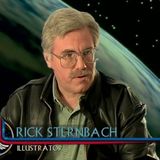
Rick Sternbach: Drawing Rings around the World
About this episode
Transcript
Automatically generated, so expect the odd misheard name.
Hey everybody, my name is Jonathan Frakes and you're listening to Movie Meltdown. Movie Meltdown. This episode is rated M for Misty. Yes, that's right, this is a Misty episode, so it will be laced with profanity even more than usual. If you're not comfortable with this level of profanity, perhaps this isn't the episode for you.
But we have many other episodes to choose from that do not feature Misty and will probably be far less offensive. Okay, maybe. With that having been said, on with the show. It's showtime. Our nuclear reactor pumping out one million kilowatts of power.
To provide more cooling in the containment chamber. To your sentries, we have rebelled. Greetings, Starfighter. You have been recruited by the Star League to defend the frontier against Xur and the Kodan Armada. Get ready.
Prepare for blasto. What's up and welcome to Movie Meltdown. I am Brian. I am Misty. And we are once again coming to you live via digital recording from right in the middle of Wonderfest.
Yes we are. So we've wandered around. We've seen people. Lots of people. Some costumes.
Not as many. We were trying to decide if it's just people in general. Like when I remember them hitting here it was kind of when it was novelty at all of them. When it just started getting to be like a thing to be a cosplayer and like I feel like we got to bunch of them at every convention including this one and now i think those people just kind of got tired and like wandered off or they have 40 other conventions. Like the biggest wave was when the new star wars movies came out like like late like prequels yeah like.
The prequel that's confusing these days but prequel times yeah probably somewhere in the middle there like early 2000s so that would have been towards the end of the third maybe and I. Thought Anakin was really good. Yeah, that's true. He was probably better than the actual Anakin in the movie. Don't be talking smack about poor Hayden.
He's got enough to deal with these days. So, yeah, we've been wandering around, looking at things, talking to people, seeing Chuck. We always see Chuck at everything. Every convention we go to, it feels like we see him. It's sad that we have our little roaming family of people we only see at conventions.
We saw Chuck. We saw Larry. We saw Larry. Yeah, we see all of our normal convention-y friends. So, have you seen any movies lately?
I did watch. I watched a movie. When we were in the Maryland state, we went and saw Deadpool 2. All right. In a fancy theater that had the recliners.
Oh, see. I was just waiting for that to be an issue. Because I knew boyfriend was going to fall asleep at any moment. But he did not. I think he stayed awake the entire time.
I kind of... The one I kind of go to regularly now kind of always has those. So I'm pretty used to them now. This was my first experience in a recliner having theater. And did you go to sleep?
I did not. I was too busy laughing at this movie. Because I'm not going to lie. This movie was fucking awesome. You were a fan of the previous Deadpool.
I loved the first Deadpool. And this one did not disappoint me. It was hilarious. I loved it. And I'm still baffled as to when the fuck Josh Brolin got hot.
He's always just been kind of Josh Brolin. I mean, he was just there, and that's all. I'm like, holy shit, he got hot. I think it's two things. I think there are some dudes that just get old hot.
It just sets in. They'll be normal dude most of their life. It's like how Liam Neeson decided to be an action star when he was like, 57 or something like he'd been around he just looked like a normal dude nobody would ever cared about starting to fight with him and now people act like he's the second coming of evil and he's going to destroy you so it's like it's that kind of weird thing that like at some point in some guys careers they take this weird turn and they become like a badass or they become hot or they become like everybody gets like this weird second wind not everybody But certain actors get this weird second wind that kicks in that like, yeah, it just changes your whole career from that point.
Well, that and for a long time he insisted I have a facial hair, which I am not a big fan of. That's true. It's not your thing. The facial hair is gone now and you can see his face and I'm like, holy shit, that's a good face. He's all chiseled-y.
He is. He is gorgeous now and I'm just like. He doesn't have that Thanos thing going with his chin. That's not a turn on for you. That's not.
That does not flip my boat. I'll tell you that right now. I don't know. It's pretty hot. Yeah, not so much.
And he's got to be the villain in every superhero movie from here on out. He wasn't really villainy in this one. He started off kind of villainy because you got to figure out why he's doing what he's doing. And once you figure out, you're like, oh, dude, I get it. I'd kill the kid, too.
But that's just, you know. I can't wait till he's the new Catwoman. That'd be pretty hot. Leather clad. smacking people with his tail. I have no idea what you're talking about.
Is he actually going to. I have no idea. I don't think you bought into it, though. I'm just picking every villain, so at some point he's going to have to be Catwoman. I'm like, okay, I'd see him in leather.
I don't care. Again, there's a fan fiction out there waiting for you to. I could probably Google. You could Google it right now, and it would probably be there's at least a dude in a Catwoman outfit right now waiting for you. Whether or not it's josh probably went downstairs might be we'll have to go look later you can you can make these dreams come true but yeah so other than the hotness what else is your take.
On the old i love all the characters i mean they have dude did you have a surprise which i'm pretty sure they've actually was surprised they didn't blow it in the trailer which i could i guess i could say it now if you That's not really a big surprise. Don't overly spoil it since I haven't watched it. I mean, okay. I think they've actually been showing pictures of it now, so I don't think it's the big surprise that it was. Because all during the movie, they're teasing that there's this big, super.
Oh, is it a cameo? Yeah. I did hear. No, not that cameo. Okay.
I heard about that cameo. The Brad Pitt one? No. Oh, there's a Brad Pitt cameo. Nice.
I was talking about the Juggernaut. All right. The Juggernaut. Because there's this whole scene in prison, and they have this one cell where this super bad guy is. And so most of the movie, you don't know what the fuck's in there.
And eventually it's the Juggernaut. At no point does he say, I'm the Juggernaut, bitch. So are they existing in the same universe as the cheesy third X-Men movie? I'm not really sure. I don't know.
It's been so long since I've seen that. It's such a weird, different varies and streams. And I can't tell what goes with what anymore. But yeah, there are so many cameos in this movie. I don't know.
Which cameo are you referring to? I thought we got a Hugh Jackman cameo. You get the entire, like, X-Men cast. Okay. Because, like, when they're in.
But, I mean, he seems like he's the get for an X-Men-related anything. Well, because they go to the school, and he's bitching about how you never see any of the other X-Men, and as he walks by. That was just in the last movie. And he's still bitching there, because all they're getting is the Negasonic Teenage Warrior. Who is adorable, by the way.
Her girlfriend. Oh. Super adorable. You don't even know. Okay.
Your head will explode by how cute she is. Probably. Um. And he's bitching and he's walking through the hall. They walk by an open doorway and there's like everybody.
And he's standing by the doorway and they just kind of like. Close the door. That's pretty. Awesome. See, that didn't even ruin it.
It kind of makes me want to go see it now. I'm telling you. There's another cameo that I caught that Jay and Randy didn't really immediately caught. There's a scene where there's two rednecks. Standing there talking about toilet paper.
Because Josh Brolin comes in. Which is bound to happen. I think Josh Brolin comes in because after he time warps into their time, he has to have a vehicle. And it's two rednecks. And I'm like, I recognize one of those rednecks.
That's Alan Tudyk. I know it is. So it is our crossover team. There's no, the other guy's not in it. Because from what I heard, they were trying to say that the other redneck is actually Matt Damon, but I'm not sure that I'm buying it.
But I'm not really sure. I think I may have heard that too. That one wasn't immediately recognizable to me. He does love to do dumb cameos for no good reason. In movies, I don't even know why he bothers with.
In the Thor movie, or was it the Thor movie? Oh yeah, he's in the last Thor movie. He's in a lot of weird cameos. It's his thing now, I guess. Was it Thor or was it Avengers?
I can't remember. No, he was in the third Thor. Then there's the Brad Pitt one, which is fucking hilarious. I'm going to spoil it for everybody. It's already been written in articles and everything.
Spoilers for Brad Pitt's existence. No, because apparently at a time before Josh Brolin got the role, there was a big rumor that Brad Pitt was going to be the cable character. The fourth Wally. So. When they have all their tryouts for their new X, whatever, X-Force.
Because they do decide to have little tryouts if you can be in their X-Force. And they have one guy, I can't even remember his name, but he's invisible. So you don't really see the character. through 98% of whatever screen time he's supposed to have and there's one point spoiler alert when he I can't even say it without like ruining it anyways he gets electrified and that second that he's electrified you see Brad Pitt like for like a split second and you're like. Oh Did you hear him the rest of the time? And it was Brad Pitt.
No, there's no voice. He doesn't speak. Oh, my God. Deadpool's so tired. I don't think he had any speaking lines, or if he did, I totally blocked him out or forgot him.
But he's just there. And I can't even remember what his name is at this point. The Disappearer or something. Vanisher or some shit like that. The not-there person, anyways.
Oh, Lord. I'm sure there's more cameos that I probably just can't think of right now, but the Brad Pitt's epic, Alan Tudyk, if you don't know who you're looking for, it's not like a big role. But he's such a geek fan thing, like most people at Deadpool are going to know. But yeah, this movie is pretty fantastic. Peter.
Gotta watch it for Peter. Everybody loves Peter. Dude, I'm telling you. Again, he's taking tryouts for his ex, and Peter shows up. I just saw the ad.
You saw Peter? Yeah. He's in the trailer. Yeah. He's just a regular dude.
I just saw the ad. He still has no superpowers whatsoever. I mean, I want to join the ad for sure. Yeah, this movie's awesome. I would recommend, if you've not seen it, see it.
If you've seen it, see it again, because it's awesome, and there's stuff you're going to catch the second time that you missed the first time. Which I'm talking shit because I've only watched it once myself. It's all lies. It's all lies. But it's awesome.
When it comes out on DVD, I'll buy it and I'll watch it probably like another at least twice. It's got good rewatch value. I liked it. I enjoyed it. I seriously didn't know what to expect.
But it's awesome. So, yes, watch it. You haven't seen it yet, have you? Not yet. Watch it.
I have watched the first one. I'm getting to the second. You should totally see it. I did. When I was downstairs, I saw several versions of one of these characters that reminded me and I mentioned one of them.
I was like, oh, yeah, we need to talk about that upstairs. So I watched the new Lost in Space series. Oh, how was that? I'm pretty pleased with it. Like, I've heard a little bit of fanboy complaining from the, you know, just old school fans.
There's always a little bit of fanboy. I know, that's what I'm saying. And I mean, hell, half the time I'm that fanboy complaining about stuff. That's probably true. It is.
It can't be any worse than the movie that had Matt LeBlanc in it. That's one of the ones that I saw downstairs was I saw that robot and I saw the original robot that I have that toy of that reminded me. I was like, oh yeah, I should talk about the new one because if you need a selling point, like the new robots, Pretty badass. So if you need to see a giant robot being pretty cool most of the time. Does it have a Mr.
Smith? What? Is it the same guy? That's the thing. Is it the same guy?
Did they bring him back? Because I hate that guy. Isn't he like weighted? You're talking about the original? Yeah.
Not Gary Oldman? No, that's what put it over the edge for me. Because I remember, I mean, it was such a big release. They were showing trailers for the series in the theater in front of movies. They showed a trailer for the Netflix series coming up.
And I'm watching it, and I'm like, the visuals on this looks pretty good. I'm like, I might watch this. And then I got this flash, and I'm like, oh, my God. Was that Parker Posey? Oh, good Lord.
Parker Posey is Mrs. Smith? Parker Posey is Dr. Smith. Dr.
Smith. Oh, my God. She is Dr. Smith. Kind of.
Watch the series. But she is, for all practical purposes, the Dr. Smith in this series. And, oh, my God, if there's anything... that i love it's crazy parker posey and does she have any other there is no other mode and that's why i'm like this is perfect because this version of dr smith is awesome as much as even in the original series he started a little dark and then became nothing but comedic relief and over-the-top silliness and like and even i mean they tried to do darker and with gary oldman but you know that movie had its own set of problems so like in this one we get a very different version of Dr. Smith and for different reasons.
And as you get into it, like crazy level of Parker Posey is so perfect casting that I'm just like, Oh my God, this is, that's my favorite part. The other thing that's cool is the rest of the, mostly the kids, because we spend so much time with the kids, like the little boy, like that can be your weak link. Like there's a lot of bad kid actors and I'll call them out. Like, I don't want to be mean to the kid in the real world, but I'm like, as an actor, I'm going to call you out. I'll trip them.
You will, you'll, you'll push them down and steal the candy. But, I'm, like, on screen, like, I'm, like, selling it. I'm going to call you out for it. And I'm, like, the little boy's good. Like, and he's got a lot of screen time.
So, like, he could have been the tipping point. But, like, he's really good. And Penny is pretty damned awesome. Like, no offense to the older sister, but Penny's so much fun. Like, she's still kind of the, like, kid of the, well, the teenager and having teenager issues along the way.
So. Yeah, Penny's pretty awesome. The little boy's cool. So, like, everything else is, like, pretty well balanced. And Mom's, like, smart and wants to be a badass and is kind of in charge.
And the other thing I think that's kind of cool is it's not the perfect little, like... I mean, it was sort of like Leave it to Beaver in Space, that first run. Like, they were the perfect little all-American family, and then they just set it in space. This one, they're more of the perfect, in quotes, modern family, because... they're having horrible marriage problems. And then the space thing is going on.
So like, it is interesting that like you start getting like kind of flashbacks into what's going on in the family life. And you're like, Oh no, this is a way more relatable family for a lot of people. So I think that kind of adds a nice, like realistic grounded, dramatic edge to it that you probably didn't get these last two times out. So, again there's people that are gonna nitpick but i thought it was pretty well done i mean they do if you want to have a ridiculous level like every episode they get into something that is like they're all gonna die how long of a series is this it's like 10 episodes i think and like every episode you're like oh my god this is the biggest problem in the world and they'll like find a way out of it and then another problem equally as huge will immediately happen like it is sort of ridiculous the level of trouble that they constantly get into but again that's the fun of it like there's no if they're just sitting around being bored and watching them like read it's it's you know nobody needs that so yes you have to kind of throw that out the window as far as realistic levels of things that happen sometimes two things in the same episode that is enough to kill most people but if you let that stuff slide the rest of it's a lot of fun so i i thought it was pretty good but did you have one more I did watch another movie.
I think you watched a movie you said you wanted to talk about. I did. I did watch a movie that I'd not heard a lot about, but I'd heard really good things about it. I've heard good things. So I sat down, which it put me in distress. straight out stress mode just to begin with because it's a christmas movie and when i start watching christmas movies outside of christmas time i get stressed out because of where i work and oh.
God christmas flashbacks christmas flashbacks. You don't even know i get like this i get this like cold fear in my heart and just that it's just it's an awful feeling it's. A weird time of year for a lot of people you being one. Of those so anyways yeah i sat down to watch a better watch out so it just. Came out uh this past year i think.
It was made like two years ago yeah. But i feel like it just got it or i just started hearing about it this previous christmas yeah i'd not. Heard a lot about it i just i'd watch the trailer once and i'm like that looks really good i'll put it on my netflix list and the next movie on my netflix list was something that i really didn't want to watch but i just bumped this one up to the top just for funsies um yeah i was actually really surprised about this and i don't really know how to talk about it without spoiling it so. This one i feel like a lot of people haven't seen so we probably shouldn't overly spoil it so just recommendation. Reasons I'll give you the IMDB for it if you want to hear.
Oh, God. There's always trouble on the show. On quiet suburban street, a babysitter must defend a 12-year-old boy from intruders. Only discover it's far from a normal home invasion. I've heard it was sort of a twist on...
Because home invasion is such a sub-genre of horror in most movies now that it is its own weird little twist on that entire thing. And for the most part, it had a cast that I had never... I didn't know any of these people. At least the main people. Like, the little boy's parents, I ID'd right away.
Because I'm like, Patrick Warburton, you can't hide from me. I know where you are. I mean, I love Patrick Warburton. I do. I adore him.
I think he's hilarious. Even, like, I hate David Spade. But he's on that Patrick Warburton show. Yeah. Whatever the name of it is.
Yeah. I love that show. I can't remember the name of it. I blocked it out. It's David Spade related.
But more importantly, it's Patrick Horbert. And he is so fucking hilarious. But he was the dad of the little boy. Which, again, he's just the dad. The whole point is they're leaving the kid with the babysitter.
So all you get is the mom and the dad at the very beginning. And a little bit at the very end of the mom is Virginia Madsen. Oh, yeah. Yeah. So that's, like, the only recognizable people for me, because, I mean, for the most part, it's, like, the babysitter who's playing, like, she's 16 in the movie.
I don't know how old she is in the real world. No, she's not 16. She's 17, because she's five years older than the boy who's 12. But it's totally going to work, don't worry. According to him, he thinks it's...
That's how it always works. I know this math. Did you watch the trailer? No, but it's, like, a 12-year-old boy, I mean. That's totally going to work.
And then she's moving, so he thinks this is his last chance. Oh, yeah. This is his last chance to, you know, for this to happen. It'll totally work. Don't you worry.
That's what he's pretty sure. So there are plans put into motion. I would hope so. And, yeah, they do put a twist on the, you know, I'm pretty sure telling you there's a twist is going to make you realize. Every movie has a twist.
It's fine. But, yeah, I mean, the kids are fantastic. You know, I don't like kids. Yeah, yeah. And there are some points where you have to suspend your belief a little bit.
In Santa Claus? Yeah. Oh, okay. It was holiday themed. I thought there was a Santa Claus.
I don't think there was any appearance by Santa Claus, although there were carolers. Like I said, it was actually really good. Again, the twist has a twist. Extra twisty. Yeah, extra twist.
Twist on a twist. Twist in the middle. If not before, definitely put it on your holiday list for next year. Maybe we can watch it for Christmas. Maybe we can.
Pencil that in right now. By then, everybody else will have done it already. Who cares? We do what we want. Hell yeah.
By then, you're changing your mind and you want something else done. We'll see. But we don't have a Life Day episode this year, I guess, so we may need to do our regular Christmas since they already did this star wars movie they used to do it in december every time and for some reason this year they bumped it up to the summer which is really pre-summer but so i don't know i guess we have to come up with an old school christmas uh holiday special so we can make this happen all right with that i say we go wander around wonderfest some more maybe check in with this week's guests. You better watch yourself. You better watch yourself.
You better watch yourself. I got my eyes on you. Well, you steal my heart. Golden, pure, creamery butter. Rich, flavorful, satisfying.
That's what it takes for the finest buttered popcorn, and that's what we use. See for yourself why there's no showtime treat to equal the crisp, delicious flavor of hot popcorn that's bathed in real melted butter. It's at the concession stand now. Woke up this morning feeling low where my loved one used to live. Hey, Jacqueline.
Hi. Guess what? What? We're broke. Yeah, we definitely...
I'm turning my. Pockets out right now. Nothing that's what i'm saying i do that every week and yet i'm trying to produce this show for you guys listening right now yeah freeloaders i'm just saying you know if if you want to keep this thing rolling it'd be kind of awesome if you go to our patreon page and like kick in like seriously like two bucks. I mean you're gonna do like netflix for like 9.99 and you get. And you're probably not going to watch it all month like I do.
Yeah, you need our commentary to figure out what to watch on Netflix. I think so. It's like a companion piece to all your Amazons and Netflixes and all of these things. So just think how much you don't make use of your other streaming services. But every week.
We're loading up a whole new episode of us going in-depth, more than you may want, about whatever movie we've decided or bringing in some awesome guests. So I'm just saying... Two bucks. It's not so bad. Two dollars.
You won't even notice it. And you'll look at your bank statement and be like, two dollars. Oh, yeah. Oh, yeah. I'm supporting an artist that I like.
That's all I ask for. Trying to keep this thing rolling. And all we need is your assistance. So go to patreon.com slash movie meltdown. Or if you can't remember all that, go to movie meltdown.com.
The link is right there at the top of the homepage. That's all you need to do. I contribute more than two dollars a month. Because you're awesome like that. I don't remember.
Why don't you be awesome like Jacqueline? I'm just saying. I mean, really, though. I mean, you can't be that awesome, obviously. But you can get closer.
You can climb the ladder a little bit. Just saying. Patreon, go support us. All I do, all day long. Fall down on my knees and pray She come back home for.
Me The human adventure is just beginning. William Shatner. Take us out. Is Captain James T. Kirk.
Leonard Nimoy is Mr. Spock. DeForest Kelly is Dr. Leonard Bones McCoy. James Doohan is Lieutenant Commander Montgomery Scott.
George Takei is Lieutenant Commander Sulu. Majel Barrett is Dr. Christine Chappell. Walter Koenig is Lieutenant Pavel Chekov. Michelle Nichols is Lieutenant Commander Uhura.
Stephen Collins is Commander Willard Decker. Percy's combatter is Lieutenant Ilia. Star Trek. The Motion Picture. Gene Roddenberry's production of a Robert Wise film.
Coming this Christmas from Paramount. Don't just shake your head, explain why the coffee's so good. Good taste. That makes me think of a particular coffee shop in town, because we're not advertising, right? Uh, depends.
Is it Heine Brothers? It's Heine Brothers. Because... Of the few good things that have happened in life ever, we're now sponsored by Heine Brothers Coffee. Oh, my God.
Thank God, because I am sponsored by Heine Brothers Coffee in general. Well, we all should be because Heine Brothers is awesome. It actually really is. I'm drinking Heine Brothers Coffee right now. I am right now.
We're drinking Heine Brothers Coffee. That's all we drink in this house. This is another caffeinated movie geek. This is a Heine Brothers House Coffee. Once again, you should go right now.
Go get yourself a bag. You can have it shipped directly to your house. And that meltdown code is going to get you a little discount. Just saying. You got a code?
We got a code. So I'm proud to announce that Movie Meltdown is now working with Heine Brothers Coffee. Heine Brothers was founded in 1994, and as most of you regular listeners out there know, I'm a big coffee drinker, and one of my very first regular coffee shops that I started to hang around was that first longest avenue location Heine Brothers opened. It's been a long road and a lot of cups of coffee, but I'm glad to be working with them all these years later. And as we kick things off, I want to tell you about the Heine Brothers coffee subscription.
Wherever you are, home, work, or out on the road, you deserve great coffee. And the Heine Brothers subscription plan gives you top quality, organic, fair trade coffee delivered right to your home or office automatically. You select the frequency, the quantity, and the variety of coffee, and Heine Brothers will take care of the rest, shipping included. So just order online at hineybrotherscoffee.com slash subscription and use the offer code MELTDOWN for $ 5 off any gift subscription. And if you're not familiar with Hiney Brothers Coffee or the spelling or any of that that might make it a little harder, just go to moviemeltdown.com and look on the right-hand side of the page and you'll find a link to take you right to hineybrotherscoffee.com.
That's right, the Meltdown Caffeinated Movie Geeks are hooking you up, so get your subscription started today. Attention, shoppers! I trust you've got credit cards to pay for all that stuff. Hi, this is Captain Mary Stewart, and you're listening to Movie Meltdown. Get her, boys!
It's part of. Your problem, you know. You haven't seen enough movies. All of life's riddles are answered in the movies. And now, on with the show.
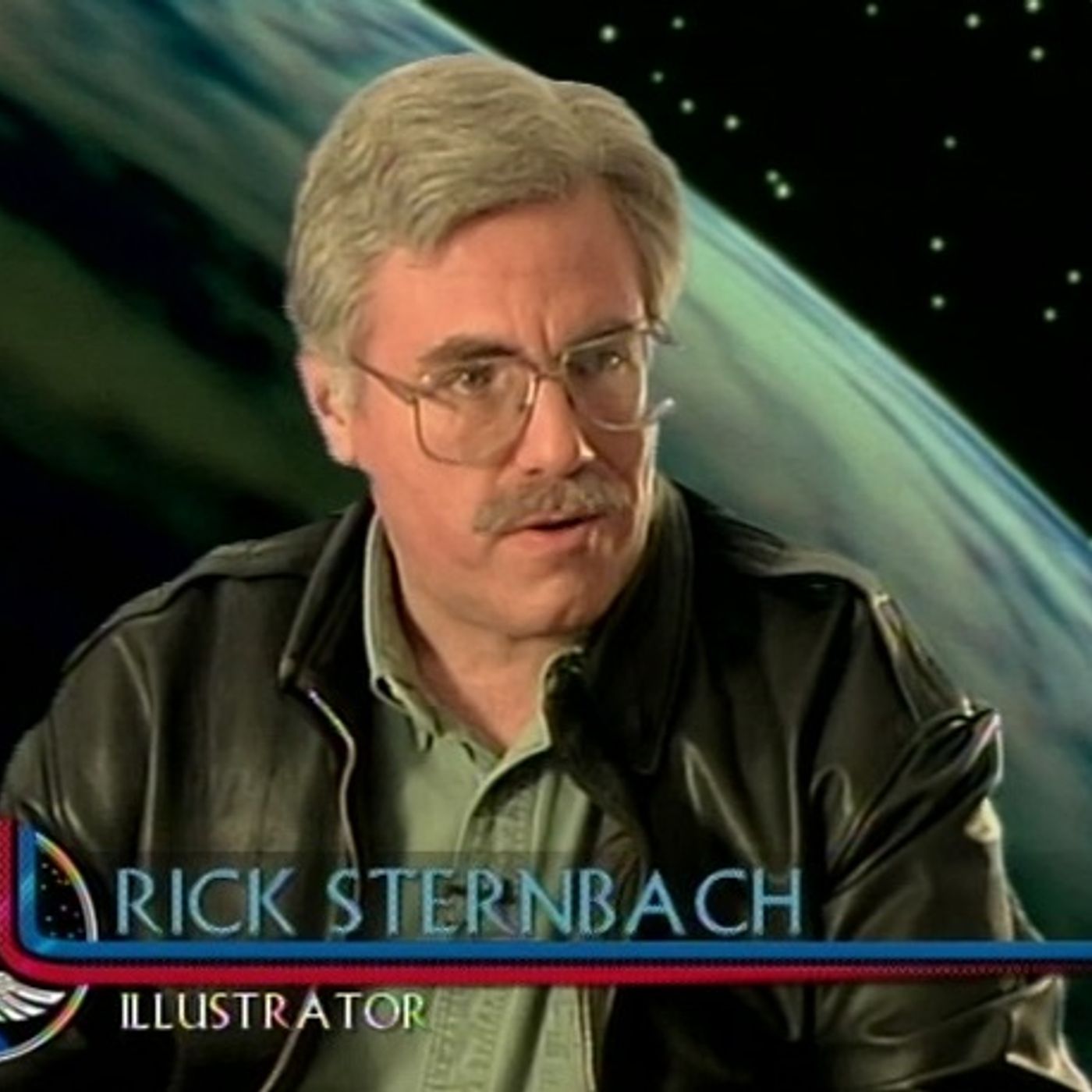
All right, so for this segment, we have special guest Rick Sternbeck. So thank you for joining us. Great to be here. And of course, it's Wonderfest, so our reluctantly adopted cast member, Eric Chu, has joined us once again. And we were talking beforehand, and I'm like... we've talked about all your, like we've addressed your whole life.
So I'm like, what do you want to do? And I'm like, just, let's just, you sit in with us and just, we'll talk to somebody else. So you're just co-hosting now. Okay. All right.
So you can grill Rick on all the questions you want as well. So, but I guess if we go back much like I did with you, uh, years ago, Eric, I usually try to get at the very beginning and kind of figure out how everybody found their way into whatever arts and entertainment end that they're interested in. So I guess going back to when you were a kid, were you immediately drawn to art in general, or was it something that kind of came as time went on? Well, when I was two and a half, my architect father put a pencil in my hand. so you know that was the start of it yeah and for you know for for a lot of years he carried around in his wallet a tiny scrap of paper of my drawing of a race car which was like two circles and two little lines and that was that was one of my first drawings right so i mean you know the the uh the drawing things yeah i mean came from my dad um and uh So I learned how to draw all of the guy stuff, okay, you know, cars and tanks and naval vessels and airplanes.
And eventually I got drawn into science fiction movies on television. You know, so some of the doodles that I was doing involved things like flying saucers and and spaceships going to the moon. Now, was he actively trying to instruct you how to draw? Or was it just, here, here's some paper and pencils, and this will keep you busy for a while? Well, it was a little bit of both.
It was a little bit of both. I would draw things at home or draw things in elementary school on construction paper. And, you know, robots burning cities and, you know, just all the cool things that I was starting to see as a kid growing up in the 50s. And, you know, he would draw for me, you know, at home and I would watch how he would like do the lines and shading. And he actually, one of the cool drawings he did for me so I could see how he was doing it. he copied one of the flying saucers from the Mars Attacks trading cards.
Nice. Okay. And, you know, and he put the dome over the top and he had the little Martian guys in there because when I would go to school, okay, I would stop at the little convenience store on the way home and get, like, you know, hostess cupcakes or something and a couple of packs of cards. And, yeah, I picked up, you know, baseball cards because everybody was into baseball, right? There wasn't a whole lot of other cards at that point.
Yeah. Mars Attacks was pretty early on. But Mars Attacks, you know, I bought as much Mars Attacks as I could, you know. So, yeah, I was into lots of different fun things. You know, we made trips to some of the local airports back in Connecticut.
I got to see airplanes flying around, and we went to the, you know, we went to– shipyards and stuff we were very close to new york city uh and uh you know so i i got i got i think a very well-rounded uh kind of art experiences as a kid uh but you know specifics started to gel in my in my head. Um On your own were you finding? Just things that were sticking for you? Well, okay, remember back in the 50s, and I love telling people this, I was around as a kid when there was nothing in Earth orbit. Nothing.
Okay, the moon was out there, but that was it. Satellites hadn't gone up. For kids now, yeah, that's crazy. I mean, satellites hadn't gone up yet. So I would watch the TV news at night.
And they were talking about things like Sputnik and Vanguard and Explorer 1 and, you know, all of the satellites and things that were coming along and being sent up into space. And I sat there and I'm going, oh, man, this is so cool. And now there's a Tesla car in space. Yeah, and there's a Tesla car, you know. He can do everything.
It's fine. Sure, sure. But the– One of the things that really got my interest going was the TV show Men Into Space, 1959, one season, black and white. So it was okay. We didn't have a color set yet.
So I watched every episode of Men Into Space on a big RCA black and white TV. And I was hooked. I was totally hooked. You know, Colonel, I got a rip in my suit. Or, you know, hey, we have to finish the space station.
You know, we're going to build a base on the moon. It's a very hard science. Just tape up your suit. It'll be fine. Yeah, yeah.
I mean, you know, sure. But it was. Just hold your breath. Yeah, yeah. You'll be fine.
It was only two years before we really started sending people up. You know, both us and the Russians. Yeah. Okay. And it was just an exciting look at what looked like real space activities.
Okay, yes, with the drama thrown in. There were other shows like The Man and the Challenge, which was all about human factors research. I just gobbled that stuff up. And I also gobbled up watching multiple... multiple viewings of Destination Moon and Forbidden Planet and Day the Earth Stood Still and things like that. So, you know, I got both sides.
I got the science fiction and I got the real space. And then started drawing it. That's kind of what I was, what you were kind of getting into, Eric, was like the guiding the kids. Because I've seen, I was going to ask what you're doing. You're kind of in that situation.
But I'm kind of watching my niece now and she loves drawing. But she's so like, unlike there are no rules still in the way that she does it. And in a way I'm like, I want to like try to guide her. But at the same time, I'm like, I kind of like what it ends up with. Like she has such a weird original approach that like, she'll do like a weird thing.
Like, I want this to be a night scene and just scribble all over the page to make it night. And I'm like, you know, maybe I should just shut up and let you figure out what you want your thing to look like. Because her stuff ends up looking very different than even other kids stuff. So I'm like, I think there's a part of finding your own way and figuring your style. I just want to interject.
One of the reasons that I ended up getting into being comfortable with drawing is that my mother, also at a very, very early age, gave me a whole stack of paper, a bunch of pencils, and just said, go to it. And I think that got me comfortable with using a pencil. It gave me the practice with coordination. Also, we grew up on a farm, so there really wasn't all that external stimulus. No distractions.
No distractions, not much TV. We would spend hours just scribbling. Even scribbling helps to advance. Your artistic sense. So I think that for the parents out there who want their kids to pursue, or at least they don't necessarily have to pursue an art career.
I think an artistic sense is useful for any career they go into. It's helpful. to be able to visualize something, draw it down, even if it's not a beautiful piece of art, but, um, it's a communication tool. Yeah. You know, so I, I, I, I do think that, um, give, give them a lot of chance to, to, to experiment, to play with paper, play with pencils, get that pencil in their hand and let them go, let them go, let them do as much as they want and encourage them. You know, don't, don't, don't put in any, um, uh, you know, restrictions just yet, you know, don't say, well, that doesn't look like a car.
Well, that's, that's not, that's not helpful. I mean, but, um, but, uh, yeah, um, uh, encourage them and, uh, and let them find their own way. And I think that, that, that will go a long way to, um, fostering an interest in, in drawing and, uh, and other things too. I think if you show them a few techniques, and maybe every so often kind of nudge them this way or the other about, well, hey, if you try this with the charcoal stick, you might get this kind of an effect. Just open up new avenues.
Yeah, give them things to... I did a lot of finger painting. I had big pots of poster paint in school. And, yeah, we were allowed a bit, you know, some freedom to experiment, to blop colors together and see what happens. And let them get messy.
Let them splash things all over the place. It's not the end of the world. You can always clean up. Later. You don't have to teach them to be clean right now.
Let them free. And it's amazing what sometimes they'll pick up on in ways that you won't. I was at someone's house lately and they had a bunch of grandkids and they had all these different ones and you could tell different ones were from different kids, just slightly different artistic style. And there was one of them that, like, it was still stylized enough that it was a young kid, and you could tell, but it was, like, a squirrel, but he was, like, at a weird angle that, like, most kids wouldn't know how to do the angle yet. And, like, he was over top of, like, a puddle, and his reflection was in the puddle.
I'm like, this kid's, like, advanced. Because it still looked like a kid, but he was already picking up on perspective and, like, the ideas that you normally won't get to for way later, so... Like every once in a while, there's these kids that kind of like are getting it on a different level, like right off the bat. So it's kind of cool to let them discover what it is they're going to find their way to anyway. So I guess back to yours.
I mean, you're getting into drawing. Is it that you're kind of drawn towards spaceships and stuff more than other stuff at that point? Or is it equally as much cars and planes and explosions? Yeah. Well, you know, I try drawing lots of different things.
And that's always a good idea anyways. Yeah, yeah, yeah. But again, you know, I think my artistic output was a product of the times. And, you know, a person launching on the top of a rocket was a big deal. And, you know, we got to watch a couple of launches, you know, while in school.
You know, they would roll the TV in and we watched, you know, John Glenn going to orbit and that kind of thing. That was the thing. They were still kind of doing that when I was in school. And I'm like, it's funny, that's not even like... And nobody would even consider that kind of stuff.
Yeah, I mean, back when I started drawing a lot of these things, you know, these space efforts and whatnot, we were witnessing, we were seeing the first... that happened, multiple firsts, okay? You know, first American in orbit, you know, and things like what the Russians were doing, you know. So I got to experience as a kid spectator watching the Mercury program, watching the Gemini program. I took a transistor radio into the coat closet in school... during one of the Gemini missions, and I'm sitting there, and very quietly I'm listening to the transistor radio of these two guys in orbit. Because to me, that was important.
It was important to experience that, to witness that history, and to show you just how extreme things got. I graduated high school in 1969. um, just before Apollo 11 took off. All right. So I got out of high school, uh, was ready to go to the university of Connecticut as an art major. Okay.
But I told my folks, I have to go to the Cape. I'm sorry. I have to go to the Cape. So, uh, I, I went down to witness the launch of Apollo 11 to see the first, you know, people head for the moon, uh, Well, I mean, Apollo 8 and Apollo 10 orbit in the moon, right? But, you know, 11 was the first landing, okay?
And it was, you know, one of the first opportunities I had to witness a launch live. So me and, you know, a million other people were about nine miles away from the pad. But, doggone it, I saw them take off, all right? Now, I couldn't make it down to the Cape for Apollo 12. but I got a press pass for Apollo 13. Nice.
Okay? And, you know, in the Apollo 13 movie, you know, they made a point of saying, well, you know, people aren't interested anymore, so that's why the TV wasn't covering it and all this. And I think that's part of the reason why NASA gave, you know, me, you know, who am I? You know, they gave me a press pass through my local newspaper. Hmm.
And I was three and a half miles from the launch pad, and I saw these guys go up. You know, flew down on a Thursday, took a press tour of the Cape on a Friday. Saturday was the launch. Sunday, I went home. Monday, the thing blew up.
And I didn't get back to sleep until Friday when they landed back on Earth. Okay, now that's crazy dedication, okay? I was basically living on the couch... Watching things on the TV because nobody knew if these guys were coming back. Yeah.
I mean, statistically, they probably should be without everyone working. It seems like, especially at that time, I don't know that we're much better off now technically, but to make it back with that level of problems being thrown at them is pretty amazing. Yeah. So these sorts of things followed me all through college. Hmm.
And I took a lot of the necessary courses like English and math and so forth. And as an art major, I took a lot of art history, a lot of studio sketch courses and things like that. And then for some wacky reason, after my second year, I decided to switch my major to biology. I was just nuts about marine mammals. And I wanted to learn more about cetaceans and pinnipeds and all this sort of thing.
I'm not sorry I took the science courses that I needed for that. Organic chem, inorganic chem, invertebrate zoology and all this. Because as an artist, I think artists can use any kind of information that comes in. So if I needed to paint a weird alien... I would have at least a little bit of bio background, you know, to do that sort of thing.
All right. You know, cause I, I ended up doing a lot of science fiction illustrations. And undersea creatures are about as close as you get. Like there's plenty of weird tentacles. Right.
Of course. So, uh, um, I, but I, I didn't finish, um, I, I didn't finish my, you know, my bachelor's stuff because I got involved with people who were, uh, putting together, uh, uh, space conference projects and got to meet up with a number of publication editors and just started doing illustrations for science fiction on one side and astronomy magazines on the other side. And to me, they're kind of separate, but they're not kind of separate. It's all... In a way, it's all one big creative thing.
I feel like that with all of this. Again, that's kind of why I like discussing this because it all like crosses over, especially when you're young and everything is– it's all part of that same big artistic learning experience. And then you eventually sort of find your place maybe or several of them. But yeah, I think it's kind of cool that where it all comes from and how it. And the fact that they were paying money, you know, they were paying good money for illustrations.
It's like, okay, all right, now I know what I'm doing. I mean, that was already kind of pre-existing from pulp novels and stuff. Like, it had already started to become, again, it wouldn't be appreciated as an art form for years. And even now, it doesn't kind of get the level of appreciation that it probably should. But yeah, it was already kind of becoming its own little niche thing of like guys that are just really good at doing that kind of thing.
So, I mean, it, I guess, is that specifically like what you were looking to do was just like, I want to figure out either the science end of it, or was it more of like, I want to come up with really weird artistic takes on like a different planet or something I've never seen before? Well, yeah. I mean, a lot of it was, was dictated by, let's say the, the manuscript that I got. Okay. So the publisher had to, you know, or the, the book editor, uh, or the art director would have some specific ideas, and I would do rough sketches of things.
And even in my science fiction illustrations, I was more of a hard science guy. So I really loved illustrating works by folks like Larry Niven. Larry, I got to know back in the 70s, and Del Rey Books had me do like five of his covers. Um, and I, I, I consider myself amazingly lucky to have fallen in with this, with this group of, of creative writers and artists, uh, um, you know, started showing my, my work at the science fiction conventions. Yeah.
And it was, it was a wonderful accepting crowd, uh, I mean, I got to know people like Gordy Dixon, Joe Haldeman. Joe's been a friend for like 40-something years. Isaac Asimov. I got to meet Arthur Clark. Paul Anderson.
Al Sprague de Camp. Ted Sturgeon. All of these people who are, you know, they're. For us, they were like rock stars. Exactly, exactly.
But... to get to go to a room party where Joe, Joe Holden was playing guitar and Gordy's talking to pool Anderson. And, uh, you know, I sat there and I'm going, Oh my God, this is just, this is just amazing. But after a while it, it, I can't say it became routine because it was never routine, but it was always like, Hey, you know, how you doing? You know, just passing, you know, passing through a hallway at a convention. Um, getting to know people like Jack Williamson and.
Do you still feel yourself to be like a fanboy around these people? A little bit, yeah. Oh, yeah, yeah, yeah. I think it's good to always have a level of that. Hal Clement, who wrote, you know, Mission of Gravity, which was brilliant.
Okay. Hal Clement was his pen name, but, you know, we knew him as Harry Stubbs. And, you know, a lot of these authors... They had really good science backgrounds, you know, engineers like Robert Forward. Bob Forward, you know, I got to illustrate his stuff and talk to him about laser light sails.
He used aircraft, you know, and the Air Force would, like, pay him to, like, play with future concepts. And it's like, oh, man, when I grow up, I want to be Bob Forward. I got to know Robert Broussard. who developed the interstellar ramjet concept. There was a lot of crossover with physicists like Greg Benford. I've known Greg for eons and have illustrated his stories.
I gravitated toward the space exploration stories, the hard science stories. but I also read a lot of SF. Um, Oh God, you know, going back to, uh, going back to elementary school, high school. Uh, I, I totally gobbled up, uh, the Lensman series by, uh, uh, E.E. Doc Smith. And I'm sorry I never got to, to, to know, you know, uh, Smith himself.
Um, but, uh, yeah, I mean, I, I ate up his writings and, uh, you know, everybody else that I've mentioned, you know, that really kind of shaped what I was doing in like the 70s and 80s. Yeah. I mean, at that point, you're already kind of working in that part of the industry. And that is, and certainly then, I mean, now it's probably a little harder working in physical media. But yeah, I mean, doing covers and illustrations and magazines and stuff like that, you could just stay there.
Did you already have it in your mind of like, I want to cross over into the film world. I want to work in TV. Was that stuff already kind of planted in there? I will tell you the crazy story. In 1974, a bunch of things happened in the early 70s, but in 1974, I was living a couple of towns away from New Haven, Connecticut, and doing some illustration work, taking the train into Manhattan and delivering my art.
And I found out that Gene Roddenberry was coming to Yale University to screen The Cage, the pilot film, and do a Q & A afterwards. And I did the craziest thing I've ever done. I cold-called Paramount Pictures, and I asked his assistant, I'm an illustrator in Connecticut. I understand Gene's coming to Yale. Could I maybe meet with him for five or ten minutes after the screening?
And they agreed. Were you nervous when you made the call? Was I nervous? Probably not so much nervous as just giddy and wanting to take the risk. So I got to meet him after the screening.
And they set up a room for him at the campus housing and stuff. So he tromped back there. And we talked for two and a half hours about space, about science fiction, about Star Trek. He wanted to pitch a new film or a new series. Okay.
Uh, and that wouldn't happen for another four years. Yeah. Okay. Was he set on, like, was he leaning more towards the series or was it still possibly. Just going to be a film?
To me, it sounded kind of, kind of nebulous. The, the, you know, he wanted to, to revive Trek in some way. Okay. Uh, the thing that struck me was, you know, his enthusiasm, his, his, um, his genuine desire to, uh, you know, to, to talk about space and to, uh, uh, you know, to do a dramatic, uh, kind of production, um, you know, with space as, as, you know, the place. Um, and as I say, it would, you know, that the, the project that he wanted to do wouldn't happen for another four years.
By that time I had moved to Los Angeles. Okay. But not for Star Trek. Um, um, In 1977, I did a scouting trip to L.A. for a couple of weeks, stayed with friends. I got to talk to a number of art directors at some of the different studios.
Okay, MGM, I met with the people at Paramount who were trying to do Star Trek II, the second five-year mission of the Enterprise. And it was going to be a TV production. So something had happened. Okay. while I was, I was, you know, getting ready to, to head to LA. Um, and I met with the folks at Paramount, uh, left, uh, you know, left some, some visual materials with Joe Jennings, who was their, uh, production designer.
And Joe was old school. He was just the nicest guy. Um, but he said, you know, we don't, don't have anything for you. Okay. It was, uh, nothing, you know, there was nothing really happening with the series at the time.
Well, at the same time, I had been contacted to work on Carl Sagan's Cosmos. Now, I got to know Carl some years before, and I got to know John Lomberg, who became our chief artist on the series. And Carl and John had worked on a number of book projects together and so forth. Well, John ended up being one of the principal people behind the golden record on the Voyager spacecraft. So John, being the chief artist, invited me and a number of my space art colleagues to work on the series.
And we pretty much... invented the universe you know in visual effects uh uh over like two and a half year period were you. Doing just like still artwork or creating actual image. We did models we did uh planetary models we did uh um uh cell animation using cells that were 27 inches wide and shot with a motion control camera and that sort of thing um Before we got into, you know, I apologize for jumping around in the timeline a bit, but before we got into really dense production on Cosmos, okay, I did like seven months on Star Trek Emotion Picture. Yeah. So Joe Jennings, who I mentioned, you know, I had left my material with, one day he calls me up and he says, they're announcing the feature in the morning.
Do you want to come in? I would have been a total fool to say no. Um, you know, so Star Trek, the motion picture happened. And right after that, I, I launched back into cosmos. So what did you do on the motion picture?
Um, My work on the motion picture was mainly adding to a lot of the control panel graphics. We had a gal named Lee Cole who set the style for all the displays around the ship. And she had done things like she worked on the B-1 bomber, those sorts of projects. So she knew her stuff. The real version of it.
Yeah. And, you know, I did some sketches in support of some of the set design that was going on. Joe Jennings left to work on Shogun. Well, you know, a big thumbs up to Joe for that one. And Harold Michelson came in to be production design.
And Harold had worked with Hitchcock on films. He had done wonderful storyboards. He was an absolutely amazing teacher. I got to learn perspective set projections using blueprints as a starting point. So you could project lines up from the blueprint up to a 2D image and everything would be in perfect alignment, perfect perspective.
And directors, you know, kind of used that to say, well, okay, well, I want, you know, I want a window over there in that drawing. And then you can draw the lines back to the blueprint and tell the construction guys, okay, well, that's where this window is going. So Harold taught me things about geometry in film production that I had never even considered. Yeah. Now they'll just plug it into a program and do that.
But the fact that you were still physically like, you know, just mapping it all out on blueprints. Right. I mean, we didn't have computers in 1978, you know? Um, so I mean, Harold, uh, you know, Harold taught us a lot of things, um, Um, uh, I worked, uh, uh, pretty closely with, uh, Mike Minor, who was, uh, you know, a terrific illustrator. Uh, he was, he was a good friend of Bob Burns and, uh, you know, he passed much too soon.
Um, uh, but I learned a lot from Mike about production. He was a real science fiction fan. You know, he painted, um, uh, science fiction things. Uh, you know, he worked on some independent production, uh, uh, things. And, and I, you know, I just had a great time talking with Mike and, and, uh, you know, learning from him, uh, about things like, uh, storyboards, which I'm terrible at, but, uh, you know, I, I, I, I really loved the, the production experience.
Uh, uh, John Cartwright was our, uh, lead set designer. And I learned a lot from John about, uh, about the set design and, uh, uh, You know, a lot of these guys were, you know, and I hate to say it, old school, but, you know, for me, old school is the best school. Yeah. You know, they understood production techniques and, you know, construction and so on. Do you ever get the itch to do something beyond science fiction, like something else?
I think my alter ego wanted to be Jackson Pollock. Nice. That's very different, I mean. But not for the reasons that I think people might think that it's just paint splatters. No.
Because if you look at Pollock's work, you know, if you look deeply into Pollock's work, there is a lot of structure in there, okay? And people see, you know, they see just paint whacking onto a canvas, but there was so much more than that. And I, I could really appreciate, you know, seeing, you know, okay, yes, this paint is being, you know, dabbed, you know, that's the technique. Yeah. Yeah.
Yeah. Uh, with the, um, uh, I think he did a piece called seven blue poles, which if you look at it, there are, there is very definite, uh, uh, linear patterns and interesting bits of, I mean, some of the stuff that he embedded in the paint was just astounding. Like little bits of plastic or little bits of razor blades or little bits of glass and things like that. Probably some blood. Yeah, but you know, you.
Stand back and you see the overall, but then you move a little closer and you start to see, you know, little shapes in the paint. And it's just, you know, I just find that fascinating. So have you worked any abstract over the years? Have you tried to go down that road? I've taken out my acrylic paints and I've dabbed and I've slung paint off the tips of a brush and just to see what the process was like.
It's very easy at this age or me too when I'm advancing my career. It's very difficult to to free yourself up again like you were as a kid. Yeah. You know, I tighten up and I tighten up and I, you know, sometimes I'm just, I would be afraid to just spatter paint onto a canvas at this point. But, you know, I think that's something that maybe I need to free myself, give myself permission to make mistakes again.
Right. I actually find building models to be a different hand-eye skill set that, you know, I am not constantly, you know, hunched over the drafting table making very precise lines, you know, with the T-square and the triangle and the mechanical pencil because that really, you know, yeah, you can kind of get tense with that. But with the models, all right, Yes, I can cut some plastic with a saw. I can sit there and sand while I listen to Miles Davis in the headset. It's a bit more therapeutic for me.
I do sculpture. It's the same thing. You do sculpture. Very good. It's another form of expression, but it's enough of a break from 2D that you are– I think I can be more experimental when I'm doing it.
I'm not so, you know, this is a precious piece of art that I'm doing now. Right. But it's like, okay, let's just try it and see if it works. But you get to see things from different angles, too. Yeah, and that's refreshing.
I mean, I use a lot of, you know, when I'm talking with people, I use a lot of hand gestures, you know, as if I'm holding a physical object and saying, you know, I can see it from this angle, I can see it from this angle. maybe I should add a little texture to that side. It's different. It's much different than staring at a single piece of paper and making marks on it that will eventually mean something. I like working with Sculpey to make things. Even if I take a Sculpey later and just mash it back into its box...
It's still the process. I kind of got that from Robert Silverberg. He had a story where there were little shops you could go to, like little woodworking shops, and you could build things, and then you're done, and you take a hammer to them and break them back into their pieces. But it was the act of Of working with the wood and, you know, creating something, even if it was temporary, you know. And then, you know, you'd pay your money and you'd leave the shop.
I think I'm remembering that right, but I just found it to be an interesting concept where, you know, you create something and then it goes back into raw form. Yeah. That's the people that create the giant, like, sculptures in sand on the side of the beach, and it looks amazing, and then a few hours later, it's gone. Yeah, yeah. So that's, yeah, I have issues with that.
Like, again, maybe just a weird hoarder in me that I'm like, no, I created this, I want to have it forever. That's right. So it's, yeah, I think it's part of just letting go and just creating for the sake of creating. It's like making a cake. You can't get the cake forever.
Well, even a lot of, you know, My early scribbles, I don't keep them. I throw them away. But it's sort of an education. I remember I mentioned this once on your show, but Chuck Jones, he used to say every artist has a thousand bad drawings in them, and as soon as you get them out, the better. Okay.
Just get them out of the way just get them out of the way but it's it's you know it's it's a next step in in your education or you know improving your skill you just got to keep doing it keep doing keep doing it. Well then i mean yeah just kind of going through the timeline they're coming off of the motion picture star trek and then not too far off uh one of my favorites was the last starfighter so how did you get in again that the machine was downstairs this weekend it was I walked past it. I was waiting for it to start talking to me, and I might get recruited. It's not too late. So, yeah, how did you get involved, and then what did you end up doing on the last Starfight?
Okay, this also involves a small jump backwards. One of the first jobs that I had was over at Disney on the Black Hole. And that was a very short job because they wanted to go back and work on the script some more. And I met up with a fellow named Carl Aldana, who was– a terrific storyboard artist in the IATSE, the union back in L.A. And Carl was working, I think, over at Digital Productions when Starfighter was going on.
And I think he called me and wanted to know if I'd want to work over at Digital on Starfighter. And, yeah, sure. Sure. So I got to do hardware storyboards, which is okay. I'm not real good with action scenes with people, but for Starfighter, I got to do storyboards of the star car and the gun star.
I got to do texture maps. for the planets, for Rylos and the green moon and our moon and Pluto, that digital productions would scan at high res. Okay, this is 1983. It's the early days of digital. Well, yeah, it's early days of digital, but, I mean, digital productions had a Cray computer, which was like the biggest monster thing, you know, going. Um, and then all that fits into a laptop.
Yeah. Yeah. So I, you know, I got to, um, I got to do those sorts of things, but the coolest part of it was I got to work with Ron Cobb for, you know, a few months. Um, and just to be able to talk to Ron about science fiction things, um, was, was astounding. And, and like Monday mornings, we would both come in and, and, uh, We had both subscribed to Aviation Week magazine.
And it's like, hey, did you see that thing about that airplane in AvWeek? Oh, yeah, yeah, yeah. So we had a real common ground. I learned a lot from Ron in terms of his painting and sketching and his hardware design. His pencil drawings of the Gunstar that Digital used to create the 3D model You know, his line art was just astounding.
You know, I got to do some low-res drawings of things like the Kodan mothership and the fighters. And, you know, again, got to storyboard a lot of the action that was going on and work with the technical directors who were putting all of these scenes together as wireframe animations prior to full color res renders. The time at Digital was a big help for me in understanding how the computer could be used in all of this. you know, we didn't have computers back on next gen or back on, uh, uh, the Star Trek, the motion picture. Although for cosmos, I did get to work, uh, on a, a tablet hooked to a PDP 11. I think it was at the jet propulsion laboratory, you know?
So I got to paint with a tablet, uh, some of the moons of Jupiter. Okay. And that, it was a lot of fun. It was, it was in support of, uh, The Voyager mission, you know, were the press releases to show, you know, how Voyager was going to head out there. So, you know, JPL was the first little experience with computers.
Digital Productions was, you know, was a much more overall look at how these things were being digitized. They had like a 30 by 40 inch tablet for with a digitizing puck, which was essentially like a mouse with crosshairs. And you would click on each point to make a polygon. Okay, save the polygon. Do the next polygon.
Do the next polygon. And today... Boy, are things so much easier. But I got to see the evolution of that whole process. I think that even about just that movie.
Like, you can look back at specific projects over the years, just even as a viewer. And, like, to me, that is one of those. You can look back and the effects certainly look of their time. But I'm like, there are leaps and bounds before that. And, like, it's like that's, to me, one of those big steps before you get to Jurassic Park.
You know, it's like one of the first times where you see it. And it's completely, like, you can see them working on the screen. You can see them, like, this is what we're going to do. And they actually make it happen before you get to the next phase and the next phase. Was there anything in between Tron and Last Star Party that used that much CG?
Probably not. Not that I can think of. Those were both pretty immersed in, yeah, just taking the computers to a new level. But, yeah, it seems like there's almost like a drop-off for a little while after that of, like, I don't remember anything for quite a while that was near as, as overwhelmingly like computer oriented as, as those first couple in the beginning of the eighties. But yeah, I don't know.
It's, it's, it's a whole different, whole different world once you get into that and you brought it up. So what, what did you end up doing on black hole? Cause I'm a, I've, I, I did a number of, you know, very early sketches of, you know, bits, a little bits of hardware, probably a little, little prop things. Uh, Never really got to get into the production a lot because, like I said, they kind of shut it down after a few months and went back to work on the script and so forth. So while they were doing that, you know, I ended up doing other projects.
Yeah. But not doing like the layout because that one had a very distinctive look to the ship and, and. The ship was already underway. The ship was already underway. I mean, they, they built a couple of them out of, uh, uh, brass and, and, uh, uh, plexiglass.
Uh, and the things were enormous. They were, they were huge. They were already underway, but, uh, you know, I came in to do some illustration work, but, uh, um, you know, I got, I got onto other projects. Uh, um, That is what I was thinking because you end up doing a lot of like later on doing a lot of displays and like stuff physically that, you know, you are on the set more or less and you're setting up the look of the entire like what would be the Enterprise or for many other things after that. And how is it that what approach do you take on like trying to do something?
Because it's very it has to be sort of grounded in the sense that you're creating this world that these characters are going to live in. But it has to be distinctly different than what we're in. So I don't know, what approach do you kind of use as you go into something that's that kind of a lived-in project? Yeah, well, I mean, starting with Star Trek The Motion Picture, there was already a Star Trek, Starfleet style to work from. You know, I mean, going all the way back to the original series with the sets and the spaceship and the props and so forth.
And the work on the movie just furthered that look. Okay, very clean look. The instrumentation and the props and things were all evolving. And when we got into The Next Generation in 1987, things evolved even more. It's kind of a huge leap by that point.
Well, yeah, huge leap, but still, you know, enough of the stylistic cues, you know, so that, you know, you could tell a Starfleet ship from a Klingon ship, from a Romulan ship, etc. So, you know, we all, you know, whichever Trek art department I was in, we were all basically in sync about the looks of things, okay? And especially on Next Generation, episodic TV, every 10th working day, we were into a new episode. So it was fast. So, you know, I learned to work fast.
I learned to sketch quickly. You know, maybe couldn't add a lot of color if there wasn't a whole lot of time. But a lot of my stuff, I drew... to be buildable. Okay. You know, enough information so that, uh, you know, the guys in the, in the, uh, construction mill could build something.
Our prop vendors could, could build the stuff. Uh, and, and we stayed in constant contact with, with all of the different crafts, uh, you know, to, to, just to make sure that, uh, Okay, you know, we're going to be using this font on this thing or, you know, this style of cooling fin on this prop. And generally, you know, it was clockwork. It worked. Yeah, there were little hiccups here and there.
You know, producers wanted like six or seven variations of a design. And it's like, okay. Is this what you want? And that really didn't occur that often. But we would occasionally have to draw and draw and draw some more. and, you know, get approvals.
The problem with saying, is this what you want, usually is that we don't ask. They don't know. And then they ask for more and you just have to kind of second guess them. But, I mean, they were very good listeners. They were.
They were very good about approving the designs. They trusted us. I say that a lot to people. They trusted us to know the subject matter, to know the style stuff. I was with the franchise for 15 years, so that kind of says something.
They liked what we were doing, and we were supporting them. The show that's something i was wondering too going back and forth from those different levels of projects how different is it and you may have mentioned the biggest difference doing like a weekly series and an ongoing universe that you're dealing with there with different versions of track versus jumping way ahead to something like solaris it's like then you're doing i'm assuming time is a massive change in like when you've got to come up with the stuff and then the financing is probably very different. So I don't know how, how different is it when they throw, you know, working on a series week to week versus doing a major motion picture kind of a thing.
Well, I, I, I didn't get to work on that many major films where we had a lot of lead time. Uh, I mean, even Solaris, uh, uh, where I was doing mostly, um, um, you know, things, uh, dealing with the computer displays, um, um, A lot of that was happening at a pretty quick pace. There were maybe four or five of us over at Warner Brothers working on just the general style of the display, how complex should it be. You look at computer displays in science fiction these days, and there's crazy stuff happening in every corner of the And Solaris, when I was on the production, this was 2002. Yeah, this is the Soderbergh version for anyone confused.
We had computer displays. We finally had flat screens. And I would create a number of static elements that some others would animate. Uh, but I would give them a little notes. Okay.
This, this little series of boxes here should move this way. Uh, or, uh, this particular little tree diagram would grow and then disappear. And so we sent up, you know, it was very much like, like writing animation count sheets, uh, for doing cell animation, except it was all in computer layers. Um, And, you know, and that was fun. I got to do, you know, a few little sketch bits for some of the spacecraft stuff.
Yeah. But mostly it was 2D graphics for me. You know, again, part of the same big creation thing, you know, it's just one element. Yeah. Well, then I was going to kind of let you, like, wrap up with what you are doing.
So I didn't know if you wanted to do, like, projects that you're working on or even like the fact that you kind of created a company to help other people recreate this type of stuff that you do so like i don't know do you do you like with model kits and stuff like that like you've got different different avenues that you're kind of working on as time going. On most of the most of the the hobby stuff uh that that i've been doing involved for um you know water slide decals yeah And those I find fun. You know, yes, they're 2D graphics. There's a lot of research involved doing historical things like, you know, the Saturn V booster and the Apollo spacecraft and Gemini and all this. I mean, that's stuff that, you know, going back to the beginnings.
Real stuff, yeah. Yeah, you know, it was real stuff. I've done some 3D models of– things like Terrains of Mars and some of the Jupiter satellites. I'm not currently producing any of that stuff right now, but more, you know, downsizing the home studio. You know, taking a couple of years to just, you know, focus on certain other projects.
I've done a few, you know, freelance things for some science fiction projects, production pitches, a couple of book things like the Klingon Bird of Prey Owner's Manual for Haynes Publishing, which was a ton of fun, which was a ton of fun. And you're ever working on yours out in the garage. Yeah, so I'm not working on anything massive, but I'm kind of prepping for maybe doing some more stuff over the next six months or so. Do you want to have people find you online, or is there something to keep up with social media-wise? I'm on Facebook.
Look me up on Facebook. My website is horribly out of date, so that's going to change. I'll update that at some point. There's no real purpose in sending people to ricksternbach.com because it's It's, you know, the stuff is just so old. Just keep your eye on it.
It'll be updated. Don't you worry about it. Yeah, yeah. But, yeah, I mean, Facebook is where I hang out. All of my artist friends are there.
Modeling friends, you know, anime fanatic friends. A lot of people loitering around on Facebook. Yeah, yeah. And Eric, you told me you're not doing anything. So I'd let you plug your stuff, but you told me I don't do anything.
I don't know. So you're scribbling at home with the kid now, right? Yeah, I'm spending a lot of time raising my four-year-old. He's a lot of fun. And yeah, that's pretty much taking up all my time these days.
All right. Well, thank you for both being here. You're very welcome. Thanks a lot. Thank you.
Alright, we're ready to round out our Wonderfest weekend festivities, Misty. You've survived it all. Yes. I think we're out of here, so You, in the meantime, should go to wonderfest.com and see how you can join in on all these festivities today and be part of this next time around. All right.
Otherwise, that about does it. We will return next time, same geek feed. Thanks for listening. Bye. Waves around the world Sooner or later we will melt together Land of waves around the world With all those meteoric storms And all those ships they never call again I am going radioactive With the beams around the world We wish you could see us when we're at our best.
Now we draw waves around the world. The kinds of folks brought to it all. We're gonna vaporize your soul. Earth will become Saturn too. We're drawing waves around the world.
We have a. Pose to draw. Major L. Good luck. Bye-bye, Mom.
Hello? You've been to all the things. Around the world? Oh, man. Um, have you.
Been to the whole Bizarro? That's true. It worked. Midway earlier into our reaper discussion which i'm way behind because i started just a few episodes i've. Only got two episodes left of season one i love ray wise is awesome so he's so fucking delightful he.
Is pretty amazing and has a pretty impressive list of accomplishments projects over the years it's amazing the stuff he was in and then who he became and who he continued to become. He's done a lot of crazy stuff. So to me, that was like, yeah, when I first saw the ad for Reaper, I was like, well, of course, like that's the perfect guest, obviously perfect casting. That's what you need. Very wise.
So we'll see how that works out. This episode is a production of movie meltdown produced and edited by the out of two studios with opening music performed by the empires for more on how to sponsor or support the show. Email producer at moviemeltdown.com. Talk hard! This program is a proud member of the Battleship Pretension Fleet.