
About this episode
On this Episode 0, Chris Stachiw, the Doctor of Podcasting, sits down with The Projection Booth's Mike White and Richard Hatem of Richard Hatem's Paranormal Bookshelf to lay out the plan: which films made the cut, how the show is built, and what makes a Harrison Ford performance a Harrison Ford performance.
————
Never Tell Me the Odds is a Harrison Ford filmography podcast from Weirding Way Media, hosted by Chris Stachiw (the Doctor of Podcasting), Mike White of The Projection Booth, and Richard Hatem of Richard Hatem's Paranormal Bookshelf, working through every film in Ford's theatrical career one at a time, with guests dropping in along the way.
New episodes the first Wednesday of every month.
Part of Weirding Way Media → https://weirdingwaymedia.com
Transcript
Automatically generated, so expect the odd misheard name.
We're in way medium. Hello, everyone, and welcome to Never Tell Me the Odds, a podcast all about the career and films of Harrison Ford. I am one of your hosts, Chris Dasher, the culture cast, and I am joined by my two Ford heads, as we're calling them. I don't think anybody's ever going to call them that. Maybe they will now.
Probably not. All the way from Richard Haddam's paranormal bookshelf. He's your friend and mine. His name's in the title of that podcast, Richard Haddam. Thank you, Chris.
Yeah, Ford head. I was like, wait a second. Is that a thing? Like a forehead? It's like, oh, like I slapped my Ford head in frustration.
I slapped my Ford and the other Ford head all the way from the Internet's best movie podcast. And that's not just my opinion. That's the opinion of most people. Mike White of The Projection Booth. About five to one.
I said never tell me the odds, Mike. Oh, shit. I'm sorry. Don't tell him the odds. What are we going to do in this podcast if we're not going to follow the first rule?
Right. The first rule of never tell me the odds is never tell me the odds. That's right. Good God in heaven. So if you can't tell by the title of this show, or if reading just doesn't come easy to you, the name of the show is Never Tell Me the Odds, which is a show about Harrison Ford and his career, like I mentioned at the top here.
We're going to be covering a lot of his movies, not every single one, though, because some movies are only cameos. And as Richard Haddam knows all too well, we had to draw a line somewhere because otherwise Richard would have opted out. So, Anchorman 3, I can't do it. I just can't do it. Or 2, I guess, whatever the hell it is.
No, because I don't think you build a podcast episode around someone's cameo appearance. We can mention that it happened. There's probably a point in an actor's career where suddenly it's like, oh, now they're worthy of cameos. But there's plenty to cover just in movies where he has... either the lead role or, I don't know, a major role. I don't know how many supporting roles he typically has.
I guess a working girl you'd call a supporting role, maybe? The longer his career went on, the more supporting roles he got. But that always kind of tends to be the case with these bigger name actors. So in terms of the information that's important for you to know to follow this show, we will be posting this, unlike Rankin on Bond, once a month on a normal RSS feed. That will be at the end of the month, but at the beginning of the month, just like Rankin on Bond, which this show came after, We will be posting this on our Patreons ad free.
So you can get this a month early ad free. But then it's just going to be available as normal on a normal RSS feed like any other podcast that you are hopefully finding on iTunes and Spotify. And like I mentioned, this is our episode zero. So we're just going to be talking a little bit about Harrison Ford himself, maybe kind of our experiences, history with him as an actor, our kind of memories broadly about the films of his that we like. And then the next episode, we will start in earnest with a little American graffiti, which Harrison Ford plays a man in a cowboy hat for the entire film.
Yeah, actually. And in a supporting role. So there you go. Answered your question outright. So Mike, or I guess who, how do we, do we want, who wants to go first?
I want to go first just because I want to talk about how we arrived at this idea, because what happened just to give you guys, the listeners, a look behind the curtain is that as we were finishing the James Bond podcast, Obviously, the three of us enjoy podcasting together. We've been doing it for years on various projects and in various combinations. We were like, well, is there something else we want to do? I think the first thing we thought was, let's do a legit podcast that everybody has access to. We were trying to come up with... something that we could really dig into, but also wanted to do.
I think the first idea that came up, and God knows it wasn't my idea, was to do the movies of Elvis. Whose idea was that? There's only two other people here. Yeah, yeah. It's not my fucking idea.
Yeah, well, there was all of two other people. 50-50 chance, listeners. Whose idea do you think it was? As long as there's somebody to blame. Now, look, it's not that I don't like Elvis or that I hate Elvis or something, but I didn't think I was, A, a big enough Elvis fan to watch all of his movies, which number in the...
30s? 30s. I mean, like, way more than I thought. And B, I didn't think they were distinct enough for me to give me a lot to say about them. So I kind of...
I got a little gun shy about Elvis. And then I pitched Jerry Lewis, not Martin and Lewis, but just Jerry Lewis movies that he either starred in or directed, which I don't think he directed many movies that he didn't star in, but it would probably take you from the bell boy all the way through King of Comedy, which is one of my favorites. So I suggested Jerry Lewis. And then I think, what did you guys think about that idea? I'd be down for it.
Yeah. As long as we're not doing any of those darn D. Martin movies. I can't stand those Italians. Me either.
You know, this is for a general audience now, Mike. I don't think you can bring your. Hatred for the Italians into this. Damn it. I'm allowed to say it.
You guys, I've got my listeners who are very kind, sweet people. I'm used to your kind of- I know. We've heard about the listeners on the Richard Adams Paranormal. They're all very in tune with themselves. They don't like curse words.
I was only saying that because Otto Bruno was working for a while on a book about Dean Martin movies. So that was especially just for him. Otto Bruno, isn't he a kraut? With a name like Bruno. Ending in the O, one could only assume.
Yes. This has just become like the Don Rickles comedy hour here. I know. Okay, this is rough. I'm hoping all that goes on the cutting room floor.
Oh, God. Please. Speaking of the Jerry Lee Lewis of it all, here he is doing his stand-up routine. So then we decided not to do Jerry Lewis. And then...
A person you and I know, Mike and Chris, my wife, Susan Lambert. My wife. My wife. Well, no, you know what it was. Oh, actually, I'm sorry.
I'm telling the story wrong because she has long wanted to do a podcast devoted to the career and films of Jimmy Stewart. So as a joke, I said, well, I suggested that we do Jimmy Stewart because I knew that it'd get a rise out of her. And it did. And then once the dust had settled and the crockery had all been swept up and thrown in the trash, I was like, well, but it would be great to have an actor like that. And maybe we briefly discussed Tom Hanks.
And then we landed on Harrison Ford. And I thought, that's really interesting because, A, I don't think there's been a ton of podcasts about Harrison Ford movies. And I don't know that people... think of his movies collectively as Harrison Ford movies because he's been in so many different kinds of things, every kind of genre. And I thought, well, now this is something we could really sink our teeth into. And then I brought it up to you guys, and you guys were pretty much right on board, right?
Yeah. Absolutely. I think so. Long dead silence. I mean, personally, I have no issue with here.
I mean, I had no issue with any of the ideas because as far as I'm concerned, I think you got to the heart of it here, Richard. Like, I just enjoy working with you guys. So I'm always going to say yes. And that's me saying yes, knowing and to go further into how the sausage is made. I'm going to be the one editing these things.
So, you know, the less fun work of the editing or the research is not always like it's not a collective thing. And that's a good thing, because like compartmentalizing in this in this kind of job field is very important because you don't want to take up too much of someone's time. So I'm always of the mindset to say yes, because I know I'm going to take on the bulk of the work. So we could have done Jimmy Stewart. We could have done Jimi Hendrix.
We could have done whomever the fuck. I don't care. I was always going to say yes and be on board. But I also understand others not wanting to do the films of Elvis. Mike, if you still want to do that podcast, I would do it with you.
But I mean, look, Harrison Ford's been an actor that's been part of my life since I was a kid. So I'm not going to say no to someone who, again, also seems rather underrepresented in the podcast. space as an actor. I think there's like maybe one other podcast that was doing Harrison Ford movies and that's it. And did they do all of them or did they drop off at a certain point? I think they dropped off at a certain point, but I mean, you know, not all podcasts are in infinitum like The Projection Booth or The Culture Cast or Richard Haddam's Paranormal Bookshelf.
In thinking about this podcast, I go back to high school, which is, well, I guess I saw the Star Wars movies before high school, technically. But once I got into high school and the Indiana Jones movies were coming out, I remember that there was always this sort of joke among my friends who were all the actor, you know, the movie lovers and the creative people. And there was always this sort of joke or this sort of general acknowledgement that Harrison Ford wasn't a good actor. He was just Harrison Ford. And he couldn't do anything outside a certain range.
And I just sort of was like, oh, yeah, okay, I guess he's, you know, Indiana Jones or he's Han Solo. Okay, whatever. And in my mind, I'm like, well, that just kind of makes him Clint Eastwood or Arnold Schwarzenegger or Sylvester Stallone or other actors who are iconic. but who are always themselves. But I don't think that's the case with Harrison Ford. I think there are movies where he comes across quite differently, and it's not just that same iconography.
I mean, the joke with a guy like Schwarzenegger is whether he's in a comic role or a sort of action hero role, weirdly, it's still him. And you still feel like, oh, I'm watching Schwarzenegger. And you love it for that. But I think with Harrison Ford, there are roles where you forget you're watching Harrison Ford. You're watching the character he's portraying, which is the difference between, I guess, icon and actor.
And again, I think growing up for us, it was like, well, the actors are people like Al Pacino and Robert De Niro and Dustin Hoffman and guys like, you know, the guys who were getting nominated for Academy Awards over and over. And at that point, it really did feel like Harrison Ford was a big movie star, an action popcorn movie guy. And you'd go along for the ride. But you were never going to see him do a serious role. In fact, I think the movie that changed that for a lot of people was Witness, which, of course, we will talk about.
Yeah, I can see that. I mean, it's interesting when you think about him and his looks, because you think about, you know, the prestige actors like, you know, Daniel Day-Lewis or some of these folks that just kind of disappear into. A role and you don't. It's one of those, like, oh my gosh, like, look at the effort that this person is putting in. Look at, you know, you mentioned De Niro and Pacino, like, look at De Niro, how much weight he gained for this role, or how much weight he lost for this role, or even Christian Bale, where he was constantly transforming himself.
Even, for God's sakes, Matt Damon would do a lot of physical transformations. You look at Harrison Ford, and he's almost always Harrison Ford. And I'm trying to think of, you know, of course, he had like the kind of scraggly bearded stuff in the Frisco kid, if memory serves, but I think I. Might be the only one, right? I mean, yeah.
Yeah. And it's like, you know, even I think the most, most time you saw where he was really like pushing at acting because he makes it look so effortless. And that's the thing that I think a lot of people are just like, well, it's Harrison Ford, you know, but yeah, regarding Henry, he was really different. And for me, you mentioned, um, I think Mosquito Coast was one of those roles where you're like, oh, this is a very different type of Harrison Ford role. But yeah, he's not the kind of guy who's going to gain 50 pounds, put on five pounds of makeup, do these kind of things.
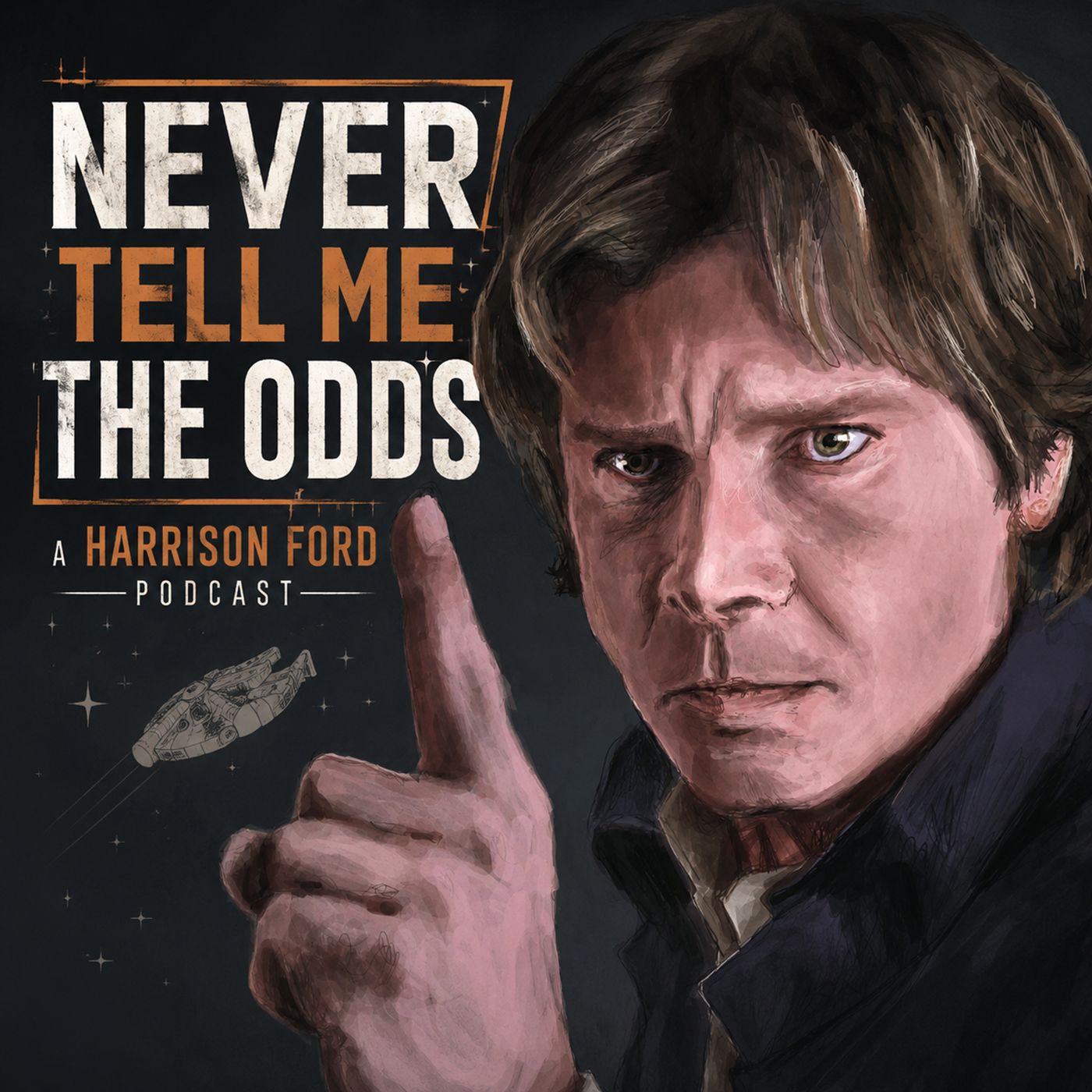
He's almost always Harrison Ford, but he is so serviceable in these roles and just does a very good job that I don't know if I ever divorce myself of this is Harrison Ford, but I suppose I do. I suppose I think of him more as Han Solo or Rick Decker or some of these roles before I think of him as being Harrison Ford, even Dr. Richard Kimball, which is remarkable that you can take a TV series and you've got the original person. Obviously, I wasn't that familiar with the TV series, but he was able to inhabit that Dr. Richard Kimball role So well, and other than some of those mannerisms, I mean, the image on the podcast is the image on the podcast of him with this finger.
Like I always think of him even just coming in and being like. Yes, switch the samples. Yes, switch the samples. Yeah, you know, that's you mentioned another iconic role in Blade Runner. You know, Deckard does not have Indiana Jones vibes.
No. And this is all within the first 10 years of his career. So it was in thinking all these thoughts that I was excited to re-examine him as an icon, but also as an actor, and then be excited about going through a variety of genres and a variety of kinds of roles and many of which I have seen many times and many of which I have never seen even once. So that felt like, okay, there's a lot of highway in front of us to kind of reassess, especially now that he has reached the point of elder statesman. He's in his 80s.
He has done it. He has been around popular, big, attention-getting and iconic movies in every decade that he has been in our lives. So there's going to be a lot to talk about. I don't know how iconic he is at this point, though. And I would say that that's the part I'm going to push back on here a little bit, which is I don't know if he is...
Let's just go with the last thing he was in, effectively. Captain America, Brave New World. his inclusion in that did not help that movie. I don't think it hurt that movie, but I don't think it did what I think they were hoping to do in that movie with him, which is give him something to do in the MCU, which is not anything he'd been ever done up until that point in his career, other than like all the other things he had done, like Star Wars and Indiana Jones and Blade Runner. So it's funny to me that To your to your point of like he's been iconic and like every decade, like I would say that probably stopped maybe in the 2010s. But but but here's here's the larger point.
When you've got a career and your image is known to pretty much everybody alive on Earth, you have now become an icon. So whether he's transforming every movie he's in. That's why you include him. You include him because people immediately go, Oh my God, there's Harrison Ford. Because then there's a lot of actors.
I mean, Sean Connery did a few victory laps showing up in, you know, Robin Hood, Prince of Thieves, just in the final scene. And, and people had a reaction. It's like, Oh my God. And here's, you know, Sean Connery in the Robin Hood movie that of course, um, Once you're so well-known and there's an association of pleasure in seeing you or at least interest, again, you do it for 40, 50 years and you earn that right. And so to me, that's what I mean.
Even if he's not creating iconic roles, he himself is the icon. Yeah. Well, and I will agree with that. I just think, you know, it's really hard, I think, for me as a watcher of film to watch Harrison Ford at this point because he. I.
Don't know, I guess the problem I have is the things that he's been in recently have not done much to show me that he has a lot left in the tank as an actor. And I think that's because the things he's been in now are exactly what you just hinted at, Richard, which is, He's existing on the fact that he's Harrison Ford. And that's okay. But there's nothing wrong with that, per se. Yeah, I'm curious.
I haven't seen Shrinking, which I'm kind of interested in seeing, just because it's more of a comedy. And that's one thing, like, You know, I know he had a cameo in Anchorman 2. He can be funny. I've seen him be very funny. I love when he would show up on like Conan and just, but his persona is gruff old man.
Right. And so, and I think he's probably doing the same thing in Shrinking. I guess I should probably watch a couple episodes before I start talking out of my ass about that. But it just, you know, you think of Harrison Ford, you don't necessarily think about comedic, films, but he definitely has a lot of great comedic moments. I mean, even when we talk about the first Star Wars film, some of those things like, you know, him and Chewie coming around the corner and seeing all of the stormtroopers and the way that they react and the way they go, you know, run away and everything.
There are some real good comic beats in there. Well, when I was watching him, again, early in his career when I was in high school, I immediately thought, oh, this guy has a James Garner quality. Oh, yeah. And no one does. And that's really hard to do.
I mean, look, I'm a big James Garner fan and there's almost no one I would say, oh, yeah, this person and this person and this person are like him because he's so singular. But being able to be a hero and self-deprecating... and witty all at the same time. Not everybody can do that. And Harrison Ford had a little bit of that James Garner to him that, uh, that appealed to me. And it of course came out in movies like the, you know, um, Raiders of the Lost Ark and, And like you said, even in moments in the Star Wars films.
So that was something that early on caught my attention. And again, it was back when I thought, oh, well, everyone can do this. That's just a thing that every actor can do. And then, of course, 40 years later, you realize, no, not every actor can do that. But the journey from the first movie all the way up into what he's doing now is, you know, is going to take us around the world and is going to take us into, you know, really every kind of movie you can see and every kind of movie Hollywood makes.
And we will look at it through the Harrison Ford lens. So do you guys want to know a little bit about Harrison Ford? I would love to know more about Harrison Ford. Would you like to know more? Press 1. for Richard Haddam to read press two now.
Okay. Well, let's find out a little bit about Harrison Ford. Um, weirdly, even the most basic things about his biography. I never knew. Um, he was born in 1942, uh, on July 13th.
So when he went out there with a July 13th birthday, you shared with Harrison Ford and he was born in Chicago and he grew up in the suburb of park Ridge. Um, I also didn't know that both of his parents were involved in entertainment. His mother, Dorothy Needleman was a radio actress and his father, John William Christopher Ford was a former vaudeville actor. So he was in a way continuing with the family business. Um, I did mention that his mother's, uh, maiden name was Dorothy Needleman.
Uh, And, and there's always been like a question of, oh, wait a second, is Harrison Ford Jewish? And a lot of that, you know, comes from the Adam Sandler song, the, uh, the Hanukkah song, uh, which quotes that he is a quarter Jewish, not too shabby. But I will say that his mother being Jewish, many people consider that to mean that he is, he's a hundred percent Jewish. That's right. Just the good half.
Exactly. Or when Groucho Marx took his daughter to a Beverly Hills country club, one of the people on the board of the country club had to come up to him and say that his daughter wasn't allowed in the pool because she was Jewish. And Groucho said, well, she's only half Jewish. Can she get in up to her waist? Right.
Harrison Ford said, when asked about this, it's an odd quote. He said, as a man, I've always felt Irish, like his dad. As an actor, I've always felt Jewish. So that is Harrison Ford's final word on that. But what's interesting is that as a child, even with parents in the business, as it were, or who had been in the business, he had no interest in the arts or acting at He also had no interest in sports.
He also had no interest in academics. He was not very popular. I don't know what he was doing, but he was just hanging out in Park Ridge, I guess. But he did get some recognition among his peers because he was chosen to be the voice of his high school's new radio station, WMTH. So if you just sort of close your eyes and try to picture how Harrison Ford sounded in when he was a high school student, that was his first half step into the world of performing, I guess.
He went to Rippon College in Wisconsin. Mike, am I pronouncing that right? Rippon? I have no idea. Oh, excellent.
Thank you for helping me out there. You're the Midwesterner on the screen. I figured, you know, somehow you would know. Um, and, uh, so he did go to college, but you know, I mean, again, you know, he was, he was not really into academics, wasn't standing out among his peers. Uh, it was only in his senior year that he decided to take an acting class to get an easy grade.
And it was in that class that he discovered he was interested in acting. He said he was terrified to get up in front of people, but he loved the storytelling aspect of acting. He did not graduate. Instead, the summer after he would have graduated, which was 1964, he joined the Belfry Players, which was a summer stock theater company in Williams Bay, Wisconsin. So he was serious about acting, even that soon after taking the acting class.
He was also serious about his college sweetheart, Mary Marquardt, and they got married right after, I guess, she graduated. And soon after that, they moved to LA specifically so he could pursue his acting career. And I think he was also looking at voiceover work because maybe at that time he thought, well, I did the radio station thing, so voiceover work is probably going to be my only saleable skill. Now, a lot of people know that Harrison Ford was a carpenter before he was a full-time actor. And there's a lot of confusion and rumor and legends about these two different aspects of his life and, and, you know, which came first and which was in ascendancy and which led to what the fact is from the minute he got to LA, he had success as an actor.
Okay. He got a, he got a contract with Columbia pictures through a program they had called the new talent program, which was like a fellowship, but it was a way to find young actors and sort of, you know, mentor them in. And he got some small roles and he was getting paid 150 bucks a week. So, but they were mostly uncredited. The movies we're not going to be covering on this podcast.
But often people will go, oh my God, I saw this movie and I swear to God, there was this guy in it and it was Harrison Ford. And it probably was. He did Columbia for a couple of years. Then he got the same kind of gig over at Universal. Again, sort of, okay, we'll take you on.
You'll be a contract player. We'll find small roles for you. And who knows, maybe something will happen. Now, during this time, he and his wife had two kids. So in 1966, which was the year I was born, and I'm 60 now, his son Ben was born, and then Willard was born in 1969.
So all along, Harrison Ford was, you know, going out there trying to pursue his acting career in the way you did in the early 60s. and having a little bit of success, but not as much as he wanted. And so he finally decided, rather than just taking all these small roles and not making very much money, he decided he would structure his life a little differently. So he literally said, okay, to support my acting career in the way I want to pursue it, I'm going to teach myself carpentry. This was not a skill he came to LA with. He borrowed books from the library, learned how to do carpentry, and decided, I'm going to make my living, my money, doing carpentry.
And that will allow me to only do roles that I want to do, that I think are going to advance my career. Because you can only be so many cab drivers and bartenders and waiters and man number three before people assume, oh, You had your shot and you're never going further. So he decided to take control in that way. Now, it is true that many of his early clients were actors and producers and Hollywood insiders. Joan Didion and Sergio Mendez.
And, you know, he was definitely in the homes of Hollywood stars and actors and insiders and stuff. But it's not true. It's actually not true. that he got his part in American Graffiti when he was discovered by Francis Ford Coppola while he was building cabinets or a door for Coppola. He did do carpentry work for Francis Ford Coppola, who was the producer of American Graffiti. But that's not how he got the role that he got.
What happened was, he was well-known to a pretty big casting director at the time named Fred Roos. And Fred Roos was an early supporter of his and who really believed in Ford and thought that he was a good actor and a guy who could really have a career in film. And it was Fred Roos who approached Lucas and And said, you should take a look at this guy for a role in your movie that's featuring a lot of young people who are of that same age. And he got a role. He got the small role of Bob Falfa.
And it was one of the few supporting roles in American Graffiti. Uh, but he stood out, uh, mostly for his improvised rendition of some enchanted evening, uh, that he sings to Cindy Williams, uh, while driving the truck because she just isn't talking to him at all. And, um, well, you know, another Hollywood legend has it, of course, that it was because of this role that he got the role of Han Solo in Star Wars, but actually that's not true either. Um, Lucas had actually said he was not going to use anyone from American Graffiti in Star Wars. Graffiti was a huge hit.
But Star Wars was a very different movie, and it was going to be his sophomore effort, and he didn't want anyone to compare the two. So, he's like, rule number one, no actors from American Graffiti are going to be in Star Wars. So, That was the edict. But by then, he was friends with Harrison Ford, so he asked Harrison Ford to help him out by reading opposite all of the other actors that he was auditioning to play roles like Han Solo and Luke Skywalker. And Ford spent so much time in the audition room reading the lines of Han Solo, weeks of this, that at a certain point, everyone around was like, isn't this guy just the guy?
And even Lucas couldn't deny it. So based on that, he decided, okay, I'm going to have to break my rule. And I am going to cast Harrison Ford as Han Solo. And that is what led to the huge success and how Harrison Ford sort of introduced himself the world over. And a career was born.
So that's how he got sort of up to the very beginning of his career. And next month we'll be talking about American Graffiti and the month after that, Star Wars. So yeah, that is how Harrison Ford was introduced to the world. I miss when actors had the traditional way of becoming an actor. Sure.
I miss that. Now it's just like, well, I was on YouTube. It's like, okay, that's fine. But I don't know. The industry always seems a little bit more romantic the way things used to be, which is fine.
I mean, I know that things weren't bright and bushy-tailed and starry-eyed then either, but I think it goes maybe to the thing that you were talking about at the beginning of this show, which is How do we, as people who have seen the tradition of movie stars kind of come and go, how do we classify and how do we live within a world now where effectively you don't have to have any training at all, none to be in movies? I mean, you know, all of this was taking place in the 60s, and I don't think we typically associate our filmic relationship with Harrison Ford as being something that is a a 60s bound phenomenon. But in the 60s, it was still the studio system. And that's how it worked with almost every department, including directors and writers and actors.
They would just sign a contract and then you would do some work. And if things worked out, great, you'd move up. And if they didn't, they wouldn't renew the contract. So it is weird to think of him as sort of spanning those two eras. You know, Early, early on in those years, in the 60s, he was famously told by some producer that he had no future because he didn't have a movie star's face.
Like, you know who has a movie star's face? Tony Curtis. And it's funny because it's like it all changed. And, you know, we talk about Lucas and Spielberg and Francis Ford Coppola and all those sort of icons of the new filmmaking of the 70s. And the whole new Hollywood thing.
I mean, you know, you guys know how much I love like Ellie Gould and Donald Sutherland. And so it's like the, the seventies kicked open a door for actors who were not traditional. So a Harrison Ford who kind of straddles that line, you know, like I think you've made comparisons of like Jimmy Stewart to him before. It's like, yeah, he's kind of America's current Jimmy Stewart or like, you know, Tom Hanks, I guess is, but yeah, This whole idea of these non-traditional actors who are able to get into these roles and just that gulf of we need fresh, new, young talent. And here's this guy who already has a little bit of a track record, you know, and like he had a little tiny part in Zabriskie Point and Getting Straight.
So it wasn't that big of a leap to think, here's this kid who's got some pretty good chops and potential. for me, he's got a good face, you know, and I think a lot of other people would say he's got a great face and it's like, yeah, all right. Like, yeah, even though he doesn't have a quote unquote movie star face, now is the time. Now is the moment like 1968, Easy Rider comes out. We've got, you know, the crumbling of the studio system. We've got the vertical monopoly has been struck down by the Supreme Court.
All of these things are happening at the same time to just say like, all right, you know, Easy Rider, why am I blanking on, hold on, give me a second, Bonnie and Clyde, these types of movies just were paving the way for, shit, we're out of touch, we need to let the kids do this. You know, you mentioned Columbia, there was another program, I think started in 68 by Universal, where they were bringing in young talent and just like, okay, make a movie for us. Like, Handing them not necessarily the keys to the studio, but that's when Peter Watkins comes in and he makes Privilege. There are very interesting films coming out in that post-Easy Rider wake where it's, oh shit, what the hell's going to happen?
I mean, Jack Nicholson, Bob Rafelson, all of these guys never would have had careers. They would still be making the monkeys if things like Easy Rider didn't happen. Yeah. What's so interesting is that when you think of those actors that typify that era, again, De Niro, Pacino, Dustin Hoffman, even Warren Beatty, although he was clearly the most traditionally good-looking of the group, you rarely think of Harrison Ford because he didn't come in either in films that were necessarily critically acclaimed or that were sort of small, independent, changing the voice of film. Yeah, Star Wars did change the voice of film, but in sort of a, in a commercial way, not necessarily in a way that was only typified by its unique aesthetic.
So he never gets grouped in. You never heard people go De Niro, Pacino, Harrison Ford, but he was right there. I mean, lockstep in that era. And he became popular in the 70s, just like they did, maybe a little later. And yeah, so he took his own path.
And it's so funny because I think you do look at him now and go, he's super good looking. This is a guy who can clearly be on the big screen. And you're going to love watching all of his expressions and reactions. But at the time, yeah, the people making movies didn't make sense to them. Which is crazy, because when you look at him, it's just like he looks...
I don't know what you need to look more like a movie star like to check that box for someone, genuinely. Because when you look at him, he looks like a movie star. Maybe, again, that's more of a hard-to-define term in this day and age, is probably what it is, right? Well, here's the joke. What typified Pacino was that he seemed very ethnic.
You know, it's like, whoa, there's like an ethnic guy. And then Dustin Hoffman, he's Jewish, you know, and he just looks like this little guy. Now, of course, Harrison Ford is Jewish, not too shabby. But again, never thought of in that way of like, oh, we're now in the era of, you know, actors who aren't necessarily, you know, don't look like Tony Curtis, Harvey Keitel, Robert De Niro, you know. But he did have rugged, all-American looks at a time when I'm not sure that's what people were looking for.
But he made it work. That's for sure. Well, yeah, even one of his co-stars from American Graffiti, Richard Dreyfuss, who had that small role in The Graduate. Yeah. And here he is, you know, I mean, he was huge in the 70s.
And that was the thing, like, again, like this real, like, schlubby kind of kid is able to be, you know, a lead within just a few films from, I mean, he basically is one of the co-leads of American Graffiti, but within just a few years, he's. you know, doing that Marsha Mason movies in The Big Fix, Thank You, The Goodbye Girl, The Big Fix, like one of the big three leads from Jaws. I mean, it's wild. Yeah. Yes. Yeah.
So, um, So he came in on this weird other track of just popular actor in popular movies. And then because he had a real interest in that art form, I think what we're going to see is a guy, after having had massive success and even during that massive success, looking to expand the boundaries of what he can do and how he can be accepted, not only by Hollywood standards, what they'll allow him to do, but by his audiences. What will they think if he does movies like Frisco Kid? I think he spent his career going back and forth between, okay, this is clearly... I'm going to do Air Force One.
I'll do the Tom Clancy movies. I'll do those. But then also, again, other things that are unexpected. Mosquito Coast is a great example. And to challenge himself and in a way to challenge his fans.
Are you going to follow me into this other area? And so we'll see. Well, and again, I think for me as someone who has spent, like I said, a lifetime watching his movies, I'm excited to see some of those movies I have not seen because I have seen most of the big movies. If not, I mean, again, the Indiana Jones and Star Wars of it all like. Obviously, those were massive movies.
Obviously, I was raised on those movies. As someone who's doing a movie podcast now, I think that would be a fair assumption given my age and when I grew up. But I didn't watch some of those lesser movies, not because I have any issue with them. It's just they're not the movies that were eminently mainstream successful in a way that. Like you both have said, everybody knows.
Everybody knows Star Wars and Indiana Jones. Beyond that, there are massive blind spots even for myself. What's interesting is that there are actors, again, like De Niro and Pacino, who are winning Oscars for acting early in their career. That sort of grandfathers them into a career of opportunity among the film culture. that was still very much alive. I mean, hugely alive in the 70s and 80s, and even into the 90s.
I don't know really where the culture of film criticism stands now, but there was a time where if you were beloved by those people, you had a career, guaranteed. I don't think Harrison Ford was ever necessarily beloved by those people. In a way, I think he had a harder road. I think people like Pacino and De Niro got opportunities that people were like, well, sure, them, but not Harrison Ford. So he had to find those things.
And he had to go out of his way to say, this is what I'm interested in doing. And here are the interesting people I want to work with in terms of directors and other actors and writers. And again, so that it's only in retrospect that you can really get a sense that if there was a game plan, that was part of it. Well, and he, I mean, you know, I always go back to this Entertainment Weekly that I had in the late 90s, early 2000s that talk about like movies stuck in development hell. And a lot of them had Harrison Ford in them because he didn't want to come back and do the movies of...
I wouldn't say like his youth, but the movies that made him a star, because I mean, in a lot of ways, and this is just my perception of him as an actor, I don't think he has anything left to say about those movies. Like, and really, if you look at when he returned to Star Wars in Indiana Jones, just from a thousand yard stare, not looking at them like super close up, like we'll have to later on. I think it wills out that like, he just didn't, he's just coming back just because they asked him to not because he had anything left to say as an actor. And I think that there's right. And I think that there's something to be said for that, where he, after a while, just wanted to do other things because he didn't want to keep doing yet another star Wars and yet another Indiana Jones.
And I think it, It shows why, because those movies have since come out and have not been great. And the stuff that Harrison Ford, I think, that he has done in the subsequent time since, let's call it the late 90s, early 2000s, has been more interesting, albeit less exciting in some ways, but still interesting and different for him as an actor. Because I think to both of your points, Harrison Ford just kind of gets lost in the shuffle. He gets compared more to a Schwarzenegger or a Stallone Because, you know, oh, he's a big action star and he has big action movies, but that's not it. And also, there's not one line that Harrison Ford says in every movie, like Schwarzenegger, which, to your point, Richard, like, he literally says, I'll be back in every movie now.
Why? Like, what the fuck? Why? But it's not a Terminator movie. It's not just fan of Arnold.
I just, what the fuck? It leans into my joke that it's like Arnold Schwarzenegger is actually just in every movie. He just arrives way too late to save the people in the film from bad things happening because Arnold is never playing anyone other than himself. At this point, I think that's been the case for a long time even. I think a more apt comparison, even though it's still a difficult comparison, is Clint Eastwood.
Mm-hmm. Lindy Stewart has a particular iconography in films like Dirty Harry. He's done other movies where he is not that. And he's done movies where he is trying to sort of be the opposite of that. I think Unforgiven is a movie where he is very self-consciously addressing his iconography and trying to comment on it at, you know, a 90 degree angle.
Um, So then the question is, does Harrison Ford walk through the door with a particular iconography that he ever had to work against necessarily? Or was it always just an actor taking a role, taking on that challenge, and trying to deliver on it in a way that Star Wars and Indiana Jones fans would not just accept, but also go, oh no, and that was a really great movie. I really liked his performance. even though he was not the star or exuding that sort of swagger that made us fall in love in the 70s and early 80s. I was such a Harrison Ford fan when I was young that I watched a lot of these early roles. So stuff like that we'll be talking about in the next six months or so, Heroes, Force 10 from Navarone, Hanover Street, Frisco Kid, These were all things that I was tracking down to watch.
This is also early days of VCRs, so getting my hands on some of these were a little tough. I might check out the TV guide and see what was playing, that kind of stuff. But yeah, I just was such a big fan after Star Wars that it was like, I have to see more of what this guy was in. So I kind of kept up with that for a long time, probably up until. Maybe Presumed Innocent.
I would tell you even past that, maybe all the way up until Sabrina and The Devil's Own, because that's where I really start to drop off. I only say Presumed Innocent because that movie was ruined for me when it came out. Literally the Friday it came out, I was working at the concession stand and they had had a pre-show the night before. And one of my co-workers was you know i'm working at a movie theater like did you see that movie last night i can't believe that so and so did it and i was just like yeah no i didn't see the movie and now i don't ever have to so thanks very much but so i've missed that one but i'm excited to catch up. I had the same experience with uh the sixth sense i literally was walking in because i heard it was a very good movie and and i don't even think i was aware that it had a twist but it was opening day in the afternoon.
And as I was walking in and the other crowd was walking out and someone was like, I can't believe that Bruce Willis was dead the entire time. And I'm like, what? And then I'm sitting there in the movie going, now wait, what? And then I'm watching it play out. I'm like, okay.
And I'm just sort of sitting back, still a great movie. I mean, that's the mark of a great movie is that even when it's got a big reveal, you can still watch it over and over again and get everything out of it on every viewing. But yeah, that's, yeah, presumed innocent. That's too bad. But, but yeah, so, okay.
So basically with this podcast, we'll be coming around every month in order, in chronological order of his career. We'll watch the movies. We'll discuss the movies. We are interested in what you guys think of the movies. So please reach out to us and we'll tell you how.
Um, and, uh, And sort of track as well as we can, because by the way, a real solid biography of Harrison Ford also has never been written. So we're going to have to be guessing at some of his decision-making in terms of these movies. But with the ideas that we've discussed so far in mind, especially early on, We will watch these movies, react to them, and also kind of see where we are in the evolution of Harrison Ford throughout the decades. I'm excited for the late 80s, early 90s stuff because that's the stuff I'm woefully under exposed to. But, you know, we'll talk about Indiana Jones and Star Wars, too, because we have to.
Not because we want to, but because we have to. And as we all know. I want to. I'm dying to talk about those. I'm not excited to talk about Star Wars because it's Star Wars.
And at this point. Well, you've talked about it. those movies on on many many podcasts yes hey Chris now you're gonna talk about it with me. Yeah that's right I'm excited to talk about it with y'all but in terms of like the lesser things like not lesser but like the more popular things like I'm I've seen those movies a million times. So I'm more excited to see the things I haven't seen a million and one times, which is most of the dramatic stuff. And then some of those weird like 2000s action movies with Paul Bettany.
They're invading my house. Like, OK, Harrison Ford, whatever. Fine. I'm super excited. So anything else you want to say?
Do Mike got any more thoughts? No, we're going to have a whole bunch of guest co-hosts come on with us. So we'll be a quartet rather than a trio on everything. We're going to start off as just a trio with our next episode on American Graffiti. But soon thereafter, we will start bringing on some guest co-hosts with us.
I'll try to get some interviews as much as possible. I've spoken with some of the people that have directed and maybe written some of these movies. So we'll see what we can do about that, too. So, yeah, we'll be doing a real podcast around here, folks. It'll be pretty great.
One of our first guests will be my wife and co-host and creator of 80s TV Ladies, Susan Lambert. So get ready for that. You're going to have to give her credit or give her a hard time if Force 10 from Navarone is not good. Because it sounds like she might be partially to blame for this podcast existing. I don't know.
I was trying to get a rise out of her at one point. And then instead of getting a rise out of her, I stumbled into our next podcast idea. Right. Okay. So when people aren't here listening to us talk about Harrison Ford once a month, where can people find you and the things that you work on, Richard Haddam?
You can find me on my podcast, Richard Haddam's Paranormal Bookshelf, anywhere you get your podcasts. Come for the books, stay for the oversharing. Mike, what about you? I don't overshare, but I talk a lot about movies over at the Projection Booth podcast, which is available on weirdingwaymedia.com, as well as a few other things that I work on, and as well as Richard's wife's podcast, 80s TV Ladies. How about you, Chris?
Yeah, Weirding Way Media is where you can find all the things that I work on, including this show, the Culture Cast, some other small kind of miniseries type things that I'll be launching here in the next couple months, some other stuff. So yeah, all that can be found at weirdingwaymedia.com. Please like, rate, and review this show on iTunes or Spotify in that order. iTunes is more helpful than Spotify, but Spotify is more helpful than anywhere else that you can get it. Patreon.com for each of us. Projection Booth.
Richard Haddam and CultureCast are the respective Patreons where you can go to kick a couple dollars our way. If you're hearing this on our Patreons, thank you. If you're hearing it on the RSS feed, thank you as well. And we'll catch you on the next episode when we talk about American Graffiti. Thank you.
Similar episodes across the network
Matched by shared keywords.
-
RV (2006) — "If you ever wanna really find out about yourself... put your family in an RV and drive."
4 shared keywords: chris_stachiw, mike_white, richard_hatem, weirding_way_media
-
Changeover: Captain America: Brave New World (2025) — "You're not Steve Rogers."
4 shared keywords: chris_stachiw, harrison_ford, mike_white, weirding_way_media
-
Les Fugitifs (1986) & Three Fugitives (1989) — "Don't go!"
4 shared keywords: chris_stachiw, mike_white, richard_hatem, weirding_way_media