
About this episode
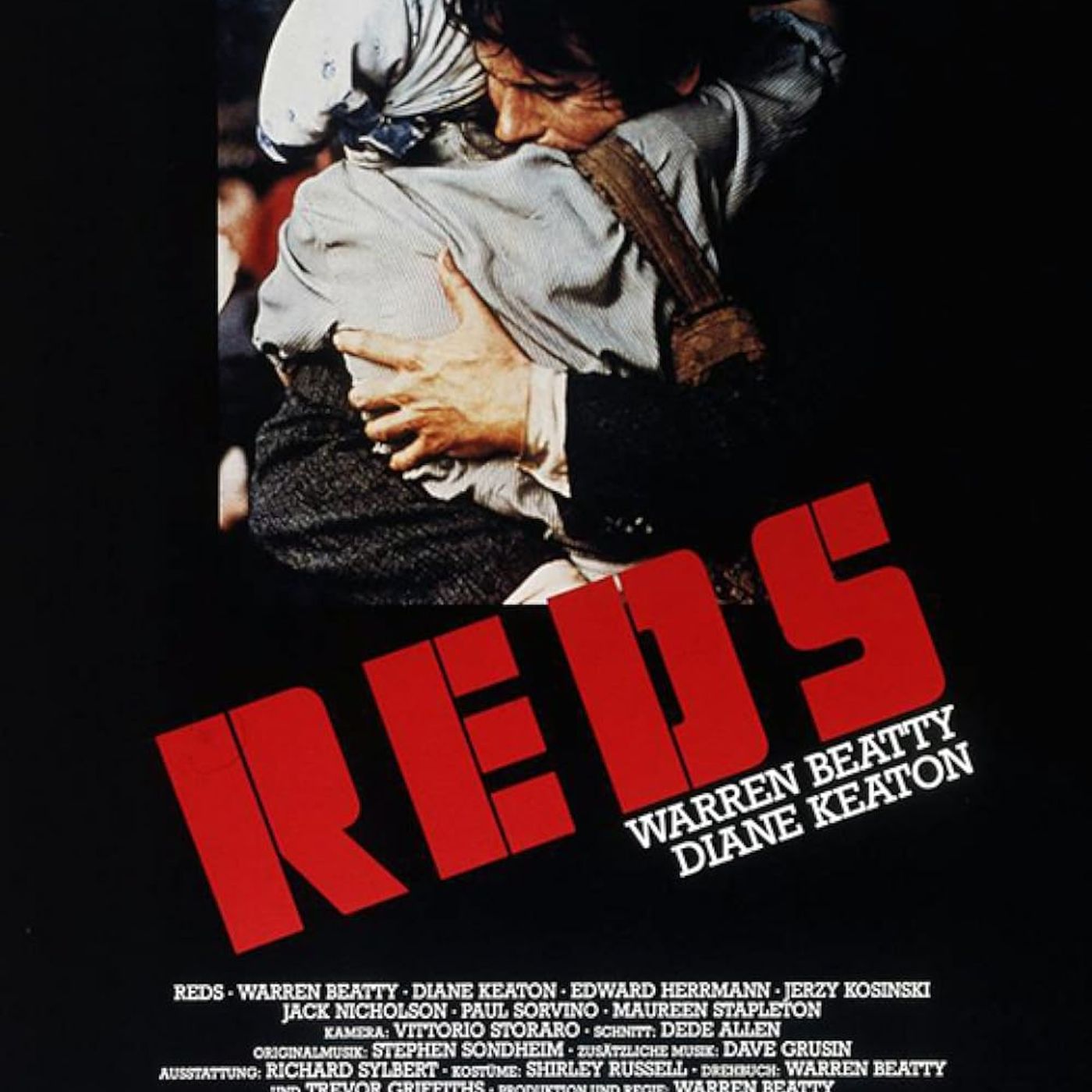
The film follows the life of journalist and writer John Reed as he attempts to cover one of the most important events of the 20th century: the two Russian revolutions. Along the way, he finds love, gets directly involved in the Communist Party, and becomes much more than just a writer.
For more Kulturecast episodes and podcasts guaranteed to be your new favorite audio obsession, check out Weirding Way Media at weirdingwaymedia.com.
———
The Kulturecast is a film and culture podcast from Weirding Way Media, hosted by Chris Stachiw, the Doctor of Podcasting, alongside a rotating table of guest co-hosts. Each week digs into where film and culture meet — and how each one bends the other. Now home to sub-feeds including Required Viewing: A 360° Film Study with Dr. David D. Perlmutter.
New episodes weekly.
Subscribe on Apple Podcasts → https://podcasts.apple.com/us/podcast/the-kulturecast/id931361376
Spotify → https://open.spotify.com/show/5wjxip9XVYapYuY12yEaGY.
Back the show: https://www.patreon.com/cw/kulturecast
Transcript
Automatically generated, so expect the odd misheard name.
We wait, so, uh, we were looking before we started recording. David, it has been in almost a year since you and I did an episode together and then on Dross it has been six six seven months. I think it was like last year at some point. It's been I think the last since the last time we recorded, I met you in person. I think that's that has happened in Los Angeles a couple of cues.
That was three months ago. Yeah, having some lunch at a diner and uh, we said we sat there for like four hours, any think, so we were there a while. We're there a while. So Yeah. On this episode of the Culture Cast, we are kicking off Epic Month with a look at a film that these two gentlemen who are joining me both have a lot to say about.
First joining me all the way from the University of Texas Tech. I guess Texas Tech University probably the better way of putting it. He is the professor of Media and Communications over there. We have done a couple episodes before, Doctor David Permutter, Hello, thank you, and kind of like I've already alluded to, he has an album out right now. He has his own podcast.
That album is called Recognized de Escalate and decode. You can find it streaming most places and physical copies in a lot of record stores. And yeah, he ows his own podcast, The World Is Wrong, which is an interesting podcast that I think everybody should be listening to because it's very different from what you would be expecting. Your friend in mine and Ross Jones, thanks for having me. I'm of course we're excited to talk about Reds.
Yeah. So, like Andres just mentioned, we are going to be kicking off Epic Month with a look at nineteen eighty one's Warren Baty written, co written, produced and directed and acted Reds. Well, I have freedom. You gotta go where the freedom is, don't you? You're gonna go to waste and Portland, come to New York?
What is? What is? What is? Your girlfriend? Just tell me what has s?
Nearly Thanksgiving? Why don't you come as a turkey? I don't want to play in your I don't thank you. I mean, what would you say could I asked you to something? It might seem a little selfish.
I think you should good. Good because I'd like you to take a look at my work and tell me what you think. And you'll be sorry when you see sity down the other door. I'd say, you tell mister Morgan and mister DuPont, mister Rockefeller get over and there and do some of the fighting. You can't holder down or rain barrel.
You can't climb my apple tree. I can't work around you. You tell me why you're doing it. I'm not taking seriously when you're around. When I'm around, you're not taking seriously.
Oh God, this is not good. I don't playing your your if you won't be good to me. If you were mine, I wouldn't share you with anybody or anything. There's something that I have to tell you. You don't have to tell me anything.
No, No, I want to get married. Does this mean that we have to cheat? Or is this pre independent marriage? You're lying on her ashore from Portland and you use me to get Jack agreed to marry you. What do you mean?
Who? Who was it? Who was what? Jack dreams that he can hustle the American working man whose one dream is to be rich enough not to have to work and do a revolution led by his party. Is the party prepared to take a position on the draft or not?
The officer of these men have the legal right to assemble what tell you doing me all right, you're right, You're wrong. I'd rather be with a fighter who wants to change the world and a critic who wants to mourn it. Well, the place to be now is Russia. You have to tell me what's happening in Russia. I read the papers.
Well, come with me. I'll join you in revolution, right right? So, like I mentioned, Directed by, co written by, produced by, and starring Warren Batty, is based on the life and times of John Reid, the journalist and writer who wrote Ten Days That Shook the World, which is about the October Revolution. Yes, the movie is about communism and Russia and the Russian Revolution, so the title kind of gives it away. Film stars a whole bunch of other people, including Diane Keaton.
Spoilers Chris about the Russian Revolution. I you know, it hasn't laid out yet, so I don't think you should give it away. The ending of this movie is not known yet. But yeah, as we've kind of alluded to, it is about the life and times of John Reid. So it's a three hour movie.
It's obviously it's an epic. So most of the movies this month are going to be rather long and very well broad and scope at least this movie. But yeah, it covers a lot of ground. There's a whole lot of people in the movie. So I'm going to kick it to you first, Doctor Pearl Mutter.
When did you see it first? What did you think then, and what did you think rewatching it? For this episode. I was a first year student in college and I was really interested in film, and I watched everything that came out and so more, and Beatty of course was extremely famous as a as everything so director, writer, star, and he came out with what was presented as you know, an attempt by him to make an epic movie in the style of previous ones like David Lean, Doctor Chivago and Lawrence of Arabia. And I couldn't wait to go see it in the theater.
So I saw it in the theater. I saw it in the big screen, and then I think I saw it again with somebody who wanted to go see it. So I saw it like a week later, and then it was a couple of years into the world of something called VHS tape that I saw it again. But I have not seen it in probably twenty years since then. So did you think rewatching it for this episode, I decided not to just as an experiment.
I wanted to just talk about my impressions and then my memories of this which are very odd in particular, I think or its placed within my cultural memory, and I have brought I have brought up particular scenes of this movie in class. I've had assignments where I had them watch a particular moment or two in this movie as part of a discussion of tropes or Johnre moments. So I've gone back to it, but I didn't want to do a full like I've watched it thirty four times now and I can see something I didn't see at first. I wanted to just what I saw at first and what I remembered. So Andros, I'll kick it to you then before we kind of open the conversation up, same question, first time you saw it thoughts, then rewatching it now thoughts?
Now, I think the first time I saw it was on videotape, although I have very strong memories of those oscars, so I feel like I and so the first time I really I was exposed to what was in the clips that are were that they played at the Academy Awards that year. But then then I saw it when I saw on VHS. Probably it's forwards the end of my high school years, probably like eighty four, eighty five, eighty six. Around that time, it just blew me away. I didn't know I should say, we'll get into it, but Warren Batty is probably is one of my favorite filmmakers of all time.
I have a real strong affinity for him as a filmmaker, and I didn't know that when I saw it, but this is one of those films that really drew me to him as a filmmaker. And in part it is because of the great performances that he gets out of these amazing actors, particularly for me at the time, Nicholson's performance and Hackman's as well as Baby's and more Stapletons and everyone's fantastic. But I feel like, particularly Jack Nicholson in this, he just really just in front a few scenes just blew me away with his performance. And then really this is one of those films that I probably go back to once every decade since I just say, I don't want to say it's it's almost a comfort movie, I guess weirdly, and I yeah, I I take great pleasure in it, and I didn't.
I intended to watch it for this, but time in the middle of a move, so time got ahead of me. So what I ended up doing was just kind of basically watching a three hour movie in an hour and a half, going through and remembering, Okay, this is what happens in this scene, and this is what happened in this scene. The one thing I missed out on doing that was really getting into tracking the way the film deals with the history and the politics of the time in a way that I would have liked to. But I think I have a pretty I got myself back up a speed on the general the general beats in this film, and I'm ready to talk about it. And unlike either of y'all, I had not ever seen this film.
I am actually again nothing against Warren Baby. I haven't seen most of his works. I have not seen Bonnie and Clyde. That is something that's again on a long list of things to check out eventually. One of the episodes I've done for the Projection Booth, we talked about the parallax view, which I did enjoy, which was very different from this obviously but kind of still in the same vein of you know, a character kind of being at odds with the system.
So I went in. I went into this only knowing as much as it is an epic film, Warren Batty is playing a real person, and it is about a specific time and specific place, and it's again directed and written by and so all the kind of qualifiers of this being a Warren Batty thing just out in front. That's all I'd known about it, So sitting down to watch it, I enjoyed it a fair amount. I think what's interesting are the things about it that feel contemporary that at the time would have been like, wow, what a novel concept. But there are some things in this movie that are really well done that I feel like are ahead of their time in terms of the way the movie is presented.
There are some moments in the movie that do kind of and I can see where you're kind of getting at, Doctor Pearlmutter with the tropiness of it. There is some tropiness to this movie. Obviously, this is a historical film, but it's also a biopic in a way of a specific time in a specific place, so it does kind of traffic in a little bit of that. I think, though overall, I enjoyed the movie, and I think that the movie's message in this day and age, I think is as important as ever, if not more important now, given the world of political strife and division that we see all around us now. And you know, watching this movie it taking place when it did, I mean, it was happening then, it's happening now, and it's interesting to see how people were reacting to it then versus kind of what we're seeing now.
So I enjoyed it. It's just it was a little bit too topical in a way that I was not that I wasn't expecting, but they were hitting on things that we're still talking about today, still dealing with today, class division, financial division, the haves and the have nots, What does revolution mean to a group of people? Like a lot of those questions are being asked in this movie, which I think is fertile ground for discussion, as it were. So yeah, I'm kind of interested to see where this conversation goes, because I think it's gonna go a lot of interesting places. But I think just at the outset, let's just kind of open this up by saying, uh, for someone who produced the movie and co wrote it and directed it and acted as the main character.
Holy shit, Warren Batty acted the shit out of this movie, directed the shit out of this movie, wrote the wrote a fantastic script. I mean everything about this movie in terms of technical production and actor quality is I mean, it's astounding. It really is astounding. Yeah, I want to say something about that. I'm somebody who I can't remember when I didn't love film, and then now I'm getting to the age where I can't remember where I didn't study or talk about film, and it's really interesting and under us.
You you seem to probably have much more knowledge than I do on this topic. But moren, Batty used to take up a massive amount of cultural space in our society. I mean he was a number one star, number one filmmaker. I mean, you just he was. I'm trying to think of a celebrity now who was as big and he.
I mean, it's probably wrong to say he was the Tom Cruise of his time. I don't think that speaks well for either of them. But he was a very very important person in the history and development of film in the seventies and eighties, and now I feel he's forgotten his role in film history, and some of his really great film you just named a series, Shampoo. His film was really a breakthrough in the style of filmmaking, almost like the comedy version of The Godfather in sort of redefining what a film comedy was. The parallax view, you know, before they were I mean there were always conspiracy theories, but like any conspiracy theory that you have today, you go back, you show that person the parallax view, and they'll say, oh, yeah, that's a documentary, you know, like of anything, and then it just just you may go down a list of his films.
It's really remarkable and it's all I won't do is use the word said, but it's remarkable how much he's been forgotten for somebody who made that much of an impact, And maybe this show will get some people to watch some of these movies. Well, a few things about that. First of all, I wis should be clear a parallax view, although Beatty as a star exerted a certain amount of control in all of the films that he did after after Bonnie and Clyde, that's an Alan J. Pakula film. But yeah, if you think if you look at from Bonnie and Clyde, which Beatty produced.
And this is how I think of Batty as a filmmaker is his he is so committed to the idea filmmaking is a collaborative process that like when like even though he plays multiple roles on all of his films other than when he's the actor, you know, as a director, like on Heaven Can Wait, he had a co director with Buck Henry he just liked and on this film on Reds. She's not credited as a writer, but Elaine May was with him through so much of it, sort of as a co like a director friend who was like, if you listen to stories from the production, she drove people crazy because she'd come in and have these crazy notes and Warren Baty would just go with it. So he has this really deep collaborative sense as a director, which I think is part of what stands in the way of people seeing him as I a few things one a lot of times he is a filmmaker from the standpoint of being a producer star who hires the director, as he did with Arthur Benn and Bonnie and Clyde, or as he did with Barry Levinson on Bugsy.
Both of those I think of his Warren Baty films where his creative stamp is totally on them, but he didn't direct them. Same thing with Shampoo. He hired Al Ashby and they collaborated together, but clearly his stamp is all over it. And so that's I think one of the things that stands in the way also that his love life and the whole Warren Batty is the lothario. I think, even though that was a big part of his mythos and what a lad gave him the power to be the star who could be the filmmaker that he was, it also sort of clouds the you know, is what Warren Batty is usually first referred to as a lover or a dream boat rather than as a director, as you know with like you would with Scorsese or Spielberg or Coppola or any of the other new Hollywood filmmakers who I think on par with Warren Batty.
But the thing, the thing about Warren Baty's films, and I'll sort of we can move on every Warren Baty film. Where he is, where he has exerted himself as a producer is both very very has a strong political sense and a deeply deeply romantics and I think those and they really also are all sort of deeply in the Hollywood tradition. And it's this is why such he's one of my favorite filmmakers, because I don't know anyone else who has so consistently made powerfully romantic Hollywood films that are all so deeply political with a sort of a leftist bent. And you think of Bullworth, I mean, you get Heaven Can Wait. All all of these films, there's like a very strong political subplot, there's a very strong romantic plot, and in Reds you kind of have it all together, plus just the sort of cinematic scope of someone who has been, you know, planning this film for decades.
That's the other thing. He works very very slow. Unlike Clinice Wos will turn out a movie a year, Batty took five to ten years to make his movies, and I think they benefit from it. And I don't know if you've if you've seen rules don't apply. But his last film is all of those things, and I think it's one of his greatest, but nobody saw it.
Yeah, one thing I'd add to speak to his incredible respect not just for himself as a star, because there's a lot of stars where you really think that all they care about is the moment they're on screen, and then they're off to their tempt to talk to their agent about something that Betty was like famous for being obsessed with everything. He had these elements of these other directors, like like you know, Koprick he'd redo a scene fifty times, and then Spielberg, he'd the cinematography. Every film that he has had a part of is technically perfect. I really, I really if you go back and look at like any film where he had some control, and you're right, he didn't build himself up to be the auteur and fire everybody else and just be there.
He was powerful, but he was willing to share every every you mentioned some of the other actors, like every performance by everybody is perfect, every camera movement is perfect. Like if you want to learn the technique of directing actors, if you want to learn you know about about moving the camera and Meizoncean whatever like like you you could just go through Warren Baty films and by the way, they're not used in film school. Well that's what's interesting is that he's not a film school favorite. I'm saying that I can't speak for every film school in the world. But it is interesting to me that he checks so many boxes so successfully in what is a great movie to watch?
As a lover of movies and somebody who maybe like a young person wanting to be in the film industry. I've told them, you know, like I've had students ask like what film should I mean, they always say Quentin Tarantino, And like, Okay, if you want to watch Quentin Tarantino, just go ahead and do it. But but like I you know, watch Carosawa, but also watch Warren Baty movies for technical perfection. And I find that just so interesting that an actor was all is pushing for that. Yeah.
Well, I have a strong belief that he is sort of like if you think of that first generation of method actors, Brando Clift, Dean, that like Baby comes in right at the tail end of that. He is first starring role is in an Ilia Gazan picture who directed Dean and Brando, And so I think of and I think of Baby as the extension in a lot of ways. I feel like people talk about James Dean wanted to be a filmmaker. I feel like Batty's career looks somewhat like you would see if James Dean had become the director, because he directs like a method actor. He doesn't he's interested in exploring and in collaboration and in arguing and fighting through like really getting like again, not the guy up on the top of the chair shouting okay, move here and move there, not like the antithesis of Hitchcock.
And I think maybe that speaks to like, it's easier to teach someone how to be Alfred Hitchcaw just be perfect, you know, But to teach someone how to do what Warren Batty does, it's much harder because it's always kind of an experiment. But he's also a total control for you. And he's only able to do this because he is one of the biggest movie stars in the world and because he took the gamble on Body and Clyde, which launched New Hollywood and just bott him decades of leeway, and he kept delivery like Shampoo is like, that's to me, the the real masterpiece. And I think you're right. I've never heard anyone say that it's like what The Godfather is for drama in New Hollywood, but I think you're absolutely right.
It's the great I think it's one of the great film comedies of all time. So I want to talk a little bit, but thank you. I wanted to talk about the reception, the personal story of watching it in the theater as a young person, especially one obsessed with film. Again, just watching any film. This is nineteen eighty one, so like your only chance to watch a movie is to go to a theater to watch a movie.
Or I happened to be going to a really great program at the University of Pennsylvania and they had something called an analysis projector. Now, if you remember in scenes from old movies where a movie reel, the obcelluloid reel would get stuck and it would start burning because the light was so bright, you really literally couldn't stop a movie in freeze frame, except with this very expensive device called an analysis projector, which had this special light bulb. So our film professors, and my first film professor was the great Amos Vogel, who founded I think it was a Cinema, a cinema club in New York was He was a very famous bringing avant garde. He wrote a book called Film as a Subversive Art, one of the key books on film.
Amazing guy, and he showed us films with this analysis projector we saw Bernardo Berfelucci's Before the Revolution, whereas this film is after the Revolution like a hundred times in ten weeks, which is mind blowing. But anyway, I was really, I really wanted to see this film because I was interested in epic film, and like, what did that mean to have an epic film? Because Hollywood had had different definitions of it. I mean, you go back to the very earliest days of Hollywood. You Hollywood babbel blon.
You have d. W. Griffith doing Intolerance, which is, you know, a version of it is available today, and the White Elephants, you know, come from that. He's filming three separate movies about intolerance through the ages and gigantic sets from Babylon. It's amazing.
So Hollywood from its earliest days was spending money to to film these large scale movies with cast of thousands. That used to be a phrase, you know, come see this movie, a cast of thousands. And remember that these were all practical effects. Like I mean literally, when the Israelites walked across the desert, no CGI, they had to hire ten thousand people to be Israelites well and film it in the desert. So when you went to an epic movie, I want to say, I really scoring that the definition was that on the screen you would see things where you go.
That's astonishing that they were able to do that, whereas today, honestly, you know, any student can create special effects where you go, okay that you know, good, good CGI there. But like back in the day, it had to be there, like somebody had to have had a camera in front of all those people. And so he had conquered all these other genres. I mean, that's the other thing about Beatty. I think maybe his problem, like in being famous, is that he I think he moved from genre to genre, right, he did want to check, moved on to the next one.
He didn't be like Hitchcock made the same film. He was a great filmmaker, but he basically made the same movie over and over again. In terms of like his style and things you just instantly recognizable. Whereas Baty always was restless and wanted to try something new. So this was his attempt at epic and I have to tell you in the theater it was seven eighths of an epic and we can talk about this, but like you said that, Chris, that some of these things like seemed fresh to you most of them, did.
Some of them. The scene where he's trying to escape on one of those push cards for railways, A couple of scenes there looked pretty derivative because he was coming out after David Lean had made Doctor Chivago and David Lean famous. Hollywood said that when David Lean died, he took the secret of making epic movies with him, and so that was that was a big deal to come out with a movie with like scenes of Russia and snowstorms and things like that. And I do feel that he was mostly successful, but in nineteen eighty one, some of the roof I really should go back, but if you go back to reviews, it was like great effort, a for effort, always a for effort, like Warren Baty, always a for effort, but like didn't quite pull off making an original epic movie.
That was just my feeling in the theater in nineteen eighty one, respecting all these other things that I saw. I'm curious, can I ask you? Because I didn't watch it in the theater and at that time and my political awareness was not much at that time, but I think just the fact of a Hollywood movie that was so thoughtful about americanists is I mean, I guess you could put it in with like the Way We Were and the Front, but I think that there's something like this is kind of One of the things that I also think is amazing about Warren Batty is that because of his movie stardom and whatever charisma has is he gets I don't know, capitalists to pay give him huge amounts of money to do the kind of projects that they never give a young, interesting filmmaker the money to do.
Like somehow Warren Batty gets to make these political films, And so I think when you're talking about I think just the sheer fact of making that movie on that topic does make it a unique epic. I mean maybe cinematically, you're right, he probably does lean on lean a bit, But I think also that's not like Warren Baty's strength as a filmmaker isn't his cinematic vision. I think it's like his gestalt vision of like can I get all of these people together to deliver this thing? And you know, I think also the love story, like maybe what do you think about this do you feel like because I feel like that's the big part. It's almost like it's a very small movie about politics, any huge movie about love.
Well, see, I'm not sure. I think I agree with parts of what you're saying. And again I'm just giving my eighteen year old self, you know, his version, which is maybe not what I if I'd gone into the theater to see it. I mean, nobody goes to the theater apparently anymore. But like if this film came out today and I went there, I Chris and I were texting before this and we talked about the old philosophical observation that you never dip your hand into the same river.
Well, you never see the same movie twice, and you never see the same movie once, right, because where you are in life, what you've experienced. Nineteen eighty one, this was still the Soviet Union was right, and it was writing its own his I remember an interview with Warren Beatty that he gave and I don't remember with what, but he talked about Trotsky. Now this is the bravery, right, because you know, they were doing movies about Russia, like they would be a World War two movie with Russia, and like they would be a Cold war movie, but the esoterica of the Russian Revolution was pretty much forgotten in the West as a pop as something within non specialists by nineteen eighty one. And then in the Soviet Union history the history had been rewritten five or six times, depending who was in power.
You know it was Stalin had rewritten history completely during the nineteen thirties, and almost all the I'm putting this in the air quotes here, the heroes that we see in the movie were gone and purged and dead long before you know, the end of the nineteen World War two. And then he in his interview he talked about Trotsky and how with some of the opening up of the Soviet Union at that time, that maybe Trotsky the other one of the other revolutionaries that lent because at the time it was Lenin and Trotsky were the two most famous globally. If you look at card I study political propaganda, if you look at cartoons in the nineteen twenties about the Russian Revolution, Stalin was a minor flunky in the hinter lands.
Nobody knew who Stalin was until much much later. He was the dull, gray bureaucrat you know who eventually took over, but up through most of the twenties, the stars of the movie the USSR was wor Trotsky and Lenin So, so he he was trying to sort of retell a history. Then John Reid also somebody probably one of the great journalists of all time in terms of its actual impact, like writing about things that were happening in front of him. So it was a wonderful movie for people who are interest in history and interested in diving into an understanding of history. I felt the love story, and maybe this was just me, I felt the love story got in the way.
I almost felt like somebody told them to have a love story. You know, sometimes you're watching especially American films, and there's like an alien invasion, but like two people find time to make love or something like that. It just it felt it felt inserted there and that that shouldn't be. But I'm just again, I'm giving you eighteen year old me who wanted to get Let's have more big scenes and battles and things like that, and I'm not necessarily interested in nuzzling on the screen. I think that's that's what's so interesting about the relationships, the romances in his films is a lot of them.
I mean, this is one of the things. I've had many arguments about this with people. I consider Warren Baby to be a really strongly feminist filmmaker. A lot of women disagree with me on this, probably just because and I think somewhat did because of his reputation. But the issue is the way that the female characters, like Diane Keaton's character Louise Brian in This is not a nuzzler she is.
They're wrestling with very serious issues of like power dynamics between men and women that were still working on today. Again, I think this film might be maybe it's selling the previous generation short to say that it's more it might be received even more presently now than it was then, because I think it makes a really good point. There's a point in the movie where henryven Beller is like, Yeah, we were fucking as much back then as we do now, it just more it's more perverted. Now you're argue with eighteen year old me, and you're gonna win that argue. Okay, well maybe, brit But but I'm just giving you the impression that it's so hard to pull off the small story within the epic tale.
I mean, it's just very, very difficult, and it's just I just have them telling you how eighteen year old me just like okay, all right, and that's interesting now. I will say though, in terms of kind of to maybe split the difference between the two of you, I think if we talk about post the intermission of the film, Diane Keaton is sidelined essentially just showing up in establishing shots and scenes where it's like she's on his the trail of Warren Baby, She's trying to get to Russia, and if anything, I feel like Diane Keaton is underserved in the second half of the movie. I will say, look, as someone who's a huge fan of Diane Keaton primarily because of a Roland Annie Paul, I loved her in this movie.
But I do kind of think they gave it a lot of screen time in the first half of the movie, and then in the second half of the movie they kind of realize there's something else here that we're going to talk about, and the movie I think pivots away from her character and kind of feels like, well, she seemed like a big part of the of the narrative until the intermission, and then she's just kind of going after Warren Batty. So I feel it's just it does It's not that it's inserted as much for me, but it just it's underserved in the second half of the movie, which is unfortunate. M Yeah, I just feel like, yeah, I'm not sure that that's my experience. I think it's an interesting flip. Like it's more like he becomes the dailing zel in distress, right, and she becomes the hero who travels all this way to find that the dying is you know, her dying bride or the dying Bride ring.
And I think and to me, one of the best parts one of my I don't want to say it. There's so many great things in the movie, but one of my favorite things in the movie, and I think it passes the Bechbel past, is when Maureen Staple, who's been Emma Goldman, has been so critical of Louise Bryant for the whole time, and then when they meet and have that reconciliation where she says she was wrong about her. It's such a great cathartic moment it for both of those characters. So I know it because when it gets into the epic and it gets into the Russian Revolution. There's not a lot for Louise Bryant to do at that point.
You know, we're not nless, you know, but even like her, like all of her stuff of getting like there's something a hero's journey in what she's doing. And again, I think this is clever Warren Baty, uh, you know, the feminist strand of his filmmaking, seeing this opportunity to make himself and he does this a lot, like he downplays his masculinity in some really really interesting ways as a filmmaker, the way he uses Warren Batty the star and in this case, I think that's one of the things that he's doing here, is making himself the Week the weak sister or the Week the girl character and her into the hero who travels across the mountains to save to save him, which you can't do. Yeah. I want to talk about Jersey Kaczinski and the Witnesses because let's go to the Witnesses first, because that that was a much criticized, negatively aspect of the film, the insertion of these people.
I just I just remember critical discussion at the time. I think the New York Times review mentioned it. I think Cisco, and I'm not sure they were reviewing them, but I'm just there was there was something really off, and I never again, I was eighteen, I hadn't watched enough movies to know what I didn't like about it. But I think partly was I understood the point was that these were real people, that this was a real story, that this this is These were not just cardboard cutouts, you know, literally signs being held in red square, you know, type of thing. But I didn't see what they added except that they existed.
I mean that line about they were affing each other. I just it seemed like a mixture of genres that just didn't as sitting there in the audience, I didn't I didn't get it. Again, this is eighteen year old me, although I'm not sure whether much older me would would have made that decision. Now to the personal life. Jersey Kosinski, famous novelist, wrote this memoir, which turned out to be slightly more of a novel.
The Painted Bird stars in the film as a Russian revolutionary, right am I remembering the right film? Yeah? So he he has a line that I've quoted because it's a really important line about careers and like life and he says in Russia today the personal life is dead, right, am I right on that quote. I want to make sure this wasn't from you know, Battlestar Galactica, and I just you know, misplaced the quoters like that. But so that's Warren Beatty to me always argued for humanity.
I mean you mentioned politics, and absolutely Warren Batty had a political point of view, but he always struck me as essentially arguing for a humanistic point of view that like, we can't get so caught up in the party line and this is what the party said. And John Reid was that kind of a journalist too. He was very George Orwell like, not Orwellian, but George Orwell like George Orwell was very famous for going fighting in the Spanish Civil War on the leftist side, on the national government side against the evil fascist then coming home and writing Homage to Catalonia, a very negative book about the leftist side and all the infighting and the party politics that just undermined the anti fascist cause.
And this character Jersey Kaczinski there as the person who just revolution is all they care about. That they forgot me what the revolution was for. Allegedly was to make life better for people. By the way, I take this personally because my grandfather, I know nothing about the circumstances, but my grandfather came to America, my father's father, in nineteen nineteen from somewhere which would either be called Poland, Ukraine, Germany or Russia today or Belarus to escape from the Russian Civil War. To some extent, all the sides had agreed to kill the Jews, you know, just some were doing it more than others.
But you know, the Russian Civil War was one of the most bitter civil wars and history. Millions have died Typha's starvation, but also just like you know, no prisoners, no quarter, and it produced these people who were just so soulless. And I think Warren Beatty was making a movie about these evil, soulless people, and he tried to be a champion of humanity and felt that's where the revolution had gone wrong, is that lost its humanity. So I think that message through the personal story got through. I just Chris, you articulated much better than I did, this idea of like what role if you just completely edited out Diane Keaton and just had a movie about John Reid and his experiences in Russia.
I don't know whether you'd have a better or worse movie, but I just I felt she was under used there. But Warren Beatty argued for the humanity of revolutions, which in nineteen eighty one and i'd say in twenty twenty twenty four still needs to be argued. Yeah. Yeah, And I think that's part of why the testimonials are important. I think it's nineteen eighty one is still very very close to the blacklists, and which there was very there was.
There really was never a full on reckoning with them. I mean, I guess there were reckonings in cinema, you know, and there were little flare ups when people would reference it or like you know, when they would honor Elia Kazan at the Oscar's or you know, different, but it I think that that's the sort of the career. One of the courageous things about this is in taking these folks who were blacklisted, were who lived through this time and saying that these are very much real people talking about people they really I guess that documentary aspect of it is part of it's funny. I didn't I wasn't aware that it was critically judged harshly critically at the time. But for me, I think that's one of the things that is really strong about it.
Well, there's so much is strong about it. But one of the things that makes the film special, it makes it different than Doctor Jivago or Lords of Arabia or these other epics, is that it does it does feel like revolutionary, revolutionary in its own as a project, because it has these revolutionaries or former revolutionaries, real people who you know who lived and died through this. You know, also the sense that, like these elders are not going to be with us very long, much longer to tell the story and to put them from center in this massive Hollywood film. I don't know. I wonder though, I'm going to flip what you just said and just for the purpose of getting Chris excited here about this podcast, so I'm going to like vociferously argue By nineteen eighty one, we were mostly aware about the Gulag Archipelago.
We were mostly aware of the revolution was betrayed very very early, that the Soviet Union had become a nightmare. Much earlier, it wasn't Lenin had this wonderful, beautiful revolution in this evil style and came along and ruined it. It was. I mean, I think the current scholarship is like the Soviet Union was a death state from the very beginning, with just ruthlessness and killing its enemies or anybody was suspected being an enemy very early, and there was no reckoning in the American left on that. There's a book of my generation or my parents' generation was was a very important one.
Irving Howe was a great American scholar, writer, social critic, and he wrote this massive book that was a huge bestseller called World of Our Fathers. It was about the Jewish immigration that my grandfather participated in from the late eighteen nineties through the nineteen twenties, which was the majority of American Jews. That's when you're you know your my great grandfather might have been on the same bubb yard. Yeah, that's right from Minsk, east of Pinsk or something like that. As used to be a Borsh belt joke there.
So there's a footnote in there. It's like an eight hundred page book, but I remember a footnote most where an American Jewish leftist newspaper editor in New York meets an old friend from Russia who came in the late nineteen twenties, and he's and remember, the Russian Revolution had good press in the left and the British left, of the Western left up through the thirties. You know, even then, even through the thirties, Trotsky, all the purges, Trotzky leaves, he writes, the Revolution betrayed. He starts saying, you know, Stalin is this evil, you know, satanic figure who's killing millions. A lot of leftists don't want to listen to him, they don't want to hear about it.
So in this footnote, there's this lunch between these two people, old comrades, and the one who comes from Russia says, you know, it sucks. I'm sorry. The Revolution has been betrayed. All the ideals we believed in have been destroyed. It's it's an evil state.
Uh. And the American leftist just doesn't want to believe it. And so it's interesting to me that, yeah, there's not a reckoning with the Hollywood Blacklist, but there was never a reckoning in the American left, which held on to its glorification of the Soviet Union. World War II sort of, you know, made everybody try to ignore the problems of the Soviet Union long enough to defeat Nazi Germany. But I think Warren Batty was a smart enough intellectual and a smart enough filmmaker that he was questioning the whole idea of historical memory.
I don't think he was saying the witnesses always. I mean, we know I with this testimony is the worst testimony, right, and people remembering their their war stories or their revolution stories can be the least accurate people. So I just I think he wrote he made a great movie about memory and history and sort of how we think about memory and history, among other things. I think when I was kind of alluding to contemporary flourishes, I think for me, when I was watching this movie, a I could think was, wow, Warren Batty really made a epic with a Ken Burns documentary just kind of in there. And I think to your point andras like, if you were to show this to someone now, I think it lays better contemporary with those witnesses in it, because not only do they essentially talk you out of the movie at the end, they kind of have they kind of talk through the credits, and it kind of they they're the ones who shepherd you out of the film, but they're the ones who kind of also bring you into the movie, and I mean in a lot of ways they're used as transitionary scenes, which is again like I think it's so novel and it's so smart, and I think it just goes back to this idea of Warren Batty as a I mean, I guess we could say a tour.
I think really like the collaborative nature of what he was doing comes through in because again he's directing a film that he's starring in. Didn't want to star in the movie initially, but you would think if he's directing a movie with himself in it, he's going to want to be on screen all the time, and he gives up plenty of time to Like we've already alluded to an older generation who probably isn't going to get to share their story in this large of a setting at any other point, and I think that that adds to the value of the film now in terms of it being like a necessary watch for modern audiences, because again, like you both have alluded to, it gets to the idea of when we talk about history, we're using the facts that we have now, and sometimes those facts aren't the best available facts, and that's just I mean that just happens with distance from a thing, with more time to chew on it or interpret it or analyze it.
I mean again, you know, there's things that have happened in our lifetime that people are just now starting to write books and come to terms with. So I think it's interesting because again to both of your points. You know, they look, in the only class they taught anything about the October Revolution was world history. In this country, they don't teach shit about anything else. You have to go out of your way to go learn it.
In this country. If you want to learn about anything that happened anywhere else other than here, get to go out of your way to learn it. And when they teach us history, they don't talk about any of this. They don't talk about anything that this movie talks about because again it is a so much of our political party system and the way that they've worked in this country worked in air quotes is told by the people who are in charge. And that's what part of this movie is about, is when the people in charge aren't a good faith actors, what does that mean?
And this is what I mean. I mean again, Look, nobody sits and says the Russian Revolution was a great thing. Like again, good bad. That's not for me to say. And I don't think that there's any one answer there.
But I think what's interesting is Warren Batty isn't necessarily interested in demonizing anybody. He is interested in just kind of presenting it as matter of factly as possible and saying, look, this is what was going on, this is how people went about doing it, and someone like John Reed getting caught up in it. You can see why. It makes perfect sense. I mean, revolutions are at their best when everybody is on the same page and moving in a similar direction.
And the moment people meet something that splits them is when you see what happens with this, where all of a sudden nothing is in good faith and all we care about is did we get the approval of the real communists or not? And it's like, what the fucker, what the fuck are we doing here? Like you see it, it's just like what the fuck are we doing here? Like why the fuck do we care about any of this? And I ask myself that now, looking at where we are, it's like, who cares if you ben to fucking me?
For someone that's not what any of this has ever been or should have been about. And I like that even in nineteen eighty one, Warren Batty is making a case for take a step back, look at what's going on, and be mindful of the way the situation is playing out, because again, I think that that's what Warren Batty brings to this movie is no demonization. It's more of just I mean, all the Jersey Kazinski stuff is just very matter of fact. He's like, look, my kid had typhus last year, and you didn't see me making excuses for not being here. The revolution is my life, and the question then becomes what does that mean?
And if you can't answer what that means, what have you given your life to? And that whole conversation that back and forth between Warren Baby and Jersey Kazinski in the third act of the film, I mean, it just cuts to the core of the idea of this movie is what happens when you lose sight of what you were initially going to revolution for. To begin with, yeah, you know, it's uh, this what you're talking getting at me to a distinction I wanted to get into when we're talking about the Russian Revolution, because my I feel like there's two different pieces of this. One is the actual Russian Revolution, and one is about American communists, many of whom had nothing to like in the film you this these are the these are this is like the American Communist Party, people who were avowed you know, communists who were devoted to that cause.
But the people who were labeled as communists, and it's not the Hollywood Blacklist, it's you know, academics where per you know, schools were purged of Communist sympathizers, which could be code for homosexual or swarthy or uh sympathetic to integration or like there's so many or a woman who was promiscuous. There are so many people who that labeled as communists. By the time we get to you know, and it's still happening in nineteen eighty one, that's the Reagan Revolution. You still have that weaponized against people who have nothing to do with the Russian Revolution. So I feel like there's like there's two strands that we need to talk about when we're talking about that.
Which is one the sort of the American left at that time is infatuation with the Russian Revolution and the sort of weaponization of the term communist aimed at anyone, you know, on the left in the United States post World War Two, which is a big after the scope of this film, but I feel like is in the scope of what Warren Beatty is trying to say, is that between the World War, between World War two and nineteen eighty one, there's been so much propaganda that we can't even think about out what the revolution, Russian Revolution was, And I think that it's sort of coming up in our conversation, like all of your critiques of the you know, of the Soviet State and what it became, absolutely valid. And at the same time, I stand at arm in arm with the people the United States.
People in the United States who are accused of being communists just because they gave money to, you know, the Communist Party, who are the only ones who were fighting lynching in the South in the you know, in the four thirties and forties. So you get that, you know, I want to story. I want to I realized I made a mistake, but I think it's a mistake that shows a significant aspect of watching this movie. I the Jersey Kazinski character, who's this really ruthless, dedicated revolutionary bureaucrat. I quoted him saying, you know, in Russia, the personal life is dead.
And then I realized, no, that was the Pasha character who is the dedicated soul revolutionary in David Lean's Doctor Chivago. And I think this was my problem. I guess my problem was I was a film buff, even at a young age, and I just felt like Warren Batty didn't have enough new things to put in this movie. To me, there were things that I just had seen in movies before e in nineteen eighty one. And I think that that was one of the struggles that I felt watching it was it was to me, it was a great package, but it had some derivative details in there.
And of course, you know we're always going to have the discussion about like there's no original stories, right, I mean, you know, everything is a retelling of something else. But when you're making a movie like just let's imagine, I'm sure some young would be filmmakers and creative artists listened to this podcast, right and you're thinking, like, gosh, I want to write I want to do an alien invasion movie. How do I do an alien invasion movie? That this doesn't look like every single other and veilble, how do I do a romantic comedy? How do I do anything?
I mean, you could just sit back and say, well, I won't make anything. That's the most creative act is to do nothing, because I mean you just I haven't heard your album yet. But like you know, people have done albums before, right, podcasts before. So again I want to go back to the a for effort that Warren Baty tried to do all of these great things that sometimes it just felt a little forced in the execution or it just didn't quite you know, he reached for the stars and he didn't make it. Sometimes that's not a negative thing that you know, you're reaching for the stars and you hit the moon instead of alphason to write.
You know, not everybody does it every time. So great film, but certain elements that felt in nineteen eighty one repetitive of things I'd seen before. Yeah, I could totally and and I think andress to your point and to kind of the point that you were talking about, doctor Perlmutter. Like we even now the usage of the term communism is a dog whistle, right, Like we hear it all the time. I mean, one of the most recent candidates that again didn't get a fair shake, and I think wasn't given a fair shake because term communist and socialists were being bandied about with such fervor that it would be hard to not get caught up in it if you're of a certain predilection, was Bernie Sanders.
And I mean again, like it's the idea of you hear the term whose mouth it's coming out of means a certain thing, and it effectively means they do not understand the definition of the word, but they're going to use it to mean whatever they want. And this, I mean, this movie is talking less about the like what you're addressing on dress, which is the use of communism to just mean you might be gay, you might be this, you might be that. You don't jive with the rest of society, or at least the way I want to say society to be the McCarthyism of the last century, where we had to deal with people being blacklisted and things like that. I mean, it's an old tradition that goes as far back as the Salem Witch Trials.
You don't like somebody, you want something, they have land that you want. Oh my, she's a witch. I saw her do something. Oh, their land gets taken away because they get stoned to death. Would be a shame if I just went and bought their land.
And that again, that like demonization and the usage of again, at the time, that would be supernatural ideas. At this time it's political ideas and political dog whistling. I find it interesting that when Warren Batty makes this film, he's not doing any of that which could have been and in a lot of ways, I mean, in nineteen eighty one, we're right on the cusp of something like Red Dawn, which exists literally to make people angry about the USSR. And look, they're invading our country. Now what And to your point on Drosibel, like there needs to be this distinction made.
I mean, I think even now the distinction needs to be made because I think the term communist and socialist, I think if you ask someone who's using it all the time, they wouldn't have a fucking clue what the definition is and they don't care. And that's okay. And if they were to watch something like this, I'm not saying it's okay, they're saying it's okay to not know. If they were to watch something like this, they'd be like, oh, okay, now I actually see what this means. But I don't think anybody who's using communism and fascism as a term in terms of it being a dog whistle in twenty twenty four would be bothered to watch a movie with dialogue as well written as this movie, let alone a movie that is not just what is the cinematic equivalent of farts and grunting.
So you know, I mean again, I understand that we live in a time and a place where anybody can watch anything, but they're not making movies like this anymore. Is not really a phrase I would use for this movie, because nobody really makes movies like this taking two task and going about actually having a conversation about well, I want to ask you both this question because you're more qualified to answer it. Like again, there was an old Hollywood view, and I'm old enough to have held it that the epic movie died years ago, and no one has been able to pull off an epic movie into traditional old Hollywood way. I mean, they can throw three hundred million dollars at the screen, but I'm not a violent person.
But like, if you tell me the dial of Destiny was an epic movie just because it had three undred million dollars behind it. I'm just going to disagree with you. Was Red's the last attempt at a traditional epic movie? Because now we use the term epic it's a buzzword for like, you know, the budget, not the look, for the feel. What did you think about Dunkirk?
Yeah, that's a good ques. I mean, certainly there's question that Christopher Nolan like is this big? Everyone agrees he's like the exception in Hollywood, Like he can make original IP or not use the word IP. It tells you how much I've declined as we appreciation of cinema. But but yeah, I mean, where is dun Kirk?
Now? You know? I mean it's just I feel like that. I mean, I feel like that's sort of emerged sort of the same way that Zodiac emerged as the Fincher film that everyone agrees is the one and for thank you and Ross, by the way, for that you said it, I didn't have to. It is sort of rising in the Christopher Nolan and it's just sort of like it's a little bit subtler, it's a little bit more serious, it's a little bit more Austere, you know, I feel like and the way there was another one I was thinking of that was.
I mean, it's funny when you when I'm thinking about epics now I'm thinking about No Country for Old Men is not really like an epic in the same sense, but it has a scope to I guess. I'm thinking of films that have massive go saving Private Ryan Big. You know, even though they're using and all of these they they're they're using CGI and that's going to take away from You're not going to get Lorrence of Arabia, you know. See, Here's I don't know though, because if I were to throw my hat into the ring for an answer, the Lord of the Rings films I think are like as and but I think and I think though, I think it goes back to your to maybe to the point you might have been making on Dresser kind of alluding to it and to answer your question, which is it's not really this kind of epic that gets made.
It's a genre epic now, like I'm sure like you alluded to doctor Perlmutter, like there are people that would consider Star Wars the Force Awakens in epic sci fi film. It's like I'm not. I'm not I'm not okay, I'm leaving now. I'm not sure that's it. I'm done, Chris.
I will never speak to you again or appear in this podcast. Click yeah. I mean, like that's the thing, Like, I'm not willing to go subscribe. I'm not willing to go there with that because I don't I don't agree with that. But I think that in terms of we need out of the term epic and epic filmmaking, the grandiose nature of the filmmaking process needs to be evident in the final product.
I think that's for me what an epic needs to be now. And it's like, I think, to your point, like No Country for Old Men, it feels the storytelling feels very elevated. I would say an epic that came out, Look, I wasn't even the biggest fan of it. I enjoyed it more than the first one. I think Dune, the two Dune films pretty big epics, but again sci fi films big in terms of CGI.
Now again the filmmaking pretty epic filmmaking. I mean they're doing all this stuff in the desert, I would say, pretty good. Example mad Max Fury Road Furiosa both epics in terms of scope, Bactory Road should co qualify as an epic. I think it qualifies more than a lot of things that have come out in the last twenty five years that people just consider offhand epics. I want to toss the question back because I have a couple of I'm curious just to get a sense on what we're talking about.
What we say epics. So what the Sergio Leoni westerns like, particularly like could the Bad and the Ugly and Once upon a Time in the West? Would those qualify in your mind as epics? I always felt an epic was something you felt that you couldn't really have a checklist of because you would end up with a lot of movies where somebody spent the money and cast the number of people trying to pull off an epic, but it wasn't epic. And I'm trying to defend something that I don't have just an absolute clear definition of.
I don't think any of the movies that you've named qualify for me as epic, but I don't have a good argument of why they don't. Part of it is a getting of this that there is a wider world, a world event going on beyond the characters on the screen. And by the way, Saving Frivor Ryan one of the great movies ever made in my appreciation, and certainly the opening scenes they're a stab. You can have an epic scene in a non epic movie. And I think, actually to me that this Bieldberg's credit.
He said, Okay, we're going to start out with the wide angle, you know, and say, okay, this is part of a man in fact that was part of the story, Like wait a minute, there's this world changing event. This is like define the future of the human race for a thousand years. And then and we're supposed to care about this one guy after all of these people are killed. Well that and then he spends the rest of the film trying to make the case about why you should care about the life of one person. Right, So so he went from epic and then to close up.
Right. But but I wouldn't necessarily classify as an epic movie for the whole run time. So I think that's that's and then and your point Chris about genre, Yeah, you know, when I saw Lawrence of Arabia, not in the theater, I mean rerun in the theater, but like not I was too young to see it like released, and then Doctor Chivago in a theater. I felt like they were genres, Like there was no Russian revolutionary romance genre, you know, like oh, here's somebody's another other film, or there was no you know, uh, desert combat genre. And some of the epic film, I mean there was a bible.
There was certainly the seth would be the mill you know, epic. He was a one man epic maker. But but you've all made really good points. I just I didn't feel feel it. I feel you know, the character Hash in The Sopranos when he's just listening to music and he says it's not a hit.
I just don't feel it, and that's that's all he has to say. I'm sorry, and I'm kind of well. And that's the thing Like Andras, I would say, in my approximation, those movies are are. But I completely understand where you're coming from, Doctor Perlmutter, because at the same time, for me, and epic is kind of an indefinable quality about it, Like there's something about it that just feels like it's taken one step further, Like there are plenty of mobster films and mafia films. But I think we would agree the Godfather is in epic mafia film and it's and again, it's not a world changing event in any stretch of the imagination.
It's really kind of just this one family and what they've been doing and what they're kind of humans in. There's world changing event, But I don't think that the part too. I mean, that's what's interesting. I'm old enough to have seen on TV, and I don't. I guess you can get it somewhere, the complete Godfather saga where they re edited it, they put the two together.
Yeah, I saw it, and and that was epic and scope. But remember in the first film you don't get any flashbacks to you know, write to put sicily or whatever it's all told when it certainly had a scope of like New York, you know, and then all all the things. So you don't think The Godfather is an epic. It was. It was kind oh yeah, okay, but it became one more one.
So like in Saving Private Ryan, you had go from wide screen to close up. I would argue, as the Godfather films progressed, you got wider screen, right well, and that's and that's The thing I mean about so many of these things is like even within example, like Fury Road in Furiosa. I mean, Fury Road is an epic, and then Furiosa and its own right is an epic. But it kind of opens that view up because you know, Fury Road is just a chase movie. Now to say it's just a chase movie is too other.
I'm gonna argue here, like, explain this to me, Like I understand post apocalypic Australia only has like one color tale and everything, but like, I mean, couldn't he have moved one of those films to a jungle or something like that? I mean, I mean you're saying these are epic movies but they're all on the same set. Well, that's the thing I mean Again, I think the definition of what an epic is does again, Like I think it's not the least defined thing I've done on the show, but I mean, I think we'd all agree Ben Hur is an epic right like that the original ben Hur is an epic film, I mean original or the one with Charlton Heston, the one with Charlton Heston. What about, Okay, would you consider Gone with the Wind in epic and yeah, I mean the Wind as much as possible.
Yeah, Gone with the Wind was was, you know, one of the top ten Hollywood I mean, and again, you know, let's just talk about cinematography here again one of hiring great people as as you said, address is one of the strengths of Warren Beatty. The camera work always the show is through, right, I mean, I felt I'm drifting now, but I feel like there's there's something about the wide shots of an epic where you see something that that, like you you haven't seen before, or maybe like like and and in Gone with the Wind, you have one of the most famous pullbacks in cinema history, where you're looking at a few wounded soldiers and you pull back and you see Atlanta Bernie right, and again you're going like, wow, they put all that on the screen, you know, again without like five hundred people in front of computers.
And so that I completely agree with all of everything you've said that other films have come out that have epic scope and feel within particular it's interesting they're all, as you said, Chris, with in particular genres. Can we have a non genre epic, Well, that's the that's the real question. And then the other question I have is can you have an epic film that's an hour and a half long? Because that's the other thing like all the movies that we've talked about that we can agree our epics are you got to have an intermission if you don't have any Okay, that's it. I have a definition.
Now you must have an intermission. I just I was showing my younger daughter, Uh, she hasn't seen Cleopatra. The Cleopatra with with Elizabeth Taylor epic at truly epic. The scene where Cleopatra interests enters Rome supposedly, you know, like the most money ever spent on one scene or something like that. I don't know about that, but like, okay, my new definition is it has to have an intermission or it's not an epic.
Okay, I hate Well that's well, that's the thing. Isn't Glorious Bastards an epic? Like I mean, I want to just I want to fill in a couple of things. So when we're talking about cinematography on this film, we're talking about Dettrio Sterarro who other films he he did all of horn Baby's films basically after that he had done. He did Bullworth, he did Dick Tracy.
He also worked with the Coppola, worked with Elaine May Barttelucci and of several late era Woody Allen films, Our dear friend mister Woody Allen. There recently is newest. Yeah, who de Chance? Who de Chance? So I want to go I kind of want to get back and talking about Reds because this conversation about epics is seems like it could be its own podcast, But I do want to I am curious, like when you say that Doctor Javago is a you know, is a genreist film, or that Lorrence Brabia, I mean they're basically, I mean sort of historical romances.
And I mean I think it's when you're talking about the scope it makes it transcends genre. It's why I would say that Once upon a Time in the West is an epic and in a way that like High Noon is definitely not. Our Gunfighter of the OK Corral is definitely not, but maybe The Searchers is. And I think it has to do with a like this the scope of cinema you're going for, and I think one of the reasons we probably wouldn't have it now is that nobody sees. You know, you're not watching for scope, not in going into a whole other world where there's this massive screen in front of you and the film is supposed to transport the majority of the audience that way, now you know everything, you know, everyone is stopping their films, Like I wish we had projectors that would burn the film when people stop it.
So yeah, in nineteen eighty one, if you were a filmmaker, you knew the audience would be encountering your film. Yes, in this giant screen. I say screen because you know nowadays people have you know, two hundred inch fourth four K screens, but and with with you know, ninety speakers, Lucas THHX sound or something like that. That's pretty amazing. I've been in some great home theaters, you know, maybe living in Los Angeles andras.
You live in Los Angeles, you have access to more great home theaters. But but like it's still not being in a theater in nineteen eighty one and knowing this is your only chance and the filmmaker knowing that this is going to be the only encounter. There's going to be no piracy, you know, nineteen eighty one. I mean why how could somebody pirate a film, you know, no place to kill it? Right?
Okay? So I also have a feel that that the people who made the film were making it for the big screen. He wasn't thinking, yeah, one day this will be shown on you know, VHS or what just didn't occur to them, you know that they had to worry about the streaming audience or the subscriptions. Well, and when everything was being done practically in nineteen eighty one, and like you have alluded to the idea that you can't see it anywhere else, you can see everything. Everything comes out in the wash if you're watching it on a big screen in nineteen eighty one.
And I do think it comes through in the movie. I mean what's interesting is in a lot of ways, I think the epic nature of the movie. I mean, for me, obviously, that's why we're talking about it this month. That's kind of the lead in this month to a whole lot of other things. But in terms of it being like an epic epic, it is kind of not small in scope, but it's the big moments.
Aren't the big moments I was expecting from an epic it was. It's very different and I think that that speaks to, again, Warren Batty wanting to do something different with this idea of an epic film and to tell it from the perspective of a journalist who's in it and then who's a kind of watching it and then becomes in it by choice and by design. I think that that again, it's a weird movie in a lot of ways, because it's navigating what's going on in a way that is like what you've alluded to, Doctor Promoter, like it's it comes very close in on what's going on. It's not necessarily about all of it holistically, but about John Reid and what he gets himself into in terms of all the other things that are going on.
I mean, we see Lenin, we see Lenin several times, we see Warren Batty interacting with Lenin, but we never get a scene with Lenin where they're talking to one another, and we get to see Lennon as a character. I think that speaks to the idea here of like we only see as much as John Reid is privy to which I kind of I like that as well. It makes the story feel like we are experiencing it in real time with him and maybe that's part of what epics are, is seeing these big things as they're playing out for real. I mean, there are plenty of movies that have D Day as part of the movie, if not a thing that's alluded to by the other characters. Very rarely do we see it happening.
And in terms of the Russian Revolution, there aren't a lot of movies out there that are going at it about going at it the way this movie goes about it. Yeah, but see, Chris, you said something really crucial there about the movie. We were expecting. Okay. So John Reid wrote a book Ten Days That Shook the World, which was a sensation.
I mean, I've actually read the book fifteen years ago, but it's a really as a journalism professor, it's a great work of journalism. Like it was an extremely competently exciting read book. It was a national sensational when you're national bestseller, I expected to see Sergei Eisenstein's Ten Days That Shook the World. So Sergei Eisenstein, probably the most famous and accomplished filmmaker to come out of the Soviet Union, at least the early decades of the Soviet Union, probably most famous for Alexander Nevsky in the Battle of the Ice. He directs a film called October.
If you watch you talk about documentary. If you watch any documentary today about the Russian Revolution. Remember, by the way, remember there were two Russian revolutions. The Communist revolution was overthrowing the democratic government. They weren't overthrowing the czar.
That was the Second Revolution. So we talked about the Russian Revolution. They were the ones who overthrew the democracy, the communists. But he made this film called October, and if you watch any documentary today, his shot scenes of a film about the October Revolution the Second Revolution are so realistic. You know, they're black and white, and they're jerky.
You know, they're in the code for what you know, documentary footage looks like that, they're used as documentary footage. I've seen that over and over again. When they say and then you know, the the Lenin led the revolution cut to scenes from Sergei Eisenstein's October, which were not from the real revolution. There were films from a movie. So when we're in Batty is making Red's part of what I you know, because I'd taken the film class, you know, I'd taken a Russian history class whatever.
I sort of expected to have these gigantic scenes of like, you know, a fifty thousand communists storming the Winter Palace, you know, or something like that. And again I give him credit for sort of not doing the easy thing. I guess it would have been the easy thing to remake Sergei Eisenstein's I mean, I think I think these two films, those two films should be on the same double header. There's like sister films. And of course one you know, is no longer seen except in clips.
But but I guess, and to tell me, was baby trying to not do something that was expected with the big scenes, with the big the ten thousand Israelites study. He could he had power, right, he could have said I need ten thousand guys dressed asness revolutionaries to storm the Winter Palace. He would have gotten the money to do it. There are so many stories of ways that they just like he burned, they burned through money, or like they would change out like a whole bunch of extra Yeah, so there's spare no expense. I think it's the thing to really understand Warren Batty as a filmmaker, all of his films.
Every single one of them is a romance. It is it is like it is a romance and it is political. There is not It's not like it makes political films that have a love story in them are love stories that have a political side thing. They are both and they are all like from Bonnie and Clyde is a fun love story, and the love story is as great, you know, is as solid and complex and interesting it could the movie could just be about that. But then there are also bank robbers, and they're bank robbers during the depression, and they're going like so it becomes this political story, which I mean, it's if you think about it, Bonnie and Clyde is going on a little bit after Reds, but it's the same He's dealing with the same issues and by the time he gets the rules don't apply, he's dealing with Howard Hughes and anti communists politics.
There. I mean it bulwarth it's the like it's the love story is right at the top, and it's also a deeply political story. So I think that's the way you kind of have to look at Reds is if it's an epic it's an epic love story that takes place during the Russian Revolution, and it seeks to teach us about the Russian Revolution, and it is very thoughtful. You say, he's a deeply intellectual filmmaker. There's a lot of ideas in this and a lot of historical context.
But it starts with Louise Bryant meeting John Reid and their complex relationship, which moves through all like through it's like a triptych of that time, and we encounter all these amazing people and then lead and it leads into like again, I argue with the idea that she's sidelined because she doesn't have a lot of lines in the second half, because I feel like she is the one dry, like he's a lot of losing himself in the revolution, right, and she is calding that through line of like we we the revolution matters, but we met and we matter. And I think that's kind of what Warren Baby is saying in all of his films is the like, the robbery matters, but the all but the love story is why we're doing the robbery, right, you know, the Bulworth is ranty against the insurance companies and he's doing he's rapping, but he's doing that because Halie Barry Blewes fucking mind.
You know, Julie Christi in is this like she's the the environmental activists in Heaven Can Wait, and she is the reason that his character basically can't live the life of this millionaire that he was given. It just goes, it's over and over again, and I feel like it's I think that's also one of the reasons we go back to why Warren Beatty is not. I think we have a lot more respect for murder, like for Scorsese, you know, or for a certain kind of like straight ahead historical drama the way that Spielberg does that we don't have for love stories, you know, love stories. It's like we rob comms, I guess, but we don't really like the epic love story. There aren't a lot of people making that kind of film with this kind of budget and with this kind of intent.
So I think that's really what for Warren Betty. And I was thinking about it when you were saying it. Yeah, some of the battle scene, like when they're taking when the Russian Revolution is happening, there are some of them that are a little bit lackluster, and I wonder if he is making that choice to shoot it more like the way Woody Allen would shoot it than the way David Lean would shoot it. But then there are also these massive epic shots, So I feel like that, you know, there's both, but I think we're I've probably said it enough, but with Warren Batty, always keep your eye on the romance. It is fromudgeon center.
And I think it's why his films don't they aren't didactic, why political films don't feel like he's there to make a political point. His political point is love and revolution are just wrapped up together. You know. You know, you would have had a real hard time getting eighteen year old me to go to a movie theater saying, hey, it's a great romance. I Nope, they're not well, And that wasn't that wasn't my genre when I was eighteen.
But I think that that is the strength of Warren Batty as a filmmaker, is that he can put that in the movie, and he can have a great movie with that in it. And I think that I think Andras you touched on it, and I think it kind of bears repeating. They don't They're not doing things like this anymore like a epic love story is like, bets, nobody is going to throw thirty two million dollars behind a movie like that. Right now we're talking about George Miller. They tried to do it just recently that Idris elba Oh, three thousand Years of Longing.
Three thousand Years of Longing is an attempt at an epic romance, but it doesn't have the politics, so it's like kind of it's more like a side by romance, right, fantasy romance. I'm really interested in this and your take on that because all the films, I mean, it used to be sort of a joke in about Hollywood is like, well, they had to throw in a romance, you know, to fill out the demographic, right like even even when didn't seem like, you know, the soldiers are marching through Batan and there happens to be an army nurse and there's there's a romance or something like that, because even believe it or not, Hollywood worried about demographics, you know, one hundred years ago. Isn't only today that they look at that.
But is it possible to make a film that has a credible romance. I think that's that's a very difficult. I mean, I think I think it's so much easier to pull off space battles and D Day landings than it is to pull off a romance that isn't cringe worthy or that you you believe in, or that like attract you. I mean the small movies. You know, there's some I was we were just watching my wife and I some some French movies that I mean, they're small.
They're just like, you know, two people in love in Paris. Okay, it's a romance movie, and somehow having Paris in the background helps, right instead of Omaha, but beach. But but can somebody pull off an epic romance? I mean some we Does anybody make romances? Yeah?
Now, I mean I'm just Warren did Okay, So David Lean died and took the secret of the epic? Did Warren Baby take the secret of the romance with him? I mean, I mean he's still around. But I mean, just is nobody investing? I mean there's love stories.
I mean, okay, Max and Furiosa, you know, wink at each other or something like that. But I mean is that a romance? And Mad Mac and what's funny in furio? So they have a little bit of a romance, and it actually feels kind of like a welcome addition. But I mean, having just rewatched Fury Road, there's more of a there's not a there's no romance between the two of them, which is what makes that movie kind of so great is that it doesn't feel like it is.
Hey, I'm strung by the sessional. Respect. That's what they show each other. It doesn't have to devolve into romance. Yeah.
I didn't really love these films, but I think people would say that before and after Sunrise, the Richard Linkletter films with Hawk and Yeah, Julie DELFI I think people would consider those to be you know, I wouldn't say epic. Yeah no, that wouldn't be an epic romance. And you insert a romance like I mean, I mean, don Dune. Dune had people who liked each other, but like, you can't tell me that, like there was this incredible romance in doing one in Dune two or Star Wars. I mean, certainly growing up, I saw Hey, I saw Star Wars you know, nine times in twelve days when it's running out again.
We had lived a very similar life, sir. Yeah, and and I Princess Leah and Luke. That was my definite, my young definition of like a romance, right, like like okay, and then you swing across the thing. Yeah, that that was a romance where they they you know, hug each other and like lift music playing. That's that place.
That was not me but but but but can you insert an actual romance into these movies? Successful or Warren Batty had the formula, nobody else did. Jackie Brown. I think works as a as an epic romance in the sense that the romance is deeply embedded in the story. It feels, it doesn't feel shoehorned in, It doesn't overwhelm the story, and the story is not about a romance.
The story is about a crime and all that other stuff. I think, to me, that's what it is, is that when the romance again, like Bonnie and Clyde, it begins, they meet each other, there's this hotness and then there but there. Then it's not about oh do we get to be together. It's not a soap opera. It's not a genre subverting he says, I'm not a lover.
It's an anti romance, yeah, right, And Bonnie and Clyde, I mean That's why he flipped the genre of the lovers on the lamb right, which has been done, was done a billion times before, that has been done a billion times since then. And again this is why Warren Batty deserves more attention, because he was somebody who was able to subvert a whole series of genres and successfully or at least his attempts were wonderful attempts and deserve praise. And I think today's Hollywood, I guess you know, the negative part I find about most films made those is they're not even trying to do something interesting or new. They're just throwing money at the screen and hoping somebody is gonna like it. But I think having a romance that doesn't stop the film and you go like okay, yeah, or I'm yeah through the you know, I love you, I love you, kiss kiss, k Okay, now the film can start again.
That's very hard. I think that's almost impossible, but you know, really good films are able to do it. Yeah. Can we talk a little bit about the Jack Nickilson scenes in this movie, because to me, that's on this whole other level, like the things what's happening there acting wise, filmmaking wise. To me, the film it just it transcends as it goes to this other place.
I'm curious how those scenes landed for the tune. I think it's funny you said it transcends. It kind of almost feels like it's in another movie, Like Jack Nicholson comes in from another movie that you know in your own mind is going on subsequent to this, Like Jack Nicholson fucks off, gets into whatever he's up to, his Eugene O'Neil, and then saunters back in as I mean, he's playing you, Gene O'Neill. But like it does just kind of feel like Jack Nicholson just just being Jack of a certain time in a certain place. He's really great in the movie.
I will say, if it hadn't been Warren Bady in the movie, Jack Nicholson in the movie would have literally just been taking the piss out of everything else because he is so good and he not that he stands out because again, Gene Hackman's in this movie, Edward Herman's in this movie, Mment Walsh's, There's a ton of people, great character actors, great actors in general in this movie. But there's a version of this movie without Warren Batty, where Jack Nicholson just torpedoes the movie by his presence alone because he's so good. I'm not saying everybody else isn't, but everybody else has to be as good as Jack Nicholson. Otherwise Jack Nicholson just walks away with your movie about John Reid and makes it a Eugene O'Neil movie with John Reid and Luis Bryant just kind of hanging out in his movie.
Yeah, I completely agree with you, Chris. I felt that Jack Nicholson did a fantastic job and should have not been in the movie. Just this going back to the idea of what to me an epic has continuity, It flows without ever having a jarring stop where you say, oh, yeah, that's that or that's that. And I feel like a lot of actors, you know, if they're not the star, like like, there's no question Jack Nicholson has been good as not being the star. But here, especially historical, historical is so tough to do with known actors, right, because is it's so difficult for first of all, I think it's very hard for actors to play period.
Have you done the last duel yet? Chris, I have watched it. I mean there's a yeah that talk about it's hard to be period. Jeez, Luise, you God bless everybody involved in that movie. But like, oh my god, I didn't believe for one one minute that anybody except the wardrobe master was in the Middle Ages.
I mean, just like everyone was in southern California wandering around. And I just I did feel that Jack Nicholson came in just did this amazing performance. But I didn't it stopped me even in nineteen eighty one, because he was well known even then. Yeah, I again, I think it's you have to see. Remember with the first person we meet in the movie is Louise Bryant, right, I think that I think Nicholson's there for her.
Obviously he's there for her. He's not there for like his relationship with John Reid is not very isn't you know, isn't that much right? They? You know? It kind of thinks he is a shallow shit you know, and he's I just yeah, the for her, those scenes are amazing.
Yeah, I I I've already said my beast. I think I think it's I think it's fantastic, and there is there is a story for people who want to lean into the myth of Warren Baty's vanity, which I have a whole you know, I feel like everyone who makes movies is made. Everyone in movies, who stars in the movies that they direct, has some vanity. And at the same time, you can't be a good director who does that if you are led by your vanity. But there is some story that there's some scene that Nicholson was so good in that they didn't include it, or he cut it in a way that undercut the Nicholson stuff just because of the fear that he was going that Nicholson was just going to walk away with the felt So it's not just a concern.
I don't know if that's an apocryphal story, but it is something that's been repeated many times in Warren Baty lore around this film. So I think, yeah, that's definitely a like, well, they've cut Jack Nicholson out of every Steven Sigal film he was in. I think that was you know, Sigal's choice as an autura to remove because it would overwhelmed his acting. Yes, well, and I think to your point andres about you know, these kinds of stories existing and someone like Jack Nicholson being in this movie it and also to your point, doctor Promoter, like it's hard to play period and it's hard to have anybody. I mean you see it all the time with these movies like The Butler where you have like five different actors cast as presidents.
That's just John Cusack doing a I think he'd played I don't even remember who the hell he played in that movie. But like all of the it's just like, oh, that's just X doing why And while Eugene O'Neil may not be the most publicly well known per sona and doesn't have all of his known ticks and isms kind of narrated down to people, because I mean there are people right now mentioned Like again, like doing impersonations is like is a parlor trick essentially for what actors are really doing in terms of playing real people. And you have actors going as far as a Natalie Portman doing a Jackie o NASAs Kennedy and nailing it completely in terms of the accent and all that. But then you have people doing something else where it's less of an impersonation or an imitation, but more of an evocation.
They're evoking a character, but they're not necessarily doing the accent, doing all of the isms that everybody expects, and again, not knowing enough about Eugene O'Neil as a person. You could just convince me, yeah, this is the way he's like, or you could say to me he was nothing like this and it's just Jack Nicholson doing the Jack Nicholson thing. Either way, the movie doesn't suffer, but I do think you run the risk and the Warren Batty story kind of true or not, you run the risk of being upstaged in your own movie. And on top of everything else, like you mentioned Nondras, how many movies directed by the actor in the movie actually turn out to be good as good as this movie is. It's just did okay.
But but they're I mean again, there they are, you know, outliers of themselves, right, like you know, not everybody. I mean, look, they're funny, right okay, I mean again, like what I was. I guess The point I'm trying to make is the best directors are the ones. Albert the best to me. That's why he's my favorite, one of my favorites, because I feel like it's easy to be the genius when you're just behind the screen, behind the behind the scenes, taking credit for everything.
To be in like, to be a total filmmaker is to also be able to be on the screen, right, Chack, Brian Wells, Brooks, Alan Baby, you know, I mean, uh, I guess I'm just thinking of the guys. But I mean, I'm not sure if I'm a Greta Gerwick fan yet. She hasn't made enough films. But she's an actress, who is She's an actress filmmaker. Hasn't done the two together yet.
I don't know if she will. Elizabeth Banks is technically a director filmmaker as well. Yes, absolutely absolutely, but yeah, no, just going back to and he doesn't play the leads in his movies. No, he does not. And he can't do an Australian accent either, that's for sure.
Hear Django Unchained, which again, is that an epic? I don't know. I think what's interesting is so much of the conversation this evening has been about filmmaking and what it means to do a certain kind of film as a certain kind of filmmaker. And I think, for me, ultimately the most impressive thing you kind of already alluded to it andres and We've talked about it a lot. Warren Batty made an epic film and it works, and it subverts the expectations of what epics are.
All of those things are impressive, but it's impressive because at the end of the day, it's Warren Batty doing it. And I'm not saying his visibility is what makes it, but again, because he is such a good actor and he is so well known for everything else. To be able to be well known for your ability to direct and subvert expectations as a director and co screenwriter, like that puts you in a class far removed from a lot of other filmmakers. And I'm not saying that in a good or a bad thing. I'm just saying, like, you've elevated yourself into a position that, like you said, doctor Promutter, should be talked about more, Warren Batty should be talked about more as a filmmaker.
I was joking before we turn the recorder, I'm like, how many people my age know Warren Batty for anything other than his epic club at the Oscars? And like, again, not his fault by any stretch of the imagination, but most people my age have got to know him from that, and I don't know what else. I don't looking at his movies, I'm not sure what movies would move the needle for someone my age. And that's unfair and unfortunate because this movie, and I'm assuming the things that y'all have mentioned are worth checking out now and always have been, because his ability to elevate things beyond it being just a epic is his success as a filmmaker and a screenwriter and a director and a producer. And I mean again, like Jesus, like that one of those is enough, man, Like you don't have to do all four?
But okay, like I mean again, andres you've been in the film industry, you know you know, like one of those things is hard, two, three, or all of them? Well, what I think in a lot of ways, I think you were going back to with the comparison to Tom Cruise. I think the comparison is correct in that I don't want to say Warren Batty is the first movie star to really make himself the producer and filmmaker because Burtlancaster and Kirk Douglas did you know, had there to bite at that apple, and certly other major stars had their own production companies. Humphrey Bogart was in that space, but it really wasn't until Warren Batty that you found a movie star who so fully took the reins as a filmmaker. Since then, it's become very common that you know, when you see a movie that Brad Puts starring in, he's a producer on it.
Tom Cruise and some of them more hands on than other was clearly Tom Cruise the whole Mission Impossible franchise. He's he's approaching that the way that Warren Baby approaches filmmaking, and that he hires He's the star. It's built around him. He hires Brian de Palma bro the director. The tour director is working for the tour movie star and that and that works when it's when you have the right You have a star who is that good at what they do and that willing to not willing to share credit, but not willing to relinquish any control.
And if they're good and they're smart, then you end up with something like the Mission Impossible franchise, which is a pretty exciting movie star like move for a late for an old man movie. Sorry to be doing Like in the you know the third half of his the third part of his career, right, well, Chris knows that Tom Cruise and I began our career together because I was an extra on Taps. On on film you can see me confront Tom Cruise. I think he was deeply affected by that in the rest of his career. I certainly was, uh in mind, yeah you can.
You can see me as one of the town punks picking on Tom Cruise and the military covets and the film Taps, which was filmedn't I think I went and saw Reds right after. You know, Tom Cruise and I had our two seconds of screen time, So I think that two That's a great way to wrap this up. Tom Cruise was affected by Reds and now is the filmmaker he is today because of this movie. And you know that led to the classic line from Timothy Hutton about, uh, you know that Tom Cruise character for what to get his name. He may be a mad man, but you get into a battle, he's the guy you want.
It's because he took you down. He's our madman. As they would say, this baby's fucking beautiful. Andros and then doctor Pearl Mutter find a final thoughts on Reds final thoughts, You should see it. I think I've said it over and over again, but I think that Warren Baby is one of the great great great American filmmakers should be considered in any top ten lists.
Whether or not he's actually on that list, he should be always in the conversation and the sort of the magic trick of being able to make a film like this the year after Ronald Reagan was elected is indicative of his unique powers as a filmmaker. About you, doctor Pearl Mutter, I think that I agree with everything that Andres said, and you said, Chris, this is an important movie. People should watch it. I don't agree. My eighteen year old me or my older met don't agree with some of the decisions made in the movie.
But I think that's the point, is that when you watch a movie, you should be learning and asking questions about why a decision was made, why this is there, what works maybe for some audiences and doesn't work for others. It goes back to this idea of I think what he was trying to do in the movie was talk about something that had been reduced to almost comic book stereotype of communism, anti communism and say their layers and there's complexity, and there's nuance and subtlety, which as an educator I always say, you know that's those are good things, and so they're good things in movies, and so any movie that attempts that, even if it doesn't succeed in everything, which of course very few things in life succeed in every aspect of the aspiration to have depth and complexity is something every filmmaker should aspire to now and then so good everybody should after seeing this podcast go see Reds and I agree.
I think that again, the topical nature of the discussion being had in the movie, I think that you know, ultimately you both have alluded to the idea of Warren Batty not getting enough kind of modern credit as a filmmaker is a shame, and I mean it includes me. I haven't seen enough of his works myself, so I can understand why other people have gotten there. But again, also the discussion needs to change. It has to change at the discussion level to get other people interested, because so many listicles and other things pair at the same ten goddamn filmmakers and it's neither good nor bad. I mean, people have their opinions that are allowed to have them, but I think Warren Batty's name, just based on the strength of this film alone needs to get mentioned.
I mean, I know it shows up in the AFI list for epics. This was voted eighth. I think out of you know, all of the epics out there, which I mean is you know, a feat in and of itself. But yeah, this is a movie definitely in our day and age of all kinds of things being marginalized, events that happened just recently as a couple of years ago, or as you know, over one hundred years ago with the October and February revolutions. I think it's important to watch films being made by filmmakers who want to engage with you intellectually as a film watcher, which doesn't happen enough now.
So on that note, we'll take a break play some ads. End up play a preview for the next culture cast. Hi. I'm Susan and I'm Sharon, and we're are the hosts of Eighties tv Ladies. Check us out wherever you find your favorite podcasts, and please like and follow us on Facebook, Instagram, and Twitter at Eighties tv Ladies.
You can find interviews and exclusive behind the scenes content on all of your favorite eighties TV ladies. Eighties TV Ladies is the place to go. Please join us right Hi, This is HP from Noise Junkies and this is Fall Them Alone from Dark Destinations. Please join us as we examine one of the greatest sitcoms in television history. Taxi on Night, mister Walters at Taxi Podcast.
Good night, mister Walters, Good evening, and welcome to Night's Gallery. Thank you, Rod, and I want to welcome everyone to Midnight Viewing, where once a month we talk all about your follow up to the Twilight Zone, Rod Serling's Night Gallery. They say it's Rod Tooling to Night Go, and it isn't really rods Rey's Night Gallery. It's somebody else's. Oh we know, we talk about it a lot.
Your curators at Midnight Viewing are the Projection Boots, Mike White, What can happen to human beings when trust is wiped out by suspicion and culture Casts, Chris Stashio, Small Boy, incasionally Crystal Ball, and I'm Father Malone the kind of thing that usually infests nightmares. Join us monthly at Midnight Viewing. The Night Gallery podcast at Weirdingwaymedia dot Com. Doesn't remotely belong to me. I have no proprietary interest in that at all.
A great thought is coming up, Still be stopped. It can't be five rolling Stone raids. Look out for Noah? Can you stand Alone and Define me? A?
It's epic, powerful, daring, a triumph, the first must see blockbuster of the year, the End of Everything? Can You Give Everything? Noah? Thirteen theaters and I'm ex Friday. It's right.
Our next culture cast we will be talking about Noah, the Darren Aronofsky film, a epic in its own right. I've never seen it, but I know that it is an epic and it is about Noah and his art. I will be joined by Father Malone and the projection booths Mike White. So until then, doctor Permutter, Where can people find you and the things that you work on? Nowhere?
I'm not on anything now, lucky you? Jeez? What's that like? Andres? What about yourself?
Well? I'm everywhere now. My website is called previously yours dot com. You can also find it's just onras Jones dot com. We'll get you there.
My podcast, The World Is Wrong? Is? There are links to there, but we have a website called The World Is wrongpodcast dot com. The World is Wrong, just so you know, is an extremely positive podcast where we celebrate films and film artists. The world is wrong about so things that have a bad reputation that we feel like is unjustly unearned and my record recognized d Escalad and decode is on all the streaming services and you can find find information about that at my website previously yours dot com.
And thanks thanks again for having me for this. This has been a great conversation. I needed this. No, I'm I'm glad. I'm glad you both.
I'm assuming doctor Promuter you would be saying the same, I'm glad you both enjoyed it. I yeah, I again like it's such there's so much going on with the movie that I was. I didn't think we would be at a loss for things to talk about, but the conversation went in some interesting directions. If you want to hear more interesting conversations, heading on over to weirdingwaymedia dot com, where you can find this show so many other shows, including Father Malone's show Dark Destinations and Midnight Viewing and The Projection Booth, which is Mike White's movie podcast, which has been going on for thirteen years now, which is a very long time to be doing something like this. So yeah, that's where you can find all of that.
Other than one thing, which can be found over at Patreon, which is patreon dot com. Slash culture cast ten dollars or more, you get to hear rank and on Bond, which once a month, Mike White and I, along with Richard HadAM of Richard Adam's paranormal Bookshelf sit down and talk about James Bond once a month. So if that's something you're into, check that out over there. Doctor Pearl, Mutter and Andres, thank you so much both for joining me. Like you both already said, this has been great.
I uh yeah, I hope more people watch this movie based on this conversation because it's definitely worth tracking down and it can be found on all streaming platforms for a price, as they would say, no free for anybody out there. And uh and yeah, as always, well we'll catch on the next episode. M


