
About this episode
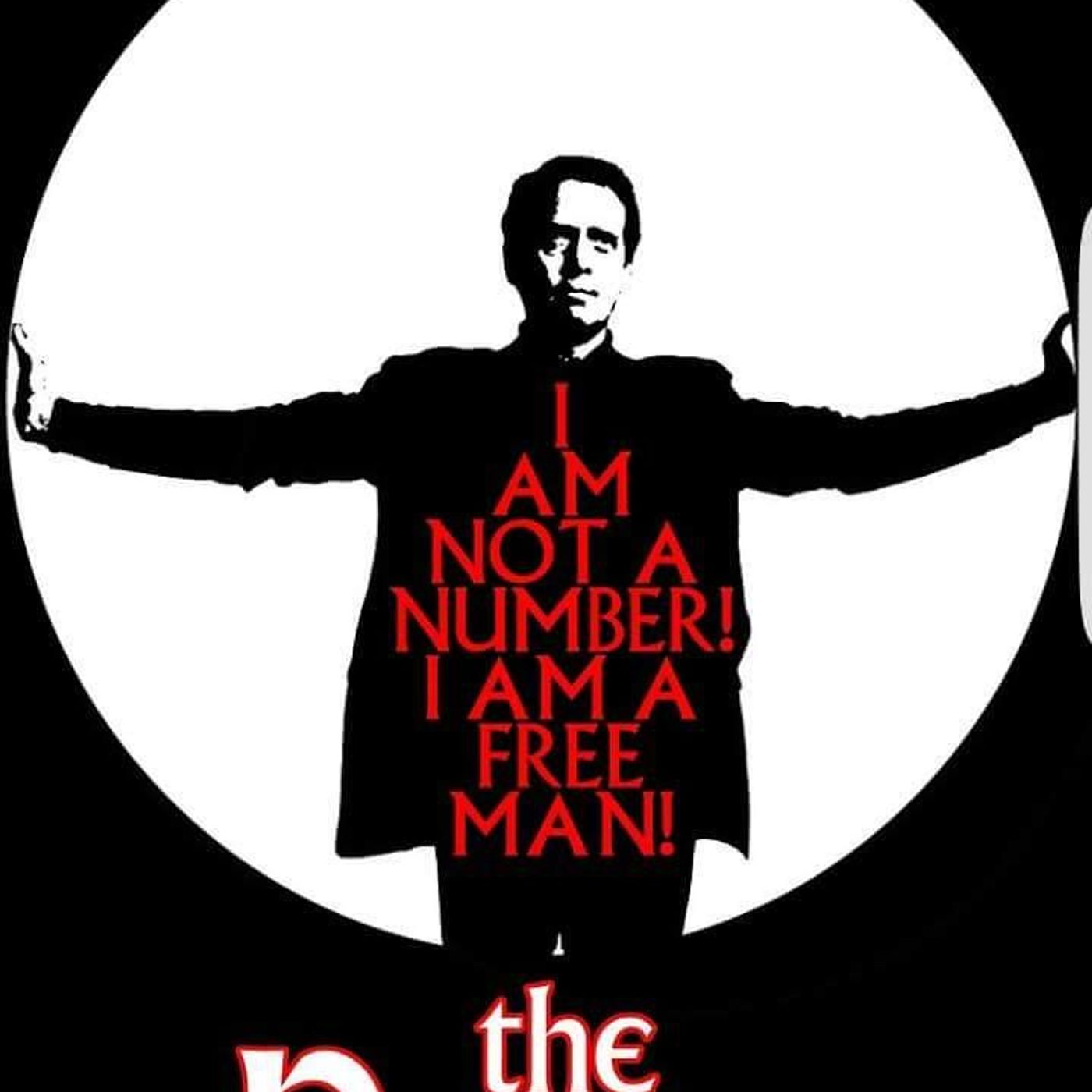
The show, created by the main star Patrick McGoohan, follows Number Six, a secret agent who, after turning in his resignation, is kidnapped by unseen forces and sent to the Island after turning in his resignation. The Island is a home for dissenters, and other individuals deemed too dangerous to live unchecked in public. As Number Six attempts to unravel the mystery behind why he has been sent to the Island, he must also rebuff attempts at cracking his psyche to figure out what secrets he may know.
Jess and Chris talk about the tenth and eleventh episodes "It's Your Funeral." and "A Change of Mind," following the Six of One fan order.
You can follow Jess @writerjessbyard, Chris @chrismasclaus, and @oneseasonshow, along with a big thanks to Chalalatas for their song "Mustaches and Martinis."
Transcript
Automatically generated, so expect the odd misheard name.
Either I'm Cris Statue, I'm just fired, and we're the host of the One Season Show, a podcast where you take a look at a TV show that only lasted one season. Each month we tackle several episodes of the show, and on this episode we're gonna be talking about episodes eight and nine. Schizoid Man and many happy returns. Patrick McGowan is the prisoner trapped in a streams terrifying prison. A lot of people are curious about replies behind your resignation.
They want to know why it was something little left man like you was worth a great deal on the open market. The information in your head is priceless. I don't think you realize what a valuable property of the compount, what a valuable property of the comp prisoner? And what show are we talking about? Oh, the prisoner.
By the excitement listening to this episode, you should know what show we're watching. That's true. But if you're if you're just coming at this new because it's on your RSS feed for some reason, I honestly you could start listening to this at this point it wouldn't matter. Yeah. To be fair, yeah, Jess is completely right because this show, like we've mentioned, countless times before now, and we'll mention it once again.
If you're watching this show along with us, this is not the order that they were filmed in. This is not the order that they were produced in, and this is not the order that they were released in. This is a fan order, the six of one order on Wikipedia and on their website, you can check that out. But this is the order that we're watching it in, because I think we'd both agreed, Jess, that if a fan community has come to a consensus, it's probably it's probably the best direction to watch it in. Probably, Yeah, And I mean, you know, sometimes I have my reservations on thinking like that as far as, like, you know, when it comes down to like things like director's cuts and versus fan edits and fan edits in general are sort of an interesting topic for me as a as half, you know, my career trajectory kind of puts me in the middle of both the you know, criticism side of things and the actual filmmaking side of things.
So sometimes the fan you know, edits and fan wants kind of I guess rubbed me the wrong way because it's kind of like, well, it's not your artistic vision. Why do you think you should have it, but you know, in cases like this where it's somebody's just kind of love for the fan, you know. The the episodes, I think, and honestly, I don't know why they put them in these specifics orders. We didn't do a whole lot of research as to why it's this way. I mean, I'm not going to say I know exactly why, but I will say that sitting and watching the show for as long as we've been watching it, now it I'm getting a better sense as to why they put it in the order that they did.
Yeah, and I do appreciate that that's coming kind of out in these episodes. Like certain when we had first started this show and we were there were a few things where it didn't really didn't really understand why certain episodes were arranged the way they were. But now, yeah, I do at least like to see that we're seeing some kind of progression, even if the story is pretty much just spinning its wheels and doing the same thing over and over, which very much I guess. Unfortunately, that unfortunately is not different for these next two episodes. Schitzoid Man in many happy returns, but I did enjoy these episodes a bit more than others in the past, and kind of the reason that I enjoyed the dream manipulation episode, I enjoyed Schizoid Man because it kind of happens within It's a story that is happening within the world and not bent solely on Number six's escape.
Sure, plus, so you see some awesome nineteen to sixties attempts at shooting one actor playing the same role, because in this episode we number two is up to their old tricks again and trying to manipulate and confuse Number six into giving him information. Oh hold on this, you're giving the episode way too much of a benefit of the town. It is much more complicated than even that. They convince Number six that he's someone else and bring someone else and who looks like him to be Number six, which is it's like a double it's a double bluff. Yeah, the only way they differentiate is a mustache, obviously, because that's how well I mean At the very beginning, when so is that it did they I thought that maybe they clung number six.
No, no, it's a double bluff. So instead of having Number six and another person come in pretend to be Number six, they convince number six that he's someone else gas lighting. Yeah, yeah, and then they bring in, you know, then they bring in someone else who looks just like him to pretend to be Number six. So it's like that, it's like the idea of you know, like um, like a placebo. Right, So when you go and do like a tech like a you know, a clinical trial, some people get the actual drug, some people get the placebo.
In this scenario, nobody is getting the actual drug. Everybody's getting a placebo, right, and like so no one knows anything at all, And that's like that's the whole point here, is like number six is not only being trying to be convincing someone else, but they're also trying to convince him that he is someone else, and someone else is who he originally was. It's unnecessarily convoluted, Like it's illustratingly convoluted. It is, But I don't there's it's very convoluted, but I do. I don't know.
I like the idea of that kind of gaslighting because it is if this show we're a bit more connected in its story and progression of character and sort of you know, like dismantling of a character, which is what should be happening to number six by this point in this show. He should be cracking. He should be having um sort of these other crisises of character and identity while he's you know, trapped in this village. And this episode's going for that. And this episode, the idea of people being like having so much control over you and having like broken you down so much to make you believe that you are a different person is pretty you know, it's pretty unnerving and unsettling and disturbing.
It's just unfortunately that idea isn't that psychological aspect of that idea isn't explored at all, because it's pretty much this this is an effect episode. This is their episode where they were, Okay, we're going to get Patrick mcgoughan to play two different characters who look, you know, that's same person basically, and it's it's going to look really cool. We're going to do all these you know, we're going to set up the camera with horse perspective and all the stuff. And that's basically where we end up focusing is them just accomplishing this effect, which they do I think pretty well for nineteen sixty eight. Well, and that's the other thing that is a problem with this is you know, this episode is the eighth episode of the show.
It is again we're at this point in the show where we are about to hit the halfway point, and this is this is oftensibly the second episode that has any sort of like harder sci fi because but even then it's like they're doing some sort of like manipulation to his psyche, but at the same time, like that's not really sci fi. No. I mean, honestly, there were a couple like sequences where I was even confused as to who was actually number six. And that's a that's not a tell for a good like they got me plot, that's just that it's it was unnecessarily evoluted. Like you said, well, that's the problem I think with this episode.
That is the bigger issue is that the way that this episode is shot, it's very look, they're really trying to push the envelope of what they could do in sixty seven. This episode aired in the end of October of sixty seven, so they're pushing the envelope. They're really trying to push it and really go for it when it comes to doing these effects. And while I have to give them credit for pushing the envelope and really trying to do something interesting. It doesn't work because it's ultimately way too confusing, and it's so convoluted and poorly handled when they're both on screen together that, in my mind, all it ends up doing is making the audience wonder what is even going on, because similarly, with a lot of the stuff that's happened in this show, they don't even really explain what's happening now.
They don't explain who this other number six is. They don't under they don't explain why he looks like him. Like I was just kind of thinking that maybe it's a clone or a robot or some kind of you know, I'm putting in sci fi elements that aren't necessarily actually you know, overtly there. Yeah, but there's no explanation at all. I mean that's the problem, right, I mean, they don't even say that this is a person who looks just like him.
They just know. They don't say that, which is what this is. But you could, like you said, interpret it as he's a clone, or it's so it's like a face off situation where they put his face on someone else's face, or they did plastic surgery to make him look like it like they could have done a cool like you know, and this would have been predictable as well, but just to kind of make it and I guess they kind of do this and the next one but reveal that that person who is you know, the fake number six is actually number two. I think they could have you know, that that could have worked in some capacity. It just I do think that there is an interesting aspect to this episode though, and it's the insistence upon by the actual number six, Patrick McGowan, actual number six.
When he is insisting that he's number six. He's not insisting he's a name. He's insisting he's the number, which I did think was interesting because this entire time we've been going up, every intro to the show is him insisting that he is not a number, that he is, you know, a person. And in this episode where he's faced with this kind of you know, psychological you know, switch that he when it comes down to when it comes down to him actually like explaining and trying to like plead, he's insisting he's a number and I don't know, yeah, yeah, And this episode, for all intents and purposes, this they come pretty close to really breaking him. And I do think that that is an interesting nugget inside of this this episode.
And I don't know, I don't given the next episode, I don't know necessarily that that kind of brokenness is going to stick with his character. Well it's not right, yeah, kid ourselves. I mean, there doesn't seem to be a lot of There doesn't seem to be a lot of carryover. I think for me, what I walk away from this episode with is this is an interesting idea. But you I know that they I know, I know because it came through on screen.
Terrence Feely wanted to give the audience this idea that he could possibly get away, and he could possibly because ultimately he eat number six is trying to put one over on them by saying, Okay, I'm not Number six. You're right right, I can go back to the mainland, like send me home, And that's what he's trying to do. And and you know, at the end, they pull another hot gotcha moment on him. But do you have to explain more, even if minor amounts of things. You need to give the audience a better idea of what the villains are trying to accomplish.
As opposed to just having him. Yeah. But the problem is is like they don't even tell you what they're doing this episode. All all of a sudden, another version of him shows up and you're just like, wait, huh what don't you have this check out? Like what is this?
Yeah? Well, and so yeah, the the they he's trying to convince them and reverse psychology. Yes, okay, fine, I'm not number six, I'm this person, So send me back to the mainland. And the reason he gets found out is because he asks about a woman named Susan, who they reveal evidently died like a year before then, so it couldn't have been this, you know, person that would have known that. Who the fuck is Susan?
Uh, it's the person that they use um to catch him in the lie at the end. That's that's all I know. Yeah, I don't, I don't. Yeah, we don't know. Because Alison is the character that he's like doing the gag from Ghostbusters with yeah yeah, oh yeah.
This episode does open with that where it's there playing those those psychic yeah where it's like it's a wavy lines or a triangle or whatever, and she's actually getting them right right. She is yeah, yeah, so there's some So maybe there's some psychic abilities I guess in this. Yeah. It Again, every episode we get is more questions and fewer answers, which I don't always hate. But and you know what, like I said, I did actually enjoy this episode, and for the most part I enjoyed the next ones too, because it's at least something a little different.
It's not just Patrick mcgoughan trying to escape bit. There's some you know, interesting qualities in it. But but yeah, unfortunately, none of it really matters because none of it's going to retain to the next episode, which is many happy returns. Yeah, I'm one. Look, let's not get ourselves again.
We talked about this the last episode. We're going to talk about it now. Just touch on it again briefly. They're not going to have any carry over, clearly. And look, the unfortunate thing is, and if the show were made now, they would have to have carry over because the audience would be like this happened last, wouldn't stand it?
Yeah, exactly, But in nineteen sixty seven, again, that wasn't the norm when it came to storytelling on a show of a narrative quality of this show. It also wasn't the norm to have everybody be able to put their opinion out on full blast for everyone to that too, which depending on where you come down on it could be a positive or negative but whatever. But yeah, so many Happy Returns is the ninth episode. It aired November twelfth, nineteen sixty seven. It is directed by Patrick McGowan, written by Anthony Skeene, and it stars Georgina Cookson as Number two.
Now, one other thing we need to mention about this episode. This is the final episode that George Markstein and Patrick McGowan worked on together because this is the point when the two of them diverged as to where they thought they wanted the show to go towards the end. So this is the thirteenth episode that was produced. There's seventeen episodes of the show, which means this episode was produced towards the end of the show's run. So they had apparently gotten into a disagreement about where they wanted the show to go and how they wanted the show to end, and this is the final episode that the two of them would work on together because of that that disagreement and creative differences, and boy, it shows with this episode because this episode could have us sensibly been the end of the show.
It could have been, and I you know, I would have been okay with it, and I do. I like. I like this episode, and I think part of it is because so essentially the setup for this one is Number six wakes up in the village, but the village is deserted, nobody's there anywhere, or not a single living soul is there. So he decides to build a boat and set sail to find the mainland. Um, and that's what he does for the good majority of the episode.
And then it was a good majority of the episode. That's what I was gonna say. Yeah, there's almost no dialogue for about half of this this episode, which I didn't hate. No, I mean, look, one of my favorite movies of all time is There Will Be Blood, and that movie doesn't have dialogue for the first hour of the movie. I mean yeah, and the really shouldn't very no.
If done right, it can be very very very good. Yeah, And this I think worked. I Mean, he does go out, we see him, he's kind of like he's on he's at sea for a while. He starts to grow a beard. It's a little bit of a castaway situation, and then he's found by a ship and yeah, the gun Runners and hanging back to the mainland supposedly, and uh we go on from there.
So is he or is he not? No? No, So I the way I interpreted this episode is he got to London, right. I didn't too, because like it's pretty overt. I mean again, when if you read some backstory, yeah, if you read some backstory on this episode, I mean this episode clearly Markstein and McGowan are at this point within their creative writing relationship where they aren't sure.
Neither one of them are sure where they want the show to go, but they both know that they don't have the same idea for where they want it to go. They just don't know where it's going to go. But neither one of them can agree on the same thing. So you have this split here where there's a point in the episode where the episode could have essentially been the end of the show. He gets back to London, he goes and reports to his former superiors.
He tells them all about the island. They go back to find the island, and he finds the island, but then of course they're in they're in a jet fighter and the pilot of the jet fighter, because McGowan is in the back seat, goes be seeing you and ejects him out of the plane and back to the island. And it turns out that the woman who was living in his apartment in London, Missus Butterworth, is actually number two and she says many happy returns, and that's the end of the episode. And it really feels like an episode that doesn't know what it's trying to do because we've already seen this episode. We've seen an episode just like this one where he gets back to the mainland in the Chimes of Big Bit.
Well, I don't know if he did get back to the mainland in that one. That one's a little less because he only gets to a room we don't see. Sure, we don't see it continue. Yes, they're trying to do the same thing rightly, right, and so's miss We're overt Yeah, this episode is. And again I liked these two episodes.
I um, obviously we saw the twist coming because it's always going to be the same twist at the end of every episode, but I kind of I enjoyed the fact that of course he's back to the island because he can't. He could have been fine if he would have just left well enough alone, got back to the city and then resume, you know, went on living his life in secret and kept on going. He could have stayed potentially in London. But because he hadn't, well maybe, but but he But now at this point, like he explicitly is like, I'm going back. I'm going to go back and prove all of this.
And it's like, yeah, of course you're going to get stuck there again. We've already been aware of that. Your government, at least part of it. You know, some people within your government are are on the side of the village. And I think that the biggest issue with this episode is that, I mean, I guess you can reason this for every episode and or you can ask this for every episode, but I don't entirely understand why or how the whole village was deserted.
I think everybody was just hiding, like they just go underground, and I don't understand why. So he should escape and go to and then get sent back. Yeah, I think I think what this whole show is about. And I would say that that's pretty much the case because reading interviews with Markstein and McGowan. This show is about, you know, one of the things that shows about us trying to break someone mentally, and how are they going to break him mentally other than having him go all the way, get right to the finish line and then grasp it away from him, move the goalpost right at the end, and that's what they do.
I mean, he's in London and like you said, it is his choice to go back. Yeah, but like they knew that he was going to do it well right, I mean they knew the kind of person he is. I know he can't leave well enough alone because that's who he is as a character, and they they assume, they anticipate that that's what's going to happen. They have missus Butterworth there, um right at they have her there at the apartment, his apartment, so they know he's going to come back there, and then they put her there and look what happens. She's she's number two.
So I don't think there's any scenario where he gets back to London and didn't do what he did well yeah, And I think I mean that's just I think, you know, like you said, and we've touched on this before that. Another part of what the show's about is kind of like even if you're you know, people can change that. That is an absolute fact, and you can change bad behaviors and you can change your life for the better, but there are some things that are inherently in your personality that you can't break. And Patrick mcgoughan's character, like we touched on before, he's supposed to be this some kind of James Bond awesome spy and everyone's upset that he resigned because he's so good at his job and he just can't get over himself, which is a large part of why he ends up getting stuck back in this village all the time.
Well, because they're convinced he's going to spill the rights to the highest bidder, which I mean again we don't know what information he want. They want either, well they don't know what he has either exactly, and nobody's asking any specific questions. He was number one. Just think about James Bond, right, I mean, the character of James Bond, the amount of things if you if you prescribe to the idea that James Bond has been one character the entire time, not the James bond is a is a handle, like double O seven is a handle for the person. Think of all the information that he knows about the amounts of times that the world has almost ended that normal society doesn't know about.
That is the assumption I make with this character, with the character of Number six, it's just I mean, just think of you know, it's like that quote from Men in Black, where it's like, you know, there's always a Karelian death cruiser coming, or there's always some intergalactic plague right on the horizon, but we're the ones who stop it. If humans knew about or if people society knew about these things, that it would be a mass meltdown, right. That's like I assume with his character, they're they're worried that he'll talk to someone and spill the beans in society will are to come unglued because of the amount of times he's saved the world from god knows what threat, right, Yeah, And I mean it's but that's head cannon.
It's the only thing that kind of makes sense because I guarantee you we're never going to figure it out what that information is. Judging by the way the show has been going, they're not going to offer that information. Well, and you know what, maybe they don't even want any information from him, and it's all just the site. It's all this could be just a giant Twilight Zone episode of it was all a military training, you know, the thing. You're in a simulation this whole time.
I think, and judging from what we've seen so far, the show is showing us the village as a place where people like Number six go or where they can be monitored and kept away from the greater public because if something that they knew ever did come out, it would create mass panic. And so they're just trying to figure out what he knows. But I'm not sure what they do with that information. I don't know if they sort of there's some sort of rogue nation, like some rogue state that's trying to figure it out to then do something with it, or just figure it out, just to figure it out so that they know what he knows well, right, because like they in them in the intros, or he always asks like who are you and they say, or who do you work for?
And they say that would be telling. So there's somebody This village is constructed by somebody that would be a known entity or or you know, an organization that is a known entity. UM, but I also don't know, you know, like I kind of talked about at the beginning of this UM series that when we started that there's a very Stepfordy quality to the people who have I guess acclimated or joined or whatever at some point. So these people must have at some point just given up and given it right. They just give the information out and then they just live their lives in this sort of fake Stepfordy world that as long as they keep you know, they don't ask too many questions, everything will be fine.
Everything's provided for you. I mean, you know. Another show that has some of these similar themes is The Current. It's still on Westworld, and there's a question that they pose where it's if you can't tell if it's real, doesn't matter, if these people don't care that this is where they are and they're able to just enjoy this village for what it is, doesn't matter that they're there all right. Well, and see what I'm wondering more so, is like, is it more of a Stepford quality where they've been replaced?
No, I think it's I think they've just I think they've just been broken, because I mean that's what they're trying to do to Number six. So I just assume, yeah, they could just lame that they've been doing this to everyone. I mean, I guess, you know, they could just sit them down and torture them so straight up, you know, for twelve straight hours, but then there would be no show. I also don't think torturing someone is as exciting as as mentally breaking them through all sorts of you know, schemes. Yeah, you know, it's like say, or there's like a version of him that he's that does not him and they're trying to convince him be someone else or I mean any number of things.
I mean, we've seen like different variations on these ways to mentally break his character, and it hasn't worked yet because he's you know, the rugged individualism of Number six is that he's not going to give up until he's free. You know, Yeah, do you want to become part of the greater population or do you want to be an individual? I mean that's what this show. I mean, I mean we've talked about that. It's obviously he's very heavy handed, and the populism versus individualism is pretty overt right.
Yeah, but that's why I like this show, Like, that's why I've been doing show. But you know, it's um. The thing I will say about this episode specifically is I like the episode to a point, but when it was clear that he was going back to the village, I was like, man, I thought we were going to maybe see something different for a couple episodes. Yeah, and that is just a it's just a restart. Every time you could do something in London where the village and pieces of the village, pieces of the people of the village are in London, still trying to manipulate him there you could.
I mean, obviously this is a government thing, so it's like you can manipulate the police and everybody into working on your side. I mean, yeah, clearly, I mean clearly his own government is in on it. Maybe not everyone. Maybe it's compartmentalized, which is the easiest way to hide things within your own government is to compartmentalize information. But I think that's what is going on here, is his own government is doing this to him because again they're worried what him revealing secrets could mean for them.
As we get towards the end, oh there we go as we get towards the end, we at least and I know that we're not you know, it's not going to be a satisfying ending obviously, because here's the thing. And I don't know though, right, Like, yeah, I'm just didn't like it, but like that doesn't necessarily mean we're not going to like it exactly. And I'm just happy that there is one. I am happy, you know that even if he was only given like what like a week and a half to write it or some shit like make some ridiculous shit like that, at least we are going to get some sort of finality enclosure. And it's not just gonna I don't go that far.
Well yeah, I mean it's he's probably just going to still be stuck in the village, like, but at least there is an ending to this. Again, I you know, I don't know, right, that's an assumption. I mean, look, it's like anything else with fan communities, right, I mean, fan communities are the most opinionated people. Oh yeah, absolutely, you know. I mean I hope that there is an ending.
I hope that there's some sort of conclusion. I don't know how satisfying it's going to be. I have my druthers as to what I I think it's going to be if they knew, if they knew that they weren't going to get to make more of the show. Like you said, that means that they have to write an ending, right, not like Kitchen Confidential or Werewolf, where you literally have and next time on and it's like, yo, there is not a next time. There's something else, like you know, the next time, you know, the next time never came.
Yeah, And that'll be a first for our show. Four shows that have been canceled, we actually get one that at least was given some kind of warning, not a great warning, but warning nonetheless. So this will be an interesting kind of first. We actually get a wrap up on a story of some kind, you know, and whether or not it's a it's an ending that either one of us you know, that resonates with us, or is a conclusion that is um, you know, good in quotations or quality conclusion. Because look, I'm not gonna lie.
If you and I were writing a show, what's the hardest episodes of the show to right? The first episode, all right, and the last the last episode, because look at something like Sopranos, look at something like Star and not Star Trek, well, Star Trek to some extent, but X Files. I mean a lot of these shows, like the conclusions of the show are wildly divisive. Oh yeah, I mean most most shows don't have you know, it's fair to say that when shows are on and they're beloved, they're beloved. But when they end, it's it's usually overwhelmingly people were disappointed in the ending, whether it was a good ending or not, whether it was a planned ending or not, or whether it was a forced ending or not.
Endings to things usually are met with more adversary than they are with feelings of completion, and I think that that's probably a psychological thing, where it's just you're pissed off because the thing you like is over and there's no more and you can't you know, daydream with these characters anymore because you been told this is what happened to them or not, and that's it. It's a finality that I think that we don't like as people. It's sort of it's not as obviously, you know, distressing, or as serious as death, but it is a finality. It's it's there's something there that you're not going to get back again. You're not going to get back that joy of watching that show for the first time.
And especially the more dedicated and more into the show you are, the more likely you're going to be burned by the ending because it's not going to be what you want it to be the characters you know, and it shouldn't be. It shouldn't be what you wanted to because it's not your thing. But I totally understand that just general, you know, prickliness towards endings. I'm a huge I I can't figuous endings too, so that's like me too. But we're not quite there with this show.
We're almost a band, you know, talking about show end because, like you said, we haven't gotten a chance to really talk about it. I understand, like you said, I understand people being upset that a show ends, but like, just be thankful your show didn't end like Game of Thrones or like Dexter, because those are those are going down as like the worst series finales of all times for shows that are otherwise that were that were before those seasons aired were beloved. Yeah, and like hugely critically acclaimed Dexter Shore going down season the last season I was going to say the last season was the worst season, sure, but it wasn't the start of the season six with the fallout of one of the main characters deaths after that season that handled the fallout of the character's death was where I kind of stopped really being a fan of the show and Game of Thrones.
You know, I think Game of Thrones, it's less obvious where the decline is. You could ask any number of fans of the show what season you kind of stopped thinking the show was quality. For a show like that, there's a lot of hindsight that people now are like, well, now, you know, I don't know. I think that I think that people are willing to jump on and I didn't like it more overall, now that the ending is what it is, rather than I liked the show up until this last season, well, I think that they really ruined it for a lot of like the whole series for a lot of people. Well, and when you have a show that's based off of a previous property that people can still read and are still waiting for it to be finished, a lot of the folks that I know that have a problem with the show go, well, here's where it's stopped being good because it ran out of source material.
And if you don't if you don't have that frame of reference for kind of saying why the show's quality dipped, you're going to come to a different conclusion. It's going to be a different season, right, So, I mean, you know, look, Dexter's based off of another property, but Dexter straight away very far from the books pretty quickly. But Game of Thrones like kept it sort of well and then and then telling of that like this, these creators were more interested in the source material than expanding on the source material themselves. And that's apparent when the source material runs out, because then it's no longer their show. They don't know what to do anymore because they don't have any deck, you know, they don't have any direction from for events.
They're just like, well, this wasn't our initial like baby anyway, and we adapted it and now we don't know what to do, which is a super dick move by the Oh yeah it is. But I mean at the same time, I mean again, like you know that that fuels the flame of the backlash for the fans of the show. And with this show, like you said, I mean, there's there is backlash in the community for the show of people who don't like the way the show ends, and I'm still willing to give it the benefit of the doubt until I yeah, I am too right, I know, yeah, obviously yours. Well, It's just I find it funny that this show people get worked up about the ending of this show when I personally only imagine this show ending one of two ways.
Either he stays on the island, which I think is the less likely ending, or I think somehow the island like the or the village the island, same difference, because now it's been established it's an island. Um, I imagine that the village gets destroyed. Yeah, Like, it's only two ways that the show could go. Like, there's not a lot of wiggle room. I mean, there may be some more complexity to it, knowing this show's innate ability to be confusing for Yeah, well that but like I imagine, he either stays on the island or the village, or he destroys the village, right, And I'm leaning towards the the village gets destroyed, and which Yeah, sure, I know that the comic book from the eighties that was either it was a marvel or DC comic that's a direct sequel to the ending of the story, so we're gonna have to address that in the finale as well.
And I have it and I haven't read it yet because I don't want to read something that gives the ending away, But Shattered Visage addresses the ending of the show as well. So, you know, I'm excited to see the second half of the show because now we're in the second half of the show, but right now it's you know, it has felt very wheel spinning. Yeah, agreed. What are the next episodes we're talking about, Jess, So we're gonna be talking about episodes ten and eleven, which are It's Your Funeral and Change your Own Mind. Yeah, so we're you know, these are the last couple episodes of the one season show for the Prisoners.
So hopefully you've been with us through this, and uh, we're I'm excited to see where the second half of the season takes us. And if any and if any of you are like actual super fans of Prisoner, because there are evidently some since we're watching their list, please reach out to us. Let us know, you know, if you know more about why this this arrangement is the way it is. Let us know if you just have you know, little insights or a little whatever tidbits you want to throw at us, do it. You totally love that shit, so get at us on Twitter.
I think we should still also offer up our order at the end. Oh yes, I would agree, right, I mean why not? Oh yeah, I think the one season show approved prisoner episode ordering. Yeah, because again we're sitting here watching the show in someone else's orders, so mine as well. Agreed.
So where can people find you? Chris? They can find me over on Twitter at Casualty Underscore Chris I talk about pretty much everything I work on there. That is the easiest spot to find me. You can find the podcast at one Season show dot com or at one Season Show on Twitter.
What about you, Jess? Where can people find you? You can find me on Twitter at writer Jess Bird. That is also where I post pretty much everything I do. But if you're looking specifically for Chris and I together on podcasts, you can find me on the Culture Cast twice a month, which is a movie themed podcast.
Every month is a different theme. You can also find us on our other podcast, Scary Stories we tell, which sort of traverses the lines of true crime, horror culture, and unexplained events. So if any of that kind of tickles your fancy and you're tired of TV or movies, hit us up over there. Yeah, because let's not kid ourselves. We do like other things than TV or movie.
We do. We are well rounded people. Yeah, well we are well spared people. You baby Triangle and yeah big thanks as always too, mustaches and martinis. That's the music for the one season show and be seeing you
Similar episodes across the network
Matched by shared keywords.
-
Identity Crisis
2 shared keywords: espionage, patrick mcgoohan
-
By Dawn's Early Light
2 shared keywords: patrick mcgoohan, the prisoner
-
Three Days of the Condor (1975) — "They'll print it."
1 shared keyword: espionage