
About this episode
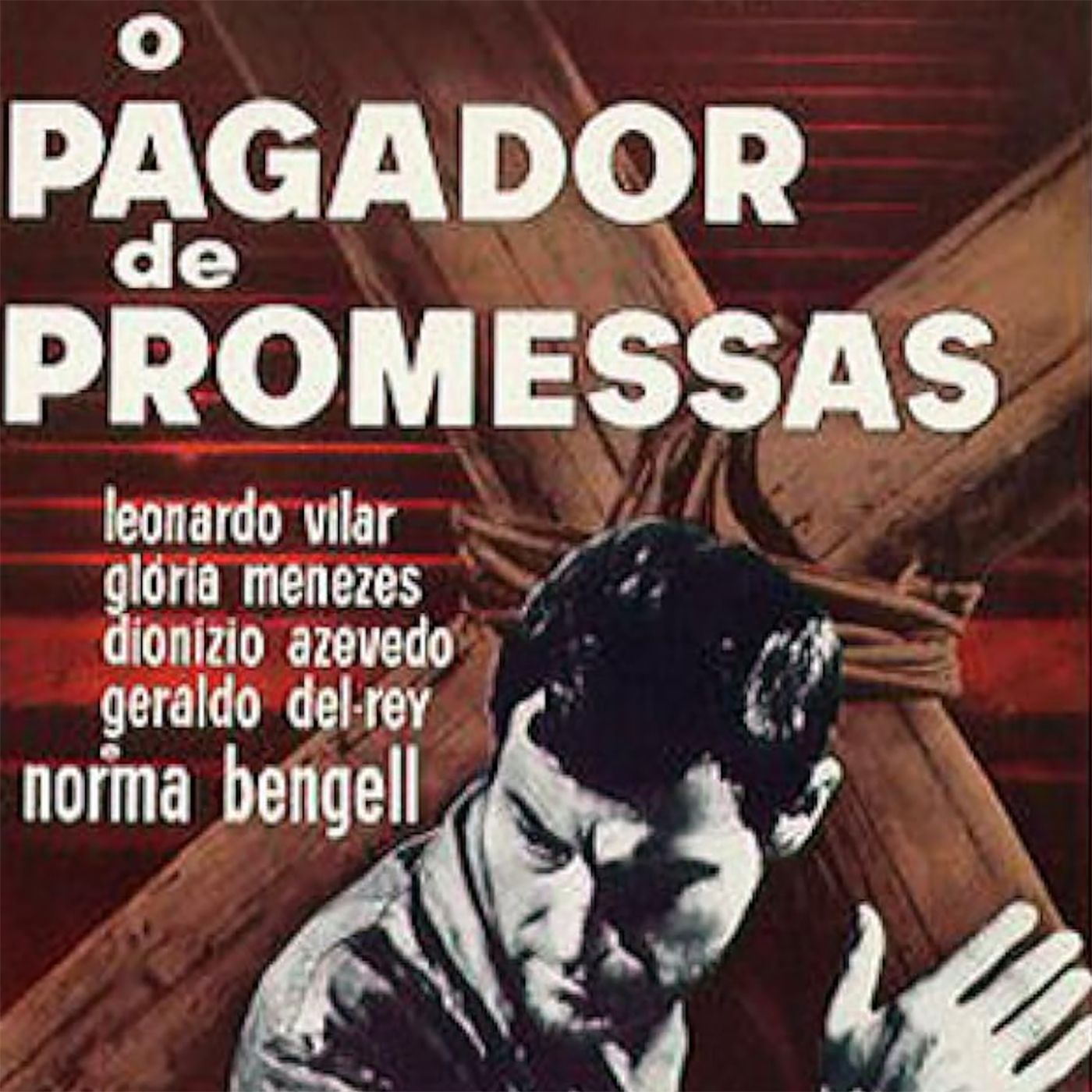
The story centers on Zé do Burro, a simple farmer who treks over 20 miles into Salvador while bearing a heavy cross—honoring a vow to Saint Barbara after his donkey, Nicholas, falls ill. What begins as a devout act of gratitude becomes a battleground of bureaucracy, media exploitation, and religious gatekeeping. Winner of the Palme d’Or at Cannes, Duarte’s film remains a bold and timely meditation on class, faith, and the politics of devotion.
Transcript
Automatically generated, so expect the odd misheard name.
Oh he is, folks, it's show tied. People say, good money to see this movie. When they go out to a theater, they are cold sodas, hot popcorn, and no monsters. In the protection booth, everyone pretend podcasting isn't boring. Got it off, My folk.
Will give you mother that that you boys space that basually my smiles. Measureable to knowing that my gross. But that's the who's the negress? Who's to be used as a boss on the plantation? That's not my prosing carriage.
Just do it now, Just do it out, now, just do it out. That was a sixty movie. I hate to know me oceanal more for me at the Gagra part would be a story too mass form. Ready forming a part that's recreation. The prince to give me all the parts, he goes, shut up.
Here at ghetto. Try now, my Gooski go cattle had to come back sea. And now love now and hope to go back to get Oh did not any day. But see. People, Welcome to the projection booth.
I'm your host. Mike White joined me once again. It's mister Philip Marin. Hey, everybody also joining us is mister Robert Polissimo. Hello Mike and Philip, thanks for having me back.
This week we're looking at the nineteen sixty two film from director and Selmo Duarte o Pagador Dee Promesas, also known as The Given Word. It's a Brazilian drama based on the novel by Dias Gomez. The film tells the. Story of a man who has traveled over twenty miles from his little village to the big city, making a promise to a saint that he'll walk all the way there with a cross on his shoulder if only his best friend, a donkey named Nicholas, is saved. This film looks at propriety, religion, class, gosh, just all those kind of things that we love to discuss around here.
So, Philip, was this the first time watch for you? I will say, I don't know when this episode will be published, but little bit of whiplash projection booth style. Last time I was on a month or two ago, we talked about a very silly and fun B movie about a killer fish. And I didn't really look into this movie before I press play, and I was like, oh, this is like a substance of cinema. This is right up my alley, but I was not ready for what I saw.
But spoiler alert, I thought this was phenomenal. But yeah, I was unaware of this. No killer fish in this film, and Robert, how about yourself? This was the first time for me as well. I hadn't even heard of it before.
I liked it a lot the first time, and I watched it again. I think the seconds i've really actually blew my mind. And to think that it won the Palm Door in sixty two and that was like that year you had like Lese the Exterminating Angel, you had Cleo from five to seven, like these masterpieces that people talk about endlessly. But yet this film is so obscure, Like I found so little about it. So I'm looking forward to diving in with you guys.
Yeah. I had like three or four friends on letterbox who had this log and then immediately it's like, when are the Palm d'Ors? So like I was like, okay, I need to pay attention. I didn't realize that's what we were doing. Yeah, I have never heard of this film before.
I was doing a lot of searching last year as far as interesting movies that people don't talk about or great foreign films and just kind of scouring these love them or hate them, but listical sometimes actually work. And this was on one and I said, I had never heard of this film before I heard it was Brazilian. I had done a series of Cinema Novo a few years ago. Really enjoyed that this was a lot earlier before the Cinema Novo movement happened, which was kind of cool. But this is right around the time of the French New Wave, and I feel like there's a little bit of influence there.
Yeah, completely obscure to me. It's a little tough to search up because the given word isn't a direct translation. I don't know why it's called the given word. The Promise Keeper is the literal translation. I think that's a much better title than the given Word.
But yeah, what a fascinating story this is. It's so compelling and it just grabs you right from the beginning. We've got this kind of interesting. Prelude with all this local music, and then to cut to this guy peering across this kind of barren landscape with his wife and you're like, what the hell is happening? Well, in the first image, I went back Robert and rewatch part of it as well.
I don't know how literal it was supposed to be or what, but the first image we actually see of him, like this house is on fire behind him and he's like walking, and I was like, wait a second, I don't remember that from the first time I watched it. But when I queued it up to play it again and like watch certain scenes, I was like, what's going on? Yeah, I think it was like a foreshadowing of what was to come for him. And I mean, I think what was so fascinating about the film is that if you're a religious person, I mean I was brought up Catholic, I would consider myself agnostic now, but you know, if I lean into my chestling believes I could look at this film from purely a spiritual angle and you cannot shake his faith.
And you know, you can really lean into is that pimp the devil who like sleeps with his wife? You know, is the fire like the devil like gonna be following him the whole time? Or is that Santa Barbara or you can give you're totally you know eighties, you think this guy's just insane. This was such a well written movie. I'd never heard of the story, and I did a little letterboxed IMDb search of both the writer and the director, and maybe some stuff was lost and maybe some hidden gems in there, but a lot of the other stuff they did did not look like it made much of a splash at all.
And then you have this like spectacular thing that feels like an immense hidden gym. Wait, it won the Palm d'Or. Also, it was at one time recognized, and now it's like we're very film literate, I would think, and you know, the three of us, like, what the hell is this movie? It's like, yeah, no it's not. You mentioned the Exterminating Angel.
We just did an episode about that, Like that's obviously something that has carried through since nineteen sixty two. That didn't win the Palm d'Or. How come this movie that did is for us lost the time. The only thing I get thig of is maybe because it's a deeply spiritual film, so it's not necessarily universally relatable. But then again, you look at you know, Joan of Arc the film and everyone, I mean, that's a very similar christlike figure, and everyone talks about that movie.
I don't know, for some reason, it got lost in the cracks. In addition to being like a deeply spiritual and religious movie, it's a deeply social and political movie that watching this in twenty twenty five, I was like, man, you throw this on the rep cinema rounds. I think this will do very well with people cinephiles, regardless of their religious affiliation. It's so beautifully filmed. It looks amazing, and the print that I got to see the version looked incredible.
I'm like, this is ready for blu. Ray, come on, let's get going here. This is not un raight antswers, let's do it. The location they found I think it was Salvador, Brazil. This location with the main thoroughfare and then the church that's up all of these steps, and just those steps become this amazing metaphor of this poor guy's say, just going up and down these steps constantly and trying to make his way inside of the church.
Because the simple version of the story is this guy made a promise. He said, hey, listen, if you save my best friend, I will carry this cross all the way from my little village to this church. On the day of the celebration of Saint Barbara and I will bring the cross inside and I will give my blessing and all this, and this is my promise to you, Saint Barbara. Then it becomes okay, well, who's your friend? When he finally makes his way up to the door of the church and starts talking with the priest like the day after because it gets there at night, and that whole story, how he's telling the whole story about his best friend, Nicholas, and when they revealed that Nicholas is a donkey, I was like, okay, is that going.
To be the final straw. No, it's that in Brazil there is a mixture of native religion like the religion brought over by the Africans, because there's an incredible mix of people in Brazil, and those gods that they have in that religion would get kind of mixed up with Catholic religion. And that was such an ethema to the priest. He's like, no, you can't come into this building. There's no way I'm going to allow this.
This is sacrilege, and that becomes the whole central struggle to the film. It's great that in and of itself. The version I watched, how a little scroll at the beginning that especially the second time, made a little bit more sense or added some context. That's fascinating, So especially socio politically, like it wasn't just oh, over time things got mixed in me did as a pluralistic society does. It was a survival mechanism that when the Africans who are in Brazil primarily as slaves, wanted to try to stay faithful to their religion, they did it and basically exchanged the names.
Like when they would pray to their deities, they would be like, oh, this is Saint Christopher, this is Saint Barbara, this is Saint Matthew. The movie described it as like the spirits got confused, which is in and of itself, like that's all you need to say narratively. So it's these people trying to keep their identity in an oppressive system, like outwardly acquiesced to Christianity Catholicism while maintaining their religion and this unintentional melding. And that's that's a fascinating like you could write a thesis on that in and of itself. Yeah, at the beginning, as they're dancing and there's like the celebration and we see zed praying.
Yeah, there's that screenshot of what their religion is can and I hope I have that right. They tell you what it is. And then we have that conversation between Zed and the priest where you know, Zen tells him exactly what he did that he prayed to Santa Barbara and the connection. We're honest to a fault. Guy did not need to say all that crap because like you're in, drop the cross off and leave my guy.
He's just so open. I don't know if it's naivete, but yes, he's super pure and that he's doing this all of love for his donkey. I mean his name is Ze de Buau, the main guy's name, you know, like the donkey, and so Nicholas, you know, like how he talks about like, oh yeah, people see me with my with Nicholas and they like, oh, there goes a with this burrow blah blah blah, you know, and he's like, I don't mind tho, it's okay. Nicholas is my best friend. It's like all done out of purity, and he just really you know.
He's so open with the priests, just like yeah, non I tried this and this happened. And he's just such a lovable guy. Don't be mad. But like I I also they're like, I had everybody pray for me basically to cover my basis. See what worked.
And now he's like, wait, you pray to everybody, not just us. Just from a writing standpoint, I wonder if they thought, oh God, I hope the audiences is going to understand this, like who are not from Brazil? Because he's such an honest, innocent guy. He just lays it all out. We get the gist of it.
The only thing I looked up that because I thought, okay, so he went to like this other and I was like, okay, we would you. And then as Zed says, oh, there's a connection between Yanza and Santa Barbara. He doesn't explain it, but you see, the priests is like, no, there's no connection. So the only thing I looked up was that the connection is based on their shared association with firestorms than lightning, as well as their image as powerful female figures we're not afraid to fight. So Zed is like, it's the same thing.
If the priest is like, no, it's not the same day, you know, but you get the divient you might you know, someone may want to throw a little deeper and understand everything. But if I thought, for writing standpoint, I thought that was perfect. We get it, we know what's going on. And then that maybe goes like if you know that going into it, or you look it up, like the fire at the beginning, you can kind of group that together, at least thematically. The whole thing of him being so open and so naive and just driving his wife crazy, and especially his wife who doesn't really need to be there once she realizes like, oh, I wasn't part of the promise, Like what the hell did you do?
I would just walk twenty one miles for you? That caused so many problems if she just left her at home, take care of the farm. I'll be back in a week. Like man didn't need to happen. Unless he had to burn down the farm on the way there.
I don't. Yeah, that amazing image with the fire and everything, that's cool one for the ages. I initially thought that card was pointless, but then I thought, well, actually no, he was. If we're leaning into the spiritual side of things, and like they shot a big fire at the beginning, there's got to be a purpose for it, right, and like if there's this character, who's this pimp who sleeps with her? You know, at first I thought, well, why did we need any of that?
But again, if we're leaning into these spiritual aspects, is this guy just cursed from the minute he starts going there? She believes that it's Santa Barbara forcing her to do this, and then you know, he's like, well, she's like, maybe I'm making an excuse. But I thought that was interesting. You know, you could really kind of lean into the spiritual aspects of the film, and he does wind up dying. You know, so is he completely cursed or is this just the fault of everyone there?
Yeah, and that's wide open, And especially like viewing that now, I don't think it is that people like to throw the terminialism around, And I feel like a lot of people who do, like they took like philosophy one on one and never really thought much beyond that. Like the movie did not strike me as that, but more a like a sadness on the people who are pure hearted and who because like it's not even that he's like, oh, Everything's gonna be okay, because he doesn't even necessarily have that point of view, say, but rather I'm going to only do, like I'm only going to act within this and to a large degree that's admirable. But when the rubber meets the road of reality, not that we give up all of our ethics and morals or things like that, but there were many times where as somebody who is like who is more like actively spiritual'll be like, guy, walk, go way, you make your promise.
The cross is there. If a priest is stopping you from fulfilling your promise, that's on him. Drop it off in the courtyard and go home. That's not on you. But again, like watching that now, like people living in this world with all these broken systems, and the movie highlights several of them, Like there's the media, there's the cops.
There's the hierarchical organized religion, not just religion, but like the organized hierarchical, Like they bring in the monsignor, like that's part of the religion. You got the business people, you got the hustlers, like all of this stuff in a society together. And then this guy just very narrowly saying like these are the only things that I'm going to do and hope for like a good result. And it's like I don't know how tenable that is. That's where it really compares to like a christ like story, because you know, Jesus' faith was unshakable, you know, like we mentioned earlier Joan of Arc.
You know, they'd rather die than abandon their faith. And he's the same way. You know, it's like, I made this promise, I don't want to. But in his case, you know, because I was brought up Catholic as well, and fear is such a big part of Catholicism, and so sometimes it's like he also wants to make sure he follows through with his promise because he thinks that he'll be punished. He's like, well, I don't want to go back, and my donkey's dead, and so I thought it's also based on fear that he's it's faith and fear, which again another layer to the film.
Well, and it's not just that Nicholas is his friend. I imagine that Nicholas somehow contributes to this man's living. He probably uses Nicholas to I don't know, plow fields or do something. So it's like if he breaks this promise, if he doesn't fulfill this one thing that he promised to Saint Barbara. Yeah, he might lose his best friend Nicholas, but he might also lose his way of earning a wage.
And the way they tell this story too, it's just. Masterful as fire as them arriving at night and them the only people that are around are these night people, so the pimp and his prostitute are the ones that they interact with the most. And yeah, we see how put out the wife. Is and having this very dashing imp there all in his white suit and everything. Pretty handsome guy as well, and just like, oh yeah, I'll take care of this lady, like she doesn't need to sleep on these steps.
Oh yeah, everything. And I love the way that you interpret him as the devil. I think that's absolutely perfect because he's very very you know. Oh yeah, I can definitely help you, and he doesn't even hide it on the rewatch I was like, oh yeah, Like the first thing he tells, this guy's oh yeah, I made a promise too, because I wanted this woman's husband out of the way. And then I didn't even make it because then I'd be implicating the saint.
Haaa, hey, can I take your wife to a hotel? And he goes, ah, sure, and it's like, God, well, what are you doing? Like that's how he actively introduced, like he put that out there about himself, and this man's like, oh honey, why don't you go with him to the hotel? Or he's so innocent that he thought that literally the guy was just going to find a place for her to sleep. It's like, oh God, like he's totally taken, totally took advantage of his innocence.
And then having that as our like little story at the beginning, and then breaking it out slowly as we go through, like here's the next day, and we get to see more of these people that are inside of this town, and we get the little old guy who I guess sells books. He looks little. Charlie Chaplin ask to me, no mustache, but that kind of tramp look to him. And he's just almost like there's this little imp going around and he's like, oh, yeah, the priest doesn't want me selling books outside of the. Church, like my dirty books.
Yes exactly. Yeah. It took me a while to figure out that he was selling books. I was like, oh, okay, that's a whose of a different color. I initially thought he meant that he had books about that religion.
Uh, and that's what I thought he was. I'm like, oh no, no, he's not. He's way too much of a you know, sinister kind of character to be doing anything pure. You know, it's interesting because I thought maybe this was something rooted in racism, because you see, like the priest, because he says, oh, you know, this cannonble was how the black slaves used to trick the white masters, and they would say, oh, yeah, we're praying to the saints, but really they're creating to these voodoo figures, which is that's the way the priest sees it. And I thought, are they against this just because these people are black?
Because you notice that all of these all the people banding around him were the African Brazilian community. And I even like those images of like they're watching the steps as he's there, you know, I just thought. And he gave his land away to the peasants, which was part of his promise, and they banned the run. But then again they're banding around it because of what the media is writing that he's like this working class hero, not because they think he's really for them. I think they recognize and again it was done so minimally and masterfully and more like show don't tell.
I think it was really like them recognizing like the underdog status for lack of a better where like this is a persecuted like demeaned person and doesn't matter if we believe the same thing or pray the same people like the woman, like middle aged lady who was kind of like who appeared to be some sort of priestess or what have you. She was his biggest champion, and he's like, no, like I want to fulfill my thing as Saint Barbara, and she's like all right, man, like I'm gonna help you. Well, it's like all these people start putting things onto him. You know, we've seen this kind of thing before in some of my favorite films, you know, like we talked about being there, you know, taking the guy who lived in isolation for all these years.
He is a little bit of a Chauncey Gardener type as far as like he he is so naive, doesn't have harmful thought to me anyway for anybody, and you know, everybody starts putting stuff on him. Oh, this guy's a genius. This is amazing. Or even like you know, the big dig or something where it's a crazy person who's out there digging up the street with a jackhammer, and everybody starts to be like, well, what's this guy doing. Does he have a permit?
You know, pretty soon it's like, oh, well, leave this guy alone. He obviously knows what he's doing. He doesn't. He just loves jackhammers. So here we have with Zay and he's just like, I just need to bring this cross inside.
I just need to leave this cross inside of this church. And then suddenly he becomes you know, thanks to the media, thanks to all these people that are in the city, he becomes this like folk hero and you know, oh, I think he's a commists. No, he's this, he's that. You know, he's like he's going to start a whole new political party. And it's like, what he just wants to take his cross inside of the.
Church, something so simple would just turn it into something so ridiculous, And on the one hand, people exploit it, and then other people are afraid of it, like the priest, and you just think there's something funny about it, Like I did the second time. I did find myself laughing at times because it's like, you know, it's almost satirical in a sense of the film. Yeah, the priests there like, oh, so you carried this cross seven. Leagues and you know, show me your shoulder and his shoulders all just corn up the hell. And then it's like, oh, do you think you're like Christ?
Are you mocking God? And say, how could you say that? This guy clearly is devout? And you're like, I don't know, though, are you? And literally how hard would it have been to let him go in there drop it off and then when he's gone, dispose of it?
How that would have been the easiest thing in the. World for them, even waiting between services or something. People don't even have to witness this, but you're making such a big deal out of it. Again, it goes to how time and time again people who have I mean, the story resembles the story of Jesus, and of course no one believed him, and again no one learned from that. And here to someone who's like, you know, he's not saying he's the king of the Jewish people or something, but he's similar with the un you know, his faith cannot be broken.
And you think that as a kind of like priest, he would appreciate that he would revere that he would love to see somebody. No, it's rejected. It's like, you know, it turns into something ridiculous, right, So it's like we just we don't learn in Joan of Arc same thing. You know, it's very similar, persecuted for similar reasons. Yes, Zay's devotion was stronger than anybody else is that we see in the film by a long shot.
And I mean the Jesus parallels. Jesus's most ardent enemies were also the organized religion at the time. Yeah, the Pharisees and the priests. Absolutely. This was also a play which I just read, which makes sense one location, oh totally cafe and of course at the beginning where he's walking in the dancing but I was like, you know what, this would be really good to do or see on I would love to see.
A version of this just to be an incredible play. Yeah, the google that I wonder if it's still done. I like what you're saying as far as the people that support him seem to be the ones that are much closer to African descent, And so then you bring in the whole racial aspect of this film as well, where it's like all right, So we've got these subclasses versus. The upper class, and it's the upper class. It's the much more white looking people, the European descendants that are the ones that are like, oh.
I got to get involved in this. I'm the you know, the newspaper man and theographer and all this, like all right, yeah, let's let's get in here, start making a folk here out of this guy. And it's like, oh, I really don't think that your intentions are pure at all. The newspapers clearly were like, well, we've already spent money up. We are sensationalizing this in order to get more eyes in the ears to sell more papers.
Right or he'd laughed at and he's laughed at only by the non black people. You don't blave person laugh at him in this That was really interesting. Must have been intentional, I'm sure. I am so curious if they must have made a prop for this cross, like something a lot lighter than the way that it looks. Oh, totally, Our main act, our main actor gives such an amazing performance.
Oh wow, Leonardo Vilar. He is so good and just the he really makes you feel like that cross is as heavy as the one that Jesus was carrying through town. He does such a good job, and like I said, just the sincerity. You feel the emotions, like when the priest starts yelling at him, you can just tell how disappointed he is, how sad he is. But he's just he knows in his heart that he has to do this and that he can't enter the church.
You know, I think we already spoiled this a little bit, and I probably should have given a spoiler warning. I didn't for this one, but that he can only. Enter the church after he's dead, and that he's on the cross when he is put in here. That shot after he gets shot, with the crowd and the big open space with his body and the cross next to it. Another one.
I mean, wonderful images through this whole thing. This beautiful black and white photography as. Well, incredibly strong. Yeah, when he's just sitting there on the steps, the landing in between the two steps, very cinematic, would also be great on a stage like that was an extremely powerful image. And for those guys to put him on the cross and then use it as a battering ram and finally get him across the way.
Oh, because there's also this violence in him that's brewing through this And there's that moment where he says he's going to just burn the church down because he's getting so angry. And then as soon as he says you see the look of shame on his face. Either, how could I have said that? You know, it's just been nutances in his performance. I got to see him in more films, because man, this guy's an incredible actor.
Yeah, some incredible looks. It's so much him. But then when his wife comes back, when the prostitute comes back, I was wondering if the prostitute was going to have an easier time getting into church than him, you know, because that's the way that it feels like, Oh, well, if you're not if you're staying away from what's it called kind don't blay. Yeah, you're fine with us. I don't care what you do.
But as long as you're not doing that bad stuff, stay away from that. The irony and the satire of that is those folks that they are looking down on are seeking to be faithful and the only way they can do it because of the system, is by being a little deceptive. But they're not trying to take down the Catholic Church. They're not enemies of the Catholic Church. They're just saying, hey, like we want to stay faithful to our traditions.
The Catholic Church that wasn't okay with them, so like, okay, yeah, sure, we're all Catholic. Like I'm praying to Saint Barbara, like wink. And that's the only reason they're doing that to begin with, Like the Catholic Church literally created that problem. Well, yeah, I'm always curious about the whole idea of sainthood because I don't think that they talk about saints in the Bible. Do they?
Yes, but not like we traditionally a little substance a cinema hour here. I would say my understanding is that what came from the Bible, particularly in Hebrews, is nothing supernatural. It's like we look back on people who lived exemplaryal lives in some way like these are humans, not like sainthood, like some sort of perfection, but like people who did certain things that were very ad that are worth emulating, and there are particular passages that get looked at like these are kind of the people that in scripture are being put forth as saints, and that idea I think has a lot of value. But over time, particularly when economics and business went into the church selling images of saints in order to be like if you buy this image of the saint, then you're gonna get a special blessing.
All that stuff can kind of complicate things that are at their heart have a lot of value and have purity. I just quickly google does the Bible talk about saints and it says it does, but not in the way we do now, just mainly as like broadly defined as like someone who's a holy one. But what Philip was saying, yeah, it turned into something mythical and for business purposes and selling religion and stuff like that. Well, I feel like it helps it go down a little bit easier. It's kind of like with Islam, where it's like, okay, yeah, we recognize like Adam and Moses and this, and that will build upon that.
It's kind of like a nice no offense to anybody from Islam or Christianity or Judaism, but it just feels like it is a way to make the medicine go down a little bit easier as far as like, oh, yeah, we recognize all these people. Jesus was a prophet. You know, he wasn't the son of God, he was a prophet. David was a prophet, Moses was a prophet, Noah, et cetera. Some of these big names.
Mohammad was a prophet. Mohammed is the seal of the prophets. There's no more prophets after Mohammed, which is okay, you know, like we're putting an end cap on this thing, so nothing more. And then you get into Catholicism and isn't like Peter the one of the first saints. It's like, okay, this guy made major strides for our religion.
He's a saint, you know, and this person's a saint, and this person's a saint. But that's for me. It doesn't feel like that's outside of the New Testament rather than all inside of it. As far as like, yeah, no, this is baked into our religion. Yeah, what it has become is and yeah, it's it is complex and well I'm sure wars have been fought over it been thrown out of windows over it.
I'm sure. Yeah, yeah, yeah, look at us get crazy theological on the projection booth. Hey, there's room for everybody. It certainly makes you think. I mean it about all you know.
But again, on the flip side, it's interesting because if someone is a complete atheist, I mean, you can see what's going on from his point of view, but you can also just take it from a critical point of view and just say, this guy's insane, The church is insane everyone's, which is still true even if you are more spiritual when you look at it from a couple of different ways. But the film doesn't necessarily I mean you feel that it's literally on Zen's side, but I don't necessarily feel that they make the priests like a villain of the piece. I mean, you get his perspective right, And actually, the second time I was watching it, I was finding myself empathizing more with him. It's just like, this is what this guy's been Dodd, this is what you know, this is what you think.
Even his superiors agree with him, you know. So I like that because it doesn't just tell you, yeah, believe this guy and these guys are the antagonists. These guys the protagonist. It is that to an extent, but I appreciate the nuance which makes for these kind of rich conversations. It's a unstoppable force versus the immovable object.
You know, the priest is the immovable object. This is what I believe, and it's diametrically opposed to what you believe. I cannot abide this. Well, it was so interesting you brought up earlier, Mike, the conversation where it is slowly revealed. Zay's story was slowly revealed as he was walking up with the priest.
When he finally revealed, oh, like we prayed to other things too, Like the priest stops him, goes up a couple steps and literally looks down on him, saying, hey, this is unorthodox. Like you're out of bounds now, like Robert was saying, there's a way to empathize with that, going, hey, like I am the safeguard of like I'm the person who's supposed to be shepherding these people, blah blah blah, and like this is out of bounds. But then you go farther of like the pride of you're not meeting my standards, because it's not just about the priest's devotion to God. It's kind of about the priest going like this is my parish, this is my church, and you're going against me. And that's where the problem is because he could say, hey, brother, like that's a little bit out of bounds, Like why don't you He did not invite him in, he didn't walk with him, he didn't meet him where he was.
He's like, you need to meet my orthodoxy before I show you any grace. And he escalated it and escalated and escalated it, and like you can point out a lot of different things, but ultimately, pragmatically, like I feel like the priest is the. Most culpable for howse ended up. Well, it's like he's Saint Peter barring this guy from entering heaven, being up there at that top of those steps, you know, and just the constant up and down that keeps going up and down these steps through this entire film. And every time he gets back up there, there's somebody telling him, no, you've got to go back down.
You know, you are not allowed to enter into heaven here, you cannot ascend fullight. And they're creating the maliceon in. Like we've said over and over in this hour, he is the most pure hearted, focused guy. Let him do it and let him go. Oh, you don't need to have everybody else put their stamp of agreement on you.
That's not real emotional or even spiritual maturity. If a priest or, a pastor or a bishop, if somebody in spiritual authority cannot abide somebody disagreeing with them, that's a problem. You know. And that's the thing, is this whole like there's no room for debate talking about making a flip or mark, about throwing people out of a window. You know, I can't remember which if it was the Council of Worms or Nicea or Trent or which one of it was.
By It's like, literally people have killed over small things, like was Christ demand? Was he always said? God? Was he? Yeah?
People got burned at the stake if they didn't affirm certain creeds. Yeah, no, it's it's awful. Oh yeah. And the poors is just one example of one person who thinks they're doing the right thing and is told time and again, and then, like I said, the story just builds and builds, and pretty soon we've got just all of these people that are outside of the church. We've got the army being brought in.
We've got them questioning now, like you know, when they came up and they're like, where are your papers? And I was like, oh wow, this feels very twenty twenty five. I know that was insane. I thought it was a very interesting decision to make the local law enforcement kind of be like level headed and actually decent guy. He's the local guys like they brought in bigger guys who were awful, had the guns, had the force.
But the local guys like, he hasn't he didn't steal, hasn't hurt anybody, Like, she's just can you let him in please? Like it's causing a public ruckus because he's not being let in. The police went to the priest on Zay's behalf, going hey, man, like this is starting to disturb the peacet. I'm not going to arrest him because he hasn't committed any crimes. Let him in so we can get this done.
But the priest is like, no, this is my church. Was believed that someone was level headed, But is it just that it is the local car Yeah. Who's I'm curious what happens to Zay's wife after this all takes place. I mean, she's stuck out here in the city, twenty miles from home, no way of getting back other than possibly walking her hitching a riot somehow. But has she fallen under the spell of the pimp?
Is she going to be the next girl in his stable? I don't think so, But that is an interesting open ended because like she walked is very powerful and very cinematic, like it was heightened, everybody else cleared out, and the final shots are just her slowly walking by herself up the steps into where her husband's final resting is and also extremely powerful just imagery. After she initially slept with him. When she sees him a little later on, I thought she was going to go with him again because he's like smiling and calling her over and she looks tempted. But then when she goes up to him, she's like telling him to, like, you know, try to help her husband and like stop all of this.
So I don't necessarily think she'll follow that roots again. And we're leading into the spiritual aspects. It's like the devil's work is done. He's gonna leave him. Yeah, chaos has been sowed and he's moved on.
It is interesting too. You talked about how there was a play of it, but there was actually a I keep reading different things. It's a remake about ten years ago. Well, there was one from nineteen ninety eight that I. Was aware of it.
Oh you know, you posted that, and though I saw something on YouTube from twenty fifteen, but that could have also been see there's so much to be uh I got here. I don't even know for sure yet twenty fifteen an adaptation of the series shown in ninety eight. So yeah, okay, yeah, because I was reading mini series, but then I found an hour and a half film version of it or video. It looks like, definitely looks like it was shot on video. Unfortunately, that just lends a real cheapness to it, but you know, it was basically made for TV.
It looks like and you can feel that the sets look nice and everything, but it just doesn't feel as lush and especially compared to the sixty two version, which is just such a. Pleasure to look at. It's incredibly Yeah. Yeah, but the ninety eight version feels much more almost telenovella as far as like the video quality, and then there's much more like the type acting just like you know that it startled in Spanish, right, or that that meme of the woman's face and it says startled in Spanish on it. Clearly you want one hundred percent of the letterbox logs of the twenty fifth turn Spanish, so it looked like it was some sort of special in twenty fifteen.
And I can't tell if it was literally just a rebroadcast or a new adaptation with new people. Yeah, all I see is the mini series when I google it. Well on letterbox it's called loose camera fifty ayos and then oh, pagadorde premeasos. So I don't know if it was like a celebration of the legacy of the story, which I didn't know about the story until I get the email from you, Mike. I like that the way that the sixty two story starts, like I said, in media, you know, we've got them already going, whereas the ninety eight actually starts with them in the village and the whole thing with Nicholas and everything, and it's like, all right, Nicholas seems okay in this version, but there's also a murder that takes place, and then they make their track their trek at the end of the first act, you know, So it's told in a very different way.
And I have to say, the sixty two version it's an hour and a half long, but God, its zips along. It feels like it is an hour at most. I am absorbed. Well, there's so many elements to it and layers, and what's incredible to me is like it's done with the utmost simplicity as well. I mean, it just flows and all of these characters come in and out, and all these arguments are made, arguments for, arguments against.
You know, you got the media, the police officer, all these point of views, and I'm like, Jesus, how did they do this without making it like three hours? Like this my again, some of our last few conversations very fuller esque, and it's a social commentary and pacing. Yeah, or even like I just recently did a written review for Chaplain's City Lights, and I was like, man, this is hard to write about in a way because it's so plot heavy in a good sense, and he's seeing so much. But it's so true, so funny, and yet so simple. But that was his genius.
It's hard to write about because it's that good and this is simple. This reminds me of that. I love the shot at the beginning of the sixty two version where it's the and I'm sorry, just keep calling her the prostitute, I keep calling him the pimp. But they're outside of this club and you see the silhouettes inside behind the window of a guy playing the trumpet, another guy maybe playing the drums, and you just get those silhouettes on there. That's wonderful because I mean, I imagine that they shot that.
Hopefully all mos are not actually playing music in the club and they're just recording the you know, the dialogue and then adding in the music later. The music was great by the way in this movie too, but just that nice way of conveying this is a rock and club by having those silhouettes on the window and again the black and white. Just oh, the cinematography is so lush in this film. And yeah, please I want to see this on the big screen because it looks great. Yeah.
It did some really cool tricks too, like when they were filming them through the bars, there were a few great shots. And then towards the end, after Day had died and they had put them on the cross, the camera being under the cross as it was lifted up like that would be a stunning, stunning shot. If this got like a HD or four K restoration on the big screen, that would be a breathtaking shot. But the character we call a pimp, his name is Bonie de Bonie, mister Hansom, and I guess it was like his wife slash prostitute or I think that's Marley. Yeah, yeah, so that's the names.
She was so striking and I love they emphasize her curves so much. It's like her bottom is another character in this movie. The way that they has so much screen time. But they certainly were devilish, like, you know, in a way it was almost caricature, like the way they were just like tackling at the end to it. I think that was intentional, right, because if we're just that another suggestion that there's something, you know, evil at play here from from hell or you know, what have you.
Oh that was the lady from Planet of the Vampires. I didn't realize that. Oh wow, that's amazing. I love how they have the proper parade of Saint Barbara, but then they also have the celebration of the African God at the same time, and it's like that one has the native instruments that they're playing. Yeah, and it just goes back to the very beginning that prelude with the African inspired music.
I mean, it's fascinating Ami Brazil. It's a fascinating place as far as all the mixture of cultures that all come together in this one gigantic country. We forget about how huge Brazil is, but this, you know, we're talking about melting pot, like this bizarro melting pot of all of these different cultures and everything bizarre in a good way, you know, like there is always tension in everything, but you know, it's interesting to see the way that tension plays out, and to see that tension playing out here in the six to two film, I mean, it's great. It's very similar to some of those Cinema novo films that I was talking about where you still get to see like all right. I found the fastening too, because it kept saying Makumba all through this whole thing, and I was like, oh, I wonder if that's similar to Makunaima, which is this other Brazilian film that we watched a couple of years ago where it's like this, this is great stuff.
I mean, Brazilian cinema, for me, is such an untapped vein of world cinema that just needs more exploration, and. So often I see something from Brazil like City of God or be Shoddy, and I'm blown away. You don't see. It's kind of like with the check Like, of course, Mike, you're well versed and you know there's only so many people talking about certain countries, which gives opportunities for people like us. The only one other scene you reminded me of a moment ago that was also really great that I think would be even more striking with a great restoration on the big screen is the procession of Saint Barbara, Like the actual parade, the icon of Saint Barbara, the statue and him walking up side by side.
You're like, oh, is he going to sneak in? But like the cutting back and forth and just how effusive he was. He's like, oh, like I'm going to get in. That was just also a very powerful visual scene. And just the gratitude pouring out of him as he's looking at the statue.
I was like, you put me in a spell. I was like, man, that was it. Like that's as close as he gets in this film. Yeah, it is really weird. Sorry to go back to the whole Saint thing.
I was just remembering you. I worked at a cable company right out of college, and we played you know, local origination commercials, and I remember there was one commercial and I can't remember what religion it was for, if it was for Eastern Orthodox or if it was for Catholicism or some sort of Protestantism, but it was like, perhaps you've heard of the healing icon of Saint so and so, and it's like this whole like, come to our church and pray to this icon of this saint and you will be healed. And I'm just like, how is that any different than just selling, like you said, selling icons of saints and having your almost like hard collection of saints and things and having a saint for so many different things is so reminiscent to me of like Eastern religions, where it's like okay, well there's the God of the kitchen, there's the God of the hearth, there's the God of.
The entrance to the door. It's so similar for me as like, well there's the Saint of pets, there's the Saint of lost causes, there's a saint of this, And it's like, Okay, which one are you going to pray to? Now? Like you oh, oh, you want to. Sell your house.
We'll take Saint Joseph and go bury him in the backyard and do this little prayer, and that way you'll sell your house. It's like, what the fuck are you talking about? Life? There's no way that that can be condoned. It sounds like voodoo superstition stuff, you know, and it's probably very bad on my part.
When I talk about things being unknown, I usually say it's voodoo. That's a religion as well. So yeah, you should pay as much respect to them as I do to everybody else. Thanks in thanks for the intro to this movie, Mike. I think that we should all push some of our contacts to take a look at this and maybe put a good restoration out there.
All right, we're going to take a break and play a preview for next week's show right after these brief messages. For Gloria, the danger is always getting closer. I want tickets, and getting closer is always the danger. Gloria. All we want is the book, and the kid from Jenner Rowlans is Gloria, so she's trying to read the mom at their own game.
Gloria Grated PG coming soon to a theater near you. As I We'll be back next week with a look at John Cassavetti's Gloria. Until then, I want to thank my co host Robert and Philip. So Robert, what's the latest with you, sir? Oh?
Well, as I was saying just before we recorded, I was fortunate to meet the great Charles Burnett recently at TIFF in Toronto, and I made a little video about it, and I recorded his Q and A with the Tiff artistic director Cameron Bailey after the screening of Killer of Sheep, which was just restored by Criterion as a new four K restoration, So that was a great experience, So you could check that out. And I just dropped an episode today on the film called Humoresque with Joan Crawford and John Garfield, which is a film I love the Blue. We just came out late last year from Warner Brothers Archives, so I just reviewed that today. So yeah, that's the latest two episodes, And you can check me out on YouTube dot com slash Robert Bellissimo at the Movies, and all of my social media handles are at linktree dot com slash Robert Bellissimo at the Movies, as well as my Patreon page and my YouTube channel link is there as well.
And Philip, What's going on in your world? You can find me over at the Substance Podcast and we cover both film on our Substance of Cinema episodes and then on our regular episodes we have professors, historians, face leaders talking about these of substance. Recently we covered Panicfests, which is one of the larger genre festivals in the US held here in Kansas City. Had filmmakers like Joe Lynch and other folks talking about some of their movies and the films that premiered there. Recently had a New York Times film critic Alyssa Wilkinson talking about her new book about Joan Didion and John Wayne and yeah, just a nice variety of folks talking about film and matters of substance at the Substance Pod on the Socials and the Substance where you find your podcasts.
Well, thank you so much guys for being on the show. Thanks to everybody for listening. If you want to hear more of me shooting off my mouth, check out some of the other shows that I work on. They're all available at weirdingwaymedia dot com. Thanks especially to our Patreon community.
If you want to join the community, visit patreon dot com slash Projection Booth. Every donation we get helps the Projection Booth take over the world. Brim yeh. Next the good I'm like, fat, what shall we by shot and be don feel sting. Yepens shall there's areas and them.
At the backstore to the show and I was like, oh man that you get going go do you believes all. Prussian good thing? Then I'm alive, come. Thing thing, Oh my cats. And moon and room and then room and and the room and room and then room got UPO.
Yeah. Next God, I'm like god those lead thing fast shop, wait my shot and by don't just finish? Yeah, And there was the mother shalline there's a clear sun room and then and at the backstop show, I was in, oh the shaman, such a gag ad come to believe so much Prussian god things. I think I'm allowed notty thing my casa and ever dom and there's ever and and and then and then we want. That boy Sho he
More from The Projection Booth



Similar episodes across the network
Matched by shared keywords.
-
Harakiri
1 shared keyword: palme d'or