
About this episode
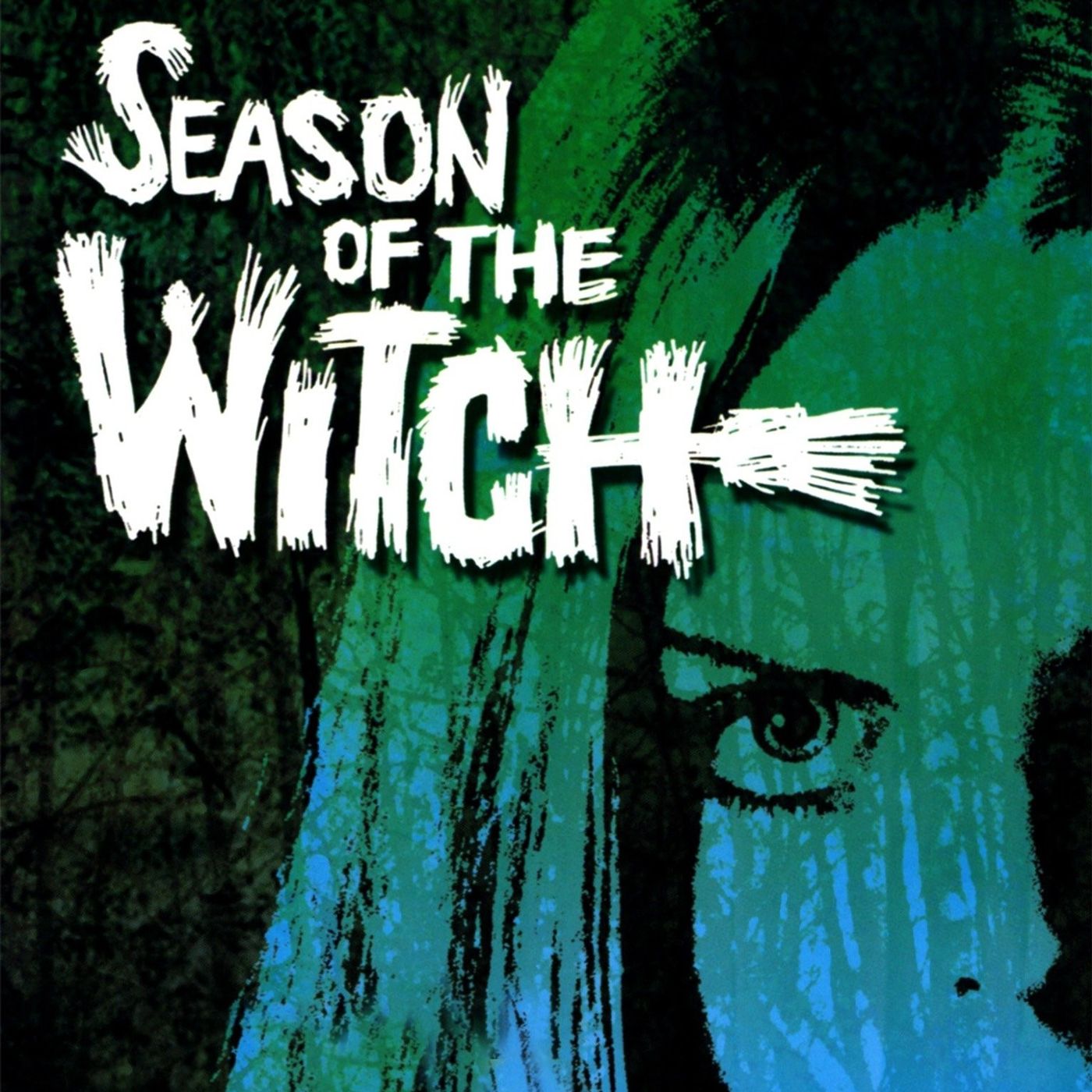
Rahne Alexander and Father Malone join Mike to dig into Romero’s haunting mix of feminist allegory, surreal dream logic, and kitchen-sink psychology. Mike interviews Professor Adam Lowenstein about Romero’s Pittsburgh years and scholar Payton McCarty-Simas about her new book That Very Witch.
Transcript
Automatically generated, so expect the odd misheard name.
The Projection Booth podcast is sponsored by Scarecrow Video. Try out Scarecrows worn by mail service. Choose from over one hundred and fifty thousand films and give Blu rays, four k's and DVDs delivered directly to your door. Visit scarecrow dot com today. Oh j is.
Folks, It's showtime. People say good money to see this movie. When they go out to a theater. They want clothed sodas, pop popcorn in. No monsters in the Projection.
Booth, everyone for tend podcasting isn't boring? Got it off? The least qualified person to understand a dream is the dreamer, which brings us to you. Oh god, jeez, Tony, you scared the hell out of me. Hm, Chalice durable knives or oh which is tools?
You know? I'm just interested in it. I don't know you're the one. I'm a witch, one of them. Welcome to the Projection Booth.
I'm your host, Mike White. Join me once again. Is Ms Rain Alexander. Hey, everybody. Also back in the booth is Father Malone.
I'm a hungry wife. I'm a hungry white. We're both hungry wives. Hungry wives. We wrap up October twenty twenty five with the Look at George A Romeros underappreciated nineteen seventy two film Season of the Witch.
The film stars Nicholas Cage and Ron Promo You how dare also known as Jack's Wife or Hungry Wives. The film stars Jan White as Joan, a bord suburban housewife whose husband leaves for long business trips and who's grown up daughter, Nikki, doesn't need her anymore. Unsatisfied and disenfranchised, Joan plays at being a witch in order to have some fun and get some control over her life. We will be spoiling this film as much as we can, so if you don't want anything ruined, just turn off the podcast. Come back after you've seen the movie.
Pretty readily available, we will still be here. So, Rain, when was the first time you saw a Season of the Witch? And what did you think? You know, this is one of those movies that I convinced myself I had seen before i'd actually seen it. I had deja vu, which is so interesting given the nature of this film.
So I really honestly cannot tell you when I first saw this movie. The first time I saw it, I thought I had already seen it, but the fact I f like it ventures into scandalous early seventies softcoreror. Clearly, I hadn't seen this on network television the way that I thought that I kind of had. So I really cannot tell you. I can say that I've watched this with regularity for the last ten years.
I love this movie. So much and fother them alone. How about yourself. I first saw this movie on videotape as a young man in the nineteen eighties. Once The Zombies at a Pittsburgh Paul Gann's book about Georgia Marray's retrospective of George Mayer up until that point came out, I had to find every Romero film and this was the most intriguing one because it was called Season of the Witch, even though he lays out that it's not particularly a horror film.
And I had a sympathetic video store clerk who would order movies that I was obsessing about. So I got Season of the Witch then, and I fucking hated it. I was fourteen, and I wanted more. I wanted bub and I wanted the Creep show Creep and Fluffy, and I wanted zombie zombies and this movie barely hints at horror, and my mind are reielded it. I have a far differing opinion about the film now, thank you very much.
But that you asked what when I thought what my thought was, I was like, I took it back and I was like, I'm sorry I made you order this. That's what a little prick IY was. So funny you weren't ready for the feminist Awakening movie, which you know arguably is a horror movie. It was that I needed monsters. That's that's what I That's what I needed from joeg Ramiro at that time.
You wanted witches, you wanted like hearts and a hand and like all of that. Yeah, I'm down for the feminist angle. As long as they're fucking They're slaying motherfuckers by the end of the movie. That's what I'm talking about. So when did you come around to this film?
You know, I've been a Ramero obsessed with my entire life, and once I keyed into his actual strength as a filmmaker, which is his editing prowess, rewatching this movie, it's such a joy and realizing that this actually despite the presence of Night of the Living Dead and there's always Vanilla and all the industrials. This is his first film. This is the first film that he wrote and he directed and didn't have anyone else's hand in the pot. Obviously, I got older, so I knew it's not a fucking horror movie, and I knew Romero was this filmmaker who yearned to break free of the genre bonds. So reevaluating it then, you know, I slowly began to love it.
I actually think it's one of his better movies. All of those that the more personal films from the nineteen seventies are now and at least with Martin. Martin's always been my favorite, but this is creeping up because you can feel him more in these movies than you can you know, you know, like The Craziest For God's Sake, which is around this time. I think that I've had the benefit of reatless back with Romero in such a major way, and I'm able to look at his films like and look at the politics of his films in such an interesting way. The amusement Park being another one that crept up out of obscurity in recent years that are talking about actual interesting things, I mean, like and that's what I think the best of all horror does is just talks about these like really really horrible, horrible underpinnings of the things that we do as humans and enact on each other as humans.
And so I don't think this is divorced from horror, but it's definitely not the kind of thing where you just want to see, you know whatever, Freddy Krugery eviscerating a child and Nimaron elm Street eighteen or whatever. Yeah, I said, it's a horror film, and yeah, we recently talked about the film in My Skin, and we kept going back and forth. Is it a horror film? Is it not a horror film? Season of the Witch is not a traditional horror film insofar as yeah, there's not Witchcraft and the hearts and the hands and all the those kind of things that we're talking about.
This is not the points he had in The Long Nose type of which. This is much more of a horrible situation that our main character is in and her just trying to get some sort of identity. And I really prefer the title Jack's Wife to Season of the Witch or Hungry Wives. I know I love Hungry Wives in a way, but just that whole like Oh, we're gonna, you know, sell this as a cannibal film, you know, because witchcraft and cannibals go together really well as well. You know, you think of those ladies from Clash of the Titans and they've got that big cauldron and there's a hand coming out of it, those kind of things.
But yeah, this is much more of I mean God. Also, when we talked about In My Skin, I couldn't help but get so ingrained in the opening credits. The opening credits for this movie. I don't want to say it's the best part, but it's a masterclass. It is just amazing these opening credits.
I love the way they're shot. I love of the symbolism in them. I love the use of the sound effects and the music. Everything is coming together and just telling this story. The opening credits could just be an experimental film onto itself and just be like, Okay, that's it, We're done.
And the opening credits come in multiple parts, it's not like it's just one segment. You've got the opening where you see the forest and you're not really sure what's going on and you're starting to see the credits there, and then you go into more of this sequence of a man reading a newspaper walking through this forest. He seems to have very much a purpose. And then this poor woman behind him, who is I guess six paces right. The old woman stands six paces behind the man though he's moving branches and they're just smacking her back in the face.
She's getting cut by these things. I just love how this tells this story. And that's before we even go into this whole dog imagery, much less the tour of the house part that we get. I mean, this is just freaking fantastic. I love the opening to this movie.
It could be argued that Ali Vermero's credit sequences to a point basically tell you everything that you're about to see. And you, as you said, you could stop there the Night of the Living Dead, how spare it is, and just the shots of rural Pennsylvania like that's it's an empty world we're gonna get, you know, and you're right, it is like an experimental film. And the editing, I'm gonna say it a lot, probably in the episode, but his editing style is so crazily cool, and I know it's because he cut his teeth making not just industrials, but before that, like when he really got his start, he was working for the news agencies, where he was cutting you know, five or you know, seven minute reels of local patter from shots of like a bridge is out, and he had to make everything sort of concise and wonderful.
Once he gets his own palette here, and as I said, this is the first time he gets to go really and be as expressive as he wants and be as evocative of the filmmakers that I think influenced Vermeira the most. Like I think it's not French new Wave, but certainly the European flavor that infected American cinnamon in the early sixties. Ramia was always trying to sneak it in in every feature, and I think that plays a lot into this opening montage. It echoes the way that John Waters was making films in the same time, you know, really like I'm going to do my take on Boon, Well, I'm going to do my take on Fastbender or Fellini, but like in this like uniquely American kind of way. Absolutely, I fully, fully agree with you on that.
This tells the story of the movie and really encapsulates that you have her walking past this baby and you find out later on that she lost a baby past this little girl, and you're like, okay, she's kind of losing her little girl or little girl is growing up, and then hell yeah, just this whole idea of like her in the car and her husband coming around the car and trying to get her out and she locks the door. He eventually has her open up the door, and then he smacks her in the face with a newspaper like she's a dog, puts a leash on her, basically takes her inside of a kennel. Basically it's their life together because we've got the little baby before we see the little girl, and I could be screwing up.
It might actually be her on the swing rather than her little girl, but it's like it feels like it's telling like this whole their marriage together and then where she's at and then once they go from that kennel into the house, Holy fuck. I just love it. The whole thing being done like a commercial and just like welcome to your new house. It feels just like a game show winner or something, just like oh, here you go, here's everything that you need, and just showing her the pointlessness of it, especially when he's. Like the ladies.
Of course, we're available for luncheons and teas and bridge et cetera, et cetera, et cetera. Oh your figure shopping and visiting. Before she then sees the old version of herself. And it's just like, if you don't get out of this rut, if you don't get away from that stack of checks that's going to run your life for the rest of your life, you're gonna end up like this old woman that she literally can't get away from every time she turns around. There, so that old woman.
And I love those things where she's lifting her hands up and then you see the old woman lifting her hands up and it's done very very well. And I like that makeup effect on her too. That just makes her look like a desiccated husk. But I also don't think she looks that bad. I mean, that's the other part about that is the like, am I all right?
Well, you know if that's where I started and that's where I ended up, that's not so bad, right, Like she's not that desicated, And like we're in into thinking about how horrible it is for a woman to be old, right by whatever measure old means, whether it's thirty five or fifty five or older in that way, like she was like, what would she looked? Maybe late forties to me, maybe early fifties. That's not that old. Oh, I didn't think she even looked that old, like you know, of course there was a sliding scale by nineteen seventy two or something like that, right, she was old fucking news by then. You know.
I mentioned Martin, which is a follow up to this film, and I think is actually a great little book end to this film, because you know, I think Martin is his most personal film and certainly more from a male perspective, and this is Romero trying to stretch his female perspective with the with the feminist movement going on around him. And he was certainly a cool guy, he was of the movement, right. But what's funny is between the two movies. The sort of dream sequences in Martin are very gothic and slow motion and hypnotic, and the film itself is very frantic, and it's exactly the opposite here. Her dreams are horrifying and everything else is almost to a crawl, like a camu, like lulling you with its evil.
You know, thinking back to that opening sequence. It wasn't until doing some later reading that and watching that it became clear to me that there was a lost child, right, somebody maybe who died in childbirth or early age, and that was supposed to be that baby that she sees in that opening sequence. For years, I've been watching this is just a movie about empty nest syndrome, right, I fully just read that baby as her daughter that's like now in conflict with her, and you know, and kind of vanishes, and so, you know, I spend a lot of time when I watched this movie really trying to place myself back in nineteen seventy two, which was before I was conscious and certainly before I was politically but like what it meant to be a woman in that time.
Like we're through the sexual revolution, as it were for the United States, but this is still before women have the right to have an abortion, before we're able to like have her own checking accounts without a man involved. And that's one of the underpinnings. I think we should talk about this later, just the underpinnings of the finances of this film. The scene where she puts down her master card right at the witch store, that was a revolutionary act. She couldn't have her own credit card in nineteen seventy two.
I'd like to point out that the card, if you look closely, is George Romero's card. Of course it is, of course it is. This is the situation under which she's laboring. The second wave of feminism gets a lot of shit, which is absolutely deserved for you know, it's the limitations of its opinions, and we can talk more about what that means later, But at this same time, we're talking about a generation of people who really did not have economic liberation. They do not have that kind of emancipation.
And once you're done with your reproductive role, what else is there for you in this world? Real quick, I wanted to point out that when I am talking about this movie, I am not sure exactly which version I'm talking about, because I've seen both the what is it? An hour and forty two minute version which has the title Jack's Wife, as well as the almost ninety minute version that has the title Season of the Witch. And it's interesting because I think I like mostly the Jack's Wife cut as well, because it is a little bit more straightforward, even with the opening credits that I keep talking about I am referring to that version because those things like oh, here's the checkbooks, here's the handyman, here's the you know, and like getting all of those characters introduced right up front.
That happens within the first five minutes of the Jack's Wife cut. Meanwhile, in season the Witch cut, that dream sequence is being broken up by different things we're seeing, like the dinner party with the mad libs, We're seeing her with this psychiatrist, and I'm not even sure if that psychiatrist is Those scenes are in the Jack's Wife cut, So it's interesting the differences I kept looking for, Like I rag on Tim Lucas a lot, but like the thing that video Watchdog used to do for me so well was going through and saying, in this version, you see this, and then you see this, and just like running through those I kept looking for, what are all the differences between the cuts, because it's interesting to me that you would think that the shorter version of the film would just be a shorter version of the film, But it's a kind of a radical re edit in different points.
And I don't know if I necessarily like that, even though I will say for as much as I like this movie. Sometimes it gets a little long in the tooth. There are some scenes that are just really super talky. But the more I watch this movie, the more I like those scenes especially. I mean, and I think it was just because it makes me uncomfortable.
The scene with her friend and ray Lane where he gives her a joint, fake joint. Sorry, nobody in the audience can see me making quotation fingers. That scene is so uncomfortable, but it's such a great scene, and it is so critical to this film. It really is. You may have your fantasies about your revenge against Gladys Kravitz, right, but this is the manifestation of that, really in so many ways, and it's so uncomfortable.
You don't want her to suffer. You don't want to be gas lit by your like fake weed. It's the worst prank to play on somebody, honestly, where that you allow them to behave in this for you know, like I'm altered, like ah. And then what's worse to me, though, is that she tells her like I just let it lie, let everyone play along. You were high.
Absolutely, I'll see you tomorrow. You go sleep it off. Oh I should also say, bring you brought up the baby at the beginning, and that's one thing that's critically missing from the shorter version is the discussion she has with her daughter about having had this baby beforehand. My brother died before or after I was born. Before you knew that, well, I always figured, but I wasn't really sure.
In fact, I was never sure that i'd even be able to carry a baby. I was never sure i'd even be able to carry you. Yeah, but I didn't know, like maybe you were because you hadn't been able conceive it. Something was wrong, getting old or something. But I know I told you.
We've talked about this before. I just wasn't sure. If that was before the baby died. That song, But you're saying I never told you. No, I'm not well, you certainly are not looking mother.
I'm really sorry. I just wasn't sure. Now you probably did tell me. I'm sorry, again, showing her vulnerability and also introducing that relationship or non relationship she has with her daughter. So again, I think it's just really critical that we look at the longer version of this.
I totally agree, and I mean it. It also gets at that idea that if her firstborn was a boy, I mean, we're still dealing with what the patriarchy demands, right, So she produced a boy, it didn't survive, and now she's got a girl and that's it. Like, you know, it's like there's a sad Trump. There's a sad Trombon aspect to it. Unfortunately, because that is nineteen seventy two.
As you said, Mike, it would seem that a shorter version of the film is not the director's cut. And I think a good rule of thumb with Georgia Merrow is if there's a longer version, that's his version every single time. You know, he's the most economical of filmmakers. So if a director's cut exist, the closest you're going to get to it, and none exists for this movie. I know that there was at least a three hour version.
There's talk of the five hour version, which is crazy. It's just that's just a fucking general assembly. But I bet there's a three hour version and then Ramera cut it down and then cut it down again, you know. I mean, how many versions of fucking Dawn of the Dead did we watch for your podcast on that like seven? Yeah, and that's before the Italians got.
A hold of it. But you know, I said this during the Tank Girl podcast, I want the four hour version of this. I would love nothing more than just lay it all out, show me everything you shot, show me all your ideas, George and Nancy. I would love to know more about Nancy's role in this development of this. You know she was a producer, she's in there.
Well, how strange is that they're shooting the film in the house of the woman of the of the parents of the woman who would become his next wife. Oops, it would be creepy if it wasn't fucking Christine Romero or Christine Forrest, who is so wonderful. I'm so curious if those humble lamps that are featured so prominently in this film, if those actually belonged to her parents, but those were given me nightmares, if those were in my house, and that it just captures that the whole decor of this movie. And I know a lot of this is sada is shot on sets, but a lot of it is shot in houses. This captures nineteen seventy two fashions and ugly decor better than any movies that I've seen in a long damn time.
And you know, you watch something like, Oh, isn't it funny? How like in Edward Scissorhands there's the big fork or spoon and those kind of things, and like, yeah, those were kitchy things and I remember those. But you look at just the bric a brac and like, especially that cocktail party scene. It just oh, the woman with the big flup in her hair and she's got that horrible top and oh my lord, it just takes me back. If you want a genuine snapshot of a time period, go to the independent film where they had to bring their own clothing and use their own adornments.
Oh yeah, and they probably dressed to the nines for something like this, where it's like, oh, this is a party scene, you better dress nice. So yeah, here, let me put on. It's just some of the most iesore outfits I see, dare you. It was all elegant in nineteen seventy two, it was swelligant. I really appreciate what he's doing with the way that he lays out the story.
We get more of the husband in the dream sequence opening sequence than we do in the rest of the movie. It feels like he's kind of barely there even like her life. Yeah, exactly. You're speaking earlier to like her usefulness, Like she's had the kid now and she's maintained that house, but he was never there to begin with and now doesn't have the kid either. What is her purpose now containing the house and getting beaten?
Yeah? Right, both emotionally and otherwise. Yeah, it's very smart to show us that newspaper because you just get that idea right there of the violence that's in their relationship and that has that potential, and you get that little flash of a dream sequence when her before she wakes up and find her finds her husband. What doing calisthenics at the side of the bed. It's so weird.
That was great man. That scared the shit out of me. Scariest shit. Yeah, I don't know which is scarier. That's kind of like jump scary moment or him popping up over the side of the bed.
It's like, whoa, what are you doing? Honey? Oh, it's definitely when he popped up, because who needs that scariest scary scary bad. Enough he's home, never mind acting like a demented jack in the box. Got to reminded me of the jump scare that we had in that Tales from the Dark Side episode that Tom Savini directed.
Oh, the rasin one with the wolf. With the wolf. Yeah, and that like long Cheney thing that he shows because you get. Just right the mannequin head just because you just. Get that flash it feels like, you know, unless I'm remembering it incorrectly, but.
It was a flash frame much like Romero employees. Which is great because then that also plants this idea of the supernatural, but also the dreams that she's going to have later on where she's being pursued by this creature basically, you know. And that's another thing I like about this movie and another reason I think it's a book into Martin. Both films. In this case it's a witch.
In Martin, it's a vampire. And in both cases it's completely open to interpretation whether or not they actually are those things. And I know in Romero's case he had answers for both of them, but he did not care what your answer was, Like I phrased that incorrectly. He encouraged you to make your own mind up. Talking about nineteen seventy two, And I've talked about this so many times before, and I apologize to the audience, but just going back to just how strange their late sixties early seventies were and just this weird void of spirituality that was happening, people questioning their faith, New Age stuff coming up.
I mean, cults were really big. I mean, you know, bigger than Christianity, which is the biggest cult around. But just this whole idea of like, oh, well, we're going to fill our lives with something other than just traditional religion. Sammy Davis Junior is a Satanist. It's also the transformation of what Flower Children into Evangelicals, right, So we've got that motion happening at the same time, like these just this search for like whatever, this spiritual anchor, and I feel like this is all through this film, right, And you know, I mean I wasn't raised Catholic.
I'm like, I'm aware of Catholicism. How could you not be? But at the same time, like I've always wondered, are just horror movies scarier if you're Catholic? Is Season the which more of a horror movie if you come from a Catholic place? Yes?
Maybe maybe, I don't know. I can't say for sure. You know, I listened to the Joe Dante's podcast movies that made me all the time. And anyone who brings up The Exorcist will Joe Dante will immediately chime in and ask if they're Catholic, because the determining factor for him is whether whether or not that movie actually scared us, whether you're Catholic or not. And in that movie, that movie's a little obvious in that it's dealing with priests and it's sort of all sort of in your face.
But Romero, you know, he was Catholic, and we get a lot of religion in a lot of his movies, and for some reason, it just feels the same level of dread. Sort of the way he looks at the what it lurks as evil feels very very familiar to me. It feels like somebody who has dipped their hand into the Holy water on Sunday mornings. I don't know that that it's as a resident and here because religion is just another stumbling block against her, whereas it's not. You know, it's a little more pronounced than something like Dawn of the Dead, where we're watching the desiccation and fall of all religion, but sort of pointed in a way.
Maybe it's all in my fucking head. But and I want to feel a kinship with George Romero. It's just that I do feel like there are just hints of the ritual and the tie to the past and the slavery to that that sort of permeates his work and at least resonates with me on a level that I think I understand. Kind of on that note, I'm just looking at my notes for this, and there's a moment that I think is kind of a key to this entire film, which it's positive as a Catholic idea, but it's something that was really part of my own upbringing as a Mormon child too. And it's when one of the women responds to Joan saying, you Catholics.
The academic thought is just as is doing it. The sin is the thought. So she's having all these nightmare she's having these dreamscapes which are just as bad as actually manifesting this in real life. Is actually going to the witch store and you know, seeing the guy with a funny mustache, Like, love that guy, fantastic, He's so great. I want to go to that store.
But you know, like I think that this is really the key to it. This is the whole movie. She's thought about this, and now she thinks that something else is possible. And if I don't get the sense that she's hung up on her own Catholicism, but like that's her origin point in the same way that we're talking about nineteen seventy two is an origin point for you know, feminist economic liberation as well. This is where we're starting.
If I think about this something else as possible. The idea of the Catholicism about thought being the sin is that thought is an action. And one of the things he's dealing with here is whether or not this new sort of focus on herself is opening this doorway to this other power she's tapping into her own femininity. She is interested in this younger man, this boyfriend of her daughters, and manifests that. But at the same time she fucking calls him.
Is the power that it manifested itself because she wanted it to happen? Or is it fucking motivated her to actually put in action what she wanted to begin with. It's funny that you use manifest in that way, because that is so what I hear a lot of the kids these days saying, where it's like, I'm gonna manifest this, I'm gonna manifest that, and it's just like, all right, I guess that's your new little religion thing. You're just gonna put those thoughts out into the world and then good things are gonna come back to you. It's just as spiritual void as this is.
And we were talking about the sin. I mean, I'm trying to think if there's a play or anything else where. It's just like the mother lusting after the daughter's boyfriend and that all through here where it's like, I don't know why she's so turned on by Ray Laying, especially after he humiliates her friend. But when she goes back to her house and she's on that big old bed all by herself, dressed up to the nines with that crazy blue eyeshadow, she just starts feeling herself up and I'm like, okay, I know who you're thinking about, lady. And you get that great shot of the bull totem on the mantle, and I'm just like, oh, how virile this is.
That's so awesome. There are so many awesome shots in this movie. There's one I meant to talk about earlier where she's I think she's getting ready, and you see her on the left side of the screen. There's a mirror in the middle of the screen, and there's another mirror to the right up on the screen, and you see her face in that mirror, and like her upper body. But then in the right hand mirror you see her feet and it's like, what an amazing angle you had to do with that mirror to shoot it so that you can see her feet in that reflection.
I mean, it almost looks like an insert. I know it's not an insert, but it almost looks like it. And then to see her then start to move in one plane and then see her kick off her own slippers and stuff in the other, just like this is so unusual, but I love it. It feels real to me. I'm a trans woman of a certain page, and I mean just that disidentification and disembodiment, this fragmentation of one's own body felt so familiar.
And so I mean that scene strikes me every time, not just from like the technical aspect, because like, holy fuck, like how cool, but you're able to make that work somehow, But like it's also it's not just cool, it's very meaningful. It's very resonant, and you know, and maybe it's a generational thing. Maybe it's these days aren't going to resonate with that kind of fractured embodiment. But it works for me. And this is his last film as his own cinematographer, so it's it's the last time he's actually operating in the camera.
So these are all his shots, all his lighting, all his setups. And obviously Mike Gornett sort of picks up the mantle after this and sort of takes the rein. But I'm gonna keep saying it like I hated the movie when I was young, and now I feel so fucking guilty of it because it is really pure Romero. You know, he this is he raised that money, and you know, they fucked him out of the money, and he persevered and he kept doing it, and he's literally it's you know, it's it's like El Mariachi. He's he's shooting it, he's directing it, he's editing it, he's producing it.
It's I don't know, it's just kind of a marvel. Yeah. Was it what two hundred, two hundred, two thousand dollars or something that this ended up being? Right? It was two hundred and fifty thousand dollars was promised if like they were gonna make, they were gonna match his one hundred thousand dollars, and then they just fucked up.
And he's like, well, I guess we're making our two hundred and fifty thousand dollars movie for a hundred thousand, and it looks like a two hundred and fifty thousand dollars. It looks like a five. It's like a five hundred thousand dollars. Ever, be honest, it really looks amazing, and not even like discounting it for its age, or for its time or for any of that, I feel like it looks gorgeous throughout. That's the one thing that makes me a little sad is that we're you know, I keep touting this longer version, but it looks worse than this shorter version as far as the video quality goes.
And I'm like, can't we do something about like that? Can you do like a fan edit or something where you replace all of the bad stuff in the longer one with the good stuff from the short one. But yeah, it would almost Again, It's kind of that thing that I'd like, like we were talking about Metropolis a few months ago, where it's like, oh, here's the footage that they found in Brazil, and look how shitty this is. But at least it tells me this was the stuff that was found. This was not extant in all of these other prints, and it's like, Okay, it's kind of shitty, but I really do like knowing that.
It's good to have that stuff available. I mean, that's why I would love to see the longer version of this. There are just so many ideas that are in this film that are important to me as a viewer, as a political thinker, as an artist. That would be my you know, that's what I want. You know, It's just not going to be for everybody, and it doesn't need to be.
Would I have resonated with this film when I was twelve, sixteen, twenty two, No, I don't think at any level I would have. I needed to have some age to really feel this, you know. I mean in that way, I feel like it's really a film for me. Yeah, I found them alone. You shouldn't feel guilty.
I know you're Catholic, but you shouldn't feel guilty for not liking it right off the bat, because yeah, there's so many movies I saw when I was younger where I'm like, I have no reason to be watching this. I have no right to be watching this, and I know this was not made for me. But then I can come back to it twenty years later and be like, Okay, now I finally get it. Like I imagine going back. You know, this kind of remind me of The Ice Storm, the Anglee film, and I'm like, well, maybe if I go back to that now, I'll like it more than just seeing Sigourney Weaver dressed up like a dom That was the only thing I liked in the first time I saw it.
So, you know, I've never seen The Ice Storm. I'm just gonna write that down. It's a really good connection with this film. I thought about that. I mean, there are a ton of films that I kept thinking about as I was watching the film for this podcast that I didn't make time for.
I didn't make time for Martin, I didn't make time for The Ice Storm. I did make time for the Love, which we can talk about later about Like, there's so many filmic linkages. I mean, like, you know, what's his name? The little playboy guy is talking about missus Robinson all the way through, right, they're talking about Rosemary's babies and folks, So this is like a culturally conscious film. He does that again in Martin, where Romero himself appears as a Catholic priest and is talking about how hilarious he thought the Exorcist was.
I don't know, certainly know what that does other than like really situate situated in a time and place, gives our playboy a little personality because he's living this like fantasy world where I guess he's like a cool Dustin Hoffman. Maybe I guess, I don't know, or you know, I can handle missus Robinson. It also accomplishes the Sam Raimi West Craven feud of yours is just a movie. Mine's the real deal. Touche touche.
Going back to that spiritual void that I was talking about earlier. Oh, we're just going to go in this bookstore and there's all these books about witchcraft. I mean you could literally go into and maybe they had these in other places. Well, I'll say, I want to say F and M. I'll say a Woolworth.
You could go into a Woolworth and there would be books like that at the checkout or in their little paperback rack that they would have, and this party that they go to where it's terror reading. Parties like that still happen today. I know that my mom, who are an atheist, she's been to a lot of parties where there were tarot readings, and just this rings so true to me when I see this scene of the you know, well, don't give me money, you know, maybe send me a check and just the whole pattern that the woman has, and you can tell she's told these jokes like a hundred times, like oh if only I had a hundred like you, but instead I have a thousand. You know, it's like, Okay, you've told this joke many many times, Like it really feel like you going through your steps with this and just that whole cold reading thing that she's doing.
Oh this mysterious man. It's like, all right, you're just handing people what they want to hear, you know, rather than I mean that's how I always feel about this stuff, Rather than it is like oh it's spiritual and oh they made this connection and stuff. I'm just like, no, I'm not really buying that. It's just more of like cool, send me more money when you get home, wait until after wait until you know these seeds in your head, and then send me this stuff. But yeah, I just love this whole idea of the tarot party that they're going to and her picking up the uh to be a witch A primer.
Father Malone, Mike, I do have a confession to make. Uh Oh, I'm a witch. But I have done tarot readings. I have done tarror readings a lot. I've done her tarot parties.
Like I said, that still happens today. Right exactly, it does still happen today. This movie helped me set my rates as a reader. So I found it very, very very helpful because like I did hit a place where I'm like, I need some other income streams. I'm going to open this up.
What do I even do? Your Like, I don't feel right about asking people money for this because part of it is performance hard. Part of it is reading the cards and kind of interpreting and working with somebody to kind of like think about what this might be representative of. There's storytelling, you know, it's like as an artist, like I felt it as an art practice more than anything else. But it also found it very very effective and I found a lot of clients that were really great to work with, and this movie really was like, Okay, well, if I don't have to like, oh ah, my time is worth fifty dollars an hour, I can let them tell me what they think this is worth to them.
And I found I've always found that really really helpful as a practitioner, as somebody who is engaged to a certain extent in that world. That's awesome. I love that this helped you with your rate setting. That's great movie as instructive as it is enjoying enjoying it is it is like I. Was saying, there are some scenes that get really really talky.
Maybe we could trim here, maybe we could trim there. But again, the more I watch it, the more I'm like, no, no, this definitely needs to be here. All of this stuff adds up. Yeah, I appreciate what he's doing with us, and to see her journey, to see how she changes through this, that she does start to take the witchcraft as a way of having an identity. That that's the thing that she says at the end, I'm a witch Like she's able to have that statement, But then you get that undercut of that's Jack's wife.
At that point, Jack doesn't even exist anymore. There is no Jack. Jack is dead, but yet she still carries that weight of Jack's Wife with her. That's why I think that that's a way better title than anything else. I mean, Season of the Witch is cool, especially since you have the Donovan song in the movie, which was such a surprise to me.
When that came up, I was like, really, oh he could afford that. But of course I think the song was a little bit less money than you are being charged now. It gave the film the name, so you know, there is that benefit. I go back and forth on it so much. What I feel weirder about having to say, oh, one of my favorite movies ever made is called Jack's Wife versus what are the other possible titles?
Right? I mean, yeah, I know Hungary Wives was developed as something to sell it as like something it wasn't, you know, like a scandalous porn when it was really more of a rape movie for example. But Hungry Wives does sound pretty fucking cool, but it does convey like a kind of a what cannibalism or you know, something along those lines. Season the Witch ultimately is pretty generic. But no, I do agree with you, like, if we want to talk about the political impact of this movie, for it to be called Jack's Wife, it does the job.
And you know, Romero, if it conversationally referred to it as Jack's Wife for the rest of his life, there's something to be said for that. I think Season of the Witch is a fine title for the movie, except here's the thing. Hungry Wives is the best title for the movie, honestly, but only if Romero had come up with that. And that's not him, that's the distributor who did that. He settled on Season of the Witch precisely because they had the soundtrack of the song on the soundtrack.
But it should be Jack's Wife just as a pure piece of entertainment, you know, it's such a thematic thing. Like the last line is there because it's the goddamn title for Gris's sake. Obviously, there are a lot of other women who presumably are wives in the film, but like, I really only see one clearly hungry wife in this movie, right, why is it hungry wives? I will see a sequel where they all fucking create a coven. I want surely to actually hit a reefer and like, really lot loose, Well, we all want to say on you're putting me.
On they're hungry wives, because that's way more appealing to a desperate, horny guy who's going to the drive end later that night. The one filmmaker that I have mentioned that this also reminds me quite a bit of is Polanski and the scenes where she's being attacked by the masked man and that horrific mask that he's wearing, so reminds me of Repulsion and Atherine Deneuve going through her psychosis in that apartment. And you get that amazing shot of all the hands coming out of the wall, and I think we all know that we see that again in the Day of the Dead, that amazing shot where she turns and all the hands come out. It's so cool. Ever since I saw he Repulsion, I'm just like, oh, okay, now I know where Romer got that.
I don't say he's ripping off Polansky. I think it was much more of an homage to Polanski. Totally different circumstances as well, but I really feel that this the sequences of her being terrorized in her own house, and especially his use of the wide angle lens in some of me these shots, you know, going all the way back to the opening credits. Again, you get a lot of that wide angle lens, like the fish eye lens to help distort and show you that things are off kilter. You get a lot of that in the rest of the film as well as these nightmare type sequences are very you know, using the hand held camera, so you just get that confusion and that panic going with her.
You just identify with Joan through so much of this film. I mean we literally start in her head with the dream sequence and we just continue on through the rest of this experiencing what she's experiencing. Ramara was a great editor alert and his philosophy for cutting was always what is the scene trying to tell us that's how the cutting should go. So if it's panicky, the cutting is panicky. He's not trying to call attention to it.
But it does seem to fit every fucking sequence, you know, Like, so I don't know that I want to throw that in. There's a good essay. If it doesn't already exist, probably should, which is about how this film is in conversation is in direct response to the misogyny that we see in Polansky, that we're even beginning to see in Polansk at that point, for you know, from The Tenant to Rosemary's Baby into Repulsion, Like, all of these films are still treading in that same water in the same way that The Graduate was. Arguably, like we look at the ways that counterculture was still kind of wrestling with patriarchy or not. This is a film which is I think is responding to those notions, even if it's not fully conscious and fully like work through its own politics.
Tell me more about the graduate. We've got, you know, what's his name, the Dustin Hoffin character Benjamin, who you know is like kind of caught in this in this world of success and what ladder climbing and all these these kinds of things, and he's caught between what is like traditional like love girlfriend marriage in this like seduction situation, which we would not have seen a counter of that in cinema until like much, much much later. Right, we don't see the term the reversal of that that power structure happening, or like the power structure, I guess should say, right, So, like you know, what we have in Benjamin is like this like this fulfillment of a fantasy that you know and you know, I love Mike Nichols.
But at the same time, like, this is a film which is poking at these at these things, and this leads to having our playboy character in Hungry Wise being like really trying to make himself be the cool Benjamin Braddock right like I'm going to be. I'm not going to be as like weird and nerdy as that guy was. I'm going to nail Missus Robinson, and I'm not going to feel weird about it. I hadn't thought of it that way. I'm gonna have to reevaluate that graduate movie.
That's another one you can go back to over and over again throughout the years, and as you change, that movie changes. It's been some time, so it's going to be a whole different fucking movie. I'm gonna hate it. I guarantee you I'm going to hate it now. The very first time I saw the movie, I remembered it having a happy ending.
So that's how off base I was, because now that that movie does not have a happy ending, I don't think the movie change. I think I change. Who doesn't want to be in the back of a bus. That's what I want to say about that. I thought it was a happy ending.
Then it's so romantic. Yeah, well, you look at their faces as that bus is pulling away. I know they're in existential dread at that moment, but at the but you know, I saw it was like seventeen or something like that. I'm like, yeah, young Love exactly. Yes, we had very similar experiences in all of the research.
I didn't do like the most successive research in this film. I'm really shocked that at no point have I encountered somebody talking about the fact that our lead character in this film is named Joan Mitchell, who even at the time was a really known quantity artist painter, you know, like a super super super famous painter. I have no illusions that this is not a character who like is like associating herself with an artist. But I just think it's so so interesting that we've got this character who's inhabiting a name which is known to so many outside of you know whatever, the cinematic world, like is a known quantity in the art world who arguably was kind of a feminist icon. You know, it's wild to me that nobody's talked about this.
I don't know the person, so I'm sorry, because I would talk about it if I knew the connection, but I'm deficient in my cultural knowledge. Yeah, I mean she's like kind of this this abstract artist who was working in worlds that were, you know, similar to like like a Jackson Pollock. You know, these like really wild, figurative, very colorful images, right, which is a little bit counter to what we're seeing in this film, which was just so demurreor you know. And maybe I'm a little more conscious of this because there was a pretty big Joan Mitchell retrospective that happened a few years ago. But at the same time, like, it's so interesting to me that we've got this.
What is it like to live under the weight of a more famous name? I guess is kind of what I'm thinking about this, Like if she's aware, because it doesn't come up with a home, she's aware there's a super famous artist with her name, and she's just kind of like moving through this drab world. Is that some kind of weight that would drag you down? I kind of think it might. I think it might.
I wish I had had that knowledge watching it. Because that now you do, you can go back and go through it and be like, Okay, okay, let's think about. That little things like that are fucking important, you know, Like it's true. Do you know that the song Hello My Baby, Hello My Honey is a parody of the newly coined eating for telephones. Yeah, Like they were trying to popularize the word hello, and some fucking wise asses wrote this song about it, like idiots saying hello all the time?
Now, huh amazing, and now we just do it. Holy No, you have the wrong number five two for six. I suspect you need more practice working your telephone machine. All right, guys, let's go ahead and take a break, and we'll be back with a pair of interviews. First, we'll hear from Peyton McCarthy simmis, author of that Very Witch, Fear, Feminism and the American Witch Film.
We'll also hear from Professor Adam Lonstein of the University of Pittsburgh's Horror Studies Archive, and we'll be back with both of those right after these brief messages. Looking for something superior to streaming a place with more than five times the selection available on all streaming services combined, check out Scarecrow Videos rerunt by mail service. Select from an unparalleled collection of over one hundred and fifty thousand films and get Blu rays, four k's and DVDs delivered directly to your door. Get in at it now at Scarecrow dot com, and rediscover the wonders of physical media. Can you tell me a little bit about yourself and how you got interested in films?
I am a film critic and a programmer as well as an author. I've always been into spooky shit, but it took me a while to get in movies. I didn't have cable or anything growing up. I didn't really have a TV. Eventually we got a VCR and my mom would let me go to Blockbuster and play around in the kid's equivalent of the horror section.
But my godfather was the manager, and so that was really my ind When she wasn't looking, I'd get to mess around with Briday the thirteenth very rarely. And then I was originally going to be a sociologist actually, but then I realized that involved math and that sucks. So I took a class. I went to Columbia and I took this Culton exploitation class. That totally changed my trajectory because I realized I could do sociology with movies and it would incorporate my love of art.
I make films with my fiance as well. I edit for money. It was like, Oh, I can put all these things together and dig in a way that I'm really passionate about. You seem to write for a lot of different venues. What are some of the ones that you write for.
I'm in the Brooklyn Rail a lot. I do a lot of Room Morgue. I was just in the Hollywood Reporter, which was really exciting. Been in Auto Straddle a bunch. Because I do a lot of work with queer film, I try to be as broad as possible, Like I just did Fangoria and that was really exciting.
So the horror stuff I try to move around. But I also like writing about documentary, So I did something for bright Light's Film Journal and we'll see where it goes from there. I love being a freelancer. It really gives me the opportunity to zoom around and try out different modes and styles. I don't want to put you on the spot, but I saw that you just did a piece about or recently did a piece about mcab and Missus Miller, and I just saw that because they're touring that four K restoration around.
What did you have to say about that film? Because I find it fascinating. It's such a beautiful film, not just in terms of the cinematography, but it's so sensitive and its portrayals of Missus Miller. Right, this is a story that really centers a particular female gaze and female personerspective on the plight of this woman who is just totally incapable of making her way in a world that's designed to prevent her from doing so. So what I wrote about was the way drugs operate in the movie, her kind of tragic descent into addiction because she's forced to throw in with this man who is just systematically incompetent.
And it's a great movie about failed masculinity and pride and the fact that he feels that he needs to operate in a certain way, not only to be a man in the world, but to be a man for her. And so as his failure in a society that's forcing him to do one thing leads to her failure in a society that, were it not for misogyny, she'd be very successful, she uses drugs as an escape patch into operating as more of a traditional woman like whenever they have sex, she needs to smoke some opium, and they shoot her in such a striking and beautiful way where there are these close ups on her eyes, her hair's down in a way that it never is otherwise, and she becomes markedly girlish, and that's the only way she can let others in.
And so I just find that to be a really compelling tragedy, that femininity operates as a kind of addiction or habit that she has to use. It's destructive when she wants to be a business person. It's just gorgeous. That was one step short of crazy? Was that your first full length book?
That was my first book? Yes? Can you tell me a little bit about that and how that came together? That book actually started out as a joke because I was doing my Masters and I was taking a class on conspiracy theory, and I told my professor that National Treasure, the Nick Cage film, was the ultimate text on American conspiracy. And he said, I've never seen that film.
You're young, and I said, I'm sorry. It's a classic. And then I rewatched it and started digging into it a little bit, and I realized that it really does work in such an interesting way to playfully unpack how we talk about conspiracy theory in America. So the basic premise of the book is that I use the movie as an entry point into different modes of conspiracy right where it's like in America, they're everywhere. They're the fabric of our nation, not only in terms of questions of like revolution and how you form a government without a monarchy, but also in terms of just our weird quasi doomsday cult religious society.
Right, So I talk about the way we think of conspiracies as a joke or a game that we like to play. Right, everybody loves going on YouTube and watching like flat Earth videos and being like, that's nuts, what are they thinking? But then we all go home and everybody does something right. Whether you don't step on a crack or you do Cairo, there's something operating in your daily life that's conspiratorial. And then I look into the way audiences have engaged with this movie, and it turns out that nine to eleven truthers love National Treasure.
Qan On adherents love National Treasure. So it kind of unpacks from the most ironic to the most serious engagement with conspiracy theory to prove that really any text has a lot of meaning underneath the goo. And I also just love Nickcage, so it was a pleasure to write. And tell me, how did your latest book, That Very Witch come about? This book was a passion project that took me the better part of a decade.
I started writing it in earnest during COVID when I noticed a pattern in like the quote unquote like elevated horror cycle. Right, you have all these eight twenty four films with the same ending where these supernatural women find themselves triumphing at the end of the movie. And if you watch any classic horror movie, right, that's kind of the premise, is like the Stephen King line of like, horror movies are fundamentally conservative, they're recuperative, the bad guys lose at the end, and then people like you and me get to enjoy the fun part in the middle where they recavoc Right. But in these movies, the women don't lose at the end. And I found that really striking, not just when it happened once, but when it happened to you again and again.
And when I looked around outside it was twenty twenty. Everything was going wrong, you had massive political and social unrest. And then I looked back at the dates when these movies were released. If you look at Suspiria, if you look at the Witch, it's, oh, this is the anti Trump feminist movement. So when you started pulling those parallels, I realized that you couldn't fully understand that unless you went all the way back to the beginning of which filmmaking, because I already knew that, like Victorian feminists used the witch as a symbol in a similar way.
So it takes you on a very long journey through the history of which cinema, drawing parallels between the history of feminist movements, the capsule history of the cinema of any particular moment in time, the political movement of that period in time. And then I used the Witch films as kind of case studies to examine how women are being perceived have been feared or not feared in any particular moment in time. And yeah, it took me about seven years to do five, if I'm being generous, But I'm really happy with how it came out, and particularly since there's so many books on witches in the movies. But I discovered very quickly that very few of them were a linear narrative arc. So it's not essays.
It's a whole book with a story that goes through it. And I think that people have responded really well, so it's been really nice. I think that the structure of the book is great, and I especially like that you do kind of chunk things up into separate eras, as it were. And I do really appreciate that because, like you're saying, it responds to political movements, so you get what was happening in the late sixties, early seventies, one of my favorite times to be around, you know, the eighties, the nineties, the two thousands. I mean that Vivich the Witch came out in twenty what seventeen or at least I remember it coming out around then, right around the time of the Me Too movement.
Yeah, I love just how important Rosemary's Baby is to so much of this. But you go all the way back to Hackson and the Silent Films, which is fantastic to see how you carry that through line all the way through this whole entire book. So what were some of your biggest challenges for this one? Carrying all of that history around with you for so long. I did feel going back to my conspiracy theory book, I felt crazy writing the outline for this was an insane project, and I think something that helped me cohere it was that, in a lot of ways, is a story about belief and the capacity for belief that people have in themselves, in the supernatural, in others.
What power do we allow each other and what power can we find for ourselves? But the places where it got sticky were the places where that power began to ebb and a conservative counter valance began to rise. So the eighties, going into this project, I thought, this will be no problem. The satanic panic is happening. Obviously, witches are going to be everywhere, right like they're going to be big and scary and ugly, and they're actually not.
It's really fascinating when you look into it that in periods of backlash, I discover witches are not afforded the same power. They're disempowered. They're presented in a little bit more of a silly light. And so the only big witch films of the eighties that are witch films per se are Elvira Message to the Dark and the witches Vastwick. Obviously you have the never ending cycle of the Witchcraft series, or you have Conan the Barbarian where things move into a more fantasy direction for the Witch.
But trying to articulate exactly how that works was really confusing and counterintuitive, because if there are so many witches in the culture, why aren't they in the movies. It's a confusing question, but it also gave me a lot of great opportunities. I love a slasher as much as anybody else, but watching them in three sixty p on YouTube on a loop forever was hard without the breaking up process of watching like twenty twenty and Heraldo and vibing with the actual Satanic kin of specials because it really spoke to everything I was talking about. And that's part of the answer too, is like why would you need witches in the horror movies when you have Heerldo on TV doing it for you? If people think they're in the classroom, then they don't need to go to the multiplex.
Well, obviously, with this episode, we're talking about Season of the Witch, and that kind of fits into a very interesting time in America as well as into Romero's filmography. You know, you do talk a little bit in there as far as Rosemary's Baby in What's sixty eight? This is coming out in seventy two. In one the poor woman is being tortured by witches and the other one she is or trying to embrace that. I mean, how do you feel that the feminist movement affected these films or other outside forces helped shape the narrative.
The reception to Rosemary's Baby was very interesting because for a lot of people, and this speaks to Polanski as a director as well. Right with films like Repulsion, he say what you will about the man, but he does center a very particular kind of feminine perspective. They're very subjective films about women in trouble, and so Repulsion is a very empathetic film in a lot of ways, and Rosemary's Baby carries that forward, where the New York Times found themselves really shocked by the fact that this is a movie where you're dealing with the horror of being in this poor woman's shoes. It was a really important film. Another wonderful author just put out a book called Scream with Me, where she argues that Rosemary's Baby was really important for putting people into the perspective of a pregnant woman around Roby Wade, which is obviously very true and very important, and I talk about that a little bit as well.
But the thing that's notable from my angle where I talk a lot about the counterculture and the radical feminist politics of the moment is a lot of radical feminists were not impressed with Rosemary's Baby at all, which leads to songs like why didn't Rosemary by Deep Purple right where the chorus is why didn't Rosemary ever take the pill? So for some people, they just thought that Rosemary's Baby was not going far enough in nineteen sixty eight when the politics and the culture are moving so fast and so unexpectedly, And there are a couple of films that come out afterwards that kind of serve as passit correctives for that. So a film I just programmed anthology here in New York is The Mephisto Waltz.
Yeah. I love that movie. It's so good and Jacqueline Bissett is wonderful. Because critics dismissed that movie as a boring rehash of Rosemary's Baby, which I think is a lame take. But the one thing that anyone positively said about it that I could find is that they were frustrated, this critic with the fact that Rosemary does not know what's happening for most of that movie, and the note there is she should have caught on faster, which like fair unfair, say what you will.
But Jacqueline Bessett's character in The Mephisto Waltz is a corrective to that fact, in that she knows the entire time. She's never taken in and she is hissed right, and so she becomes a witch as a kind of payback and erotic paybacked against her husband. The Poor befuddled Ellanalda Season of the Witch is another excellent movie for that because George Romero wrote it. He said explicitly that he wrote it as a response to the feminist movement of his moment. He was seeing what was going on.
He was seeing what was going on in the context of the occult Revival, which is this period in the late sixties and early seventies where mysticism and supernanpheulism and neopaganism were coming into prominence. He was noticing that in bookstores you could pick up little primers called how to be a witch for however much money and then become a practitioner if you wanted to. And you see a scene of that in the movie that I just adore, where she gets a cauldron and a knife and a bell and a book bebooking candle and pays for it with plastic at her at a store. It's great. Yeah, this movie is very responsive to its cultural and political moment.
I think it's very feminist. It's complicated, It's politics are complicated, and Romero had a lot of weird things to say about it, but yeah, it's a really excellent capsule of that moment in time. For that reason. Yeah, when we talked about Rosemary's baby on the show, we talked a lot about Guy and just how Guy was gaslighting her so controlling, and remember we were talking specifically about how he was writing down when she was having her period and when she was going to be ovulating. And actually some male listeners really objected to that, and they didn't think that that was creepy at all.
And I just felt that that was so creepy and so controlling. And I love that the name of you know, the original name of season of The Witch, Jack's wife doesn't even give her a name. It's that whole Missus de Winter type of thing, you know, like no name for this person. And that's still a through line in the film. Right, she says, I'm a witch at the end of the movie.
It's awesome, she's coming into her power. But in the background of that party, people are still referring to her after she I assume spoilers are fine on this podcast, but after she kills the guy, right, she kills this man, and people are still referring to her as Jack's wave. It's beautiful. It's such a great incisive commentary on the way women are treated. And this, to me, this movie, more than anything else, is an exploration of middle age for women.
It's about the fact that she is being treated as nothing by her husband because she's no longer sexually appealing to him, because she's I don't know how old Jen was, maybe like forty, so she's socially dead. Because it's it's nineteen seventy two. Amali Haskell had just released from Reverence to Rape and talks extensively about the way cinematically speaking women of that particular age were being presented as non existent cardboard cutouts, jokes or people to be cheated on. Right, So this movie is great for that as well, because it's a movie about dealing with the non personhood of femininity passed her prime and yeah, it's really sensitive and elegant in that way as well. And part of that is the title.
Although, as I recall, the origins of this movie are fraught as well, because he couldn't get me funding and so he put in all these soft core sex scenes that made jan White not want to do it because she was just a commercial actress. I think she was on she was selling soap at the time when he approached her and she was like, I'm not going to be able to get work if I do porn for you. I don't care if you did a big movie like that doesn't matter. And he was like, no, it's just for funding, We're not gonna do it. And then Jack Harris, who was the distributor of Where the Blob Later, but who did all of these softcore things and exploitation things, vastly mismarketed the film.
First is Jack's Wife, but then better and more fun Hungry Wives, and the tagline was Cavier in the kitchen, Nothing in the bedroom. It's just beautiful. It's very indicative of the exactly the kind of commentary he's making in the movie that the movie was then turned around to be, like, you want to watch people have sex in a suburban location, a. Little suburban roulette or ice storm for you. I mean even calling it hungry Wives, because so many times when you think of witches, you're always thinking of cannibal.
Witches in terms of its depictions of domesticity too, Like she makes dinner a couple times, but really she's the thing that's poignant about it is that she's not allowed to be a wife at all. If you want to try and get deep about Hungry Wives as a title, even though Jack Harris was not trying to get deep about it, the hunger here is that she's not allowed to be a wife. Like her husband isn't home, her daughter's off to college, she's alone most of the time. You don't really see anyone eat much of anything. People pop pills and drink martinis with other women who are talking about how no one pays attention to them, right, And I kind of betty for Dan, since I guess they are hungry wives.
Lonely women are dangerous though too. I mean, the whole idea of you the unmarried women, even in something like practical Magic, it's like, oh, something has to happen. We have to get some sort of male in here to make these women domesticated. Yeah. And then there's that line, that great line at the end, because she kills him and then the cops show up and she says it was self defense because she didn't know he was coming home, And one of the guys has a great line where he's they get everything from us in the end.
Goddamn women, they're going to take it all right. At the end of the film, she looks so much happier and younger, and she's wearing an outfit that she likes. You don't know, maybe she's been dressing for her husband the whole time. A lot of women did that and still do. And so she just looks fabulous with this turquoise eyeshadow and a big hair do, and and it really is just like they in that moment of singleness of being herself.
She The irony of the Jack's Wife thing that keeps happening is she was never really Jack's wife in a practical way, but now that she's single, she come into herself in. A new way. She's been freed of the trap that's been holding her back. What were some of the other contemporary movies that dealt with witchcraft? So one that I'm a champion of that I haven't gotten to talk about much is a little film from out of I think El Paso called Mark of the Witch.
It's not like a well loved movie. It's by a director named Tom Moore who mostly did theater and TV, but it's like a teeny tiny, little budget co ed horror movie about a college age student and her boyfriend who are in a class on magic and superstition, which is a huge through line here, right. It happens in Season the Witch, where he's her younger lover is a I think he's a TA for a class on superstition, right, and that in earlier films like Night of the Eagle or even Bell Booking, Pandle, where you've got all of these professors talking about superstition in that a cult revival way. But anyway, they're in this class on magic and their teacher is a skeptic, and he accidentally unleashes the ghost of a witch who was killed and she possesses this young woman's body, and she goes from this very demure, sweet girl to this sexually dominating, murderous baddie who wreaks havoc on everyone starts.
Sleeping with the professor is like coucking the boyfriend and just running everyone's business. It rocks. It's an exploitation movie, right, So it has its problems. The pacing is nonsensically bad, but it's great, So I try to champion that one and bring it up when I can because it's lesser seen. But the Mephisto Waltz is another good example, obviously, like the towering examples in the genre are the Devils and don't look now, those are just classics.
They're perfect, they're feminists, they're empowering. Performance has its own witchy subplots, which I love. But then another huge one that I'm going to be potentially talking about in October at lecture is Beladonav's Sadness. It's just amazing, and it's politics are great. It's based on a French historians tract on witchcraft called Satanism and Witchcraft, so it's very unlike inspired by medieval parrot cards.
So it's an incredibly beautiful, deeply thought out, overtly political movie about women's empowerment and disempowerment that draws through lines between the Middle Ages and the way women are treated, then all the way through to the present, these great psychedelic montages that take you to New York and you see some disco dance. It's just it's perfect. So, yeah, those are some big ones that I highlight, and what little one. It must have been a little difficult too to navigate those waters, because I know myself, I'd be tempted to go into more vampire typed films or even some of the nonsploitation films that were happening because that was kind of the golden age of that as well, or even mixing those.
I mean, we're about to talk about al ju Karta as well, so it's like kind of a little bit of both. But you know, to stick with just the witch theme. I mean, that's very admirable, and I know it didn't feel like you had any shortage of material to cover. The best thing anyone said to me about this book is that once you read it, you realize that everything is a witch film and you'll never unsee it. Ever, and it's so true.
It's so true because women are treated as witches if they have any sort of power. I've argued elsewhere that The Substance is a movie about being a witch. That's part of why I tried to keep it very American focused, like I'll talk about some movies that had impact in America or were influenced by American politics and culture. But I needed to keep it incredibly narrow, otherwise it would have become like an all the Colors of the Dark dictionary, and that's just not the project I wanted to do, and wanted to try and keep it to a very particular set of points. But yeah, they're everywhere, and there's so many excellent films.
I've just watched Miss forty five the other night, and that moment when her nosy neighbor is she's a witch. I just it's ever ending and for good reason. And a little bit of nuns plitation in that one too. Yeah, yeah, the nuns plitation one's definitely like the first Omen is a witch film, arguably, but it's more nunsplitation. They don't call her a witch to the devil, a daughter.
It's all mushy because supernaturalism is brought, particularly in the context of the sixties and seventies that we're gonna that we talk about here, right, It's like the ideas that kind of encapsulated witchcraft were very broad. So I also talk about Kerry as a witch film, and that's not intuitive to a lot of people, because even though Kerrie's mother refers to her as a witch, the powers she has are not things that we today associate with witchcraft. She's telekinetic, right, But in the sixties, ESP was something that was commonly associated with witchcraft. The DoD and the CIA were experimenting with mk ultra, but they were also hiring psychics, and they were talking to Sybil Leak because they were worried about the ESP gap with the Soviet Union, which just rocks, right.
But yeah, it's complicated for that reason. So I guess I did have to pick and choose a little bit because Carrie feels like a good example of the themes I'm looking at, even a little further from the point. Yeah, we just spoke about the film Sweet Sweet Rachel, which kind of falls into that as well, because that starts with psychic phenomenon. But then is it really is it Luis Lasser as a as a witch, you know, or is just does she have psychic powers? So you're skirting that line a lot.
Part of it's the politics. I'd probably argue, right, what is the magic? What is the power doing for the woman in question? Is it using her or is she using it? And how is it being directed?
Probably helps a lot and a lot of the movies I talk about, you don't really think about the devil that much, and you don't really think about Hovens that much. Sometimes you do, But the movies where it's like a single witch with power to change something are to me like the purest witch films. Cannibalism Margaret Qualley's character is eating to me more from the inside out. It's great. I'm curious how much you had to go into that As far as the cannibal aspects of witchcraft with some of these movies.
Well, I'm gonna be talking about it a little more on another podcast soon in terms of Rosemary's Baby. But something else that I was trying to draws it through line is that in terms of America's fears of feminist empowerment, the thing that comes up most is a very particular kind of sexualized witch. It's a witch with a particular kind of erotic power. The substance is interesting because it does the tripartite goddess thing with Sue and Elizabeth and Monstro is the see right. But when you see the witch, the iconic image from the Witch is not the crone who eats Sam.
It's thomasin floating up into the air, or even for that particular chrome, she starts out looking like a sexy pin of Red riding hood figure in the woods. Because American politics are so concerned about regulating the female reproductive body, that character comes up a lot in these kinds of films, and in that context, cannibalism becomes more metaphor, right, It's like a man eater instead of a woman who eats men. So I don't get into it that intensely, but it does obviously come up in a lot of these films I could have talked about. There are some I didn't talk about at all, like The Witches with a Fabulous Angelica Houston, which is all about this kind of cannibalistic like basically the BFG of wanting to eat children, and it just didn't feel as relevant to my line.
But it is very much a thing. Well, yeah, I think of Rosemary eating that raw meat, or even we just talked about raw and how the character in that has that transformation as she tastes blood. It's a very carey moment when she gets the blood dripped on her and then she's eating the meat raw from the refrigerator, very you know, Roseman. So I was like, Okay, I see this playing into it, even though I don't necessarily think she's a witch, but you know, it definitely plays in a lot of those same areas as well. And it's so much about that self empowerment.
When I think about that one, I think a lot about Jennifer's Body, which is a movie. People ask me a bunch of times like is this in the book. Jennifer's not a witch. She's a demon. She's a badass and I love her, but she's not a witch.
But it's the same thing right where. And she's great because she says the quiet part out loud. In terms of the politics of these things, she's not eating people, she's eating boys. So both brows like that too. I mean, so, yeah, this must be your time of the year coming up here with programming stuff for October and just hopefully more people picking up this book and enjoying more discussion of witchcraft and in the movies.
I mean, it's just such a perfect timing year for this. I've got a couple of things I'm programming in October. I've got a lot of lectures coming up. I'm really I love The Fall. I think we are all spooky people love the Fall.
Also getting married in October, so that's congrats. Yeah, it's going to be thank you. It's going to be really busy in Salem. No less. I've got some friends that live up there and they say it's just a mad house in October.
It is. Well, congratulations on that, and congratulations on the book. Do you know what you're going to be working on next? I have a couple projects kind ofly lined up. I'm working on a novella that's exploring it's not witchy, but it is definitely gross and gory and feminist.
And I have an essay collection i'm building out that I will hopefully have more info on soon, exploring a similar related history from a different angle. So lots of projects. I've got a couple chapters from this book that I'm eager to share in different ways. So I'm going to publish them as scholarly articles, some of them and some of them. I think I have one coming out in Rumorgu soon on the Curse of the blair Witch, So that'll be really fun too.
That's it good be that we don't talk about enough now? Is that the sequel that was so beligned when. It came out that Oh god, that movie had such a weird title. No Book of fat is kind of the blair Witch is actually really interesting. It was the tie in documentary on the Sci Fi Channel that they made.
They were approached by Sci Fi and they made it using a lot of cut scenes from the film. Originally, it wasn't just gonna be found footage. They were going to do cutaways to like talking heads and things of that nature. But it provides the viewer with a kind of feminist history of the Blair Witch herself. It's very cool.
Yeah. Have you ever seen the Scooby Doo projects. Yes, it's so funny. Scooby Doo is the best. Scooby Doo was actually, probably, if not my first entry point into Witches, maybe my second.
With the Hex Girls and Scooby Doo in the Witch's Ghost Love the Hex Girls. Yeah, and they're vampires too. Well. Peyton, this was so great talking with you. I hope we can do it again sometimes I'd love to have you back on and talk about a movie that sounds wonderful.
Thank you so much for pleasure. And where's the best place to keep up with you in your work? You can follow me on Instagram at hate Place, payt p Lace and you can get my book on Amazon or on Barnes and Noble wherever books are sold. Before we even start to talk about the Romera archives and season of The Witch, I wanted to know a little bit more about you, and if you could refresh people on your backstory and how you came to Pitt and how you came to be such a an icon in the horror field. I feel like I'm the very lucky story of the kid whose childhood obsessions became their career.
I loved horror films from the very earliest age and pressed in all kinds of different inappropriate settings to be allowed to think and and write and talk about horror whenever I had the chance, and I persisted with that impulse through all of my years of schooling and into my graduate school years and wrote a dissertation about the modern horror film and its relation to these moments of historical trauma like the Holocaust Orshima of Vietnam. That became my first book, Shocking Representation. And that was all at a time when it was much less thinkable than it is now to call a field called horror studies something that is an actually existing entity, and I feel filled to be part of the horror studies community at this point.
Certainly, when I was doing those initial forays into horror, I had very little sense that there would ever be such a thing as a horror studies community, But now there is, and I'm thrilled to announce that I am now the founding an inaugural director of its newly established Horror Study Center, the first center of its kind in the world, with our mission to explore the horror genre in the most ambitious and wide ranging ways as we can, and to forge as many alliances and collaborations as we can with every level of horror community. That means fans, that means scholars, that means practitioners, that means artists, And I'm looking forward to that wonderful work ahead. What does that mean for people at large, and especially for scholars like myself.
The Horror Study Center, in my utopian vision of it, I really want and hope for it to be the kind of resource that it existed when I was younger. It would have made things for people like me a little easier. I felt like I had to fight battles all along the way to convince people that no, I was not a lunatic, and that studying horror does not automatically mean you are a mentally ill potential serial killer. That horror can teach us just the way any field of knowledge can teach us, and in fact, maybe it has more to teach us than many fields of knowledge do, because it is primal and visceral to our deepest, most meaningful experiences and feelings, especially the things that we have trouble admitting or confronting in ourselves, in our society, in our culture.
So the center really aims to serve as much as it can. So we are hoping to organize and are organizing events that imagine horror very broadly, everything from sort of photography exhibitions that have to do with historical moments of horror like the Holocaust, to screenings by visiting filmmakers, archival presentations by authors, all of this in the hopes that people can point to the Horror Study Center and say, hey, horror studies, that's a real thing, and that's something that's okay to do and indeed maybe is exciting to do. And so we'll have as many of these events as possible available in some kind of hybrid format for people who are not in the Pittsburgh area, and we will be collaborating with institutions all across the country and the world to make things happen in places that are not just Pitts Now.
Is it any coincidence that also at the University of Pittsburgh is the Ramera Archive. It is no coincidence at all. We would not have a Horror Study Center if we did not have a Horror Studies Archive at the University Library System Department of Special Collections at pit And the way that Horror Studies Archive got started was with the donation of the George Romero collection. And this is Romero's materials, his stuff, his scripts, his outlines, his correspondence, his props. Even in certain cases, we've got the monkey from Monkey Shines in our co h in addition to some other choice memorabilia.
But most importantly, I think the archive demonstrates the price that George paid for being a truly independent filmmaker. If you look at Romero's filmography, and we'll get into more of this later, there are gaps in years where there's not a lot of films that are coming out, and that's not because he's not working. He is working feverishly every moment of his career, from the very beginning to the very end. He was always working. But there were years where much harder to get his projects produced.
And one of the reasons that was difficult is that he really had a strong sense of the way he wanted to do things, and that meant that certain projects could not be realized in the way that George had imagined them. And that archive is just such an eye opener in that way. There's over two hundred scripts in that archive that never became films. That just gives you a sense the bare bones level of statistics about what George's career was like. And I think that for me is a very educational and moving aspect of the George Romero collection in Pits Horror Studies Archive.
I mean it seems almost impossible that he would make something like Nadel Living Dead, and there wouldn't be just dump trucks full of money coming from Hollywood saying make us our next hit. And I can actual remember a vivid moment with him personally when I first got to Pittsburgh. George was still living in Pittsburgh at that time, and he had just made a film, Bruiser, that never got a theatrical release. I think it's a very interesting film that deserved a release, but it didn't get one. So we screened it in Pittsburgh for its US theatrical premiere.
George brought his own personal print and it was gorgeous. We had a crowd. But in the Q and A afterwards that I did with George, he said, and this was his style, to be his candid and honest in front of a huge audience, he said, you would think that the guy who made Night Living Dead would have it made He's but honestly, and this is the year two thousand, he said, I'm worried about how I'm going to send my kids through college. That's where I'm at. And I appreciated his honesty and I felt for him too.
Of course, and I think one of the reasons he was able to be that honest too, is that he was in Pittsburgh. He was in his home base, and he very much saw everyone in that audience as family, and you can feel that in the films. Also tell me a little bit about that post Night a Living Dead, and especially when it comes to There's Always Vanilla and Season of the Witch, I always feel like there's that connection, not just with the the actors, but just that kind of poverty that he was going through trying to make these movies. A lot of people have written the narrative of George's career in a way that looks something like this, There's Night Living Dead an incredible phenomenal success, not just at the level of financial success, which of course he never saw dollars from because of copyright problems, but a cultural watershed, the kind of film that's going to live forever because it not only captures there's cinematic excellence, it captures a zeitgeist cultural moment.
So to hit a home run out of the gates like that is very unusual, even more unusual to have that be an independent film coming from Pittsburgh. So he beat all the odds his first time out, and then there was this sort of sense of I think like the years in the Wilderness, and those are the years of There's Always Vanilla, the amusement Park, Season of the Witch and the Crazies, and then George gets a new lease on life with Martin, which is a kind of a critical success at a level that sort of puts him back on the map and opens the doors to Dawn of the Dead, and then everything is history from there. But these are the years in the Wilderness with the amusement Park and Season of the Witch and the Crazies and There's Always Vanilla.
And I really think these films are gradually being re discovered and reevaluated it and I'm very happy for that because I actually think these are not years in the wilderness. These are the years in the laboratory where George was really figuring out what his vision is and even more specifically, what is the connection between his social consciousness and his esthetic project of making cinema and horror cinema in particular. These films I think are actually crucial to understanding that project. And you could not get a film like Martin or Donna the Dead or any of the great films that followed without George having done that work in the laboratory, and I think Season of the Witch out of those three, is a particularly fascinating experiment in the laboratory.
If we're going to run with this metaphor. What makes it fascinating for you? Because I've got my own opinions, but I want to hear yours. It is a film of incredible cinematic energy. This is the last film that George made in this way, which is he's the writer, he's the director, he's the cinematographer, he's the editor.
He is really making this film in an artisanal way, and these are roles that he would go on to share with other great collaborators. And I'm not taking anything away from the later films that have the incredibly brilliant work of people like Michael Gornick and Pad Bouba. But there's something special in the feel of the film because it really is George's in a hands on way. You can feel it in the editing, you can feel it in the com position of the images, in its rhythm. You really have a deep sense that this is a George a Romero film, even if it's got no zombies, and it's got no gore, and it's got no horror in the traditional sense, but it's got plenty of George A.
Romero, and I think that's one of the reasons I treasure it. And then a connected reason is that I really think it's accurate to describe this as a great feminist horror film. And for all the credit that George has been given over the years for making socially conscious horror films, I don't think there's been enough of a sense that way back in nineteen seventy two, seventy three, George made a feminist horror film. And I think that's really a powerful accomplishment, a powerful statement. And it's not surprised to me that one of the greatest events we've staged in Pittsburgh in recent years in relation to George's work is we had a screening of Season of the Witch at the Andy Warhol DM and our special guest to talk about the film is the brilliant feminist experimental filmmaker Peggy Awak.
And Peggy grew up in Pittsburgh and she prenticed with George. She was a production assistant on Creep Show and for her this film is her favorite of George's, and I think one of the reasons is because she saw in it shades of the work she would make herself, which is a career very different than George is, of course, but it was a career enabled by George in many ways. I definitely can see that. Especially the opening credits, for me, are just a masterclass when it comes to experimental filmmaking, the way he uses sound, the editing of it, just everything. I have a feeling that when we have our discussion, I'm going to be spending so much time just talking about those opening credits, because they are wonderful.
I have no problem with that, because I share your enthusiasm, and I do think this is a film worth savoring, especially at the level I would call almost tactile. There's something about the way it moves that is profoundly satisfying and masterful. I'm very curious about the different versions of the film. I've seen two of them. Is there any chance that there's a more complete version of that, or is like the longest one, the longest one that we'll ever have.
This is one of the sort of holy grails of the George Romero Foundation, which we're lucky to have as a resource that is committed to restoring, preserving and celebrating George's work, and so finding out more about how much we can see of Season of the Witch always been high on the agenda for the Rameiro Foundation, so in the success the Foundation has had thus far with Bring It, for example, making the amusement Park a film that nobody had seen and nobody had heard of, into a film that many Romeo fans and beyond are now familiar with and can easily access. I'm hopeful about a future moment where we will see more of Season of the Witch, but I unfortunately don't have any concrete information right now about what we might be able to look forward to.
So that's something that remains a mission. But I can say, as someone old enough to have been a kid when VCRs first flooded the market, I remember just being thrilled by the idea that I could see Seeds of the Witch at all, even though it was a horribly terrible print and cut. And what we do today in terms of the Arrow Video DVD is so much better than that. I try to focus on being grateful for the stuff we have rather than the things that we don't, but I share your desire for wanting more of this film because I can tell that no matter what we think about that footage, ultimately as stuff George would have rather had in or out, I think it's going to shed light on the project and be worth exploring.
For sure. You know, I kind of lost track of this story, But what is the deal with Martin as far as that longer version. That is the happy story of a sort of urban myth that became true. For years there was this sort of story and George would do his version of telling it where there was a much longer cut of Martin that he preferred that had been lost to the mists of time, and he wishes he could see it because what's his personal favorite among his films. It really was a missing link for him to not be able to see that version.
And just very recently this mystery print did turn up, and through the help of some very generous friends of their Marrow Foundation and the Horror Studies Archive at pitt and I'll just mention Greg Ncataro's name as a hero in this story, we were able to acquire the print of Martin and now it is living where it absolutely should, which is in the archive at HIT, and it's a complicated situation in terms of getting to see it because right now, the stipulation is that to watch it you have to come physically to Pittsburgh and study it in the archive. It is not yet available for any kind of commercial screening or even non commercial screening. And this is part of the conditions that Richard Rubinstein, the producer, put on the film.
And I understand his stance because I've watched this print and it is fascinating. It's three hours long, so it's twice as long as the final cut of Martin. It is not a better film. It is fascinating, and none of those sequences that were cut are bad in any way. They're fascinating, but they don't belong in the final film.
They are sequences that add to our fascination with things we already know. They are not sequences that make the film a better film. So I understand Richard's desire that people understand this as an artifact to be studied rather than a new, better version of the film itself. That's where that stands right now. It's possible perhaps in the future that will change, but that is the situation now.
So for people who really want to see it, please come to Pittsburgh and make an appointment with the Department of Archives and Special Collections. We are an open archive. You do not have to be a pit student or faculty member or to use it. You don't have to be attached to a university. You just have to make the appointment and you'll be able to watch it.
That's fantastic. Are there films that have more materials around them in the archive than others I mentioned? There have to be, but I'm always curious as far as is it the newer things that have more or is it the older things that have more? Because of the nature of the materials and also because of George's his personal predilections around his stuff, This was not a guy who dwelled in the past. He was always looking towards the future.
He was always working. He never had a sense that I should be holding on to these things for posterity. He really felt like the only thing he was interested in is what's the next project and how do I get to it. It was never about what did I do in the past and what does it mean? That was never his focus.
So what that means is that we tend to have more things that are more recent because there was less time to get rid of it. With certain exceptions, he clearly did save something. So like one of the real treasures in the archive is we have his shooting script from Neither Living Dead that he annotated himself on the set. That's an amazing thing that I'm so glad he held onto. But that really is a little anomaloust in many ways.
For example, the materials we have from these years in the wilderness are not as substantial as the materials from the years going forward with any archive. Wish for the things that could be there. But I think you also were lucky in the sense that we have to work with the things that we have and make knowledge from them. And in certain ways, I think we'd be daunted if we actually had everything, because how would you possibly get any kind of handle on it. So unfortunately I can't reveal, and I would love to if we had it.
Here are documents from Season of the Witch that give us a different take on the movie and give us a better sense of sort of its genesis and where it came from and the changes it went through. It's just not well represented in this collection, unfortunately, but again that is not to say that future moments may bring us more materials. Anybody out there. This print of Martin was languishing in somebody's farmhouse in Pennsylvania for decades, and so yeah, anybody who's got Season of the Witch stuff or any of Georgiea's stuff. The these bring it to the attention of the Romero Foundation, the Horror Studies Archive.
It hit because the stuff belongs here. It's going to be safe and protected in perpetuity, and people will be able to study it. But it won't be sitting in your basement. It will be with people who care about it or learning important things from it. Yeah, I know, with somebody like the Robert Altman collection at the University of Michigan.
I don't know if he had a service or what it was, but there were so many clippings and just every review of every movie that he made. Same thing with the Bormann papers. I just can't see George Romero even having the cash to be able to do that. No, he didn't, and it wasn't interesting to him. My sense of Altman is that he always had a sense that he was going to be part of history, part of film history.
And I just don't think George thought of him self in that way. We have what we have, and there's opportunities out there. You mentioned the Altman Archive at the University of Michigan. I think there are ways in which if we put together archives like the Altman Election. I know that Michigan American Mavericks Collection has also recently acquired Jonathan Demi's materials.
To see those sorts of archives with filmmakers who are working similarly and that they're working independently, often in America, in similar periods of time, but then comparing the different kinds of not just the films that they made, but like the kinds of careers that they had and the sort of archival legacies that they left behind. I think we could all learn from those sorts of comparisons as well. So where's the best place for people to keep up with the whole horror studies thing? I'm so curious about this. The website that leads you to everything is www.
Dot matters dot org and that's the official newsletter and event resource listing for the Horror Studies Center at PIT and through there you can get to the other links that will bring you to the more formal Horror Studies Center, websites, and inflammation. It's brand new in terms of its official establishment and approval, but it is very old in terms of the fact that we've been doing activities and events and curricular initiatives for a long time now. So the Horror Study Center, even though it's new, is already at full throttle, I would say, And we've got tons of events coming up and visiting speakers and special screenings and all kinds of opportunities for student scholarships and you name it.
Really were involved with it, and so we're very much new, but we're also very much running already. Professor Lowenstein, thank you so much for your time. This has been great. Thank you so much. It's always a pleasure to talk with you.
Mike and I appreciate all of your interest and devotion to films that matter, and it's hard work and we all appreciate it. Thank you. All Right, we are back and we are talking about Hungry Wives season of The Witch, Jack's Wife, whatever you want to call it. Are we going to drive into the cineplex that we're watching it at home? There's there our choices.
Yeah, from what I understood, they never actually released it as Hungry Wives. It was the poster, it was the trailer, because that's probably what I put in last week's episode was Hungry Wives the trailer, because I love lurid trailers, and especially ones that play very well with radio. You know, I love finding radio ads for old movies. But it's a great trailer. The video trailer for it is a fantastic I love it, and I do have to say I really like what they did.
Is that the aero set that they put out where they do have both of the versions of the film, and there's some good extras, really nice interview with our main character or sorry, I should say with our main actress, jan White. I thought they did a really good job on that, and I think the only thing that could make it better is if somehow they could make the Jack's Wife cut look a little bit better. Or yeah, to our point from earlier, just find the whole damn film. But stranger things have happened, you know, like Professor Lowenstein said, you know, we didn't think we were going to find Martin, but we now have it, and Rain I think maybe you and I should meet halfway in Pittsburgh sometime and watch a long version of Martin.
Yeah, let's do it. I love that can fly out there, don't leave me out. Yeah, let's do it. Let's do it live, Let's do a live projection. Do it a lot, fuck it, do it lot.
This period of time, like you were saying before, I believe it's father him alone talking about like this kind of you know, as Professor Lowenstein said, time in the woods, you know where it's like these films that between Night of the Living Dead and what Down of the Dead or Martin. I guess Martin fits into that. It's really Donna the Dead. Martin gets can kind of be lumped in with there's always Vanilla Jack's wife, the Crazies Martin, then Donna the Day. So in most people's minds, George Romero made two movies Knight of the Living Dead than Dawn of the Dead and then everything afterwards.
But yeah, so this is the missing this is his his missing weekend away from. Yoko or with Yoko. Apparently, well no, no, Yoko is horror. Oh okay, it's where he should actually be. He should not be hanging around with fucking Harry Nielsen.
For a year, I kept thinking about how he was shooting mister Rogers wonderfully. That's how as a child watching mister Rogers Neighborhood, I'm just like, oh, this is like from out in the world. I couldn't conceive of it as being something shot on like a sound stage in Pittsburgh. And yet and yet not only was that the case, but George fucking Romero The Street. You should check out his NFL film The Juice is Loose.
It's horrifying. I will I'm kind of interested in that, just to see what he was doing, and also just as an artifact of the time. Oh man, it's great. His NFL films are fucking fantastic. I believe it because he knows how to shoot the shit out of stuff, and especially like you were saying, the budget on this film being basically halved and making it look so good, and that he, you know, to our points from earlier, probably shot so many hours of footage.
It's like, what are you doing save that money? You know? But insteadies it's all about telling the story. But he had such good stuff, and we have not We've talked all this time, we have not talked about the performances. Yet, as far as I'm concerned, there is not a dud in this cast.
Everybody fucking delivers. They're not even necessarily on eleven. They deliver. And the fact that you know, Jane White, who basically didn't work again talking about just like going out while you're on top, right, I mean like which probably didn't probably did not feel like that in terms of like career success, but in terms of like nailing a role and just like inhabiting it and making me believe this is what she's going through it every every moment. I mean, you know, I mean she could have dominated I think, you know, for years afterwards as a as a film actor.
But there's not a moment where I drop out of this film and think that they're just putting me on. You're just putting me on. Rameiro always has a nice mixture of professional actors and just obviously people on the street that he was like this guy, this guy looks like perfect, get over here and say these things. But he did have a knack for casting, and I agree. I'm trying.
I'm running through my mind trying to think of a bad performance in a Romero movie, and I really can't. I can't point to anything and go that's bad, And in particularly this movie should be considering. It's like, what would you know the budget? And in Pittsburgh, what the fuck are you doing down there? Sir?
You know, like, yeah, I agree. I love all the performances in this film. They get better every time I watch the movie. Honestly, these could be the community playhouse kind of quality actor but no, everybody's given it. They're all I think that the woman that plays her friend is just the right amount of obnoxious.
And you called her missus Kravitz earlier. That's dead on glad As Kravitz. Like all of my mom's friends growing up, that lady, like, I certainly recognize her. The thing I wanted to go back to. And I have seen this written and talked about a little bit, just that whole idea though, of the leash that her husband puts on her, and then you end the movie with this red rope being put around her neck, and it's just like, is she just trading in one yoke for another?
Is that why we end on the She's Jack's wife, like she's trying to go out on her own and trying to be a person, you know, a fully realized person, but instead this is just another another lease. She's allowing to be put around her neck or just she's just playing pretend. It's a great question, and I think the ambiguity of it is what I mean, there's so much that makes us film interesting. So it's not like it's what makes us film interesting, but it is an interesting note to land on because it's not an act of like empowering obliteration like Elman Luise or set it Off, where it's just like, all right, we're just gonna fucking blow it all up and let the chips fall. She's persisting somehow, but you know, I mean, if it's all metaphorical, is she's just starting to realize, like, oh, I've been on a leash this entire time?
How am I going to like recognize when I'm next on Alish? And when I'm next on Alish? How do I undo myself from this series of Lee shows? Is kind of my reading on it ultimately, because again it's nineteen seventy two. Yeah, And I think the ambiguity just tis back into the magic question, the the you know, is this actually mystical going on?
Or is this all in her head? Or is it just some sort of actualization? And you know, the rope might be her acceptance of a different rope, her preferred rope, until she's like further along, until no one is saying, oh, that's Jack's wife anymore. I love the going back to the editing, Like we're talking about the editing of the sequence where she shoots her husband, and then you're cutting from that to the ceremony of her being initiated as a witch, and going back and forth between those two, and then you get that amazing voiceover of the cop just like Oh, these women, they'll get away with anything kind of thing. And I'm like, oh, man, there you go, right.
The misogyny, the patriarchy just like so ingrained in this film. Holy cow, It's like a reversal of the Godfather to ending. That's what I really like about this film is that it really does plumb the depths of what that systemic sexism has done, and like, how far you've got to swim up before you break the surface of that water. I don't know if I'm just watching a weird version of this film right now, but the version that I'm watching ends with the ceremony and a shot of the basically like the head of the coven, like the woman that did the terror readings, and then it just cuts to the end. And that's the Hungry Wives version, isn't it.
Yeah, that's the one hundred and one hour and forty two minute version, which I don't like that ending because it's just so abrupt. I mean, the ending of the shorter version I think is way better because that's the one that ends with the declaration and the that's Jack's Wife. It's frustrating because that ending is better than the other ending. And I keep touting the longer version, but the shorter version has the better ending. How frustrating is that?
Get George Ramiro on the phone. We need the projection both cut. I guess. So get out the Tarot deck or the WATA board whatever we need to contact George Ramiro. Get this fucking sorted.
It seems like the movie to do it with. I saw an interview where he said himself, it's the one movie he wishes he could remain. I'm sure that that idea has changed for him a lot over time. But like, what would his Hungry Wives, Jack's wife, whatever, what would it look like today? Wouldn't be called Jack's wife anymore?
Would it be something else? You know? Well, I'm kind of curious his daughter is directing things now. I'm wondering if she would be up for doing a roommake. Maybe maybe, No, that's exciting.
I mean, she's got her Queens of the Dead that's either on shutter right now or coming to it. I think it's by the time this comes out, it will be on shutter. Yeah. Maybe get Tina on the phone. Probably be a little bit easier to contact than George.
That's true, But I really would like to talk to George. Well, we have a witch on the show. That's right. Should I break out my. Wuigi bars if you want to please?
Which was invented in Baltimore where I am right now. There's a seven eleven in the building that the Ouiji board was created in. So you can go to the seven eleven in Baltimore and see the plaque that acknowledges the space where the wage aboard was invented and deployed around the world. I'd like to point out that it was popularized by Parker Brothers. It was which was the factory was in Salem, Massachusetts, where we would go to on field trips as children, and they would give you a board game at the end of your tour, and I accepted a Wija board, much to the chagrin.
Chagrin, no, let's say severe anger of the nuns at my Catholic school. And this reveals the Baltimore to Stalem pipeline, which nobody talks about. Yes, stop talking about, because. The first role of the Baltimore Baltimore pipeline is don't talk about it. I am very surprised that Ouigi is not a eponymous name.
I thought for sure would be after like Herman Wuiga or something, but no, apparently it's the first word that was spelled out by medium Helen Peters Nosworthy when she asked the board to name itself. To come to Baltimore, Well, the visit the There's also a wigiaboard museum here. She's very cool. God, I'm coming, Yeah, come on over. I love Baltimore.
Is there anything else we want to talk about? Season of the Witch. It's so good. It's so good. I've got so many quotes that I've highlighted, but I just don't want you know.
It's it's beautiful, it's political, it's thoughtful. There's so many things that think about in this film. In a shout out to Steve Goren's electronic score, any early seventies sort of electronica just really gets me where I live. So and this sort of early attempts at it is great, particularly like on a small independent level, like oh. Boy, if you watch the opening sequence with your eyes closed, which is not watching it arguably, but you just get that score and it's so amazing.
The score is amazing, and his last name is Gorn, and that's just fucking cool because you'd want him fighting Captain Kirk, you know in my mind, all. Right, we're going to take another break and play a preview for next week's show right after these brief messages. Ryan O'Neil is the driver and his reputation in the rescue run in the business. My line of work is kind of hard. To come about it.
Bruce Dern is the detective, his reputation the toughest cop. In the city. Maybe you ought to be afraid of me and driven by the need to prove they were the best. Hym O'Neil, Bruce Dern Isabella Johnny Driver who rated R now playing at a theater near you. That's right, we'll be back next week to kick off.
November twenty twenty five, but they look at Walter Hill's the driver. Until then, I want to thank my co host Father Malone and Rain. So, Father Malone, what is the laest with you? Sir? Check out my show Midnight Viewing.
It's a twice a week show. On Mondays, we do Father Malone's Weekly round Up where I look at everything new in streaming and theatrical and every Friday it's the Horror Anthology Podcast. It's a rotating show. One week it'll be a review of Talness to the Dark Side with projection booths Mike White and culture cast Chris Stashue. And then the next week will be at yaoucha Fest where we're looking at the Predator films with my partner hp SO.
Check us out Midnight Viewing. There's there's a lot of it. There's a lot of it. It's exhausting everybody. And Rain Now about you, what's new in your world?
Azra recording this. I've got an art show that's up here in Baltimore and in the Current Gallery Current Space Gallery, which is something I've been working on for two years. It's called Back East. It's about repudiating the pioneer myths of my childhood. A two Persons Show with my friend Aaron Stellman.
It's a beautiful culmination of a lot of work. None of you are going to get to see it, but I'm hoping that pieces of it will eminate from here. I'm also working on the Hopkins Press Podcast. I've got a podcast where I interview article authors for academic journals about their research and it's really cool. I'm having a great time on that.
Check it out Hopkins Press Podcast. It's a little nerdy and it's beautiful. We have amazing discussions on there, and I'm sure that by the time we record another one of these very soon, Mike, I'll have even more news for you. Well. Thank you so much, folks for being on the show.
Thanks to everybody for listening. Want to support physical media and great movies in the mail, head over to scarecrow dot com and try Scarecrow Videos incredible rent by mail service, the largest publicly accessible collection in the world. You'll find films there entirely unavailable elsewhere. Get what you want when you want it without the scrolling. And of course they have season of the Witch.
If you want to hear more of me shooting off my mouth, check out some of the other shows that I work on. They are all available at Weirdingwaymedia dot com. Thanks especially to our Patreon community. If you want to join the community, visit patreon dot com slash Projection Booth. Every donation we get helps the Projection Booth take over the world.
When I look at MA window, many sites to see. I want to look at my window. So many different people. That strange, so strange, it's very strange to me. You got to.
Pick up every stay here, You got to pick up every stage. You got to pick up heavy stage pitch on. Must be a season which must be a season of a witch. Must be the season of a wish. God.
When I look over my shoulder, what happens that? What do you think? I see. Some of the cat looking off. I'm sure.
He's strange, so strange. He's very strange to me. You've got to pick up every stay, You've got to pick up every stage. Be next out to make it rich. Must be the season of the must be the season.
Must be the season of the Witch. Which so it must be a series of a speciation sports series, the series of Space six on My Species sing must spe series of Spies, series Of Expert Season, the species of the same series speed Seen, the species of Spell six seat sees of Sea,
More from The Projection Booth



Similar episodes across the network
Matched by shared keywords.
-
Rollercoaster (1977)
1 shared keyword: 1970s cinema
-
Weapons (2025) — "This is a true story. It happened right here in my town two years ago."
1 shared keyword: witchcraft
-
RERUN: Reflecting on Scarecrow and Mrs. King: An Interview with Martha Smith
1 shared keyword: feminism