
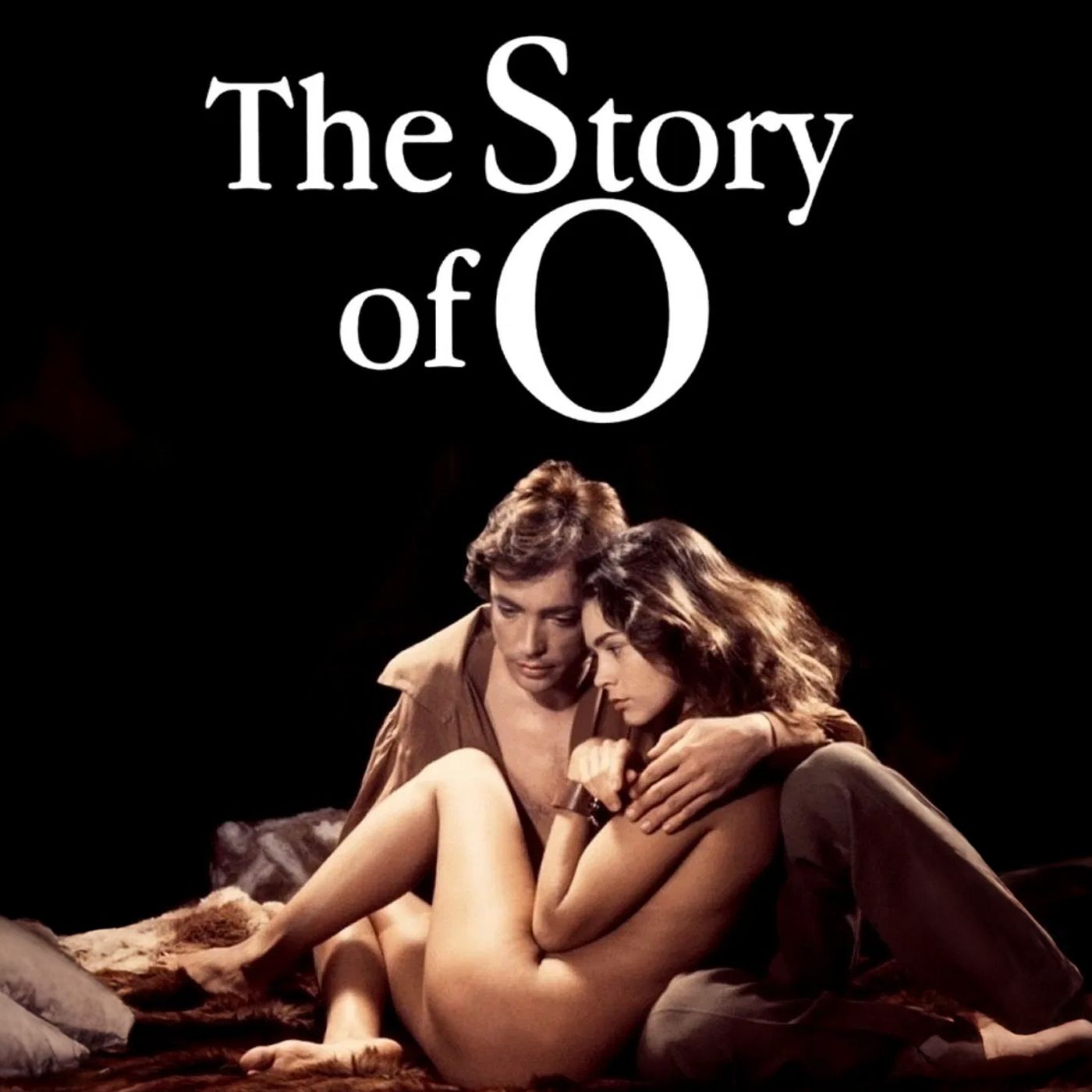
About this episode
The conversation opens up the film’s legacy, its aesthetics, and its complicated relationship to the source text’s authorship and mythology. The episode also features two illuminating interviews: Pola Rapaport, director of The Writer of O, discusses the real story behind Dominique Aury and the creation of the literary sensation; and Maya Gallus, director of Erotica: A Journey Into Female Sexuality (1997), explores the film’s place in a broader lineage of women’s erotic expression, taboo-breaking, and cinematic desire.
Transcript
Automatically generated, so expect the odd misheard name.
The Projection Booth podcast is sponsored by a Scarecrow Video Try out Scarecrows run by mail service. Choose from over one hundred and fifty thousand films and get Blu rays, four k's and DVDs delivered directly to your door. Visit scarecrow dot com Today. Oh g is folks, it's showtime. People say goodnighty to see this movie.
When they go out to a theater. They want cloth, sodas, pop popcorn in No monsters in the Projection Booth. Everyone pretend podcasting isn't boring. Cut it off. I love you, I love you.
Obey, Sir Stephen. Said Stephen, Welcome to the Projection Booth. I'm your host. Mike White joined me once again as MS. Sam Degan.
Hello. Also back in the booth is MS Jessica's Hello. On this episode, we are fulfilling a Patreon request from Jessica Shires about just Jakin? Is that right? How we say that just ja?
I believe sure, sure, it's probably gonna be just Jakin when I say the story of Oh. The film stars Kareem Clary as the titular Oh, Who's taken to a chateau in ROSSI by her lover, Renee, played by Udo Kirr. He eventually gives her to another man, Sir Stephen or Stefan in this movie, and tries to initiate a model into a turn at the chateau herself. The film is based on the notorious novel by n Cecil Disclo, who also wrote under the pen names Dominicorie and Pauline Riage. Yeah, I'm gonna be butchering all this French as we go along, so buckle in.
We will also be spoiling this film as much as we can, so, as well as the sequels and tangentially related TV shows, films, all that kind of stuff. So if you don't want to anything ruined, turn off the podcast and come back after you've had an o orgy. We will still be here. So, Jessica, when was the first time you ever heard of the Story of Oh? I discovered Story of Oh via the book when I was a teenager, and I don't remember how I came to be aware that it was a notorious book, but I was working in a bookstore at the time.
I was in high school. I was already interested in band and transgressive literature at that age, and I came across it, and for anyone who's seen like the sort of most well known edition of this book, it's incredibly plain. Like it's a white it has a white cover with black text on it. There's nothing like on it that would make you go, oh wow, like this could be very salacious. It's incredibly almost like the equivalent of like brown paper wrapping.
Basically, I was working and I was bored, and I picked it up and thumbed through and I was WHOA. It's obviously like very immediately shocked and also intrigued, and I bought the book. I took it home and read it, and like I said, it just became part of this canon of the story of the Eye and dysod I was discovering at the time. So it just came in that canon of band transgressive literature and just just solidified something for me culturally that just turned me into the adult that I am, for better or worse. I became aware of the film version around the early two thousands.
That was the first time I had become aware that a film had been made of the book, and I was obviously I was very excited because I was just like, wow, how are they going to turn this into a movie, and I bought the DVD, which I still have. I loved it, obviously, and I'm sure we'll talk plenty about how the film differs from the book. But it was so lush, it was so pretty. It was but it had so much of the story in it and felt, at least to me at that age taking it in on a first watch, it just felt this is what I would want to see, So I was pretty excited about it. And I've long had an interest in European softcore, so for me, it's just always been part of that group of European softcore films, many of which were adapted from works of literature that just have always been like near and dear to my heart.
The reason why I picked it, and Mike will probably remember this conversation I had with him, is because I was thinking about how the similarity is that the film and the book have with gen de Berg's book the image, and I asked if I could do a double. I didn't want to be greedy, but I want to be like I've been thinking about this and I feel like I have a lot to say about it. Is there any chance I could do these as a double episode, and then's when Mike suggested breaking them out and doing an episode on each, which I think is great and was very generous and I'm very excited to do. I feel like I will also probably bring up a lot about how this film is similar and different from the Image which came out the same year.
And Sam, what's your history with a story of. Honestly pretty similar. I got really into the Marquis de Sade a way too young of an age, and from there it was inevitable to similarly look through what are other transgressive novels and stories that I might be interested in? And this was the first thing I came across after reading Sad Again, founded in fucking Barnes and Noble, looking innocuous as I'll get out, with the cover that like as a fourteen year old, no one was like, maybe you shouldn't buy that, but I fell in love with the book. I love both of the books that she wrote.
There's also the sequel, Return to Wasei. But I found the film at some point in college or my early twenties and was just like shocked to see that the guy who directed Emmanuel made a story of oh adaptation with Udo kier of all people. It's one of those things that might be actually hard for me to talk about because, at least in a more objective way, because the novel is such an important part of my life, and while I have issues with the film, it's still a good representation of it, or at least tries to be. So. I think I found Story of Oh, not at a bookstore, but in a dumpster.
WHOA. We used to go dumpster diving a lot, my friends and I when I was growing up. And there was a bookstore maybe like half mile from my house, and we were going through behind all of the dumpsters, behind all of these businesses. It was one of these strip malls, and there was a dumpster that was just filled with books, and we were like, oh, well this is interesting. Let's go through all of these books.
And what's the matter what these books? These are all brand new. They were all missing the front cover though, so they were basically like unsold books, and the bookstore was just getting rid of them. And this was before recycling was really a thing, so they just were throwing out all of these books. So we went in and we just took as many of these as we possibly could, and Story of Oh was one of them, and so we didn't even have the innocent front cover.
We just had the the four page of it. And I ended up with this copy of it, and I remember trying my best to get through it. And I'm very curious if this is going to be like one of these weird man women things. As we're talking about this, but the book of this, it's like, the stuff I want to read about is not the stuff that she concentrates on. It's like the sex, the oral sex, anal sex, regular homogeneous sex, the whippings, all these things.
She just states them so plainly. And then this happened, and then this happened, whereas I'm still am all of these years later, like no, no, I want the details, like give me the details of that stuff. I don't really care about your relationship with Renee and Sir Steven. I want the juicy details, like give me all that stuff. So I wasn't even really aware that there was a movie of Story of Oh until I don't know, maybe I was in my late twenties and I've never watched it until we watched it for this episode.
So this was a brand new experience for me. And then I forced myself to listen to the entire story of Oh, because I never made it. I never made it to Sir Steven, So that's I just knew Renee and I really didn't know Sir Steven. Which is interesting. That was your issue with the novel, and I think it makes perfect sense because I do think she makes an effort to deroticize that aspect of it.
So yes, of course we're here to talk about the movie, but I think both are hard to talk about because you can take so much away from them both. Obviously, I think anyone who knows about the novel and the film has heard about how misogynistic it is and how it's all about the male gaze and blah blah blah. But it's so much more complicated than that. And I think part of what makes it complicated is how she's just like, very face value, this is what's happening. I'm not going to make it spicy or titillating or eraticized, and certainly I think parts of the book, at least to me, are erotic, but it's like when you least expect it.
Yeah, I totally agree for people who are just looking to read a dirty book, who pick this up, we're going to be probably going to be disappointed. I have to say that this was you, Mike, because it is as you guys are saying, it is very matter of fact. And dare I say the language that Dick Low uses, she shies away from being vulgar. There are no bad words in this book. When she's talking about body parts, it's almost like not scientific, but it's very again matter of fact, it's very She never uses like the F word, whereas a lot of other even high literary pornographic books would use course language.
She doesn't resort to that. In fact, when she talks about other characters using this kind of language, she just says things like they described her body in the most course language. She does not reproduce what was said. You know, that's probably when that kind of language is being used, but she avoids reproducing it. There's just a level that it exists on because it avoids doing those things that is unexpected for a reader going into it who may not know what to expect from this.
And again to Sam's point, I think in talking about the film, I think we have to talk quite a lot about the book because number one, it's so influential, not only on the fact that always made a movie and several adaptations have been made of it, but also that it's influenced generations of artists, and there's a sort of like cultural dialogue that the history of the novel and the writer were involved in that You really need to be aware of that in order to even begin to understand the movie or the book. So I think talking about that is great. And I also think that one of the great things to talk about when talking about story of oh is the fact that the story of the writing of the novel itself is just as interesting as the book itself.
The documentary the writer of Ohill I'm sure we'll get to talk about, is just fascinating. Dominique orie A was an absolutely fascinating woman. I'll just give just a tiny bit of background. I don't want to overdo it. So Dominique reborn and de close, So she had two pseudonyms, basically like the book was published under the nam Pauline ray Age, but she was known professionally as Dominique orie She was born in nineteen oh seven, so she in this book was written.
This book was written in nineteen fifty one, although it wasn't published until nineteen fifty four. She was almost forty when she wrote this book. And the sort of genesis behind the book who worked for publishing firm. She was incredibly well educated. She had already she worked for Galimard, which is one of the most famous, prestigious to this day French publishing houses, and so she worked for them as an editor and a translator, and so she had her biggest book was like this, I think a book she'd edited, a book of seventeenth or eighteenth century like religious poetry.
And she was very like prim and proper in her like physical presentation. She was like exactly the not the person you would have thought would have written this novel, much like Katrin roug Grier being the writer of John de Burgh, which we'll get to but anyway, so she wrote this book almost on a dare. Her lover was another Gallimard employee, Jean Paulin, who was a very well respected publisher in French intellectual and had written and published many things himself. And he was married, and so she was much younger, and they were having an affair, and if she was getting older and she was starting to feel he had a kind of a roving eye. She was worried about, Oh, I'm going to lose him, and she was very much in love with him.
This was like the biggest love of her life. She stayed with him until he died in the late sixties. And so in nineteen fifty one they were talking about Dasad, and funnily enough, Dominiquarrie had not read Dussad when she wrote The Story of Oh, which is an interesting tidbit. But anyway, they were talking about Dasad, who was being republished at the time and being talked about and was like newly discovered around that time as a sort of cultural talking point. And he said that women could never write like Dusod, and she scratched her chin and went, oh, really, we really don't think so.
And this is also really described. Her writing process is really well described in the essay that precedes the sequel to the book, which is a Girl in Love, and she describes the whole writing process. She went home and every night she would get out her papers and pencil and like scribble the text. And then the next day she called Polan and said that I've written something for you, and she gave it to him and he was immediately like he loved it. He thought it was wonderful, wonderfully written.
Not just oh wow, this is titillating, but this is well written and you should keep going. So he encouraged her to keep going until she basically produced like five parts of text. Some people have in the past theoryts because we didn't know who the author of who. We didn't know who Pauline Rayage really was until I think it was finally revealed in Brown nineteen eighty four in an article that it was in fact a woman. It was like hotly debated, like at the time it was published, Oh, it could be this famous person, that could be this famous person it was.
And everybody thought it was Polan for a long. Everybody thought was Polan? Yeah, who wrote? Who also wrote a very interesting forward to the book. Yeah, acted as like a sort of representative for Rayage in her sort of press and later like sort of police interactions.
Because the book did eventually get into trouble, they took it to Galli Mard, which obviously was their employer, although Gallimhar didn't know that, and they said, no, we're not touching this, and so Paulon took it to Jean Jacques Pavert, who's basically the one who was publishing Dasaude and like becoming a younger publisher on the scene publishing things like Dasad and controversial things, and was like, again, it's like a cultural talking point, and he was like all over it. And also he claims to have known all along that it was dominic URIs. I knew from the first time I picked up the text that it was already but anyway, so he published it and it was like a non event when it got published, like it was a very small edition.
The press really hadn't picked up on it until it won a presigious literary prize, the Domego, which is like a prize first up and coming writers. Then it was like the press caught attention and was like, oh, who is this woman writing this salacious book? We need to know who this is. And then Paulon comes out and goes, oh, no, we're protecting our anonymity. And then the more sort of traction that the book gained, that's when it caught the attention of the censors, who did some investigating and basically like they talked to Paula and they touched Povert and Finally they talked to Rayage herself with Dominic Curry herself, and even though it wasn't explicitly revealed to them that this was the author, I think there was a sort of based on kind of what I've read a story, there was an understanding that they knew that this was her, and like she was so prim and proper and a lady, if you will.
Eventually it just got dropped and they just I think for a long time it was banned to miners, but you could it was still available to buy. It wasn't full. They decided not to ban it, so all the charges and stuff were dropping. And meanwhile all of us first encounter it as were miners. Yes, exactly exactly, I know, right, I'm sure she would have wanted that.
But yeah, so that's the genesis of the book. And it's also important to know that it was not her idea to publish this as a book. This was like just for Jean Paul and this is just for his eyes only. That's why she'd written it. But he was the one who encouraged her to, like I said, not only continue writing, but to ultimately publish it.
So and because I know this is a controversial book. I know it's a controversial movie. I know these are there are issues talked about and things talked about in the book that even now people just don't It's just still too much for some people. And I get that it remains like a really interesting subject to talk about. And there's been some great debates and some amazing women have written about this book in the past seventy five or so years that it's been available, so it has an amazing literary history.
And I'll just add I think I mentioned to Sam earlier, but I had the great privilege of being able to yesterday see the original manuscript for this book, which is held in Harvard's Archives. So I made an appointment. When I found out, I was like, whoa, I've made an appointment over there to go look at it. So I've actually seen like these handwritten pages that she so crazy. Yeah, it's really amazing when when you're writing the thick of reading and thinking a lot about this, it's like it feels it's a very intimate experience to sit there with her handwritten pages and be like, wow, this is you picture her like sitting there on her bed at night, living in her parents' house, writing this.
Book, it's like doing a pervert Mecca. Yeah, and it there is you ever been to pervert Mecca? You've ever been to pussy Heaven? Not yet, but now that I know it's just a few hours drive north and at Harvard. When you say that there are things that are too much for people, what kind of things are you thinking of, like thematic or what.
The sexual content? For sure? So there's a I guess a couple of things. And I just I also want to say that I am approaching this conversation about this book in this film from just a literary and a film criticism standpoint. I'm not a member of the BDS community.
I'm not speaking in any way to the authenticity of the relationships or what's presented in the way it's presented in the texts and the film. I just want to put that out there that I'm just approaching it from a textual standpoint. It does not feel like a safe scene in consensual relationship. Yeah, exactly. So I just want to avoid making any claims that it's she gave her consent and that's that, and issues of consent are big es and she's asked at many points, and this is again, this is where the film actually is pretty faithful to the text is faithful in a lot of ways.
Not every way, but a lot of ways. It does seem to replicate this idea of consent and the importance of always asked. At almost every opportunity. You can say no at any point to this, you can stop this, you can say it's over, and she always declines. She always says no, And one could wonder, yes, she's being asked, but is she giving consent freely?
And that's probably a fairly I would dare to say, sort of modern interpretation of those situations. Also of character. But when you're talking about Kennik literary character give consent, it's like the answer is no, this is not a person, like we're not watching a documentary. And I do think it's important to stress that, especially to younger listeners who, like you said, I think people don't always approach this kind of subject matter that's maybe more transgressive or more nuanced as this is just a book or this is just a movie, and this is not meant to be a document about an actual relationship or even about BDSM relationships or the whole scene. You really have to go in knowing some of the context here, knowing that it was written by a woman, but also knowing that this is a literary work by a highly educated person in a literary field.
It's not the same thing as like the Emmanuel book. Right, which was inspired apparently by Emmanuel our Son reading this book when Lena but no, I totally agree the kind of relates to the Susan Sontag essay The Pornographic Imagination, where she debates how she differentiates pornography, and which I think is a fascinating essay. And I guess whoever's listening and is interested in reading about intellectual debates about this, I highly recommend that, I say, in particular, she really tries to make the distinction that I think exactly what you're arguing. But I think that's also what makes it murky to talk about and not to speak for you. But when Mike asked, like, what do you think is too difficult, I think it's that those issues of how real does it feel?
What is it meant to represent? Is this really consent? Is this just a romanticized view of this type of misogyny, this abusive relationship? And so I think to me, like reading it and watching the film doesn't feel nearly as complicated as talking about it does, especially for contemporary audiences, like I think talking about this in the nineties or hearing people talk about it, especially once everybody realized, oh, this actually is written by a woman, I think the conversations are just about different things than when you talk about it now. But I don't know.
The movie really emphasizes this particular part of the novel where even though she is a submissive often in some very extreme ways, you do get the sense, or at least I get the sense that she is giving consent and making her own decisions. And I think it would be a very different story if she was with the same man the whole time. But this idea of her switching from Renee to Sir Stephen and also using a pseudonym the way that Pauline Rayage did, it feels like like she's going on this kind of Alice in Wonderland type journey into this whole other dimension, which of course comes up. It's referenced she talks about it in the film, But it feels like she's going on this journey and she doesn't necessarily want to be in control of the journey.
She wants to go where it takes her, and she wants to see how it changes her. And I just really love these kinds of female journeys of sexual discovery, often through transgressive sexuality, of which there are not nearly enough Like definitely the image is another great example, and she does enough to de eroticize some of the degrading sex scenes that I think that also makes it feel maybe less misogynistic. I don't know if you guys would agree. That can be a big argument against the sort of misogynistic intent. I think there's a few things that are important to think about when thinking about what you know, whether this is misogynistic, and how to approach the text.
Number one, just going back again to the author, this is her. This is a female fantasy born out of a female brain. Dominiceori already identified as a feminist. She stated that clearly, so that's not something that's even up for a bit. She considered herself to be feminist, and if you read interviews with her, she's a very had very progressive views on things.
So I think sexual also bisexual, yes, and outspokenly. So the counterpoint to that is you could argue she wrote this for a man. Therefore, is it not then becoming basically or to please a man? Even do we then argue that it's then it becomes a male fantasy. I think about that, and I've read Andrew's Warkin's essay on this, and you know her thoughts.
And sorry, vomit sounds into the microphone just to say that. I've tried to read various viewpoints and just try to understand the because I'm so fascinated by the by arguments about it, and I think it's so reductive to see it as just a male fantasy. That in and of itself, like is misogynistic. You're basically saying, this woman, just because she happens to be in love with a man, is somehow not capable of having her own agency because of that perceived heterosexual relationship. It's crazy.
She may have written it for Paula En, but I think he edited maybe one word of the text, so it's not like she gave it to him. He fully rewrote it or told her what she should and shouldn't do. I think he had made a few, like very minor comments, but other than that, it is fully Dominicouri Pauline Rayaj's text a pauvert when he received it's a published didn't want to change a word of it. I think the only thing they did, and this again will probably emerge later when we talk about the films, was that the final chapter, which later became returned to Guassi, which became a separate book, was initially the last chapter. And I think it was decided like we should end it the way the book originally ends, which is the end of the sort of the owl party command or scene, which is an ending to really make you think.
And then obviously in the book there's these here are two things that could have happened and love. I think I read from Dominique Auri, who basically says that this was from an interview with the person in nineteen eighty four interviewed to her. When I asked Ari about these endings, she shrugged, quote, I didn't know how to end it, so I left it open. Why not so much like the beginning of end just to go back to the sort of the construction of the text, so much like the beginning of the novel, where you have these sort of two beginnings where it could have started like this. It could have started like this, which I think is a fascinating literary device.
First of all, I also love it. Loved that it's in the film too. That's exactly what I was just going to say. The fact that I think just Ken the screenwriter, had the foresight to go, you know what, this is really interesting and we're going to keep it is great. So similarly with ending, there's two possible endings.
One is that she goes back to Quasi, which you know was what the second or where the second book came from. And then second ending. So it's the ambiguity. I think that's important and interesting and again makes this a work of literature or an important work of literature that we should still be discussing. It's not pulp for titillation purposes.
It's so well written. I think it's beautiful and maybe as a teenager maybe harder to pars some of this. But when she starts to talk about relationships between the character and particularly O's past and her relationship with especially women specifically, the character development and the way she talks through Oh's psychology is just so fascinating to me. And we know some of that comes from Dominique herself, because some of these characters are taken she has said her taken from her past. Jacqueline was a girl she had a crush on in school, and Rene was someone who broke her heart at some point.
And I think Anne Marie too, somebody she had a relationship with. I think she was a writer too, ade Aedith Thomas, but I think she was French. It was add Thomas, but yeah, who was also an intellectual and a writer and was her love she had a relationship with. Yeah, that was Anne Marie. Yeah.
So a lot of these things, these characters come out of her own life, even though they're like quite changed. Funnily enough, Sir Stephan was more of like just a fleeting impression rather than someone she knew, which was apparently she and Paulon went to a bar in Paris and just saw this englishman sitting at the bar, and she was just so struck by him as just a physical person that he became Sir Stephan because she was convinced he was an englishman drinking his whiskey or something. But it's incredible that plan didn't inspire Sir Stephan. He's probably there somewhere, and I think just the fact that it's an older man, it's almost impossible just in the same way that it's impossible not to read into the symbolism of OH, which again just to go back to the author, like she has claimed that always simply it's short for odeal.
It's again also inspired by a character from her past, and Oh, that's the only reason why it's called Oh. I think it's just it's too hard. It's too easy to take that and interpret that in different ways. And I think similarly, it's too hard, knowing her relationship with cal On, to not see elements of that in their relationship. I was always told that she was called Oh, not because it was a nickname, but because of the way that she has to keep her mouth open and her legs open the whole time, and that it basically represented that.
And then somebody else was like, no, actually, it's because she's nothing and is a big zero, and I was like, oh, interesting. I don't necessarily agree with that, but just the way too, that she's kind of thrown away at the end of the story. One of those two endings is like oh starts Sir Stefan broke her heart and she asked for permission to kill herself, and he gave it, and then boom, the book's over, I was like, oh, fuck, that's a dark ending. Orie is on the record as having said in an interview in the seventies that she in a great book. By the way, the interview she did with another intellectual called Regine Defoge, it's Confessions of Oh and English, but it's like a long it's a book long interview that Reginen Defoge did with Dominque Orie, who was then still not revealed it was still she's still just called Pauline Rayos.
I believe it's in that interview that she is asked directly about what's the symbolism of Oh, and she says, I did not intend it to mean symbolize anything, which I think is just so like absurd because it's open for interpretation. That kind of makes it better in a way. It almost reminds me of when somebody asks There's that famous interview where somebody asks David Lynch to explain the symbolism behind something and he just looks at the camera and goes. No, yeah, exactly. So maybe she just refused to.
And I think being that literary and being an editor by trade with that level of education, she had to know that there was going to be so much you could read into that name. But I think it's better to go into it as a writer without a clear intention about what does the O mean. So I feel like it allows you to think about it in so many different contexts. So many times I was looking up this movie and I kept getting that version of Othello that was just called oh, And I was like, no, no, different movie, very different. Oh yeah, it's not Ophelia, it's not Otello.
It's definitely just oh, thank you very much. When it comes to the writing style, I don't know if this is exemplary of something that I've been critiqued for before. Whereas the difference between erotica and portn and I don't know what that difference is. I don't know if it's that old you know, I'll know it when I see it kind of thing. But I would think that this leans more into erotica than porn.
I don't love that people try to make this distinction at all, because I think it's unnecessarily reductive and allows you to write certain things off and put them in boxes. And but for the purposes of this conversation, reading something like story of Oh, where the author had a clear intent besides trying to sell some cheap erotica just for people to get off on. It makes me think a little bit of some of the more downbeat seventy's hardcore films, where you're watching something that feels like a real affecting film with a lot of emotional resonance. That clearly someone like Gerard Demiano with like story of Joanna, he's not making that just so people in the cheap grindhouse theater can jerk off.
There's more to it than that. But I think if you're talking about written erotica, whether that's pornography or not, I think a lot of it is in the intent. It's are you trying to just make a cheap buck? And maybe you don't have too much else to say. Someone, perhaps not me, but someone could make a case separating those two, like literary erotica and porn.
But I think here there's no debate whatsoever, because she was writing it as this kind of literary exercise, also as a love letter. This to me is as far from pornography as you can get while also including a lot of sexual content, if that makes sense. And as far as the movie goes, Jessica, you called it softcore, and it definitely feels like that. There's a lot of boobs, a whole lot of boobs, and so much of this. I didn't realize that Jakin had also done Perils of Gwendolen, which I was like, oh cool.
You know, when I was a younger man, I was just like, oh cool, Tawny Katine and a sexy movie. I can't wait to see this. And it was just like boobs, boop spoop, boobs. Do you have a problem with boobs? And Mike, because that's what I'm hearing right now.
I have no problem with boobs, but it's just interesting to watch this movie and just so much of it as like beautiful women with their boobs showing in the outfits that they wear, and they oh, they can pull up their their dresses and have easy access and stuff. If you had not told me that this was a woman that had written this story originally, I would have been like, oh, this is a young man's fantasy just to see boobs, because boobs were all you know, I'm in my teens, boobs, boobs, boobs. I want to see more boobs. And I'm sure that's why people can continue to dismiss this film, and because they don't, because they haven't read it and don't know that, in fact, the costumes that are represented in the Chateau, if you've read the book and you've know the details, like they're in very good and accurate representations of the way they're described in the book.
I just studied costume history and did a lot of work to create those costumes in the work of literature, and and I just think Jack Kenda is such an amazing job of the costume designer was a tan juniality. I think they're just saying I think they're incredible. I could talk for a long time about all the fashion in this film, because it's one of my favorite things about. It than the owl mask and all. Yeah.
Yeah, we got to talk about Leonarphine because I think he's important to this. But I feel like the distinction here also with all the topless nudity has to be made that hey, this is a French film, so topless nudity way less shocking than say, an American film like this. Also a French film in the seventies, right after the Emmanuel boom, when audiences just wanted as much nudity as they could get, especially during that period in the seventies when the tax laws were more lenient and the sense ship laws had just been dropped. So we're definitely at peak naked breast cinema and where softcore movies are concerned. And I think it's pretty obvious why the producers decided on Jacan to direct this.
There were a number of directors who wanted to film this for a long time, and why there's any number of reasons for why it took so long for it to get a film adaptation. Number one being I guess the breaking down of boundaries and censorship in what you could show and filmed, and obviously like a Manuel was like a big taboo breaker in that respect. Last Tango also, and again as just as exactly as Sam is pointing out, we're in France, we're on the cusp of X films becoming full hardcore films becoming legal. They were shown in separate theaters, but they were legal. And again in this in the States as well, obviously use things, see things like deep throat things were starting to be porn, nudity, hardcore was all becoming like much more mainstream in cinemas.
It was part of a zeitgeist, I think in that way, and that it was capitalizing on these newfound lack of or softening at least of censorship, and also audience interest in seeing more and wanting this movie showed me this, what do you got for me? In this one? Which got some s and m It's again and another reason why I all listen so much, so interesting to talk about because then it leans into the sort of political specter in France and things that were going on at the time there. And I think that's why you began to see this proliferation erotic novels. And we know this like slightly earlier with Jess Franco and his desod adaptations.
People were just starting to like really develop an appetite for this, and as more and more was being allowed. I think it was a combination of directors wanting to do it and then an audience interest just like it built to this crescendo. Oh yeah, and I think things start to get really dark by the mid seventies. My go to year that I usually talk about is nineteen seventy six, when you have all these like really sexually downbeat movies coming, I think as a inevitable kind of cultural backlash, just something like the Summer of Love. But I feel like you can see this as being on the pathway to that because it is darker.
It does present these really unconventional relationships, even for a film like comparing it to Emmanuel, Emmanuel, she's definitely going on a journey of sexual awakening that also takes her into more unconventional relationships. There are some queer themes, but here, I think because she's basically going to s and M, finishing school and is sacrificing so much of her conventional life as a working photographer and maybe a more regular person like to me, Emmanuel feels more like a rich person fantasy where she's married to this ambassador, she's living in an exotic place and doesn't have what would look like on paper to many people a regular life. And not necessarily that Oh does either, but more so like she's presented as this kind of bohemian artist photographer.
Once we see her in the film, once we see her in her day to day life, she does feel a little bit more grounded and like less of a fluffy fantasy than something like Emmanuel. I'm reminded of someone's remark on a letterbox revot where someone was like, oh, she went to Huac on her PCO. She's like, oh, yeah, it took by two weeks summer holiday, you know, going back at work. That is how it feels. She went to pervert summer camp.
They drop you right into the middle of the story kind of. I mean, we talked about those two different beginnings, but we don't know anything about Oh, we don't know anything about Renee before we really start the story. So yeah, maybe she has a job, maybe she doesn't. We don't know until gosh what half an. Hour, Yeah, almost halfway.
I think we start off with you know, Renee is in a suit, and she's an address, and they're picked up by a car, but if memory serves, is a little bit of a nice little of a car, and when they get to Rosie, they're dressed in very older type clothes. I mean, just the it feels more like we're going back to like peasant times with some of these And the only thing that really seems markedly different between the book in the movie is the the Jean Gavin character Pierre, who's in the book. But I don't think she has a love affair with Pierre. He's more just like a minder, and definitely not nearly as handsome as John Kevin, who's got a great look to him. I think I've only seen him in one other film in my life and Hope to Die, and he was fantastic in that and just made such an impression.
When he showed up in this, I was like, Oh, I must have seen this guy one hundred times. But looking through his filmography, I'm like, I don't think so. I think I've just seen him in one other movie. And when she's done with ROSSI gets back into a car and then we see, you know, her apartment, we see or I think it's Rene's apartment maybe, and just like, oh, it's modern times. It almost feels like a shock for me.
You're catapulted right into the seventies with the photo shoot. There's no question of what time this is. Like when you get there, it's like the movie starts and they're in aparkment. Yes, their clothing is very like indicative of seven the seventies. You get that an old old school rolls Royce pulls up and you're like, there's a sort of again, the ambiguity of time.
I think the novel I think does his law as well, and then like suddenly you're catapulted into Huissie and you're like you're in the guest full and like the Gothic castle trope, you're there like it's dungeons and women are wearing these costumes where there's corsets and there's they're a chain. And one of the things I really love about both the book and the movie is that you have a loss of a sense of time. I think that's why it's probably easy for just check him to because obviously the book was written in the fifties. You could just as easily put this in the seventies when you're outside of CI. You know, you know, it's like the same It functions the same way, funnily enough if you read and it just briefly digressed from the film and the book.
A Guido Crapax, who is an Italian comic artist who's fantastic. He adapted many books and many erotic classics in as graphic novels, and Story of a is one of them, and I highly recommend checking it out if you have any interest in the slaw. But he sets it in the twenties because obviously, if you know anything about Valentina and the sort of the world of Guido Crapax. He's obsessed with Louise Brooks. So if you look at that, if you look at the graphic novel, it's all set in the twenties.
Everyone has like twenties clothes and twenties haircuts. It's like quite quite an amusingly different adaptation of the sort of sense of time. Listener that the openness to interpretation. They both make sense, especially looking back historically, the twenties and the seventies is being these eras of more debauchery and more sexual permissiveness. I think it would be weird to see this in say, like the forties or something.
But that Kraypax version is so good also, I highly recommend. Yeah. I was just looking in by bookshelf because I'm like, don't I have that? I think I might own that because I love his work. I think he's fantastic illustrator.
I love his stuff. This again goes back to like what I brought up earlier, is the influence that this book had has on artists. There's and there's some sort of like back and forth orrowing, like if you're looking at so an artists like I mentioned leonor Fini, So she was a surrealist artist. There's a lot of dialogue with surrealist artists and this novel who like fully embraced it, like right off the bat as a classic. So Leonarfini was a surrealist artist who she took these photos and did these paintings of these owl masks.
She like collected these owl masks and took these amazing photos or had these amazing photos of herself taken it, and Dominique Ori had seen these photos and so then included the scenes of the owl mask. She admits this is this was an influence, and I'm she apologizes, she's just like, I'm sorry to leon Arfoni because I stole this from her. And then later on in later editions of the Story of Oh, Leonarfini did illustrations for the book. So it's again it's like this sort of dial like Hans Belmer, the surrealist artist, did an illustration for the front as piece of one of the first editions for the book. Again, like other artists have adapted it freely, and it just embraced it as a text that really some speaks to the surrealist aesthetic.
So I think that's really important. It's not only was it a book that was talked about and highly regarded and debated, but also it like went on to be a huge influence on other art forms. I just think that's I just think that's something Aisy. I also have to wonder if she knew of the Surrealist and like Rothschild famous costume parties, because the ending scene definitely gives me that vibe where people are stepping out of their day to day lives to go to these lavish villas and castles to have these costume parties, where I think the implication is that there are a lot of substances being imbibed and people getting up to maybe not sadomasochism in quite the same way as the ending of Story of Oh, but you can really feel the cultural influence on her being a product of that time and place and in a lot of ways, even if she didn't originally intend to publish it writing this when she did, when it was, like you said, around that period where sad was becoming a little bit more known or a little bit more prominent actually in literary and artistic circles like the Surrealists in the thirties and especially the forties were just all over his work, So to have her come a few years after that, it's like, of course they're going to love this novel.
Yeah. I think it's important to point out that maybe something that you know, like I don't think was quite the same in the US at this time as it was in France is the publishing figures were basically celebrities, like the intelligencia, So people like Paulin and Povert and Dominicaarie herself. I wouldn't say she was famous, like a lot of these literally publishing figures and people who wrote like essays and things like that were just as famous as like artists or actors or even maybe even more so. They were just like their opinions were highly respected, like they were considered like the even people like Alamo Grier like he was among met de mandiarg like all these people were like like this sort of the pillar of intellectual society in the fifty sixties se news and now we have YouTube.
What does Logan Paul have to say about this? But I feel like Sontag, who you mentioned, was maybe the last major American version of that where it just seems like such a different world when intellectuals were on nighttime debate shows more than celebrities, or just as often as celebrities because they had celebrity of their own. Take us back, I want to talk a little bit more about the movie and some of the striking images that are in here, because I think Jakin does a fantastic job when it comes to capturing a lot of this, especially the cinematography around the rosy part, and just that it's like honey colored film, you know, just everything seems so warm, and maybe that warmth makes it feel a little bit more safe than if this was shot in a colder way.
It feels like there's I don't know if something smeared on the lens type of thing, but you just feel like this almost you know, you're mentioning how this is playing out like fantasy, and there's mention of Alice in Wonderland and it feels like this dream, especially once she's in rows see things are of a different color palette, and then when she leaves there and goes back into the real world. I mean, I was talking about what a shock it is, especially the stark white of a lot of the furniture that's in the apartment, and just seeing real daylight that isn't kind of filtered through. Like I love the scene when the Jean Gevin character takes her down these stone stairs into this little area where he whips her, and it's like the sun is above.
It's almost like they're in a cave. And then you get that stark contrast with quote unquote the real world that she's in. But then you get some striking images, like after the photo shoot, she's got the Jacqueline's picture projected onto a wall, and then she's got what looks like a mock up for magazine cover and she's adjusting it to put her face onto the magazine cover, and then also like lovingly caressing the face and putting her lips next to Jacqueline's lips, and I'm just like, these are great, great images. I think that this is shot really well. I think personally that's where the film really succeeds.
And I think the photography, and I think the cinematographer for this is someone who ended up who was all who also worked on Emmanuel If. I don't think he was the primary cinematographer, but I think he worked on it and then he went on to work with Jakan like all through the seventies, like he was like became his go to guy. And I think it's the sort of communication of and the sort of harmony of the cinematography, the art direction and the lighting. It just everything like works together perfectly. Like it's just they all seemed to understand each other.
They all seem to understand like what Jakan wanted to show. And Jaqan was a photographer as well, he had an eye for this kind of thing. By the way, I think it's funny Jaquen was one of these people who wanted to be a filmmaker but initially started like learning photography during the war, like during his war service, much like Radley, Metzger and russ Meyer, which I think. Is funny and genreland to a degree. And oh yeah generally yeah, yeah, So it's it's just always funny to remember that that's where some of this training comes from, as like military service.
But anyway, Jaquen did a lot of fashion photography and you can see it. He has an incredible eye for composition that he's able to communicate. And then you see this in Emmanuel too. It's again why these movies are class Why do we still look at these movies. Why people who write fashion blogs still talk about these movies just even just are interested in beautiful images, Like people who just stumble across these images and go, I don't know what this is.
This happens to me a lot while you like post about movies on my Instagram pages, people are like, what is this? Where can I see it? These are amazing images, and I'm just like, I know, right, here's where you can see that. It's just it's I think this definitely speaks to like the lasting power of the film. I think if it was a didn't have such striking imagery, it might not have retained an the audience that it has I think today.
And the Story of Oh was showing on Criterion Channel earlier this year, I could barely believe my eyes. I was like, really amazing. In the they're like fashion photographer, like the films grouping or whatever else. Okay, that's an interesting way to drop this same It. Does make sense, though.
I feel like you do get a number of erotic, especially softcore films in the seventies that has that kind of crossover where it's like, we're here just to look at naked women in beautiful settings, and the plot is maybe secondary, which I don't think is the case with Story of Oh, But he's very much making the most of these visual worlds, and I think the contrast to them is so important, especially at reflecting her character development. And just like the way that when she comes back from being at Clissi in the first act of the film, it seems like every time she returns from one of these sato masochistic secluded places, these like fantasy places, she comes back as this like more confident version of herself.
And when she first gets to that apartment, it almost seems like she doesn't feel like she belongs there, doesn't feel comfortable until she starts doing her work as a photographer. That's one of the things that really sets this apart for me is the way that she has her own career as a creative person that gets a decent amount of screen time. But also how he folds, probably unintentionally, how he folds his career as a fashion photographer into the visual world of the film. And even though I do maybe have some issues with the script, it's like I have no issues with how it looks and how seriously he seemed to take the visual world as an important component of the character herself. It's really wonderful.
I don't remember the exact language around when she does come back from Rossi and begins to work again, but I want to say that Rihannah described her as being more masculine. Is that right? I want to say she starts wearing more masculine clothes when she comes back when she's working, like she's more dominant to the other female models working with her. And I love how we see her kind of transform in these female dominated spaces, especially when she goes to Anne Marie's house and it's all women, and how that kind of compares and contrasts to her photo shoots where it's pretty much all women. I think also that this speaks a lot to Core and Clary's performance as Oh, because I think she's really wonderful and this is her first big film and she's like a model before this, and she had one small part in a movie.
But the way that she reenacts Oh's transformation is really good. And again, going back to that scene that Sam was just talking about where she's especially like in the movie, you get this a lot, I think, and why Ja Kam definitely understood the textas she's really directing the models with the sort of like this force and the strength, and Claria just really you really feel that sort of first degree of transformation that she goes through, and I just think it's great. I just think I think she was so great in this. Yeah, she is so striking and just does such a good job with such a challenging role, especially because she has to portray all of these emotions plus all of the things that are going through her mind as she's undergoing some very intense whipping and punishments and all of these things, so to be able to bring all of that to it, and it's great.
She's still working today. It's I think she's the only person from this film that's still around today. Of course. Sorry sorry, just an editing note. This was recorded before the recent passing of Udo kir The thing that I.
Dislike about is that you can't believe that he's straight. Yeah, me neither. I hate that he's dubbed in French. I'm just like, come on, no, I love Udo's voice. Wait do you see the English dub.
The English dub is grim. Give me him either speaking English, which I love his delivery in English, or speaking German. I just I want to hear that. But yeah, it's it's a shame that we're robbed of his voice. And I'm so curious Jessica as far as when they showed this on Criterion, I don't know if he had a chance to watch, but I'm curious about which version it was because watching the Blu ray that I ended up picking up was so confusing at first, not knowing that there were different cuts of this and the way that they cut them back together with the English dub and the front Bunch dub, and some things are in have subtitles, some things don't, And I just kept trying to figure out what did they censor?
Why are these scenes that are suddenly showing up in French? Why are they in French versus you know, why was this cut versus the other stuff? Because I couldn't see, like, was it a particular character, was it the lesbianism? Like what was the reason for cutting these particular scenes? That was so odd to me.
Yeah, I didn't. Unfortunately I didn't get to catch it well those very briefly. It was on like a month or two, so I didn't I can't say that I saw that version but I could only speculate that maybe someone somewhere is trying to create some kind of integral version. Obviously this had a DVD, and obviously it came out a blue rain I think a couple countries. I think there's a German edition, and I'm not sure what edition you were telling me that you had, Mike, but I think like maybe two or three different countries had Blu rays, and I haven't I only have the DVD, so I haven't really explored like what subsequent editions have come out of this, but why someone hasn't picked it up?
And this is this is fiftieth anniversary this year. Like, I'm shocked as to why somebody didn't pick it up this year and go, hey, Criterion did I guess you could argue it in its own way if it doesn't actually have a physical release, But I'm perplexed as to why this hasn't been given a high profile home video release with some kind of integro version. I'm actually thinking the back to something like Lamarge, where it's you have these like different versions with different endings than putting together an integral version is difficult because you don't know, you know, which would the director's cut as it were. The version that I ended up buying and taking that audio commentary from was one called Bounty Classics Collection.
So everybody's familiar with the Bounty Classics label. Best label around. Yeah, I love it. I signed up for their subscription model so I get updates. Ever, that's the version almost looks like it's Australian, just with the censorship label that's on it.
Yeah, I think there was an Australia in my because I tried to dig a little deeper and find out, like what its current home video situation is, is an Australian edition? There's like I said, there's a German edition that's like kind of deluxe, Like it comes as like a cool box that with a mask and like some kind of collar situation. Incredible, and of course of course the Germans. No, right, like where's the why did how did I miss that? And then I came some maybe a Spanish I think a Spanish Blu ray, which is weird.
Yeah, I wonder if the German version is the composite So the composite version must have some sort of weird rights issue because the composite version is streaming. My guess is the reason that the version that you watched that has mostly the English dubbing and there are those scenes in French. My assumption is that those scenes were cut out of the English version, not because there was content that had to be censored, but because they were, like, this movie's long as fuck, what can we trim from it? Yeah? I can't remember what the running times are on these different versions.
I think the full version isn't like around an hour forty five. But most of those scenes that were cut out are scenes in her apartment where she and Renee are talking about how he's going to give her to Sir Stephen and Sir Stephen now owns her, and I think also trying to convince her to bring Jacqueline into the fold. So they must have just went Are there sequences where there's not a lot of nudity? Maybe we can trim that because. It seems sounds accuratey, Yeah.
But it seems crazy to me that those would be cut for any kind of content or censorship issues. It also makes me think a lot about the early Tenebray composite version, which in my late teens buying that on DVD, I was so confused when they just randomly started speaking Italian and was trying to figure out like, oh, is this part of the plot because he just he's just slipping into Italian because he's in Rome. But the scenes there that are cut out of the English dub, it's the same thing. It's like characters having side conversations that someone decided could be trimmed is big, So I assume that's also what's happening here. The English dub runs about just ninety minutes or maybe just over ninety minutes something like that.
It's definitely not an hour forty five, so that's. Yeah, so they trimmed like ten ten or so minutes. All of what you're saying. It's things that we're in the book and are actually important to the story. But someone who just went, ah, this is just talking and cut it out.
Yeah, someone who thought of it as just a titillating softcore movie was like, we don't need to have all this conversation about ownership. Yeah one in fact, like that's one of the most important. Yeah, yeah, that's a lot about you know, is this a man's fantasy? Is it a woman's fantasy? And what's she writing this for a man?
And you know, we touched a lot about consent and stuff. But the interesting part of this book and movie for me is that she and she recognizes this in herself. You know, she calls herself a bird of prey at one point, and then when she wears the owl mask, you know, several chapters later, I was like, okay, that fits, and she's at that point where she's wearing the owl maskets I am bringing Jacqueline to Rossi so that Renee can have her or something, And I don't know, because I don't think she's interested in Renee whatsoever. Renee seems like the biggest loser of the story, which is my other objection, because why are you going to go with sir Sir Stephan when you have Udo kir right there? I know, right definitely, as you say, like trading and reading down.
Fascinating tidbit that I did not know until very recently is Christopher Lee was the first choice for star Steffan. Can you imagine that would. Make so much more sense? We basically got him in jess franco saad adaptation, although he was clutching his pearls apparently afterwards, so I can't imagine him really going through with playing that character, but you at least have to get someone who's even if it was like Oliver Read, can you even imagine it has to be someone who is a superior choice over. Udo Kir Anthony Steele bless him just does not have the gravitas that you need to really carry that character.
He's just like, he's clearly like that second. I don't know if other actors were considered, but he was definitely, like, clearly not the first choice, and it's definitely a failing of the movie. Is like not a strong because he's such a pillar of a novel, like it's you just you just need someone incredibly commanding to be in that role. In the novel. He's written so convincingly, Like I remember my impression reading it at first was how dare her boyfriend think that he's just gonna hand her off?
But then the more time you spend with his character, you're like, oh, yeah, he's this superior choice. And I think something that the film tries to do, and there is a little bit of dialogue about it, is this idea that she recognizes that he's also been love with Sir Stephan and is using her as a way to impress Sir Stephan, and so not that he doesn't have genuine feelings for her. There's no genuine relationship there at some point, but it's clear that he is also subservient in a way. Yeah, I mean, there's been a lot of suggestion that there's a despite the fact that they're I think half brothers in the book and step brothers in the movie to make it a little more distant, but there are some homoerotic undertone overtones.
There's definitely a suggestion of some kind of relationship. And in this interview with Regime Deforge, when she was asked about the relationship between Renee and Sir Stephan, she said it's more of a hero worship situation. As she put it, she said she didn't intend for them to be involved in any kind of sexual relationship. But then it's exactly as you say, it's like the younger one trying to impress the more sort of domineering older ones. So that seems to be what it is.
Well. Like of all the different readings of the film, I mean, you can read this as you know, misogyny or women's liberation, or just as a BDSM treatise, but one of the more interesting ones I was reading was more of like a Marxist take on this and especially just the use of humans as chattel. Basically this whole idea of like, well, here you go, sir Stephan, and here's this woman that I'm handing over to you. And then Renee's like, well, I want this Jacqueline, so now I or Jacqueline, so I need you to go get her and take her to Wissi so that she can be mine, and just like trading lives kind of thing. And that's I was going to say before.
Is the whole idea of like her being this predator with Jacqueline. A lot of it is in the book at least, like, oh, I find her very attractive. I would really like her to be my lover. But then after a while she's just like she's so full of herself. I'm never going to get through to this woman.
Like I went away to Anne Marie's place, I'm coming back. I'm covered in welts and all these things. Nobody's you know, she's not noticing until like the newly installed chains on her when they keep calling it something interesting her. They called her womb in the book, which I found interesting I'm like, I think your womb's a little bit higher. The very first translation of it I read, they would call it her.
Belly, yeah, belly Yeah. Again, it's Aria's like sort of refusal to use the C word, or she just does just just for whatever reason, just does not want to. I guess I don't necessarily want to say it's being vulgar because I think that's for people. It's nothing wrong with using those words, it's just that's just a sort of a style, if you will, that she just chooses not to use. So she uses like womb and belly and more sort of soft, less direct language or just sex.
Could you imagine Christopher Lee saying that he wants her to rouge the tips of your breasts. I would pay big money for it, because. There's there's no nipples in the book. It's all tips of your breasts. So I'm like, oh, okay, jacq Leene will not even pay attention to her until the chains that are coming off of her womb or belly clank against the bathtub, and then she's like, oh, what is that?
You know? And it's like you're just not attention, You're so full of yourself, and it almost feels like Oh is punishing her by selling her out, and she recognizes that she's almost as Judas Goat to Jacqueline. The movie sort of makes this a little bit clearer than the book does, is like Oh's jealousy Jacqueline, and even when she gets to a point, I think this scene doesn't happen until they're in the movie they're in Brittany, but in the book, there in the south of France where they're going to visit the Commander. They're all like sitting around and Oh has this Catharsis by which she goes just like she realizes it, like Sir stephen Is gives her all that she's looking for in this type of relationship, and that Renee is just almost She's almost like, oh, how could I have ever thought that Renee would be the be the one?
But yet she says that, and yet she's still jealous, extremely jealous and bitter about the fact that Renee has fallen in love with Jacqueline, even if it's unreciprocated. The relationships, and I think they do a pretty good job of showing this the film. I feel like the relationships get so much more complicated in the second half in a way that further de eroticizes the story, where you just realize this isn't some lofty fantasy about some woman who goes to S and M training school. It is so much more about the intricacies of those relationships and how she really comes to lose her romantic fantasy of Renee because she realizes how much of a little bit he is. I could be mis abusing this term, but it feels so like Jane Austen, where it's like, well, this person loves this person, but this person really loves this person, and this person wants this, but then you add BDSM into it.
Basically, yes, I never not want to see Udo in a film, but I almost wish someone else had been cast in this role because I feel like I don't want it because this character is so just. I don't want to look at Udo Kier and just be like, wow, what a week, Like Jacqueline doesn't even love him, He's just lost. Ohs. Just I'd almost rather sneaky someone more an actor that I don't like in that role in a way, because I just find the character like ultimately so distasteful. And I feel like Udo can be really great at playing especially in the seventies and early eighties, playing these kinds of distasteful characters who are distasteful because they're perverse or their duplicitous sneaky.
He plays a similar type in Fastpender's Bulviser or The station Master's Wife, where he plays this like bisexual hairdresser who's just like really squirrely and seduces the wife and he's a despicable character, but you love him, whereas here it's almost like a version of the Italian Inetto character, where it's like he's just passive to the point that makes you hate him. Everyone's doing the thing. Oh, sir stuff and told me to say oh to Wacie. Okay, I guess I'll do it. Oh he wants oh to be his own.
Oh okay. Oh but I love Jacqueline, but oh I can't get her because she doesn't love me. Oh will you take her to Wasie for me? You do it for me? God damn it.
Just stand up and agt like a man. It is still nice to see Udo on camera. No, I'm never gonna complain about it, and I love him in those like amazing seventies suits. I honestly cannot believe that people complain about the fashion in this and they're like, oh, the men's fashion is terrible. I'm like, no, all the fashion this movie is literally great.
Those are like Chrudy eighteen eighty one suits and they're incredible. They're like suits are not tailored like that anymore. Are like they're just they look incredible. He's also one of those men still to this day who looks always incredible in a well tailored suit, and so it's like, even if his character's being a douche bag, at least you have the pleasure of looking at him. I can't say enough how much I actually appreciate the adaptation of this.
I feel that they give us just enough of everything. It doesn't feel like they skip the wrong things, that they glom onto the wrong things. I mentioned the Jong Gevin part. I feel like it's appropriate, and I like that he comes back later on in the story and it becomes this whole like do I have permission to sleep with this guy or not? Like how much agency does she have?
Because the one thing that we forget when it comes to like BDSM relationships, Yes, this is a twenty four to seven relationship, so it's a little bit different, but like when you are seeing with somebody, like the submissive usually is the one with the actual power, no matter how many whips and writing crops and all these things that the dominant has. The submissive, as long as you're playing correctly, has that safe ward and can always stop the scene whenever he or she wishes. So it's like it's different than topping from the bottom, where it's just like, oh, yeah, well I need this and I need this, and I want you to hit me twenty seven times on the right breast and only twenty five on the left.
To those kind of things, that's obnoxious. But when it comes to having your safe word, that is that consent, that is that I can stop this whenever it needs to be stopped. Yeah, And I think that's why it was important for us to stress at the beginning of the episode that this is not meant to be any kind of realistic portrayal of BDSM culture because she never has a safe word and there's never any discussion of what her fantasies are, what she wants. But I do think you get a really strong sense from the beginning of the novel that does I think translate to the film this idea that for her there's this sense of absolute freedom in this total oblivion that she gets by giving up her control and seeing how far her own limits can be pushed.
One slight failing of the movie I feel is that we don't get the sense that we do in the book that Oh is from the beginning on a path towards self annihilation. And this ties into a lot of other complicated things about the novel. I mentioned before the author had edited volumes of religious poetry. There's a lot of Catholicism and martyrdom and religious like undertones in this that are very important and don't seem don't for whatever reason, don't quite come across in the book in the movie. I'm sorry, and that's fine.
I don't think you need that in order to tell the story the way it's told in the movie. But I think the fact that basically the way the novel ends, or at least one sort of intended ending of the film, it's just the complete destruction of Oh. And that's whether it's she's we see her downfall after going back to Huaisi, or we see her take her own life after she's abandoned by Sir Stephen even the ending that we do get in the book, which is basically she's just like this sort of climax of she's completely transformed into this object that she's not even human, these all these people are at this part already. She's got this mask on with her piercings in her brandings, and she's naked wearing this cape.
She's not even she's not even human anymore. She's just stared at like an object. She's like completely her humanity is like dissolved in a way. And I think in some way the author does imply that's a path that she has set herself on and is devoting herself to and doing all of these things. And I just I and I guess maybe that was just as too complicated of a theme for the novel or too dark, because it's incredibly dark, isn't it.
And that's maybe, And maybe we can talk about the ending of the film versus how it ends versus the book, and I have mixed feelings about it, and I don't know. I'd love to hear what you guys think. I also do wonder if those themes around religious martyrdom and shame, like in the beginning of the book there's a lot of effort put into showing how much shame she feels around doing some of the things Renee asks her to do, like even that opening scene when she's sitting on the she's sitting in the back of the car and he asks her basically to take off her stockings and her underwear and put her bare ass on the seat, which, as you see in the movie, becomes this kind of recurring, very nice, like quick, little visual symbol.
But when she does it in the book, it takes a lot longer than it does in the movie because she's weight You want me to do what? Like, I cannot possibly do that? Yeah, Shane is a big The word occurs a lot in the book. There's a lot of descriptions throughout the book of even well into the book, where she talks about because the book is written in the third persons, it's like another sort of but it's but clearly the book is written from the perspective of oh, even if it's not first person narration, so it's like we're inside her head. We're privy to the way she talks about how she feels shame.
When Sir Stephan and Renee are describing her in course terms, or she's asked to do something incredibly degrading or at wass it comes up a lot. Actually, she does feel this shame at first, and then there are two very distinct moments towards the end of the book where she goes to get waxed and feel and she says like, I knew this was the last time I would ever be in the salon because they were completely disgusted with me, basically, and she doesn't care. And then same thing when she goes to the party where she's got the owl mask on. She says at one point like this American, Oh my god, Americans are so of course, but this American grabs her and grabs the flesh and the chain, and when he realizes that she's chained, he gets disgusted by that.
And she says like he sobered up immediately, this drunk American, And I was like, oh interesting. And again she's proud, she's very proud now of the chains, of the branding of all those things. She no longer feels that shame. Yeah, we definitely do get to a point point where and it's pretty made pretty explicit in the movie as well, as she felt pride like we are aware of her sense of pride, of her sort of final the final phase of her transformation, if you will, and the journey that she's been on, and she does finally come to a place where she stops, and I wish I could pinpoint the exact moment where was Maybe it's the moment you're describing where she just ceases, that just ceases to be an emotion she experiences in her journey.
Well so much. I think when it comes to like taking the pain and everything, it's it's that how much can I take? You know? How much of this am I going to be able to withstand? And then feeling that pride of like I was able to take more, I was able to take more than that, and just pushing yourself.
So when she does come back from those things like going to Anne Marie's, like going to see she feels that pride. She is changed, she does feel more confident because it's like, this is the person I'm becoming. Does a good job of portraying that pride in a kind of fairly subtle way, like like it's I feel like it's a kind of a glint in her eye. There's I have to just point out that it's when I see these montages of training or her having to go through ordeals and it's presented in a almost like a dare I say, I'm reminded of the South Park. They call it a montage like a sports training you just want to hear like the Rocky music or something mine.
It just it feels something about it, just like in the in the back of my head. It's just just like the whole montage convention. Maybe there's no other way to do it, but it just I'm not sure. It just can't really help but over overlooking sort of silliness of the montage here, but anyway, to the point she gets to the end of these like montage sequences of and just yeah, she has like this look in her eye of again like a saintly martyrdom look, but also like a glint in the eye of I did it. And she says, there's points at which you'll say to Renee, I did it, like I coach, I made it.
It's again as she's able to have those moments of satisfaction and having made it through this ordeal that she sacrificed herself to. But I think without the shame or without the sheer amount of the shame that's in the book being in the film. I don't think the ending could go as dark, so it makes sense that it's softened. I haven't read Return to the Chateau or Return to ROSSI how does that ending? Because I know that they make mention in the Story of Old book.
She says something like there's a suppressed chapter to this, and then she talks about the two different potential endings with Return to the Chateau, like, how does that end? Is this whole thing of the branding of Sir Stephen? Is that part of it? I honestly don't remember. I know, it's been really long time since I've read it too.
It's like I have forgot a little bit. It's been like fifteen years probably since I've read it. Yeah. Unfortunately there's no audio book version of that one, because I listened to the Story of Oh book over the last week, which, Wow. There's an audiobook version.
That's amazing. Who is Please tell me someone good reads it. I don't remember the woman's name, but it's nobody that you would know. It's not like Kathleen Turner reads Story of O or something. What I recall of a return to Wassi is just basically that it's what it's meant to do is to portray a sort of gradual breakdown of Oh, and once you've reached this sort of pinnacle of submission, where do you go from there?
You either die or you return to Wassi. And they're the character in the novel that carries over into the Return to Wassi, that is the little sister of Jacqueline. She's called Natalie, and she appears in scenes at the end of the book, but she's not she doesn't appear in the film. She's like subsumed into other characters like Jacqueline herself and Nora. But she's basically like the little sister of Jacqueline and she wants to be like taken to Waci, and that part of it, that's maybe Oh's impetus for her return to Waci.
And then I just think she has some kind of like I said, I can't really remember like what exactly happens, but she just descends into like prostitution, and she's I think she starts like doing these sexual acts for money and then it becomes cheaper, and just I think it just this sort of perfect world of submission. That she felt she had achieved just starts to deteriorate, and. Does she become a secret agent? Perhaps? Oh, there is something about that, isn't there?
Oh? Is there? Because I was definitely because of the one of the sequels that we'll talk about after the jump. Maybe because I had read something about something that happened in the sequels. But for some reason that I don't know, why would that rang about with me?
Yeah, I just remember getting really dark. Yeah, but like in a different way. It's like she's definitely trying to do something different with the second book. They just felt it when in a different direct day being Paulan and povert, and that's why they said, maybe we should not publish this chapter exactly split it off yet. So that's often published with again this essay that was talking about called A Girl in Love.
The two are typically especially in English, I think I'm not sure about the French, but those who are usually published together. And that it did not appear until I think like nineteen sixty nine or something like that, because the first part A Girl in Love like basically like she wrote that about her experience of writing the story of Oh. She basically wrote that while she was like at Paulan's deathbed, he was dying in hospital, and she was just like writing this is like remembering how she came to write the novel again, which is why I think that piece of the book is like incredibly important, that essay, and it's just it's so worth reading for anyone that is interested in the backstory of the creation and the writing of the story of all.
Just for a posterity, it's Kathy Maser MZ you are is the one who read the book, and she's mostly known as an actress. She's only read a handful of books as far as I can see, and she was in major crimes for quite a few years. So it looks like, yeah, so we should talk about the end of the film, which does obviously differ from this, And I was kind of surprised when the film ended the way that it did. I thought there would be more to this. I think it's kind of an interesting ending that so she like we're saying, she's going on this journey of discovery, and one of the major parts of the book is you are going to go visit this woman and Marie and she's going to get you ready for having chains put on your womb as well as being branded, and so that becomes a major part of the book.
And then we have the whole idea of her seducing jack Leen trying to get jack Leen to go to was as well, and then really it ends the book for me, primarily ends with the party scene and her in this owl mask. But then that's where the book and the movie kind of veer off from each other, is right towards the end of this. Yeah, and the end of the party scene is a bit different from what it takes place in the book too, because one sort of recurring conversation that Sir Stefan and O have about their relationship is he says, I've never you know, shared you with another man, while in my presence we see him ultimately share. He lets another man have sex with her at a restaurant or something, and then his is it his son I can never remember or some younger character takes her back to his hotel and has some sort of like sexual awakening with her and then wants to marry her.
And we see a how that all falls apart because she says hard pass Yeah, she. Goes, you know what, tie me up, spread me open, and then invite this kid over. We'll see how he does with that, and the kids like, oh, I'm out of here. Bye. Yeah, exactly.
But it's that Sir Stephen Stephan has left the room like when this it's not done in his presence. So like in the book, the last scene, he and this commander character are both like having sex with her, and that's all the book ends. I camera, if it's talked about in the first book, or if it gets talked about later in the second book, where it Sir Stephan like begins to have the sort of disillusion and with her after he shares her with another man they have a threesome or she has sex with other men in his presence and for some reason that diminishes her in his eyes, like where as in the film, I don't think that's as much of sort of importance as placed on that. Although we do see Stephan leave the restaurant at that point, so it's referred to, but the we don't get that same ending of the book that as we do in the movie, or at least in that final party scene.
I guess I should say it doesn't that scene doesn't end the same way. And then there's the tact on happy ending as whether so I think that's like the I feel like the major diversion that the film takes, and as Sam was saying, like, I feel like it makes some sense in the context of the film and what the film is trying to do, but it is I think for fans of the book, it's just it's pretty much a slap in the face, I think to the people who love the book, because again, we're going back to this journey towards annihilation and that's like a total one eighty. It's oh no, she's happy, she's in his arms, and she even convinces him to go through some of the things that she had to go through, and it's just this sort of happy, consensual relationship.
And that's I think, And I do wonder, I have to say. I don't try to find out if there's, if it's written anywhere, what dominic Ree thought of the film, And I couldn't find her reacity if she saw it, if there was some react she had a reaction to it, and what she would have thought about that ending. I'm very curious, but I wasn't able to find anything. Yeah, it it's a very like heteronormative tact on ending where it's like, now our relationship can be balanced and consensual because we're both going through the torture, like you miss the whole point. Yeah, Yeah, to end it with the shot of the mark that she gives to him and then her ring with the oh the ringlet basically on it and the one on one side of the screen one on the other fade out and then credits.
I was like, really, that's how we're going to do this, Okay. The ring, by the way, is a lot different, and the ring became I think a popular thing because of the movie. I think that it like there was a trend for that ring for a while. But the ring in the movie is like a lot different from the way the ring is described in the book, just for what it's worth, just details. I noticed, like it's it's described as like having a Triskellian like spiral situation and like gold with steel plating or something like that, So it doesn't the way the ring is shown in the film, which is more like almost like a caller with like a sort of a ring attached almost like a ring attached to a collar.
But fashion does a thing a ring to wear on one's finger it is a pretty cool ring. Though it is a cool I can see why I caught on totally. I didn't recall noticing like, oh yeah, that the ring actually is not as it's described in the book, so that's another difference. But yeah, it's just like hint of S and M that I think was like kind of people caught on as like a kind of chic fashion accessory. Though that Truscillian has kind of wharphed into more of a symbol of BDSM overall, where it's like people will use that or it almost looks like the dow the Yin yang symbol, but with three things going around.
Rather than being this balance of two, it's more of the three. So yeah, still used today. All right, let's go ahead and take a break. First that we're going to hear from director pull A Rapaport about her two thousand and four documentary Writer of Oh. After that, we will hear from my Alice about her nineteen ninety seven documentary Erotica, A Journey into Female Sexuality, which features the last interview with Dominique Aure, And we'll be back with both of those right after these brief messages.
Let me ask you a question, are you getting enough. I bet you love more, right well, adamane dot com wants to give you more with ten free gifts. First, you'll get a sexy surprise for her, second especially selected toy for him, and third a little something we know you'll both enjoy. Plus you'll get six full length adult movies on DVD and number ten free shipping on your entire order. So what do you have to do to get your ten free gifts?
It's not hard. Just go to Adam and Eve dot com and select anyone I'd It could be an adventurous new toy, sexy piece of lingerie, or anything you desire. Just enter offer code booth at checkout and you'll get all ten free gifts. Go check out Adam and e dot com today, Select one item and get ten free gifts, including free shipping when you enter offer code booth. That's b oo t at Adam and e dot com.
Looking for something superior to streaming a place with more than five times the selection available on all streaming services combined, check out Scarecrow Videos rent by mail service. Select from an unparalleled collection of over one hundred and fifty thousand films and get Blu rays, four ks and DVDs delivered directly to your door. Get in on it now at scarecrow dot com and rediscover the wonders of physical media. Welcome to the interview portion of the show. First up, we're going to hear from Paula Rappaporte.
She is the writer director of writer of Oh from two thousand and four. Can you tell me a little bit about you and how you got involved in filmmaking. My parents are responsible. They named me after a silent screen star, Paula Negri, and my middle name is from Darrance and Children of Paradise. They met in Paris.
She was American, he was Romanian the French. And my sister, who's older than I, she had two names from literature, and she became a writer and I became filmmakers. And then they took us to a lot of great European films when we were kids, very young. It was cheaper than babysitting at the time. We saw so many wonderful French and Swedish and Italian films and I just loved movies.
I think both my parents did, and we were very lucky growing up. We came to New York when I was five and there were so many movie theaters around the city at the time. Time. Then in my high school, I went to high school that was just for girls at the time in New York Hunt High School, and they instituted in our junior year a film appreciation class, which was fantastic, so I think I saw my second Fellini. There were three teachers and they all brought in different things that interested them in terms of social and cultural and art and so on.
And then in senior year they brought in a filmmaker who had gotten a grant from New York City. He offered a filmmaking class, and so only three of us signed up, I and my two best friends, and we made a little film that was very cute and super eight. And then that summer at the end of my senior year in high school, Young Filmmakers was a group that had free workshops for high school students, and one of my friends and I took that sixteen millimeter workshop and made our first short films in sixteen And then when I went to I know her Nyu Kaig Minuchen was my teacher and the head of the department, and he said, you've made a sixteen milimeter film, So we're going to put you in second year. So it was a culture shock because suddenly there were boys in my class, young men that were a lot older than me.
And but I was very tough girl, so tough in the sense of nobody's going to tell me to shut up sort of thing. So anyway, I made a bunch of films then, which some were good, some were not, and then continued and then just kept on somehow. I tell you, sometimes I wonder how I've kept on so long doing film, because it's just become more and more expensive. But I've had a couple of incredible advantages. One is I in nineteen eighty eight, I met Wolfgang Held, who I started living with and married a few years later, and he is an incredible cinematographer.
He's a member of the American Society, the ASC American Society of Cinematographers, and he's shot most of my films since then, and so we have a very good reveler, you know. And then in around nineteen ninety nine, I found out that my Romanian father had a son before he met my mom in Paris, and this came out of the blue. So I wanted to a film on this person. This new half brother, cold family secret, and for the first time I got funding from French television Arte, and that kind of changed my life because it wasn't much funding. I didn't get paid for the year, but at least I didn't have to sink all my money into it.
And the film was very well received. So then Arte and other producers there ended up commissioning four or five more films, and one of which was writer of Equivando in Friends. Yeah, so that's where the funding came from. And it probably had the highest budget of anything that I have done until this time, because it had a lot of fiction sequences and we had some really wonderful support in Paris before this project came up. What was your history with the story of.
Oh, My sister was an older sister, was very sophisticated, and she read about this very forbidden novel in Newsweek magazine. I think it was Newsweek, which my parents used to get and then my parents spoke French in the house between them, not to us, and they were he My dad, in particular, who is a psychiatrist, was very into French culture. My mother was very into World War International art culture. My mother was very not into any kind of erotic eroticism, pornography or anything like that. But my father was a little more open minded, and my sister insisted that Daddy buy this book, which was available in the Grove Press edition translation.
You cannot say no to her. So he bought the book, and I'm sure he was quite interested also, and it was in the house, so I was like, hell, both pie something like that. So I read like little sections and it was just like you touch the book, it was like your hands got burned, practically, But I didn't read the whole thing, and I had no idea who Pauline Rayage was, and nobody else did either in the whole world except for a few people at Galamar. The author, the purported author, it was a pseudonym. And then many years later, long after my dad died anyway, we had this book on the shelf and it's a very simple cover.
It's a white cover and it just says story of Oh. It's like very minimal, no images whatsoever, which I think was fantastic marketing on the part of Bernie Rossitt a Grove Press, the English edition. But then I met a woman, a German woman, Monica High through a work connection my husband's German, and we did it like a location scouting job for her. And she said to me, she knew my films and she knew Wolfgang's work, his camera work. She said, I met this fellow.
I would love for you to meet him. He discovered who the real author of Story of oh is and my ears really perked up because as far as I knew, no one knew who Pauline Rayage really was. She said, yes, I was on holiday in Ibisa. It wasn't Ibitha, it was another island in the balney Eric Islands. And this British journalist, John de Sanjour was in a house nearby, and we started talking and he was working on a book about the Olympia Press in France, and an article for The New Yorker that was a reduced version of the book that told this mystery of who this this person was because a lot of people thought Pauline raj was really a man.
So John knew this person, and so she gave me John to sort of sire's number. It turns out he was living in Rhode Island. I called him and he said, yes, I've met her. She's eighty six. She's a literary critic for Galimar partly retired now, and he gave me the contact of a very mild mannered lady named Dominique Orrie.
That was also not her real name. And I knew that if I wanted to do this film the John de Sanjoor, first of all, I needed permission from him because he wrote the article and he was a key character in this whole multi decade drama, like forty year drama of the incredible kind of underground success of this book and the question about who the real author was. And he believed that he had found the real author. And when he described her to me, I thought, this is just like too good to be believed. She's petite, she's very delicate in size.
I saw a photograph. He had one photo of her in his When I went and looked up the New Yorker article, which somehow I had missed, stupid me, But there was the article with this photo of Dominique Gory and John's research in the New Yorker. Then I went to Paris. I used to go a lot, but I hadn't gone for several years. And it was March of ninety seven, was it, Yeah?
I think it was March nineteen ninety seven. I stayed with a dear friend, my friend Jacqueline Dionc. And from Jacqueline's house, they used to have something called the Mini Tael in France that was like a precursor to the Internet. This is pre or Internet was happening, but very I didn't have access. So on the Mini tell I looked up and named Dominice Gory and I think there were four listings, and it turns out that two of them were actually the Dominique Gory that I was looking for.
But Dominique could be a man or a woman, right, which is one reason she picked that first name. And one of them was in a little town, maybe twenty miles south of Paris, and one was in Malakov, which was just a little suburb on the edge of Paris. So I figured, let me call the one in Malakov. And I called, and this voice picked up, the voice of an old lady, an elderly lady, and I said, is this dominiceye in French? I talked to her and she said yes, And I said, is this the author Dominique Gorrie And she said yes.
I told her who I was, and I said, I'm a great admirer of your book, Estraandeau, and I am thinking of doing a film about it, a documentary, because it's such an interesting story. Might it be possible while I'm in Paris to come and meet you? And she said, oh, of course, come by on Sunday. We'd love to see you. And she told me where she was located, which was not Malakov, that was her Paris house.
She was actually in this other little village, Boissis la Bertrand. And so my friend Jacqueline, from where I was calling, was very interested. She said, this is incredible. She also was completely nod into erotic literature, but she loved the mystery of it. So she drove me there and on the way I picked up flowers and pretty fool and Jacqueline and I went and her.
She had been somehow keeping secret for forty years. She gave the interview to John about a few years prior, and no one was bothering her. She was quite elderly at the time and her son, she had a son when she was around twenty, and he was a very odd fellow of Philip Dargila. He was in the house sick upstairs with the flu or something but his wife. In other words, Dominique's daughter in law.
Pete was her name. When did you last meet a woman named Pete? I never did, anyway. So Pete was this Dutch woman who was down at the kitchen table working on I don't know the reason I'm telling you all this, It was just the whole experience was so fantastic. So this Pete character is sitting there working on, like fixing leather goods or like these delicate leather goods or something like that, very masculine kind of woman, and then out comes Dominique, this tiny little woman.
She must have been like four feet ten or something. And she John had warned me that she was losing her memory, which happens to many people. She was eighty nine at the time. I believe she was eighty nine, and he's warned me, you may have trouble with your conversation with her because there's a lot of stuff her immediate memory is. It's like, come on with sinility, And I believe Dominique was suffering from a degree of sin but she was an extremely brilliant person.
This happens to a lot of really long people. So Jacqueline was with me. We went out in the garden. We took a couple Jacqueline took a couple of photos of Dominique and me in the garden, so I have proof that we were there. Then we went in and Dominique sat down on this kind of day bit like this thing, but without a backing, and she just sat there, ready to be interviewed.
And did I record it? No? I did not record it. There wasn't an easy way to record in those days, and I hadn't even gone to France with a tape recorder, forget about filming. So I just interviewed her and took some notes, and she did not when I raised that she was very interested in this book that had just been published, because she was a very important editor at Galimar, which is the biggest publishing company in France, and they had just it's been a book published called Anthology of French Poetry that she was the anthologist of.
She had gathered poetry from way back into the sixteenth century and all this, and she autographed two copies, one for me, one for my friend Jacqueline, and that was all she wanted to talk about. And from time to time I would say, I'm quite curious about the film about the book East Towardeaux, and she just skated over it, would not she didn't respond. I think I raised it twice or maybe three times. So she loved the flowers, she loved the pretty fool. It was a very nice afternoon.
And finally we took our leave, and when Jacqueline and I got back in her car, I turned to her, I said, so is she the author of story or Voe or isn't she? We just it was like we knew she was from what John had said, but she wouldn't talk about it. So peculiar, but he was ninety nine percent sure that she was. And then many things happened after that. I called Philip Dogila, her son from New York.
He was not nice, and he was quite interested in the idea of me doing a documentary, and he wanted one hundred thousand dollars or something like that. He was he took so much money from his mother over the years. He practically made her broke because she didn't have a very good deal on the from her publisher, Jeantacques Couvert. But she did have ten percent and this book sold a lot of copies. But Philip was just like sucking money from his mother.
This guy he was now if she was eighty six, he was like sixty six at the time, and so he thought he was going to get money out of me. I didn't have any, so I said, gee, Philippe, I'm sorry, I really. Want to do the film. But generally documentaries don't work this way. But you don't usually pay.
Sometimes you pay for the rights to quote sections from the book, but generally you don't pay for the right to interview someone. And so I think he started to realize that he was not going to get lots of money out of me. In the meantime, I contacted a producer that I'd heard about in Paris, and she said she wanted to take on the project. My contact at Arte, Natalie Viggier, was interested, and that was key because if there's a TV station interested, then producers in France can get funding from the state. So this producer was interested, and somehow, after like several months, it completely fell apart and she just yeah, and I thought, oh shit.
In the meantime, Dominique died at ninety and actually Dominique died I think before Oh, I know what happened, Mike. I had this. I had met her, I had a couple of slightly out of focused photos of her. I had the knowledge of John's work. But then she died, I'm like, how am I going to make this movie?
So then when we made Family Secret, it won a big award, the pre de las game in France, and the person at Arte said, what do you want to do next? And I said, actually, I've I met this incredible woman, Dominique Corrie. She's passed away, but I'd love to do a film that unmasks her authorship of Stuardeau. Story of O. John's article is in the New Yorker is actually called the Unmasking of O.
And the person that I was talking to, the producer, thought great idea. But then it was like, where's the footage of Dominique Corrie. So then I started researching what exists and I found some incredible archive footage of Dominique. Very important was a two hour interview on film she had done with a French producer. But she said to him he was fairly well known.
He was the head of that organization that gave my film the big award, and she said to the producer, you can do this interview It was all about her career Visa Vie books in France, because she'd also been on TV talking about all kinds of literature in France. But she said, I will only talk about Estoradeau if you promise that this footage will never be seen until after my death. And he agreed to that, and in fact, none of the interview, this too hour interview, had ever been seen publicly. Ye Seligman was the producer. He had it.
I called him up. I said, I'm the one that made that film. You gave the award to I hear you have this interview because a colleague of hers at Gallamar that had set it up told me about it. And I got it. And I remember getting that footage.
It was like three quarter inch video or something, being in a production facility where there was a tape player putting it on fast forwarding or playing through the whole thing. And finally I got to the footage about story. Voice said, oh my god, this is like priceless. I was jumping up and down in my seat. She was so wonderful.
She talked about it a lot, and it was that interview when I met her. She was eighty nine or ninety that interview had been done when she was eighty six, and she was one hundred percent coherent. It was like precious, Oh my god, it was so great, and I thought, Okay, yee, Seligman is gonna will negotiate with him. We'll get the rights to this, and we did, and then I found a couple of other interviews with her. That producer that had been involved had dropped the project.
Hooked me up with what turned out to be the best possible people in Paris. It's called INA, the Anstituta unaldolodorvi Isuel. It's a government agency that is basically the French television archive and they have some money. They tend to be very stodgy, but this project was not stodgy. And they took over the project from the producer that had dropped it, and they were fantastic colleagues because they had archived themselves.
They dealt with the budget. The production manager they assigned was these It was an all woman team. It was a female producer who had incredible connections, so because of female production manager Michelle Blogg, who was about to retire, but they were both very into it and incredibly helpful and really good at what they did, so it turned out to be an amazing pleasure. Oh and the lady who ran Ena briefly at the time, and Shushman was very into this project too. So there were these three women in France, and there were some mitigating circumstances.
I had to edit in Paris, which for me was like a dream come true. But it wasn't in Paris. It was in this shitty suburb where Ena is located, so it was like an annoying commute. But they had the money to hire a fantastic editor who I picked him and I had known in New York, and the whole thing was like a dream come true. I got Wolfgang over from New York to be the director of photography.
We got the rest was a French crew, an incredible dolly Grip who was also like an incredible alcoholic, like he'd show up in the morning smelling of alcohol. But he was a very good dolly Grip. And still, because I'm the producer, I think is from a kind of an aristocratic family, so she knew she doesn't act that way at all, but she knew this guy who was a count who had a chateau on the edge of Paris in the direction of Charles de Gall Airport. The story takes place in Huissi, and Huissi is now the airport. Rassi barely exists as a village.
They raised the village as far as I understood, to put this massive airport Charles de Gaull. But when I that was also very interesting to me, because Charles de Gall airport is my to France every time I go, and I never knew like people call it Jassi, Oh are you flying out of? Or Lee or Wassi? And suddenly I thought, wait, Wasssi is where the chateau purportedly was. So there were all these lovely, sort of poetic connections.
And Sylvie knew this Count Philippe, Count Philippe. What was his last name, I can't remember, but she knew him from her aristocratic connections. And he let us I can't remember if he charged the budget, but he let us shoot in his chateau. And the exterior of the chateau is gorgeous. You didn't want it to be seen from the front, so we filmed the scene where the car arrives at the chateau at the back of the chateau, which is also very grand looking, but we had access to this beautiful interior.
He was so lovely. He's like a working count. He plows the fields with his workers and stuff. He's like totally down to earth, and he actually plays the chauffeur in the taxi. In our fiction scene where Oh with her lover Renee, goes to the chateau for the first time, Phelipe is the count.
He turns around and looks at them. So we use like everybody we could get our hands on. They all have some really interesting connection to the whole thing. And so we had I think five days of fiction shooting, which is very expensive, more than documentary in the budget, and because I had this idea of having a bunch of fiction scenes in the film taken from the book. And that was very hard decision because of course, even though I hadn't read the whole book as a thirteen year old, once we got the thing going, I read it twice through and there's a lot in that book.
And then as far as doing a film and doing fiction, you have to pick, really picked judiciously which scenes are going to be the most important to shoot for the film and to be integrated into the documentary material, which was the archive we had Ofnique, and then many interviews with other people that knew something about this story, because in fact, there probably were several dozen people who knew that Dominique was the Actualapoline raage, but nobody would talk about it until this time, and some of them were dead and some of them were old, and since then a lot of them have died. So I'm so glad we did it. Then we shot it in two thousand and four, and then it was finished and came out in two thousand and five and played on Arte and played at the Film Forum in New York, and then did a Zeitgeist, which is a fantastic distributor which often it's two women at the time.
Now they've merged with Quino Lrber. They do take a lot of films with very challenging content, sometimes erotic and so on, and they chose to distribute the film and did a small theatrical around the US, and then it was on a Sundance channel, so the film has been seen quite widely. Yeah, I was wondering when and how that decision to do those fiction parts came about, because that is brilliant and I love that, and I love how beautifully shot. Those are I will tell the DP he'll be happy to hear it. Yes, he's wonderful to work with.
I'm his biggest fan. The casting was very interesting. How did it come about? It seemed to me the film needed it. The documentary part would not at all because interesting if you don't hear the quotes from the book, and the quotes from the book had to be done.
We have a French version and an English version, and there's a German version because our tays in Germany as well. But I did the voiceover for the English version and we got a wonderful young actress whom I knew to do the French vio, which is just reading from the book, and the book has this particular quality to it. It's god what did they call it over the years. It's very literary and Dominique or Pauline Rayage talks about some of the most outrageous sexual interactions and events in this very almost dry manner, very reserved, very elegant prose, and that had to be in the film. So if that prose, if those scenes we had to have that voice over, what were you going to put under it?
We had to shoot the scenes and thank god I had Ina this institute as visual working with me because they agreed to put together this half million dollar budget, which is a lot for a documentary, you know, and we cast. The casting was incredible, I got this. We saw a lot of young women for the part of Oh. It wasn't a lot of running time what those scenes that were going to be shot, but some of the scenes were very challenged. She had to be willing to be nude in front of the camera.
So we saw a lot of young actresses from acting schools, and Penelope Premier came from an acting school. I forgot who was helping us get the actors. I think my young associate esther ded Bose, was fantastic in terms of production. Anyway, we saw a bunch of actresses, some of whom were very good. Penelope I really liked.
She had this kind of innocence about her that seemed just right. But she didn't know me, of course, and she was very dubious about doing it. And I remember having a talk with her. I think she was only in her maybe twenty two or something. I said I had to tell her that or somehow connect with her in the fact that this is not at all pornography.
This is female fantas, sexual fantasies that are liberating, that allow this kind of mental liberation. And even though the character of oh over the course of the book is quite debased, she's actually the boss and she's the protagonist, and when she chooses to die at the end, it's her choice. Pauline Rayash just took everything to the limit. You can read the book. It's like, how can she get more outrageous?
And then she gets more outrageous, but in this elegant tone, and then death is like the final thing that O goes for, dressed in that owl mask, naked, so he just you can't believe it. And then meeting Dominique and knowing how mild mannered she appeared to be but wasn't. It just was so remarkable to see all of this kind of fire coming out of someone who was on the surface reserved. That's one of the things that I found the most wonderful about the whole experience, because when you're dealing with something with a lot of this kind of erotic or sexual aspect, I think it's completely appropriate to be very pulled back, and she was like that, So I wanted it to be worthy of her. The reason why she couldn't let her identity be known at the time the book was published was her mother was extremely repressed sexually.
The father was not. He was quite a very open minded guy, and Dominique adored her father. But the mother would have had a meltdown if this had come out when the mother was alive, that Dominicouri was the author of this. So she said, we've got to keep it. This tiny little group like Jean Jaques Pauvert didn't tell anybody they knew he was the publisher of the book, that he would not reveal her identity.
There was also the possibility of legal being legally prosecuted for pornography in France. So she just figured, all right, let them bandy it about and say, oh, maybe it was Camuo, maybe it was this great French writer or other, and I'll just laugh in the background. And then she kept its secret so long that she never made a big press announcement or anything. But when John de sant Jour somehow found out and it was through some convoluted method and he wasn't sure either that it was she and called her and said, oh, I want to do an interview with you as the author of Histrodau. She said, okay, sure, come meet me at Gallamar like she said to me, come meet me at my house.
So she was open about it. But it had been repassed for so long. Obviously you had the access to that wonderful interview footedge, and you talked about how some people knew, some people didn't, how many people have passed on. But when it came to finding other interview subjects, how easy or difficult was that for you? John de Saint Jour had to be a character in the film also, and he's a fantastic guide through the movie tells about discovering her I managed to get before he died.
Barney Rossat, who was the American publisher of the book, who also was it wasn't a great interview. He also seemed to be not one hundred percent able to connect on the information about the book. He was getting a little wobbly. But he is such an incredibly important figure in American culture. I remember thinking at the time, this guy is more important to American culture than any president who has been in office.
Over this man's eighty five year life, he really changed culture in America simply the fact of him publishing this book and the Grove Press and Evergreen Libraries are incredible, and he thought censorship. He really went to the carpet on these censorship laws, and he could have probably gone to prison. The courage of these people, the courage of so who else. Jean Jacques Pauvert was probably twenty six when he published the book in nineteen fifty four. I believe it was.
He was very young. He's also died in the meantime. He was so charming and delightful when we met him. My assistant Esther de Bousey somehow found a connection to the Jean Jacques Pauvert, and he had the spirit of a twenty six year old when we met him. He was so alive and really lovely.
Another very important person who's interviewed is a writer named Regeen Deforge and Regimee, who is a novel that it wasn't. She's also passed away. She was a novelist in her own right, had written a book called or published a book called Conversations with Oh, and I believe that was published also by Grove Press, so I'd read it in English. I speak pretty good French, but I don't read French that well, so I was reading these things in translation. So I found out about that book.
And she was one of the few people who knew that Pauline Raige was Dominic Gory. But it's not. It doesn't she doesn't name her in conversations with oh, but Regie knew and she was a very good interview. She was fantastic because the people at Gallimar who were my contacts there, it was Roge Grenier and his wife, and I believe they were the contact to Regien Devorge at the time when they introduced her to Dominique, and so she was one of the regime, was one of the people they brought into this small inner circle of people who knew that Pauline Raoche was really Dominic Cory. Jean Paulon worked with Dominic Cory at Galimar for many years, twenty or thirty years.
They were the editors of many of the books that went through that company. He was deceased by this point. I think he'd been dead for around twenty years when I met her, But he was the guy she wrote the book for that they were having this clandestine love affair. He was married, she had been married, but had been divorced. She was only married.
She was married long enough to have that son, Phelipe Darjelan, and she dumped that husband. But so she I don't think she ever In fact, I'm quite sure she never married again. But she worked with Jean Poulin and there were some great stills of them at Galivari. Literature is so important in France, and these people were like gods right in French culture. She and Jean Polon and they started having this love affair.
He was married to a woman who was handicapped. She had some very serious handicapping malady. So for twenty years or something they had this love affair and they would meet on weekends. Some of that is dramatized in the film, also their meetings, not just stuff from the book. They had this clandestine love affair and he I don't think I would have liked Jean Poulon if I had at him.
He sounded pretty sexist. I really loved her, and I loved Jean Jaques covert, but he when I read his writing, it seemed a bit pompous. Whatever it was, Dominique had a real thing for this guy, and she wanted to keep him. I think she felt that maybe the love affair was losing its heat, and she decided to start writing because she knew that he was so turned on by literature that if she wrote something fantastic and very sexy, that might keep him. And that's how she started writing the book.
And after she published Estradeau, there was another book published, A Girl in Love in Fia Muro's and the Return to the Chateau is really not that great in my opinion, and I think in the opinions of a lot of people. They did somebody, maybe the son convinced her to write it to make some more money, or Jean Jacques Pavert did, or someone. But the initial Chapmoes, which is about her and the writing of the book and the relationship with Joan Polin, is phenomenal. It's so great. So half the scenes we dramatized were from East Adeaux and half were from vim Rose, about this middle aged woman and her love affair with this older man and them meeting in hotel rooms and how she one night decided that to keep him she would write this erotic writing, and she wrote through the entire night in her bedroom with a little pencil and just never changing, never going back, never correcting.
She wrote the whole first, like eighty pages that night, and that was going to be the whole thing. And that's actually the best part of the book. It's the most dream like, it's the most passionate, it's the most outrageous. It's not the most outrageous, but it's this strangey ra dream that you enter into. And she wrote altered that I can't remember now.
She did the whole thing in one night, but shortly thereafter she gave him the manuscript. She gave it to Jean Poulin, and I think they were all going off on vacation and he read it and he was so incredibly taken with this thing. It totally worked. He fell in love with her again through the manuscript. The story is just really great, and that manuscript is incredibly moving.
I should read it again now because there's so much of her feelings. She doesn't say her name. I'm pretty sure she doesn't say Jean Paulin's name. It's just the girl and the man. I don't know why at forty five she calls herself a girl, But it's a girl and the man and the relationship and how this initial seventy or eighty pages, did what she intended, and it's absolutely beautiful.
So those scenes are anantized her. I cast another actress, Catherine Muchet, who was much more known than Penelope who played Oh. I cast this actress, actress Catherine Muchet, to play Dominic Gorie, and she was wonderful. And you see her alone at night with like just a little lamp writing with this little pencil, writing this erotic literature, all by herself. And and then there are some scenes of her with a wonderful actor, Larimou, who we cast to plage Jean Polon, who I think is much nicer than Jean Polon was, so he Polon was lucky we cast knew he was.
And scenes of them in Paris trying recreating We got some old cars from the fifties. We had them walking a lot with wardrobe and so on, walking along the Seine. It was really incredibly fun. And Catherine Muchet also the first day of shooting was a scene with Richie Devorcee where they go through the dialogue that is then in the book called Conversations with Oh. So there are these different levels of literary capturing things in a literary way and what historically happened, and recreations and so on.
So the film is quite a milange of fiction and documentary on many levels. Yeah, you were talking about what's outrageous what's not. I have to ask you about the big box with all of the different dildos in there. Where did you get that problem? It was made for the film.
My assistant Esther de Bosset, who has gone on to become a very important gallery owner, had a boyfriend at the time who was a very talented artist, and we had to use whatever connections we had for the props, the wardrobe, all this stuff though, and we needed a lot of props. We needed all those sexual props, which I have never to tell you about too, because that was funny. But this particular thing doesn't exist. It only exists in the writing of her book Story of o Eve I think was his name. So I talked with Esther and I said, this is what I in picturing this wooden box where when you lift it, it's not exactly what Dominique talks or Paulinoos talks about in the book.
They're not three dimensional. They're drawings of penises of different sizes. So it's somewhat removed from the reality of the book. And that's what I assigned him to do. When the props had to be ready, Lo and behold, Eve had created God it wasn't his name, her partner there, had created this incredibly beautiful box with three dimensional pieces.
He had sculpted them, and it's actually much more impressive than what I assigned him to do. He did a fantastic job. And I'm trying to remember who has that box. We did not keep it. Somehow we gave it to someone.
It's classic. But regarding all the sexual props, we needed things like handcuffs of what you call it, little g strings with zippers, like the kind of stuff you buy in erotica shops, and so I had to find out where the hell do you get this stuff in Paris. I never was in a shop like that in my life. That's not true. My Wolfgang, my partner went to Temple University and his apartment was like right smack in the gay transvestite neighborhood, the transvestite prostitution neighborhood, right down from his window.
So we used to hear the transvestites at night. Hey honey, Hi Dona how you doing blah blah blah. So around the corner was in erotica shop in Philadelphia, which I had been to once. So I had been to one. But in Paris, somebody said to me, there's this neighborhood where they are all these sex shops.
It's not pigal And I went there and sure enough, there are all these sex shops. But it's weird to go into one of these places as a single woman. But I had found out from the one in Philadelphia that the guy who ran that shop, when you ask him for something, he's completely a matter of fact about it. There's nothing like, oh you want a dildo, Oh you want to a whip, Oh you want no, He's okay, a whipla. So I thought maybe i'll have the same look in this place in Paris.
But Esther was supposed to meet me there on a Friday afternoon, and I called her. I said, hester where the heck are you? Because I didn't want to do this alone. She goes, oh, I'm sorry, I forgot to tell you I have my writing lesson right now. So I'm like okay, And the shot was coming up the next week.
It was like we had three days so I had to go in. Sure enough, the guys were one hundred percent matter of fact. I had a list, Okay, I need a and I had all the translations. I need a writing crop, I need a whip, I need these leather, this leather, g string, I need various and they're like, okay, oh we don't have that, but we have this. Oh here are the handcuffs.
And we used them and we put them on a beautiful red satin background and film them and that was It was the whole thing. It's not something I normally do, but I had to step out of the old comfort zone and it was incredibly fun and interesting. What was the reaction to the documentary when it came out. It got a very good reaction in France, wonderful reviews, but it was not released theatrically in France. At the end of the editing.
The people from RTE, not at the end, but halfway through. They have very strict links and programming strands. And the strand that we were doing this for is called soare Tema. They'd pick a theme and do a theme evening with three different films and there tem is not The films aren't supposed to be longer than an hour. But at the initial meeting at Arte, the big boss of my commissioning editor was there and I said, I think we have enough here.
I was totally going by the seat of my pants. I didn't know there was any footage of Dominique that exists. I said, this is going to be really important film. This has got to be feature length, because I was thinking for the US, it has to be feature length and nobody's going to look at it. And he's, oh, yes, oh Anna Vidair, this is very important.
Yes, this will be a feature length Yes, But then he got kicked upstairs, so over the course of the making, he was no longer there to defend my vision of it. So the commissioning editor kept saying, Hola, you have to cut it down. You've got to cut it down. I'm like no. All all said it can be eighty ninety minutes, and finally, at the very end they insisted to get an hour long version for TV in France.
But they also we had the budget to do the feature length version, which is the international version, which is what Zeitga is distributed and what was shown on Sundance Channel. So two versions exist. The producer Sill because who was really such a wonderful woman. She said to me, it's going to be two hard too emotionally ripping for you to cut this film down. It's really hard to cut a film from ninety to sixty horse.
But I had this great editor of Variety, Moshinsky. She said, so they said, while you do the sound mix and the color correct, let's have Variety do the cut down. These films are like your children. You don't want to cut the arm off your child. At least if somebody else does it, it doesn't hurt as much.
Bridy did a fantastic job. She said, don't worry, Paula, It'll be fine. And this Shindy short version is good too. It's not as good. But meanwhile, we did a great sound mix and beautiful color correct with these wonderful people that do the finishing for you, and we had both and it was a success.
It was beautifully received in France. Then we did not get a great review in the New York Times, which I was unhappy about. It was very interesting review though it was on the front page of the Arts and Leisure section. Because it opened at the film form, it had a jump to not arts in Lejo. That's Sunday.
But the Friday section, the entertainment section, it was very long, and the reviewer told the whole story of Pauline Rays, dominic gory, all this stuff that we had on earth along with John Desantajore, fascinating stuff that almost nobody knew, and then she proceeded to trash the movie. I was very unhappy with that, but because you want to get a good review in the Times. But whatever, At least from the first page you wouldn't have known. I had a great photo and it did quite well at Film Forum and on its theatrical and the New Yorker did a little mention. My mother was dying at the time.
She died a few weeks later, but she was alive long enough to see the little blurb in the New Yorker that the film was opening, and that was wonderful. So it played in a lot of cities around the country, and I think it's a perennial. You talked when we were emailing about a new film, that you have a new short, can you tell me about it. I have two recent films, the most recent just premier and in October last month at Newport Beach Film Festival in California, and now it's just played at doc NYC, which is the biggest documentary festival in the US. It's called Panoramic View.
It's the portrait of an artist, Francine Tin, whom I've known for a very long time. She's now eighty two. She was eighty one when we shot the film. She does these massive I have several of her canvases, including one that's called Panoramic View that's fifteen feet wide over my bed in the apartment here. I've done a lot of films on very strong women characters, and Franccene is one's She is.
She kicks ass, she's very funny, very interesting, totally. She has incredible integrity about her paintings and she's been doing work in her genre for fifty years in the bedroom of her apartment at one university place, looking over Wasshroman Square Park. So it's a portrait of this artist similar in a way to Dominique, who is very connected to their work. And in spite of the fact like it's not a money maker. Now she's starting to sell valuable canvases or in the last ten years.
But it's very hard to make it as a painter as a woman in the seventies and eighties in the abstract expressionist seen. It was really hard. So Francine has managed to persevere in spite of all of the economic pressures and keep on, keeping on, keeping on. We're trying to get sales agent and distribution for Panoramic View. The other film I'd love to talk about is called Addicted to Life, which I finished about a year and a half ago, which is a feature documentary also about a very strong female character.
She's a Belgian athlete, a Paralympic athlete who I heard about around twenty sixteen, and she had this incredible story. She was a wheelchair racer because she had a very unusual spinal condition that was degenerative and would eventually kill her. But she had this incredible personality. Her name was Marika Vervort. In Belgium, Holland and Luxembourg, certain countries it's allowed to sign up for medical aid and dying Canada as well certain states in the US, But in Belgium it's relatively liberal and you can have a doctor give you a shot.
So this has been the law in Belgium since around two thousand and two. I think so Marika Vervoort, who had this disease, this strange spinal condition that caused like wild cane. When she was around twenty nine, she was considering suicide. It was so hard and that she was losing her ability. She was in a wheelchair from the age of eighteen, I believe, but it was getting worse and worse.
And then she heard about this law in Belgium and she actually got contact with Vim Distelmans, who's a physician who managed to get this law passed, and she met with him and he said, you're not ready to die now, but I will be here for you when you decide it's time, and we'll do the euthanasia or the medical l aid and dying. So she was twenty nine. She lived to be forty because it gave her such liberation of spirit. So in a sense it's connected to Istardaux, this liberation of spirit that comes in these very excruciating circumstances, and she decided, Okay, I'm not going to die from pain. I'm not going to die like completely diminished.
I'm going to die when I choose, with the help of this doctor, I'm going to live my life to the absolute max in the meantime, so she did crazy things like bungee jumping in a wheelchair or doing indoor sky diving. And she traveled to Oregon from Belgium to go visit Nike and do a talk there. It was incredible what this woman did with her physical condition, and we met her. I read about her. She gave a talk at the Rio Paralympics.
She had won gold in London and then she won two more metal silver in Rio, and she gave a talk about how this permission to have medical aid and dying had changed her life for the better. And I read this, I thought, this is fantastic. You know how you're going to die and it allows you to live so much more freely. So that film is actually it's available on American Airlines and United Airlines. We don't have it streaming yet, but we're going to try to get it up there quite soon.
It's called Addicted to Life. It's been theatrically distributed in Europe and been on TV in many places, so in Japan, so on. So that's doing relatively well, but you always want more. You always want everybody to see your movies. So I still recommend getting that one out, but I don't know it's doing these films documentaries and with fiction elements.
I mean, there are certain themes, like these very strong women that I tend to often very narcissistic. Dominique was not, but some of them are that I kind of gravitate toward. They can be hard to work with, but they're great characters on screen. So there have been some of these themes that have carried through, like ever since I was sixteen. Making these movies from high school.
Eklevando Ryterovo was a particularly amazing adventure. I have to say, Professor Rappercord, thank you so much for your time. This was so nice talking with you. Very grateful that you've picked the film to put on the podcast, and it's nice it's twenty years old now. It came out in two thousand and five.
Very happy to be talking about it again, and thank you so much for having me on the podcast. She's away. Got me. All right. Up.
Next, we've got Maya Gallis, who is the writer director of the nineteen ninety seven documentary Erotica, A Journey into Female Sexuality. You've been making films for all these years. How did you even get interested in doing it? My primary interest was to be a writer, so then that led to journalism. That led to working in television as a researcher, and working in television then led to oh, visual storytelling, and this is interesting, I can combine writing and image.
I then realized that I wanted to go beyond working in television and make a film. And so my first documentary brought my literary interest to the forefront. So that's really what brought me to film in some ways as a love of literature. So my first film, as you may know, was a film about poet Elizabeth Smart. She wrote a celebrated novella called by Grand Central Station.
I sat down and wept, and it was about love, about obsessive love. And she was Canadian. She had a long, long relationship with George Barker, who was a well known British poet. They had several children together out of wedlock, as they say, and he was, you know, sort of a notorious rogue. He had I forget how many children, fifteen children or something with different women.
But Elizabeth really stuck with him because he kind of personified an image for her and again with her. She fell in love with him because of his language, she was in love with his poetry, and she was primarily a poet. And when I read by Grand Central Station, I sat down and wept. For me, I was drawn to it with the language. So that was my introduction to becoming a filmmaker.
And after that I thought a lot of well, what do I want to do next? And then, of course had read a story of Owen, had read Nancy Friday's books on women's sexual fantasies, and there were all these different things coming out. This was in the nineties around women and eroticism, and the whole question of erotica versus pornography, and if a woman writes this is erotica, and and a lot of feminist questions as well. So I was interested in exploring female desire and the range of female sexual expression, and that led me to meet and film with them and also interview some who weren't in the film, some really, really extraordinary women, and that led to the making of Erotica Journey into Female Sexuality.
The women in the film ranged from Annie Sprinkle, who is this extraordinary performer sex educator now a filmmaker as well, who had worked in the porn industry, Candi de Royale, who had worked in the porn industry and speaks in the film about her conflicted feelings about it at a certain point, and so she realized that she wanted to create erotica or pornography from a female point of view and really make these videos for women or for women and couples. And that was a big movement that was just really starting at the time. I was very drawn to many of the French women, including Elina Arres, who is a very interesting French writer. She had written an erotic novel called The Butcher around that time.
In ninety four is when The New Yorker published a piece about a story of Oh, the Unmasking of Oh, because it was largely believed that the writer was a man and that a woman could never write something like that. So John Jor met her and revealed she was willing finally to reveal her identity. Dominicouri, which was also actually a pseudonym, was a respected woman who had written this book in her forties. She was an editor and writer at Gallimard, and she had this long love affair with Jean Palan, who was a very respected editor many years senior to her. He was still married, so they had a clandestine affair.
At a certain point, she was afraid that she would be abandoned, that he was losing interest, so she wanted to entice him with her stories. And much like Shahrazad, she wove these tales to draw him in, drew on her own fantasies to a degree, but really on what she knew would appeal to him in terms of his fantasies. I had the extraordinary experience of meeting her first for the research and then filming with her, and my film Erotica has the last the final interview with dominic Cooree. She was ninety years old, and it was really quite an extraordinary experience meeting her. And I don't know what I expected.
I didn't have specific expectations because all of the women were so very different. But she was very modest, lived in a very spartan monastic kind of environment, and she was just very clear. Who she was. At one point I asked her, I think I started the question with do you think women are capable of? And she stopped me and said women are capable of anything.
And I just found her so interesting and was very fortunate and grateful to be able to have the last interview with her, and then several years later, Paula Rapaport was making a film writer of Vote. I believe she had met her, but was unable to film an interview with Pauline Rojosh. So she contacted us and said, can I use some of the excerpts from your film in my film? So the interview that you see with Pauline Royage in Paula's film is actually those are clips from Erotica. Tell me more about Ari as a person.
What was she like? You said, She's demure, almost but very sure of herself. Dominiq Cordidi was a very elegant woman, very simply dressed, and very direct and had a serenity about her. We were an all female crew. We were just all had that sense of being in the presence of someone who really knew who she was, had no ego, very generous, very graceful person and such a beautiful writer and she was very much a writer.
So she really did approach a story of our Ordo from that place, and she was very open and speaking about her childhood, her relationship with Paulin, her mother, who had a lot of shame around sexuality, and so I think that it was also motivating her to go in a different direction. It was actually one of my memorable experiences in filmmaking. One of the privileges of being a documentary filmmaker is to be able to be invited into someone else's life, even for a short time, and sometimes to be able to peek behind the curtain and see and experience things that other people wouldn't be able to, and that, certainly the experience with Dominique Courus was one of those experiences. Was she hesitant at all to talk with you?
No, because the piece in the New York came about because well you probably know this, but John de Saint Jorge was writing a book called On the Good Ship Venus about Galli Mark Press, and so he didn't know when he was working on that book initially that she was the writer who had written story of but she was an editor at Galli. So as a result of that, I wrote to John de Saint Jorre and said, I'm making this film. How can I contact her? And he said contact with which I did. They put me in touch with her.
This was only my second film, so I was still pretty fresh. I went to Paris to research and meet to several of the women. I rented a car and was driving out to where she lived in this very small village. It seems every time one goes to France there's a strike, so of course there was a strike going on. I remember I phoned her and said, okay, I'm going to comment on me.
At first I had written a letter and she was very gracious and said, yes, comment at one o'clock. So I get in the car and I'm driving. It was chaos. The traffic was insane because of the strike and people were literally driving on the sidewalks. Wine it's you know, I'll go for it.
So driving, I get onto the Peripherric, which is the circle around Paris, and I'm looking for the exit. Three hours later, I had come back to exactly where it started, and I thought, okay, I'm going to have a nervous bread down. And these were This was well before cell phones and everything. So then I had to drive back into the city find a payphone. I phoned her.
I was almost crying and I said, I'm so sorry. I'm going to be very late, and I thought, oh, please don't cancel the interview. This is so important. She said, that's okay, Come when you can. So I got back on the parphreak, tried to stay really focused, found the exit, found her village, really and it was all very kind of confusing in terms of, you know, turned left at such and such a building.
So I pulled up at some sort of a store and said to the gentleman in France that I was looking for Dominic Corey, and he gave me a certain little smile because I think he was accustomed to these young women coming to you fake pilgrimage to the writer of Estuardo, and he said, gave me directions. And I showed up and there she was, and she was just very relaxed, very lovely. And then we went back a year later with the crew and it was a very similar experience. A year between. I'd have to look at the exact dates, but that's pretty common with film.
A film is, if you're lucky, made over a period of three years. The research is usually in the first year, and then the filming in the second, and the editing and the third. That doesn't always happen. It can come together more quickly, or you can take much much longer. And when I was making my first film, I remember meeting with a mentor who I had asked if he would help mentor me with the film, and he said, well, you know, this is going to take you at least three years, and I put no way going to take three years, and of course got to three years later.
That is quite typical. I do remember it was April when we filmed in Paris, and we started filming first in New York, then San Francisco, then we went to Paris. It might have been maybe not quite a year, because it was I think fall, early days of winter when I went to Paris before, but certainly was the next year, but not necessarily exactly a year. Can you touch a little bit about your crew? Can you tell me a little bit more about that.
It was important for me to have an all female crew because of the subject matter and the approach, and it really did make a difference. It was at a time when there were a lot of feminist discussions around the beginnings of discussions around what is a fe male gaze and how is a female gaze perhaps different than a male gaze, which is the male gaze is what we, of course were familiar with as the predominant voice in literature and film and art. I was coming from that place of looking at things from a female perspective and exploration, and I wanted to have an all female crew so that there would be a feeling of comfort level for the women, of which for some that wouldn't have mattered, but for many it did actually make a difference.
It created a very intimate environment and there was just this feeling of well, intimacy is the only way I can describe it, which was very important to the film because it was a very intimate film and I wanted people to feel that intimacy in the film and in the approach. There were five of us, the producer and me as the director, writer, camera, sound, and production coordinator. And it was so interesting because we were five women making a film. You know, when we would show up somewhere and with the gear and everything, or even when we'd go into a restaurant in a village or wherever where break people really look, you know, this was something to see these women in what was, you know, actually a very male dominated profession, and of course that's changed quite a bit since then, so it was exciting.
There was a feeling of excitement, and it was very creative, and each of us were also feeling the sense of the empowerment of these women who had all of them, in different ways, empowered themselves through their expression and through owning their expression. And that was also really very special. When you sat down to make this documentary, did you have all of these people in mind? Are already were you aware of their work? I was aware of the work, but I had a long list.
I think at one point I went back to look at my archives for Erotica and I had, I think a list of at least fifty women that I was intrigued by and was researching. And then, of course that's because I did train as a journalist. I really come from a place of diligent research, and because of my interest in writing, I'm not intimidated. I love reading, and I love reading as much as possible, and I absorb it like a sponge. Then that kind of I spoke to many, many women, and then that compressed and the direction of the film, in terms of choices of who to follow or who to include, really was about looking at different forms of expression and different arts.
Photography. Bettina Reance is quite a celebrated photographer in France, and she had published a book called Chambre Close, in which she photographed women in these intimate surroundings, in not abandoned spaces, but in old hotel rooms and things like that. It's actually quite a beautiful book. At the time, some people felt it was pornographic, which I don't get, but there were so many different discussions around that at the time. She was really interesting.
She was subversive, and that intrigued me. Also in San Francisco, Phyllis Christopher, a lesbian photographer who was doing really subversive work in the nightclubs and photographic women and alleyways, and she spoke in the film about taking back spaces and especially public spaces where women frequently felt unsafeer were threatened, like an alleyway, and taking that back. Some were coming from a very political perspective, Kendy de Royale I was aware of because of my research, and when I met her, I just thought, Wow, this is one amazing woman and really feisty and smart and strong. And Annie Sprinkle was a revelation because she is well, she's like a goddess. But when you meet her, it's like meeting May West.
You know, she's got the whole, the wig, everything, and the most grounded lovely, generous person you could ever meet. I just really admire her so much. Fairy Butch, who was an early trance performer in San Francisco. Fairy Butch was someone I discovered when I got to San Francisco, And so in some cases it was also about being spontaneous and discovery. Same thing Katrina Robrier.
In that case, I had contacted an agent in Paris who represented a photographer who I was interested in. She was more of a fashion photographer, but she also did some interesting work with women that I thought might be interesting for the film. And when I met her agent, he said, no, she wouldn't be right. But then he said, do you know or somehow Catherriine? The name Kathrine Rogrier came up because I had read limage and the agent gave me her information, her contact information because I didn't have it, so I met her, and meeting her was a whole other trip.
Yeah, can you tell me a little bit more about that, and especially that it feels like night and day. Literally night and day. Yeah, literally dark and light, night and day. She was lovely. I so again, I met Madame ro Grier at first as part of my research trip in Paris.
The person that I encountered was this petite, lovely bourgeois woman who was married to a very famous French filmmaker and novelist, Elene rog Grier. And when we went back to film again, there we were the crew sitting and having tea with this lovely, very polite worshow and then at a certain point when we were getting ready to film, then she said, I'm now going to She didn't want to appear as Cathrine Rogrier, even though people in the know knew that Catherrine Rogrier was Gendeberg. She didn't want to appear as that. And I understand that actually, especially now, I understand that because her role as a dominatrix was coming from a place of performance. She had been an actor, and so I understood that she wanted to have her costume.
So she went to change and when she came back. Originally I met her in Paris at her apartment which was by the Bois de Boulogne. But when we went to film with her, we went to her chateau in Normandy. It was all very French and very much part of that kind of French experience, and she was not like the kind of Dominatrix. One would read about her encounter that has been depicted in North America with the leather and the whole thing.
She was very elegant and warn it was a costume, but it was very understated lack and the veil, and if someone was to portray her, I would cast Isabelle Hupeh. She had that kind of elegance about her. So when I started to interview her, and this is actually quite a funny story, she sat down with her veil and we're talking, but I'm still looking at her as Catherine Rougrier, that very nice port wobble when I was just speaking with in the living room a few moments ago, having tea with and she was now in character at Genderberg. So she didn't like that. And also because I was the director, I was directing the interview, I was directing the order of the questions, and she didn't like that either.
And it was very funny because at a moment, there's this moment early on in the interview where she is talking and I'm still talking to her like caprinro Grie, and she picks up a happin a very long and elegant hatpin and she starts playing with it. It's in the film. Actually you see it. She's in Erotica. She's playing with it, and she's looking at me, and I paused, and I thought, oh, she's trying to psych me out.
And I got a little nervous because I thought, oh my god, I'm interviewing a dominatrix. What do I do. I'm supposed to be in control. I'm the director. And then I realized that's completely absurd.
Of course I shouldn't think in control. Let her be who she is, and that will be a much better interview. So that you know, this whole dig is happening very quickly in my head, and so conscious level I yielded, and she felt it. It was really interesting. And then I realized, you are now interviewing gen de Bergh, and she is in character.
And in many ways it would be like a director working with an actor who has gone from being whoever they are in the dressing room and now they're in character. Talk to me in character and approach me as that person, because that's the persona I have taken on again. Because I was pretty fresh. It took me a moment to understand that, but it actually was a really interesting clique for me as a moment, because it was something that I discovered was really about interviewing process, Know who you are interviewing, and understand that it's important to adapt to the situation if you want the best and most authentic interview with someone. Turns out that one of her supplicants was upstairs in the chambre secret and we're like, oh my god, could we meet him?
No, no, no, no, no, of course not. Could we filmed? No, no, no. And then at a certain point, because we had been talking a long time, the production coordinator said, we really should let you go. We're keeping him waiting that.
Catherine Robrie looked at her and said, you still don't get it, do you. I thought that was very funny. Ultimately, how was erotica Journey into Female Sexuality received? So the film premiered at the Toronto Film Festival. It was received very well.
The distributor at first was unsure about the film because I think many people had an idea of what the film was going to be, and some people found it disturbing that some of the women were not the visual fantasy the kind of woman that wanted to hear from. In some cases, I think it pushed buttons for a lot of people in different ways. Also, the way that it kind of moved between queerness and heterosexual expressions and didn't really make these big distinctions that unerved some women and it unnerved some men. The distributor had shown the film at TIFF, they had screenings for other film festival directors and distributors. There was talk of showing it at the Berlin Film Festival, which would have seemed like a perfect fit.
But again, this was an early film. This came out in ninety ten. Discussions around feminist discussions around erotica in pornography were still in a very delicate stage. So apparently, or so I was told by the distributor, even though the director wanted to show the film, some of the women who were part of the decision making process did not show the film because they felt it was not a feminist film. The irony is a few years later, the film has actually been celebrated as a feminist film, as an understanding of approaching it from a feminist perspective of the range and diversity of female expressions.
So the interesting thing is, many years later, it was in twenty seventeen I had a retrospective of my films at Hot Dogs, which is a big Canadian documentary film festival, and when we showed Eroticai Journey into Sexuality, it was let me See ninety eight and then so it was twenty years, twenty years after the film had been made, and I was very curious to see how people would respond. And it was so intriguing to me because all these young women came up to me after and said, you made that film twenty years ago. Wow, it feels so current. It's the kind of thing that one wants to hear as a filmmaker, because I knew that the film was ahead of the curve when I made it. So there were some bumps for sure in presenting it, and I was relieved to see that, Okay, great now people get it.
Not everyone's going to obviously love the film, but there is an understanding of where it's coming from because the discussions have really become much more complex since then. Obviously, some of the material in the film is going to be is disturbing, and that is again going to be interpreted now in a very interesting way because of questions around complicity, consent. What does the female gaze mean? Is there such a thing. You know.
These are all questions that fascinate me, and it keeps evolving and changing those questions and the discussions around it. Do you choose your subjects or do you feel like your subjects choose you. I choose my subjects based on my interests or what is speaking to me at the time, but I also feel very strongly that there needs to be an energy that is pulling me towards it. And if I feel too much resistance, which has happened sometimes that happens with a film or from the subject matter, and then there's the subjects of the films. If I'm finding there are too many roadblocks, then I will pause and think, Okay, what is that about.
Maybe I'm not supposed to make this film, or maybe I'm not the person to make this film. Because it is very important to me that it's a film that would be a Maya Gallus film, and that doesn't mean nobody else can make that film, but nobody else can make it in the way that I would make it, and I want that of point of view to come across in the film in a strong way. But I also want the people who I'm working with to feel that they have some agency in this, that they have agency, and that it is a collaboration, and so I want to bring out their best selves and want them to feel comfortable. I'm not a gotcha filmmaker. I'm not insured in setting somebody up or putting them in an uncomfortable situation and then filming that, Oh, it's going to be great for the camera.
I've seen some films that have worked in that regard that are great films, but it's not my approach. So I have to feel there is a strong organic connection to the subject matter or to the person. There's no question that's sometimes entering a culture or subculture, like when I made a film about women's chefs and how they are heading kitchens and is it different than the male culture that has been spoken about a lot in terms of the toxic culture of kitchens, and that was the heat Kitchen Revolution. And there's no question that when I'm entering a space like a restaurant, which is sometimes in some cases a very small space, there is this feeling of oh my god, and now we're coming in with a camera and we're in the way, they're in the middle of service, and so there is a bit of a dance in some of these intimate spaces of making sure that, okay, we have to document what is happening, but we also need to be respectful that what we're documenting is actually unfolding, and so we're not going to get in the way of what is happening, even though there is a construction to the story, of course, and there is an intention to the story, and I talk a lot with subjects before filming about that.
But of course by the time, particularly when it's a veritae film and it's been going on for a while, they're pretty much sick of me by the interpet because nobody ever really realizes that there's onto. But at the same time, the good part of it is when they see the film then they say to me, you got it, You understood something. And that's because I was persistent and constantly showing up and sometimes in their face, or sometimes being there when there was a failure or a mishap, and the things that people don't necessarily want on camera, and I would explain this is actually a really important part of showing what you do and the process, and people will understand that, thankfully. What are you working on now?
I'm working on two films, both in development. One is developing a film about Fashion Cares, which was an event that started in the nineties to raise money within the fashion community for AIDS and it was an urgent need because there was no government funding at the time. It was a desperate time and fashion as well as the entertainment industries were being decimated, so the community gathered together. It's very much a film about this community from the street engagement and what was happening at the time around a queer activism. It's very relevant now as so many rights are being pushed back, a challenged and threatened.
Were in a place that honestly, I never thought we would be in again, and I think many people didn't think we would be in again. It's a film that I think will speak to younger generations of people who are not really aware of what that experience was like of living through the AIDS crisis. Young fashioned students, for example, are going to be in the film who are discovering this story and figuring out for themselves what does that mean in terms of our expression today. And one of the beauties for me of the film is that here was this ravaging disease that was really represented at the time, so much of shame and secrecy, and here was the fashion community celebrating it with joyousness and beauty and glamour, and in the face of all of this saying we're here and look at how beautiful this is.
And people like Rue Paul and Katie Lang and later Pamela Anderson were spokespeople who hosted these events and it was really a very expansive and extraordinary time. Oh and so the other film I had made a film about waitressing called Dish Women Waitressing in the Art of Service, because I had been a female server myself, and I looked at from truck stops to high end in France where women's servers were not allowed to serve, and I went to Tokyo to the maid cafes. It was a very interesting experience, and as a result of researching that, I became interested in female chefs and was reading a lot about women chefs and the experience of being a woman chef and what that meant in terms of running a restaurant at led to the heat of kitchen revolution.
As a result of reading about women chefs, I started to read a lot about women and this whole sort of domestic history of that. And I had always been interested in Alice B. Toklas and Gertrude Stein, and so I'm making a film about Alice B. Toklas very early stages, really looking at who she was in her own right, and not just the woman behind the shadows with Gertrude Stein, but this woman who had written ostensibly a cookbook but was really a memoir, literary memoir in the first of its kind of a genre, and continues to have this extraordinary influence on popular culture today and on writers and artists and activists. And so it's a fun film to be developing, and it really speaks to me and propose one of your earlier questions about whether I choose subjects or they choose me when I'm making a film about someone who has died, of which the first was Elizabeth Smart And I made that film because I had read after she died that there were all of her papers.
She had thirty boxes of papers and things, photographs were in the archives, and so that was what inspired me. I thought, Okay, there's a story here. But at a certain point I needed to know do I have permission to make this? And there was a point when I was losing faith, and I had a dream where she I was sitting at a kitchen table, at her kitchen table in the country, and she came and sat down and just looked at me, and I thought, okay, Elizabeth's okay with this, And then I was the second of that sort of What is it going to be? A trilogy?
With Alice is a film I made about Mazo de la Roche, who was an internationally famous writer in her time Canadian who lived in a Boston marriage with her partner, Caroline Clement and so, and I was interested in the love story, but also the extent of her fame and how nobody understood that they were actually really a couple, even though when I went through looked at her the Jama series, which was the series she was most well known for writing, it was all there. One of her alter egos in the book is a queer character who is bullied by his brothers for being queer. Again with Maso, especially because she was so closeted, I thought, she you know, here I am speculating some people about whether or not she was at lesbian and what that means.
And people had different opinions, and I thought, I wonder if Maso and Caroline would be okay with that. And I had a dream that they were leading the Pride parade in their glamorous for stoles, and I thought, okay, they're good with that. And Alice hasn't visit it didn't be in a dream yet. But I was putting her books on a bookshelf at one point, and I had taken the autobiography vellicepe took Was, which is quite a big book, heavy book, and I put it at the top of the shelf, and I was going to put another writer who had written about her next to her. And as I was bending over the book, Blondman head and I said, okay, Alice, I won't put her next to you.
So they're just these little ways that I feel like I'm it's my own superstitions, but communing with people to make sure that they're okay that I'm making that I'm telling their story. Where's the best place for people to actually see or purchase your films? From our website Red Queen Productions dot com, and some of the films are available as DVDs to purchase. We're slowly streaming them from our website Erotica will be able to be streamed from the website shortly, so that is the best place read. Queen Productions were also on Instagram as Red Queen Productions, so we're pretty easy to find.
Maya, thank you so much for your time today. This was so wonderful talking with you. It's been great talking with you. I hope it's helpful. All Right, we're back and we were talking about the story of Oh and Wow.
There's a Oh became franchise, y'all. There's a lot of sequels. Yeah, we talked a little bit about the book quote unquote sequel that Returned to the Chateau, returned to Rossi, and yeah, there's a lot of stuff. It was interesting that the same year, I think you already mentioned this, Sam the Story of Joanna, the Damiano film, same exact year it comes out, and I don't know if it was one of those. And it doesn't feel like it quick we're going to cash in on the story of Oh and call it Story of Joanne.
It feels like they could have come up with something a little bit more interesting as a title. But yeah, to have this other adaptation the same year. Yeah, it's definitely not an attempt to cash in. The Asylum version of Story of Oh. The Full Moon version of Story of Oh with the Puppet Masters.
I'd read that Domiana wanted to do like the Story of It, like he had wanted to get the rights to it, but couldn't have, like it was like impossible to afford, so so he just decided to do something that was like inspired by it. And it's so great. Jamie gillis perfect, Sir Stephan casting. Oh yeah, absolutely much much more on the note he's so icy cold in this movie. It's like it's I mean, it is believable because it's him, but I mean it's just like you're just like.
Wow, scary. Sometimes he's yeah, I mean, what a great And Terry Halls, well, I think the lead performances are so great. I'd been wanting to see this movie for a really long time, and it wasn't until Mike that you added it to the files, though, I finally got to see it, and funnily enough, as I mentioned the Sam the dam Domiano's children are touring with a restored version of the Story of Joanna right now in Italy. It's going to show at the Santra Pompeydou in Paris in December, and I'm going to go see it while i'm there, so I'm really excited. That's so exciting.
Yeah, it's something that they've been doing over the last decade. Like they also toured at least the US with a restoration of Deep Throat, And I haven't been to any of these screenings, but I know a couple of people who have. It seems like they're just genuinely really excited about their dad's work living on and having people show up to the screenings and be so excited to see the restoration. So please say hi to them. I love seeing them carry on their their dad's legacy and a couple of Italian cities they're they're basically doing like basically like Damiana retrospective, like they're you know, doing memories within Miss Aggie, Devilinis Jones and like like basically all his all his greatest hits, like Know which is great.
In Paris, it's showing with Let My Puppets Come, which is amazing. They're gonna talk, They're gonna talk, They're gonna do intros for the film. So I'm really excited to hear what they have to say about it, But yeah, I think it's I think I think it's someone who story Joanne's one of Domiano's best and I'm so excited to see it get the like love it deserves because it's not it's really not a cashion I think I think Domiana had a lot of passion for the book and and you know, I'm sure we'll talk about this when we get to the get around to talk about the image and in that episode. But you know, it's just I think there's just like a confluence of of like, you know, factors around this time that all of these things kind of just started appearing one on top of each other, and so to speak.
You know, all these things appeared around the same time. And because it was something in those like people just wanted this this this kind of content just became something desira that audience wanted to see. So it was just like all these projects kind of came to fruition right around the same time. I don't know that much about one of the producers of Story of O Eric Ruschatt, I believe is how you would say his name, But I imagine he bought the rights for perpetuity because he kind of made a living off of OH after. This, because yeah, he sure did.
Yeah, So he produced things like the infamous Tusk by Hawderowski, and he also did six o'clock USA, which I haven't seen yet, but he would go on to do a nineteen eighty four story of O two, and then he would also do story of OH the series, which luckily I was able to track down all of that, and then he even made a movie in two thousand and four called Living OH, where it's basically like I am Sir Stefan really. Okay, Yeah, I didn't watch this, but yeah, I was fascinated to read how Eric Rushaw basically like as you say, like must have held the rights and he he died like not that long ago, like maybe fifteen twenty years ago or something like that, but I mean he doesn't be okay, so like twenty plus years ago, but still like, yeah, he was hanging on to those rights and like he basically like I think he cashed in for the rest of his life on the owning the rights to that.
So I don't know what the story is regarding how he acquired the rights, but you know, especially considering they were like you know, so many people were vying for them because, like, you know, just to step back a little bit, I heard like Howdorovsky wanted to adapt this, Clusea really wanted to adapt it, and Cluzo ended up, as I'm sure Sam knows, ended up like sort of taking elements, you know, that's sort of some of the S and M themes from the story and then adapting that in La Presigniere. They were like two people who were really wanted to do it, and it just never material I can't imagine what a Horoovsky version of this would look like. I know, I like both of them. I would kill to go through a time machine and be able to see both those versions and the Damiano version.
And the Damiano version, yeah, for sure. One person who did actually the actual first appearance on film of Ouptition and the Story of all was done by Kenneth Anger. I don't know if you've read that about that, but it's not a full version. I think it's like only twenty minutes. I think it was sold to a few private collectors, so I think it's like floating around out there so you can see stills from it, but I don't know that it's available to view anywhere, and there's this like really complicated weird story where like the financing was tied up and the like a famous kidnapping, and like the actors in the film were like arrested on the set of the shooting.
So it's like fantastic weird story surrounding like this, this sort of attempt to do the story about. Yeah, I have been wanting to see that for so long, but you could make a feature film about so much of Kenneth Anger's so many just like random isolated incidents in Kenneth Anger's life, Like what a cinematic existence. And then one thing I had, again a discovery thanks to Mike, was the fact that Lars von Trier also did a let you know in nineteen seventy nine, an adaptation this, which I watched and it you know, it's like, I'm not a huge large Venturier fans. I'll just start by putting that out there. I'm not even I mean, I respect him as a you know, artist, but not a huge fan of his films.
But so he kind of like, you know, for those who haven't seen this, it's it's on you know YouTube. I think it's not terribly difficult to find, but it's it's like a short movie. It's like it's half an hour and it's it's it's just he's kind of playing around with some of the visual motifs and and I read that Von Trier apparently was also similarly, was a huge fan of the book and also the book Justine by Desad and wanted to do film versions of both of them. And I think at some point he'd approached Philippe Dargila, who is Pauline Riage's son, who is a movie producer, and said, you know, I want to I want to do an adaptation in the story of O and he was like, absolutely not because I hated the element of crime that that was hilariot.
But I feel like he could have done a or he still could do although the time may have passed, he could at least at some point have done a really trusting version of either Justine or Juliet, because if you think about something like the house that Jack built and how fantastical and apocalyptic it gets, that's how Justine and Juliet both kind of are at the ending. It's from films that I have seen why I do and I mean I know that like if you look closely at his filmography. You can see elements of these works like that sort of like crop up in like Nifomaniac and Manderlay and like so I've seen like references made. It's like, oh, yeah, well, you know you can see even though he wasn't able to film it, you know the book.
As as the. Book, I feel like Dogville has some things. Dogville is like a story of oh as a non consensual revenge tale. One very interesting adaptation for me was Fruits of Passion, the nineteen maybe one film. And now I was so surprised that it was Terry Yama doing it for some reason.
Always in my head and I think it's just because of in the realm of the senses, because I always think that it's Oshima that did that. Because in Fruit of Passion you have the love story slash sex story, and you've got fucking klaus Kinski. Holy fucking shit, is he amazing in this. But then you have this whole thing of like the anti European rebellion that's going on in Southern China at the same time, and it's just like, okay, it kind of reminds me of like as the lovers are doing their thing, in the realm of the senses, you have that whole rebellion or uprising that's happening outside the walls of that, and it's like, oh, okay, like to pair those two things, like the sex and the violence or the sex and the revolution, It's like, here we are with this again.
And I love that Terry Yama's right there in that whole mix of who else was it barravcheck In Jacin doing private collection or whatever it was? Yeah, which is so good. And just to refer back to actually the previous episode, so like I'm I'm going to quote a projection with the episode here. I remember in the Lamarge episode when I think it was Daniel Bird talking about the fact that Borovchik was approached by again Paulin Riage's son or Dominiqueerisson Philippa Dargila to do an adaptation of the second book, and he turned it down, and then Terry Ama was approached. And let's like, I think Daniel mentions that, like, Terry Ama is one of the only like modern filmmakers that Borovchik kind of approved of, because other than that, it was a lot of like Eisenstein and you know, early filmmakers but that he I guess was happy to see him do it.
And I think they have definitely some similar qualities to their filmmaking and how visual they are, and the importance of objects in both of their films, So it makes a lot of sense. I was thinking about Borovchik adapting either the story of Oh Itself, you know, just in a sort of fantasy context, or you know, the sequel, and it was just kind of like Wow, I could just imagine him doing so many things of like the objects and just the fact that all herself becomes an object. Also, like I. Feel like Lamarge is close or has some similar notes in ways, especially the idea of giving yourself over to this kind of sexual oblivion because you're I don't know, actually grieving like in Lamarge, or just have such a deeply ingrained sense of shame that you want to give up yourself.
Heather Drain, our co host for next week. When we talk about the image, she wrote a fantastic essay about Terry AMA's Fruits of Passion. Yeah, I'll definitely link to that in the story notes, and I think I actually linked to that when we talked about LaMarsh. Yeah, that was where I first read it actually, and I reread it for this episode because I remembered it was so good. So props to you, Heather.
I love Terry Anna, and I love the idea of this movie and like what it. You know, I don't think it's a it's a total failure. I don't dislike it. I actually really like enjoy at least some parts of it. I don't, but I think, you know, the first of all, you know, obviously he takes a story, you know, it kind of dispatches the story really if you know, it kind of takes some of the bear you know, like some of the characters, and like it just puts them in an entirely different frame work.
It's so beautiful. It's such a beautiful film. And the costumes were done by Kai sik Wog who did worked with the Cockats and like and Elton John and just like did these amazing like costumes for and gosh, who I'm blanking now, oh Dolly, Like he just like these amazing costumes and there's just like they're just they're so beautiful to look at and that like sort of weird ring. It just looks incredible. And I'm wearing my shirt, actually my shirt too.
Uh, you know, I wore it because I knew you had to tode the funeral Bread of Peter from Funeral from Funeral, Parade of Roses. It's sort of the Madam of the House. So there's this great like queer subtext too, And it's just like, I feel like it has so many great ideas, but I'm not entirely sure any of them successfully materializ I mean, yeah, like the colonialism aspect is great, and like there's some interesting points he makes there and class issues as well. Not surprisingly, it's just not the movie like he would want it to be, like based on. I totally agree with you that the visuals are there and some of the thematics are there, but it doesn't feel like he's like fully cooking.
Like I would never tell somebody to watch Fruits of Passion first if they had never seen a Terryama movie or. It was one of his last movies. Was it was it not like. Yeah, he passed away, Like yeah, I think he was actually pretty sick when he made it. From what I remember, I'm trying to remember how he passed away.
Was it was it something with his. Brain he had lifelong I forget what the actual word is, but he had like lifelong liver issues, so he was like sick as a teenager, which is where he did most of his early writing. It's something that plagued him off and on throughout his life and absolutely shortened his life span. I want to say he was like in his forties when he died. Yeah, forty seven.
I had Heather's article upside just saw that. Yeah. Well, I mean, I'm glad that this conversation is so in death because I'm just I'm fast, and i feel like I'm hopefully not over talking this one because i feel like you two have so much more interesting things to say than I. Do, which is crazy. There's a mini series.
It's long too. I'm like, oh my god, there's like ten hour long episodes, like are you kidding me with this? There is a video store that was pretty famous around here called Thomas Video, to the point where when it was closing down, of all people, freaking Tarantino came out here to raid their laser discs and other things, and Rob Saint Mary used to work there, who worked on the show, and he said, Hey, I'm going up to Thomas to take advantage of buying out some of these VHS tapes and DVDs, et cetera. What can I get you? And I go.
The thing I remember from Thomas was there was a weird TV series of Story of Oh that I didn't really I was like, I don't know anything about this. I didn't know where it was made, who made it anything. I just said, if you can pick that up, I would appreciate that. So I actually have in a shopping bag like twenty feet behind me those tapes that Rob bought for me, and then I found the whole thing out online, so I'm like, well, fuck me. So I don't know how much money I ended up spending on.
That, but like my video collection I remember there reminds me ever so slightly of just just when when I was in college and my I was talking to my one of my advisors, who's who's German about like I'd seen my first Fosspender film, you know, and like I was just like to I'm like, I'm like, tell me everything you know about you know, Fossbender like this. You know, I'm so interesting because it was like, you know, this is like late late nineties and I didn't have I mean, I had some like you know, could there were video stores. Obviously I didn't have tons of access to video stars with like you know, huge foreign movie collections. I was like, you know, like, oh, I've just saw this scene this movie by Fosbender, like I need to know she's she like opens this cabinet drawer and there's like videotapes of Brilin Alexander plot like this love that, like you know, twenty videotapes.
I was just like, you can borrow these, He's like, and I was like so daunted by. I feel like one day I'm just gonna get an overcoat and line it with the Brilin Alexander plotz discs and'd be like, all right, kids, you ready to get into some fastbender. When I get arrested, you'll have to bail me out. Yeah. I did watch one chapter of the TV series and I thought it was pretty good, not too bad, but just I just watched the movie, so I'm like pretty familiar.
Like I think that condensing that into an hour and a half wasn't the worst sin in the world. I think the book. To read the book, it took that actress seven hours, so the TV series is longer than the book. And then I did try to watch Story of O two from nineteen eighty four, and that was real rough. I couldn't bring myself to do it, partly because my schedule's just insane.
But everyone I know who has watched it is don't do it. I know. I just kept putting it offl like I'm gonna read this essay first. I'm like, oh, I'll get back to that one, and it's never happened. It's kind of like I mean, some of these later adaptations and I'll just brief, you know, I'll compare it to something like Emmanuel, just just because as you probably know, like I was talking to someone about this recently where we were like, you know, someone was saying, like, you know, who knew I had interested in, you know, seventies European softcore and the type for erotic movie adaptations, and was like, oh, you know, either remaking the Manuel.
I watched it, and are you gonna watch it? I'm just like, no, I'm not gonna watch it. I'm like they're like, oh, but it was directed by a woman. I'm like, I'm like, do I want to see like Emmanuel set in a modern context with modern values impose upon it? Like No, I don't want to see that.
I want to see gauzy, softcore and things that you wouldn't see in a movie now. I want to see the Wicker Chair and feather Bow Was like you know, and and Thailand like you know, I don't. I don't want to see like a modern readaptation of it. Absolutely not, so I'd be like, you know, it makes me think like if someone tried to adapt story of out today, like what kind of changes you know you think they might impose on it? I just think it's import I think I think you couldn't do it.
I don't think you can do it. In fact, you'll be pleased to learn that they did. And it's called the Fifty Shades of Gray series. Get out of here. Yeah, I'm signing off now, Well, welcome to my world.
I saw I did in my in my research, like when I was looking for articles about storybou I did did come across like basically someone doing a comparative study, and and they were not kind to the more current version. My biggest objection that I have with Fifty Shades of Gray is just how fucking boring it is and how like sex absolutely sexless, and it's basically a book about contract negotiations, and I'm just like, I don't care. I don't care about your bloody contract that you just keep mulling over contract negotiations. And also this idea of like ownership, the way it's presented in Story of Oh, it's like the radical opposite in Fifty Shades, at least in the first one, where it basically becomes like, Okay, I want a trad Wife's that's all he's looking for.
And I haven't seen all the movies, but my understanding is that the way it ends is she's basically okay, but if you really loved me, you wouldn't be such a pervert, and he's You're right, I do really love you. The end she stamp a cigarette holder. Yeah, I'm going to take y'all's word for it because I have not read the book books or seeing the movies. There's just absolutely like, no way, you know, I'm going to invest. The first one's really funny because of the line delivery, but.
It's like, what's a butt plug? Yes, it's no really, who doesn't have Google? First of all? Second of all, it's the sort of thing that like, if you're really suffering on a long airplane ride, and you want something worse than the airplane, like. This is the movie, Like I'm gonna take this over the airport map or the airplane, the geo map.
I listened to the book, or try to, and I just remember how abusive they were. The thing that gets abused the most in the book is adverbs, because she has to put a. A sign of quality writing good. Lord, yes, the poor adverbs. Those adverbs were just being mauled in that Oh God, it was so bad, and I it was just like it was like car kind of thing where you're just like fascinated by just how bad it is.
But I eventually just popped out that DVD or sorry, I popped out that CD and I threw it out my window because I was like, I don't want this anywhere near me. I'd be tempted to listen to more. And I think it's absolute garbage. We don't need to be digressing into this right now. So you know what, never mind, I'm not even gonna I'm not even gonna follow up with that comment.
It's garbage. But I will say Story of Two from nineteen eighty four a little bit better than fifty Shades. But the acting is so atrocious. So it is in fifty shades. Page one, strike out my old address and replace with a new.
One an oversight. Duly know that page three, Section fifteen twenty. The submissive shall submit to any sexual activity demanded by the dominant, and shall do so without hesitation or argument. Uh. Turn to page age five, Appendix three Soft limits with you find anal fisting, I'm a layers, strike it out.
Strike out vaginal fisting too, You sure? Yeah? Same page? Is the use of sex toys acceptable to the submissive? Vibrators?
Okay, dildo's fine genital clamps? Absolutely not consider them gone? What are but Loucks doesn't Guido creep as like he did? I mean he did with the novel proper, but didn't he also do like these, Like didn't he sort of do an adaptation of the sequel the film sequel? Like because there's like appendices of like text that I was.
I tried to glance with them quickly. I'm like, I don't remember this. When does this happen? Like where is he getting this? Like like sort of like Adam O or something like that?
Is that? I mean? So I have to look at that again because I don't know where what the source material is for something, because they were he did some of these appendices to his version of the story of Oh in the eighties. So I'm just wondering if he like decided to borrow some from the film sequel. That's a good question.
I always assumed that they were just like stories he made up. He just made up. I mean, it could be. I actually don't know. No, I just because I wondered.
I'm like, because I just couldn't. I was like, where the hell does this like madam O stuff come from? I don't. I don't remember this at all. Yeah, but and I know it was done much later because the initial again nineteen seventy five Creepex was when Creepex of the graphic novel of the original.
Novel seventy five and seventy six, two of the best years of cinema. Yeah, and you talked about how dark stuff got and yeah, talking about water power and some of those things. From seventy six, it's like, yeah, the world was getting pretty dark. I tried my best to find his story or story of from nineteen seventy nine, was unable to find that. I hear it's a parody of Story of Oh, Italian one unable to find it, so I tried my best y'all probably, oh yeah, it has to be.
There's like a clip from it on YouTube that's one minute and ten seconds, but it's the same scene repeated a few times because I guess you get to see a oh sorry, it says particular de Espanol, so it's a Spanish film. But I guess this actress somebody was obsessed with her, so you get to see her a few times and they slow down the footage. I'm like, okay, knock yourself out. Guys. Well, that's something reminds me because just Franco did I mean, it's in name only, but he did the sexual Story of Oh, which again hasn't he he any fully admits, like I just used the titles, you know, like and the you know, but yeah, I can, you know, just a fit into the lore.
You know, there's the. Yeah you're your call. As far as this being like Emmanuel, because they were just throwing a Manuel. Emmanuel was like the Django of the seventies, you know, where it's just like we're gonna put Jango's name on this thing. We don't care.
But what I'm really waiting for. So there's a whole later series of Emmanuel in space. I want to see, oh in space. I wanted to be like Jason X, where she just goes to space and it's okay. She just wanted her writing crop back.
Well, you know, you're not that far off is In Susan Sontek's essay of the Pornographic Imagination, she compares the genres of pornography to science fiction because it's creating fantasy worlds. All right, let's go ahead and take another break and play a preview for next week's show. Right after these brief messages. When I saw Claire again for the first time that summer, it was at a party given. By all let's say the exes.
The young girl in the white dress and Claire were friends, obviously, but beyond that, I sensed a strange link between them, a kind of electricity. Although I had never heard it said that Claire was particularly interested in girls. She's pretty happy. Yes, she likes doing that. You know it excites me.
I improve it to you if you like. She loves it. When we put her on her knees so we can whip her, doesn't she it's getting hotter and harder outside. I regrets, my dear, that we're obliged to keep our clothes on, but in our roles, you understand it's indispensable to you, especially Yes, don't you ever get too hot? No?
Never, that's right. We'll be back next week with a look at Radley Mutzker's The Image and another episode that's not for the faint of heart. Until then, I want to thank my co host Sam and Jessica. So, Jessica, what's going on with you? Ma'am h?
Not too much since last time we spoke. I don't really have anything to plug except my Instagram account, which you can find at La dot Bell dot otero on Instagram, and just posting. Let's just post about whatever I'm watching, whatever I'm enjoying at the moment, so you know, that's where you can find. Me and Sam, how about yourself? Mostly in deadline and book finishing hell, So I don't have too much to plug other than my two podcasts, aerosplus Massacre and Perverse Permission.
With aerosplus Massacre, I think the most recent things I've done I did a Dracula Hammer episode, a very long Dracula Hammer episode. Hammer Dracula episode and one about telephone based slasher movies and thrillers, and for perverse permission, we are slowly but steadily working our way through the films of Hong Kong director Wong Jing, So if you like hung movies, there's probably some very punishing episodes to listen to, but also probably some interesting ones. We're on his comedies right now and it's a big grim. Well. Thanks again ladies for being on the show.
Thanks to everybody for listening. Do you want to support physical media and get great movies in the mail, head over to scarecrow dot com and try Scarecrow Videos incredible rent by mail service, the largest publicly available collection in the world. You'll find films they're entirely unavailable elsewhere. Get what you want, when you want it, without the scrolling, and yes they have the story of Oh. If you want to hear more of me shooting off my mouth, check out some of the other shows that I work on.
They are all available at Weirdingwaymedia dot com. Thanks especially to our Patreon community. If you want to join our community, visit patreon dot com slash Projection booth. Every donation we get helps the projection booth take over the world. Beneath the Parishian skies, a tale unfault, a love that binds, a fire that coldly scolds.
Where nace touch led her to. The gates of roy Sea, where. Chains became a language and pain as symphony. In the chateow halls, she learned shield, her body a temple. He the shield stripped of her name, her freedom, her shame.
She found herself reborn in submissions flame. This is the story of all. Alle Sleigh. On thy love. In darkness, she gave.
Her body, loved. Her spirit, untailed. In the fire of surrender, her soul was claimed. Sir Stephen's hands were colder than the steel he had. His gaze unraveled what she dared to conceal, Hermae's gift.
A lover turned to stone in Sir Stephen's arms. She found her throne. At some noise smong women who obeyed. Her. Flesh was shaped brusher, her soul betrays the tree, a brand, a piercing until who cannot control.
Getting the pain she found her. This is the story of all. Lowering Sligh found by love darkness, she gave. Her body, lo her spirit, unday the fire of surrender. Her soul was cleaned.
Naked beneath the mask, in How's disguise, leashed and presented to lustful eyes. A room full of strangers, she stood as art, her body, the offering, her soul torn apart. She thought of would hold her through the night, But shallows whisper there's. No end in sight. A commander's hands.
A coolvace, Sir Stephen's absence, an empty space. This is the story of all slaveh. Around by a loan. She gave her body, loved, her. Spirit ed.
Fire of surrender. Her song was claimed, abandoned in silence, her purpose undone. Who would she choose freedom or the barrel of a gun. The story of all is not of despair, but of love's cool hand and the burden sweeper. This is the story of all shady places.
An eternal embrace.
More from The Projection Booth



Similar episodes across the network
Matched by shared keywords.
-
Campfire Stories with Samm Deighan: True Crime, Serial Killers, and Obsessions
1 shared keyword: samm deighan