
About this episode
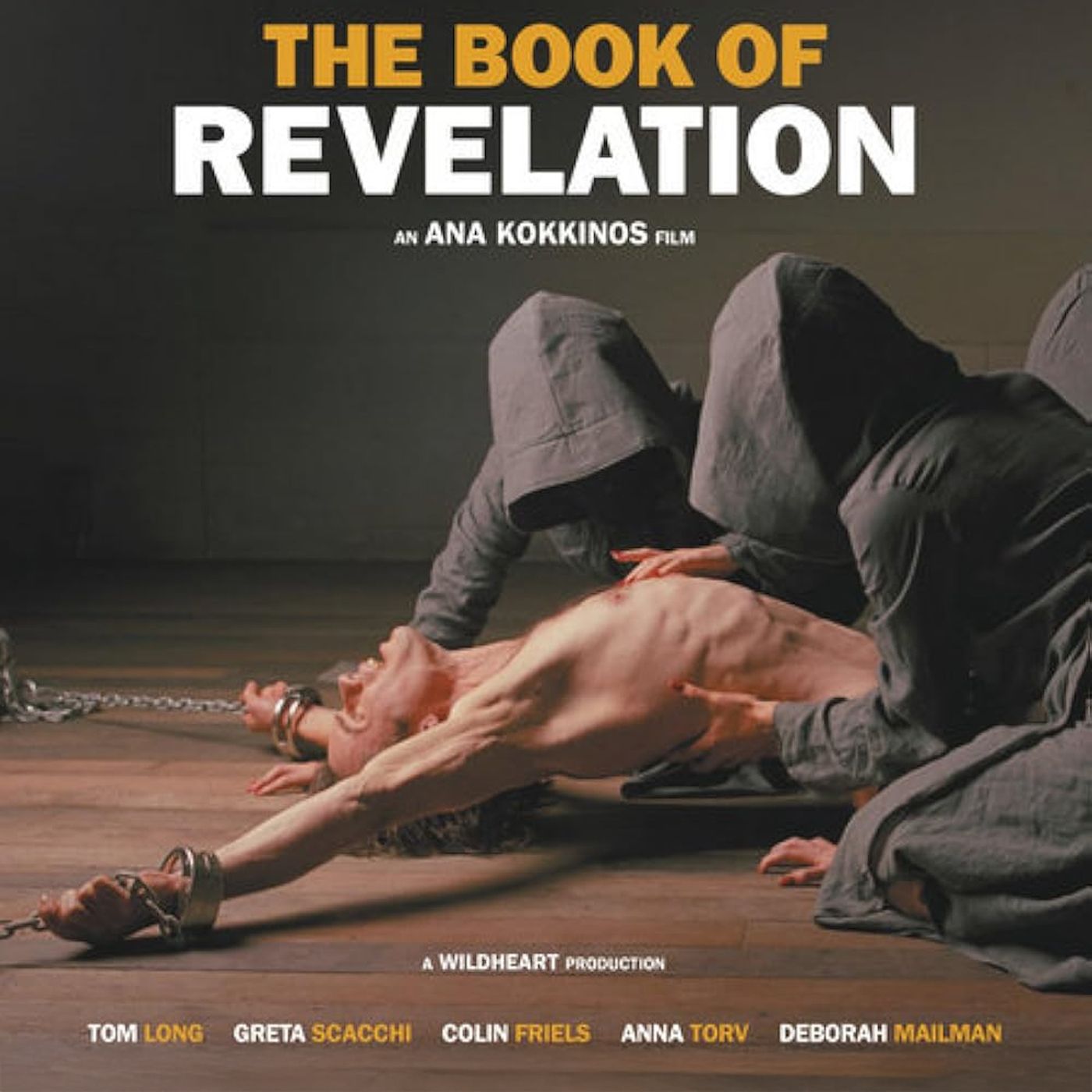
The story follows Daniel (Tom Long), a dancer who vanishes during a mundane errand for his girlfriend Bridget (Anna Torv). What initially plays as a mystery gradually reveals itself as a confrontation with sexual violence, shame, and the long aftermath of violation—rendered without sensationalism and without moral shortcuts.
Mike also sits down with director Ana Kokkinos to discuss the making of the film, her approach to depicting male sexual assault, and her insistence on pushing past eroticism toward emotional truth. The conversation explores how The Book of Revelation challenges audience expectations, destabilizes gendered narratives of victimhood, and stands as one of the most difficult—and necessary—Australian films of its era.
This episode wrestles with discomfort, representation, and empathy, asking what it really means when cinema turns its gaze on trauma.
Transcript
Automatically generated, so expect the odd misheard name.
The Projection Booth podcast is sponsored by Scarecrow Video. Try out Scarecrow's rent by mail service. Choose from over one hundred and fifty thousand films again Blu rays, four k's and DVDs delivered directly to your door. Visit scarecrow dot com today. Oh gez, folks, it's showtime.
People say good money to see this movie. When they go out to a theater, they want clothed, sodas, hot popcorn, and no monsters in the Projection Booth. Everyone for tend. Podcasting isn't boring? Got it off?
What do you want? Listeners? Where's Daniel? He's not here? Is Daniel with you?
Where is he? I don't know. What day? Is it? Fifteenth days?
Was there an argument? Why do you think he's in danger? He wouldn't leave without an explanation. He might live with lover like this, but he's not going to walk away. From his work.
Do you think there could be another woman in Lord? Can I address you? The money? Come on. For me?
Dangerous listening to your impulses? Do I know you? Little bit? M h? Why are you doing?
Hello? Will you keep me silly? Isn't it when you love somebody that's what your fingers. Why mate, beautiful turn out where should be. Welcome to the Projection booth.
I'm your host, Mike White to have me once again, It is mister Rob Sai Mary. It's easy to seduce an audience with sex. You to go beyond that. Also back in the booth is mister Spencer Parsons. That was what I was going to say.
But yeah, thanks for having me on the show again. Damn it. Sorry. We are discussing the two thousand and six film from Anna Coconos, The Book of Revelation, based on the book by Rupert Hines, not the Book of Revelation by John The film stars Tom Long as Daniel, a dancer who disappears on his way to buy cigarettes for his girlfriend, Bridget, played by Anna Torf. As the film proceeds, we learn what happened to him and how it affects his life.
We will be spoiling this film as we go along, so if you don't want anything ruined, turn off the podcast and come back after you've seen it. We've been talking about some interesting things this month. We talked about the story of Oh, we talked about the Image. Next week we have another interesting discussion as well, but with this one kind of hits close to home, and like, I don't ever do trigger warnings for episodes, but I really think that we probably should talk about that this might be traumatic for some folks. This film does involve sexual assault, and it involves sexual assault of the male lead by a female that is me myself, as an adult survivor.
I was thirty six years old when this happened. I will be sharing my story. Part of the reason why I'm on this episode. Mike asked me to be on this episode is because I do have an understanding of this in a certain way, and I thought that it would be good to be on this episode to talk about that, to talk about my story, and to also offer some information in the show links for other people who are looking for assistance when it comes to help when it comes to being a sexual assault survivor. More on that later, but just to let you know it is a major plot point in this film.
We've had other rape survivors and sexual assault survivors on the show, but this one, Yeah, I just felt the need to bring that up before we go along. Spencer, Sir, when was the first time you saw the Book of revelation and what did you think? First time I saw it was to talk about it on this show. First viewing was within the last week or so, and since then I've watched it a second time, and then I also watched other films by Anna Cocinos because I find this film really fascinating. I find the project of it really admirable and necessary.
I'm really impressed by Anti Cocinos as a director who before this I dimly heard about a couple of her films. I had heard of this one before, but didn't know much about it, and I had heard about her first feature, head On. There are a number of others another number of other features named head On for anyone willing that up. But I'd heard of her work a little bit before, but nothing that had me seeking it out. I'm really grateful that this opportunity has come up to see her work.
She's definitely a filmmaker who does not have a super large body of work for the feature film form. She's done a fair bit of television, you know, since she's somebody who I really want a champion, as you know, taking on difficult material, difficult internal states. Every one of her films that i've seen. You know her three features. They're all fearless in both similar and kind of different ways.
Yeah, I'm very, very excited to be part of this episode, and I'm really glad that you got a great interview with her that people can listen to later in the episode. And Rob, how about yourself, what's your history with this one. I can't even remember when you brought this up. I think it was some time earlier in the year, because I believe I watched it the first time sometime it was the summer, maybe six months ago, and then I rewatched it just about a week ago before the show. The last few times that I've been on the show, I'll say, looking at my letterbox review, is that to me, I offers an understanding of a key aspect that I think is not often handled in media, which is a male adult survivor of sexual assault, especially at the hands of a woman.
So I thought that this really brings about a lot of different conversation that I think she handles really well, from how the character or an individual integrates what happens to them when they return back to the world, and especially in his case, and we'll get into that and how they work through this and can they work through it successfully? Do they handle it successfully? Just to kind of bring my point of view to the table. My own scenario happened about eleven years ago. I was thirty six years old.
I happen to be living Colorado at the time I came home to visit Detroit. I was staying with a friend who at the time, during my week home had been kind of a friends with benefits or whatever scenario that I had had many years before. But we had moved on and things were good. And when I came back to visit, she was like, oh, you know, don't bother with the hotel. You can stay with me.
And I said, okay, cool. And on the last night before I was to fly out early in the morning, I went home early from the bar. She stayed there to hang out with some friends. Came home after clothes and was on me. I told her, no, I didn't know what to do.
All I could think about is I'm in someone's house. I'm in a woman's house, and if she calls the cops, then the cops are going to think I did something to her, because that's the typical narrative. And so I thought, well, what am I going to do, and especially when someone refuses to listen, I mean, when they don't take no for an answer, I mean, your brain goes to a lot of different places, and especially I mean this is like three. In the morning. I mean I've woken up from dead sleep, and so I just knew that I need to get out of there, and I need to get out of there fast.
So what I did was I just went along with what it was that she wanted. And afterward is I collected myself in the bathroom and tried to figure out where I was and what was going on. Because I had a very kind of out of body experience coming off the back end of this. I just left. I grabbed my things, I left, I got in my car, and I'm like, I need to get to the airport because I'm flying out at seven in the morning.
And on the way there, I call a friend of mine, and a friend of mine says, yeah, that's what you think it is, and I was like, you get to put out here. I'm like, that doesn't happen, Like, how does a woman rape a man? What are you talking about? And she goes, it's not what happened to me. I was assaulted someone took me into an alley.
But yes, when someone refuses to accept no for an answer, that's assault. It doesn't matter. Can sent have been violated. And I still couldn't bring myself to believe it. So I shoved it down for several years and it came roaring out eventually, and I ended up in therapy and with a group and all of that stuff.
So anyway, that's the preamble to tell you. When I start to talk about during this film, certain things that the character does, I'm going to explain my own point of view as well, beyond what I see in terms of the film, but how that is handled in such a way that I think the director really gets it right, and the writers really get it right, and the actor really gets it right as well. I must have seen this film probably about ten years ago. I was doing an article and came across this movie, and I don't even remember for how it came on my radar, but just seeing it really captured me. I really like the way that the story is told.
I like that it is such an unusual story. I really like the acting in the story. And yeah, it's just it's one of those movies that stuck with me for a long time. So when I was putting together the schedule for this year, I was like, I don't know why, but I just said, I want to talk about this movie in twenty twenty five. So I was glad.
I think we were having breakfast over above Evans or something talking about another episode that is coming up, which is Megalopolis, and I mentioned this movie to you and then yeah, I think I asked you, like, please watch this beforehand because I didn't want this to be something that you were too uncomfortable talking about. So I'm glad that you were comfortable enough to be on this episode. Yeah, thanks for that, Mike. And like I said, go to the show notes, go to the website. I'll have a couple of links up there that I'll share with Mike for a couple of different organizations.
If you were doesn't matter, if your man, doesn't matter, if you're a woman, there's some great organizations, some great nonprofits who can help you find your path through into recovery from traumatic events like this. I talked a lot about the opening credits when we talked about the film In My Skin a few months ago, and the way that the director of that was separating things that you had mirror images that sometimes the image on the left might not actually be the mirror of the image on the right. She was also using negative versus positive images, setting up a lot of very many dichotomies throughout the entire thing. I really like how Coconos in this movie sets up credits somewhat similarly, but that we have our main character, Daniel is on the left side of the screen and he's in more of a rectangular shape box, and then you have all of the dancers that are in the room that he's going to this dance studio or in a more square shape box on the right hand side, so you're just kind of isolating him as he's going through things, and you have these beautiful match cuts.
There's one part where he lifts his head up and as he's doing that, then there's a cut to the on the right hand side of the screen where there's another dancer, woman dancer, she's got her head up then kind of bring their heads down at the same time before they get out of sync with each other. And it's moments like that, I mean, from the opening credits. I'm just enamored with this movie and how it's going to be laid out for us. I mean, we don't get this split screen ever again throughout the film, but just already set up like Daniel is separated out from these people, and that's the way he's going to feel at the end of this movie, is he is going to be completely pretty much completely alone. I mean, there is one other person with him at the end of the movie, and we'll definitely talk about that, but we get that before we jump into the action and have this beautifully shit and choreographed dance sequence that is just showing us this world of these dancers and how important their bodies are.
And his body becomes this fetish object throughout the rest of the movie, and we get to see it pretty much right off the bat, where we have him wearing his T shirt and dancing with his girlfriend, dancing with Bridget and kind of having this like almost mass confusion of these bodies, and I just again really appreciate how Cookino is bringing all of these bodies and this fetishization already to the four. Rob gave the line that's kind of the punctuation to the sequence when the main choreographer played by Greta Scacchi, jumps in to say, you can seduce an audience with sex, but I need you to go farther. And that's definitely a thing going on through this relationship to the cameras, relationship to bodies, and it's setting us up for the movie to be about individual's relationship to their own body and the changed and changing relationship to one's body.
One thing that came up for me that I found to. Be interesting in this split screen opening sequence was that he has long hair, but there's something about the way that he's moving that. At first, because we're over his shoulder and we're seeing his hair move, we're seeing just his shoulders move, I thought the character was a woman until the camera comes around and reveals that it's a man, and I think that that's also an interesting point to what's going on in this sequence. I also think this will come up. In some of our conversation about the way that the story plays out.
But one of the things that I found really interesting as well was that immediately we get again back to Gritascatchi and she gives that line at the top of the movie. Immediately I'm reading her character as subtextually wanting to possess this man. The visual and performance subtext, and nothing is said exactly on the nose. The scene is highly suggestive of a situation that is then going to be elaborated later in the film, given the experience that this man has been through, and it's something that in relationship to the book, is much more kind of elaborated, and I found that to be really interesting, not only out of the gate, but definitely this is director and her co writer really working to shape a narrative that is at once I think fairly faithful to the book, even though it rearranges some things in a distinctive way.
But again, right out of the gate, it's very psychological about the relationships between these characters and how those relationships are about bodies. One of the things that I liked about that line is that it's not only an important line in terms of this film, it is the first real line of dialogue, and in a lot of ways, although it's not her story, it's almost like the first real line of dialogue and Goodfellas. That is the theme stated, and it's not stated in such a hammered way that you're like, oh, this is what I gotta look forward to for the next two hours. It's one of those where. To be honest, if I wasn't taking notes write, I don't know if it would have come back on me later, But on multiple viewings it opens that up.
One of the things that was interesting when I went in to do with a letterbox review, I was looking at the other reviews, and the other reviews are like, this movie's a lie. It was an erotic thriller, and I'm just like, okay, the idea that just because it deals with sex or sexuality doesn't mean that it's sexy. It doesn't mean that it's you know, late night cinemax movie here. That's not what we're talking about. This is something that is not a level up.
And when I was watching it, we were talking a little bit before we recorded that the tone of the film, in the way that it deals with sex, reminds me a lot of Catherin Blay's films. There's a lot of it. Probably you can find it up on the Criterion channel, but I remember seeing her work especially I would say a comparable to this and maybe be something like Anatomy of Hell. But I think a lot of her work really deals with sexuality, but more through a woman's lens and looking at like how women relate to intimacy and sex within the culture and which they're in. And in this case, what I think that the director's really doing and does well is to look at sexual assault in the culture and say, how come we can't handle this in a way Why can't the character handle this in a way that can be positive?
In the end, I don't want to skip all the way to the end, but really, like, if this was just a sex the thriller revenge picture, there's a lot of choices in here that would not be made the way they're made. Would It would just be an exploitation film and we would probably go, Nah, fine, it's Miss forty five but a dude, which I love Miss forty five but great. But a very different kind of movie. Yeah right, that's a rape revenge story and that is not this by any means. No, though it falls into some of those trappings, which is interesting.
Towards the end of this movie, it almost becomes I have to track down these people, and he's he's almost got a conspiracy wall. You could pretty much say it is a conspiracy wall, Sands, red string, red yarn, But otherwise he's got the names that he's given to these three women that abduct him that he has made up in his own mind. He's I'm just going to start calling these women by these names so he has something to latch onto. So he got a Bridget who basically I feel like the ringleader, and then Astrid, who is the one that I think she's the one that masturbates in front of him and rapes him with the strap on, and then Maud, who he keeps trying to make a connection with at least in the book, and she seems to be the most sympathetic, but at the same time she's almost the most possessive one because there are some things that happen in the book that don't happen in the film, including Maud tattooing him with her initial with an M and sticking I'm trying to remember what it is that she uses on him, but it's not any sort of real tattoo gun.
She basically sticks him with a needle multiple multiple times with Indian ink and marks him with that, and that's one of the things that he carries with him. Yes, and yeah, I want to talk about a little bit about the book too, because I like the way that the book is set up, and not to say that I like it more than the way that the movie set up, but the way the book has I want to say it's I can't remember which voice they're using because he switches Thompson and there's no P. But I'm going to keep adding a P in there, so hums and switches from third person to first person, and I'm trying to remember exactly when he does it. Because what I found it really interesting is that Daniel disappears, and we get a little bit of information as far as what happens with his girlfriend, Bridget, what happens with his choreographer slash instructor Isabelle played the Greta Scotia character, And we get two three paragraphs as far as and this is what happened after he was gone, and it's a lot of how Bridget thinks, oh, he ran away with somebody else, and he's, you know, such a dog and things, and we kind of get a little bit of that in the movie, Like there's another dancer, this Asian dancer who puts her foot out and just is like, oh, hey, you know, look at my leg kind of thing, and he's like, you know, examining it because she does have a cruise on her ankle, and then when Bridget comes in, you could think, oh, he's a dog.
He's flirting with this other woman and so already planting those seeds of what's going to happen. But then when he gets abducted, it switches into first person, and I think the rest of the book is all told first person from Daniel and just all of the experiences he's trying to deal with this trauma. And I love the way that the movie kind of flips it around and we stay with Bridget for a long time and it almost becomes Bridget and Isabelle's movie for a bit, and then we get him being dropped off, and then we get all of the things that happened to him via flashback rather than just having it happen within the first twenty minutes of the movie. Rob You's sort of started going in the direction of talking about the placement of this film within a genre or a mixture of genres, and.
I think one of the things that goes on. Here is that the genre we fit into is a bit more of a kind of mystery rather than an upfront rate prevenge story, So that I think is one of the big important things in recognizing point of view within the film, and a sense of point of view is just as strong in a different and very cinematic way in the film as it is in the book. But this rearrangement, turning it into more of a mystery or kind of a detective story, I think is a very strong identification hook for this kind of experience in a certain way. The effect of the experience, which is what the movie is about, is one of feeling unmoored, of feeling like you don't know, you don't know or understand your body, you don't understand sex anymore, you don't understand other people.
Focusing on a kind of Yeah, the conspiracy wall set up here is I think something that really gets a way of dealing with the experience that really instantly puts it outside of the like rape revenge fantasy or you know, the rape eerotic thriller, of which there are you know, for better and worse, many many examples. So I think the movie does something very interesting there with its rearrangement and again the relationship to genre. I'll say this is actually going to sound like a bad thing, but I think it's. A good thing. Within the movie, the sort of hoods and costumes and the abduction as it's recalled in the movie.
It's kind of laughable in a way. These elements are kind of ridiculous, over the top genre trappings. But for me that created a kind of interesting tension of like really putting it in the every day by having this thing that happens, you know, the rogues and everything. As I read about this in the book, I'm putting it in my imagination, and then. It's more impressive.
In this case, it's kind of like, well, they're trying to hide their identities, but this is still everyday life, and it's kind of ridiculous. But then the implications, of course, are really terrible. For me, that is the heightened sense of memory. What I was looking at it from the standpoint of this may very well have happened to him, but it wasn't documentary as to what we see. This is his emotional memory of the assault, of the kidnapping, of all of those things.
So there's probably seventy percent of it's true, or sixty percent of it is true, but the rest is heightened because he's so emotionally torn up by it. At the same time, not on the first view but on the second viewing just recently, I was thinking about the whole conspiracy wall and all this stuff, and it felt like a Gallo film. And to me, one of the core aspects of what makes the Gallo film is that the cops don't help, and someone who isn't a detective for a cop has to go out and do the work, and in this case it's him. And there's a certain sense memory that he has where he goes to the place where he was dropped off and he looks at the tracks and he's listening. He's trying to listen for the bells and the airplane, and he's listening for all of these clues to try to triangulate in his head, all right, where the fuck was I around here?
It's got to be somewhere around here. Where is it? And trying to use the only real sense that he had was his ears, because the only vision that he has when he's strapped to the floor the chain to the floor, is this hole in the ceiling where he can see a plane go overhead. So he's got an idea that it's in the flight path, but he has no other sense of where anything is because when they drop him off in this abandoned lot. It's like he looks like one of the survivors from Abu Greb, where he's got a hood over his head and they just dump him out into the dirt, so he's not aware of kind of surroundings of where they were driving him.
So to me, that's what I really picked up on the second viewing, and that this emotional thing, and I was even thinking about it in reference to myself, where it's like the scenario probably wasn't as and I'm using quote wasn't as quote unquote traumatic as my brain made me think it was. I don't want to get into the particular what happened, but it's like the feeling of it, the intensity of it was so much that it felt just overwhelming. That's what I get is that it probably wasn't a documentary truth. This is my favorite thing about the film is the way that at a certain point in the film it becomes incredibly unreliable. Unreliable in a very grounded way.
It's not just like the filmmaker is playing fast and loose. As you say, it does not make clear distinctions between Capital R reality and Capital F fantasy or Capital d dream, his inner life takes over at a certain point. And I think your connection to Jalloh here is just right because like one of the things in terms of genre is used in a very interesting way here is that you know, Jalloh is a kind of detective genre film that also bends into horror. And the last act of this movie goes it bends towards horror, his search, his attempts to find an answer, his attempt to master his situation and find out what happened, to find the evildoer, et cetera. All that turns him into a monster and a kind of figure of horror within this story.
That's not the end of the story, but this is like a you know, connection with the way that the sort of the works. And then additionally it's it is extremely uncomfortable. But this also plays toward Jalla where eroticism and horror really are wrapped around each other in a way that is, you know, to be frank quite disreputable. But in this particular case, I found it interesting that, for instance, to speak of a rape revenge movie and I spit on your grave, there's a lot that gets eroticized in that movie, but the actual rape is really just ugly and base and awful, and in fact, the revenge then gets more sort of eroticized. This does a really difficult thing in including eroticized imagery, eroticized pacing within the rape scene while not taking away from how it is a rape and a bulldozing of somebody's consent, and that in fact this pays off.
Later in the film, there's a kind of montage of his maybe real, maybe imagined sexual life at a certain point, hooking up with all these different women on his search to try to find, you know. Who did this to him. The thing that I think is really really fascinating here is it gets at the problem that without consent, even the erotic parts of the assault become a form of violence as well, and in particular, like with a man, the idea that because he gets an erection, then that is tantamount to consent, which obviously it isn't. But other characters in the film, like when he first tries to report this to the cops, it heads in the direction of aren't you a lucky guy? And the women who abduct him say other men would pay for this, and of course he jumps in to say, well that would be a different thing, because that would be my choice.
But I think it's very interesting and truthful and provocative to weave in an element that we really don't want to include as part of this trauma, but it absolutely is a part of the trauma. Whatever kind of erotic response he has to this event is bound up in the trauma and is bound up in his experience forever afterwards. And this is a third rail for cinema to deal with for obvious reasons, we don't want movies about rape to be a turn on, though obviously some unfortunately are. It's a very interesting thing that I think is done in this film. I really like what you guys are saying as far as the Jallo aspect of it, because when it comes to the jallow as you've already talked about, the whole idea of the police aren't helping, so you have to become your own investigator.
So the police are often the blockers or the basically they're the patriarchy, they're the overlords of this kind of stuff, and you have it's almost always an outsider becomes that detective figure, and sometimes it's a man's sometimes it's a woman. I remember one called I the Labyrinth, which had a female detector. The woman becomes the detective trying to figure out what's going on because I think it's her boyfriend goes missing or something. And there's again dream Logic, which also follows through with a lot of the jallos as well. And yeah, she's blocked, like so much of this is being blocked by this police or having the police just undermine you.
And yeah, when he goes into the police and he can't even say it was him, he has to say a friend, and then yeah, as he starts to describe this, Yeah, they basically laugh him out of the police station. And then Greta SCATCHI her. I guess it's her boyfriend by the way that they're making out at the end, this guy, what's his name, former police marketect Marcles Okay, yeah, and I don't think he's currently a police detective. And as soon as Daniel finds out that he's a cop, he get the fuck away from me. Basically just turns really cold after that because he doesn't have a good experience at the police and he doesn't trust the cops.
Before Daniel starts on the detective root here, one of the things that I thought I would bring up is the fact that he returns home and you would think that the one person he could talk to about all this is his girlfriend. We get the feeling they've been together for a while because they have this big poster behind the couch that appears to be their great ballet performance in Osaka. I think it says or something like that, So we really get the feeling that they've been lived in like they live together, they are a couple, they've been there for a while. In this kind of scenario, especially as a man, and you both brought this up in terms of the cops, it's hard to talk about. It's hard to get someone to take you serious because as the cops do in this scenario, they're like, oh, yeah, that would be great, Oh lucky you or lucky your friend or whoever.
And so there's this aspect of it where when you finally can come to a point where you can actually talk about it, when you can finally work through it, it's very hard to talk about. I remember the first time that I talked about it beyond that phone call that I mentioned to a friend of mine, was about three years later, and so I remember the first person that I talked to. I could barely breathe. I was hyper ventilating, obviously. I felt like, there's that scene in the Cronenberg film where Freud and Jung.
There's that scene in there that I remember Karen Knightley trying to talk and it's like she can't open her mouth, like her jaws wired, like she's trying to get out something horrible, and she just can't do it physically. And that's what it was for me. And it was with a coworker, and she was very kind to me, and eventually I did. I mean, I had almost the exact same scenario in a certain way when I went to the cops. I mean, granted had been several years, but I went to the cops to report this and they're like, okay, well what happened.
And they're like, well, you know, it's kind your word against hers, and you know it's been so long, there's you know, there's kind of nothing we can do for you. But the thing that this really made me think about, and this was something when I went through therapy and I went into my group's session, this is the question. It's like the waybill sexual violence versus the way a culture handles this violence. So what I mean by that is somebody punched you in the face. We understand that, but for some reason we're just very uncomfortable with anything involving that area.
And this is a hard thing for anyone who goes through it. But I think within the culture, and this is where they get it right in the film, is that as a man, you're supposed to want that. And Spencer, you brought it up too, and the fact that he got aroused, so therefore he wanted it. There is a betrayal of your body betrays you, and that's how I felt, and that that's when I was in the group therapy. Now a lot of the men, I was the only one who had my story.
Most of the men who were in there were children or teenagers who were assaulted by teachers, adults, priests, horrible, whatever happens to anyone. But they would talk about that too. They're like, why did I get turned on? Why my body fucking betrayed me? And so there's that aspect in there, and then you talk about later when he really gets into it, and then he starts going out and he starts meeting these other women, and you can see it as part of the detective piece.
But I also think it's a way for him because, to be honest, there was a period in my life where it was like it was very hard to be vulnerable and intimate with someone I cared about, but random strangers, yes, because there was no connection. And I saw that in that character and I understood. That's another piece that I feel they can it really well. And it's sad. It's fucking sad, man, it's really hard.
Sorry to keep going back to the shallow thing. I just love what you said about that. That really hadn't crossed my mind at all. This idea too of the outsider, and that Ana Coconos with her being a Greek immigrant or her family being Greek immigrants, she's kind of an outsider when it comes to Australia. The original book of this is a brit who is in is it the Netherlands, right, He's in Amsterdam, so he doesn't speak the language necessarily.
That well, he's kind of on the outs like you were talking about the poster with him and Bridget from Osaka and like, yeah, they travel all around the world with all the dance troupe and everything, but here they are in Amsterdam and he's very much an outsider when it comes to this. So even when it comes to the people that abduct him, they are not usually speaking in English, so he's like outside of their conversations. He can understand a little bit of what they're saying, but not everything. And when it comes to some of the things, like even like reporting things to the police, I think that he talks about how he has to look up terminology to be able to talk to the police to describe things and say these are the terms for things, and that just makes him even more of that outsider character and just even puts a finer point on this whole idea of him not having the support of those around him and just being that stranger in the strange land.
I mean, I kind of like in the movie too, when he disappears, you don't see it at first. You don't see the needle going in the skin, you don't see the women with the hoods or anything. You see that later on. Like immediately what you see is him looking and then it freezes and the screen fades down to black, and then we cut and we see the city, like we've established this kind of harlequin clown on a bridge. We have to see these guys who are going on the river.
They're sculling, and we see some other things like this glass inside of a window, and then we revisit all of those places without Daniel. He's gone now, and we go back to Bridget in his apartment and we see the clocks moved fifteen minutes, and she's he's been gone for fifteen minutes. He's going out to get some cigarettes. You know, my dad was gone for twenty years. No, I'm just kidding.
He's just such a blip on the radar. The world moves on without him, and it really isn't until later on that she starts to get concerned. And then, like I said, we kind of stick with her story and with Isabelle's story, and really it's almost like we switch protagonists. And I think it's good because, like you're saying, rub, the one person he should be able to talk to is Bridget. We have stayed with her, so she's more of our hero at that point, more of our protagonists.
So you still don't know what the hell's going on with him, and it's just like, what's going on with this guy? Like he comes back in and brings cigarettes, like of course, she's just going to think like he's being a complete joker and yeah, that he has that inability to express himself, and she already assumes like, oh, you ran out of me, you went out with another woman, And when he says it's three women, she completely goes off the handle. But he cannot physically cannot explain himself at that point. No, And one of the things that I really like as the story goes on is the Isabelle character that she becomes the teacher who becomes so demanding of him, and it becomes emotionally unwell how demanding she is, because it's one thing to mentor someone who shows a genuine interest in learning from you and wanting to learn and to grow and to create.
Absolutely, But when we get to the point where she's ill and he has to go visit her, we get the feeling it's been I don't know, six months or something, he's disappeared, and she's like, you need to do this, you need to do this for me, and it becomes all about her and her legacy. It becomes I don't know if I've talked about this on the show, but I find this forget Einstein's unified theory of the universe. My unified theory of the universe is terror management theory. And what terror management theory is from the death and Dying class I had in college, is that all of us know we're going to die, so we do certain things. Put our names on buildings, have children, create arts, invade countries, put up statues to try and hold off the annihilation.
That there's some part of us that I need to exist beyond my own time here, and she is living that because she's dying and she's you must go forward. You have so much talent, how dare you? And I just find that overbearing and horrible, But at the same time, that's a great part of the story because that's tension in there, especially at a point where you have a character who's so emotionally torn up they don't even know what they want. The only thing he's focused on right now is trying to figure out who the hell did this to him. It also brings up an interesting thing that the movie does, and that subverts narratives about artists, which is that working out the trauma through art becomes sort of therapy.
There is that scene where they're working together. She's gotten him a studio and he does this dance, which we can definitely see how he's trying to work things out through it, but it's not good. It is not a good dance scene. And there was a part of. Me going, oh, wait, is this going to become the how he because we're at that point in the narrative, we're getting into like act three, are we wrapping this up through he's going to go back to his teacher and he's going to have therapy through art making.
I was like, Oh, I'm gonna be so disappointed. The movie is disappointed in the same way that I am in that scene and we're out. There's no more attention to the dance after that. I don't know. Maybe he remains a dancer after this in in his real life sort of as a character, but within psychological kind of narrative here, dance is a way of dealing with this, and particularly in dealing with it through a relationship to a character who he loves and takes very seriously, but who he also has a serious conflict with because of the way that she wants to use him.
As you've explained, Rob, it's a really great part of the film because it is, Yeah, it gets at how the conspiracy doesn't really solve things for him. Putting it into is art doesn't solve things for him. And it also this is an experience that it's not just how am I different afterwards, which is obviously a big question, but what was in me before that this has released? What was in is the bell before that this has released? In terms of relationships, isn't only what's changed, it's what was already there that now.
Is now is changed, if that makes sense. The pre existing conditions are strong and work differently. And to me it almost feels like a version of what happens to him in his memories of when they force him to dance and it's no, you're going to dance, No, I don't want to dance, and the idea of someone using the thing that you love, the thing that is yours against you. Let's talk about an exploitation film, but I'm going to go ahead and call this up. This just reminds me of there's a similar but different scene in Bloodsucking Freaks where it's like, if you don't want to dance, we're gonna cut your feet off, like we did to that gal over there.
So anyway, but the whole thing being just using the thing that you love against you to tear you down even more. And so you can see it as almost a mirroring there when he comes back, or just his way of dealing with this world, because we don't get that far into it. But maybe it's one of these things where it's like I do this, I can do this, I'm good at this, but I don't know why I'm still doing it. Maybe I can go do something else. Maybe he's lost the passion for it, or the passion was there for another reason that's no longer relevant in his life.
I find the dancing to be very interesting too, the way that they utilize ropes in the dancing, and it almost becomes like a bondage kind of thing where they have the ropes that they're swinging around and everything, or maybe suspension. There is a very important difference again between the movie and the book, which is when they ask him to dance or demand that he dances for them, and yes, how awful it is to ruin the thing that you love the most. That he trains his body so hard and looks for these imperfections and tries to make himself better and better every single day and become the best dancer that he can. And I do like the inner monologue that he has in the book, thinking about how he's not going to have this body for that much longer, that age is going to affect him, and he really has a very limited shelf life and when it comes to being a dancer.
But in the book, at that point when they are telling him to dance, they have and they do this in the movie, but they don't necessarily really bring it up too much. But they have forced a ring through his foreskin holding on to that rope, been dancing that way like they do, and they might even have his hand taped to it. I can't even remember. But he is bound by this chain and he does this very dramatic rendition of the last act of Swan Lake, and the chain becomes the other dancer for him, becomes the woman like he is the male character in that moment, and the chain acts as if it was the female character the ballet. And so, yes, they do talk about that.
They do have a mutilation scene and there is talk of him or he goes to a doctor to have everything checked out, but that mutilation of his sex parts and the use of the chain. And also he's doing that not just for those three ladies. When it comes to the book, he's doing it for an audience. There are several times where they are humiliating him in front of a group of people, like he is a literal buffet for a group of four or five people. And then when it comes to the ballet that he does, it's I think they say thirty people and they're all masked, and it doesn't know who these people are, but he is on display for all of them.
Maybe the memory of everything in his trauma is not necessarily reality. Like I said, we've talked about this being a hyped up version of reality. Maybe there was an abduction, maybe there was an assault. The first time I watched it, and then even in the second time, I'm still not sure who these three women are. And to be honest, it doesn't really even matter.
I know that the girlfriend plays one of the characters. I know that, but that doesn't even matter. Like the point is that I was putting together in my head as I was thinking about it, is that the torture for him is the mirroring of what he's doing over there in the dancing. That basically it's the other side of it, and it's his mind going, I don't want to do the same. So maybe it's just an overactive imagination.
Maybe he just. Blacked out in an alley and then came to and wandered off like you hear about wandering Branny's or something out of the old Folks Home and then they show up two weeks later and they're like, where the hell. Did you go? I don't know. It was all over the place, So that for him, maybe this was just his way of getting out because he couldn't find a way to go.
You know what, I gotta quit. I got an overbearing coach, I got a girlfriend I'm in too deep on because we do the work together. It's not like he can go, yeah, i'm gonna quit bye, I'm gonna go wash dishes or serve bar like he becomes a partender in here. So this is his own way of working through the trauma of actually the dance stuff. Another connection that I saw to this movie was with the Sydney Fury film The Entity, which uses a quote unquote real life of a woman who reported that she was raped by demonic force in her home to actually deal with you know, it's funny.
It was treated as the worst kind of trash when it first came out, but you know, some critics, like primarily Kayla Denise, has kind of stepped in to rehabilitate the reputation of this film and what. The Entity gets at that I. Think this movie also does it in its own different way, is the sense of using genre trappings, using a kind of unreliable way of representing this experience to get at how, on the one hand, people don't others won't believe you, Like in the case of this he has a very difficult time talking to the cops, as we've discussed earlier, and like in The Entity, it's like, oh, the only people who will believe you are the parapsychologists, and their interest is not necessarily about therapy for sexual assault.
They're hunting ghosts, which is very So there's that level of a kind of ghostly or unreliable experience, but then there's another level of like what can you believe yourself? And that's another way in which the strangeness and the hyped up quality I think is so important to the storytelling here because it's about it's about going through an experience that you can't even trust in your memory, and you can't even trust your body betrays you, but you can't trust exactly what happens. And if you try to tell anybody, then it's going to sound ridiculous, or it's going to sound like some erotic fantasy, or you know, some kind of thing. And I think this gets at that in a different way, But there really is.
There's a sequence where all the shooting and all the editing really come together to make it very questionable what's what. And that effect isn't just for a kind of montage of his attempts to find the women and hook. Up with a bunch of women. It also extends into when he's just having a dinner with friends. The way that gets cut up the trauma of the more obviously psychologized and surreal part.
Of the film. That vibe continues into the editing of a dinner party where he's brought his new girlfriend and he's meeting the Bell's boyfriend for the first time, well not for the first time, meeting him knowing that he's together with her because they've met separately before. Isabelle has sent her boyfriend as a detective to find out what's going on. That sense of not being able to trust your own experience goes into the more normative, everyday life parts of the movie. I'm going to bring up David Lynch here.
This is not a movie that is like David Lynch's films in any way, but I think that there's a similar project to it a level where the internal and the psychological is allowed to take over within a narrative, that the film form narrative are kind of deranged, so that even the most banal scenes are then surreal and expressionistic. You were talking about the entity and it's been a while since I've seen this, and we did it on the show. You can't trust the narrator or maybe the scenario that's happening is not really that. It's something else that the brain is extrapolating. And I don't want to ruin it for anyone who hasn't seen it, although it's a fifty plus year old movie now is I was thinking about Bone, the Larry Cohen movie, which has an aspect of that in there, in terms of the one character who you think is this, but they're not that, which we find out in the end, And so I was thinking about films that have that kind of psychological element of an unreliable narrator, or an extrapolation in that way.
I wasn't thinking he was unreliable or that any of this was unreliable information whatsoever, though I probably should have given it a little bit more thought, because the first time he experiences anything that's close to a flashback, he is falling asleep and then wakes up with a start the old movie thing. At least he doesn't jump up in bed like Jimmy Stewart or something, but wakes up at the start. When Bridget is back, he gets those amazing images like him naked and alone on a mat basically, and just this isn't with the women. This is him at his apartment. This is him and what should be the safest of safe spaces.
And even when he's dropped off and wanders back into town and buys a beer at a bar, and you see all the chaps on his lips and everything, and he just like you said, he looks really rough. And it's a woman bartender. And I found that to be interesting, And that was also the same in the book too, that it's a woman bartender. And I really started after that moment, started paying attention to does he interact more with men or with women, And it feels like there are so many times in this movie where he is just surrounded by women. When he's coming down the street and there's just women everywhere, and it's like they've gone from being something safe to being something very dangerous.
And then him even when he's like trying to have sex with some of these women, trying to see do they have these markings, do they have the tattoos? Are these any of the three women that tortured me. There's one part where he's basically like biting at this woman's face, and yes, it's like love play, but at the same time, it starts to look a little violent, and it just really puts a whole different spin on everything that happens in this movie as you start to realize the violence that's been done to him and the violence he pretty much wants to do back to who he feels wrong to him and who did wrong him, and that they don't even really start to get into what happened to him until almost forty minutes into the movie we see the three women with the hoods and everything, and yeah, that's a very surreal image.
It's almost like my asque of these women coming down this alleyway, and it was interesting that they assaulted him in an alleyway, Like Rob, you mentioned your friend who was assaulted pushed into an alleyway, and it's this is the place, like this is the place where you do get abducted or something bad happens, And yeah, it was the exact same thing for him. He is in that vulnerable spot that a woman would normally be in and then he's got the tables turned on him and these three almost ghostly figures coming down this alleyway. They look like they're the Benny Jesuit or something ready to test him with the gum jabbar. That is a cliche story, like I said not to you know, I'm sorry for my friend who actually had that happen to her.
But most people who were assaulted, like most people who have any Island's done to them, it's acquaintances, you know. You're like I've joked before I go, if you don't want to get murdered, beaten up, raped, or ripped off, just stay at home by yourself, have no friends or no family, because you're more likely to be assaulted in that way by someone you know. Random mass strangers is a rare thing in terms of percentages. But the thing that I was thinking about, and this is why the movie is so good, Mike, ause you're like, well, I should have thought that maybe this was unreliable. No, that's why it's so good.
And that's why to me, it took at least two viewings for some of this stuff to click in because for me, like first time I watched it, I was a little okay, And then I watched it again and I'm like, oh, okay, and I'm getting him more. And then as we get further along, I'm picking up on this sort of mirroring or the ways in which the other characters are able to play certain roles or say, for example, like when he comes to the end near the end last third of the film, he meets someone on the train and he's trying to hunt down this this woman who he thinks is the lead person who did the assault on him, and he runs into this woman who has a deformity. She has a hand that was burnt from when she was a kid.
And so for some I saw it, I go, oh, it's fine, But now I think of it, and I got his internal so there's this I'm dealing with an internal issue, your external issue, And I just thought that a lot of this stuff is not heavy handed. I think that's part of the reason why it rewards multiple viewings. The experience that is being represented in the film is so rare. It made me think about the opposite quite a bit. And you know, this is a female director making a movie about a man being raped, and in fact, she went through some trouble with critics and various parties over you know, is this something that you should be doing?
Is this story that you should be telling? Why are you doing this? The film raised an interesting question to me of like, so, I think very often male filmmakers use female characters. You brought up Jimmy Stewart, and I'm guessing you're talking about Vertigo to project their own fears as well as work out the pathologies of the male characters. But they're projecting their own fears onto female characters.
They are using the social location of women within our society to get at working out feelings, fears. Dramas that they have. But that in a way, within cinema and within how we sympathize with characters, maybe makes more sense to project onto women, and I'm wondering. I guess this is an open question, and I don't have a specific thesis here. I'm interested if there's any degree to which when you were watching you thought of out how Anna Kokkinos, as a woman and as a queer woman, is in a way using this male character and this story of a sexual assault upon a male character to work out her fears and issues as a woman and as a queer woman at all.
As a queer woman. I can't say in that way. I just know for myself. I just know for myself that by telling the story, by telling a sexual assault of a man by a woman, that brings up a lot of very uncomfortable cultural conversations and a lot of which we've already underlined. Men are sexual.
They're always ready to go, and if you aren't, there's something wrong with you. What's wrong with you? It's like someone wanting to give you pizzas. Even if it's not great pizza, it's still pizza, so it's pretty good. So there's this attitude in the culture, and I think that's part of at the bottom of it.
Ultimately, if I'm sure, I could go back and read the coverage or the interviews or whatever that she was up against when she made this film. That's not her fault as an artist. That's the culture's problem that the culture can't deal with this issue. As someone who went through this, I had no point of reference. I didn't know anyone who had been through my scenario.
I knew grown men who were assaulted by teachers or priests or things like that, Like I knew that story. But as I explained in the beginning, I said, I was trapped. It was three in the morning. I had to get up, I had to get on a plane, and I had to get out of there. And one of the things I was concerned about is if the cops showed up, they're going to arrest me.
I'm not gonna make my flight, and I'm gonna have to answer questions about something that's a scenario that everyone knows as narratively as the other way, that I'm in her house that I assaulted her. No, I did not, So I'm like, don't even know how to begin to have that conversation, and especially when you're woking up from a dead sleep at three in the morning. So anyway, this is the culture that we're living in because the thing is is that if we did have parody around this issue, if we did parody around this issue, where a man could be taken as serious around this in the same way that a woman should be taken seriously around this issue, that this would not be a question, and therefore she wouldn't have gotten the kind of pushback against this film that did she did.
One of the things that you bring up, I think actually pretty interesting to talk about in terms of gender differences when you said, you know that the assumption if a man is ready to go at any time, then. What's the complaint. But on the other hand, for a woman. Who's ready to go at any time and says that she was raped, and then it's like, well, you obviously put yourself. In harm's way or on some moral level you deserved it.
And I guess that's one of the things that I'm getting at, is that I think she's using this to draw out, you know, through different kinds of sympathies by switching taking the less often represented kind of experience, then also bringing out a kind of question of for a woman who might get otherwise dismissed as a slut, how do we think about this issue? In a sympathetic kinds of fashion, and part of that sympathy comes along with a recognition. That in the case of a man, it's like, oh, yeah, you're lucky, right, And that, of course is not it. We go in these different ways, but I think there are different ways that she's playing with this, and I found also it's this is an interesting movie in that the way in which every woman becomes a kind of threat, like we were talking about before, Yes, obviously we've seen this on other films, but this felt to me very different.
The way in which his traumatized and conspiracy oriented mind is seeing these three women everywhere. I thought was handled very well and very delicately, and one of the things that it did in a very visceral way for me was to make me think about how women feel about all men in the world. The movie's very good at drawing in and making one feel and think about this experience. That's one of the things I really love about the ending is what I put the theme I go hurt people. That's the theme and at least for me, and the thing being that for him, like putting the clues together, trying to get this vengeance on this person who obviously is not the person.
Even if that person, like I said, that person may not even exist, like it may just beat his head. I don't know. But the thing is that for him, it was correct at the time, and that's horrible. And so that's what doesn't make it a rape revenge story for me because unlike and I'm gonna spoil it, I already brought it up earlier Miss forty five. It's like at the end of Miss forty five, it's like she goes on killing spree.
He just kills a bunch of men, and it's like, and we feel good about that, Yes, men deserve it. Fuck it, just fucking kill them all because they're all rapists. It's like that is the opposite of. The same year. The theme here is that vengeans will not give you justice.
There is no fucking justice, and and that's true, that's fucking reality. Like that's how I felt at the end of this. I was just like, after I went through everything I went through, I'm like, I could haul my assailant into court and I could sue her and go through all that shit, But what is that really going to do? What is it really gonna do? The only thing that's gonna do is allow me to get some guy in a black robe or some lady in a black robe or a jury to say, yeah, you're right, she fucking did this to you.
Congratulations. Here you go, Like, where do you go with that? With there's no fucking justice. This is this an area where we want to take popular genre of the rape revenge fantasy or the revenge omadic and separate it from the tradition of revenge tragedy because one of the things that I really like about revenge tragedy is the way that the revenger always goes too far, the way that the justice gets worked out through like a Titus Andronicus, for instance, at a completely insane level of make your tormentor eat their own children. By the end of it, you go to this insane level of.
Just perfidious awful behavior to say that, yeah, that's not how justice works. This works out in a very interesting, everyday kind of way, and it is horrifying. The sort of climax to this movie, the dramatic climax I mean of the movie is real horror. And it's interesting because, like as an archetypal thing, one of the things that I like is it makes a great kind of transference from the beginning. If you're going to position this as horror is about the vampire, the thing from outside that attacks you.
But what this is really about is what that thing from outside that attacks you, what it brings out in yourself, you know, kind of the werewolf that is there, and that these a transfer from one into another. I think as a point that is not often enough made in horror, and I do really consider this, you know, I guess Jalloh is the best way. Of thinking about it as detective plus horror. But by the end, this really is horror that then also has a denu mont where there is a kind of. You know, the ending and we don't solve.
Any problems, but it's like we've gone through all of this to arrive at a place where two people in a room might begin to solve at least a psychological problem, even though obviously our main character at this point is in a very serious legal problem that is going to fuck up the rest of his life. And that was one of the concerns that I had personally after what I went through. I remember trying to go back to dating and being with people and being intimate and being extremely concerned that I was going to do something like what they've been done to me. And I remember having to have that conversation. I'm like, please please tell me if I'm going too far, if there's something please like I need to know, because I'm I had this happen, and the last thing I want to do is to turn into the monster.
The last thing I want to do is to carry on what forward what happened to me. And that's why when I saw this and I saw that ending, I was like, that is the biggest fucking fear I've had since that day eleven years ago. Yeah, you brought up the whole idea of making you think about how awful men are. You have to look at the flip side of that. And I was talking about the female bartender and it's like you go in and yeah, she's there to help it.
It's like, well, she's a woman, and women are supposed to be very nurturing and helpful and all these things. And then it's like, no, that's the role that we have thrust upon them, is that they are supposed to be nurturing and nice and pleasant, and they're not supposed to be doing this. I know, that's the whole novelty of something like Monster and Aileen Wore Knows where it's just look this female serial killer, Like how unusual is that? And just like how shocking is that a woman could be a murderer? And here it's that three women could be rapist.
And they never give him any explanation. And that's the thing I really like about this whole thing is that there is no explanation, there is no closure. There is just this question of who did what when, and we'll never find out who this is. And when it comes to why did you take me, they just say because you are beautiful, and they just think that he's a very beautiful man. The moment where and this is a little different in the book as well.
At one point he starts to yell at one of the women, the one who takes care of him the most, the one who I said that he was trying to have more of a connection with Maud. He yells at her. And then the next day I don't think it's Astrid that does this. I think it's Gertrude, But in the movie it is Astrod because they make him masturbate for them, and Astrid stands there with her mask and everything on, and she masturbates back, using herself as almost like bait to excite him. And then he gives this little speech about how when men close their eyes when they're having sex, they're thinking about themselves.
And he closes his eyes as he's having an orgasm, and they're just like, stop, don't do that. That's a real moment of humiliation for Astram. She kind of panics and covers herself and runs away. That is the reason for the strap on the antal ripe that happens. As opposed to him yelling at Maud, it's much more just like they really put him in line when it comes to in the book, but here it's much more like, how dare you humiliate me?
I'm going to humiliate you back. I mean, the only thing I can think of is that he like had power psychologically to turn it back on them, And I really I thought that was good. I liked that. It almost reminded me of and I'm gonna spoil it. Sorry.
We did on the show Brazil where it's like at the end of Brazil, there's people like, oh, it's horrible, and it's no he won. He went to the one place they couldn't get him. You can do whatever you want to my body, like I'm in here now, I'm in my mind, You'll never get me. So it was almost that same kind of feeling that I had with that, where it was his way of saying, I have such little power that this is my way to say, fuck you back. You want me to do this, I'm going to destroy this for you because I'm going to take away what makes it exciting for you.
And especially like going back just a little you were talking about, Oh, I want to destroy something beautiful. It just reminded me that line from Fight Club. So there's a certain nihilism and there's a certain I don't like myself and I want to take on YouTube. We're going to take a break and we'll be back with an interview with Ana Coconos right after these brief messages. Bring Home the all new The Naked Gun on DVD, blu ray, and four K Now see Liam Neeson like never before as Frank Dreben Junior as he leads police squad in this outrageous comedy also starring the iconic Pam Anderson By the film critics are calling one of the funniest movies of the decade and get nearly an hour of gut busting extras including deleted scenes, outtakes, and more, available at participating retailers.
Rated PG thirteen from Paramount Pictures. Looking for something superior to streaming a place with more than five times a selection available on all other streaming services combined. Check out Scarecrow Videos Rent by mail service so Like from an unparalleled collection of over one hundred and fifty thousand films, and get blu rays, four k's and DVDs delivered directly to your door. Get in on it now at scarecrow dot com and rediscover the wonders of physical media. It's got to be interesting revisiting something that you directed yourself, and I'm sure brings back a whole flood of memories as to what was just happening in your life at that time.
That's right, and not just what was happening in my life, but what was I thinking? Right, I'm really pleased that You've made me go back and have a look at the film because I'm actually really still very proud of the film in terms of what we achieved and what I achieved with the story and the way I shot it, which was very controversial at the time and I would say remained controversial, and so in that sense, I felt really pleased that I had the courage to make the film. Do you mind if I ask some other questions as far as how you even got into filmmaking. I have a Greek migrant background, working class background. Around the age of fourteen, I discovered European art house films, which I think had a very heavy influence on me as a young person, where I discovered cinema as something more than just light entertainment, where cinema took you into these very complex, emotional dark places that speak more to the emotional psychological dimensions of who we are.
So that captivated me as a young person. So watching a film like Inmar Bergmann's Cries and Whispers at the age of fourty, I recall the film and the language that was used in the way that we shot. I didn't understand it at all as a fourteen year old, but when I went back to it consequently, and I often go back and watch that film, I'm always struck by the incredible intensity and the truthfulness of what say someone like Bergman achieves. Now he's not the only one, But he's a really good example of a prior influence, a very early influence for me. But as a teenager, the idea that I could become a filmmaker was about as remote as flying to the moon.
So what I did is I was academically good. I went and did a law degree. I practiced law for a number of years, but I still had this yearning or desire to explore filmmaking, and so it wasn't until I was able to be in a position to faverly support myself that I went to film school. I had no idea if I had the capacity to become a filmmaker, but I was curious. I did a year at film school, I came out.
I made a one hour film called Only the Brave in nineteen ninety four, and that film really set me on a path making three feature films, Head On, the Book of Revelation, and then a film called Blessed. So it was quite a securitoust journey, but one that I felt I had to explore and find out for myself as to whether or not I had something to offer audiences. When it comes to that short and then your subsequent features, what attracts you to material particularly, I. Think Book of Revelation is an exception in some respects. Only the Brave was a one hour film that was about two working class girls growing up in the outer western suburbs of Melbourne.
And like all big cities, you've got your rich parts and your poor parts and your working class parts, and I came from those poor, working class parts. So Only the Brave, I co wrote, was an original story I co wrote with Mirror Robertson, and we you know, it was a genuinely kind of strong film about young people on the margins, outsiders, and that was sort of what defined me in the earliears. In fact, really interested in exploring characters that we don't often see on screen, working class ethnic minorities struggling to make their way in the world in a world that seemingly doesn't want them or doesn't accept them, and how they navigate that world in a certain way. And also my sexuality informed those films, So as a lesbian, I was really interested in the way in which class, sexuality cultural diversity played out in the way you might tell stories and the way you would explore the kinds of representation in terms of characters that I was really interested in at that point.
So I then made a film call Hit On, and that was probably the film that I guess was my breakout film. It went to Can was in directors Fortnite, and that film was about a young gay guy. Twenty four hours in life of this young gay guy who is Greek, doesn't want to be gay, and you experience his life within twenty four hours where he's railing against his conservative Greek background, and yet he's wanting to forge a path for himself and try and work out who the hell he is in this world. Both of those attracted me. In the case of Only the Brave, I generated that material.
But with Head On, it's very much when I read Christos Chalkis's book, because it was based on a book, I felt I knew that story. I felt I knew it from the inside, the situation that Ari had grown up in. I knew the cultural world. I knew what it meant to sort of grow up as a kid with two cultures. Where do I fit in on Greek and I've got this really kind of more conservative background that I'm railing against, and then there's this sort of Anglo world that I want to be part of.
And so there's a complex rejection wanting to be part of the mainstream, and yet the mainstream not quite giving you what you want either. So you're constantly in this tension between those two aspects of yourself. So I've always been drawn and then Blessed, which was the last film I made, is again a story about uh was based on a play. It was a film that as we evolve the adaptation, it became a story about mothers and children. It was based on the play called Who's Afraid of the Working Class?
But as we adapted it, those working class characters that we took, we fashioned it into a story about mothers and children, and so again characters that you don't ordinarily see on screen, who aren't represented. So that's sort of been my thing, if you like my passion. The Book of Revelation is perhaps the one that sits outside of that in some ways, because it is it's a very different story. But when I read Rupert Thompson's book, because it's based on his book called The Book of Revelation, I found it a compel and read I thought it was an extraordinary proposition. It scared me, and it was that fear that made me really interested in tackling it and taking it on.
So sometimes scaring yourself and putting yourself in a position where you just go, I don't know how I much to do this, but I feel compelled to do it emotionally. Something is drawing me to this material, and I don't overthink it. I just go, Okay, this is telling me something. I'm going to go with it. What scared you about it?
What scared me about it was the shocking nature of it, because I think that Rupert's book I found really quite beautifully written, and Rupert is a very enigmatic writer in some respects. But the challenge of actually making it real for the screen. So it's one thing to read those events in a book, but it's another thing to have to externalize them and actually make them real. So in the Book of Revelation, in the book it was called the White Room, three women abduct this man. They shackle him, they strip him, bear, they make him an object of their sexual desire, They rape him, they objectify him.
All of those things, when you read them in a novel, incredibly compelling because there's so many ideas within that. But then when you have to actually literally represent that, that becomes a real challenge, and often, I guess even in the thinking of it and the adaptation of the screenplay, it was like, gee, this could come off as being really silly, not conveying to an audience the depth of what I think I was trying to explore in the film. How did you approach that adaptation? The biggest decision we had to make very early on in the adaptation was I felt like there were two choices in our approach. One was to say, let's make a thriller, like a more conventional genre piece, a more thriller piece, and that would have involved telling the film in a chronological sense, where you go, what is going to happen to Daniel?
And we toyed with that idea. Initially. I co wrote the adaptation with a radical Andrew Bovell, who I collaborated with on head on. But I felt that there was a danger in that because I was concerned about falling into some kind of titillating, teasy storytelling that I didn't feel comfortable with as a woman. Then I kind of went what was more interesting to me, and it's to do with the reversal at the heart of the story, because normally we see women in the position of victim, have been victims of sexual objectification, sexual repression, or whatever.
And because that power dynamic had been reversed in this story, I wanted to very much give it more of a female sensibility or female take on it. And therefore the adaptation became one of not what's going to happen to Daniel, but what has happened to Daniel? And so as soon as you ask yourself that question, what has happened to Daniel, you change the narrative, you change the expectation of what the story is going to be about, because ultimately, for me, the film is about trauma. The film is about what happens to a man who is shackled, who is strip bear, who is subjugated to the point where his sense of self is utterly destroyed. And therefore, how does he or can he rebuild himself?
Can he put those different bits of himself back together again? And so that was a more interesting question for me, and not only that can he ever, because this is what happens to so many victims of abuse, who are predominantly women, How can they even speak about this trauma? How can they even tell anybody else? About what has actually happened to them, And so in reversing that question, I wanted the audience and I was asking the audience to go much more on a journey of an emotional psychological mystery rather than a thriller. One aspect of the film that I really appreciate is the destruction of himself, but the disorientation that you represent.
And I'm curious if that was straight from the book or if that was talking with people as far as how their trauma has affected them. I mean that disorientation is really effective, just the way that he is so out of place in the world. I'm just thinking back to the novel. Now. I think there was an element of that in the novel, but I think I pushed it a lot more because I felt that you needed to visually experience his disintegration, if you're like, or his disconnection from the world.
And so when he returns from the White Room and he feels that the dance world that has just there's something that's severed in him. And so when he goes into that more other world or that underground world where he disconnects from everything and starts to, if you like, search for the women and in the process of searching for the women. What I think I was most interested in exploring in that was the way in which victim becomes perpetrator. So because he is he's in the process of trying to find the women, actually starts to play out the worst part of himself or the traumatic, the traumatized part of himself, the now damaged part of himself. So that needed a sort of a level of fragmentation and disorientation because he's at sea, he's just like this jaggered, fractured human being.
And so in that sense, that's where that was the key idea. As a victim, he becomes perpetrated. And I remember reading a lot about the Stockholm syndrome in that context and how so often victims end up loving or needing and loving the perpetrator because they've been dependent on their survival. And so one of the key ideas I was really interested in was the idea that he actually needs and loves Gertrude. By the end, when she says You'll never forget me, that's a really potent moment for him because how can he ever forget in a true sense something as extreme and as extraordinary as that ordinary life is never going to match that, and that I think is what's really powerful for me in terms of his journey as well.
Can you tell me a little bit about the casting in the film, because the cast is fantastic, It. Was really a challenge because not many male actors were prepared to take on the role of Daniel. I perhaps I don't think it would surprise you to say that there are a lot of men who just said no, I can't do this, and I think that in retrospect, I really understand that, even though sometimes I was disappointed, but a lot of male actors didn't have the guts or the courage to take it on. And I know one or two actors came to me afterwards and said I wasn't gutsy enough. But the person who put the hand up for the role was Tom Long and he was fearful, scared, but we had worked together before, so I think he felt a level of trust in me to take it on.
I think he gives quite a sublime performance, quite an extraordinary performance. There's nothing overtly demonstrative in Tom's performance, which is something that I think is really important for an audience because we can project so much onto him the character of Isabelle played by Greta Skaki. I personally think it's one of her best performances. You know. I remember when I went to meet with her in London.
She really wanted to be again stripped back, not overly made up. She really wanted to come to the process in a very vulnerable and open way. The wonderful Colin Fields who plays Mark Olson. I think his performance is amazing. And then Anatole, who played the character of Bridget Again I'd work with Anna before.
All of these actors wanted to do the film because they found that they had never read anything like it. You know, they really wanted to be part of it. And I had some connection to all these actors in some shape or form, which made them feel safe but also excited to delve into this incredible territory. Is it safe for me to assume that there's meaning behind anatore of playing two roles. The Anatov situation really came about because of a casting dilemma that we had, and it was always I mean, when it happened, it was always going to be.
I knew that there was always going to be a question around that, and it's just one of those things there was nothing I could do about at the time. There's no connection between those two things. But in the end I felt I needed to give Anna heard due and give her a credit. I thought, woh, everyone's going to go hold on? Is there really some kind of deeper meaning?
Having said that, I feel like because of the nature of the film, because of the kind of film it is, all those uncomfortable feelings and questions and what am I supposed to do with this? What am I supposed to feel here? Or whatever? I like the fact that all those layers are in there, and that you don't you can't quite grasp every aspect of the story. That's why I'm proud of the film, because so much of film or cinema now is can I say, a bit more dumb down?
Where your everything so explicit and so clear and such a given. I was reading something about what Scorsese was saying the other day, and I think the point of what we do is that you want to give audiences a situation and represent that situation, but let the audience take from it what they will. And I think that too often now cinema is just very dactic, very explicit, very clear, and you walk away, and there's really not much to think about. There's not much to talk about. Nothing is sitting inside you and churning you up or making you think or making you want to have a conversation with your friends about it.
And so I think cinema in that sense. You know, I'm not saying it's all of cinema, but a lot of it these days is very kind of didactic in what it's doing and how it's trying to represent things to an audience that closes things down rather than opening things up. For you. You talked a little bit about working with your actors and that sense of trust that you had with them. That must have been tremendous trust that Tom Long had in you.
How did you put him at ease about this performance? There were two aspects of what Tom had to do, not only his performance in the actual material, but he also had to learn how to dance. He was not a dancer a tour. So there were two parts of our rehearsal process. First, I invited Meryl Tankard to come into the process of the making of a film.
She was our formal choreographer for the dance sequences. She's quite a renowned choreographer here and in Europe. Meryl came in very early on, and what we did devised dance sequences that we felt both Tom and I could potentially achieve through rehearsal. For both actors, there was a real fear about, oh my god, are we going to pull this off? Are we going to look vaguely credible as dances?
If you notice in the there's a lot of rope work. That meant that instead of them having to be too much on their feet, they were up in the air, and so that kind of helped credibility in terms of movement, and also meant that I could film them in a way that didn't draw too much attention to footwork or stuff on the floor where you'd start to reveal that they weren't really dancers. So that was the first part, and they rehearsed. They started rehearsals well before I started drama rehearsal, So I set up that process first to get them comfortable, to get them working with the other dancers, to realize that they were going to be safe in that space. And then in the drama rehearsals, I do rehearse actors extensively, and the reason I do that, particularly with subject matter like this, is to allow the actors to explore, to express all their fears, to discover what the materials really telling.
And through that process it is literally creating a safe space. And it's not me holding their hands. It's more like here it is I will hold you through this whole process. And if you can engender that in your ensemble, then those actors will do anything. They will go anywhere, they will do anything, but it's not being done without them having prior knowledge of what's involved.
So if an actor said to me, I really can't do this, I would adjust for that because I've done because I think. And again this is pre me too, pre having people intimacy coordinators coming in all of that. I had to be my own intimacy coordinator. So to make sure that there was consent, I had to make sure that the actors were comfortable. I never did anything that they were not comfortable with.
And again that's an opportunity for actors in the rehearsal process to flag that, not on the day we're on set, where there's pressure on the actor to feel like, oh, I've got to do this. So there's this layering that goes on this lovely, gentle, structured, loose exploration which allows the actor to find their way with the character, to find way with the material. When the movie comes out, what kind of reaction does it get? At the time, it got a fairly hostile reaction. I think that's probably fair to say.
Because my previous film had been selected for CAN, there was an anticipation that probably was going to be selected for CAN. But unsurprisingly, and that's why I'm so proud of the film, Unsurprisingly, the feedback that came back to me was come on, man, three chicks. In other words, here I was making a film absolutely trying to debunk the male fan, destroy that male fantasy idea, and then I had it thrown back at me. So the whole point of my film, which is the reversal, invites us to look at this question for any person who's been abused with fresh eyes. Didn't resonate.
It was just like, yeah, a bloke getting raped by three women, what's the problem? That was the response by certain people. Then there was a really hostile response here by. In fact, I remember at some point there was a lot of who are about the fact that we in Australian films get government money. We get a portion of our funding from the federal screen agencies and stuff.
And you know, the tabloid press started saying, why has you know taxpayers money been put into this film. It went right up into a Senate committee hearing where the head of the screen at that time, I think it was called from Finance Corporation. It's not called that anymore, or the head of that got hauled up before a Senate inquiry saying why did you back this film? So I was to say I was persona non gratis as an understatement. So I got a lot of flak for making the film.
However, at the same time I know it did. It's greened at the Toronto Film Festival, it's greened at Palm Springs, it's greined. It a number of really good festivals in the States, as it did in Europe. And what was gratifying about the feedback I got, because I was certainly at Toronto, was that there are a lot of men saying, wow, this is a really important film. I get this film a lot interesting in A lot of gay men came to me telling me how this was a really important film for them because for the first time they felt that voice had been given to the experiences of men who've been put in positions of being powerless in the face of some kind of abuse, sexual abuse or whatever.
And so in that sense, it had a really big controversial response. We ran a campaign here when the film was released which was really interesting where we did small screenings and I attended those screenings and then had conversations with the audience after those screenings where they were able to ask me questions. That was a really wonderful thing to do because people knew that they were going to participate in a conversation about the film, which really made them pay attention in a certain way where it became really meaningful for them. So we did some great things here in terms of how the film was released, supporting the film in all the right ways. But you know, from the point of view of how it was received, yeah, dynamite, And yet I had a lot of shit thrown at me about making this film.
I'm curious about the government funding. Did that change because. Of this, No, it didn't change. But what it meant was that if I can effect on this, I think that, like really with head On and the Book of Revelation, head On was a very confronting film as well, and it caused a shit stir, but people the divisions that it created made people want to go and see the film, so it was a breakout, unexpected, breakout hit. Book of Revelation was just seen as a you know, like death to me as a filmmaker.
Really, you fucked up in a major way, so that that was true. I think that over time, though the cinematic landscape world White has changed. There's less appetite for risk. There's less appetite I think for kind of more confronting films or films that are asking us to look at the deeper or darker parts of ourselves. And I think that here in Australia that's been no exception, so we've kind of moved more to safer territory I think overall.
But I also think that the film world works off each other. It's an organic thing. So whatever tends to happen overseas and here there's a worldwire response to stuff, and I think, if anything here we've probably gone a little bit too conservative relative to the rest of the world. Well, I don't know. I was going to say that probably about fifteen years prior to Book of Revelation.
We were having our own controversy over here with things like poison and Robert Mapplethorpe and where it was again, how dare you give government money to these artists? We need to stop this right now. And I think a lot of that had to do with them all being gay men, gay mail artists, and I was wondering if you were getting the same thing by being a lesbian artist in Australia at that time, Well, look totally. And I felt a really great thing to raise because with Only the Bride, which was a one hour film, that film screened at San Francisco International Game in Lesbian Festival at Frame Line. I was there in nine and ninety four with the film.
It was amazing because we screened at the Castro. It was a packed house and it was a really significant film for lesbians at that time. And I felt I was part of a movement in a way that b ruby Rich coined, which was a new queer cinema, and that was happening globally with those films as well. So when I went back to Frame Line with head On, I felt like I was part of a new queer cinema that was happening globally. The difference with head On, though, was that I got a lot of flak because I had made a film about a gay man and I was a lesbian, and that I had no right to do that.
But secondly because gay and lesbians, and I guess particularly for gay men. At that time in America, there was a big movement towards making gay life mainstream acceptable almost in Vanilla, and I come along with head On, which is a very up there film about a gay guy doing beat sex or whatever, and everyone's saying, we're trying to clean ourselves up and make us look respectable, and you come along with this film that shatters that, how dare you? So it was kind of like, Okay, I'm damned if I do, and I'm damned if I don't. What's interesting for me when I think about both of those films, and I think about The Book of Revelation and head On, I think that as a woman exploring so potently in head On, a young gay guy who doesn't want to be gay, who's railing against his sort of greekness, and then in the Book of Revelation, very different films, incredibly stylistically different films, where you see a man having to ultimately speak of his trauma, which is his redemption, which is where the film is leading.
I think I kind of brought a female sensibility to those stories in a way that I don't think a man probably, and I think that's what is kind of unique about both of those films. I can't imagine the shit you got for a Book of Revelation, probably people seeing just the most horrendous thing about oh, this lesbian's trying to emasculate this man, and blah blah blah. That must have been awful. Sometimes I reflect on the fact that I didn't know I was going to do this when I started out as a filmmaking You don't know really what your voice is going to be. You don't quite know what you're going to be attracted to.
You know. It's not like you said out in jat, I've got this game plan, this is what I'm going to do. I never had a game plan. I never kind of went, oh, this is my career and this is how I'm going to carve it out. I was always much more interested artistically in the things that drew me to be curious, to be willing to go on an adventure with the material to not really think about how an audience was going to receive it, even though I care very deeply about audience.
You know, don't get me wrong. It's not like, oh, I'll just do what I like. No, I deeply care about an audience. But it's more like, if I'm scared of all this material, then what am I doing? Why am I a filmmaker?
What's the point? I think cinema should be a space for audiences to be able to come and experience something new, something different, to give an audience a fresh perspective on something to make them think about themselves and about others. That was what always motivated me, rather than what's my career going to be? How am I going to corve? Really?
Did you ever think to yourself in these years of being a filmmaker? Actually I really shouldn't have quit lot. Well, it's interesting. I think if I had a stay at lawyer, I would be an extremely rich woman today. But the riches that I've gained by becoming a filmmaker are immeasurable from the point of view of a sort of a life choice.
In a personal sense, I'm really so glad that I made the leap and became a filmmaker because of course what I've done, I've made these films, but really in the last fifteen years, I've consistently worked in TV, which I've loved doing. And you know, I've made some really great stuff in TV and been able to work projects that I felt were meaningful or interesting to me, and have worked very successfully in collaboration with others, and that's been great. So I have had a career, but a very idiosyncratic one. I haven't been able to see ten pound palms yet. And I'm so curious the title does that.
Even, miss well? Ten pound poms that the title comes from a scheme that was developed in Australia back in the late forties early fifties where Australia was crying out for people. This was a big island with no people in it. The government need to get people to come and start to work and build the country effectively post war. They created this scheme called the ten pound Pond Scheme, which meant that it opened up to UK citizens the capacitae to come here for ten pounds for a tenor and they would come.
That's all they had to pay, So it was assisted passage basically, and they would come to Australia on the promise of a glorious new future and in return they had to stay for two years and if they didn't like it, they would go back after two years. So the ten Pounds was a massive migration scheme. One of the reasons why I was attracted to this mature is because my parents came out post war and they were part of Southern European migration scheme at the time, which again was assisted passage. They came out and ended up in a migrant hostel, which is where the ten Pound arrive as well. So that was one of the reasons why I was really attracted to Ten Pound Poms the show, because I had that point of connection.
What are you working on right now? I only finished Ten Pound Poms this year is series two, which has just started screening in the UK and here in Australia. I only finished it late, I think in November of last year. Right now, I'm having a little bit of a break. There's a couple of things in the pipeline potentially, but I'm feeling after five years of almost back to back TV, I'm kind of just interested in having a little break and.
Recharging artistically and creatively and emotionally. Anna, thank you so much. This was so wonderful talking with you, and I'm so glad that you were up for doing this because I love Book of Revelation. I'm really excited for more people to hear about it and hopefully check it out, because even though it's a decade and a half later, it's still just so powerful and says so much. I appreciate it, really do.
Thanks because I think if it means a few more people can get to watch the film or interested in watching it, that's a great thing. So thank you for that. All Right, we are back and we were talking about the Book of Revelation and movies about people being raped have actually won Oscars. You know what was the accused right with Jodi Foster. It's like, Okay, that was a big movie, big deal.
And god, you watch pretty much any Samurai film. Maybe not Chris I was, but so many of the Samurai films, especially all of the Lone Love and Cup movies, there's a rape in almost every single one of those. Rape is such a it's almost just like a cinematic tool. But there's nothing on the other side there was for you. You don't have them as forty five.
You don't have I Spit on your grave or any of these kind of things. Good because I don't want you having a rape revenge fantasy or anything. But just yeah, there's nothing. You're unmoored when it comes to there's no examples. Yeah, I'm sure that there will get people that will comment about male rape in movies.
I'm sure OZ is filled with but I'm talking about female on male rape. It's not like it's a huge genre. The only thing that you have of male rape adult male rape in culture and in film as a punchline, it's don't drop the soap, it's prison, it's pulp fiction. Bring out the gamp. It's that kind of squeel like a pig.
It's deliverance. It's that's what it is. There's nothing in my scenario, which is like I said, and I'll tell you how it all came out. So anyway, this happened in twenty fourteen, and in twenty sixteen, what really brought it to the surface finally was the grab them by the pussy tape. And I was out at an event in Detroit, and I don't typically drink but I got really fucking drunk, and all of this had been around in the media, and there was just something in my brain.
I guess it was, they're not listening to these women that were making excuses for bad behavior. And I just remember getting so fucking wasted that I had to be carried out by two friends of mine out of this place, which is not how I typically operate. And the next day, as I was coming out of my stupor, I was like, what is it? What is it that's this thing? What is it that's bothering me?
And I realized that I had just shoved this down so hard that I just couldn't handle it. And I started to try and talk about it. And the first thing that I went to because I knew about it, and this is going to be one of the links that'll be in the show notes is RAIN. And I knew RAIN because of Toriemos, so being a gen xer. When Toriemos was coming up, she supported RAIN, which is Rape Survivors Network, and that is a great organization for anyone across the board who's looking for help, either in crisis.
They have a toll free number you can call it any time and they have counseling and they can get you on to stuff. But I was specifically looking for what can you do as a man, And there was two different groups that I found. There was one it was called one in six, which is one in six men is basically are assaulted at some point, either as children or as adults. And the other one is called Male Survivor. And you can have those links up there too.
So through either one and six or Male Survivor. I found an individual therapist, and I found a group and kind of going to AA or something every week, I would go to this group and we would sit around and we would tell our story. And as I talked about in the early go I couldn't really say it. It was very hard for me to get it out of my mouth. Now I'm at the point like I'm saying it to you right now, like my blood pressure doesn't go up.
I've joked that I've processed it so much. If you said half the time at the Super Bowl, you are going to go up and tell your rape story to the world, I'd be like, great, let's go. Because one of the things that you deal with as a survivor is you deal with shame. And like we were talking about, the whole thing about my body got turned on this betrayal of myself, and the culture tells you that's not possible, like you can't rape a man, and there's all of these things that you have to work through. And the thing that I realized is, ultimately, like I said, put it into the context of physical vimece.
If someone punched you in the face, even if you were being mouthy to them, they still punched you in face. They've made that choice, and so you have to put the guilt on the guilty party, not on yourself. It's not about you. You just happen to be there. They made that decision.
You didn't. You tried to defend yourself. You tried to do your best in terms of what you did. And so that's what was very helpful for me. Like I said, I was in this group for about a year and a half just talk and work through.
So like I say, but anyway, in the culture, there's nothing that there was no story. I didn't know that this film existed, and to be honest, when I was in that position, I probably wouldn't have been in my right mind. Even while you know now I can watch it because I've been through it enough. But it may have been too close. If I had watched that right after, when I hadn't been through it, it might be like, oh God, I can't handle this.
But I'm glad it's there. I'm glad it exists. And it's interesting. Like you were saying about why is rape, I'm like, rape's in the Bible. There's rape in art, like famous painting.
And this just reminds me of when it's going to be an odd choice to reference Fish called Wanda, but the line in Fish called Wanda where Auto goes. Nietzsche said all higher art is based on cruelty, and it's we brought up Shakespeare, Yes, cruelty. What is it about cruelty that I think we're trying to deal with cruelty. We're not trying to celebrate it. We're trying to deal with it.
If it's done well in some respectfully, that's fine. It's human experience. And this is where I personally often get exercised about censorship and limitations placed on art that obviously we don't want to be irresponsible in dealing with a subject like rape, but it is a human experience that needs and deserves to be addressed, and I think a movie like this, you know, it's really at an interesting kind of I don't think the movie itself is transgressive, but I think the culture that we live in makes a work of art like this transgressive in the way that it is yes going to push our buttons or affect us viscerally in the moment. You know, we wouldn't be human if we're not going to be affected vicraally.
But the dictates of a certain kind of expectation of entertainment with films makes it kind of difficult. But in this case, the art itself and the artist I don't think are transgressive. The context in which the artwork arrives is what has made it transgressive and difficult for people to deal with. Mike, in some of the reviews that you provided, I just had to stop reading them because I was reading these weird consumer reports kind of checklists of like these different elements of good filmmaking, and this movie doesn't quite live up to that, or it doesn't do this or that, and I just had to stop because because it's like this in many other films as well. Most films actually are chiefly experiences that we're going through and I haven't mentioned any of this.
I have certain formal and technical complaints with this film that why do I even want to bring them up here? They actually, you know whatever, they don't really mean anything in the bigger picture, because it puts me through a really fascinating experience. And I think a lot of our ways of looking at challenging artwork. And while I don't think that this is transgressive, I do think it's deliberately challenging. You know, challenging artwork often is pitched as a kind of controversy to make money, and this is not the kind of film that, if it's controversial, is going to be a great like sort of sex sells, you know, kind of controversy.
So I guess, yes, it's just we're getting back to, you know, kind of representing human experience, representing them through the form of cinema, representing with some moments. You know. The lead actor, he he really. Goes through a lot in this film, and that's a level where I think his performance, you know, just as an actor, is really excellent and have tough, because he's really brave going through these situations. But it doesn't again, it doesn't.
Feel like, oh, I'm brave, I'm really putting it out there or something. That's not what he's doing. He is entering into an experience for us that a lot of other people for reasons which might be personal, but then also reasons which might be extrinsic to the personal, that are all about market, all about career, all that other stuff might turn down. And I do really appreciate with this director and her cast of actors put us through here, because it's a good and necessary experience. But this is also the kind of quote unquote controversy that does not translate into big box office and I don't think we should even.
Think about it that way. You know. One of the things that always used to piss me off is back is when I was a kid, is that people will get upset about the wrong things. And what I mean by that is is that they would want to censor a fiction film, but they wouldn't get upset about footage of bodies being bulldozed into mass graves and Holocaust documentaries. Don't you understand those are real people in a real mass grave.
This is make belief like children, understand, Please get your head together and get upset about the right things, not the wrong things. You mentioned Tom Long, and yes, his performance is fantastic in this very I would say, fearless, masturbating on camera and really going for it and everything. But he's just one of and unfortunately he passed away when he was fifty one, back in I think twenty twenty, which is a real shame. And then I've always really liked Greta Scatchy. I of course her role in the Player, she's fantastic, but she's always been such a great person and a great actress.
I loved her all the way back to the Coca Cola Kid in nineteen eighty five. I didn't realize that she was in presumed innocent because I had that movie Ruin for me the day that it opened and I never bothered to see it. And I still don't forget that. But she's wonderful. And then Anna, who I mean, I watched her all through Fringe, all through Mindhunter, still waiting for that third season, but I really liked her and I think that she was great in this.
And yeah, I was trying to think, is there a case to be made for her playing both Bridget and Gertrude. I really don't think. So it's just an interesting thing. But she can play both roles and that she can play very hurt, very well. And it's not like I feel like I'm angry at her for not understanding him.
It's like I should probably be angry at her for not really digging into what's going on with Daniel, but I'm like, Okay, he won't talk about it, and what details he does give me I don't buy. I'm like, Okay, I guess I can see her point, which is a real tragedy. I mean, this whole movie is, like you said, it is a tragedy. Yeah, it's like revenge tragedy, much less bloody than Titus Andronicus, but yes, it's definitely a revenge tragedy that we have with this. And nobody ends up happy at the end of this.
That you have Olsen, they're trying his best to comfort Daniel at the end of this. That's a great moment. And yeah, when it just cuts to black and you're like, Okay, there's nothing that's going to be resolved, and yeah, he's in a much worse place at the end of this. It's basically like a neo noir, right, Like you're in a bad place to begin with, but he's in a much worse place at the end because now he's probably gonna go to jail, and he's, yeah, he's turned a corner that he shouldn't have ever turned. Like the first line, the last line is go back to the let's go back to the beginning, which to me, I'm like, that's just it's not heavy handed.
It's well done that Like the first line sets up a thematic and the last says, all right, let's really understand all this, and so to me, like, I don't understand. Like I didn't bother to read any other reviews beyond the ones that were on letterbox when I put up my review. But like I said, a lot of people didn't get it. They were either expecting something that it wasn't or they were like, this is just way too out there. This is exploitation.
It's not even sexy. It should be sexier than this or whatever. And I'm just like, all right, whatever, you obviously didn't get it, and that's more for me. Fuck it, you can leave it. I'll make it.
It's a movie that I think deserves multiple viewings, as hard as that be, because it's uncomfortable. It's like there's so much that comes with seeing as second time, and I'm sure if I know, I probably pull up more things. But just the two times watching it, I mean, I think the second time was definitely much richer than the first time, because if I would have came on here and talked about it after the first time, I wouldn't have got the mirroring. I don't think it wouldn't have gotten certain things. It just would have been very kind of surface level, and it would have been me talking about my experience and reference to this and how they got it right.
So much of this movie has done so well and not nearly enough for me to even say there's a chink in the armor. You know, it's just like, yeah, no, this is solid all the way through. I mentioned before we started recording about the score and how much I love the score, and you know, that plays so well with it because you've got the composer being able to have the dance sequences that have their ups and downs and everything, and then the whole rest of the movie has its ups and downs and being able to portray that in a very piano heavy score I thought was really well done. The cinematography is great. I love the dance studio with the big orange wall, and it's just so striking.
And then you compare that to the white walls of the room where he's being held, just the ricketiness of the boards and everything by that window that you're talking about Rob with the plane coming by. I mean, it all just comes together so well that I just story and everything are so intriguing, so well done. But it's like all of the parts are just firing together to make this the For me, it's a great film. I mean, I bought this side I don't know how many years ago, and it's not one that I have ever thought about getting rid of because it just hit me so hard the first time, you know. That's why we're still talking about it today.
Anna Coconos, I think is a really gifted director who has made some very interesting films. Would really command head On as a film for people to see, really challenging and just pushes past all kinds of nice issue drama approaches to a movie that is about class and race and immigration and queer sexuality. Head On is similar in a kind of take no prisoner's fashion. Another thing that I'll say about it, this is a movie that goes full on into expressionism. But one of the things I really like about Head On that is a movie where there's a real battle between it kind of social realism and an expressionism for dealing with a main character who I'm not even sure if antihero is the right word.
This is someone who you can definitely on many levels sympathize with, but who is also repeatedly through the film a total piece of shit and is not tremendously sympathetic. And yet we're consistently invited in to consider his place in the world. And it does not have any easy answers class or sexuality or race or any of the things that are in the big mix. And I think Anna Coconos is a kind of director storyteller who is doing some really hard work that a lot of other directors get credit for, but she's she's doing in a much more difficult and intense way. I wouldn't include Blessed as well, which is not my favorite of her three films, but I would also recommend if you can seek it out, that's another very very interesting film, again dealing with issues of race and class and sexuality over an ensemble of kids and their mothers over the course of the film.
I think she deserves a lot more attention, and so I'm really glad Mike that you chose to do. This episode because. Personally, I love being introduced to her work, but I now also have a little bit of an evangelical zeal to get other folks to watch her films. Robi had a few films in the notes, did you want to talk about those? You were talking about the rape and cruelty and film, And the one that came to my mind many years ago was water Power, which, as I explained, is like Taxi Driver as an adult film, porn to a certain extent.
But there's been two films this year, one of which I saw, one of which I haven't Survivors, and the one that I have seen is Sorry Baby, and I really love that. I really thought it was well done. It's my understanding. The woman I think she's the lead actress in there, also wrote it and directed it, and it's based like on her own. So Spencer was talking about before the Jump get hurt, she actually didn't.
She did a really nice job with it. So I would advise that if you're looking for one to seek out, that's a good one. The other one that came out and it's been the reviews have been atrocious and I haven't seen it, although I do like his other movies. Is this after the Hunt? You've seen?
Have you seen this? Yeah? I thought it has a couple of elements that are kind of ridiculous, especially as an academic. There are things that I would call bullshit on about its picture of academia, but I kind of don't care. I found it to be really engaging and excellent.
And there's one big plot turn in at doesn't really make sense whatever easy to get caught up on that, But I think that's a really interesting, excellent film about all the interpersonal drama around a sexual assault that remains a black box within the film. We don't see the event that it's about, and we don't trust all the characters. I think it gets it the way that when this kind of terrible thing can happen between acquaintances, friends and other acquaintances, and the larger society around is kind of incapable of dealing with a sexual assault or an alleged sexual assault, and that it really breaks down relationships and sort of how it does that. I think the movie is really interesting, flawed, but whatever, flawed.
I don't care. Interesting film you. Were talking about it is, and I got it from the trailer that it's this ambiguous thing and made me think about again about assault. But completely doubt the Philip seymour Hoffman where he's a priest. Did he do some did he not do something?
I don't know, and so how I don't from what I remember. It's been a while since I've seen it, if that's ever really resolved one way or out. But still it's this question of having these conversations. But when we're talking about it in reference to this film, I can't really think of, like I said, many movies that deal with male assaults male adults and that are done in this way. There's really they're rare.
As hens to you, they can count them on one hand as probably just this one as far as I know. Sure there's probably more, but this is the only one I can think of when it comes to movies. Book of revelation. So I still don't know why book of revelation. Well, it's interesting because obviously we have very specific relationship to that phrase.
But to me, the progression of it is it is a story. It is a book of revelation. Not just revealing through memory what has happened, but the self revelation, the relationship of what is his relationship to his own body after this happens, the ending, especially being like now a real revelation maybe could begin. Though obviously the associations to the Bible make that there's a very specific kind of idea. But I think the Book of Revelation is an apocalyptic vision, and I think that similarly, this is a kind of personal apocalypse, and not just a personal apocalypse from what comes from God or from without, but a personal apocalypse for what that dredges up, what comes up within.
So I don't know that was my own reading. Yeah, I would definitely say that that's the case and the idea. It was interesting I was to podcasts recently and they were talking about the idea of apocalypse and that an apocalypse isn't necessarily a bad thing. It's just a very dramatic ending. It leads to a reforming and a new order, and so going through it is horrible, but coming out the other end can actually be a good thing.
It can be a way to try things or to do things in a way that we're not available under the old order. They were just not thought of or we're not there's no way we're going to do that. But since we're going through this and everything is now up for grabs, yes, we can now make these great leaps and these great changes. So yeah, just an interesting take on the idea of apocalypse. So apocalypse Now, all.
Right, We're going to take another break and play preview for next week's show right after these brief messages. A heartfelt caper with a twist of romance. Roofman, starring Channing Tatum and Kirsten Dunst, is now available on digital. To Me Do you like? I like when you tell me what to do.
I know that, what else. I don't know? Can you just tell me what you want me to do. I'm telling you what to do right now, and you're not doing it. Well, happy birthday, it's not my birthday.
If you're not on Spotify, you're behind the times. I was wondering if you could have me not even talk when I come over here. I don't know you really like to talk. It might be back late tonight. You said you have costumes.
Yeah, oh, closet full someone you're dating. It's more casual than that. I have fucked all fuck bunny, fuck clown, and fuck pick. I could never ban something like that that doesn't have a feature. I need to show you this wonderful pink lamp that I found on.
The street, a salt lamp. It's like a thing for lonely people. You're the only one that message me, where do you like hanging out here? I think people can like more than one type of relationship. When they board.
You said everyone would have. A fun time, and this is a fun time. I feel like I would like to find someone to be with. This is very troubling. I worry about being alone.
Oh sorry, We'll be back next week with a look at the feeling that the time for doing something has passed. Until then, I want to thank my co host, Robin Spencer, so Rob Wood's compity busy. Sir, I'm doing well up here in the high desert, I said. I've just been writing. I've gone back and I'm editing and trying to come up with a second draft of my novel, my zombie novels.
I don't know. Maybe in another year or so maybe it'll be ready for people to read. But beyond that, just enjoying myself. I'm glad to be on. I know I'm going to be on a bunch of shows throughout twenty twenty six.
I've enjoyed being on a bunch of shows recently. Thank you Mike for having me on and having me view some interesting cinema as always. And Spencer, what's the latest with you? So a short of mine has just dropped on Means TV, which is my favorite communist streaming platform. The title is ridiculous.
I shouldn't have given it this title because it's hard for me to even remember. But if you go on Means TV, look for a partial theory of commodity fetishism in three scenes and epilogue. And that is a short film that I'm very proud of and. I'm glad that it's out there. It did not play a lot of festivals, so I'm glad that now has a streaming home where more folks can see it.
You know, I'm finishing up another movie and I'm not going to say more about that because I'm in a very tender and superstitious place with it and I don't want to jinx anything as I make the final changes. Thanks again, guys for being on the show. Thanks to everybody for listening do you want to support physical media and get great movies in the mail, Head over to scarecrow dot com and try Scarecrow Videos incredible rent by mail service, the largest publicly available collection in the world. You'll find films there entirely unavailable elsewhere. Get what you want, when you want it without the scrolling.
And yes they have Book of Revelation. If you want to hear more of me shooting off my mouth, check out some of the other shows that I work on. They are all available at weirdingwaymedia dot com. Thanks especially to our Patreon community. If you want to join the community, visit patreon dot com slash Projection Booth.
Every donation we get helps the Projection Booth take over the world. Fuck you in, Chucky and chuck you in. And you. M s say something my gritted teeth, fishtock, clutch and breaststroke, lots up, touch. And see you and so.
They'll be big father at my hotel, Motail, Motail, low tide. Rocky and nice, just for alive with the colics speed. I'll make you those es. I see that's your son. Forget about a mincle.
How least the lead last. I love the big cats in the Las last Rade three two and showing myself the most zoom I said. In college Intellegens. TV's Mother for Love, Strange Ways, Strange Ways, Mother to praise a roll of the blue bills. I smell the cheap frills Steps f
More from The Projection Booth



Similar episodes across the network
Matched by shared keywords.
-
White Mischief
1 shared keyword: greta scacchi