
About this episode
The film is playing theatrically around North America. Check local listings or visit https://deadlovermovie.com/ for more details.
Transcript
Automatically generated, so expect the odd misheard name.
Hold you is it show? People say good money to see this movie. When they go out to a theater, they are cold sodas, hot popcorn and no monsters. In the Protection Booth, everyone pretend podcasting isn't boring. No, no.
You might be asking yourself, what is this lady doing? Well, I'm not going to but no, no come near me, because I was think, don't come a girl, don't love a girl? Oh need the lover. There are some things in life worth more than just carnal pleasure. Grieved.
I want to shower in your. I want to pick up a piece of your pool. And eat it like a banana. M h. When you really love some what you do that of God?
Know they just just did up. Love And so you love me and say your naby. Great take it. Hey, folks, welcome to a special episode of The Projection Booth. I'm your host Mike White.
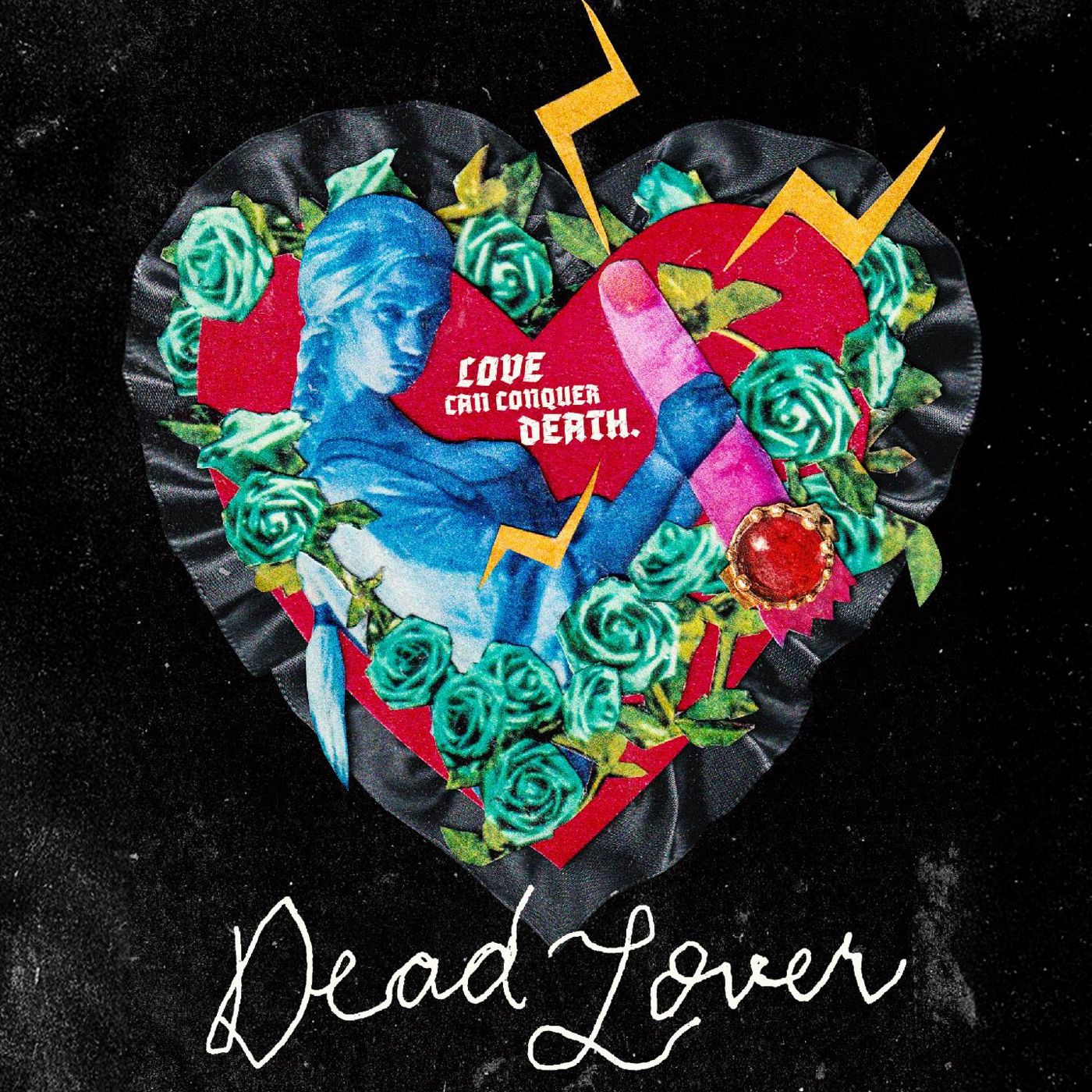
On this episode, I am talking with writer, director, producer, probably yes, definitely star all kinds of stuff. She's a one woman powerhouse, Grace Glowiki, and she is back with a new film called Dead Lover. The aesthentic of this film really scratches an inch that I have for this kind of artifice and playing with the frame that I just really enjoy. Great movie as well, pretty over the top all the stuff that I love about movies. Definitely check it out if you get a chance.
Might not be for everybody, but a definitely was for me. Thanks so much for listening, and I hope you enjoyed the interview. You have told a lot more than directing, and I'm curious just how you decided to get into entertainment at all. I know it's such a crazy choice to make for one's life. How did I?
I think, Well, I went to McGill and I was studying art history, and I remember being in college and being like, what am I going to do? And then on a whim, I saw an auditioned sign up sheet for a play and I just put my name on the list, showed up, didn't know how to act, didn't know what I was doing, but ended up getting a part in this play, and I just sort of fell in love with equal parts the camaraderie you feel when you're making a piece of performance for an audience and also the kind of rebellious feeling of being vulnerable and being watched by a group of people. So I think, you know, kind of chasing that live performance high, but also the like feeling of being a part of a troop. Maybe, so I think that that's kind of the double edged sword of what got me.
And then writing and directing was that's just kind of a natural progression where you like, I really want to try this out. I want to see how this is wearing these hats as well. It partially came from trying to be a actor in a more conventional sense and not feeling as though the rules that were coming my way were full I was able to fully express myself through them, so I started to kind of make my own stuff as a way to solve that problem. So I think, yeah, it was kind of born of the necessity of wanting to express myself as an actor. Is how I've found myself to be a filmmaker.
Yeah, so it's sort of a strange way into it, but I have since like so fallen in love with the filmmaking process, directing and writing and all of that. So yeah, I'm happy to kind of do both. I love your feature work where it's the smaller two person four person type casts. I mean, is that again just how hard it is to make a movie and it's easier with smaller troops or how was that? That's where it comes from.
I think is just being used to not having resources to work with, and so you kind of start to understand that the less people you make something with, the cheaper it is, the more manageable it is. So it comes from that place kind of out of necessity, but because I've done it now quite a few times of just like movies with two characters or four characters, like Dead Lover, it's nice because you really get to put pressure on the protagon, like it's a real direct expiration of a protagonist because there's this one. If it's one other character, there's one other force pushing against them. So there's a nice sort of focus and precision and balance to it when it's just a couple actors or two actors. So yeah, yeah, you work a lot with this Ben Petrie guy.
What's a story with him? So he's my husband, he's in the other room. Yeah, So we we have just been working since we've been together romantically, we've also been collaborating, so it's very intertwined our lives and our collaboration, and I think what's drawn us together as people and as collaborators is we're very different, but I think we have a high regard and respect for each other's point of view in each other's brain. So it's this great balance of you know, the friction of two opposing things, but the desire to stay connected through collaboration. So yeah, it's just been such a joy working with him.
Very unusual, of course, working with your husband in this capacity, but it's been so special. Tell me about something like shooting Tito, for example, So are you shooting all day and then you have to go home with him at night and then like are you just talking about the movie all the time or do you take a break? You know, we try to take breaks, but we stopped, like we try to. We used to try to compartmentalize it and be like, Okay, we're going to not talk about work whatever. But the truth is we're both obsessed with filmmaking and we're both obsessed with the projects we make.
So after a while we just kind of let it be free and it weaves itself in what feels like every hour, you know, within an hour of us hanging out, it would be really rare for us to not bring up something related to work. Just because that's how our brains are both working as individuals. We love we love movies. Yeah, and where do the does an idea like dead Lever come from? So it actually was developed in kind of a strange process where I was talking to Ben and another three people in individual conversations over the course of like two year years where I didn't really know what I wanted to make next, so but I knew I really wanted to be collaborative.
So in these conversations we would just talk about different characters, different environments, different plots for movies, and just slowly orally started to build a story of this grave digger. So it came it was born of this collaborate, these oral brain jam sessions with these people. Someone was like, what about a grave Digger? And you know, it's all just kind of spiraled from there. Who would you say were some of your biggest influences or who are you fan of?
I grew up on really like big comedies like I Love Jim Carrey, Mike Myers, Monty Python, and SNL. Mel Brooks. So I think those were the guiding lights where these bigger comedies that I grew up with in the nineties and. Then something like dead Lower has such a great look to it. How do you come up with that?
How do you get that design in your head? Yeah, so that came from my love of theater and my love of performance. And whenever I go to like a black box theater show and it's just an actor in a spotlight, I'm always kind of amazed at how I find that so visually compelling, and it's enough stimulus for me and I don't need anything else. And so I kind of got in my head of why can't you translate that in the medium of film, like the minimalism of live performance, and or there's these great images of Iggy Pop performing on stage in the seventies and it's just him in a spotlight, but he's got like a silver glove, and I'm like, oh, yeah, that's the most amazing. These are the most amazing images.
So it came from that place. Levy needs stripped down live performance images of act performers in spotlight. But then also I would then meet rain Vermet, the cinema photographer of this film, and would see her movie called Saint Anne, which played at TIFF in the New York Film Fest, and she just has this incredible ability to on sixteen millimeter film like shoots stuff where it's surrounded by blackness, but there's colors, different back lights to different front lights, and so it was kind of a mashup of that inspiration and then meeting this woman who was like so amazing at these stripped down kind of Kenneth Anger style images. And then how is it directing yourself and especially all that makeup and costume they have to put on.
Because I did it in Tito as well, I'm used to directing myself, so I find it actually quite natural to do it, And I always say, in some ways it feels more economical and easier because you don't have to negotiate with your lead performer as a director when it's also you, So it ends up making things kind of go faster, and you can direct from the front seat of the protagonist. So in a way I find it easy and maybe easier than negotiating with a director. Like when I'm acting in collaboration with the director, I find that more difficult than directing myself. So I really enjoyed it. How long did it take to actually take that lover from conception to what we see now?
Oh, gosh, those conversations with friends I mentioned probably started two three years before shooting, and then yeah, the edit would be a year and a half, so you know, the all together, it's been feels like it's been five years maybe, And you tell me. About the music. I really love the score. Meg Remy from US Girls did the score. I came to her with like a more or less finished film with about forty five minutes of temp tracks in it, ranging through all like all different genres and stuff, and was like, oh gosh, like Meg, what what are we going to do?
How are we going to fill all of these holes? And she's a really brilliant artist, and we ended up approaching it kind of like a collage where she said we could use her for any song from her first three albums, scraps of unpublished songs from her old hard drives, and then she had the idea of using public domain wax cylinder tracks, which are free, and then she had this one new track you got everything, And so from these piles of sounds, Meg and I just threw stuff on the movie and started to try to make patterns and themes out of these different piles. So we really thought of it as a collage, which is a testament to the way Meg's brain works. And yeah, I love what she did with it. I love how hands on you are with all of this stuff, working with your composer like that, and then you we even co.
Edited this, yes, yes? Or no? This one? Did? I do I have an Ivan credit?
I don't know, honestly, I'm blanking. Oh, I'm I must be thinking of Tito. I'm sorry. Yeah, yeah, so this one I don't. This is Lev Lewis, who did an amazing job Tito.
I co edited with Brendan Mills. Yeah, I love editing. For this one, I was like, hey, I'm gonna try to not edit and try to learn about the collaboration between a director and an editor. And Lev was amazing and really rigorous with the footage, and he's really good at making things make sense and making things be concise. But he also has this he's a composer himself, so he brought this wonderful sonic knowledge to his cutting.
And I love sound too, so together we did all of the sound effects in the film, of which there's tons. Yeah. The interplay of like sound work and cutting with Lev is that line is really permeable. Between those two things, and yeah, he absolutely nailed it. When did you first get to see this with an audience?
Like, we did a lot of chest screenings with groups up to about twenty twenty people, so if we don't count that, the first time I saw it with an audience was sun Dance at that first screening of it. Yeah, what was that experience? Like? It was really interesting actually because there was a lot of walkouts. You're so nervous as the filmmaker, and you're like, please love it, please love it, and then you just start to hear that door open and close, open and close, and you know, as people walking out, and it's difficult to screen a film, especially you know, at a big film festival like that.
But I knew thet I knew Sundance loved the film, so that and were they were really championing the film. So it was kind of just a confrontation of this film is not for everyone. And that's a hard lesson to learn when you're like, you know, sleep deprived and you have out you know, you're high up in the Sundance Hills and all of this. So I would say I don't like the first screening of any of my films, and this one in particular was hard with the walkouts. It's all good stuff, and the film would then continue to play and kind of find its audience a little more where people had heard about it and like, oh, I really want to go see that.
Where I think the first screening at Sundance, it's a lot of people trying to buy films, and this film is definitely not like an obvious like moneymaker or anything like that. So yeah, it was interesting that that premiere. But I love Sundance and they were they were so supportive of the of the film. It was like kN you Tanny like came out and like was like we love Deadlove you know. So it was so great, but it's very vulnerable those first showings.
Even the second screening at Sunday, it's like I don't even remember if there was any walk ups. Like, so after that first one then it felt like it found its flow. I think it played two more times at Sundance. Both times it was awesome, lots of laughting, and then it would go to Rotterdam and that was really positive south By, you know, so it I think it was just that first one that was difficult, and then it seems like People. It kind of found its flow after that first one.
What's next for the movie. It's going to be playing at IFC in New York about mid March, so we're gonna go there, and then it'll play at Lemielle Glendale in end of March, in La some Almo Draft Houses, the Review Theater in Toronto, so it'll have a little theatrical tour, often with the Stinkle Vision cards, so the film is being played in stinkle Vision where we pass out these cards and then you scratch and sniff along with the film and smell these disgusting smells, which has been really fun. Yeah, So that's what's. Next, and what's next for you. What's next for me is I'm writing my next movie, a very slow process, not so dissimilar from writing this one, where I'm just talking to a lot of different people, collecting ideas and trying to develop a central protagonist that I'll build a film around.
So nothing clear to report, but just in the process of trying to get the next one cooking. And then you're still acting as well as writing all this. Yes I am, yes, I'd usually do you know, a couple films a year just as an actor. In someone else's movie. So, talking right now to Mary Dottoman who directed me and Booger, we might do another project together and then the Canadian filmmakers.
So yeah, I try to keep the muscles working a little bit by acting in someone else's film, twen directing my own. Is there a good place for people to keep up with you and your work? Yeah, they could go to the Dead Lover film Instagram page and there will be all updates about Dead Lover and sometimes if I'm in another film, we'll throw something up on there, So that would be a great place to go to keep in the loop. Well, Grace, thank you so much for your time. It was such a pleasure talking with you.
Yeah, it's so nice talking to you, Mike. Thank you. I love the dead before their clue, the blooming fleshful meet. Hod upon me. Nothing.
I love the dead before they rise, No farewells, no goodbyes. I never even knew you are now running the face. While friends and lovers mourn your silly grave. I have other uses for you, darling. Stand stand, did Donna take care?
Did take. Then? Take it? H I love the data before that they're brewing fresh hot meat out to have her eyes, the fun mesic
More from The Projection Booth



Similar episodes across the network
Matched by shared keywords.
-
Episode 19: Nothing But Trouble (1991)
1 shared keyword: horror comedy
-
The Menu
1 shared keyword: horror comedy
-
Rockula
1 shared keyword: horror comedy