
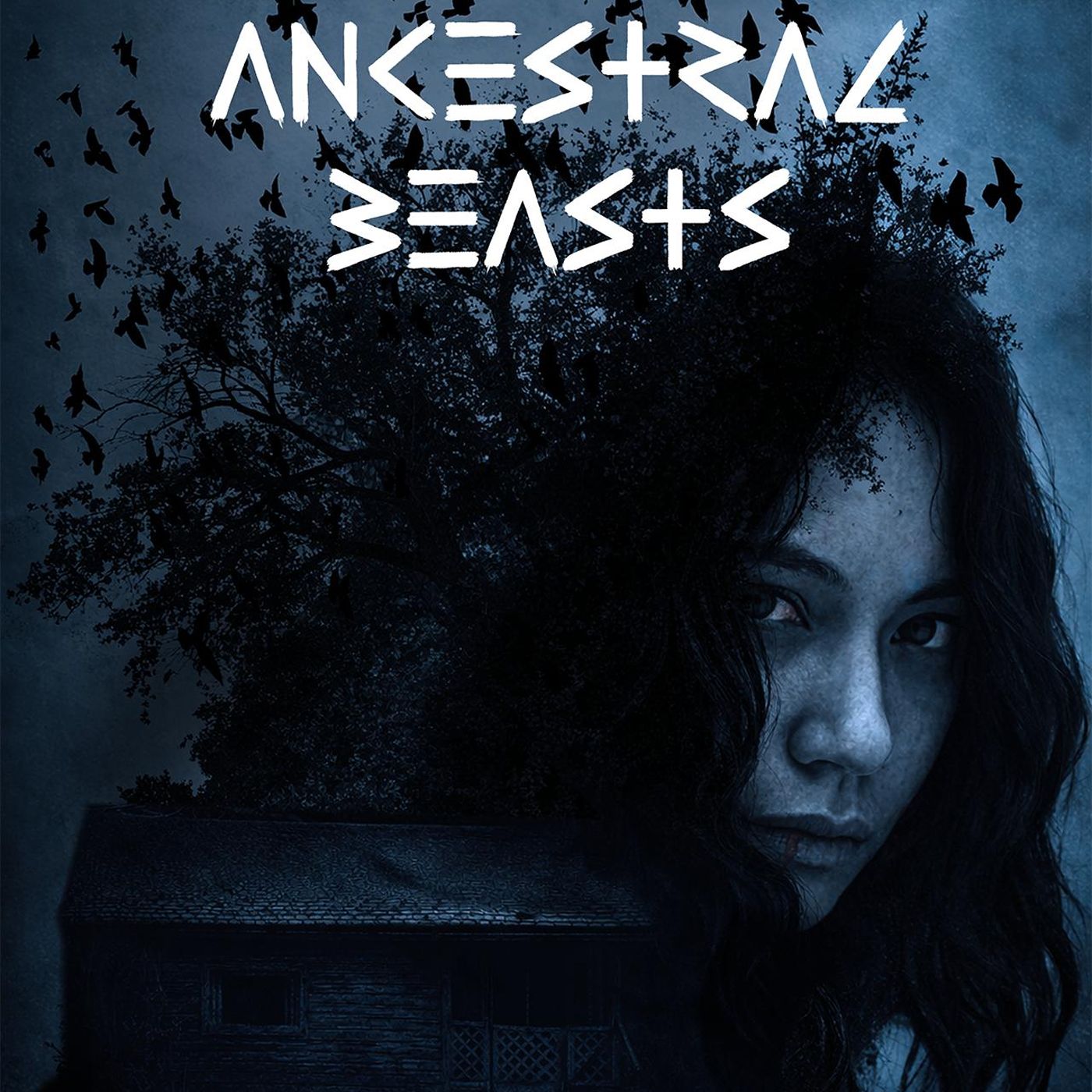
About this episode
Riedel traces the film back to his mother's Sixties Scoop childhood and her later borderline personality disorder diagnosis — the creature he grew up sensing in the shadows — then through a documentary career, a shoestring proof of concept that landed at Frontières during Cannes, and a 20-day Manitoba shoot with a largely Indigenous cast and crew that a blizzard couldn't stop. He also talks about making horror in the woods as a kid with DP Joey Forte, telling 70% of a story so the audience can author the rest, and bracing for Fantasia's meowing crowd. Is the monster ancestral, or inherited?
Find out more at https://www.michifkoonteur.com/
Transcript
Automatically generated, so expect the odd misheard name.
Oh you he is bote. It's show tied. People say good money to see this movie. When they go out to a theater, they want cold sodas, hot popcorn, and no monsters in the protection booths. Everyone pretend podcasting isn't boring.
Got it off. The curses we inherit are not our fault. I brought you up. I swear to God it was real. Nick.
I keep coming back for you and you trying to leave me. Do you know how much that hurts? What we let them become is our responsibility. Hey, folks, welcome to a special episode of The Projection Booth. I'm your host, Mike White.
On this episode, I am talking with Tim Reriedle. He is the director and writer of the new film Ancestral Beasts, which just had its premiere at the Fantasia Film Festival. It is a very spooky story that was shot in Manitoba. Had a great time talking with Tim, and I hope you have a great time listening to this interview. Enjoy where'd you grow up and what's your backstor how'd you get into making movies?
I grew up in the center of Canada, just north of Minneapolis, in Winnipeg, or around Winnipeg area. I spent a lot of time growing up in a rural area too. Around there. It's the homeland of my nation, the Red River may Tea. One hundred and fifty years ago my people were and my family was kicked out of there violently, and my family just kept coming back, kept coming back.
A lot of my people spread all over Canada and the United States and all over the world, but not my family. So I ended up growing up exactly at the heart of where my people started. And then about two thousand and six, I left one peg and I started pursuing career opportunities outside of there and worked in making a lot of TV commercials, and I worked a lot in documentary, And yeah, it was only maybe the past five six years I returned to doing narrative films because they I found that nertive films give me the ability to do things and access audiences in a way that documentaries struggle. So documentaries you typically communicate to their head, the audience's head, the brains, and hopefully trickles down to their hearts the best ones do.
But with narrative films, you can start with the heart and hope that trickles up to their brains and they start thinking, why do I feel this way? That's how that started. But my storytelling goes back to when I was a little kid growing up. I'd spend a lot of time in the country at my grandma's house, and I was like three four years old, and I would tell her stories about how there are bears outside and they can smell that there's a child in the house, and that they get hungry because they like the taste of child, and they know there's only an old lady there to protect the children, and they're stronger than an old lady. And my grandma would just get driven nuts by my stories on baking me please stop, stop, stop, And for a three or four year old, the amount of power that demonstrates is incredible.
It's overwhelming because I think, well, I had this, just this idea, and it came out of my mouth and once it's my grandma's ears and into her brain and freaked her out, as if the bear was really here. I didn't conjure a bear. I'm not a bear, but she was reacting as though the bear was with us in the room. So that was my first taste of storytelling. And been into it ever since.
There's so many ways to tell story, But why film. I've told stories in many different ways. Yeah, starting out, even I would do I'd record on audio cassettes with my cousin and we record bits of Indiana Jones and The Last Crusade off the VHS player or Back to the Future was a favorite of ours, record elements of that, then put ourselves in the movie and rewrite the movie with us in it. So I definitely use the audio form. I tried my best at Troy, and I'm an okay jar, but there are many people better than me.
For illustration. I played in music for a long time and it was pretty successful at that. But for me, film always felt like the right format for me because it blended so much of what I love, so many different media types with visual and of course the audio, but even deeper than that, when you think of like illustration for video and planning shots and even how like an angle of a shot can change how person feels about the shot, or the lighting can change how person feels about the shot. There's so many tools available in film that it just it's like a buffet for me for storytelling. Tell me a little bit.
About Eddie the Echo doog unleashed. So Eddie was a star surf and dog who came for the planet Checha Chihuahua to teach children about science, nature, and ecology. It was a cartoon show that I got my start on. I was about twelve years old, and my friend was part of a student advisor board to build this kid's cartoon character. Now I grew up really lower middle class.
Nobody was asking me to be a part of a student advisory board. But I hustled my way in by going through the white pages to look up anything I could figure out from my friend of what this company was about in this TV series, because I wanted to be a part of it, and so I called maybe one hundred phone numbers until I finally found a person and the owner, and she was so impressed by my hustle that she was like, yeah, come on over, kid. And so when I showed up to this advisory board, it wasn't exactly what I've thought it was. All the other kids came from very affluent families and the parents a lot of their parents had helped fund this project, which I think was part of the design of this advisory board.
I'm just speculating. This isn't necessarily fact for libel purposes. But I definitely wasn't that kid that had parents who could even afford to put gas in the car from week to week, let alone invest in kids' cartoon shows. So the way I tried to hang around was by outworking everybody and myself just delivering a hundred times worth of value than people could supply in money. And I hung in there.
And then when I went to university, they said, hey, we'll give you a part time job writing for this show, and if you do well out of university, we'll see what happens. So I ended up writing the show. I was a director on many of the episodes, became the showrunner eventually, and I was also the voice of the cartoon dog. Yeah. I even wrote some of the music for that show.
So that's Edd of the Eco Dog. And tell me a little bit about The Jackstones. I'm curious about that one as well. Okay, so The Jackstones is a documentary A shot for I convinced a charity to stop telling stories the way that their time stories, which was like advertisements for the charity, and I said, let the good work just be the advertisement for your charity. Keep your name off of it to show the success and people will find you and a group within that charity who believed in the project.
Like Rob Garcia was my executive producer. He fought to get I think shoestring budget, but it was enough to get us to fly over to the Philippines. And the story we thought we were getting there was gonna be this motorcycle driving grandma who had a shotgun that she was chasing away poachers. Thought that's a cool story. But what we ended up finding there she didn't ride her motorcycle anymore.
They took away her shotgun, and now the locals were dealing with poachers from a political standpoint. So instead of fabricating the story we needed to get, just decided let's just keep our ears and hearts open and see what happens, see what story comes to us. Because I'm a bit of a stickler when it comes to integrity and documentaries, I won't force anything. If I end up with the documentary that I intended to make, I'm not listening properly and I'm not doing my job properly. My documentary in the ents be probably different than what a clan going in.
Plus, I believe that people in front of the camera should be represented by the people behind the camera as well. And I'm not Filipino. Rob's actually Filipino, but he was born in Canada. So we ended up hiring a bunch of locals, people who weren't even ever some of them were. There's an incredible film community in the Philippines, so we had some aces there, but we trained a lot of people from the village how to be a film crew, and so they found the story for us, and we just kept following the story.
And what we found was political corruption and an un underdog of this village who ended up getting going up against the government to fight the corruption and to save the viability of their fishing village. And they're still thriving to the stay. So that's the story we ended up capturing on film. The people who invested or who paid for the film to get made expected us to come back with this awesome documentary about a motorcycle ride and grammar with a shotgun, and we came back with a government intrigue corruptions story about fishing rights. But it was really well received by the right communities and won a bunch of awards in the film festival circuit and helped raise a lot of awareness and money for these types of programs.
One of the reasons why I was asking is because it feels like, look at your CV that you did a kind of a rough draft of that before you did the final project. Is that true? Yeah? So another one of the producers behind the project, Dave Skulis, He's a very innovative guid and was open to anything, but we had limited ability to explore the full story. We had maybe one day to shoot, one or two days to shoot, So while we were in the Philippines doing another thing for like a TV comercial type project, we ended up squeezing into production days to just go and see what the story might be and see what was happening around there.
And because Dave wanted to go scuba diving. He loves scuba diving, so I think that also helped Dave convince Dave to let us go there for two days, and so we ended up scouting things out, meeting the people, and we got a very very very bare bones story of how the coral reef had gone away because of pollution and things, and the locals found a way to revitalize the coral reef. So that was the story we started telling, but it was a bunch of interviews with talking heads and stuff. What we didn't realize at the time was that because the coral reef was revitalized and brought back more fish, more fish meant more money for them, which was great, but more money for the community meant more problems because now sharks were in the water and they wanted to get a little taste of that money that was coming in.
So the community ended up not being better off for everything that was happening. So that's the story we ended up getting in the full feature length documentary, but we didn't know at the time that's what we were going to get. You also did a proof of concept for this film, and you tell me how that came about. Yeah, the proof of concept of this film was because everybody loved my script for Ancestral Beasts. They said, you're a documentary guy.
You can't do narrative, let alone horror. And I grew up on horror. I've seen real horror across the world and understand the feelings of vulnerability. I grew up in it's in a house with chaos or I was craving protection that wasn't always there. So I'm very well acquainted with horror.
So I ended up getting some money together to do a proof of concept to prove that, yes, I am equipped to direct this film that's so personal to me and my loved experience, and it worked out. Fortunately. Did that have something to do with con. Yeah, so it did. I made this proof of concept and my goal, my highest goal, would have been if this proof of concept would have got screened at the BANF Media World Conference.
It's international conference where a lot of the TV producers in the world gather to see Canada and the world's offerings for television for the upcoming year. And so they have a special Indigenous Screen Summit and I attended that in twenty twenty four and I was blown away by the quality of Indigenous storytelling that had been happening. It was quite the inspiration for me to be bold enough to try to tell my own story. So I thought, if this proof of concept could get shown at the twenty twenty five Indigenous Screen Summit and I can pitch this project, that would be the dream. And oh my goodness, maybe, just maybe it'll get Somebody's at ten and then I sent it around to a bunch of people a bunch of places, and had a lot of conversations and within I shot it in January, and by February March, somewhere around there, I get an email from the Frontiers, people who have their platform at the can Film Festival during the can Film Fest, when they asked me if I wanted to screen my proof of concept during the can Film Festival, and I just couldn't believe it.
I thought it was a joke. These things don't happen to me. I'm a person on the fringes of this film industry. I'm not an insider, but you don't say no to those kinds of opportunities. So I just said yes and tried to do my best, and then Variety magazines started covering it, and that opened up this whole other world of perception of success about the project, and so I just kept riding that wave.
Unfortunately in Canada, because I wasn't making money off of any of this yet. But fortunately in Canada we have great government support systems, especially the Indigenous Screen Office, who helps pay for people like myself and mikers like myself to travel around to take on these opportunities. But wasn't for them, I wouldn't have been able to pay to fly to the can Film Festival and get an apartment or a hotel during the can Film Festival and survive and stuff. But thankfully I was able to do that with that support, and it's just opened up all these incredible doors and my whole career is a whole different trajectory as of today because of that little proof of concept and because of the support I got from these people who wanted to let me try to make the most of these opportunities and see where they go.
And you and I are talking now just before the world premiere of the feature of It, one of the world's largest, most prestigious genre festivals. It's incredible. Now, the government of Canada hasn't always been so nice to Indigenous people. Tell me a little bit more about the sixty Scoop and how that kind of informs your main character. So the sixties Scoop was a program put in place by the Government of Canada thinking that many Indigenous families were ill equipped to care for their own children, so they would look for reasons to take the children away from the parents.
And put them in white households, and so there are a lot of stories of what kind of abuse and loss of culture existed. And so I can speak firsthand that my mom and her sisters and brothers were sixty scoop kids, and my mom didn't get put into a good foster home. She was put in to some of the worst I'd ever heard of. And it's funny as a kid, you desensitized to it because it comes from your mom. You think that this is just basic stuff.
So I used to do. I used did not really have much compassion for my mom. It was just like, oh God, she's flipping out again, and why is this great? Now I'm in trouble, or it's going to be a horrible time in the house for the next week. And so that's the effect that as on people, and the cascading effect of that of like my mom not having a support of it being recognized as a crime against a population of people.
She was forced to deal with that all by herself, and then not even having your own kids compassion because there wasn't back then a word for sixty scoop or borderline personality disorder, which is what she was diagnosed with. Later on in life, so she got zero support over all that, even at home. And so it's only been in the past maybe decade that the government of Canadas start to recognize it and communication about it has start to spread, but it's still not something that people understand very well. And it's happened across the world. There's the Stolen Children in Australia, and I think New Zealand has a phrase for that too, But you look at any indigenous population in the world and there's probably a similar story.
But yeah, for me, my mom passed away in the beginning of twenty twenty and I wanted to look back at my life and my relationship with her more compassionately, and so so I had to reframe things to realize that she wasn't just the perpetrator of chaos and stability in the house and in my life. This was actually happening to her, probably even worse than us in those moments. And so I ended up learning about borderline personality disorder. And with that is when you're a child and the people are supposed to protect you aren't available to protect you or don't protect you, you develop an inner protector inside of yourself and we all do it to certain degrees. I'm sure you've got something like that in your own life too, but with borderline personality disorder, the abuse is so severe that your protector is dysregulated and goes to extremes and sees many things as a slight or as that threat and lashes out and attacks, but also texts you as an individual as well.
So once I understood that, I was like, oh shit, this was exactly my mom and what she was struggling with, and so I wanted to tell that story, and it wouldn't work as a documentary because to me in the household, it felt like there's a creature looking in the shadows, so you never know exactly what's going to trigger it to attack. And when I think about that and how that feels and how I want audiences to feel that way, it's a horror film, and the horror genre gives great opportunity to tell these complex emotional stories in a way that people can feel, so that they can better understand. Tell me a little bit more about how that informs the film itself, because I love when genering films actually have so much more meaning than just oh, there's a big scary monster.
I approached this film Ancestral Beasts as though it was a documentary. I did a lot of research because I don't hold the exclusive rights to Indigenous intergenerational trauma, nor do I own the exclusive rights to severe mental health disorders. So I worked with a lot of different knowledge keepers and experts in mental health and my Indigenous elders and my community to understand, really understand what it is and how it affects us, and how it manifests in the world and in our daily lives, and what triggers it, what stigmas do we have to face, and how do we overcome them? And when I had that all sorted out, I laid it out as a timeline of ideas. And so this film is like my thesis that follows a plot, but each plot point is showing a different point where a person is trying hard to find healing, and what are the obstacles in the way of the healing, and which of them are internal and which of them are external, and who's putting these obstacles in the way, and who's helping them overcome them, and what's at risk.
Ultimately, when I took that approach, I was able to then find a narrative thread that I could use my own lived experience and stores from my mom and other people within my community to weave through. So it was one coherence caricature arc. And then the beauty of the genre is that I could take an idea that's very internal, and I could depict it through horror tropes like the Old House in the woods, you know, and the family legacy of trauma and you know, things hiding in the shadows and supernatural creatures and intrigue and all those great horror tropes that have been really played out, but I could take them and provide something new because I thinly cover my plot with a horror story in tropes that people recognize, but it's anchored to something completely new in a novel way of showing a character arc play out.
That's how I did it, and that was my intention all along. I wanted to tell about seventy percent of the story but make it look like I was telling one hundred percent of the story to the audience, so that the audience could offer thirty percent of the story themselves and make more personal and relatable to them. So I don't know about you and you were watching it, how what you could relate to or what assumptions that you made just subconsciously because of your own lived experience in this world. But I'm actually really interested in knowing that. But any to answer your question, that's how I went about putting the story together where a person could, on the surface make it sound like, oh, it's another horror film about trauma, and it's a cabin in the woods story.
Yippie, We've seen this a million times. But that's the trick of it. You just barely have to scratch the surface, and there's so much more to it. Tell me about the making of it. How did it all come together for you?
And how was it a fun experience? Because I've heard people describe making an independent film like waging a war. I always compared making a film an independent film to rolling a boulder up a mountain. Not to play on your love of the myth of Sisyphus, but that's exactly how I describe it, and that's what this definitely was. Nobody was pushing that boulder up the mountain but me.
But I was so determined to get that boulder up the mountain that people took notice and were willing to come alongside me and say, oh, you know what, I've pushed this boulder up the mountain before a few just go this path is so that path you might have an easier way and or feeling weak at certain times, people are like, Okay, let me give you a shoulder to lean on for a second. The making of the film, though, went by as excruciating as it was, in some ways, it went by incredibly fast. I wrote the first draft of the film December ninth, twenty twenty four, and by December ninth, twenty twenty five, we were right in the middle of our twenty day production. I think we were on day ten of twenty of shooting the film.
Having the can Film Festival and support from the Indigenous Filmmaker Fellowship, the Whistler Film Festival, and Caplana University's a Digitous Digital Accelerator program, just different groups like that really helped me move quickly. But yeah, getting everything together for a low budget and such an ambitious project in a way that I was so determined to tell my way because I'm walking a fine line. If I do fall into the typical horror tropes, it's not going to work. I had to be very, very honest to the mental health aspect of the story, and the stigma aspect of the story, the rural Manitoba aspect of the story, and really the uniqueness of growing up in that place with those kinds of struggles.
All that stuff had to be very specific, and it sounds a commercial poison to people who've been doing this for thirty thirty five years in the industry and think they know what's best. But we were a scrappy team. I cast mainly people from my nation and for the broader indigous community, most of the crew was Indigenous and hadn't had the opportunities to fully take on the kind of key roles that they were in for my film, and that created an environment of people really willing to work their asses off and really believe in the story because they hadn't seen anything like this that felt so familiar to them but still so accessible because of that thin layer of the genre tropes that we hit under, and so that made the film making process so much lighter and better.
It was really enjoyable, as painful as asked. Some aspects were the cast and crew made it a fun place to show up to every day. We got hit by a blizzard, and we thought nobody was going to show up, and people just found their ways through some of the worst weather of that season to get in on time. And then we had a horrible sickness blast through and people would be apologizing that they could make an they didn't want to get other people sick, but other people were willing to step up and take on more responsibility just to keep things driving forward every single day because we couldn't miss We couldn't miss one day. We had tight twenty shooting.
Each day was packed. If we missed one day, one half day, we wouldn't have had the film. And so everybody pulled together to make it happen. And some of my new best friends have come from that experience, and I'll work with them forever if they'll have me. When did you actually shoot this?
We started rolling, I want to say late November, and we wrapped December twenty second of twenty twenty five, and I edited with my cinematographer Joey Forte. We edited and got picture locked by February twenty seventh, and yeah, and then we had some of the effects that hopefully are mainly invisible, and work through everything else of the legal stuff so that our world premiere is coming up. That's amazing. That's a very quick post process. Yeah, I don't have time to mess around.
You gotta we have a saying up here. You gotta make hey while the sun is shining and right now is all this attention on the project and the opportunity in front of myself. I gotta keep writing this momentum and see how far we can push it. I truly believe in this space that I'm creating right now for people in my community who have these incredible stories to tell, and so I have a responsibility to keep that space open and let me do my best. So I'm trying tell.
Me a little bit more about your co editor and DP, because you've worked with him quite a few times, I believe. Yeah, I grew up with Joey, him and his family. Yeah, two of the people involved with the film probably saved my life. That could easily ended up being a kid on the streets and getting into all kinds of bad stuff growing up. But Ray Peru who is the associate producer, and Joey Forte, who was my DP.
Yeah, they give me another They give me an alternative in them and their families practically lived with Ray's family from the age of fifteen on and Joey's. Joey had a high eight camera and used to like makeing horror films, and so we would make horror films in the woods all together with whatever kids we could get together from school and stuff. He once convinced our science teacher to be the villain in the horror film, and I think it's okay now. It's things he couldn't do nowadays. We had him take his shirt off and chase kids slamming against lockers and stuff in a classroom during school hours, with big blood and ketchups flattering everywhere.
And so, yeah, Joey and I we've made a lot of projects together. And then I went off and did my documentaries and Joey stayed in Winnipeg and built a pretty good career for himself doing the kind of work he could do in Winnipeg. But I felt like a few years ago when we started this, he wasn't necessarily getting the kind of recognition and opportunities that he deserved. And so we were talking on the phone and I told him, I just want to make a fun horror film like we did back in the day, knowing that Ancestral Beast was the project, but I wasn't ready to confess to Joey about how much this was steep mound lived experience and stuff like that. I was still caring a fair amount of shame and know like how to tell him, Hey, by the way, you've known me for all these years, but surprise, but this is why it was always the weird one in the group.
So I put it to him like that. He was all for it, and Joy was willing to sacrifice and do whatever he possibly could to help support my vision and make this movie the best it possibly could be. So that's why the proof of concept looks so incredible for such a shoe string. No budget was because Joy used both to his cameras and all of this time meticulous the storyboarding ever shot with me and designing everything to be the most cinematic experience. The proof of concept looks like a million dollars but maybe cost ten bucks.
I can't even imagine how excited you must be to have this premiere at Fantasia. Yeah, man, really excited. I still deal with stuff where it's like anytime something good happens, I don't either, don't believe it's real or wait for the other shoe to drop. Okay, where's the scam coming? I imagine waves of dread, like, oh my god, what if these people don't like like film, Like these are people who love horror.
They're like, what didn't you do to my beloved horror genre, you documentary poser? Oh I'm dealing with that. But I have some really good people around me, good mentors, and like the cast, like Morgan, who's the star of the film. She is incredibly well adjusted when it comes to managing your feelings and stuff, and so she's talking me through it too, about how to just shut that part of the brain off and stop being an idiot and just enjoy the moment. So I am definitely being deliberate in recognizing how amazing this moment is.
And when we have the world premiere at that incredible Fantasia audience, I'm just gonna soak up every second of it. I'm determined, as I always am, to just take it all in. Have you been the Fantasia before you familiar with the Fantasia audiences. Yeah, it's been a number of years, but I do remember how into it they definitely are, And yeah, I remember or how into it I was as well. Yeah, they really want to love movies, and I compared to like how audiences are like with a rocky horror picture show, you know, how they have all these different traditions and stuff.
Just the meowing at the screens alone here the beginning fantation. When that happens at the beginning of my movie, if they starts and yowing, I might shed a tear because I'm like, oh, they're meowing. Did they me out back in the day when you went I don't remember any meows? Oh okay, so yeah, they got this thing now where they all me out and then they start me yewing a lot. And then I think they wait for a certain screen to come on that signals like, oh, the movies about to start.
Then they all shush each other really loud to stop them yewing. It's incredible. I think there's all this other kind of fun stuff that they do too. I don't normally ask people about their websites, but I want to ask you about yours because the name on the website is not Tim Reedle dot com. Can you tell me about your site?
Yeah, it's mitchiff Quinture dot com it's my language, Southern Mitschiff communities language. It means mayti storyteller. The thing with the word Mayti is that it's a French word that means half, and my people aren't half anything or our own whole. So I prefer the term mitchieff and yeah, mitcheft storyteller. It says everything that I want to say about my production company and the projects we take on.
Do you know what you're going to work on next after this or are you just so in the moment. I'm trying to be so in the moment, But I do have something that maybe you and I can talk about after the festival that I would love to get your your thoughts on, because you're such a film connoisseur yourself. But yeah, I've got something, Bruin. Tim, thank you so much for your time. This is great talking with you all right.
Likewise, Mike, let's keep in touch. Sounds great s


