
About this episode
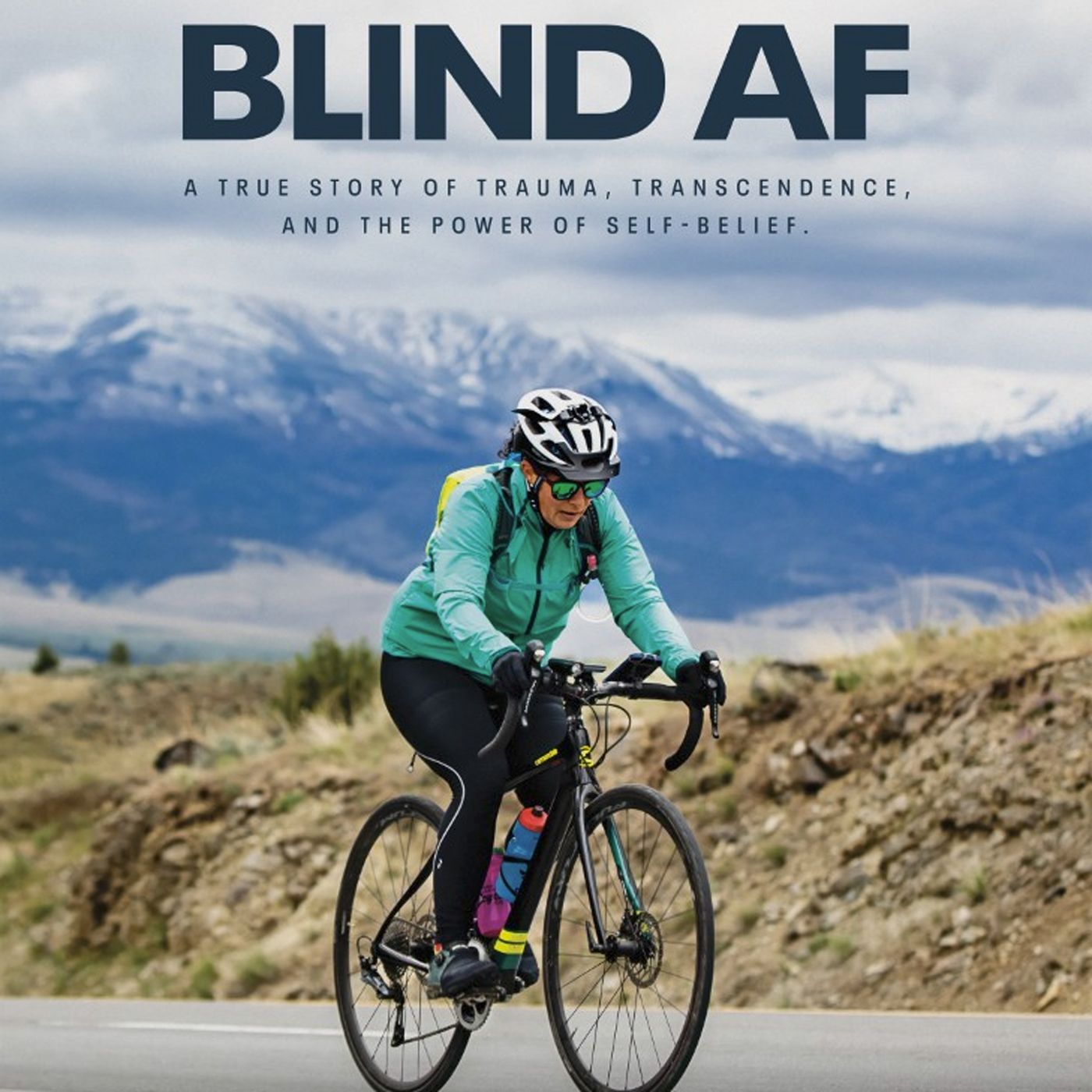
Photographer Gina LeVay makes her feature debut with Blind AF (2024), which premiered at the Bentonville Film Festival and is now streaming. The documentary follows Cheshire's attempt to become the first blind rider to cross the United States on a single, non-tandem bicycle: 3,600 miles in 60 days, from RV camp to RV camp, ending with a 4 a.m. wake-up for a sunrise shot at Virginia Beach.
LeVay and Cheshire join Mike to talk about how a sports story turned into a film about trauma and healing, built on four years of interviews and a trust neither takes lightly. They get into LeVay's refusal to make "inspiration porn," her choice to treat sound as a character, the audio description Cheshire reviewed herself, and the animation that pulls sighted viewers into her experience. Cheshire also explains where the name Wonder Woman came from and what comes next: a 200-mile run across Iceland and a solo ski to the South Pole.
Follow Blind AF on Instagram and visit the film's official website.
The Projection Booth is part of the Weirding Way Media podcast network. Explore more of our shows at http://weirdingwaymedia.com.
Transcript
Automatically generated, so expect the odd misheard name.
Hold your ears, folks. It's showtime. People pay good money to see this movie. When they go out to a theater, they want cold sodas, hot popcorn, and no monsters in the projection booth. Everyone pretend podcasting isn't boring.
Turn it off. Turn it off. Turn it off. Be careful. I didn't know what I was.
Signing up for. Everything's okay. You are safe. I'm so tired. I don't think I can do this.
My brain will give out. You don't get to be miserable. Come on, do it. A U.S. Army veteran and former paramedic who lost her sight.
Are we almost done with this? Almost 4,000 miles. What kind of idea. Was this anyway? You know what?
I did that. I'm almost gone. I don't know if I'll ever be at peace with being blind. You can imagine if you had lived your whole life sighted. Now all of a sudden when you open your eyes, it's not any different than when your eyes are closed.
And you're asleep. That's when I started doing all of my trauma PTSD work. I had no idea how my childhood affected my adult life. I really needed a focus. I feel like if I don't challenge myself, I become so overwhelmed and I just focus on everything I've lost.
I don't like to feel stuck. I like to make sure that I always have choices. So I have to do something for myself. She's an extremely confident woman. She's a superhero, but she's real life.
Someone tell me I cannot get on a single bike and ride across the country as a blind person. I'll be the judge of that. You're going to do what? Right now, in the studio, I have an amazing and inspiring story this morning. You've got to hear this.
What she's doing has never even been attempted. Right here. Sean Cheshire started a 3,800-mile journey totally blind. I've raced with Lance Armstrong, world championships, never seen anything remotely close to this. This is beyond adventure.
Absolutely dangerous. The mental fatigue trying to figure out where the sound is. Who's on the side? Semi-traffic. We had just 10 minutes to talk to Shawn and her entourage.
It's breaking social barriers. I'm just afraid to lose her again. Just telling you, if something happens to me, you guys will. Another blow to the head. She would not survive.
But that's not stopping her. Today's a good day to die. Why? What is the point? I do things to help myself and people attack me.
I don't do things to help myself and then I don't want to live. Like, what's wrong with me? I knew it'd be hard, I just didn't know how hard it was going to be. I needed this. I needed to learn this.
That, out of everything, will change my life more than anything. And I had to make the choice. I have to choose to see. When you go through hardship, you come out on the other side. It doesn't matter.
It doesn't matter where the pit is. You have to claw your way out. Wildness is not a disability. It's a difference. I don't think I would be who I am today if I had not lost my vision.
I don't know. Today's a good day. In her mind, there is no quitting. You can cry. You can crawl.
I think you should hug me. You can fall down. But there's no quitting. That's moving forward. Life is messy.
There are so many things out of my control. But I can control me. I can be my own Wonder Woman. I am not okay living a life where I feel like I'm limited because I am blind. Hey folks, welcome to a special episode of The Projection Booth.
I'm your host, Mike White. On this episode, I am talking with Gina LaVey and her subject, Paralympian Sean Cheshire, all about their new documentary, Blind AF. It follows Ms. Cheshire, who is blind and rides a bicycle solo across the United States, and also becomes a deeper story about trauma, trust, and resilience along the way. I had a great time talking with Ms.
LaVey and Ms. Cheshire. I hope you have a great time listening. Enjoy. Well, Gina, I want to start with you.
I want to know a little bit more about your background and how you decided to make this film. Sure. Well, I first met Sean in 2015. I was doing a job for ESPN Women on women veterans and how they use sports in their post-deployment life. And at that time in 2015, I actually, I was doing also some, you know, casting and research of who we should use.
And I found Shawn and she was training with Team USA to qualify for the Rio Paralympics. And she just lost her sight. Probably three years she lost her sight. And so she was very, you know, early on in the change. And I interviewed her and her story stuck with me.
I didn't really know her real story back then, but just that she was a single mother of two young children and she lost her sight. And I just had my second child and I just couldn't fathom that and how difficult that would be. And so I just thought she was remarkable and also her mental fortitude of getting back up and qualifying for Team USA and then the Paralympics. So fast forward, it was 2019 and I was just thinking about Sean and I Googled her. And she just crossed the Grand Canyon, the first blind person rim to rim.
So I was like, I have to call Sean. Like, what is going on? And so I I'm so sorry. I think there's a fire alarm. Andrew, I don't hear it.
Do you hear that? Oh, you don't hear that? OK, I don't think there's a fire in my house and there's other people in my house. They're burning your shit down, Gina. No, I'm at my parents' house, actually.
And so my brother's cookie. I have no... Okay. Anyway, sorry about that. No problem.
Where was I? So wait, no, no. So fast forward 2019, I Googled Sean and I was like, what is she up to? She just finished crossing the Grand Canyon. First blind woman to do it.
Broke a blind man's record. And so I was just like, I have to call her. And I called her and I was... And I said, you know, hope you remember me. I would just love to tell your story.
I don't know what that looks like, but like, I would love just to be in touch. And this whole Ride Across America thing came in 2020 when she feeling isolated during COVID and she wanted, you know, Sean can speak to that, but she was like, you know what? I have this idea. I want to ride my single, a single bike across America. And of course, like light bulbs, like we're like, oh my goodness, that would be a great way to tell your story if we could win across America.
And then it just started to, gradually just grow very organically you know as i learned more about her story the film just kind of came together. China how is it when you get this phone call and it's like i want to you know i want to make this movie about you how is that. Well, I was surprised because I think I remember telling her, like, I can think of a lot more people that are way more interesting than I am. I was like, and I'm fixing to retire. I'm fixing to retire from Team USA.
So I'm like not even going to be doing that anymore. I'm probably just going to like try to find some adventure to challenge myself to do. But she didn't actually seem phased. She actually seemed a little bit more excited about that than me just staying with Team USA. You know, we had the conversation that if nothing came of it, we would just end up being friends.
Like, we knew that. Yeah, it was weird, though. You know, how do you even approach making a movie like this? Well, I had a really... Well, I had a really...
I feel fortunate. I had a really good support team. And, you know, being in this industry, photography, media... I just knew a lot of people who've done it before. So when we had the idea of going across America, I called my executive producer, Jeff Zimbalist, who's a veteran who's done a lot of amazing stuff.
And, you know, first I was like, well, I need to get some money to get a crew together to go two months across the country. So he recommended a great crew. They were from Guadalajara, Mexico. Zenith Adventure Media. And he's like, they're the right people to do it.
They were like three guys, but really equivalent of like a 10 person crew because they did everything. And so that was huge. And then we had to find sponsors. So we went to different brands, you know, cycling apparel, helmets. And so that really helped us just do the production of the Ride Across America.
So, and then a lot of, then after that, it was like, okay, we did the Ride Across America and that was hard. It was produced in real time because it's a documentary. Obviously we didn't want her to do mountain passes 10 times over to get the shot that we need. But we still wanted to make it really cinematic, poetic, you know, beautiful. Shots, intentional shots.
There was a lot of just, you know, moment to moment producing for the two months on the road. And a lot of unknowns. And that was exciting, terrifying, all those things, because we just didn't know where the day would take us. What we would miss, what we wouldn't miss. So that was, everyone felt very alive for those two months going across the country.
And then after that, it was really kind of like, what do we need to go to the next step? And then we figured out what we needed to do or where'd her story lead us to, right? Everest came, you know, after the ride across America. a lot of the family stuff came after and so it was really just like a snowball it just kept building and every stage of it we figured out in my support system that I was grateful to have you know how how do we do this what you know what's the next step what you know my animators were amazing you know and I found them and so yeah it was a really great collaboration. It's fantastic and It's hard enough to be doing all of the physical stuff that you're doing, Sean, but also now you've got this film crew in the way.
I mean, how much or little did they affect you? When I was actually riding the bike, they're not intrusive at all. I think that, well, not I think. I know that they were very aware about how hard that was for me, and they weren't intrusive. In the least bit, when I was actually like riding the bike out there focused doing the thing.
There was a lot of when I'm not on the bike of, you know, getting mic'd up in the morning or Gina taking pictures of my sweaty face at the end of the day. Yeah, I mean, it was, you know, I said this, I don't know how many times on the ride. I don't even think about the cameras. When you can't, there is literally something to be said about it out of mind. You know, when you don't see the cameras, you're really not thinking about it.
That helped. But yeah, I just, I really didn't think about it. And they were people. So, you know, Chris, Ben, Pablo, Gina, they were people out there. And I felt like they were really my human connection off the bike of calm and peace.
So it was, I think it was really good. There was nothing, I don't think that there was anything trusive about them. I am so curious just even about the logistics of these rides. I mean, when it's the end of the day, are there already like, okay, I'm going to go this far today and I've got a hotel lined up at the end of this and a hot shower. And a meal?
I mean, I can't even imagine just being on a bike all day long and having that physical exertion and then just the amount of exhaustion, I would reckon, afterwards and then having to deal with that But then also, yeah, like you said, Gina's got this camera in your face. Come on, Gina. That's not very nice. I know, especially after she finished. When she finished in Virginia Beach the next morning, we wanted her.
We were like, come on. I know you're exhausted. I'm like, but we really need a sunrise shot of you on the water. And she was like, are you serious? It was like 5, 4, or 5 in the morning.
3,600 miles. And we're like, listen, we got to get up. It's like 4 in the morning. We got to go. But you know what?
It was a great shot. It was a great scene. Well, I mean, just so you know, there was a team that Sean put together that dealt with all the logistics of planning. It was a lot because the majority of nights, and I would say almost all of them except maybe one or two, it was in an RV camp. So there was like an RV, as you saw in the film, like following her. with us and that had about what like eight people in it which was crazy it could be a reality show by itself oh my god yes what happens if you put like 15 strangers on a ride across america i mean that's really what it was it was like the the the ride team and then there was like the film crew and like nobody knew each other and we were living in close quarters and there was a lot of stress because every day was a lot like as you said i mean it was every morning was like okay What do we have to get out at this time?
You know, point A to point B. Who knows what's going to happen? Who's dealing with food? You know, it was all very, very complicated. So there was someone in charge of, you know, ahead of the ride to be like, OK, you're supposed to get here on the 16th and you're staying at this RV camp.
And you didn't want to miss that because then you would have no place to, like, park the RV, especially, you know, going cross country in the summer. It's so crowded. So you had to really kind of stick to that plan of getting to that destination, no matter what. No matter what. We have to go there tonight.
Just to clarify, Gina, this is your first feature documentary? Yes, my first feature-length documentary. I've done short-form docs and branded content for brands and so different kind of storytelling. But yes, my first feature-length documentary. That's just amazing.
Because like you said, you've got all these logistics. You've got the bike team and the film crew. And it's just that that had to have been so much to juggle. It was a lot. It totally was.
But you know what? I think everyone felt really like purposeful, you know, and it was a nice it was really nice feeling for those two months where people knew what they had to do every day. Right. And that's just really a nice, empowering feeling. feeling, right? It was like, this is my job, this is what we have to do.
Everyone was on the same page of getting to that destination. Well, you could have made a documentary that is, and I hate to use the word just, but is solely focused, let's say, on the bike ride. And that could be a movie unto itself, as you both well know. But then you take it farther, and you start to look at Sean's life. How does that decision come about?
Is that right there from the beginning? Or is there a point where you say, I have to go deeper than this? It wasn't there in the beginning. I think the more I learned about Sean's internal journey on this and her past, I really felt compelled to make it about that and how we heal from trauma and what resilience in motion really looks like. And and what actually fuels Sean to do all of these extreme adventures.
I thought that was really what it was about. There was a point where I was, this is not a film about athletic endurance and epic proportions, which it was because it's amazing, but I really was more interested in her internal journey and the motivations for it And why she does what she does. And I think we all can relate whether we have big T's or small T's of trauma in. Our lives. With that aspect of moving forward in some way.
And how do we do that? So, yeah, it definitely became about that more so, I feel like, for me. Do you broach that as a conversation or does it just kind of organically happen that you start to look into more of Sean's life? I think it was like, it was really like bits and pieces, I think, because when we, when I started to, I think I probably interviewed Sean like 40 different times. I don't know.
I have a lot of interviews with Sean. But just like over the four years, you know, of just like different times when we would talk. And I remember one of the first interviews before COVID, it was right before the world shut down. It was like March 2020. She got her guide dog, Nick, which is the first scene of the film shot. more or less.
That was right before the world shut down. And I remember she started talking about her childhood. And I think it was more of like, hey, you know what, this is going to be hard for me. I think we just have to do like bits and pieces of it. And I was like, yeah, no worries.
And I think the more that she would mention a lot of things, I was like, but what actually happened? Because I think that it's one thing to kind of generalize that, you know, oh, you know, about abuse or trauma. But I think The way that we can get into the story and have people really have that, you know, that impact on people is to actually know, like, well, what actually happened instead of which makes it a more of a documentary. than like a news article you know to kind of gloss over and I think that's what was so it was just like a long period when I'm I it took me three years to to I think to interview her children to meet her sisters so I just kind of really peel the the layer of the onion slowly And I think, ultimately, Sean trusted me, which this film would not have been possible.
I think with the mutual trust, and I'm always humbled by her bravery, her vulnerability, and the honesty that she really kind of gifted to me, which I know is so unusual. So I really feel, you know. Always just grateful and blessed to have that. Sean, what's your experience from the other side of that conversation? Woo!
Well, it's definitely not what I thought it was going to be. I actually, I think there was a part in my head that thought that Gina was after like sports, like the adventures or what am I going to do next? But I think that for me, in my mind, like I made a decision to when Gina, whether it was an interview, like in front of the camera or whether it was just us talking, was to really just do this from a perspective of us building a friendship and building trust together, which really takes pressure off of it, right? Because you're not like doing it for a interview or a movie. Gina and I were working on building a friendship and trust together.
And I. I really had to be brave to talk about some of the stuff because regardless of what happened to me as a kid, like nobody really wants to talk about their parents that way. You know, it's not whether it's truth or not, because that's not the reality that we wanted or we desired or hoped for. And so it's really hard to speak truth like that. And so I really, I just remember like, just making the decision to just trust Gina with these very vulnerable, tender parts of my life.
And I wasn't sure what it was going to be. But I wanted her to understand why in the world did I get up every day and get on the bike and be freaking terrified out there in traffic or whatever it was we were facing for the day? Why was I doing that day after day? And for me. Sports or challenging myself, when I started trauma work, it was a place for me to put the pain and the sadness and the loss.
And so I wanted her to understand that about me, right? Because I think society has this really bad default of when they see people out there doing things, we just want to ask, well, what are you running from? And which is an assumption, because maybe that is the thing for some people. But for someone like me, I don't run from anything. I face everything like face on.
But for me, what I do and how I challenge myself is a place for me to put all these things that I feel that in reality would drown another person. And I wanted her to understand that about me. And I don't actually ever remember thinking I needed to explain this to everyone. I just needed Gina. to understand this about me. That was kind of where my brain was.
And so, which there was no pressure behind that. Yeah, that's remarkable. That level of trust must have been something incredible between the two of you. And that relationship between filmmaker and subject must have really just kind of dissolved into just two people talking. It definitely, it definitely was.
I felt Definitely more of like a character, you know, in the film for sure, because it was very verite and the way that we had these very intimate conversations, you know, in her RV room or wherever. It was really definitely more of just like she was talking to me and I happened to have, you know, my camera. But it was, yeah, so definitely had that feel to it. The really remarkable thing about this is that when you go through really hard stuff, you never, you know, it's one thing to have people say, you know, I understand, which I really hate. That word because unless you walk a mile on someone's shoes, you don't really understand, but you can try to empathize.
But I'll tell you what, when I, I didn't know how Gina was going to make this movie. I just gave her my pile of trauma and my life and I trusted her. And I remember sitting and listening to the movie for the first time when it was done. And for someone like me, I will never forget this moment because it was really one of the first moments in my life where I felt truly seen and heard with what she created. Wow.
Yes. That's quite a compliment. You know, for sure it was. And, you know, I think also what I was really trying not to do is like, what's the word? It's like the... inspiration porn or like disability porn.
Everyone's like, you know, Oh my God, this is amazing. Like, I didn't, I didn't want to create that, you know? And I think to your question before it was just like, you know, yeah, it could have just been this blind woman going across the country. And like, how amazing is that? You know, like, you know, anything is possible, which is true.
I'm not trying to belittle that at all. Cause that's really what the film is about as well. But there was a lot, there was more depth to it. And I wanted to really talk about that because I, I didn't want to make it seem like, okay, like everything's tied up in a neat bow and like, you know, life is great. And, you know, she's done with, you know, she's really come to peace.
And this is, you know, it's like, no, like every day there's a real intention to live how she wants it to live. Every day we have a, you know, our choice to live how we want to live. And there's always under the surface, you. Know, the darkness, right? And how do you deal with that?
Right. So that was really important, I think, to Sean, both me and Sean, you know, to really make it real. Yeah. Yeah. She's done amazing things.
But tomorrow she might be like where she was when she lost her vision on that. So it's like she's also dealing with hearing loss, which she can talk about. So, you know, I really didn't want to make it just all, you know, happy and things are great and easy peasy, you. Know, like. Well, that would have been a lie.
Yes. Like that would have been a lie. Right. Like, which is why we really tried to intercut the traumatic experiences like throughout the ride, because that's also how trauma works. There's no time with trauma.
You know, I could be triggered today about something. And that was really because of what happened, you know, 20 years ago. Right. Our body keeps all that. So it was, it's all present, really.
We carry with us. Gina, this may be a strange question, but it's coming from a place of genuine curiosity because I work a lot with web accessibility and making sure that things are accessible to people. Sean just said, when I was listening to the movie, how do you have to change the way you're telling this story to make it so that it's actually accessible to your subject and to other people that are coming to this movie? You mentioned that Sean, sorry to talk about you in third person, Sean, but that Sean's going through some hearing loss. Well, that's a whole other challenge when it comes to somebody who can experience this film.
How do you approach that? It was really important in the beginning to have the film accessible. So, one, I really wanted sound to be a big its own character in this film. And that was the first thing, because the way that Sean navigated the world was really through sound. And so we were very conscious, even going through Ride Across America, to really know what are the sounds that we're hearing, whether it's the wheat field or the wild horses or just the traffic.
So we wanted to really make that a central character is sound. So that was one thing. And then afterwards, with the audio descriptions, we were really intentional. We worked with a great company. And so it wasn't an automated after fact of like, here, this is the audio descriptions.
We really made it intentional. And Sean reviewed it with us as well. And like changes that she would want to make on the audio descriptions. So we spent a lot of time with that. And then we have the, obviously the, the open closed captions when necessary.
So, and you know, and I, and I think this is not really about accessibility, but for storytelling purposes, I really wanted to bring viewers into her world. And I felt like it was very easy for us as sighted viewers to lose sight of, of the fact that what we were seeing was not what Sean was experiencing. And so I tried with animation and sound to intercut and to kind of bring us into like, oh, right. Like, she's not looking at the beautiful Tetons. We might be.
You know, she's just hyper-focus. On following sound where's jesse you know just that was all that she was thinking about so yeah that was kind of what i was what my thought process. And all that yeah reminding me a little bit not to to deprecate the the sentiment but it reminded me a little bit of daredevil and the way that we would experience life through daredevil which is ironic because sean i love that when you show up in my zoom call you're wonder woman when did you adopt that wonder woman name because i just i can't disagree with that i would say that you are our modern day diana prince. Here So Wonder Woman really started when I was racing for Team USA and my pilot, Mackenzie, she retired after we raced in Rio at the Paralympic Games in 2016.
And she gave me a gift, which was an Alex and Annie Wonder Woman silver bracelet. Said that, because technically what I did was is when I decided to race for Team USA on a tandem bike, I made Team USA in less than six months, went to a World Cup, got a bronze in a road race in like seven months. And then I was racing for Team USA for seven years. And you weren't even a cyclist before you lost your vision. No, but everybody said I'd never be able to do it.
And at that time, like I was still in this space of, do I want to live? Do I not want to live? And I was more sad and depressed leaning towards not living because I couldn't picture a life that would be full and happy and not sad. And so when I got that look of, okay, everybody thinks I can't do this. I'll never be good enough to race with Team USA.
I've got three and a half years until the games. I'm going to do this. And then I just blew every norm for that out of the water. So when Mackenzie retired, she gave me this Wonder Woman bracelet. And she has called me Wonder Woman.
I call her tingle. Yeah, she started that. And it just has kind of stuck over time. Yeah, and Mackenzie's in the film, actually. I mean, obviously through the archival, the photos, but also when you first started thinking of the single bike and you did some training, she was there in Michigan helping you do the single bike training.
Mm-hmm. Why Michigan? Well, they live there. Well, she lives in Michigan. And we decided before the ride across the country that I would go and do that 50 mile, the Dirty 30 gravel race.
Yeah. And so we did. Yes. And so we went and Mackenzie and Jesse and Kevin, they all rode with me. I was on a 10 speed aluminum road bike. for this gravel race, which was awful.
I mean, I have a proper gravel bike now, but so we did that bike ride with the thought of practicing to do this ride across the country. And that's kind of where we started building on this idea of how do we do this? And so we did that gravel race. I think Mackenzie and I are going to, she's going to might ride with me for Barry Roubaix in April. I'm going to do the Barry Rubay gravel race, 100 mile in April.
Wow. Yeah. Do you have. Sorry, the reason why I asked why Michigan is because I'm sitting like 20 miles from Detroit. So I was, you know, the ears go up a little bit.
Do you have like a whole list of these are the things I want to do going forward? Do you have like, you know, this is the next challenge? I mean, the movie ends with... You know, you taking on yet another huge thing, trying to go up Mount Everest. I mean, that's freaking crazy.
Yes. Yes, I have a list. My big adventure, I have a couple of single-bike gravel races I'm going to do this year. I'm going to do a 200-mile run in Iceland in August from one end to the next. And then...
Next December, my plan is to attempt to ski to the last degree to the South Pole solo. So just me, my sled, navigating, putting up my own tent, feeding myself, doing all the things by myself solo to the South Pole. Wow, that's amazing. Yeah, that's just this year. And yeah, she actually just two weeks ago when the film came out, we were doing some press in New York city and we did the New York century ride, which is basically, you know, a hundred miles through all the boroughs of New York.
We wound up doing like 55, but it was, it was insane. I mean, going through like traffic, crazy e-bike delivery guys, pedestrians, it was stressful for me. And I was, But she did it on her own bike. I was like, on a road bike. We were on like Clifton Road bike going through like New York City.
I was like, what are we thinking? And it's this constant of like feeling terrified in certain moments and then saying out loud to Gina, oh my God, we're riding bikes through New York City. How amazing is this? Yeah. And then being terrified.
Yeah. Well, tell me more about your premiere. And how did that experience go? So our premiere was at Bentonville Film Festival, Gina Davis' film festival in Bentonville. And so we did that, I guess it was in 2024.
But the big launch for all the wide distribution happened October 28th. So that was great. We had a really nice press week. We had a broadcast media tour. God, I'm so sorry.
What is happening here? so loud. Sorry. So we had, yeah, you know, so the film, like when it premiered at Bentonville, we had a nice like year or so of doing the film festival circuit. We did a lot of impact screenings, which was really great. You know, we went to affinity organizations or conferences where this film would resonate.
So we did that and we would do cues and We would still love to do, you know, we like to do screenings where we can really meet people and talk about the film. So we did that. And then in October 28th was like the official day where now it's on Prime, Apple, YouTube, Documentary Plus, Roku. If you just type in Blind AF, it'll tell you. So it's on a lot of platforms.
And so far, it's been great, the response. We got wonderful press. Did 20 morning shows across the country talking to you. So it's been really exciting. And, you know, we'll see what happens.
But I feel like we launched it properly. So I just hope that, you know, it resonates with people. Right. Up there in the world. Well, what's next for you?
For me? Well, I do have my own production company, so I do a lot of commissioned work for clients. So that keeps me busy. And then I definitely want to do another doc. And I'll let you know when I have, you know, I'm working on a few things, but nothing that I want to share yet.
But definitely another film. Right. Sean, you mentioned some of the things that you're going to be up to in the end of 2026 into 2027. And that's. I don't think I can really fairly ask you what else, because that just sounds like such a great list.
I could never do what you do. But just the whole idea of going to Iceland and going end to end or around the Golden Circle, the Ring Road, whatever it is, it just, yeah, that sounds incredible. I think you're going to have the best time with that. I'm very excited. Yes, definitely.
Yeah, it's... trying to get as many experiences as I can in this lifetime. I have a lot of time to make up for. Are you both on socials at all? Yes. Well, we, so we're on social individually, but also Blind AF has its own page now.
So Instagram is usually, I think, and you're actually more, you're on Facebook too, Sean, right? Yeah, I'm on both. Yeah, for me, it's more just Insta. But yeah, and you're, yeah, so we're there. We'll find you.
Mine are under my name, Sean Cheshire. And same with mine, my handful. And then the film has its own, too. So we'll be there. And now you have a social.
Is this going to be on? Sorry. So this is a podcast, but you also have a YouTube thing? No, right? It will show up on YouTube just as audio again.
But yeah, I just wanted to make sure I tag y'all and that folks know where to find you and how to especially find the film. That's the most important part is, you know, making sure that more people see this because it's such a great movie. And I was really just very tickled to be able to watch it. And yeah, I just really appreciate that you made this and showing that you're such a great subject. Thank you.
Well, thank you. Yeah, for sure. And people can, as I said, they just, if they Google Blind AF or just like, it's all there in terms of like, we have a website too. So we have an instant page we have a website and it's out in many platforms so whatever platform works for you it should be there and get in touch with us too you can host a screening you know if you want to so we're very available. Well Sean and Gina thank you so much for your time today this was so great talking with you.
It was awesome. Thank you for having us. Thank you for having us. You ask good questions. All the world is waiting for you.
And the power you possess In your satin tights Fighting for your rights And the old red, white, and blue Now the world is ready for you and the wonders you can do. Make a hawk a dove. Stop a war with love. Make a lion tell the truth. Wonder Woman.
Get us out from our love. And the magic that. You do Stop the wool and cold Make the axes fall Change the minds And change the world
Similar episodes across the network
Matched by shared keywords.
-
Jackass: Best and Last (2026) — "Welcome to the first day of our final film."
1 shared keyword: documentary
-
Melania (2026) — "Here we go again."
1 shared keyword: documentary
-
An Unknown Compelling Force (2021) — "I think these theories are weird."
1 shared keyword: documentary