
Season 1 · Episode 652
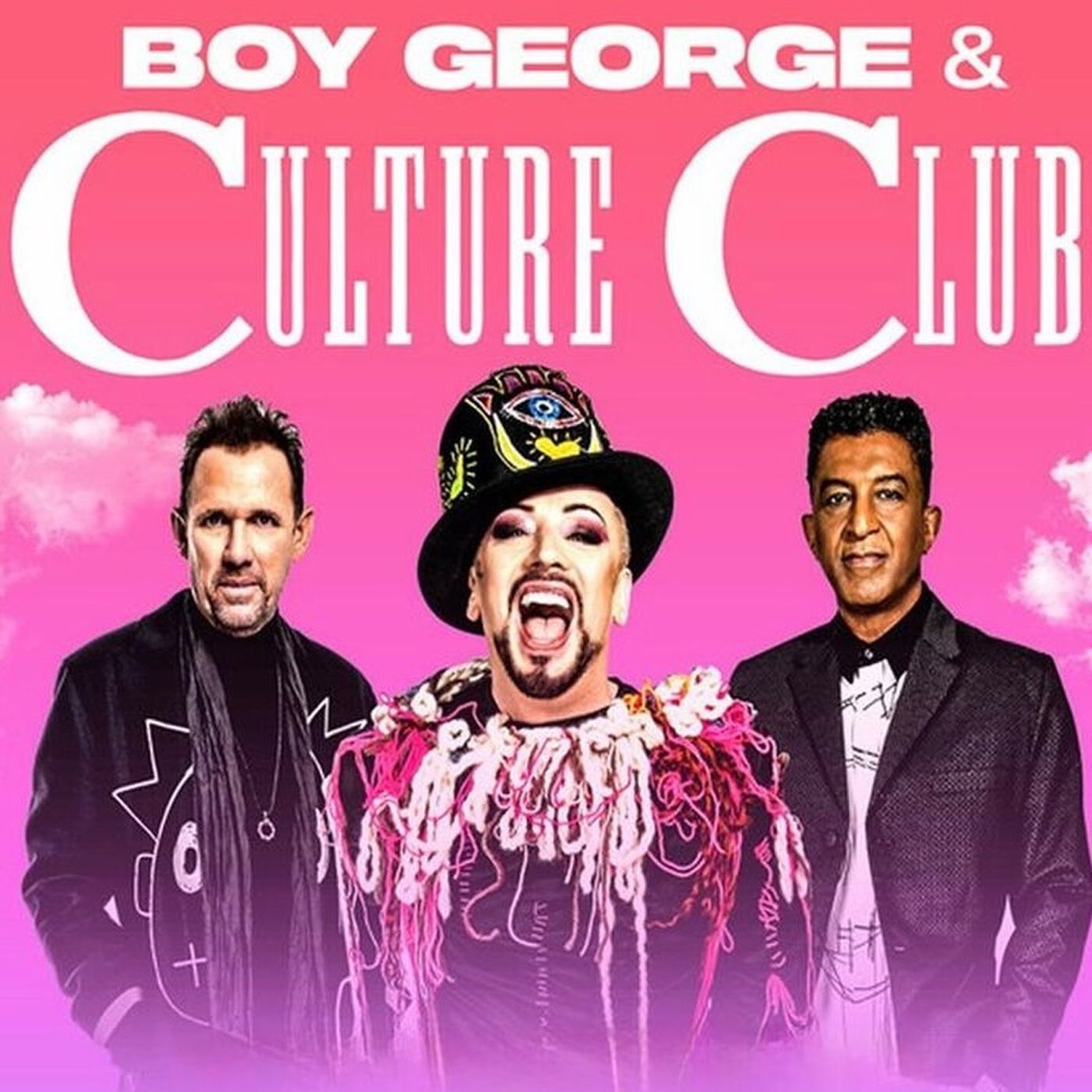
Special Report: Boy George and Culture Club (2025)
About this episode
The conversation explores the joy and challenge of building music documentaries, why some stories are best told by the artists themselves, and how editing ultimately discovers a film's true shape. Ellwood also discusses Culture Club's unforgettable MTV presence, Boy George's groundbreaking public persona, the band's deep catalog beyond the hits, and the electric response to the documentary's Tribeca premiere. It's a lively look at the magic of collaboration, the power of pop music, and the enduring legacy of one of the 1980s' most iconic bands.
Transcript
Automatically generated, so expect the odd misheard name.
Oh ye is bot, it's showtime. People say, good money to see this movie. When they go out to a theater, they want clod Sodas pop popcorn in no Monsters in the protection booth. Everyone pretend podcasting isn't boring it off. We were the biggest band in the world at one point.
When you first encounter fame, it's such a distraction. It's like a runaway train. It was like a dream. I loved being pop starts. It wasn't easy for me, and I particularly like talking about the bath.
Culture Club has spread its name and its music all over the world. We were really just bonding as a band and having a great time. I saw I don't know what's happening here, but I knew my life was going to change. I just think it's everything wearing the right hat at the right time in the right place. I've always been interested in kind of looking different.
The media went nuts. Is this a guy as a girl? And what the hell's going on? You know? And it all became about what I was wearing, and very little to do with the music.
The music of Culture Club is what selles Culture Club. It all became about George. Were we not on the stage with him. Were we not there? That became quite difficult for myself.
There was a resentment I think with the other two. Maybe they thought me and George were too close. It was love at first sight. They call a gender blending, and it's shocking to a great many of us. I remember seeing all the protesters outside the gigs.
All of that stuff just made us more popular. Somehow, the universe just put us together because it was really proper love. She was was the last person I said we'll get into drugs. It seems like it happened overnight. I'll be honest and saying at that point it was me causing all the trouble.
I would see things never happen the way you think they see. It's kind of been insane. I feel like it was destiny. Hey, folks, will today special episode of the Projection Booth ham your host Mike White. On this episode, I am talking with Alison Elwood.
She is the director of the twenty twenty five documentary by George and Culture Club. I thought it was The Culture Club, but Culture Club. It is a wonderfully entertaining documentary about boy George and Culture Club. She gets some absolutely terrific interviews from the guys in the band. Hearing some of these songs again, they are just bangers and you really cannot go wrong with some of these songs.
So this really took me down memory lane. It was a really a great trip to see what was going on in the early eighties when boy George came on the scene and just the effect that he had on the culture. Wonderful, wonderful doc. I had a great time watching it, and I hope you have a great time listening to our interview. Thanks so much.
How did you get involved in filmmaking in the first place. As a very young child, I was obsessed with National Geographic magazine. I wanted to be a photojournalist and travel and take pictures and ended up as a documentarian. So it's pretty close. Do you choose your subjects or do your subjects choose you?
It's a bit of both. Actually, Sometimes I get approached quite frequently, especially now with so many music docs under my belt, a lot of people seek me out. But I have also gone to artists that I've wanted to work with, and so that's a bit of both. What is it like for you when you get an assignment and say, like a Cindi Lauper or something. How do you start to sort out some of these life.
First all, I started out as a fan of the music. Usually I love music, and every film I've worked on about musicians, I've been a fan of the music. So I know the music and I know a bit about the story. So I researched the story, and then we start having a dialogue with the artist. Like with Cindy, we had several It was during COVID when we started talking about it, so we did a bunch of zooms early on, and then we finally finally grew to do it and we set up an interview and we went from there.
Is there ever a danger of falling out of love with the music? If you hear these songs so many times while you're working. Sometimes you get a little tired of it. But I do not really know. I find the music really quite joyful to listen to.
Actually, can you tell me about the Boy George documentary? I'm so curious how that came to be. When we did the Cindi Lauper documentary, we interviewed George for that because they were good friends back in the day then, and you know, it just seemed like, Wow, what a natural thing to make a film about Culture Club, And so we started talking to George and his manager and so we got the ball rolling from that. Was there any hesitation for many of the band members to be part of this? John was the most hesitant because of the sort of the fallout, but once he agreed to do it, he was incredibly forthcoming.
He was the last one of the band that we interviewed, but he was amazing. He was just so forthright. I thought it was going to be like having to pull it out of him a little bit, and he was just Once he decided to do it, he's I'm going to go for it, and he did, and he was really straightforward, honest. And the thing I loved about all the those guys, they're all so funny. They really are funny.
They must have had a really good time together when they were getting that's there's a lightning in a bottle, those forces that come together, and they randomly happened. Mikey asked Georgia, and you want to be in a bandy? Yeah? Sure? And then they went from there and they got John and then they got Roy eventually, and I don't know how those things happened, but they do happen.
There's just magic in the air, and these forces come together and form something that's very unique. And that's I find that with all the different bands that I've worked with, It's just there's no real logic for how it happens. It's just kind of magical. How big of a fan of Culture Club were you? I was a big fan.
I hadn't listened to the music in quite a while. Actually, I'm obviously familiar with the big hits because you hear them more frequently. But what I was reminded of is just how many really great songs that they had that didn't get the same exposure some of the big hits. They really wrote some beautiful music. What kind of influence did they have on MTV and vice versa.
Their videos were pretty wacky, even my MTV's standards. They kind of made no sense. I mean, one of my favorite songs from one of the later albums is the Mistake number three, and that video, which is in the film, it makes absolutely no sense. I mean, so does a riverboat for Karmacamelia. I mean, none of it made any sense.
So I don't know. I think they were just doing music videos because money was being thrown at them to do it, and it was what was being done. I don't think that as much went into what the videos were representing in terms of the music. I don't know they even the band members, all of them say that the music videos were, for the most part pretty out there. I remember people like Bowie or Grace Jones, but it felt like George was the most out there when it came to the gender bend length.
And I'm curious what at the time was the reaction that people were having to this kind of utra figure. I think in Britain those sorts of characters are much more ingrained in the society and less shocking than they are to an American audience. And I don't think the American audience really paid too much attention to it until he at the grahamy Ward said he was you know, no good drag queen when you see one, and then suddenly there's all this uproar is just because he said it out loud. And then I love when he's on cars and he goes, let's have liberaci. I mean, really, you're gonna point single me out.
It's misifying to me why that's such an issue for me. What are you saying that Libraci was was something wrong with him? No, not at all. Yeah, there was a bizarre moment was that whole pointing out that he's a drag queen him himself saying that it felt like the scales fell from somebody's eyes, you know exactly. It was like suddenly it was just shocking, and they're protesting the concerts and it's just bizarre.
But then they still love to go to the concerts. There's a story that John tells about seeing the sign with the stick figured men behind one man behind the other and saying, oh, this is bad, but oh we love Culture Club. And you're talking about how funny these guys are. Were there any subjects that they were hesitant to talk about? Some of George was hesitant to talk about his friends who died of an overdose, and I fully respect that, but that was really the only red line there was, And I get it, It's like you don't want to We weren't going to delve into that as a big story.
It was just like a moment that was horrifying for him and obviously tragic for his friend. But no, they were really forthcoming all of them, I have to say they were really delightful to talk with and even some of the tough stuff it was hard for them, I think, but they were honest about it. When did you have your premiere for this? That was it Tribeca last summer, so about a year ago. And what was the reaction to it?
It was fantastic. It's a fun film to see with a big audience because it just gets people like really up and going. And again, the music is just a reminder of how much really good music they put out. And the voice, I mean, the music's amazing. George's voice is just angelic.
It's just really kind of spectational. Yeah, there's one moment in the film where he's just singing completely acoustically and I was like, oh my god, just the power behind his voice so good. And then when he and Helen are together, it's whoa. Yeah, that was wild and I'd forgotten what a major part her voice was to everything. Yeah.
Absolutely, the sort of unnamed fifth member of levantin. Just the music itself, like you're saying, is so great and just so catchy. Church of the Poison Mind has been stuck in my head for the last three days since I saw You. Doc Yeah, one of my favorites of their songs. I was thrilled that my brilliant editor, Paul Carlin figured out a way to start the film with it.
It's great you're doing a music documentary. You can't throw everything up front. You really had to be very judicious when it comes to when you actually use these songs, because they were like almost like weapons at your disposal. I have enormous respect for editing and editors, and I've been very lucky with all the people I've worked with, and Paul was no exception to that. He was just amazing, and anytime I would say anything as a director, he get mad at himself that he didn't sing.
Because I think the films are made in the editing room, and as a director, you can have an idea of what a film is, but it's really discovered in the editing room. So I like to give the editors a lot of freedom. But we worked closely together. Once I let them lay something out and then we have dialogues about it, and all my notes for him were incredibly supportive and positive. It was just like little things.
I remember one time when we were working on the Eagles film, I was working with two other editors and we were screening a cut for Ton in Glenn and it came running into the office two hours before they're there, and I'm like, guys, we have them releasing an album before they write a song. We've got to flip it around. Whoops, whoops. Yeah, you just get so into it. You got and you know the story so well that you and you're seeing it at that point when you're rushing to get it done, you're seeing or get it ready for a screening.
Rather you're seeing it in sections. And I'm like, when you watch it all day through you whoa bigs. For Probably when I write stuff, I have to put it in a drawer and come back to it later on, just to have fresh eyes. Do you ever run into that when you're so close to a subject into a film. Unfortunately, with budgets and schedules, you don't often have that luxury of being able to put it aside, but certainly scenes we put aside and say, look, if we can't figure it out, leave it, we'll come back to it.
The beginnings and endings of films are the hardest things to figure out, and you either get it the first try or it's the very last thing you nail. Were there any folks that you tried to talk to that you weren't able to For this one? We wanted to just talk to the band on this one. We wanted it to be totally from their perspective. The music is about them.
The songs George was writing, the lyrics George was writing, were about John and their relationship, and it was very personal. Why are you gonna have someone from the outside comment on that? No, it's right. It was an insular story and I think that those were the voices to tell it. What are you working on these days?
Just finished up a couple of things and have some stuff in development. But people are a little slow these days to pull a trigger on things, which I'm hoping will change soon. But there's some stuff in the hopper that I'm excited about. Miss Elwood. Thank you so much for your time.
I really appreciate this. Thank you, Thank you so much. The man mathing your asy, making the glass step out, laugh shout, sorry, as glass. First would need to say. To people to come to laugh on me?
Ready, then what you fanchup cold Sunda? What you tay to the be? You don't have that to make game. That didn't need to save me. Just make your thinking in your famer.
Who would be there to maybe it. Just seem just thinking. That's please And make a lamp. Last telepos type that's not me in your eyes, you've made my life. So see.
Step by T. Fun char so your eyes fast dust. To the same kid. But we just can't stay to abouthrom me. It's something you found in the top.
To talos. Fo to te to tell, to topical. Talk. I want you to tell looking out a love, not to time or Exp
More from The Projection Booth



Similar episodes across the network
Matched by shared keywords.
-
Ch-ch-ch-changes: The 20 Most Revolutionary 80s Music Videos, Part 2
2 shared keywords: cyndi lauper, mtv
-
Jackass: Best and Last (2026) — "Welcome to the first day of our final film."
1 shared keyword: mtv
-
Ch-ch-ch-changes: The 20 Most Revolutionary 80s Music Videos, Part 1
1 shared keyword: mtv