
Season 1 · Episode 642
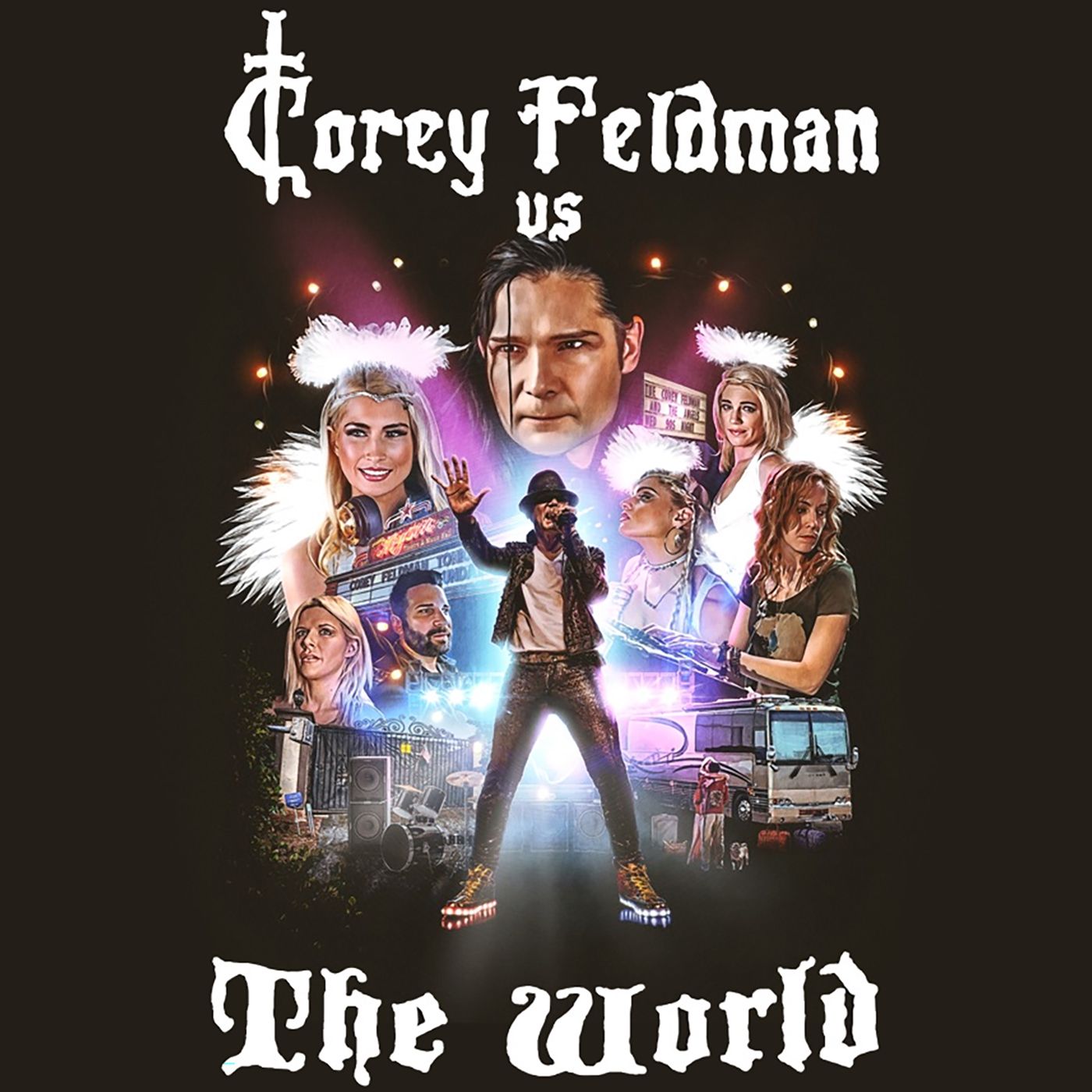
Special Report: Corey Feldman Versus the World (2025)

About this episode
Hume has said the film was never intended as a hit piece, and the documentary bears that out. It presents testimony from Feldman, the Angels, his then-wife Courtney Anne Mitchell, and fans who attended the shows, letting events speak for themselves. What emerges is a portrait of a deeply damaged person caught in cycles he can't seem to break — part tour film, part cautionary tale, and part document of Hollywood's long history of failing the children it exploits.
Learn more at https://www.coreyfilm.com/
Transcript
Automatically generated, so expect the odd misheard name.
Oh he is bot. It's showtime. People say, good money to see this movie. When they go out to a theater, they want clod photos, hot popcorn, and no monsters in the protection booth. Everyone pretend podcasting isn't boring.
Put it off. All right. If everything goes right, a solo light comes on me. A lot of people think, well, he had all these big movies in the eighties and that was like his hot point, and now it's just kind of, you know, him trying to stay in the limelight. Come on, guys, let's not spend all night and heard of these lights.
Look, this project is a to be like the biggest thing. In the world. I never played your electric bass in my life. So if you're for the dark Side and you're a satanist or a cultist and you want to sit there and be dismissive about my art or what. I do, it really is the worst album of the year.
Let's put it very simply. I'm a light worker. We're sweating and on a bus, dude. I spread positive messages. I spread love and light.
Cory's Angels, which is really a cult, his. Little system of just disgusting behavior. This cult, I love it. I'm all about it. Then if it's a cult, Corey, if you're going down and you don't even.
See it, like you don't have true No, what is a contract? Say? I'm drawing a line in this end. That is what God told me to do. He needs boat words the city.
It frightened the girls so much. Why are you sitting down talking to me? Why aren't you sitting down with the police right now? He's basically just a walking target. I'm sorry.
It's not a Lolita costume. It's an angel costume. It makes you look beautiful. Do you ever feel like a Lolita wearing your costume? Dear, No, I don't even know what a Lolita is.
And that's just the way the creaky grumbles. Hey, folks, welcome to a very special episode of the Projection Booth. I'm your host Mike White. On this episode, I'm talking with Marcy Hume. She is the writer and director of the new film Corey Feldman Versus the World.
It is a look at Corey Feldman and his rock and roll tour with his lingerie clad angels, including his potentially ex wife. It's a it's an interesting movie. It's I'm familiar with Corey Feldman in real life, not Corey Feldman from the movies. If not, you should probably get familiar with him. And if you are, you're probably interested in seeing this if you haven't seen it already.
Yeah, Corey Feldman very interesting, interesting dude, And that comes through a lot in this documentary. It was a little car crash ish as far as having to look at this and not being able to turn away. Yeah, we get into it a lot in this interview. I think hopefully miss Hume had a good time tech with me. I know I had a good time talking with her, and I hope that you have a good time listening to this interview.
Thanks so much, enjoy the show. Can you tell me your history and how you got involved in show business? I love it when people say show business or Hollywood or any of those words, because I just don't think of it that way for some reason. But I suppose that could be tech true. I was always interested in a huge variety of things, and I did not go to film school or anything like that.
I really just when I. Saw that documentaries were a part of life that one could be involved with, I really just fell in love with them. I think a lot of people have had this experience, and I think a lot of us grew up with this messaging that we could do anything we wanted to do, and you can be whatever you want to be. I don't think we embody that or really know that that's true. Or how to do that.
And I encountered someone once who was a director at the BBC, and I just was flummixed that this person was a director of documentaries, and I thought, Oh, maybe that's actually something I could do. I just hadn't even crossed my mind. So I applied for a work experience at the BBC and really just bludgeoned my way into the industry. I just worked super hard and made it happen. So I've been doing a million things before then.
I'd been writing as a journalist, and I say that very lightly, parading as a journalist and writing for kind of really small papers, and doing all manner of artsy things, working in off Broadway theater, all sorts of stuff. So I just really fell in love with it and really have not stopped working in that realm since then. I'm so curious about your history with reality TV, because I know you've actually worked on some shows that I've watched before. Oh good, it's funny. I was just talking with Penny Lane, the documentarian, about the term reality TV, which I think is going to die out eventually soon.
But it's just a word that is so to me. And please do not take offense to this mic. But I find it to be pejorative at this point because I just think we started using the term reality TV for lack of a better term, and to loop together this grouping and this trend in television, in unscripted television, and I don't think any of us really know what it means. But I think it's dying out because there's a it's associated with inauthenticity, and now we're in a phase where audiences really want authenticity and networks are following that very much. Anyway, there's your speech on reality TV.
But in terms of my TV life, I've worked on such a wide variety of shows, both on the production company side, and then I got a network job many years ago, and that has been a whole other experience. It's super interesting and fun, and you just learned so many different things along the way, and learn how to operate the way, learn who you want to be. I think really in this sort of industry. That's how I feel about it certainly, and who. I want to be in show bills and how you want to treat people, and I think all of that is really important.
So I still really have a place of my heart for television for sure, But I think of it in this country anyway. I think of it as really different from making documentaries. In the UK, it's very much closer to one and the same, but here it's a very different pursuit. Like you said, unscripted, some of it does feel very scripted. I used to watch what was that Gene Simmons show where is Sali Jewles?
Yeah, yeah, Family Jewels. I was like, okay, this is just I love Lucy with Gene Simmons instead, because all of these scenarios seem so contrived. Yeah. I think there was a huge phase of shows where they would take elements of real life or or elements of unreal life and create these kind of fantasy realities. And that's where the kind of boom or one of the booms of reality TV came from.
So that that's a whole other topic that I'm interested in. I wouldn't say it's my greatest passion to think about reality TV. But I do think it's it is fascinating that we don't. We don't have different terminology or enough different terminology to differentiate, and we kind of presume, especially as viewers, if something is a documentary, it is truthful. If something's reality TV, it's not truthful.
And there are these kind of lines in the sand that are much much more muddy and abstract than people think. So I think better terminology to begin with would help us with that conversation and that consumption of material of documentaries. How much of Corey Filman versus the World is real versus not real? Oh, it's entirely real. I never asked anybody to do anything.
I never scripted anything, that's for sure. I don't think I even asked anybody to pick up shots. Sometimes people even get annoyed if you ask somebody to redo coming in and out of a building to get that sort of shot. I don't even think I did that, and not that I have any sort of ethical problem with that. I think if you need to pick up an insert or get something, I think that's totally fine.
But it's all just me with a camera being in that world and Cory and I talked about that very much, because we had made a TV sizzle together that was more on the TV side of things, where we were like, Okay, what can we film that sort of embodies his Corey's Angel's business. It was a little bit different, and we agreed in the beginning that I was going to be very much fly on the wall or bird on the wall, as we've come to call it, and just just be there picking up what happened and not try not to have any influence. I think you always have. You imagine that your presence there inevitably has some influence on people, and that's just part of the I don't know part of just what happens with the nature of having a camera there, but I was just with my camera just capturing what happened, and it was it was tremendous.
So how did you meet Corey and how did you start this documentary process? I reached out to Cory's management or I had my head of talent at the production company I was working with at the time reach out because I was so fascinated by what was going on with Corey's Angels and his music videos, and I thought, I'm going to make something amazing from my life in television. And that's one of the amazing things about documentaries. I have to say, if you're someone that has an interest in a huge variety of things, you get to do that you get to dive into an incredible array of pursuits if you're lucky and if you play your cards right. And so we reached out to his manager, and I always remember this that the first of his managers that I spoke with said, the first thing he said to me was Corey is a train that never stops going off the tracks.
And I thought that was such an extraordinary thing for a manager to say. But I thought, how great that he recognizes that and he understands that that's going to be part of the recipe of dealing with in filming Corey, and that he understands that that's an asset in filming with him. So I met with him, met with him and his management. At the PF Chang's and Sherman Oaks and the Sherman Oaks Galleria, which at the time I remember thinking was very funny. Just couldn't believe we're meeting it at PF Changs.
That just developed a relationship from there and talked with him about what the process would be like and went through the whole process together, and it was I think something around two and a half or three years between the beginning of that, like meeting him and doing that whole tape and getting to the point of starting the documentary. When would you say that you started it proper. I started the documentary properly when I filmed his wedding, which is the first scene of the Yeah, that was definitely when it was like, this is the phone call and the go ahead. I watched the documentary again yesterday and it feels like a time capsule. It feels like it takes place in a different age.
Is that accurate. I think of it as a time capsule for sure. And we thought about that a lot. And when we partnered with Jim Cummings to put this movie out finally and to get it out in the world, we made that decision that we had to cut it off at a certain point because the story can just go on and on. And I think this is really right for most stories that are in the present tense.
It's like you can just go on and on and include so many things, and the branches of a story or a theme could reach so far, and we just decided, this is a moment in time, this is something that happened, and this is the world that we were in and everything else outside of it, especially with Courtney. The divorce from Coreotny was so intriguing, but we thought, we're going to leave this here. We have a little kind of moment at the end that suggests that they have broken up, but that's about it. So it really is a time capsule, and I think that's it. You hit the nail on the head.
How do you prepare yourself mentally for going into this, because it just feels like you walked into insanity. I don't think there is any preparation other than knowing I had obviously been in the business of making documentaries, and I think knowing how you want to be with people. I really think that's what this sort of process is, is just being with people and knowing how you want to be with people, and being straightforward with them about what the process is, and then knowing how you're going to just keep an eye out for what's happening. But there really was no preparing myself for what this whole process was and has continued to be because it is absolutely unpredictable and frenetic. There are pieces of that world that have no basis in reality, so there is no controlling it.
There's no going back to a fundamental reality because it's not Yeah, it's based in the mind of a person. So it is a very difficult world to survive in. In that sense, I felt like you should have been getting hazard paid for some of those scenes. God, I'm always really grateful when somebody says something like that to me and is thoughtful about my experience there, So thank you. That's very kind of you.
I obviously put myself in that situation and was just bound and determined to do it. But it was bizarre and it was strange, But I think I was just so focused on it at the time. I didn't think about anything. Other than capturing the story in the most interesting way possible, because so much was going on and it was so captivating to me, and you just want to do right by the story. How many people are on your crew or is it just you shooting solo?
It was almost entirely me shooting solo. There were a couple of days where I had a DP Brian Dahl, who I love very much, who came along with me to I think the first gig at the coach House, and he did one interview, but I think the only real sit down interview we did Brian did with me and then Star Rosen Krantz, my producing partner and kind of filmmaking partner on this when I went off to New York to start a job and he was in Los Angeles, so he did some filming with Margo that you see in the movie, and a couple of other things, like he went to the premiere of Corey's documentary and tried to get some things there, And that was the beginning when we realized that Corey was no longer interested in participating because he was not sticking around when Star was trying to film with him.
But other than that, it was just me and my little Canon five d rigged up with a top mic and sometimes one love when Corey or others would let me put a law on them, and just making it work. Because the circumstances, I didn't have time to lament not having a crew. I wouldn't have been able to have a crew. I didn't have money for a crew, but it really didn't matter because I was for the most part either on a bus or an RV, or moving very fast through crazy circumstances, or going up into hotel rooms really quickly on the move, or going backstage at talk show recordings or whatnot, and it was just all entirely phrenetic. So I think it just worked out that the only way it could have worked out.
How long were you shooting on this, because it's tough to tell just how long all of these events take place. It's tough to tell for me, Mike, I should I should have done a forensic analysis on it by this point so that I could say it's started in twenty sixteen for sure, and then it's the end is somewhere in either twenty seventeen or twenty eighteen, so I would have to look at the footage and see I always say it was about a year. It was somewhere around a year basically. And then there's that little coda with Darcy that was some time after that, which I walked into just as a little ketchup seeing I can't even remember how that evolved, to be honest, but I had no idea what I was walking into with that little ketchup with Darcy.
And it was a mind blowing moment for me. And what you don't see in that scene is Darcy and I talking through the fact that it was just totally blowing my mind that I had no idea that there was a whole other world that I hadn't been privy to and just hadn't seen, and that was just really shocking and hard to manage. And honestly, that's still ongoing now because I wasn't consistently in touch with everyone during the editing process. It was very long and the process of trying to get this movie out, and since reuniting with everyone, there have been so many stories and so much more that has come to light now that everyone's moved on so profoundly and significantly, and they feel out from under these draconian NDAs, and they've been able to really be honest and talk about things that were going on.
So it's like a different world. It's like seeing everything through an entirely different viewpoint, and that has been revelatory and terrifying and confusing and something I really have to grapple with. That's going to be really tough. You're in a position where you're supposed to be privileged to information, supposed to be presenting information, but you're not getting all that information. That's going to be really difficult.
We're extremely proud of the movie that we put out and it's fascinating to see. We got to review the other day where somebody said they thought it was very much from the point of view of court, like too much on the side of Corey, which is one criticism that people make, And then of course people make the opposite criticism that it's that it doesn't show enough of the other side. Whatever it might be. But of course we made the movie that brought to light what we had at the time and exactly what I captured and exactly what my viewpoint was through the camera. But it is hard not to look back and think what it might have been like if, for example, somebody, even one of the women, might have spoken to me a little bit more openly because they didn't necessarily feel as hemmed in by these NDAs, which a lot of them after the fact went to lawyers to understand exactly how viable or non viable those NDAs actually were.
There are a lot of. Things that could have been different, and it's impossible not to think through those things. In the end, but I think we worked so hard on this particular. Movie, and what I do still really love about it is that it takes you into that world in a very entertaining way, not in a super dark expose a world which. I think we've just seen so many times, and I think to be.
Lulled into this world in a different way, to be taken in through shock and awe and entertainment, and to have the page turn in a different way, it makes me feel very satisfied that we approached what could have been a little bit of a cliche story in a different way. So we'll see, we'll see where things end up, but for now, I do feel proud of where we landed, even though things are so wild, but too discovering what was going on that is pretty wild. As a complete outsider and just somebody who's grown up seeing Cory throughout all of these years, he broadly just a few years maybe older than I am. I remember seeing him the way back in time after time where it was just a little tyke. Now he already brings darkness to things because it feels you can just sense the damage from him every single time you see him, and you just are like, what the hell happened to you to make you this way, because it feels like he's all over the place.
So it's like there is that darkness that he just brings inherently with himself. I agree, And I think Rob Reiner spoke about this in talking about stand By Me and the way that he cast those characters. And that Corey at that point. In his life even was so angry about his parent and the way he had been treated, And there is an intense darkness there that he carries with him. And it's fascinating to imagine how, yeah, this psychological world that he's built around him to cope with that, and the way that he handles things, talking about things being on the dark side, talking about people being Satanists and villainous.
It's a very fascinating, very. Stark, coping mechanism to have built this world where things are very light and dark, very black and white, and I think it's fascinating to see to observe that world. But yeah, there is an intensity there for sure, and that you see that play out in many many ways and iterations, some positive, some negative. I didn't pursue this story because I knew i'd be talking with you eventually, but what was all of the hubbub going on when the movie was coming out. There were accusations that you had filmed him without his knowledge?
Is that what I remember reading. Yes, that's been his full take on this movie. Quite extraordinary, is that he did not have knowledge of it, and that it is stolen footage. That's another one of the claims. I mean, it's quite incredible because there was a time right over the holidays when he was putting out these statements through his lawyers that the footage was obtained through dishonest means, really intense statements, and we put out a clip showing him take the camera and he's saying, this is Marcy.
She's the documentarian living on the. Bus with us. And it was the most brief, pungent moment of him just saying, look, this is the documentary being made. Because it just put all. Of that to rest, because it was so silly and bizarre, because he was absolutely part of We were together every day that I filmed, he was there and he was part of it, and he would text me about places they were going to be and invite me in and all of those things.
So it was just so unreal to think about that, how he could rationalize in his mind saying those things. It just made absolutely no sense. So I still don't know, but I guess it's a matter of human psychology and the fact that you can make anything sort of a reality in your own mind. I'm not trying to defend him, nor do I want to put myself in his shoes, but I'm curious. Had he seen the documentary before he went on this tirade.
Oh no, not at all. He had asked me for the foot He asked me if he could have my footage way back in maybe twenty seventeen or twenty eighteen, something like that, And I said, I'm so sorry, Corey, I just can't give you my footage. I've spent tens of thousand to some dollars of my own money. I spent a year of my life not working, like, not taking a proper job. This is my life, my work.
I just I can't just do that. I'm so sorry. And we had a great relationship at that point. I genuinely felt I thought it was outrageous that he was asking me that, but I also just felt bad because I would love. To do that.
But it's just was absolutely impossible to do that, and then I just didn't hear from him again, and he was running away from the camera, and it was unfortunate. I knew I had to finish the movie because it wasn't just his story at that point. If it had been somehow how a biography of Corey, or if it had been just about his life only, I think that would be very, very different. But this was so much about the tour, the women, a larger story about his impact on the world. To me, it's also very much about this kind of trend of fame and how it emboldens people to behave in a certain way.
It just had become about so much more that felt that it would be outrageous not to finish. It at that point. So I decided that we were going to tell everybody at the same time that it was finished, because that just felt like the fairest possible thing to do. And that was out and that's how it played out. Now, you said you were out tens of thousands of dollars here.
I'm just so curious how much did Marilyn Manson pay you to make this? Those claims are incredible, and we see there's an amazing podcast called Jim and Them, which at first I did not go on whatsoever because I thought they were hilariously anti Corey, which of course they are known as the Anti Corey Pod in a ton in Chek Way, and of course, on further exploration, that's not the case at all, And they're incredibly funny and they have their great observations. But through them, I've also been They helped keep me very caught up on a lot of things, including a lot of Corey's allegations, and he will Krey will continue to make new allegations. That somehow everything is always tied together. You know that somehow we've all been working together, we are all part of some group of people.
And I remember this happening when I was filming. Corey was very focused on the wolf Pack, which is not a storyline that we included the movie, partly because it was so difficult to explain that he really thought that a small podcast was responsible for his demise. It was so out there that it was almost impossible to tell as a story. And I still go back to that all the time and I talk with people about it, and I say, can you really explain to me what you think the Wolfpack is like, is the Wolfpack really this podcast run? Because it's just so out there?
But so he really. Will create this land of nemeses that we are all tied together, that Marilyn Manson has paid people to do it, and of course there is just never a lick of truth to any of it. It's I just was a lady who makes documentaries who got very excited about the idea of doing this, put a lot of my own time and resources into it, and that's that. I know it's not a super sexy story, but that's it. There are so many podcasts called the wolf Pack, because I've had dealings with a podcast called the wolf Pack.
Who are these people? Yeah, Body Wolf was the og Wolfpack who was doing podcasts at the time. I remember he was interviewing folks from the tour. But it's funny to give somebody to gift them the idea of that much agency and responsibility for something is a really incredible choice, you know. There was also there's another moment that didn't make it.
Into the film where Corey was at a stoplight in Los Angeles and I don't know if it was a road rage incident or what happened, but somebody got out and I guess he was poked in some way, and there are photos of him in the emergency room. He thought that he was stabbed, perhaps by a needle, and of course he thought it was the wolf Pack. And again, I mean, Mike would love your thoughts on the wolf Pack here. But the idea of the wolf Pack being a podcaster that comes and does physical attacks, it's just too much. It's too much to bear.
But there are not a lot of reality checks in that. It's that world. But I feel terrible for and I always felt sympathy for what he was experiencing because in my experience of him, he was having actual psychological distress and believing that people were after him. And as I say it, I. Can remember these these conversations where I just thought, this poor guy really feels It's almost like the whole of a lifetime of people coming at you and attacking you in some way gets amalgamated into this metaphor, but he doesn't realize it's a metaphor.
Again, as an audience member, it's funny, but at the same time it's sad. In the whole time I'm watching this, I'm just fascinating between those two emotions. Absolutely, I think all of this is there are so many dualities like that, and that's what we tried so hard to let live in the movie was exactly that you go back and forth between this balance of things that are so funny and so dark, and sometimes they can exist as both of those things at once, and sometimes they chance sometimes you land on one side or the other. But it is really it really comes down to your own instinct. And your own kind of moment and mood.
And your own psychological assessment to decide where you land on these things. Do you see his documentary? I did, Yeah, of course I had to. What is it like? Because I haven't yet to track it down for better or worse.
It is like many documentaries out there these days. It's been a long time since I saw it when it first came out, and it is a pretty straightforward, not to talking heads, of course, because that's the default. I think of a lot of documentary making. These days, and it's you know what, I don't know how to describe it to you. I don't know why he doesn't have it out there.
I've heard or seen a lot of different reasons, so I don't know what the true reality is of why it's not out there, but there's nothing in it you. Can look up online. I mean the names the people that he names are people that have he has discussed before, and I always feel I don't want to tell other people's stories of abuse, but these things are in his book and you can look him up if you're super interested in this. But yeah, I don't know. I think I think found that documentary to be very important, and so I would always encourage people to go find it and get it from him if he puts it out again.
I obviously believe in. Getting films from the source, and you always want to try and do that. So I hope for his sake that he will put it out in the world again so he can enjoy the fruits of that labor. But I don't know. We'll see.
Has been the reaction for your film. It's been tremendous. It's been a joy to see so many awesome reviews and reactions. Really, it's been an incredible delight. I think it's so many people have understood a lot of the nuance and exactly what you talked about about feeling so many different things at once, about the film, not telling you what to think about about any particular aspect of this, and really.
Bringing you on this ride. And you also saying some people will write that, hey, Cory, this is not at all the hit piece that you claim that it is, because of course it's not. It presents so. Much of it from his point of view, but then also just brings in other perspectives and voices. So I have really enjoyed reading the reactions and reviews, and yeah.
It's just been tremendous. And there have been a couple of folks that have written so brilliantly and smartly. About it that I feel like they've articulated something. About it that I would not have been able to do myself. And that's always the dream.
Can you tell me a little bit about the post process, because like you said, I don't really feel that there's a lot of judgment and had to be very painstaking to make sure that you're presenting things kind of warts and all, but without extracurricular commentary. Adam Franklin, our editor, I just cannot say enough about. I cannot believe the work that he did on this film. And as soon as we started, it was during the pandemic that he came on board, and so she was, for better or worse, able to watch down all the footage and was he always talks about it like he was watching a TV show because he just felt every bit of it, because that world is so entertaining. He felt like he was watching episodic television and just checking out everything that was going on.
So we decided early on that we would really go through the kind of lens of my point of view on this thing that you're in Corey's kind of world, his push for this tour and a success, and you're naive in a sense to anything else that's going on. You're really rooting for him and you're just trying to make this thing happen. And that we would. You don't have to do a lot of work to let it be funny. But I do think Adam has some brilliant cuts in there, and I in working with him, I would just do a little bit of finagling of frames and suggestions that he did a lot, a lot, a lot of the very funny things that are in there that are whatever hard cuts or juxtapositions that are incredible.
He would just come with some incredible already cut scenes or ideas that were just great. So we did get to a point toward the end where his steam I think because he also did this, I never had any financing for this thing, so I wasn't able to ever get close to giving him what he deserved for this work. And Star Rosencrants and I would get together every Wednesday, go through shoot days, pull some selects, and do some rough stuff for him for Adam, and then say all right, let's bring this bit together. And and then we just did a ton of small screenings with industry folks and some regular audience members just to make sure that things were made sense and were cohesive. And we go in and out of a lot of dark stuff back to the really humorous moments.
And it took a while to really get that right. And even in the end our final legal pass, there are some things that would still change because we had to do some tweaks right at the end there for legal and I'm always a little frustrated, Oh god, we could have used a little more time, But by that point we were finally ready to get the movie out. So you didn't want to didn't want to stop that train. When did you get to see this with an audience. We saw it with audiences through all of those cuts.
But our big premiere was on December third at the Lows Phillies three, and it was so incredible. It was the best audience in the world, I have to say. It was so so full of life and so wonderful. And it was only a tiny bit stressful because Corey had sent a cease and desist the day before, to which we had replied a pretty simple letter saying that the season desist was baseless. And then as I was coming into the premiere, Corey texted me with a follow up letter to that, so that was a little bit dramatic, and Jim Cummings.
Was like, have fun this. Look, this is our premiere. This is none of that makes any sense. We got to just do this and it was a tremendous night and there were just Yeah, it really was incredible to hear the audience respond to every little moment that we love so much. When you get to hear people love what you love, it's the most satisfying thing in the world.
What are you working on now? I'm working on a lot of things. Now. I'm working on some things that I consider to be putting on the camera and going more direct to human experience. So I work on a lot of magic and immersive experiences, and I low the word immersive, but it's also the moment that we're in to describe it.
So that is a world that I've been working in for a while, so I consider it to be cinema adjacent, but. You just remove the camera basically think of it. But I'm also working on some other documentary projects. I'm doing a couple of shorts, and then I also have a couple of projects that basically merge a lot of different genres, so there's documentary in there merged with some other things. That's as much as I guess I can say, because they're early enough that that's as much as I can get to.
But thank you for asking. Is there a good place for people to keep up with you or the documentary online? I think our Instagram really is the best because we try to post as many little kind of outtakes and snaps from the film as we possibly can. So if you just put in Corey Filman versus the World, you'll find it. It's actually the initials of the film are the page, but just put in Kreyfilman Versus the World and you'll find it.
And then our website for the movie is just coreyfilm dot com, so c o r eyfilm dot com and you will find everything there that you have ever wanted to know. But it will be out and about there for rental for four ninety nine for. The foreseeable future. So if anybody wants to check it out, if you have a targeting or listening to this, I would love it. If you can help spread the word, we would love it.
It's just it's one of these indie films that could and it's so incredible when people help spread the word. It really is heartwarming and makes. Such a difference to us When people bother her to take a moment to write a review for us or spread the word to their friends on social media however it is, it really really means a lot to us. So we're really grateful when folks take time to do that. Marcie, thank you so much for your time.
This was so great talking with you. Thanks Mike, You're the best. I really appreciate you. Katty Katy Death hate to Clara. They try to beat you down.
And they want to the ground. They leave you looking. They're looking. They make it down. When will notice.
Them, they again they make you make from mother, do no matter? Notice that just when any thinks you know the love and what to God do shy drive from much the bosua. So run what they got. Baby, Let's go for Come on. We can nothing.
Less. I wouldn't have to ponish you, and I just punish you and you can eat until game become bad. You're not in the game. My jouney was dressed more than anything. You nobody.
Don't stand again, So don't tell the. Strain there to carry on and it calms down and love and don't notion my baby. Don't America, we got nothing baby. Got stop. Kiddy kiddy, how about that?
Then it shedding line Grady hit the cloud he said, Skirl showing me. I'm gonna get that manhetty kiddy, how about that line? Grady hit the clouds? See what this girl showing me? Well, because so she's got to do what's working too.
Much as set that skirts she's gonna do. It's tart talk. It's already got that drink biting my Let's go hit my block. What's funny is just working with us? Because if you let me tell you from this jump, give it up.
We're gonna blaze it. We're gonna blaze it. We're gonna go. God, don't carry go on and don't. Go to the joke polish to get the clar till It up there, kid shot, I get the tone on the bone till the phone on the
More from The Projection Booth



Similar episodes across the network
Matched by shared keywords.
-
25 Surprising Facts About One Day at a Time | Whitney Blake, Valerie Bertinelli & Schneider Secrets
1 shared keyword: corey feldman
-
Jackass: Best and Last (2026) — "Welcome to the first day of our final film."
1 shared keyword: documentary
-
Melania (2026) — "Here we go again."
1 shared keyword: documentary