
Season 1 · Episode 669
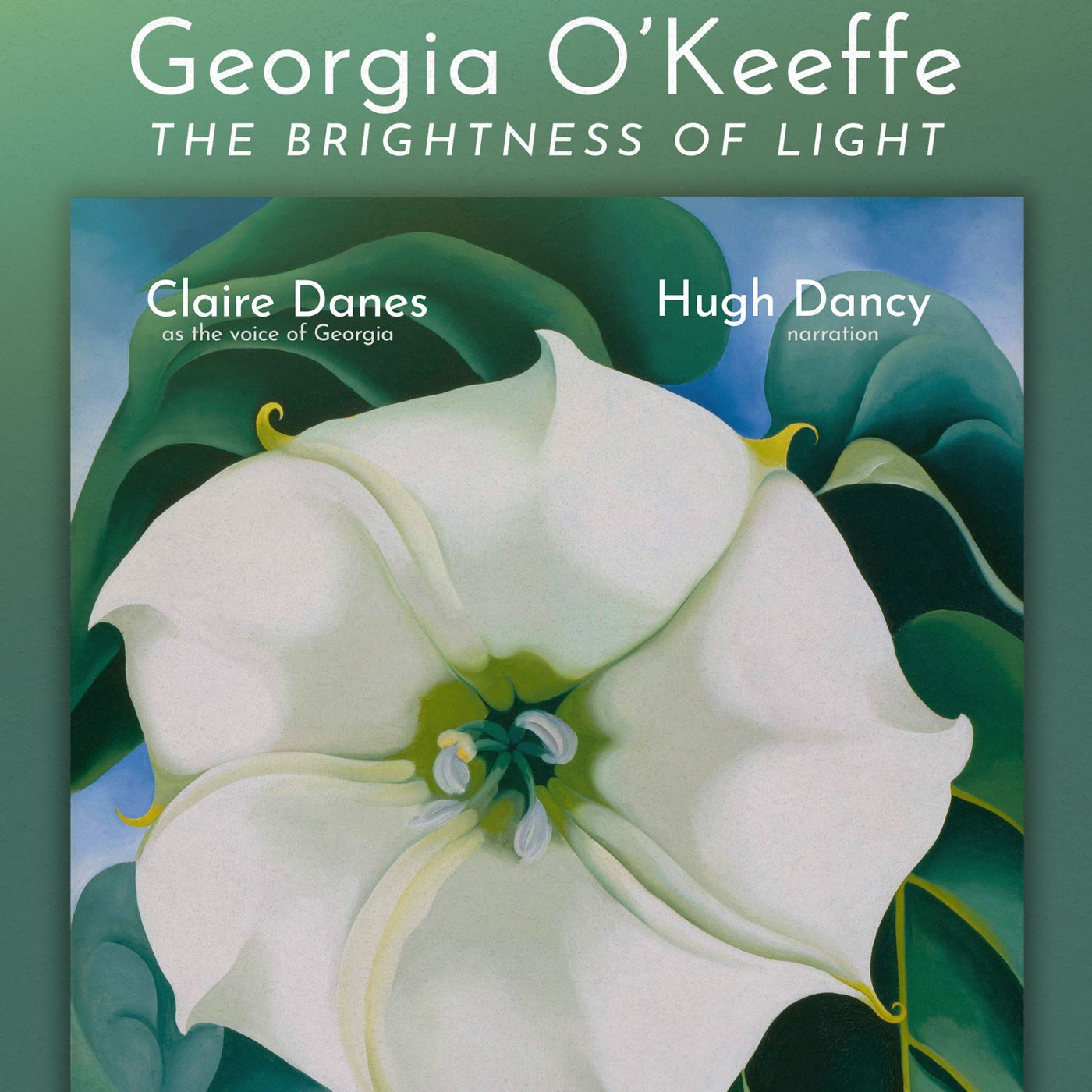
Special Report: Georgia O’Keeffe: The Brightness of Light (2024)
About this episode
Find out more at: https://www.georgiaokeeffefilm.com/
Transcript
Automatically generated, so expect the odd misheard name.
Oh ye is both it shull die. People say good money to see this movie. When they go out to a theater, they want cold sodas with a pop popcorn and no monsters. In the Protection Booth, everyone pretend podcasting isn't boring. Urn it off.
July ninth, nineteen twenty nine. I chose coming away because here, at least I feel good, and it makes me feel I am growing very tall and straight inside and very still. I have not wanted to be anything but kind to you, but there is nothing to be kind to you if I cannot be me. And me is something that reaches very far out into the world and all around and kisses you a very warm, cool, loving kiss. The degree of vitality and the energy that she captures in her work, which makes us aware of ourselves and of the fluids that run through us and of the forces that keep us alive.
I think that will always be appealing. I don't think she ever imagined that she would have achieved what she has achieved, and how important she is right now, very important. Right now, Hey, folks, We're going to do a special episode of the Projection Booth. I'm your host, Mike White. On this episode, I'm talking with Paul Wagner and Alan Casey Wagner all about their latest documentary, Georgia O'Keefe.
The Brightness of Light came out in twenty twenty four. It is a portrait of Georgia O'Keefe, the famous artist. Fascinating story of her, fascinating story of how this documentary got made. Had a wonderful time talking with the Wagners, and I hope you have a great time listening to it. Enjoy the interview.
Tell me a little bit about yourselves. I want to know how you know each other and how you decided to get into filmmaking, if you could. We go way back. We met in Washington, d C. In the eighties.
We were both living there and I was working in public television and then for an independent filmmaker, and Paul had been an independent filmmaker for some time. And we met at a reception actually at the National Museum of American Art, which we kind of love. Now. Then a few years later we got together and got married and started having kids and started working together all at the same time. Now we let's see, we were married for about four years and then we moved to Charlottesville, Virginia, which is where we still live, and it's how actually we got involved with the film.
Ohkeif lived in Charlottesville, did that? We didn't realize it was so important in her life and in her art. We have been there for many years and we were always aware that there's a house with a historic marker. Georgia O'Keeffe lived here. It's because her mother ran a boarding house there for UVA students back in the early twentieth century.
But she came here to spend some summers and took an art class at the university because at that time women were only allowed to take classes at the University of Virginia in the summertime, a summer school. She at that point had not painted in four years. She'd just given up on art, and taking that class changed her life. Got her excited. I did all over again about doing art.
She never looked back. By the next summer, she was a teaching assistant in the class and did that for the next few summers. So it was a really important time for her. So we originally thought we found out all about this at an exhibit at the Frailin Art Museum at the University of Virginia, and thought, we'll make a short film about this. No one really knows about this part of O'Keefe's life.
But then realized that there hadn't been a major film done on her in many years, and decided to go big, and that's what we did her whole life. Hey, I was. Curious what the origin of the movie was. It sounds like the short just blew up, huh exactly exactly. The other thing that we realized when we started looking at sort of what films had been made about O'Keefe is that there was a really terrific film made in nineteen seventy seven with when she was alive, with her on camera, and it's a great film and if you go on YouTube, that's sort of those are the clips of okeef.
There hadn't been a lot of films made about her whole life after that. And what had happened was after she died, she had put into her will that twenty years after her death, all of her correspondence between her and Alfred Stieglitz was to be released to the public, and a few more years it was edited and compiled and published and in reading it, it's just this incredible document that provides sort of this intimate, very personal narrative about her life because they were together for most of their adult lives. So that became then in a way you're thinking, oh, as a filmmaker, I wish we had Georgio keep on camera, But in fact these letters provided a kind of an entry into what she was thinking and feeling that actually is more honest and open than you would get from her in the film.
And of course we use clips from that seventy seventh film in our film, so it's kind of a mix of her on camera but also these letters which are read in the film by Claire Danes, These letters that are just really intimate and they allow us to kind of track her whole life in her own voice. Was that always the plan or when did that come into the play to say, oh, we're going to use these letters as this kind of narration device. Yeah, no, as soon as we conceived them that we were going to do the whole life and do a feature film biography. That was in the plan because in seeing that book, in doing our research, we had read that book and it's just incredible and it had no other filmmakers, no other films.
Battle Keith had used it also, so it was it kind of gave us a perspective and a power to telling her story. When you're doing a documentary about a person, how much do you have to work with the state in order to get clearance for the artwork, the narration, all these kind of things. Yeah, no, it's a great question. We had not done a film before on one individual artist, and we were really fortunate that we had a cooperation of the Georgia O'Keefe Museum in Santa Fe. They've been very supportive of the project and allowed us not only access to all of her works because they hold the copyright on almost all of her work, but also they allowed us to film in both of her houses.
So it was extraordinary and we are forever grateful to them because it just wouldn't have been possible without that. And then the artwork itself has got to be such a major concern when it comes to presenting it and making sure that it looks good and that the estate is approving everything too, I'm sure, and. There are hundreds of her paintings in the film. It's interesting now that we're showing it in theaters and to the public. So many people know about O'Keefe, and when they think of O'Keefe, they think about the flowers or the bones in the desert landscape, and those are important images for O'Keefe, but she was much more vary than that, and a lot of people don't realize, for example, that she painted the skyscrapers in New York, lots of scores of paintings of New York skyscrapers, which is very almost the opposite of what you think of when you think of O'Keefe.
Some of my favorite artworks in the film are charcoals that she did as a young woman that are very abstract, but they're just black charcoal on kind of beige or white paper, and they are incredibly beautiful and kind of really evoke her personality. And when you look at him, you go, this is O'Keefe. You can see that it fits into her ouvera of her work and fits into her psychology who she was as a person and as an artist, But hardly anybody's ever seen them, really. How aware of those things? For you?
Before you even started the project. I didn't know anything about the charcoals, Oh wow. And number of different kind of motifs is the word that you hear a lot kind of different clusters of subject matter, some that are not considered as important. But she did twenty eight paintings of apples because she was living at Lake George and New York and they had all these apple trees, and she always painted what was at hand. She painted.
It was out of her imagination in many ways, but it was more like her imagination's take on what was the objects that were at hand, whether that was a mountain in New Mexico or when apple fallen on the ground in Lake George. One of the things I always find fascinating about documentaries is just it's such a a process of discovery. It's a process of discovery for me as a viewer watching what you put together. But then as you being filmmakers, what was that process of discovery for you? What were some of the most surprising things that you found while you were doing all your research and putting this project together.
Well, I think for me, I had a very limited view of her and her life. I knew some of the paintings, mostly flowers, some landscapes, and I was astonished at how many places she lived. And we were very fortunate to be able to film in nearly all of them along the way, and that far from being this sort of recluse in the desert and the Southwest, she had a huge number of friends and she traveled widely, especially in her later years. She traveled all over the world, and I really had no idea that she had done that. It was all fascinating filmed.
Yeah, So we filmed the course in New Mexico, but also in Lake George in New York City. We went to sun Prairie, Wisconsin, where she was born, and her grandfather's house is still standing and the farmland is there. Her house that her family lived in is unfortunately not there any longer, but you could really get a sense of it, not that far outside of Madison, Wisconsin, as a sun prairie land where she grew up and they were very formative years. She early on was taking art and music classes. It was really important to her and it was amazing really to see that land and realized that it shaped her very early on.
Yeah. That where else did we go to beach? Oh? Right, York Beach Main She had gone there several times to paint, and we took ourselves up there and it was just and could just really sense why she loved it so much. There where else?
Oh, Texas? Of course that's Paloduro, Yeah, Paladuo Canyon and that canyon area, and Marillo she also taught, and that was her first real experience and of falling in love with that western landscape was when she went out there to teach, and that was fascinating to me. I really didn't know much about that aspect of her life either, and to get out there, there's nothing like that landscape and just incredible, the flatness and the vastness of it. And then this canyon, it just seems to come out of nowhere. And so she spent a lot of time hiking there.
Yeah, and of course here in Virginia. She actually hiked here in Virginia. And not Blueverige rountains. Yeah. How long did it take you to put this project together?
That sounds like so much travel of. It was a long project. We first saw that little exhibit that inspired us in the fall of twenty eighteen, and we developed the project through twenty nineteen. Early twenty twenty, we went out to do our first research in New Mexico and that was the week COVID hit the country and just turned everybody's lives upside down. We went to the museum a couple of times that week, but we went on the friday that we were leaving.
The next day we closed the museum. They closed their doors I think at seven pm, and they didn't open them again for two years. That's how bizarre the timing was. But in any case, we were able to continue developing the project and raising our funds through the worst of COVID, and then when we got vaccinated and people felt comfortable going out again, we were able to schedule our filming. We filmed our interviews and went on location to the places that she lived.
One thing about her with that first bit of information about her life here in Charlesville, which was that she had stopped painting. Ellen mentioned had stopped painting for four years. She had stopped when she was twenty years old. So about that. Georgia O'Keefe this brilliant painter, and she had been kind of a rock star as a teenager in Chicago and art school and New York and art school.
She won awards for her art. She had a ton of promise and people recognized her being really talented, and so there was every expectation that she was going to be the next great artist. But here in nineteen oh eight, she get disillusioned with her art, which was kind of like a still life and painting of a bowl of flowers, not the close ups, but just the regular flowers on a tabletop, and she got disillusioned with that kind of Western European approach to art making, and for four years she didn't pick up a brush until she took that class that Ellen was talking about at Uva, and that brought her back to life. But it also indicated to us that she was a very intense person that she would just with all of her success, that she would walk away from art because she was personally dissatisfied with it, and we saw that she had kind of a tumultuous life in many ways.
She stopped painting for a year in nineteen teen thirty three. She didn't pick up a brush for the whole of nineteen thirty three because she was kind of in a crisis of confidence. Might even say it was the nervous breakdown. It's hard to say because we don't have any kind of medical diagnosis of it, but she was troubled a lot of it around her very challenging and difficult relationship with Alfred Stieglis. That was clearly a big part of it.
So in a lot of ways, you know, all of us who are not great artists, think, oh, Georgia O'Keefe, Picasso, all the great painters masters. Every time they sit down and paint something, it's going to be a masterpiece. But you realize in looking at Georgia O'Keefe's life that she was very vulnerable, very insecure about her work. Even at one point she burned forty of her paintings because she wasn't sure that they were up to snuff, that they were good enough, and she had kind of a crisis of confidence about them. So you realize, no, she's not even though she's a brilliant painter, she's not an all powerful artist person.
She's a human being just like us. And in some ways, Georgia O'Keeffe especially, she's such an iconic figure that we all look up to and idolize and put her on a pedestal. But one thing the film does is it tries to de mythologize O'Keefe and remind you that, no, she's a human being, and we think that's a good thing because then as viewers, even though we're not the greatest artist in the world, are the most talented person, you can look at her and realize she's a human being. Also, just like I am. Going back to the length of the shooting and everything, when did you finally complete this and what was that process like and did you do test screenings?
I mean, how many people have you seen this with so far? We've filmed over a year or more, and then the editing took a couple of years, and we premiered the film late in the twenty twenty four at the Santa Fe International Film Festival, which was really exciting. And then a few weeks later here in our hometown of Charlottesville, Virginia, the Virginia Film Festival showed it. The Actually, the screening here sold out immediately, so they the Film Festival, asked if they could add one a few months later, and it sold out immediately at Viola Crown Theater here in Charlottsville. And then Viola Crown Theaters approached us and said could we show the film in all four of our cities.
We thought, sure, that came out of the blue. So therefore cities at the time, where Charlottesville, Santa Fe, Dallas, and Austin, and they had runs there starting in March of twenty twenty five, and then we started reaching out to other theaters. Theaters started reaching out to us, and so it's been playing in theaters all over the country for the past year plus. I think we're up to one hundred and thirty theaters it's played in, which is amazing. We hitn't I can't say that we even thought that was going to happen.
We didn't even think about that when we were making the film. So that's been really encouraging and very exciting. It's really fun. I have to say. It's available now on iTunes and we're thrilled that is out there for people to see.
But it's especially exciting, you have to say, for people to see it in theaters, and we are going to continue to show it in theaters even though it's available for home video. Also, we've gone through a lot of the screens. That's been exciting. Yeah, And when we've been able to, we've gone out and done some Q and a's and we love love talking to the audience afterward and getting their impressions and We've heard some wonderful personal stories from people who feel so connected to O'Keefe. So it's been really an honor for us to get out there and be able to have those conversations and show the film for all this time sees.
The comment we get most is because she has such a fan base, people who love her. People come in, they say after the film, they say, I've always loved Georgie O'Keefe, and I thought I knew everything about her until I saw your film. So really great because you realize even somebody that famous and iconic, and we kind of laugh. People actually joke, oh, I had a poster of O'Keefe's painting of a flower in my dorm room in college, or we always have a calendar of O'Keefe painting. She's kind of famous for that.
Some people kind of dismiss her. It's like, oh, it's like not real art, it's like commercial, too popular. But you realize not just her art that's popular, she's popular as a human being. People really relate your especially women, really connect with O'Keefe, and the film actually kind of looks at that appeal that she has and kind of investigates why is she's such a compelling figure as an artist, and especially for women. Yeah, it's got to be tough one to get recognized as an artist, much less too, being a woman artist in the twentieth century and being able to compete against the rest of the art world.
Yeah. Yeah, No, it's very inspiring for women. It has been for the whole twentieth century. One thing that I hadn't quite focused on when we started the film. I was thinking of Okeef in terms of modernism, the mother of American modernism, and so when you think of modernism, you think mid twentieth century.
She was huge in the early nineteen twenties. She exploded in New York. Her artwork was immediately when it was exhibited by Stieglitz. People were just all over it, and women, especially even at that time, were all over it. And it was a great moment for women.
Then. American women had just gotten the vote in nineteen twenty and there was a whole notion of like the modern American woman emerging, especially a place like New York, and here O'Keefe just explodes on the scene and becomes identified not just as a great artist, but as a great woman artist. You mentioned Claire Danes. How did you get her involved in the project? She was at the top of our list when we were considering who might be a great voice for O'Keefe, And we really don't think this had anything to do with it, but we had happened to meet her several years ago when she was in Virginia filming a season of Homeland and we had been invited to a reception and met her and her husband, Hugh Nancy and I don't know.
We felt maybe they would remember that or have fond feelings of Virginia, and they did. We approached them, and we also thought maybe they'd find it appealing to both be involved in the same project, And for whatever reason they did say they both said yes. So worked out really well. We really love how both of them. Yeah, they both give great performances.
And I don't know why, but it's kind of cool to have a husband and wife be the public face of the film. What have you worked on since then? I'm curious what you're working on these days. Well, this has taken a lot of my ethernly just showing very very long rollout and getting it out into the world. And Paul's been working on a script for a feature film.
It's a little early to talk about. Say, we mostly do documentaries, but we have done fiction films. We did a film that came out in nineteen ninety nine called Windhorse, and it was based on documentary material but was a fictional version of it. And this new project is also a dramatic film that has a documentary basis. So much in the preliminary stage.
And like with O'Keefe, we saw that exhibit here in town in twenty eighteen and here we are talking to you in twenty six So well, I think that's so. It takes us a while on these projects. So we're a little bit shy about bragging about our new film. I'm back in eight years, Mike. We'd love to tell you about it.
It's a date. Where's the best please, for people to keep up with these screenings and buying the. Film, The best thing to do is go to the film's website. It's Georgia o'keefefilm dot com. Yeah, Georgia O'Keeffe film and all the information is there.
Yeah. They can purchase the film there from iTunes and also learn about screenings that are still going on in theaters. Across the country. I can't even imagine how good it must feel to have these screenings still going on, and to have such a reception for this, to have theaters asking can we play this more? That's got to just be such a feather in your cap.
So great job, Thank. You so much. It's been a real thrill, and we really need to think. Also we were able to have Cargo Film and Releasing sign on to. The film now, that's really appreciate a wonderful boost too.
Yeah, Paul and Ellen, thank you so much for your time. This was so wonderful talking with your. Great to meet you. Mike, thanks so much. No one can see the world through your rise.
No one can see this world? Do you rise? Look at the poppy fee and the desert sky. Let's your pain persnswer all the whats and wise see the things that of its just pass on by? Who puts your paint to canvas?
Make the mountains rise? Do and can see world through your ries? No one can see the swirl through your rise. Do one can see this world through your rifes? No one can see the world through your ride.
Paint your bonus color, oh your brightest idea A small it's passing hot in your longest passing the petals on a flower, any instance in crossity, Go to live your dream. Georgia Stone can see the world through your rise. No one can see the swirl through your ride. No one can see the world through your rise. No one can see the swirl through your ride.
Though we see the power of flower, the lights of New York City, the sky in the days, last hour, see the things that are these, just pass on by. Puts your pain on cannabis gearge made. The mountain to ride as because no one can see the world through your rise. No one can see the swerl through No one can see. The world through your rieses.
No one can see Swarm through your rise unless you painted him, unless you're right, unless you can't take a shell, and so no one can see the world through your eyes. No one can see the world through your ride. No one can see the world. Through your eyes as. No one can see Swarm through your rise.
Through your rise,
More from The Projection Booth



Similar episodes across the network
Matched by shared keywords.
-
Penny Dreadful: New Mexico's Mystery Rock
1 shared keyword: new mexico