
Season 1 · Episode 413
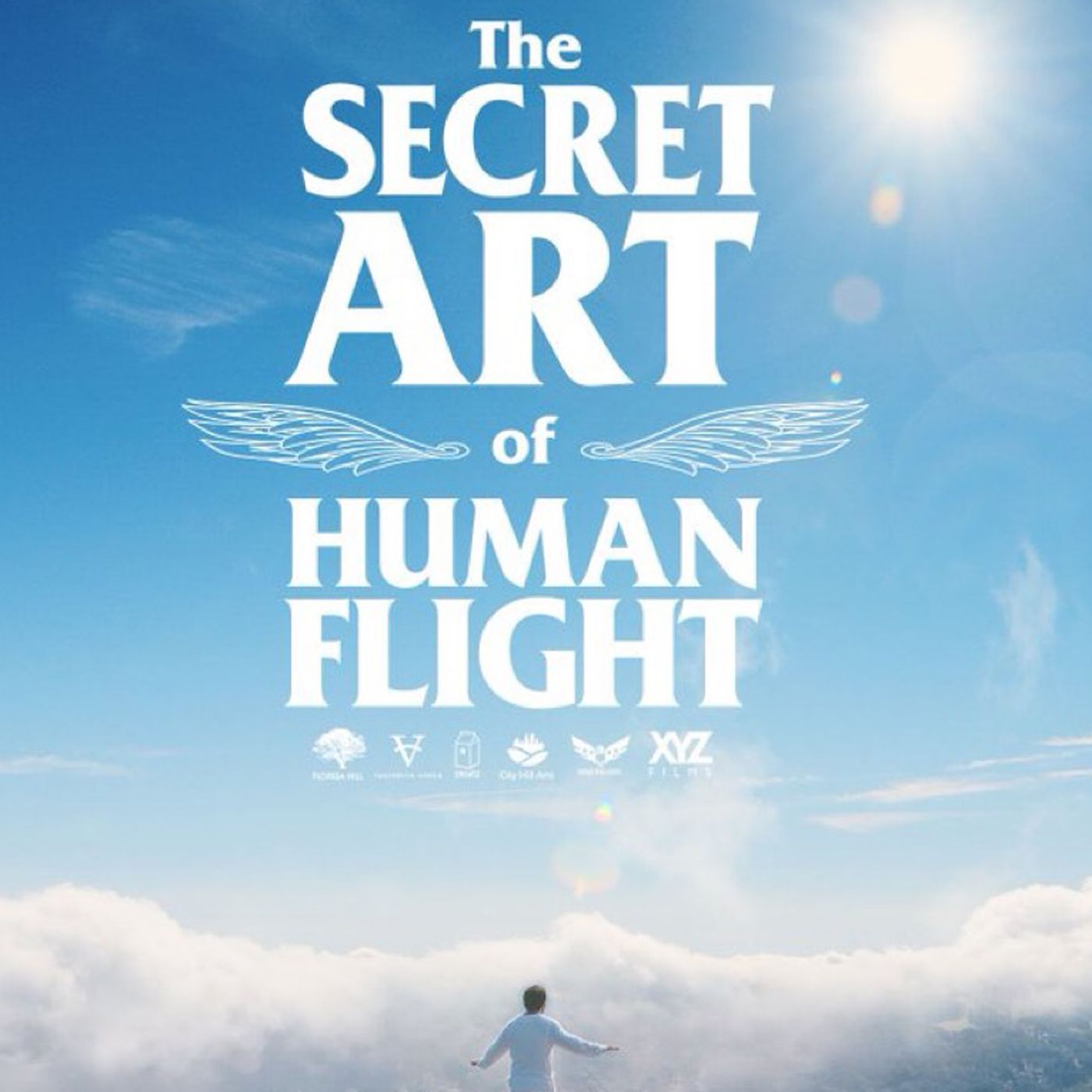
Special Report: HP Mendoza on The Secret Art of Human Flight
About this episode
Transcript
Automatically generated, so expect the odd misheard name.
Old folks. Show people fake good money to see this movie. When they go out to a theater, they want cold sodas corner and no monsters in the Projection Booth. Everyone for ten podcasting isn't boring. Shut it off, Hey folks, Welcome to the Projection Booth.
I'm your host Mike White. On this special episode, I am talking with HP Mendoza all about his new film, The Secret Art of Human Flight, recently played at the Tribeca Film Festival and will be coming hopefully to a city nearer. You definitely keep an eye out for it and check out hps wonderful website, HP Mendoza dot com. I will provide a link to that in the show notes over at Projection boothpodcast dot com. Thanks so much for listening, and I hope you enjoy the interview.
Mister Mendoza. Super excited to talk with you today. You're like a powerhouse with all of the things that you've done and all the things that you do editing, music, directing. It's wild to look at your credits. Oh thank you.
Yeah. I think early on it's them from cheapness and now it's force of habit. How did you get interested in becoming a filmmaker anyway. It's funny. It's only like times like this that I have to answer that question, and I feel like the answer changes every time.
But I did get a Super eight camera from my father when I was about six, and what I did with those three minute cartridges was not make movies per se, but actually use the camera and speed them down my like hot wheels tracks, and get them developed, and then project them in the living room and move my couch with my family on it and pretend that we went back to the future right from Universal Studios. And I was making motion simulators. And when the idea came to actually maybe used for storytelling, I wasn't telling my own stories. I was using my stuff animals to just recreate the Wizard of Oz. From there, you know, went to first grade and I was looking for a way to tell the Wizard of Oz over and over again, and I found the drama program, and from there I just became like, Okay, I'm a theater kid, but wouldn't this be better if it was done with the camera.
And yeah, I was lucky enough to be one of those kids who had a high school that had a film program, so it was pre college was I was very grateful to actually have a film program in high school that then led me into film school. When did you graduate from film school? So I didn't graduate from film school. So I graduated from high school in ninety four, and I spent two years at the college Stammteo with Richard Wong, who directed Coleman the Musical and most recently directed The Valet for Hulu. And we met each other and we were really excited about what we were doing in school, especially because at the time we were two eighteen year old purists unnecessary purist because we said we want to learn on film.
Things were starting to go digital around nineteen ninety four. I shouldn't even say digital things. We're just going to the video. People wanted to teach on video, and we wanted to know what it meant to splice film. We wanted to know exactly what a literal, physical LT cut was all that, and after two years of it, actually more like after one year, I'm like, this is great.
I love doing this. Boy. I hope we can do this with computers one day. And then after one more year, I think that's when we started, frankly getting jobs. He went on to shoot.
He became a great DP. I started doing a lot of stuff in theater and doing more corporate stuff, and we reconvened years later twelve years later actually, or eleven years later, because he found this concept album that I'd written called colum of the Musical and he was like, oh, that's where he's been. This totally feels like a movie, and he reached out, dude, wherever you've been, we should turn this into a film. And everyone says things like that, but he actually was serious, and we both went to California made it happen. That was our first film.
That's crazy that one of your first movies is a musical. Seems like it would be one of the hardest things that you could possibly do. And everyone told us that my professor was Jay Rosenblad. I'm going to call that out because I'm really excited to be in touch with him again, because he's in San Francisco and he's it's intimidating to have Oscar NOMINEEJ Rosenblad be the person who's like your mentor and no one who grades you. And I remember there was a counseling session in which he wanted to know what all the students wanted to do with their lives, what they intended to do with their careers.
And he says, it says, here, you want to do a musical. That's what you want to do. You want to do musicals. I said, yeah, I'd love for my first film to be a musical. He says that my advice is maybe not that I don't know if you know how difficult that's going to be.
And I said, not every musical has to be like Brigadoon, that every musical has be Rogers and Hammerstein. And I remember him saying, he goes, I appreciate that you had the encyclopedic knowledge of musicals, but then what are you going to do if you're going to do a little legit film. And I think at that time everybody knew that Richard Wong and I wanted to do with musical. Here were these two punk eighteen year old kids, while everybody else was talking about how great pulp fiction and Reservoir Dogs was, and everybody all of their thesis films all used Misserlu. For some reason, we wanted to make West Side Story and we freaking did.
Because the thing is is, like music doesn't make things harder. In my opinion, music actually makes things easier. Even my horror film I did, so much of it was just based in sound and rhythm, and I think now I get to really not speak so much like a punk kid about it because I can speak almost academically about how I made a musical with a secret art of human flight, Like I composed all the music for that, and I even made all the actors like learn certain rhythms invisible rhythms. Right. I'm not saying that you have to dance.
These aren't choreograph and dance routines. But there is a rhythm to the piece that I really rooted in music. And that's if that makes me a musical film director, so be it. Well. One of the ways that a film can have rhythm too is through the editing, and you're editing your own work.
How was that bringing that rhythm to the shots themselves. It's funny because this is the first film I directed that I didn't write, which comes with all kinds of freedoms and baggage. And I will only speak about the freedoms because as proud as I am of all the stuff I've done that I've in which I've been writer director. The act of bringing those things to life means that you have twice the baggage, because not only do you have to make sure that you're directing right or directing something quote unquote properly. On any given day when you feel like you've directed it right, you also have this thing nagging at you.
Is this a good script? And like, am I a good writer? And I depend on reviews and what not to let me know if I am, And I'm happy. I'm happy I was able to come this far. But now that I have this script that I believe in, and I was grateful to Vanishing Angle, Florida Hill to allow me my director's pass.
It was nice to have a director's pass that was authentic to who I am and still have it be Jesse Orangeheine's script because now it's a piece of literature that I now have been tasked to bring to life. So with that there, I get to look at this and say, now I can Now I don't have to question my editing because I am using the skills I have not just with my feature films right, but like also the editing that I use for all of my corporate and commercial work. I wasn't doing anything that weird or outlandish for the secret art of human flight. It's edited like a pretty traditional film. If anything, it is edited like a musical.
And if anyone like balked at that, which no one did, I was ready for this. If anyone were to balk get the way I edited, I'd say, I could say, look at this movie, look at this movie, look at this ad that I did, look at this commercial for this tech company that I did. I'm using very basic film editing techniques. Just let me use my musical way, and it never looked like I was being an odd tour if that makes any sense. Like I feel like it was really freeing to not have a movie's first credit at the end say written and directed by because that always makes people think, oh boy, what a micro manager.
I think now I get to prove to people that I'm a good collaborator. Speaking of collaboration, I know you've done some acting before. How is it working with actors? And especially you've got some pretty intense feelings in this movie with loss and rediscovering yourself. I was really happy to get these words from Paul Racy because side note, of course, I was superintimidated to with Paul Racy.
He had just been nominated for an Oscar for Salmon Medal. So on day one I'm thinking, oh, here he comes, and I'm some punk kid, and I think, like, within four takes of me just being really decisive but also very exploratory with him about how to deliver a single line. He took every single direction. I said, that makes a lot of sense, and he would walk away, and then finally after take four he came back. He's like, yeah, by the way, you're what I call an actor's director.
I'm like, ah, I need it bad, thank you. And this is on day one. Now I have us bringing my step. But the truth is I always like to think of myself as one as much as I like to think about it in the future or be future forward for whatever vfcs and music I might have in mind. It really all of the stems from human interaction and human behavior.
For example, a lot of the musical cues and secret art of human flight were born from accidents that came from ad living, Like the whole mushroom scene. He just sang that on the spot and I said, I'm just going I know it in my head you do your thing, and I will score around it and I will find it in the edit. So as far as working with the actors, this was happening smack dab in the middle of the pandemic. We were COVID bubbled. We were all staying at the summer camp that we took over, and we had COVID officers, so we were super safe about everything.
But one thing we all shared in common is we were all experiencing some loss, you know, whether it was jobs, which was normal for film actors right, or people like myself. I'd lost two dear friends and then my father while I was on the set to COVID, And I remember at that point really communing with the prop master Kyle, who had lost his father, and we were just talking about loss, and we were all talking about loss, and it got to the point where every before I would yell action, I would just like huddle with all the actors damn near hugging and sometimes just straight up hugging and saying, hey, are we comfortable with this? Is this authentic to your experience? Like? Why what do these words roll off your tim naturally?
And if not, tell me why, Let's work this out. And there was something therapeutic about it. Never guru right there. We never had a guru on is that. It was more like we were so aware that we were all in the same space because of this great equalizer we were calling COVID, and so we all had to act like collaborators who were all on the same level, right, And so we all would call each other out for any inauthenticities, or calling the script out, or calling whatever or someone's filmic ambitions, just to make sure that everything was grounded.
Because I feel like one of the producers, Ben Weisner from Vanishing Angle said this script could so easily be a Hallmark film, but make the right decisions, and it won't. And that's stuck with me. It took con collaboration when it comes to the words, you said that you didn't write this one, and I'm curious how beholden were you to the script versus allowing for ed libang. I guess that's where my DIY and d nature comes from. Where I asked for forgiveness.
Later, I think as I started asking publicly, Paul, what do you think of this line? It wasn't like I was playing in the side. I say, okay, man, what do you think of that? And he would actually think about it and look at Grant and say, let's just try this out. There might have been a little bit of like slide push at first from people saying okay, maybe we should say to the script, But then I'd ask for their opinion, what do you think would make it better?
And suddenly they're like, oh my god, I'm valued, so let me let me tell you my literary and suddenly everybody was in on it. We are doing our best to build this house. We're building a home for everybody. And as far as the director's pass goes, it's one thing to have a director's pass that it's like the equivalent of a verbal look book or a sort of screenplay version of a deck. For me, I think one thing I was the most excited about was not being part of casting, but giving in and weighing in with my very heavy two cents, my four cents as it were.
And one thing I said is, you guys, this is a dead wife movie. We can either change it so that way it's not, or we can show people how to make a dead wife movie in twenty twenty three. And I think what you do with that is you take the mores of today and see how you can change the scripts of that way. It actually reflects that. And that's not to say I get it.
Dead Wife movies are super successful. That's why like Nolan's movies are, like, there's something really visceral about these revenge films where these people trying to get over the humble of losing a loved one. But one thing I said is this movie will only ever survive on performances. And if you want a good perform or to play Sarah, you're going to have to give or some meat. And the great thing is I had a script that I was shopping around called The Inevitable that was a horror film about a couple that got so neurotic that they decided to record videos of themselves every day and send them to each other.
So that way, in the inevitable event that without the other, they have a bunch of videos to live with. And you can see what where the horror comes in. I don't have to say what happens if it becomes creepy, but it never becomes creepy here because I guess poached from my own script and I was told that like the director's pass could only be like thirty percent of the script. You can't do much more than that because of course Jesse would be getting soul credit because this would be a director's pass. So I dedicated that thirty percent to Sarah.
I dedicated to the relationship. So anything you see that was quote unquote shot on video, like the phone stuff, those were all my words. So you can see it's not like a huge percentage of the film, but it has an impact. Now with this being shot during COVID, how big of a crew did you have. Did you have to cut down on the number of people that were actually there, Yes, Florida Hill and Vanishing Angle or just scrappy people.
And I was really happy to know that Ben Weisner advantaging Angle told me that he jumped on because he heard I was gonna be doing this, and I think, like I just it made me think about this article that was publishing in the San Fractico Chronicle back like almost twenty years ago, where it was like a picture of me burning film and saying, look at these scrappy punk kids who make musicals and it's because we were grula filmmakers back then, and he said, we just knew what to do. And the truth is every time I make a scrappy film. Every time I make a DIY scrappy film, it gets out there and then there's some producer comes along and says, hey, yeah, good job with the DIY stuff, kid, but now join me.
Let me show you how a real movie is made. And I do, and then that always falls apart a little bit, and then I had to be scrappy all over again. And that's been the pattern. And The Secret Art of Human Flight was the first one where I never had to prove that because I was working with nothing but scrappy people who walked in with five hats on their heads. So yes, it was a small crew, but it didn't feel like it.
This is, for the record, the biggest film I've ever done. I know it's still by Marvel standards a small budget, but I buy my standards. This movie is the price of all my films put together. And it's still with a small crew. It doesn't feel like a small movie.
It looks fantastic, the editing is great, it just all comes together. Performances wonderful, So it doesn't feel like a small film. It feels very heartfelt and scrappy. To use your word, but it doesn't feel like, Oh, just a couple of people made this in their backyard. Thank you for that.
I agree. I guess you used to be so aushucks about everything, but get to say I agree this time, because again I get to step on the outside where I'm used to being the guy that says I wrote this script who wants to help me, which automatically puts me in this weird position of very cheap power where I say I'm looking for a bunch of other scrappy people to help realize my vision. Because the production companies hired me, I feel like it was our job to make a good movie, and we all at it. So I will take that compliment because we all had very big movies in mind when we had our comps. We shot it in four three because we loved the idea of having all this height to it, because it was also a very small house and if we shot any wider than that, we'd had to keep on getting closer to the actors.
So I hope you guys like the four three because we needed to. But yeah, we wanted to make a big movie by any means necessary. When did you have picture lock on us? We followed the sort of unspoken template of the indie film right where you should for about eighteen days and then you have an edit that lasts I loved this long, and then you're ready for Sundance. That's just let a lot of indie filmmakers do.
I never liked that because it feels like a rush, and frankly, I've always kept into that rush. I always have. And when I did it this time, I was doing the same schedule, but this time with the production companies who just had been doing this with all their films, and so I trusted that, and they trusted it too. They should. But what happened was at the test screenings when people would be asked what they thought.
I'm not even going to tell you what the feedback, like, the granular feedback was when you just asked them what they thought. The general concessus was I like it, you know that high pitched I like it where you hear them going into falsetto and I think when you see that on paper, it's so good. They like it, Let's go, And I didn't swell with me. I'm like, yeah, they like it, But I never really heard anyone say they loved it. And that, which is fine because I thought to myself, this is good if all the producers and we had a lot of producers, we had a lot of production companies involved.
If all of them say that it's fine to go ahead, then so be it. And yeah, we were getting we were getting the declines. And I think there was something about the declines that I liked, not because there was any essence of I told you so. It wasn't that, but it's more like, oh, look all these people who were used to getting into Hollywood and doing all this, now they're welcome to my world. You guys, I've been declined by all the big festivals for twenty years.
This is exactly what it feels like. And it's not that bad. You just keep on moving. And I think the big question was how do you keep on moving? What do you do?
You just try and the next festival, and I'm like, or how about you let me shoot a couple of extra scenes and let me cut down the movie. And I re edited the film, and so I think what happened was instead of this being like a year long project, it ended up being almost two. And I think a lot of people are afraid of taking that long on a film because they feel like they have to be prolific. And I'm just not one to prop up hustle culture. I think it's a sham.
But it's like, I don't care that you've made thirty films, like which ones of them are good? And if it takes five years to make this movie, no one will know it's new and it's new, you know, no one's ever going to watch the movie that they loved. And if the credits saye, yeah, that was great too, but it took so long, No one says that. No one said that for everything everywhere once it took eight years to blossom to the point that it got to in one best picture, right, no one says, well, you know how embarrassing that it took eight years. So for us to have taken two years, I think that's pretty damn good, especially considering that after that we've gone to Chibeca.
Ah, I've never gotten I've never gotten to the big festival like this. Everything I've ever done has gone to either I've only premiered at Asian film festivals or beer film festivals. Whoa thank you, thanks for the extra year. Have you seen it with an audience now? Yeah, this is a nerve wracking, but it's wonderful.
We've had two screenings and we have one more tomorrow, and it's been great because one of my favorite things experience when you sit through all of your screenings is to see where different jokes land, because I never ever want to direct a joke as if I'm expecting a laugh track, and I and so like a lot of a lot of my director's pass was that is a joke that's great, Let's give it an extra button, or that joke that exists in the script makes a good button, Let's give it a pre joke, are like a good ramp up. And one of my favorite things to do is watch who laughs at the ramp up and who laughs at the button. And it was great because at the two screenings, like they did, there were two different audiences, but they were equally ecstatic.
They just laughed at different things. Oh, that's so fun to see what those different points are. It was great. Jesse Oreinschein had this really hilarious scene where you know, Ben Grady's looking at these mushrooms, at the psilocybic mushrooms, and he says, I smoked weed before. Will that help me prepare for mushrooms, and meal Worm says, we're riding a bike.
Prepare you to fly a spaceship. And that was the end of the scene. And I remember as we were working it out, I just wanted them to freeze and stare at each other awkwardly, and Ben wouldn't know what to say, and I said, however, we button this with you being like a smart alec And you say, I mean if the spaceship had pedals. And it was great because the first screening had people laughing at that line. It was the spaceship petals.
And the second screening had everyone laughing at spaceship and they were it was so uproarious that they laughed over the other line. And some people said, oh, you know, they're laughing over the line. I'm like, let it happen. That's what gives me, That's what gives films replay value. It's okay.
You don't want to feed them everything all at once. It's okay. Don't install people's intelligence, don't overload their brains, give them, lean them wanting more. Now, while you're working through the second year of production, it's not just all the film, right, You're also working other jobs at the same time. This is my first time working on two films at the same time because I had my baby.
Shouldn't say that they're all my babies. But when I say my baby, I mean something that no one's really breathing down my neck. Four And that's an art commission by this Svein Foundation called a Tactica release, and it's my three screen science fiction musical that I've been traveling with that I live score. So that takes a lot of work, especially with all the animators that I've been working with and working with the Prelling or archives to get some actual historical found footage to make this film work. So I was doing that, which is a very musical experiment, right, So it was just it was hand in hand, and it was a great thing about that that film, even though it's about human civilization and where we're going, at its core, it's about the fear of a loss of a loved one go figure like I can I now see why they chose me to continue this secret art of human flight.
I wasn't putting too two together. So when one of the scenes came up that I'd written where I wanted you to see that maybe there was going to be a dissolution or maybe there was going to be some sort of trouble in Paradise. Grant, lead producer and lead actor in the movie, He was like, Hey, yeah, you should sound like a party. What are they listening to? I'm like, they're going to be listening to one of the songs from Attack to Kay Release that actually plays during a moment in which you're questioning a relationship.
And I said, you know what, Ah, this is better than having to pay for stock music. Like I just I have all this same desk, and it was funny because I have a very small studio that I'm working in, so all this stuff is like was at the ready. I don't know if I was just trying to be efficient, but I do think both movies fed each other because interestingly, like premiering here in New York with a secret ARTI Human Flight is great, and all of a sudden I find out that I will be playing Attack to Kay Release next month, also in New York. That's great. Yeah, I saw the trailer for it and it looks truly amazing.
I'm very ambitious. Oh thank you. Yeah, it was, and it was an commission, so that's why I was able to do a three screen queer Asian science fiction musical. If I were to do this any other route, I'd be happy if I got one of those qualifiers. I love how much you steal from yourself.
Yeah, like I said, like it was born from cheapness in the past and now it's force of habit. And I shouldn't just say for uce of habit, I actually doing it. It's my own cinematic universe because and then that's not to say that I'm trying to make fetch happen, and I'm not trying to make a universe that people will buy all the merch too. But it's more like I understand this universe. I know the emotional implications and ramifications of each of these assets.
I get to reuse them. These are my tools. Do you know what's next for you? I would like to say that I do, because I'm trying to will and manifest things into existence at all times. But I do have this horror script that I'm talking to a couple of producers about, because I did do a horror movie in twenty twelve that was sort of a horror art film, and I'm very proud of it.
I love it, and this time I want to see what it means to make like this super rated our horror film that I think will still be very artful. But I always did enjoy more as more horror films too. But alongside that, I have this other script. It's a musical. It's a sort of pandemic musical called Folks that I've been trying to get made.
But as you can imagine, during the pandemic and lifting out of the pandemic and going straight into a strike, who even knows, right, So I have these two projects I have basically like I used to have a stack of scripts under my bed that we're at already, and now they're no longer paper scripts. They're just like PDF to sitting folder on my desktop called bed. And I know I have those two, but the ones I'm really trying to do are either the horror or a musical film, maybe both. If somebody wants to actually trick me into making a horror musical, I'd be open. He talked early on about coming on fell When did you start to actually used computers to cut?
And how was that experience? On Secret Life? Even though I was learning on film, I was still like outside of school, dabbling but keeping it a secret because I wanted to be just as quote unquote pure as the other students who were super intimidating. So I was dabbling, but I think the first time I actually got to dabble was in premiere and I wish I could give you an exact year, but I remember what I was doing was I was making a playthrough video. I'm a gamer and I was making a playthrough video and let me think about what emulators were coming out at the time.
It was a main video. This had to be like ninety seven, and I remember just thinking like I had to edit back and forth between the actual gameplay video and myself. I remember it wasn't just Freedom Film, it was Ecstatic Freedom. I was like, I'm never going back to Ville. I can't believe this.
This is amazing. I'm working on sound and video at the same time and I can edit both. And I think stuck with me for a while where a premiere became something that became second nature to me to the point that it was open at all times. And I think it was around two thousand and seven where I started doing it professionally for features, not just for corporate bumpers, not just for ads basically or for events that were essentially adds. I was doing it for independent film work and really, honestly, from there, Premiere or some Adobe product has been opened on my desktop at all time.
I'm literally looking at Premiere right now in the corner of my screen. I'm curious how you use Premiere when it comes to like your music and your integration of your own scores. I use it a lot. I use it often, and I use it like deeply because I don't know why. It's maybe this is a personality defect, but I don't like just using one program for anything.
I know a lot of people say that we should be using pro tools for your sound mixes, and especially if you're using Reason, maybe you should be using Logic as well if you're composing your films wars, And for me, I feel like I just need to use what feels right in the moment. I need to be allowed, I need to feel allowed to be messy, and if I do feel like I need anything to congeal everything, I want it to be the thing that I know I'm working on last, and what's that going to be? It's the thing that's open all the time, it's from here. So I'm composing my music, and I know I can just compose everything right then and there, but I'm just like, no, you know what, I'm gonna do this on piano for now. I'm going to move over to my zif.
I have this old zither at home that I've been using since I am a ghost. And it's basically, if I want anything to sound creepy, I just pluck at it right or I take a hairbrush line starts like slamming on it. So every time there's something scary happening in secret art, that's that's me and my kikiS Delivery service hairbrush and I'm banging on it. And what do I do? I record it and I'm not going to take it into reason.
That's an audio file now, hell, I want this to be ready for the atmost mix. Can't do that in reason. You're gonna have to re export anyway. So I take that in and next thing, my premiere timeline looks like the top half of the audio looks like a normal film soundtrack, and then there's ten tracks below that look like a daw It's like suddenly it's my digital audio workstation and I have like horns guitar that was played by the son of the guy that does this sound makes Marco Dombrosio, his son Armando, I played guitar. I played bass here or your files.
Now, I'm not going to take it into pro tools either. I'm just gonna take it in because it is part of the movie and it's an asset. Now, if I were making only a piece of music, I probably would do it all on pro tools, but this is a movie and I just feel like everything belongs in premiere. Do you do music that isn't just for films? You do your own thing as well.
You're right. And the last album I did, I actually didn't premiere. I'm a hypocrite because it was open. I will be honest. It's because I'm just so comfortable with it.
And I composed a lot using various programs, and I recorded a lot of this stuff in a very analog way, and I have a good reason. The reason for that is that I was composing this album with the knowledge that this was going to be the closing night party of this Inner for Asian American media in twenty twenty one, and I wanted to have a narrative and I made a little animated story to go with it, so it makes sense. But how funny that even though I did it in premiere, that audio is what ended up being the sound for the album that you now would listen to on Spotify or on Apple Music because I'm just that comfortable with it. So yeah, it's what can I say, I'm stuck. I'm stuck in Fromiria just works.
Is there a good place for people to keep up with you in your work online? I think that the best way for anyone to keep up with me is my website, which is HP Mendoza dot com. But I'm panicking right now realizing I haven't updated in a couple of weeks, so I will do that if you want something that might be a little more informal, or you can find me on all the socials just with my name, like at HP Mendoza, whether it's Twitter or Instagram. Oh that's it, actually, mister Mendoza. Thank you so much for your time.
This is great talking with you. Thank you, thank you for having me on, and thank you for taking the time to watch the film. Oh yeah, definitely, Like I said, it was great. So this was such a fun time talking with you. I really appreciate this.
Thank you so much. Look forward to the next one. Same. I used to up cannot go, and life was noting boden for song. But now I know the meaning up to love uning on de last.
If I can sheet and I can do it, if I just believe it, there's nothing to it. I believe I can find. I believe I can touch the sky. I think about it every night and day, spread my wings and fly. I believe I can show see me running through that open door.
I believe I can fly. I believe I can lie. I believe I can find see. I was on others of breath getting sometime in silence can seem so loud. I'm very cold and life.
I I must a cheese, but first I know it starts aside be If fucking cheese, then I can be. If I just believe that there's nothing too. I believe I can fly. I believe I can trust the sky. I think about it every night and day.
Spread my wings and fly away. I believe I control. I see me running through that open gold. I believe I comply. I believe I can fly.
I believe I can find. Could I if I can see it, then I can't do. I just believe it. There's nothing too. I believe I can find.
I believe I can truch the sky. I think about it every night and day. Spread my weight has fien. I believe she didn't running that open door. I can lie.
I believe fucking fie. I can't talking. I can lie if I just sprain my wing? Can lie? Lie?
If I just sprain my wing, I can


