
Season 1 · Episode 659
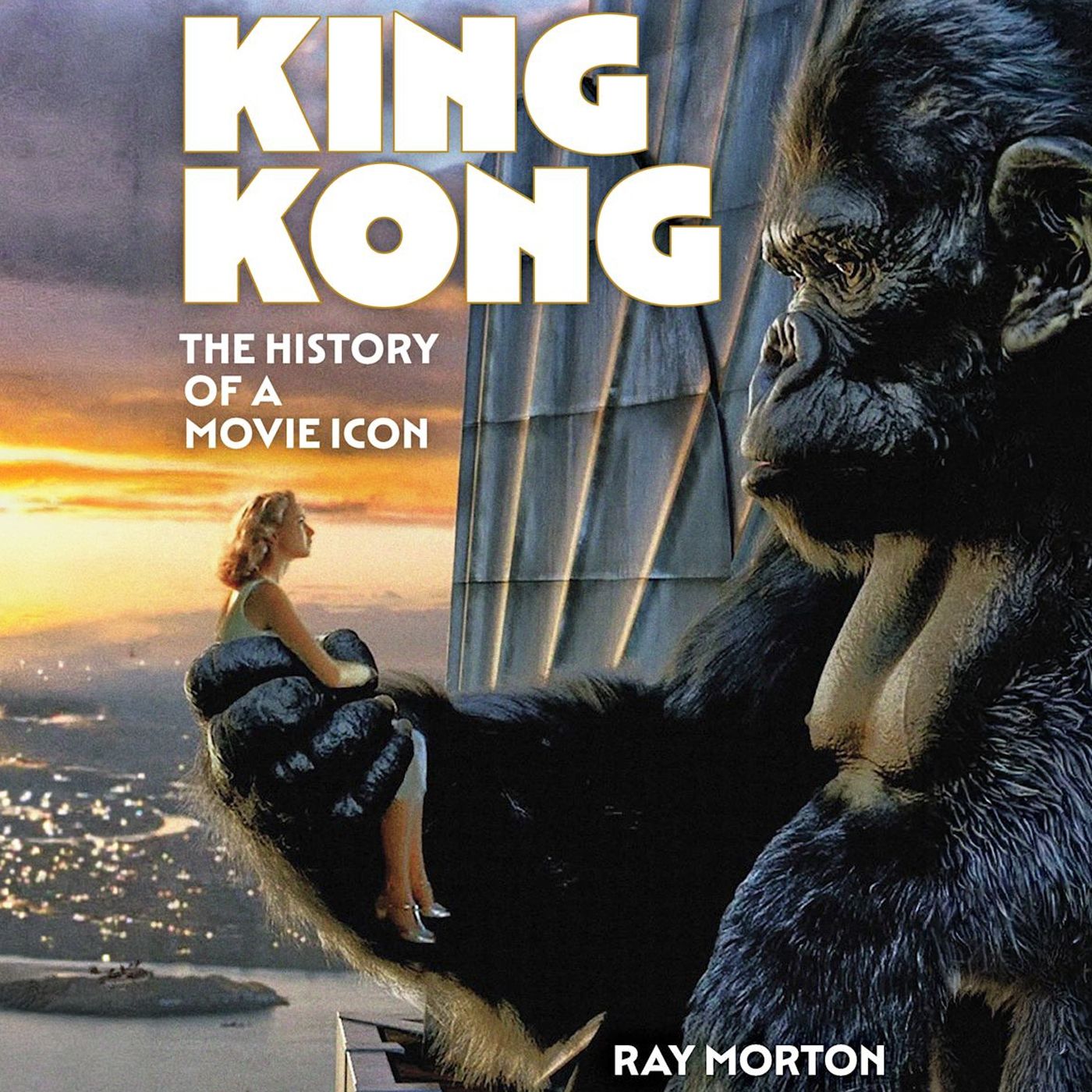
Special Report: King Kong - The History of a Movie Icon
About this episode
Mike talks with film historian and self-described Kongophile Ray Morton about the revised and updated edition of his book King Kong: The History of a Movie Icon (Bloomsbury Academic). First published in 2005 as the definitive account of the King Kong phenomenon, Morton has extensively revised and expanded his original tome to cover decades of new material — from Kong's animated incarnations and stage productions to the Kong variants, spoofs, and projects that never made it to the screen. The updated edition concludes with the most recent films placing the great ape within an ever-expanding "Monsterverse," and is packed with photographs and based on extensive new research and exclusive interviews.
Morton and Mike dig into the creation of the Kong character by Merian C. Cooper, the making of the 1933 original, and what it is about this particular giant ape that has kept audiences captivated across every era of cinema.
Transcript
Automatically generated, so expect the odd misheard name.
Oh gee, folks, it's showtime. People pay good money to see this movie. When they go out to a theater, they want cold sodas, hot popcorn, and no monsters in the Protection Booth. Everyone pretend podcasting isn't boring. King Tongue, you know the name of King Tom.
You know the fag of King Calm ten times? This vegas a one day. To beyond the danger. Friend of this child hears stranger and the live on their li. Became a legend, the legend.
Tom. You know the name of King and Tongue. You know the fame of King and Tongue ten times his beak as a. Hey, folks, welcome to a very special episode of The Projection Booth. I'm you host Mike White.
On this episode, I'm talking with Ray Morton all about his well, I can't really say it's a new book because it was out before, but now it has been revised and expanded, so practically is a brand new book. It is King Kong the History of a Movie Icon. I had a wonderful time talking with mister Morton, and I hope you have a great time listening to this and definitely check out King Kong The History of a movie icon. Before we start talking about King Kong, I want to know a little bit more about the Ray Morton experience. Can you tell me how you got into writing about movies.
I got interested in movies at a really young age, and I went to film school at NYU, and then I came out here to California to find some way into the industry. Eventually, I wrote on a couple of TV shows for a few years and eventually kind of made my way more into the development world. Turns out I had kind of a knack for developing scripts and things, so I did that for a long time, gave notes on scripts for producers and writers and things like that. Was kind of a consultant really, and I wrote for a long time. I wrote a column for Script Magazine on screenwriting advice and things like that, and I was writing and I also wrote articles for them, and that got me starting to do historical articles, originally on screenwriting, and then I just started branching out into two other film history topics, and then eventually started work on a Kingkong book.
So why King Kong? What attracted you to that subject? Probably my favorite movie since I was a little kid. You know, the original was just kind of a mind blowing experience when I first saw it, and you know, I never missed an opportunity to watch it. And I grew up in New York in the early seventies and we had a local channel there, Channel nine that just ran all the monster movies.
They ran King Kong all the time. I was always glued to the TV, just fascinated with the character. And then as I learned more about filmmaking, really got into how they made it, and that was even more fascinating to me. And then I also was sort of in the sweet spot when the seventies remake was done, and anyone who was around at that time knows that was a major pop culture event and I just got caught up in all of that too. So when the time came to do some longer form project, KLNG was pretty much at the forefront for me.
Well, yeah, you were in New York in the seventies, So did you get to see Kong climbing in the World Trade Centers at that time? Or we almost did. My dad said we could go see the filming, which was in July of nineteen seventy six, but we ended up moving and we were supposed to move on a certain date, we ended up moving on another date. We ended up moving the same weekend they were doing it, and he just couldn't get the time away to take us. So I always feel like I got that close, but I didn't get to be there.
You talk about in the intro to this new version of the book how you had to write this on a deadline because of the release of the Peter Jackson film. So what in particular kind of stood out for you as far as if I had the opportunity, and then you were finally given the opportunity, if I had the opportunity, I would go back and fix this or expand upon that. What were those big areas that were really kind of sticking in your craw. The two things is the first thing, because it was the release of the book was going to be timed for the release of Jackson's film. That was December of two thousand and five.
You know, a book has a long lead time because it has to go through this whole production and design process. So I had to have the book in April or May of that year, so I never got to cover the Peter Jackson film. If you read the original version, of the book. It has like a four or five page piece on that film, mostly which I got from the publicity handouts, because I just there wasn't any information, So I always wanted to make sure that I did that. The other thing that I felt was missing from the earlier chapters, especially for the original film and for the seventies film, was I hadn't gone as deep into the creation of the story and screenplay, and I think for the original film that was really important because the development process of that story I find fascinating because a lot of what we love about that movie didn't come in until fairly late in the writing process of that and I wanted to give the same attention to the seventies film.
So I knew if I was going to do it again, I would go back and expand the sections on the development of the story, which I was able to do. Tell me a little bit more about Marion C. Cooper and how has your understanding of him changed over the years. I feel like it's deepened. He was an amazing character.
I always felt like I wanted to make a movie about his life because you know, he grew up in I think a fairly aristocratic family in Florida. He went to a military couple of military academies, actually got kicked out of Annapolis, ended up as a Navy flyer in World War One, was shot down and spent time in a prison hospital in prison camp. And when he was shot down, he could have bailed out of his plane and saved himself, except that his gunner was in the plane too, and he didn't want to abandon him, so he ended up staying with the plane, burning his hands. I mean, it was pretty amazing stuff. Then as soon as the war was over, joined up within the Poland Russia War and was a flyer all over again, and this time got shot down again and was put in a prison camp, escaped from the prison camp, finally made his way back to New York, became a reporter for the New York Times for a while.
Then he was a world explorer for a few years, and then became a pseudo documentary filmmaker, and then also helped found the aviation industry. So there were all these He's just an amazing character. I think he's a character who probably can't exist anymore. But back then you could kind of do all these things. Part of my appreciation was I hadn't realized he had been named at one point after David selznigleft the head of RKO, I hadn't realized how much of a studio person he was, like he actually steered the ship on a lot of RKO films in that nineteen thirty four or thirty five period.
He got Fredist, Aaron Jinger Rogers started and Katherine Hepburn, and so I hadn't realized that aspect of his career so much. They don't talk about it so much. And then he just was He was involved in Technicolor, the development of Technicolor, he was involved in he was involved in Cinerama, the development of that. He joined World War up in World War Two for yet another wartime adventure. He just never stopped.
And I kind of admire that, you know, you know, he probably had some political views I wouldn't have agreed with, but you know, he was a man of his era and just a really colorful figure. So I think I came to appreciate him. More from what I understanding. Insisted that Kong was more than just a monster. And I'm curious what your take on Kong is and why we're still talking about him all these years later.
Cooper had an interesting idea. He wanted Kong to be as frightening as possible, and his idea somehow was that if we were all really frightened of him, we would eventually come to feel his tragedy at the end way more. And I think he was right. Kong continues for all sorts of reasons. I mean, you can start with elemental things.
We're all fascinated with apes and especially gorillas. I mean there are closest genetic relatives. We see ourselves mirrored in them. So I think people are and had a point at one time they You know, there was a movie that predated Kong that ended up transforming into Kong called Creation. It was about a bunch of people trapped on an island where there were dinosaurs.
And he said the problem with the film is you can't identify with a dinosaur. You can be scared of it, but you can't identify cang. You can identify with an in an odd way. I also think people have great We all have fantasies of size and power, and I think that especially children, and I think that has a lot of appeal. I also think, whether on purpose or inadvertently, and probably a little of both the people who created the story for the first film, which was Cooper, and then a bunch of other writers including Edgar Wallace and Ruth Rose and James Krillman, incorporated all of these elements that were common to myth and fairy tales.
You know, you have an expedition that travels to a far off exotic land. You pierce, you go through a fog vale and end up in this mysterious wonderland. You know, it's a primal forest. You know all of this. You have, you know, a great god brought low.
You have a primal creature against modernity, you know, battling in New York. All these really elemental themes, and I think that all pulls at us too. And plus you just have the great imagery, like the giant ape on top of the Empire State building is pretty hard to resist. Yeah, it's funny when you're talking about this, I'm like, oh, yeah, this is the time of weird tales and love Craft. Just this whole idea of going on this expedition and finding this.
You could call Kong an elder god if you wanted to. Yeah, absolutely, I mean, he's this fearsome fearsome creature who who terrifies the natives of the island and they worship him. I mean, it's all this very primal, primal stuff. I got in trouble with saying this about Godzilla with some Godzilla fans, But I like Godzilla very much. But Godzilla is a force of nature in his better films, he's, he's and and I think that that's a great metaphor, but it only goes so far, whereas Kong taps into all of this stuff.
I think it's why we keep coming back to the character over and over again. Well yeah, it's interesting too when it comes to Kong because of so many of these films are I don't want to say the origin story because other than the Monster Verse, we don't really get a lot of the origin of Kong unless I'm mistaken, But just getting this kind of retelling of the same tale in you know, the original, in the seventy six and then in the Jackson version, I mean, it's fascinating to me that they don't reach a lot of new ground with each one of those remakes. Each of them adds something to the story, but You're doesn't really go in a new direction. But in the thirty three film, he kidnaps this terrified woman, and that's kind of where the relationship stays.
And everybody who thinks back on Kong, and if you read a lot of the writing about it that was done in the early seventies, people imagine a relationship between calling and hand that actually isn't in the movie. The seventies movie gives that relationship. She's terrified of Kong, but eventually, you know, he saves her life, she appreciates that she tries to save his life. All of that which we imagine is in the original film only comes into it in the seventies. And then I think the two thousand and five adds something that you could probably have always assumed, but they kind of make it canon, which is that he is the last of his breed.
There's a great shot where he enters his cave and you just see bones of previous songs, and so that adds you know, now you have sort of the lonely god myth, you know, the one remaining God. So I think each new version has added something to the basic story. But I think in some ways, like if you look at the sequels and the offshoot, the spinoff ones, and I think it's a thing that fits in with the legendary films. That's a fascinating creature, but it's not King Kong. It's just it's this giant creature and they build all sorts of other things into it.
Kong seems to be about that tragedy, about about beauty killing the beast. If you don't have that, you can have a fun like King Kong versus Godzilla or King Kong Escapes, and they're fun movies, but they don't stick in your mind. I think it is the tragedy that sticks in your mind. Tell me a little bit about what your thoughts on those Japanese films King Kong Lives the ranking a bass cartoon. I mean, you had to go pretty deep with this book.
It's funny. When I was a kid, if you ask me which of the two the two feature films I Japanese feature films, I would have said, well that King con Verses Godzilla and then there's this weird one, King Kong Escapes again all staples on Channel nine when I was growing up. But as I as I was researching doing more research for the book, that's kind of switched. King cong Versus Godzilla is a very odd movie. It's it's probably cheesier than it needs to be or whatever.
It's fun, it's a little goofy, and Kong looks really weird in the movie. He doesn't look like a gorilla. He looks like I'm a call, which apparently is what he was based on, because he wasn't supposed to look like the thirty three Kong. But it's it's kind of four kids, and if you can enjoy it on that level, it's fine. I just don't know that there's much more to it than that King Kong Escapes.
I've got a new appreciation for because it's this very wack adoodle movie. It's it's a King Kong movie and they kind of play all the beats of the Kong story. It's also kind of a James Bond movie. It's also a Saturday morning serial, and it's also a comic book, and it's all together in the same movie, and when you're watching it, you're like, none of this really makes any sense, but it's really cool. So so I have come to truly appreciate that.
And the Ranking Baths show is, you know, Saturday morning cartoon shows are often kind of you know, slagged because they're not so good most of them. The Kong one is actually pretty good. It has some pretty good stories. It's it has the curse of limited animation, you know, that kind of thing, but the stories are fairly intelligent, Like it's not as dumb as it kind of seems when you first look at it. Congs Everybody's buddy in it.
I mean, he's not really very fearsome. But I actually enjoyed that show quite a bit when I watched it when I was a kid. But I rewatched it and it was better than I remember. Knowing a little bit about Rank and in Bass. They did a lot of work with Japanese companies, and I imagined that the King Kong Show was also a Japanese offshoot or Japanese production.
What is it about the Japanese and King Kong? Do you think the Japanese love Kong? When the original came out, it was a big hit in Japan, and they actually did a couple of it. Often is erroneously reported that they did their home King Kong movies in the nineteen thirties. They actually did two movies with King Kong and the title, but both of them were about out of work actors who had to dress up as King Kong.
So they weren't really traditional films in that respect. But the Japanese obviously have a great love for giant monsters, and it was the nineteen fifty two I think re release of King Kong was the second biggest market that it was a hit in was Japan was hit over here again and it actually inspired them to make Godzilla, Like Godzilla came about directly as a result of how popular that re release was. And they have great affection for the character. I don't know that they always know how to do him right, but they they they love bringing him back. Mechanic Kong is a who as a creation.
I always love how they do mechanical versions of their monsters. Just a lot of affection there. You know, where do things like Mighty Joe Young or Son of Kong kind of fit into the cong a verse. Son of Kong is a direct sequel to the original. It's not nearly as good a picture.
It's it's much cheaper and it's much more limited in scale, but it has some really kind of fascinating elements into it. One of them is it kind of continues the story of Carl Denim, who is kind of a quasi hero quasi villain in the first movie, but a little on the shady side, and he's kind of willing to put people at risk to capture Kong and all that, and he's really down and out in the second film, and over the course of the movie he kind of redeems himself by helping Little Kong, he gets a girlfriend, he gets rich in the end, so it's kind of an interesting development of that character. And you know, again, the movie is not nearly as good as the first film, but there's some cool animation sequences, isn't it.
Little Kong is funny. I don't know if Kong should be funny, but if you're going to do it, they do it, okay. So there's some intriguing things in that movie. Mighty Jo Young is interesting because Mary and Cooper at one point, at a couple of points, wanted to do Kong sequels, more Kong sequels. He wanted to do one in right after Son of Kong, where they would show what happened when Kong was being brought to the United States, so he was going to escape and they were going to have to recapture him.
And all that, and RKO and his partner Earnest showed sex, let's not do that. And then in the forties he wanted to do King Kong Versus Tarzan, which he wanted to do as a co production between MGM and RKO, and both MGM and RKO didn't want to do it. But I think that's where the seeds of Mighty Joe Young came in, and Cooper had a way of when an idea got ahold of him, he wasn't going to let go of it. So I think he ended up developing what was originally titled Mister Joseph Young of Africa. That was the original title, and I think he just wanted to make a KNG sequel, so he came up with a offshoot cong sequel.
I'm always fascinated by projects that have never happened or almost happened. So your whole section the concsent never were that was I was riveted the whole time of all of those different projects, what were the ones that you really would have wished had made it. The one that I'm always the most curious about is the Universal, the proposed Universal film. In the seventies, they got into the Fight with Dino di loranasent rko Over. I have read the screenplay for that, and it's really good.
It is more like the Peter Jackson film in that it is set in the nineteen thirties, so it's not an update the way the Dino one was, and it's really smart and it tells the original story, but it expands things. It does more with Denim, it does a little more with Jack and Anne, and it actually brings in a relationship between Colin and the girl similar to what we saw in the Dino version. It was a really good script. I have heard different things. They did some pre production on it, and the story that always sticks in my mind is and it seems very universal in the nineteen seventies.
They originally were going to do it as stop motion animation, and they brought in Jim Danforth and then kind of quickly realized that stop motion animation done properly done in the way that it had been done in the thirty three film was going to be way too expensive and way too time consuming. So like Dino, they decided to go for a guy in mape suit and Bob Burns tells this very funny story about how he was called in to do some test shots and he had to wear the bigfoot outfit from the six million Dollar Man, and they had to pin it up because Bob was not a giant the way Andre the Giant was. But the part that always made me laugh is that he said the director of the test at one point told him, can you walk in a hurky jerky manner?
So it looks like stop motion animation. So kind of what I feel is they had a great script. I've seen a little bit of the pre production art which looked interesting, But if that's what they were going for, Like there's a thought among some Kong fans that, you know, they it would have been much better than the Diala Renis version, And I'm not so sure it's going to be true. But it's a fascinating project. And the other one that interests me a little bit just for its silliness is Abin Costello meet King Kong.
I would have liked to have seen that one. I think you definitely know how to research. You have been a scriptwriter, so you know where the bodies are buried a lot of times. But you've been fascinated with Kong for so long. Is there anything that kind of eludes you or escapes you as far as like, oh, I really wish I knew more about this, or I know that the thing that exists, I wish I could get my hands or eyes on it.
I wish I had had an opportunity to talk to more people connected, obviously with the thirty three film. I've been very lucky to talk to a lot of people involved in the seventies and eighties films. Mister Jackson has eluded me. I have tried very hard to interview him. I would love to get his take on things, but he was not interested.
I guess I never really got a response. I would love to have talked to him about that. I have been lucky enough to to see and actually touch a number of the models that were used in thirty three. I went to Fory Ackerman's house years ago and when he still had them, and it was very cool to see those. I never got a chance to actually hold the real armature of Kong.
I wanted to see that up close. But when I was trying to get in touch with Bob Burns, he wasn't doing so well, so you know, it never came to be. I'd love to know more about the transition between Kong and Son of Kong like because it came very quickly. I've looked at all of the papers in the RKO records. I guess I wish I had a little more on the behind the scenes how they came up with the approach they were going to do so things like that.
There was another, let's just say, rip off of Kong in the seventies. Was it called Ape. There were two actually at the three actually at the time, but Ape was this kind of weird. It was a low budget film made by an American company, but it was made mostly in Korea. It begins with a ship bringing a giant ape, not King Kong because the poster says not to be confused with King Kong, because Di Lo ren Renes was the Actually I think the original title was The New King Kong, and then it was changed to Super Kong and Dino did a lot of suing, so it became Ape not to be confused with King Kong.
It begins with them bringing this giant ape someplace on a ship and a giant shark comes out because you know Jaws had just been out, uh, and the shark and the and the ape fight and then the ape comes ashore in what we assume is Korea, and it's maybe one of the worst ape costumes I have ever seen. It looks like a carpet literally. Rick Baker had been approached to do it, but he was busy with the Dinnis Kong. And what's very fun about the movie is half of it you can tell they were taking it seriously. And the impression I get is somebody looked at the Rushes one day and said, this is so cheesy and so bad that we can't take it seriously.
So then at a certain point it starts camping itself up right in the middle of it. And there's one scene where the gorilla gets so frustrated he gives the finger to the audience, and I'm like, okay, I suspect the filmmakers were doing. The interesting thing is it was one of the first professional jobs for Mimi Leader, who ended up directing Er and a bunch of other great television and deep impact and the number of features that way. I don't see it on her resume a whole lot, but it was one of her Her dad produced it, and so I think that's kind of fun. The other one was another Taiwan film called Mighty Peaking Man.
That was another one where there's this sort of a yetty, kind of calm creature who falls in love with a bikini clad cave girl. That's kind of fun. And then the last one is Queen Kong, which is a a spoof obviously British made spoof where the male character, the leading male character's name is Rey Fe, so you can it's on that level. Since you weren't able to write about Jackson's Cang the first time around, other than the brief amount, what's your opinion. I'm so curious to you consider it a success.
I have mixed feelings about it. I think there are some things in it that are very successful. I think the thing that most critics and audiences say about the movie is true. I think it's too long, and I think it has too many extraneous elements in it, like it doesn't have quite enough focus to it. There's a lot of issues with it all through until you get to the empire state building sequence, which from what I understand, was the first sequence they really worked on in like the storyboarding in previs and I think that that sequence is quite successful.
It's the version of the last stand that we all played out on our heads when we were kids, you know, where we elaborated on it. I think he did a great job with that. I think it's a mixed bag. Otherwise, I think Naomi Watts is terrific. I love the score.
I think the score is very good. I think there are individual scenes that are great, but I think the blow really really does bring it down a bit. When it comes to the legendary or the monster verse, the Monarch films, I guess you'd call him what do your take on that? How do you feel about those? They're not my taste in particular.
But when I was watching the last one, I think it was Godzilla times Gong or how is your supposed to say that Godzilla X Kong. I was surrounded by a bunch of families and kids and they loved it. And my take on them is they are the modern equivalent of the Japanese films, their Saturday morning movies for kids that maybe families can enjoy. Also, I think they take Kong in a very interesting direction, which is by the end of that the third of their films. To me, he's more of a character from Edgar Rice Burrows than he is marying Cooper's calm because he's this very intelligent creature who can create sophisticated technology and traps and wields super sophisticated weapons, who rules over an ancient kingdom that he is the king of.
Like that all feels very you know, Haggard or Burrows to me way more than the Cooper Calm. So it's an interesting way to go. I find them a little too busy, especially the last two. It's a little hard to follow them sometimes what's going on. You know.
They might indulge silly in this little more than I would want. But for me, there's a big difference between Skull Island and then the rest of them. It feels like Skull Island is somewhere up here and the rest of those months or versus are down here. They get progressively sillier as they go along. Skull Island is an interesting one if you study it really closely.
Except for the helicopter attack, when they first meet Kong and the final battle, Kong really doesn't have much to do with the movie. He kind of wanders around in it. So I actually found it a little boring when I first watched it. But it has one image that I really really love. I love when Hidleston and Larson are standing on this little mountain out crop and Calling just comes out of the fog at them and they interact with him.
That's a really lovely moment. I think the rest of it is a little, like I said, a little dull in spots, but once he gets going, it's always fun. You know. Is there a particular Kong production in film history that you think people have been unfair to when that you think needs more credit. I think the seventies one.
The seventies one has a reputation among film people and or certain film people, certain fans, and then it is unfortunately filtered out to the big world, which is first of all that it was a critical bomb and second of all that it was a flop. And it was neither of those things. Its reviews ranged from mixed to good, and it did well at the box office. What it didn't do was beat Jaws, which is what all the expectations at the time were. So if you're going by that guideline, it didn't make it.
But otherwise it was successful. The other thing is I think I do not think it is a classic on the level of the first film. The first film stands by itself in that respect, but it adds so much to the Kong legend. I like that it's an updated version because I think they've done the nineteen thirty three version, you know, like you had to come at it from a different point of view, and there's a lot of the ideas and there are a lot to like. It gets a little shoddy in the second half because they were rushed for production and so there's you know, there's some of the composites and things aren't quite as good like I think in the early part of the film it's quite good.
And I do think the final shot of the movie, the pullback from Calling and Jessica Lang, is about as cool a Kong shot as you're ever going to see. I also think it has a great score by John Barry. It's got goofy stuff, and it's got some stuff that hasn't aged well. But I think it's a worthy entry, and I wish I would really wish people would stop referring to it as a bomb because it's not. I seem to remember really liking that one.
Again. I saw it when I was a kid, so I don't know if it's nostalgia glasses. But just the asked of that movie was fantastic. I mean it was Jessica Lang's first film, and you had Jeff Bridges kind of when he was still in his young action hero phase. I think Groden's great in it.
Yeah, you know, I think Renee Olber Orberjnoi is really good. He's because he provides sort of the eye rolling disbelief character. I think the production looks great. Some of the miniature stuff isn't quite as good as it could be, but the wall and the you know, the the World Trade Center stuff, Like, there's so much in it that's good and it went its own way, which I liked too. You've written two books about Kong, you know, or second edition?
Is there a third one on the way. Well, it's funny as right as I was putting the manuscript to bed, you know, Legendary announced they're going to do another one. So I'm like, ah, does this mean I have to do a third edition? And I've already people have already written me with some information, you know, new bits. So I'm going to start a file and we'll see what kind of energy I have in ten years or so we'll see about that.
But what else are you working on these days? Got a new project that I'm working on that's gonna deal with the science fiction and fantasy films of the seventies and eighties. So I'm working on that, and then researching another project, which I'm not going to say a whole lot about right now. Yeah, so a couple of good things coming up. I hope well, as a child of the seventies, definitely keep me in mind for that science fiction fantasy book.
I'd love to talk to you about. It absolutely well. When it's close to the completion, I'll let you know. Do you have a website or a social media presence that we can point people to. Yeah, I have a website, Ray Morton dot com which people can go to and they can contact me through that, and I have an Instagram.
I have two. One is Ray Morton one if they want to look at that, and one is King Kong Movie Icon. And then there's a Facebook page King Kong History of a Movie Icon, so if people want to check those out, you know, happ happy to interact. Well, mister Morton, thank you so much. This was great talking with you.
Well, thank you. I really appreciate you having me. I'm a big fan of the show. So it's a great, great thrill to be. On on an island with a mountain in the shape of a call.
There live natives in a village beneath a towering wall. A giant bolted door stood more than a mild hall, behind which lived the mightiest creature of the mall cam. Wrong this. Height. Across a sweltering sea, Armstrong sailed to enslave the greatest of the free.
I'll catch the eight wunder of the world for home mankind to seek. He even brought along along the Kim Kong company. The way do you own? No way? Come?
Only wants subsrive with you. So come on, say what are you saying? With cats arms? They captured Kong and prop him back live so petty few of Armstrong's true were destined to survive so highly on the Broadway skates the mighty kom alive, who broke his chains. And ricks and trains.
So great was his sex flo. Of Decidony Empire, a snake. I climbed with my. Favorite to kill the blains and lend. Me own the sun set on my day.
Where's beauty of jumany is that lie? I'm on for a say and com. We all were really you need a m on con wall and so were sing this song. Mighty Miss Tina down who went before? We gonna leave me on you one off and I'm building we got to surrounded.
I got a bunch of plants down here. Company makes them upy out of me. I did a girl once top ten four. You just start name. Big, they don't take Ye
More from The Projection Booth



Similar episodes across the network
Matched by shared keywords.
-
Episode 22: Cops and Robbersons (1994)
1 shared keyword: dino de laurentiis
-
Heavenly Creatures
1 shared keyword: peter jackson
-
Episode 11: An Unexpected Journey to Middle Earth
1 shared keyword: peter jackson