
Season 1 · Episode 370
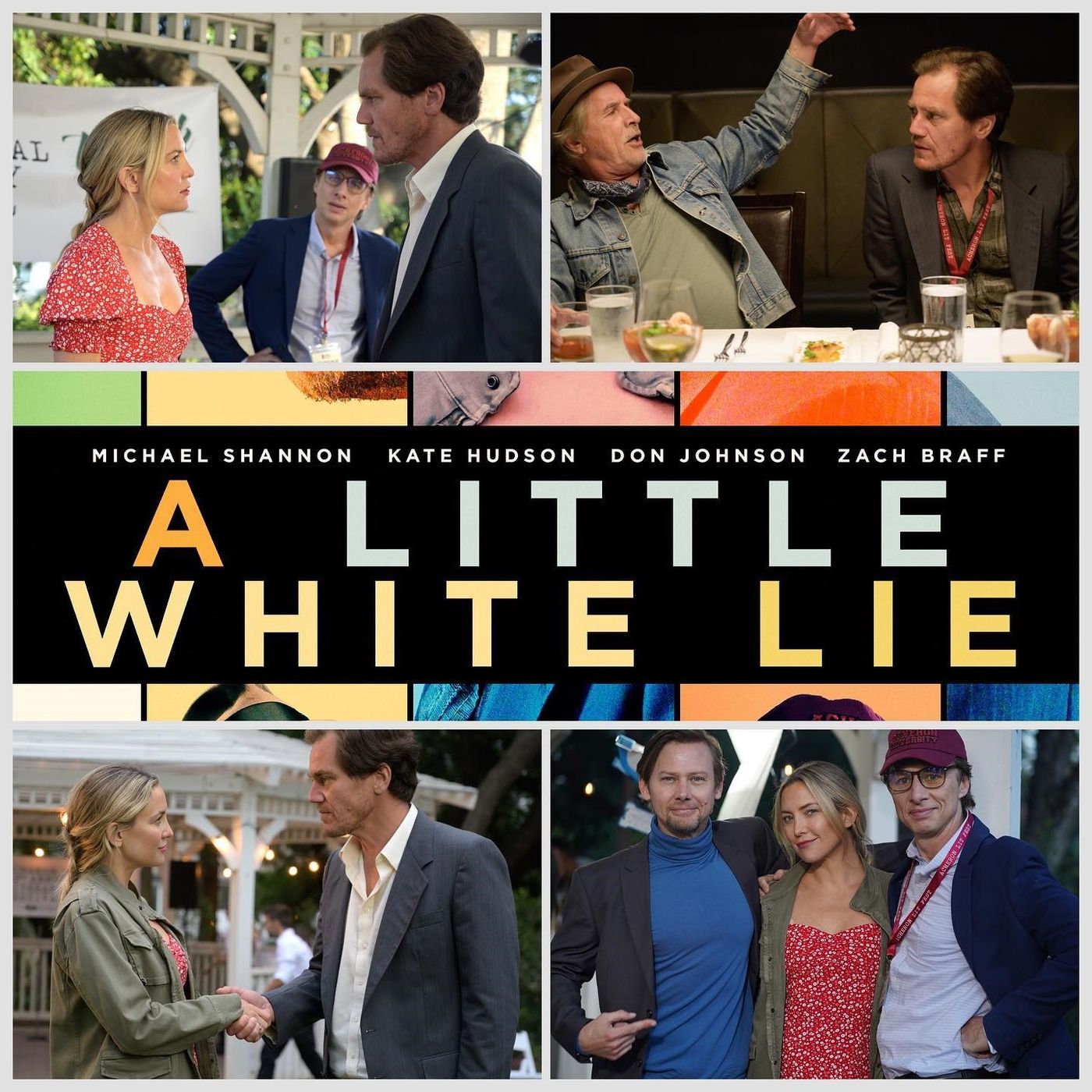
Special Report: Michael Maren on A Little White Lie (2023)
About this episode
Find out more at https://www.instagram.com/mmaren/
Transcript
Automatically generated, so expect the odd misheard name.
[MUSIC PLAYING] Here we go, folks... It's show time. People pay good money to see this movie. When they go out to a theater, they want cold sewage, a hot pop plorn, and no monsters in the projection booth. Everyone pretend podcasting isn't boring.
Turn it off! [MUSIC PLAYING] [MUSIC PLAYING] What did I told you that the man who was coming to this here's festival will put us back on the literary map? [MUSIC PLAYING] The man that vanished after the publication of his masterpiece. I know who you are. You do the misdee. Shriver. Shriver.
Shriver? Shriver. I thought he was dead. Shriver. I'm bringing a crowd.
Because this is the last chance for this festival. You may think I'm someone else. I'm not a writer. Everyone's a writer these days. Everybody is the best.
The last time you were in a Starbucks. My pleasure to attend your most esteemed and prestigious festival, which is totally my thing. Also is the prize a car. OK? Well. [MUSIC PLAYING] Are you the festival query?
So you ready for this? Oh. Here you are. Here I am. Unless the real tribe is still an hiding.
Something about you just doesn't smell right. I need a drink. [LAUGHTER] [MUSIC PLAYING] [MUSIC PLAYING] [MUSIC PLAYING] I need you to behave for three days. Can you do that? And there's no car. [MUSIC PLAYING] Man needs a whiskey. I need you to be the man who wrote one brilliant song.
I'm on to you. I'm not driver. You really have to go to this party. She became a benefactor for the festival. This is your driver.
Come and see my library. This does not appear to be a library. Talk to me about literature. Oh. Hey, you!
No. This is ridiculous. Who is this guy? I'm driver. Do you imposter?
You, my friend, are the imposter. This shit is wild. I am so thankful. Can you honestly tell me that you haven't been lying to me? That's a complicated question.
Would the real driver be support? We please put an end to this buffoonary. This is our birthday. [music] - I think this is one of the great literary hoaches of all time. - Are you talking about me or him? [music] - Hey folks, welcome to a special episode of the projection booth. On this episode I'm talking with Michael Marron. He is the director of a little white lie.
It's a brand new comedy that is kind of making the rounds out there. Check it out and I hope you enjoy the interview. I am so curious about your career because you've done a little bit of everything. Can you tell me a little bit about you and especially even before the screenwriting career because you, like I said, you've done so much, especially with the reporting. It's not like I did these massive, tonic upheavals in my career.
It's one thing led to another and very naturally I found myself. And in a weird way, if I want to tell this is a story, it all starts with film. I'm old enough to remember when you just couldn't watch a film any time you wanted to. And you had a wait for something to show up on TV or end up at a local, or at how status or something like that. Well, one of my earliest memories is watching Black and White movies on our shitty TV with my dad.
And he liked a lot of these, as the results sort in sandal films, that's used to call him, I don't Jason and the Argonauts and stuff like that. But also he loved both Jest. The African Queen and Zulu and actually both versions of both Jest. There's the original one. I'm going to say it was a clip, people.
It's a clip, okay. With any, it was already original on it and they made remade with Kelly Savallis, years later, I got into the whole world of Africa and not Tarsanne crap like that. For against foreign Legion, always seeing a really cool to me. When I graduated from college, I didn't worry about getting a job. I just went with a piece of the score and I went to Africa.
And I spent two years there teaching in a world of secondary school in Kenya. And I wanted to stay because I really loved being there. And I worked with a really organization for a while, driving all over East Africa doing stuff at Sudan and Ethiopia and Kenya. And then I still want to stay and I got hired by the US government to go to Somalia. And where I spent another year in 1981.
And that's when I started getting very political about was going on because I really disagreed with American policy. And I wrote a report to the US government at the time just saying, "In essence, we're really fucking this country up." And we need to stop it. And that's exactly what I mean to journalism. And that's started my writing career. And I always wanted to write anyway.
So I started writing op-eds and I started reporting and I ended up back in a half-per-gup as a journalist for a long time. There's only so many years you could do that. I remember being 35 years old and Somalia during the war. And now I'm back to Somalia when the civil war started. And being one of the older people in the press corps there.
But I stayed and I wrote a book about it called The Road to Hell, which was about American policy, the Cold War. That book got optioned by HBO. I wanted to write the screenplay on HBO originally. It was like, not because I was thinking, "Yeah, I can let me try this other thing." And HBO wasn't so cool about that. They had that the option expire.
Somebody else optioned that. And then, but another year later when I had given up entirely on writing screenplays, James changed it these places all the time and they have not been institutional memory. Guy and Steven Tolkien, whose students were a non-writer and director, and he wanted to do about African all that. And I said, "Funny thing, I have a story that I wrote, it's fictional, but I think it'll make a great screenplay." And Steven read it and he agreed. Anyway, back to HBO when they were, they were, I've been offered me a bunch of money to buy this story.
I said, "I don't want a bunch of money. I want to write the screenplay." I want to make that show. And they offered me more money to go away. Steven stood up for me and said, "You know what? I think it's not the correct screenplay." So we, Steve, we together, we wrote the script.
This one is 90, I'm going to say 99 or late 98. And that's back when a writer's quote meant something. He used to get quote year, quote plus 10. So I got in it. Steven's quote and he'd been doing it for a long time.
And that was pretty cool. The movie never got made. There's been another regime change at HBO. And they watched everything that at the ancient regime had come up with down the toilet. Plus that I think they found this story, not uplifting, which is my style.
But I went on from there and I got hired to write any number of screenplays. I got some on spec and I had actually very early on. I had adapted and my wife has an novelist. She had actually written a memoir that reads her whether she was reading it before she was reading it. Where there's been one I had to produce.
And I went together to Phoenix Pictures, like Metabois Company. And I thought the producer was with me. He was going to pitch it. So I was reading on this little couch. You know, everyone has their little chit chat.
And then the producer says, "My Michael's going to talk about the film now." And I was like, "I just stepped in it. It was just, it was disgusting. It was like stumble through this thing." So standing down in the lobby with a reason. I'm really apologetic. And we're going to have to pull this together.
We're going to pitch it somewhere else. And Mike Metabois comes down the elevator. He's building across from the from Sony. And he's got his tennis whites on. He's off to play tennis.
And he was flirty with Reese, so he slowed down. And I standing in the lobby with the pressure, I just pitched it again. And then he looked at me and said, "All right, I'll call your agent." And they bought it. And they were made. Which is what happens.
But they came to me with another project that they wanted me to write. And it was an adaptation of another memoir that was by writer named John Hawkenberry. There was a part being a paraplegic in Warzones. And then they thought, "Because of the Warzone connection, I would get it." But they never pulled the trigger on that. And when their option expired, I reoptioned that book myself.
And I called them moving violations. "We're at the screenplay on spec." And all, I've sold a screenplay twice. I've never got made for books, books, books, for of reasons. But it got me into a lot of rooms. And I sold a bunch of scripts to other people.
But yeah, it got the money was good, but you get tired of doing that. And it was a producer I was with, what I'd been working with on producing a peer-numan, who owned the right to the Janistoplin story. I was working on the Janistoplin pick with Peter. We had meals, four men attached to direct. And so he auditioned, "Oh, it was got an employee." Janists.
That got ball-except for reasons. I'm the way to complicated to get into here. But I've got Peter another script later than I wanted to make. And we're talking about finding a director. And he finally said to me, "Why don't you direct it?" As or how to direct a movie.
So you wrote it. Do you know what it looks like? You know what's going to happen. It wasn't that that I ended up directing. But I ended up thinking, "Yeah, I'm getting older.
I don't want to do that. I don't want to just keep writing screenplay for money. It's really unsatisfying." And so I wrote a script called "The Short History of Decay." But about a young writer dealing with his own failing as a writer and as a human being and dealing with his mother's cancer and his father's stroke. And then there's some autobiographical elements in there. But I put a script that I thought I could make for very little money.
And I just got the script out and Linda Lavon got attached to her as you and Brian Greenberg. And Benjamin King who also plays the journalist in a little white lie. And shot the film for about $400,000. And it got a lot of love, which was nice that didn't make any money. Made it easier for me to then move on.
I know it was soon after, right after I had wrapped a short history of Decay, walked into a bookstore in Lennox, Massachusetts. And I heard Chris Bellden reading, I'm kind of a writer in Chris Bellden reading from his book called "Sriver," which became a little white lie in the movie. And it took years to get that going. Yeah, well, with some of the challenges, why did it take so long? Of course, there was a global pandemic somewhere in there.
It was more of that. First of all, I was a really slow writer. Many frustrated people will tell you that. I just take my time. I'm easily distracted.
I'd go off on other tangents and start five or six screened ways of the same time, put them aside and tell them to get back to them. But also, I know from being in the business. I had a kid in private school and then had life and all this stuff going on and more did you run up stuff. And you can't just be focusing on one project. I've got to have a five or six things in various stages at any time because if I hadn't learned the lesson by then, I would have been idiot.
That most things even when everything looks like all the tangents are falling into place, that door still ain't gonna hold and for you. So it took me a while to get that out. But when I did get a version of the script out in 2015 or so, it got a lot of love and suddenly I was getting calls and actors and actors and then there's something that happened and this was a harder and less and there were producers out there, aren't people who call themselves producers. We would tell you they want to make your movie, they have the money, they want to invest in your movie and they will option, they'll give you a good option money on a script. But it turns out they don't have the money.
All they want to do is control the script for a year so they can go out and find the money. That's a lesson to any screenwriter who gets your script, you'll get it's an option on a script. There's a lot of people doing that, which is simply not a control your script so that they can then try to produce it. And so if they can't produce it after you sign a way of year on something like that, if they can't find financing, suddenly it's your fault because of something wrong with your script. It's in my response to that is that line YGB 5000 dollars for it.
So I learned that the hard way, a loss to year, loss to year doing that. We went through some other things with some other producers on it. We were moving ahead at one point and the script got pre-soldered can as a film. And so they was financing with the last pieces that I didn't come through. And then finally somebody came up saying they want to produce the film.
We had one of the people connected to that producer, not that producer, brought Michael Shannon aboard. And I went into pre-production on it in 2018. And so then I George Huber, we were going to shoot it at a budget that had been given to me with my DP and with a line producer with the budget that we were told. We had some time after spending a million months doing pre-production and setting it up. The producer would promise to money.
So with that's too much money for this film, you have to do it for you can't do it for X. You got to do it for Z. It was the end of the year I refused to renew the option on my script or the end, asked Chris to hold back to unrenewing the option on the underlying material. The funny little irony about that for me is that had we gone ahead and made that movie. I probably would have died because unbeknownst to me at the time I had cancer.
I started, come around January in the beginning of the year, I started feeling things that I know if I had been in the middle of continued pre-production and then production, I started post-production on a film. I absolutely would have ignored because it can convince yourself of anything. And so I great cast the cast to it and some really good coming a con, funny people. And when all in the happen, obviously I had several surgeries as well as really harsh chemo, learned that I looked pretty good bald if I had to lose all my hair. So I was good.
But it took me an entire year to get through that. And we lost the rest of the whole cast except for Michael Shannon. Michael stuck with the project. I think he very much left her answer that himself. But if he went to an SNS but I think he very much related to the character's driver.
He seemed very at them playing it. I didn't have to give him a lot of directing in terms of playing my character. So with Michael, the base at the beginning of 2020, we will rebuild the cast. Kate has enjoyed and then things started to click in because we've Kate there are the finance people we're ready to pay. We got the money we needed and then on Johnson's Act Ralph and Emma Walls and everybody else to find somebody around all of his wonderful on it.
So Jimmy Simpson Thres, everybody just showed up. And in fact, I was turning people away. We had like that. Yeah, we just went and asked people wanting to be in this movie. We started shooting late February of 2020.
It was an article in the Atlantic Monthly called "Cancel Everything" that came out early in March. And I remember it was between setups on set and I walked out the, I mean we were shooting in this office suite and I walked out the hallway and Kate hustled his standing in the hallway staring at her phone and she said, "Come over here." And I said, "Yeah, she said, did you read the article?" "Call cancel everything." And times are, "Yeah, I read it." But I think we're okay. It's gonna be fine. There are the barbura in rapid succession at same afternoon. It's like suddenly Tom Hanks and else he has COVID and the NBA castles are season.
This is all one wonderful day. So we shut down a couple of the guys on set really were like, "Dah, come on. We're gonna power it through." I honestly I probably would have to because I'm an idiot. No way. Yeah, he wasn't gonna happen.
Screen actors, guilt got involved and everything. Virtually everything. We were one of the last film standing in LA actually. I think we tried to shoot one more day after that. But Sean, go what we shot that day actually isn't useful.
You could see there was suddenly everybody were wiping down all the props between, between a retake and all that, which of course we learned. We didn't have to really do. But nobody knew what was going on. It was 400 days before we were able to pull the cast back together and before we had everything together to pick up. We stopped with eight days left of film and we could only get the cast for six.
And not only that, it was assisted directors nightmare. Thankfully not mine. Kate has under the shooting for Apple at the time she was trying to TV show, truth be told. Apple let her go for six days. And Zach Braff was doing a movie for Disney.
They would not let him go. So we had a shoot sack on a weekend. We had to take all the sack scenes and their cement for the last weekend. Divine Joy ran off could not be there. She was off shooting something else.
It was previously committed. Agent Amy King was nine months pregnant. She couldn't travel. We were shooting outside of Los Angeles. We were shooting in a redlands.
And she so we shot a body double. And then later when she was, I had the baby in there, in a couple of months later. I went back to LA and we shot her on a green screen and stuck her in the movie. Because she had a couple of really key moments at the end of the film. She shows up and without that scene, nothing else makes sense.
Losing divine, her character, Delta Jones, meant that couplup of the scenes. I had a rewrite a couple scenes and also there's one scene that we shot anyway. But she's not there in the scene. This scene went to my mind. I'm lost all the energy.
Because she's such a presence on screen. But you know what? I think we have a really good film. And I'm really happy with it. People are really liking it.
And it's finally coming out, which is great. Were you able to start some of the post-production during the shutdown or were you just completely hands off? But you can do the editing remotely now, asings software. I was sitting at this desk with an editor. I used two editors on a one of them was upstate New York.
The other one was in Los Angeles. We could work on the same screen, which is totally cool. I knew that in time with both of them. I'm sure I spent a personal time with the editors. I think that's the personal connections are really important.
But yeah, so that was fine. Yeah, my family was still isolating here. And can have a good, and everybody was in their own place. And so we got the editor. It took a lot longer than I think it took a lot longer than if I'd actually just been sitting in the brilliant entire time.
I also liked that at myself. I liked to turn the knobs and do all it. I went back to LA into the sound and called all of that. It's been a couple of weeks in LA doing that. And then I took a while to get the film out.
I took a while to deliver things. I think that the COVID delay caused a break. And I don't know. Some of the stuff that I don't have anything to do with honestly. The one we finally able to see the whole thing together.
Probably last summer, I had it. And then there was a question of a distributor and trying to sell, trying to sell the film, which again, is not anything I have anything to do with. I don't know the heck how that goes. I don't know certain decisions were made. I don't know.
It was totally it was hard to sell the film of our writers, some of the people with the computers and the marketing numbers. And I think it's a film that doesn't need to fit into a category. It's a comedy. I think there is a wrong calm element to it. But it sure is how about a wrong calm.
Not that there's anything wrong with wrong calm. I can weep with the best of them and watch those movies. How do there's a guy in 10 days to love that? I watch all the case movies for all of the case movies for all of the other. And I watch the actors like trying to watch all the stuff before.
All of the actors have works. And you just gotta know what they are. But I don't think this movie is not a wrong calm. It by any means. There's calm, but there is not a lot of wrong.
And although there's this literary obsession, which is a world I know really well. I know the literary world. I just got back from the Savannah book Festival of the Yesterday. I was in Savannah, Georgia, book Festival. I was with my wife and we're walking around and we would just point out things to each of the better, like string out of the movie.
I showed the film last spring. We actually run a writer's conference in Pozytano Italy every year. All the siren lines. We're bringing 40 writers and 40 writing students mostly, but some of them are they're all writers. And for a list writer, teachers, I mean bring everybody to what is maybe the nicest of telling a world.
And we spend a week there writing and eating and drinking and talking about literature. And I showed the film to that group of people and they were laughing all over the place. Because they got a certain set of jokes. There's stuff there that may go over your head if you don't know writers, a hangover, writers go to. But that's a pretty good population of people on this country.
One of the funny lessons in the film that goes on is that everybody wants to be a writer. Everybody's got a novel and everybody in the film who shire runs into and say, "China, press on the manuscript into his hands." And one of the lines I wrote in there that's really something that my wife is a very well known writer. The eyes every day, the UPS truck dries up the driveway and people sending manuscripts and all her. And Gala is in things because I want blurbs on me back. She's just on a moratorium on blurbing.
You want you to like to help young writers, but on the one hand, the other hand, it's keep doing it. But a writer walks up to Shrongred and says, "Could you just write something?" If I could even just write it myself. And we know that happens all the time. We love a blur, we know you're really busy. So if you don't mind, here's a few suggestions for things you could say where to God.
I'm not making that. It's art in the business of art. We're in trend. That's what we've been talking about in terms of the movie today. And you can't separate them and you make your compromises along the way.
I think the of making an independent film is really getting up every day and deciding what you can compromise on and what you can't. You can't do everything you want. And it's probably even a sugar big studio of films. If you've got a $50 million budget, I'm sure there's a lot of stuff you want to do that you can't do. I only got $100 million of budget and I'm short-gestless.
I really like to, I don't know, I don't know. I don't never plan to direct $100 million or film. God, keep it. This is a good budget range. I like it.
Had you worked with actors before your first feature? No, but I watch a lot of movies. It's the others that add. No, I've seen directors on TV. Like, day for night at Shrongr learned a lot from that and it's very accurate about what it's like.
My mentor has a director, you know, all of this, a man who my wife and his wife went out to dinner with every Sunday night for more than a decade was a man named Milos Forman. I have heard of him. Yeah, he's got an around. And Milos. I actually have a video tape I took of Milos.
I'm asking him about what he, what advice he would give me. We talked a lot about directing and I'd been with him. But Milos has this phrase. Milo said to me, and I won't try to do his acts. His Czech accent said, because it sounded so much better in his Czech accent.
And then I didn't will. When I say it, said, don't talk to the actors too much. You'll just confuse their heads. Okay, I tried that. It was more like Arnold Schwarzenegger than Shaq.
You know what I'm saying? Milo, Milo is pulling was, it's all on the casting. You've got to cast the right people. And you've got to trust that they understand that they will understand read. Because they're agreeing to be in your movie, agree.
Understand the roles and they'll fill bring it. They'll do what they do best. But we had a table read for it. And I had one table read with the whole cast. And then I had a separate table read a little bit later with just me, Milo and Kate.
The three of us, I'm going over stuff about the relationship between those two characters. Then we topped out a lot of stuff. And but beyond that, I just remember the time I was topped actors about season with what they're going to do. I topped a dog, Johnson, about fine tuning his character. The character that Don ends up playing in the film is a little different from the character I had in mind.
But I was clear that Don wanted to do it another way. He read it a different way. And I pushed him a little bit one way. But I he played that. And he played the kind of want to be poet guy of spent teaching English for years at this college pretty well.
And he did it in his own way. And I think I changed it before I saw a little bit in terms of the taste of my take on the character. I had one talk with Milo about, I think one of my favorite scenes in the film is when Michael's when Shriver, Michael Shannon, is reading the excerpt from his own book. I wrote a chunk of the book. Myself to try to understand the key Shriver character.
And I took a walk with Mike and before we sought the scene and I said, as one tell you a story, I'm not going to tell you how to do it. But this I was reading the article once and had a certain point in reading the article, I had a weird funny feeling. Something to start to come to me. And I think I think somebody played, I think I wrote it's just a paragraph in the middle of this piece. I remember back through some of my early clips.
And sure enough, someone had changed a lot of the words. It wasn't exactly what I wrote. But I had gone and played across. And changing the adjectives didn't change that for me. And I think every writer has their own take on that.
You have a signature style. So I said, as he starts to read, he's going to start to feel familiar with the writing. That's all. That's really real. And I left it at that.
And then he was brilliant. I love him and everything that he does. And he just always gives such a great performance. And I love this where he gets to play slightly comic. But then the scenes of him speaking to himself.
Those are gold. Yeah, those were those risky. I thought to do that. But I think you really worked. I wasn't prepared if it didn't work to cut all those scenes out.
But I thought it. But I ended up thinking it was really important. And I think it really worked. We shot those with me reading against Mike. And so I was a little nervous about doing that because I'm no actor.
But it did my best. Yeah. And he does comic. And it's very subtly comic. And a lot of it's in the timing.
I think he's good great comic timing. And he's a straight man through a lot of it. But he's really funny. He's really funny doing that. The young woman of place, the hotel clerk, it's small role.
But I think she's terrific. And there's a couple of exchanges they have. Then I just think are great. And they're short. And they're to the point.
But they play off each other really nicely. And the other thing you want to say about Michael Shannon. And I've been on enough film sets. He's the most generous actor I've ever seen on the film set. I've seen actors when it's not their coverage when they're acting.
But the cameras on the other, I suppose, you're listening to know this. Honey, it's never done the other actor. Kind of hold back because they, they save the really I'm not hammering this horn for when the cameras on them. Michael brought it with every performance. When the camera would be on on another actor, he would still, he'd still just laid it all out there and gave the other actors everything they needed to work with.
And a lot of actors do that. But they give 90%. Like Michael gave 100% every time. And Kate Hudson, she just seems so effortless in the way that she acts. Just it feels like she just walked onto the set and just started.
Yeah. Yeah. Once she did kind of eight to total pro, she was perfect in the role. I've never seen it, heard do anything quite like this before. There isn't a lot of comedy coming.
How to further. But she's she's so key to everything else that's going on around. And we just really believe. And she's a writer who's stuck teaching, you can create a writing at this shitty college. You believe every moment of that that looked with all of her acting.
And I would be standing there on set just watching her going like, wow. And then that kind of final, was just semi final seen with when she, Michael's are walking away from the gazebo after the whole thing at the cops and everything else goes down. I just said moment is perfect. But both she and Michael, great. Both she might be, if I was happy with something, Michael more than Kate, but Kate did it too.
They'd go, hold off. I don't want to do this again. Michael would just put a finger up in there. I mean, we'd just go one more time when I was because I'm taking, yeah, how is the assistant director is looking maybe just tapping as a watch like and Michael's one more and I'll go, all right, we're going again. We're going again, keep rolling and let's go.
And there's all that tension on set time and people like that. And I think we had a great set. I do my best to, I've learned, I learned that from me and a couple of other sets I've been on, just the director has a lot directing style of kind of filters down through everything. And that's really a big part of the job. Just for it, just I made sure I knew the names of the groups and everybody else on set.
I didn't second, third day in there. I just was, I'm bad at people's names, generally speaking, but just trying to create a really atmosphere because it's independent film is shot on her own a pressure. This taken you more than eight years for this to come through fruition. Yeah, and I'm sure it's changed a lot throughout the years and just the ideas of hand to change. You can be a thought about how you couldn't have everybody outside.
All when you wanted to, but ultimately for me as a viewer, in all comes together, it all feels very seamless. And it just, it was a very satisfying film. That's the idea isn't it? All those pieces in on and the match cutting from something you shot for a hundred days earlier. But it worked.
I think everybody believed in the project. Everybody had a good time. I think that we, there was a real sense of accomplishment when we wrapped that film that we're our last filming day was nearly 24 hours. We ended it for a clock in the morning having shot that restaurant scene and people were wiped out and the idea was we're going to go back and have a wrap party and then that didn't happen. Everybody was asleep.
What happens with the movie now? It's a VOD, DVD, those kind of thing. It's theaters right now. It's opening and selected theaters, I believe it is the known in the literature. I mean, it's probably not playing it at theater near you.
It's playing in New York. It's playing Los Angeles. It's playing in some major metropolitan areas. But at the same time it's available on VOD. Yeah, and then eventually it'll end up on a streamer.
I don't know. Again, that's nobody asked my opinion about any of that. I've gotten to projects. I'm doing everything I can. I love this movie.
I want people to see it. You can't rest. It's visit. You've got a two book I'm looking at. One of them for TV series off here.
I've got a screenplay. I'm past deadline on that. I need to turn in for another director. Yes, go on. The pollist director is directing it.
I'm running a script based on a book that my wife wrote. Wow. So that's all coming together. And I've got to have a script that need to finish and I'd like to be directing it by next fall. We'll see if that can happen.
I know I'm giving it an amount of time that it takes to assemble something like this. But I'm hoping that a little while I get enough love and that people will, you know, little dead. It'll get a little easier this time. But you know what, it never gets easier. I would say the adapting your own wife's work.
It seems like a surefire case for divorce. Yeah, she also, right, screenplay to that novel is mostly. And this book is a memoir. The one I'm adopting is called a memoirs called The Herodids. And I wrote, actually, what happened was the producer's hired a screenwriter to write and the script didn't do much.
And it was during COVID and I was home from my home. I didn't know what else I was going to be doing. And so now let me take a whack at it. I just do it for fun. So I turned the script around and the script that I attracted and yes, go on to one of the director.
But and yes, just said, she wanted, she has some changes she wanted in the film. So I said, all right, I'll do that. Then they hired me to do to make those changes. I saw enough getting paid to do the script. But just good.
Because we like. And so my wife understands that I need to make stuff up and change stuff and screenplay stuff and leave off good stuff. Leave out good stuff to make the story were. She's just adapted. She just adapted another novelist book and she had to do the same thing they had.
And she heard she's got a novel. She's written since then that she just wrote the pilot for. And we worked together on all this stuff and we really each other's work. And then I'm her in house editor. She's my in house editor.
Ideally, one couple is a lawyer. Her new good salary and the other ones. The one who was just taking chances and trying to write stuff. But she's not a lawyer. And I'm not either.
So we do okay. Mr. Mayor, does there a good place for people to keep up with you in your work? But the main place I put stuff out is Instagram, which is @mmarin.ar.e. and have stuff in the film out there. I have still some film up there.
And I had cancer. I, you know, whole photo project. Because my mind was too adult to actually write on that's all for the down on my feed. That's probably the best place I would say. And Maran Michael Maran.com will get it in my website.
But I don't really do anything with that anymore. People don't go to websites any. Mr. Mayor, thank you so much for your time. This was so nice talking with you.
Oh, great. I've enjoyed this. It's been fun. And thank you for how spreading the word on this movie. It's not there's no advertising budget really.
I don't think you're going to see ads for it on TV shows or anything like that. So it's got to be word of mouth or letter box or rotten tomatoes. Or, well, where you get your feed here, people renting about movies. Well, hopefully we'll get a few more eyes on this. Hey, I appreciate it.
Thanks very much, Rod. [Music] [Music] [Music] [Music] [Music] [Music] [Music] [Music] [Music] [Music] [Music] [Music] [Music] [Music]


