
About this episode
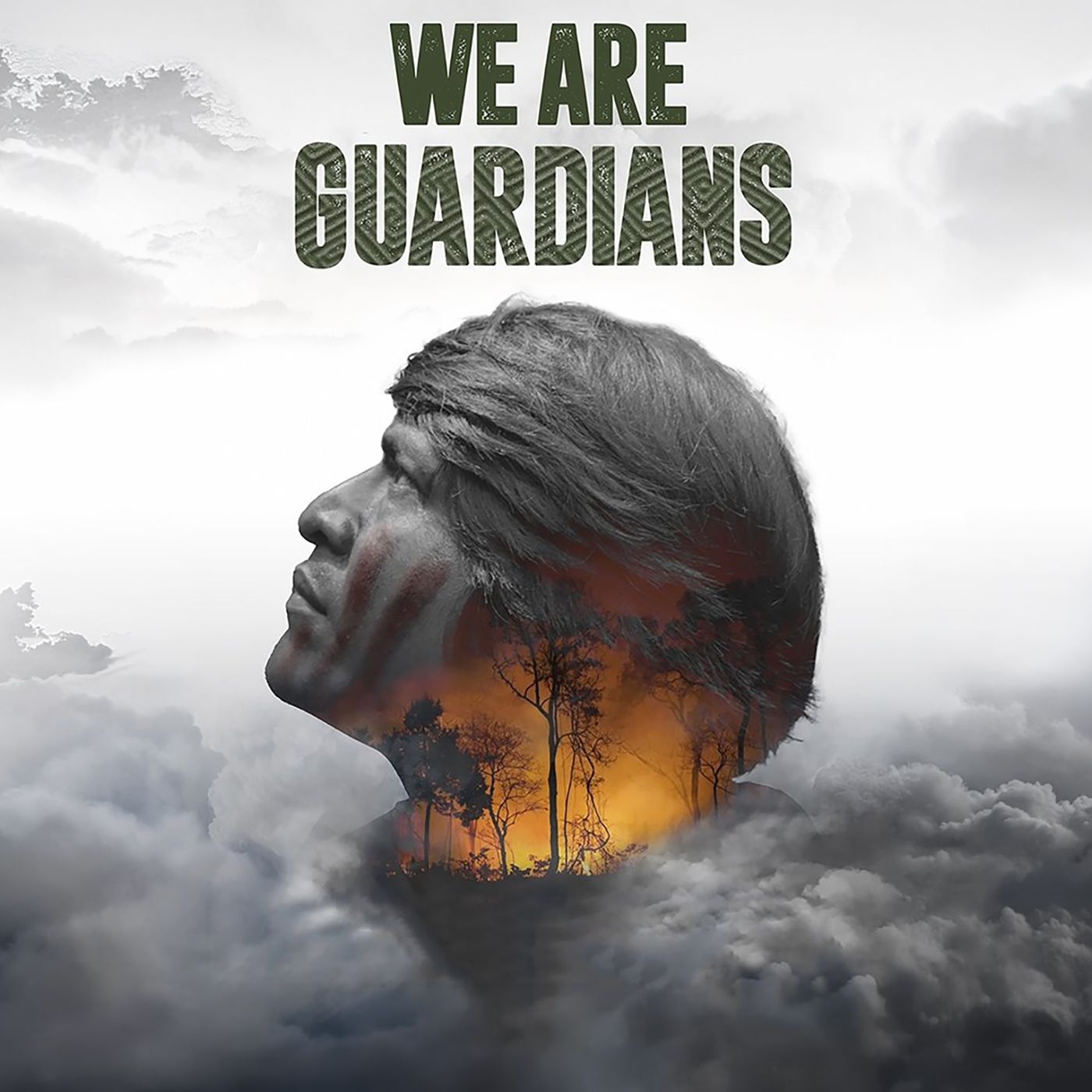
Mike talks with co-directors Chelsea Greene and Rob Grobman about the making of this award-winning documentary. Directed by Edivan Guajajara, Greene, and Grobman, and produced by Academy Award winner Fisher Stevens with Leonardo DiCaprio serving as executive producer, We Are Guardians has earned accolades including Best Documentary at the Raindance Film Festival, the International Green Film Award at Cinema for Peace, and the Audience Award for Best Documentary at the Mostra São Paulo International Film Festival.
Greene and Grobman join Mike to discuss how they brought this urgent story to the screen, the challenges of filming in a contested and dangerous environment, and what they hope audiences will carry with them. Follow the film on Instagram and TikTok at @weareguardiansfilm.
Transcript
Automatically generated, so expect the odd misheard name.
Oh ye is boot. It's showed. People say good money to see this movie. When they go out to a theater. They want cold sodas, hot popcorn and no monsters.
In the Protection Booths, everyone pretend podcasting isn't boring don at. Off, but joy is so protectoris Somers Medadero protectorist, Jiagua rest and knife. He's strange for im and my remember the. Phone and said, okay, I Garden make out the nasonis. The Flora Pascal fellow Man seem to you know that Florence has Son doesn't.
Need her pace. Okay, Okay, Martin, Okay, someone can be this. Just through Amazonian empirety just to be a lost mass. My in spress of fourful fast crazy. That's some must gradualists.
Hey, folks, welcome to a special episode of The Projection Booth. I'm your host Mike White. On this episode, I'm talking with Chelsea Green and Rob Grobman all about their twenty twenty three film called We Are Guardians. It is a documentary all about the burning of the Amazon in Brazil. Had a great time talking with them.
I definitely fucked up in this episode and referred to producer Fisher Stevens as producing Blackfish. Yeah, I was totally thinking of the Cove, but said Blackfish anyway, because you know, what's one devastating documentary versus another. Right, just give me a punch in the stomach. Hopefully this interview is better than a punch in the stomach. Had a great time talking with Ms Green and mister Grobman, and I hope you enjoy listening to it.
Chelsea and Rob, thank you so much for coming on. I'm really excited to talk with you about we are guardians. How do you two know each other? What's your working relationship? Like me and Rob?
Interestingly enough, and this is part of the story of many synchronicities of making this film. We met making this film after we had both gone to the Amazon independently to try to do something anything we could do to help with the Amazon fires. We were introduced by a journalist that we had both worked with, and he told me, oh, there is this guy from Oregon who's shooting all the same things with as you. You're shooting all the same content. You should give him a call.
And I was living on the East Coast at a time, and I've always wanted to go to Oregon, and I called him months later and we figured out we had complimentary footage, and he said, come out to Oregon and let's see about working together. And so I moved to Oregon right before the COVID lockdown. Our relationship and friendship was born out of COVID, and I mean just a shared passion for making films that inspire and hope being to bring these messages and these important voices into the folds. We even interviewed the same scientist on the same afternoon back to back. Our two teams, like ships in the night, passed and we never met each other at that moment, but I mean months later in the editing room, we realized that we had done that, and yeah, I just kind of felt faded that we were meant to meet each other and make this film.
Yeah, and speaking of our you know, voices that need to be heard, it's like we also co directed this with an indigenous director too, So like the story of all of us coming together to make this film. The director and team can't you know, be without him. We found it. We met him on a beach one day in Pada State, by the mouth of the Amazon River. He was shooting something with Media Indigena, his journalistic group, and that was another fated moment, right rob we found a Jubon.
Yeah, it was really cool because you just like meet certain people in your life and it feels like you've known each other for a lot long time, and that was the case with both Chelsea and Edgibon, and he was just excited to help us with our project. He was working with Sonya Guajeshara. He's actually cousins to Sonya Gua Jeshara, who's the Indigenous the Minister of Indigenous Peoples in Brazil and one of the most important indigenous leaders in the world. And he was just super excited to hop into our project and support us. He was at first a camera person and doing what he could to help us in the field as a producer, and that was very clear that from early on we needed his guidance and leadership, especially as we were navigating relationships and filming with indigenous communities.
And yeah, just the three of our talents and the ways that we look at the world combined, I think it's a real testament of what this film is, and the film in general is a testament of the kind of global team that we brought around it. We had autianist Georgiev who is an editor from Macedonia who helped us initially really kind of like get the film structure together and bring in a whole other sensibility than we have as people from the United States. Yeah, it was a world effort to make Weird Guardians. For sure. You both independently decide we need to go down to the Amazon and start shooting stuff, like when is this Because you talked about the pandemic and this was before that, but what is the time frame here that you were actually shooting.
It was August of twenty nineteen, and the fires, if you remember, made international headlines in the Brazilian Amazon, and it was all over you know, CNN, Fox News, everybody was covering it, you know, for a news cycle basically probably a week or two. I was there in Oregon with my creative partner Antonio, and it was just like, man, like, we've got to do something. It's just like, what are we doing if we're burning the Amazon rainforest? We have wildfires that happen in Oregon every year. They're unprecedented wildfires happening all over the world.
It just did not make sense to me that we could be burning the Amazon at a time like this on purpose, and so yeah, just a deep calling to support with our talents and our efforts, and we jumped in. I mean, it was maybe a naive decision, not realizing how big of a project and how big of a topic we were diving into. But it has been just an incredible journey where we've come from and what we've been able to do, and to be at the end, like really really excited to share we are Guardians. You know. It's a project I'm proud of and it's something I think that it's a really important message for the world to year.
Right. I had been studying deforestation before that for a previous film about palm oil and deforestation in Borneo and Indonesia, and until twenty seventeen, Brazil was actually a leader in the world and reducing deforestation. And after knowing that and seeing that the president was on the news telling everybody to burn it down now and just getting rid of all the legislation and changes that have been made to make progress, it just stabbed. Me in the heart. I said, oh my god, what else should I be doing with my life but addressing this.
And it's so admirable that that y'all came together. It could have been the armageddon and deep impact of Amazon documentaries and said that you joined forces is pretty great. It was pretty cool at that moment because I think the project just got some juice. You know, we got some unprecedented momentum at that moment where we decided to come together and quickly we had our producing team that was kind of locked into the project. Zach Kilberg and is Web came on a social construct and they really helped us formulate the team, made connections with Bruce Cohen, who is an amazing producer on the film, and Fisher Stevens, and at that point we had kind of rocket fuel and it was it was just off to the races and we were down back in the Amazon in October of twenty twenty for five months and that was that ended up being like one of our longest production trips of the whole.
Project, right, and we found Edgibon, our indigenous co director at that time, which then changed the project again. It turned us into a strong tripod where instead of two Americans, we were a Brazilian indigenous you know, lead team. That was a huge one and you know that also was mid process for me and Rob learning Portuguese because Chiun does not speak English, and so we also got to learn some of his indigenous language of Tupi. What a beautiful process. It all was right that we could meet each other in that way.
Chelsea's basically I would say fluent in Portuguese at this moment, and like I'm I can I can struggle through, you know, a conversation, and it's It's taken a lot to make this film happen, you know, like we were down there over fifteen sixteen months between twenty nineteen team and twenty twenty three, twenty twenty four, and back and forth, and every time we were back in the States or back in Europe were we were editing, and it just yeah, it was an incredible effort to get it done as quickly as we did, feeling just the urgency of the topic and that it needed to get out as quickly as we could. Rob is being bashful, they call him Hobby Gada. I really enjoyed learning Toupee and get you know, my time with the Guajesara and the indigenous peoples was just an experience of a lifetime.
You know, it's just really unique when you get to drop in with people that are are living in a different paradigm and different reality and truly live from the forest in a lot of ways, in a lot of their traditional ways. And yeah, I just have a certain resonance with different languages, and Tupe was one that I picked up quickly, much more quickly than Portuguese. Portuguese as tough, it is a difficult language, at least. For I was just captured by the soul of Brazil, like I had to learn Portuguese. You know, for those of you who haven't been to Brazil, there's just a special vibe and the people are so warm you just really want to.
Be a part of it. It's fun. Yeah, they're amazing culture. And I'll never forget Rob playing guitar, playing Bob Marley covers to the indigenous communities and them just they love reggae. They were dancing and just going wild.
It was so fun. So you speak the language of music as. Well, Yeah, Yeah, having guitar on production is pretty useful. And meeting people, you know, it's a pretty disarming thing. So I think you bought a guitar three times when we went down there and gave it away each time.
Yeah, yeah, we got a guitar on each production trip, and yeah, you gotta have fun along the way, you know, and we did. We had so much fun making this film. As much of the challenge and the struggle that we had throughout it was. It was really incredibly amazing and testament to the people that were you know, came around and were a part of it. It was so fun.
They're like family to us. Right. It's so heavy. We're heading on missions deep in the forests that take all day, multiple days, with loggers that are life threatening, don't want to be found, armed and dangerous, and we got to make light of the situation and enjoy ourselves at the same time maintain relationships. I was going to ask about some of the challenges, but that sounds pretty challenging.
I mean, the language is one thing, but having these armed, dangerous loggers is something else entirely, I'm. Sure, right, Well, part of the backbone of the narrative of the film is the indigenous people risking their lives to go and monitor and patrol the territory and try and find the loggers that don't want to be found and know they're committing a federal crime and capture them on camera. So that was difficult. Yeah, it's fun. You mentioned Fisher Stevens and like, until Blackfish came out, I don't think a lot of people realize just how much he is invested in documentaries and making great documentaries.
Yeah, he's fantastic. I mean The Cove was, I think for Chelsea and I just a pivotal documentary and he was a large part of a as a producer on that, and he was just an incredible friend and mentor for us. You know, you have producers on some projects that you know, lend their name or lend their connections and they kind of, you know, helicopter through the project and help in different ways. But he was there in the trenches with us throughout the process and teaching us about, you know, just experiences that he's had in the past and just thoughts that he had in the direction of the film. I mean, he really pushed us to be as raw and as intimate with the participants as possible, with our protagonists and kind of go in that direction of a verite, true verite style documentary.
And incredibly grateful for his insights in that way. Yeah, just a great guy. You know, Fisher is awesome and just really believed in us and believed in what we were doing. And I think that that alone, like just help propel us. Right.
Having his insights was so helpful. I'll never forget showing him the footage of Valgier or the illegal Logger for the first time and him saying, Wow, that's a main character, you know, because we were interviewing so many people to find the right person to carry the story and to find the pieces to the puzzle, because it's a complicated mosaic of a character driven story, right, And so yeah, when Fisher said, that's the most compelling person I've ever seen you guys film, we were like, Okay, we're onto something. I also remember, I think in the next sentence he was like, and you guys are going to need to go back and fill more with him. Wow, okay, because getting to Valgier from the United States is literally a three or four day journey from you know airplane, you know, flying to sal Paula or Rio, flying up to Portobellio in the Amazon, taking a twelve hour car ride to the city that's nearest to the indigenous reserve where it was happening, and then driving out another like half day to a full day into the jungle where we met him.
Incredible lengths to get out there, and of course you're going into a space that people are very, if not like it's much more than suspicious of journalists there, they outright hostile towards journalists. And you know, we we tried our best to just first off hire really great translators who could be you know, just a really wonderful energy and kind of forward face of our of our small production team, but also then carrying an energy that was like an a genuine way of like, we really want to understand your story, We really want to understand what's happening for you. We're not coming in with an agenda or trying to deceive you into being a part of this film, and we're going to just make you into the bad guy here.
I think we're really lucky to find Valgier because he felt that, I think initially and and and very quickly was like cool, yeah, you guys can hang around, and and he was it was almost like as if he was waiting for somebody to ask him what was happening in his life and to be asked that question. He was he's a bit of a showman, like he definitely like in the camp as well, amongst all the other loggers, like he is the guy that's holding court every night by the fire. He's the guy that's just yeah, he's he's he's very full life in his in his way. And so I think also he really took to just like, oh, great, there's a bunch of cameras following me around right now, and since this is what I've been waiting.
For, and it's funny because he's the same off camera as on. Yeah, I mean, I think the craziest part of that whole thing was six months past from when we first met him, been filmed as much as we could with him over about a week's time, and then we came back to Brazil, and I mean Rob is not even saying like the difficulty of coordinating all these amazing you know, we had like a sound guy and a translator and you know, an indigenous liaison who worked with the loggers in the past but now wanted to help us coordinating everybody's schedules to get to this remote corner of the Amazon. But then finding Valgeer again, he doesn't use a phone. It's like, where do we find him? The people that used to work with him were no longer working with him anymore, and so it was like finding a needle in a haysack in an area, you know, bigger the size of Massachusetts, with a tangled web of logging roads and no service.
And the craziest thing happened. We were coming back to the territory and as we rolled out into this like main logging road where other roads branched off, we were saying, oh man, how are we going to find this guy? And somebody was sitting by this out of the road in the exact moment that we were going to give up, and said, Valgier has been waiting for you. He sent me to meet up with you. He had an intuition that we were coming back.
We don't know how he either. Was a tuition or somebody let him know that we were there, but he knew that we were there, and he was like a mile away from from where we were at at that time. And the guy brought us. Wed well the Americans that were over there. Another like insane synchronicity was just yeah, remarkable.
He got very close to the forest, I mean he's been working in the forest for his whole life, and he got very tuned in with the spirit of the forest in many ways. He actually from the first time we met him, just six months later, he lost his path. You know, he's out looking for Teresa cut and he marks a path with a machete, and he lost his path and was lost out there in the woods for a week. He had got dysentery, almost died. He said, the jaguar was just waiting for him to get a little weaker so she could eat him.
And he made it out of that situation, and then we filmed the most of the film with him. You know. A couple months after that. You talked about how you met up before COVID, and I was curious, how did COVID affect the production. It, I mean affected it in a lot of ways.
We had to be of course, like traveling during COVID was a big mystery, and like what would be allowed and what would you know, Like what were we able to do? And then of course interacting with pretty sensitive communities. I mean a lot of the indigenous communities and reserves completely shut down for a number of years, so there was just no contact that was happening there, But I don't know. I think for better or for worse, Brazil took a fairly relaxed approach to COVID in a lot of ways, and so we were able to move without too much restriction in that way. I mean, we were getting tested like every week every time we were interacting with somebody new, you know, following all that COVID protocol.
But I think Chelsea and I both felt like we couldn't let that stop us from finishing the film in a timely way. And it was an interesting window at that time because a lot of production in the film industry shut down in twenty twenty, so a lot of people were looking for different projects that were happening, and we had a project that was already rolling, that was ready to go, and we were ready to continue to shoot. So it was a strange window that allowed a lot to happen for us as well. Even backing up, yeah to right when we first got together in Oregon, rob having everyone be at home, not without any with other things to do, we were able to get on the phone with so many high powered people to really bring the team together.
Imagine getting a hold of our funders at that time without there being so much space and time in their life, so have these and depth conversations and really help them feel the spirit of the project when they get so many other funding lass. You know, some of the things came together, and of course we had to follow Netflix protocol for shooting and imagine the suffocating humidity and heat of the Amazon but wearing a mask the whole time. Tell me about the post process. Were you editing throughout this? I mean you talked about how many times you had to go back down to shoot.
Are you editing in between? Yeah, so we edited in between the second and third and for It shoots, and that was because we found an Oscar winning editor, Atinis Georgiev, who has you know, limited time, and he came on after our big six month shoot when we were pretty certain that we'd found all our main characters, and he's actually now a professor in dramaturgy, and so we said, let's construct what we have and we ended up going back two more times, which was needed, you know, in actually having Edgibon in the territory too, to be able to film some of the things that were ongoing was you know, happening throughout so that was critical for constructing the story as it unfolded over to time. And then in the end, Chelsea and I took over the editing, the main editing role we had.
We learned so much from Atanus and learned Avid through the process of editing with him, and Uh, it was just a vision that we needed to see through. And we were so blessed to find a last Spiegel who is our editing consultant at the very end of the process, who really helped to transform the project into what you see today. She did a number of amazing documentaries This is Congo, uh and and a Crude some some great documentaries and just again was was like it was a whole education working with with her, working with Atanis and and then we were there at the computer. I mean, it was a slog at the end. It was a real, real slog, just trying to muscle out what we had and battling with out about would we ever finish the film, would it be what we were hoping it would be.
And yet we got it together and we you know, got into Hot Dogs in the spring of twenty twenty three, and that was just a deadline now that we needed to finish the film, which was huge. It was it changed changed everything there. So within a couple of weeks we had a whole new score, which was amazing. Jacob Yaffi and his team that just did fantastic work with the music. They did that in twenty twenty days.
It was like thirty pieces of music. It was a marathon, but we felt like we were sprinting the whole time. I've never been more burned out in my life. So what is it like when you actually get to watch this with an audience for the first time. My heart was going to explode out of my chest.
I was sitting in the audience at Hot Dogs and the huge theater Theater, and my whole family and all my friends had flown to Toronto, and of course we have Fisher there and phuy on and you know, it was just I couldn't relax the entire time. I was so yeah, excited, anxious. Everyone loved it though. It was also one of my first times speaking on stage. And now it's funny looking back at that because doing a Q and A or speaking to the audience is so second nature now don't even think about it, Whereas then I was very nervous.
Yeah, we hadn't shown it to anybody, so we really didn't know how people would react. And at that time, I just remember like people were clapping and it felt like well received at the end of you know, when the credits rolled for that first screening, but I still was just like unsure what people would say. Was it clear enough? You know, all these different questions that you're battling in post production, and in general, it seems like people really have loved the film. It's a mental lots, it's been very clear and uh so, yeah, but that first screening was really just nerve racking.
Yeah, people were moved to tears. I remember looking around and seeing the way people were affected by it and feeling it. It's different when you watch a film in theaters, right, you can feel people's energy as we were watching, and I was seeing the way that the scenes were poetically stitched together and all of our hard work. It really was a joyful moment to see that people were feeling and to feel that people were understanding and feeling and getting emotionally invested. You mentioned doing a lot of Q and as I'm curious, how many times have you had this at different festivals or venues where you were doing Q and as afterwards.
I don't need an exec number, but like an estimate. Well, that's a great question, because that was a huge part of our impact campaign, right, and less about me and Rob being there, but having the indigenous leaders themselves and our co director and we attended must have been at least ten to twenty festival premieres with somebody to do a Q and A from the team. And then we did. I think a thousand in person screenings worldwide, you know, not necessarily with a Q and A, but sometimes having you know, experts in the field speaking. And then last summer we did a theatrical release in North America with sixty four cities that we attended thirteen screenings and so that was and a lot of screenings too, had again experts in local Native American indigenous leadership to bless in new a prayer or a song, and so there was a lot of in person event building which we felt was really important for impact.
Also getting the screen on Capitol Hill, getting the screen the parliament members in the UK Spain, and getting to go places with Edgibon and Guri Tembe. You know, like Chelsea said, this part of around Impact was really like this is more than just like an afterthought. It was like a seed of what the film was. It was like, we need to do something to help change the situation, and how can we best do that utilize the film as a tool to bring about change. So it was it's been amazing to get to, like especially travel with Edgiwan and Pui and allow them the you know, space to speak and in these really important spaces.
I wish we could have brought Marsol two more screenings. You know, he's like the teddy bear warrior heart of the film type character and the audience loves him. Remember we brought him to Blaine. It was like one of his first times leaving the territory and seeing his wonderment at the big city. We brought him to the Amazon Summit, and we brought him to the Rio, Brazil premiere as well.
He got to see he got to hang out on the beach in Rio, see the city. Yeah, it was hard for him though, I remember it being especially Rio was really hard, just being it. Was overwhelmed, Yeah, yeah. Overwhelmed and being out of the territory and yeah, it was just like it was. It was tough, tough for him to leave what he's now in that way.
I know you're still supporting the film, but are you working on other things now? Yeah, so we are. We just premiered the film on global streaming platforms and are ongoing in some ways, mostly just supporting how we can with the territories and you know Pui and Ajibon that are doing reforestation projects and the territories and continuing to protect their land and attend events and leverage the film. So supporting that from Afar, But I'm working more with Random Good Films now to help impact, produce and finish three films that they're working on about indigenous communities actually in different ways. One is about the is about Hindu who is a global figure and speaking for indigenous people and getting direct access funding for territorial and environmental protection.
Another is about the BaAka indigenous musicians and the Congo, and another is about the Quai bushmen and Botswana getting their land back, which means some of if it's the success of it, if the campaign is successful, they'll get one of the largest pieces of land back in Southern Africa and are under indigenous hands. Utilizing the niche that we've developed, bringing this film into an impact campaign space for other films is currently what I'm working on. I have dreams of making another feature film and directing it, but I just have I want to wait until the perfect story comes across, you know. And Rob and I are also directing a short series that we're going to put on YouTube, utilizing some of the content from We Our Guardians, so we hadn't been able to put in the film.
Yeah. I'm also working on a film about flow state with a good friend of mine, director Lose Fox, and it's kind of a modern interpretation of doubt the dabi Jing, I would say, through the eyes of a number of amazing protagonists. Taichi Master, a graffiti artist, indigenous Hawaiian boat builder and navigator from the Big Island weaves almost it's like a film, I would say, like a philosophical continuation of a lot of the themes that we brought up. And we are guardians, you know, the concept of like how do we reforest our mind? Uh, it's it's a bit of an answer to those types of questions of how do we how do we get closer to nature?
How do we recognize our place within it and flow with it? Both as individuals and as a collective, and. How do we shift our very colonistic, patriarchal, structured system to a more regenerative and matriarchal one. You know, That's one thing. One of the films I'm producing is looking at It's about It's also in the Amazon, with an indigenous woman protagonist whose name is Ma Pulu, and she's the first shaman of her culture, which she had to fight a patriarchal system that said women cannot be healers, they cannot have the role of a shaman.
And so that's a really interesting story that's in production right now that I've been working on. Where's the best place for people to keep up with you guys in the movie? So you can follow We Are Guardians film on Instagram and Facebook and subscribe to our email list on the website and Random Good Films is a place a good place to find out and keep up to date with these films that I've just mentioned. Random Good is a production company that also produce We Are Guardians. So moving forward, if you're interested in this type of content, it's there's going to be amazing things more coming out soon.
So you can subscribe on Random Goodfilms dot Com as well and on the YouTube channel. We just launched a YouTube channel, so find random good Films on YouTube and that's where Rob and I are going to launch our short series about the Amazon. Rob and Chelsea thank you so much for your time. This was great talking with you. It was so great to talk with you too.
Thank you so much. Yeah, thank you, Mike, it was great. Umble so. All, that's you're my gods. Follow Thello Florida startlin line, shoot.
On my florial dad. Won't you move, ma'n man pull you wos mohamma, I do oh here see. I'm gonna spot this the wee. What you mean to me just now? And fosters to your god.
That's not my got on. So me. U I gest you n yes that out goordious feverself busy kass s. I'm my song. I'm a talking jungles s tako myself.
That's my song. Blush from the sob allow men, my cocos, fool there, my father, Flamo. Call in from your news. Phospho euphos, euphos. If you're so fad like myself, if you feel so fat like.
Myself, sell you if you assume me. That I do. You DODA is out tourism music. Now in fact you this assic. This was a disash, Yeah, the SAP, then to rude H
More from The Projection Booth



Similar episodes across the network
Matched by shared keywords.
-
Once Upon a Time ... in Hollywood
1 shared keyword: leonardo dicaprio