
Season 4 · Episode 16
80s TV Legends: Stefanie Powers on Acting, Activism, and the Hart to Hart Legacy
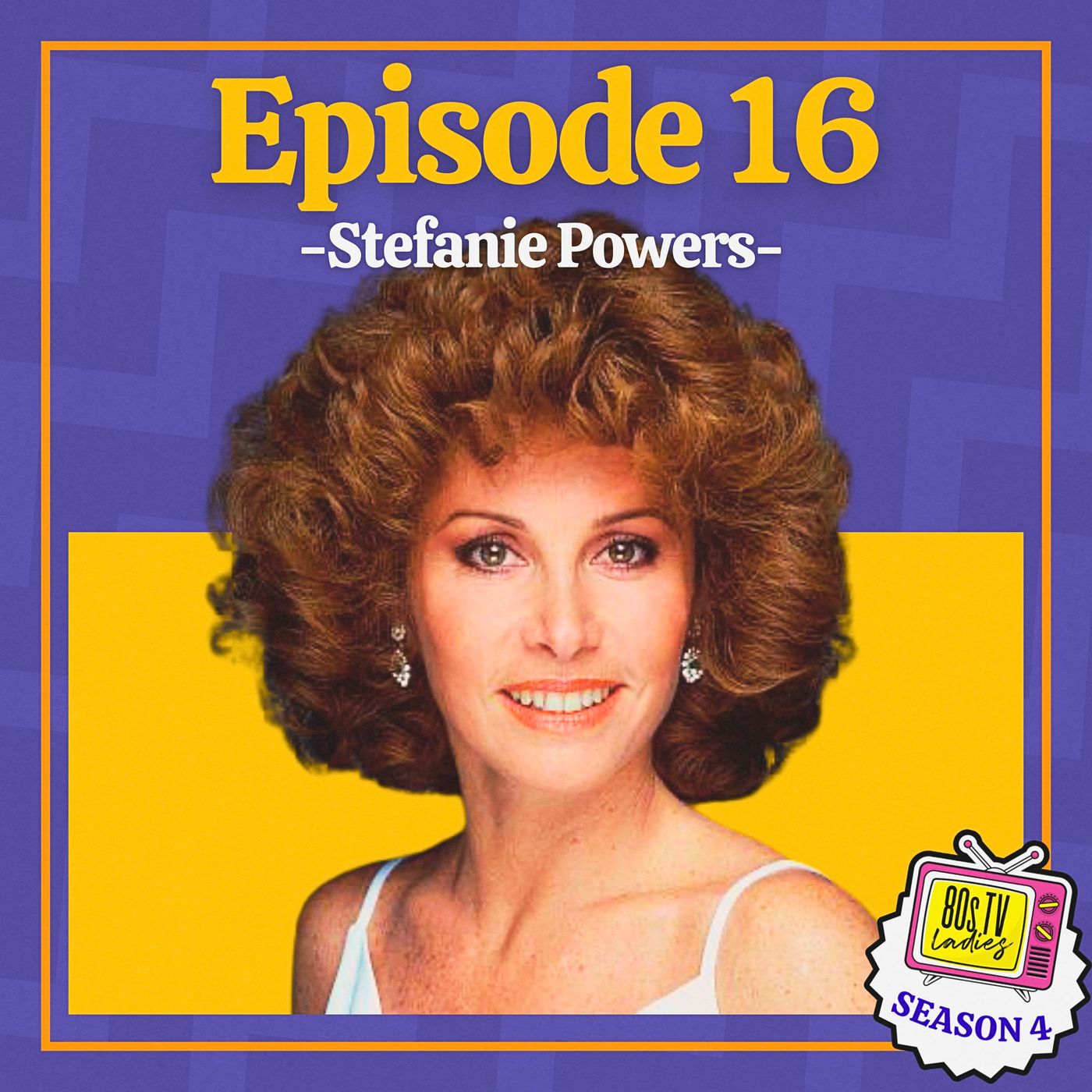
About this episode
Get ready for a masterclass in sophisticated glamour!
In this episode of 80s TV Ladies, hosts Susan Lambert Hatem and Sharon Johnson sit down with the incomparable Stefanie Powers. Known to millions as the elegant and erudite Jennifer Hart from the smash-hit series Hart to Hart, Stefanie redefined what a TV marriage could look like alongside co-star Robert Wagner—showing us a partnership that was sexy, equal, and genuinely fun.
But Stefanie’s legacy goes far beyond the "chauffeur and limousines" of the 80s. We dive into her history as a true television pioneer, including her groundbreaking role as the first woman to lead an hour-long series in the 1966 spinoff The Girl from U.N.C.L.E. Whether you're a die-hard fan of the Harts or a lover of television history, this conversation is a sparkling look back at one of the most iconic eras of TV.
THE CONVERSATION
- THE FIRST LADY OF ACTION: Exploring Stefanie’s groundbreaking role in The Girl from U.N.C.L.E. as the first woman to headline her own hour-long action series.
- THE LOVE OF HER LIFE: Led her to her 45-year lifetime legacy of conservation. Creating the William Holden Wildlife Foundation to honor and expand the work of William Holden.
- THE GREATEST STRIKE EVER: Getting the call from Aaron Spelling, writer Tom Mankiewicz, and Robert Wagner – and the lucky newspaper strike that led to her starring in Hart to Hart, instead of going to Broadway with Stacy Keach.
- HART TO HART: Diving into the "tennis match" rapport with Robert Wagner and the creation of a TV marriage built on equality, sexy banter, and high-stakes mystery.
- SOFTBALL COACH TO SHOWRUNNER: Stories of Sidney Sheldon, Leonard Goldberg, and how Aaron Spelling was Stefanie’s softball coach before he became the legendary showrunner and creator of so many hit shows, they often called ABC, Aaron’s Broadcasting Company.
- THE LA SCALA “THREE ROOMS: A look at the old Hollywood social hierarchy when Hollywood was a very small town.
- KIDDIES BALLET CLASS: The surprising shared history between Stefanie, Natalie Wood, and Jill St. John.
- STUDIO SYSTEM SURVIVOR: Stefanie reflects on her early days at MGM, being one of the last contract players, and working under the rigorous eye of brilliant - and monstrous - Jerome Robbins in West Side Story.
- WORKING WITH “FREEWAY”: Behind-the-scenes secrets of their canine co-star, including the hilarious truth about how they made such a friendly dog look like a fierce protector.
- A GLOBAL LEGACY: Stefanie discusses her 45-year journey as Founder and President of the William Holden Wildlife Foundation and her hands-on work in conservation and education in Kenya.
- SUCCESS VS. FAILURE: A candid look at why the industry prepares artists for failure, but rarely gives them the tools to navigate massive, life-changing success.
- WILLIAM HOLDEN WILDLIFE FOUNDATION: Why Stefanie believes that if you have a passion for a cause, you can’t wait for others—you have to be the one to step up. “Participation is not just asked for, it is required.”
- Watch episodes of Hart to Hart on Tubi or Roku.
- Catch The Girl from U.N.C.L.E. on DVD at Ebay. Or find it at Internet Archive.
- Learn more about the work of the William Holden Wildlife Foundation at WHWF.org
- Go directly to the WHWF DONATE page.
- Check out her official website: StefaniePowersOnline.com
- Follow Ms. Powers on Facebook and Instagram.
- Watch Stefanie guest star in The Rockford Files episode, The Real Easy Red Dog at Apple TV.
- Check out Democracy Docket here.
- Learn more about the ACLU here.
- Make sure you're registered to VOTE at Vote.org
- Get 21% OFF on awesome sheets and pajamas at COZY EARTH.
Be sure to use the promo code: 80STVLADIES.
Happy Shopping!
MARCH 8TL DEALS BLOCK:
80s TV Ladies deals and discounts:
Cozy Earth (21% Off)
🔗 Get them at: https://MyDeals.Page/19wy
🎁 Code: 80STVLADIES
📻 CONNECT WITH 80s TV LADIES- Official Website: 80sTVLadies.com
- Email Us: 80sTVLadies@gmail.com
- Support the Show: Get ad-free episodes and bonus content | Support on Patreon
🎭 SUSAN'S NEW VENTUREArts A La Carte – A non-profit dedicated to helping develop new works in theater.- Website: ArtsALaCarte.org
- Instagram: @ArtsALaCarteLA
Visit 80sTVLadies.com for more info.
Listen to 80s TV Ladies at YouTube. Subscribe and help us grow.
Don’t miss out. Sign up for the 80s TV Ladies mailing list!
Help us make more episodes and get ad-free episodes, video interviews, and exclusive content on PATREON.
Transcript
Automatically generated, so expect the odd misheard name.
Weirding Way Media. So Pretty Babies, into the City, the money Man World. Welcome to eighties TV ladies, where we look back in order to leap forward, and where we say we need to defund and dissolve ice. Call your representatives. Meanwhile, we're going to take care of ourselves and each other by spreading joy.
And here are your hosts, Susan Lambert Hadham and Sharon Johnson. Hello, I'm Susan and I'm Sharon. We are so thrilled for today's very special guest. And we will be diving into the world of Chaufford limousines, international intrigue, detective duos, and possibly the most enviable true love and hied venture marriage in television history. The TV show Heart to Heart created by Sidney Sheldon and executive produced by Aaron Spelling and Leonard Goldberg.
This action mystery series premiered August twenty fifth, nineteen seventy nine, on ABC and ran one hundred and eleven episodes over five seasons. It ended May twenty second, nineteen eighty four, then spawned eight television movies throughout the nineties. Our Guest Today defined an era of sophisticated glamour She was also a television pioneer, the first woman to lead an hour long series in the nineteen sixty six spin off The Girl from Uncle, but. To millions of fans in the nineteen eighties, she is the elegant and erudite Jennifer Hart. Alongside Robert Wagner, she showed us that a TV marriage could be sexy, equal and genuinely fun.
Ms Powers has been nominated for two Emmys and five Golden Globes. And beyond the screen, she's a world traveling conservationist, a renowned stage actress, dancer and singer, and a guardian of the wild as the founder and president of the William Holden Wildlife Foundation. So welcome to eighties TV ladies, the one and only Stephanie Powers. Oh wow, thank you very much man. We're thrilled to have a chance to speak with you today.
Great and talk with you about your impact on television history in your world changing conservation efforts with the William Holden Wildlife Center. Fabulous. Well, so it is a five oh one to C three public charity which I formed in nineteen eighty two. And William Holden died in nineteen eighty one and Bill was the big love of my life, a most influential human being, etc. And I I mean I was already in love with him on the screen, so it was very easy to fall in love with him in life.
He was a visionary as far as wildlife conservation. In the nineteen fifties, before independence of Kenya, he went out with two friends as a hunter. In those days, the game was prolific and it was not being poached out of existence as it is today, and he fell in love with the country. He was already in love with the animals, and on that first trip they bought a hotel and they created the Mount Keny Safari Club, which became very much a kind of destination. For people going to East Africa and still is to a certain extent.
And it's a beautiful location on the slopes of Mount Kenya, looking at the second tallest mountain in the continent. Shortly after they opened the club, the two thousand acre ranch surrounding the club became available and he purchased it with an idea to create a sort of center for the refuge and protection of wildlife, not a personal zoo so much as something that could be seen as educational as well as The word conservation wasn't in everybody's vocabulary in those days, but he was doing it. So in nineteen fifty he created the very first game ranch for the preservation of species in the whole of Africa. The game ranch at its peak had thirty seven species of East African wildlife, some of which are still there, five of which unfortunately are no longer visible in the wild.
So he was absolutely on course for understanding the need for preservation. What he always wanted to do was to build an education center so that local people of all a could come and learn about biodiversity, about the importance of flora and fauna in the lives of ordinary people, and that unless we preserved it, that we were the cause of it, diminishing that it was then our responsibility to also preserve it and make it proliferate. So he didn't live to see that happen. In his memory, I formed the William Hold and Royalie Foundation public charity, which means that every dollar you give us is tax deductible, and every dollar one hundred percent of it goes to the work. Nothing goes to the day to day running costs, because that's all covered by one donor.
Me, I was gonna say, who might that donor be. It's not only my passion, it is something I've seen produce extraordinary changes changing people's lives. Coming through our doors are about fourteen to sixteen thousand students who come to us for free by the grace of our wonderful generous donors. Howm I thank profusely and constantly. And we have an outreach program into rural areas which are largely rather impoverished and in need of special attention their tribal and their rural and they're suffering greatly through the loss of habitat for their own domesticated animals as well as themselves.
So our mission statement applies very much to them. Our mission statement is wildlife conservation through education and alternatives to habitat destruction. So that second half we have partnered with Jomo Kanyatan University in Nairobi in their microbiology department to show and prove that our methods of soil regeneration actually have a scientific base to them and that we can show the beginning, the middle, and the end of the restorative technology. I was very curious how the foundation evolved over the years and moving into sort of this education component seems like a huge part of it, this particular sort of technology and the science of what you're doing for soil restoration. But also I'd read something about plastic greenhouses, plastic bottle greenhouses.
We take the plastic bottles that everybody would normally throw on the ground or it's not biodegradable and would reduce itself to little micro cousins that go into your food and your body and your water. We create practical applications for the after use of it, and we have greenhouses that are made out of plastic bottles, and the plastic bottle retains the heat and does exactly what the glass does. So we're very happy that we can show and teach the after use of what would not be biodegradable. I wish we had after use for all the technological garbage that we produce, and or had a government that demanded that those people that produce that technology, which is so frequently replaced where people have to buy new stuff, a lot of new stuff, including new connectors and new this and new that, because they have to keep making money.
But we'll go into that later. It would be nice if they insisted that they make it out of materials that can be biodegraded instead of trying to recycle materials that weren't meant to be recited. It doesn't take that much more technology to make something out of materials that can be recycled. So we have an afterlife because we use Human beings produce so much garbage, and the noise outside is is the garbage truck coming by to collect the garbage in my neighborhood, of which there is so much it's it's mind bobbled. There is something we can do.
There is a lot we can do, because a lot of people would say, oh, but what can I do? It needs government this, Well we can. We can look at ourselves and look at our use of items and our abuse of items, and what we save and what we don't save, what we use and what we don't use. I have friends who have stopped going to buy clothes somewhere else. They go shopping in their closet, which I do as well, because I've got so much stuff that I haven't orn in a long time.
Just needs a good seems stress to reimagine them. And I've got a new dress. It is so daunting when you feel like you can't do anything about the things you want to be better and trying to find ways, whether it's supporting a foundation like the William Holdroen Wildlife Foundation, or making sure that you're trying to use less, you know, just a little bit less, or voting to make sure that you're voting for people that might try to hold somebody accountable every once in a while for what they're producing, you know. Susan, I think it's participating is knowing that your participation is not just asked for, it's also required. So if you have a passion or if you feel strongly about anything, don't think that somebody else is going to do something about it.
You can do something about it. And we've sort of lost that that activism. And I'm here to say, William March again, let's do it. And they were good march and restopped a war in Vietnam. So things are possible.
Yes, And it's important that everybody understand that the small things make a big difference. That you as an individual may not be able to change everything, but maybe by changing your behavior and changing what you do, you can inspire others to do the same, and then those people can inspire others and it'll have a ripple effect that you may never actually tangibly see, but is there you see? This is why women should run the world. I know, yes. Someday.
And you're coming up on the forty fifth anniversary of the foundation, right, which is it's also the forty fit the anniversary of Heart to Heart. I think it's the forty sixth of Heart to Heart. It's an anniversary, So. We'll just say, we'll say that both of those are incredible legacies to have been a major part of Are they tied together for. You in some place?
Yes? Because Bill died in nineteen eighty one, and so did Natalie Wood two weeks apart. So obviously I would never have created the William Holden Wilie Foundation had he lived. And I think the success of Heart to Heart was also a tremendous vehicle for me to begin to talk about it in public, and it's helped with our donor base and with having opportunities like this to speak to you and your audience. And to take you back to that year where you're doing hard heart.
Was it the first season of Heart to Heart or the second season? It was in this' say it was in November of nineteen eighty one, and so it was the second season. Is the second season that must have been such a devastating time to be working, And yet was work on that show also healing because you were sort of together in grief. Well yes, I mean, yes, all the above, you know, you can imagine. But also we had an obligation, and both of us had been brought up in the industry.
Robert Wager was under contract to Columbia Pictures when he was nineteen. I was under not Columbia, to the twentieth Century Fox when he was nineteen. I was under contract to Columbia when I was seventeen. So we grew up in the industry with the understanding of the obligation of showing up every day, and not only to ourselves and the producers and the studio in general, but to all of the craftsmen, all the people behind the camera that depended on our showing up in order to work. And that number is usually about seventy people on any given set, especially since you're moving around, so we have a lot of drivers.
And we were off for almost two weeks during that period of time, and it was threatening to make us lose our air dates for the show. And that was also putting the show in question. So there were all of these issues at take that we had to consider when we decided to go back to work. But it was a joint it was a joint agreement. RJ and I both we were consulted equally and we agreed equally to go back to work.
That's an immense amount of pressure. I think you were one of the last eras of actresses and actors in that studio system training. What was that like? Did you feel like you were living in this sort of movie set of a movie career. Where you were brought up to have a kind of obligation to understand what your obligations were and your responsibilities were.
It was a kind of finishing school for life as well as for your professional life. So understanding that there was that a lot had gone into it and that you were respectful of the system, I think it raised a different kind of a person. And everybody that grew up in that system, everybody that was a participant in that system, benefited from it an extent because you learned things you could never learn anywhere else. Now. Interestingly enough, in my work at the Union, I see young actors who would kill to have those opportunities.
And now we're in fact also offering some acting classes and some discussion classes to help help young aspirants in this world of entertainment to understand it and understand what your obligations are and what might happen to you. Because it's overwhelming. Somebody once told me that they that we all seem to be prepared for failure and how to cope with failure. Very few of us have prepared for success, and success comes in such a different way in these days because it's overwhelming. It comes in, you know, waves that one is unprepared for.
Suddenly people are often jewelry to wear and clothing to wear and endorse and this and that, and suddenly you become this thing that there's you were prepared for, and sometimes it has a very negative response. What was it like for you going through the transition from the studio system into a more let's call it entrepreneurial kind of system where actors and performers as an individual were more responsible or had to work harder on their own to work and be successful. Well, I have to put it in the context of the times, because while the studio system was being dismantled television was still working under the auspices of three networks, so we had limited outlets for the shows that were created.
And I think I was in one of the original mini series which was called Washington Behind Closed Doors, which was I think six or eight hours. I can't remember exactly, but I think we were one of the first ones of long form. So all of that was only available in one of three networks. So we had a really captive audience that isn't available to people today, and that also helped to keep careers going and keep you in front of the public that had already become accustomed to you by other television or motion pictures. So I continued to do quite a few films and some work in the theater, as well as two other television shows.
Oh well, did I say that they had told me? Yes, they sold me to Did I mention that they sold you? Isn't it lovely? Columbia Pictures sold them not my contract because they were in they were being forced to divest themselves of this a legend monopoly of people as well, so they sold my contract to MGM to do The Girl from Uncle, which was the first It was not just my first television series. It was also the first television series an hour long show starring a woman.
Which is amazing. And did you know that? Did you know that you were like breaking ground in that way at the time, or were just like I got a gig. No, No, I didn't. Well, you know, I also didn't get it.
I was told that to show up at MGM that they had sold my gunlo. You now belonged to MGM, So that was an interesting process. I loved the days in MGM because they still had a wardrobe department with Greta Garbo's costumes in it, and every once in a while I could go in when they were airing the costumes because they had to air them out otherwise the uh the bugs might get to them or whatever. And the head of the wardrobe department would call me and say, we're going to air out Camille, you know. So I'd go over there and look at these unrelievable costumes.
They were just they were made out of gossamer. They were extraordinary. So they had a lot and I was there during when they slowed everything off. I was there during that the uh, that horrible period where they had they decided to sell everything at MGM, all the props, all the beautiful props. I tried.
I had a big swimming pool, and I tried to buy one of the Swashbuckler's miniature buccaneer, these fabulous miniatures that they would that they would use in the Swashbuckler movies, And I thought, I want to put this big in a boat in the middle of my swimming pool. But unfortunately they went for a lot more money than I had to spend. You started as a dancer, did you do a lot of your own stunts in Girlfriend Uncle? Yes, I did, until somebody took me aside and said, you know, that's the way they make a living, so maybe you want to let them do their job. And that was a big lesson to me.
And did you feel as a woman in that situation did you feel responsible for the show in the way that a lead person is Did you feel that responsibility on you? Not the way I would today, obviously, not the way I would today, but clearly you were. You were number one on the call sheet, and you also had a great deal to do with the tenor of the set. So people, the way people spoke to each other, the way people received guest stars coming in, we always greeted them. We always wanted them to be comfortable, because the most difficult thing in the world is to be a guest star on a show that's been running and all the people have a rapport, and then you come in like a stranger, and unless you're received warmly, you feel really badly.
You just kind of feel like the odd man out. And there are very few shows that do that. The Rookies does that. I must say the Rookies. I did a very small part on The Rookies last year, and they were so nice, they were sweet, they were fabulous.
They made me feel so good, and I hope that's the way we made on the Girl from Uncle and on the Heart to Heart, that we made everybody feel that came to to work with us. It makes such a difference when from the top there's a feeling of we're in this together and we want everyone to win right now. I understand, you know. I've spoken to a couple of people who have done small roles on the Pit and they say that that group of people that the lead actor is who really runs the set. They bend over backwards to make everybody feel like an ensemble, which is fabulous.
Isn't that what we're doing. Isn't that the better work ensemble? Maybe if we apply that to life itself, it would be better. Yes, you know that we work together. Isn't the pit?
I'm loving the pit. It's wonderful. Except I do have to sort of shade my eyes every once in a while from certain things, so I don't see how they're doing anything. This season hasn't been as graphic in that respect, at least not yet. So ah, oh, those episodes.
I have to go back and look for those. You like this, so just real quick going back to the girl from Uncle, it was sort of that early sixties and it was the Avengers time, Honey West, and then after that would be Policewoman. It was the beginning of the sort of these like you know, kick ass women, right, Like, did you feel you were part of that? I didn't feel it at the time. No, I didn't feel that.
I was just you know, I was doing my job and it was going from job to job to job. It was working. Oh my goodness, I was going from job to job to job. Yes, it is a very busy time. Didn't have time to reflect.
And what do you think about it now though, now that you see what because it was groundbreaking that you were the first female lead of an hour television show. I was, yes, but you know we didn't make that. There were there wasn't Entertainment Tonight or any of these shows. That there's so much publicity and so much personal publicity, and everybody's on the Internet, and everybody's on social media and all of that, that you get overwhelmed by the cult of personality rather than the actual work itself, which is what I'm more interested in. I'm more interested in the work itself, projects and than my than publicizing myself.
And then when you when you were put under contract was with Columbia? Was that because of your dancer work, your theater work? How did you? How did that happen for you? Oh?
That's Scout's got a funny certain story. I was dancing. I went to see I was fifteen years old. I was dancing at the I was studying dance at the American School of Dance. And there was a girl there who's my age, a little bit older than me, who had a driver's license and could drive a car.
The two of us were very tall for our ages, and at the American School of Dance. They would post all the auditions for traveling shows, for traveling for movies that were going at television shows, whatever, and as a lark, we would go to those auditions. And because we were tall, and I guess we moved pretty well, they never looked at our faces. They looked at the will we moved, were down there bodies and all this, and so we were always kept to the end. Our mothers would laugh and say, oh, they'll be back late, and then the girl with a clip would come around and she'd say how old are you?
And we'd have to stand up very total in phase seventeen, you know, and they'd say, get out of here, stop wasting our time. With that in mind, we went to an audition. Well goodness, there must have been one hundred people there for the movie West Side Story. I was asked to come back to sixteen dance auditions. I never saw the same people twice, and my mother wound up driving me to the auditions because I couldn't drive.
I didn't have it, I wasn't of age. Then they asked me to do screen tests, which I did three of and then they called and said go and get your working papers because we start rehearsals. So I was chosen to be at the time, at least for the benefit of the rehearsals of Velma, one of the jet girls. There were two Jet girls, Velma and Graciana, and it was the greatest experience of my life. We would have an hour and a half ballet class every morning, the whole company, and then Jerome Robbins would come in and start talking to us.
In the beginning he was giving us acting lessons. We had to choose a character that don't let the dogs up on vow. Sorry, people are coming in to let me get my wildlife. Okay, all right, your animals are my animals. I have a visitor there behind you.
Yes, yes, can you see him? These seventy four pounds of love here's But there's one in the kitchen who you would love it? My parrot who got who has been in my life for fifty four years? Wow? Wow, isn't that amazing?
Yeah, a friend of mine. Has a parrot that's almost thirty. But wow, fifty four years, that's amazing. How long do parrots. Live into their seventies?
Right for them? Yes? Good for me. I'm not ready to let her go. So you got her when you were very young.
Yes, oh, my goodness, before hurt to heart. Yes, fantastic secret. So your love for animals and the environment goes back even before William Holden. Oh your childhood. Yes.
My stepfather, brand Thurman racehorses, and he had a passion for exotic animals. So we always had something weird running around and scurrying around or in the trees or what have you. But he very much believed in tough love, and tough love included my being educated to the responsibility of taking on another life, which is a dog, cat, bird, a horse. I have got fourteen horses right now, so I'm very well horsed. I have how many dogs?
I have five seven dogs, but they're not in the same place four year and then the rest in Africa. Oh wow, I'm going to take you back to where we were, which was talking about West Side Story. I was talking about Jerome Robins. This extraordinary experience of working with Jerome Robbins formed a kind of fundamental basis for a lot of the rest of my acting career. He had gone Jerome Robbins had studied at the Actors Studio, so he believed very much in motivated dance, and that these characters in West Side Story, each one should be a character, and each one of us was required to create our own backstory, so that at any time during the rehearsal he could stop the dancing and he could point at you and say, why do you hate the Puerto Ricans or why do you hate the Anglos?
You know, so that at the very basis of our dancing movements was an aggression. We didn't snap unless we knew that that was an explosion of frustration. So it was no one had ever talked about dance that way, and it was probably the main reason that everybody who saw West Side Story on stage in those days it was jaw dropping because you got so involved. That's what he wanted as a choreographer and a director. He wanted in on the part of the audience.
So you had to provide that that involvement for them. So the first few weeks of rehearsals, we would have dance class in the morning, and then the Jets would go off on their own and the Sharks would go off on their own, and we would sit in offices and listen to interviews that were done of juvenile delinquents in New York on the West Side of Manhattan, and we'd pick bits and pieces of the stories that they told to form our backstory as characters. As a character, that was an amazing experience, let alone to work in his presence. He was an innovator. He was also a monster.
He was He picked on me, He picked up a couple of other people in more than once. I went home crying. But anyway, that's just what those choreographers in that day would do. That was not an unusual experience. And by picking on you, he was saying, you're not doing it right.
You're doing it you're more insulting than more insulting them, the insulting version of that. That's horrible, But again it's not surprising given the time and the power that role had. Yeah, so you asked, I think the original question was how did I wind up at Columbia? Oh? I think we got to take a break.
We'll be back, and we're back. Oh so exciting. Let's continue this. So one day in the commissary at Sam Golden Studios where we were doing your rehearsals, the fellow who was the script supervisor was keeping track of all the notes introduced me to a friend of his who was an actor, director, writer, who was doing a movie, a small budget movie, and asked me to come and read for him because he liked to work with actors who hadn't had a lot of training, experienced mannerisms, etc. He wanted it to be very natural and instinctive.
So I went to read for him and he offered me the part. And it was then the next week that I got replaced on the West Side Story because it was ridiculous. I was under age and I couldn't work on the full day. I had to go to school and all this stuff. So we went to Milwaukee to film this little low budget movie, which is where and this man was from.
His name was Tom Laughlin, who you might remember from Billy Jack. Remember the movie Billy John was Tom, and he liked to do these low budget films that he could control well. He had a great benefactor and an admirer who was a very well known and very successful producer in Hollywood, and he had his own cinema in his house. And the first time I ever went to anybody's house where they had a full size cinema screen and a lot of recognizable faces around every part in Palm. I mean I met Audrey Hepburn there.
So he was a very big producer and he wanted to show this movie to all his friends. So as a result, I was invited by three studios by their talent department to come and join their contract players and work on a scene with the drama coach for each one of those studios in anticipation of doing the scene for the casting department who might recommend me for a contract. So I was the hottest nobody in town. I was going to walking through the gates and this is nineteen sixty one one, something like sixty two, yeah. Oky one, yeah, because I got my seg card in sixty two.
In sixty one. So I was walking through the front gate saying hello to Kam Hollywood, who was the guard at the gate at MGM. Everybody knew he Hi can I measured. I was somebody. And I was going to study with Zena Provndi, who was a protege of Stella Adlers, who was the coach for Marlon Brando who came to such fame and fortune.
And then I was going to Toiath Century Fox, where Sandy of the neighborhood Playhouse was the drama coach for the contract players. I mean that was extraordinary. And then at Columbia Pictures, I was raising a scene under the guidance of Las Mahony, who had been the artistic director of the San Francisco rap So I was, I mean, that was nobody. It's this thing, you know. And I was late for class at Columbia.
I was sixteen years old, and I was running through the shortcut, which was going through the editing department where they had all these doors that swung, and I ran straight into a man who was wearing the same sunglasses I was wearing. Now, these sunglasses were the latest thing on the French rivi era, and in those days, in the early sixties, anything that was the latest thing the French herd here would take three years to get to California. So he said, where did you get those glasses? And I had this big brother figure in my life. His name was Lance Reventlo, and he was a race car driver, among other things.
And Lance had been driving in the Monte Carlo rally and he brought them to me. So I said, well, my friend was driving in the Monte Carlo rally and he brought them to me. I said where did you get yours? And he said I was at the Monte Carlo and I said, oh okay, and he said what do you do here? And I said, well, I'm an actress.
He said, really, are you any good? No one had ever asked me that, and I said, oh, well, yes, of course i am. And he said, well, I'm making a movie here. You should come and see me. I said I can't, I'm late for class.
He said, all right, come after class. I'm on the fourth floor and my name is Blake Edwards. That's like one of those Hollywood stories that I was you know, a lot of turn there was discovered in Schwab's drug store. You know that's in that area. So that's what happened.
Hey, you got to think that race car driver? Yes, yeah, Dan seems like a big brother to me. Yeah. Oh my gosh. So it takes a thief.
Is that the first time you met Robert Wagner? Well, no, I met him on the set. He and Natalie came to meet all the dancers on a West Side story, so I met him there, but he wouldn't have remembered me. However, Natalie, Natalie and I were in the same ballet class, kiddies ballet class. Natalie was five years older than me, and my mother saved a photograph of our ballet class that I have as a treasurer.
In this photograph there are three ladies, all of whom were married to do a Robert Wagner in one way or another. In this class is Natalie Wood, Jill Saint John and me. Now it just show us that this was a very small town. Hollywood was a very small town, and the man who was teaching is that ballet class had been a great dancer in Europe, and everybody wanted their children or their daughters to study with him. He was from the Russian ballet Michael Kaniev, Michelle Panayev, and even the professionals would go to Misha's class.
Leslie Gallahall, johanbat All, sorts of extraordinary dancers in Hollywood would take his professional class, and we were in the kiddies class. So isn't that amazing. It's one of those stories you couldn't even duplicate today because the world is so much larger. They just weren't any ballet a lot of ballet teachers in Hollywood in those days, So of course you might meet people at that ballet studio, I know. But a picture is pretty great.
Yeah, it's quite amazing. That's pretty amazing. Well, and you and Robert Wagner definitely had a lot of chemistry in the episode of It Takes a Thief that you did, which was kind of unusual for that particular show. Nevertheless, the two of you together just really jumped off the screen, I thought, and it really it continued on Heart to Heart. Where did I find it?
There's a sight online called the Internet Archives, and they have all kinds of video of all kinds of things, including television shows, and it has all the seasons of It Takes a Thief. It does not have The Girl from Uncle, unfortunately, but it does have a lot of shows from especially like back in the sixties and early seventies, where it's hard to find things on DVD. But that's where I saw it. The Girl from Uncle is on DVD. I have all of the twenty nine episodes.
Oh, that's awesome. We did twenty nine episodes in the season. In the. About that. That's amazing.
That is amazing it. Yeah, it was pretty astonishing that that much content was created back then for a show. It was just unreal, and we did even with that ancient technology, we made one show in seven days. You can't do that today. I don't know why, because all the technology is so much faster, the lighting.
You don't know, I don't understand why we can't do that today. That is a very good question. I really hadn't thought about the why not other I just assumed it was maybe just a financial thing that networks didn't want to make that many episodes. But yeah, what is the schedule like for these days? For an hour long drama?
It's eight days, I think, And they don't. They only shoot about or each episode is only minutes. Because of the episode of It Takes a Thief that I saw was fifty one minutes. It's it's very different, and I'm one of the great mysteries of television. I guess yes, it is.
So when you did that episode of It Takes a Thief, did you feel like, oh, this is this is a great working relationship with Robert Wagner. You know, I would see him, we all went saying restaurants and things and all of that. So it wasn't that it wasn't so strange. As I said, The town was very small. If you went to a certain amount of restaurants or certain restaurants, you'd see each other.
He loved Lascala, and Lascala in those days was a place where there was somebody who said there were three rooms at Lascala. People just said, I had a friend who Tom Mankowitz, who was Joseph Mankowitz's son, who who named the three rooms, And the first room was co starring. That's co starring because you walked through it. The second room was above the titles, and the back room was with so you know your status when you went to that restaurant. And Tom Minkowitz directed.
Tom Mankowitz was He was a lifetime friend of mine, so I knew him when we were very young and toddlers and everything. And his father was Joseph Mankowitz. His uncle was Hermann Mankolitz, the Mankolitz. The Mankowitz family was legendary in in screenwriting and directing and all of that. I'm trying to remember.
I think Herman Magowitz wrote the screenplay for Citizen Kane, wasn't it. Yes, Yes, so there was. It was that level of literacy and quality of talent. So when they were preparing the pilot for Heart to Heart. I was in San Francisco with Stacy Keach.
We were doing the productions on Sarah Ad and Bergerak that we were going to go to Broadway with, and we were doing some out of town engagement and I got a phone call from Robert Wagner, Tombancos and Aaron Spelling, all of whom are knew, and they said, we're doing this pilot and blah blah blah blah blah, and would you like to do it? And I said, well, what am I going to do? I am committed to sooner though, and Aaron Spelling said, well, you know, there may be a newspaper strike in New York. And every time there was a newspaper strike, no shows that were out of town would ever come into town because there was no way you could publicize them or review them or anything. So all I can say was the greatest newspaper strike of my life.
I am forever grateful for the coming out and I could do the pilot own card tire. That is amazing. And when you got that call and you're like, oh, I want to do this, did you think this is going to lead to this sort of beloved show that people will be talking about forty five years from no, because. Nothing was guaranteed. You know, you did a pilot and it was up to the gods, you know, but nothing is guaranteed, even though you were doing it with a top rated company.
And you know Aaron Spelling, and you Aaron Spelling when he coached our baseball team in La there was a baseball team that was made up of young agents and young actors and actresses and has the Female League and the Male League, and they had funny names for their teams. And I remember the boys had one team that was called the Uja's which meant the United Jews and Italians. That was the name of their team. And they were all agents, young agents who then became iconic names in the in the world of cinema. Soon Spelling, who looked like Jiminy Crickets.
He was a skinny writer married to Carolyn Jalams, the actress who was adorable. He was our coach for the girls team, the girl's softball team, and he was adorable and the two of them would often have us over for barbecues and everything, and so it was that kind of intimacy that we all had growing up in Hollywood and in this town. So when Aaron's writing put him into a very different category and he and Leonard Goldberg formed Spelling in Goldberg, they became one of the most successful independent producers of television ever. In fact, they used to they used to say ABC was called Aaron's Broadcasting Company. They had more Aaron's and Leonard Goldberg shows than anybody.
So it's very difficult to try and explain what the environment was like in those days because it can never be repeated. Yes, and it was that eighties time of on screen power and jet set shows. Right. They were all very lifestyles of the rich and famous, and that all solved crime. Apparently for their side game.
It was very dangerous to be a friend the hearts because you were going to get killed. They were getting killed. It's like dating a hardy boy. You should never do. That, or being someone who knew Jessica Fletcher.
Yes, yes, yes, dangerous. The other thing that was happening in the eighties is that women were starting to step into more powerful roles, both in front of them behind the scenes. And did you recognize that was happening or was it just no more. What it was before the eighties Idolino. Do you remember Idolupino and actress.
She was well known as one of the first who broke the glass ceilings. She was directing television movies and it were long before many others. She was fantastic. Yeah, there were breakthrough but I think in terms of significant images, the. Images of what we were portraying.
The images of what you were portraying, and the number of different kinds of roles that were starting to be there. There's something then happened. I'll tell you that we have a little more time, do we Okay? Yeah, if you do, we're fine. Yeah.
I don't think about this very often, but everyone's a while. I do when I start complaining about the fact that there's so many venues for things and you can't pull an audience in because how do you find these things? And there are too many choices and all this. Well, it's kind of my fault as well, because in nineteen seventy. In nineteen seventy, it was a period of time where the SEC the Securities Exchange Commission, was reviewing the exclusive contracts that they had with ABCNBC and CBS for the airwaves.
Now the airwaves were the wave band that had been designated exclusively to those networks when they were first inventing television. So these networks wound up having a monopoly of those airwaves across the country, and their exclusivity contract was firing, and there was a group of people asked to go and speak in front of the SEC in favor of disallowing that monopoly to continue. And I was one of them. I don't know why I was one of them, Maybe because of the girl from Uncle, maybe because I had been in that position at that time. But here's the group, so you can see I was very awe awe struck by being included in this group.
So there was the head of Screen Actors Guild, Charles and Heston. The head of the Writer's Guild was Edward Anhalt, The head of the Director's Guild was Robert Wise, the head of the Producer's Guild was David Mirish, the head of oh Sydney Boitier and me and we all went to give our speeches and give our testimony in Washington with the guidance of a very well known lawyer who represented the motion picture industry and the head of the Motion Picture Association who was lobbying on our behalf, and we testified, We had our speeches, and we got up and gave our speeches about why we felt, as representatives of the industry, that we should have greater opportunities for employment, greater opportunities for expression of choice.
It was at that point called family Choice television because we won the day. The next day the networks were testifying, and at the end of the week the decision was made in our favor to open the airwaves, and it was the precursor to a cable TV, which was the precursor to what we have now. Do you think it was good or bad? Like you're saying this with a little bit. Of facitation, it was the sea change, this extraordinary sea change.
When there were less choices, you could create audiences for shows that you could probably not create today. Now there are so many choices that it's hard to keep track of the shows you want to see, let alone the shows that you might not want to see, do you know what I mean? So the audience participation, we don't have the ratings anymore, so we don't know how much of the show is being launched by how much of the audience. We also don't subscribe so much as we did before. We have alternative choices in how we get our streaming shows, it on the enginet, you know, So it's it's all over the place, whereas it was much more consolidated when there wasn't so much joy.
Yeah, it's a double edged sword, right. That's right. As we say, it's positive in there, there's always both sides of the coin. Yeah, And to that end, you know, that was when we basically had a monoculture. Everybody was getting the same information, preaching from the same hymnal as this saying goes.
And now, of course with the hundreds millions of sources of information and misinformation, it's a lot more difficult to get people to agree on what is or is not something that is good or bad. But at the same time, this culture we have now provides more opportunities for more people. So everything has a has an up and a down, and just a crush of navigating it. Yes, truly, truly. Just to take you back to heart to heart for a minute, We've looked at a lot of the eighties detective duo shows, and your relationship stays very equal in a lot of ways, more so than other male female detective shows did at the time.
Did you fight for that? Did it happen naturally? Was it just what was happening or did you have to go, hey, wait a minute, can I just hit him over the head? Like now, It was a mutual agreement, and RJ was your leader, and he very much wanted a great deal of equality in the show. Yeah, I think it's still pretty it's pretty remarkable to watch it even now, in the levels between those two people and the fact that they are co equals, not just in the relationship but in the work that they're doing to solve these crimes.
I'm not sure there are too many shows beyond this one that does it as well. Oh wow, thank you very much. Yeah, And we had a rapport. So the rapport was like a tennis match. You can't play tennis alone, so you need that other person.
Yes, which is why you know we were We were nominated for five Emmy Awards as individuals and those shows. But it wasn't you know, we one couldn't be without the other, so it wasn't it wasn't a solitary performance. She couldn't exist without him and he couldn't exist without her. So that I think that really sort of was the tone of the of the piece. And there's clearly an instant chemistry in a lot of ways, but at the same time you sustain it very well.
Your chemistry in the beginning of the show is both equal. And then that there's a later season flashback of How You Met, and it's adorable, like it's like, oh my god, there of course they had to be alone, right, it's it really holds up. Not all on screen relationships from the eighties hold up. How We Met was my favorite episode. Oh oh yes, And I still wonder to this day because the proposal came when we were standing on the side on the south bank of the Thames with Tower Bridge behind us, and he says turn around, and I'm defiant and he said no, turn around, and the sign drops from tower Bridge.
Almost impossible. Nothing has ever dropped from Tower Bridge? Will You Marry Me? And I've often wondered what all those commuters driving home at rush hour thought when they saw this sign dropping from the governed tower Bridge, because. You really dropped it, like it wasn't CG.
You really threw that big sign up on all of London and everybody thought someone was getting married. That day, we're getting engaged. Yeah, it's a good like. It's a very clever show. It is because it's hard to sustain I believe on screen over seasons that same level of sort of sexy banter once you've done it right, like, and you guys had already done it, so I guess it worked.
You started off that way. Well. We had, First of all, we had wonderful writers, but also very collaborative writers because some of those still called heart to heart scenes between the two of us were very much just improvising, and so as long as they had created the environment for the improvisation, we could do that. But they had to create the format so that we could fill that in. That must have been fun and also kind of fulfilling professionally to be able to have that opportunity to do that within the show.
You don't hear about that too often? No, No, no, we were spoiled. Did you ever get that again? Not really? No.
Every once in a while you could say, couldn't we change this? Could we possibly? If he does this, then I say that, But most of the time, no, But. You got that. I'm also curious.
I like to look at the behind the scenes numbers. You had two out of twenty eight directors were women, but the women did several episodes, which is fairly unusual too. So you had Gabrielle Beaumont, Karen Arthur, who we've talked to on the shows. I'm still in touch with Karen. She's amazing, and I'm very curious about if it felt any different when you were working with female directors at that time than male directors, particularly those two.
Oh well, every director has it, you know, it's different to work for every director. I was reminded the other day of the fact that in voting for the Academy Awards, I will just say it, my favorite male supporting player is Sean Penn. Now, Sean Penn's father was a director called Leo Penn. He'd also been an actor. Leo did a lot of our shows and he used to bring this little kid on the set.
With it. And even when I see Sean today, he remembers his days on the set of The Girl from one uncle. That is amazing and for one battle after the other, that's the performance, right, that's what a performance. That's so funny. Little baby Sean Penn, Well.
This is not gonna air if we're not gonna until Aftic Academy Awards, so you can say whatever you. Want directors or actors in particular, that you just loved working with and I. Thing everybody, everybody who ever worked with James Garner adored and I did too, adored working with him. You know, there's a go back to the game of tennis. Playing tennis is you have to have a kind of rhythm and you have to hit the ball back.
And good acting partners are good tennis players. They hit the ball back to you. And that's the best way I can describe it. When that happens, it's a very rewarding experience. You want that reaction.
You want to have the reaction that you would have in life, and sometimes you don't get it. And then you have to make it work anyway. But it's so much better when. You get it. How much.
That's so funny. They bring up Rockford because my husband and I are big Rockford fans. He's a huge Rockford fan and he heard that I was interviewing you, and he was like, is it in person because she's got to sign my Rockford book. And I was like, no, it's not in person. So you played a female private eye on the Rockford episode that you were on.
Right, Yes, I think so. Okay, remember the real easy red dog whoa what was that? That was the name of the episode. And you are a female private eye and then you are at odds with Rockford and then you guys are together. We watch around a lot of Rockford ages because it is a very character driven show, right that the guest stars on that show have a lot of wonderful character to them, as well as Rockford as well.
It was a expensive humor to it, Yes, got you know that that charm, that sense of humor that adds to its charisma and to Rockford's character's charisma. He didn't take himself too seriously. And speaking of not too seriously, how was the dog Freeway on Heart to Heart? He was adorable? Right, We had two dogs, two dogs because we came back to do eight two hour movies versions and we had another dog, our first one, Charlie had passed on.
Charlie was adorable. He was a rescue dog. I went to the ale. I have to rescue all these dogs. All four of my dogs are rescues.
And Charlie was this mixed breed and he was just the most lovable thing. And in one of the episodes, from one of the episodes, he had a lot of long hair and then adorable face. And in one of the episodes, it says and Freeway growls at the intruder, and it's a pivotal point of the story. And they couldn't get him to growl. They couldn't get him to show his teeth because he was just such a lumbug, you know.
And they put rubber bands around his canine teeth to hold his lips up. The only problem was his tail keept wagging. It was Hilary, Oh gosh, he sounds like such a sweetie. Oh my gosh, it's a durable. Well, I'm glad to hear he was good work with because you know, they say no kids and dogs, but.
I work for the Pelican, so you're good. That was great. I enjoyed that. All right, Well, how can people find out about the Foundation or where you are or what's next for you? I would love them to go onto our website, which is WWF dot org, the acronym for the Foundation.
There's something for everybody there. I hope you find something of interest and join us. It's amazing that it's still going strong after all these years. It's a tribute to the work I'm sure that you put into it and continue to put into it. So congratulations.
We can't do it without support. We can't do it without the generosity of our donors, and want to emphasize that we also pay a lot of attention to our donors as much as they want to participate, which is also part of the work to connect everybody. It's important that you know where your money goes. It's important that you know what your money is doing, because it's tough enough to get enough money to feel you can donate, but no donation is too small for us. That is fantastic.
And will you be doing love letters again at some point? Well, it's awesome. I did it with that with Patrick Wayne recently as a benefit for the foundation. It was very well received, so they had a couple of offers to do it again. And there's a wonderful theater in Palm Springs, the Plaza Theater, which has just reopened and it's a perfect size for us, so we're going to be investigating that.
Awesome And where can people find out if they want to know if you're going to do it again on the website. That website which is Stephanie Powers online dot com. Thank you so much. This has been Thank you. It's been adorable to talk to both of you as if we's known each other for years.
Thanks to your dogs, horses. This I'm the bird and your parent. And your parent all right, thank you so very much. Thank you both. Take care, have a beautiful rest.
Of your day, you too, Bye bye. For today's audioography. You can find out more about Stephanie Powers at Stephanie powersonline dot com. You can even find personally autograph copies of her memoir One from the Heart, Heart spelled Hart, and all proceeds from her book and store go directly to the William Holden Wildlife Foundation. For those of you listening who want to help Stephanie continue the legacy of the William Holden Wildlife Foundation, you can get involved right now.
Visit WHWF dot org to find out all about them, special programs they are developing, and how you can donate. You can even become a monthly member. Because miss Powers supports all the administration fees through her own donations, every part of your donation goes directly to support the work in Kenya. As Stephanie says, wildlife is the echo of our own existence. Let's make sure that echo stays loud and clear.
Hey, do you want to let your representatives know what you think about what is happening in America and around the world? Right now? You can call their office and your voice matters. The website fivecalls dot org can help you find your rep and give you scripts for what to say. Check it out.
Lift your voice. It's more important than ever. Please note, Susan and I are for real, real life people. This podcast contains original and copyrighted material that is not intended to be used for the purpose of training artificial intelligence LLM or AI systems. Sharon and I are the authors and publishers of the podcast, and we prohibit the use of any part of this podcast for AI training, machine learning, or any other similar purpose without prior written permission.
Next time, what do you want to know? Who should we talk to? What should we talk about? Send us your thoughts at eightiestvladies dot com or email us at eightiestv Ladies at gmail dot com. And please, please, please, guys, we could use more ratings and reviews at Apple Podcasts and Spotify only if you like the show, like five stars like the show, so go and do that.
And we could use some more followers on YouTube. Go subscribe if you haven't already. If we get to five hundred listeners, we get some kind of YouTube prize I think maybe probably not, but it would be awfully cool for me. It certainly would, And as always, we hope eightiestv Ladies brings you joy and laughter and lots of fabulous new and old shows to watch, all of which will bring us closer to being amazing ladies of the twenty first century. Woo nice.
Bread through the city man World,



Similar episodes across the network
Matched by shared keywords.
-
Episode 55: Old Love + Altercation + Bones
2 shared keywords: 1980s television, classic tv
-
Episode 765: Sweet, Sweet Rachel (1971)
1 shared keyword: stefanie powers
-
Columbo Explains the Seventies
1 shared keyword: classic tv